

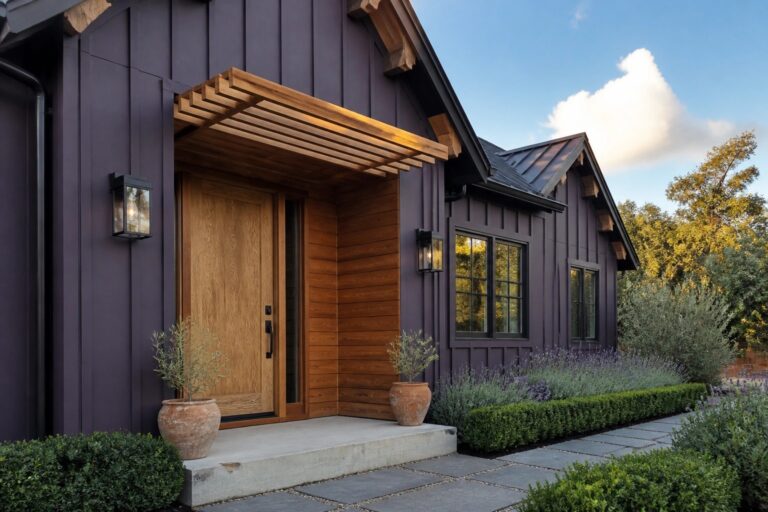
I have always wondered how a deep purple holds up once you see the full facade from the street and notice how it shifts with the light.
Pairing it with natural wood accents can keep the color from feeling too flat against the siding or trim.
Not every combination reads the same in person.
When the wood is used around windows or along the entry, it adds a layer that softens the purple and helps the house settle into its surroundings instead of standing out in a harsh way.
I usually test a small section of the color and wood together first before deciding how far to take it across the front.
Natural Wood Accents on Deep Purple Siding
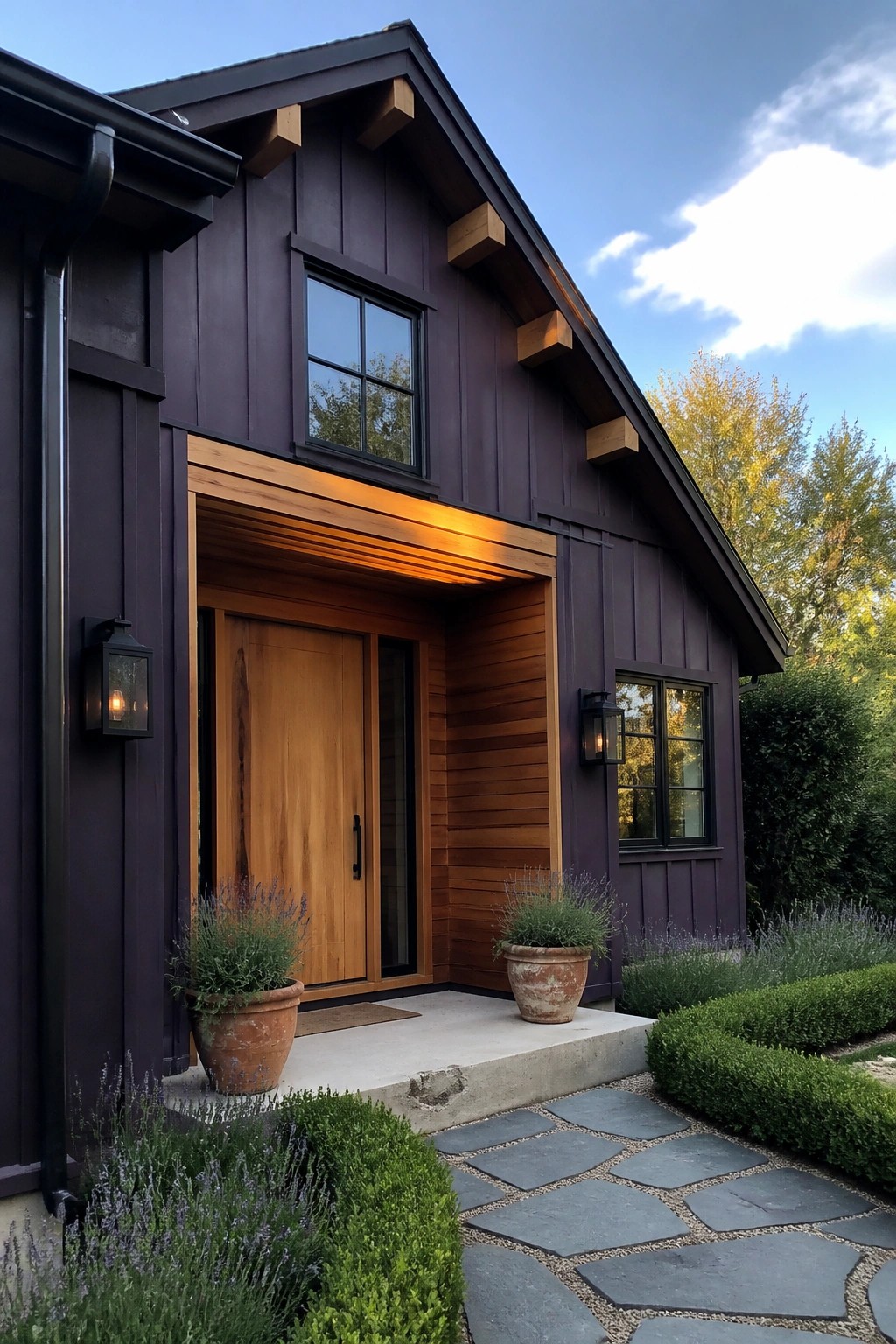
Deep purple siding can feel heavy on its own, but the natural wood around the entry softens it and gives the front a clear focal point. The wood brings warmth that keeps the color from looking flat or too stark against the rest of the house.
This works best on homes with simple rooflines where the entry needs a little extra definition. Keep the wood tone natural rather than stained too dark, and let it wrap the door and any nearby trim so the contrast stays intentional instead of scattered.
Deep Purple Siding With Natural Wood Accents
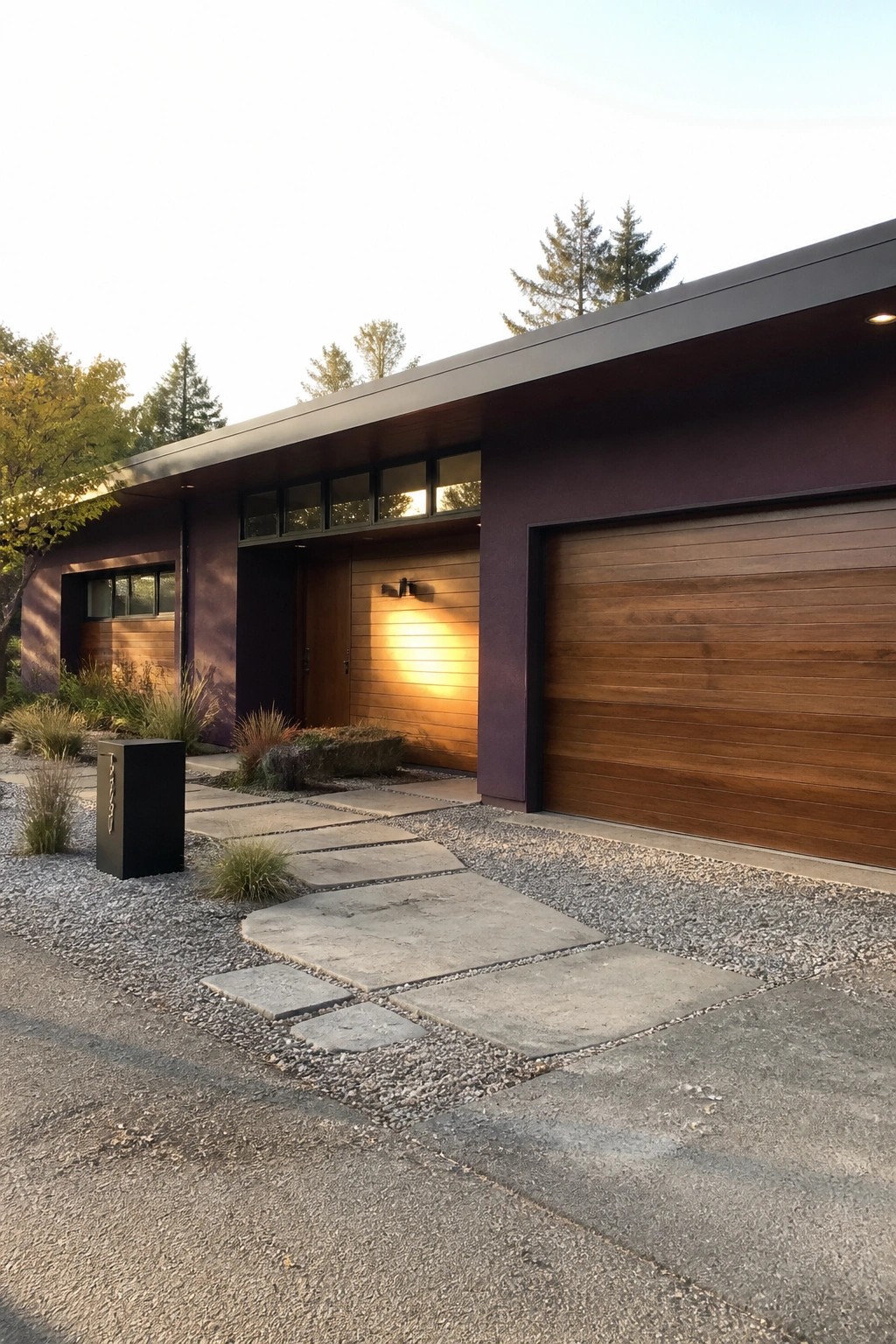
Deep purple works well on a house exterior when the goal is a bold but still grounded look. The rich color gives the walls presence, while natural wood on the garage doors and accents keeps the whole front from feeling too heavy or flat.
This combination suits modern homes that already have clean lines and simple shapes. Keep the wood in horizontal boards to add texture without competing with the purple, and make sure the wood tone stays warm so the two materials balance each other.
Pairing Deep Purple With Natural Wood Accents
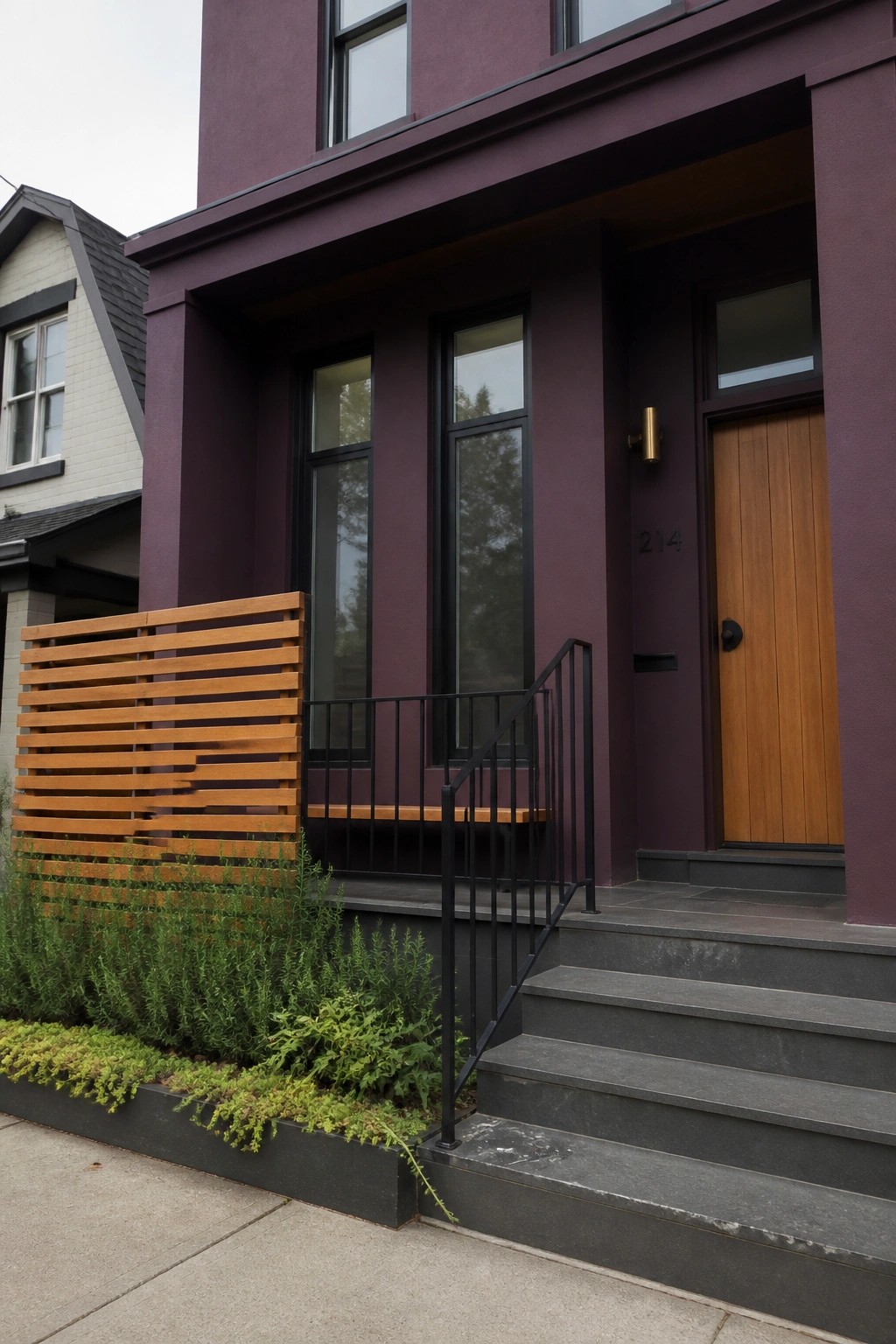
Deep purple house paint stands out more when you add natural wood next to it. The wood softens the strong color and stops the exterior from feeling flat or overly dark.
Place the wood on the main door and on simple screens or railings. This works best on straightforward modern homes where you want contrast without adding too many extra materials.
Natural Wood Accents on Deep Purple Exteriors
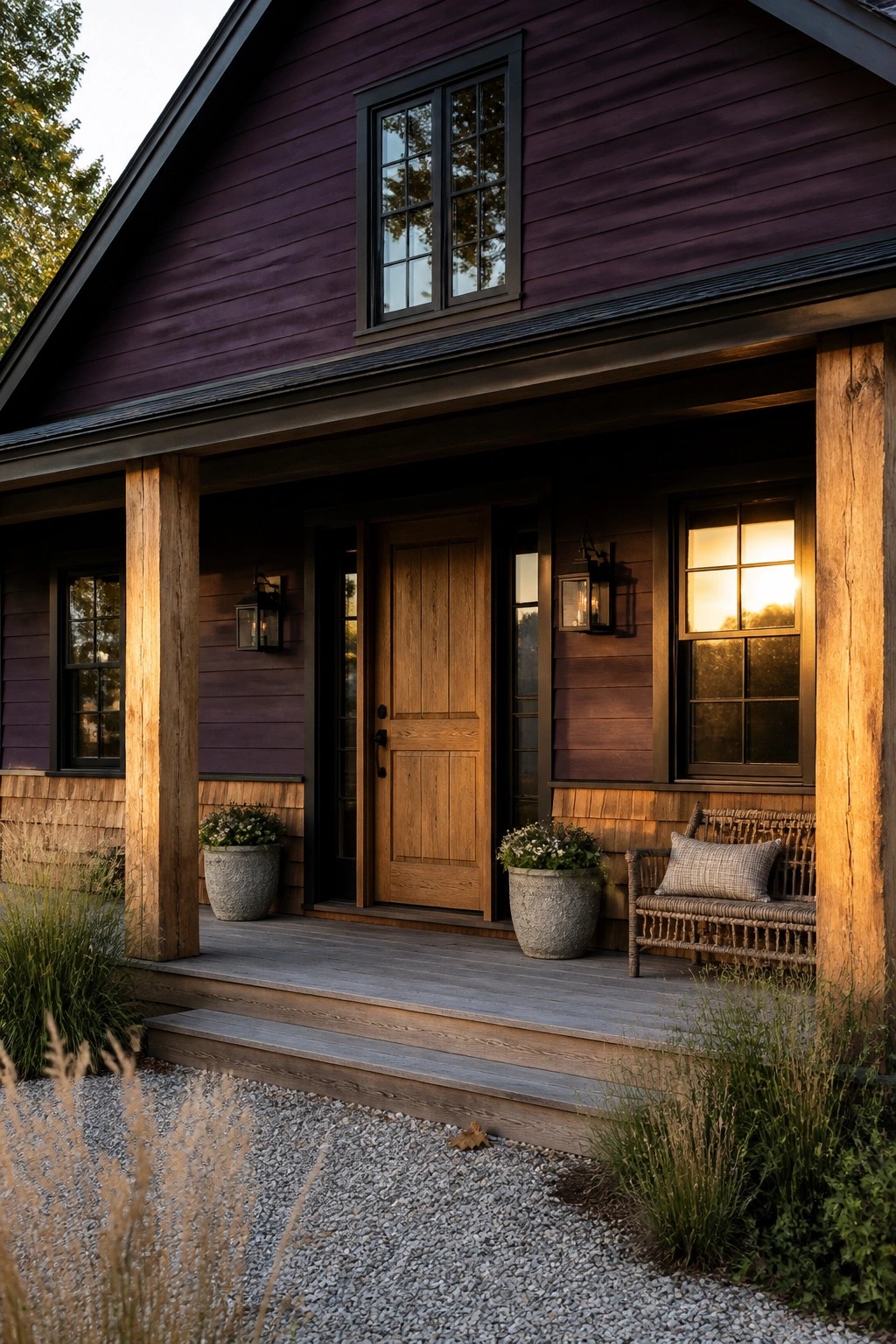
Deep purple siding can look strong on its own, but it often needs something to keep it from feeling flat. Natural wood on the door, posts, and trim gives the color a place to settle and adds warmth right where people approach the house.
This approach works best on homes with a simple front porch or covered entry. Keep the wood tones fairly light and let the grain show. Too many extra colors or dark stains can start to compete with the purple.
Adding a Built-In Bar to the Patio
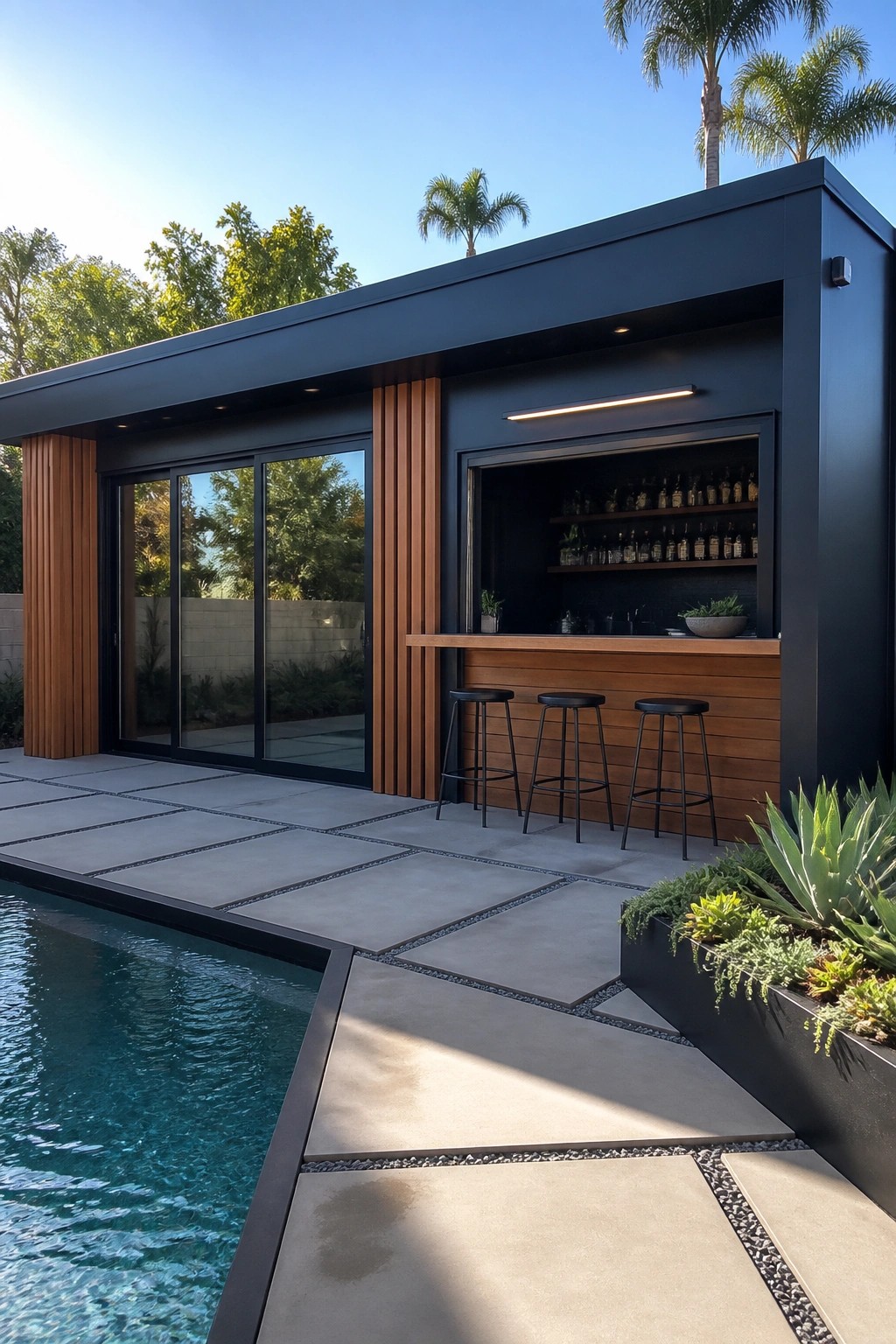
An outdoor bar that connects right to the house makes entertaining simpler. The wood front and counter add warmth against the dark siding while giving guests a place to sit and gather without needing extra furniture scattered around the pool deck.
This setup works best on homes where the patio sits close to the main structure. Keep the bar height comfortable for stools and use the same wood tone on both the bar and any nearby accents so the whole area feels pulled together instead of added on later.
Deep Purple Siding And Natural Wood Accents
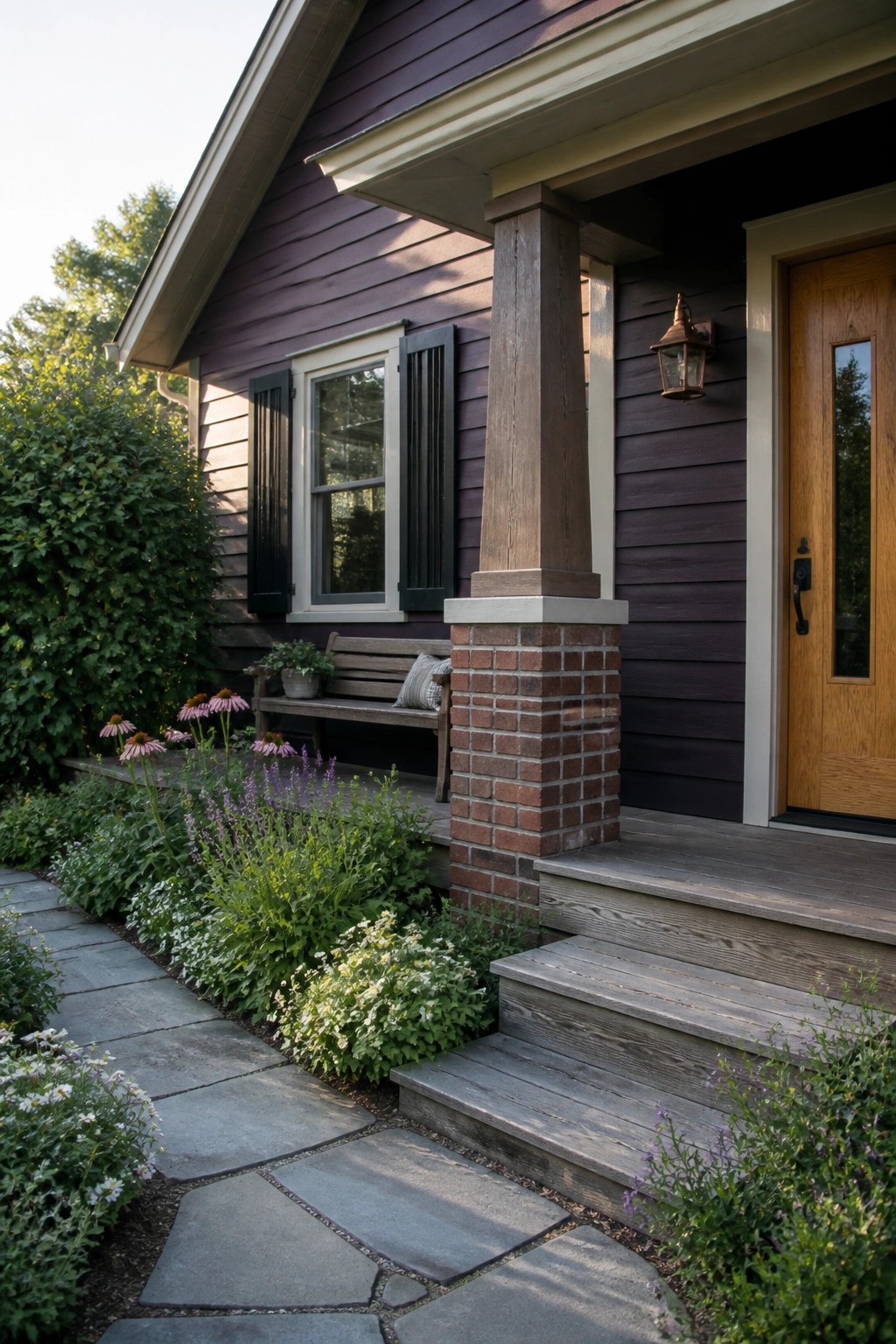
Deep purple siding makes a strong statement on a house exterior, but it needs something to keep the look grounded. Natural wood accents on the porch post and front door do that job by adding warmth and breaking up the color.
This approach works well on homes with a straightforward porch and simple trim. The wood softens the purple without pulling attention away from the overall color choice.
Pairing Deep Purple With Natural Wood Accents
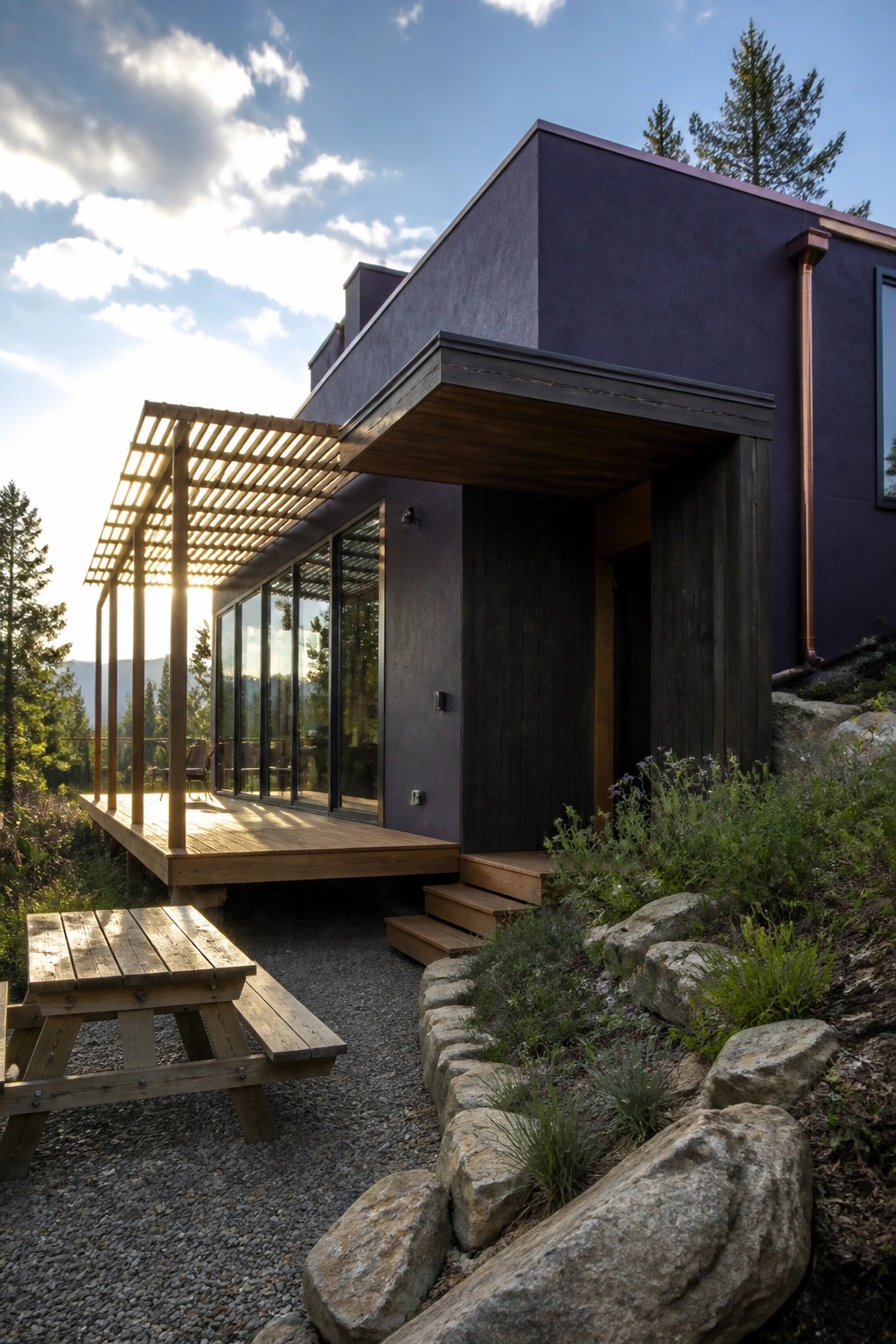
Deep purple works well on house exteriors when it is balanced with wood. The color can feel bold on its own, but wood softens the look and adds a natural element that keeps the house from appearing too flat or severe.
This combination suits homes in wooded or hilly areas where the wood helps the structure blend with the setting. Try using it on decks, pergolas, or entry trim rather than spreading it everywhere. Keep the wood tones light to medium so they contrast without competing.
Deep Purple Exteriors With Natural Wood Accents
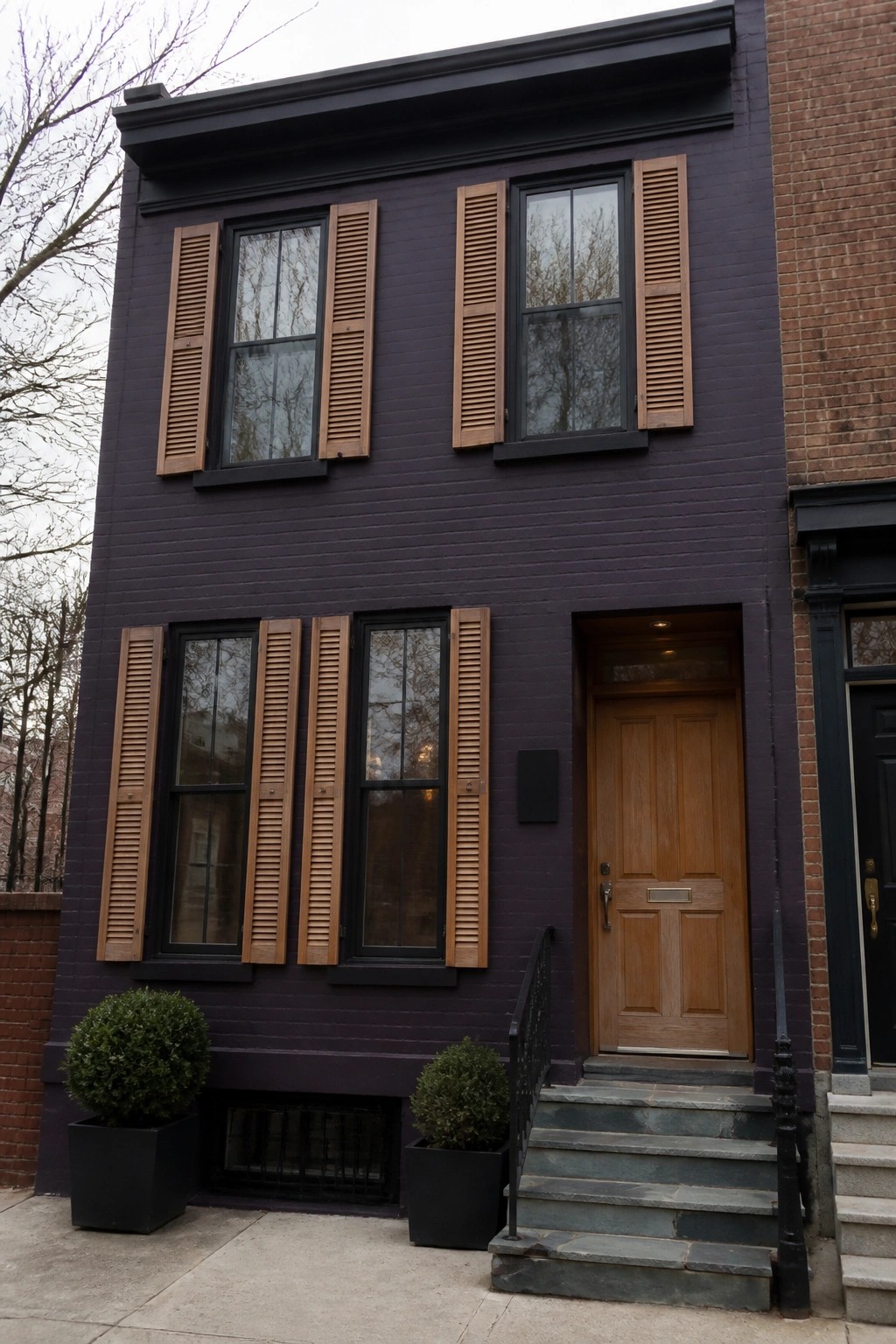
Deep purple paint can look heavy on a house, but natural wood accents change that fast. The wood brings warmth and keeps the color grounded instead of feeling flat or overly bold.
This works especially well on narrow brick homes or row houses with simple window layouts. Use the wood on shutters and the front door so the two materials play off each other without needing extra trim or color elsewhere.
Adding a Pergola Over the Deck
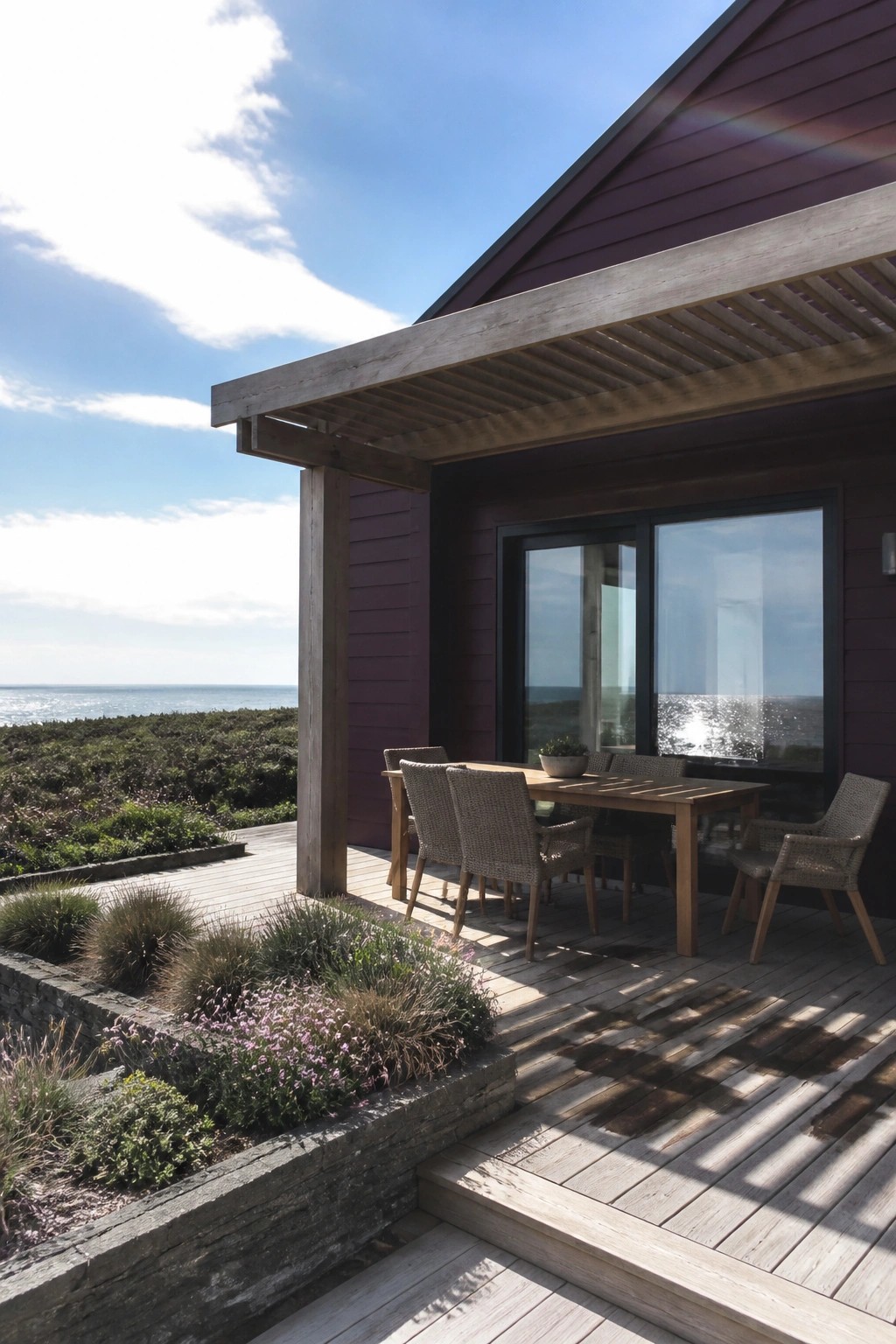
A pergola made from natural wood gives an outdoor dining area clear shape and useful shade. It pairs well with deep purple siding because the wood tones keep the color from feeling too heavy while still letting it stand out.
This works best on homes with open views or coastal settings where you want a simple place to sit outside. Use straight lines and untreated wood so the structure feels like an extension of the house rather than an added feature.
Natural Wood Accents On Deep Purple Brick Homes
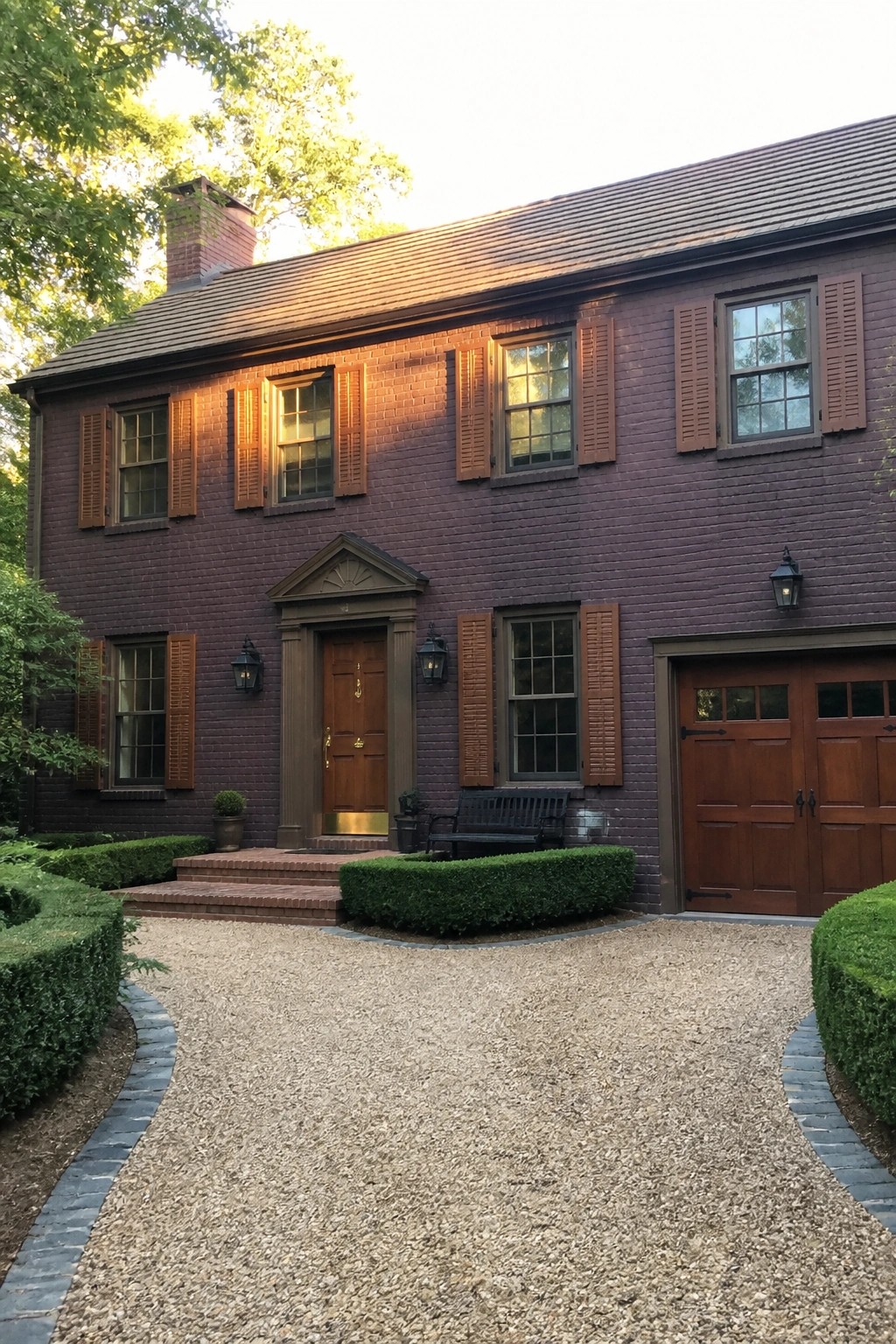
Deep purple brick can feel heavy on its own, but adding natural wood trim and shutters changes the balance. The warm tones of the wood bring out the depth in the purple without making the house look too dark or formal. It works especially well on traditional homes where you want color but still need some softness.
This approach suits older brick houses or new builds trying to feel established. Keep the wood in its natural finish or a light stain so it reads as a true accent rather than another painted element. Avoid covering too many surfaces with wood or the contrast can get lost.
Wood Siding Accents On Deep Purple Exteriors
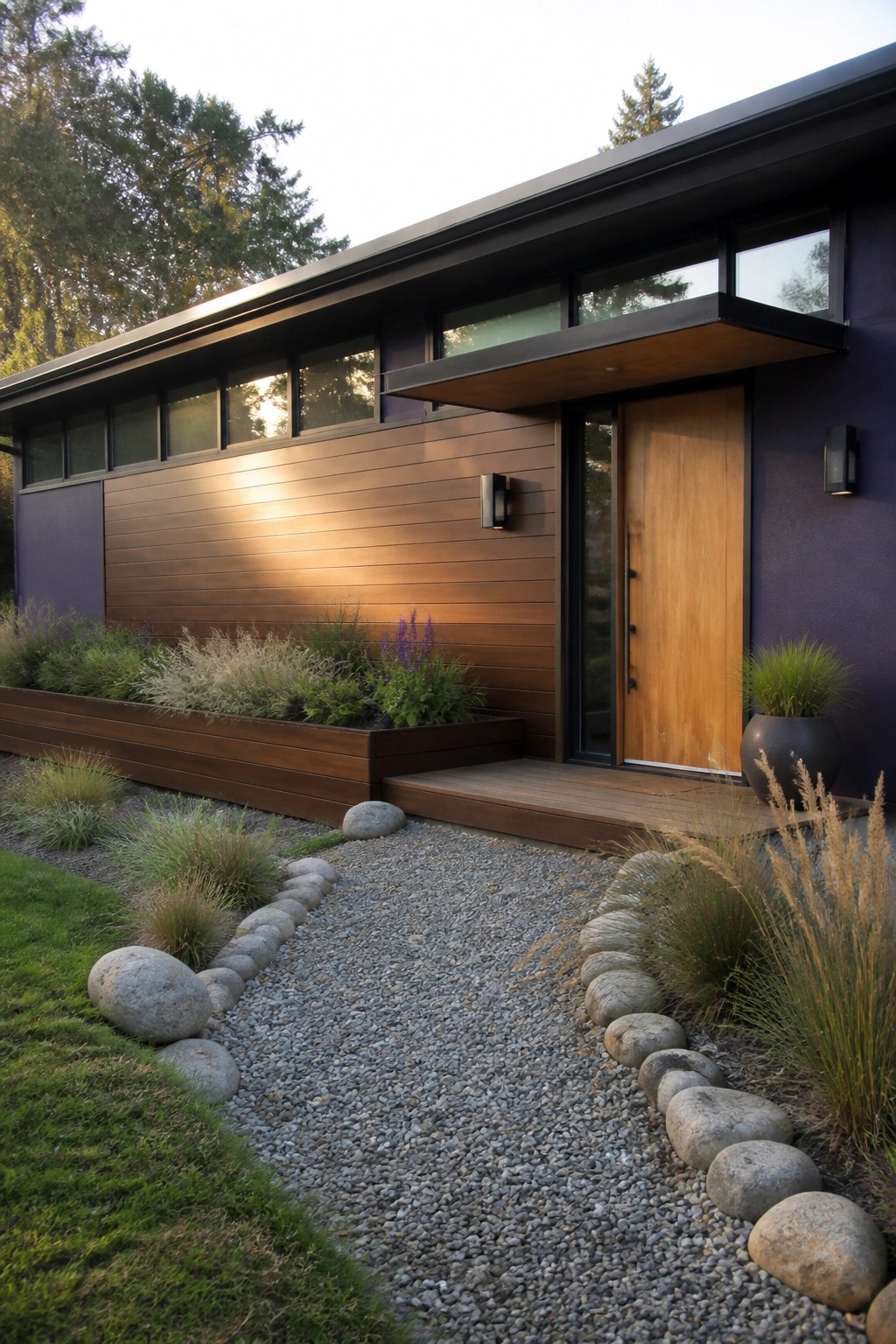
Deep purple house paint can feel bold on its own, but adding sections of horizontal wood siding gives it a warmer and more grounded look. The wood breaks up the solid color and adds texture without making the whole facade feel heavy.
This approach works best on modern or midcentury homes where the lines stay clean. Keep the wood natural or lightly stained so it contrasts with the purple, and use it mainly around the entry or in long bands to keep the effect simple.
Wood Accents Against Deep Purple Walls
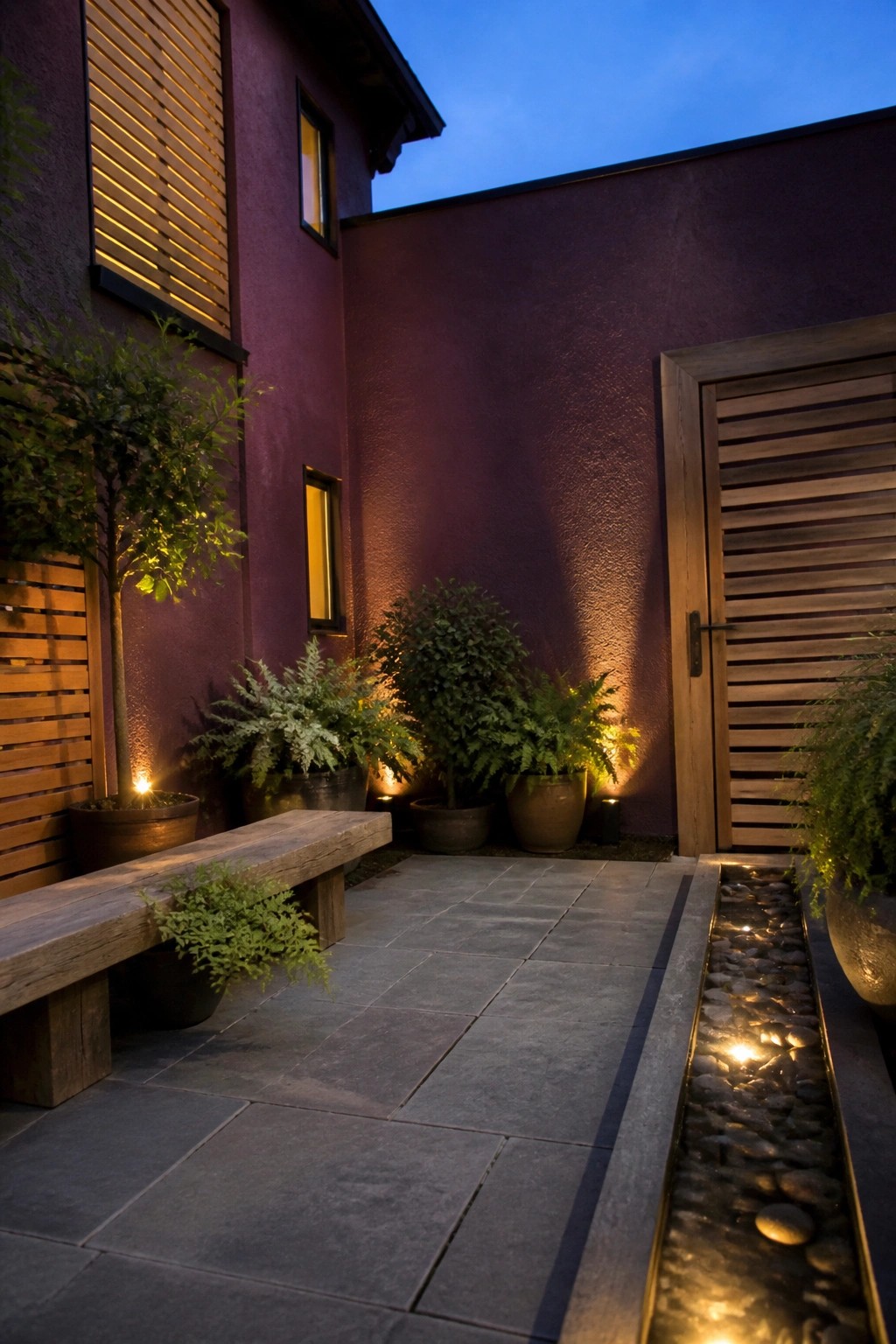
Deep purple walls can feel heavy on their own, so adding natural wood helps balance the look. The bench, door, and shutters here show how wood brings warmth without competing with the color.
This approach works best on homes with side courtyards or narrow outdoor spaces. Keep the wood tones simple and let the purple stay the main feature so the contrast stays clean.
Using Natural Wood To Warm Up Deep Purple Exteriors
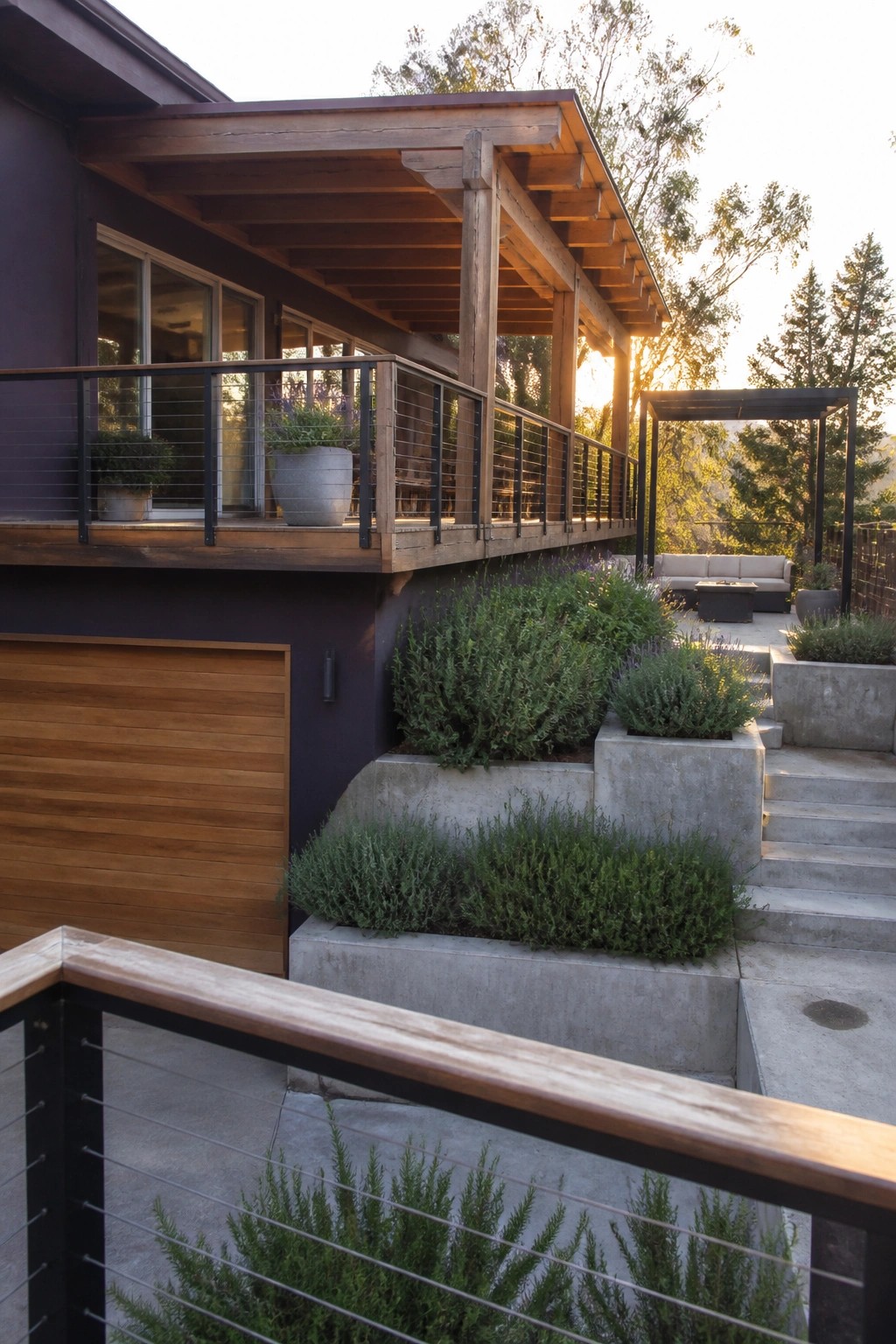
Deep purple siding can feel bold on its own, so adding natural wood in key spots helps keep the look grounded. The wood on the balcony structure and overhang brings in warmth and texture without competing with the color of the house.
This approach works well on homes with clean modern lines where you want the purple to stay prominent but not overpowering. Focus the wood on functional elements like beams, railings, or trim rather than scattering it everywhere, and let it weather naturally for the best effect.
Natural Wood Accents Against Deep Purple Siding
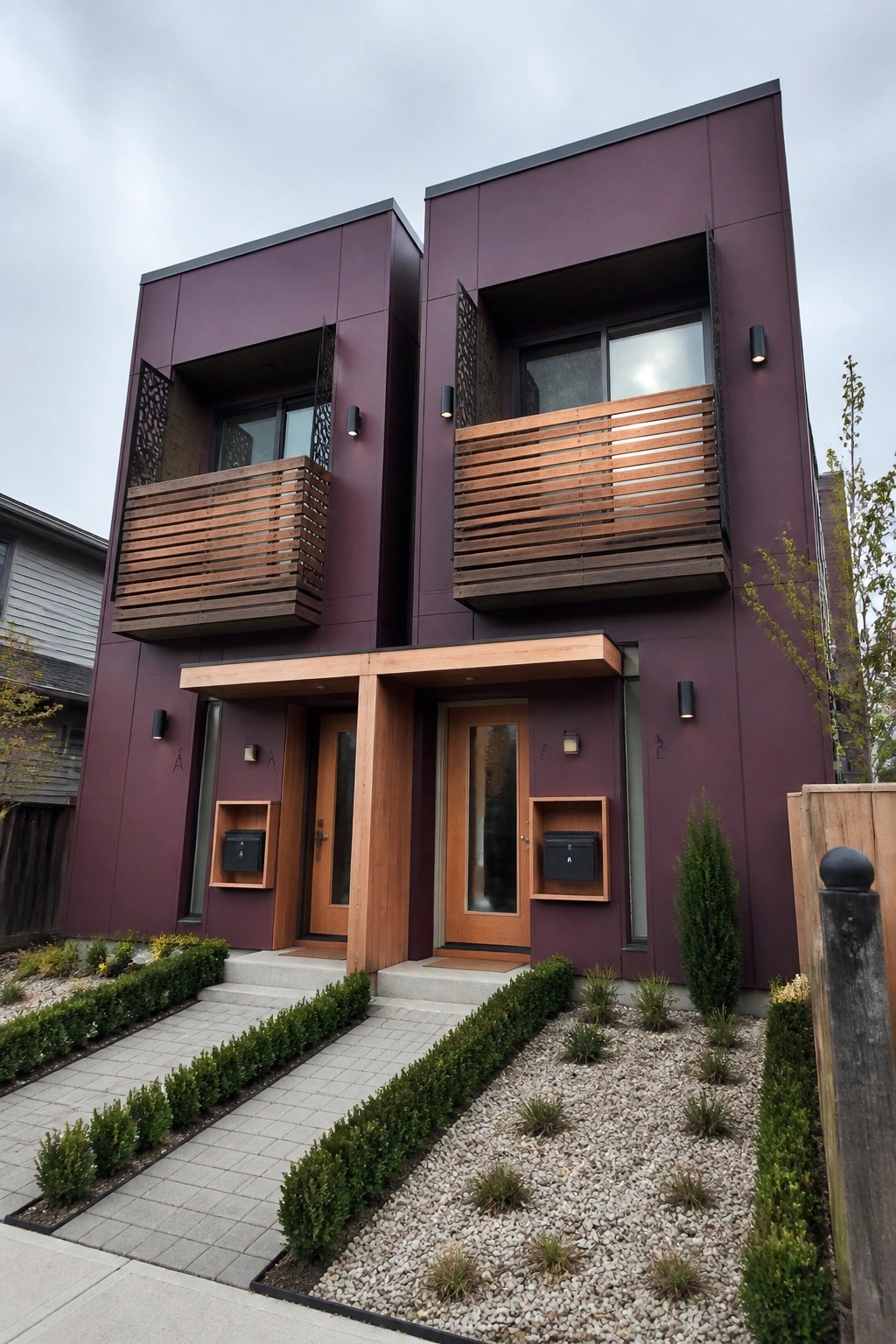
Deep purple siding can feel heavy on its own, so adding natural wood details helps break up the color and brings some warmth to the look. The wood softens the modern lines without making the house feel less bold. It works especially well on a two-story facade where the wood can highlight key spots like entries and upper levels.
This approach suits homes that already have clean geometry and want a bit more texture. Use the wood on balconies, door frames, or small overhangs rather than covering large areas. Keep the tones warm and matte so they stand out against the purple without competing with it.
Combining Deep Purple Siding With Wood Entry Details
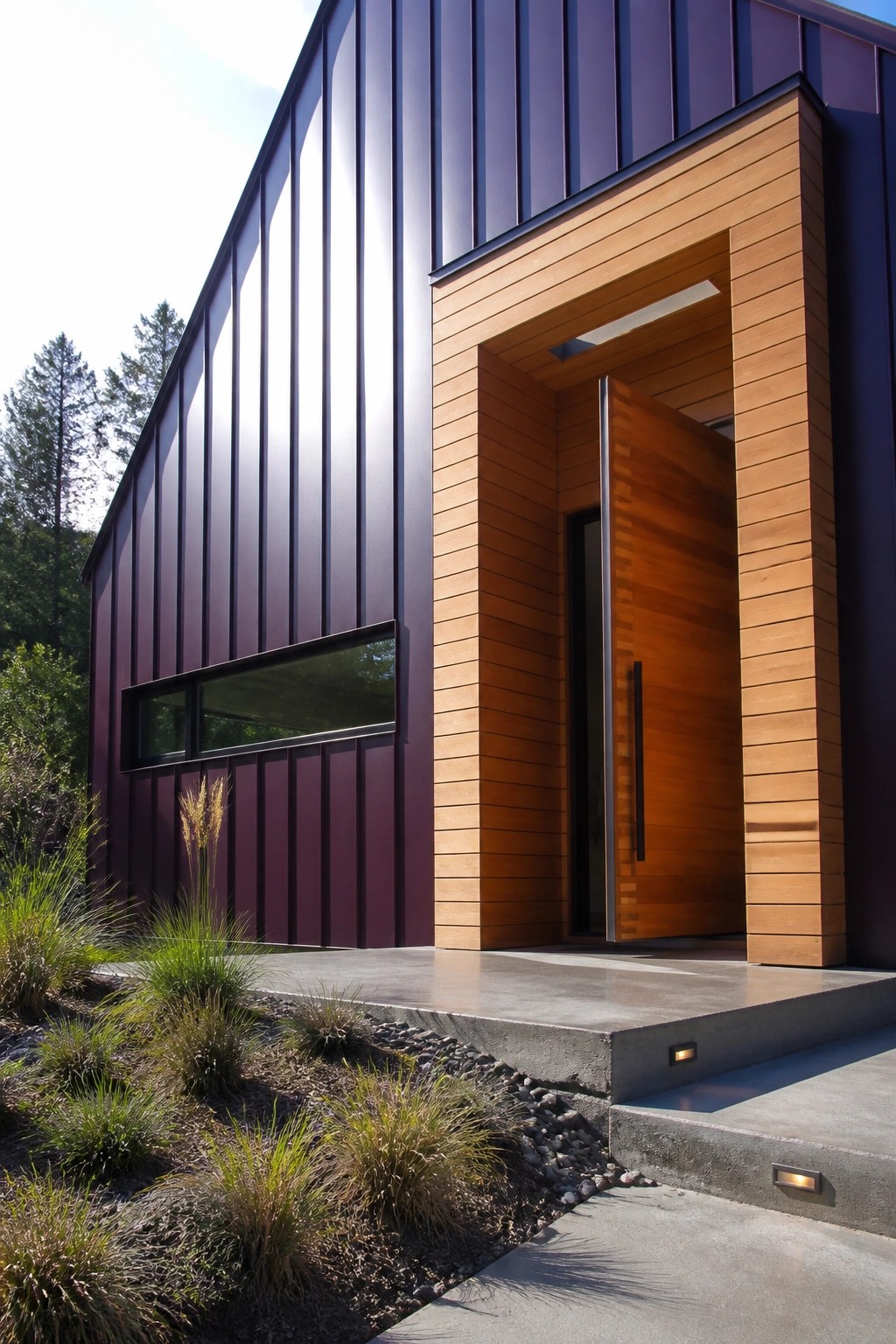
Deep purple house exteriors can feel bold on their own, but they often need something warmer to keep the look balanced. Wrapping the entry in natural wood gives the color a grounded spot to connect with the rest of the house and makes the front door area feel more welcoming without softening the overall strength of the purple.
This approach works best on modern or contemporary homes where the siding is smooth and the lines are clean. Keep the wood tone in the medium to warm range so it stands out against the purple, and limit the wood to the entry surround rather than spreading it across the whole facade.
Deep Purple Paired With Natural Wood Accents
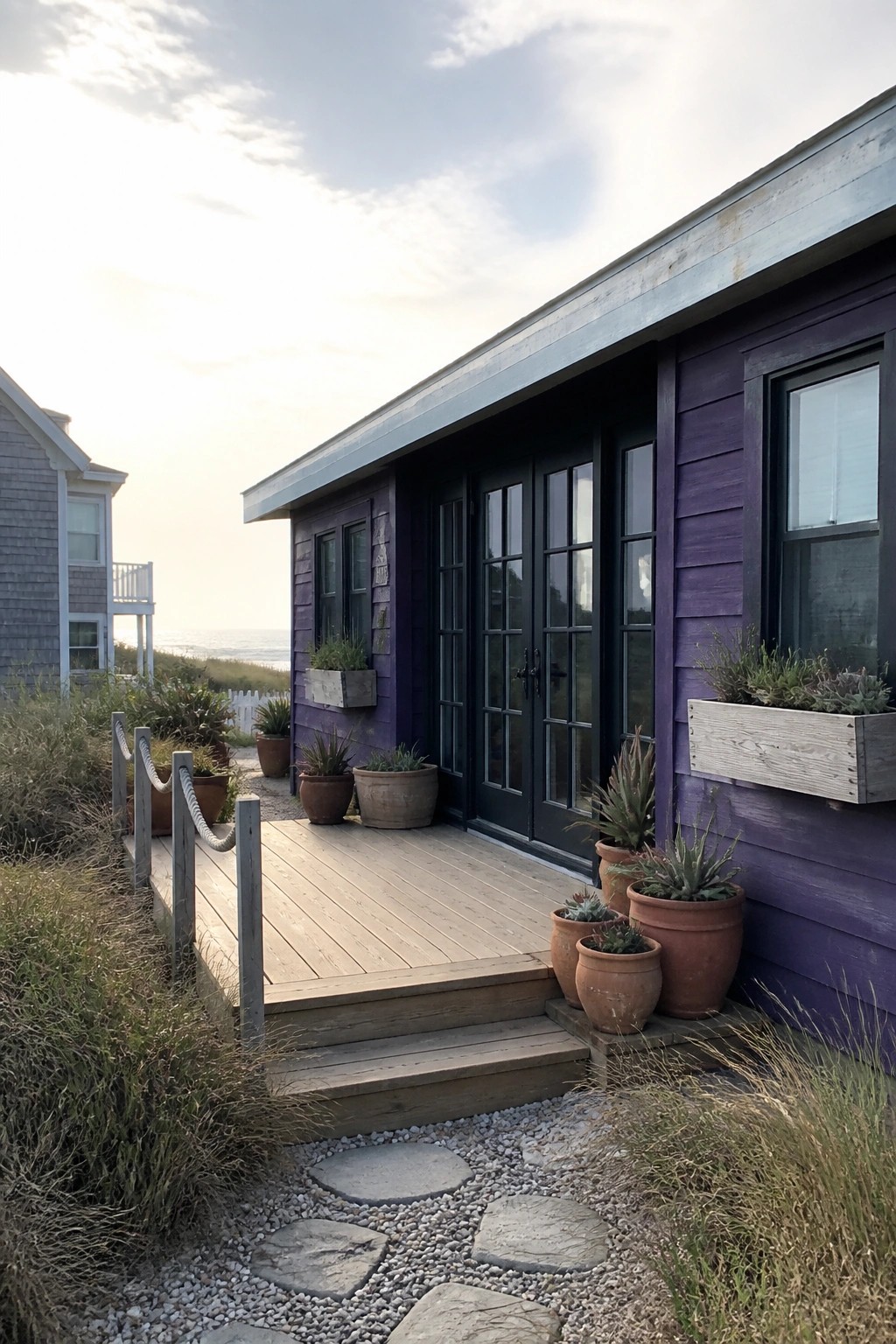
Deep purple siding stands out more when it sits next to natural wood rather than against stark trim or metal alone. The wood brings warmth and keeps the color from feeling too bold or flat on its own.
This approach works best on smaller homes or cottages where you want color without losing a grounded look. Use the wood on decks, window boxes, or simple trim and keep the tones light to medium so the purple stays the main feature.
Pairing Dark Brick With Natural Wood Accents
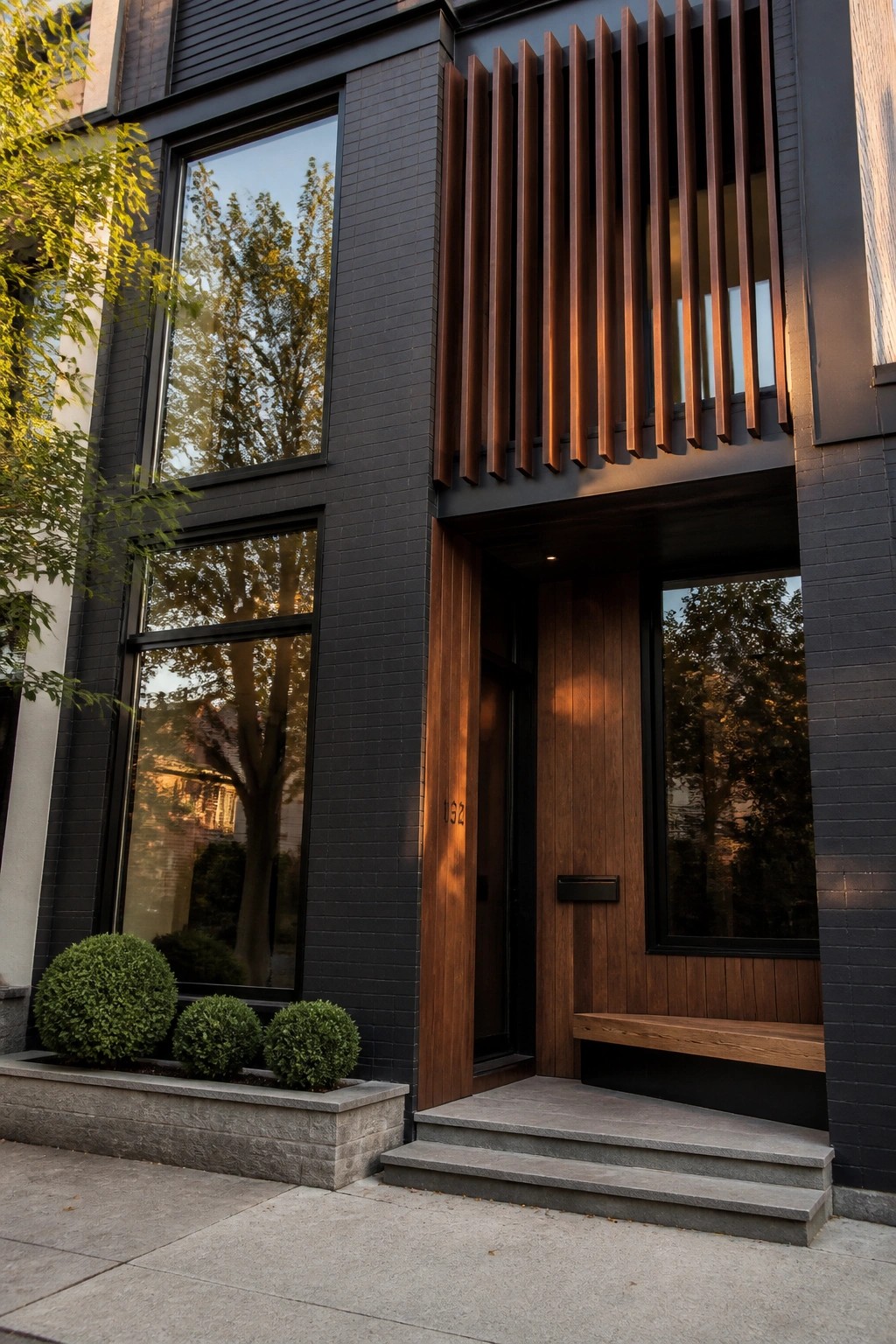
Dark brick exteriors can feel heavy on their own, so adding natural wood details helps balance the look with warmth and texture. The wood stands out against the deep tone without competing, and it draws attention to the entry and vertical lines on the facade.
This mix works best on modern homes where you want contrast without going too bold. Use the wood on doors, window trim, or simple slat details rather than covering large areas. It suits compact city lots especially well since the warmth keeps the dark color from feeling stark.
Deep Purple Siding With Wood Accents
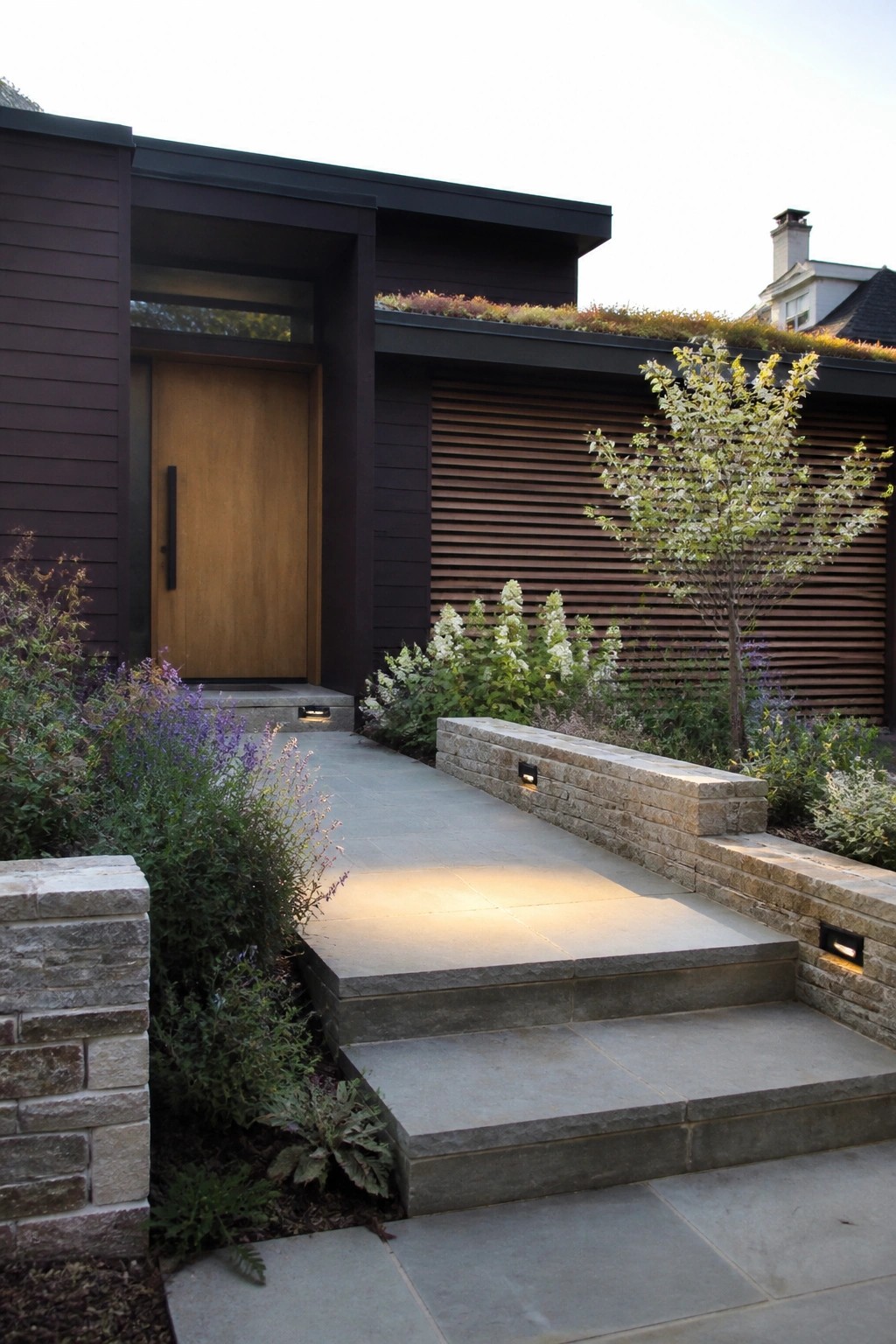
Deep purple siding stands out on its own, but pairing it with natural wood gives the color a warmer, more grounded feel. The wood softens the dark tone without making the house feel heavy or overly bold. This mix works especially well on modern homes that still want some natural texture.
It suits houses with clean lines and simple shapes. Keep the wood limited to key spots like the door or trim so the purple stays the main color. Stone steps or low planting beds can help tie the look together without adding too many extra materials.
Deep Purple On Outdoor Structures
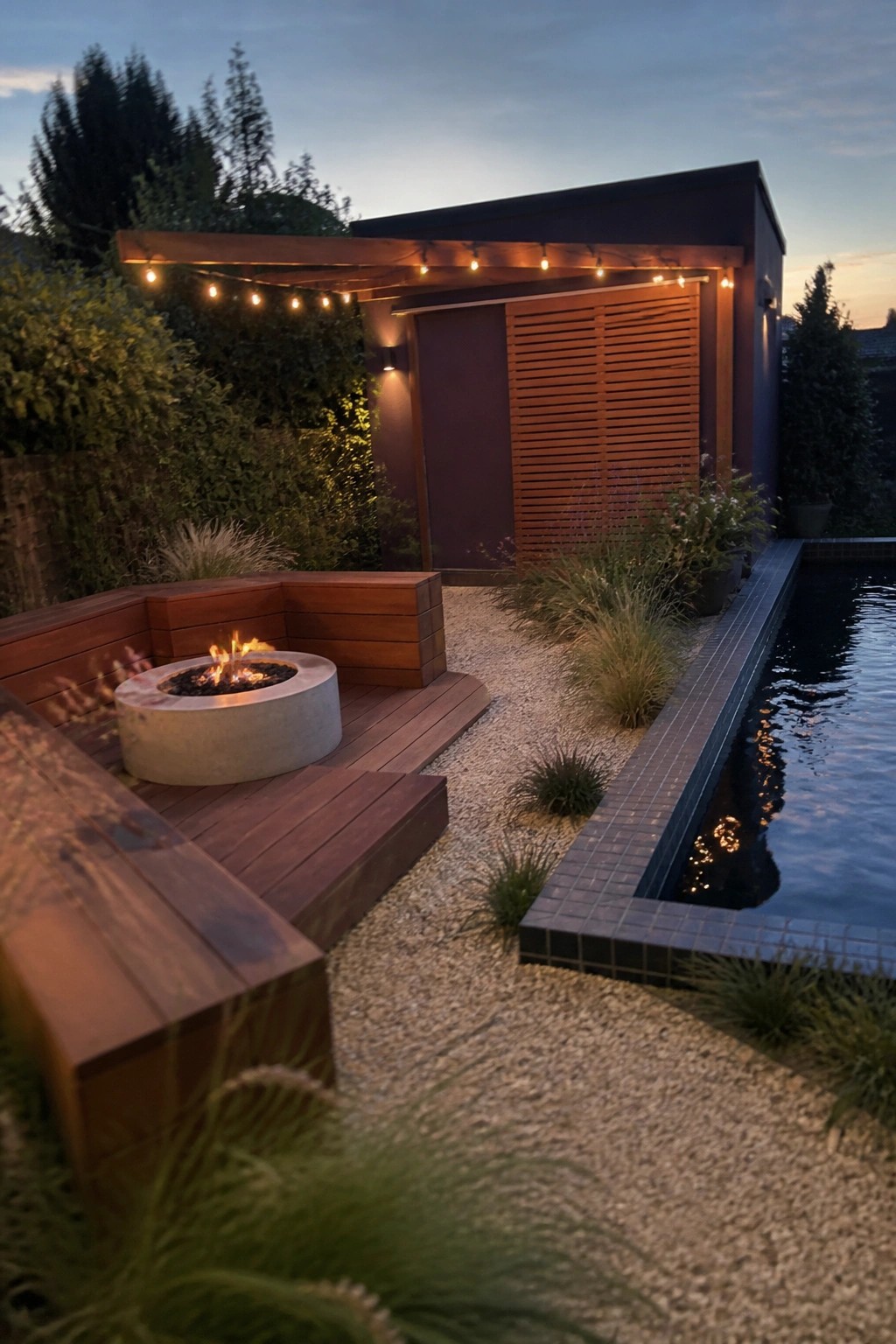
Painting a backyard structure deep purple gives the whole outdoor area a more finished and connected look. The color stands out against greenery and water without needing extra decoration, and the wood slats and decking keep the purple from feeling too bold or cold.
This approach works best on homes that already use a similar purple on the main house or want to extend that palette into the yard. Keep the wood tones warm and natural so the space stays inviting for evening use around a fire pit or pool.
Wood Accents on Dark House Exteriors
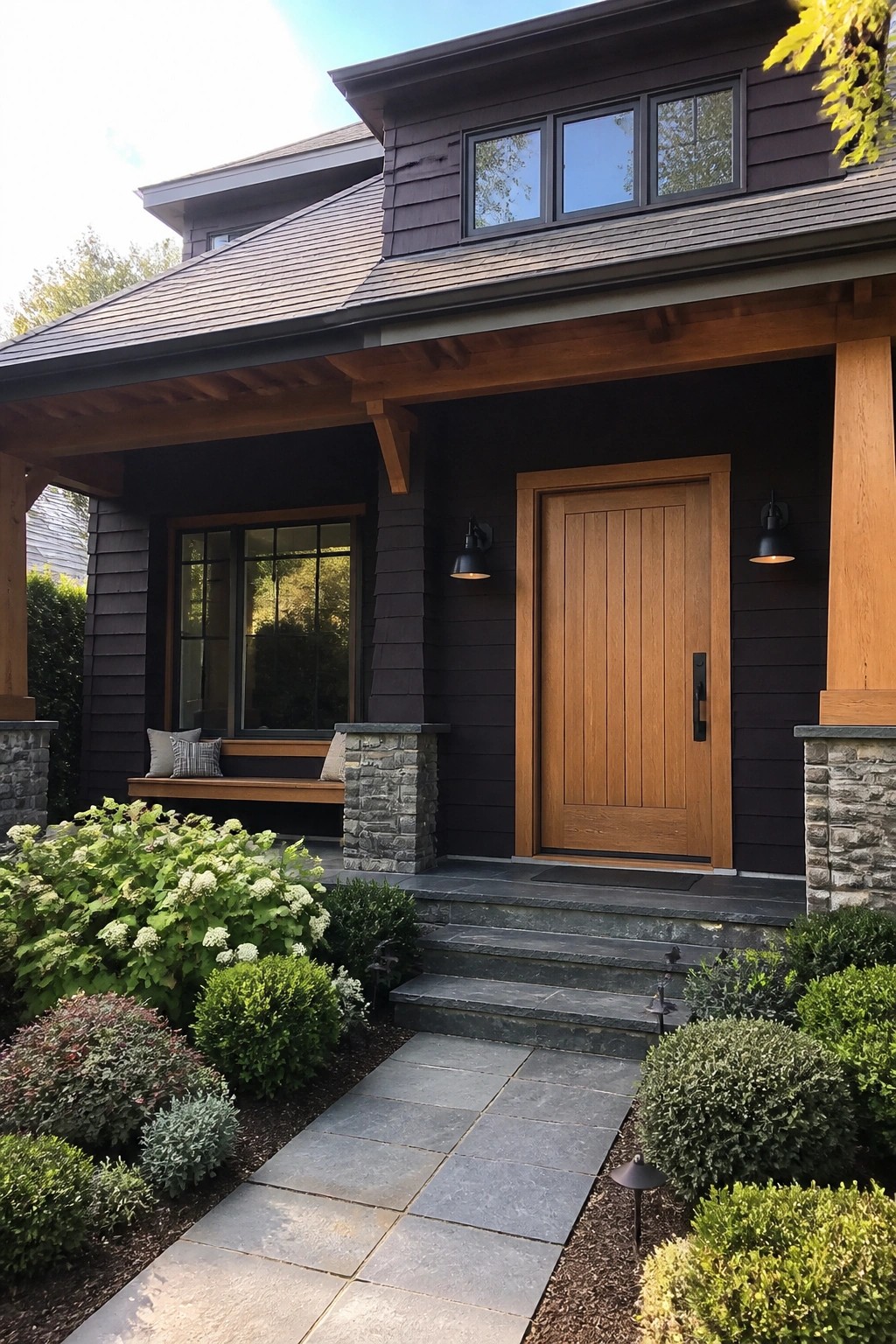
A deep colored exterior can feel heavy if it is all one tone. Adding natural wood on the door, trim, and porch posts gives the front a warmer, more balanced look without changing the overall dark scheme.
This works best on homes with simple rooflines and clean siding. Keep the wood tone light to medium so it reads clearly against the dark paint, and limit the amount so the contrast stays sharp rather than busy.
Natural Wood Accents With Deep Purple Siding
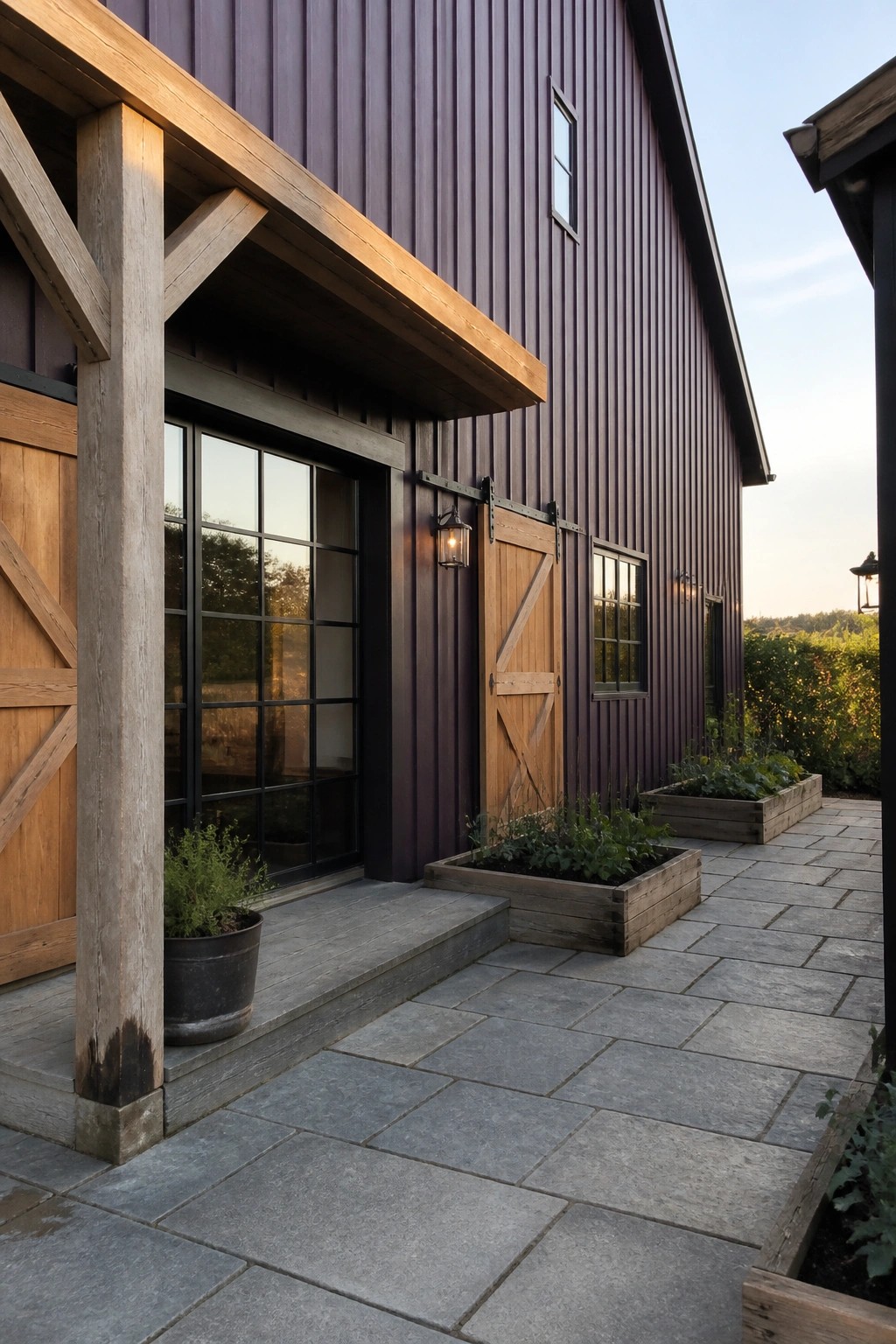
Deep purple siding can look a little stark on its own, but adding natural wood doors, beams, and trim gives it balance and warmth. The wood softens the bold color without losing the strong character of the house.
This approach works well on barn-style or farmhouse exteriors where the wood can be used on doors, posts, and simple trim. Keep the wood tones consistent so the mix feels intentional rather than scattered.
Built-In Seating Against Dark Walls
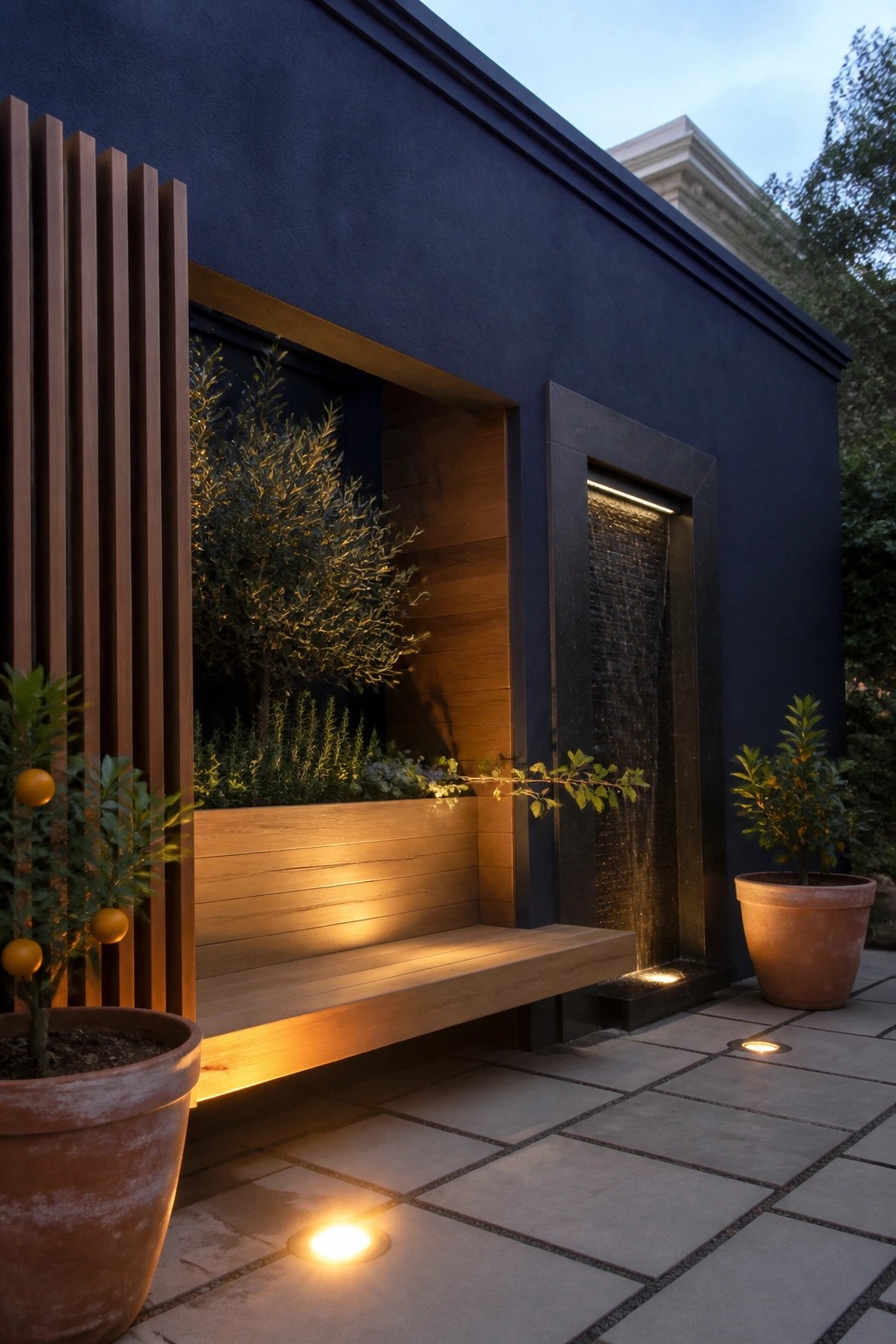
A built-in bench set into a recessed spot along the house gives an outdoor area a settled, useful feel without taking up extra floor space. The wood brings warmth against the deep purple paint, and low lighting tucked underneath keeps the whole spot usable after dark. It turns what could be a plain wall into a place people actually want to sit.
This works best on homes with flat exterior walls where you can carve out a simple niche. Keep the bench depth around 18 inches so it stays comfortable, and use the same wood tone on nearby accents like planters or screens. It suits modern or traditional houses that already lean on natural materials to balance a bold wall color.
Frequently Asked Questions
Q: How do I choose a deep purple shade that still shows off the wood grain without swallowing it up? A: Start with samples on your actual siding during different times of day. Pick a tone with some red or blue undertones so the purple reads richer against the wood. Test a two-foot patch first and live with it for a week.
Q: What happens to the wood accents if they face full sun all afternoon? A: A clear penetrating oil every couple of years keeps the grain visible and stops graying. Focus on the south and west sides first since they take the hardest hit. Skip heavy sealers that build a film and start to peel.
Q: Can I add more wood trim later if I decide the purple needs more contrast? A: Yes, just match the new pieces to the existing stain color before you install them. Work in small sections so you can tweak the purple wall color slightly if the balance shifts.
