

Japandi rooms can feel calm without becoming spare, but they still need warmth and a layout that works for everyday life.
I find muted terracotta especially useful because it brings color to pale wood and soft neutrals without taking over the room.
The key is balancing that earthy note with comfortable textures, practical furniture, and enough open space to let each room breathe.
In these interiors, small choices like a clay-toned cushion or a painted wall can change how the whole space feels.
I’d save the ideas that use terracotta in a way you could test at home, whether through a small accent or a more confident color choice.
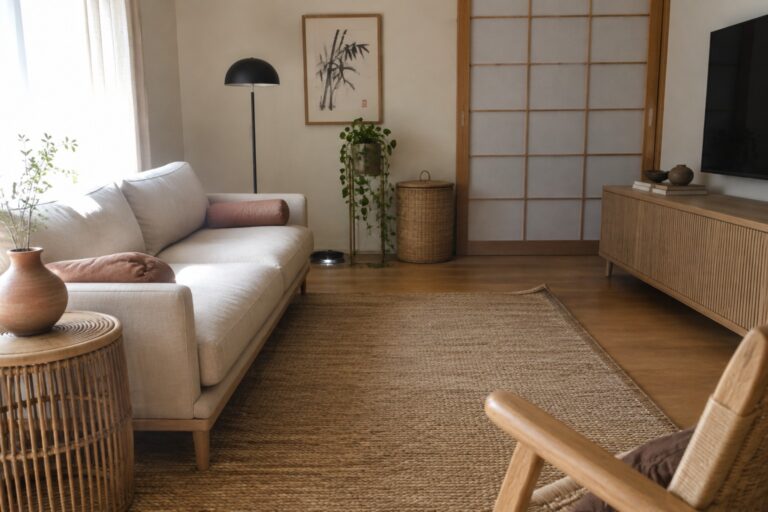
Use Terracotta To Warm Up A Neutral Japandi Living Room

Muted terracotta is an easy way to bring color into a calm Japandi living room without changing its overall feel. A pair of rust-colored cushions stands out against the pale sofa, while the natural wood and woven textures keep the look relaxed.
Start with one or two terracotta accents, such as cushions or a small ceramic piece, and let them stand out against neutral upholstery. This approach suits rooms with simple furniture and natural materials; too many strong colors can make the space feel less restful.
Use Terracotta To Warm Up Neutral Bedding

Muted terracotta is an easy way to bring color into a Japandi bedroom without losing its calm, simple feel. Rust-colored pillows and a draped throw stand out against pale, natural bedding, while keeping the overall palette quiet.
Start with one or two terracotta textiles and let the neutral bedding remain the main layer. This approach works well in a small bedroom or any space where you want color without repainting; choose a softened, earthy shade rather than a bright red.
Use Terracotta Tile for a Gentle Color Accent
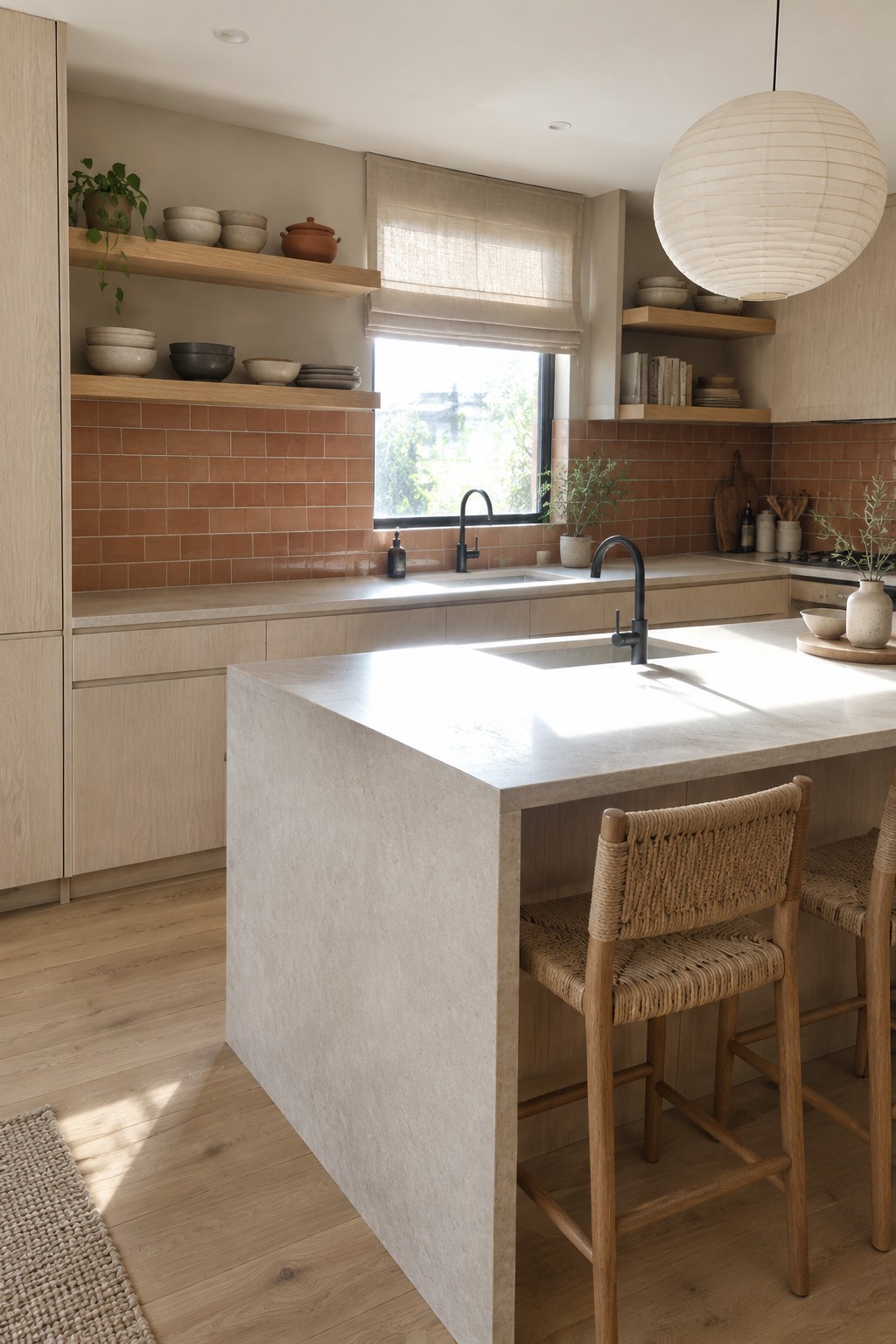
Terracotta backsplash tile is an easy way to bring muted color into a Japandi kitchen. Its earthy tone sits comfortably beside pale wood and simple finishes, so the room still feels calm rather than busy.
This idea works well when you want color without painting a whole wall. Keep the tile finish fairly understated, and let it cover one practical area, such as the backsplash. Too much variation in the tile can make the look feel less restful.
Use Terracotta to Break Up Warm Wood
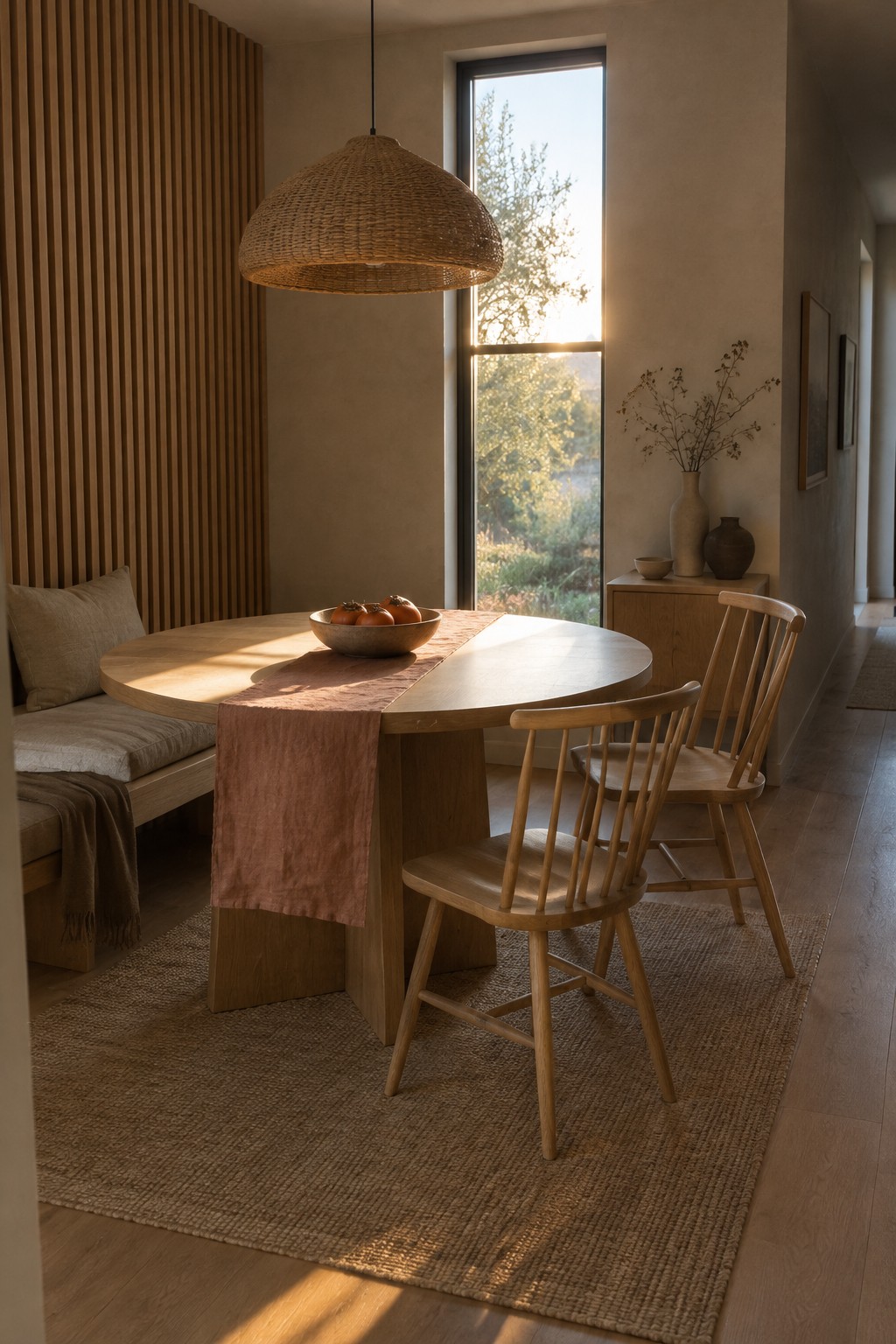
A muted terracotta runner is an easy way to bring color into a Japandi dining area without losing its simple, natural feel. Here, it runs across a pale wood table, giving the surface a little color while keeping the overall look restrained.
Try this on a dining table or bench in a room with warm wood and neutral fabrics. Choose a washed-out terracotta shade rather than a bright orange, so it stands out gently and is easy to live with.
Use Terracotta Floor Tile In A Japandi Bathroom
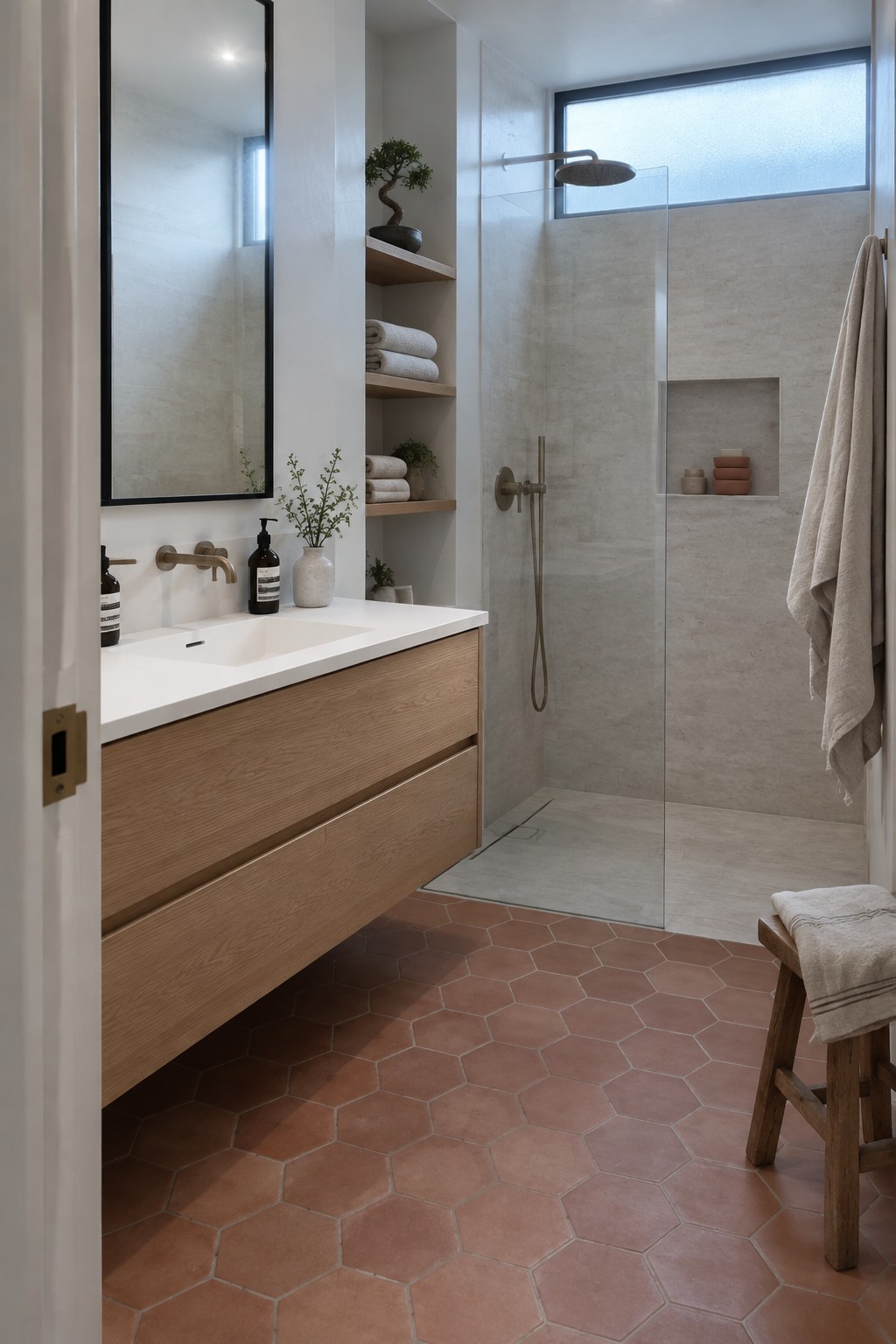
Terracotta floor tile is an easy way to bring muted color into a Japandi bathroom without making the room feel busy. The warm, earthy tone works well beside pale stone and simple wood cabinetry.
For a similar look, keep the walls and larger surfaces light, then let the floor carry the color. Hexagonal tile gives the room some pattern, so keep nearby finishes fairly plain.
Build A Japandi Work Nook Into The Wall
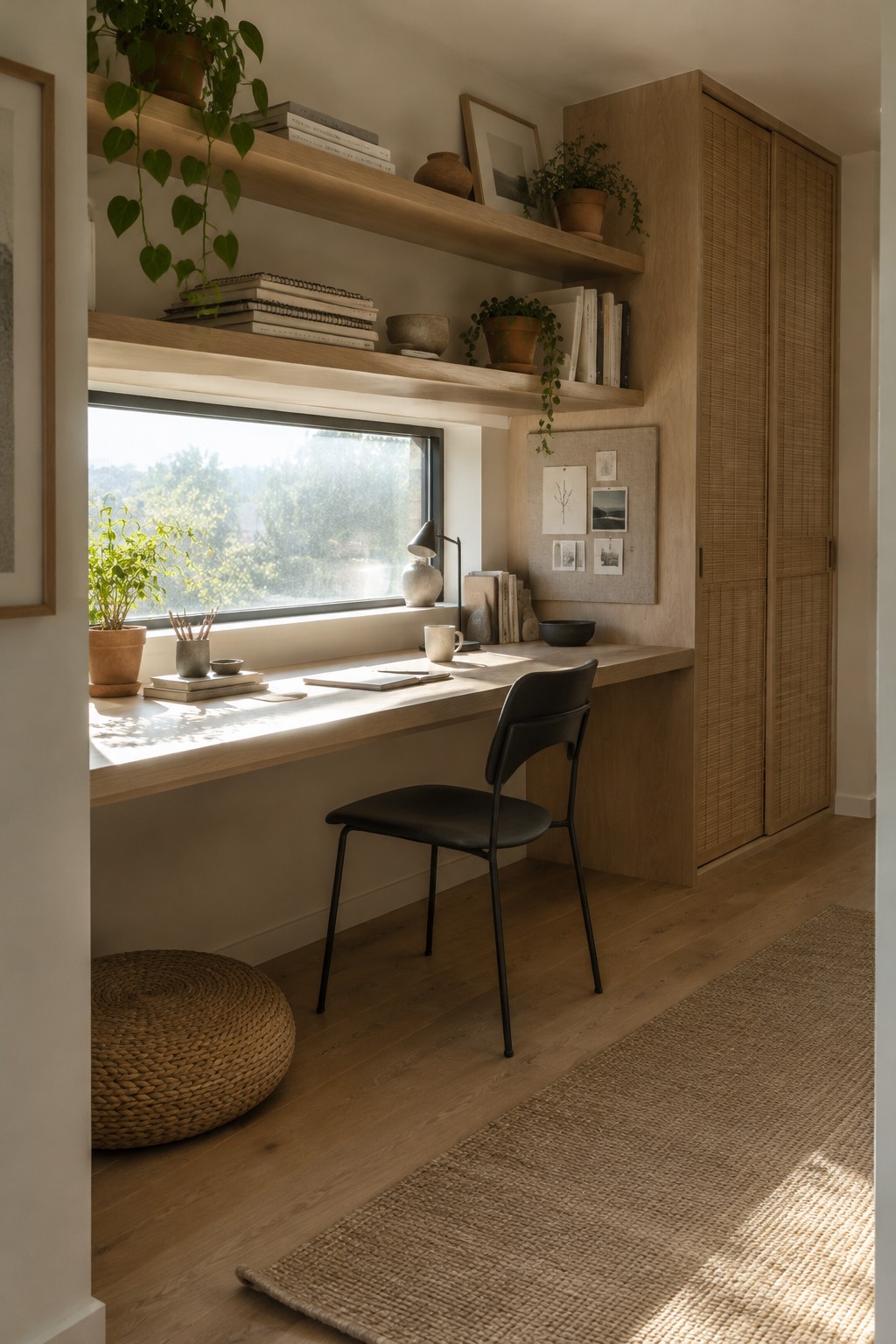
A built-in desk makes good use of a narrow stretch of wall and gives a home office a settled, uncluttered feel. Here, the long wood work surface and shelves keep the setup practical without taking up much floor space.
This idea works well in a spare room, hallway alcove, or bedroom corner. Use a muted terracotta accessory, such as a small pot, to bring in color without competing with the wood.
Add Terracotta Through Small Nursery Textiles
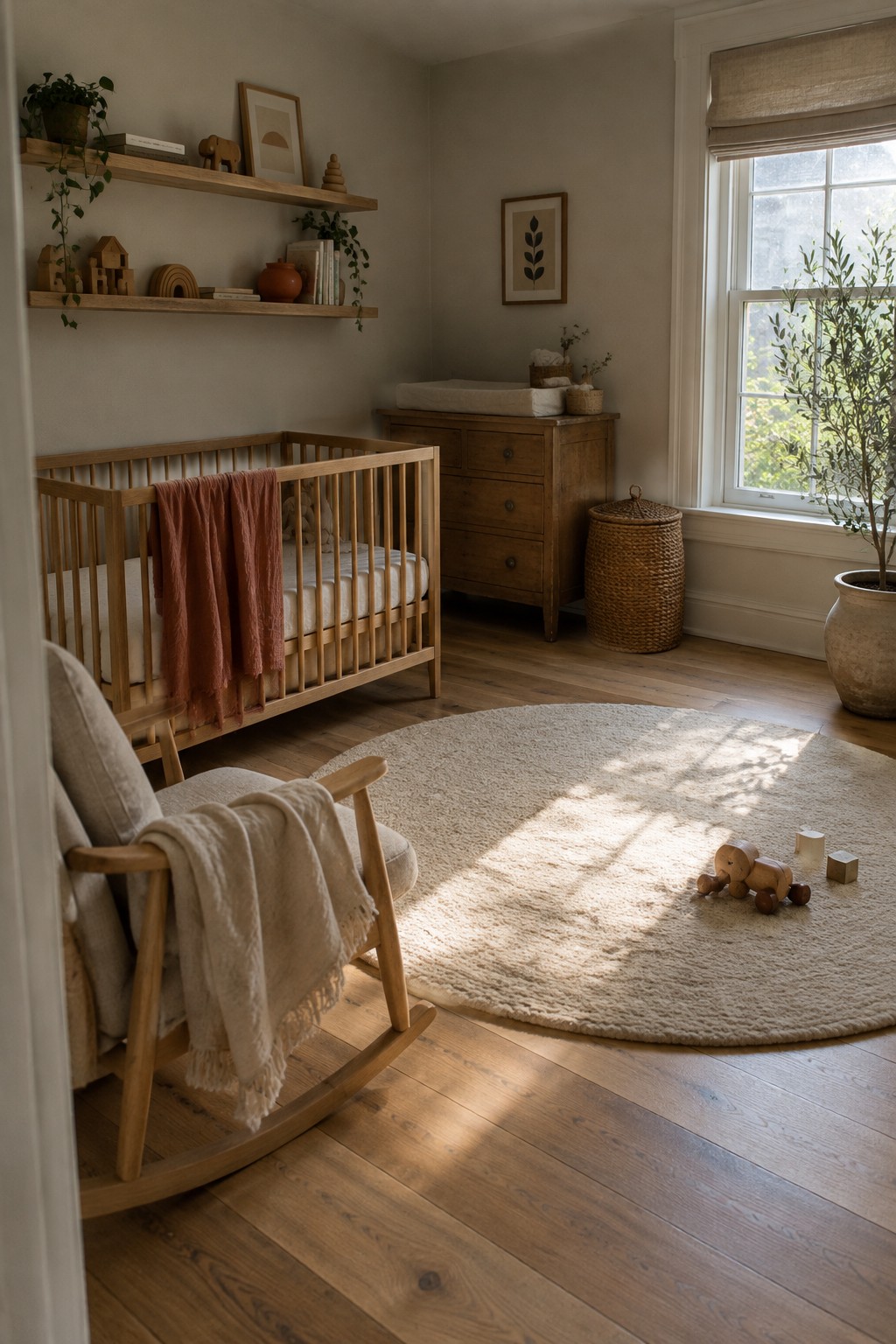
Muted terracotta can bring a little color into a Japandi nursery without taking over the room. A rust-colored throw on the crib is an easy way to try it, especially against pale bedding and natural wood.
Keep the rest of the palette simple, and use terracotta in one or two small pieces. It suits a calm nursery where you want a gentle color note, but avoid placing loose blankets or textiles in a baby’s sleep space.
Use a Terracotta Niche for Japandi Storage

A recessed shelf niche is a useful way to bring muted terracotta into a Japandi interior. The color gives a small built-in feature its own character, while the open shelves keep everyday storage simple.
This idea suits an entryway or a narrow hall where floor space is limited. Use a soft, earthy terracotta finish and keep the shelves uncluttered so the niche feels calm rather than busy.
Make Laundry Storage Part Of The Room
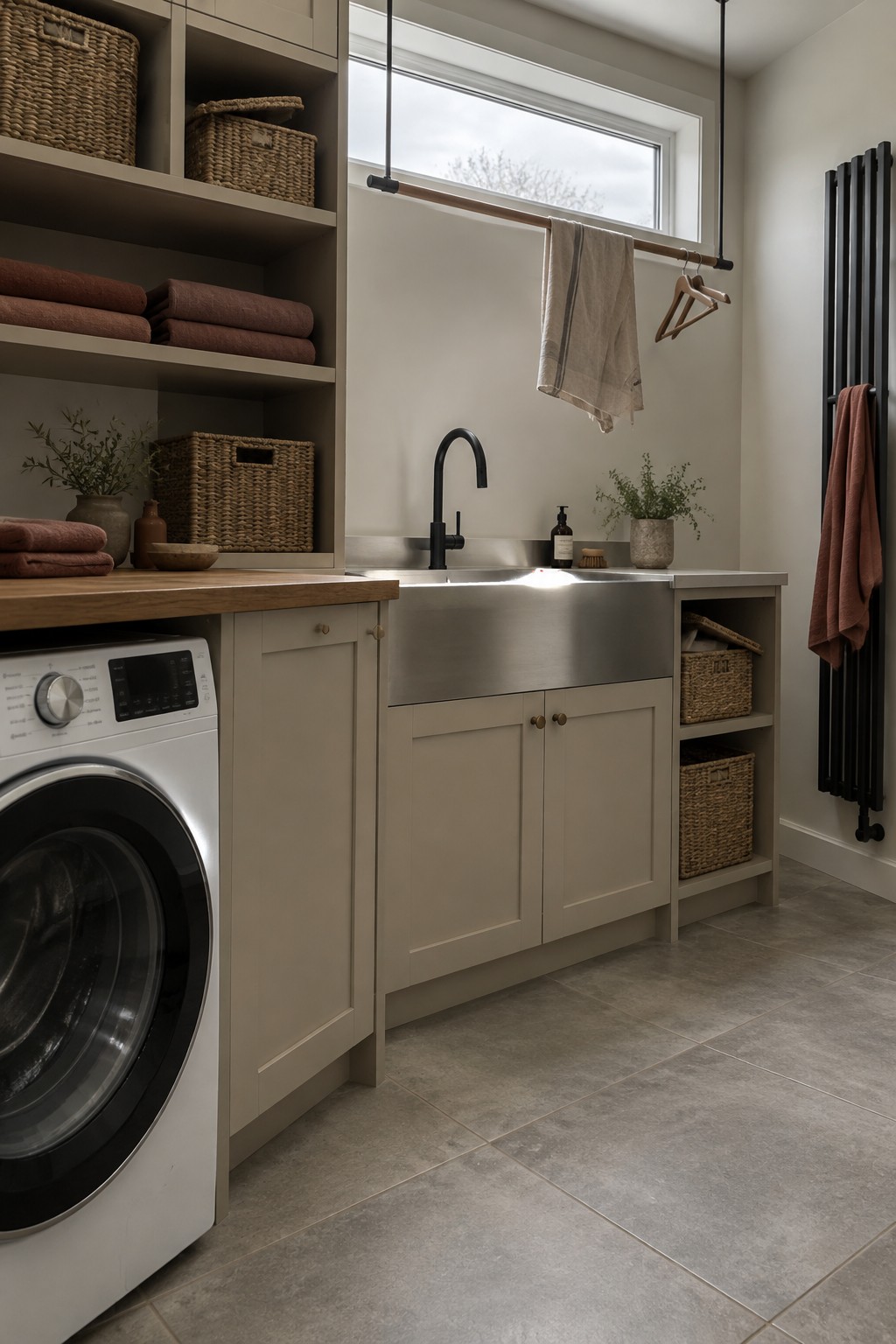
Built-in shelves can make a laundry room easier to use without relying on extra cabinets or bulky organizers. Here, open cubbies keep baskets and folded towels close at hand, while the muted terracotta linens bring a small, useful dose of color to the neutral cabinetry.
This approach works well in a narrow utility room where every bit of storage matters. Use baskets to keep smaller supplies tidy, and leave some shelf space open so the room does not feel crowded.
Use Terracotta Pillows To Bring Color To A Japandi Bedroom

Muted terracotta pillows are an easy way to add color to a calm Japandi bedroom. Against simple white bedding, the earthy tone stands out without taking over the room.
Try this on a daybed or a bed with a pared-back frame, and keep the rest of the bedding quiet. One or two pillows are usually enough, especially in a small bedroom.
Add a Terracotta Pouf to a Japandi Reading Nook

A muted terracotta pouf is an easy way to bring color into a Japandi corner without changing its calm, natural feel. Its soft, rounded shape also gives a reading nook a more relaxed look.
Place one near a woven chair so it can serve as a footrest or an extra seat. Keep the rest of the area simple, and choose a dusty, earthy shade rather than a bright orange.
Use Terracotta Tile To Add Color In A Japandi Bathroom
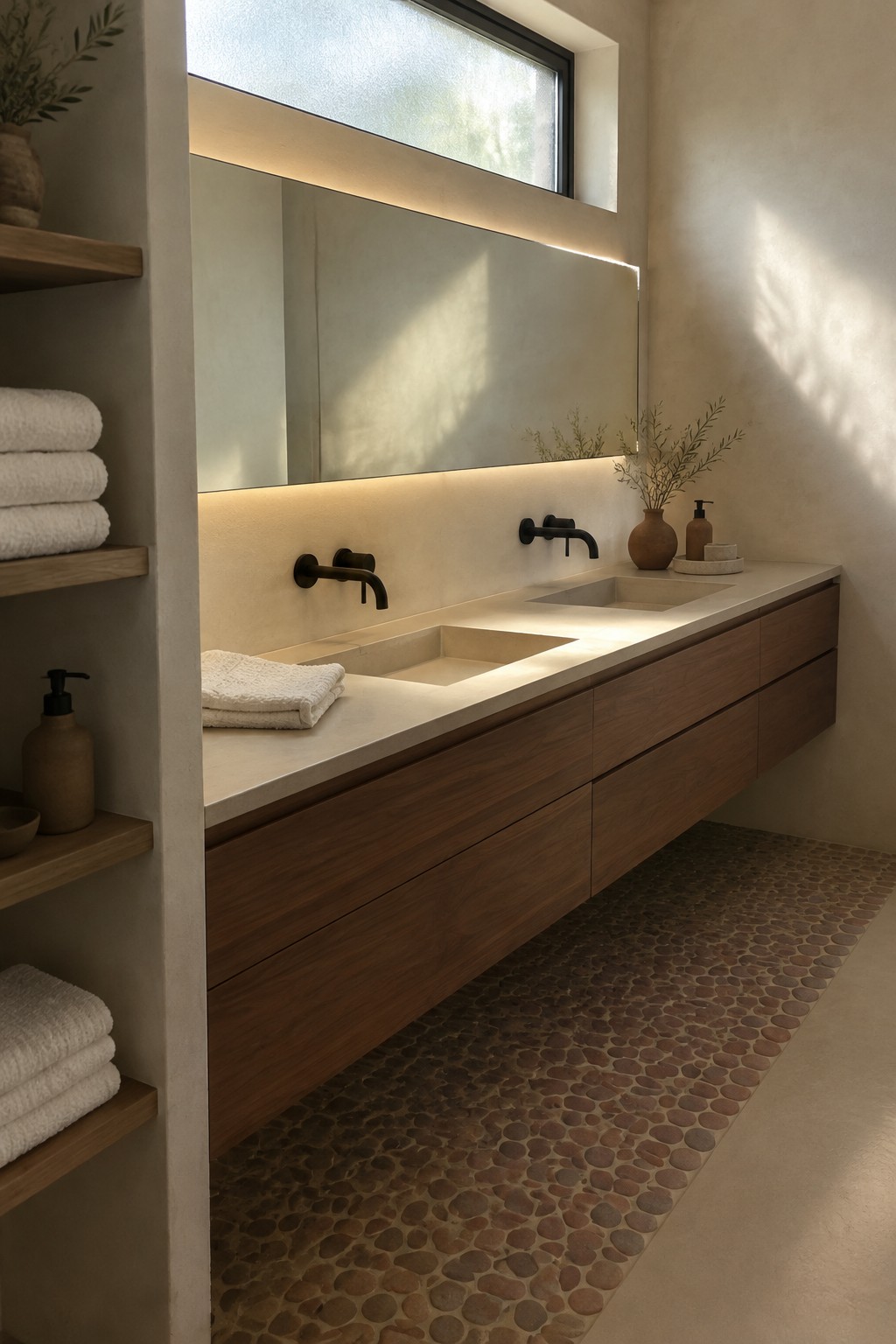
A muted terracotta floor can bring color into a Japandi bathroom without taking over. Small rounded tiles give the room a more natural feel, while a restrained shade sits comfortably beside pale stone and wood.
This idea works well in a bathroom where the larger surfaces are neutral. Keep the terracotta to the floor or a small defined area, and let the other finishes stay simple.
Use A Built-In Banquette To Save Space
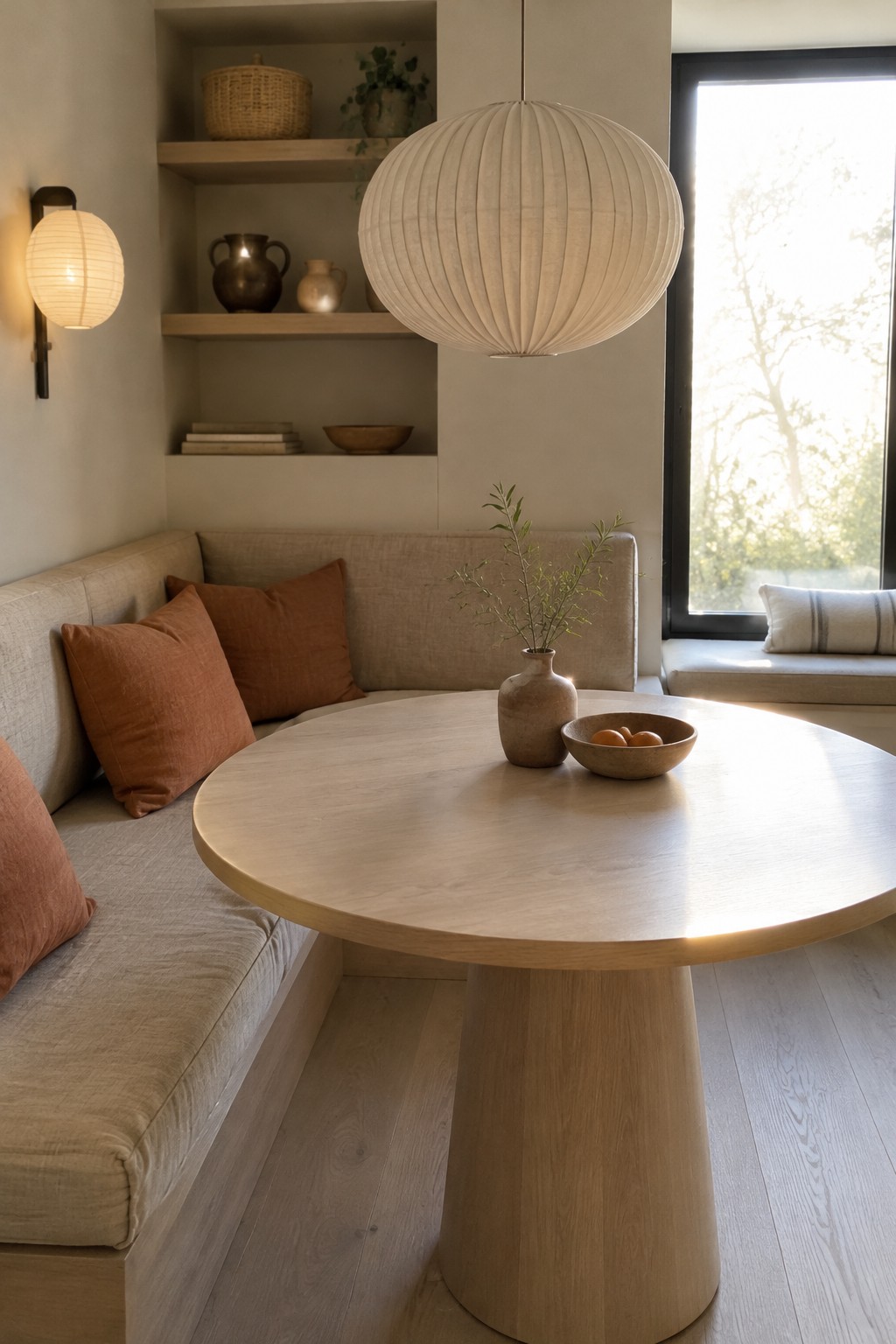
A built-in banquette makes a dining nook feel settled without taking up room for chairs on every side. In this Japandi-style setup, terracotta cushions bring a muted color accent to the simple wood and neutral upholstery.
This arrangement works well in a breakfast nook or an open-plan kitchen where floor space is limited. Keep the seat fabric easy to clean, and use a few cushions rather than filling the bench with them.
Use a Built-In Dressing Area To Keep Storage Tidy
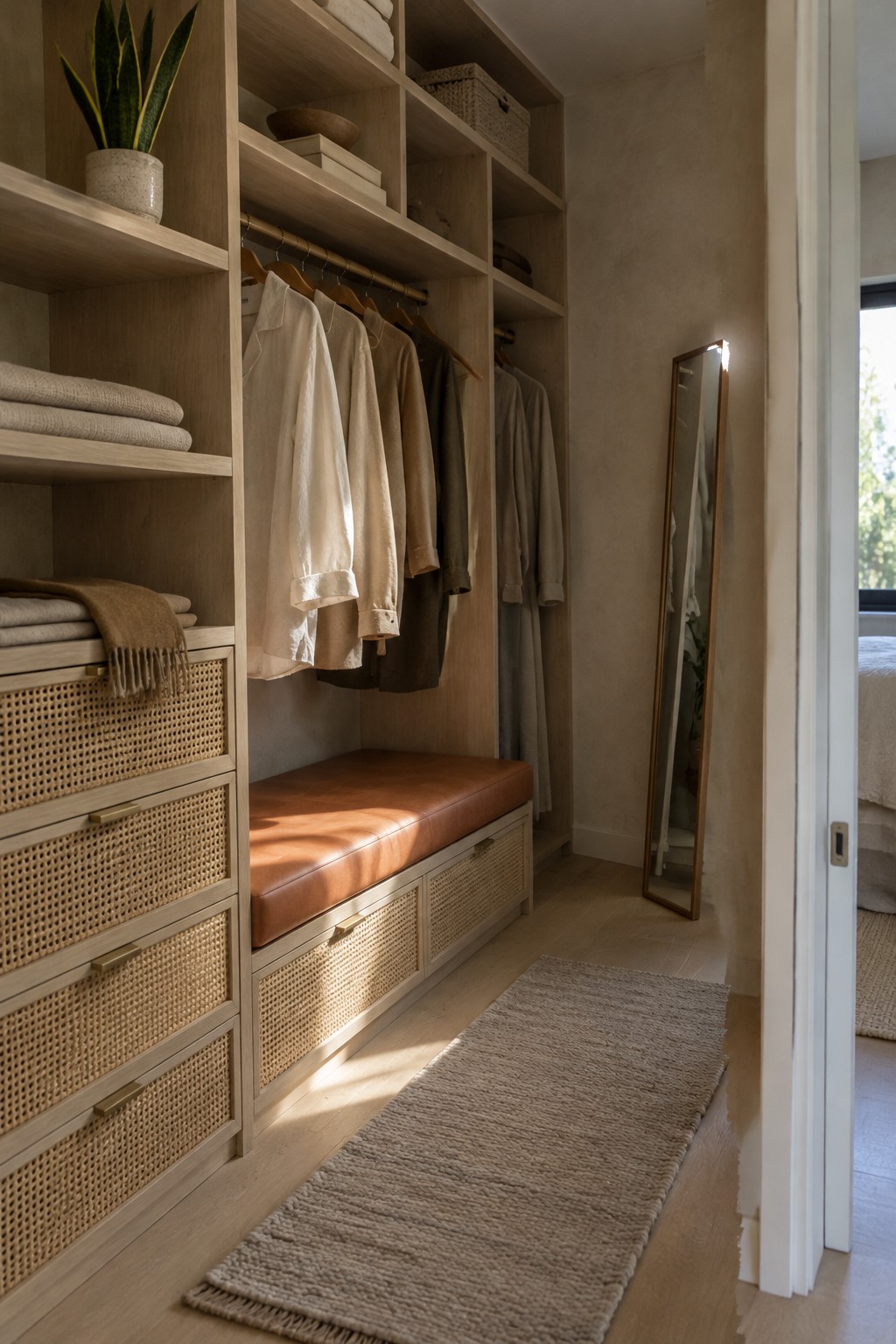
A built-in dressing area makes use of wall space that might otherwise go unused. Open shelves and woven-front drawers keep everyday clothing and linens close at hand, while the muted terracotta bench cushion brings a gentle color accent into the wood-and-neutral palette.
This kind of setup works well in a walk-in closet or a bedroom alcove. Plan a mix of hanging space and closed storage, then use a cushion in a similar earthy shade to echo terracotta elsewhere in a Japandi home.
Use Terracotta Tile To Add Color In A Japandi Kitchen

Terracotta backsplash tile is an easy way to bring muted color into a Japandi kitchen without losing its simple, natural feel. The warm, handmade look works especially well beside pale wood and stone, where it gives the kitchen a little more character.
Try it on one backsplash rather than across every surface. A soft, earthy shade suits a small kitchen too, but keep the grout and nearby finishes quiet so the tile remains the main color accent.
Use a Terracotta Floor Cushion In A Japandi Room
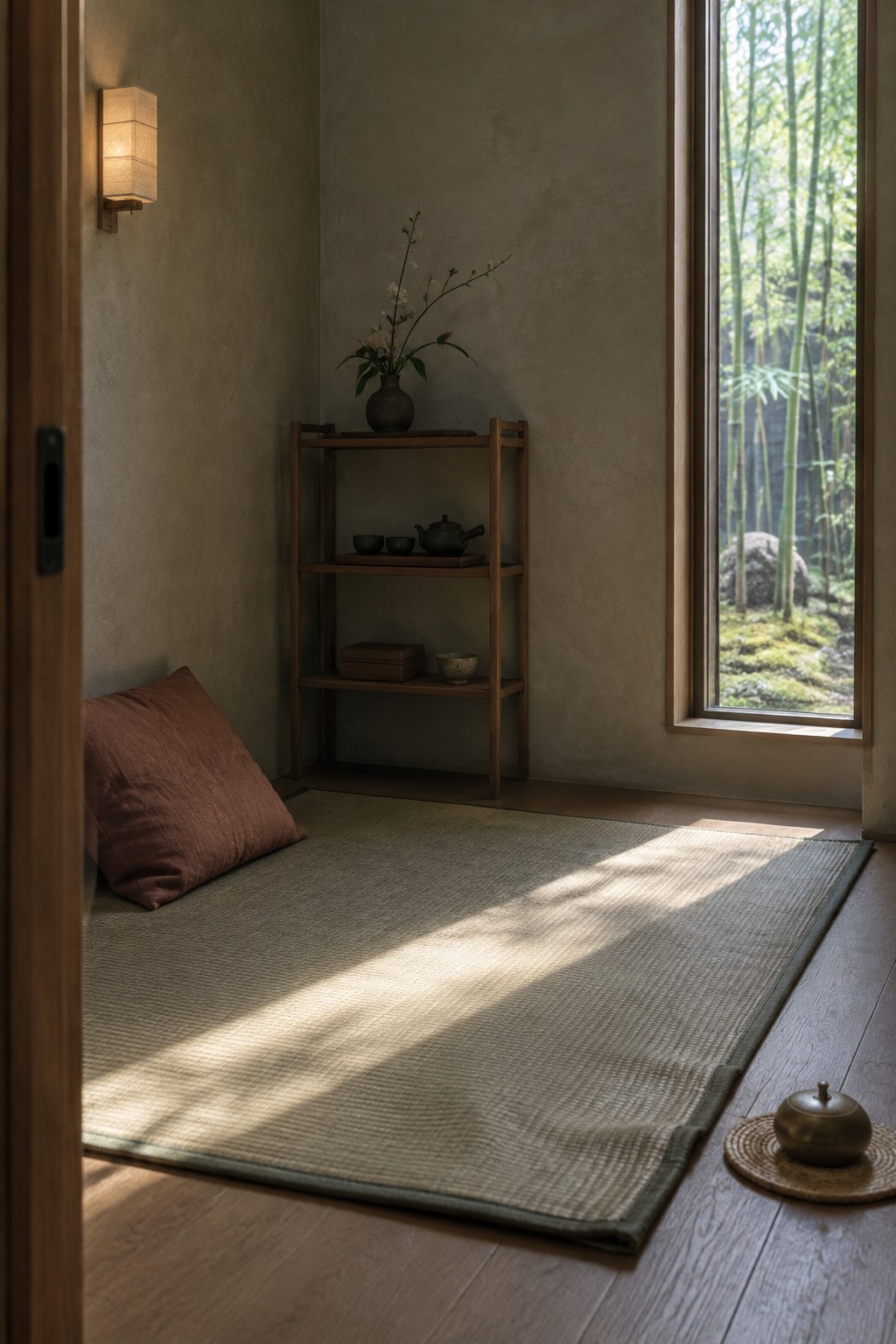
A floor cushion is an easy way to bring muted terracotta into a Japandi interior without changing the room’s quiet, neutral base. Its low profile suits a simple tea or reading room, and the color gives the woven floor a gentle contrast.
Choose a plain linen or cotton cover in a dusty, earthy shade, and keep the rest of the textiles subdued. This works especially well in a small room where bulky chairs would take up too much space.
Use a Compact Desk Area In A Shared Room
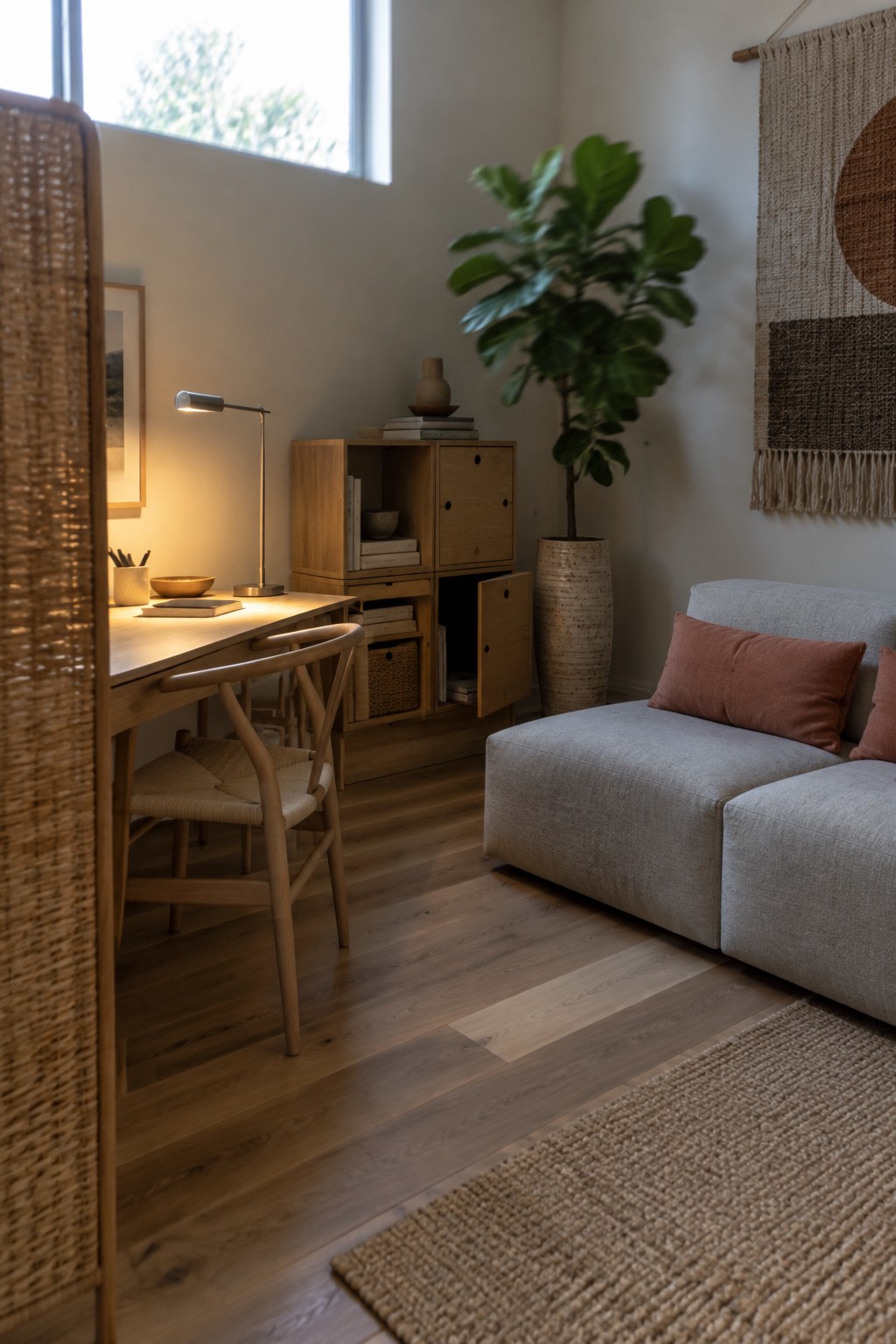
A small desk can fit neatly into a living room when it stays close to the wall and uses simple, light-looking furniture. Here, the wood desk and chair suit the room’s Japandi style, while the muted terracotta cushions bring in a gentle touch of color.
This setup works well in a small home where a separate office is not practical. Keep the desktop fairly clear, and use nearby closed storage for supplies so the work area does not take over the room.
Frequently Asked Questions
Q: How much terracotta should I use in a Japandi room?
A: Start with a few accents, such as a cushion, ceramic vase, or small area rug. If the room still feels calm, add a larger touch like a painted wall or upholstered chair.
Q: What colors work well with muted terracotta?
A: Warm whites, sand, and soft gray keep the palette gentle, while dark wood adds a little contrast. Try a sample beside your existing furniture first, since terracotta can look quite different in changing light.
Q: Can I use terracotta in a small room?
A: Yes. Keep the walls and larger pieces light, then bring in terracotta through smaller, easy-to-swap accents. A single cushion or planter can add warmth without making the room feel crowded.
Q: How do I keep a Japandi room from feeling too minimal?
A: Mix natural textures, such as linen, wood, and handmade ceramics, instead of adding lots of decor. A terracotta accent helps, too, because it brings warmth without adding visual clutter.
