


A narrow living room can feel calm and open when the furniture leaves a clear path and each piece has a purpose.
Japandi style helps by pairing simple forms with warm wood, natural texture, and a restrained color palette, but the balance matters more than any single feature.
I’ve found that a room can look spacious on paper and still feel awkward if the sofa blocks movement or the seating feels disconnected.
The layouts here show practical ways to arrange furniture, make use of corners, and keep the room comfortable without crowding it.
Some of these ideas may be worth adapting to your own floor plan, especially if you want a living room that feels settled as well as uncluttered.
Keep Furniture Along The Walls
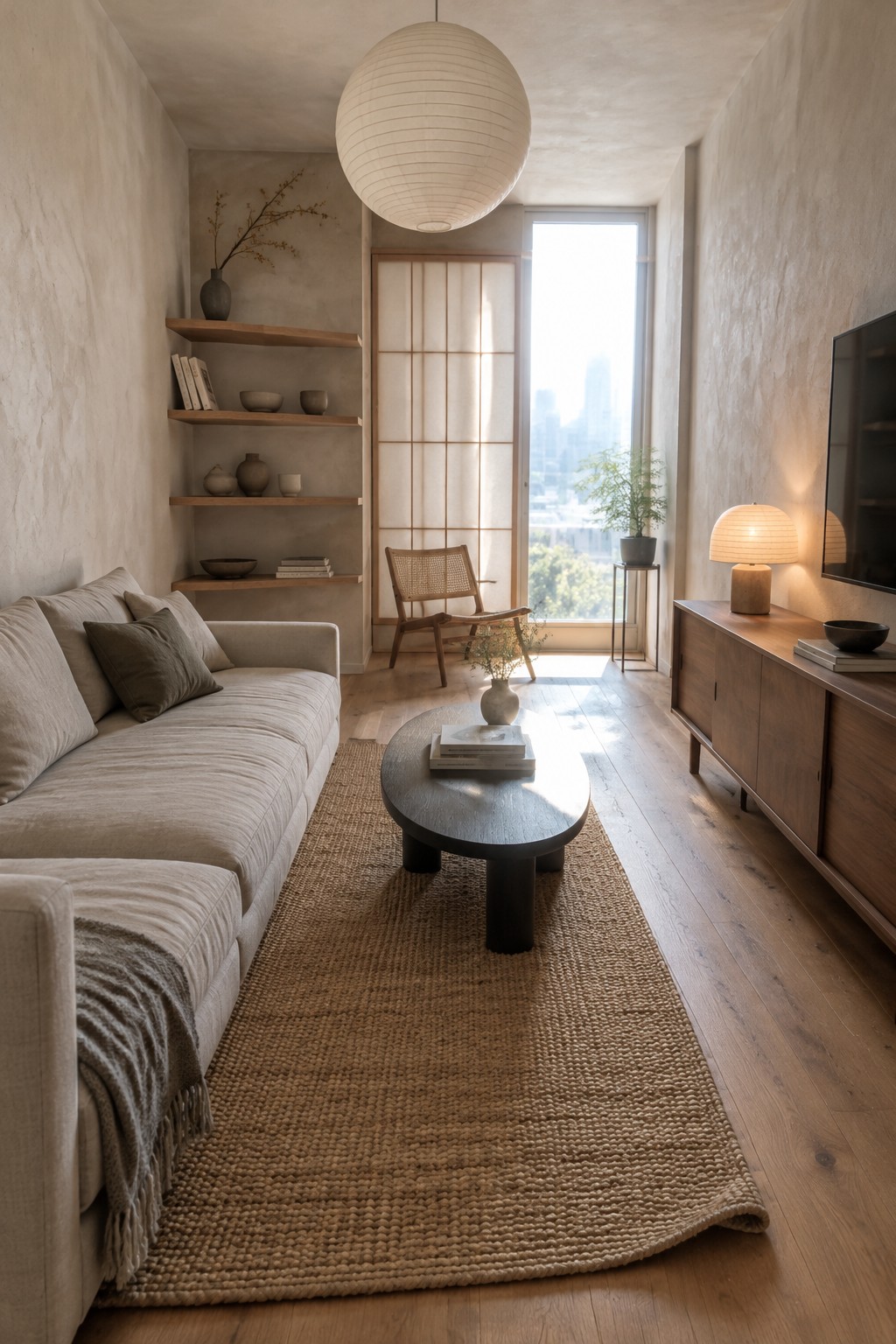
A narrow living room often works best when the main furniture stays close to the walls. This leaves a clear path through the middle and makes the room easier to move around in, without giving up a comfortable seating area.
Use a slim coffee table and keep the walkway between the sofa and media cabinet open. A long rug can help define the seating zone, but leave enough floor space at the edges so the layout doesn’t feel cramped.
Use Built-In Seating to Save Floor Space
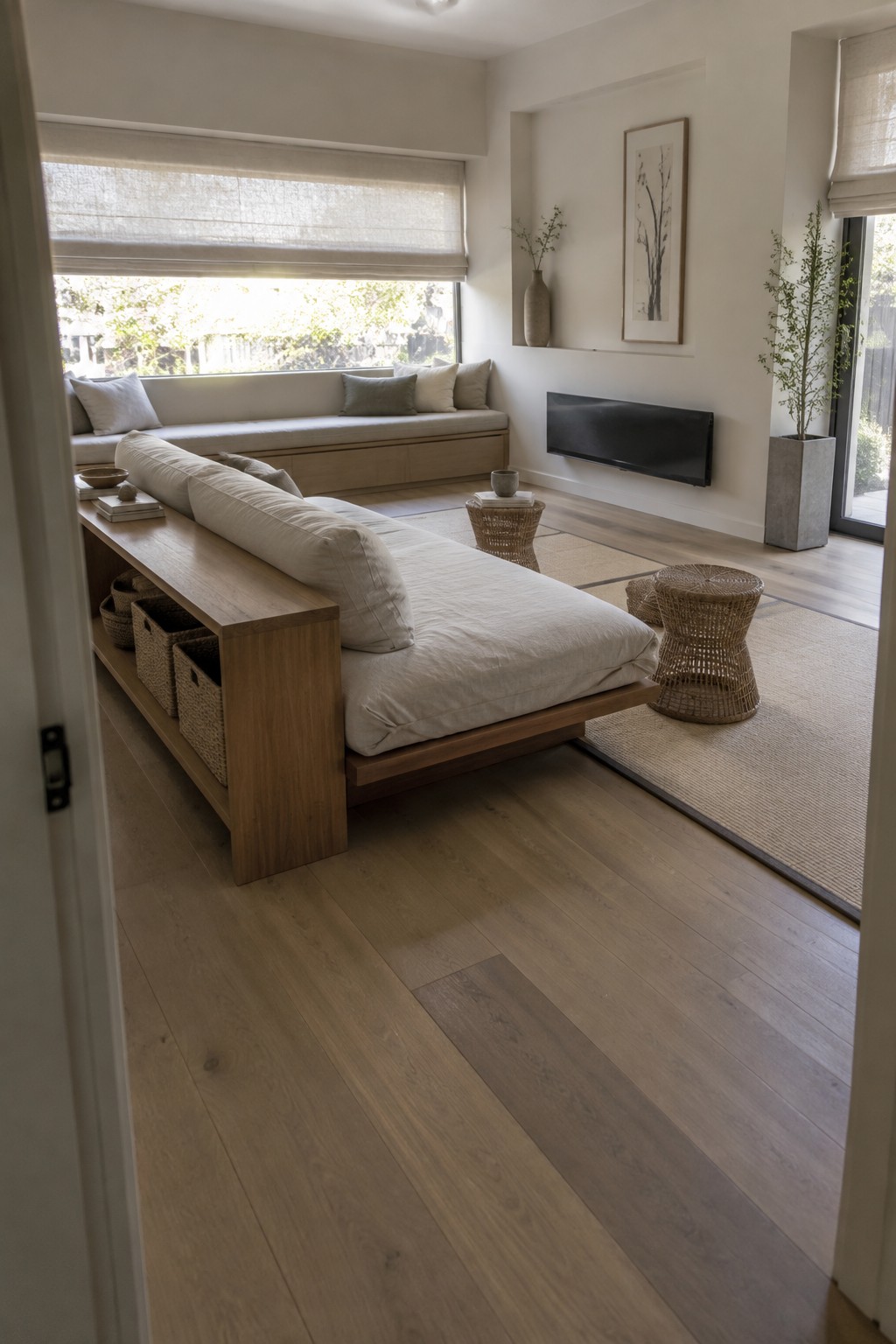
A built-in bench can make a narrow living room feel less crowded than a separate sofa and chairs. It uses the wall space neatly and gives the room a clear place to sit.
If you’re planning one, keep the seat depth comfortable and add drawers or baskets below for extra storage. A slim sofa facing the bench can work well, as long as there’s still an easy path through the room.
Keep The Main Path Clear
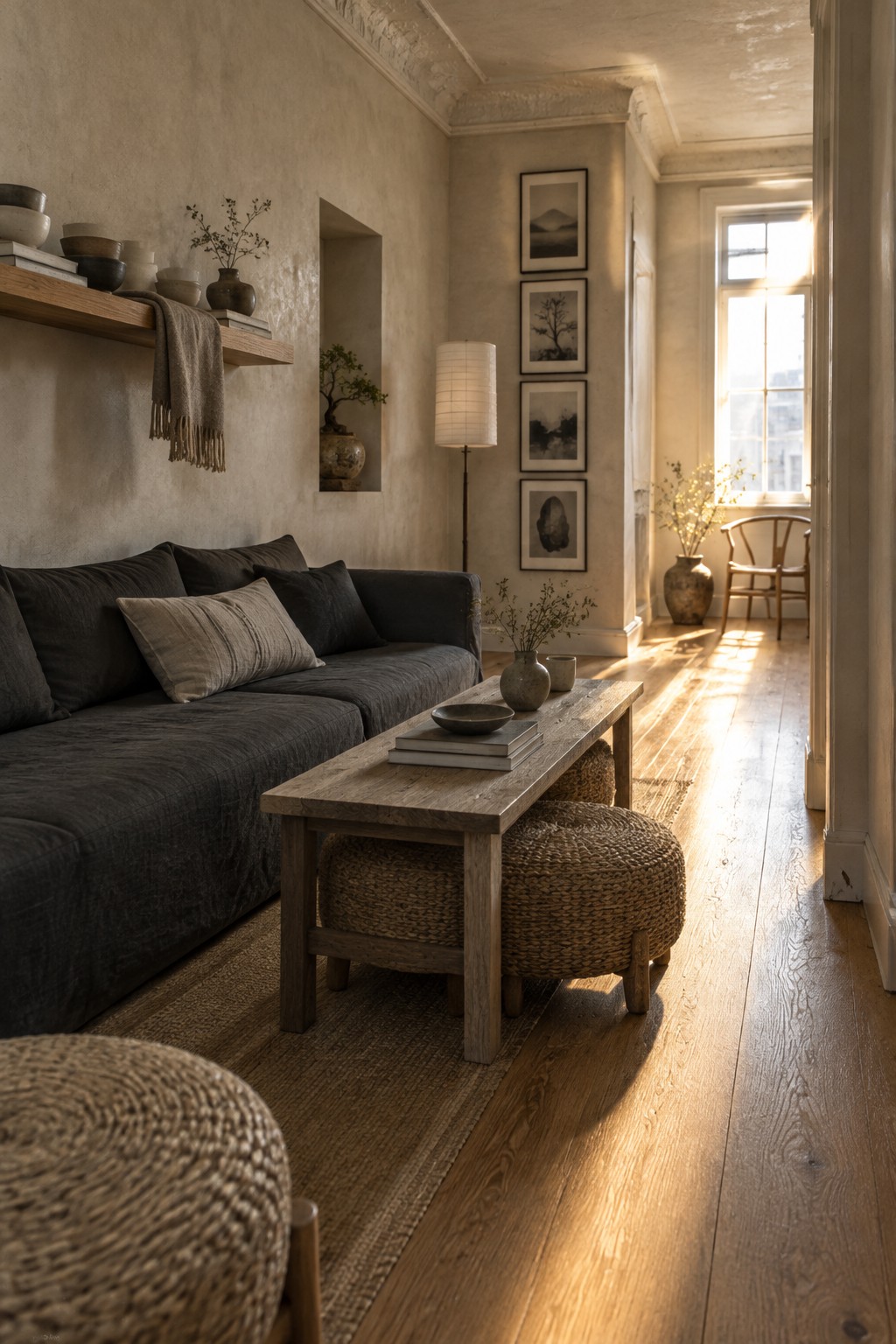
A narrow living room works better when the largest pieces stay to one side and leave a clear route through the space. Here, the sofa sits along the wall, while a slim coffee table keeps the seating area useful without blocking the walkway.
Try this arrangement in a long room where people need to pass through to another space. Choose a narrow table and leave enough room around it to walk comfortably. A bulky table can quickly make the layout feel cramped.
Keep The Furniture Along The Walls

In a narrow living room, placing the sofa along one wall can leave a clear path through the space. A slim bench or chair across from it gives you extra seating without making the middle feel crowded.
Choose pieces with open legs and modest proportions so the floor stays visible. A long rug can help define the seating area, but leave enough room at the edges to walk comfortably.
Use A Built-In Desk To Make Use Of A Narrow Wall
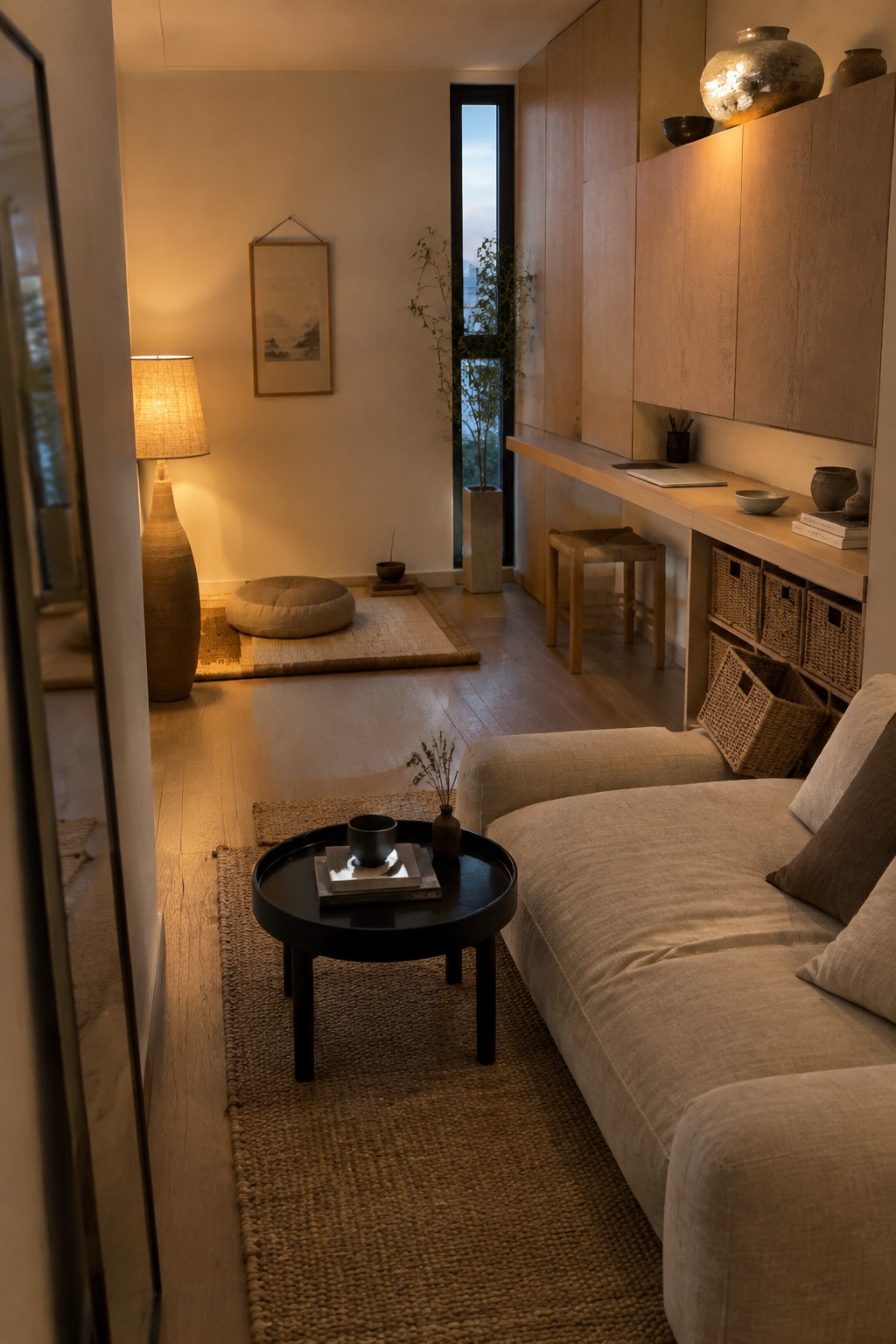
A long built-in desk can add a useful work surface without taking up much floor space. Here, it runs along one wall, leaving the center of the narrow room open for a clear walking path.
This layout suits a small living room that needs to serve more than one purpose. Keep the desk shallow and choose a stool that can tuck underneath when it is not in use.
Use a Compact Dining Spot to Make the Most of a Narrow Room

A small wall-mounted table can give a narrow living room a useful place to eat or work without taking up much floor space. Here, it sits near the kitchen, so it serves that area without blocking the main route through the room.
Choose a table that folds down or has a slim profile, and use one or two chairs that can tuck underneath when they are not needed. Keep the tabletop modest in size so the seating area and walkway still feel comfortable.
Use a Narrow Seating Arrangement
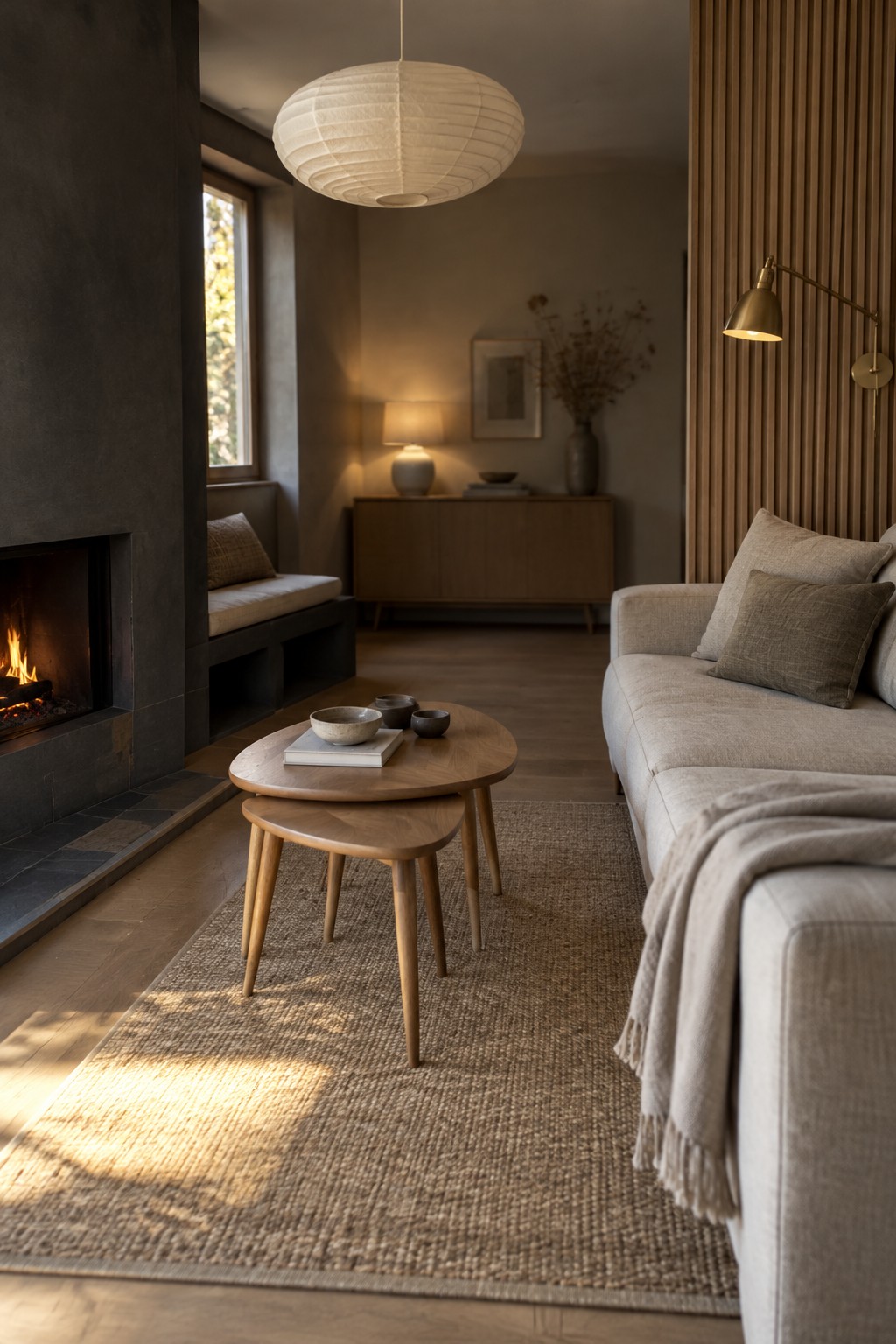
A slim sofa along one side of the room leaves a clear route through the middle. That open strip matters in a narrow living room, where bulky furniture can make it awkward to move around.
Choose a sofa with a modest depth, then use a small coffee table that is easy to walk around. Keep the main path open rather than filling every gap with extra furniture.
Use Built-In Storage to Keep a Narrow Room Open
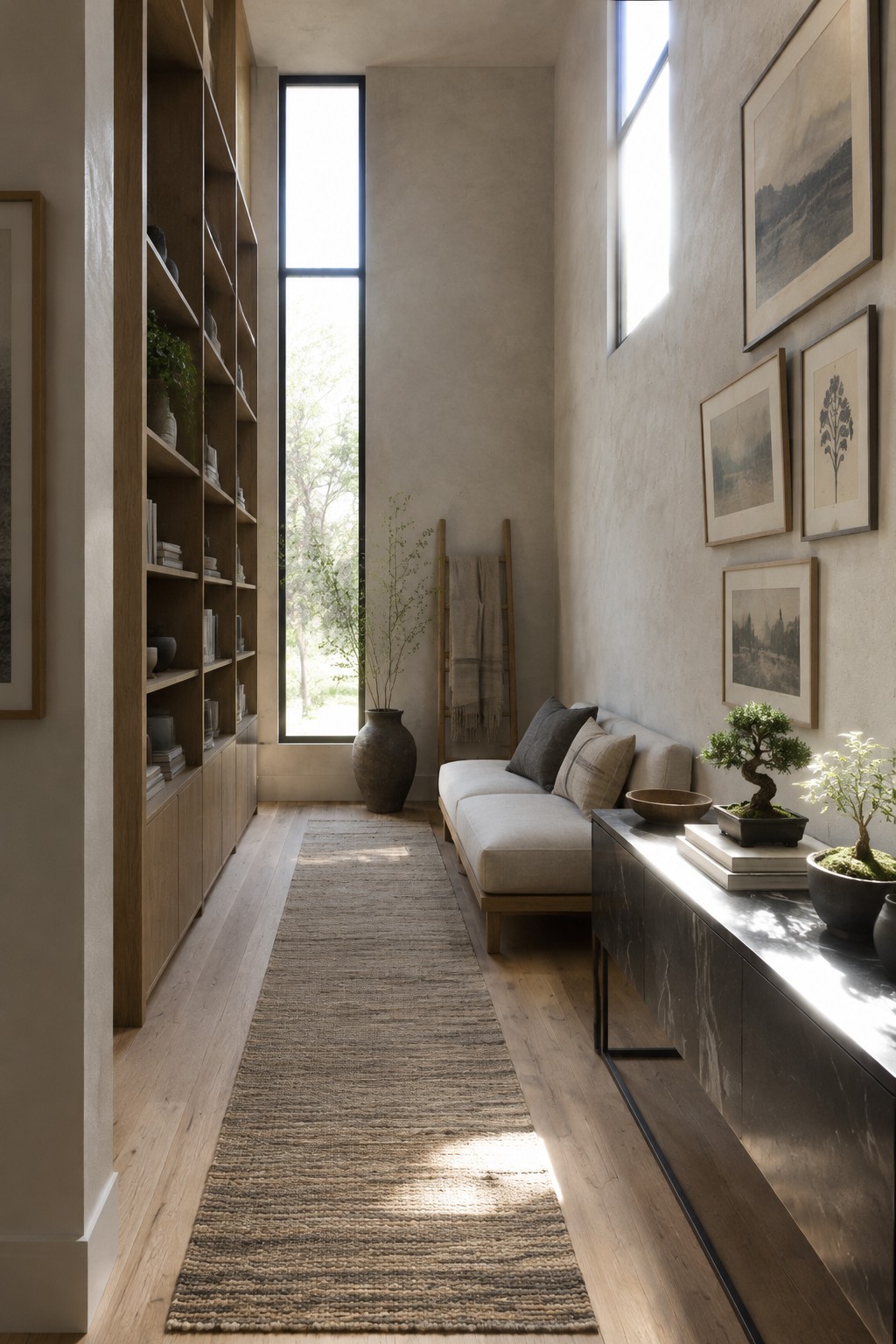
A tall bookcase built into one side of a narrow living room gives books and everyday items a home without taking up extra floor space. Keeping storage in one long, defined area can make it easier to arrange seating and leave a clear route through the room.
This approach works well in a slim living room where freestanding cabinets would crowd the walkway. Choose closed cupboards for clutter and open shelves for a few useful or personal items, so the storage stays easy to live with.
Use a Window Bench for Extra Seating
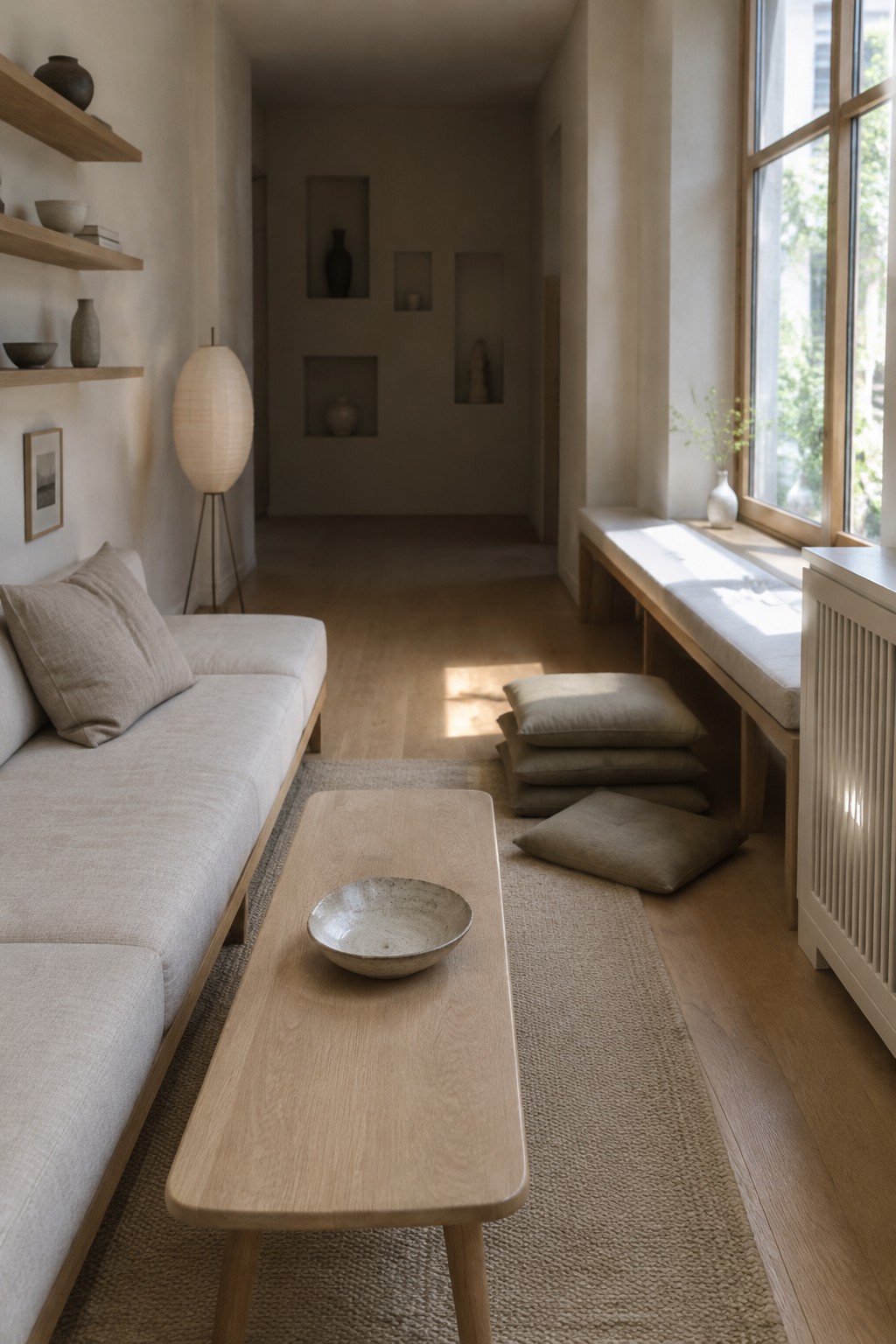
A long bench beneath the window makes good use of a narrow living room’s edge without taking up the central walkway. It can serve as a quiet spot to sit, while keeping the main seating area simple.
If you have a similar stretch of wall, choose a slim bench and leave enough room for people to pass comfortably. A few loose cushions nearby can provide extra seating when needed, but avoid letting them spill into the walking path.
Use A Long Desk Along One Wall
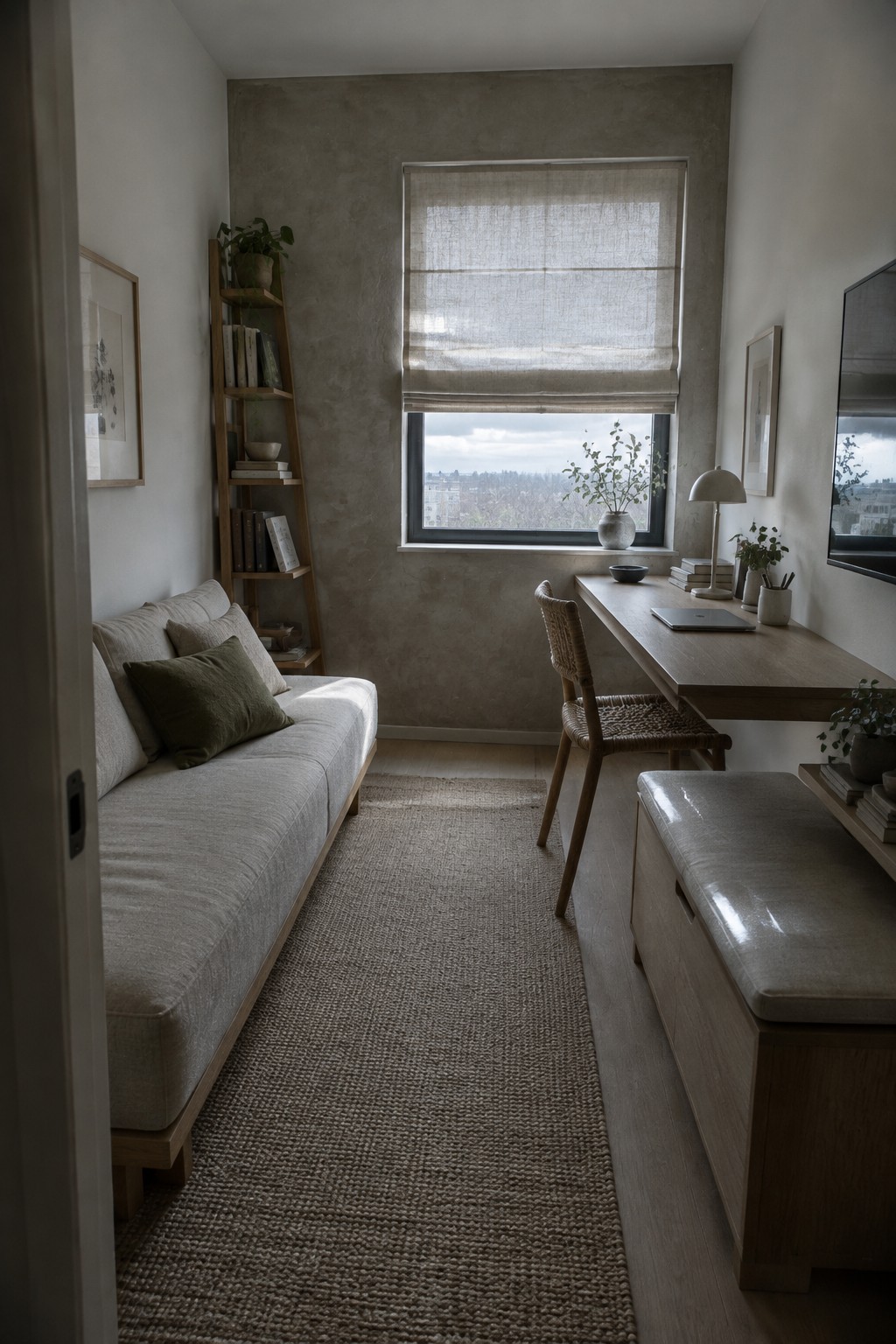
A narrow living room can also make room for a work area when the desk runs along one side instead of sitting across the floor. Here, a slim wood desk leaves a clear route through the room while still providing a useful place to work.
This setup suits a long, compact room where a separate office would take up too much space. Keep the desk shallow and choose a chair that can tuck in neatly when it is not in use.
Use a Daybed to Keep a Narrow Room Open
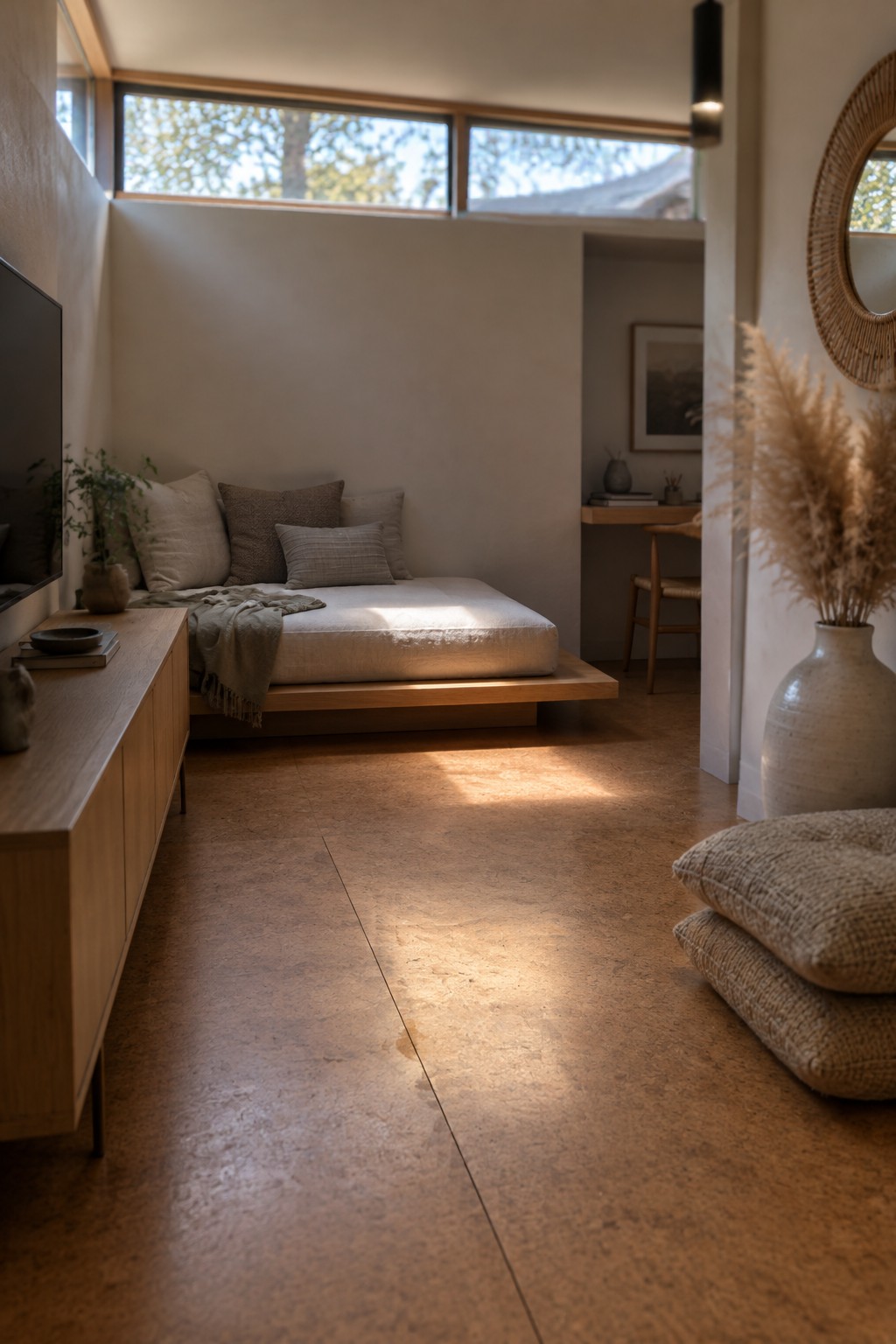
A low daybed can do the work of a sofa without taking up as much visual space. Its simple shape suits a narrow living room, and it can still offer a comfortable place to sit or stretch out.
Choose a slim frame and keep the nearby walkway clear. Neutral cushions help the daybed blend into the room, while a small number of pillows keep it ready for everyday use.
Use Low Seating to Keep the Room Open
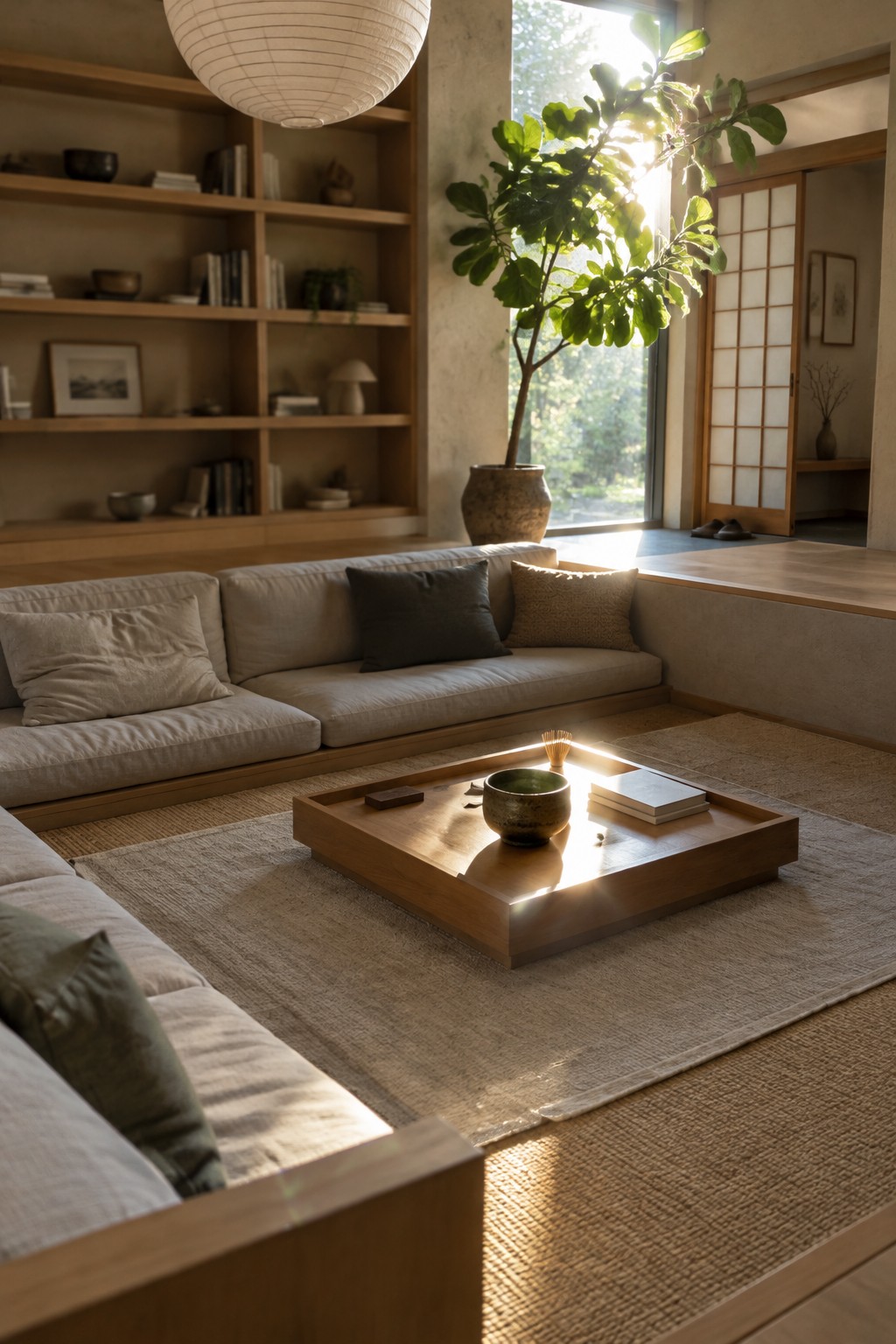
Low, built-in-style seating can make a narrow living room feel less crowded without giving up a comfortable place to sit. The long sofa sits close to the floor, leaving the view across the room open and keeping the furniture from feeling bulky.
This arrangement works especially well in a long, narrow space. Keep the coffee table low and modest in size, and leave a clear route around it so people can move through the room easily.
Use A Narrow Fireplace To Save Floor Space
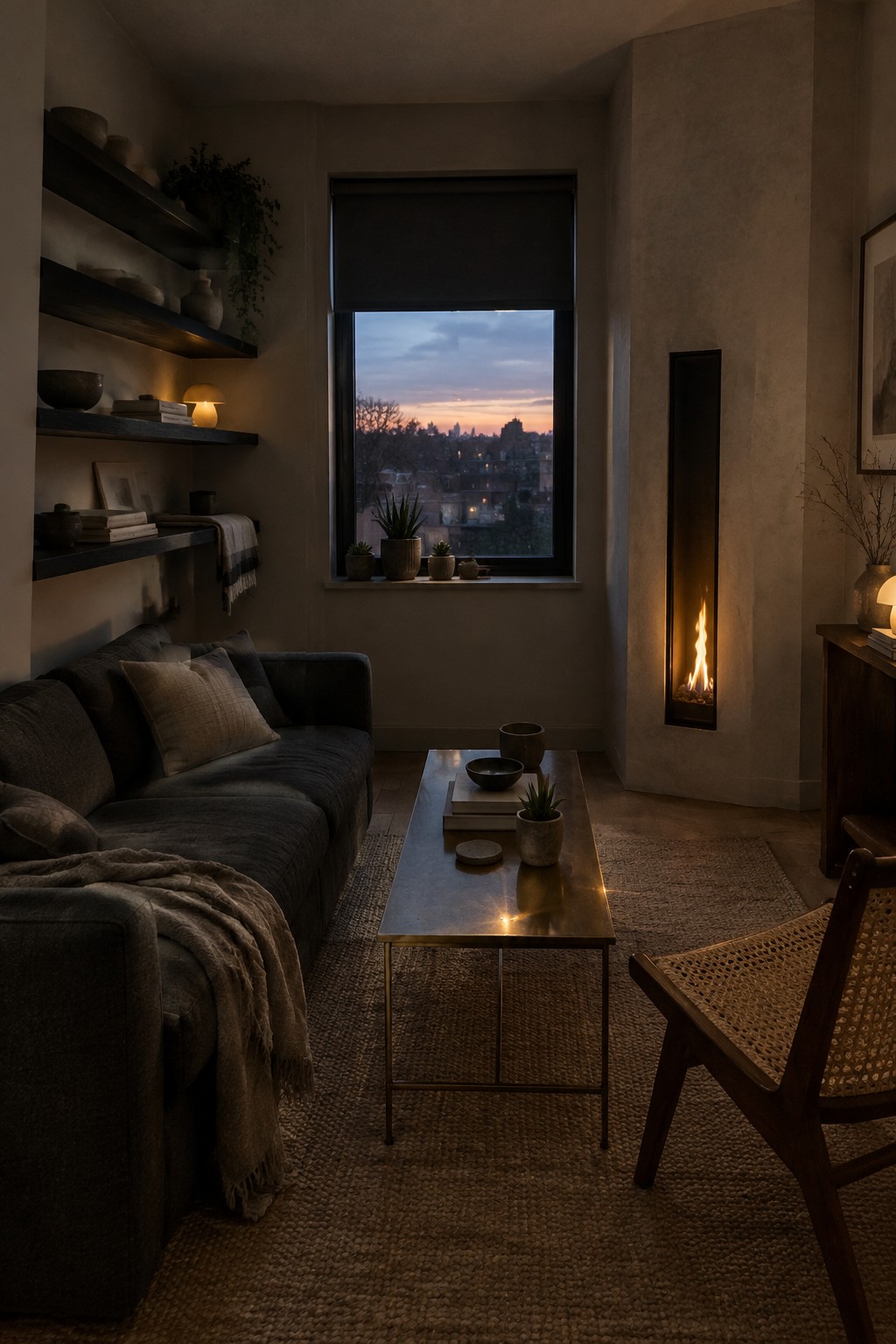
A slim, built-in fireplace can bring a focal point to a narrow living room without taking up space that could be used for seating. Its vertical shape suits a tight wall and keeps the floor plan simple.
This works well when you want a fire feature but don’t have room for a wide hearth. Keep the surrounding furniture modest in scale, and check that the fireplace has proper clearance from nearby furnishings.
Use A Narrow Sofa To Keep The Layout Open
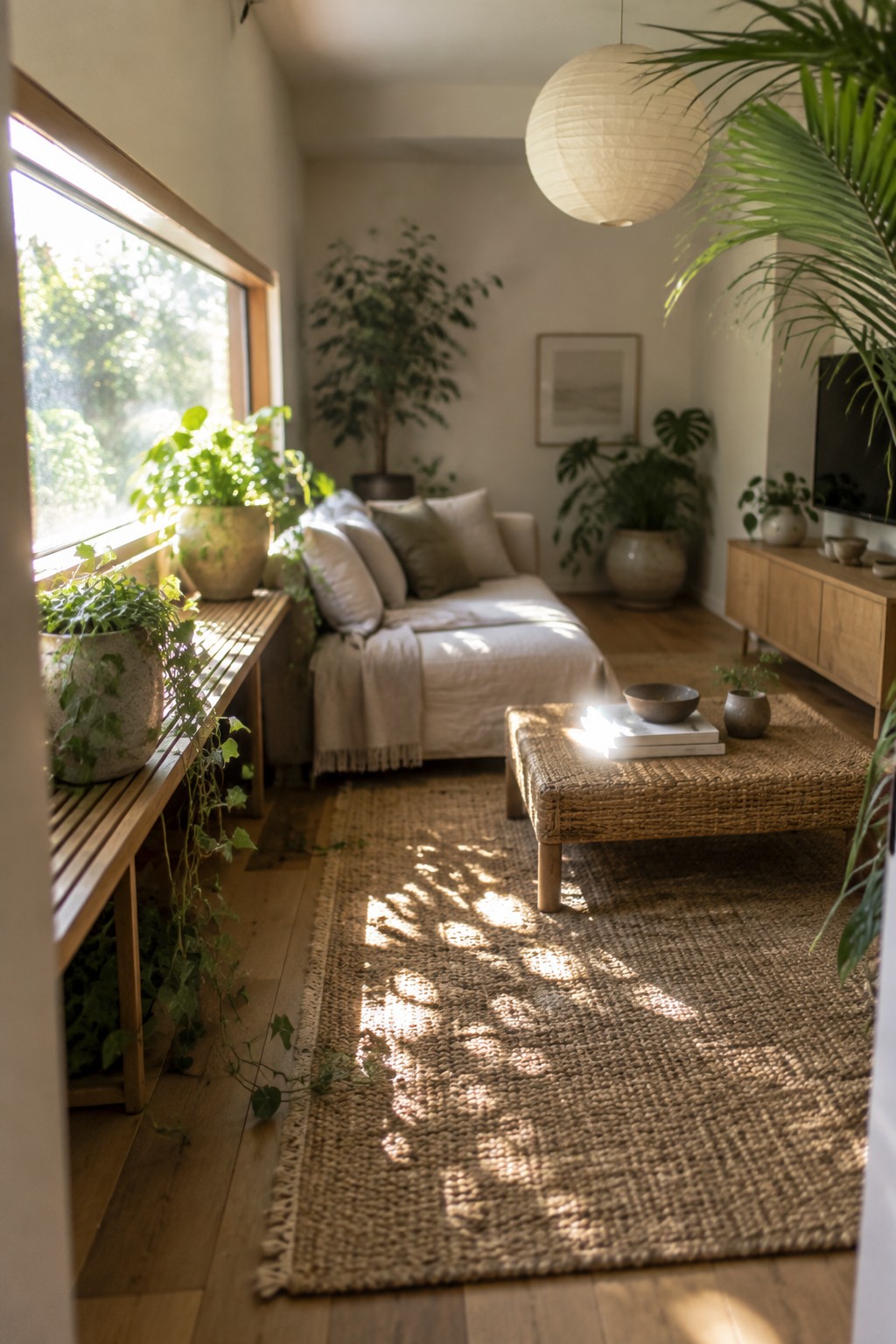
A slim sofa is a good fit for a narrow living room because it gives you a comfortable place to sit without taking over the floor. Here, the sofa sits along one side of the room, leaving a clear route past the seating area.
Look for a low, compact design, and keep the coffee table modest in size so there is still room to move around it. A woven rug can define the seating area without adding bulky furniture.
Use a Sofa to Define the Seating Area

In a narrow living room, a sofa can sit lengthwise to make a comfortable seating zone without blocking the route through the space. Here, the low sectional leaves a clear passage along one side, which helps the room feel usable rather than crowded.
This arrangement suits a long room where people need to move from one end to the other. Keep the coffee table slim, and leave enough space beside the sofa for an easy walkway.
Choose a Compact Sofa for a Narrow Living Room

A compact sofa with an open wood frame can make a narrow living room feel less crowded than a bulky, fully upholstered design. The raised base leaves more floor visible, while the simple shape gives you a comfortable place to sit without taking over the room.
Look for a sofa with slim arms and a depth that suits your available space. In a long room, place it along one wall and leave a clear route past it. A woven rug can mark the seating area without needing extra furniture.
Use a Window Bench for Flexible Seating
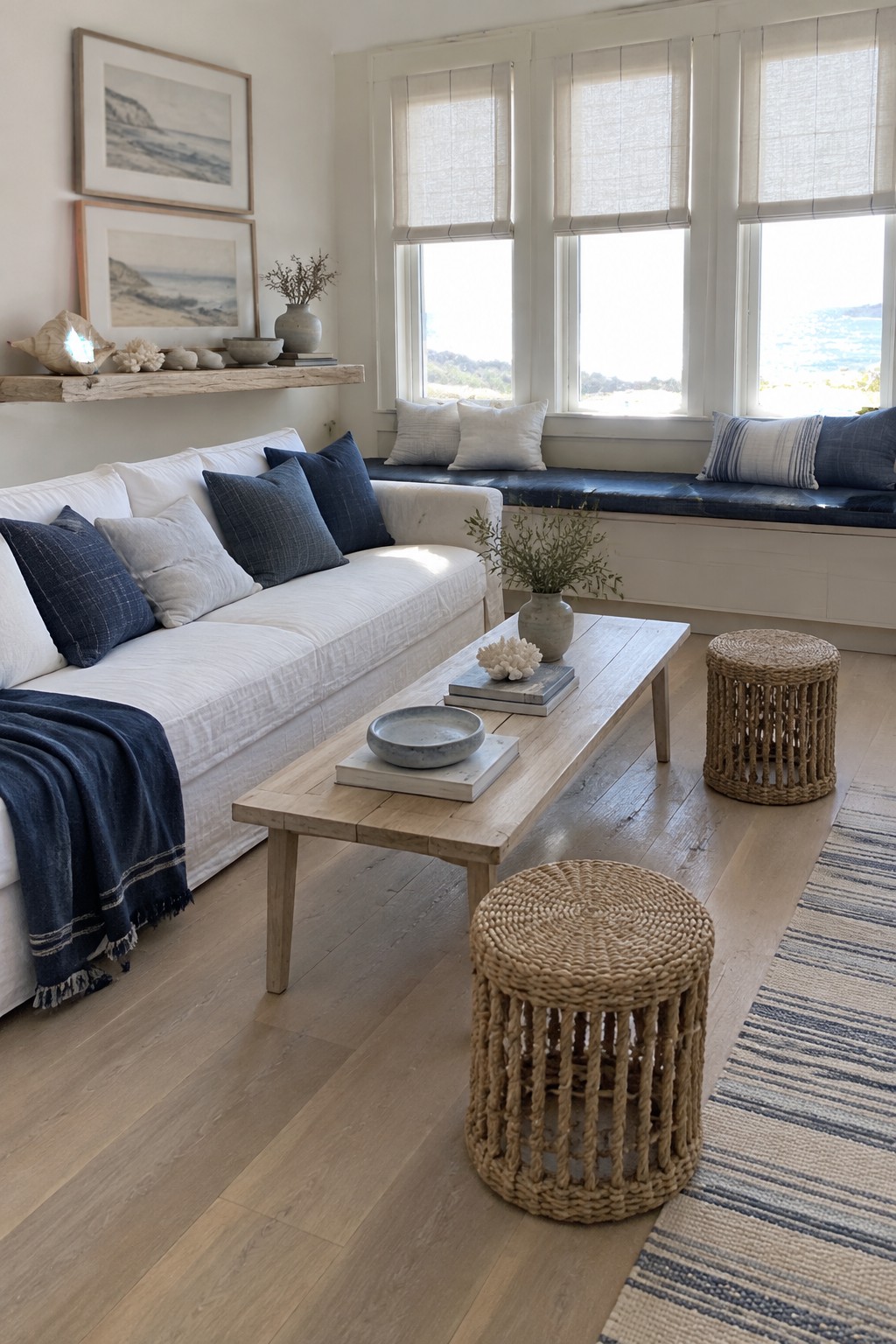
A built-in bench beneath the windows makes good use of a narrow living room’s perimeter, leaving the center open for a coffee table and clear walkway. It also gives the seating area a natural shape without adding another bulky piece of furniture.
For a similar layout, keep the bench depth modest and use a slim cushion so it stays comfortable without crowding the room. A simple white sofa opposite the bench keeps the arrangement easy to move through.
Use a Long Rug to Guide a Narrow Living Room
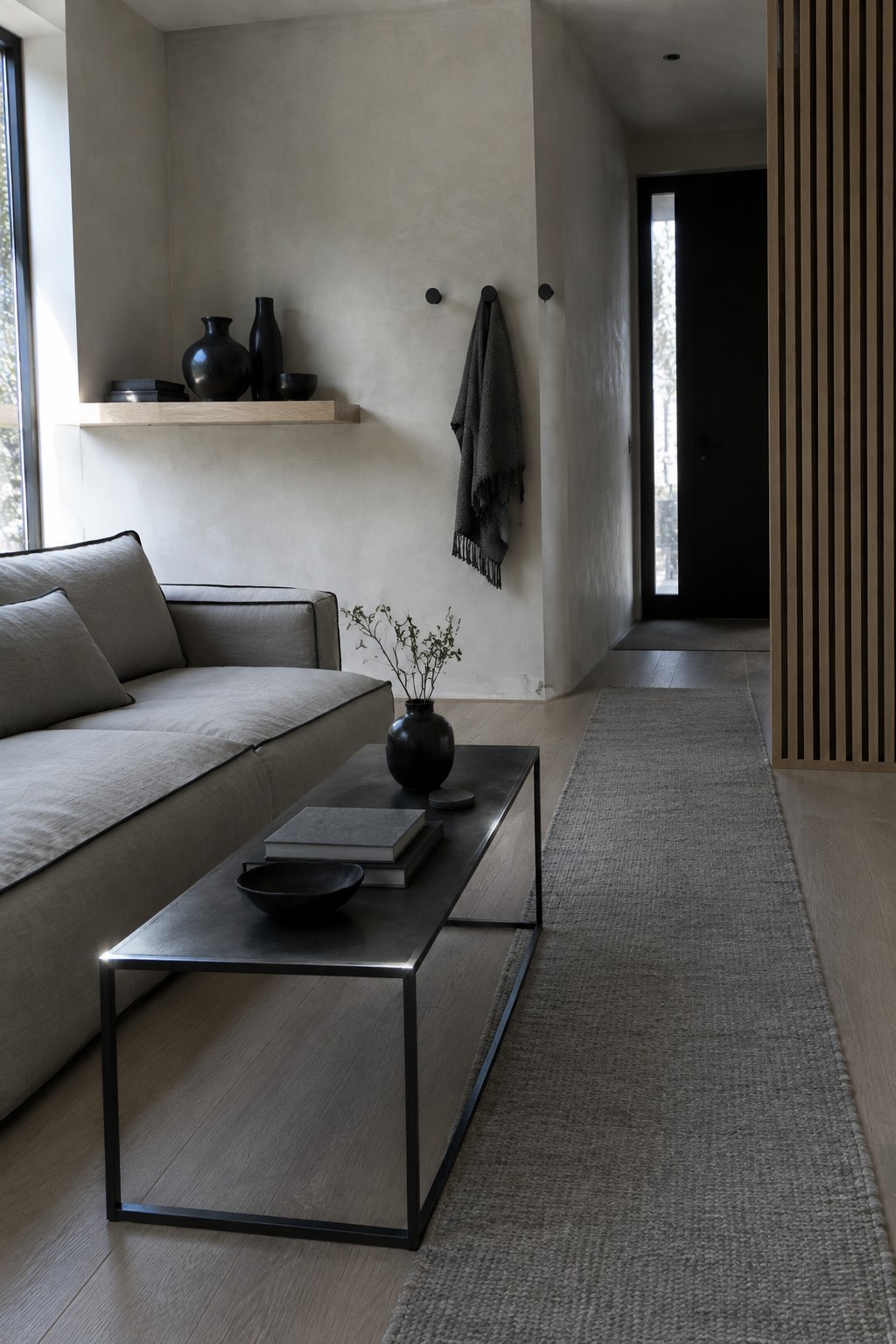
A long runner helps a narrow living room feel organized without taking up extra floor space. Here, it follows the path beside the sofa and coffee table, making the room’s length feel useful rather than awkward.
Choose a rug that leaves some flooring visible along the sides, and keep the main route clear so people can pass through comfortably. A simple, textured weave suits a Japandi room and is easier to live with than a rug that is too thick or busy.
Use A Window Seat To Make The Most Of A Narrow Room

A window seat gives a narrow living room useful seating without taking up space in the middle of the room. The built-in bench here also has baskets underneath, so it can do double duty as storage.
This works especially well where a window recess might otherwise go unused. Keep the seat cushion fairly slim, and leave the main walkway clear so people can move easily between the sofa and the rest of the room.
Use Sliding Screens to Keep a Narrow Room Flexible
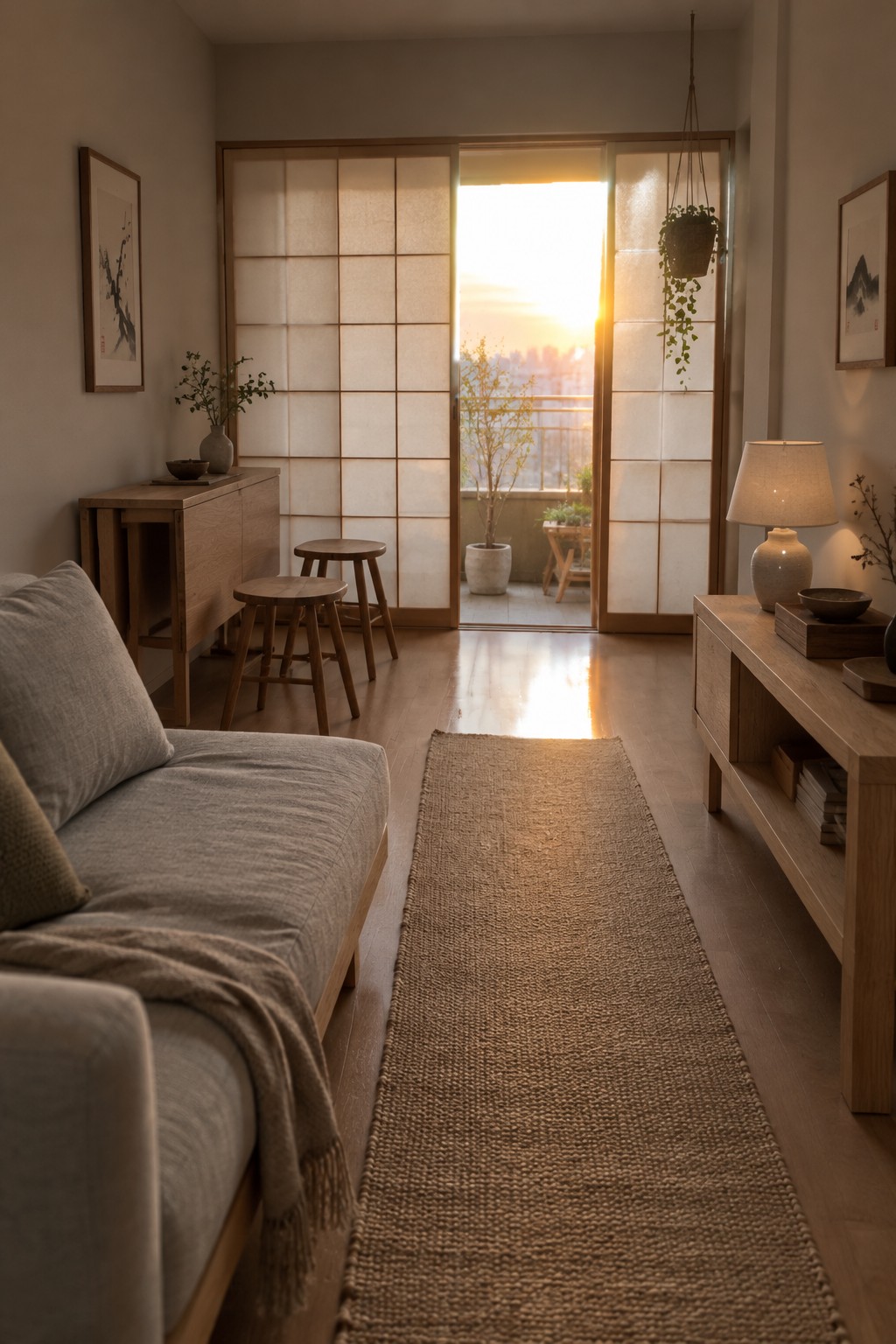
Sliding shoji-style screens can divide a narrow living room without taking up the floor space that a hinged door needs. Here, the panels let the room open toward the balcony while still giving the option of closing off part of the space.
This approach works well in apartments where the living area meets a balcony or another room. Choose light, translucent panels to let daylight through, and keep the track clear so the screens are easy to slide.
Frequently Asked Questions
Q: How can I fit a sofa and a dining area in a narrow Japandi living room?
A: Choose a compact sofa with slim arms and place it along the longer wall. A small round dining table nearby can soften the layout and make it easier to move around than a rectangular one.
Q: What colors make a narrow room feel more open without losing the Japandi look?
A: Warm white, pale beige, and light wood keep the room bright while still feeling calm. Add contrast in small touches, like a dark lamp base or a few charcoal cushions, rather than using a dark color across a whole wall.
Q: Where should I put the rug in a narrow living room?
A: Use a rug that sits beneath the front legs of the sofa and chairs, with a little floor showing around it. A rug that is too small can make the furniture feel scattered.
Q: How do I add storage without making the room feel crowded?
A: Try a low, shallow cabinet along one wall, and keep its top mostly clear. Closed storage hides everyday clutter while letting the room’s simple lines do their work.
