

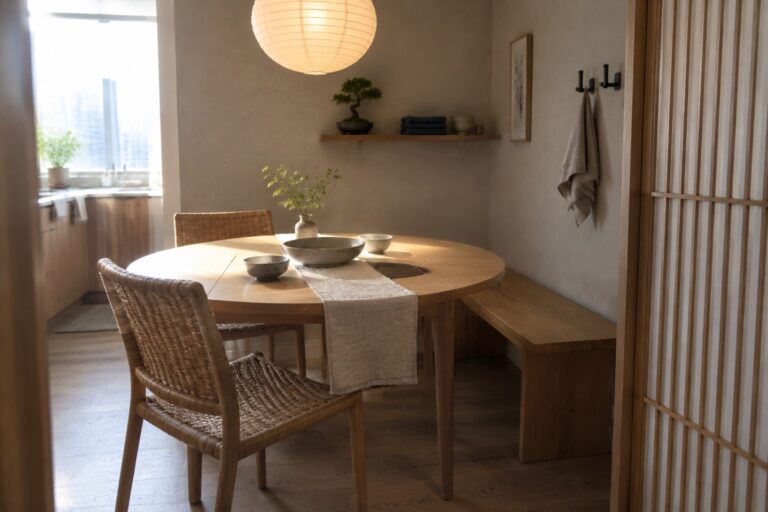
A compact dining room has to make space for everyday meals without feeling crowded, and I find that the layout matters just as much as the furniture.
Japandi style can help keep the room calm through natural materials, simple forms, and a restrained palette, but too many small pieces can make even a tidy space feel busy.
I usually notice the table and chairs first, since their size and placement shape how easily people can move around the room.
Thoughtful lighting, a little storage, and a clear path through the space can make the design work better in real life, not just in a photo.
Some of these ideas may be worth adapting to your own home, especially if you want a dining area that feels uncluttered and still works for daily use.
Use a Round Table to Save Space
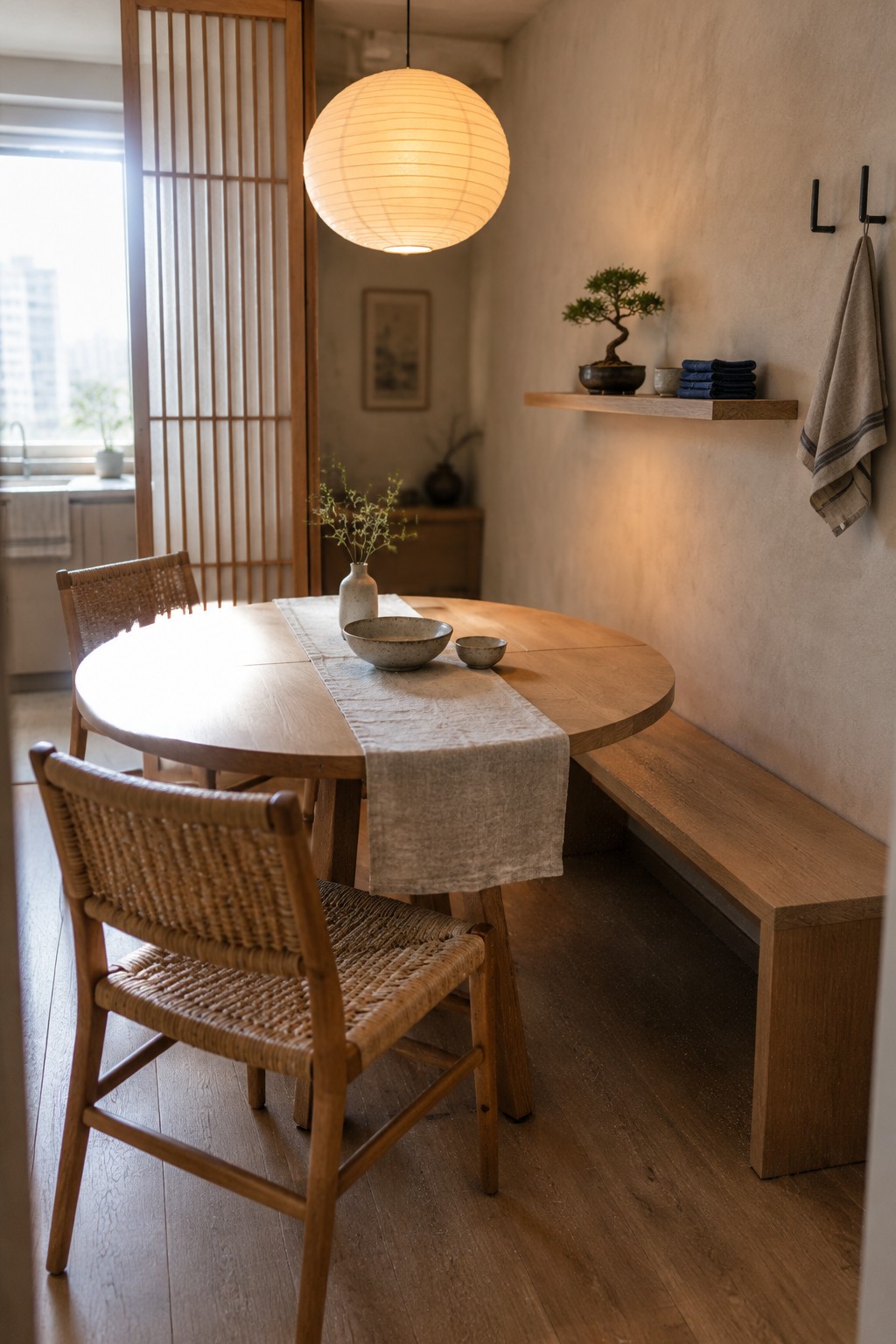
A round dining table is a practical choice for a compact room. Its curved edge makes it easier to move around than a table with sharp corners, while still giving a small group a comfortable place to eat.
Choose a size that leaves a clear path around the chairs, and consider a bench along one wall to keep the layout compact. A pale linen runner can add a simple touch without taking up useful table space.
Use a Built-In Bench to Save Space
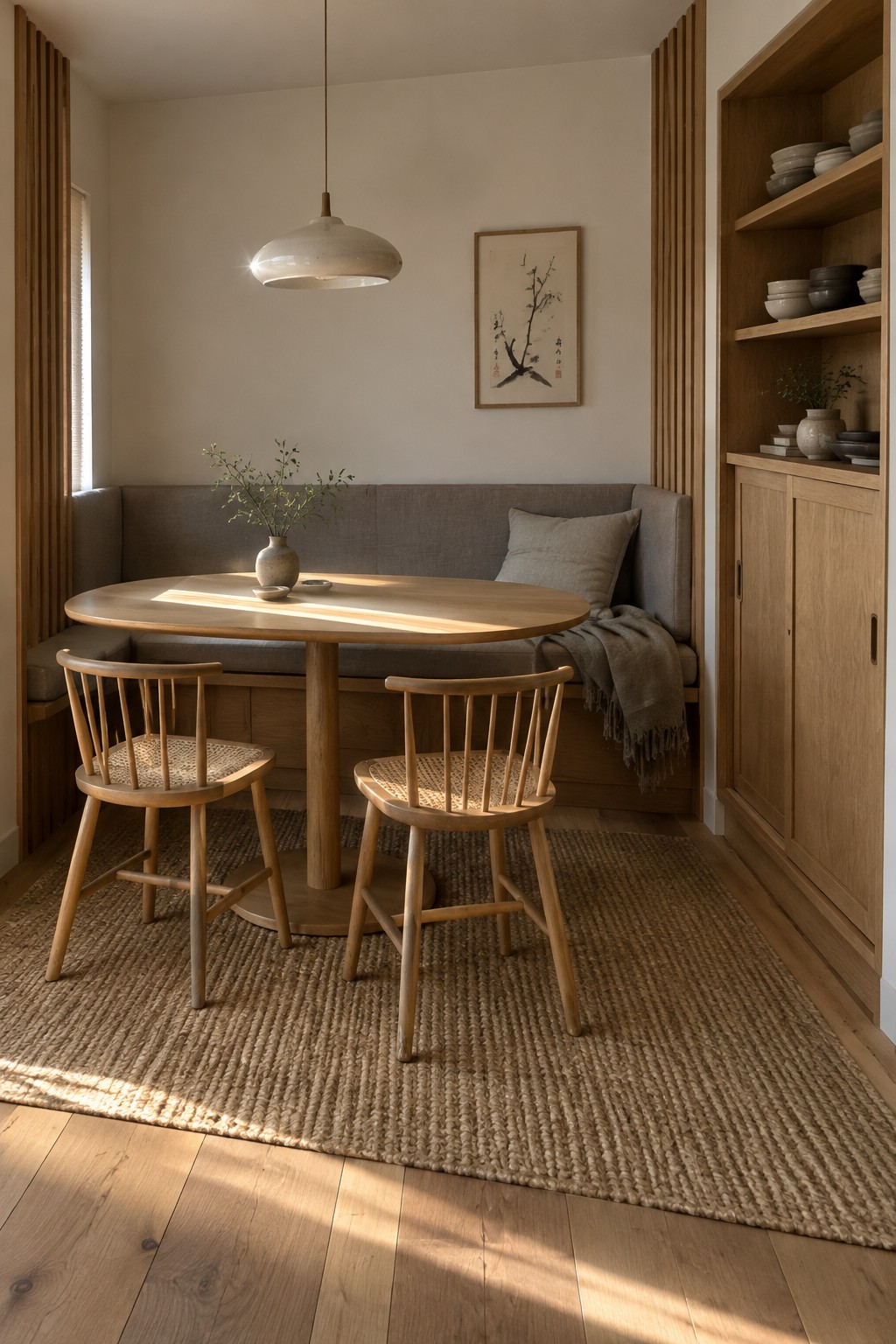
A built-in dining bench can make a compact eating area easier to furnish. It fits neatly against a wall, so you can use a table and chairs without needing room for chairs on every side.
A padded bench is comfortable for everyday meals, and a round-edged table can make it easier to move around in a tight nook. Measure carefully before adding a bench, since a little clearance between the seat and table makes a big difference.
Use a Small Dining Table to Save Space
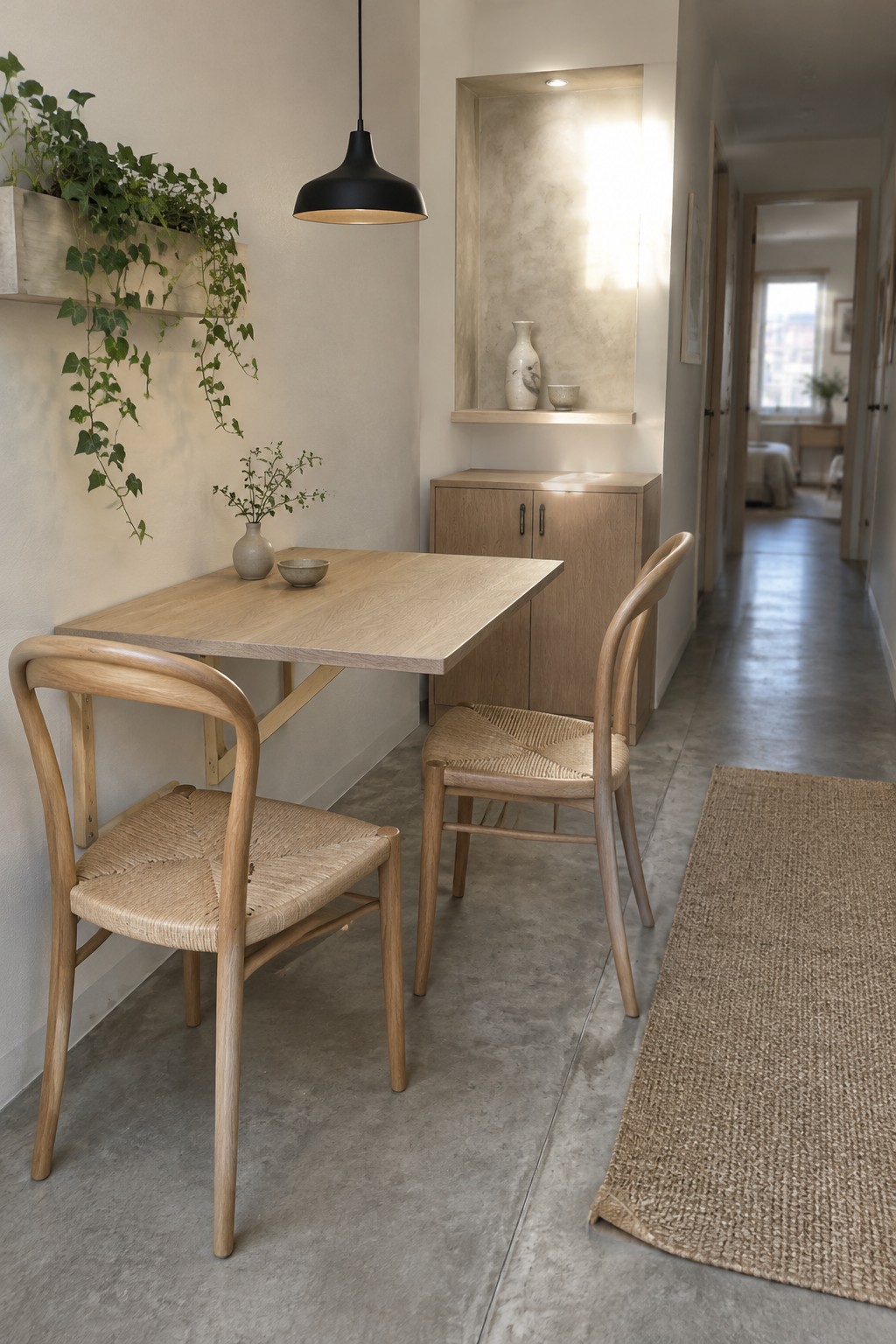
A compact dining area works best when the table is sized for everyday use rather than occasional gatherings. This light wood table keeps the footprint modest, while the open space around it makes the narrow area easier to move through.
In a small apartment or an eat-in kitchen, choose a table that leaves a clear path past the chairs. A simple shape and slim legs help the room feel less crowded, and natural wood suits the relaxed Japandi style.
Make a Dining Nook Work Harder
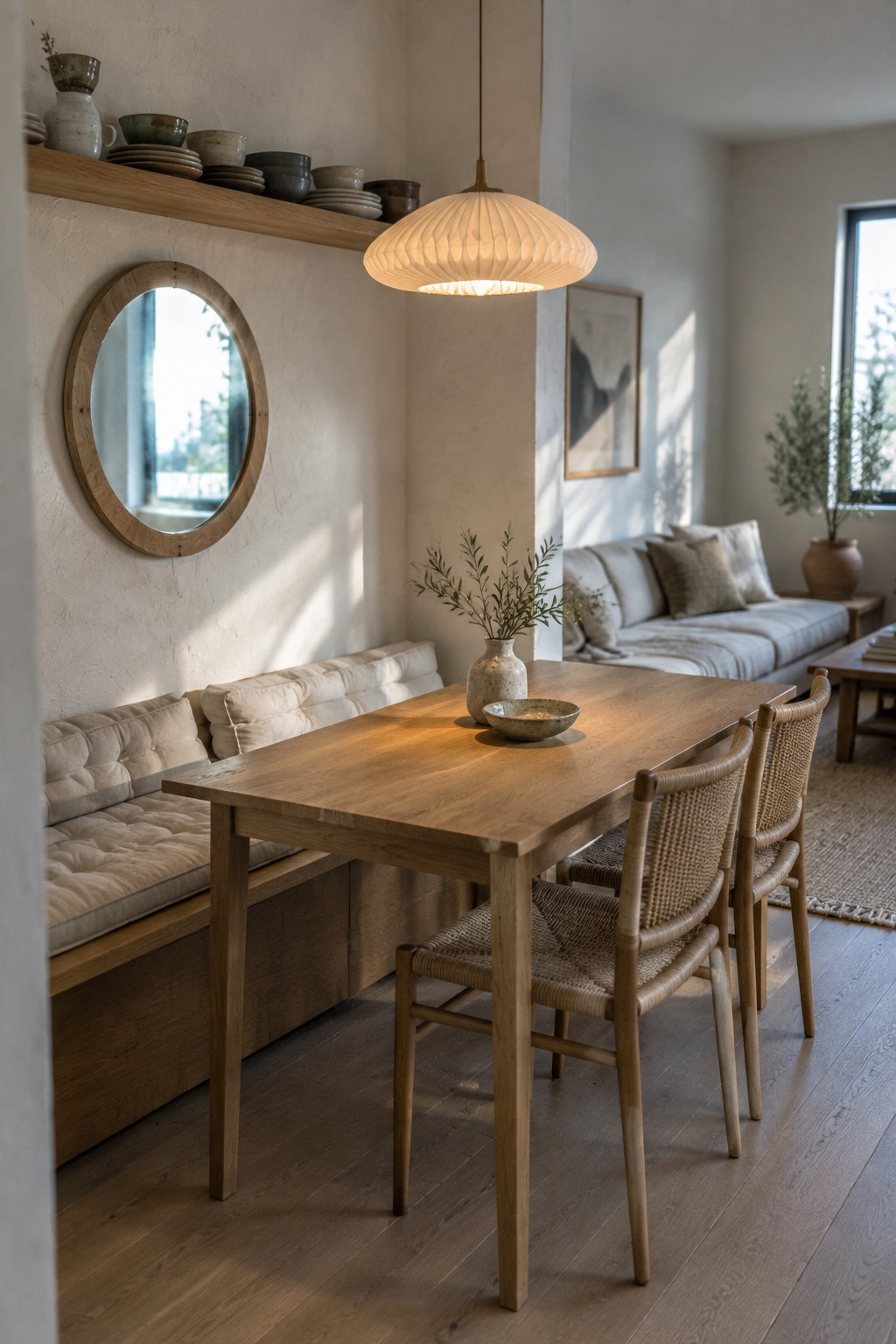
A built-in bench can make a compact dining area easier to arrange. It takes up less floor space than chairs along one side, while giving the table a comfortable place to sit.
A bench works especially well against a wall or in a corner, where it can help define the dining spot without closing off the room. Keep the table narrow enough for people to get in and out comfortably, and use loose cushions that are easy to move.
Use a Wall-Mounted Table in a Narrow Dining Area
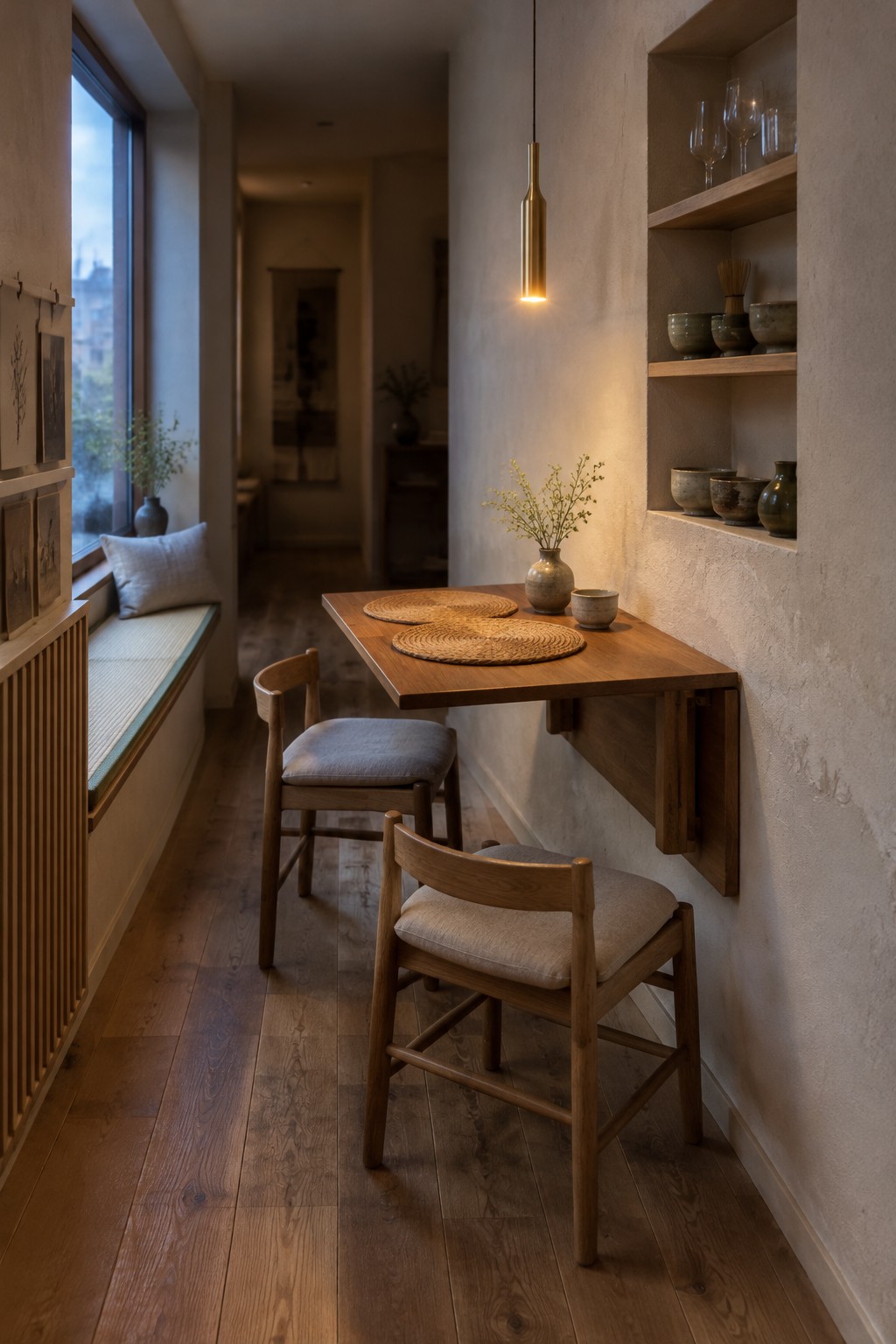
A wall-mounted table can make a compact dining area easier to move through. It uses less floor space than a freestanding table, while still providing a comfortable place for two to eat.
Choose a sturdy wooden top and keep the seating simple, as with the pair of chairs shown here. This setup works well in a narrow kitchen or apartment dining nook, but leave enough room to pull the chairs out.
Choose a Narrow Dining Table
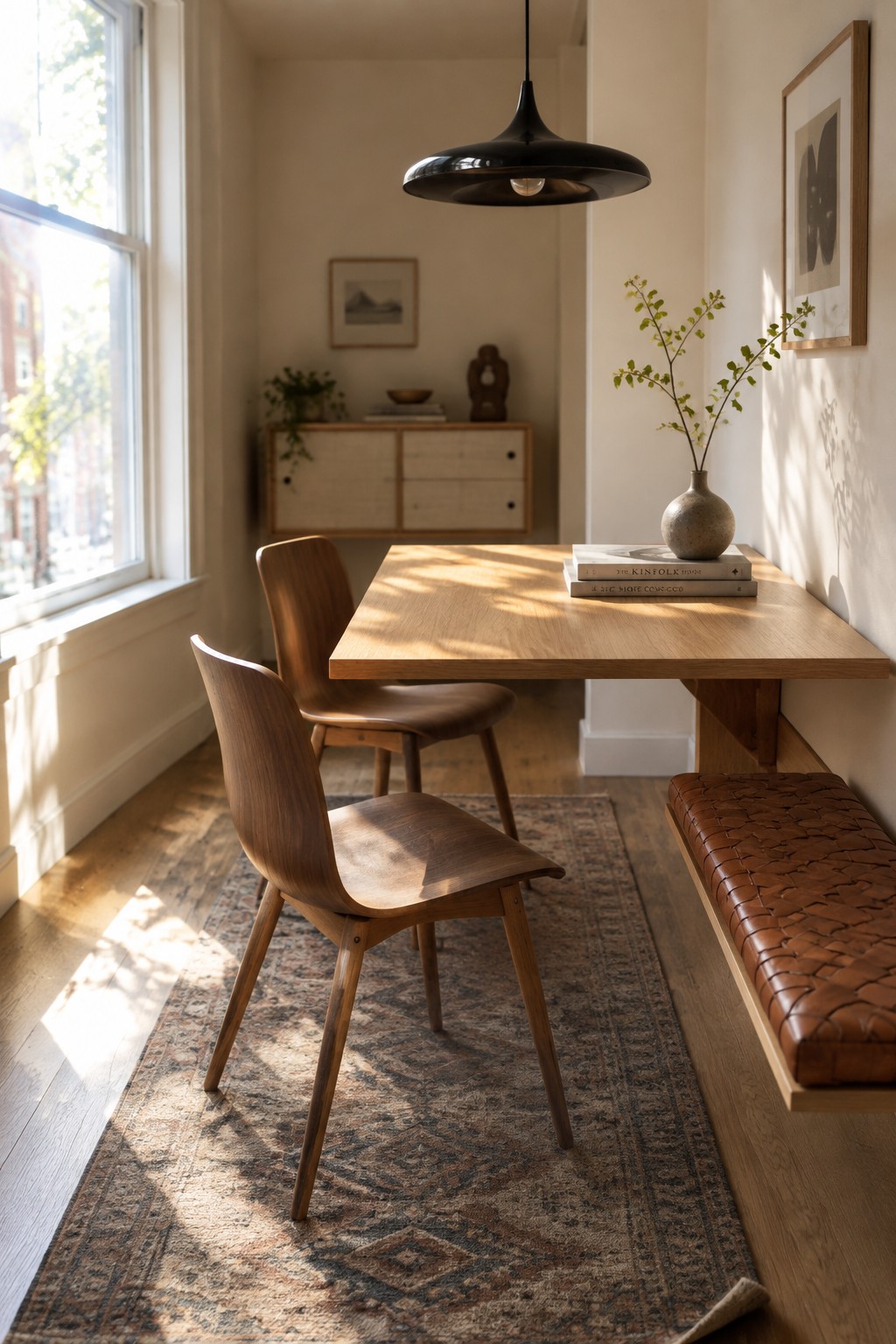
A narrow rectangular table can make a compact dining room easier to use without giving up room for a proper meal. The long shape leaves space to move along one side, while the wood keeps the simple setup from feeling too stark.
This style works well in a slim room or beside a wall, where a round table may take up more usable floor space. Leave enough clearance for chairs to slide back comfortably, and keep the tabletop fairly uncluttered.
Choose a Narrow Oval Table
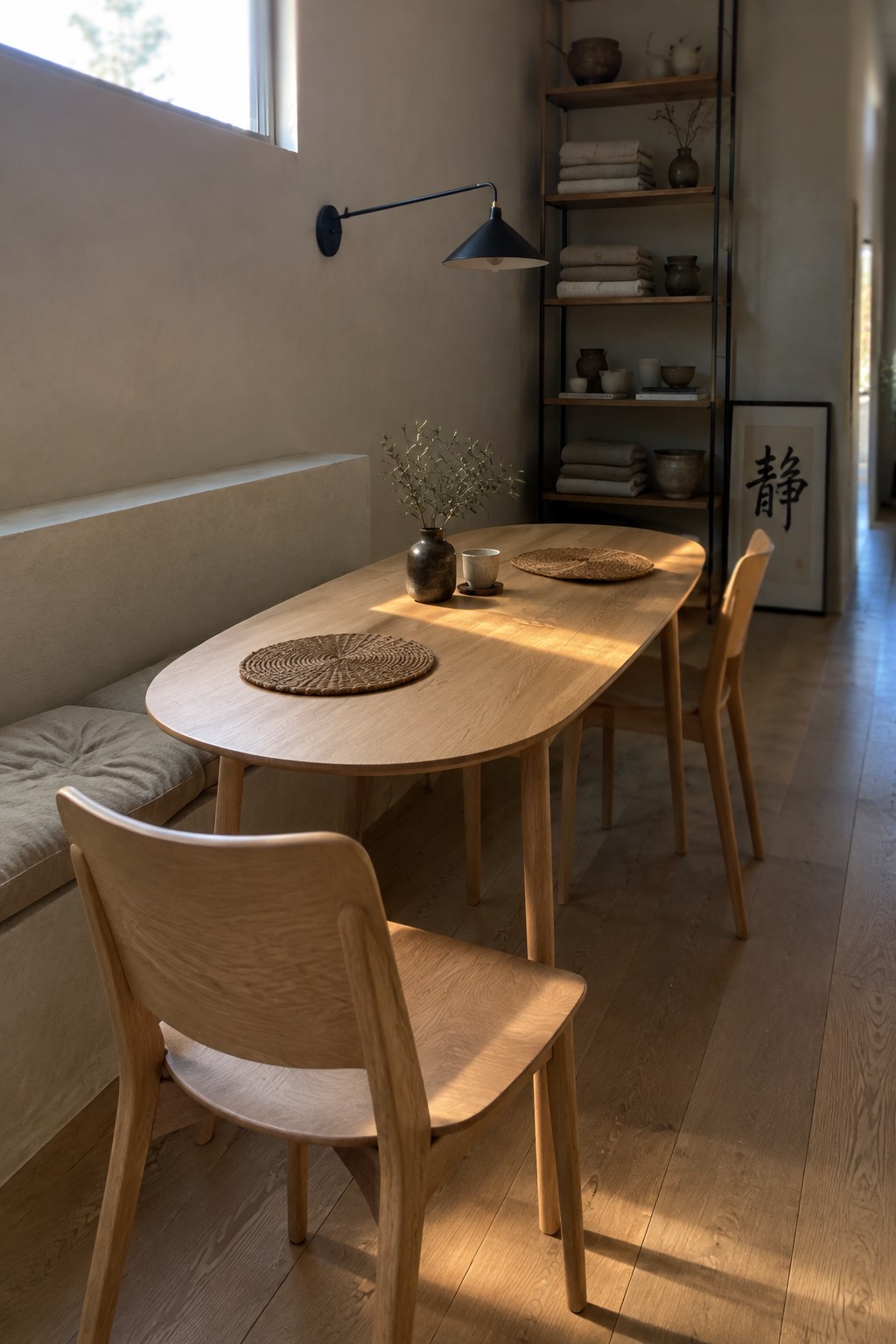
An oval table can make a compact dining area easier to move through. Its rounded ends take up less visual and walking space than sharp corners, while still giving a few people room to sit together.
This shape works well in a long, narrow room. Leave enough clearance around the chairs to pull them out comfortably, and choose a simple wooden design to keep the area feeling open.
Use a Narrow Table in a Small Dining Area
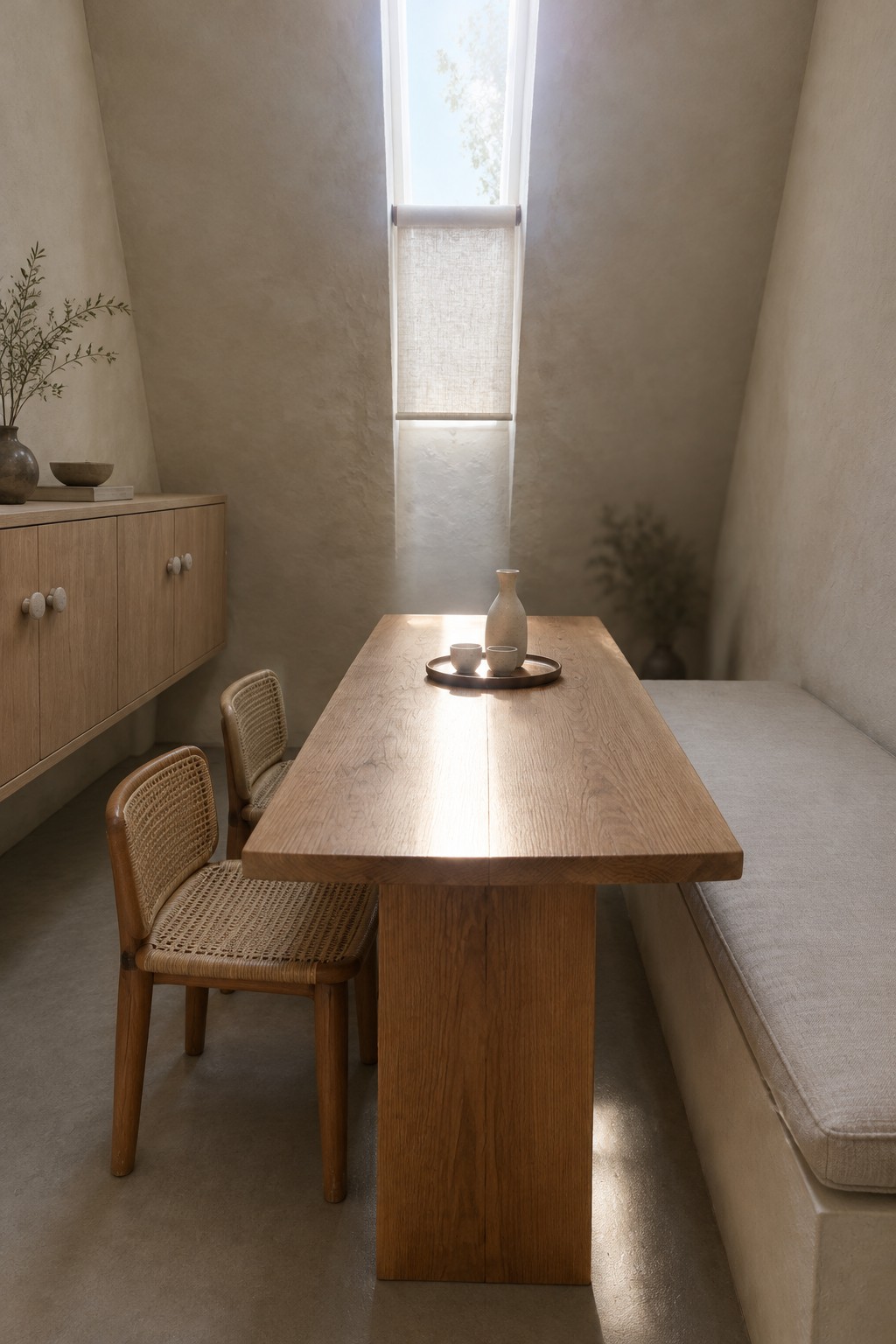
A narrow dining table can make a compact room easier to use without giving up proper seating. Here, the bench along one side keeps the layout tidy, while the table leaves a clear route through the space.
This setup suits a slim dining nook or a room where one side needs to stay open. Choose a table that leaves enough room to pull out the chairs, and keep the tabletop simple so it does not feel crowded.
Use a Bench to Make a Narrow Dining Area Work
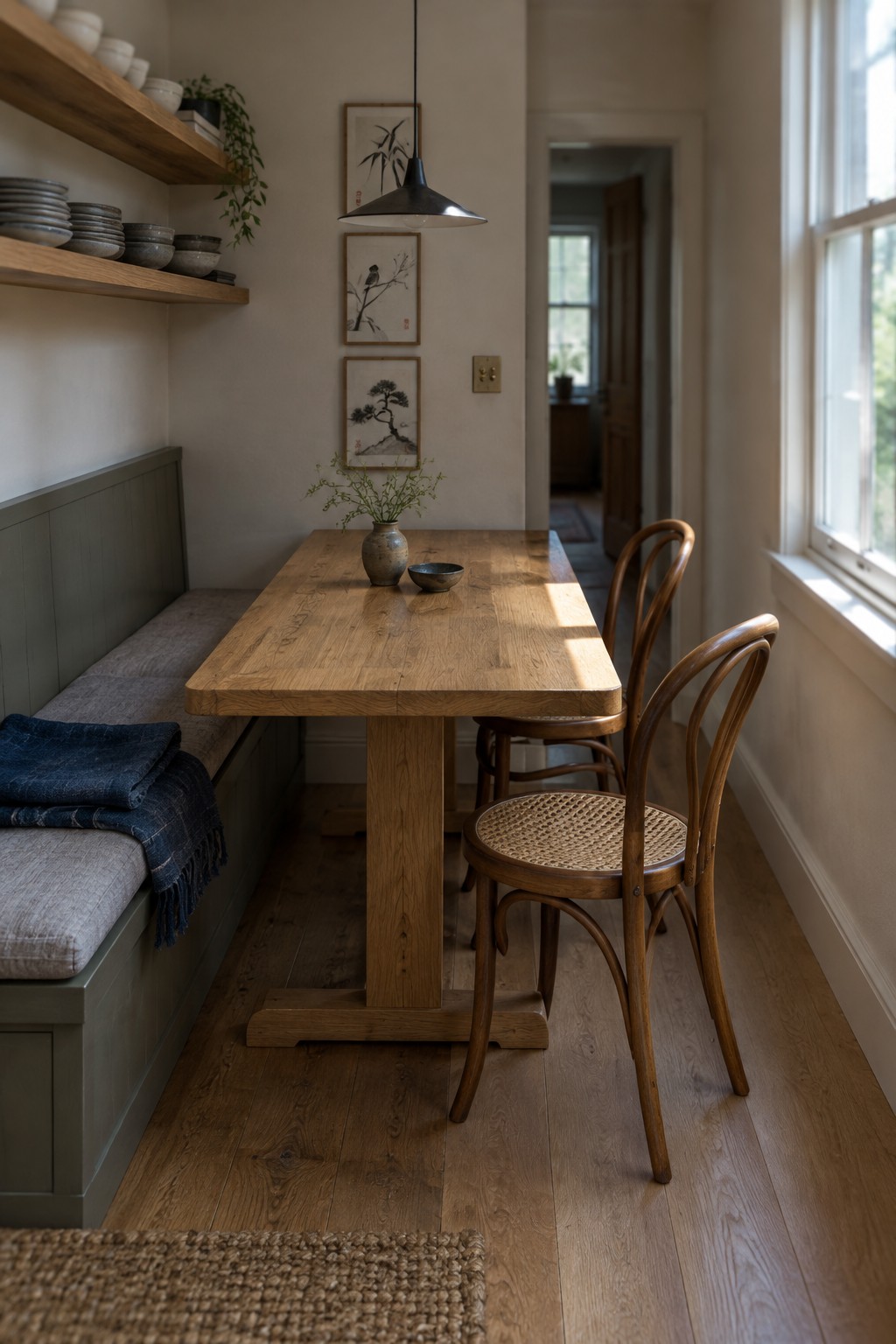
A built-in bench lets a dining table sit close to the wall, leaving more room to pull out chairs on the opposite side. It’s a practical choice for a narrow dining area where a table with chairs all around would make the walkway feel tight.
A simple bench with a slim cushion can run along one side of the table, as shown here. Measure the table and seating carefully so people can still slide in comfortably, and leave a clear path to nearby doors or windows.
Use a Pedestal Table in a Small Dining Area
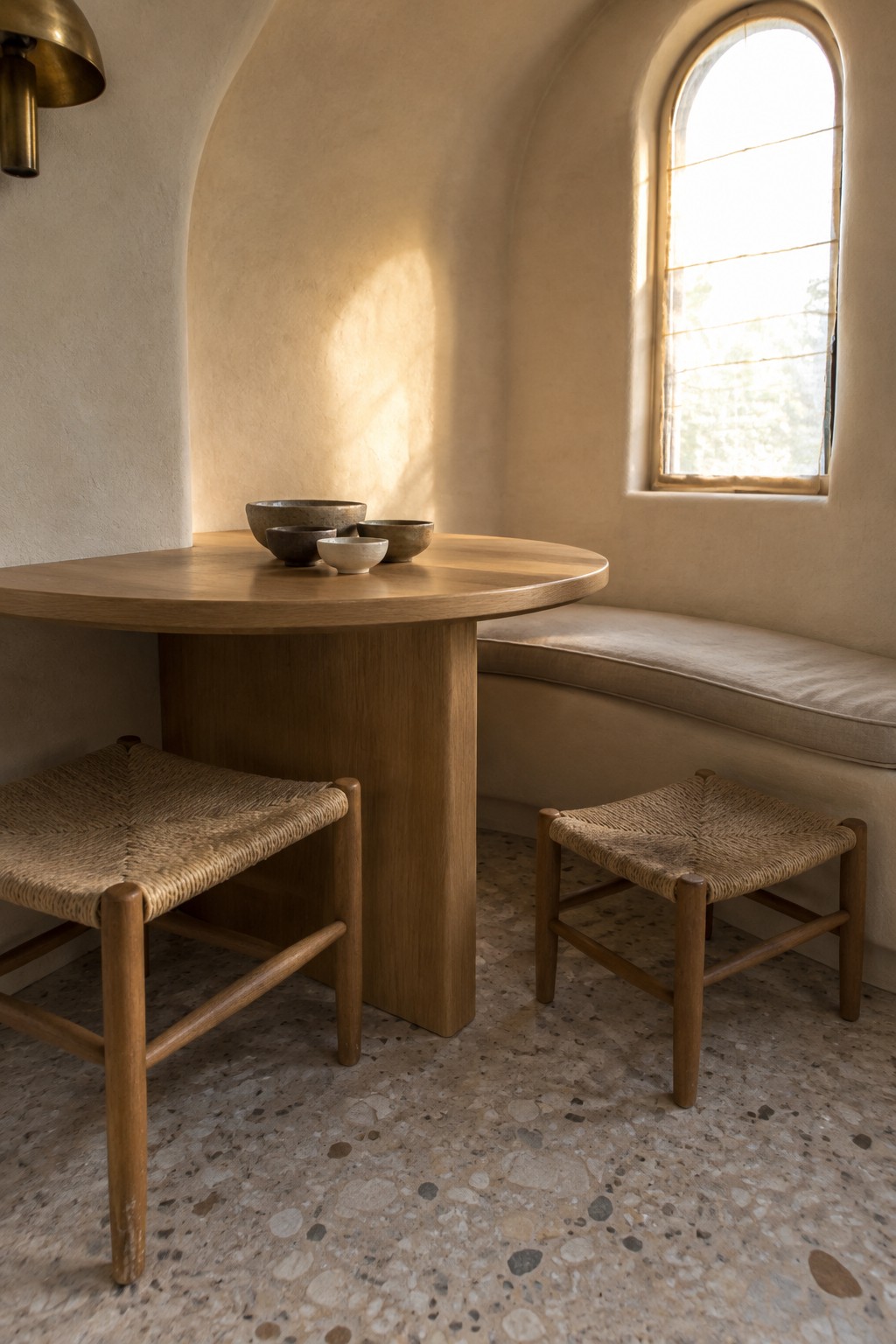
A pedestal table is a useful choice when chairs need to fit into a compact dining area. With no corner legs to work around, it can be easier to pull up a seat or shift a chair out of the way.
Look for a simple round design that leaves enough room to walk around it. A built-in bench along one wall can make the arrangement work especially well in a small nook.
Choose Cane Chairs for a Compact Dining Area
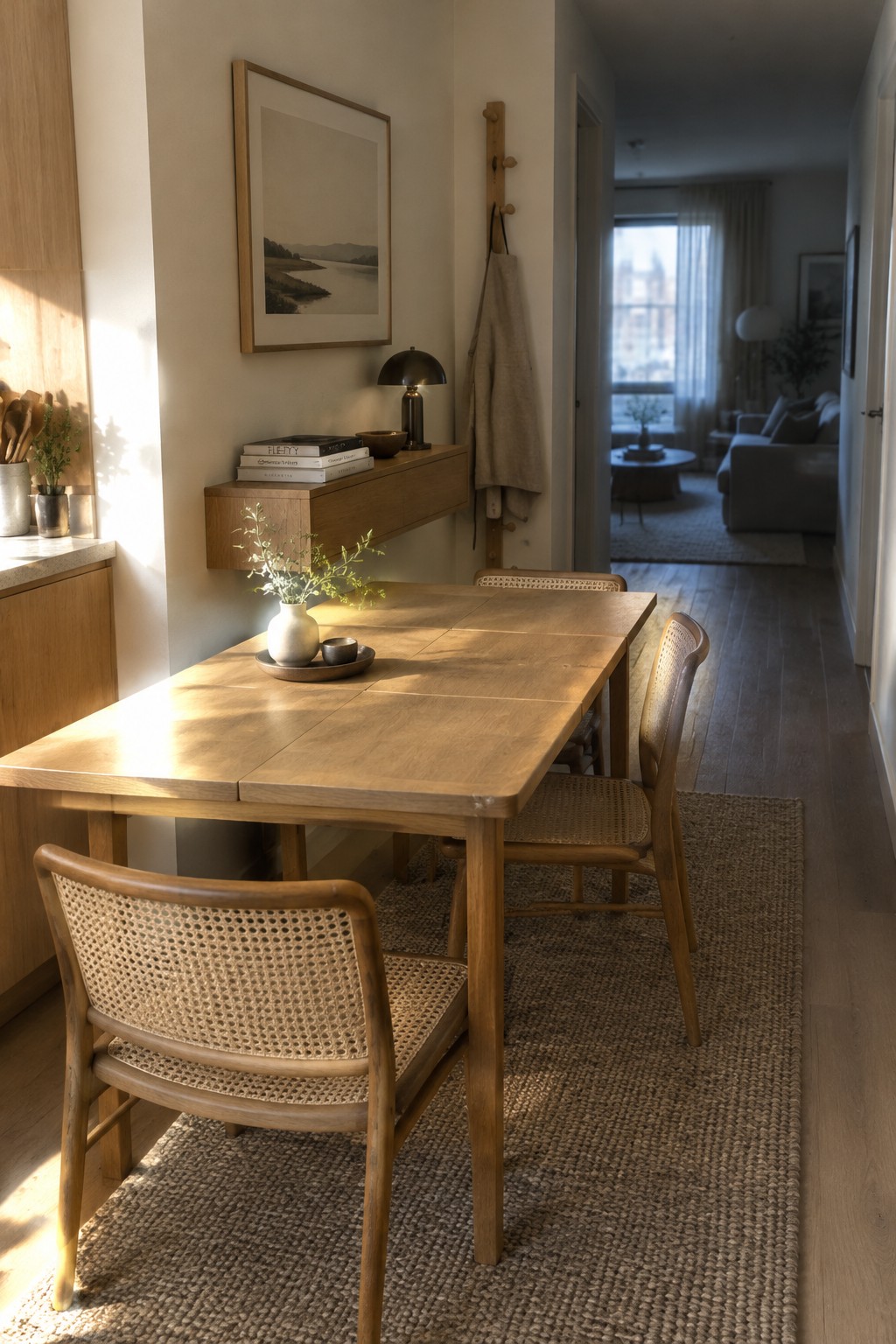
Cane-back chairs keep a dining area feeling open without giving up a proper place to sit. Their woven backs are lighter visually than solid wood, which is useful when the table already takes up much of a narrow room.
Look for slim frames and chairs that tuck neatly under the table when not in use. This style suits small dining rooms and open-plan homes, though it is worth checking that the seats are comfortable enough for everyday meals.
Use a Wall Bench to Free Up Floor Space
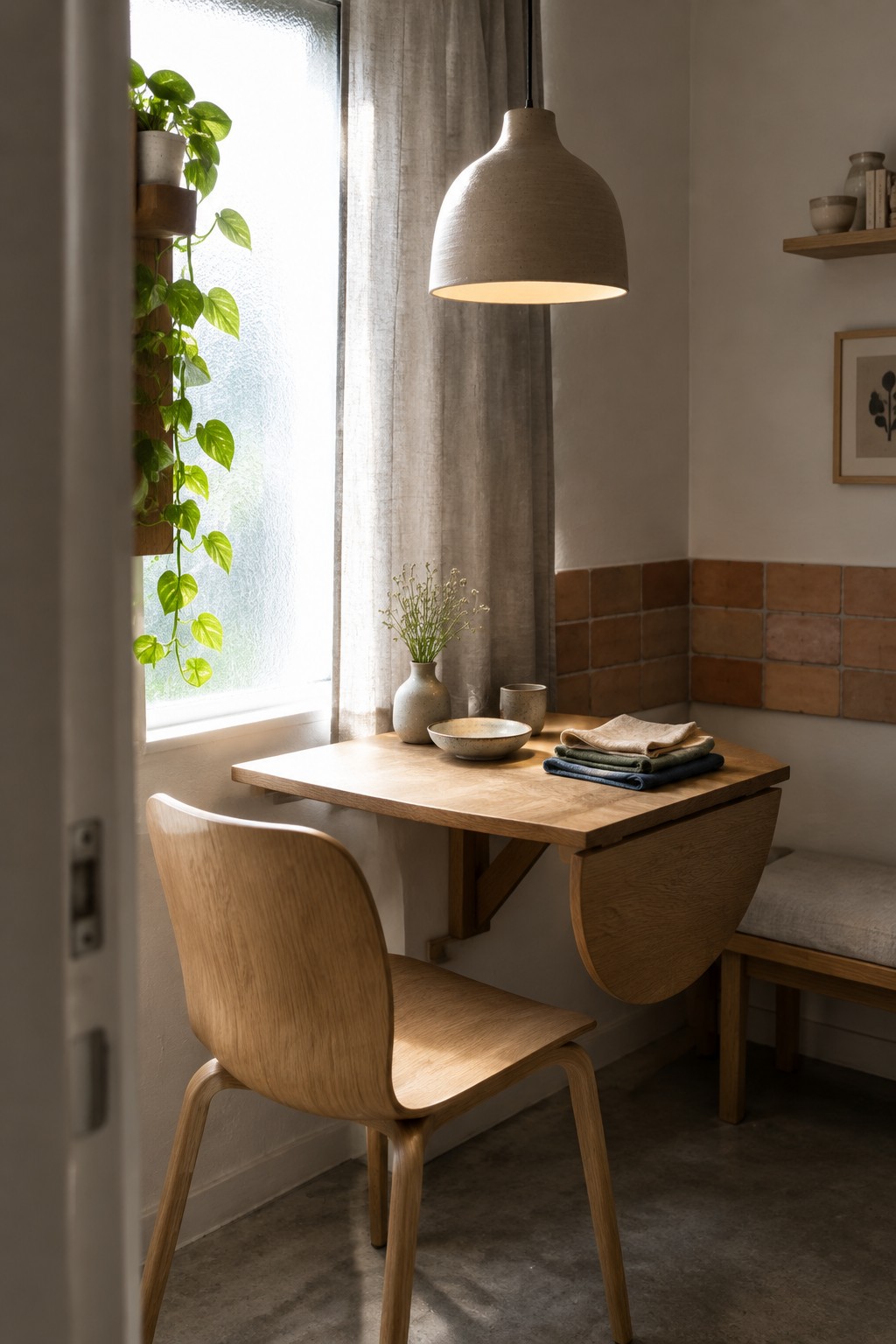
A wall bench lets a small dining area fit more comfortably without making the table feel cramped. Since the seating stays tucked against the wall, there’s more room to move around than there would be with chairs on every side.
This works especially well in a kitchen nook or a narrow corner. Keep the table modest in size, and choose a bench cushion that doesn’t stick out too far. A single curved-back chair across from the bench keeps the setup easy to get in and out of.
Choose Lightweight Chairs for a Compact Dining Room

Open-frame cane chairs take up less visual space than bulky upholstered ones, which helps a small dining area feel less crowded. They still bring a natural material into the room, so they suit a Japandi look without making the furniture feel heavy.
Use a few around a simple wood table, and leave enough room to pull them out comfortably. A woven seat can be practical for everyday dining, but check that the chair is sturdy and comfortable before choosing it.
Keep the Dining Nook Simple
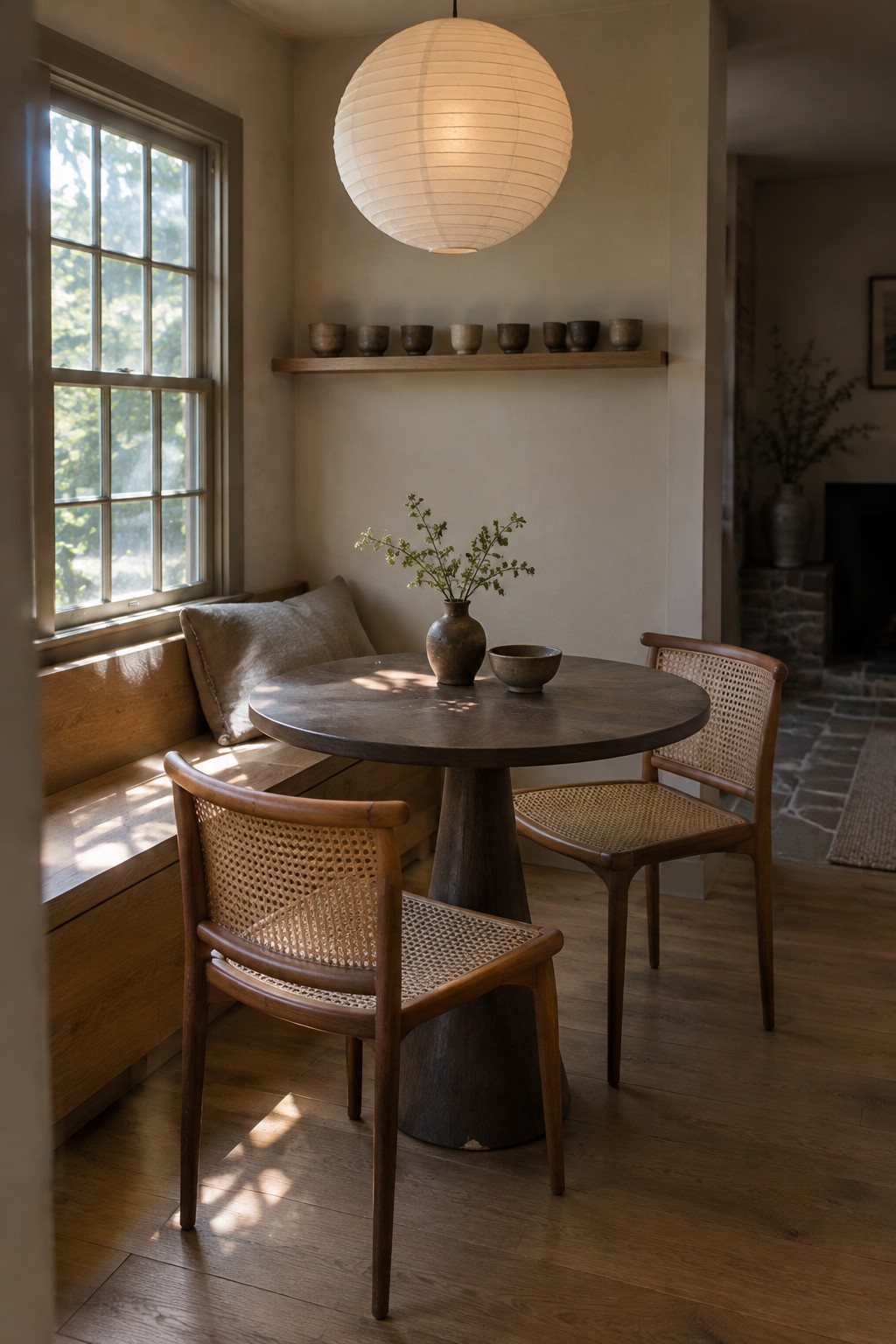
A compact dining nook can feel comfortable without much furniture. A round pedestal table leaves more room to move around it, while a built-in bench makes good use of the wall side.
This setup works well in a small kitchen or an unused corner. Choose a table sized for everyday meals, and leave enough space to pull out the chairs easily.
Let One Long Table Serve a Narrow Dining Space
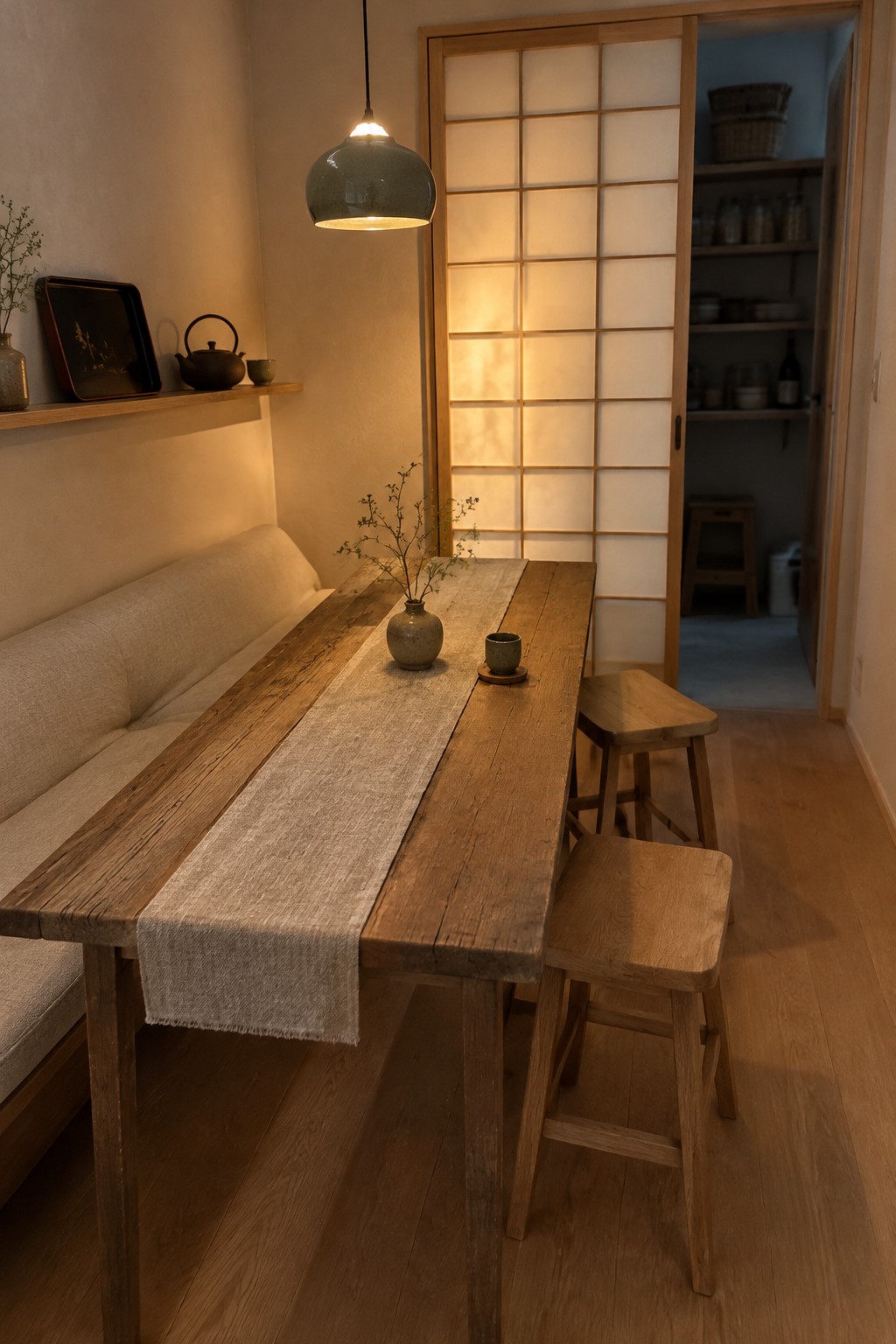
A long, slim table can make a compact dining area useful without taking over the room. Here, a bench along one side keeps the seating close to the wall, while stools can tuck beneath the opposite edge when they are not needed.
This arrangement suits a narrow room or an open-plan home where floor space matters. Choose a table that leaves a clear path around it, and use a bench that fits neatly against the wall rather than projecting into the walkway.
Frequently Asked Questions
Q: How can I fit a dining table into a really small Japandi dining room?
A: Choose a round or compact rectangular table with slim legs so it feels less bulky and leaves room to move around. A bench that tucks under the table can free up even more floor space.
Q: How do I make a small dining room feel Japandi without making it look bare?
A: Start with warm wood, simple shapes, and a few natural textures, such as linen cushions or a woven pendant. Keep the tabletop mostly clear, then add one or two meaningful pieces for a lived-in feel.
Q: What colors work well in a compact Japandi dining area?
A: Soft neutrals like cream, warm white, and muted beige keep the space feeling open. Add a little contrast with dark wood or black details, but use them sparingly so the room stays light.
Q: Can I use a pendant light over a small dining table?
A: Yes, a simple pendant can define the dining spot without taking up floor space. Hang it low enough to feel connected to the table, but high enough that people can see each other comfortably.
