

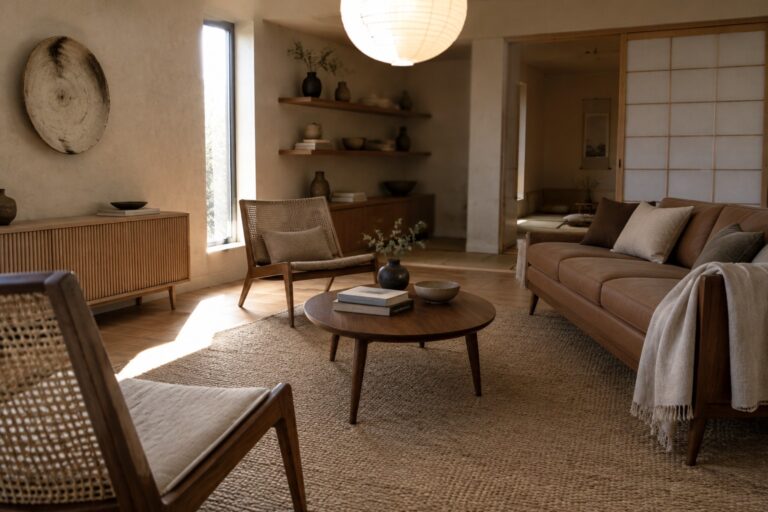
Retro Japandi rooms can feel calm without becoming spare, especially when warm wood and softened mid-century shapes give the space a little character.
I find the balance works best when furniture has room to breathe and everyday items still have a practical place.
A low sideboard or sculptural chair may catch the eye first, but the way those pieces relate to lighting, textures, and walkways is what makes a room comfortable to use.
Natural materials and a restrained palette help connect the Japanese and Scandinavian influences, while a few vintage details keep the room from feeling too uniform.
I’d save ideas that suit the scale of your own rooms, then try them with the furniture and routines you already have.
Use Mid-Century Furniture In A Calm Japandi Room
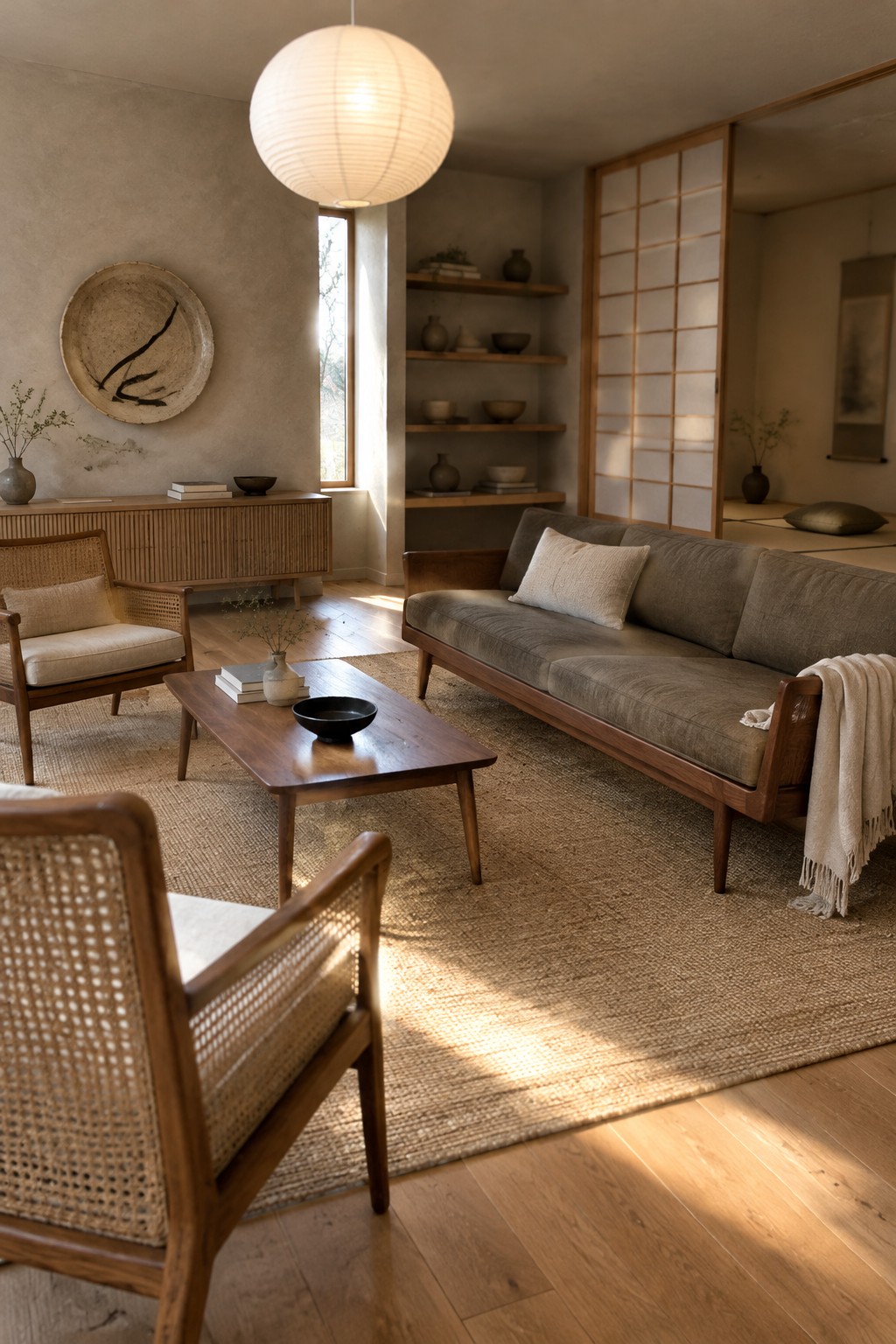
Mid-century furniture brings a useful bit of shape and character to a Japandi interior without making the room feel busy. The low sofa and wood-framed cane chairs here have simple lines, while their natural materials suit the quieter style.
Try this mix in a living room where you want comfortable seating but not a lot of visual clutter. Keep the furniture shapes straightforward, then use a few soft textiles to make the room feel comfortable. Too many decorative pieces can distract from the furniture.
Use Cane Furniture for a Softer Mid-Century Look

Cane is an easy way to bring a mid-century furniture shape into a bedroom without making the room feel too formal. A cane headboard has a lighter look than a solid wood one, while still giving the bed a clear focal point.
Try this approach in a bedroom that already has simple bedding and natural finishes. Keep the headboard design fairly uncomplicated, and let the woven texture do its part without adding too many other patterns.
Make The Kitchen Island A Gathering Spot
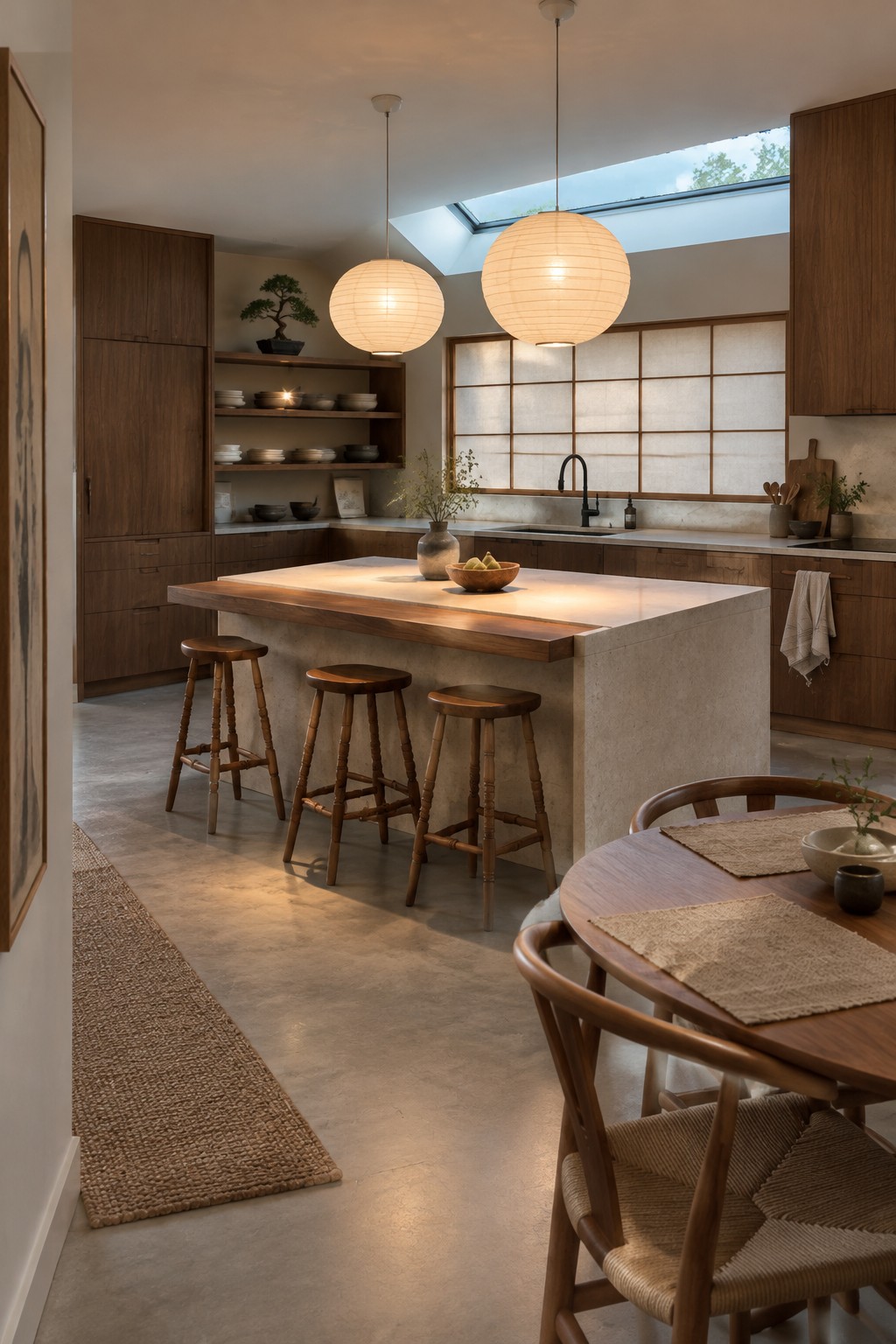
A kitchen island can do more than add counter space. Giving it room for stools makes it a handy place for a quick meal, a cup of coffee, or keeping someone company while dinner is being made. A simple wood edge also suits the mid-century feel without making the kitchen look fussy.
In an open kitchen, leave enough space around the island for people to move past the stools comfortably. A light stone top and a few well-chosen wooden pieces keep the setup practical and easy to live with.
Built-In Storage Keeps a Bathroom Tidy

A built-in vanity can make a bathroom easier to use without adding bulky furniture. Here, open shelves beneath the sink keep baskets close at hand, while the wood finish suits the room’s simple, natural style.
This approach works well in a narrow bathroom where floor space matters. Use drawers for everyday items and baskets for things you reach for less often, but leave enough open space to keep the vanity from looking crowded.
Choose a Long Dining Table for Mid-Century Style
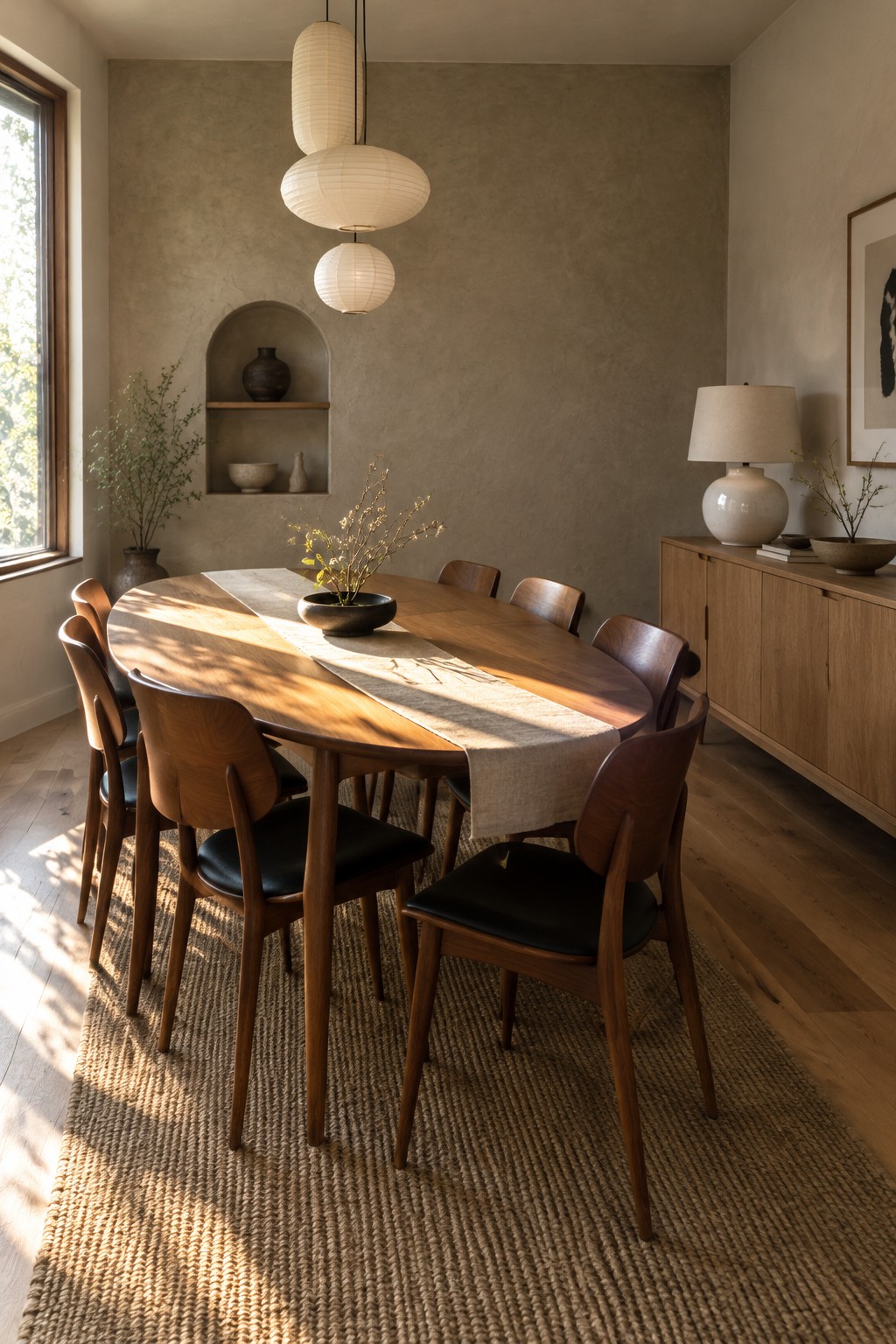
A long dining table makes it easier to seat a group without making the room feel formal. Here, the rounded wood table and simple mid-century chairs keep the dining area practical while fitting the relaxed Japandi style.
This kind of table works well in a dedicated dining room or an open-plan space with enough room to walk around it. Leave clear space behind the chairs, and keep the centerpiece low so people can talk across the table.
Let One Mid-Century Chair Set the Tone

A single mid-century chair can give a Japandi room a clear focal point without making the space feel busy. The low profile and warm wood look especially at home beside quieter, natural finishes.
For a similar effect, choose a chair with a simple shape and let it stand out against plain walls or a woven rug. A leather seat brings extra character, so keep nearby accessories fairly restrained.
Use a Shoji Divider to Separate Work and Rest
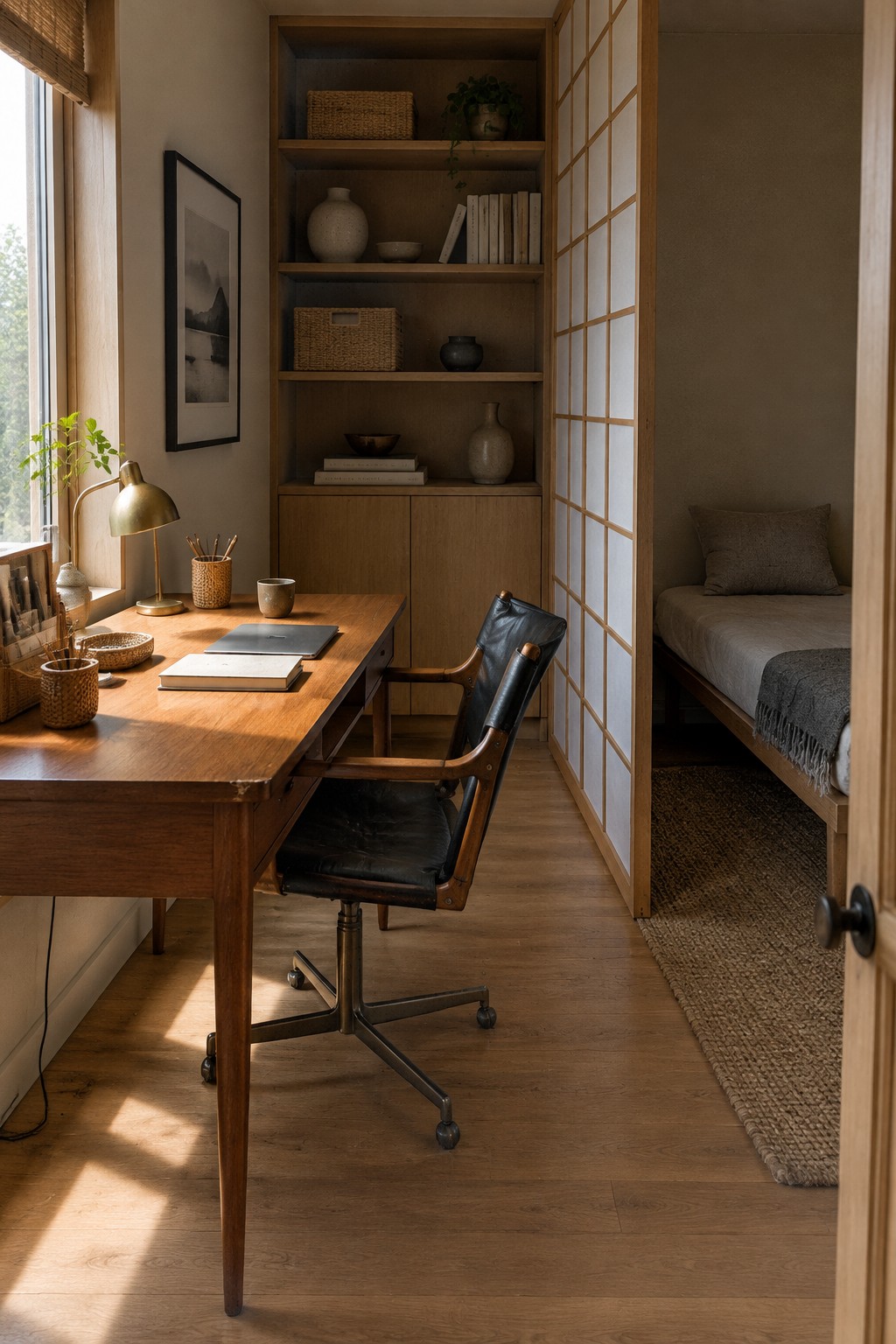
A sliding shoji screen can give a small room two useful zones without closing it off completely. Here, it separates the desk from a simple sleeping area, while the wood frame suits the mid-century furniture and keeps the look calm.
This layout works well in a studio, guest room, or compact home office. Choose a screen that slides easily and leaves enough room to walk through when it is open.
Make the Entry Console Practical and Simple
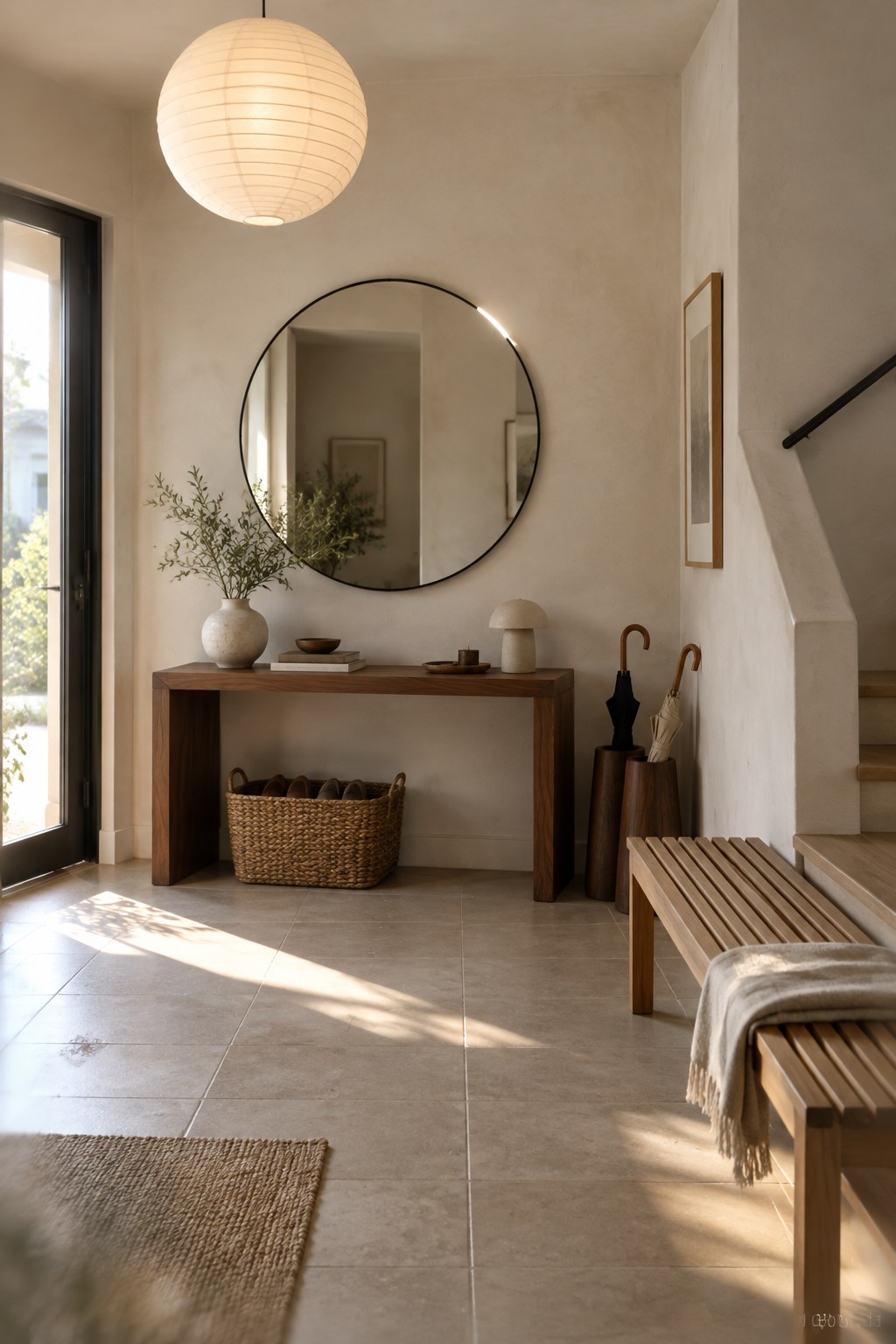
A narrow console table is a useful fit for an entry, giving you a place to set down keys and small everyday items without taking up much floor space. A simple mid-century shape in dark wood works well in a Japandi home, where a few natural materials can do more than lots of decoration.
Choose a table that leaves a clear path through the entry, and use a basket underneath for shoes or other things you want close by. Keep the top fairly open so it stays easy to use.
Use Natural Materials In a Mid-Century Bedroom

A simple mix of wood and woven textures gives a mid-century bedroom a relaxed Japandi feel. The wooden bed frame brings in the furniture’s classic shape, while the textured rug keeps the room from feeling too formal.
This approach works well in a smaller bedroom where a few sturdy materials can do more than lots of decoration. Choose muted bedding and let the wood grain show, rather than filling the room with extra accessories.
Choose Mid-Century Wood Furniture for a Nursery
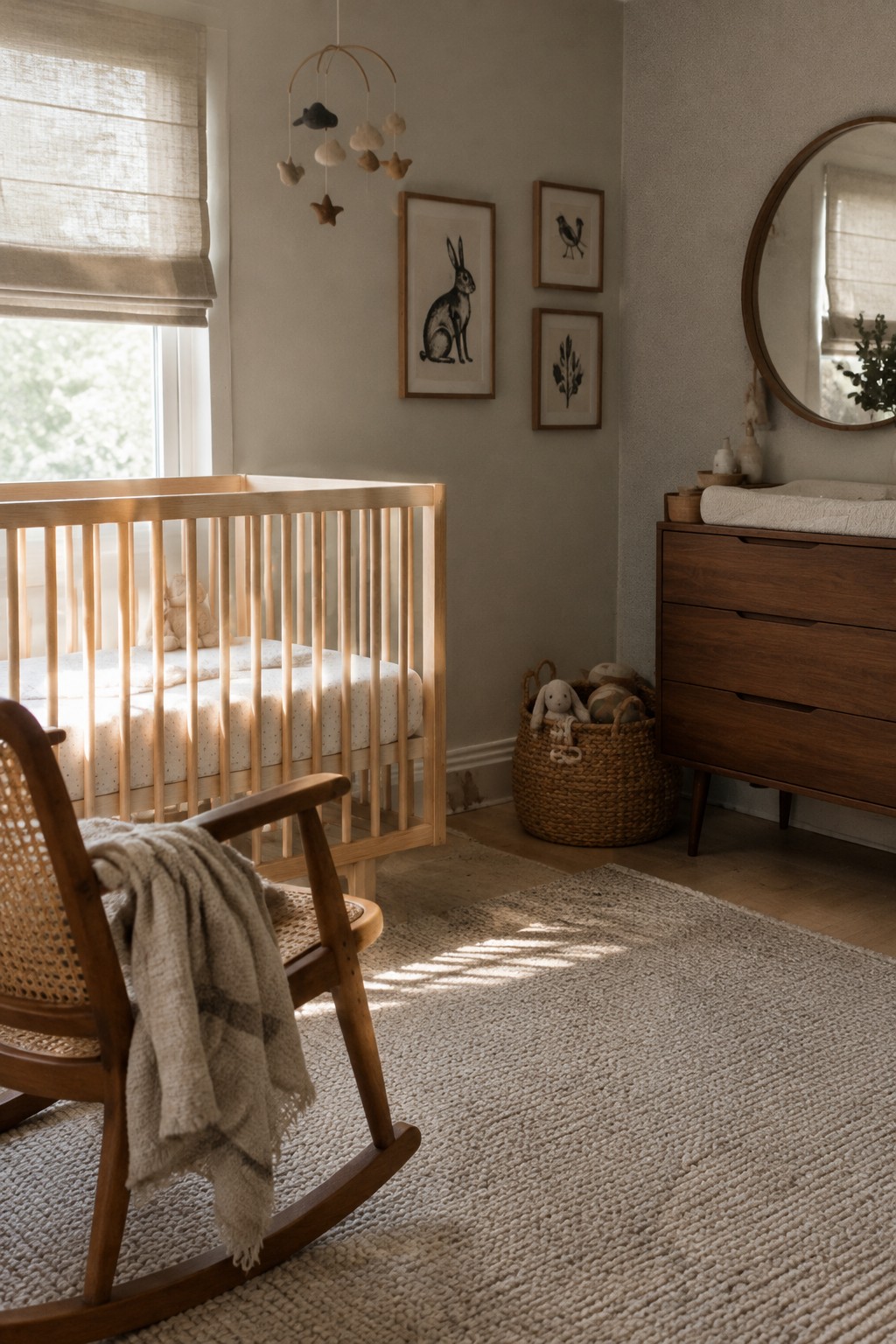
Mid-century furniture can work well in a nursery because its simple shapes keep the room from feeling too busy. A wooden crib and rocking chair bring in that look without making the space feel overly formal.
Keep the rest of the room simple, using soft textiles and a few small wall accents. This approach suits a nursery that needs to feel calm and practical, and it leaves room to change the decor as a child grows.
Make A Small Laundry Room More Useful With Built-In Storage
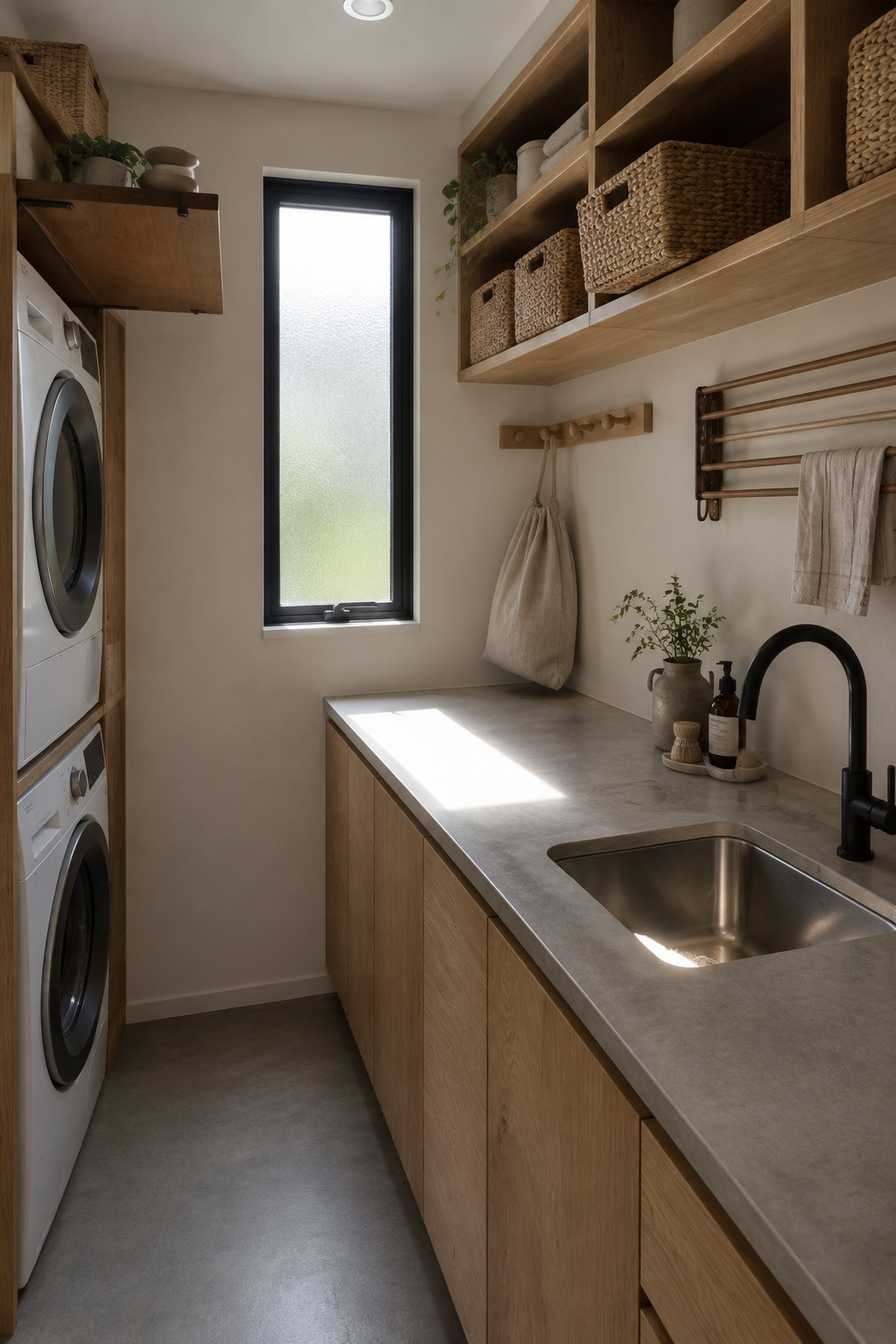
Built-in cabinets can make a narrow laundry room easier to use by keeping supplies and appliances in a tidy, fixed layout. Here, the stacked washer and dryer leave room for a long worktop and lower cupboards.
This approach suits a small utility room where floor space is limited. Use the worktop for folding, and keep everyday items within reach in baskets or closed cabinets.
Make Pantry Storage Easy to Reach
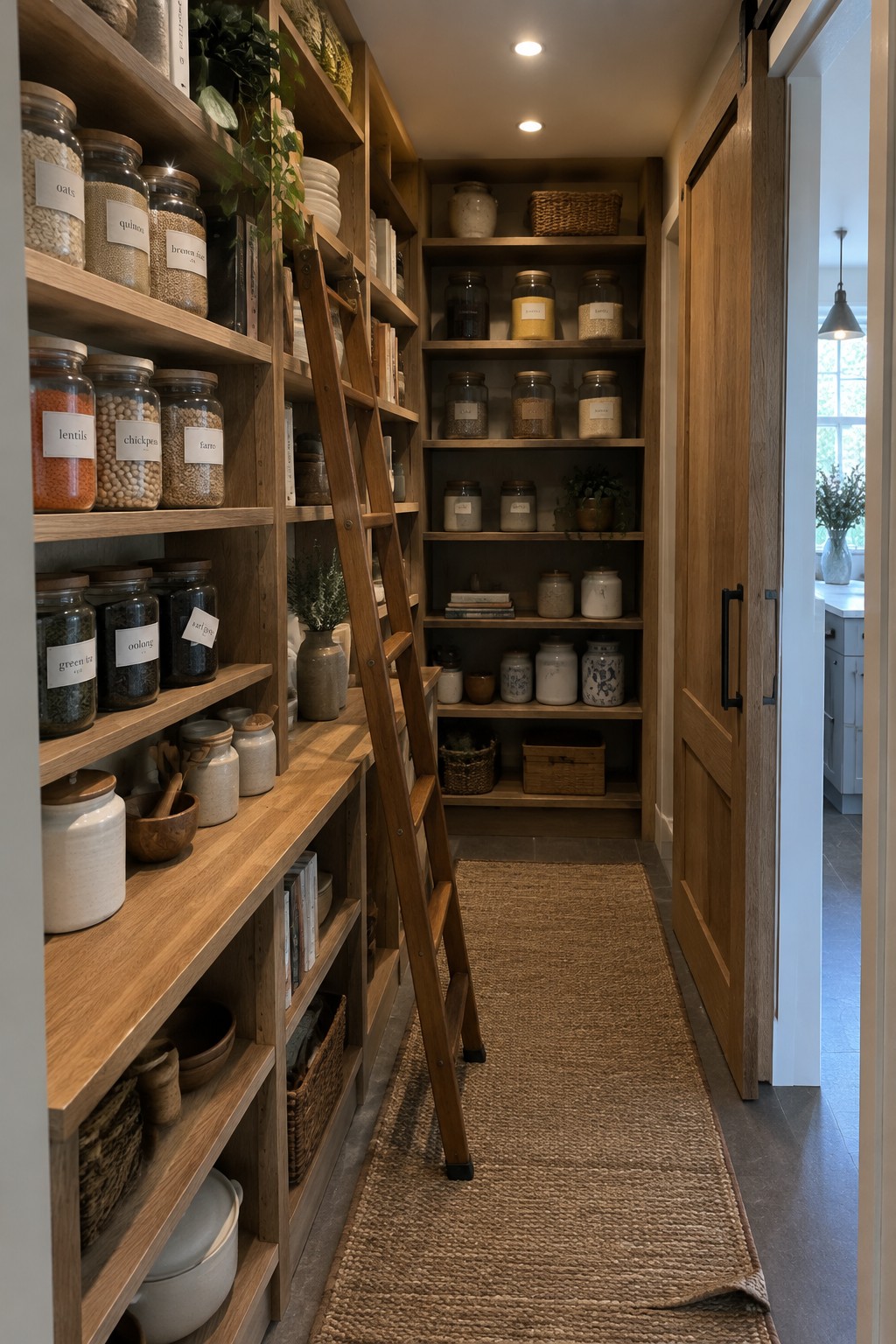
A walk-in pantry works best when everyday ingredients are easy to find and put away. Open wooden shelves keep jars visible, while a rolling ladder helps make use of the higher shelves.
This setup suits a narrow pantry where floor space is limited but there is room to build upward. Keep the most-used items at arm’s reach, and reserve the upper shelves for things you reach for less often.
Use Wood And Tile For A Japandi Bathroom
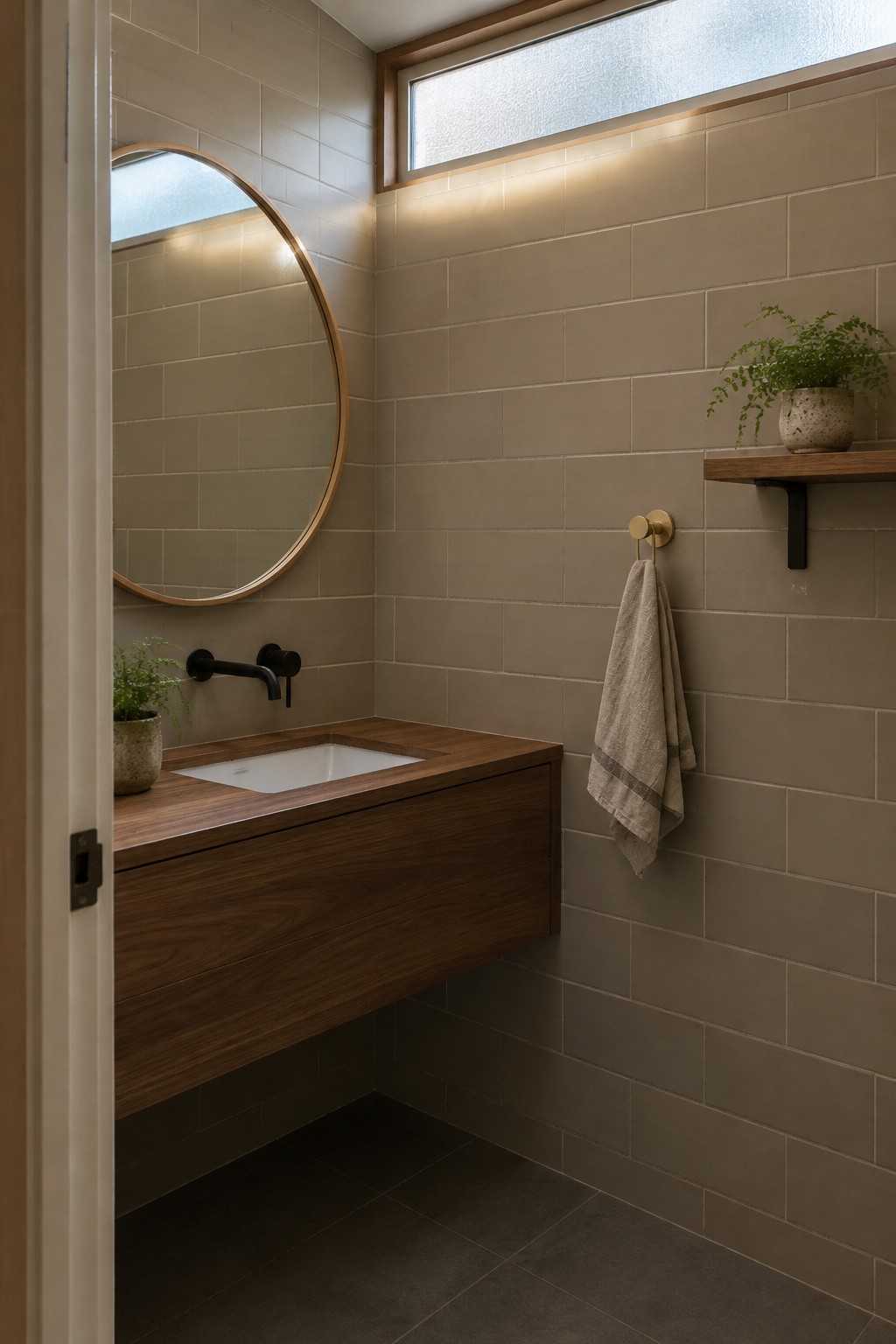
A wood vanity can make a tiled bathroom feel less plain while keeping the look simple. Here, the long wood front and matching countertop bring a natural finish into a room with large neutral tiles.
This approach works well in a small bathroom, where a floating vanity can leave more floor visible. Choose a wood tone that suits the tile, and keep the other finishes uncomplicated.
Let a Record Cabinet Bring Mid-Century Style Into the Living Room

A low wood cabinet can give a living room a useful focal point without making the space feel busy. Here, its simple mid-century shape pairs naturally with the textured finishes of a Japandi interior.
Use a cabinet with closed storage if you want to keep records or everyday items nearby but out of sight. Leave a little clear surface for a turntable or a few useful objects, and let the wood finish carry the look.
Use a Slim Console to Keep a Narrow Hallway Open

A narrow console gives a hallway a useful landing spot without taking up much floor space. A simple mid-century shape works well here, especially in warm wood that suits the relaxed Japandi style.
Choose a shallow table with a drawer for small everyday items, and leave enough room to walk past comfortably. A woven runner can help define the path without making the hall feel crowded.
Use Open Shelving to Divide a Small Living Space

Open shelving can separate two areas without closing off the room. Here, a tall wooden shelf marks the edge of the living area while still letting the space feel connected.
This works well in a studio or a compact home where a solid wall would block light or make the layout feel tight. Keep the shelves useful but not crowded, and choose a wood finish that suits the other furniture.
Keep A Walk-In Closet Calm With Closed Storage

A wall of simple wood-front cabinets can make a dressing area feel much less busy. Here, the open closet is tucked at the end of the passage, while closed storage keeps everyday items out of sight.
This approach works well in a narrow dressing room where clothes and accessories can quickly make the space feel crowded. Keep the cabinet fronts plain, and leave enough open hanging space for items used often.
Use a Round Pedestal Table In A Small Dining Nook
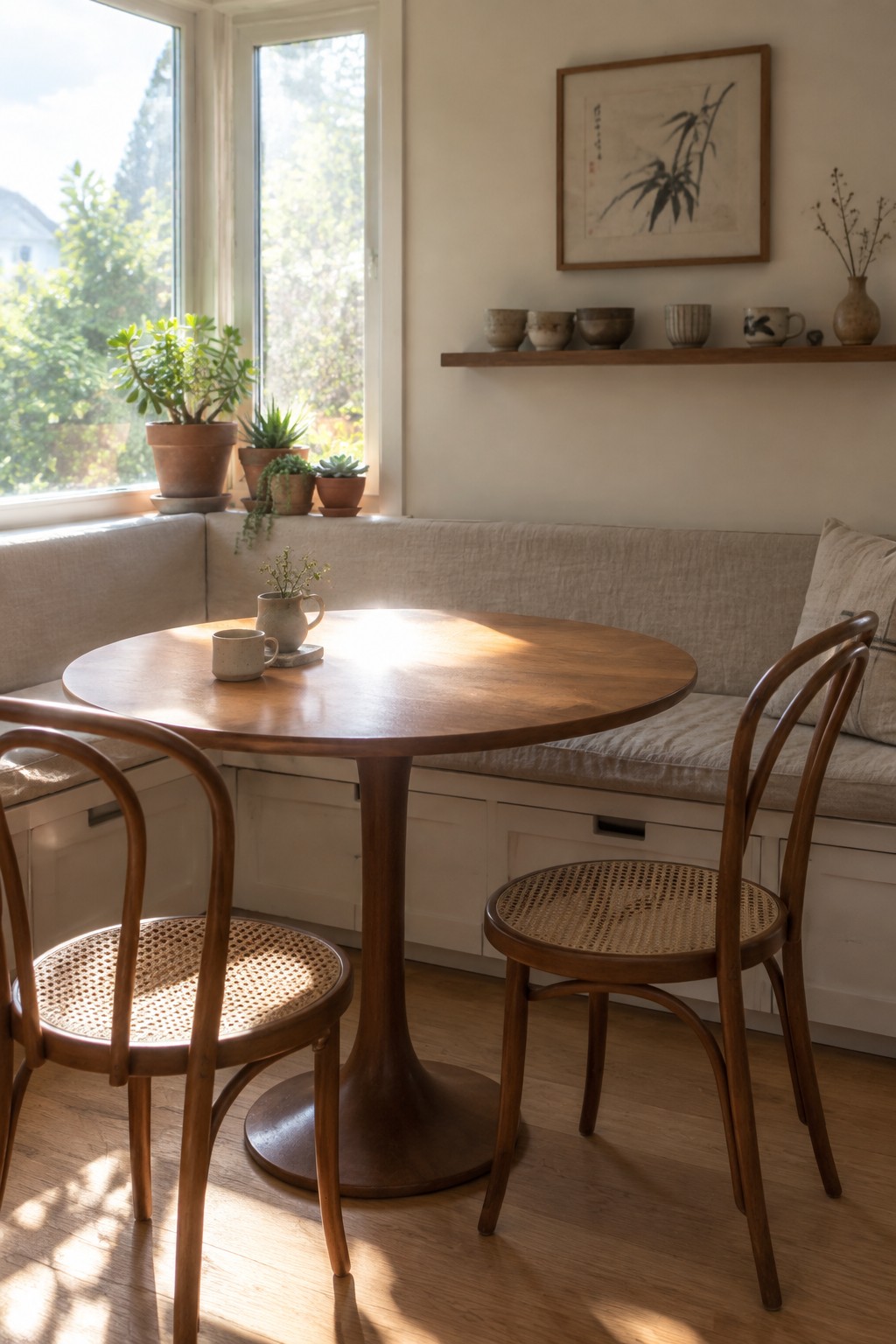
A round pedestal table is a useful choice for a compact dining nook. Its single central base leaves more room for chairs and legs, while the curved edge makes it easier to move around than a table with corners.
Try this shape in a breakfast nook or a small apartment dining area, especially alongside a built-in bench. A wood finish and simple bentwood chairs keep the look in step with mid-century style without making the setup feel busy.
Set Up a Craft Room With Open Storage
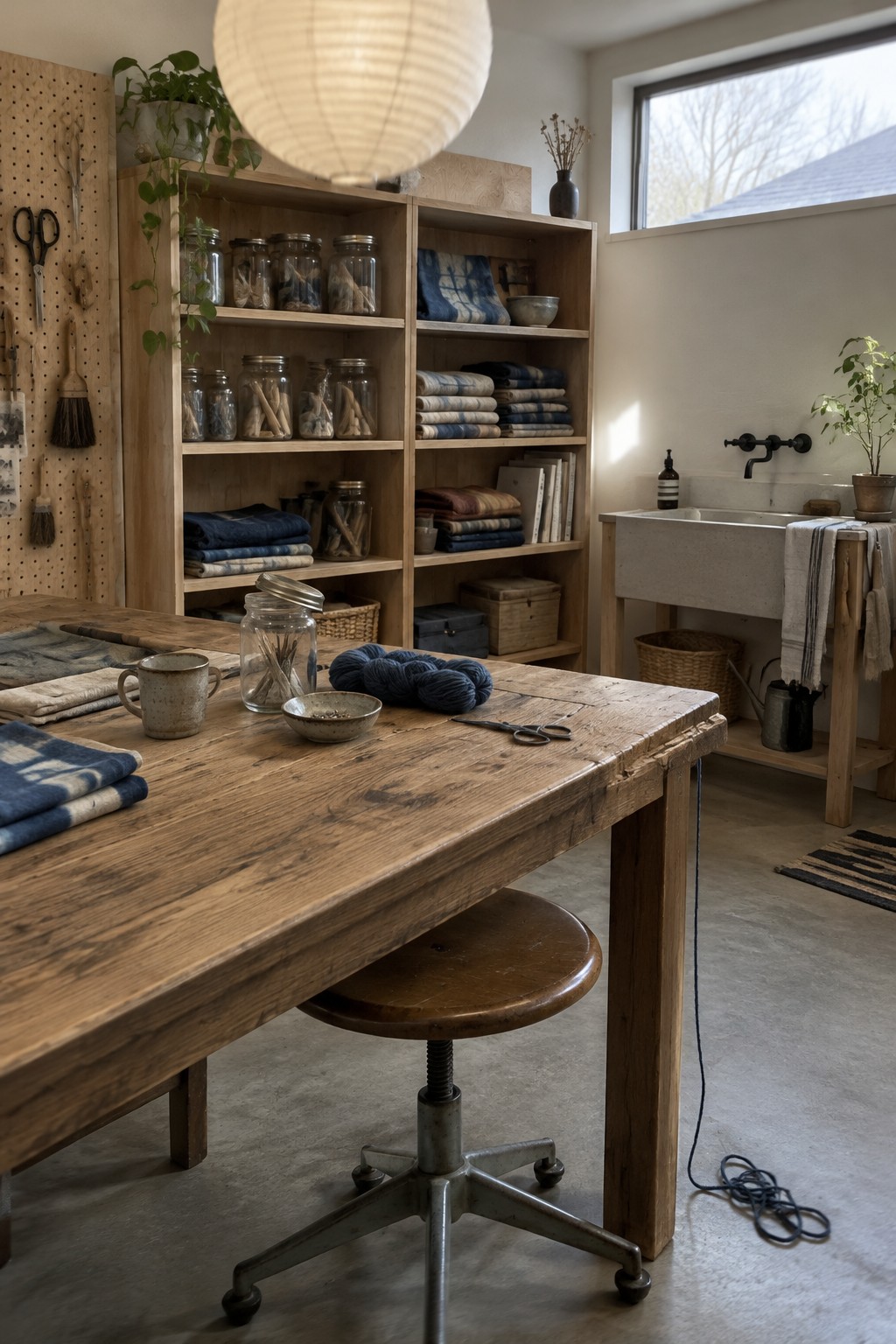
Open wood shelving keeps supplies easy to find while giving a craft room a practical, lived-in feel. Here, folded fabric and clear jars are stored within reach, so the worktable can stay ready for projects.
Use sturdy shelves near the main work area, and group small supplies in jars or baskets to keep them from spreading across the room. This approach suits sewing rooms and other workspaces, but leave some shelf space open so storage does not become clutter.
Use Low Seating to Keep a Japandi Living Room Relaxed
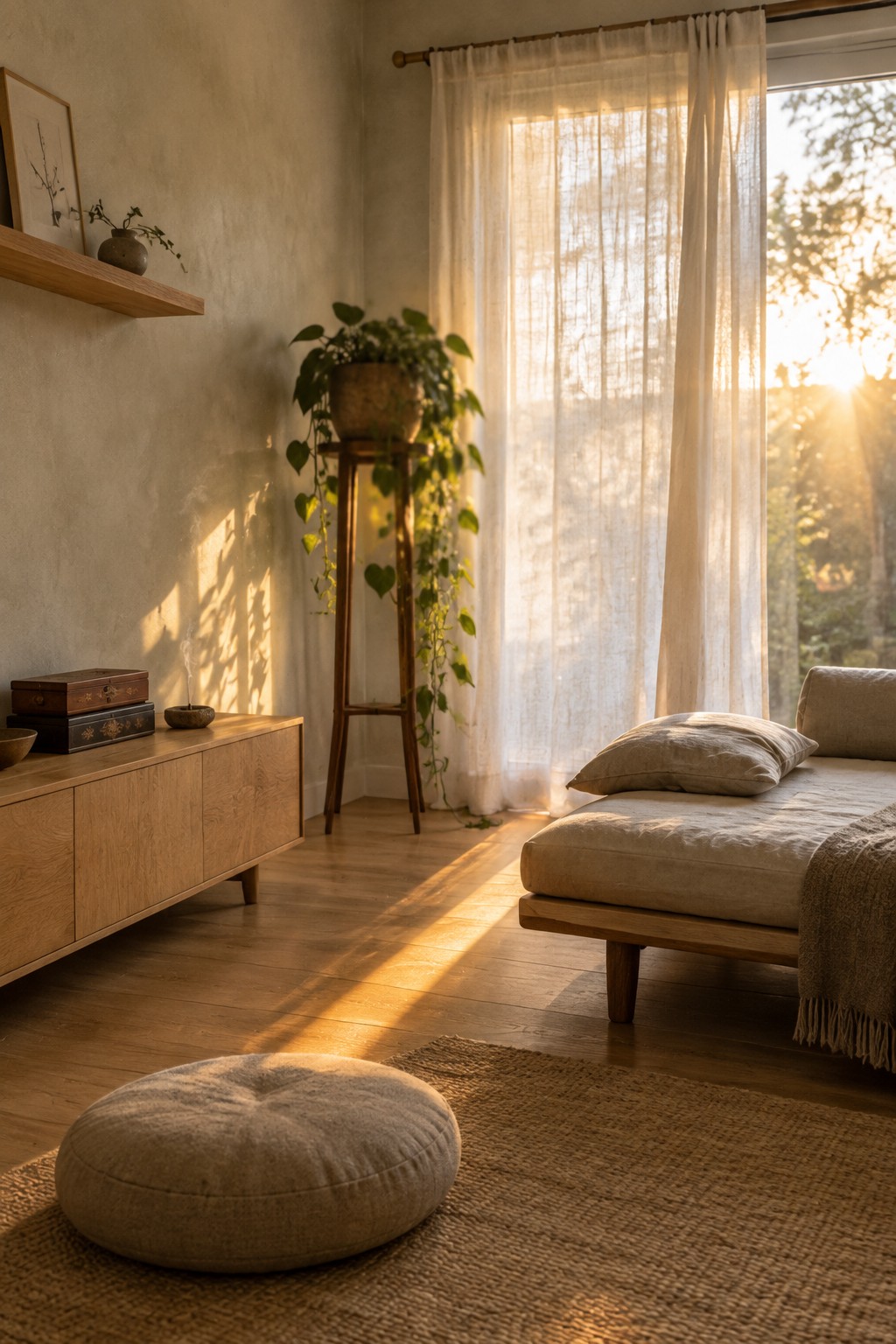
Low-profile seating suits a calm Japandi room because it keeps the furniture close to the floor and lets the space feel open. A simple mid-century-style wooden base can add just enough shape without making the room feel crowded.
Try this approach in a living room where you want a quiet place to read or unwind. Pair a low sofa with a floor cushion, and leave some open floor around the furniture so it stays easy to move through.
Use Built-In Shelving to Keep a Japandi Bathroom Organized
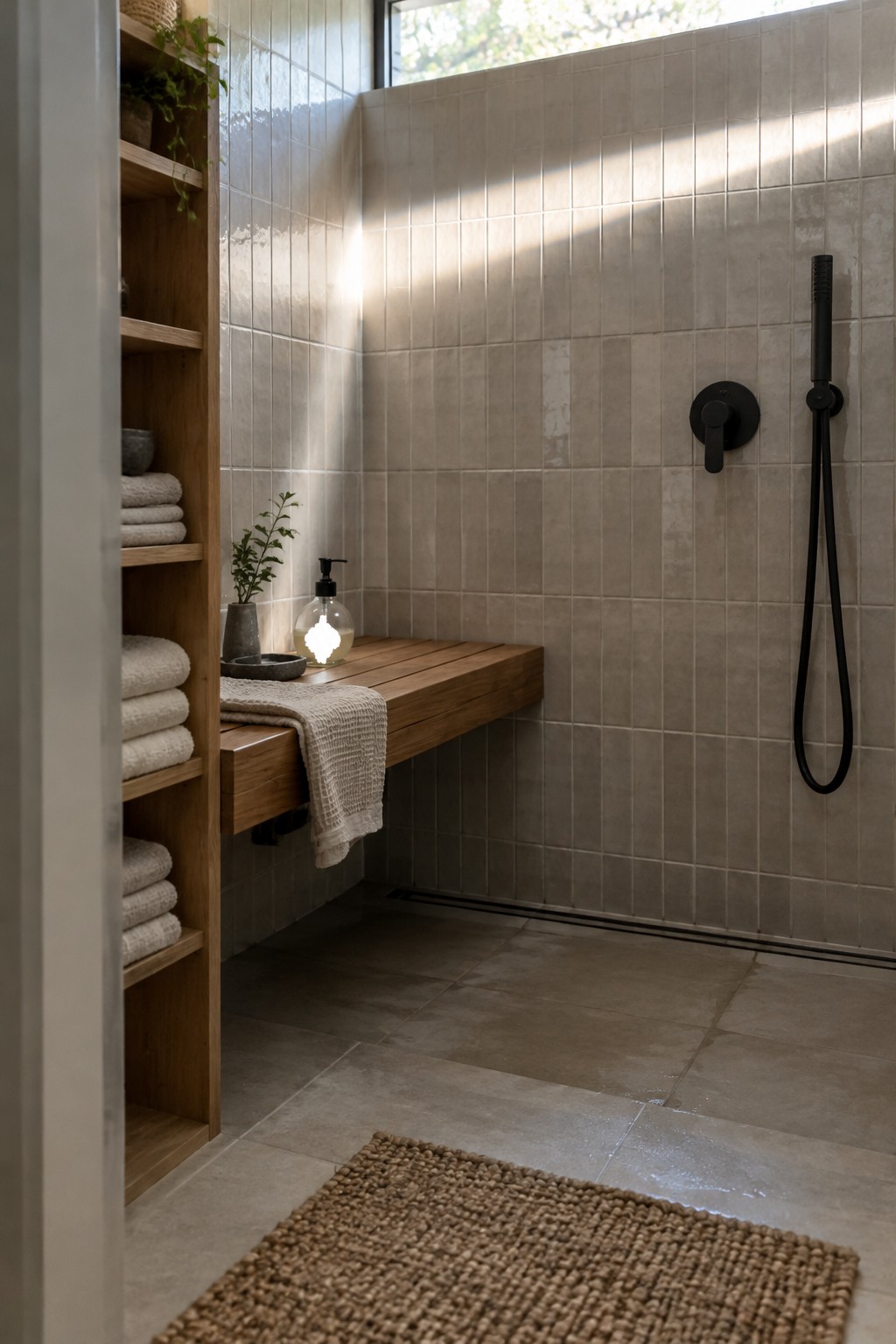
Built-in shelving makes a bathroom easier to use without adding bulky furniture. Here, open wooden shelves keep towels close at hand, while the simple wood finish fits naturally with Japandi style.
This approach works well in a shower room or a small bathroom where floor space is limited. Use shelves for items you reach for often, and leave a little room between stacks so they stay easy to grab.
Use Vertical Wood Slats Behind a Bathroom Toilet
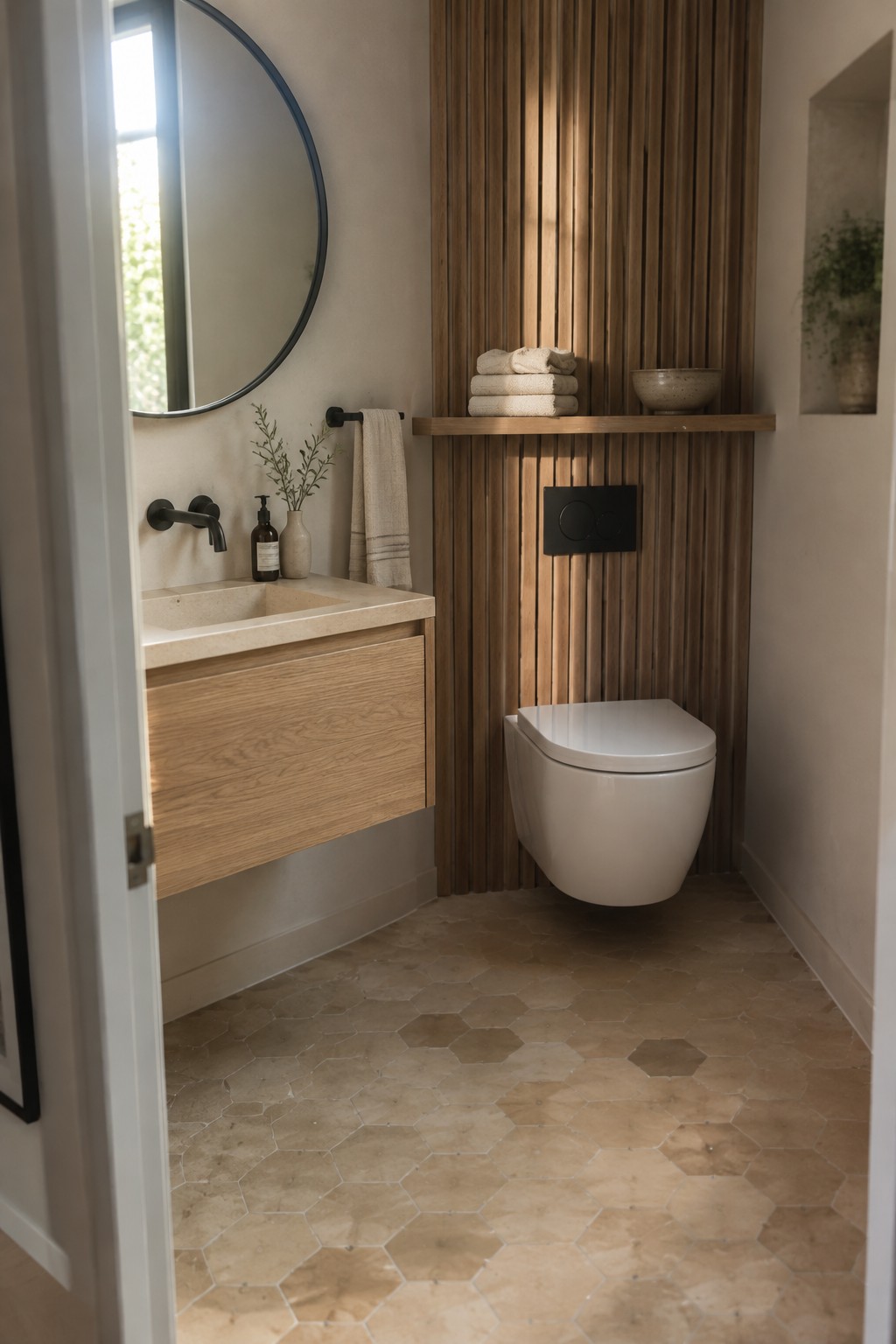
Vertical wood slats give this small bathroom a clear focal wall without adding much visual clutter. The repeated lines bring in a mid-century wood detail, while the simple finish suits a calmer Japandi style.
This treatment works well on a single wall in a powder room or compact bathroom. Keep the surrounding finishes fairly plain, and choose a wood tone that feels at home with the vanity rather than competing with it.
Create a Child-Friendly Play Area With Mid-Century Furniture

A small wooden table and stools make a play area easy for children to use on their own. The simple mid-century shapes keep the furniture practical without making the room feel overly themed.
This setup works well in a playroom or a family room with a little open floor space. Choose sturdy wood pieces with rounded edges, and keep toys in nearby baskets or shelves so cleanup stays manageable.
Choose a Daybed for Flexible Seating

A low wooden daybed can make a room useful for both lounging and sitting without taking up the space of a full sofa. Its simple shape fits the relaxed feel of Japandi interiors, while a mid-century style wood frame gives it a little structure.
Use one in a reading room, spare room, or quiet corner where you want seating that can also serve as a place to stretch out. Keep the bedding and cushions fairly simple so the daybed stays easy to use every day.
Frequently Asked Questions
Q: How do I keep a retro Japandi room from feeling too mid-century or too minimal?
A: Mix the clean furniture shapes with a few softer, more natural details, like linen curtains, a textured rug, or a handmade ceramic lamp. That keeps the room relaxed instead of making it feel like a furniture showroom.
Q: Can I use colorful mid-century furniture in a Japandi-inspired space?
A: Yes. Let one colorful chair or cabinet stand out, then keep the surrounding pieces and finishes quieter. Muted rust, olive, and mustard tend to sit comfortably with warm wood and natural fabrics.
Q: What’s an easy way to try this style without replacing my furniture?
A: Start with the room’s smaller details. Add a paper lantern, a low wooden side table, or a simple vase, and clear a little visual clutter so those pieces have room to breathe.
Q: Which wood tones work well together?
A: Warm walnut pairs nicely with lighter oak or ash. Repeating one wood tone in a few places helps the mix feel intentional, even when the pieces have different shapes.
