

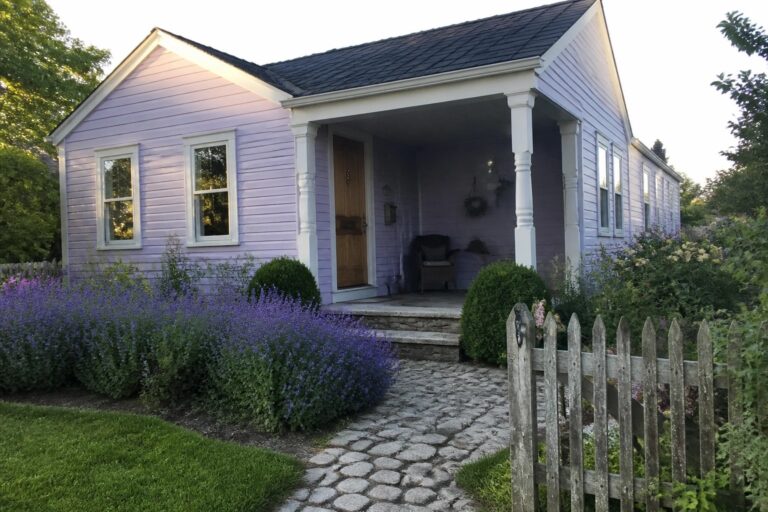
I have always noticed that siding color makes the biggest difference in how a cottage reads from the curb before anything else comes into view.
Lavender shades can soften a plain facade when they are kept in balance with the roof pitch and window trim rather than trying to stand alone.
I usually find that these exteriors hold up better in real life when the paint choice works with the existing entry and porch details instead of fighting them.
Small adjustments like the right shade depth or how the color meets the foundation often change whether the whole front feels settled or just painted on.
Testing a board in morning light is the step I would take first on my own place.
Lavender Siding Suits Cottage Exteriors
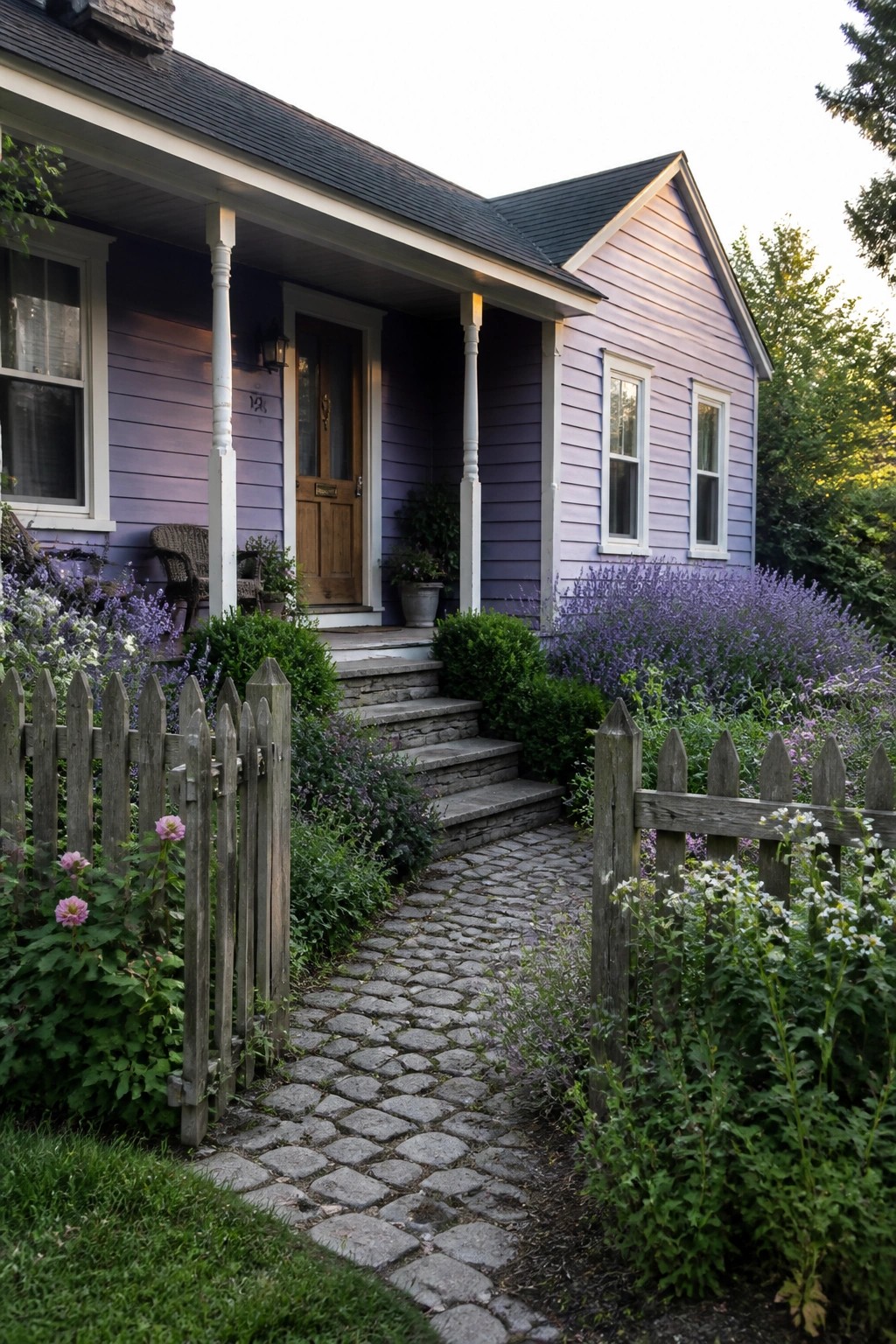
Lavender siding gives a cottage a soft look that still feels grounded. The muted purple tone works especially well on smaller homes because it does not overwhelm the scale the way brighter colors can.
It pairs best with natural materials like wood trim and stone paths. This approach suits older homes or those with mature gardens since the color echoes the plantings without competing with them. Stick to a gray-leaning shade to keep it from feeling too sweet.
Lavender Siding With A Stone Foundation
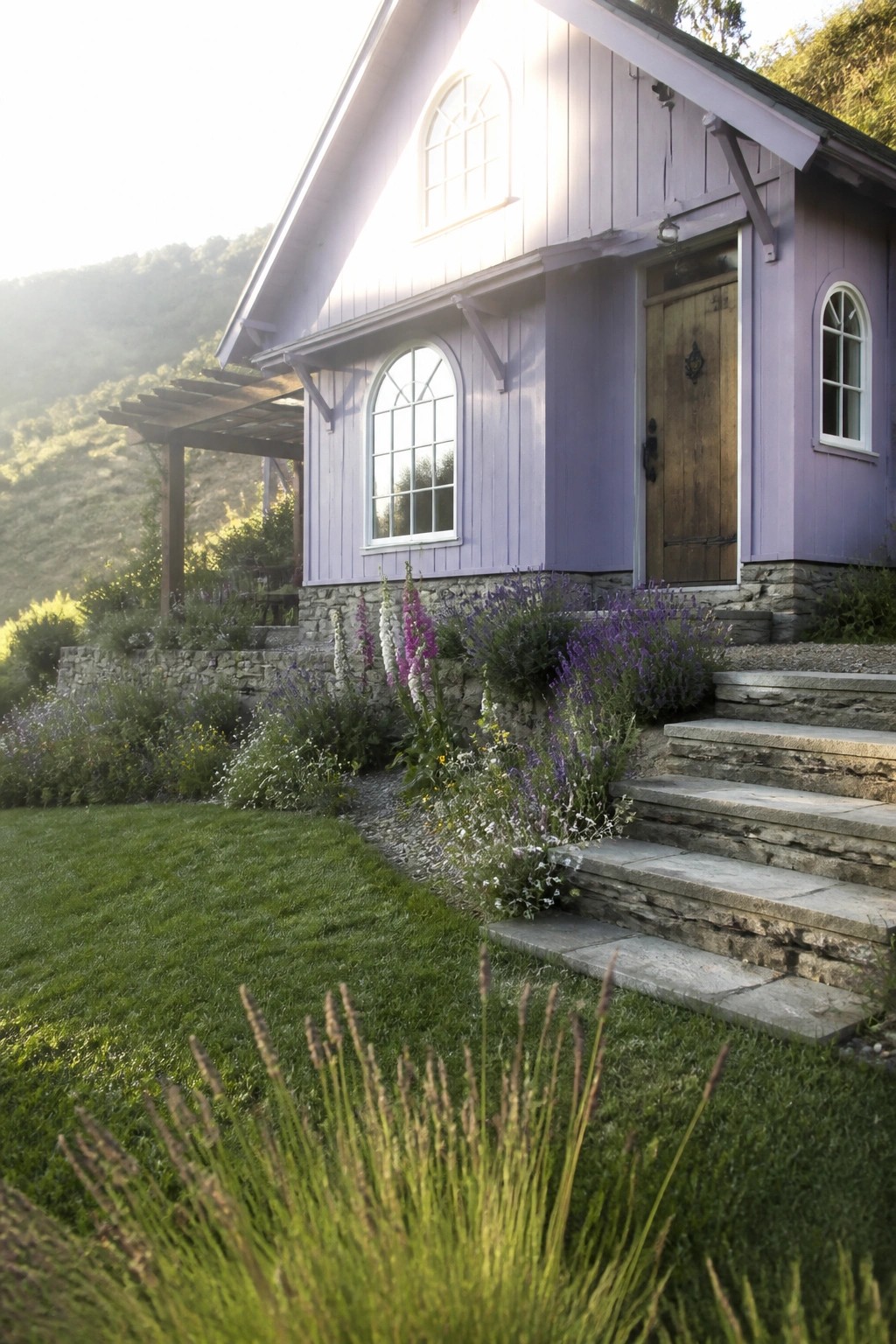
Lavender siding gives a small cottage a light and friendly look that feels right at home in a garden setting. The soft color stands out nicely against the green landscape without needing any extra trim or detail to make it work.
This approach works best on simple shapes where the lower part of the house uses stone. The stone keeps the purple from feeling too airy and gives the whole exterior a grounded base that holds up well over time.
Arched Entries Suit Lavender Cottage Exteriors
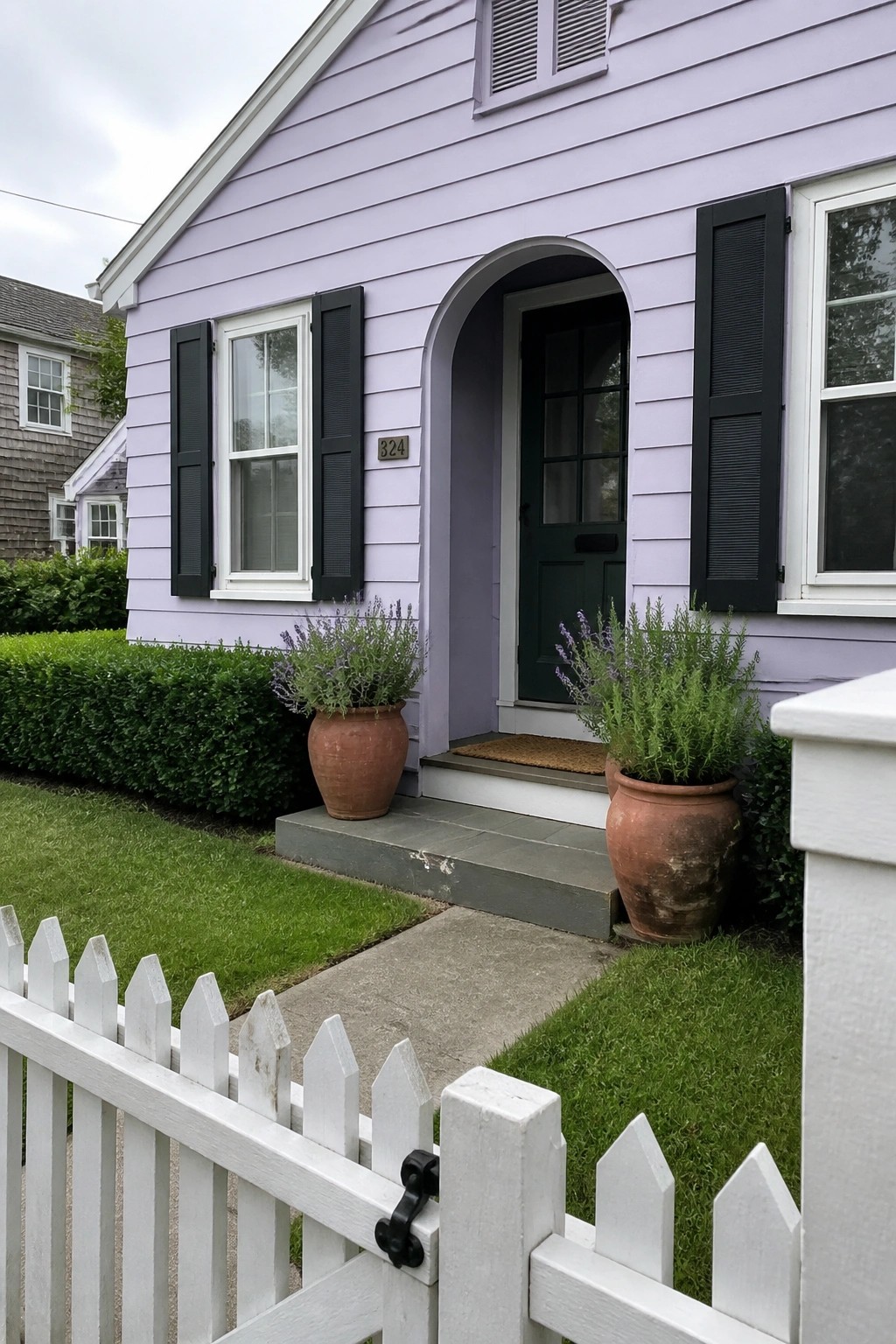
An arched doorway gives a lavender cottage a soft, welcoming shape without any extra fuss. The curve breaks up the flat lines of the siding and pulls the eye straight to the front door.
This works best on smaller homes that need a little extra character. Keep the rest of the details simple, like dark shutters and plain trim, so the arch stays the main focus.
Lavender Siding Complements Outdoor Living Spaces
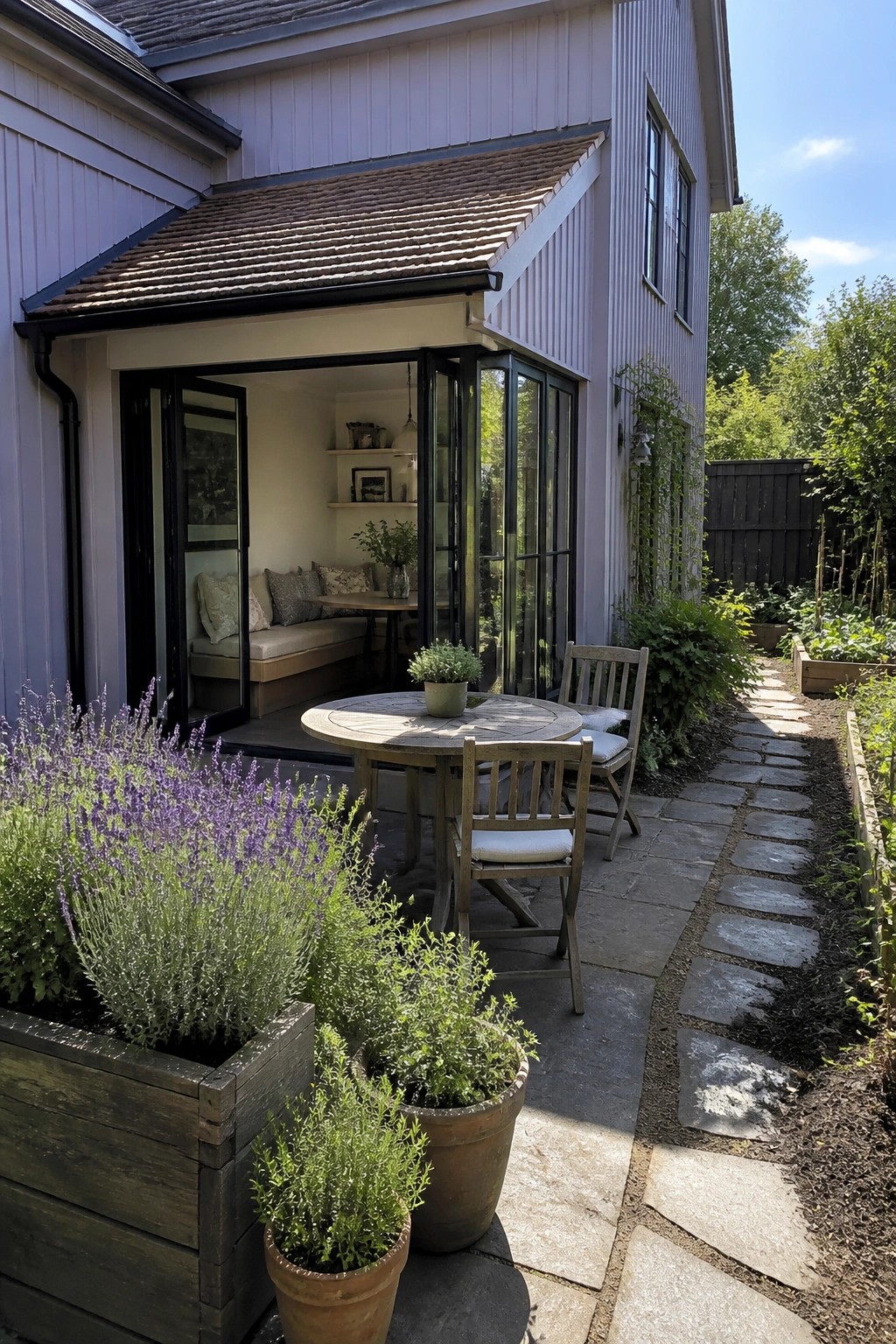
Lavender siding gives a cottage a gentle color that feels at home next to a patio. It creates a soft backdrop that lets the outdoor table and chairs stand out without competing. The color also helps the whole area read as part of the house rather than a separate zone.
This approach works best on smaller homes where the garden sits right against the walls. Keep the trim and window frames dark so the lavender stays the main note. It suits cottages that already have established planting beds and simple stone paths.
A Yellow Door Adds Warmth To Lavender Siding
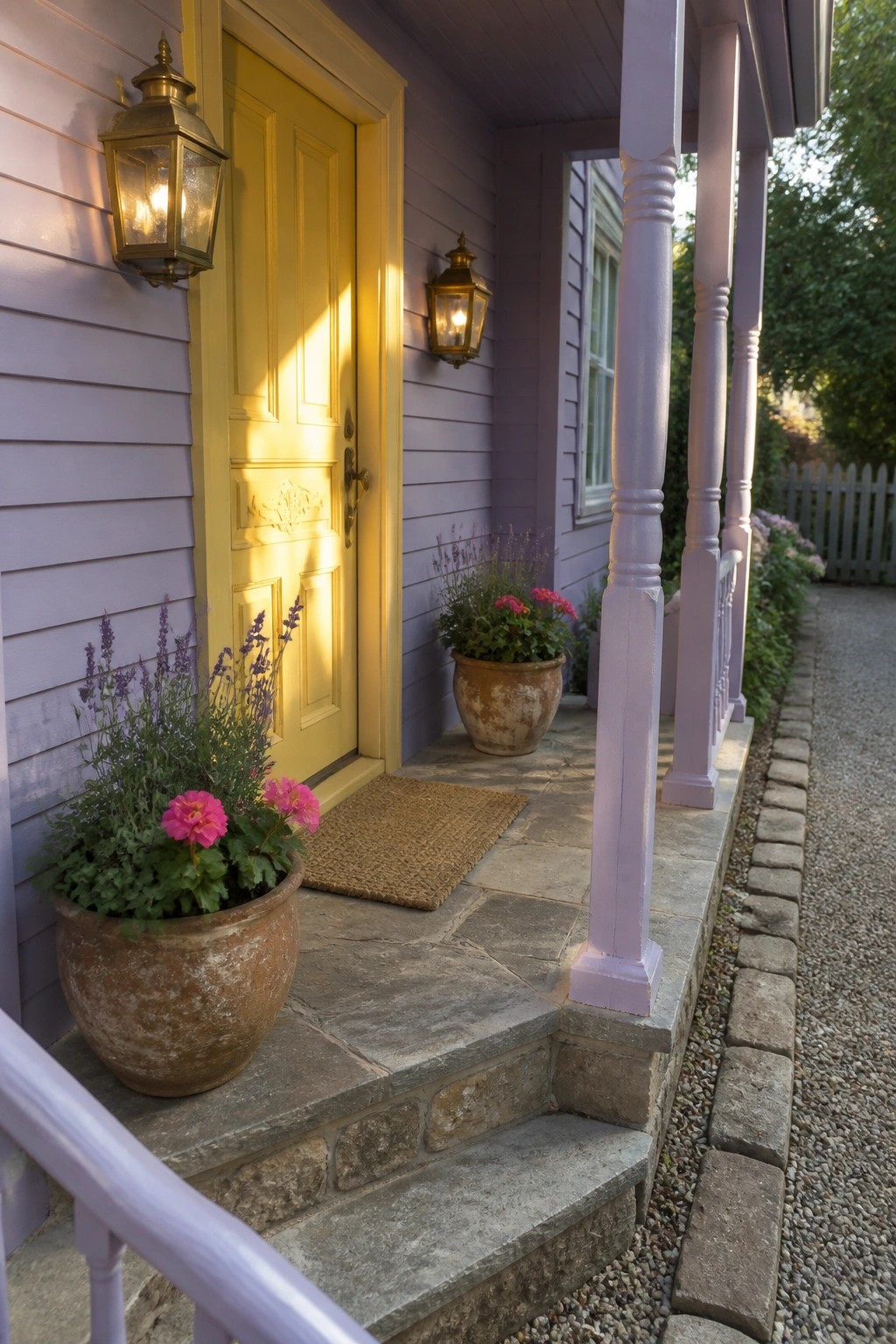
A bright yellow door stands out nicely against lavender siding and keeps the exterior from looking too pale or quiet. The contrast draws the eye straight to the entry without needing extra trim or decoration.
This approach works best on smaller cottages where the front door can carry some of the personality. Pick a saturated yellow that holds up in different light, and add simple fixtures like old-style lanterns to keep the focus on the door itself after dark.
Lavender Siding Softens Cottage Exteriors
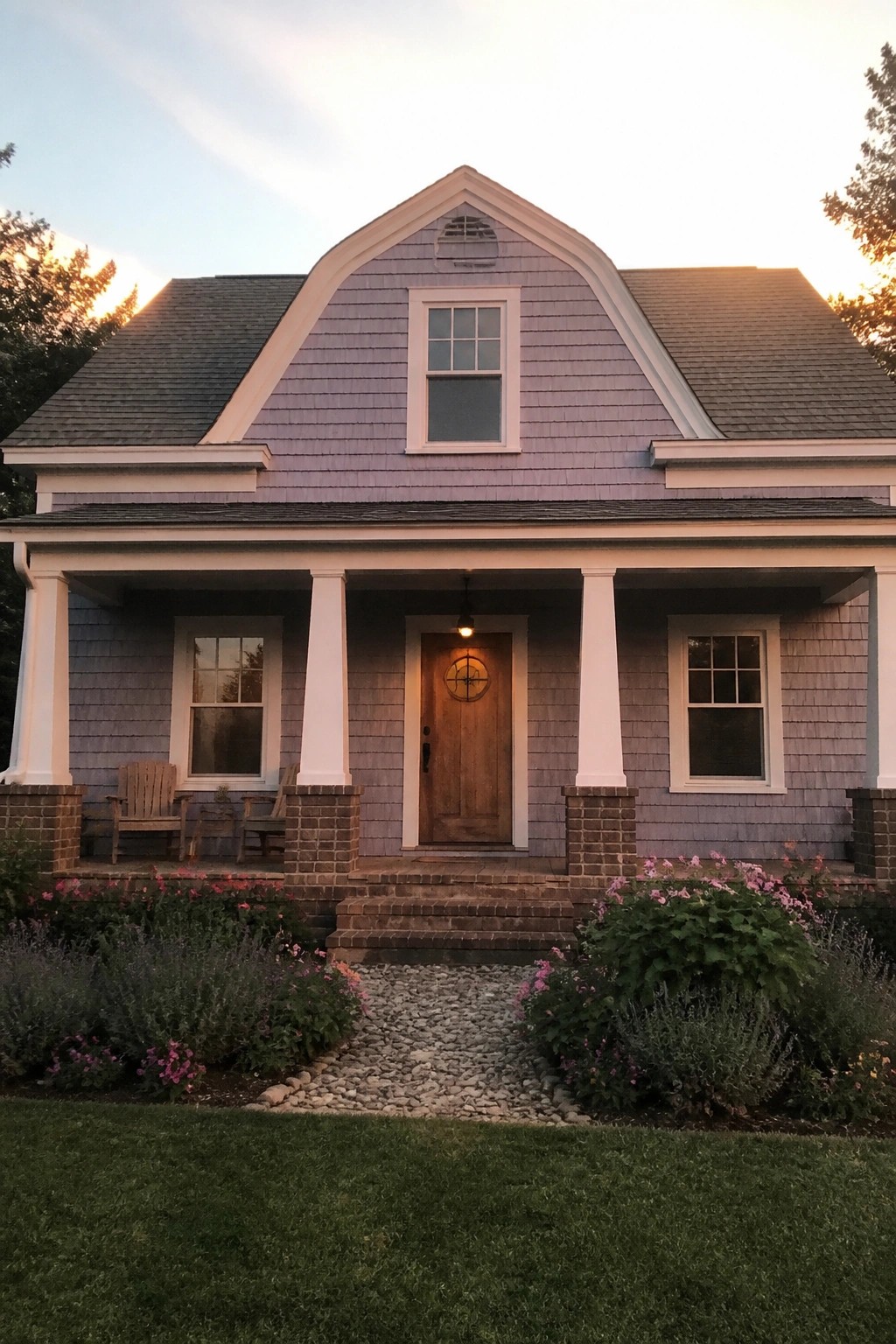
Lavender siding gives a cottage a calm presence that still feels cheerful. It avoids the stark look of white or gray while keeping the house from disappearing into the trees. The color works especially well when the trim stays light and the roof stays a simple dark gray.
This approach suits smaller homes with a front porch and basic gable details. It helps the house read as friendly rather than bold. Just keep the landscaping low and the accents minimal so the siding stays the main note.
Lavender Siding With A Stone Base
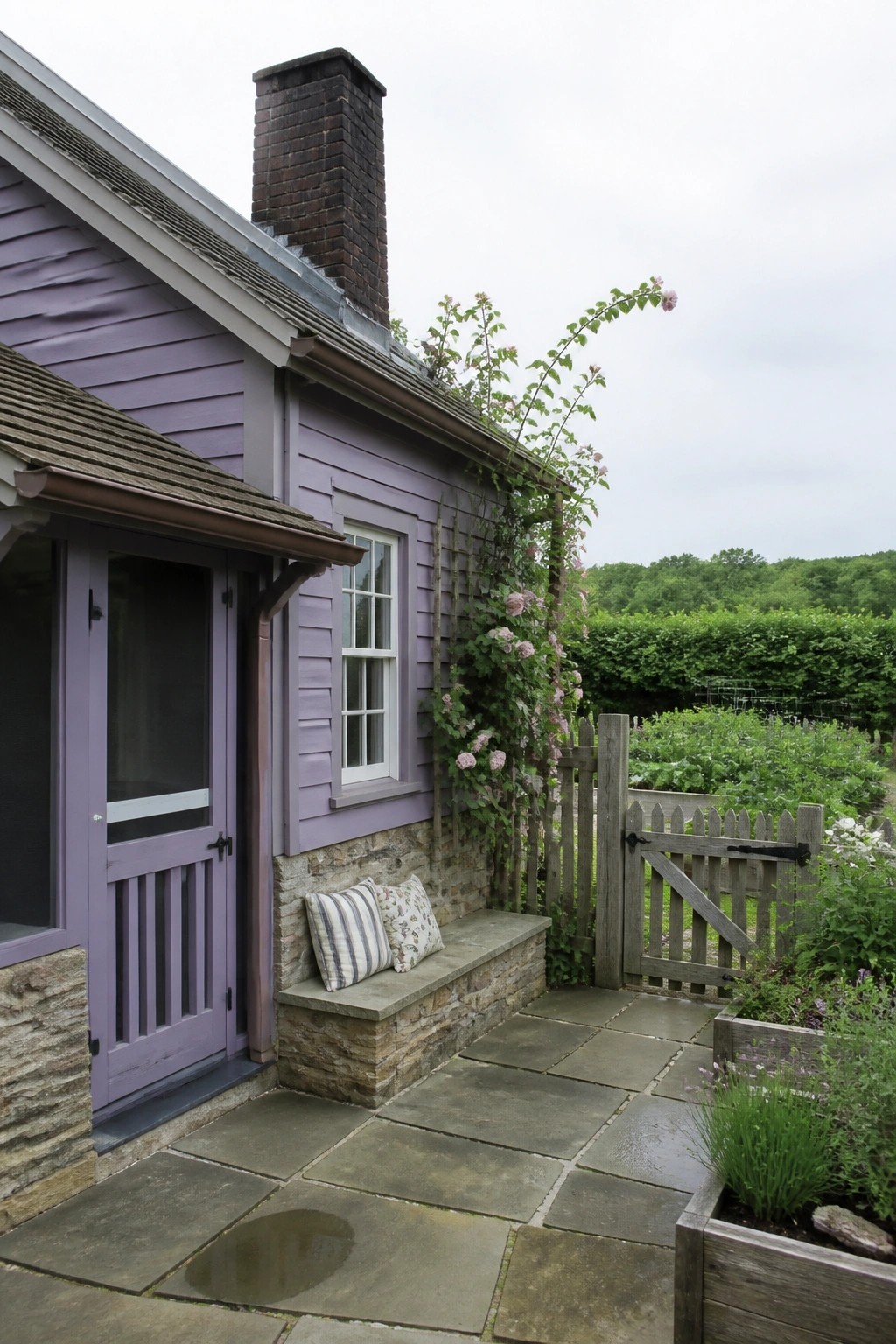
Lavender siding gives a cottage a soft color that still reads clearly from the road. The stone base underneath keeps the look from feeling too light or toy-like, and the two materials balance each other without extra trim or decoration.
This works best on smaller homes or garden cottages where you want color but still need some weight at ground level. Use it when the house sits among greenery so the purple has something to sit against.
Match The Siding Color On Outdoor Cabinets
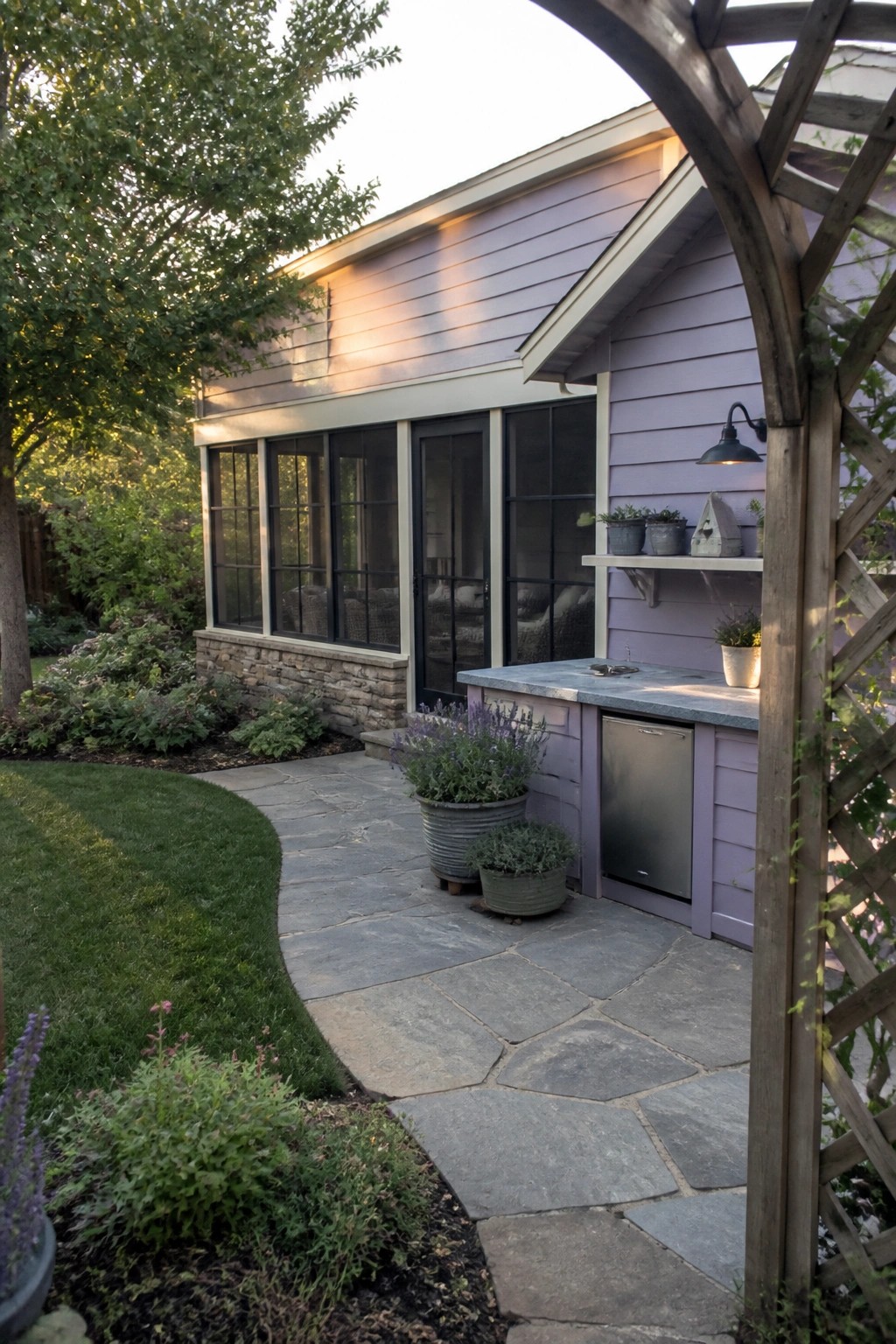
Painting the cabinetry under an outdoor counter the same shade as the house siding pulls the whole area together. The color carries from the walls straight into the workspace, so the setup feels like part of the cottage rather than something added later.
This works best on smaller yards where the patio sits close to the house. Use exterior-grade paint and keep the countertop and fixtures in simple tones so the lavender stays the main note without looking busy.
Lavender Siding With Green Trim
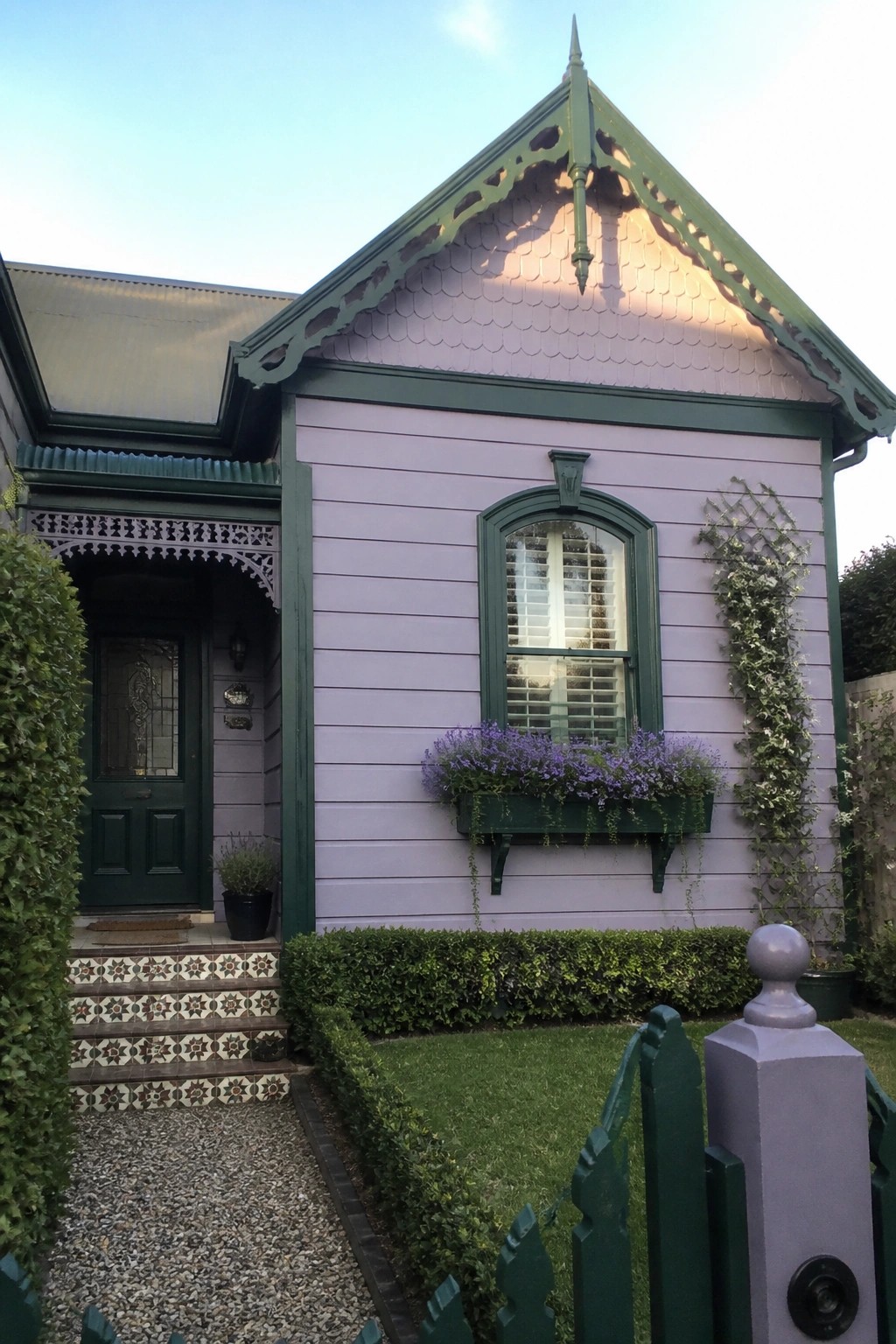
Lavender siding gives a cottage a soft color that still reads as cheerful rather than pale. The deep green trim keeps the look grounded and gives the house clear shape without needing extra detail.
This approach works well on smaller homes that sit close to the street. Use a strong green on the window frames and door so the lavender stays the main color instead of blending into the background.
Lavender Siding For Cottage Exteriors
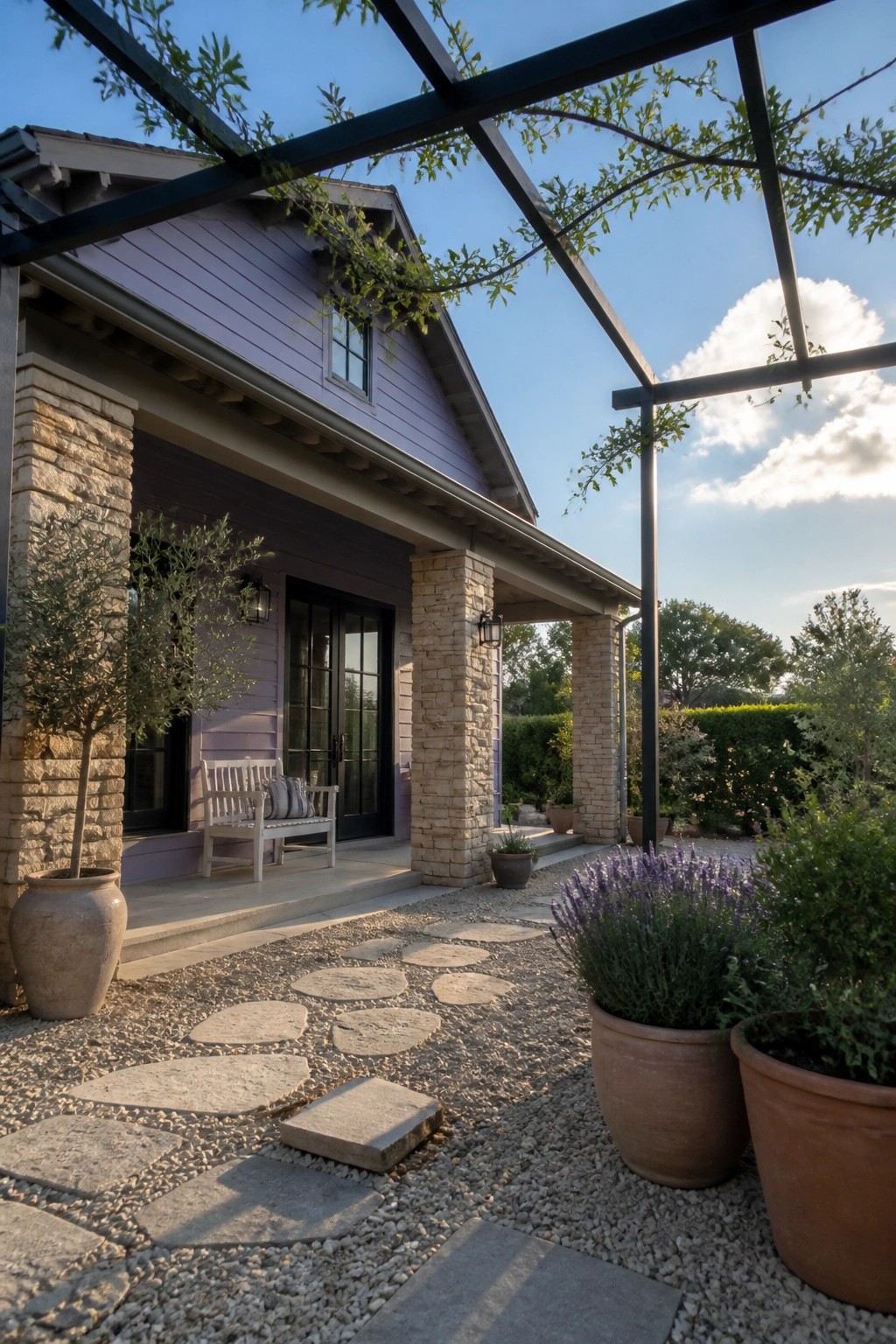
Lavender siding gives a cottage a quiet, friendly feel that still reads as intentional. The soft color works especially well when it is kept to the main body of the house and balanced with heavier materials like stone on the columns and dark trim around the doors and windows.
This approach suits smaller homes or cottages where you want color without it becoming overwhelming. It looks best in settings with some greenery nearby, since the purple reads calmer against plants and gravel than it does against stark pavement.
Lavender Siding With Climbing Vines
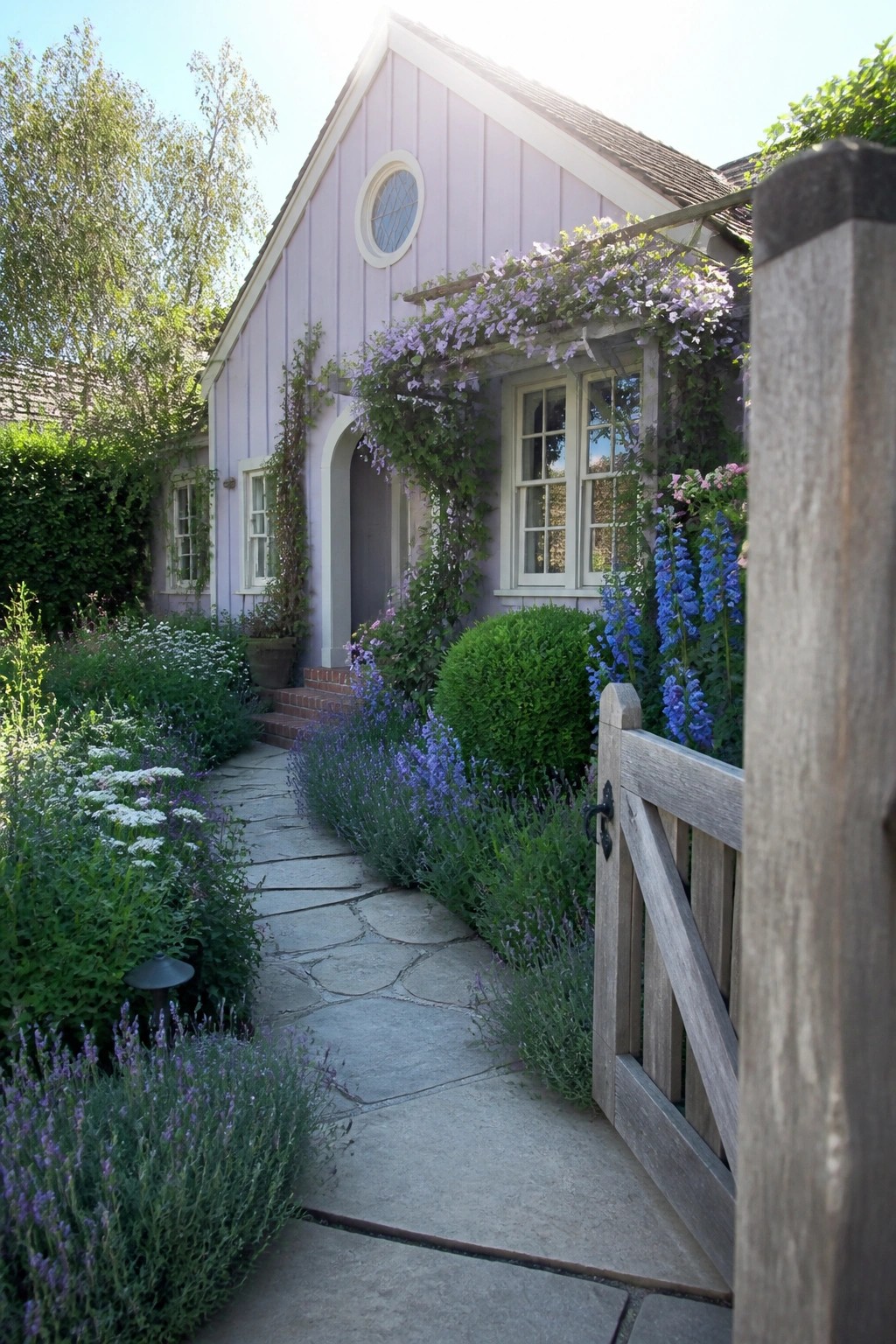
Lavender siding gives a cottage a soft, friendly base that stands out without feeling bold. When flowering vines are allowed to climb around the windows and entry, the color feels more settled and the whole front gains a natural rhythm that changes with the seasons.
This approach suits smaller homes with simple rooflines and works best when the plants are kept in scale with the windows. Choose varieties that bloom in similar tones so the siding and the greenery read as one complete picture rather than separate layers.
Soft Purple Siding for Cottage Exteriors
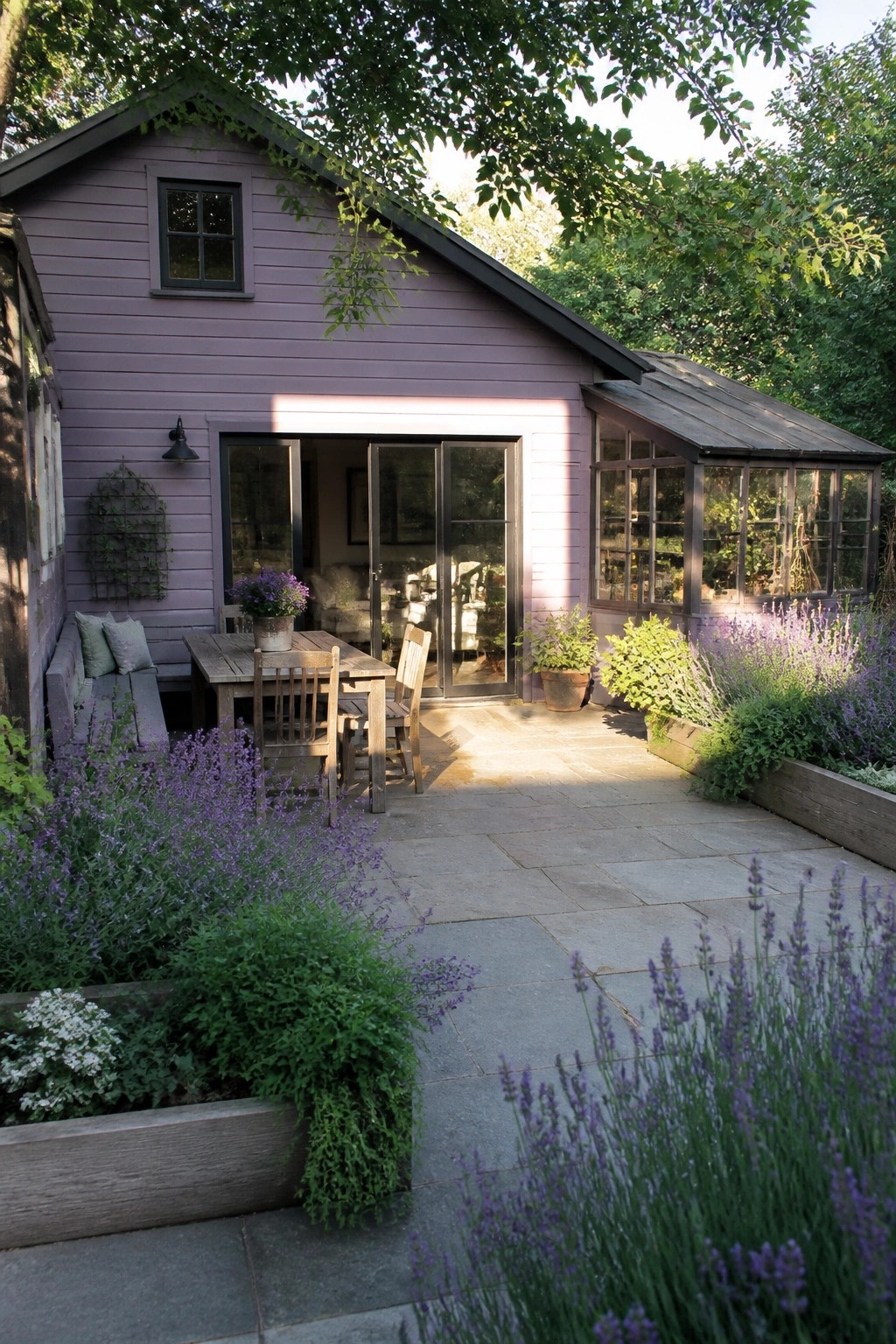
A muted lavender shade on the siding gives this cottage a quiet presence that sits well with the garden. The color feels soft enough to let the surrounding plants take the lead while still making the house stand out in a simple way.
This approach works best on smaller homes where the beds sit right against the walls. Choose a grayed tone rather than a bright one so the siding does not fight with the real lavender.
Soft Lavender Siding for Cottage Exteriors
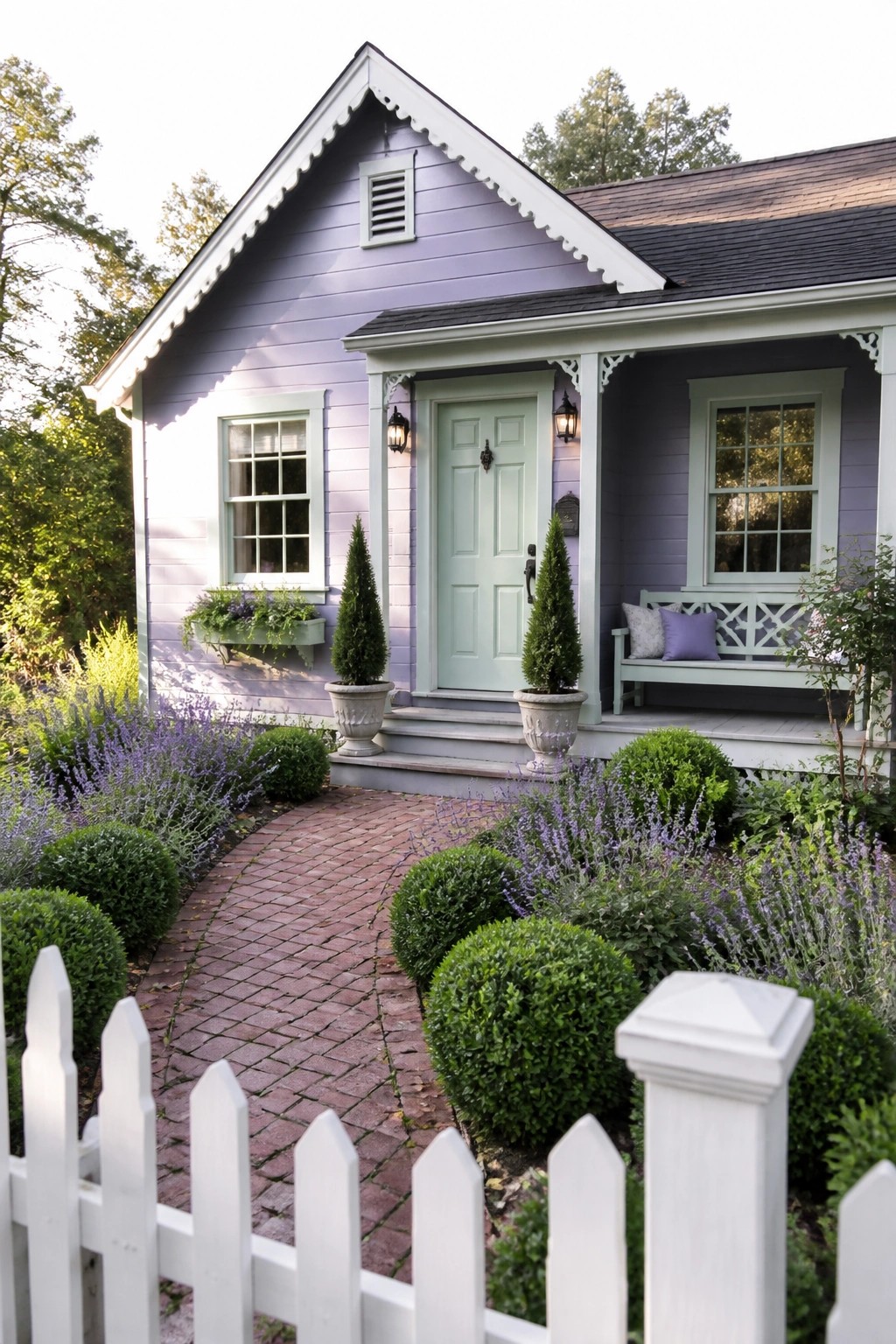
Lavender siding gives a cottage a quiet, friendly look that still stands out from plain white or gray homes. The color stays soft enough that it does not fight with the roof or trim, and it pairs easily with a few green accents on doors and window frames.
This choice works best on smaller homes with simple shapes. Keep the trim crisp and white, and add a few low shrubs or flowers near the base so the color feels grounded rather than floating.
Lavender Siding Softens a Cottage Exterior
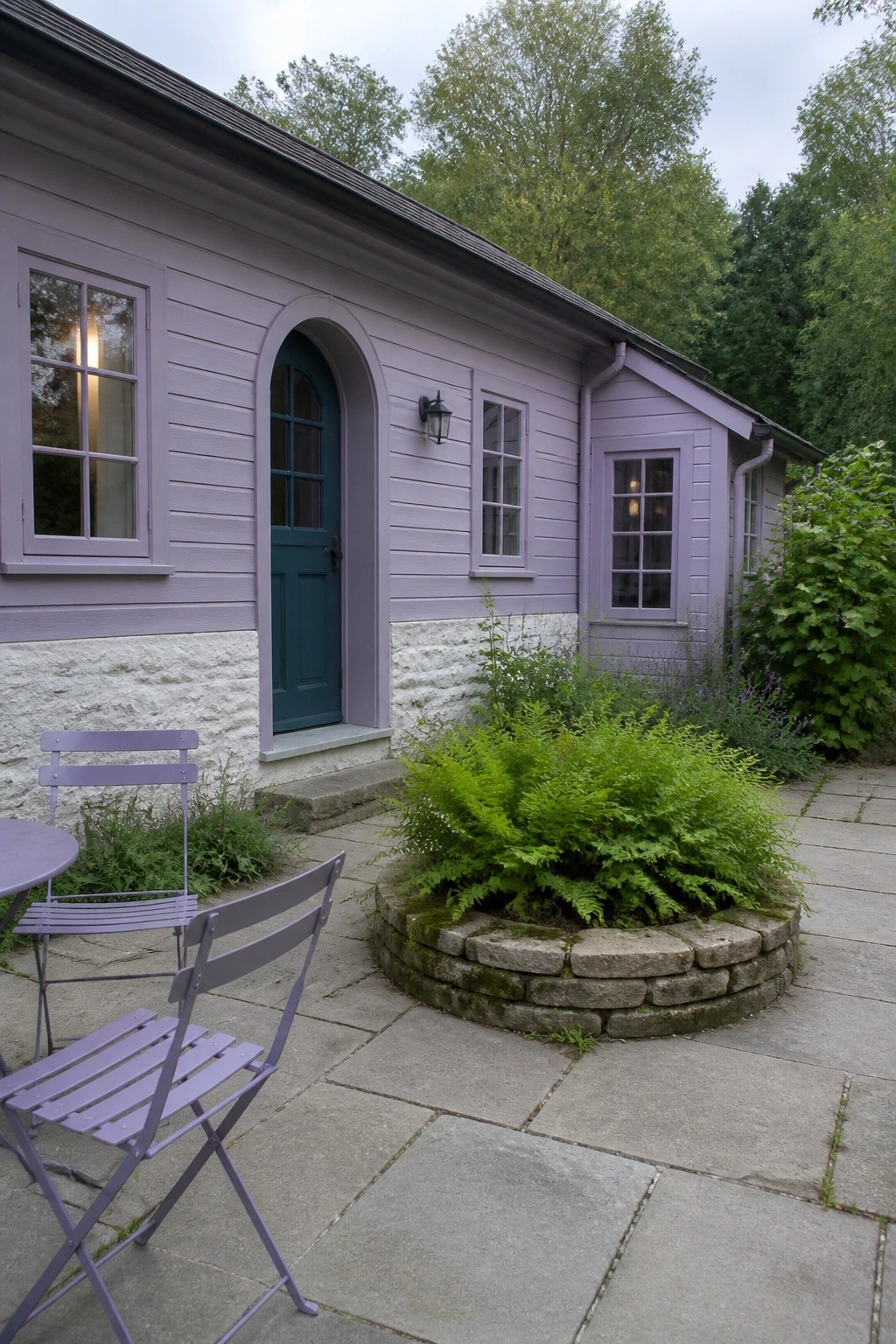
Lavender siding gives a cottage a gentle look that still feels grounded. The color sits between gray and purple, so it reads calm rather than sweet, and it holds up well next to stone or white trim.
It works best on smaller homes or those set in gardens, where the soft tone can echo nearby plants without competing. Keep the door and windows in a stronger color so the siding stays the main note instead of fading into the background.
Lavender Siding That Matches the Doors
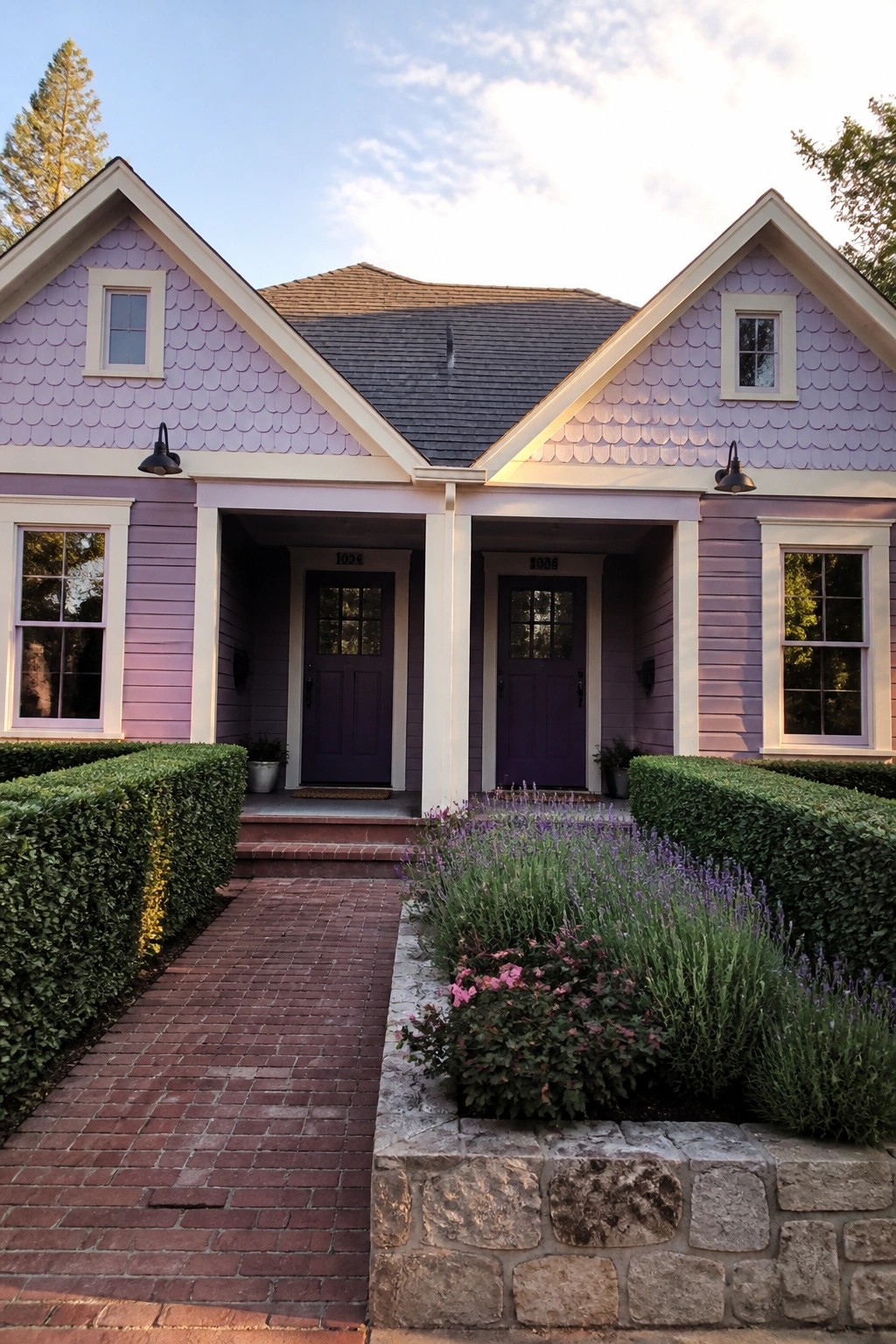
Many cottages gain a simple charm when the siding and front doors stay in the same soft purple tone. The color choice keeps the facade looking calm and connected instead of busy with too many contrasts.
This works well on smaller homes or side by side units where you want the whole front to read as one. Stick with the same shade on the main surfaces and doors, then let any white trim do the rest of the work.
Lavender Siding Works Well With Stone
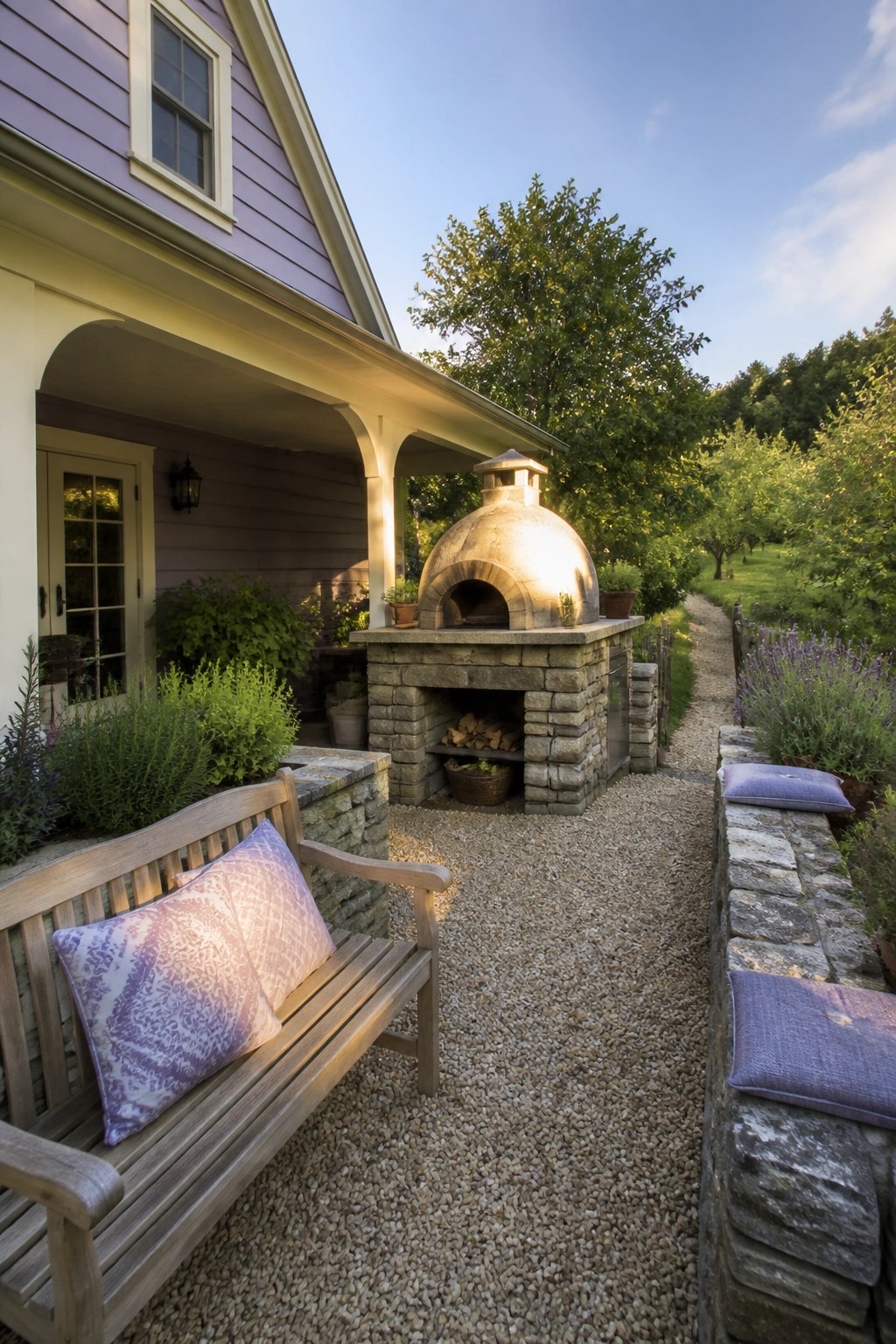
A soft purple on the siding gives a cottage a gentle look that still feels grounded. It pairs easily with stone details and wood trim, keeping the whole exterior from feeling too sweet or too plain.
This color works best on smaller homes with some garden space around them. Use it when you want the house to sit nicely with paths and outdoor structures without competing for attention.
Pairing Lavender Siding With Stone
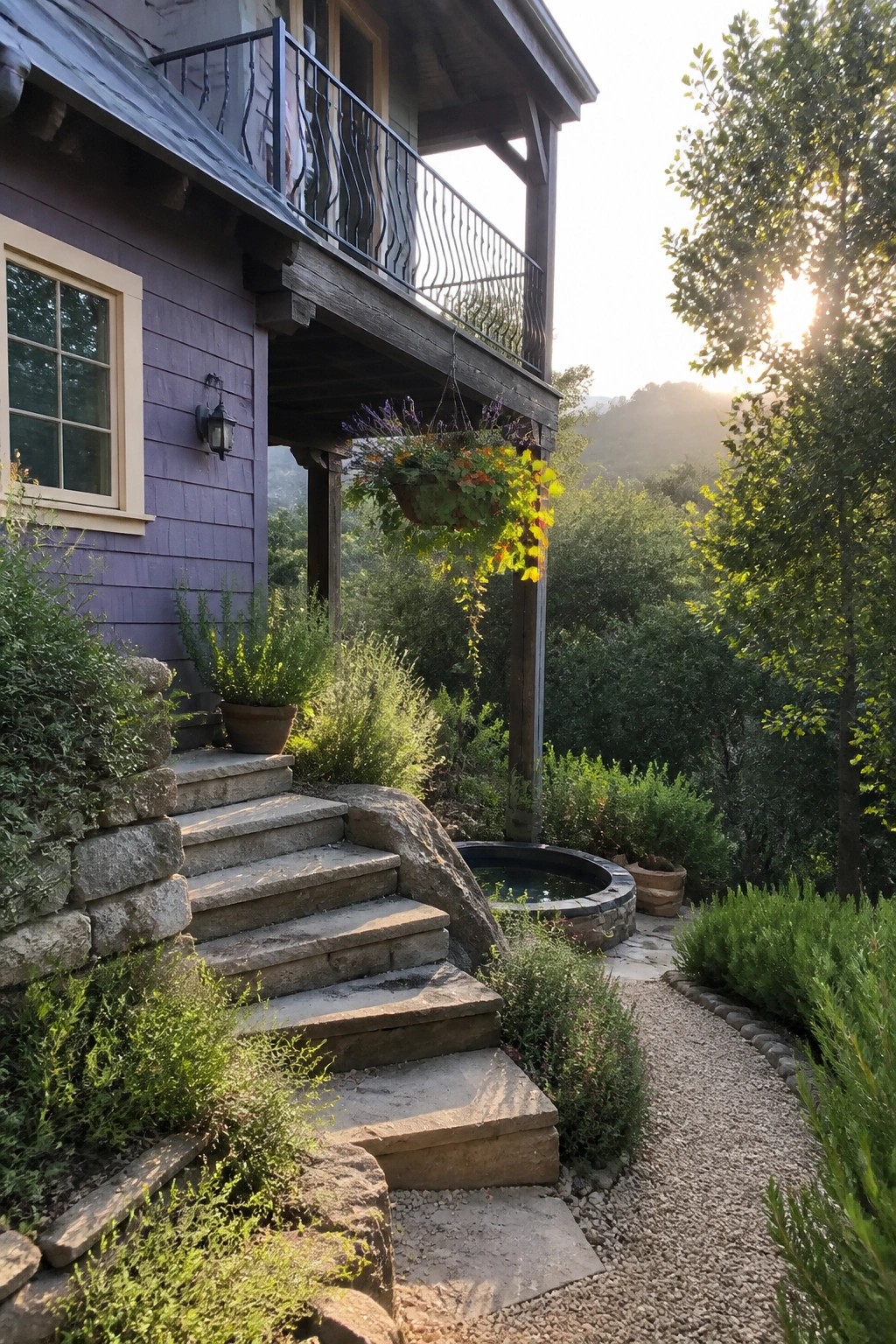
Lavender siding gives a cottage a soft but clear personality that stands out without trying too hard. When it meets stone steps and simple wood trim, the color feels grounded instead of loud, and the whole front gains a settled look that works with the surrounding plants.
This approach suits smaller homes or cottages where the siding can carry most of the color while stone handles the heavier base. Keep the stone natural and the trim dark so the lavender stays the focus without clashing with the garden.
Lavender Siding For Cottage Exteriors
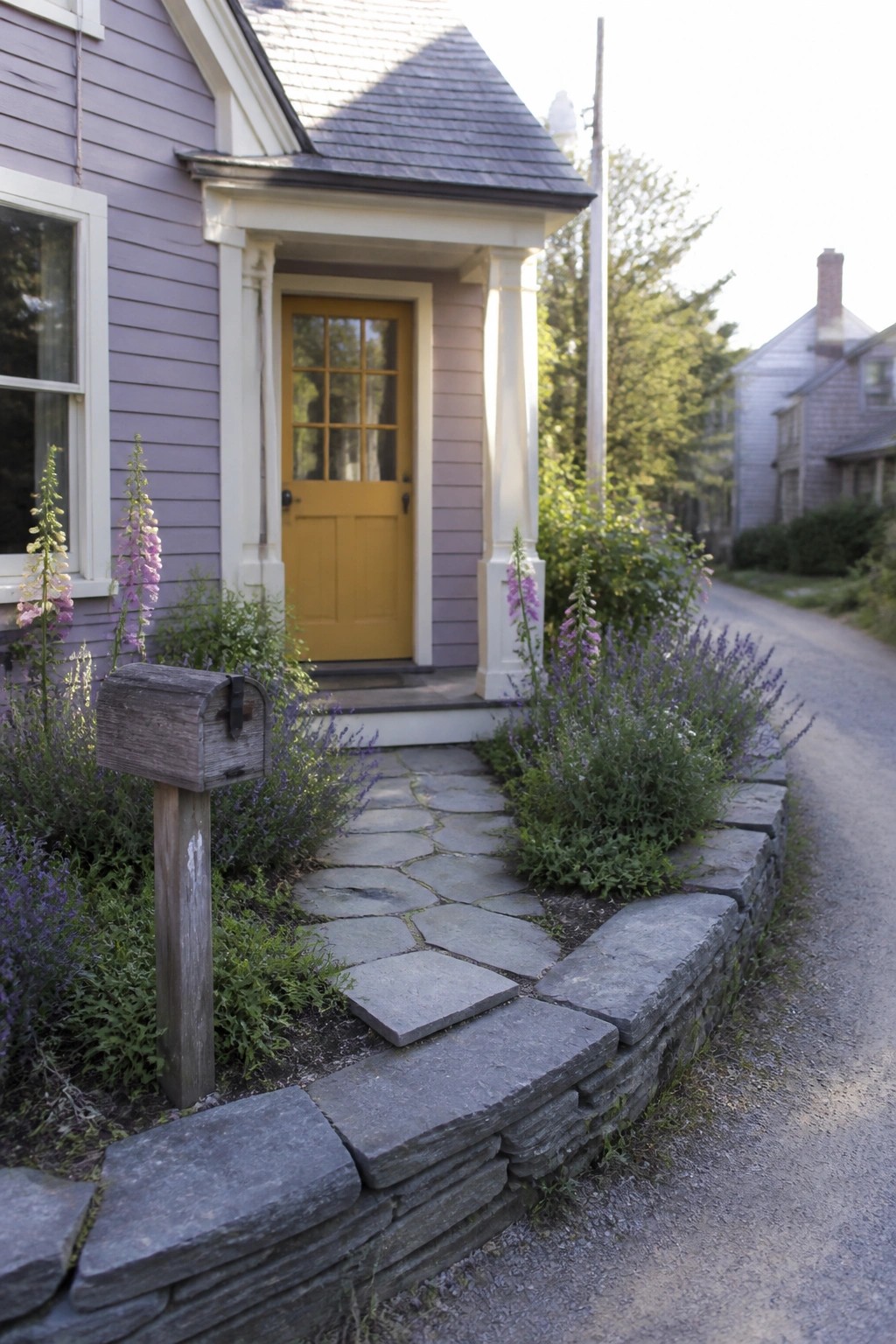
A soft purple siding color gives a cottage a gentle presence without feeling too bold. It works especially well on smaller homes where you want the house to blend into the garden rather than stand apart from it. The muted tone also holds up nicely against changing light through the day.
This approach suits older cottages or simple builds that already have some character in the trim and roofline. Keep the door color strong so the entry stays easy to find, and let the plants carry most of the color variation around the base of the house. Too many competing hues on the siding itself can make the whole front feel busy.
Built-In Bench Seating Around a Fire Pit
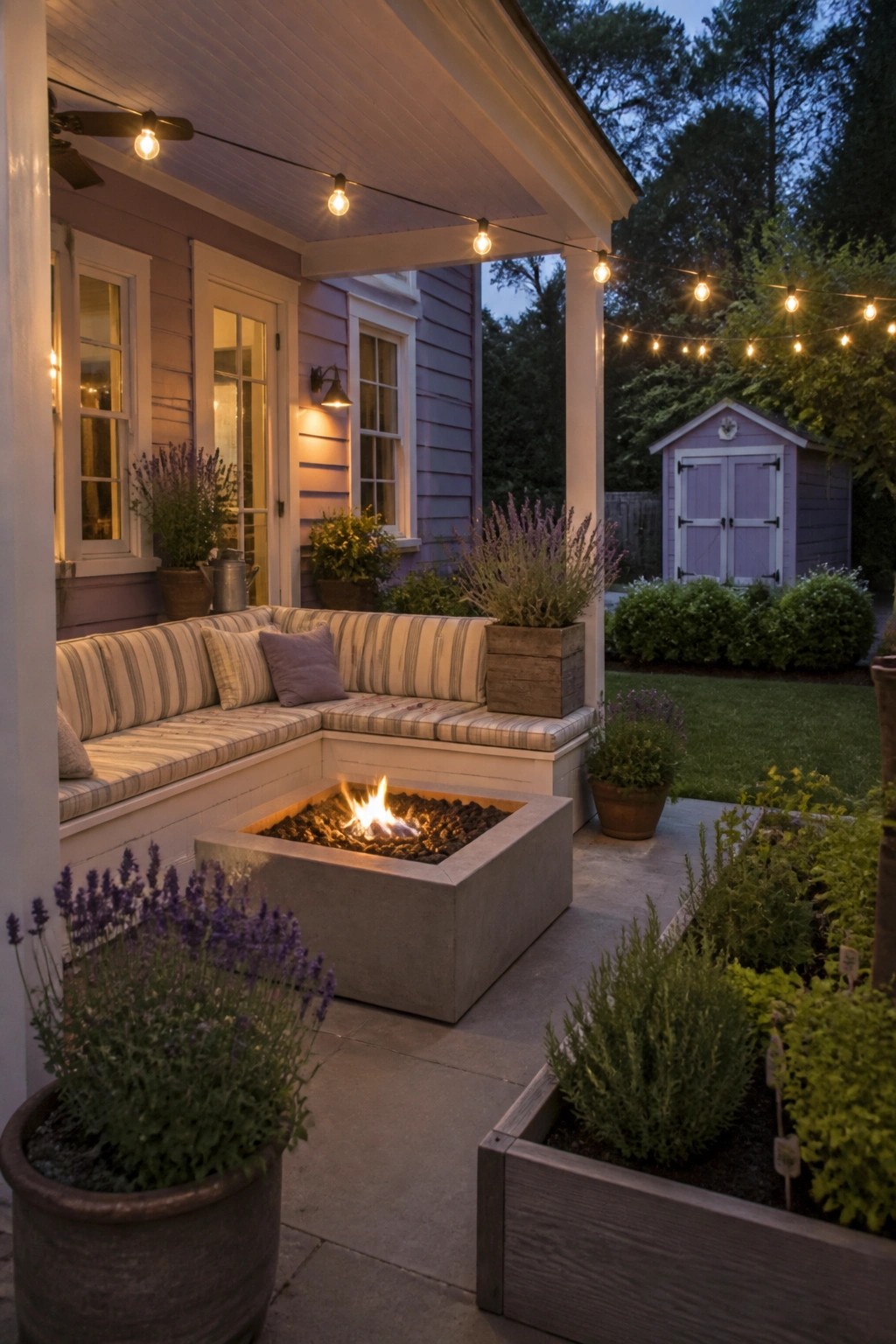
A built-in corner bench makes a fire pit feel like a natural part of the porch instead of something added later. It turns the space into a real sitting area where people can gather without needing extra chairs pulled in each time. The bench also gives the porch a finished look that matches the cottage style.
This setup works best on homes that already have a covered porch or deck with room to spare. Keep the bench height low so it feels relaxed, and use weatherproof cushions that can stay outside. It suits smaller yards where you want one spot to handle both seating and warmth without crowding the rest of the garden.
Frequently Asked Questions
Q: What trim pairs best with lavender siding?
A: Soft white trim brightens the purple nicely and keeps the whole exterior feeling light. It draws attention to the windows without overpowering the cottage scale. A warm cream works if you prefer something softer.
Q: Does lavender fade fast on exterior walls?
A: Strong sun can dull the color over a few seasons. Go with exterior paint that includes UV protection to slow the change. Touching up high spots every few years brings the vibrancy back.
Q: What plants complement a purple cottage exterior?
A: Lavender or deep purple blooms echo the siding in a simple way. They link the house to the garden without extra effort. White flowers give more contrast if the purple starts to feel heavy.
