

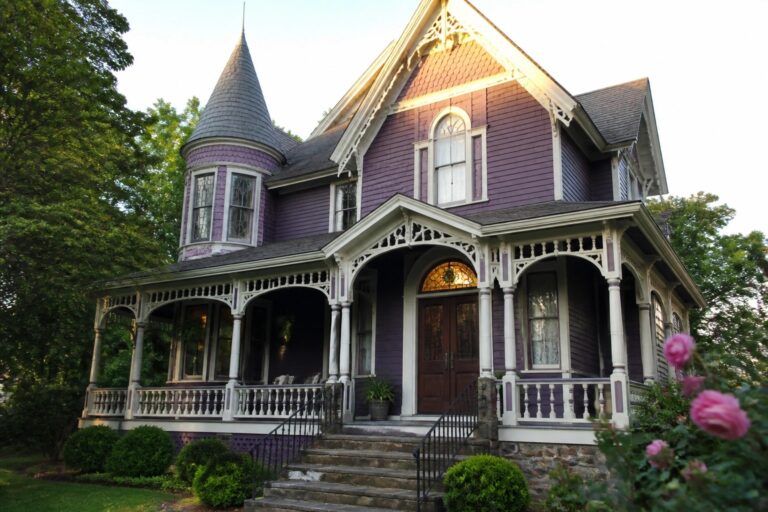
I have always been drawn to Victorian houses because the color choices on the outside set the tone for the whole property.
The way purple pairs with crisp white trim can highlight architectural details that might otherwise blend into the background.
Small trim choices matter more than most people realize.
When I look at these homes I notice how the rooflines and entryways gain definition from the contrast.
Testing a similar color scheme on my own porch trim showed me which elements stand out from the street.
Deep Purple With White Trim
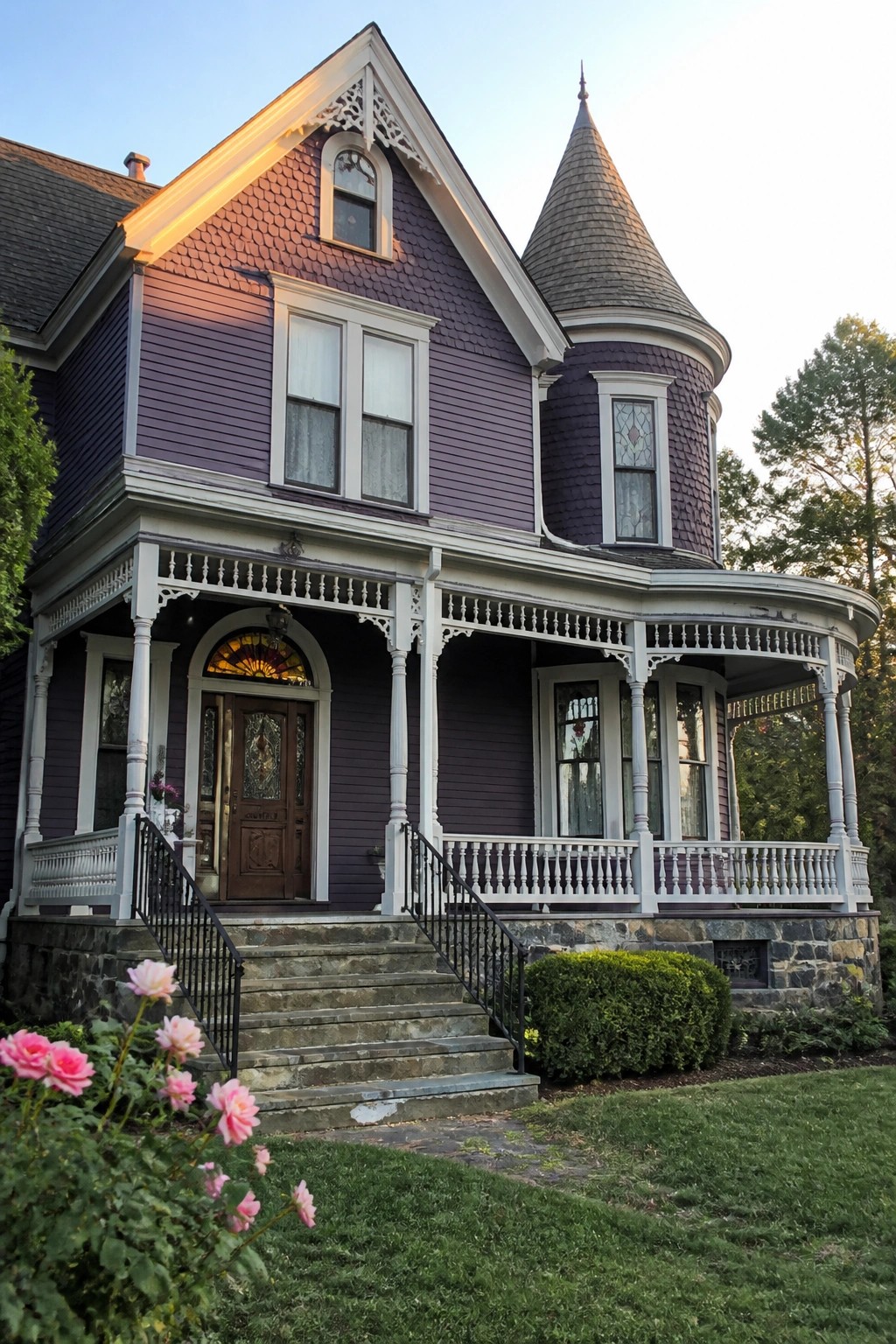
A deep purple exterior works especially well on Victorian homes because it gives the ornate trim room to stand out without competing. The white details on the porch, gables, and turret stay crisp against the darker siding, which keeps the whole facade from feeling heavy.
This approach suits older homes that already have lots of carved woodwork. Stick with a saturated purple rather than a faded one, and keep the trim a true white instead of cream so the contrast stays sharp.
Purple Siding With White Trim Details
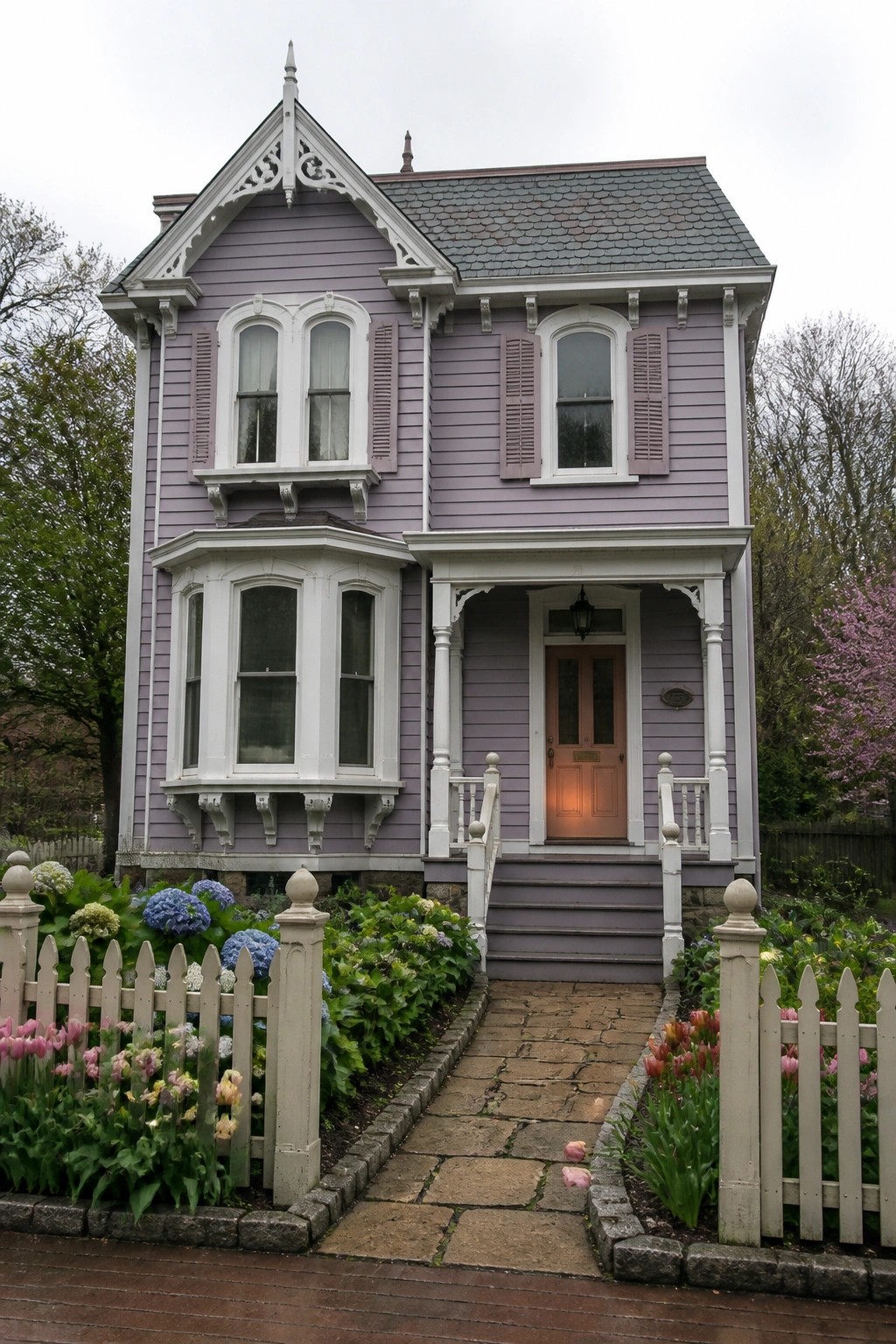
A soft purple exterior gains a lot of character when the trim stays bright white. The contrast pulls out the carved brackets, window frames, and porch posts without making the house feel busy. Many older Victorians already have this kind of detail, so the color choice simply lets it show.
This look works best on homes that still have their original woodwork. Keep the purple on the lighter side so the white stays crisp from the street. Darker shades can swallow the trim and flatten the whole facade.
White Trim Highlights Purple Victorian Details
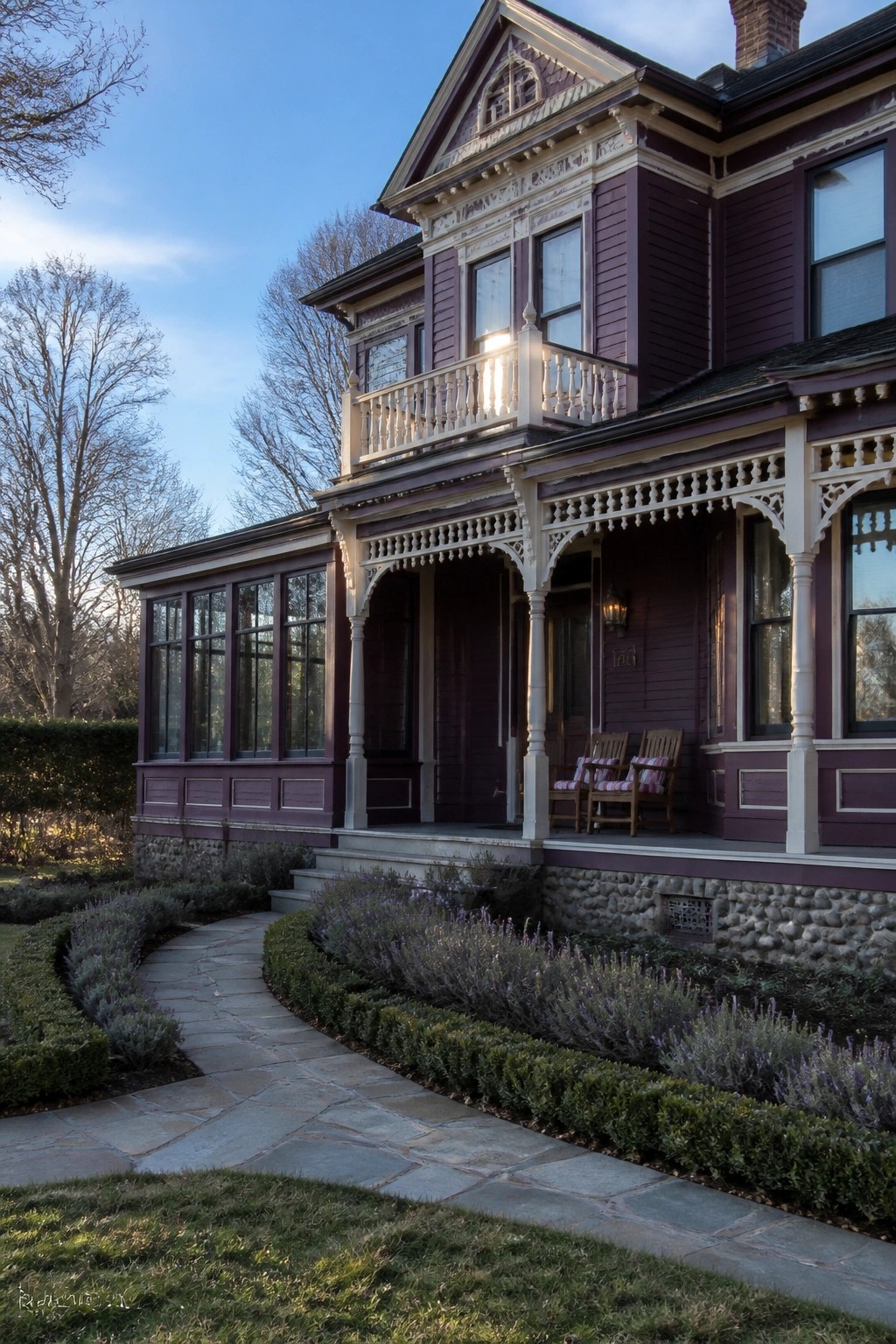
Many Victorian houses lean on a strong color for the siding and let white trim carry the visual weight. The sharp contrast pulls attention to brackets, railings, and window surrounds so the architecture reads clearly from the street.
This works best on homes that already have plenty of carved woodwork. Keep the white bright and the purple deep, and touch up the trim regularly so the details do not fade into the background.
Choosing Deep Purple with White Trim
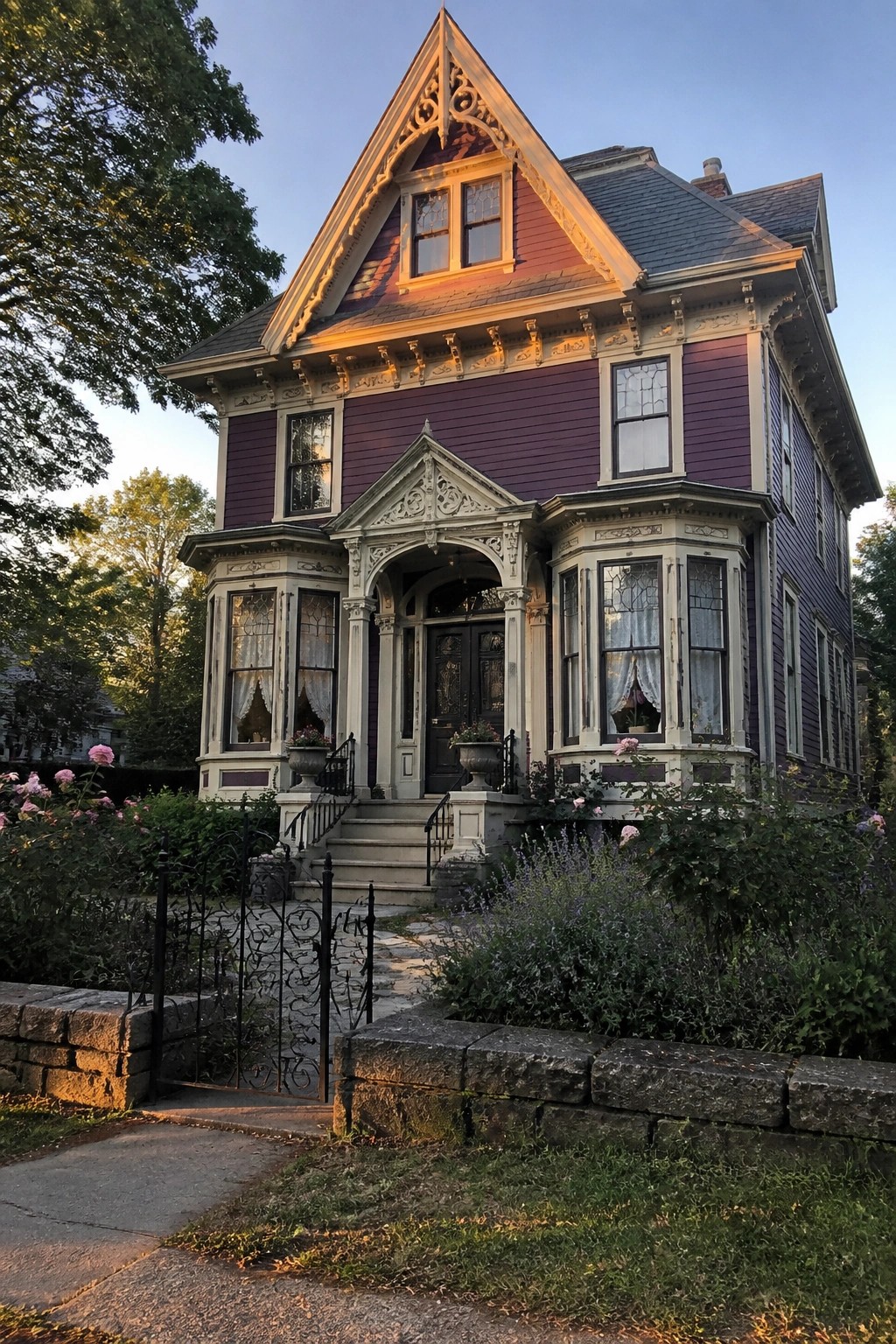
Deep purple siding gives a Victorian house real presence while the white trim keeps all the carved details from getting lost. The strong contrast makes the porch brackets, window frames, and gable work stand out without needing extra decoration.
This color pairing works best on homes that already have plenty of wood trim and a clear roofline. Use a slightly muted purple so the house still feels grounded, and carry the white through every piece of trim for the cleanest result.
Purple Siding With White Trim
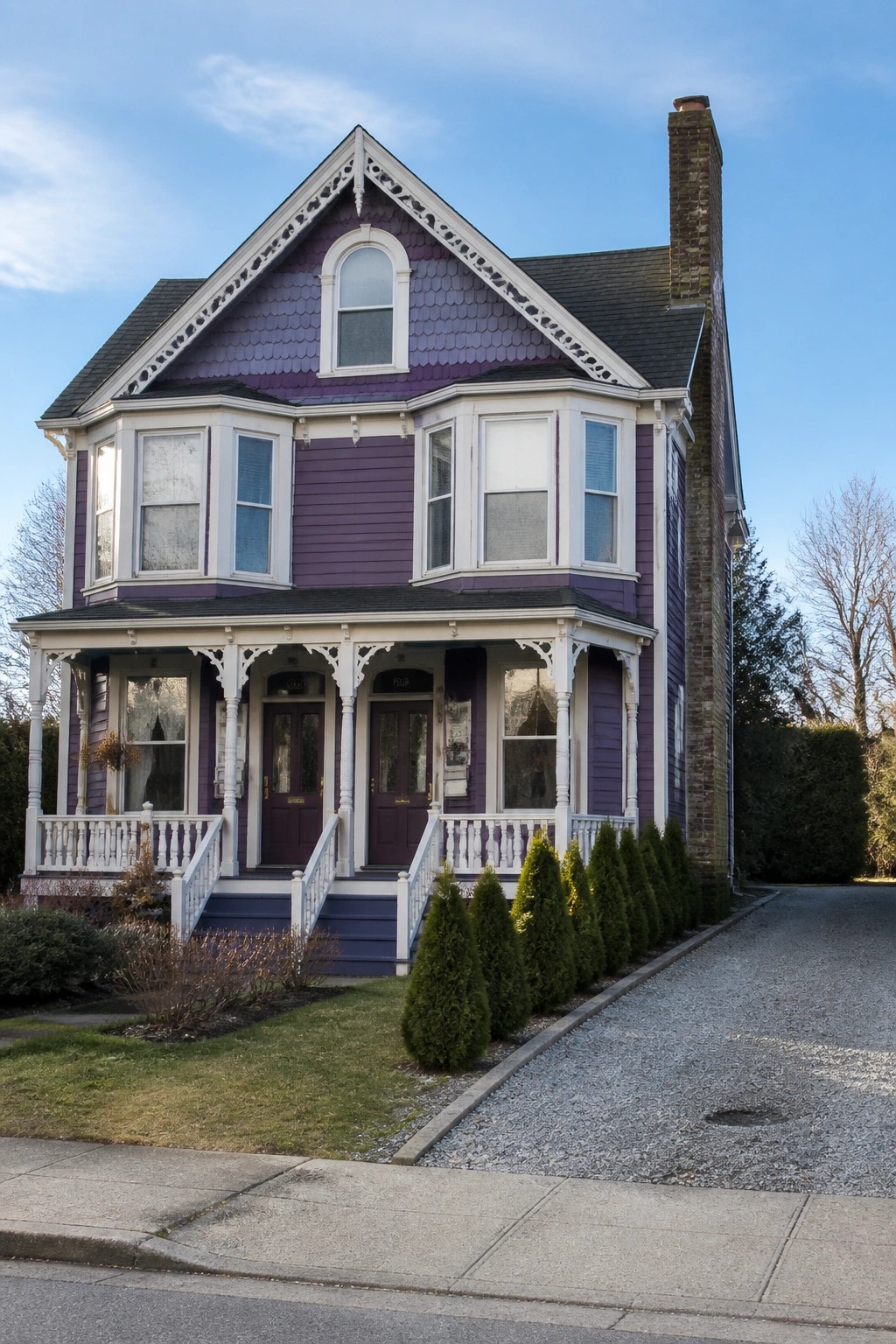
A deep purple works well on Victorian homes because it gives the whole house a strong presence while still letting the details show. The white trim around the windows, porch posts, and roofline creates clear lines that keep the look balanced instead of heavy.
This color choice suits houses that already have lots of trim and bay windows. Keep the purple on the darker side so it reads as classic rather than loud, and use a bright white to make the shapes stand out from the street.
Purple Siding With White Trim On Victorian Homes
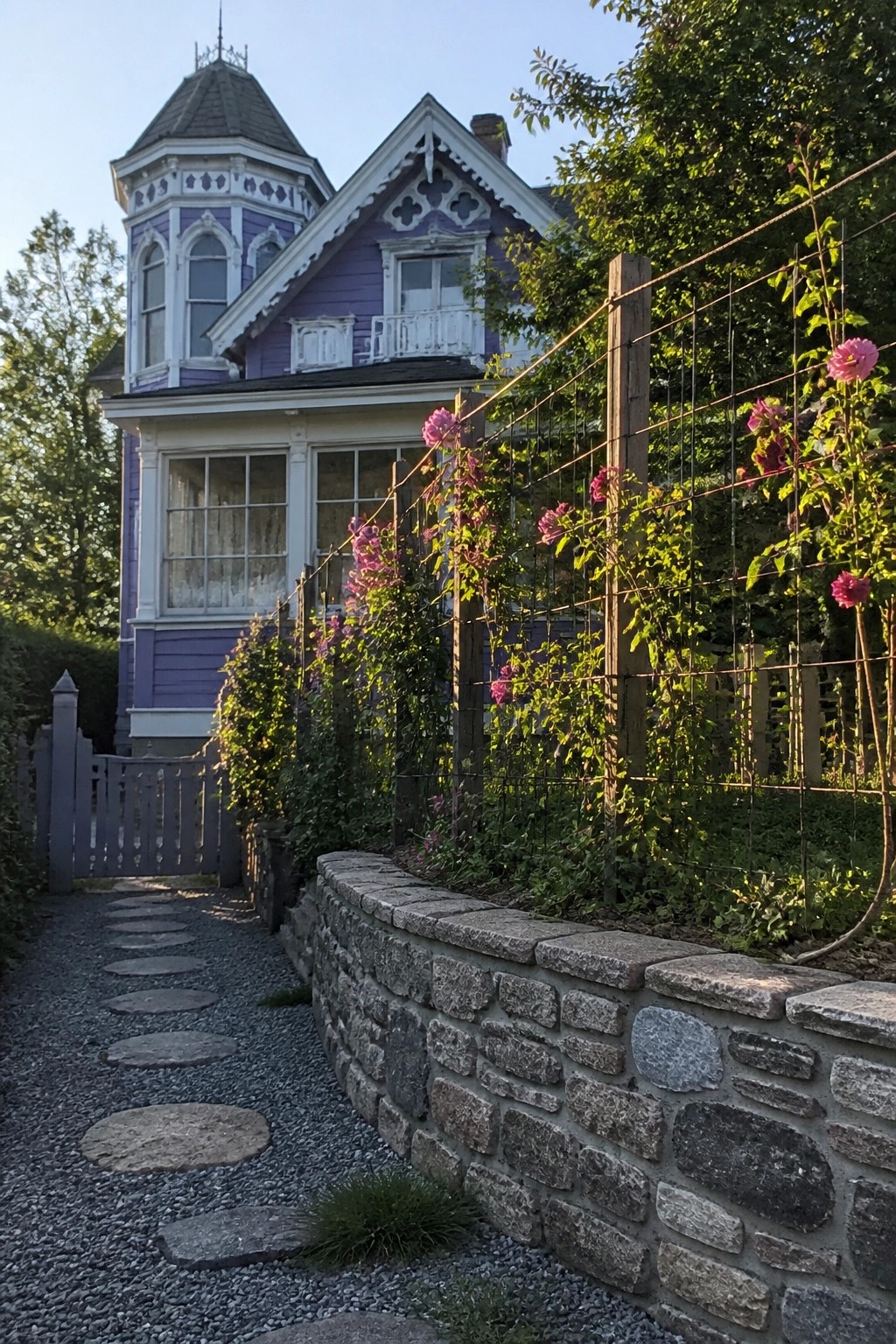
A deep purple works especially well on Victorian houses because it makes the white trim pop without overwhelming the shape of the house. The contrast draws attention to the brackets, window frames, and tower details that give these homes their character.
This color combination suits older neighborhoods where you want the house to feel classic rather than flashy. Keep the purple rich but not too bright, and use a clean white on the trim so the details stay sharp instead of blending in.
Letting Purple Siding Highlight White Trim
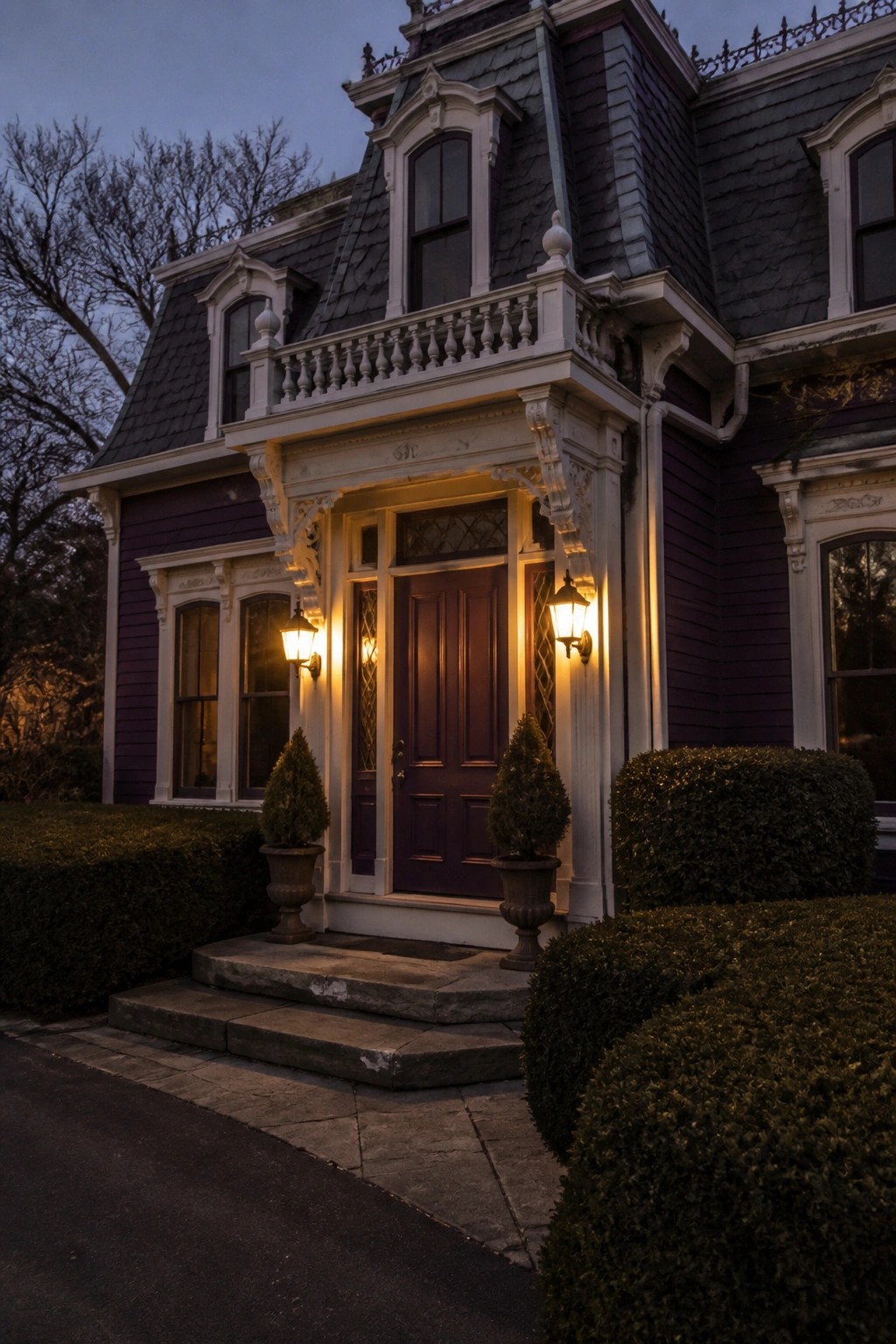
A deep purple on the walls makes every bit of carved white trim stand out clearly. That contrast turns ordinary details into the main feature without adding anything extra.
This approach suits Victorian homes that already have plenty of trim work. Keep the purple rich rather than too bright, and repaint the white sections often so the lines stay sharp against the darker color.
White Trim Brings Out Victorian Details On Purple Homes
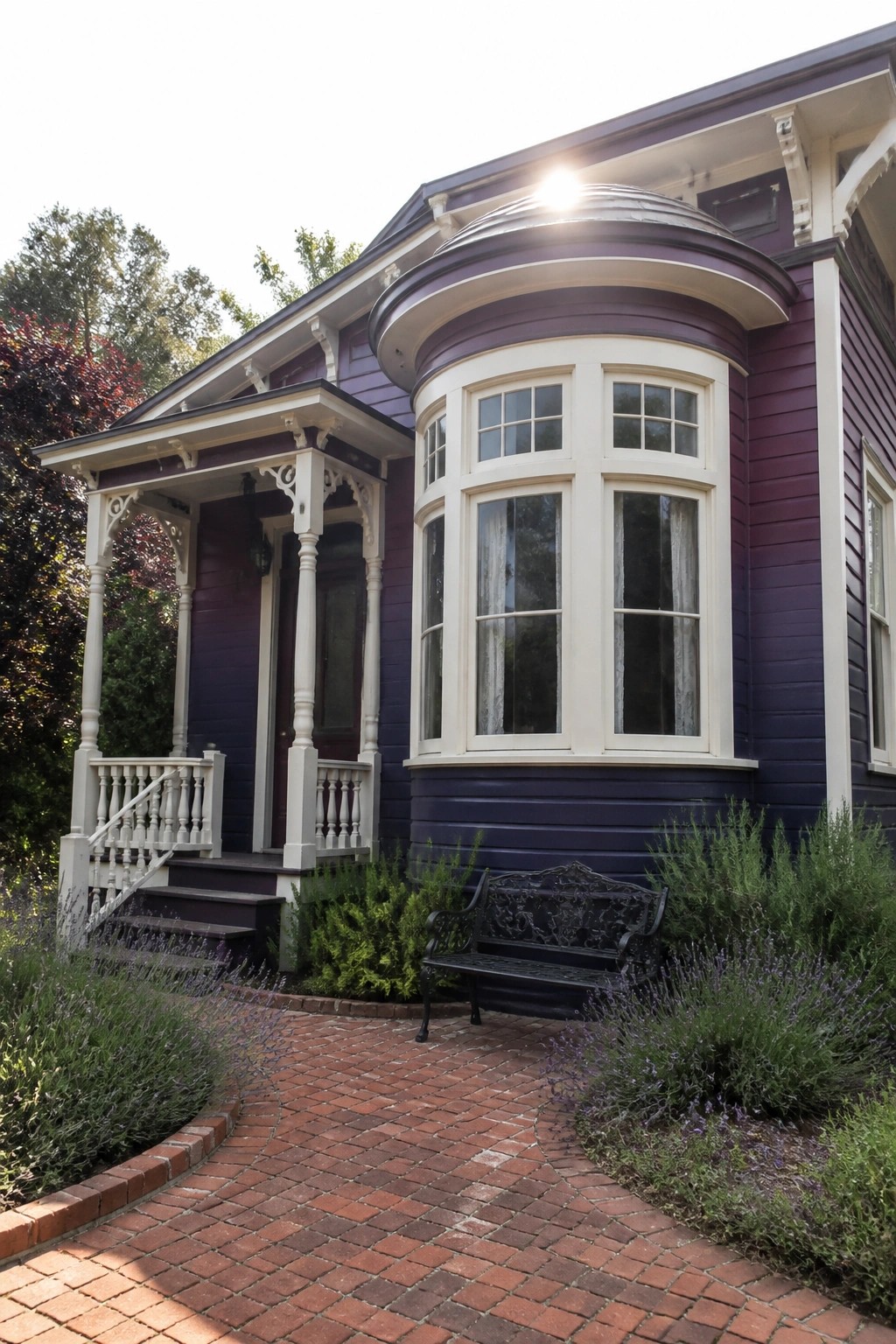
Deep purple siding paired with bright white trim gives Victorian houses a clean, classic look that highlights all the ornate woodwork. The contrast keeps the details from blending into the background and makes the whole facade feel more intentional.
This works best on homes that already have strong architectural features like bay windows or covered porches. Keep the purple rich and the trim a true white so the effect stays sharp rather than soft or faded.
Deep Purple Siding With White Trim
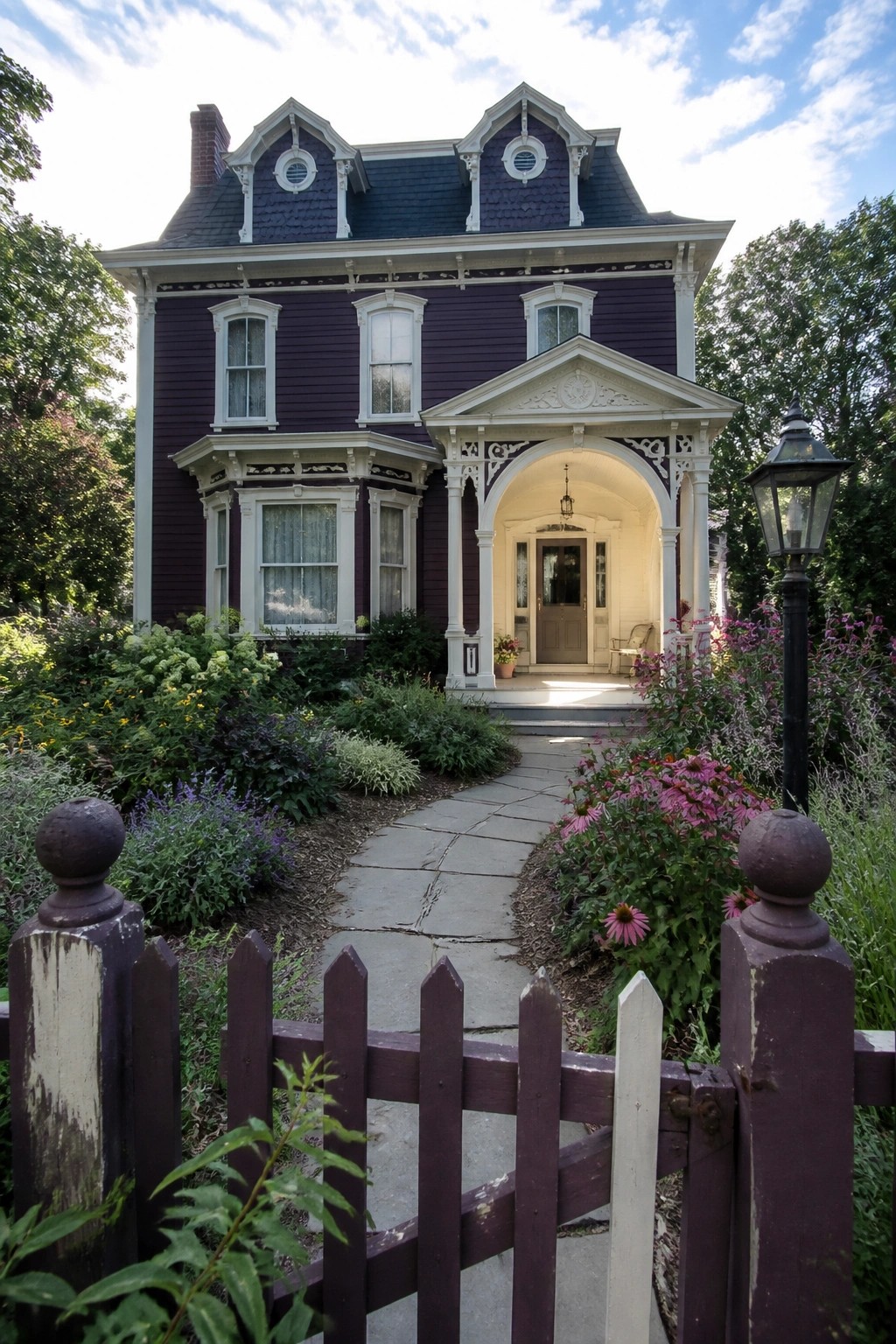
A deep purple exterior makes the white trim stand out clearly on a Victorian house. The contrast draws attention to the carved details around the windows and the porch without adding any extra colors or patterns.
This works best on homes that already have plenty of trim work to show off. Keep the purple dark so the white stays crisp, and test the shades together on a small section first to see how they look in different light.
Going Bold With Purple Siding
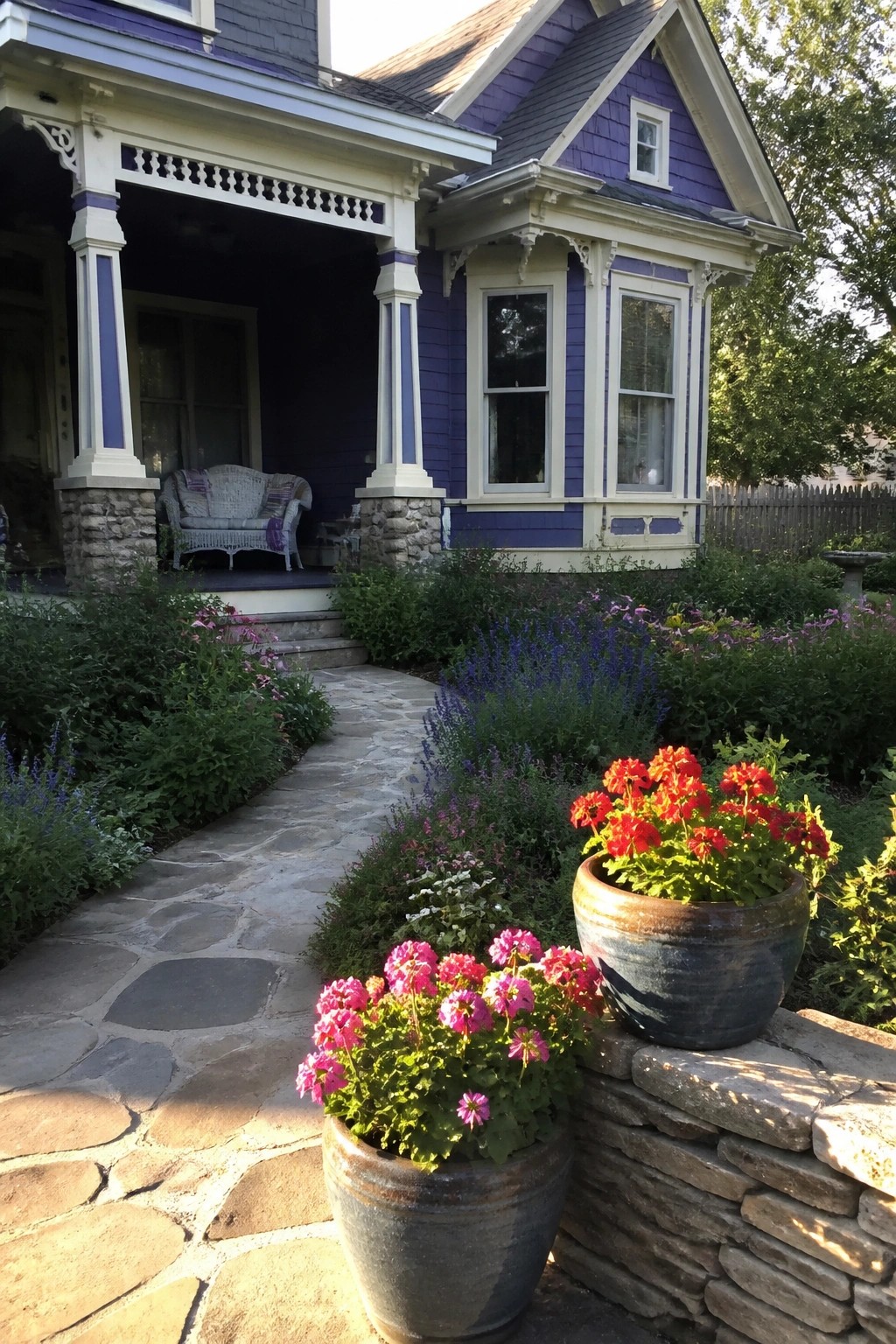
A deep purple on the siding gives a Victorian house real presence without needing lots of extra decoration. The color makes the white trim and carved details stand out clearly, which is exactly what these homes were designed to show off.
This approach works best on houses that already have strong architectural lines and some age to them. It pairs well with simple landscaping and stone elements that keep the overall look grounded rather than overwhelming.
Letting White Trim Define Purple Siding
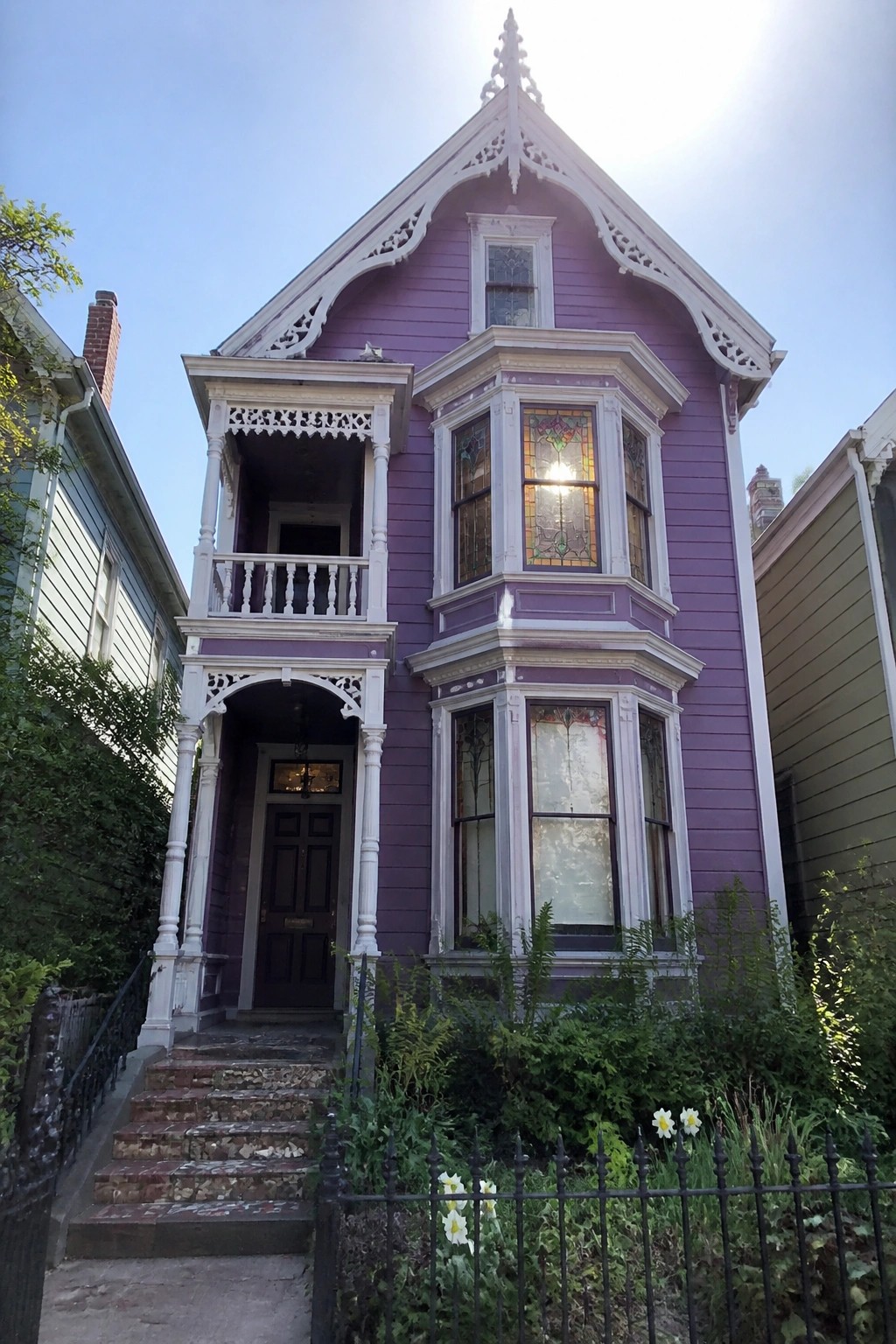
A deep purple works especially well on Victorian homes because it gives the white trim room to stand out. The crisp lines around the porch, windows, and gables become the main feature instead of getting lost against a lighter or busier background.
This look suits older houses that still have their original wood details. Keep the purple rich and the trim bright white so the contrast stays clear, and touch up the trim every few years to prevent yellowing.
Pairing Purple Siding With White Trim
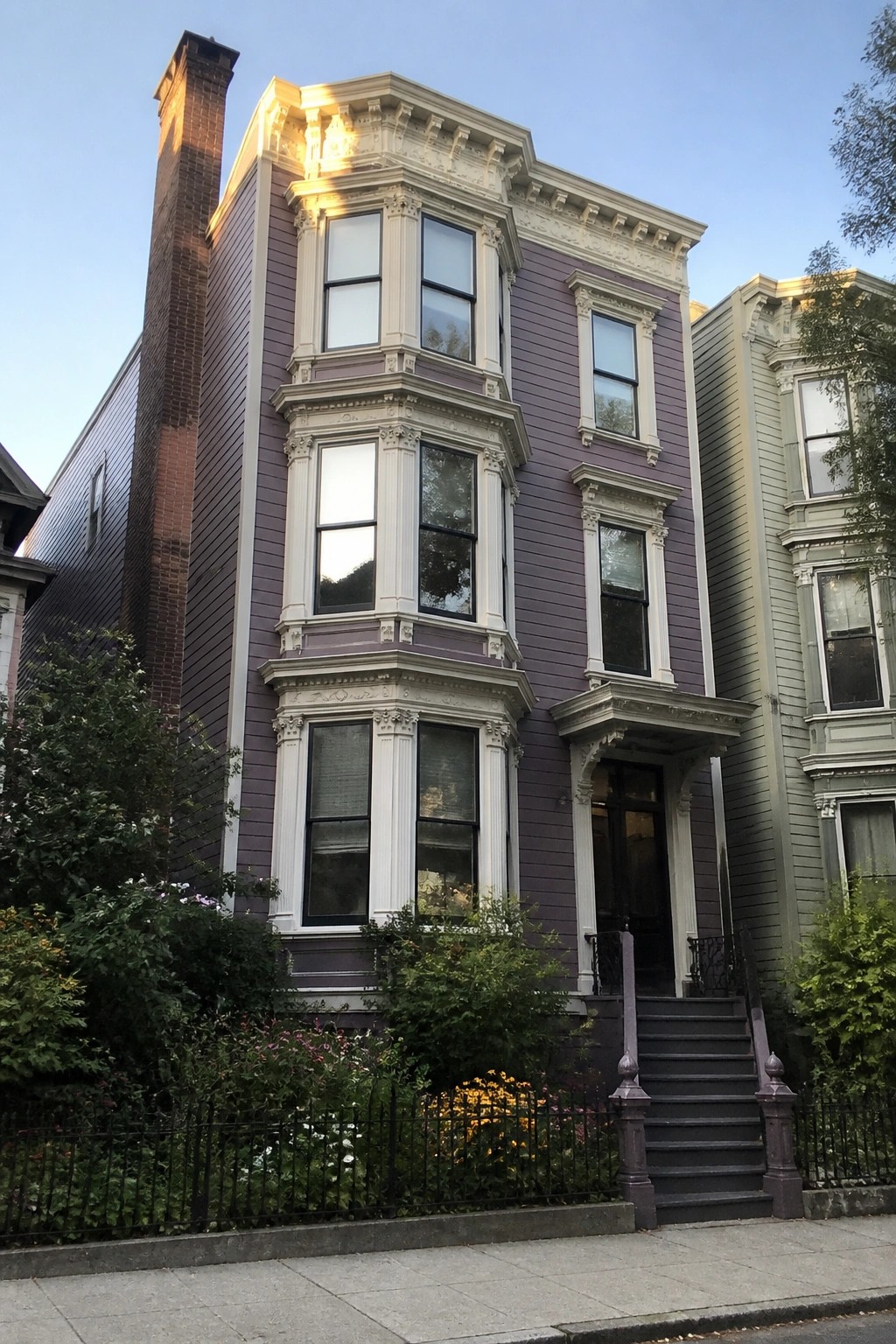
A deep purple exterior stands out when the trim stays bright white. The contrast helps the carved details around windows and bays read clearly instead of blending into the siding.
This color move works best on Victorian homes that already have strong architectural lines. Keep the white paint fresh and use it only on the trim so the purple stays the main color rather than turning muddy.
White Trim Highlights Victorian Details On Purple Homes
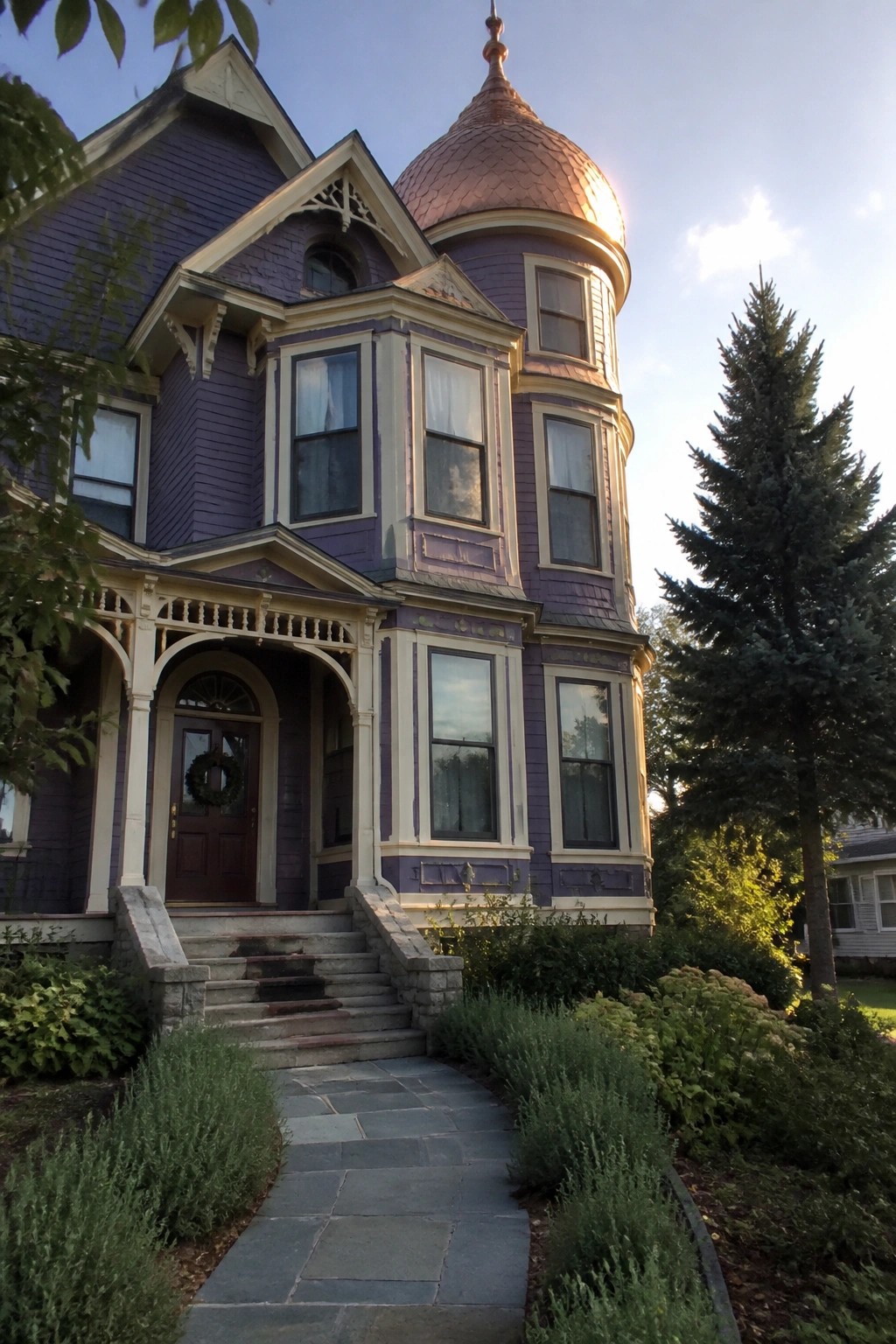
The strong contrast between deep purple siding and crisp white trim is what makes these houses feel so classic. It draws attention to the carved brackets, turned porch posts, and layered window frames without needing extra decoration. The white also keeps the bold color from looking heavy.
This approach works best on Victorian homes that already have plenty of architectural detail. Keep the trim bright and clean, and use it on every layer from the porch to the gables so the shape of the house stays easy to read.
White Trim Highlights Victorian Details
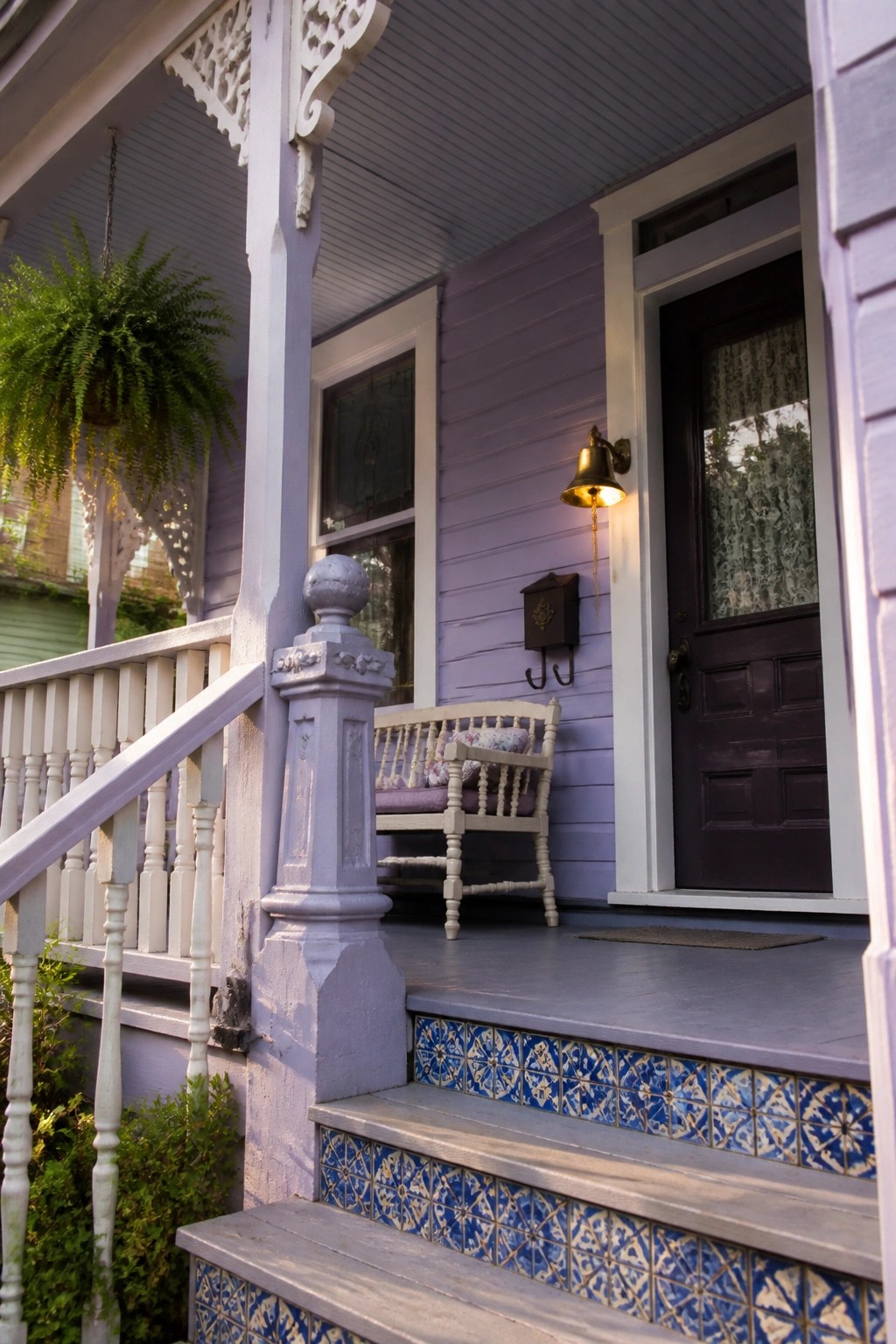
White trim stands out against the purple siding and makes the carved brackets and porch railings look sharper. It gives the whole front a clean, classic Victorian feel without needing extra color.
This approach works well on homes that already have plenty of woodwork. Stick with a bright white and keep the purple deep enough to create real contrast.
Purple Siding With White Trim On Victorian Homes
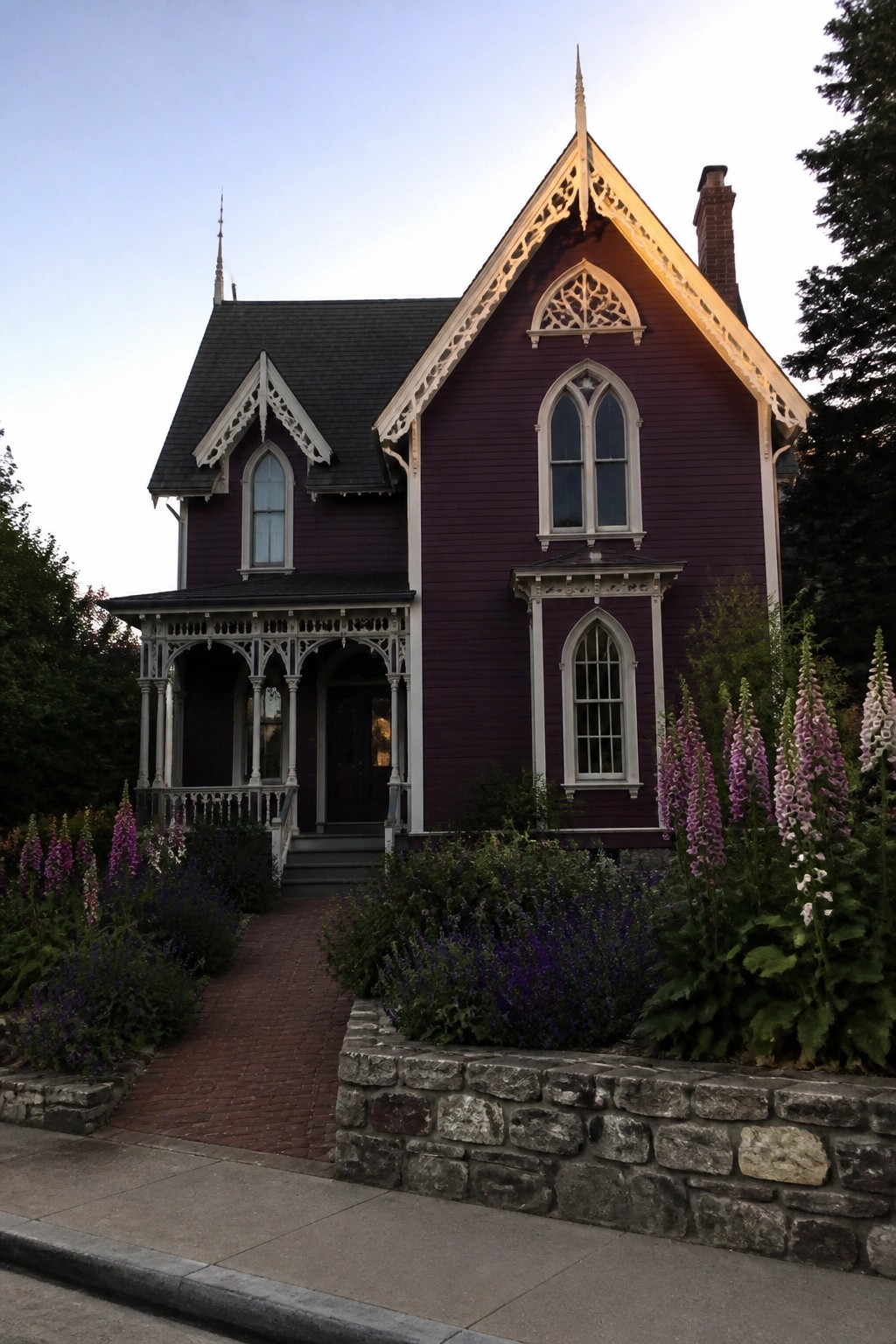
A deep purple paint color on the siding gives Victorian houses a strong presence while letting the white trim do the real work. The contrast makes every carved detail, window surround, and porch bracket stand out clearly instead of blending into the background.
This approach works best on homes that already have plenty of architectural trim. Stick with a slightly muted purple rather than a bright one so the house still feels grounded, and keep the trim in a crisp white that can be touched up easily over time.
Purple Siding With White Trim
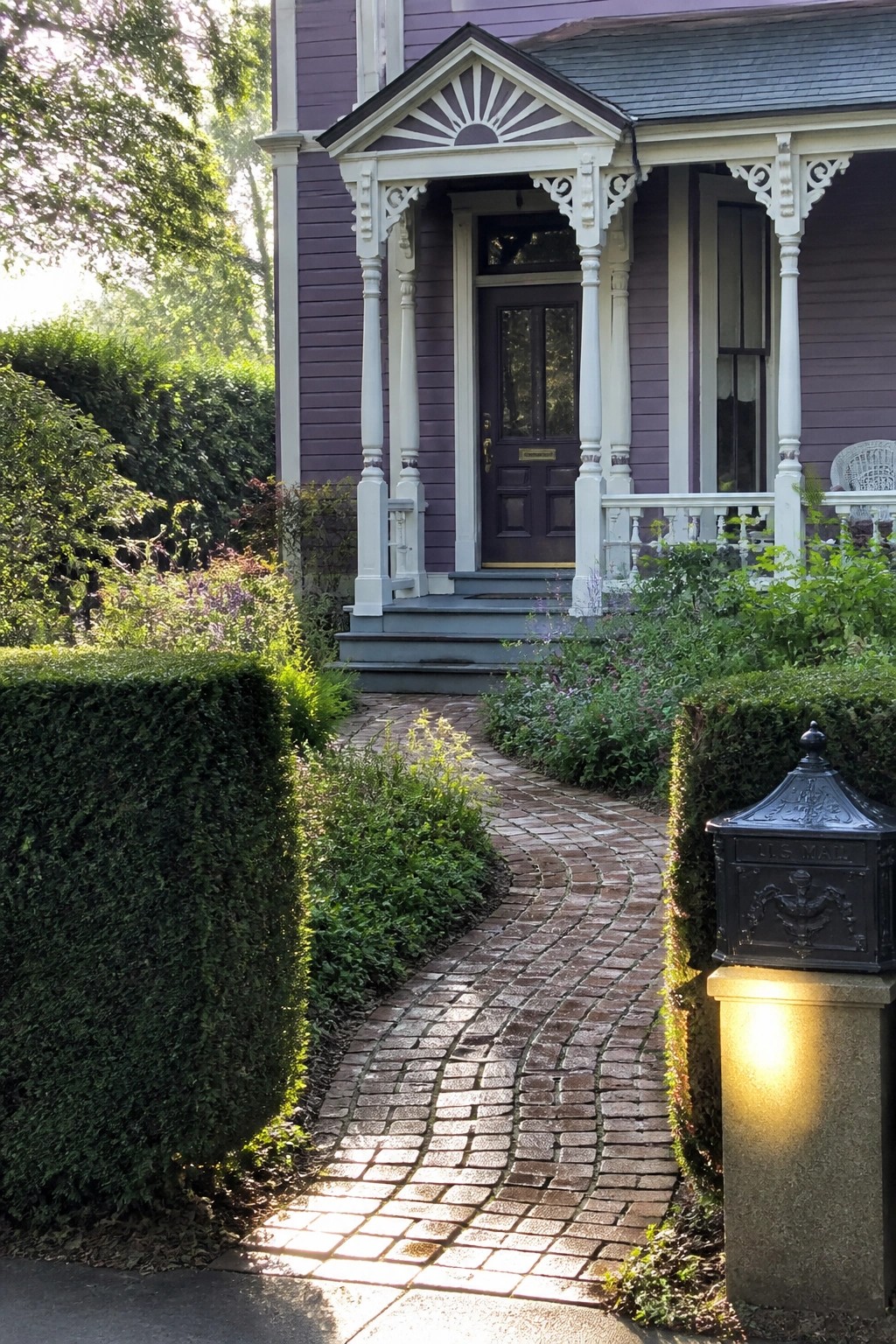
A deep purple works well on Victorian houses because it gives the whole exterior some weight without looking heavy. The white trim then pulls out every bit of carving on the columns, brackets, and porch roof, so the details actually read from the street.
This color pairing suits homes that already have strong architectural lines. Keep the trim paint bright and the purple slightly muted so the contrast stays crisp rather than overwhelming the smaller features like the door surround.
Purple Siding With White Trim
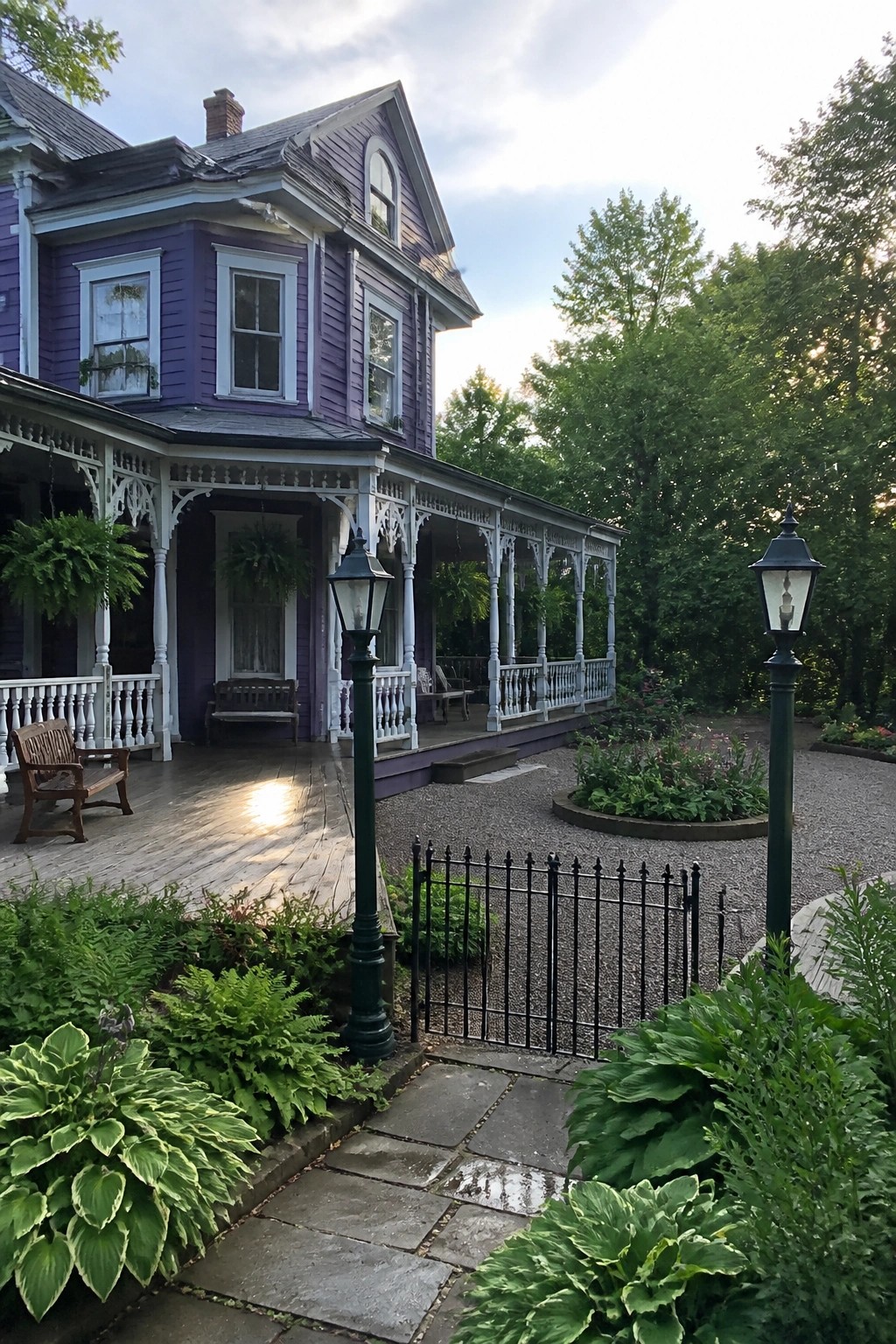
A deep purple paint job gives a Victorian house real presence, especially when the trim stays bright white. The contrast pulls attention to every bit of scrollwork and railing without any extra effort.
This approach suits homes that already have lots of detail around windows, eaves, and porches. Keep the purple rich rather than faded, and make sure the white is clean so the lines stay sharp over time.
Letting Purple Siding Highlight The White Trim
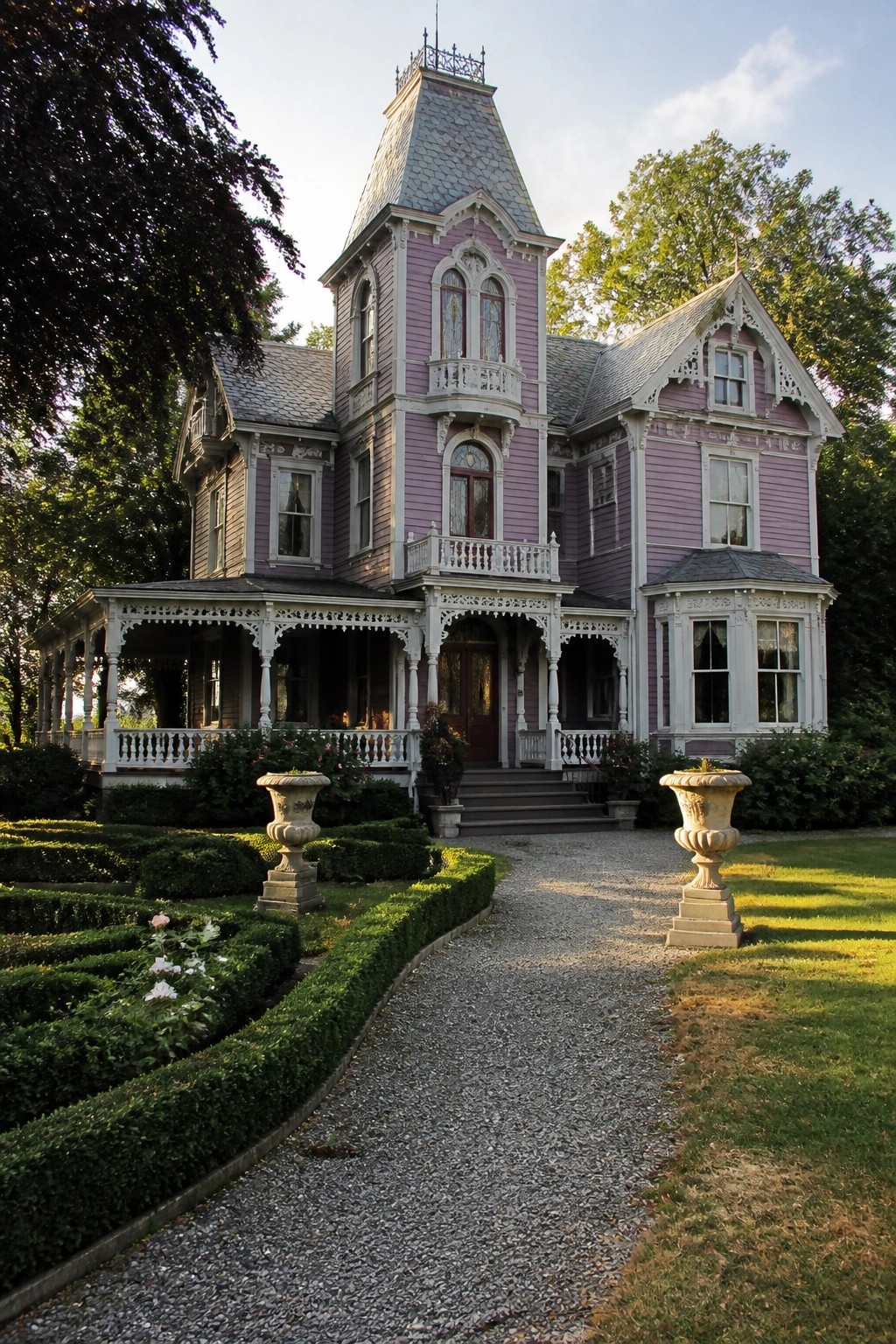
A strong siding color can make the trim on a Victorian house read more clearly. Purple works especially well because it gives the white details enough contrast without washing them out or making the whole house feel busy.
This choice suits homes that already have plenty of carved woodwork and layered rooflines. It tends to look most balanced on houses set back from the street, where the color has room to settle instead of competing with too many other elements nearby.
Frequently Asked Questions
Q: How do I choose the right purple for my Victorian? A: Look at historic examples for inspiration. Go with tones that have some gray in them. This keeps the house feeling classic rather than cartoonish.
Q: What about the white trim paint? A: Use a bright white that has a touch of warmth. It prevents the trim from looking cold against the purple.
Q: Does the roof color matter with purple siding? A: Pick a dark gray or black roof to ground the look. It balances the purple and white nicely. Avoid light roofs that might wash out the whole effect.
