

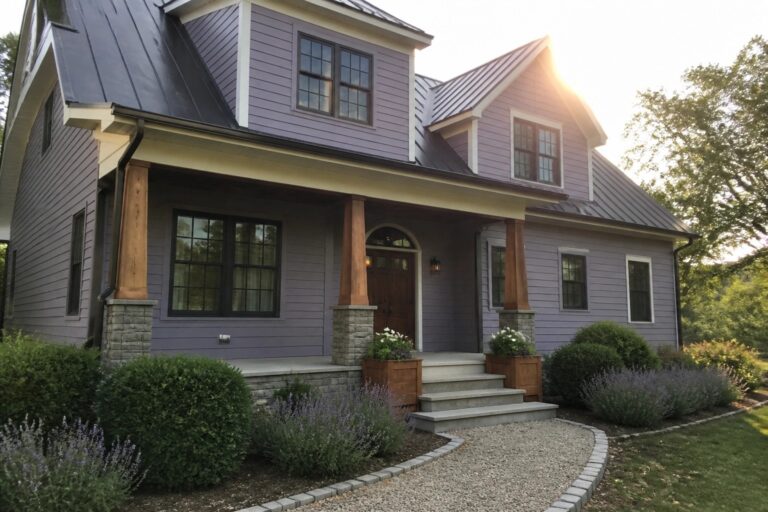
I have always noticed how the color of siding can shift the whole feel of a house from the street.
When I think about purple tones paired with horizontal lap siding, it strikes me as a way to add depth without overwhelming the lines of the facade.
One thing I have learned from looking at homes is that the material choice matters more than people expect because it affects how light hits the surface throughout the day.
Some shades simply read better up close.
I would start by checking how a few options sit against the existing trim and roof before making any changes.
Using Soft Purple on Horizontal Lap Siding
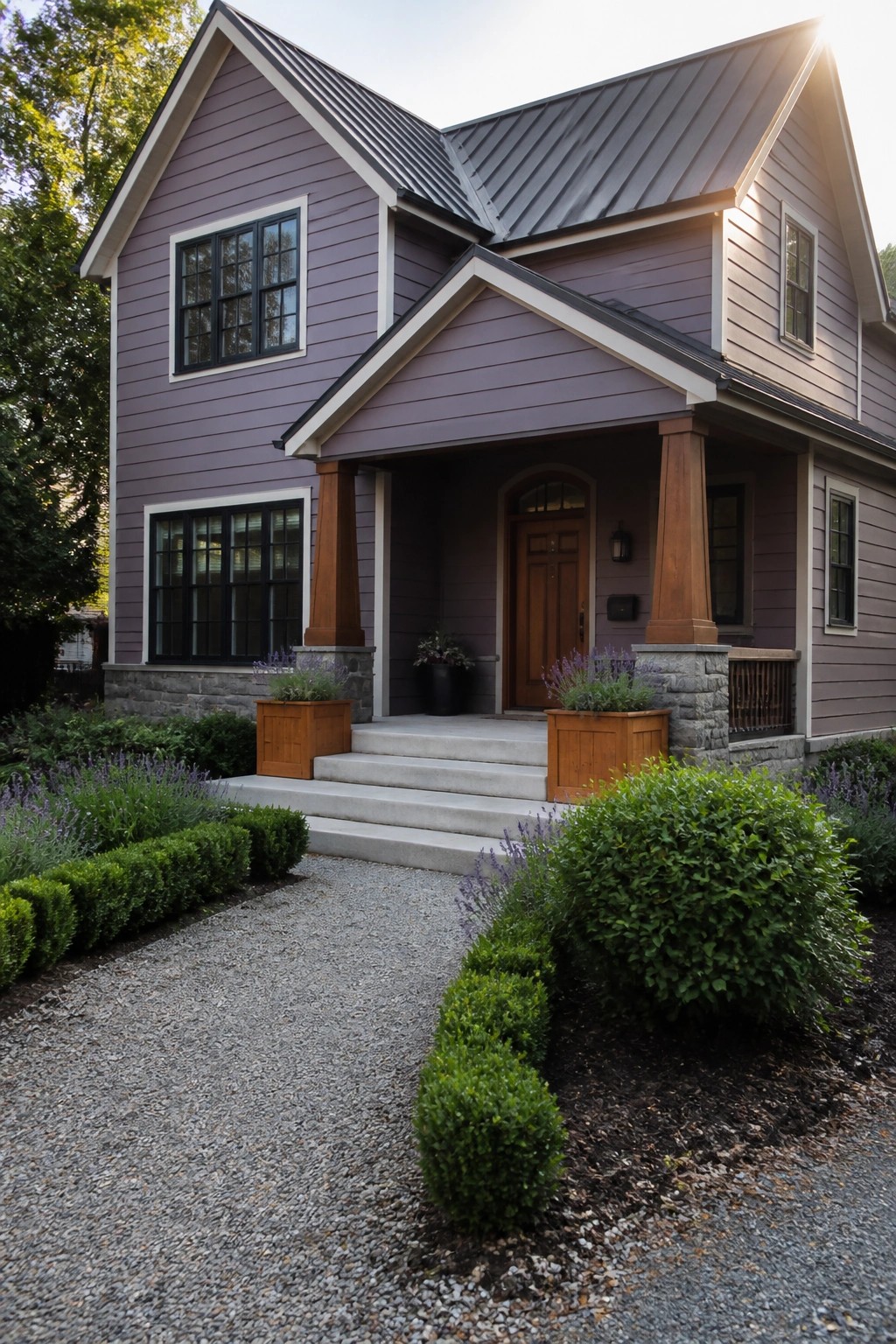
A soft purple works well on horizontal lap siding because it adds color without overpowering the rest of the house. The even lines of the siding help the shade read as calm and polished rather than loud, especially when the trim stays white and simple.
This color choice suits homes with traditional rooflines and front porches. It pairs best with wood columns, stone bases, and natural landscaping so the purple feels grounded instead of competing with the materials around the entry.
Purple Horizontal Lap Siding For A Softer Look
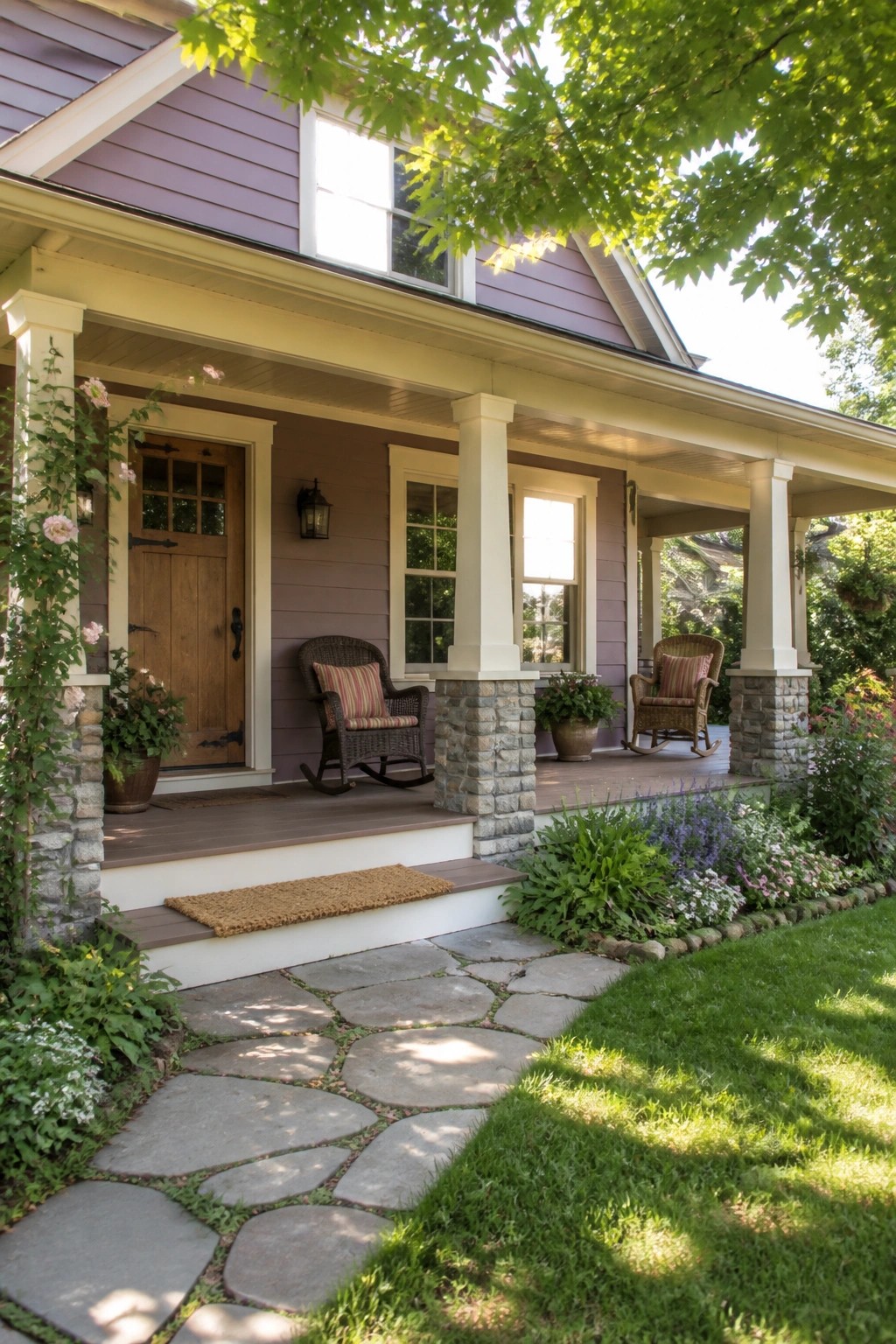
Purple siding stands out in a quiet way when it is done in a muted tone. The horizontal lap style adds clean lines that keep the house from feeling too formal while still looking put together. It works especially well when the color is paired with white trim and a bit of stone at the base.
This approach suits homes that already have a simple roofline and porch structure. Keep the shade on the softer side so it does not overpower the rest of the exterior. Too bright a purple can start to feel dated after a few years.
Deep Purple Siding Makes A Bold Choice
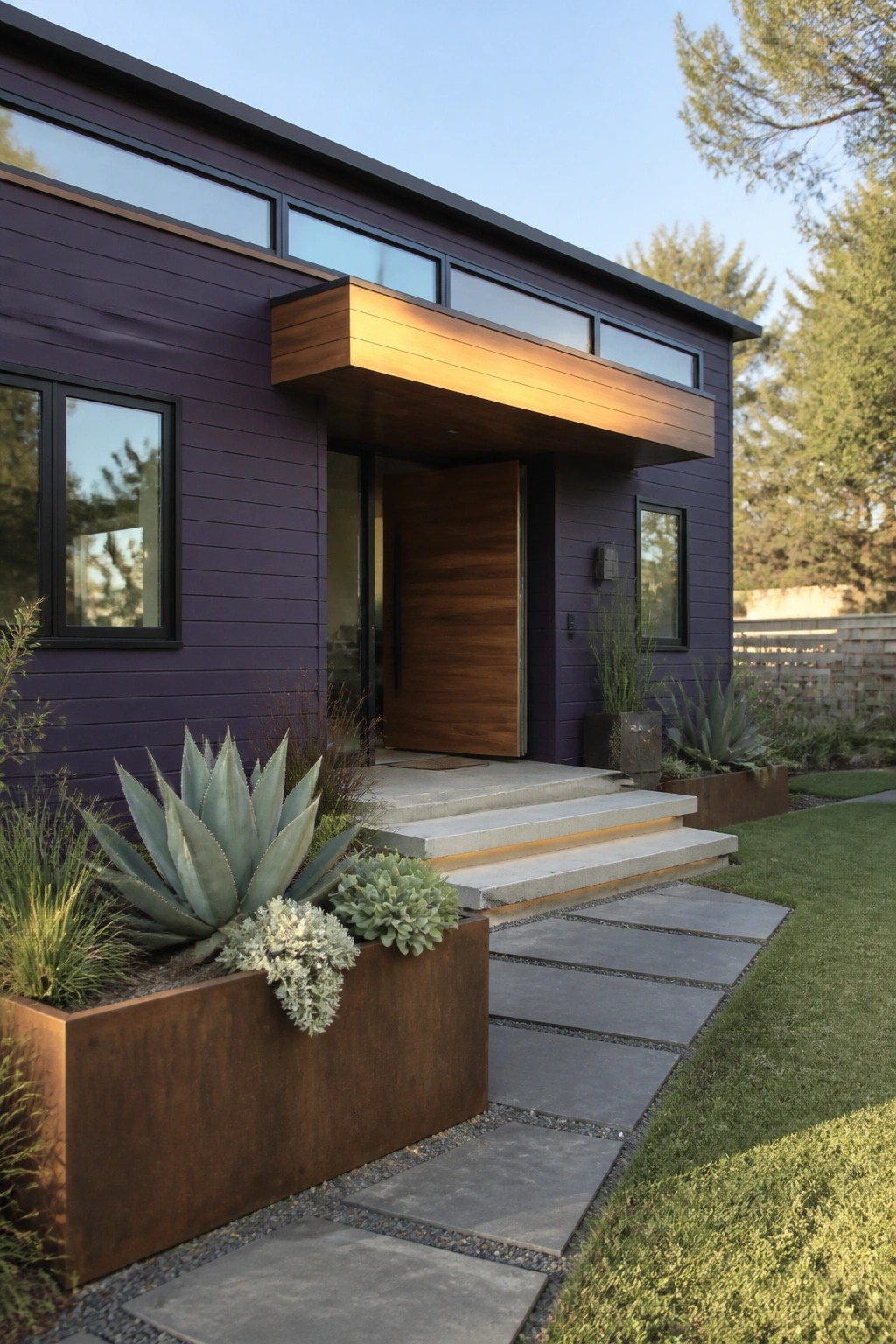
Deep purple horizontal lap siding gives a house a strong modern look that still feels grounded. The color holds up well against changing light and pairs naturally with wood details at the entry and windows. It turns a simple facade into something memorable without adding extra trim or ornament.
This approach works best on homes with clean rooflines and larger wall areas where the siding can read as one solid surface. Keep the rest of the palette simple so the purple stays the focus. It suits newer builds or full exterior updates where you want color to carry most of the impact.
Soft Purple on Horizontal Lap Siding
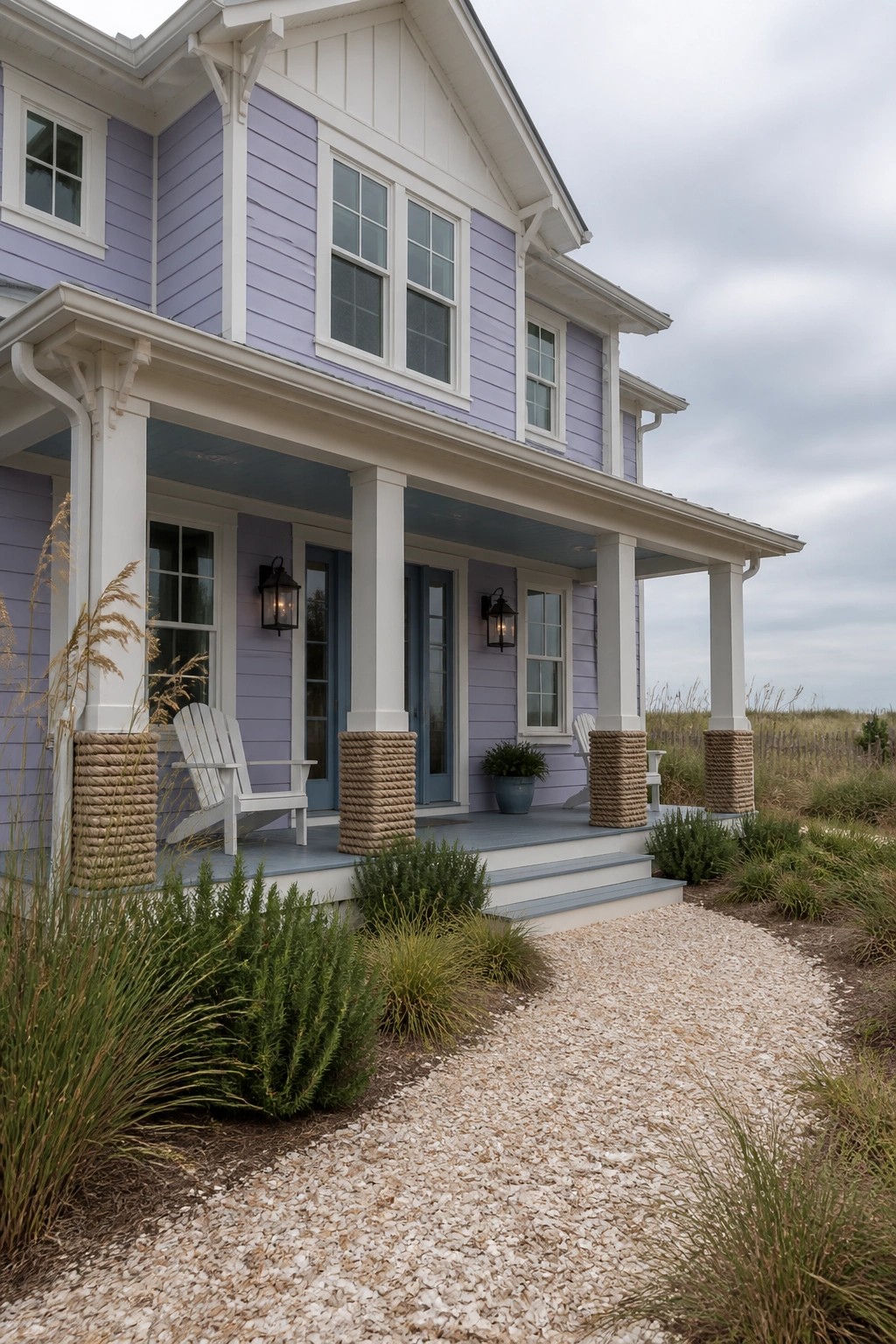
A soft purple works well on horizontal lap siding because the color stays calm instead of competing with the sky or nearby fields. The even lines of the siding keep the shade looking neat and consistent across the whole facade.
This color choice fits best on homes that already use plenty of white trim and simple roof shapes. It also helps to add a few natural textures nearby, like rope on posts, so the purple feels grounded rather than too sweet.
Deep Purple Lap Siding For A Classic Facade
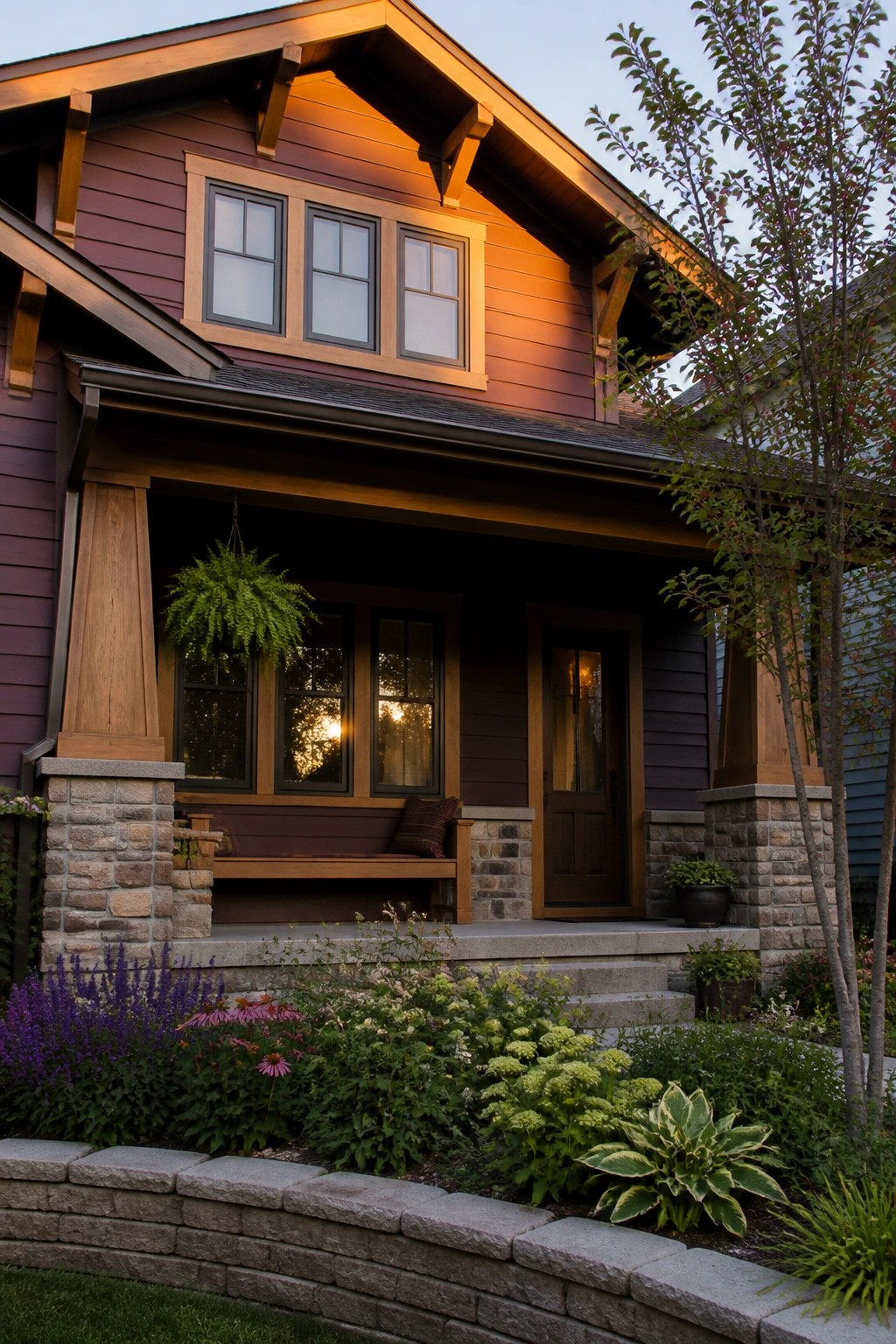
Deep purple horizontal lap siding gives a house a solid, grounded feel that still stands out from the usual neutrals. The color works because it stays rich even as light changes through the day, and it pairs naturally with wood trim and stone details that keep the look balanced.
This approach suits craftsman or traditional homes that already have strong architectural lines. Keep the siding matte so it does not compete with the wood and stone, and test the shade in both morning and afternoon light before committing.
Purple Horizontal Lap Siding on Modern Exteriors
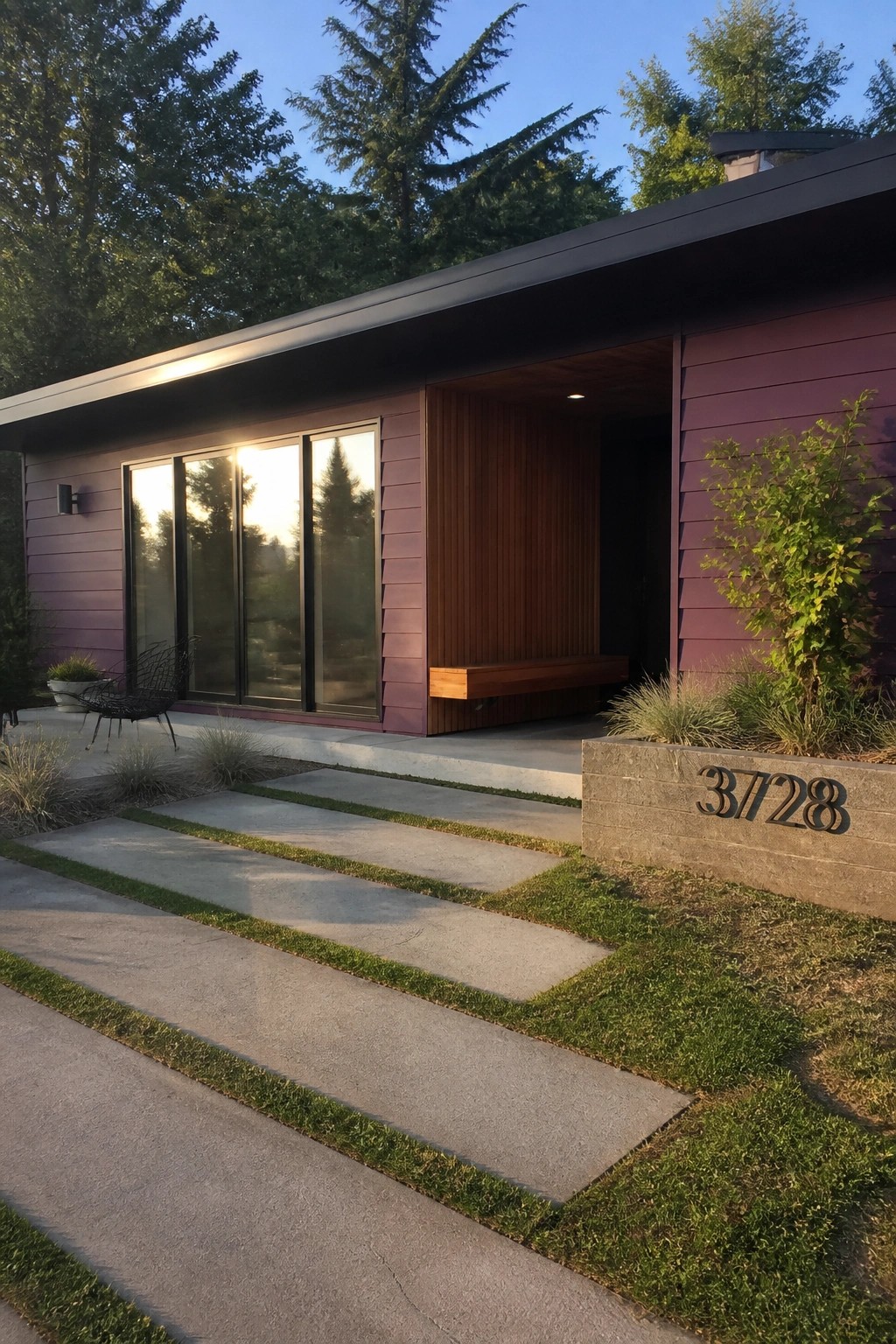
Deep purple horizontal lap siding gives a house a strong but still polished look. The color holds up well against simple rooflines and large windows, and the horizontal boards keep the whole surface feeling orderly rather than busy.
This works best on homes with clean modern shapes. Pair the siding with a few wood details so the purple does not feel flat, and keep the shade on the deeper side so it does not fade too quickly in the sun.
Purple Lap Siding With Light Trim
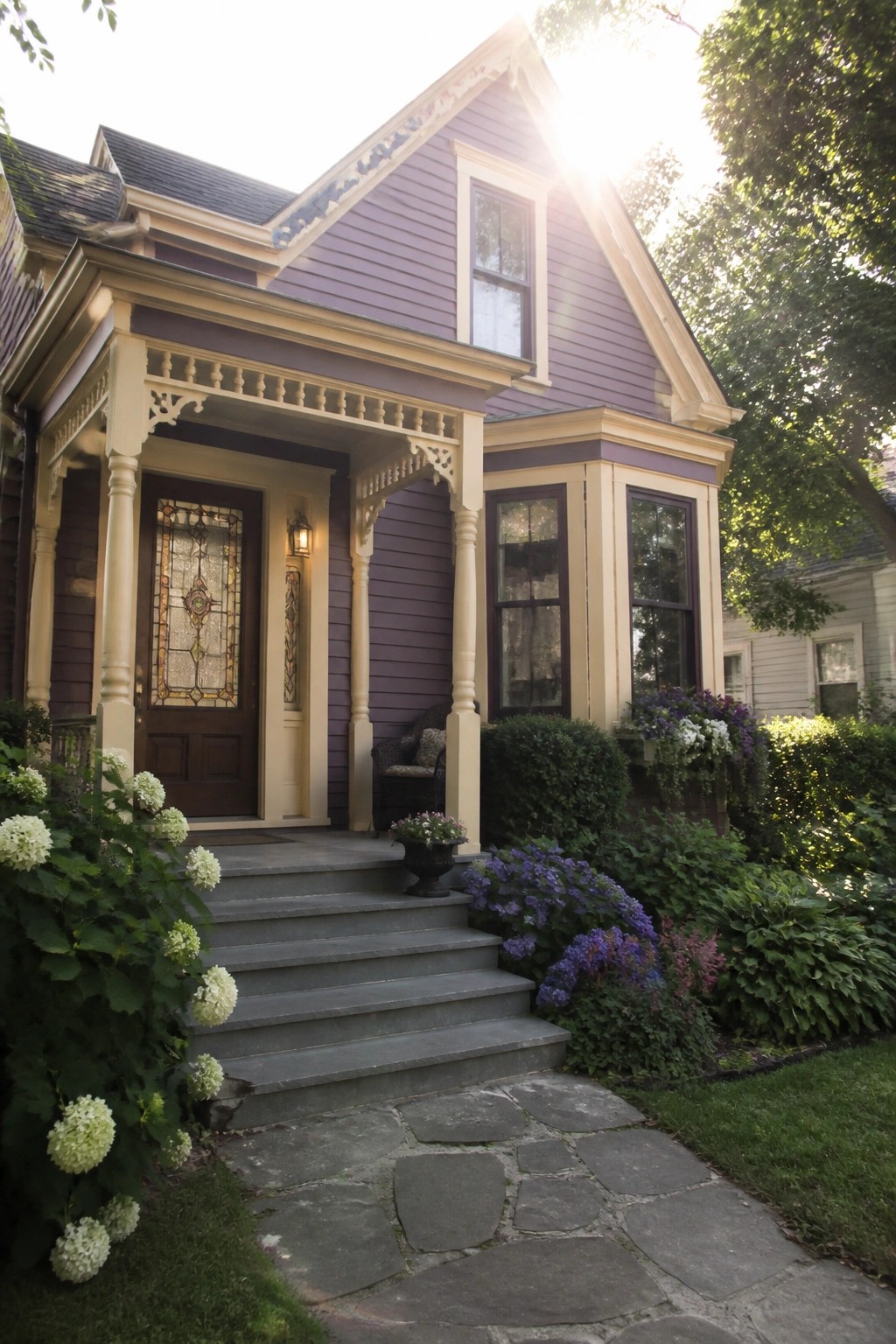
Deep purple horizontal lap siding gives a house presence without looking heavy when the trim stays light. The contrast keeps the details on the porch and windows from getting lost, and the color still reads polished rather than bold.
This approach works best on homes that already have trim, brackets, or a porch structure worth highlighting. Stick with a soft cream or off-white for the trim so the purple does not feel too dark, and test the shade in different light before committing.
Purple Horizontal Lap Siding
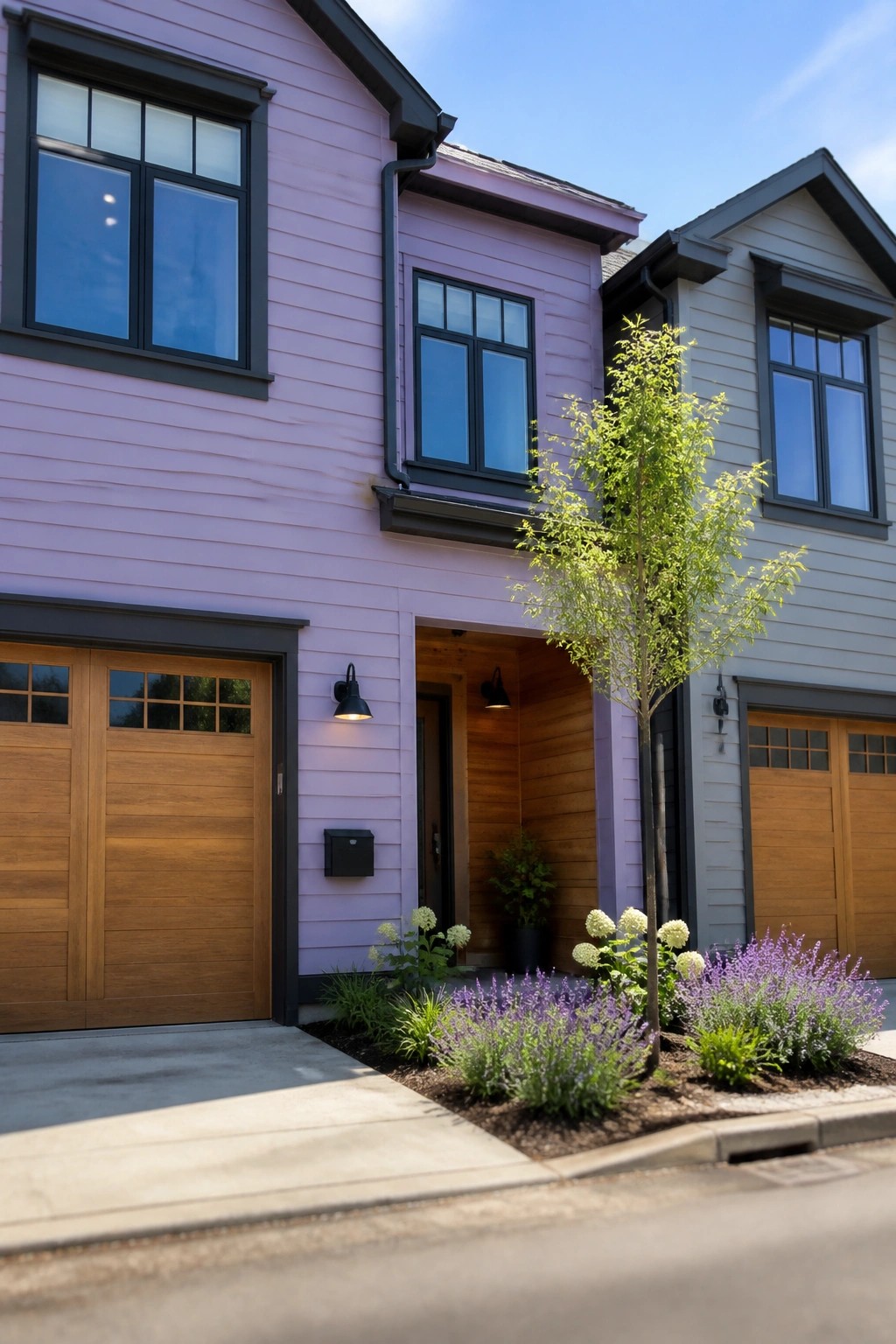
Many people stick to grays or whites on lap siding because those colors feel safe. A soft purple gives the same clean horizontal lines but adds a bit of personality without going too bright or trendy. The color still reads polished once the trim is kept dark.
This works best on homes that already have a simple roofline and a few wood accents near the entry. Keep the purple on the main body of the house and let the garage doors or a small porch stay in a natural wood tone so the siding does not feel overwhelming. Test the paint on a large board first since purple can shift a lot in different light.
Deep Purple Horizontal Lap Siding
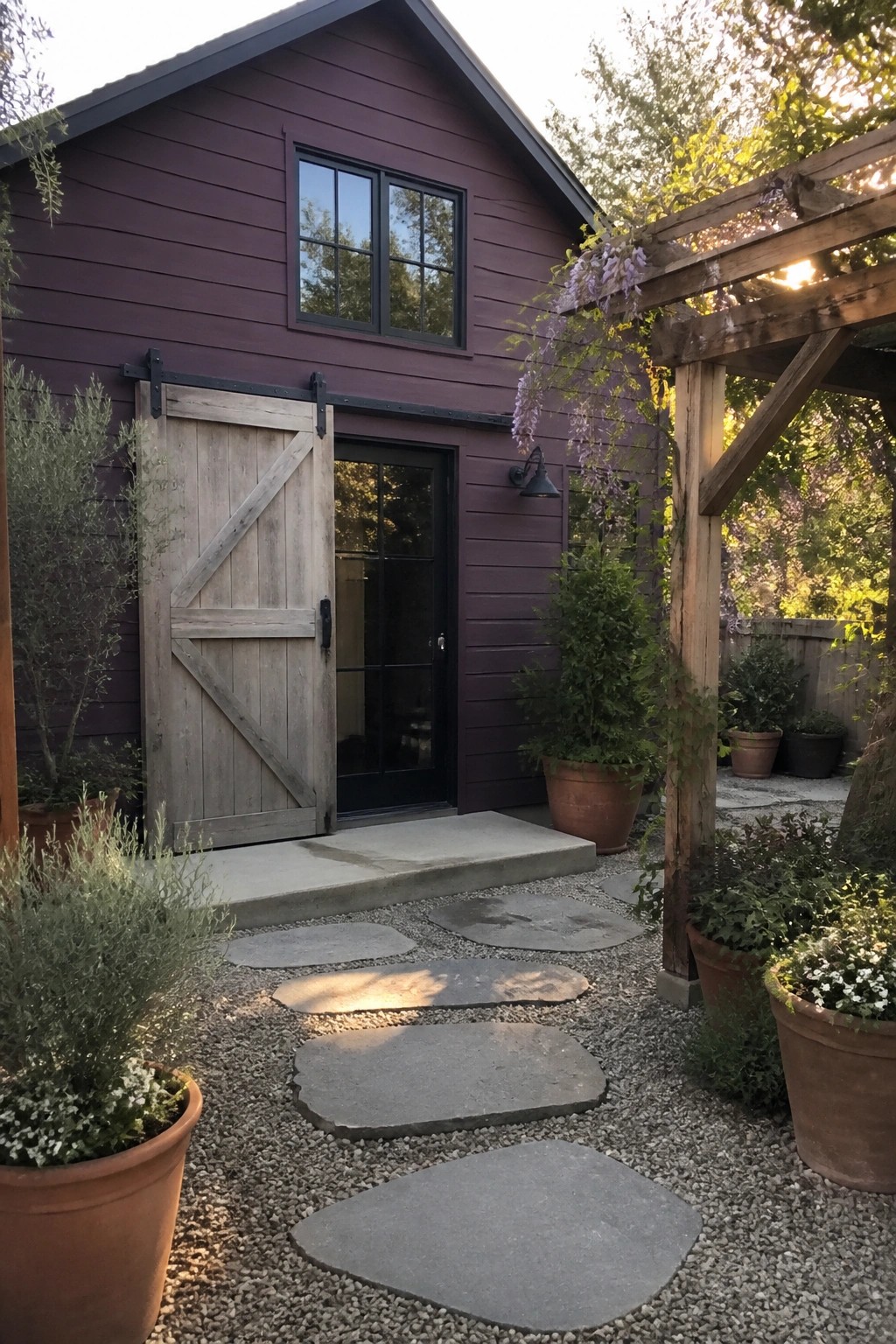
A deep purple on horizontal lap siding gives a house real presence without trying too hard. The color feels rich against the simple lines of the siding and helps the whole front feel more put together than a neutral tone would.
This works best on homes with clean roof shapes and pairs well with natural wood doors or trim to keep the purple from feeling heavy. It suits neighborhoods where you want the house to stand out a bit while still looking grounded.
Purple Lap Siding for a Distinct Facade
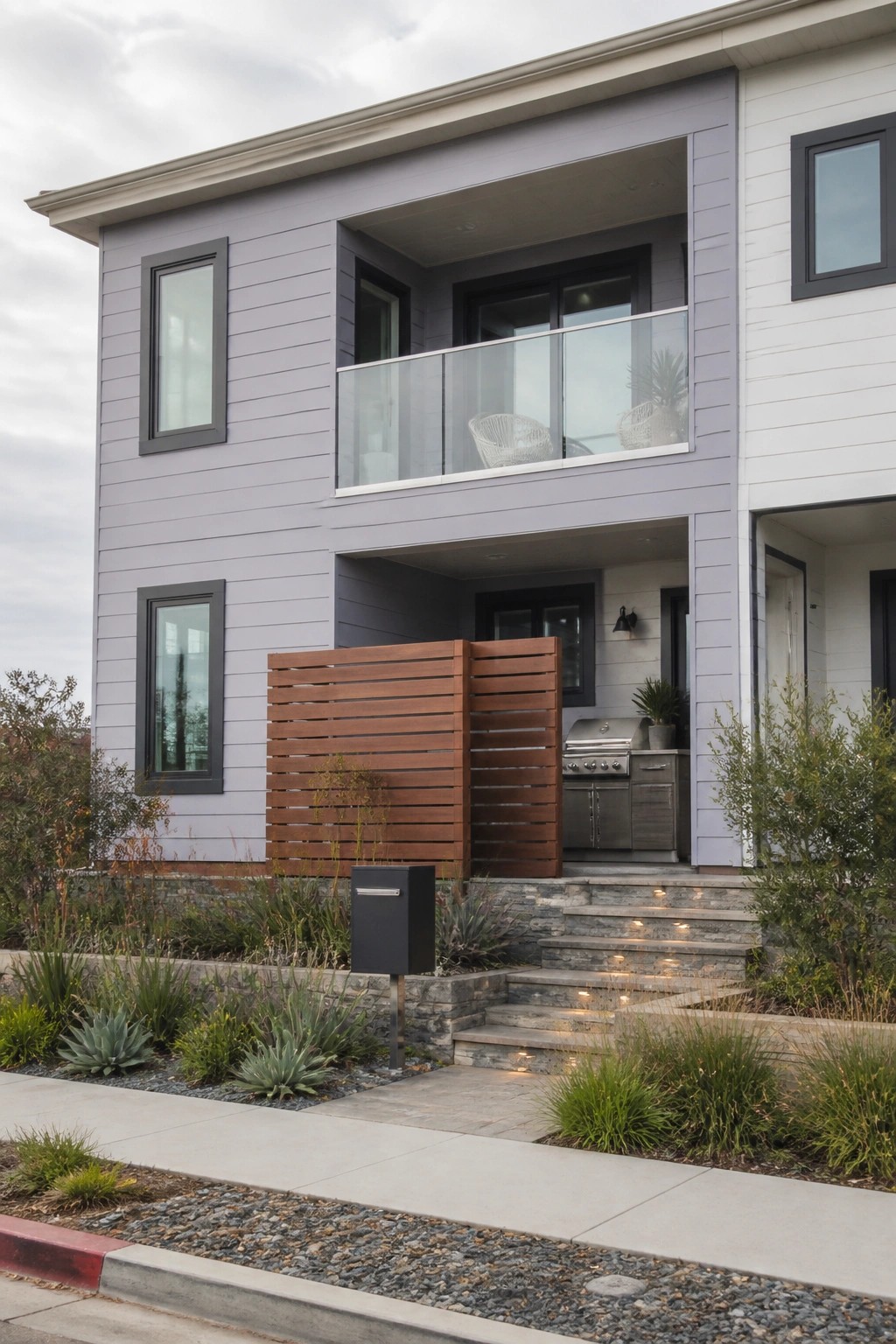
A soft purple on horizontal lap siding gives a house a modern edge without looking harsh. The color reads as polished rather than bold, and the clean horizontal lines help the facade feel organized and current.
This approach works best on homes that already mix two or three exterior materials. Keep the purple on the main body or taller sections, then use white or light siding on the rest so the purple stays as an accent instead of taking over the whole house.
Deep Purple Lap Siding For A Narrow House
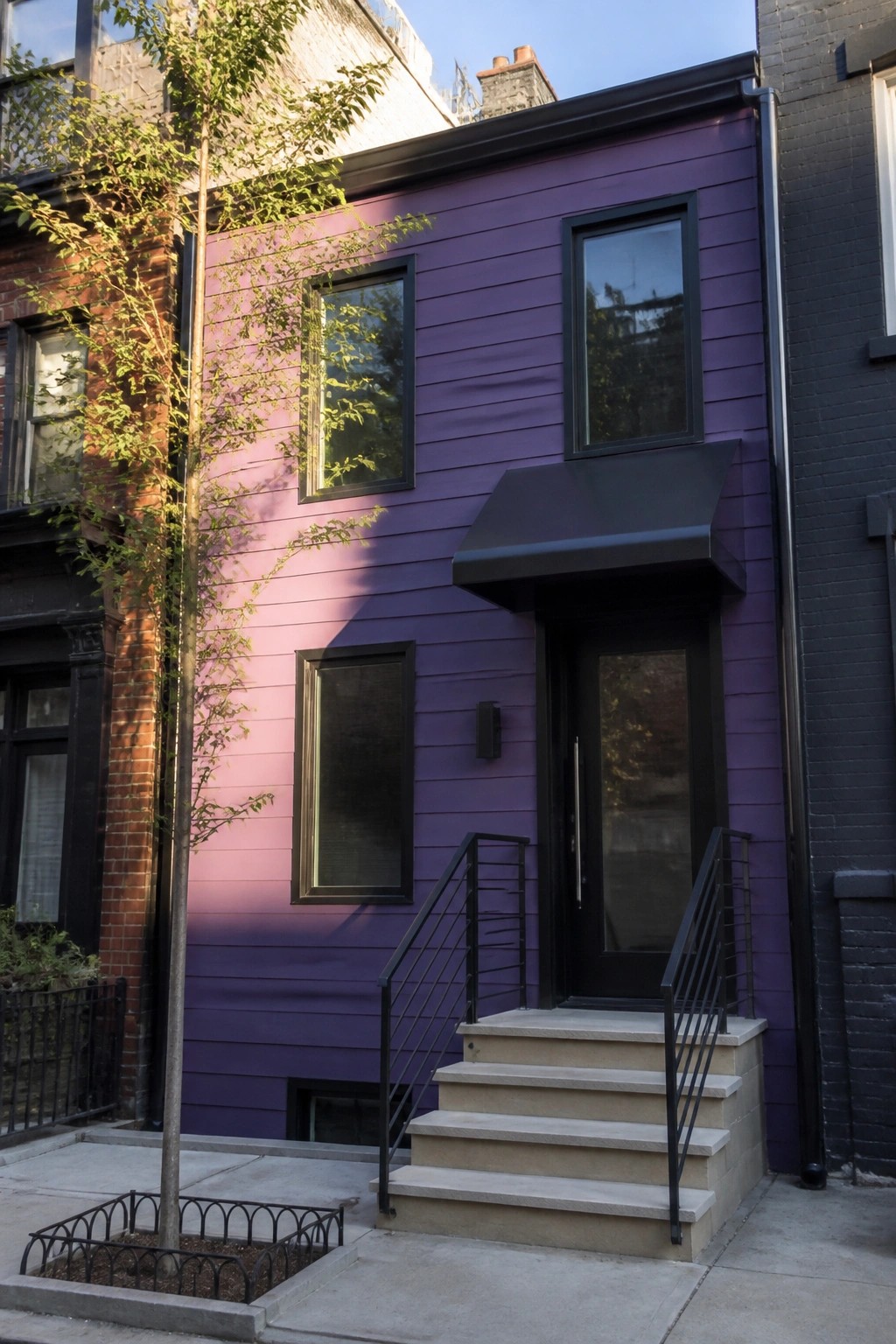
A saturated purple on horizontal lap siding gives a compact city house real presence without looking fussy. The color holds up well in changing light and pairs cleanly with black trim and windows.
This approach suits row homes or small lots where you want the facade to read modern but still friendly. Keep the siding boards narrow and the finish matte so the purple feels solid rather than flashy.
Deep Purple Horizontal Siding For A Clean Facade
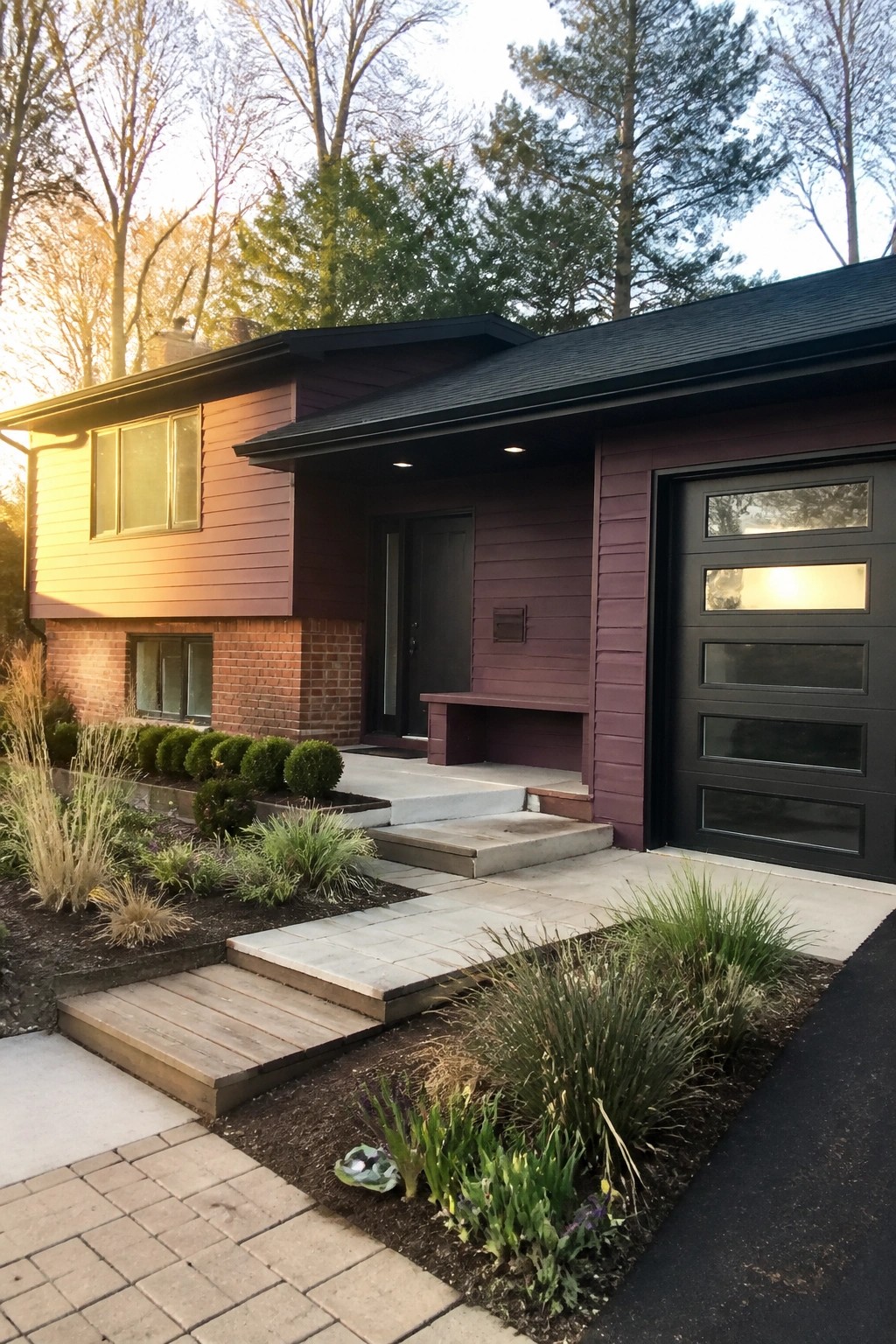
Deep purple horizontal lap siding gives a house a strong but simple presence. The color reads bold from the street yet still feels grounded when paired with brick on the lower level and dark trim around the windows and roofline.
This choice works best on homes with straightforward shapes and few extra details. Keep the siding on the main body or upper sections, and use darker doors and garage panels to hold the look together without extra color.
Choose a Soft Purple on Horizontal Lap Siding
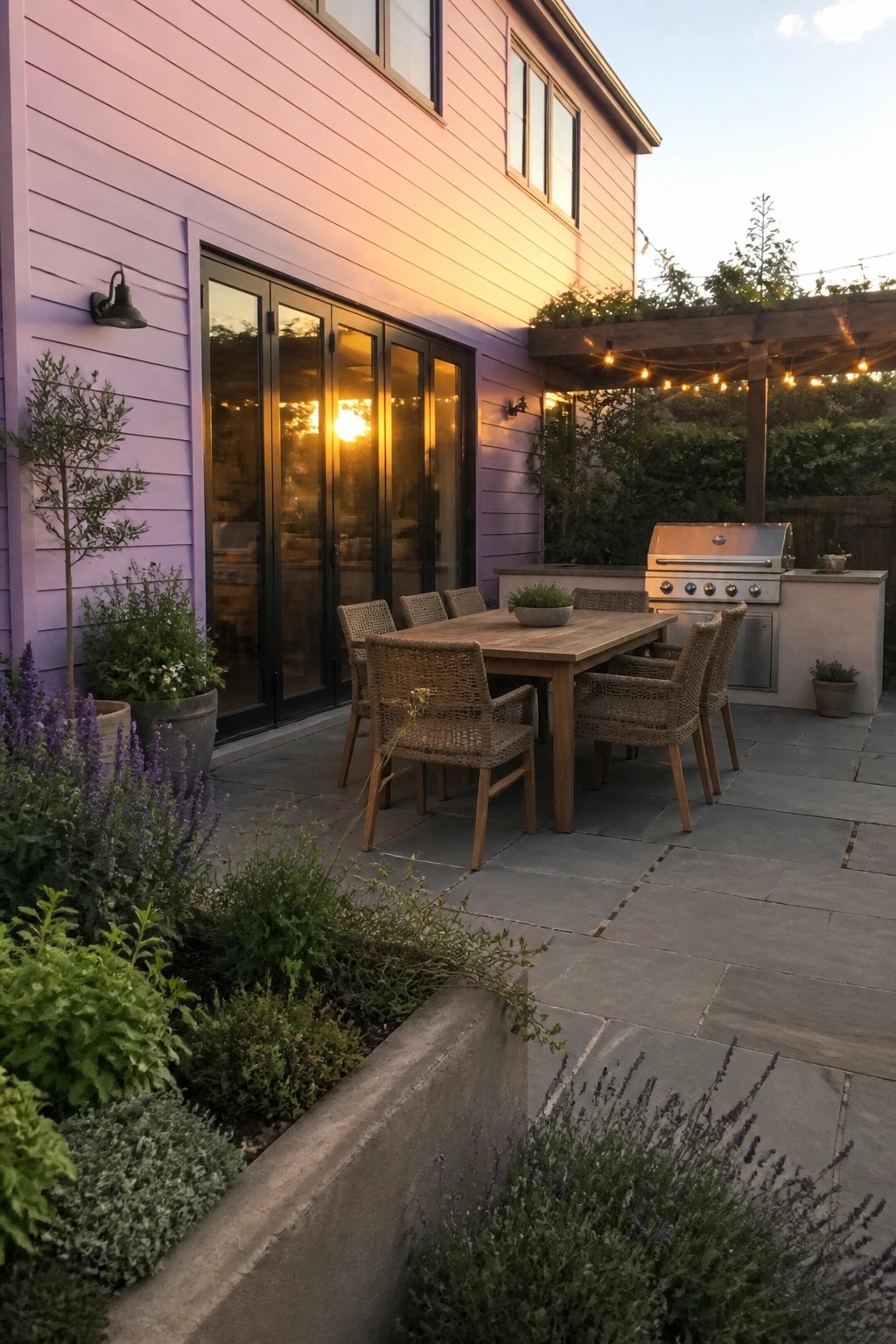
A soft purple works well on horizontal lap siding because it gives the house a calm presence without feeling loud. The color pairs easily with stone paving and dark window frames, so the whole exterior stays balanced even when the light shifts.
This look suits homes that already have a simple roofline and open patio space. Keep the trim dark and let the siding carry the color. It also holds up nicely next to garden beds, since the purple stays visible without competing with the plants.
Deep Purple Lap Siding for a Modern Cabin Look
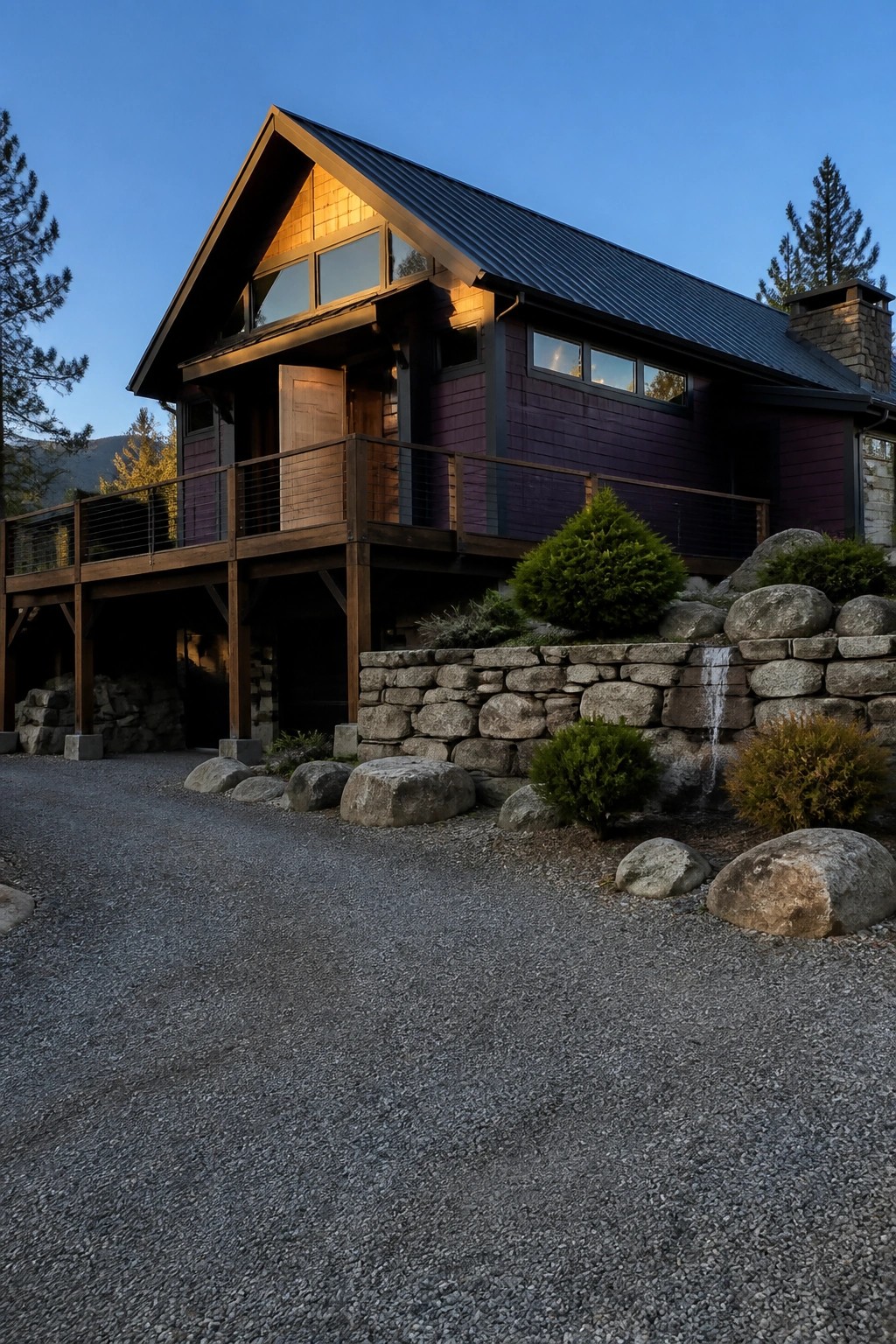
Purple horizontal lap siding can give a house real presence without needing a lot of extra detail. The deep tone works especially well when paired with dark trim and a dark roof, which helps keep the color from feeling too bright or out of place on a larger facade.
This choice suits homes in wooded or rural settings where you want something different from the usual earth tones. It tends to look best on straightforward shapes with clean lines, and it helps if the foundation or lower areas stay in natural materials like stone to balance the overall feel.
Purple Horizontal Lap Siding Adds Quiet Interest
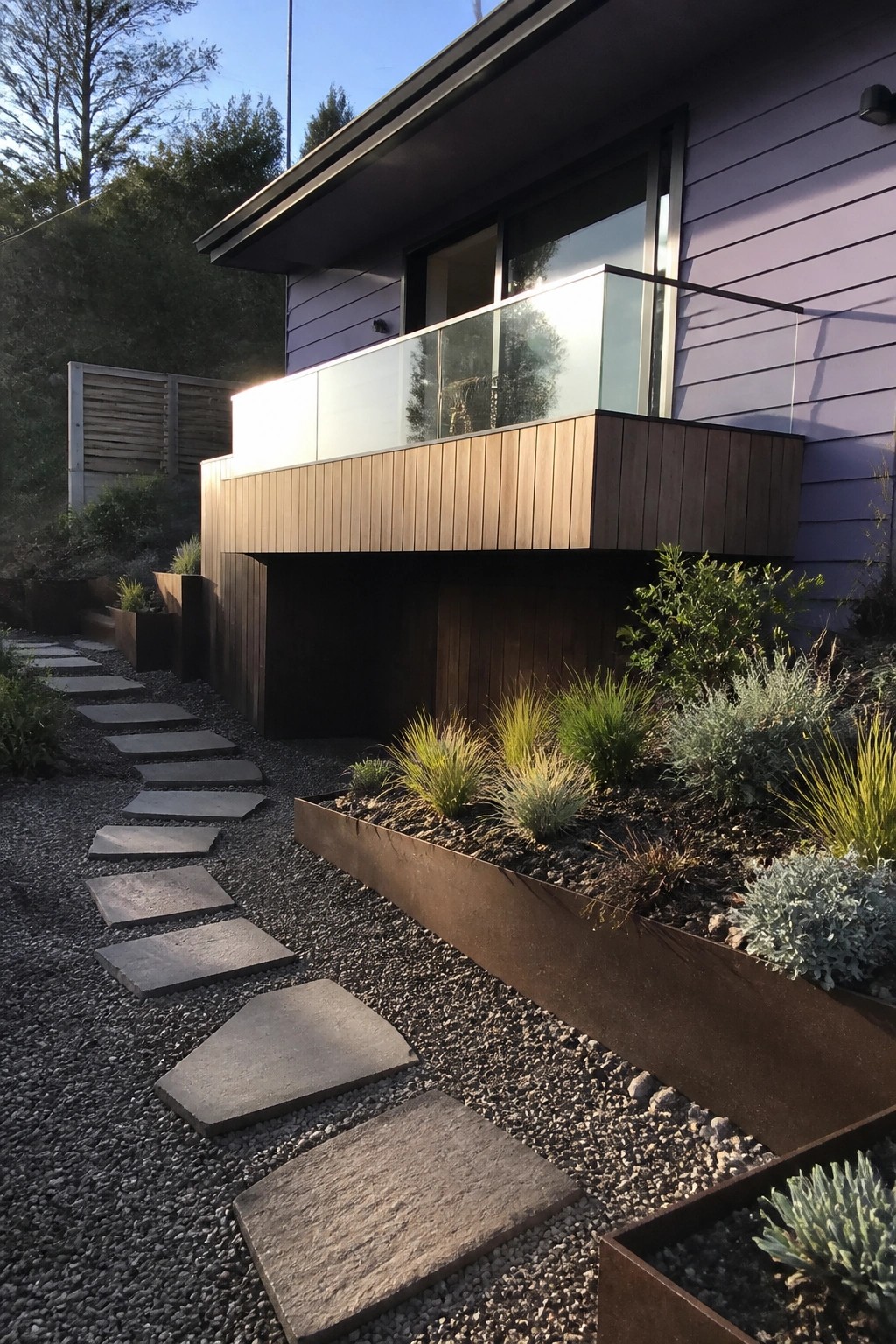
Purple horizontal lap siding gives a house a distinct look that still feels grounded. The color works because it stays bold without overpowering the rest of the exterior, especially when paired with darker trim and wood accents.
This choice suits modern homes that want some color but still need to look clean and simple. Keep the siding in good condition and limit other bright elements so the purple stays the main feature.
Purple Siding That Blends With A Patio
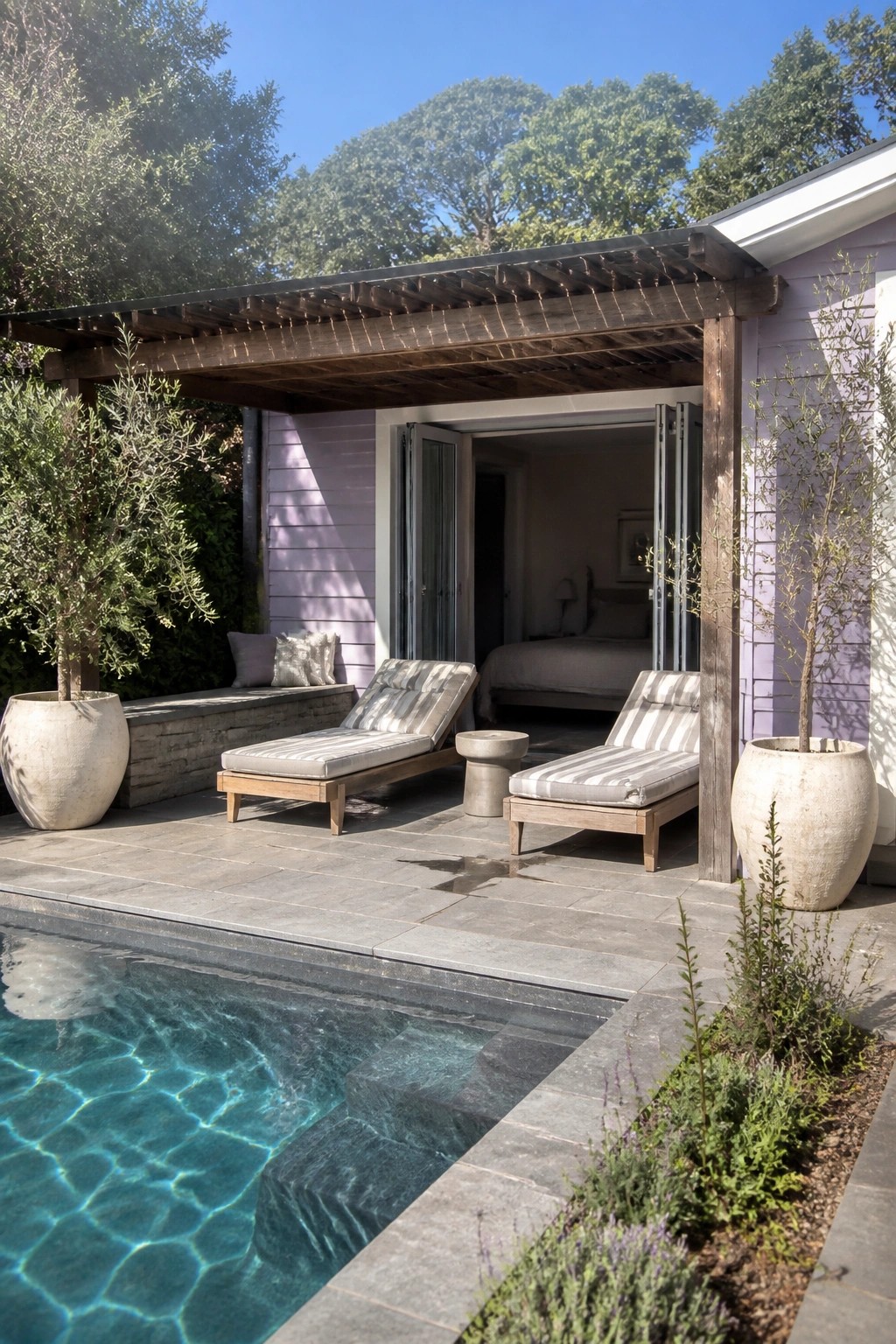
A soft purple shade on horizontal lap siding can make an outdoor living area feel more connected to the house. The color stays calm next to stone and wood, so the patio does not fight with the main structure.
This approach works well on homes that open directly to a pool or seating zone. Keep the siding tone light enough that it does not overpower the plants or furniture around the edges.
Deep Purple Siding for a Classic Look
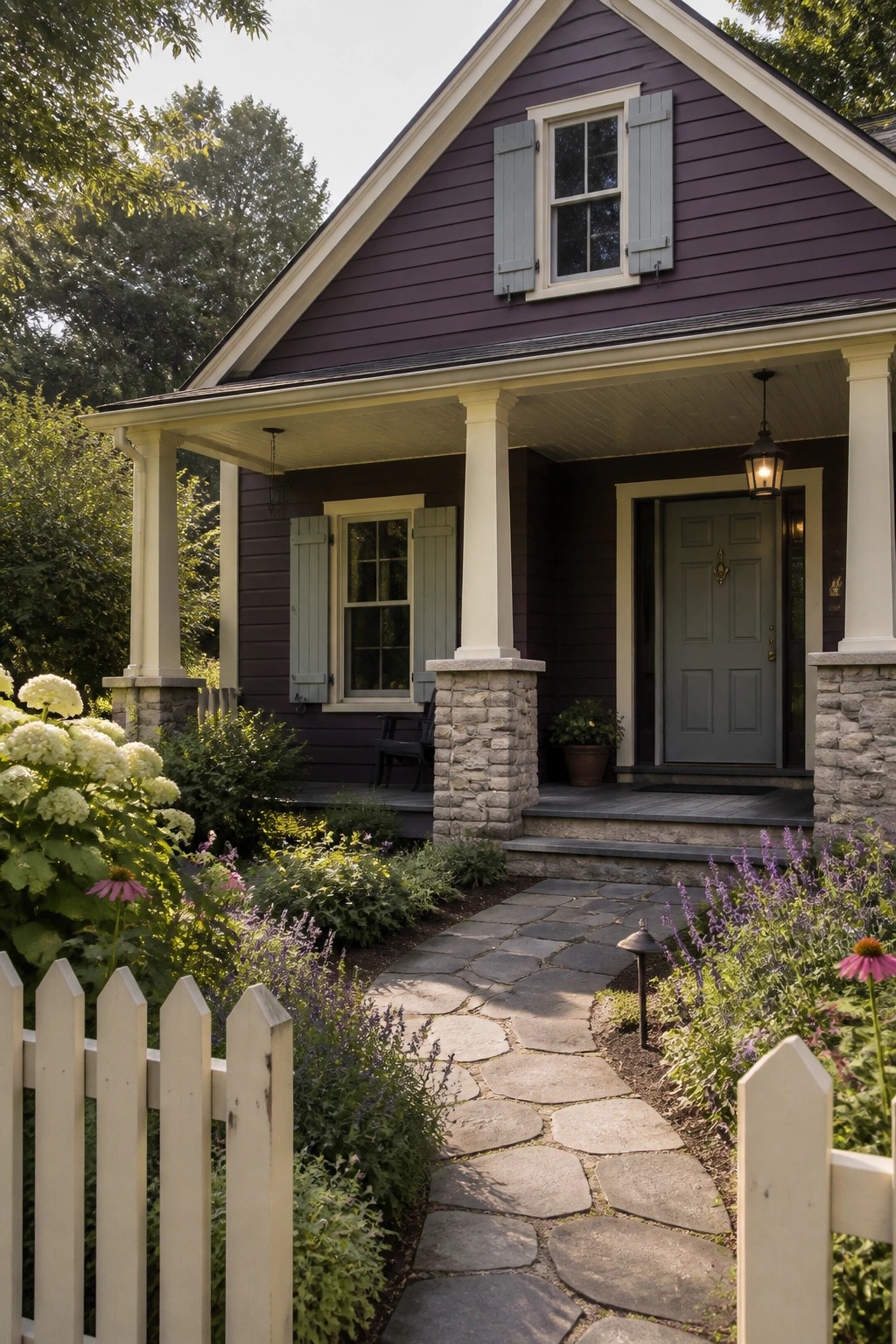
Deep purple works well on horizontal lap siding because the color has enough depth to feel rich without turning too dark. It gives the house a settled, finished appearance that still reads as friendly from the street.
This choice suits homes with simple rooflines and front porches. Keep the trim light and add stone at the base so the purple does not feel heavy. It also holds up nicely against green landscaping.
Deep Purple Lap Siding on Modern Homes
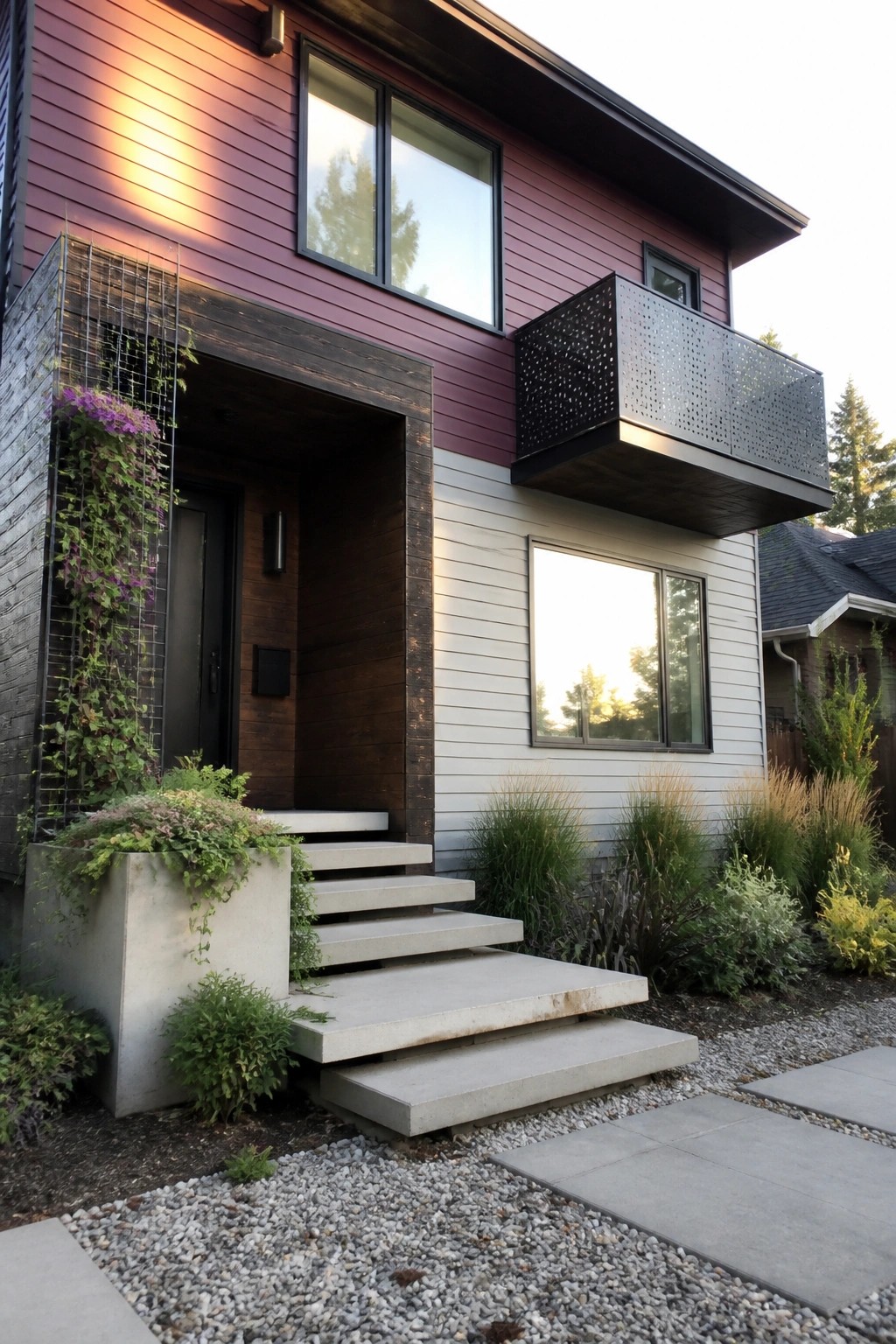
A deep purple works well on horizontal lap siding because the color holds its own without needing lots of extra trim or decoration. The horizontal lines keep the look clean while the shade gives the house some personality that still feels put together.
This choice suits newer homes that mix siding with wood or metal details. Keep the purple on the main upper section and use lighter tones or natural materials lower down so the color does not overwhelm the whole facade.
Frequently Asked Questions
Q: How do I pick a purple that won’t look too bold on my house? A: Start with a muted tone like a soft lavender or dusty grape. Test a large sample on your wall in different lights before committing. This helps you see how it settles with your roof and landscaping.
Q: What trim color goes with purple siding without clashing? A: White trim gives a clean contrast that makes the purple pop nicely. Gray or black can add a modern edge if your house has clean lines. Stick to one main accent to keep things simple.
Q: Will horizontal lap siding show dirt more with a purple finish? A: Purple can hide some dust better than white but rain streaks show up on any dark color. A quick hose down every few months keeps it looking fresh. Focus on the lower boards where splash happens most.
Q: Can I mix purple lap siding with stone accents? A: Yes, gray stone pairs well and adds texture. Keep the purple on the main walls for balance.
