

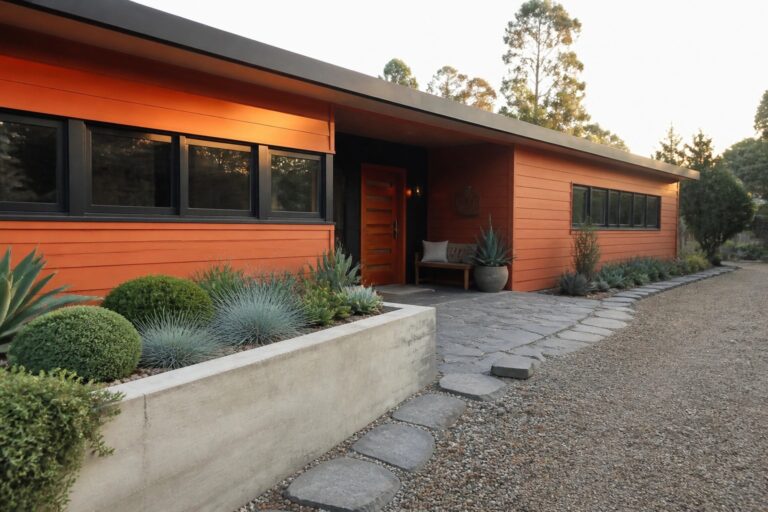
When I drive past ranch houses the low horizontal lines stand out right away because they pull the eye across the front instead of up toward a tall roof.
Orange tones on the siding or stucco add warmth to those long stretches and keep the facade from feeling flat or cold.
I have found that the real test comes at the entry where the materials meet the ground and decide whether the house looks settled or just stretched out.
Choosing trim or stone that stays low helps the whole thing read as one calm shape rather than a series of separate parts.
I would try matching the paint to the existing roof color first to see if that single change brings the proportions together.
Low Horizontal Facades Suit Ranch Homes Well
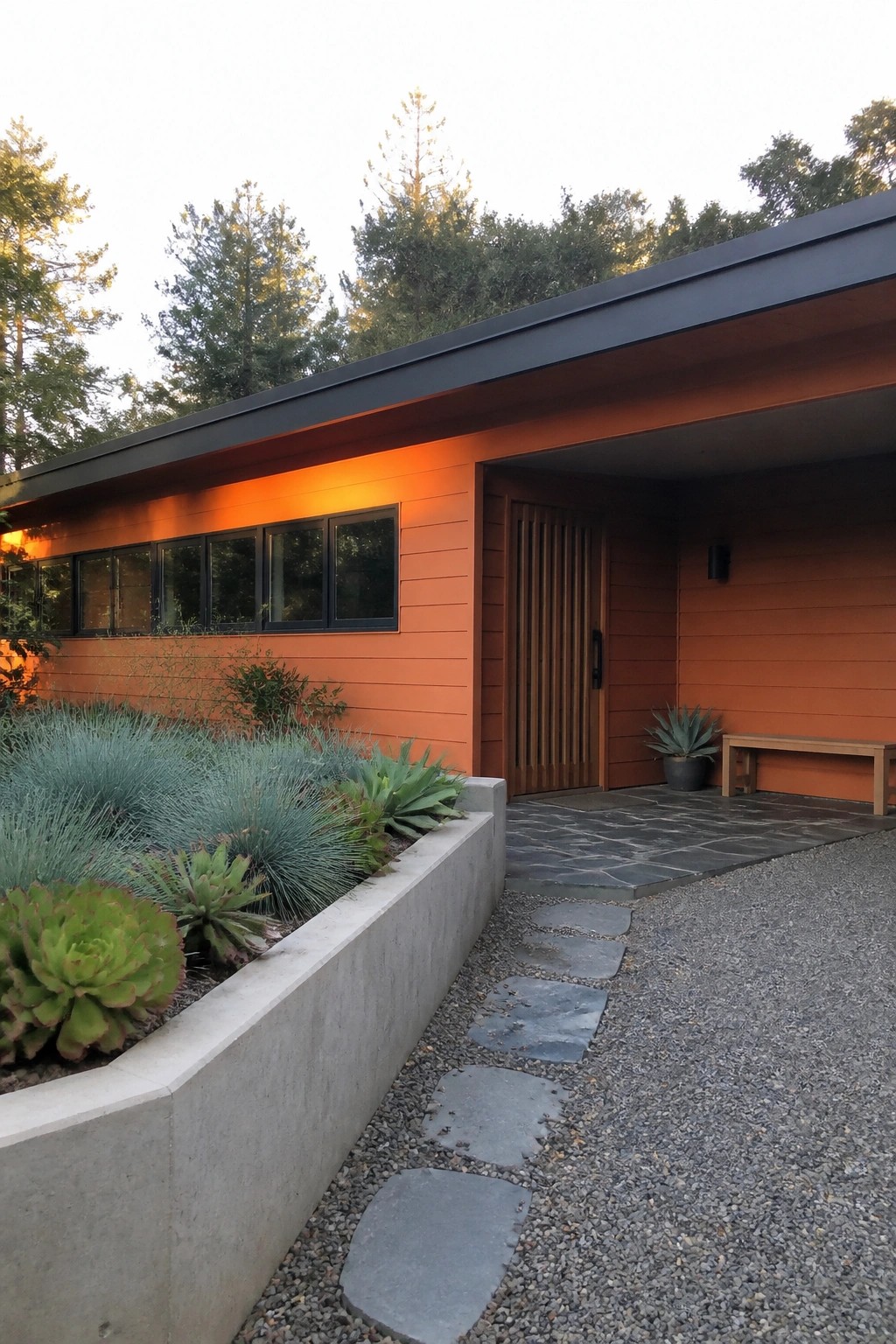
Many ranch houses look best when the main lines stay low and run long across the front. This keeps the whole structure feeling settled and connected to the ground instead of trying to stand tall.
The orange siding here runs in steady horizontal bands under a deep roof overhang, with the windows placed to follow that same low stretch. It works especially well on single story homes set on larger lots where you want a simple, calm profile without added height or extra trim.
Long Planters That Match the Horizontal Lines
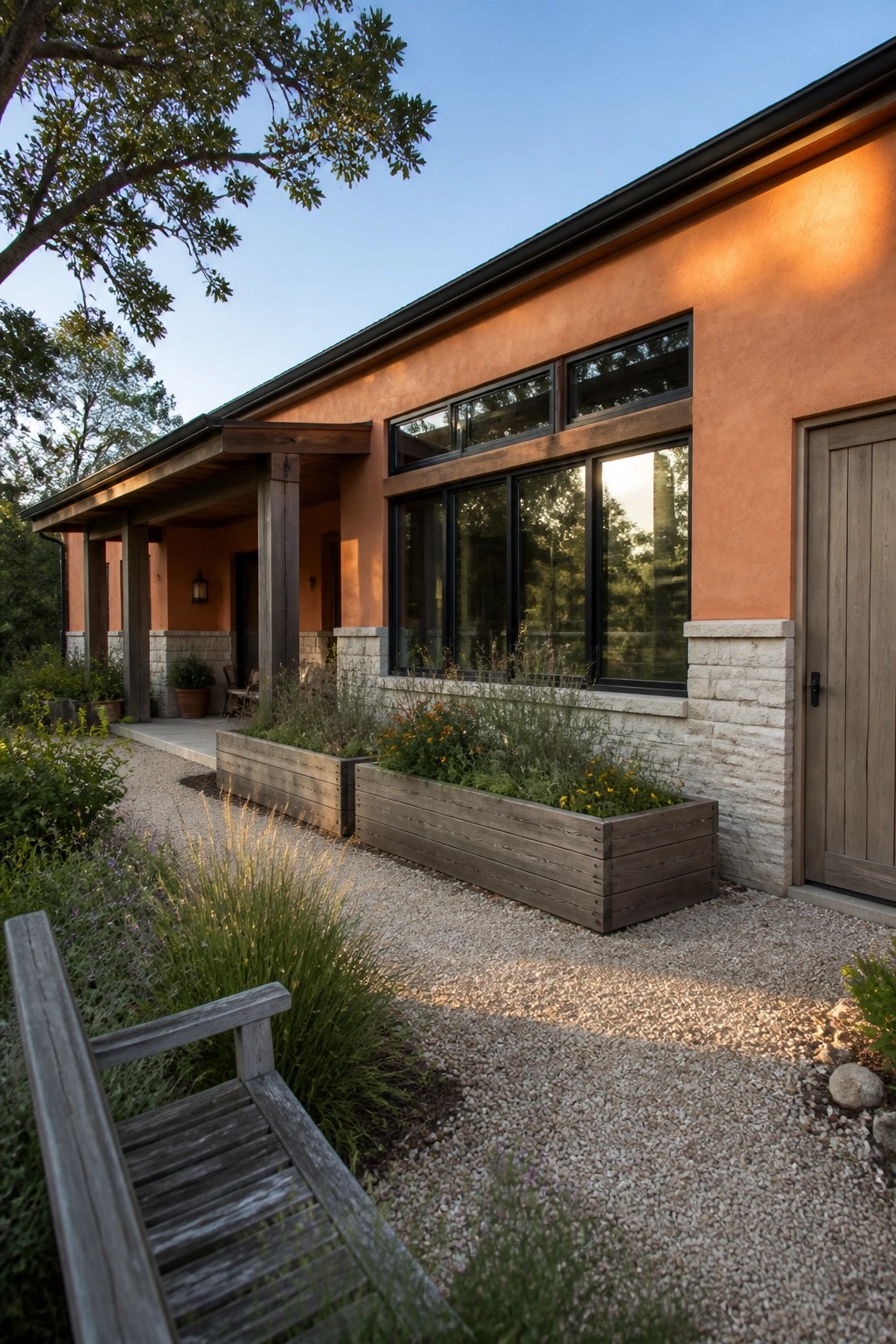
Many ranch houses look better when the planting stays low and runs parallel to the house instead of breaking up the view. These long wooden boxes do exactly that. They pick up the same direction as the windows and roof overhang, so the whole front stays calm and grounded.
This setup works best on gravel or simple hardscape where you still want some greenery but do not want tall beds or shrubs blocking the windows. Keep the boxes at a consistent height and length so they read as part of the architecture rather than separate garden features.
Let the Facade Run Low and Horizontal
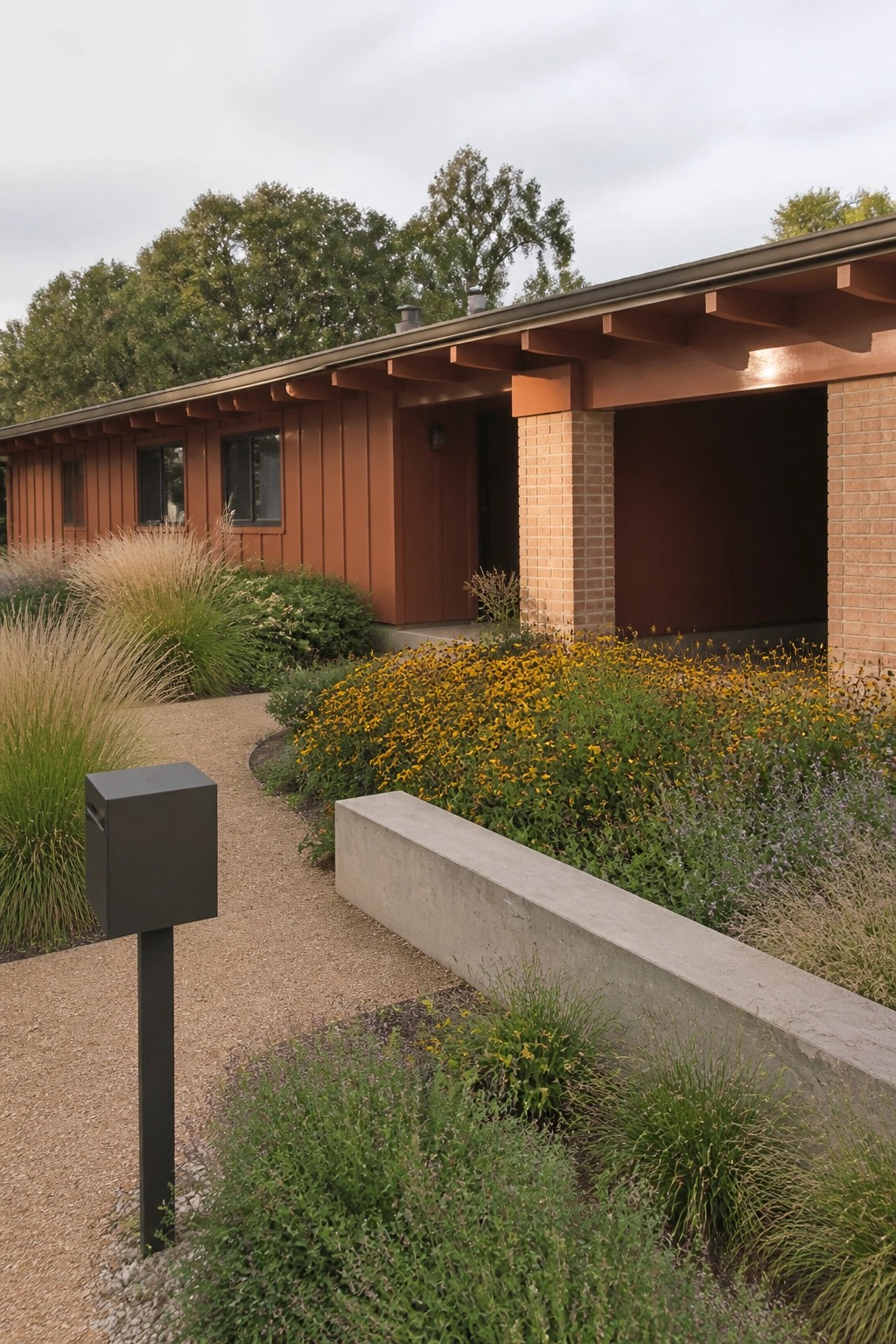
A low horizontal facade gives a ranch house that settled, easy look. The long roofline and single-story height keep the whole front from feeling tall or stretched upward, which makes the house read as comfortable rather than formal.
This approach works best on wider lots where the house can spread out instead of stacking up. Keep plantings low along the front so they support the line rather than break it, and choose siding colors that stay warm and simple.
Keep the Facade Low and Horizontal
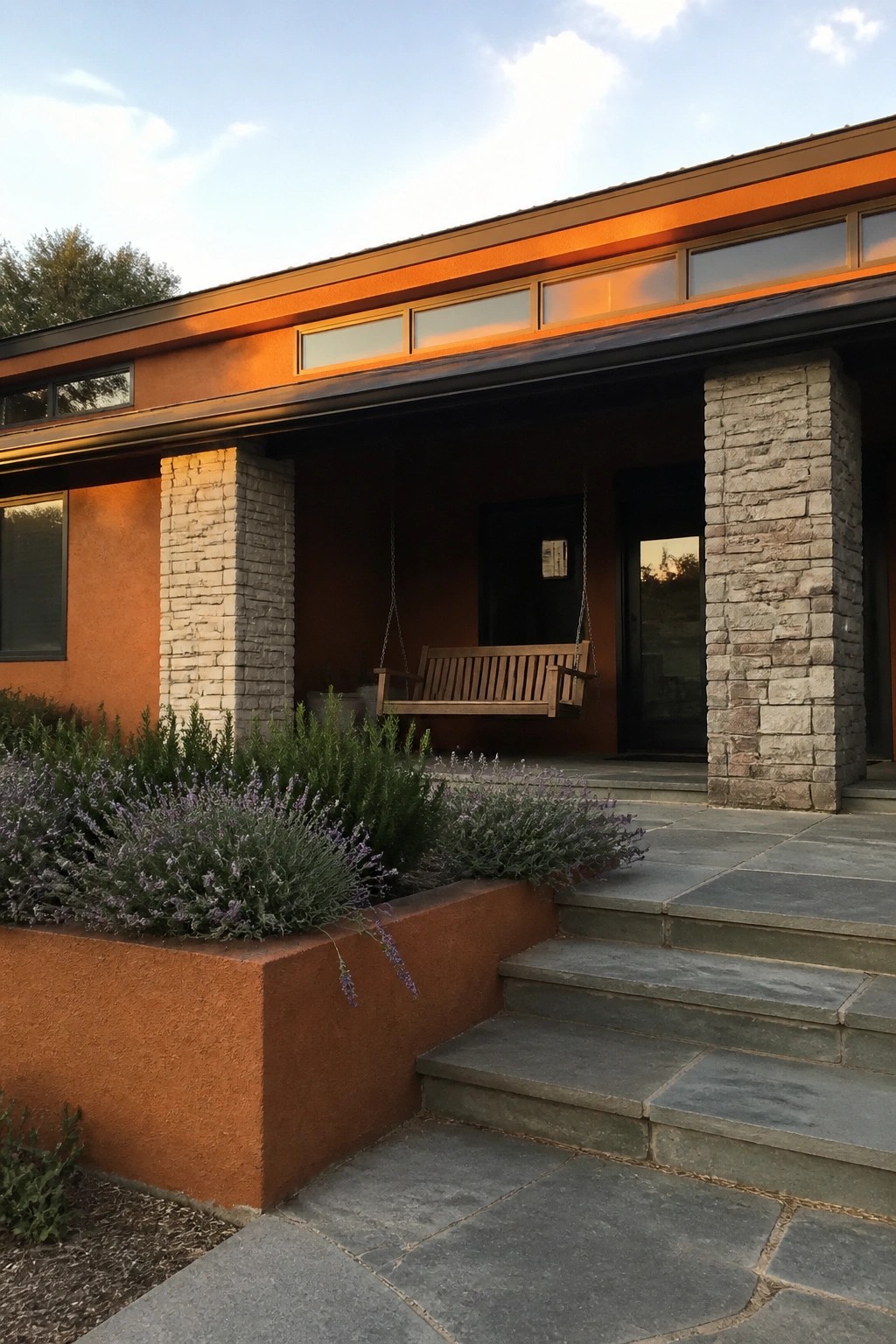
A low horizontal facade gives a ranch house that settled, easy feel. The long roofline and wide windows stretch across the front without any tall interruptions, so the whole place stays close to the ground and blends into the yard instead of towering over it.
This approach suits single-story homes on flatter lots where you want the exterior to feel calm rather than busy. Pair the low lines with simple materials like stucco and stone so the shape stays the main focus.
A Black Base for Low Orange Ranch Homes
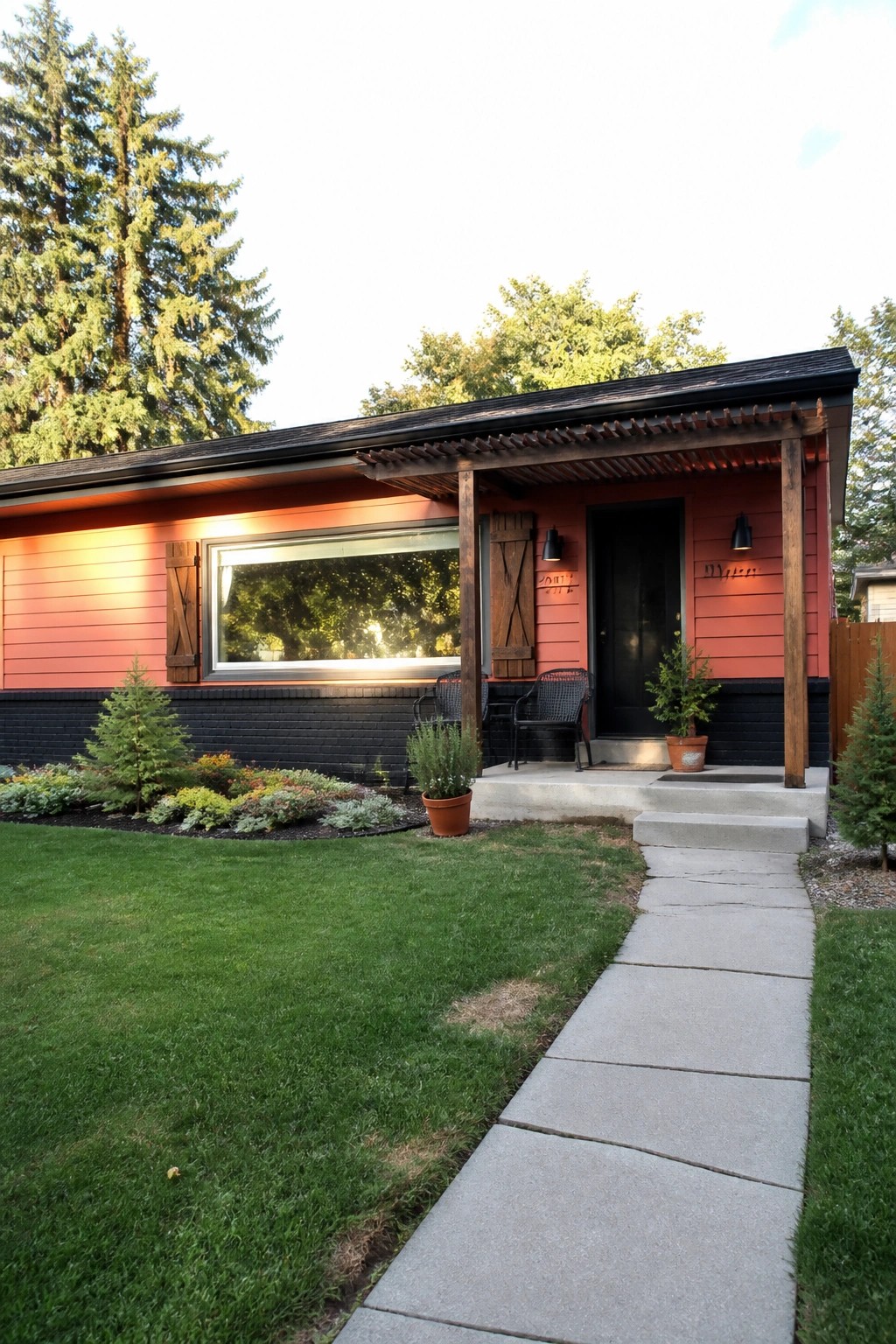
The black brick running along the bottom of this house pulls everything down and out. It turns the bright orange siding into a wide band that feels settled and low rather than tall or busy.
This trick works best on single-story homes that already sit close to the ground. Use a dark matte material for the lower third and keep the upper color simple so the whole front stays calm and stretched out.
Keep the Facade Low and Horizontal
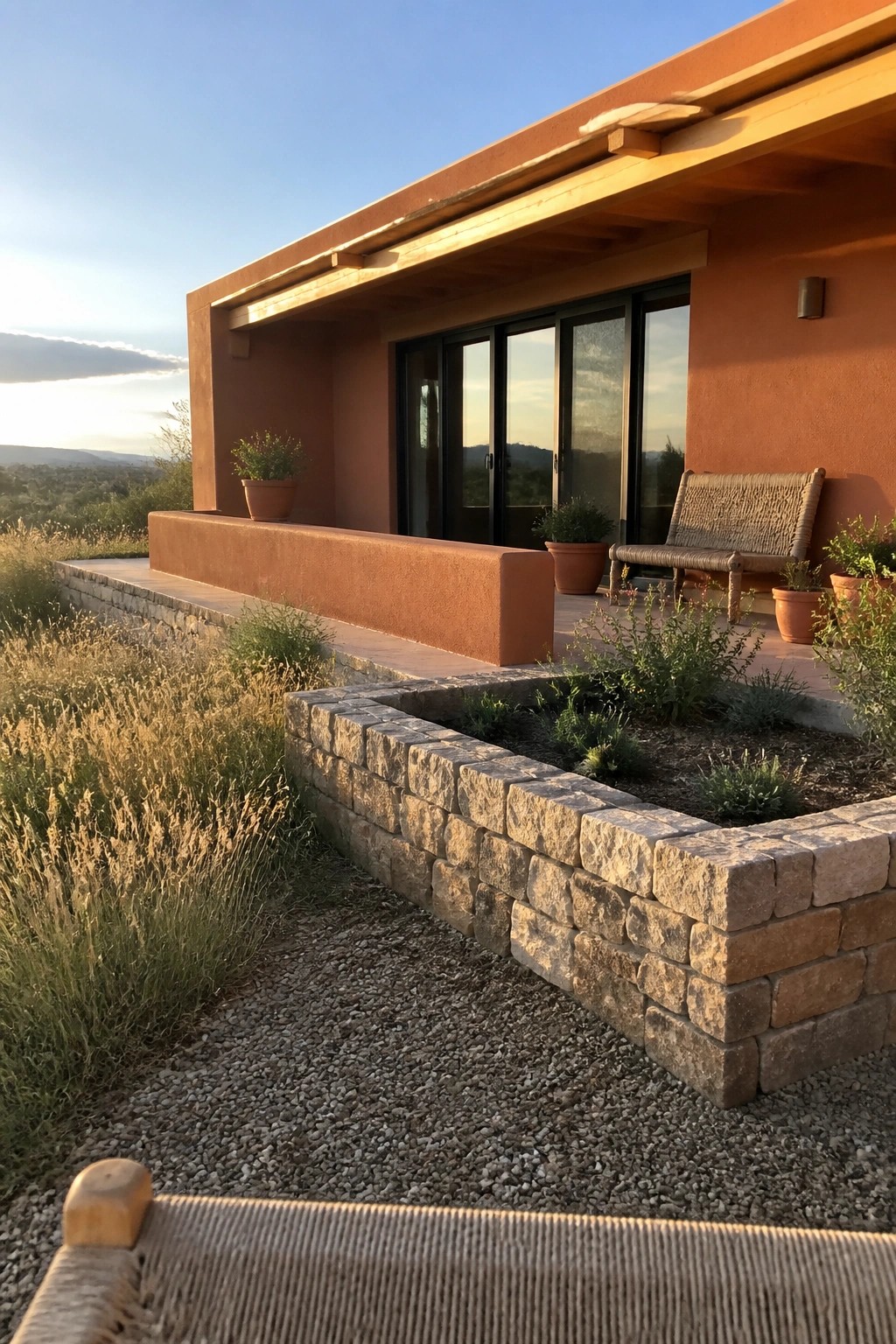
A low horizontal facade gives a ranch house that settled, easy feel right from the road. The long roof overhang and the continuous low wall in front stretch the house out instead of pushing it up, so it sits quietly against the land.
This layout works best on open lots where the ground stays fairly level. It suits single story homes in dry regions and pairs well with simple stucco and stone. Just make sure the roof depth stays generous so the horizontal line stays strong.
Keep the Lines Low and Horizontal
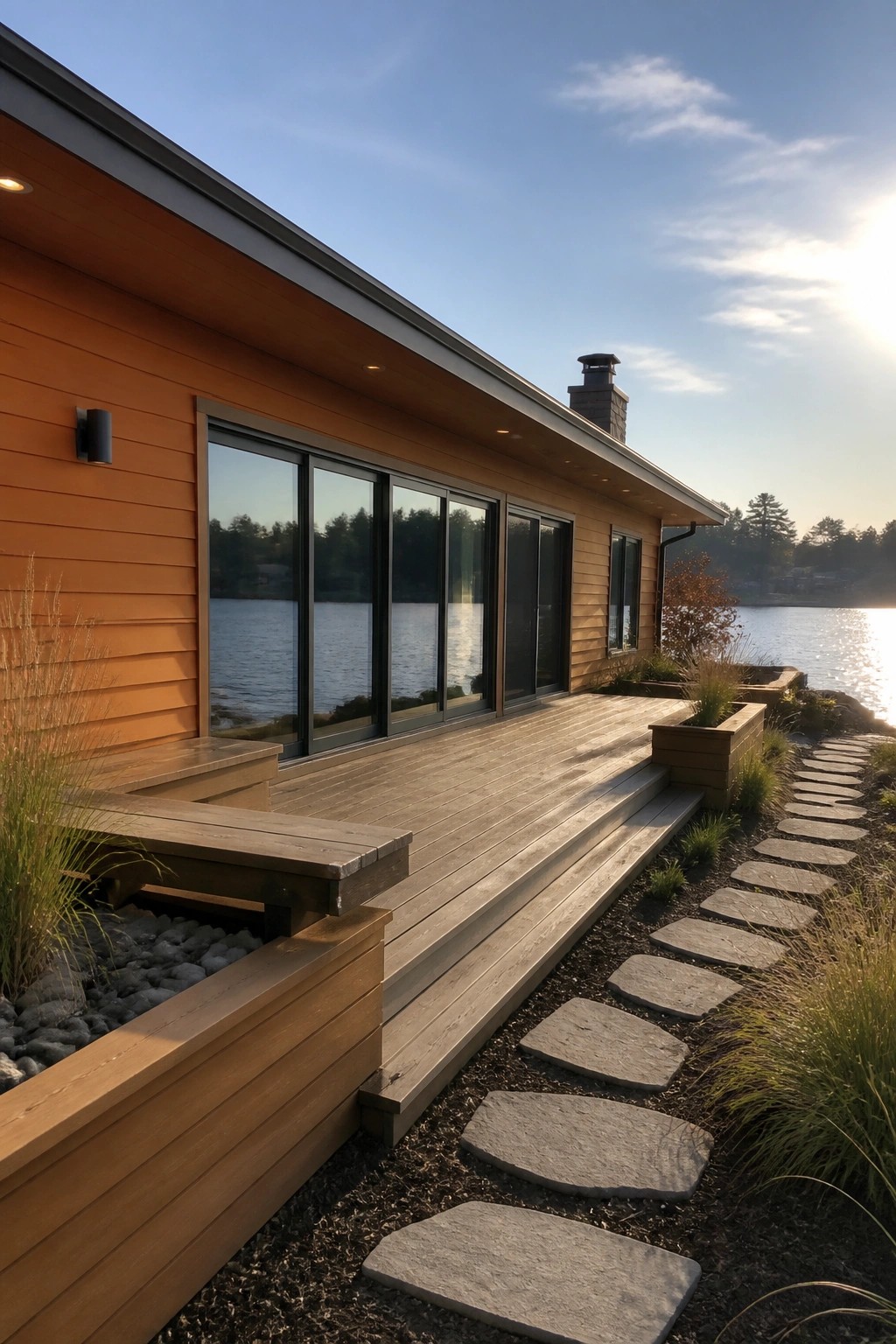
A low horizontal facade gives a ranch house a settled look that feels right at home on the site. The continuous run of siding across the front keeps the whole shape from feeling tall or broken up, and the warm tone helps the house blend with the surrounding deck and ground.
This works especially well on flat or gently sloping lots near water. Stick with one main siding color, limit vertical breaks, and let the deck or path follow the same long line so nothing fights the low shape.
Deep Overhangs That Hold The Horizontal Line
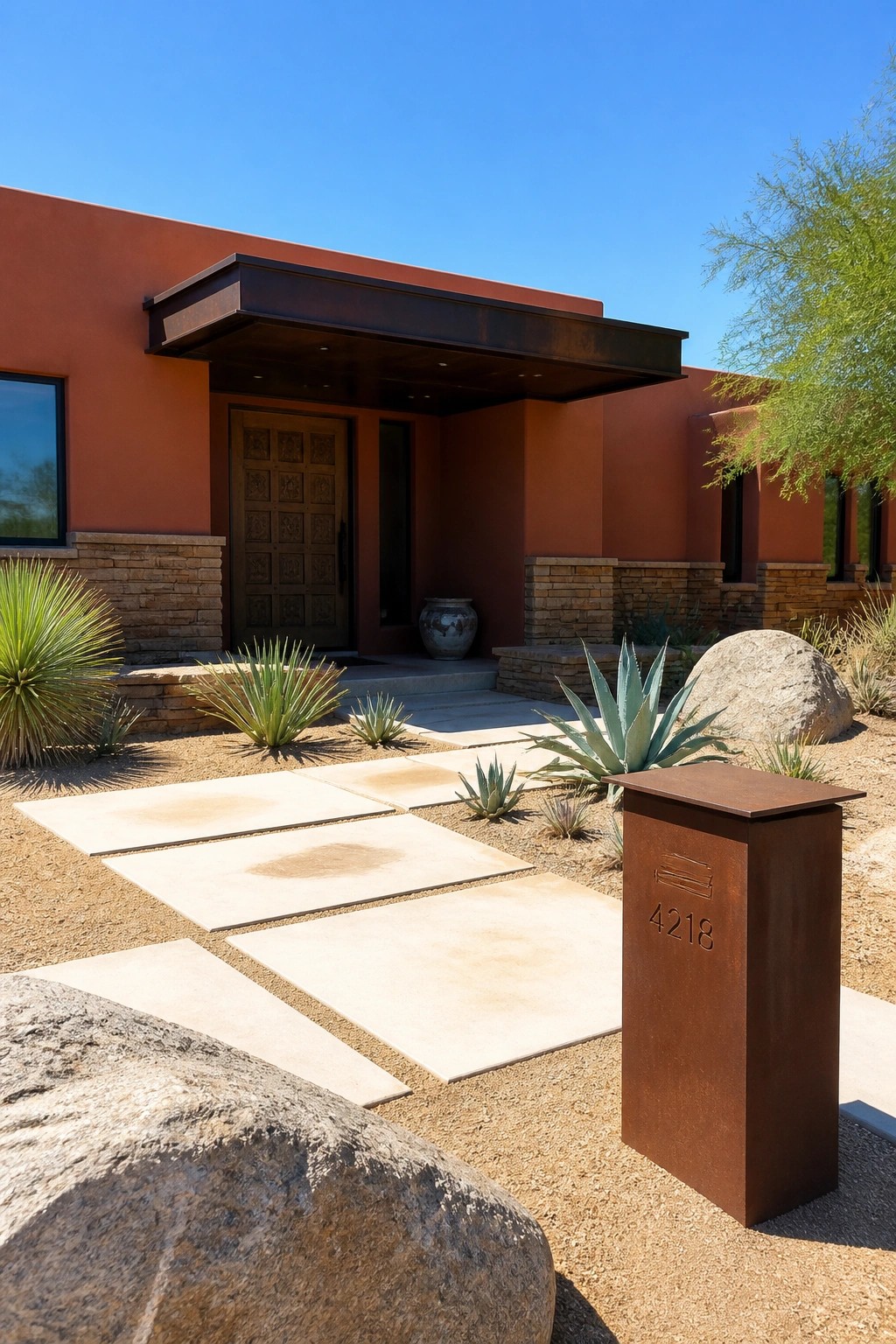
A deep overhang across the front keeps the whole house feeling low and stretched out. It turns what could be a plain wall into a clear horizontal shape that sits comfortably on the lot.
This works best on ranch homes in bright, hot areas where the shade also protects the entry. Match the overhang color to the trim so it reads as one clean line instead of a separate roof piece.
Keeping the Facade Low and Horizontal
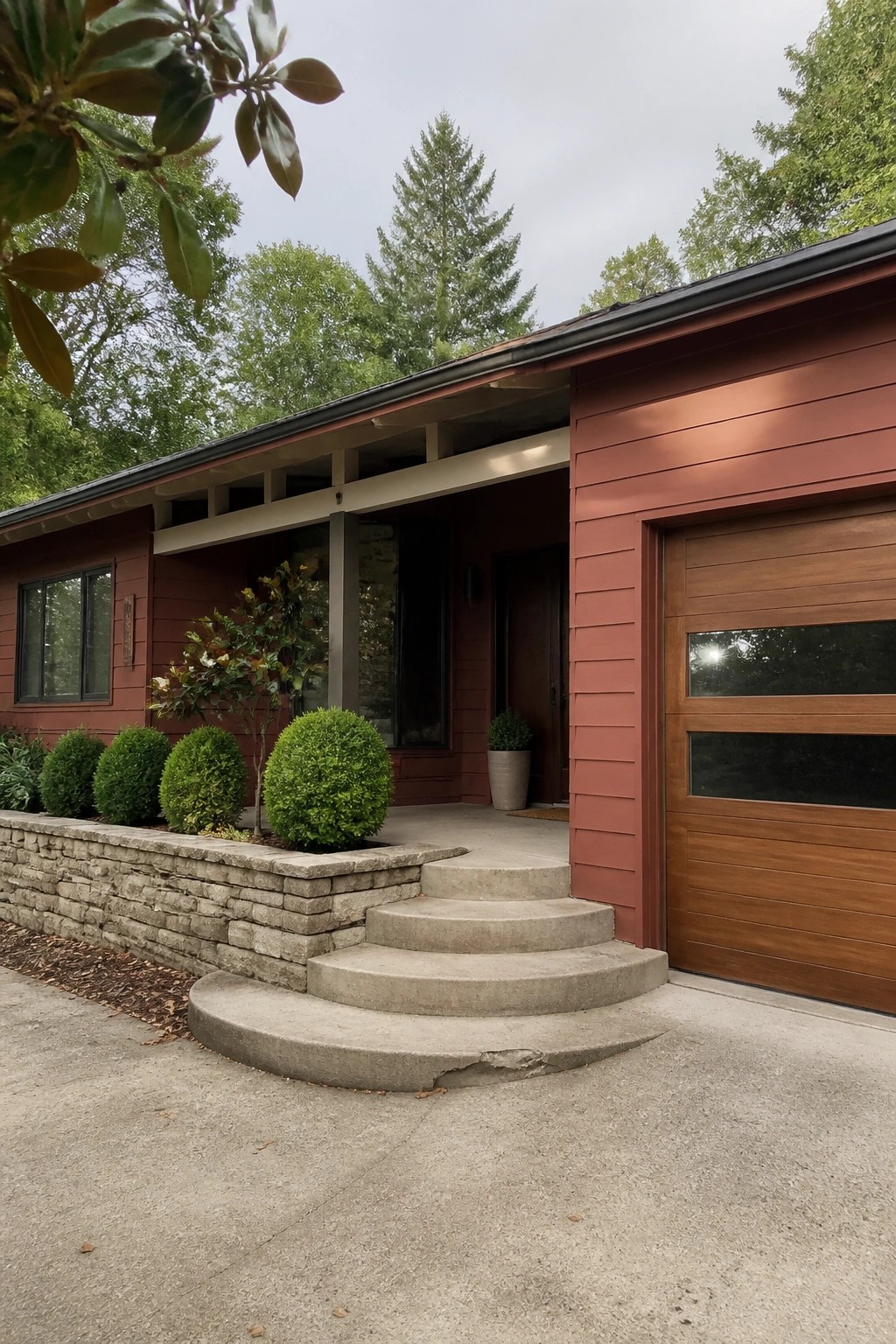
Ranch houses often look their best when the design stays low and wide instead of trying to add height. The horizontal siding here runs straight across the front, which helps the house feel settled on the ground and keeps the overall shape simple.
This approach works well on flat lots where the goal is a casual, easy feel rather than a formal one. It suits homes that already have a wide footprint and pairs best with a straightforward roofline that does not break up the long lines.
Low Horizontal Facades Keep Things Grounded
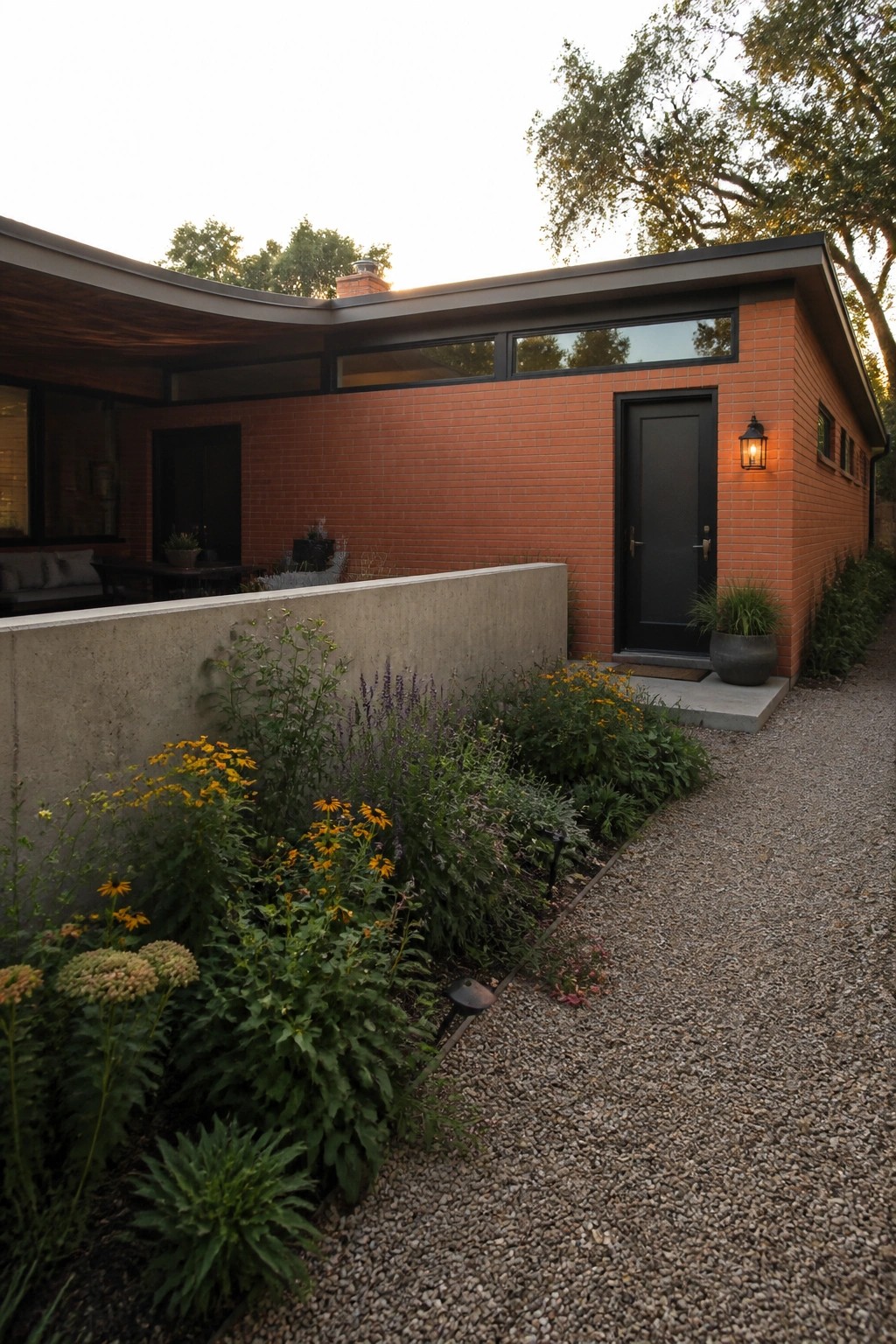
A long, low roofline paired with orange brick gives the house a settled look that feels natural on a ranch style home. The single story and wide window band stretch across the front without breaking the line, so the whole shape stays simple and calm.
This approach works best on one-story homes where you want the exterior to feel wide rather than tall. Keep windows and doors in the same horizontal band and avoid tall elements that would fight the low profile.
Low Horizontal Facades That Stay Grounded
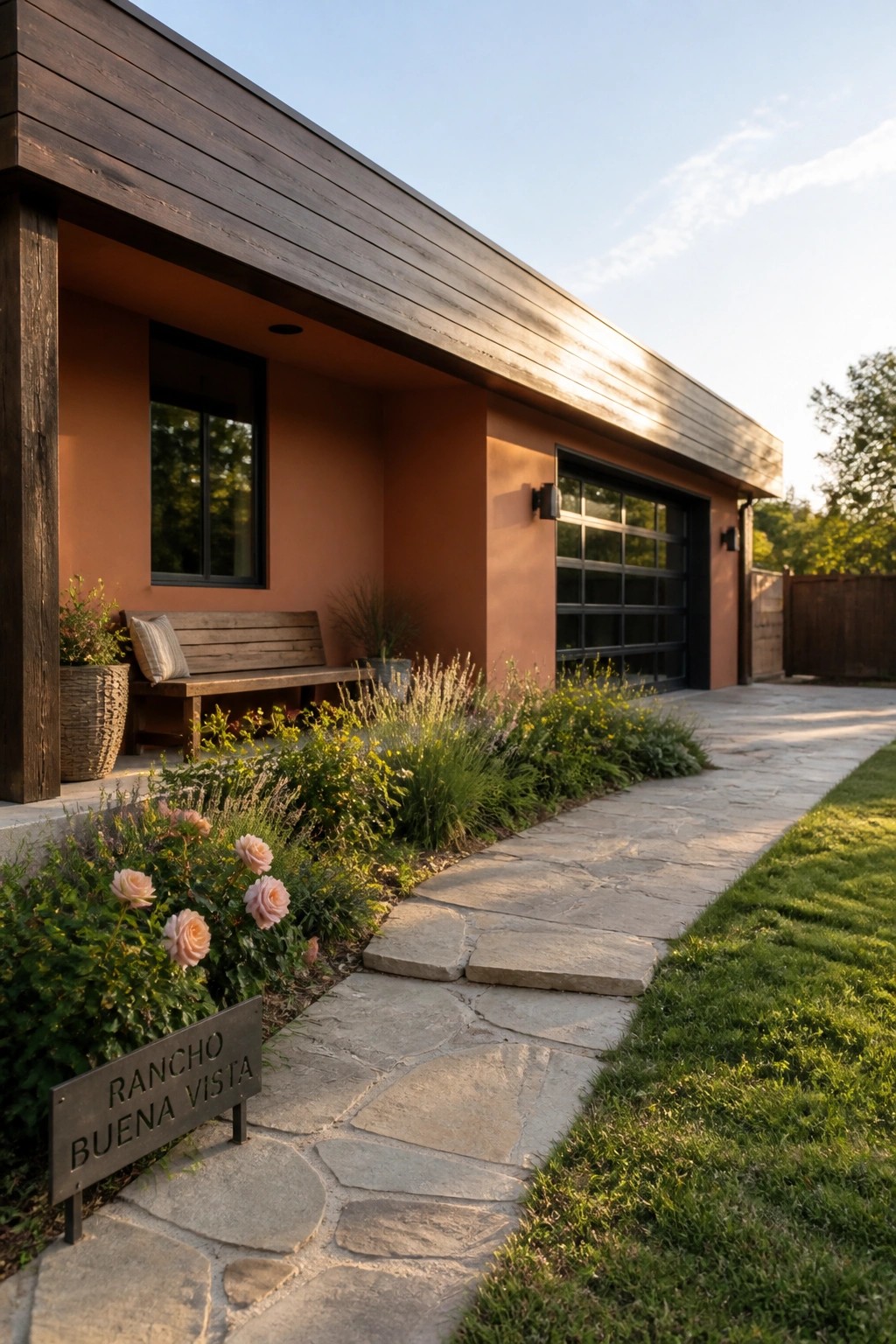
A low horizontal facade keeps a ranch house feeling settled and easy to live with. The long roofline and single-story height avoid any sense of height or bulk, which suits the style well.
This works best on wider lots where the house can spread out instead of stacking up. Keep the materials simple and let a narrow planting strip run along the front to soften the base without blocking the lines.
Line Up Windows To Highlight The Horizontal Facade
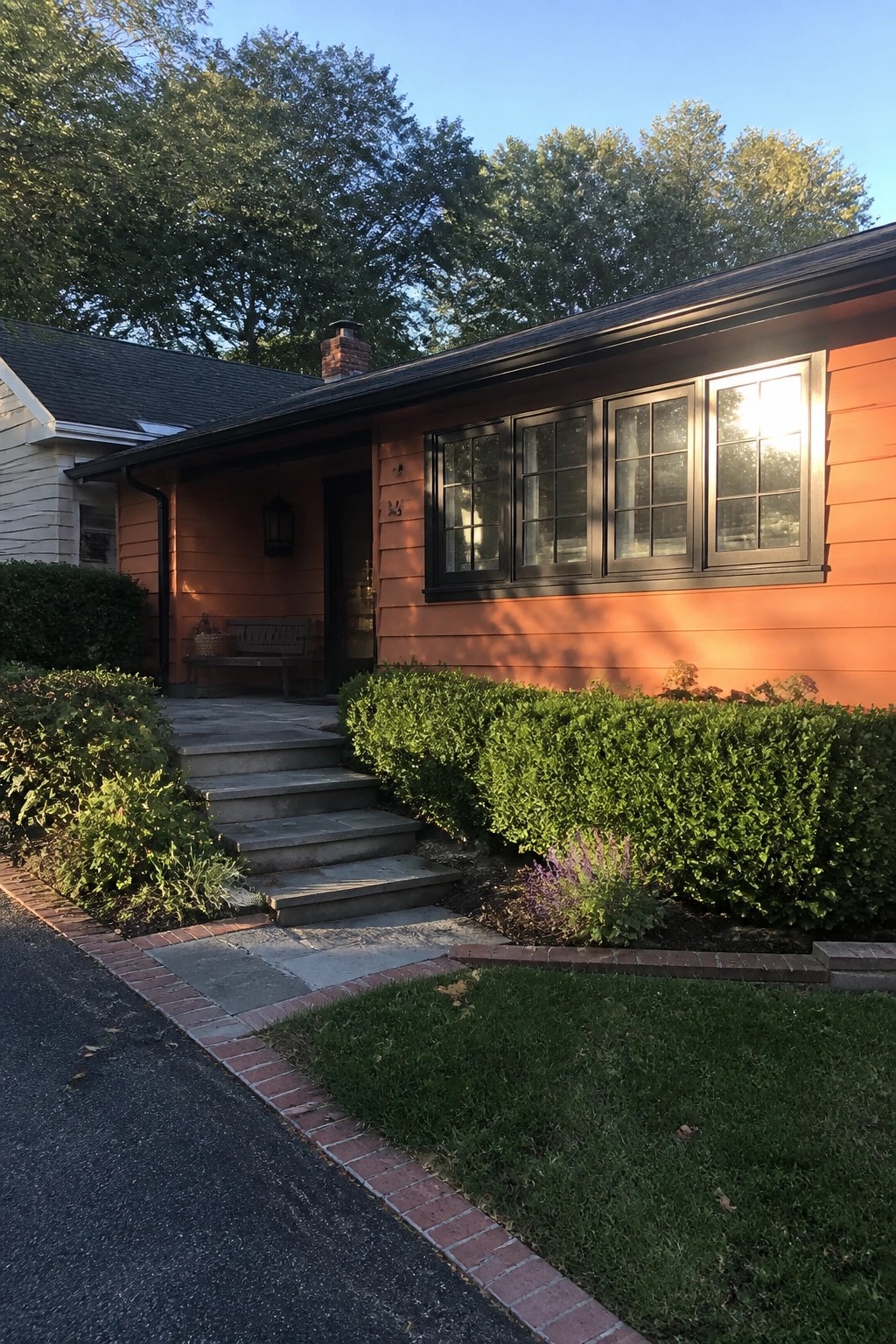
A simple row of windows can do a lot for a ranch house that wants to feel low and wide. When the frames sit at the same height and run across the front without big gaps or breaks, the whole facade stays grounded instead of looking taller than it is.
This approach works best on homes with steady siding color and a single story. Keep the window trim consistent so the line stays clean, and avoid stacking anything above or below that pulls the eye upward.
Low Horizontal Facades Keep the House Grounded
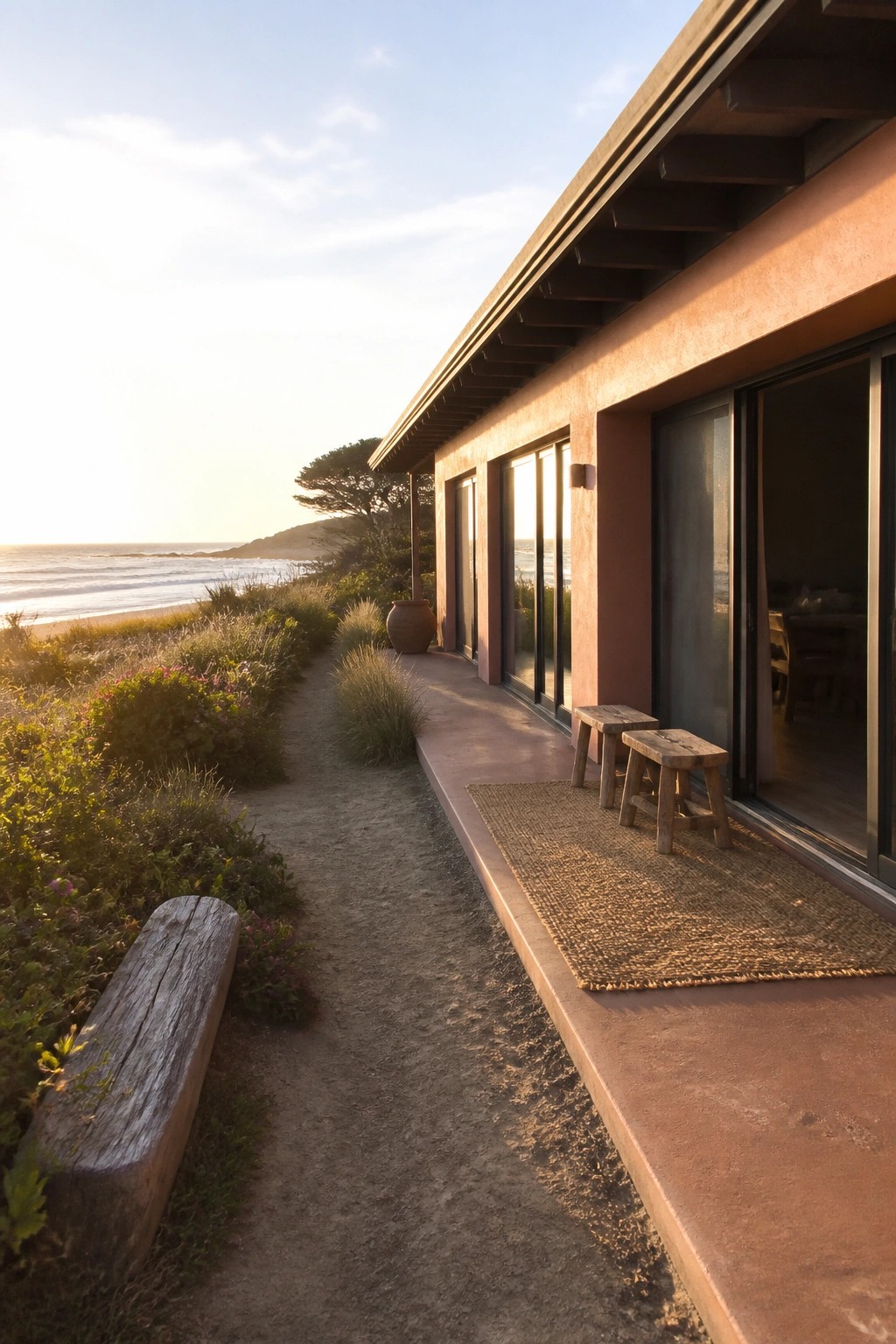
A low horizontal facade helps a ranch house feel settled into its site instead of sitting on top of it. The long roofline and simple wall planes reduce visual height and let the building follow the natural slope of the land.
This works best on single story homes near open views where you want the exterior to feel calm and connected to the ground. Use a modest overhang and keep the wall color consistent so the shape stays clean and the house does not compete with the landscape.
Low Rooflines That Add Covered Outdoor Room
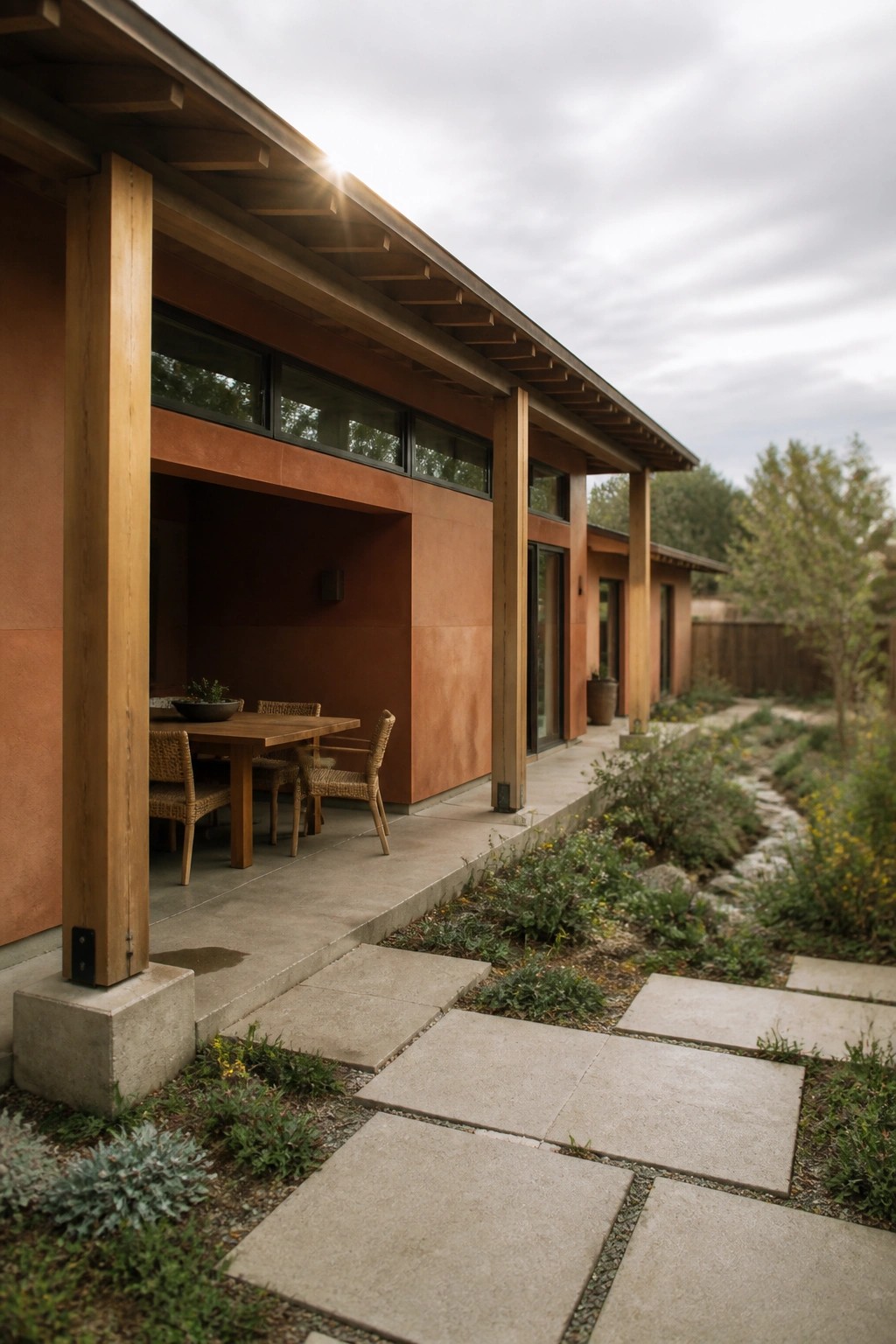
A long, low roofline with a deep overhang gives this house a grounded look while turning the side wall into usable outdoor space. The simple posts and extended eave create a shaded area that feels connected to the interior without any extra rooms or walls.
This works best on single-story homes where you want everyday seating right outside the main living areas. Keep the path and planting low and straightforward so the covered zone reads as part of the house rather than a separate addition.
Integrated Benches Along Low Ranch Facades
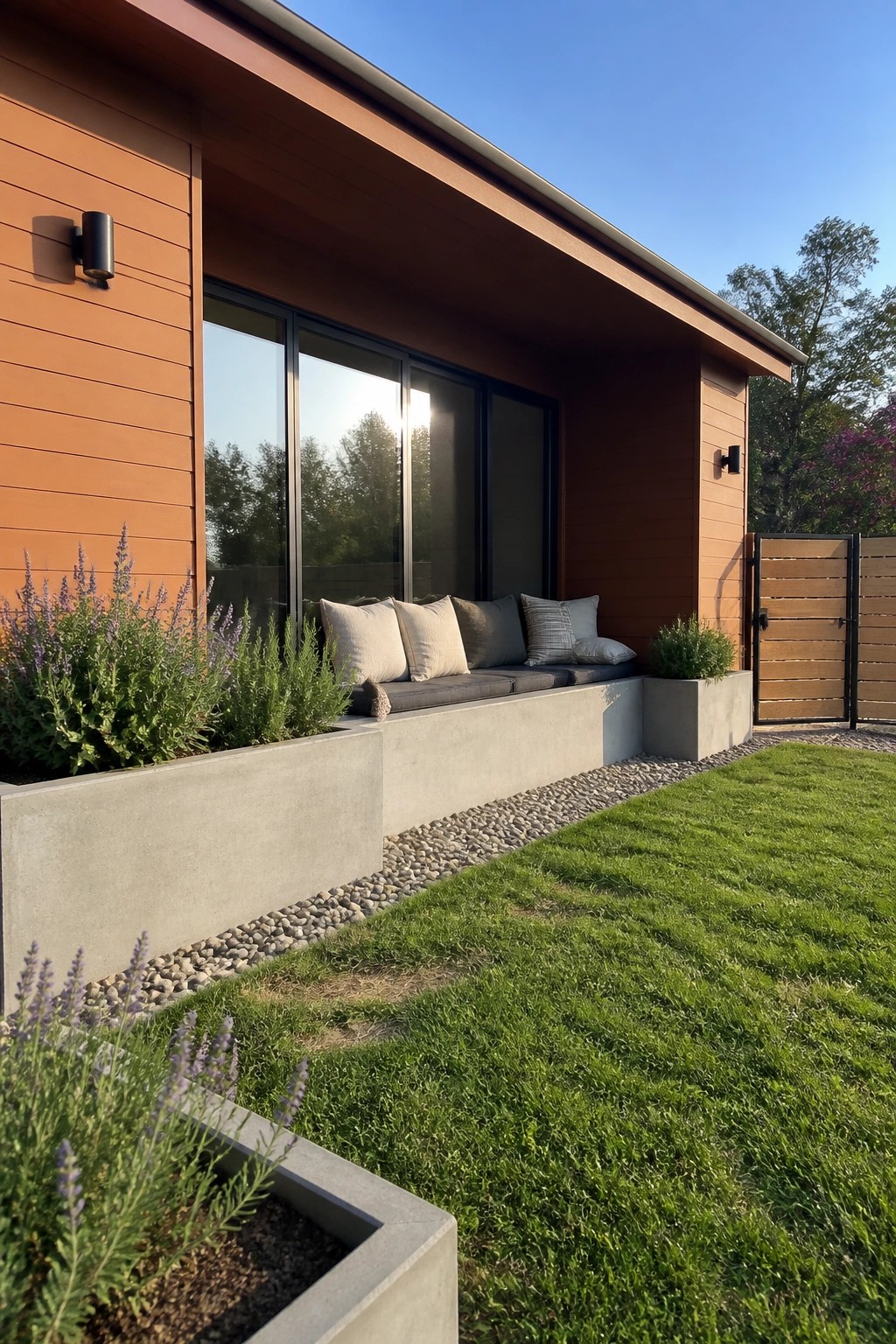
One idea that works well on these low ranch houses is running a concrete bench right along the wall. It keeps everything at the same height as the windows and siding, so the whole front stays flat and wide instead of getting broken up by separate chairs or tables.
This setup works best on houses with simple horizontal siding. Just make sure the bench is wide enough to sit on comfortably and leave room for a few plants at the ends so it does not feel too bare.
Keeping the Facade Low and Horizontal
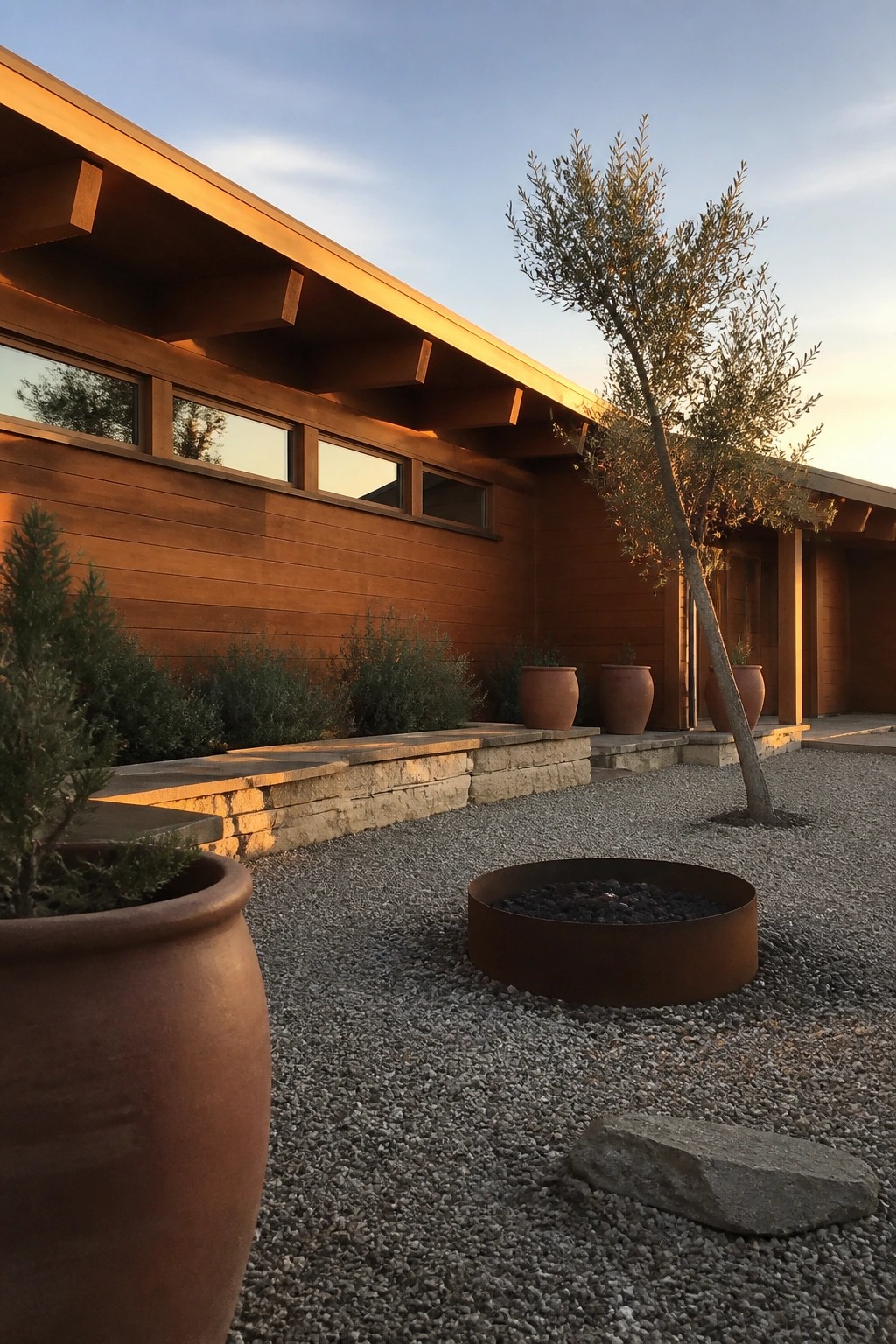
A low horizontal facade gives a ranch house that settled, comfortable look without any extra effort. The long run of windows and siding stays close to the ground, so the whole front feels wider and calmer instead of tall or showy.
This approach works best on single story homes where you want the building to blend with the yard rather than stand apart from it. Use simple horizontal siding and keep the roofline flat so the eye travels across instead of up. It pairs naturally with gravel or low plantings that continue the same steady line.
Warm Orange Siding on Low Ranch Homes
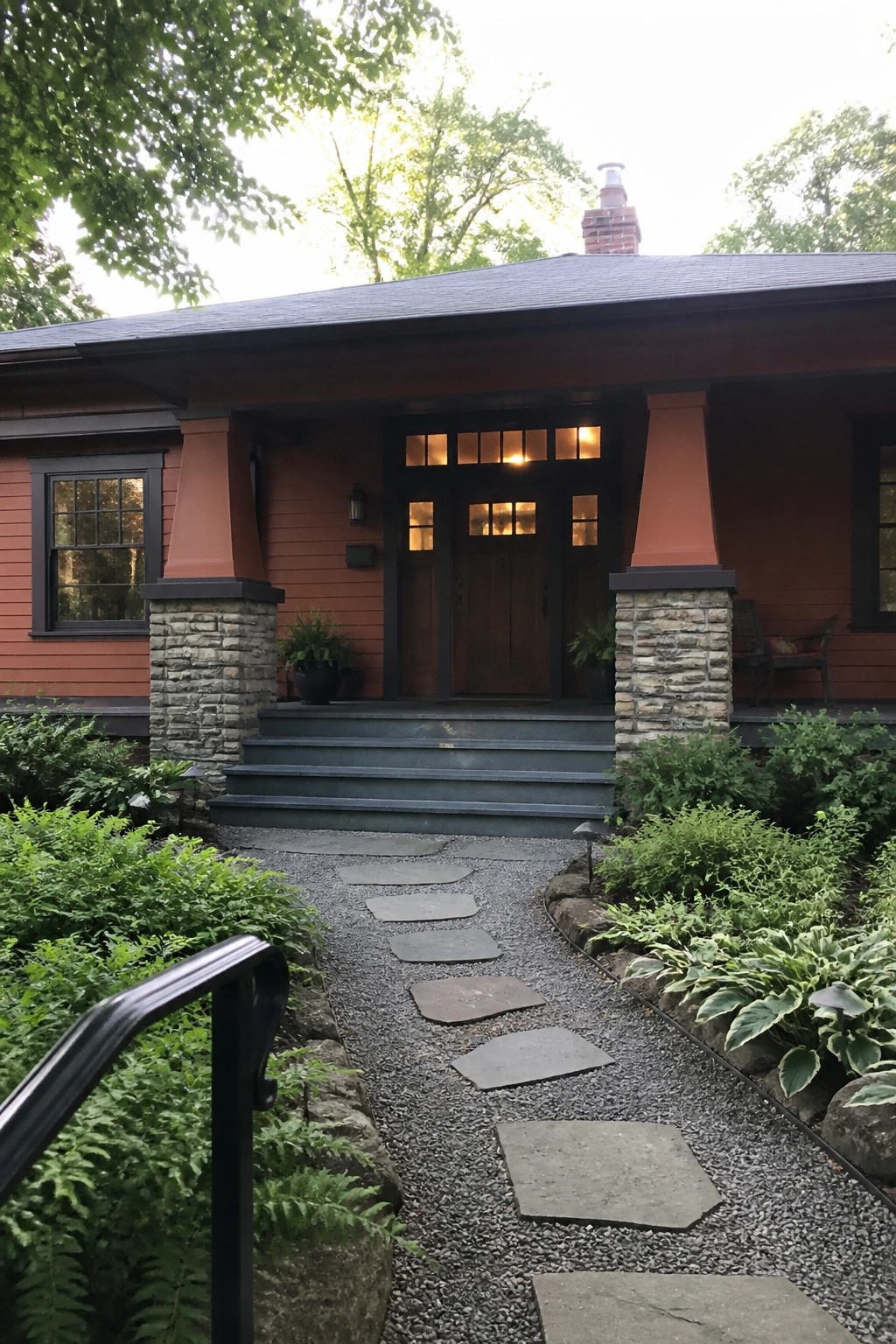
A warm orange shade works well on ranch houses that stay low to the ground. It softens the long horizontal lines and keeps the whole front from feeling flat or plain. Stone bases at the columns add just enough contrast without breaking up the simple shape.
This color choice suits older ranch homes that already have wide eaves and a centered entry. Use it when the house sits among trees, since the tone blends with foliage rather than fighting it. Dark window frames and doors help hold the look together.
Keeping the Facade Low and Horizontal
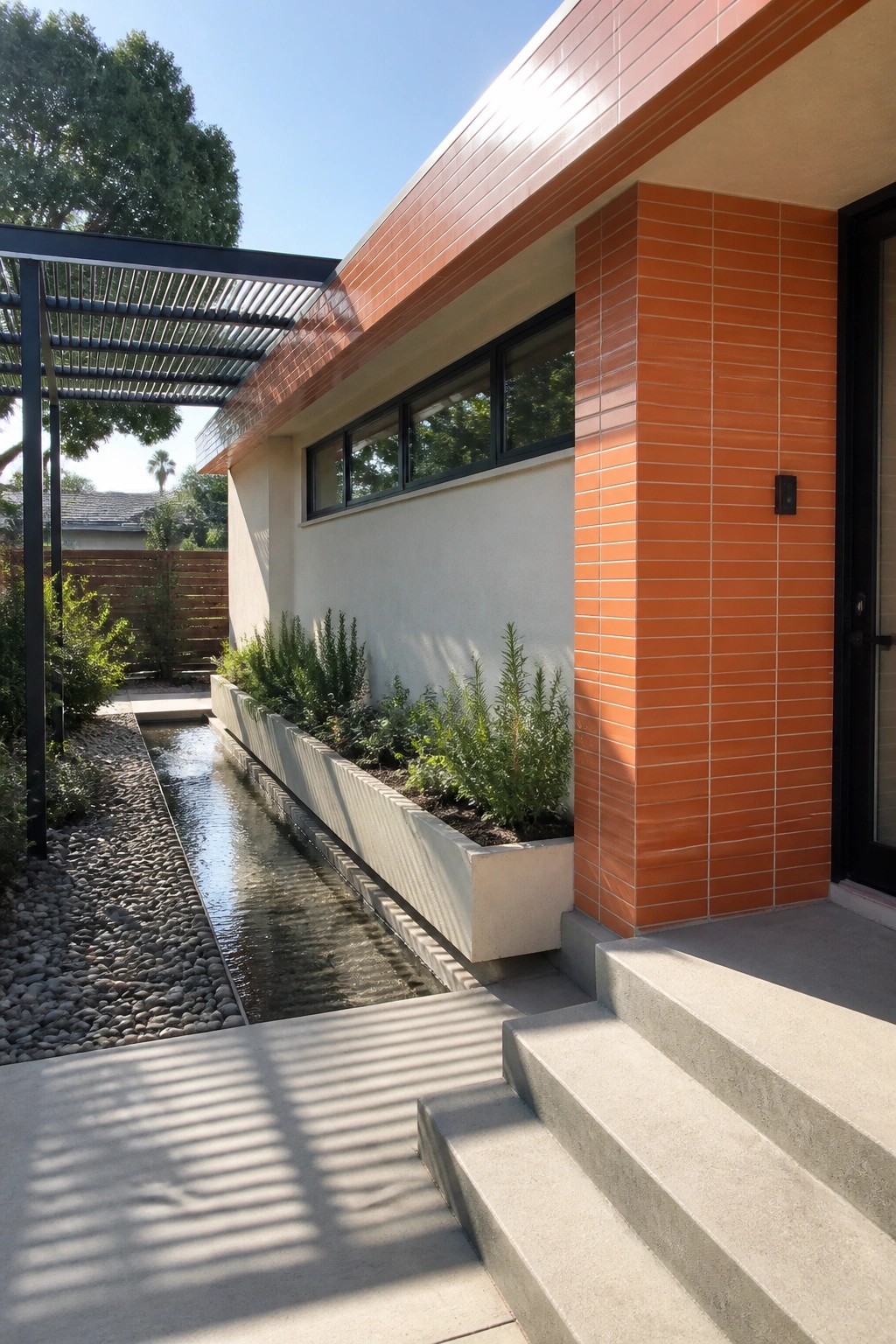
A low horizontal profile is one of the simplest ways to make a ranch house feel settled on its lot. The long concrete planter and narrow water channel that run the length of this side help pull the eye sideways and keep the whole form feeling grounded instead of tall.
This approach works best on single-story homes where you want the architecture to stay modest. Keep the planter height under two feet and let it follow the wall for several yards so the horizontal line stays unbroken.
Horizontal Siding That Keeps the Facade Low
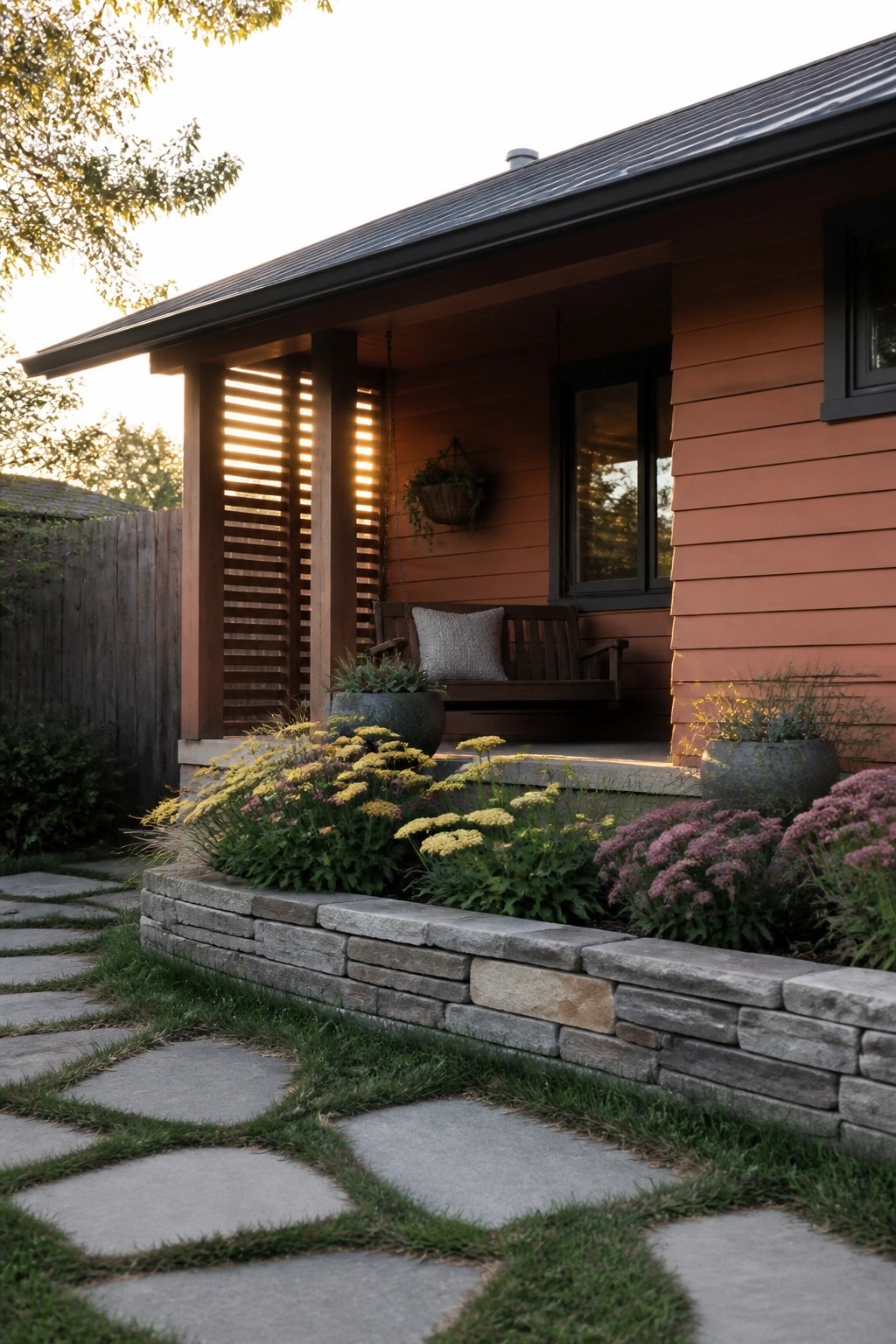
Horizontal siding works well on ranch houses because it stretches the eye across the front and stops the house from feeling tall. The steady lines match the low roof and wide shape, so the whole exterior stays grounded even when the color is warm and noticeable.
This approach suits single-story homes that sit closer to the ground and need simple materials that do not add extra height. It works best when the siding runs the full length of the main wall and the trim stays dark and narrow so the lines stay clean.
Keep Rooflines Low And Horizontal
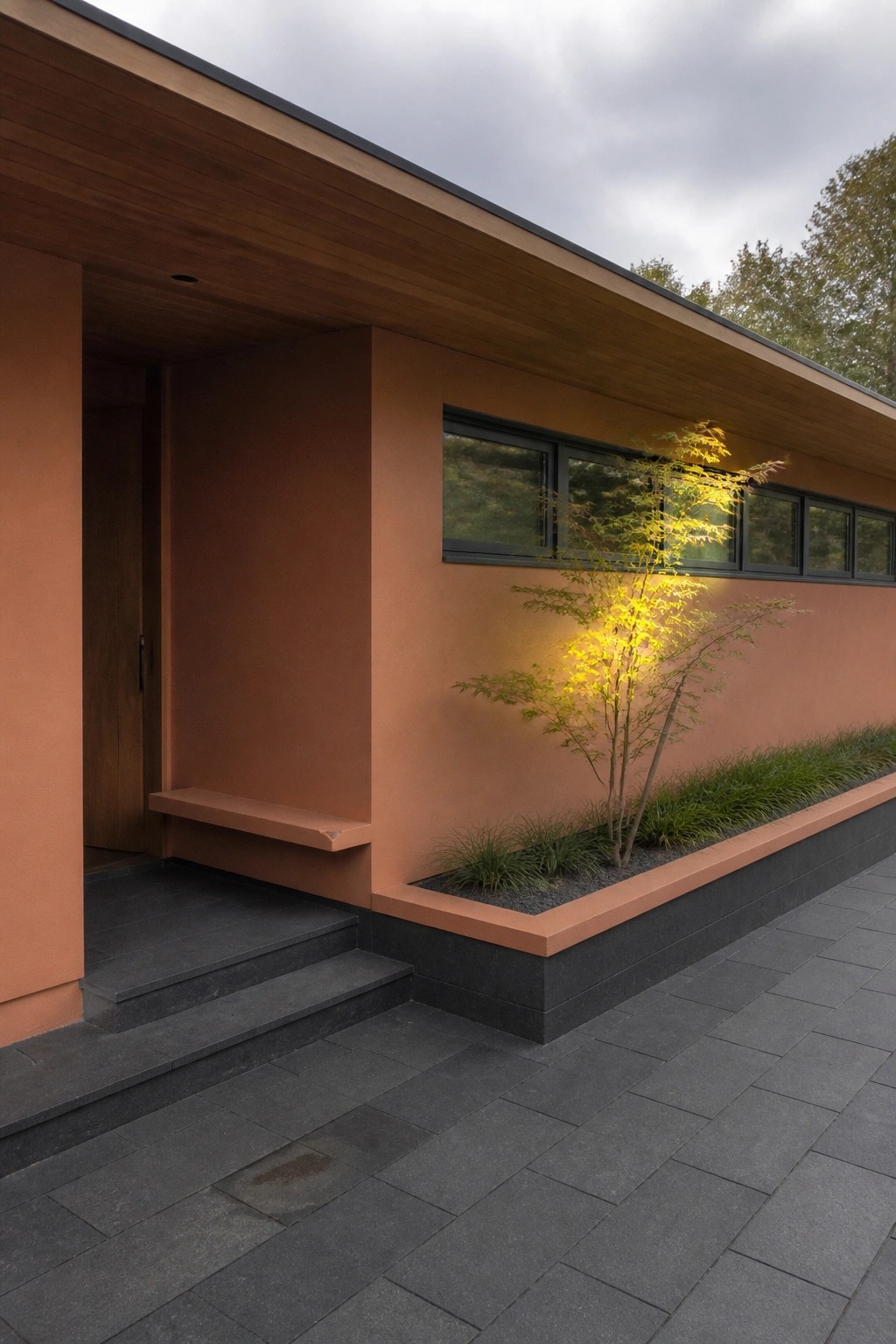
A long, flat roof overhang is one of the simplest ways to give a ranch house that settled, low look. It stretches the facade sideways instead of letting it push upward, which keeps the whole front feeling grounded even when the house sits on a flat lot.
This approach works best on single-story homes where you want the horizontal lines to do the main work. Line up the windows under the overhang so the eye travels across the front without stops, and keep the depth of the roof consistent so the shape stays simple and clean.
Keep the Facade Low and Horizontal
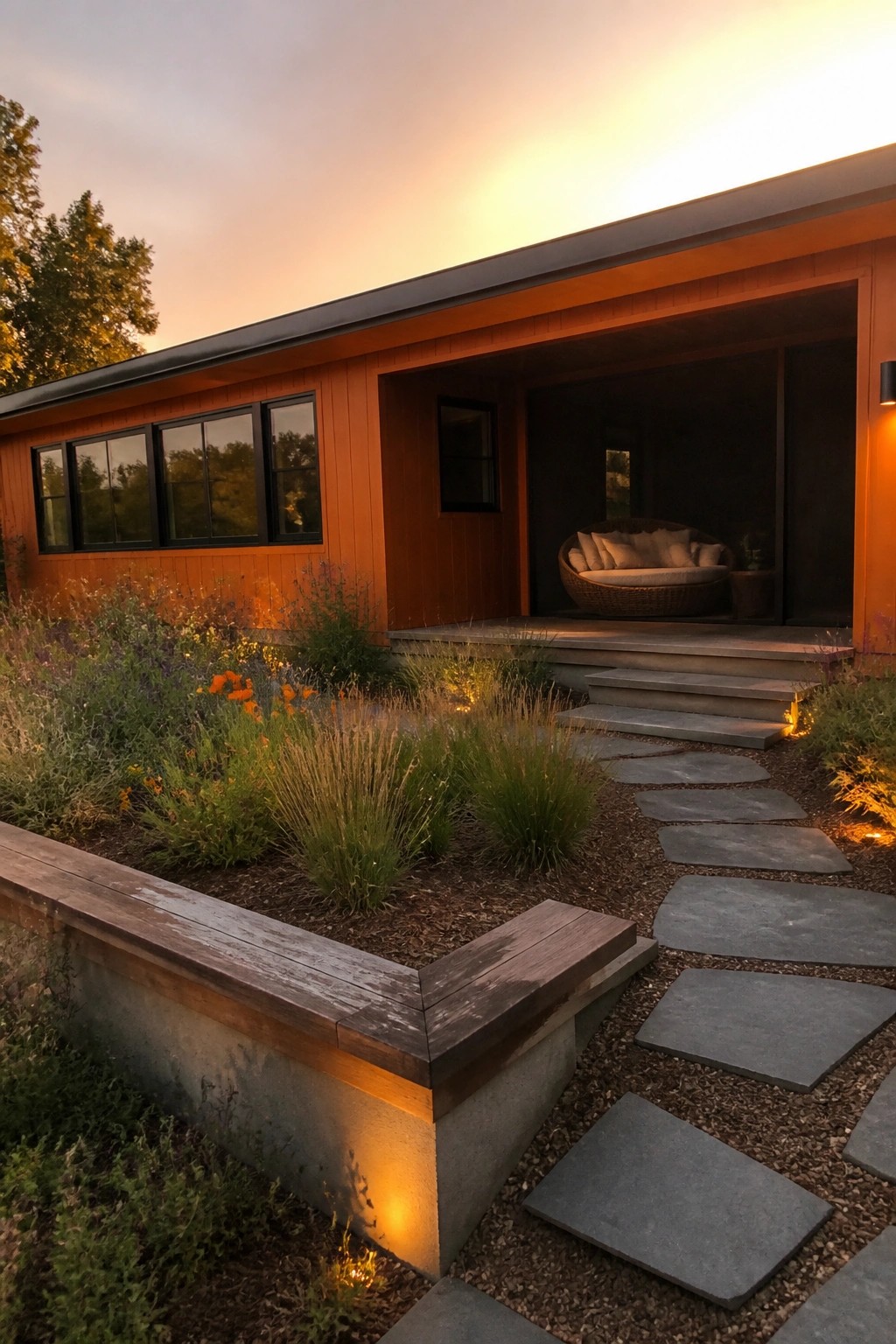
A long, low profile makes a ranch house feel grounded and easy to live with. The orange siding runs straight across without much break, and the roof stays flat enough to keep the whole front from towering up. That simple shape lets the house blend into the yard instead of fighting it.
This approach works best on single story homes where you want the exterior to feel calm rather than busy. Use one main material across the length, line up the windows in a steady row, and let the landscaping meet the base without tall barriers. It suits older neighborhoods or lots with gentle slopes where a taller house would look out of place.
Frequently Asked Questions
Q: How do I choose an orange paint that still feels cozy on a low ranch facade?
A: Start by testing warm terracotta or clay tones in the late afternoon light. Those shades sit softer against the horizontal lines and avoid a harsh pop. Walk the samples around the whole front before committing.
Q: Can I add a front porch without ruining the low horizontal feel?
A: Keep the roofline flat and extend it just a few feet with matching siding. Skip tall columns and use simple posts instead. This keeps the eye moving sideways along the house.
Q: What ground cover helps the orange exterior look grounded?
A: Low shrubs like lavender or rosemary planted in a long row pull the eye along the base. They add texture without growing tall enough to break the clean horizontal shape. Water them deeply but infrequently so they stay neat.
