

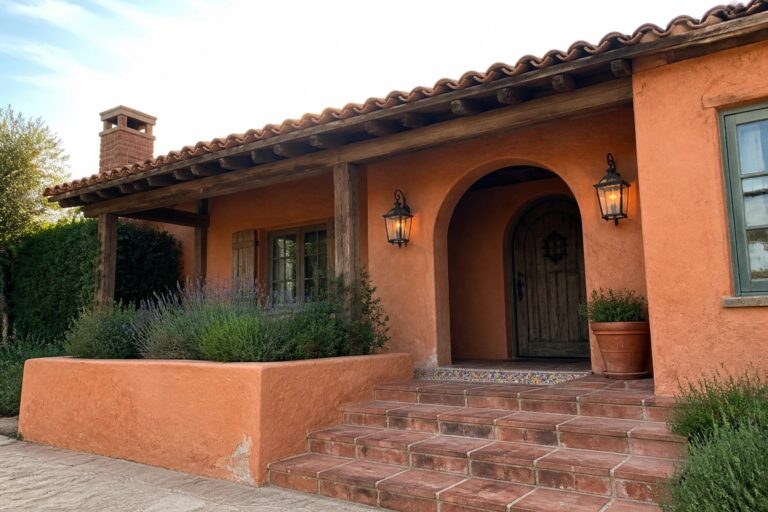
I have always noticed how the color of stucco can shift the entire mood of a house when it meets a terracotta roof.
The orange tones seem to warm up the facade in ways that white or beige never quite manage, especially under different lights throughout the day.
One thing I keep coming back to is how the roofline needs to balance with the stucco texture so the whole exterior feels grounded rather than top-heavy.
In practice, small choices like the overhang depth or the way the stucco is finished can make a bigger difference than people expect when standing on the street.
I would test the pairings first on a small section.
Terracotta Roofs Over Orange Stucco
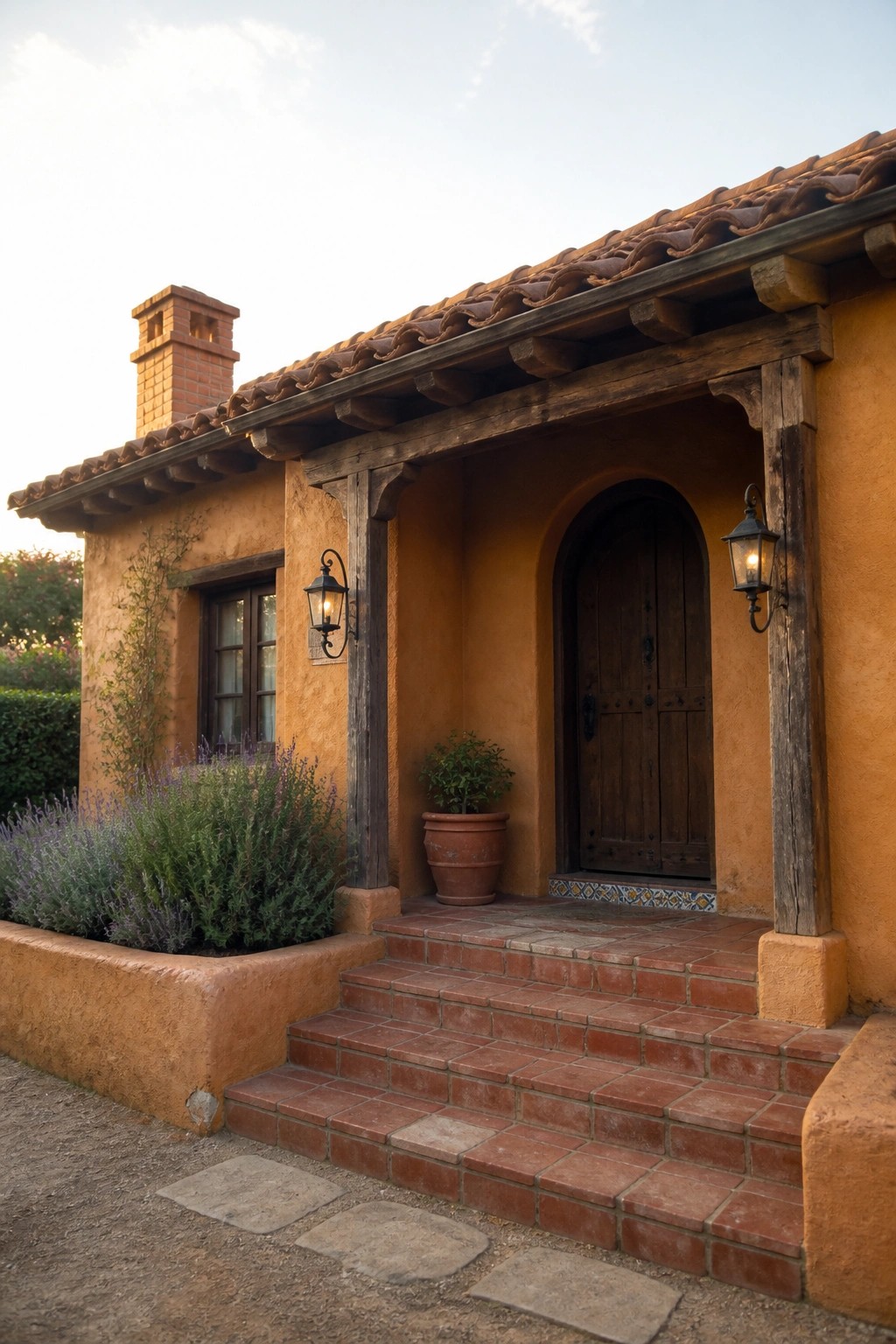
Terracotta roof tiles work well with orange stucco because they add texture and an earthy tone that keeps the walls from looking too bright. The roof overhang and heavy wood beams also help ground the color so the house feels solid rather than stark.
This approach suits homes in dry or mild climates where the roof gets plenty of sun. Keep the wood details simple and let the tiles carry most of the character.
Pergolas That Turn Courtyards Into Usable Spaces
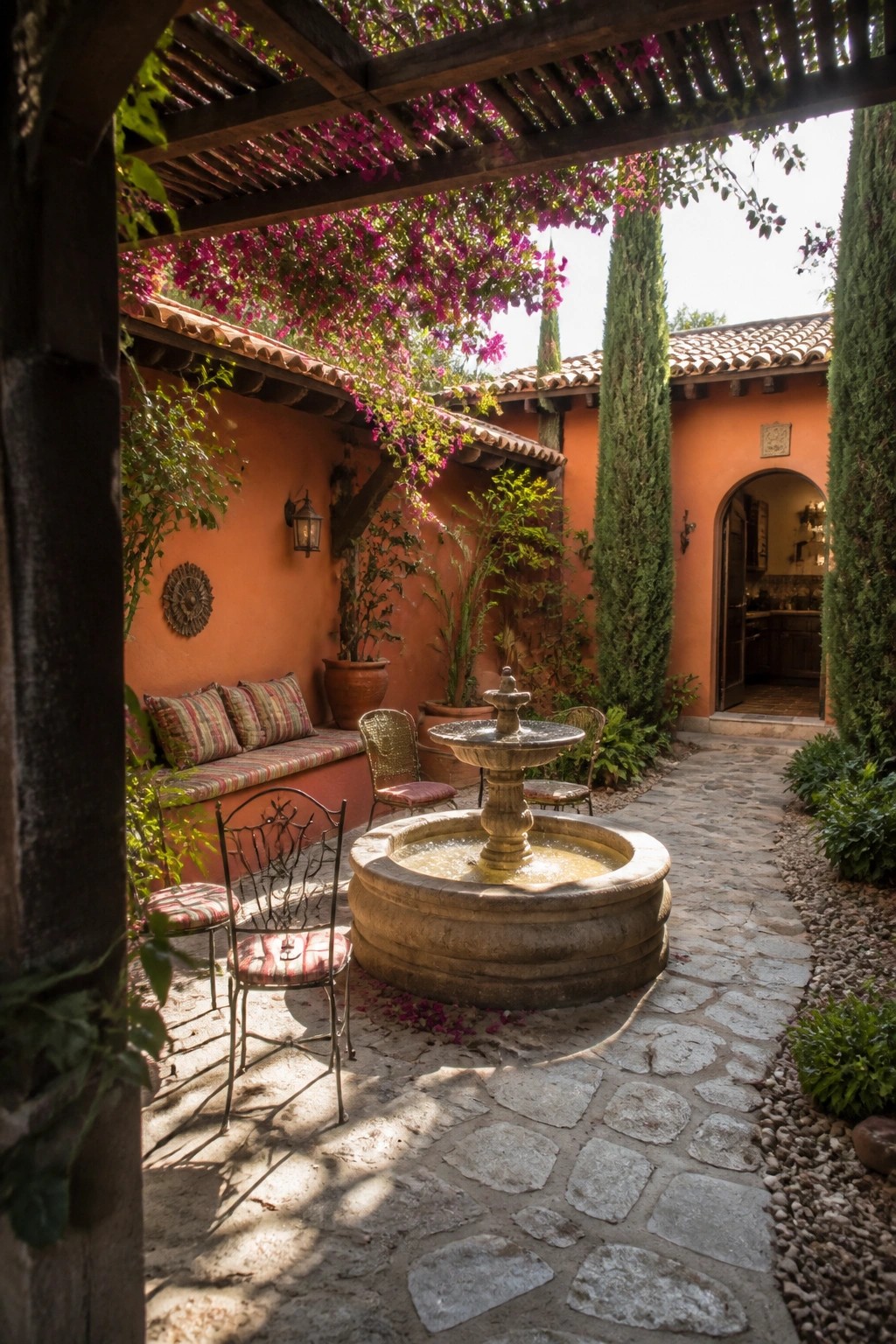
A pergola overhead makes a big difference in how often you actually use a courtyard. It cuts the direct sun, gives the space a bit of definition, and lets you add climbing plants without much fuss. In this setup the wood beams tie right into the terracotta roof and keep the whole area from feeling too open or hot during the day.
This works best on homes with stucco walls and tile roofs where you want the outdoor space to feel connected to the house. Keep the structure simple, let vines cover most of it, and place seating underneath so people naturally gather there. Just make sure the posts are set back enough to leave walking room around any central feature like a fountain.
Stucco Color That Matches The Roof
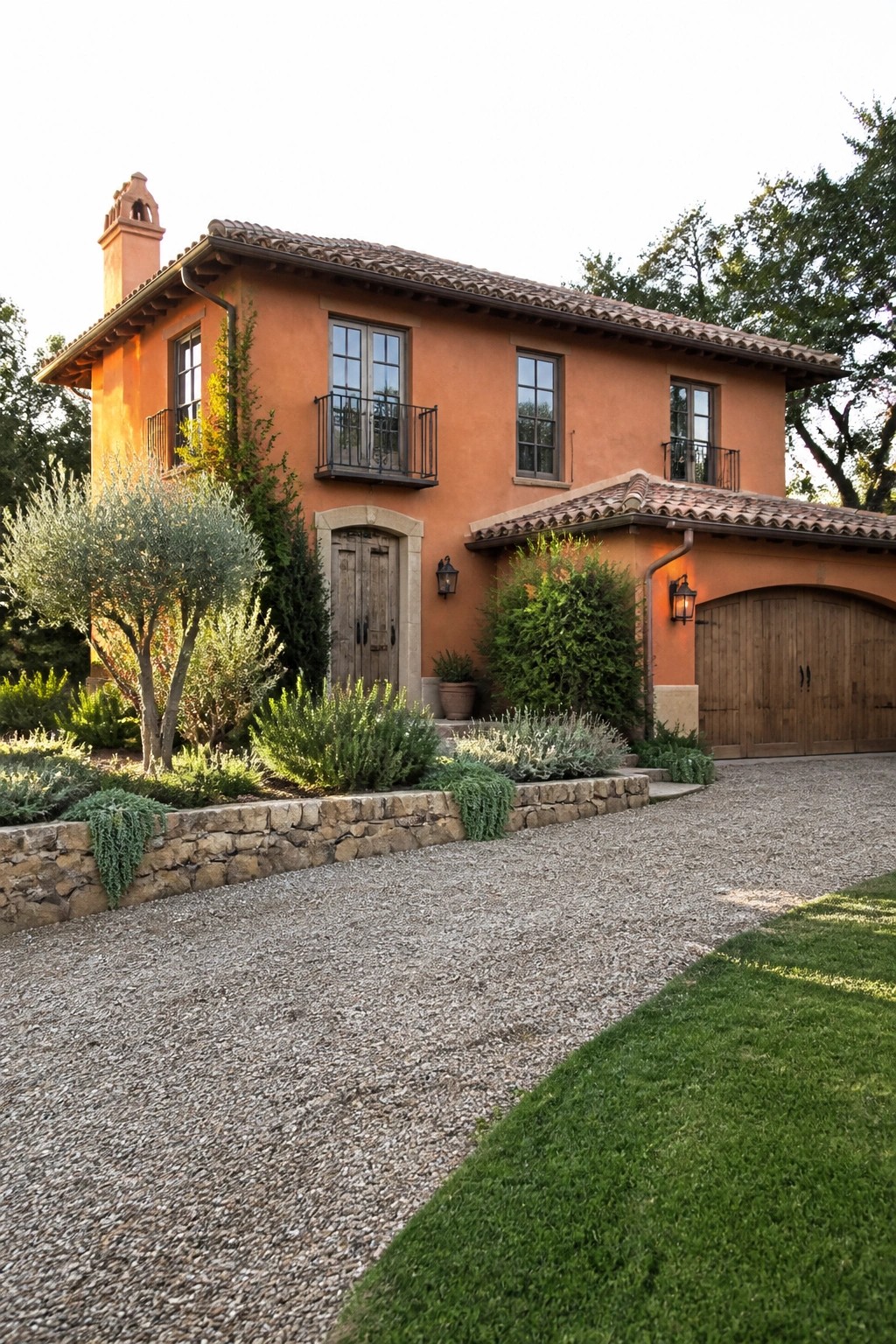
Orange stucco works well when it stays close in tone to the terracotta tiles on the roof. The two materials then feel like they belong together instead of competing for attention.
This choice suits homes with simple rooflines and few extra details. Keep the stucco slightly textured so the tiles do not stand out too sharply against a flat wall.
Terracotta Roofs With Orange Stucco
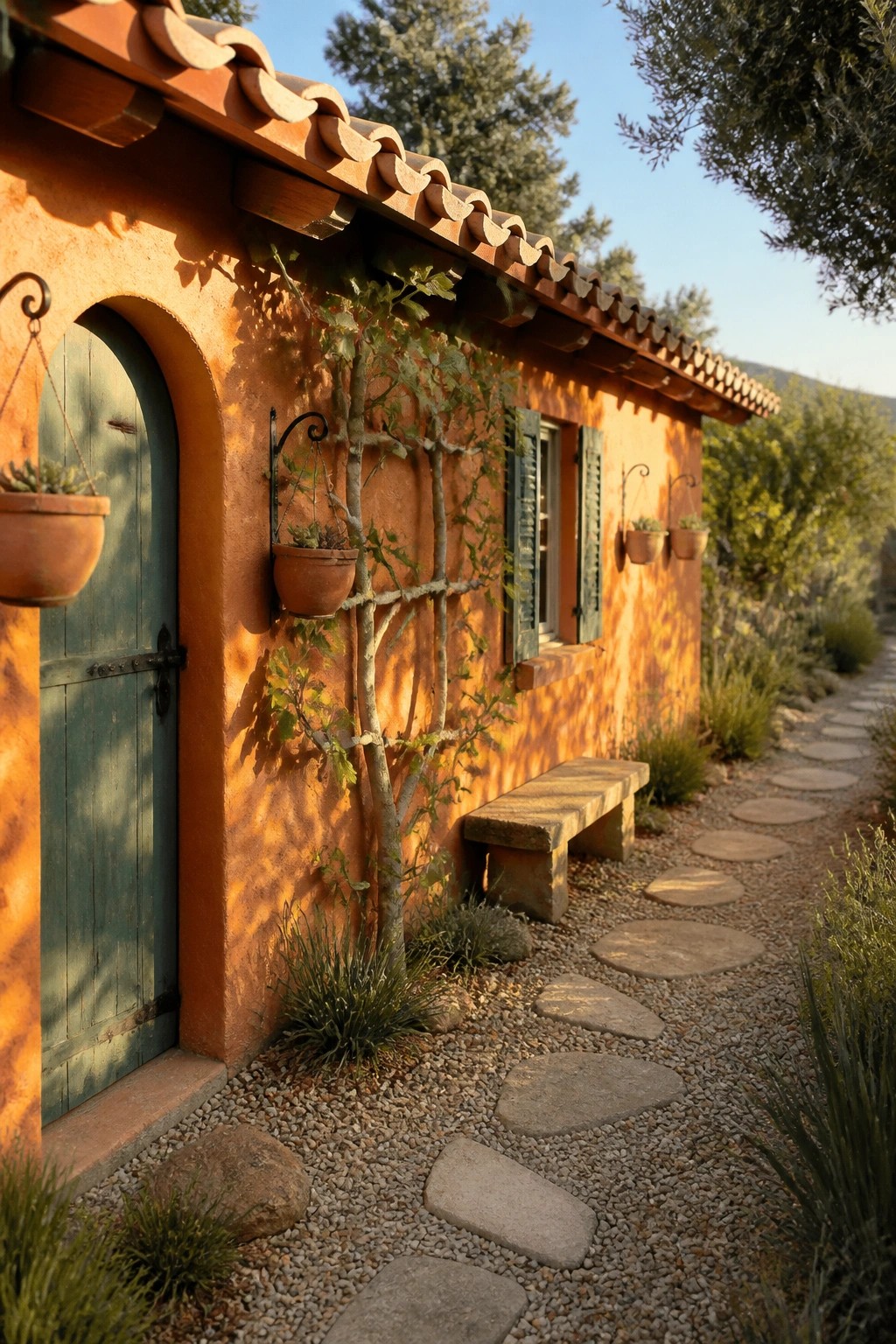
Terracotta roof tiles sit well with orange stucco because the colors share the same warm base. The roof overhang adds a bit of shadow that keeps the wall from looking too flat in bright sun.
This pairing suits smaller homes or side additions where you want the roof to do most of the work. Stick with a simple roofline and let the stucco stay slightly rough so the two materials play off each other without extra trim.
Wooden Furniture for the Patio
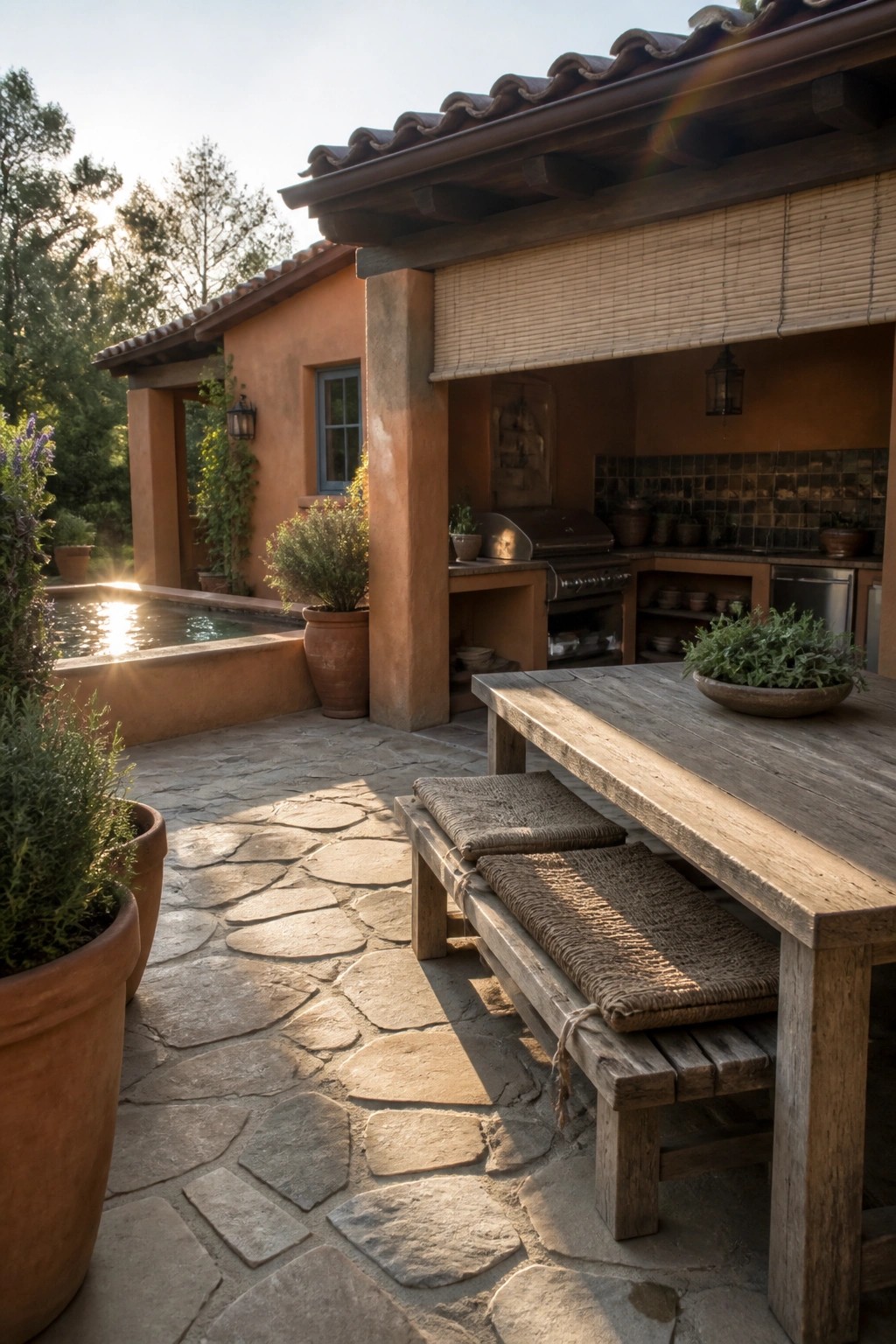
A long wooden table with matching benches gives the patio a straightforward place to eat and gather. The material holds up outside and matches the stone paving and stucco walls without extra fuss.
This works best on homes with terracotta roofs where the outdoor space sits right off the main living area. Keep cushions simple and replaceable so the setup stays practical through the seasons.
Terracotta Roofs Over Orange Stucco
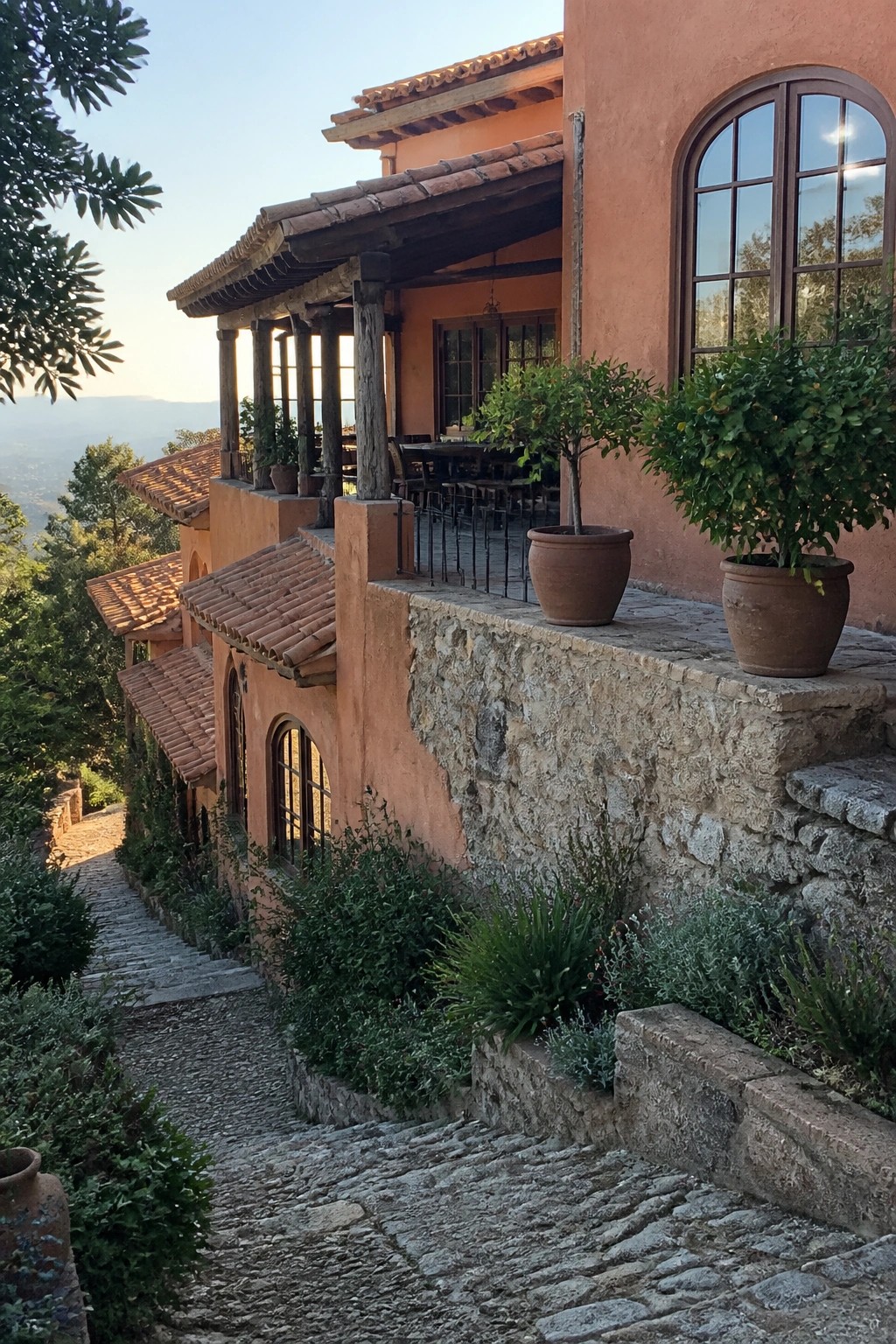
Orange stucco and terracotta tile roofs work well together because the colors sit close on the warm side of the spectrum. The roof feels like a natural extension of the walls instead of an added layer. On a hillside house the tiles also help the roofline step down with the slope without looking busy.
This approach suits homes that already have some stone or aged wood details. Keep the stucco finish slightly textured so the tiles do not look too crisp against it. Avoid bright white trim if you want the same quiet, settled look shown here.
Terracotta Roof Tiles With Orange Stucco
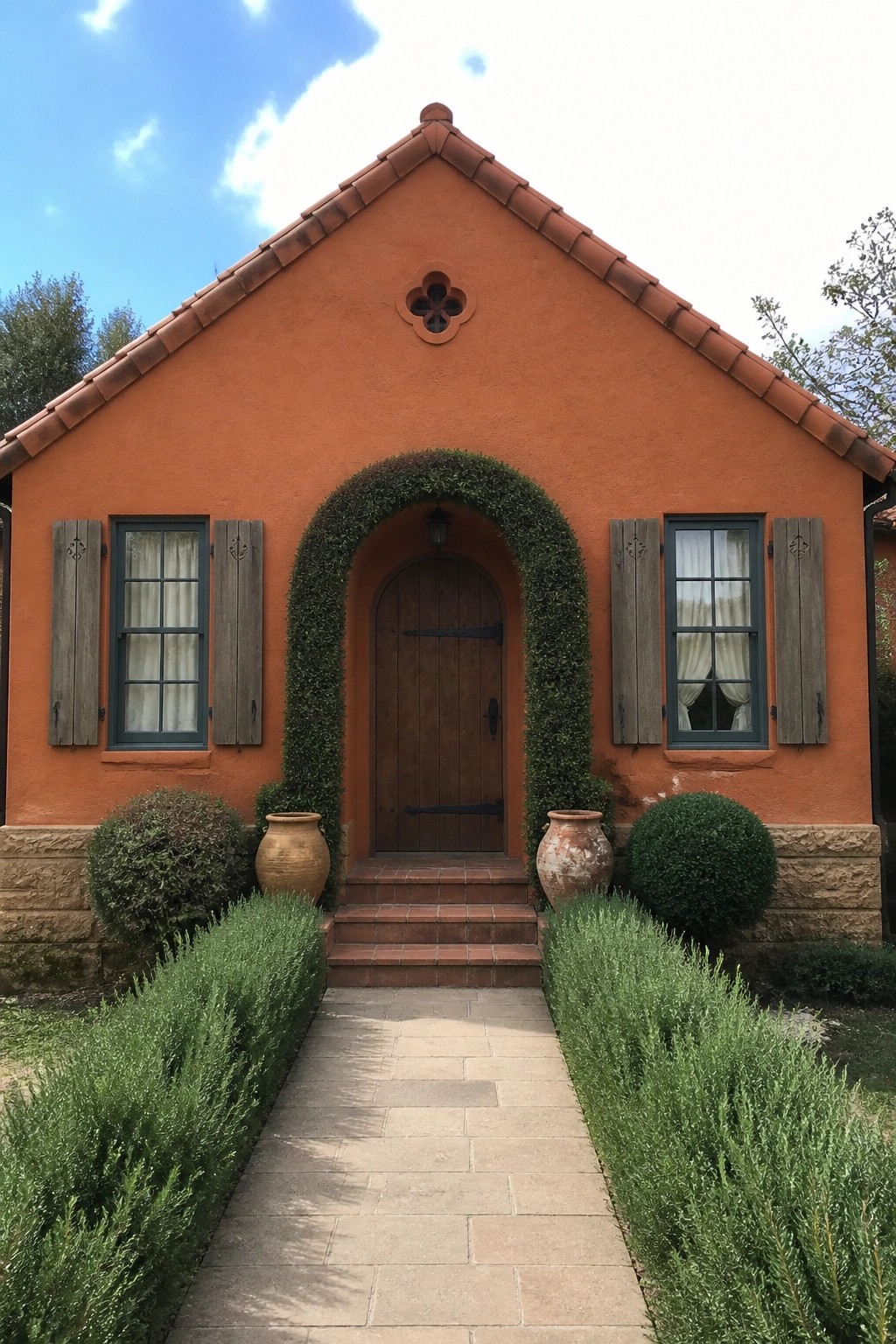
Terracotta roof tiles pair well with orange stucco because the colors share the same warm base. The roof feels like a natural extension of the walls rather than an add-on.
This approach suits smaller homes or cottages where the roofline can stand out. Keep windows and trim simple so the two materials stay the focus.
Terracotta Pots For Courtyard Planting
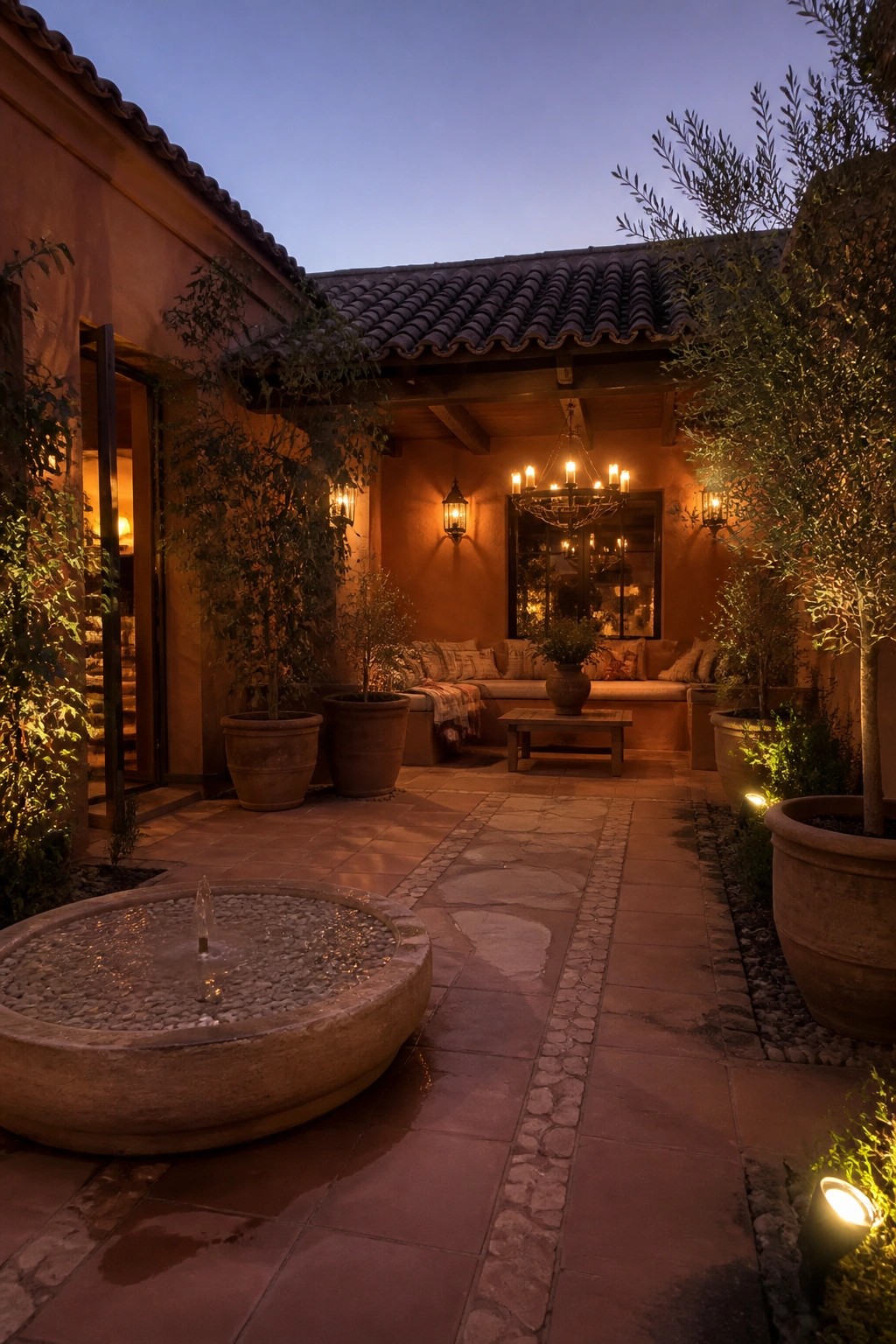
Large terracotta pots work well in a space like this because they let you add real height and greenery without digging up the paving. The warm clay color also matches the roof tiles and stucco walls, so everything feels connected instead of scattered.
Place the biggest pots at the corners and along the edges first, then fill in with smaller ones where you need more coverage. This setup suits homes with terracotta roofs and stucco walls, and it stays practical since you can move the pots if the layout needs to change later.
Add a Fireplace to Your Outdoor Patio
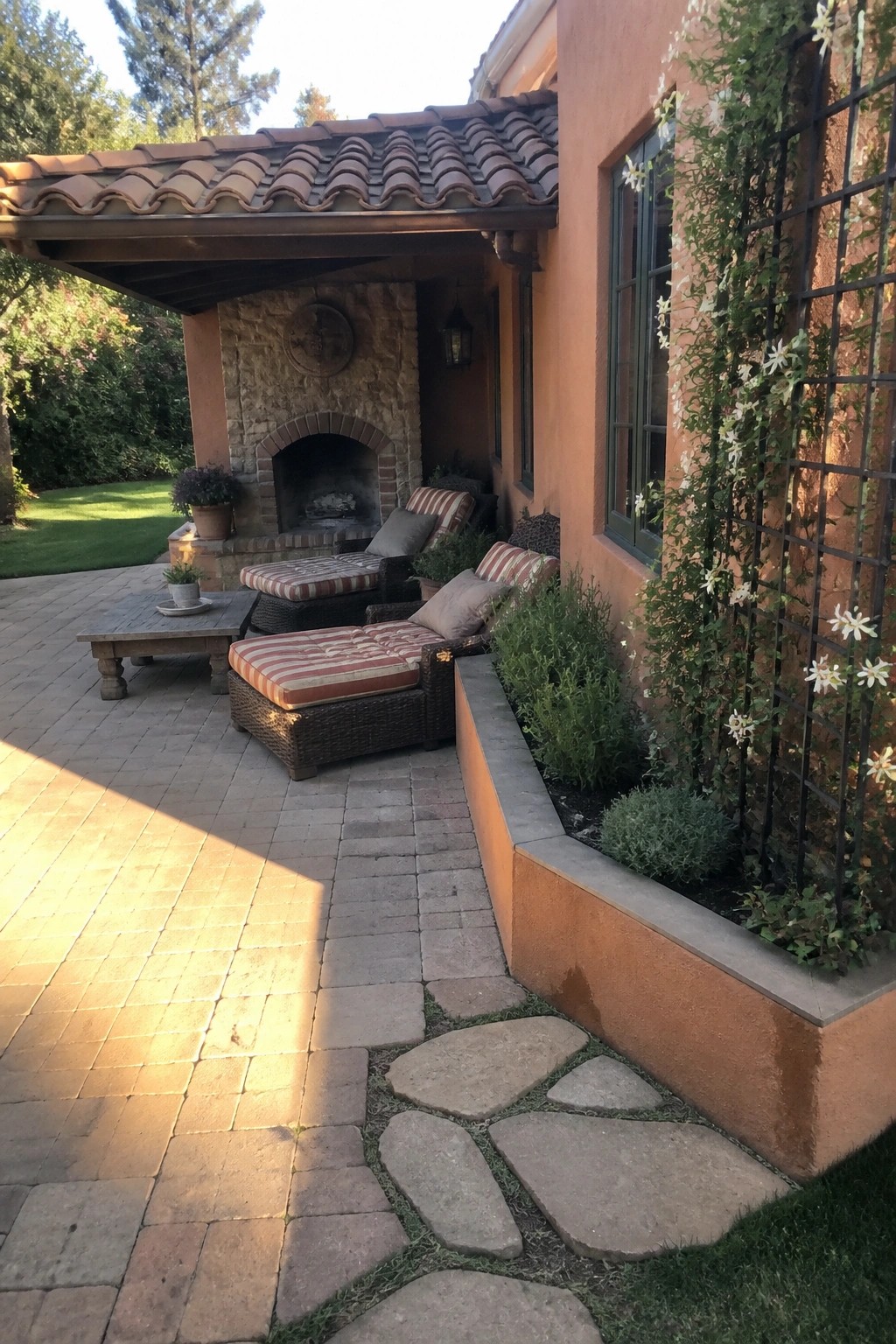
A fireplace makes a patio feel like an actual room instead of just a place to sit outside. It gives you a focal point for seating and lets you use the space even when the evenings get cooler. The covered roof overhead helps contain the warmth and keeps the area usable longer into the day.
This setup works especially well on homes with stucco walls and tile roofs because the materials already feel connected. Keep the seating simple and low so the fireplace stays the main feature. Make sure you leave enough open space around it for people to move around the chairs without crowding the fire.
Pairing Orange Stucco With Terracotta Roofs
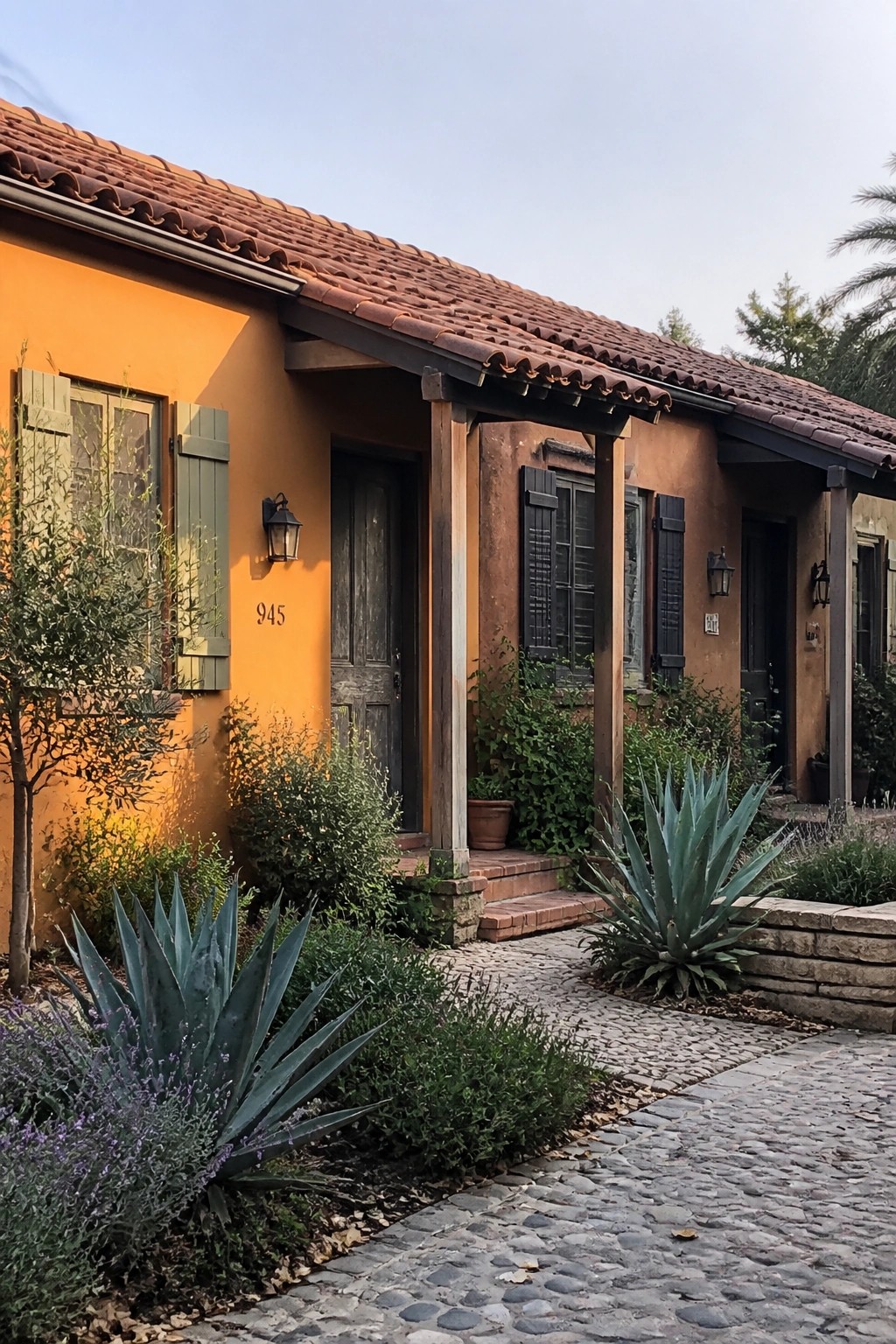
Orange stucco pairs naturally with terracotta roof tiles because the two materials share the same warm, earthy range. The result feels consistent and grounded without extra color accents or trim work.
This combination works best on single-story homes in dry or sunny areas where the roof becomes a major visual element. Test samples on the actual wall during different times of day since the stucco color can shift once it is applied at full scale.
Covered Patios Right By The Pool
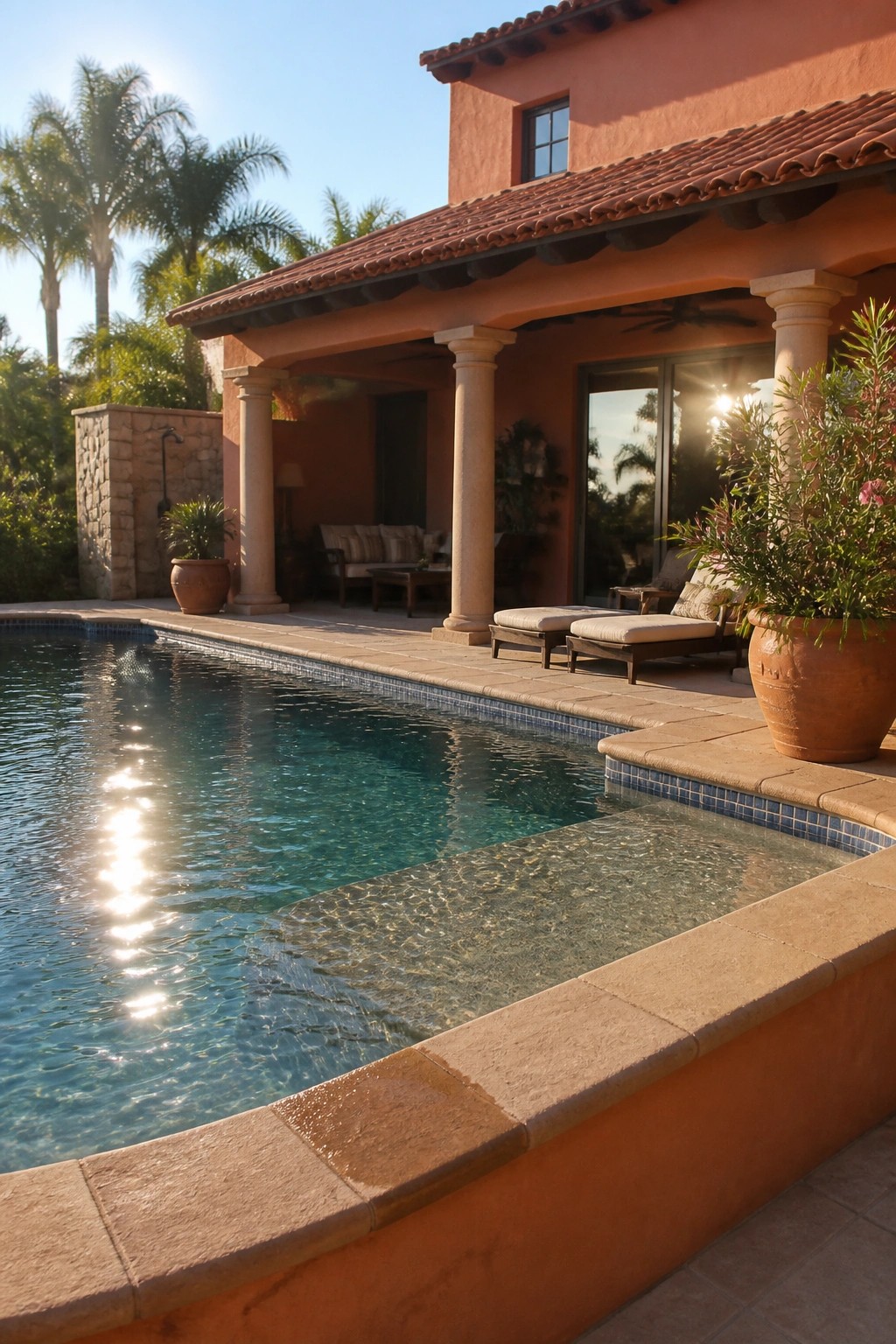
Placing a covered patio right next to the pool makes the whole outdoor area feel more usable. The roof gives shade during the day and keeps the seating zone defined without closing it off from the water.
This works best on homes in sunny climates where people want to move easily between swimming and sitting. Use matching roof tiles and simple columns so the patio feels like a natural extension of the house rather than an add-on.
A Bench by the Front Door
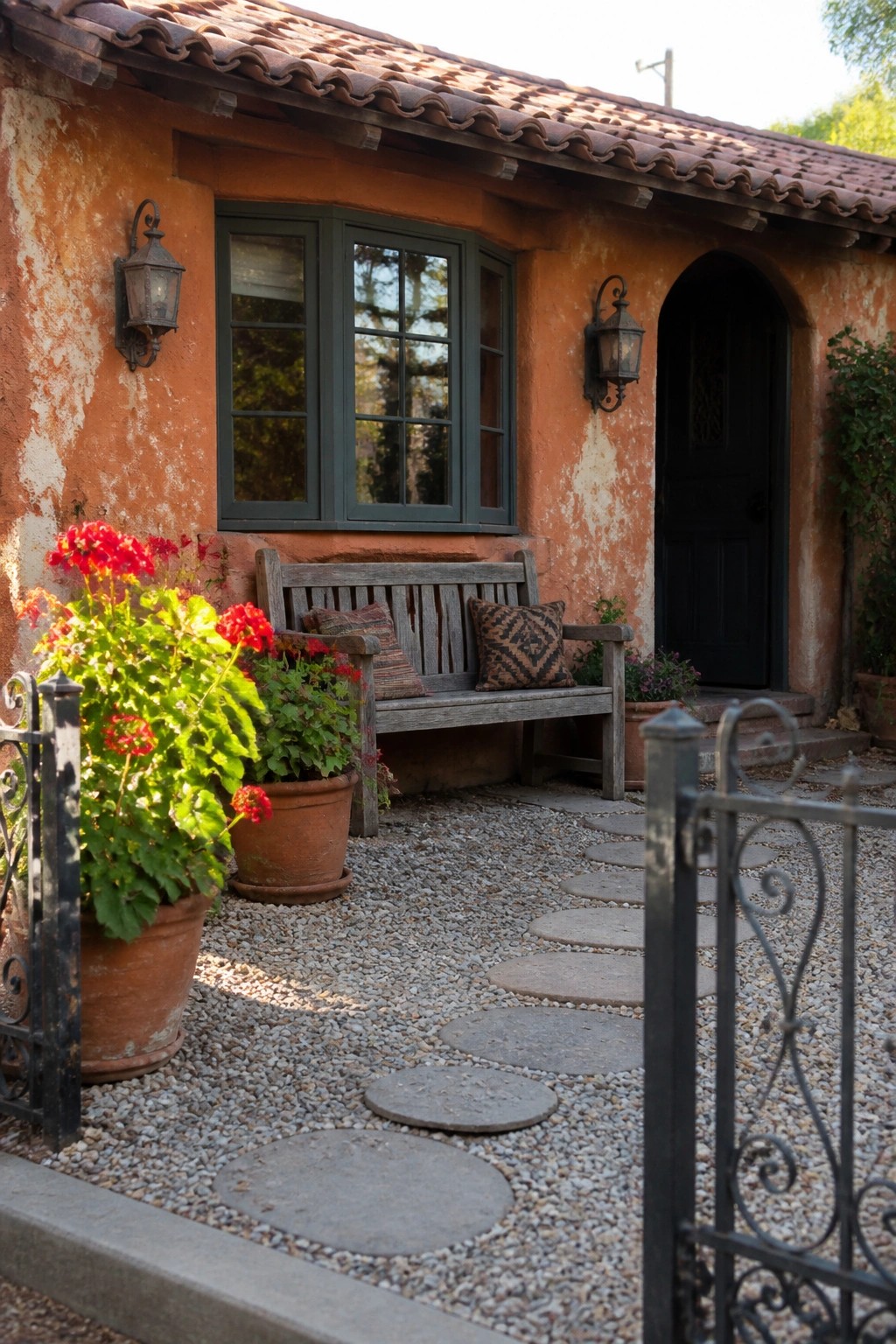
A bench placed right by the entry can turn a plain wall into something more useful and welcoming. On homes with textured stucco and a terracotta roof, the wood adds a simple contrast that feels natural rather than planned.
This setup works best when the bench fits under or beside a window near the door, with a couple of pots nearby. It suits older or smaller houses where you want the entry to feel lived-in without adding much structure.
Orange Stucco With Terracotta Roofing
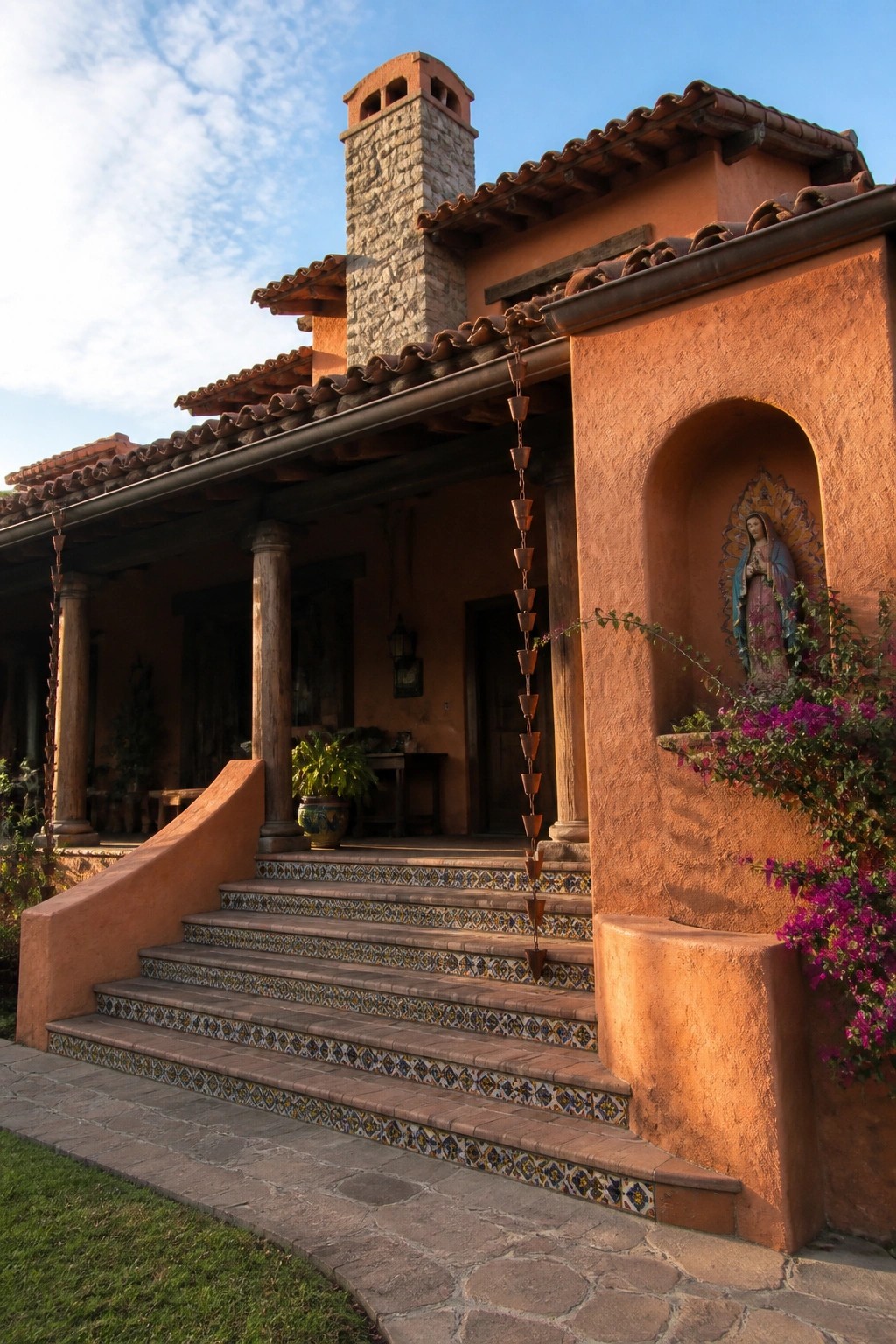
Orange stucco takes on a warmer look when it sits under a terracotta tile roof. The two materials share similar earth tones, so the whole front feels pulled together without extra trim or paint.
This works best on homes that already lean toward simple shapes and thick walls. Keep the stucco texture slightly rough and let the roof tiles show their natural color variation. The steps in the photo carry the same tile family down to ground level, which helps the roof feel like it belongs to the whole house rather than just the top.
Terracotta Roofs With Warm Stucco
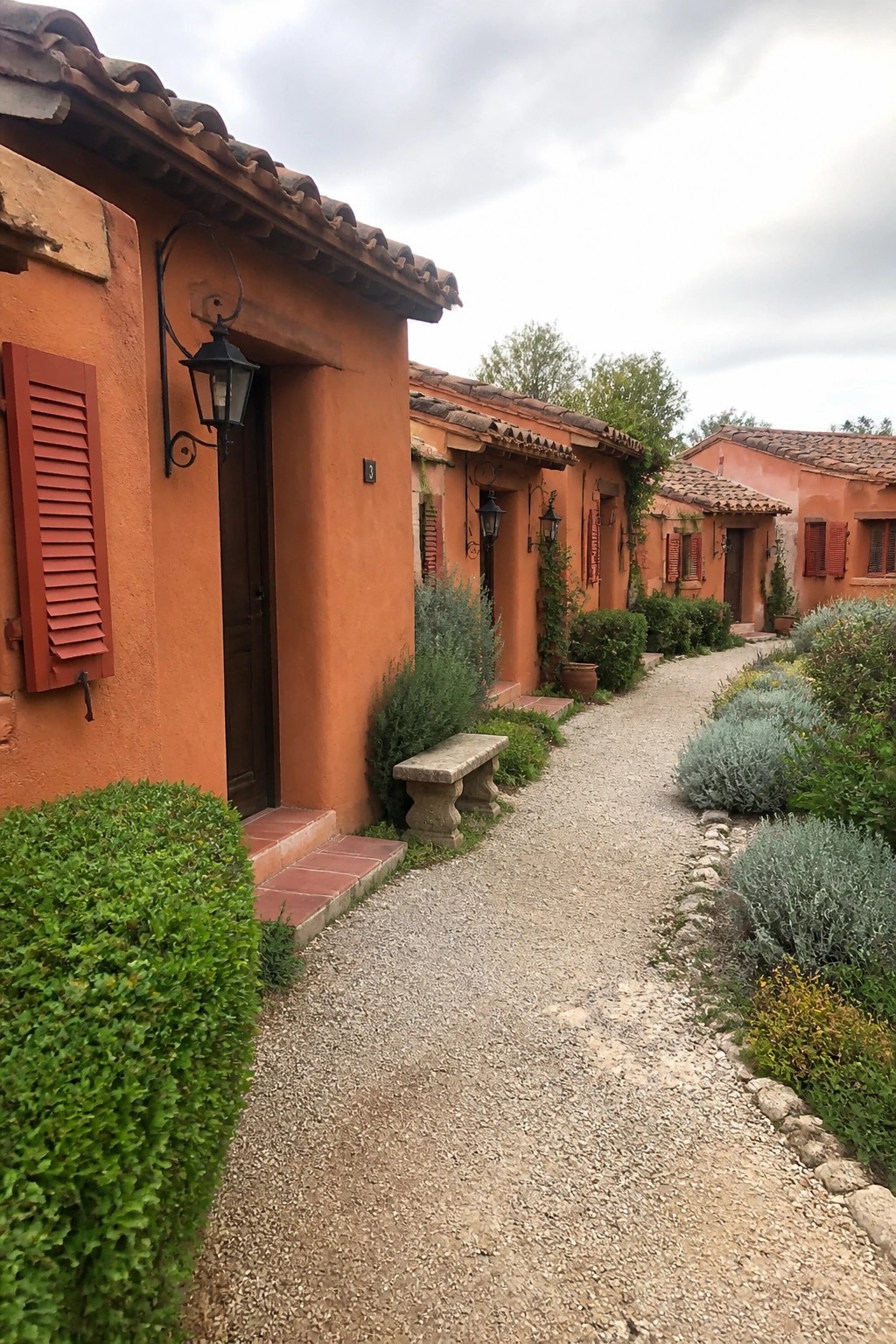
Terracotta roofs work especially well when the walls below stay in the same warm range. The orange stucco here picks up the roof color without matching it exactly, which keeps the buildings feeling connected but not flat.
This approach suits older homes or new builds meant to look settled. Keep the stucco slightly lighter or more muted than the roof so the tiles still stand out, and let the roofline run long enough to cover several small structures if the lot allows it.
Orange Stucco With Terracotta Roofs
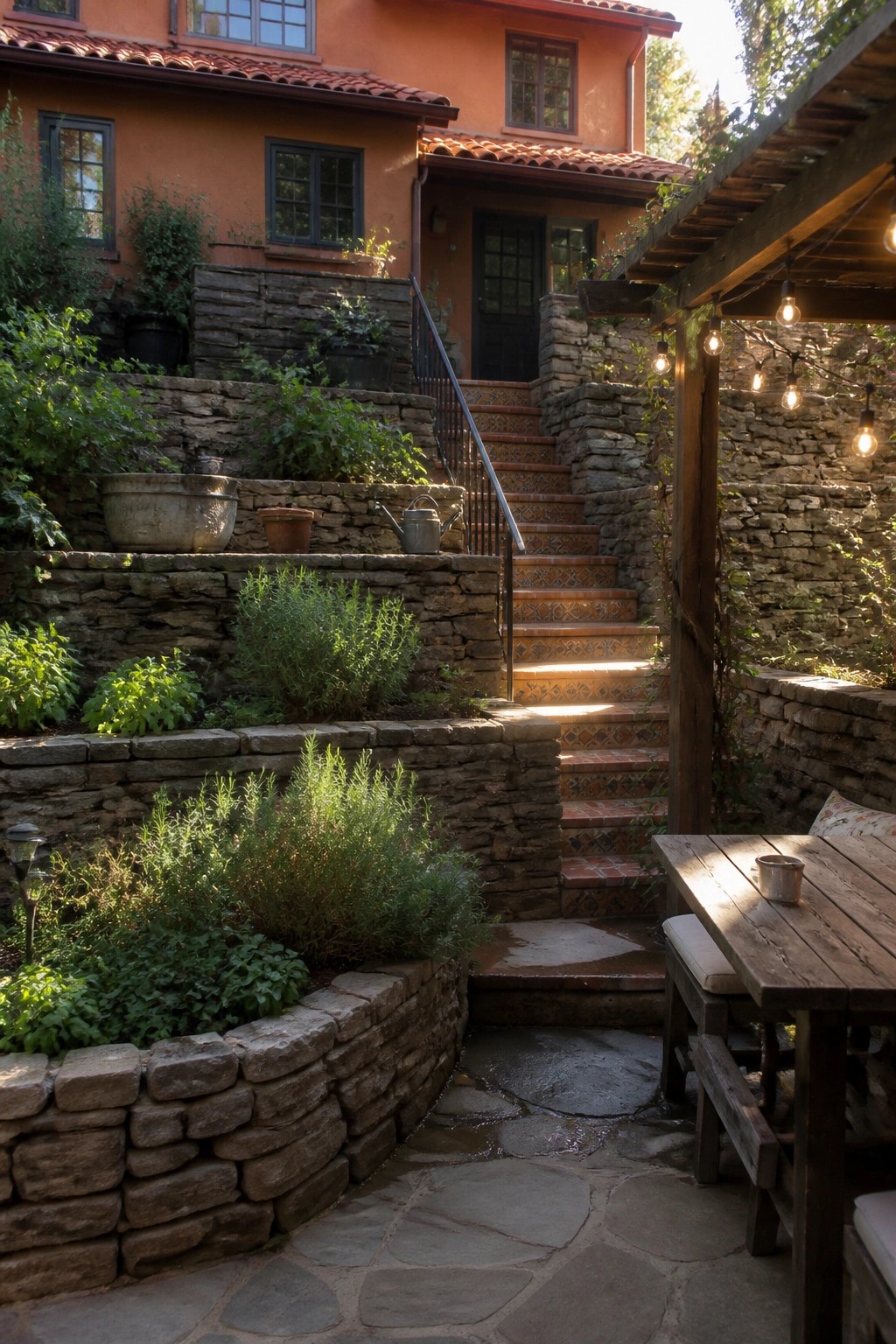
Orange stucco works especially well when the roof is terracotta tile. The two materials share a similar warmth, so the whole exterior feels connected instead of pieced together. Stone retaining walls and steps help ground the color and keep it from looking too flat against the hillside.
This approach suits homes with changes in level or terraced lots. Keep the stucco a true orange rather than a pale peach, and let the roof tiles carry most of the pattern. Too many competing accent colors on the trim or doors can weaken the simple pairing.
Small Balconies On Stucco Walls
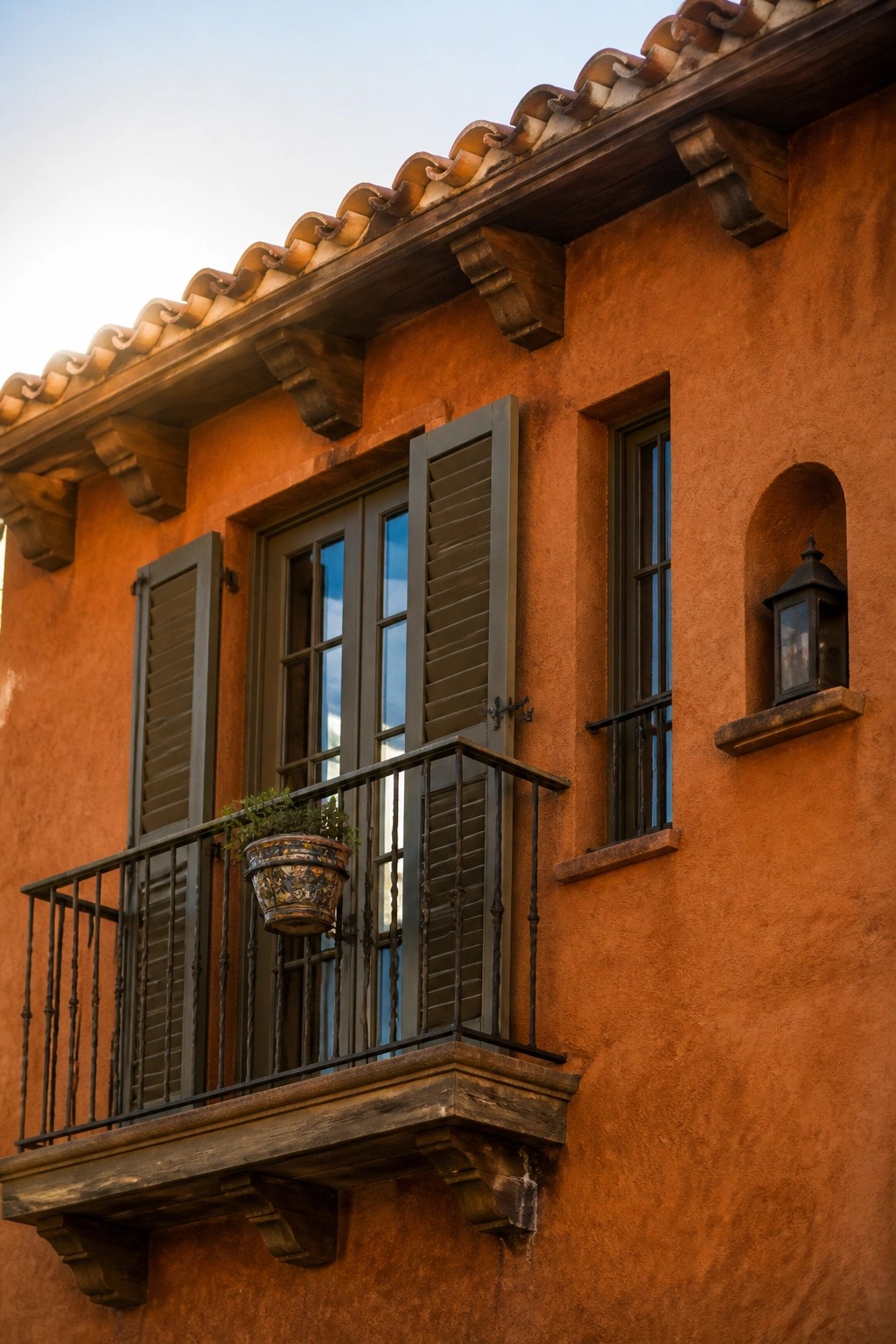
A small balcony can give an orange stucco house more presence without adding a lot of bulk. The iron railing and wooden base create a clear break in the flat wall while still keeping the overall look simple and rustic. It also gives the windows a bit more purpose and makes the upper floor feel more connected to the outside.
This works best on homes where the roof already has a strong overhang and the stucco is a warm, earthy tone. Keep the railing fairly open so it does not block too much light, and use the space for just a plant or two rather than trying to turn it into a full seating area.
Adding a Simple Bench to the Porch
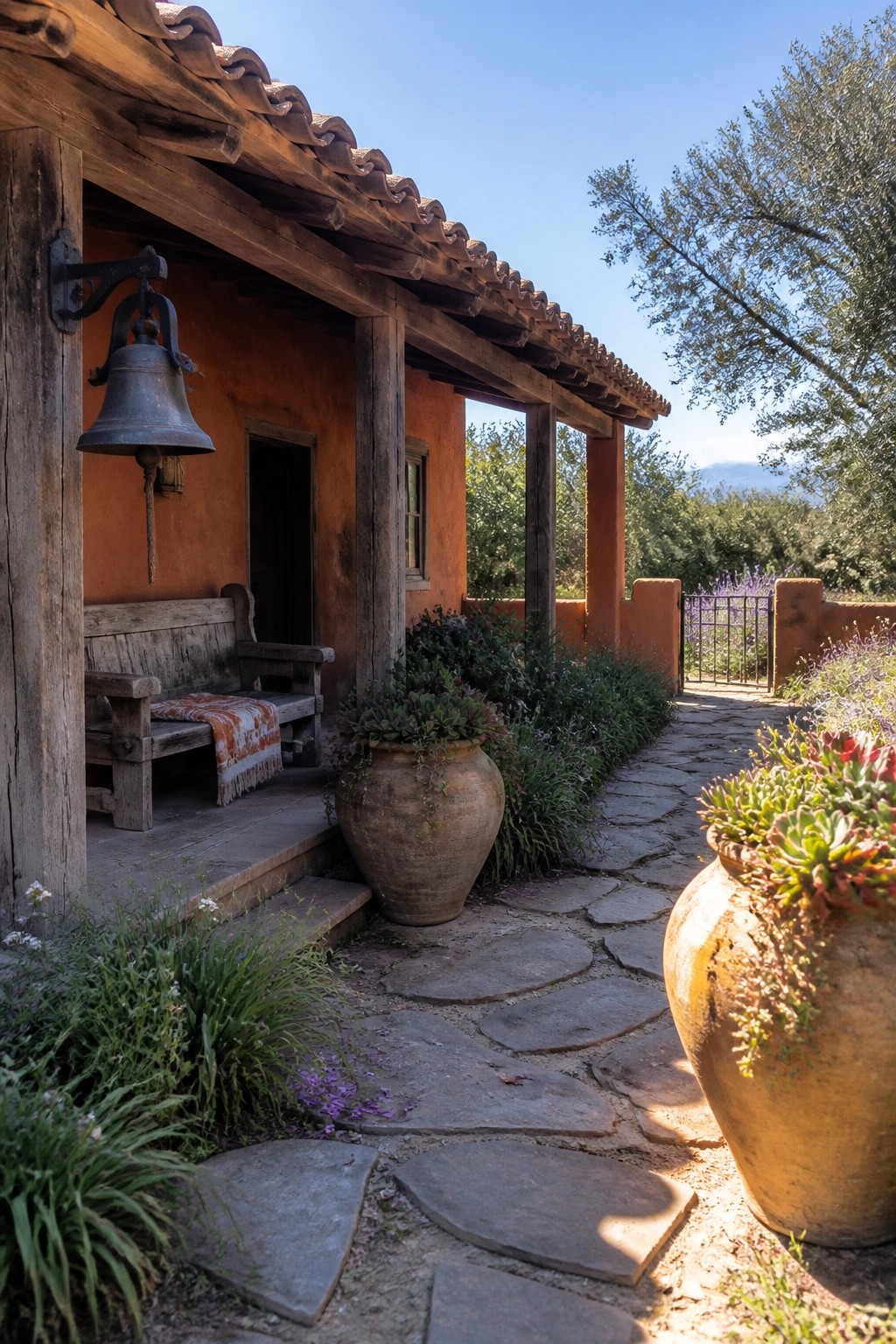
A wooden bench on the porch gives an orange stucco house an easy, lived-in feel right at the entry. It does not require much space or extra furniture, yet it turns the front into a spot where people actually want to pause.
This works best on homes with terracotta roofs and thick wood posts because the bench echoes those same natural materials. Keep the bench plain and a little worn so it fits the rustic look without trying to stand out.
Frequently Asked Questions
Q: How often should I check the stucco for cracks? A: Walk around the house once a year and look for hairline splits near the roofline. Fill any you find with a good exterior caulk. This stops water from getting in and ruining the finish.
Q: Can terracotta tiles handle heavy snow? A: They hold up fine if your roof has the right pitch. Install them with proper underlayment to block moisture.
Q: What trim color works best with orange stucco? A: Stick with a warm cream or soft brown. It frames the orange without clashing and lets the terracotta roof stand out naturally.
