

Japandi art can make a room feel calmer, but it works best when the rest of the space gives it room to breathe.
I find that a print’s scale and placement matter as much as its colors, especially in a living room or bedroom where furniture and daily routines already shape the view.
Soft forms, restrained palettes, and a little negative space can add interest without making a wall feel busy.
The right piece should connect with nearby textures and finishes while still feeling like something you chose for your home.
I’d start with prints that suit the room’s proportions, then test how they look beside the furniture before settling on a spot.
Let Abstract Art Lead the Wall

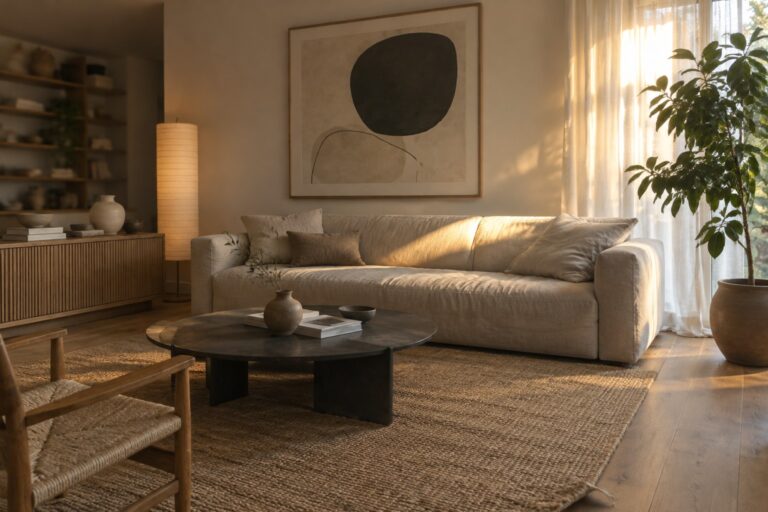
A large minimalist abstract print can give a living room a clear focal point without making the wall feel busy. Simple shapes and a restrained palette work especially well with Japandi decor, where natural materials and uncluttered styling already do plenty.
Choose a print that relates to the room’s colors, then give it enough space to stand on its own. A slim wood frame suits a relaxed, natural look, and the idea works well above a sofa or on another open wall.
Keep Minimalist Prints Simple
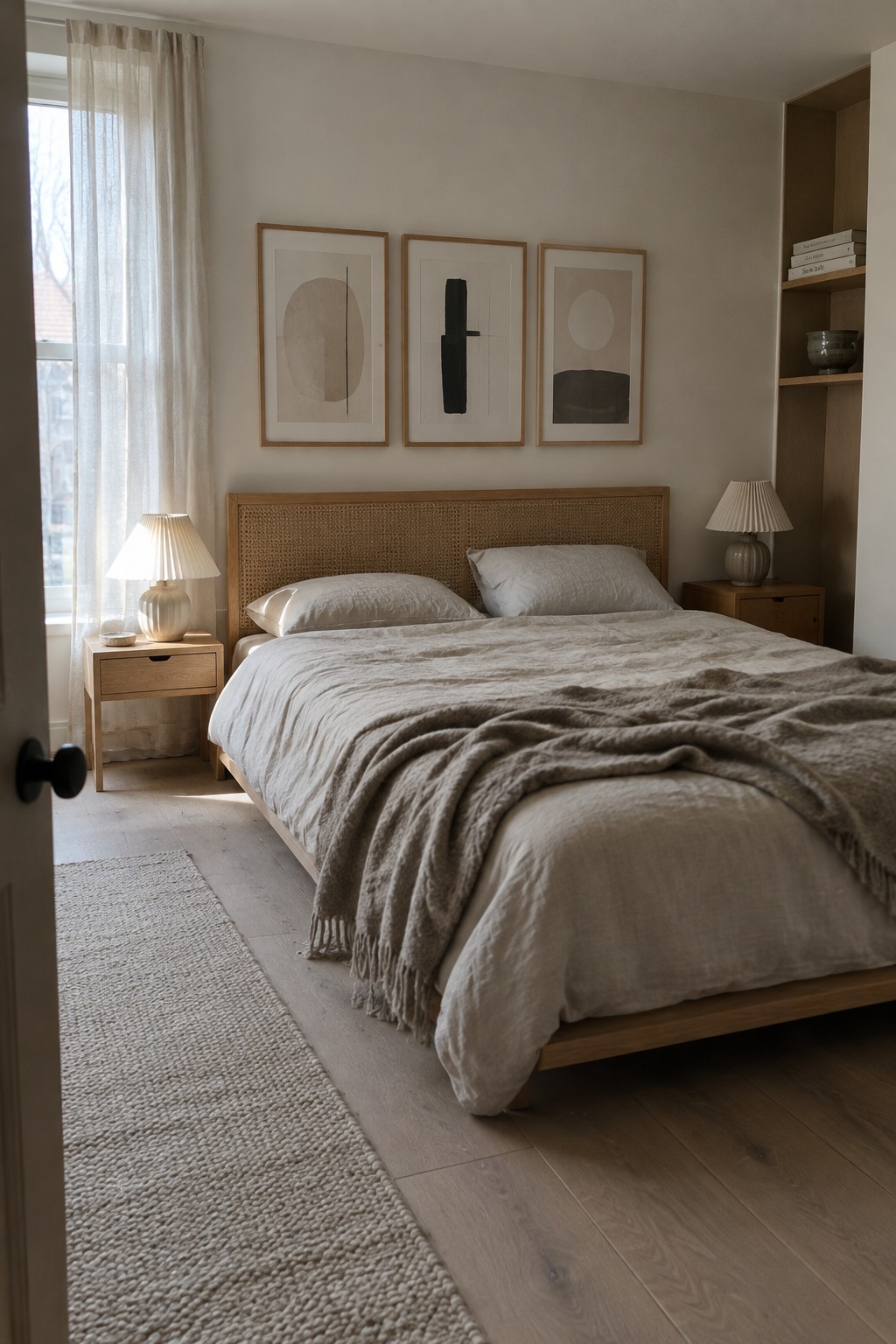
Minimalist abstract prints work well in a bedroom when the designs are quiet and the arrangement stays simple. Three neutral-toned pieces above the bed add interest without making the wall feel busy.
Use prints with a shared palette but varied shapes, and leave a little space between each frame. This approach suits rooms with calm, natural finishes; choose slim wood frames to keep the art from feeling too formal.
Use Abstract Prints To Bring Quiet Interest To A Dining Room
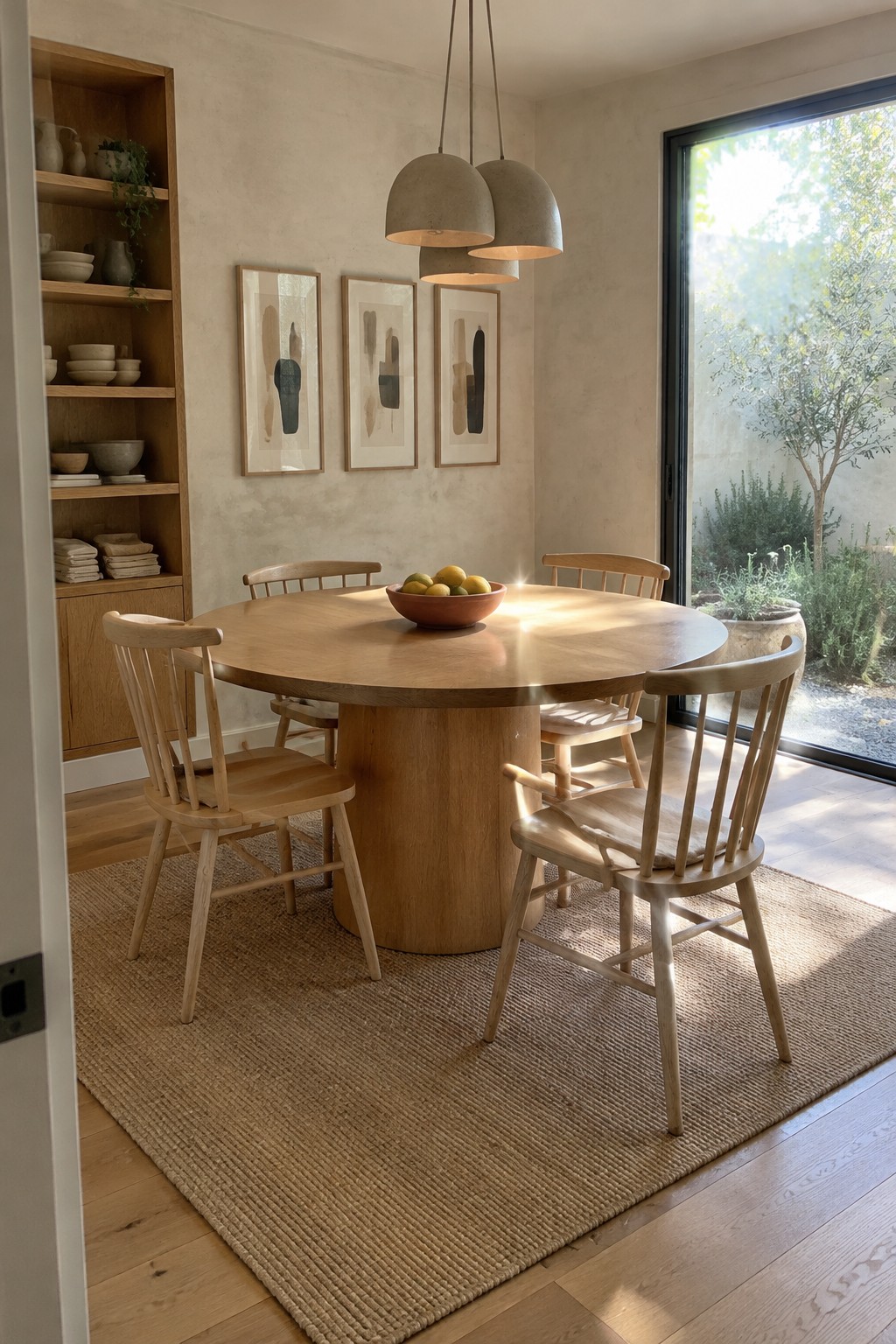
Minimal abstract prints can make a dining room feel considered without adding a lot of visual clutter. Here, three simple works in muted tones bring a little variation to the wall while keeping the overall look calm.
For a similar effect, choose prints that share a restrained color palette, then hang them in a neat row above a sideboard or dining table. Leave enough space around each frame so the grouping can stand on its own.
Minimal Abstract Art Adds a Quiet Focal Point
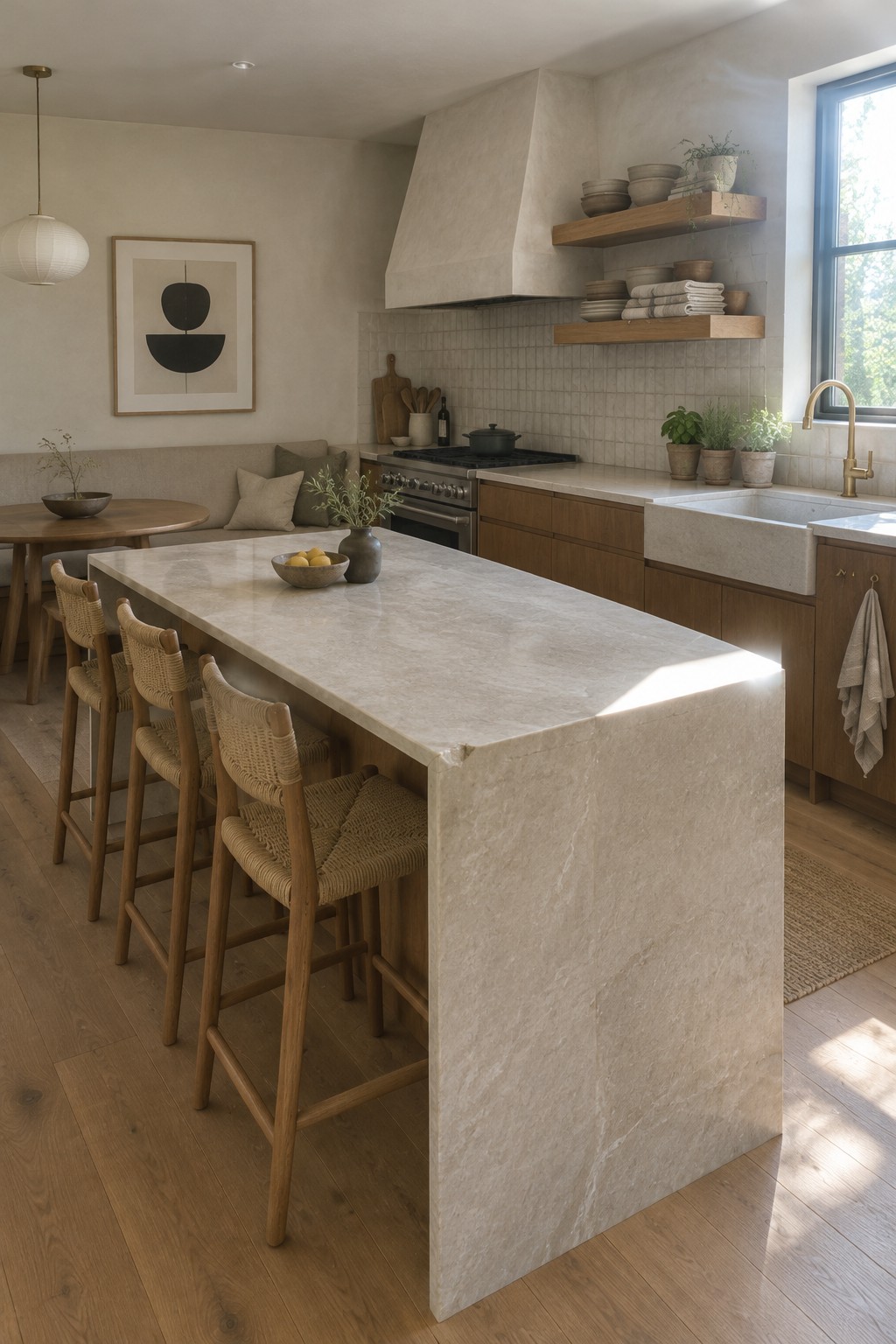
A simple abstract print can give a calm kitchen or dining area a little personality without making the walls feel busy. The black shapes in this framed piece stand out against the pale wall, while the restrained palette fits naturally with simple finishes.
Try one print on a clear stretch of wall, where its shape can be seen without competing with shelves or other decor. A thin wood frame helps it sit comfortably in a warm, pared-back interior.
Use One Abstract Print In A Simple Bathroom
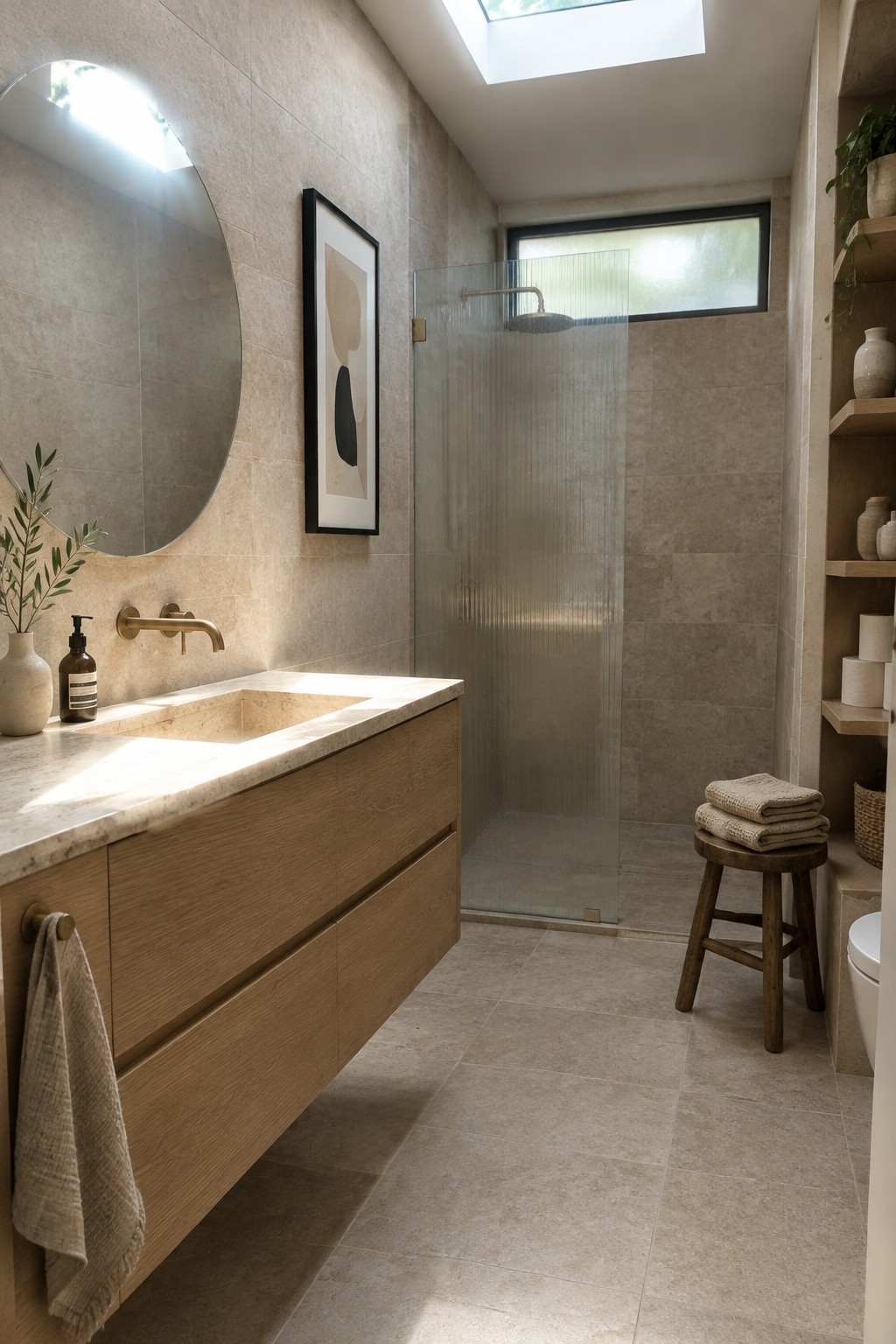
Minimal abstract art can make a tiled bathroom feel more personal without adding clutter. A single print in a slim black frame gives the wall a clear focal point while keeping the overall look simple.
This approach works well in a small bathroom, where several decorative pieces can feel crowded. Choose muted shapes and colors that sit comfortably beside the tile, and keep the frame modest in size.
Use One Abstract Print In A Narrow Entryway

A single minimalist print can give a narrow entryway a clear focal point without making it feel crowded. The large abstract artwork here suits the slim wall above the console, and its simple shapes leave the small space feeling open.
Choose a print that has room around it, especially in a hallway where people need to pass easily. A muted palette works well with natural wood and keeps the art from competing with the rest of the entry.
Use One Large Print To Set The Tone

A single oversized abstract print can give a home office a clear focal point without making the wall feel busy. Simple shapes and a limited palette suit the calm, pared-back look of Japandi style.
Try this approach above a desk, choosing a frame that fits the wall and colors that work with the room’s wood tones. Leave some open wall around the art so it has room to stand out.
Use Minimalist Prints To Bring Calm To a Nursery
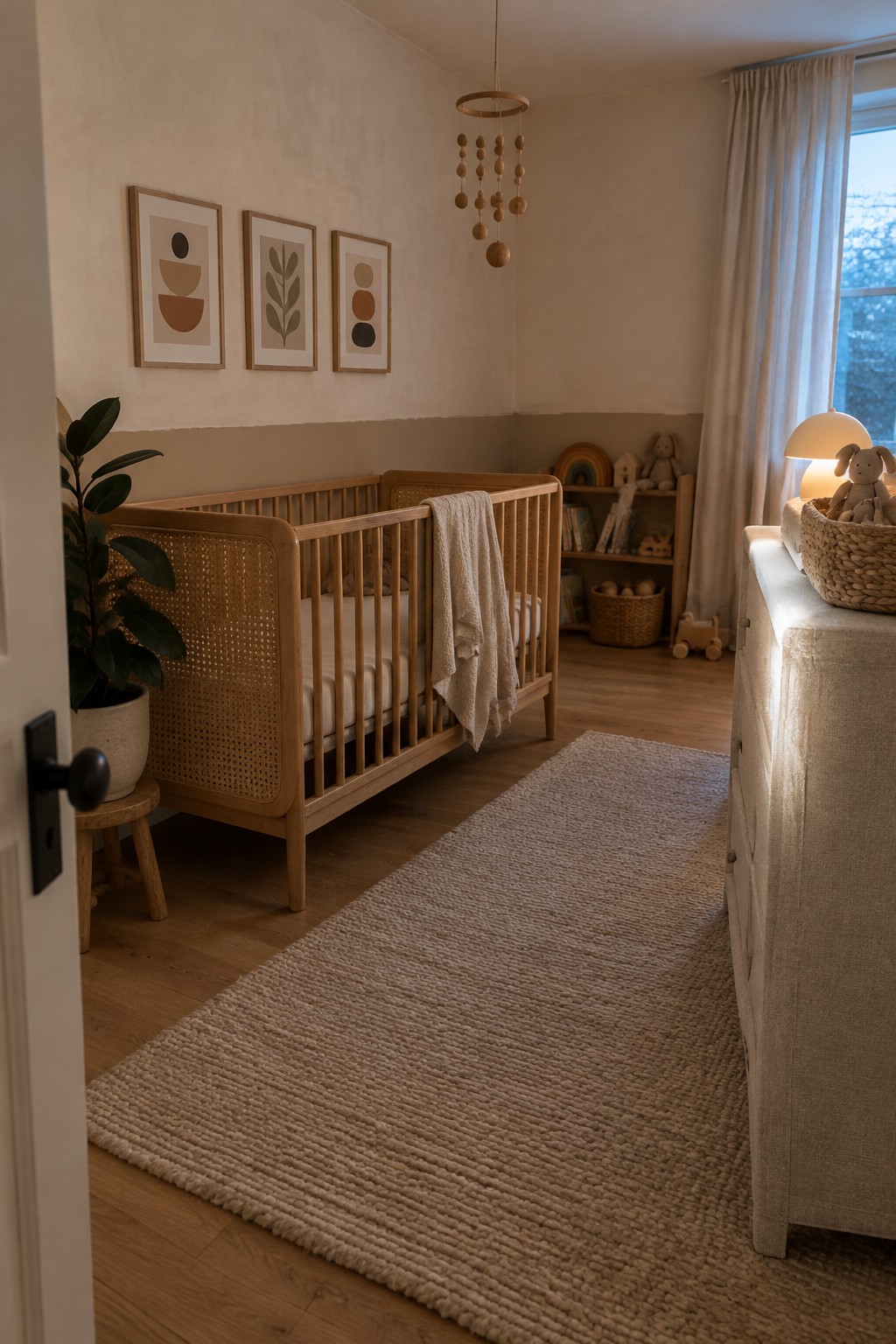
A few simple abstract prints can give a nursery a finished look without making the walls feel busy. Their muted shapes suit a room meant to stay restful, and the artwork can still feel interesting as the child grows.
Hang a small group above a crib or changing table, keeping the frames close in style and the colors easy to repeat elsewhere in the room. Leave plenty of open wall around them so each print has room to show.
Use Abstract Prints Along a Hallway
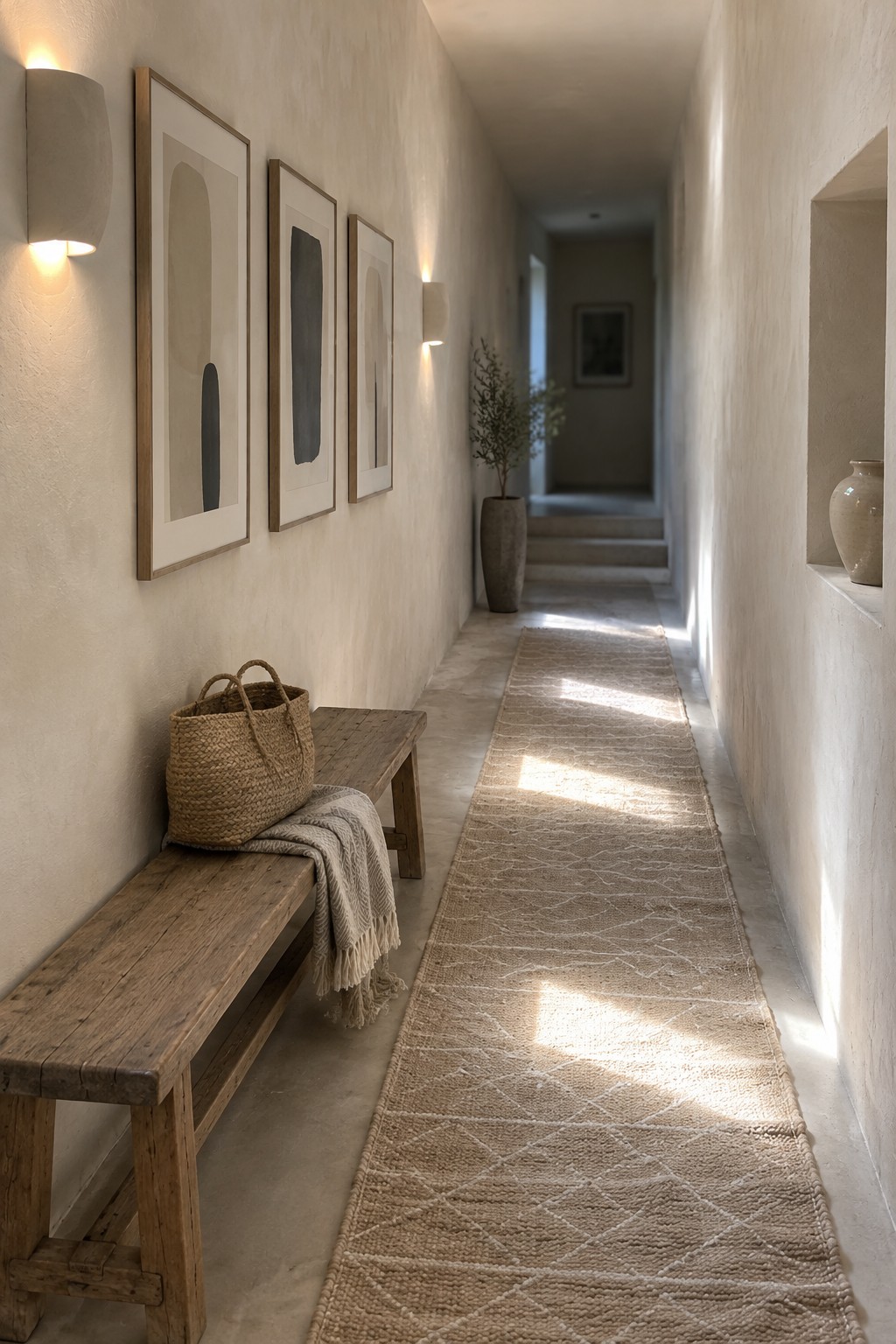
A few minimalist abstract prints can make a long hallway feel considered without making it busy. Keeping the artwork in a similar muted palette helps the pieces read as a group, while simple shapes leave the narrow space feeling open.
Hang prints at a consistent height and leave enough room between frames so each one can be seen as you walk past. This approach suits a hallway with plain walls, especially when you want a little interest without adding bulky furniture.
Lean a Minimalist Print Against Built-In Seating
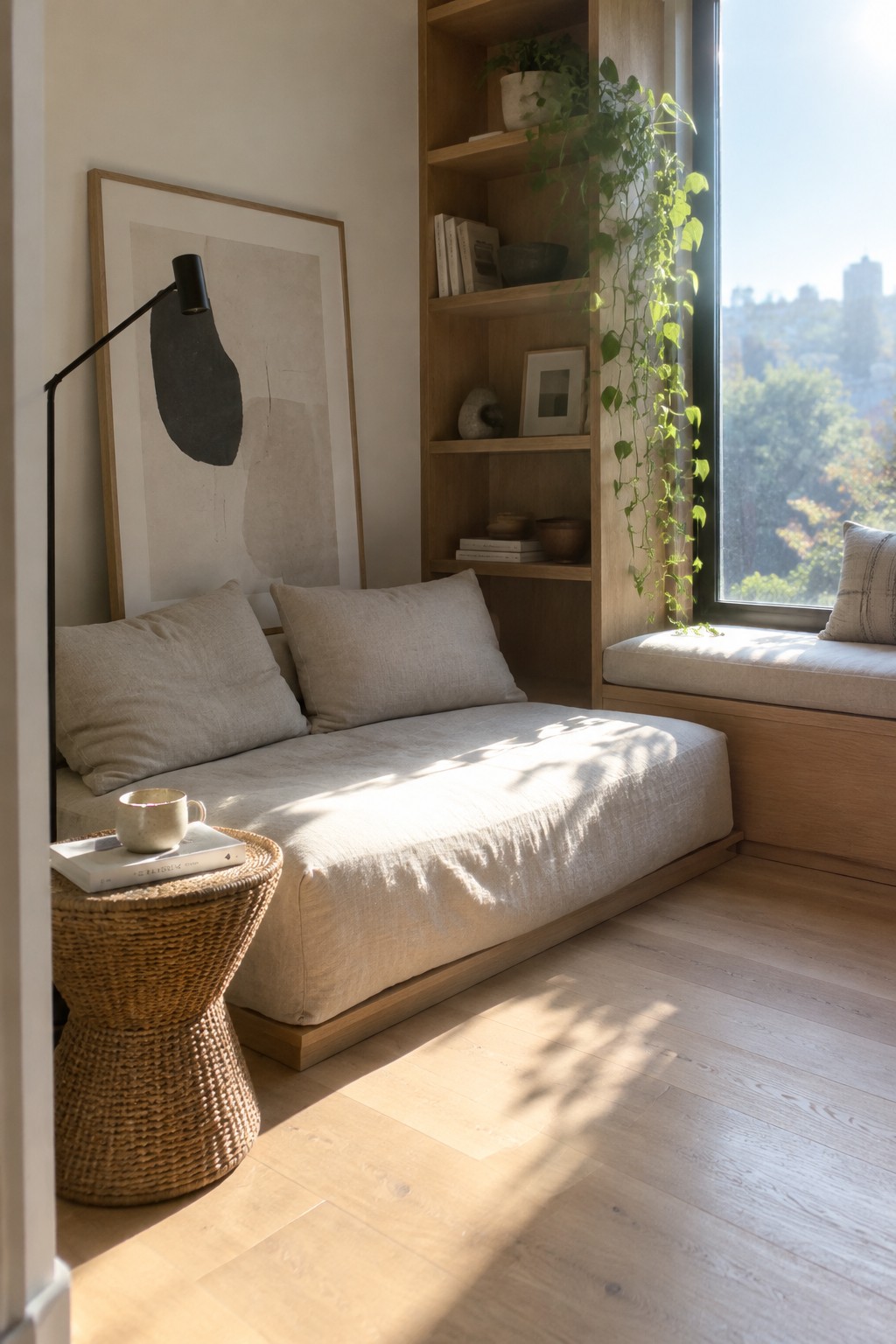
A large abstract print can make a simple seating nook feel considered without adding much clutter. Here, the dark shape on the light artwork gives the wall a clear focal point while keeping the overall look quiet.
This approach works well in a reading nook or a small living area. Lean the print on a low ledge or secure it to the wall, and leave some open space around it so the artwork can stand on its own.
Use Minimalist Art To Add Interest To A Laundry Room

A simple abstract print can make a laundry room feel considered without adding clutter. The black shapes in the framed artwork here echo the room’s clean, pared-back look, while the natural wood frame keeps it from feeling stark.
This approach works well in a narrow utility room where storage and work surfaces need to stay practical. Choose a print with a few simple shapes and colors, and leave enough open wall around it so it does not compete with shelves or hooks.
Use Abstract Art In a Simple Bathroom
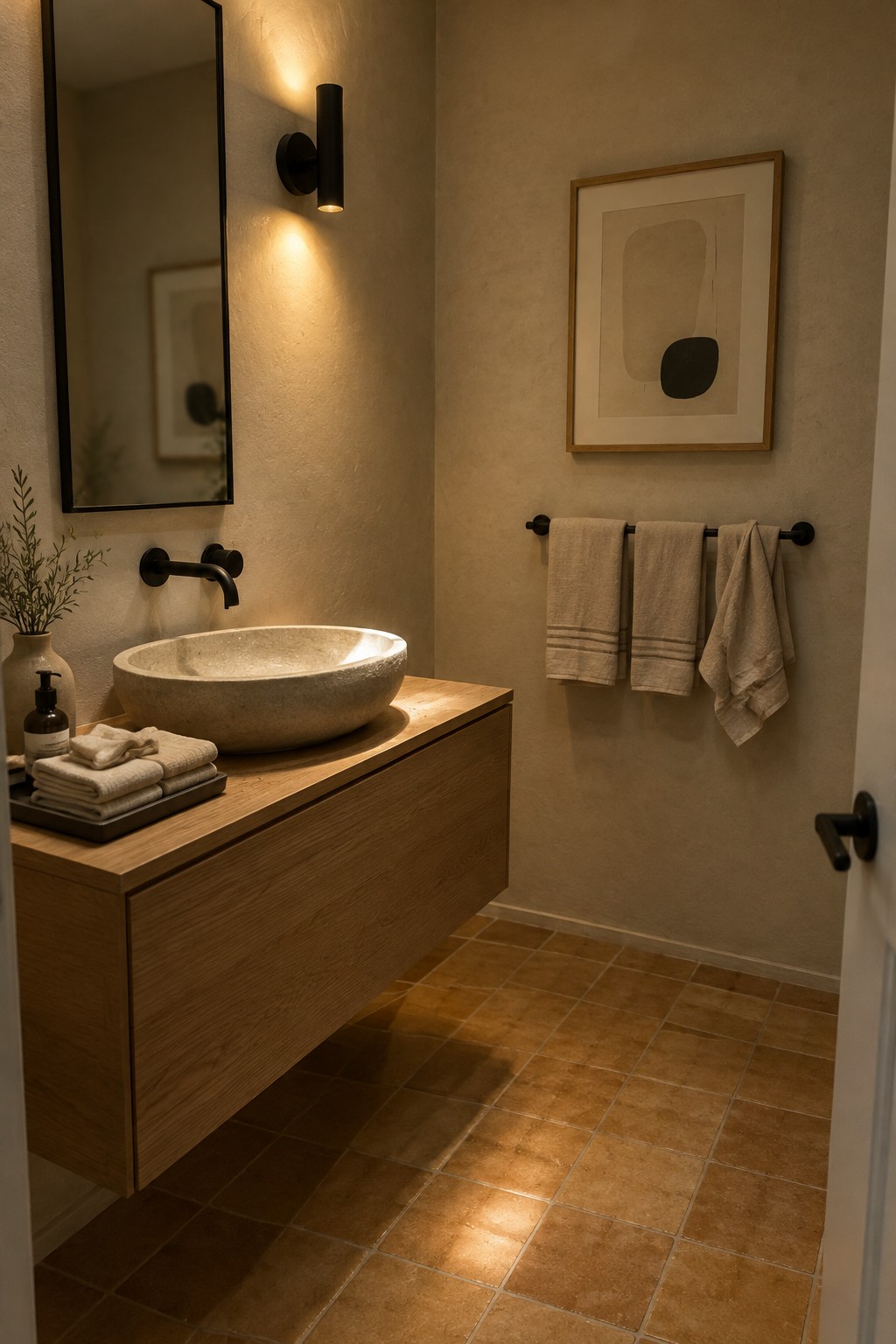
A single minimalist print can give a plain bathroom wall a little character without making the room feel busy. A muted abstract design suits the quiet materials here, while its dark shape adds just enough contrast.
This approach works well above a towel rail or beside a vanity, especially in a small bathroom where extra decor can feel cluttered. Choose a print with a restrained palette and a frame that suits the room’s finishes.
Let Abstract Art Set the Bedroom’s Tone
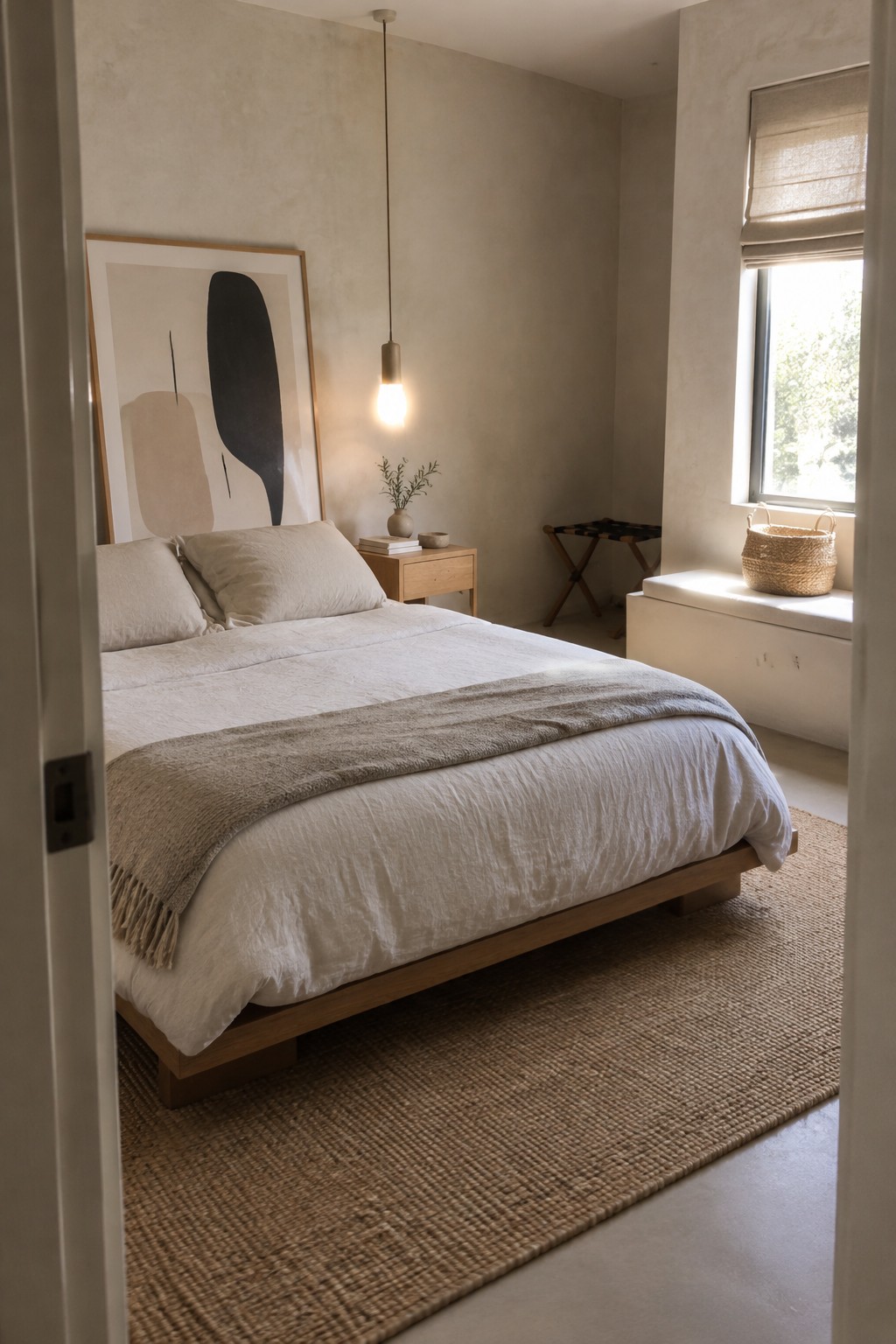
A minimalist print can give a bedroom a clear focal point without making the room feel busy. The large abstract artwork here uses a few simple shapes, so it has presence while leaving the rest of the wall calm.
For a similar look, choose a print that suits the room’s quiet colors and hang it above or beside the bed. A simple frame helps the artwork feel at home, and one substantial piece is often easier to live with than a cluster of smaller prints.
Let Abstract Art Set the Dining Room’s Tone
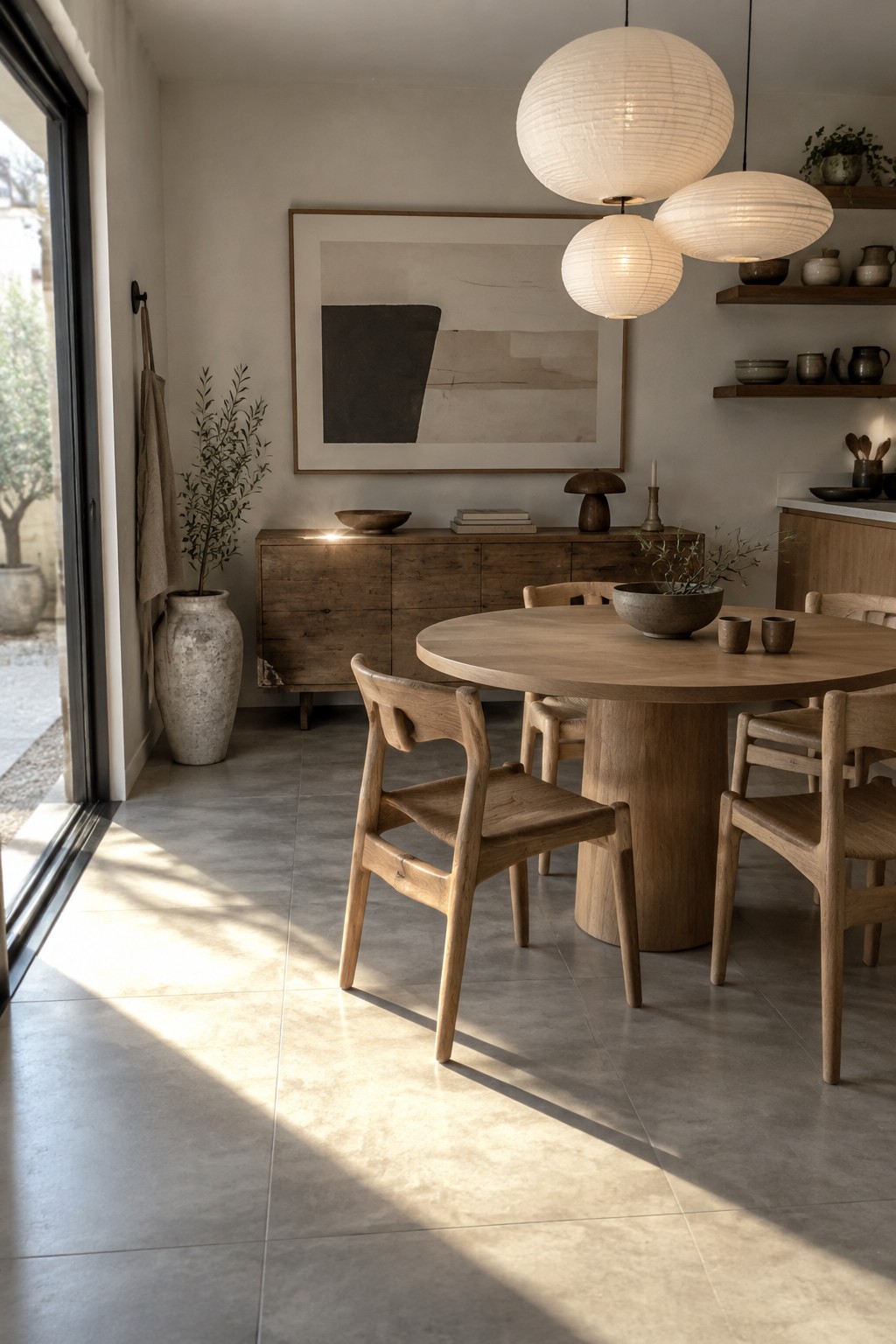
A minimalist abstract print can give a dining room a clear focal point without making the space feel busy. Here, the large, muted artwork brings a little contrast to the wood furniture while keeping the overall look simple.
For a similar effect, choose a print with a few restrained shapes and colors, then give it enough wall space to stand on its own. It works especially well in a dining area with plain walls and natural materials.
Hang a Minimalist Print Above Low Seating

A single abstract print can give a quiet room a clear focal point without adding much visual clutter. In a Japanese-inspired space, a simple ink design on a textured hanging scroll feels at home beside natural materials.
This approach works well above a low bench or along a calm sitting area. Keep the artwork modest in color and let the open wall around it do its part.
Frequently Asked Questions
Q: How many abstract prints should I hang above a sofa?
A: One larger print can feel calm and intentional, while a pair of smaller pieces adds a little rhythm. Leave enough blank wall around the art so it doesn’t feel crowded.
Q: What colors work well for Japandi abstract wall art?
A: Soft neutrals like warm white, sand, charcoal, and muted green fit naturally. A small earthy accent, such as rust or clay, can add warmth without taking over.
Q: Do the frames need to match?
A: Not necessarily. A simple wood frame pairs well with a black or slim neutral frame, as long as the prints share a similar palette or mood.
Q: Can I use abstract prints in a small room?
A: Yes. Choose one quiet design with plenty of open space rather than a busy cluster. It can bring character to the room without making the walls feel full.
