

Dark Japandi rooms can feel calm without turning pale or sparse, especially when deep wood gives the space warmth and weight.
I find that the balance depends on how the darker finishes meet natural light, soft textiles, and the everyday paths people take through a room.
Too much dark wood can make a space feel heavy, while a few well-placed surfaces can add depth without crowding the layout.
These interiors show ways to pair rich tones with simple forms and practical details that still feel comfortable to live with.
I’d save the ideas that suit your room’s light and test them in small choices, such as a cabinet finish or bedside table, before committing to a bigger change.
Use Rich Wood To Make A Dark Room Feel Warm

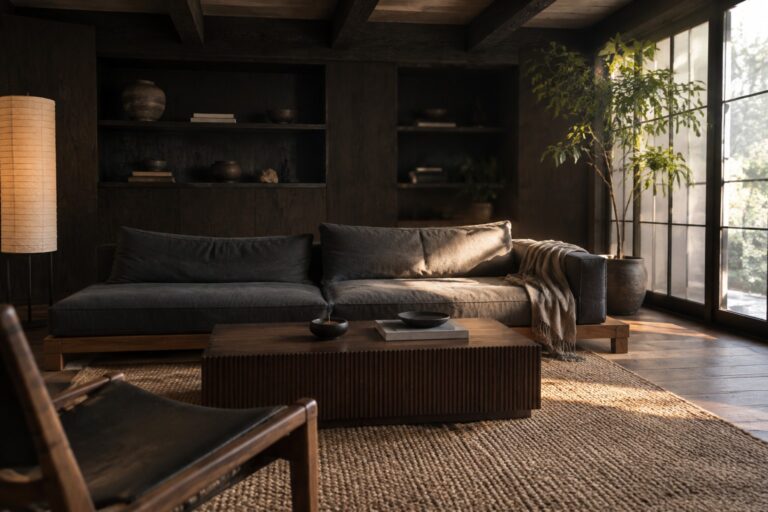
Dark wood can make a living room feel settled and comfortable without relying on lots of decor. Here, the built-in shelves and ceiling beams give the space a strong wood presence, while the charcoal sofa keeps the look simple.
This approach works well in a room with good natural light. Use wood on a few larger surfaces, such as shelving or ceiling details, and keep the furniture and accessories fairly restrained so the room still feels easy to live in.
Use Rich Wood To Warm Up A Dark Bedroom

A dark bedroom can feel comfortable rather than heavy when rich wood is used for the bed and nearby furniture. Here, the wood headboard and bed frame give the deeper wall color a natural counterpart, while the simple shapes keep the room from feeling crowded.
This approach suits a bedroom where you want a quiet, settled look. Choose a few substantial wood pieces, then keep the bedding fairly simple so the grain and finish can stand out.
Let Rich Wood Cabinets Lead

Dark wood cabinetry can make a kitchen feel settled and comfortable without relying on lots of decoration. Here, the broad island carries the same wood finish as the cabinets, while a dark countertop gives the surfaces a practical, simple contrast.
This approach suits kitchens where you want the cabinetry to be the main feature. Keep the surrounding finishes fairly quiet, and use wood tones that relate to each other so the room feels consistent rather than busy.
Use Rich Wood for a Japandi Dining Room
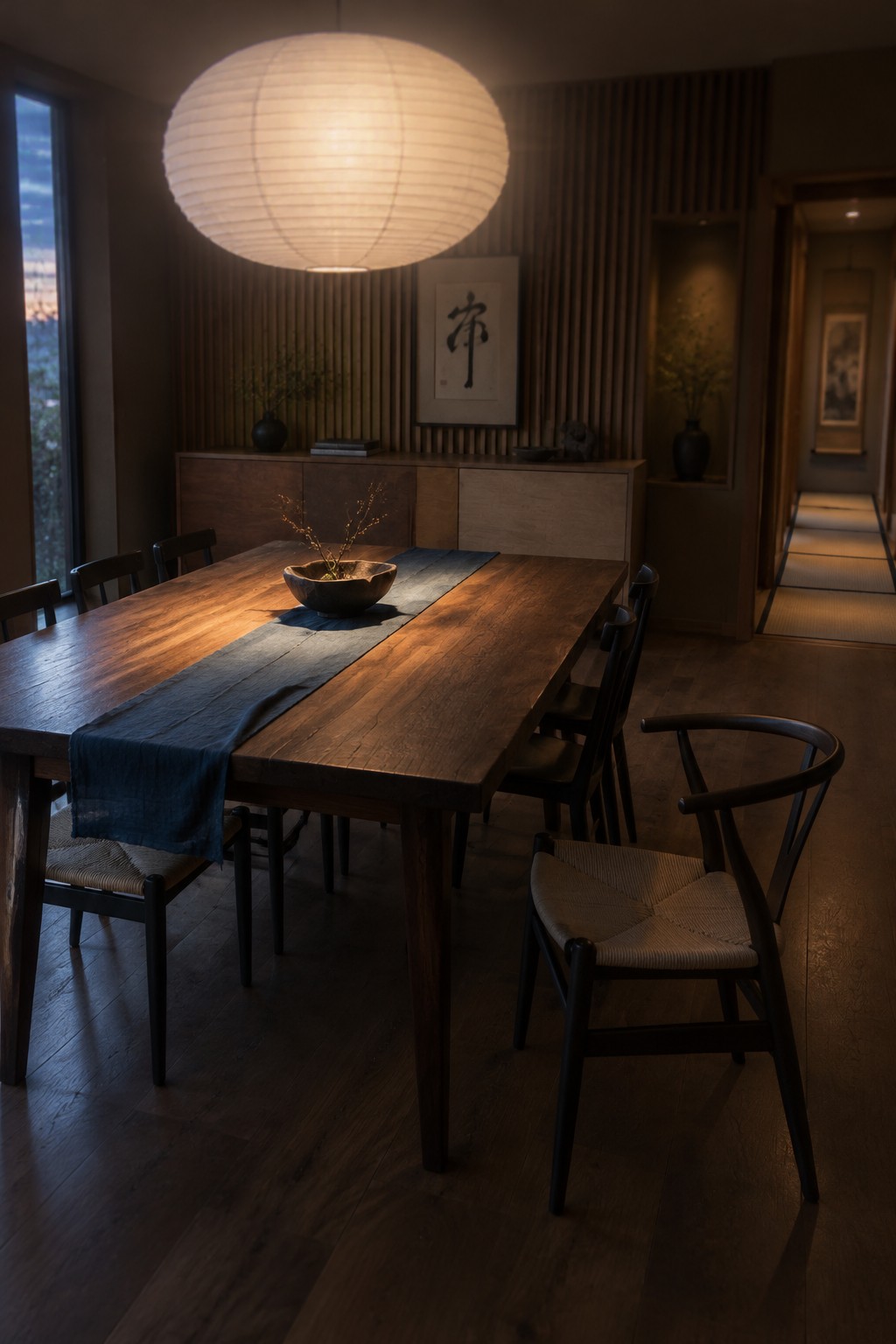
A dark wood dining table gives a Japandi room a simple, practical center. Its natural grain brings character to the space without needing much decoration, while a restrained palette keeps the overall look calm.
This approach works well in a dining room where you want the furniture to feel substantial but not ornate. Try a dark timber table with pared-back chairs, then keep accessories simple so the wood remains the main feature.
Use a Dark Wood Console In The Entry

A slim console is a practical way to bring rich wood into a Japandi entry. Its simple shape gives you a place for everyday items without making the space feel crowded.
Choose a finish with visible grain, then keep the surface fairly clear. This works especially well in a narrow hall, where a deep cabinet could get in the way.
Build a Japandi Home Office Around Wood Storage

Built-in shelves and a desk can make a home office feel settled without adding much furniture. In a Japandi space, dark wood brings a quiet consistency to the room, while open shelves keep the storage from feeling too closed in.
This approach works well in a small office or a spare-room nook where every bit of space matters. Keep the shelves useful rather than crowded, and leave enough clear desk space for everyday work.
Use Wood Built-Ins To Organize A Closet

Custom wood shelving can make a walk-in closet easier to use while keeping the space looking calm and orderly. Open shelves and hanging sections give folded clothes and everyday pieces a clear place, so storage feels like part of the room rather than an afterthought.
This approach works especially well in a narrow closet, where using the full wall can free up floor space. Choose a wood finish that suits the rest of the home, and include a few closed bins for items you do not want on display.
Use Dark Tile To Set A Calm Bathroom Tone

Dark tile gives this bathroom a quiet, consistent look, while the rich wood vanity keeps the finish from feeling cold. The combination works especially well when you want a bathroom to feel simple and settled rather than busy.
Try it in a bathroom with good natural light, and use wood on one main feature, such as the vanity. Large floor tiles can make the room feel less cluttered, while a smaller tile in the shower adds texture without introducing another color.
Choose Dark Wood Furniture For A Japandi Nursery

Dark wood furniture can make a nursery feel calm and settled without relying on bright colors or busy patterns. A simple wooden crib gives the room a strong base while still keeping the overall look quiet.
This approach works well in a small nursery, where a few sturdy pieces can do more than lots of decoration. Keep the bedding and wall art simple, and choose a wood finish that suits the rest of the home.
Use Dark Wood Built-Ins To Organize A Laundry Room
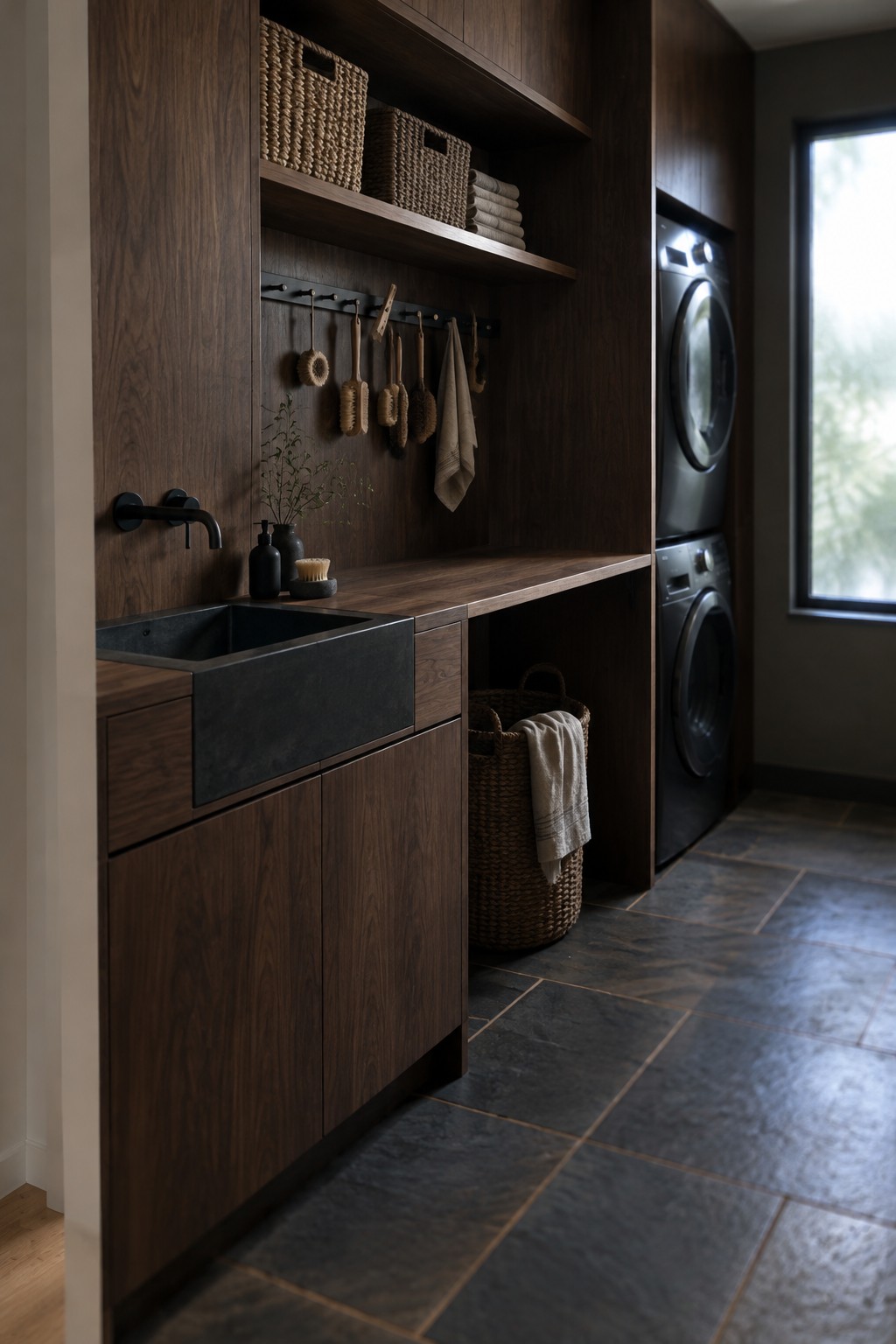
Dark wood cabinetry can make laundry storage feel like a planned part of the home rather than a collection of shelves and appliances. Open shelving keeps everyday supplies handy, while a long counter gives you room to fold clothes.
This approach works well in a narrow laundry room where every bit of storage matters. Keep baskets and linens on the shelves, and leave enough clear counter space to make the room practical to use.
Use a Dark Wood Vanity In A Japandi Bathroom

A dark wood vanity can give a Japandi bathroom a warmer, more settled feel without adding much decoration. The broad wood front in this room keeps the black basin from feeling too stark.
This idea suits a small bathroom where a simple, floating cabinet can provide storage without taking up floor space. Choose a wood tone with visible grain, and keep the counter clear so the finish stays easy to notice.
Use a Wood Slat Wall To Shape A Reading Nook

A wood slat wall can give a small reading nook a clear sense of place without adding much furniture. The narrow vertical boards bring texture to a dark interior, while keeping the wall simple enough for a daybed or bench to remain the focus.
This approach works well in a window alcove or an unused corner. Keep the surrounding finishes quiet, and let the wood cover just one wall so the nook feels defined rather than closed in.
Use a Low Wood Bed Frame To Keep The Room Simple

A low bed frame is a good fit for a dark Japandi bedroom. Its broad, dark wood base gives the bed a clear place in the room without adding a tall, bulky shape.
This style works especially well in a bedroom with simple furnishings and natural fabrics. Choose a frame with clean lines, then keep the bedding fairly plain so the wood remains easy to notice.
Use Dark Wood Built-Ins To Shape A Japandi Living Room

Dark wood built-ins can give a living room a clear, settled look while keeping storage close at hand. Here, the TV sits within a wall of wood cabinetry, so the screen feels like part of the room rather than a separate focal point.
This approach works well in a Japandi living room where you want fewer loose pieces of furniture. Keep the cabinet fronts simple, and leave some open shelving for a few useful or well-loved objects. Too many decorations can make the built-in feel busy.
Use Dark Wood Cabinets In A Japandi Bathroom

Dark wood cabinets can make a bathroom feel settled and practical, especially when the rest of the finishes stay simple. Here, the wood brings a softer note to the dark stone vanity and gray tile without making the room feel busy.
This approach suits a small bathroom where you want useful storage but prefer a clean, uncluttered look. Choose flat-front cabinet doors and keep the countertop clear so the wood grain remains the main detail.
Use Dark Wood Cabinets In A Japandi Kitchen

Dark wood cabinets give a Japandi kitchen a simple, settled look without needing much decoration. Their strong grain brings character to the room, while plain fronts keep the overall feel calm.
This approach works especially well in a compact kitchen, where matching upper cabinets to the lower ones can feel enclosing. Here, open shelving keeps the wall lighter, and a dark stone counter fits naturally with the wood. Keep the shelves edited so the cabinets remain the main feature.
Use Wood Slats To Break Up A Dark Bathroom
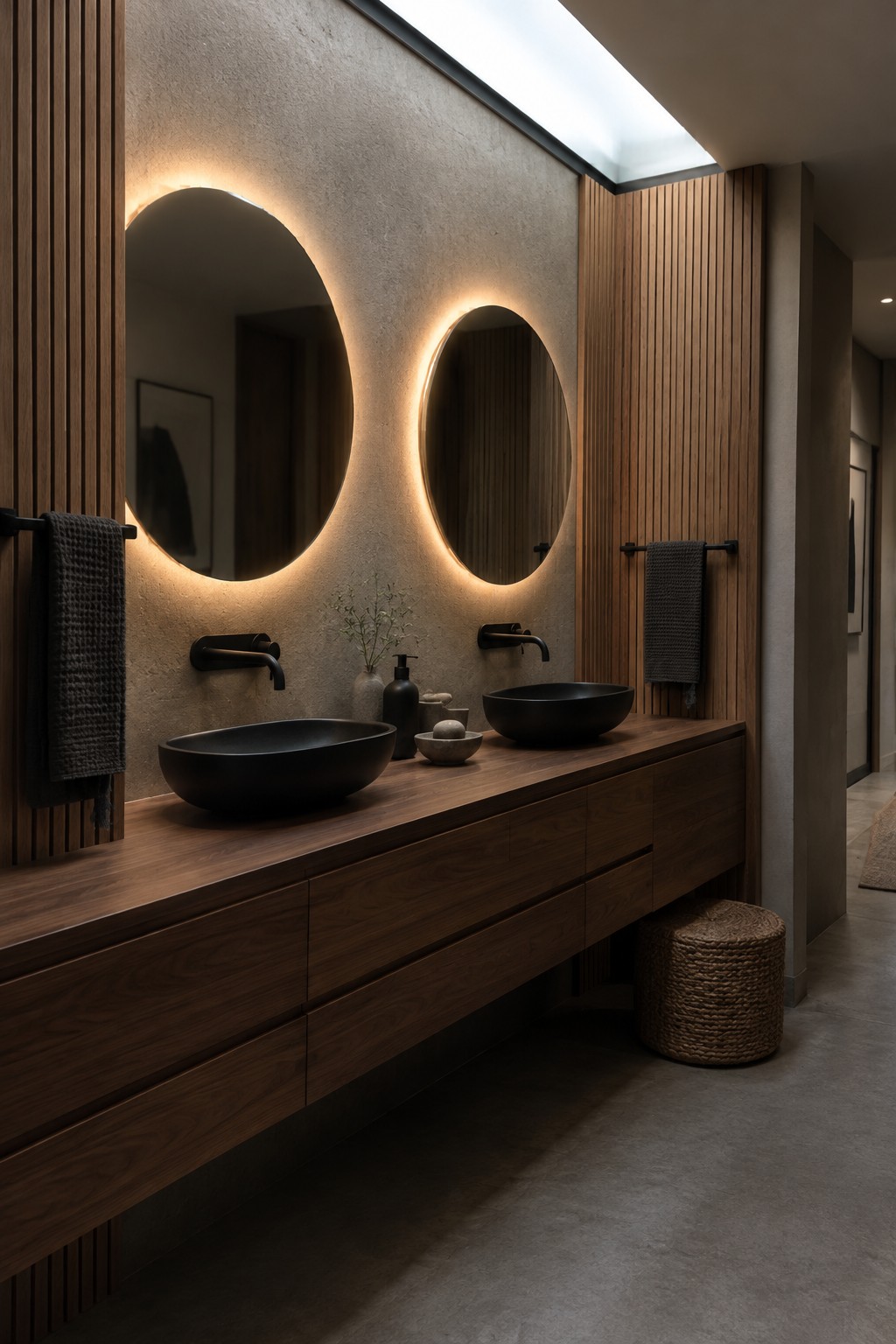
Wood slats give a bathroom a simple way to use rich wood without covering every wall. Here, the vertical panels bring a steady rhythm to the space and make the dark wood vanity feel like part of the same design.
This approach works well on a narrow wall or beside a vanity, especially when the rest of the finishes stay fairly quiet. Keep the slats to one area so they read as a clear feature rather than visual clutter.
Keep a Japandi Home Office Simple
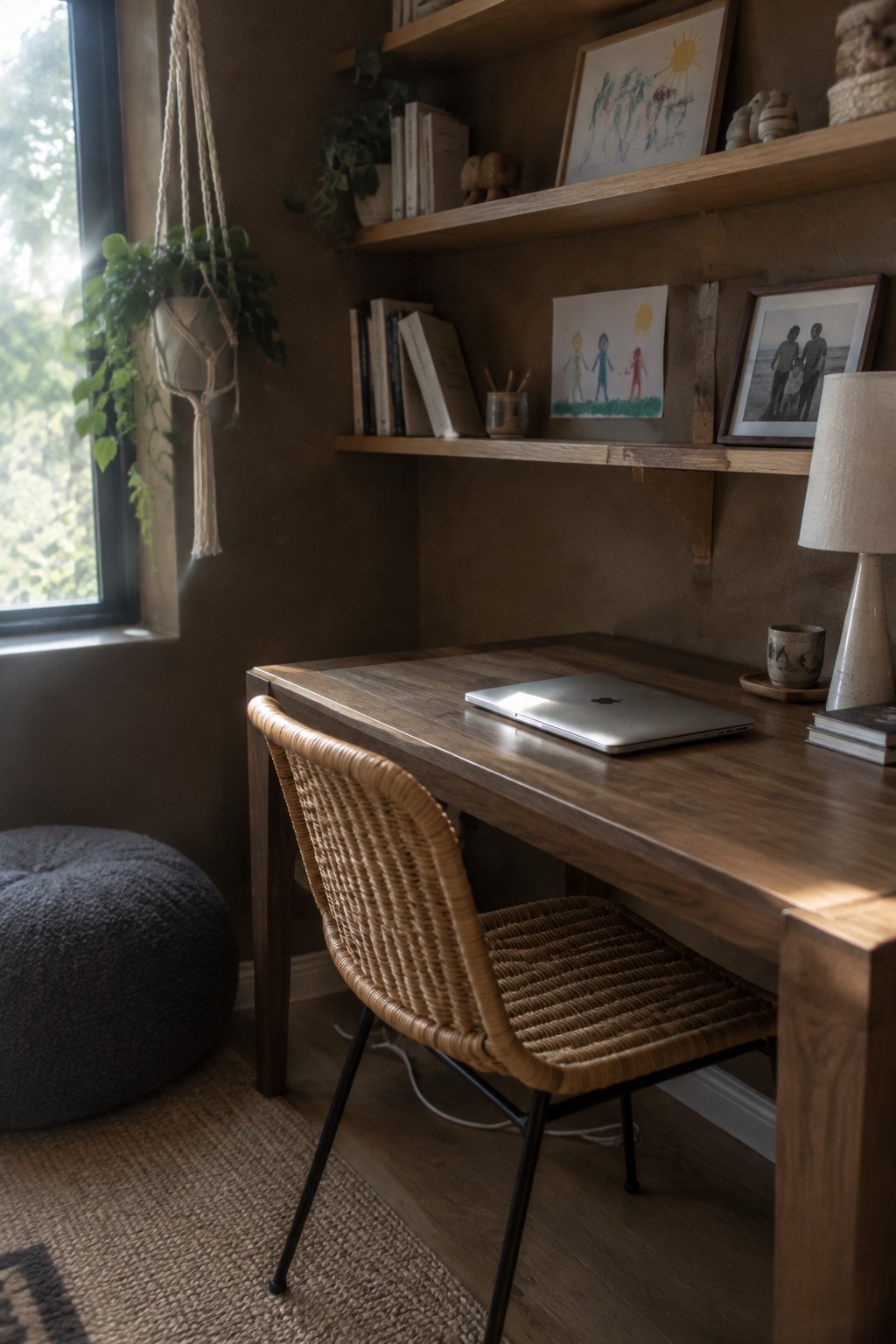
A dark wood desk can give a small home office a clear focal point without much extra furniture. The rich grain brings character, while the simple shape keeps the space practical rather than busy.
Try this in a study nook or spare room, and let the desk do most of the visual work. A woven chair adds texture, but keep the desktop fairly clear so it stays comfortable to use.
Use a Built-In Bench To Make A Dining Nook
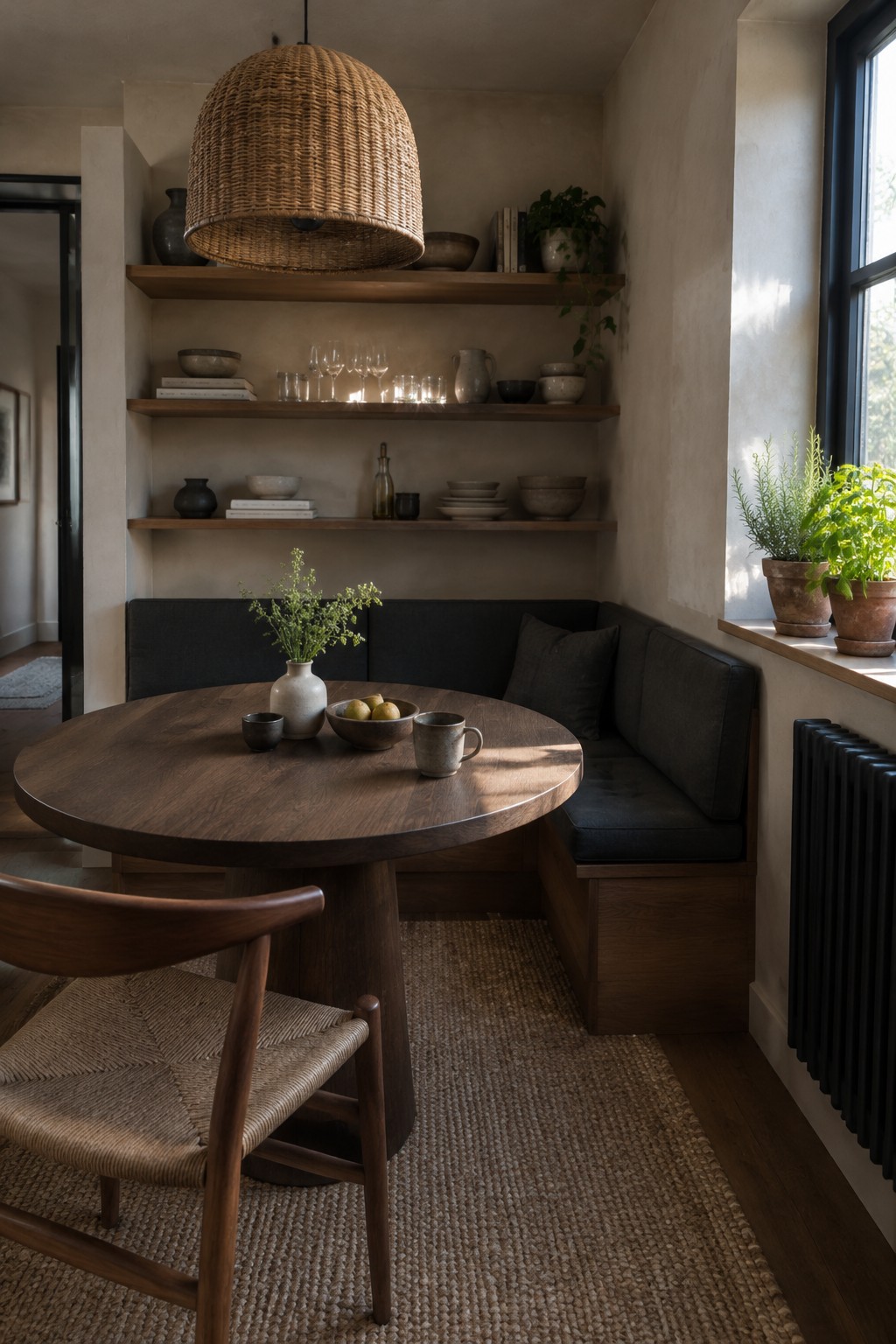
A built-in bench can make a small dining area feel settled without taking up room for extra chairs. Here, the L-shaped seating fits neatly into the corner, while its dark wood base ties in with the rich wood table.
This layout works especially well in a kitchen or breakfast nook where floor space is limited. Add cushions for comfort, and keep the table size in proportion so people can slide in and out easily.
Let a Floating Wood Vanity Set the Bathroom’s Tone
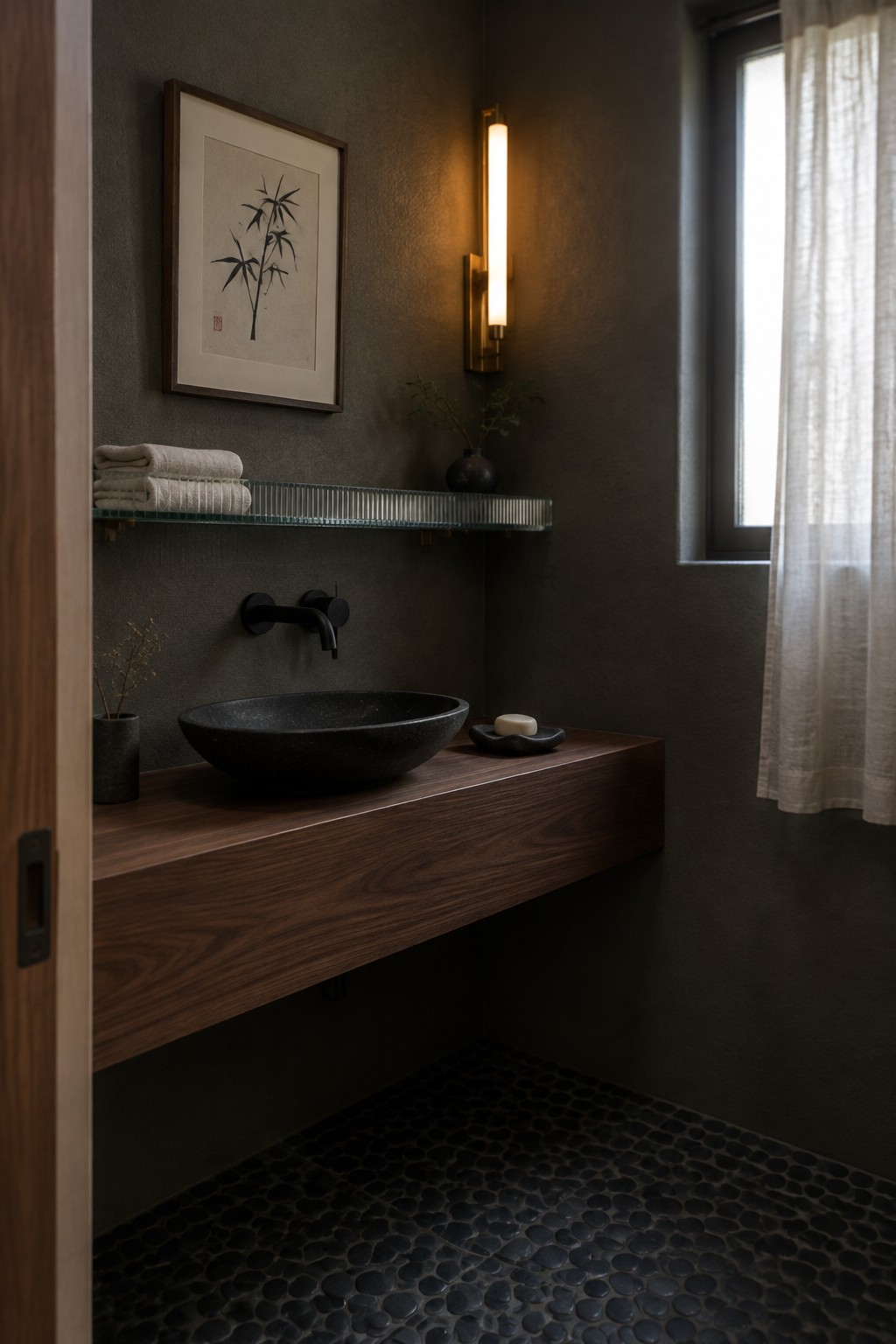
A floating vanity keeps a small bathroom feeling open while bringing in the rich wood that suits a dark Japandi palette. The long, simple form gives you useful counter space without adding visual clutter.
This approach works well in a compact powder room or a main bath with limited floor space. A dark vessel sink and textured walls can sit comfortably beside the wood, but leave enough clear counter area for daily use.
Make a Walk-In Closet Feel Like a Dressing Room

A small dressing area can feel more useful when storage and a simple place to sit are built into the same layout. Here, the wood drawers and shelves keep everyday items close, while a narrow stool makes getting ready easier.
This approach suits a walk-in closet or dressing nook where floor space is limited. Keep the storage mostly closed or neatly contained, and leave a clear path through the room so it stays easy to use.
Use A Wood Bed Frame To Warm Up Dark Bedding
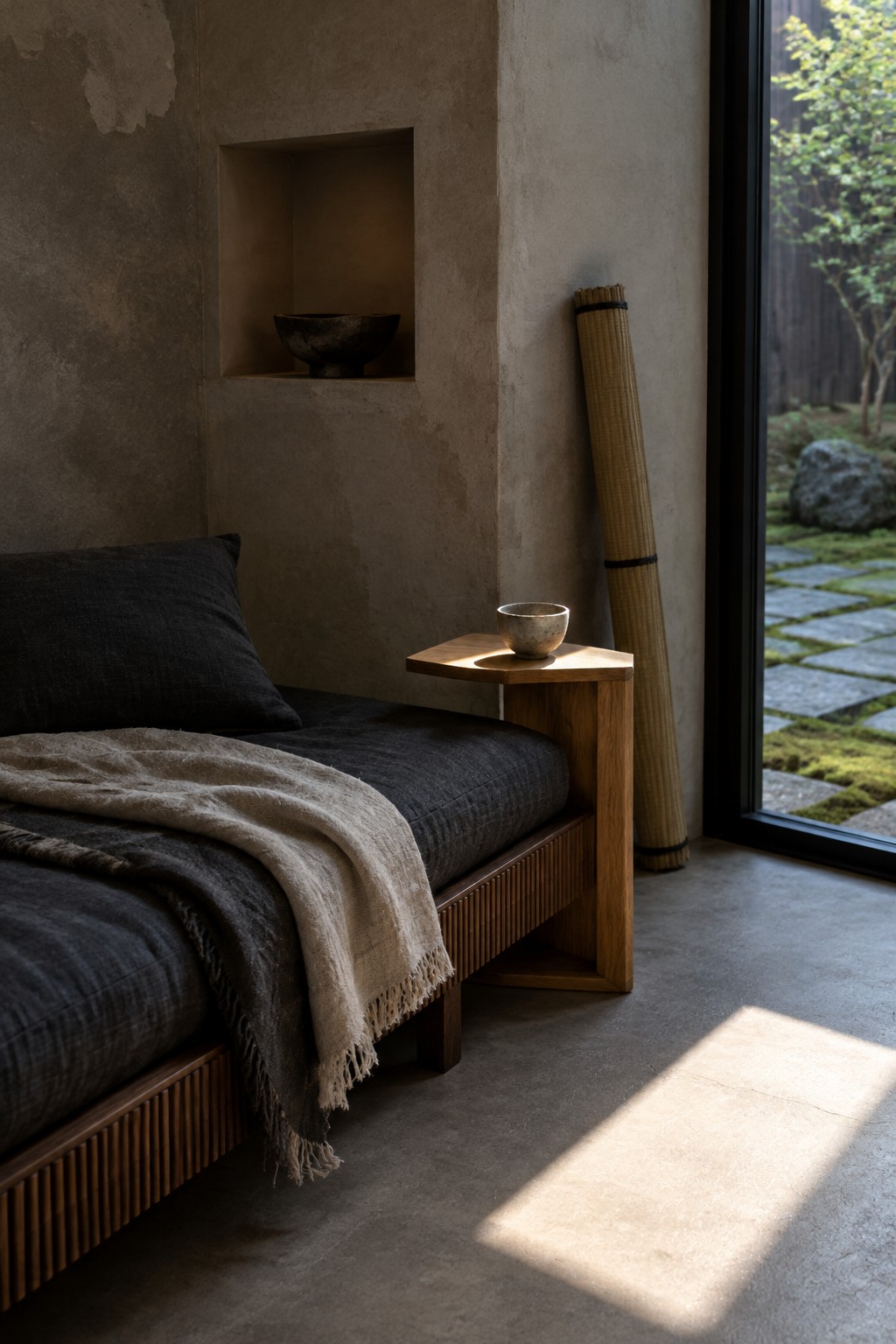
A simple wood bed frame can keep dark bedding from making a bedroom feel too heavy. The rich finish brings in a natural element, while the dark upholstery keeps the look quiet and understated.
This approach suits a Japandi bedroom where you want a calm, uncluttered feel. Choose a frame with a clean shape, and let the wood grain show rather than adding lots of extra trim or decoration.
Frequently Asked Questions
Q: How do I make dark wood feel warm instead of heavy?
A: Pair it with soft, warm lighting and a few lighter touches, such as cream linen or pale stone. Keeping the walls simple also gives the wood room to stand out.
Q: Can I mix different wood tones in a dark Japandi room?
A: Yes, as long as the tones feel related rather than competing. Try one wood finish as the main feature, then bring in a second tone in smaller pieces.
Q: What if my room doesn’t get much natural light?
A: Use dark wood on a few key pieces instead of covering every surface. Warm bulbs and reflective details, like a ceramic lamp or glass vase, can keep the room from feeling too dim.
Q: How do I keep the look from feeling too minimal?
A: Add texture through woven fabrics, handmade ceramics, or a rug with a subtle pattern. A few well-chosen objects feel more inviting than filling every surface.
