


Small apartments can feel cramped when every piece of furniture has only one job and the layout leaves little room to move.
I find Japandi works best in these spaces when its calm materials and simple shapes support everyday routines, rather than just looking neat in a photo.
A dining table that folds away or a bed with useful storage can free up floor space without making the room feel bare.
The details matter too: clear walking paths, warm wood, and a few well-chosen textures help separate living areas while keeping the whole apartment visually settled.
I’d save the ideas that solve a real daily annoyance, then adapt them to the way your own rooms need to work.
Use Furniture To Define A Small Living Room

A wall-mounted dining table can give a small apartment a useful eating spot without taking up floor space all day. Here, the simple wood surface also works as a compact counter for a cup or a few everyday items.
This setup suits a narrow living room where a full dining table would block the walkway. Choose a table that folds down if you need more room, and check that the stools can tuck away neatly when they are not in use.
Make A Small Kitchen Island Work Harder
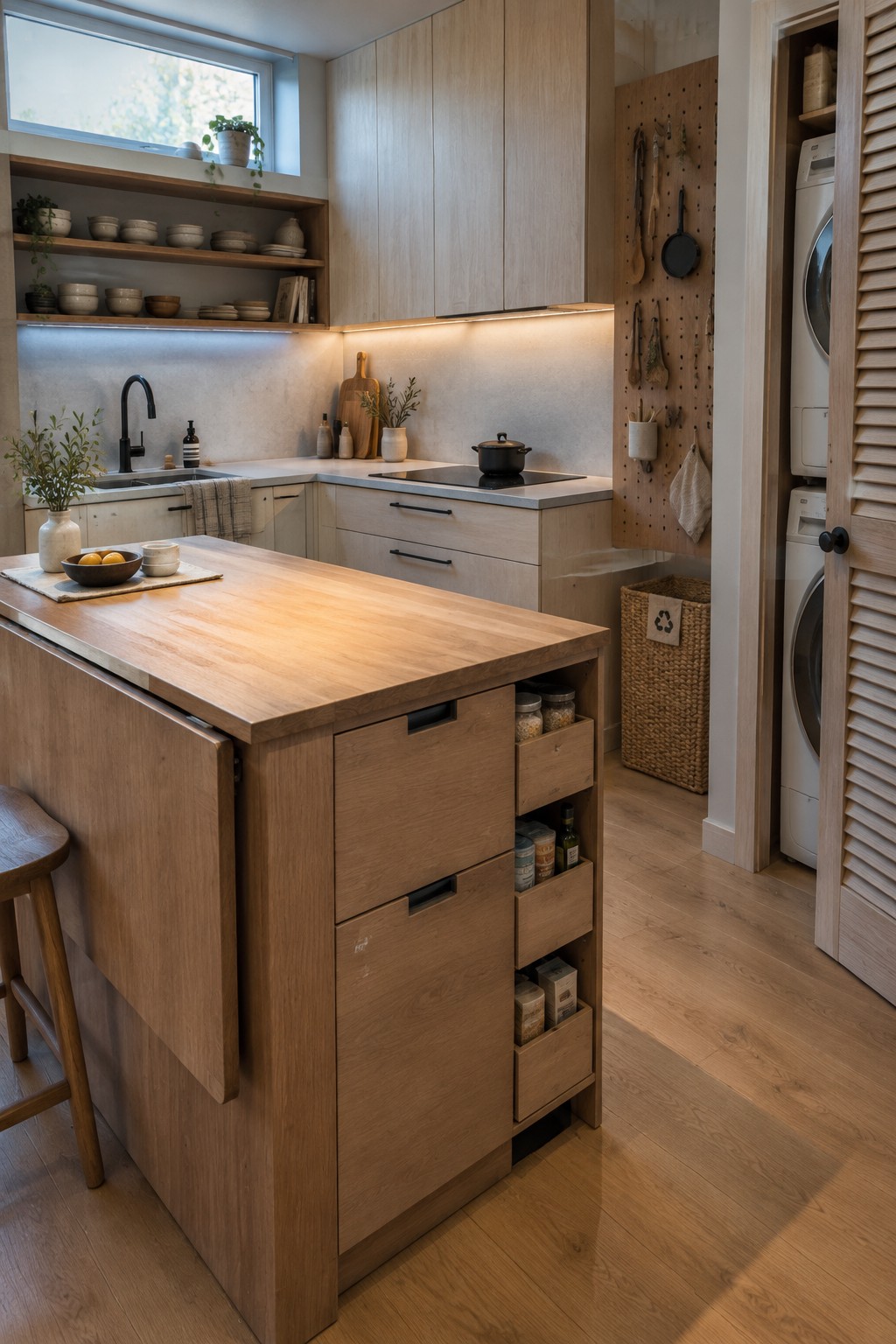
A compact island can do more than provide extra counter space. Here, the wooden top gives the kitchen room for food prep, while drawers and open shelves keep everyday supplies close at hand.
In a small apartment, look for an island with storage built into its base, and choose a size that still leaves a clear path around it. A pull-out or extendable top can be useful when you need extra workspace but want to keep the usual footprint modest.
Use Built-In Furniture To Save Space

Built-in furniture can make a small apartment work harder without adding bulky pieces. Here, a desk is fitted into the shelving, while the bed sits neatly in its own alcove.
This approach suits a narrow bedroom or studio where floor space is limited. Plan storage and a clear walkway first, then size the built-ins to fit the room rather than crowding it.
Make a Desk Do More Than One Job
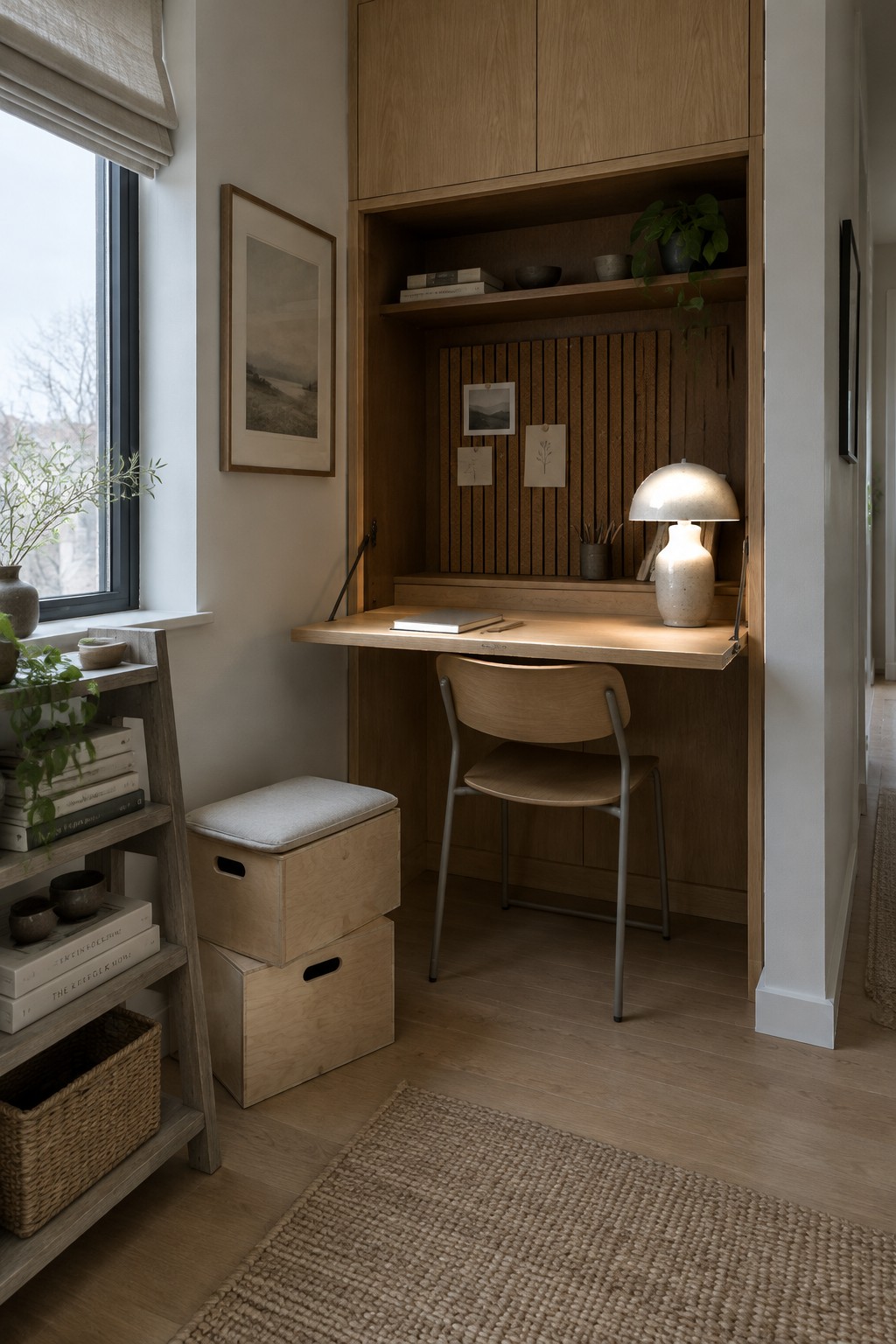
A built-in desk can turn an unused wall into a compact work area without taking up much floor space. Here, the work surface folds down from the wood cabinetry, then closes away when it is no longer needed.
This setup suits a small apartment, especially where a separate office would be hard to fit. Add a chair that can tuck underneath and keep the desk surface clear enough to fold up easily.
Add Hidden Storage To A Small Dining Area
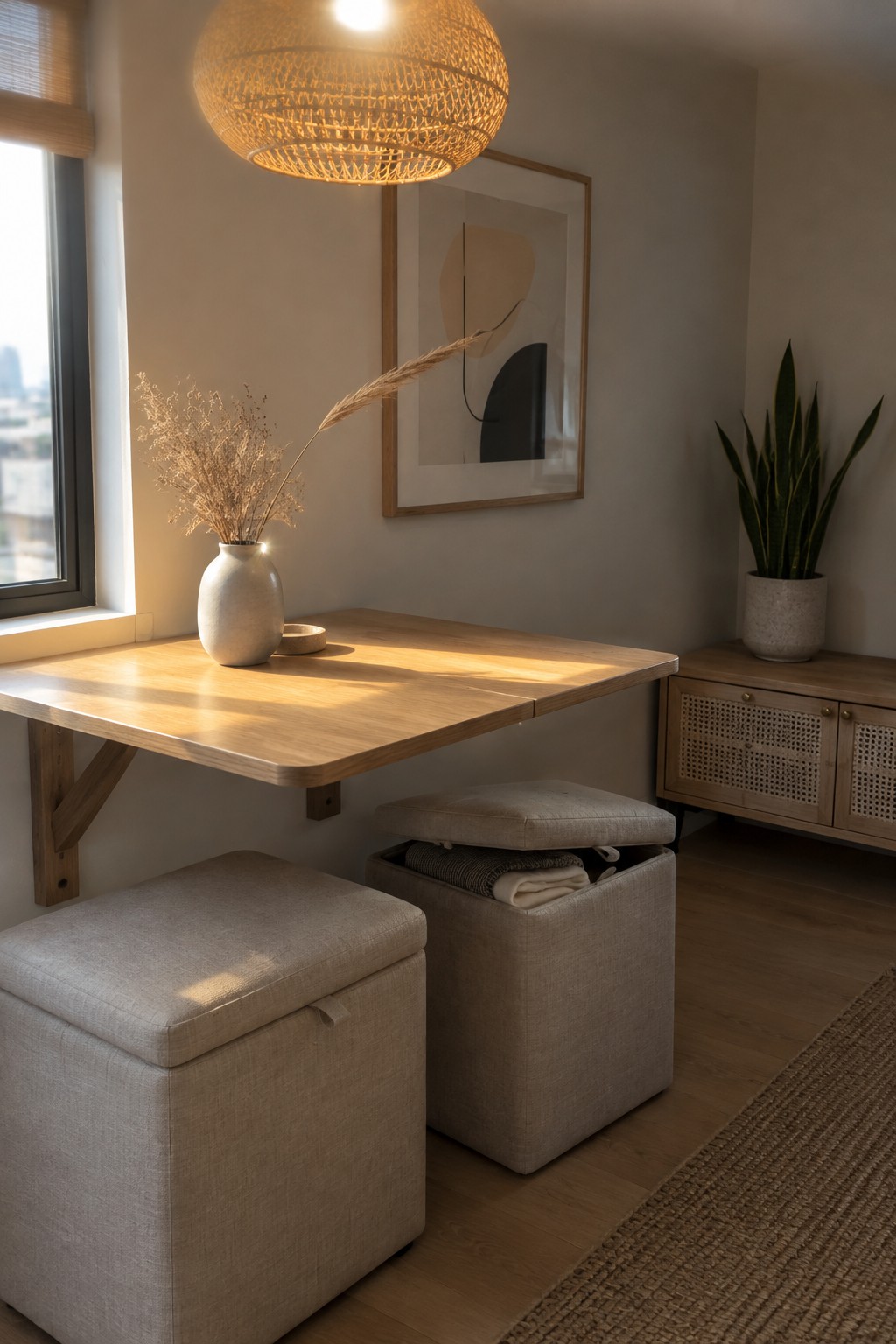
An ottoman that opens for storage can serve as a seat and a place to keep spare linens or other small items. In a compact apartment, furniture that handles two jobs helps reduce the need for extra storage pieces.
Use a pair of upholstered ottomans beneath a wall-mounted table to keep the floor flexible when the seats are not in use. Choose pieces that are easy to open and light enough to move around.
Add Entry Storage Without Taking Up Floor Space
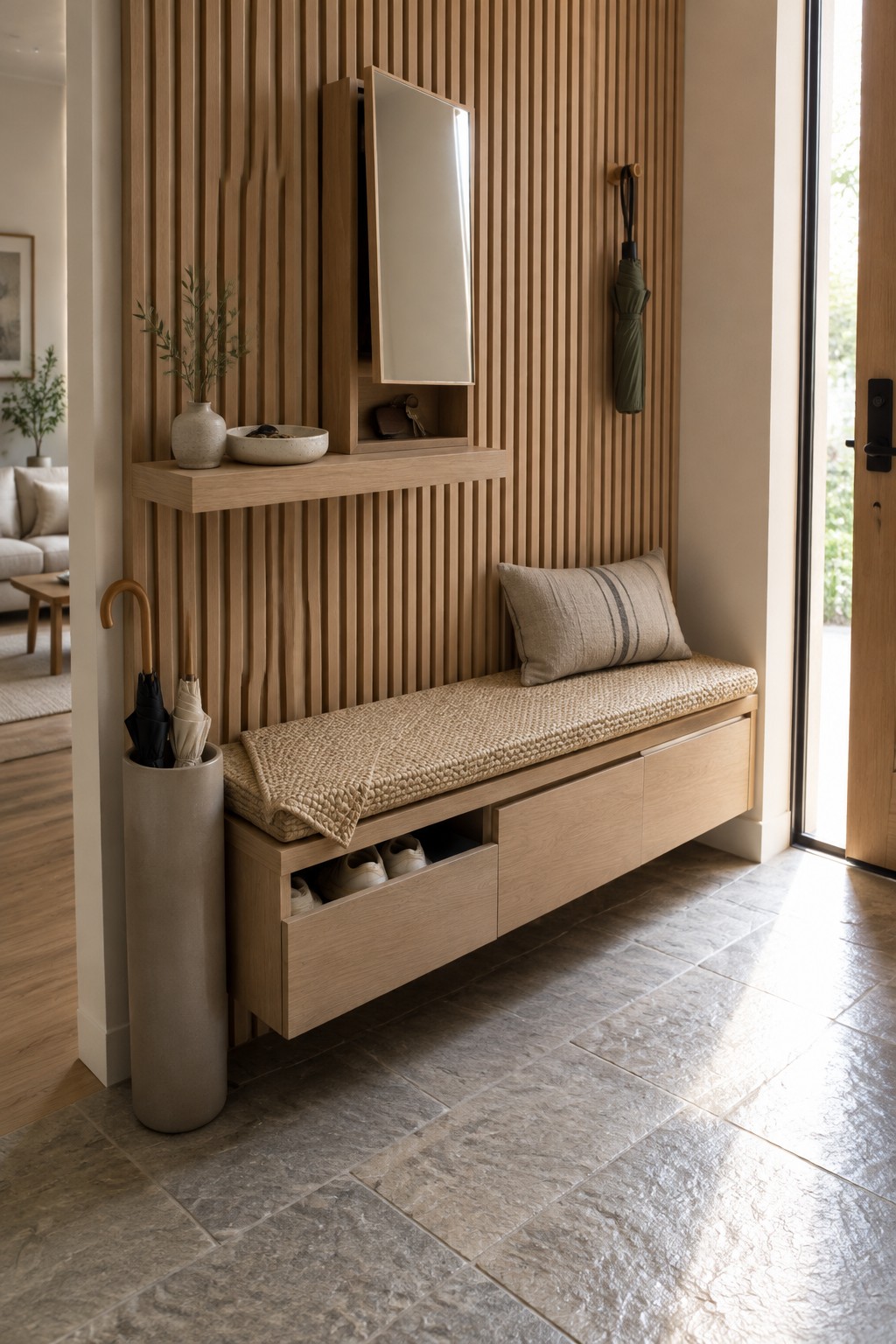
A built-in entry bench can give a small apartment useful storage without needing a separate freestanding cabinet. Here, drawers and an open shoe cubby sit below the seat, while the slim design keeps the entry area practical.
This works especially well in a narrow hallway or by the front door. A cushioned bench makes it comfortable to put on shoes, and vertical wall storage can hold everyday items without crowding the floor.
Add Hidden Laundry Storage To A Small Bathroom

A pull-out laundry hamper can make a small bathroom easier to keep tidy without taking up floor space. Built into the vanity, it stays close to where towels and clothes are used but can be tucked away when not needed.
This works best when the vanity has enough room for a hamper that slides out easily. A simple fabric liner makes it practical to lift out and carry to the wash.
Use A Crib To Shape A Small Nursery

A crib can help define the sleeping area without taking up the whole room. In this nursery, the light wood crib sits beside a dresser, leaving a clear path through the middle.
This layout suits a small apartment room where space has to serve a few purposes. Keep the crib close to the wall and use a narrow dresser nearby for changing supplies, while leaving enough room to move around safely.
Hide Laundry Appliances Inside Built-In Storage

Stacking the washer and dryer behind cabinet doors keeps them out of sight when they are not in use. In a small apartment, using the same built-in for laundry and a utility sink can make a tight area more useful without needing a separate laundry room.
Leave enough room for the appliance doors to open and for ventilation, and check that the machines can be reached for maintenance. A countertop above lower cabinets adds a handy place to sort or fold clothes.
Choose Storage Ottomans For Flexible Seating
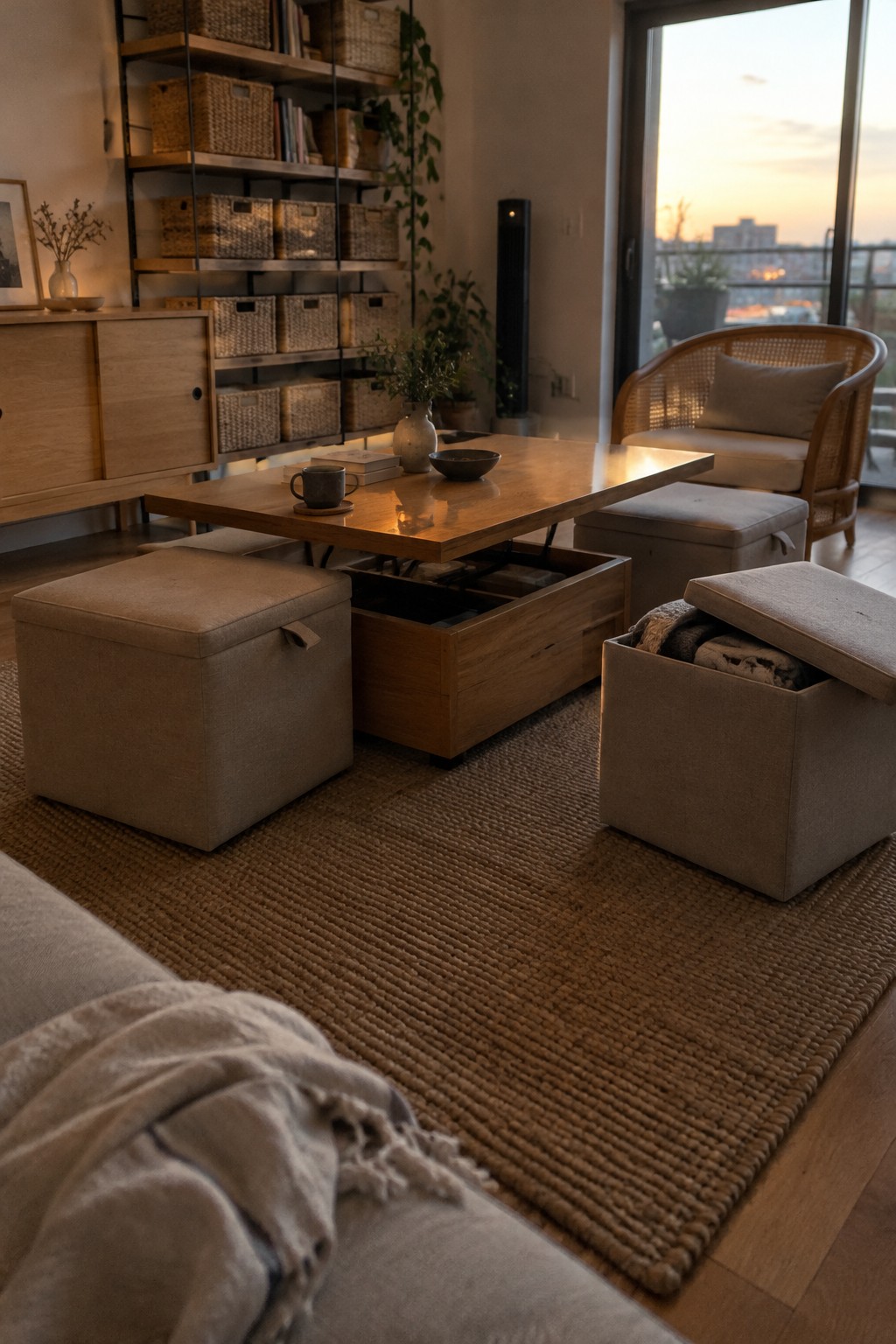
Storage ottomans are useful in a small living room because they can serve as footrests, extra seats, and a place to tuck away blankets. A pair can take the place of a bulky coffee table while keeping everyday items close at hand.
Look for ottomans with sturdy lids and enough space for the things you want to store. In a compact apartment, they work best when you can move them around easily, and a low table nearby can still provide a steady surface for drinks.
Make a Kitchen Peninsula Work as a Dining Spot
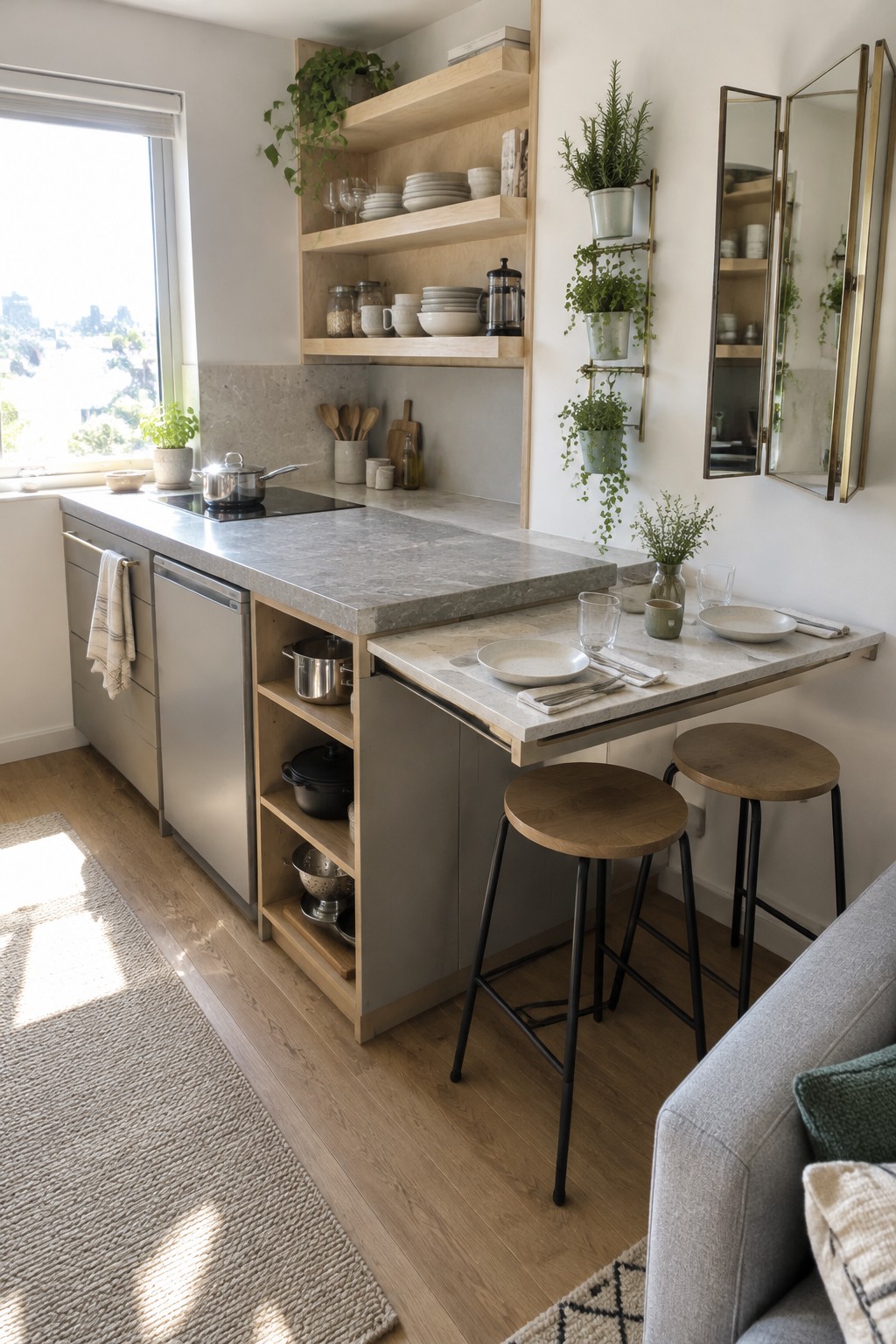
A narrow kitchen can use its counter as a casual place to eat instead of making room for a separate table. Here, a pull-out extension gives two people space for plates while keeping the main work surface clear.
This idea suits a small apartment where a full dining set would crowd the walkway. Choose stools that tuck neatly underneath, and make sure the extension can slide away when it is not in use.
Use Sliding Screens To Separate Small Rooms

A sliding screen can give a small apartment a little privacy without taking up the space a hinged door needs. Here, the shoji-style panels separate the sleeping area from the work space, and they can slide open when you want the rooms to feel connected.
This works well in studios or compact apartments where one room has to serve several purposes. Choose lightweight panels that are easy to move, and keep the opening wide enough for comfortable access.
Use A Wall Bench To Save Entryway Space
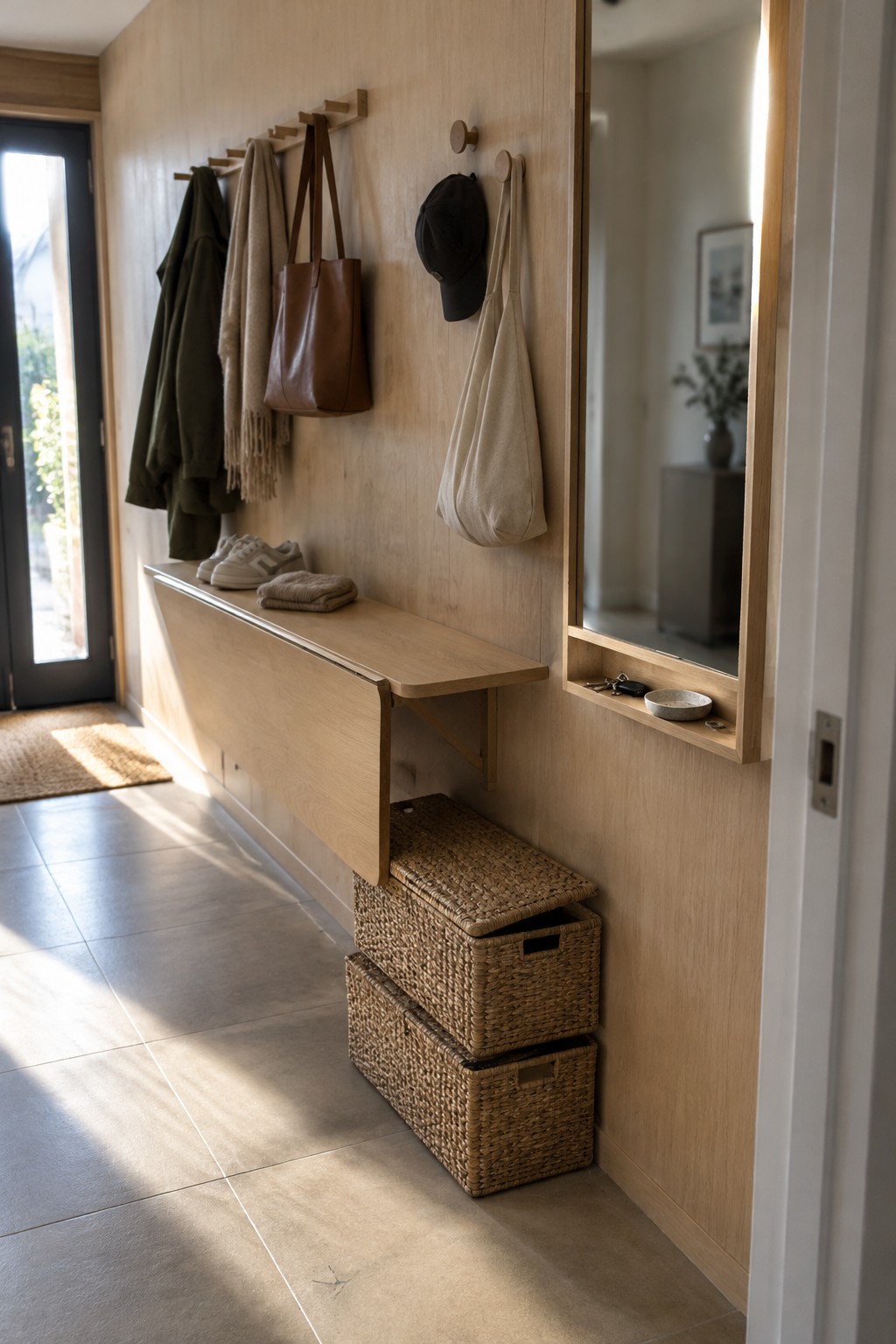
A wall-mounted bench keeps an entry useful without taking up as much floor space as a freestanding piece. It can serve as a spot to sit while putting on shoes, and the open area below can hold baskets for everyday storage.
This works especially well in a narrow apartment entry. Choose a sturdy bench with enough room for baskets underneath, and keep the surface mostly clear so it is easy to use.
Use Wall-Mounted Furniture To Free Up Floor Space
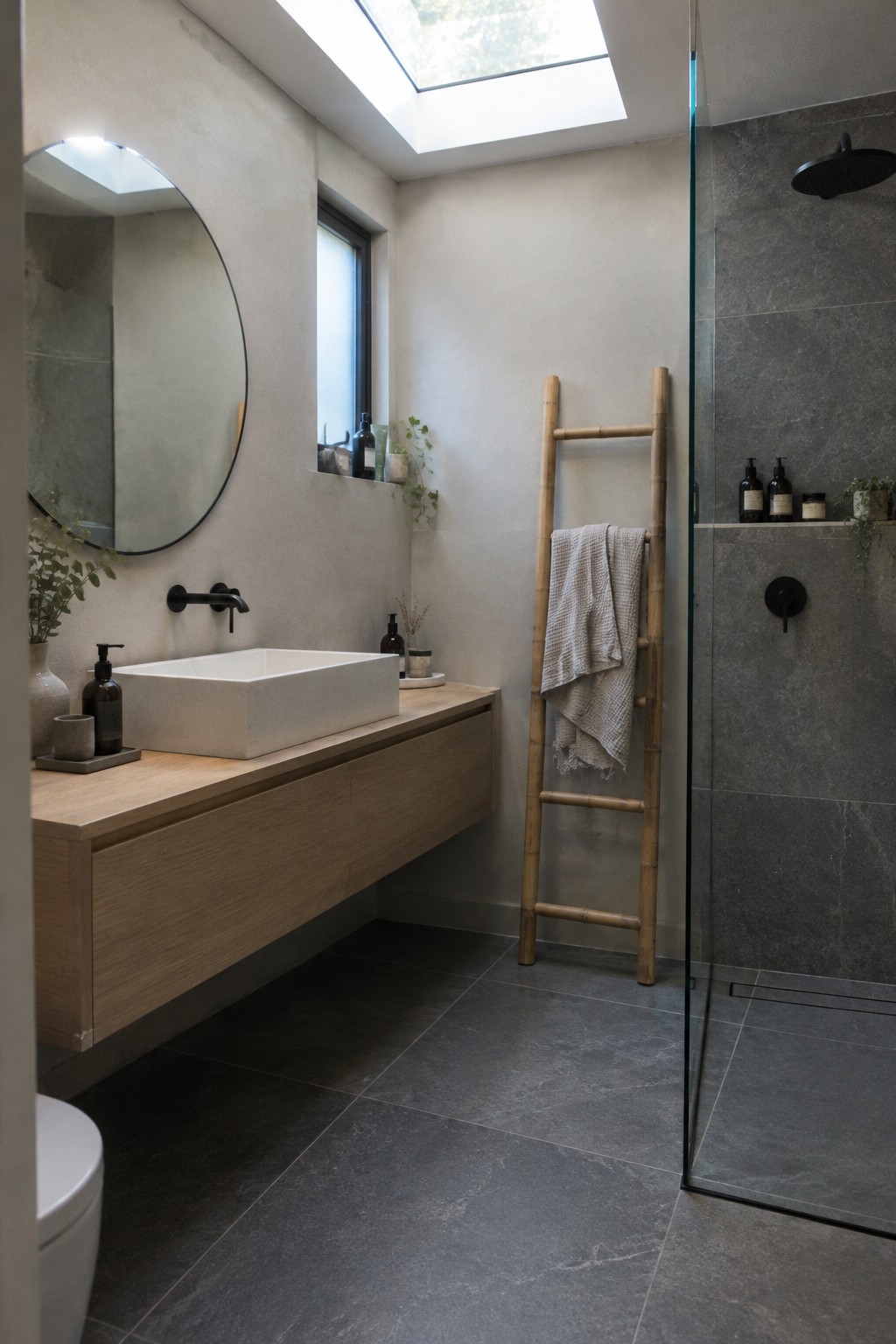
A floating vanity is a useful choice in a small bathroom because it keeps the floor visible and leaves room underneath. Here, the wood cabinet also provides practical storage without taking up extra space with legs or a base.
This idea suits compact apartments where every bit of floor area matters. Choose a vanity with enough drawers for daily essentials, and keep the countertop fairly clear so the bathroom stays easy to use.
Use a Wall-Mounted Table As A Work Surface
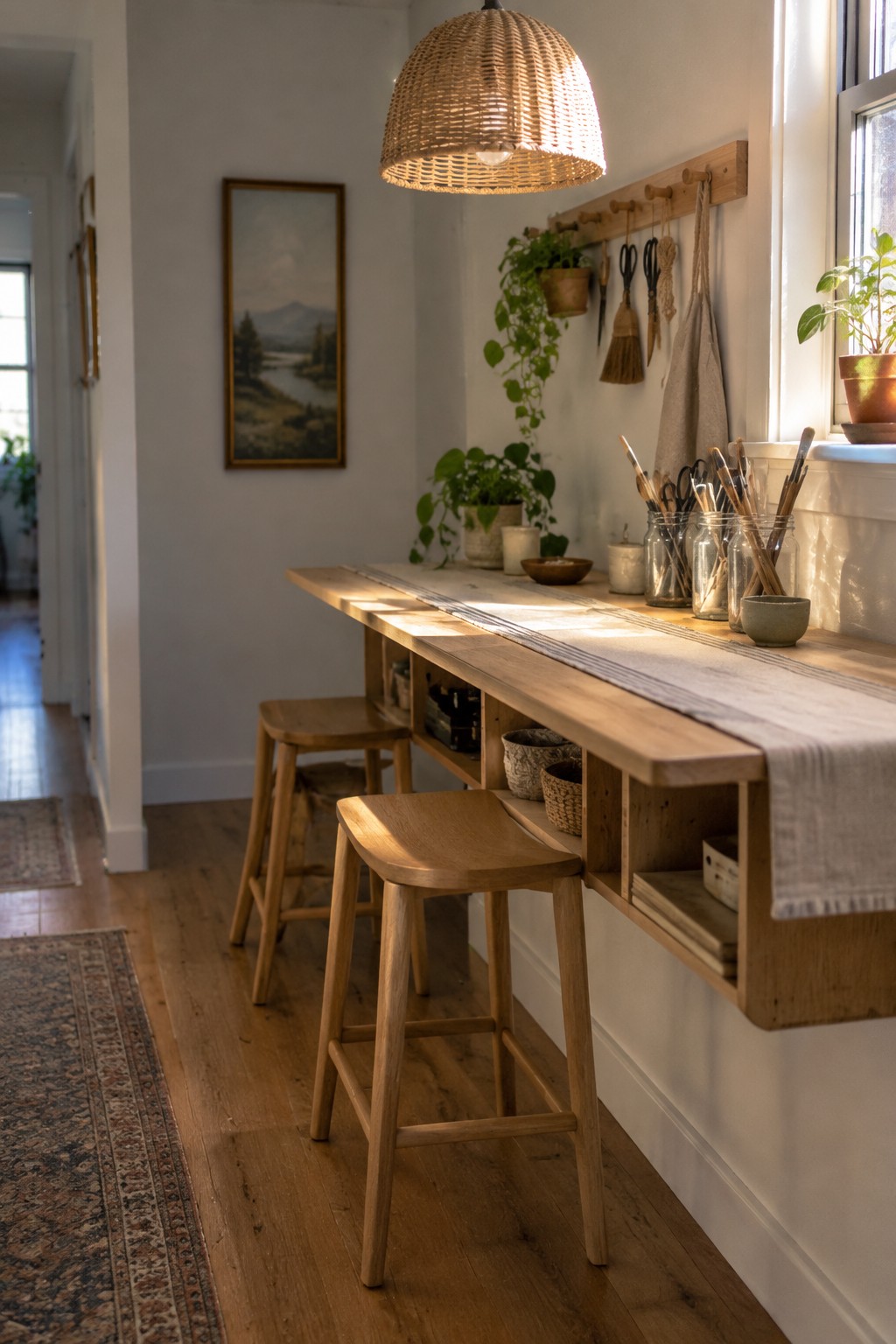
A slim wall-mounted table can give a small apartment a useful place to work, eat, or make things without taking up as much floor space as a freestanding desk. Open shelving beneath the tabletop keeps a few supplies close at hand while leaving the area feeling light.
This setup works well along an unused wall or beneath a window. Choose a sturdy table that suits the tasks you do most, and keep the surface clear enough to switch between uses.
Choose a Sectional That Makes Room To Stretch Out
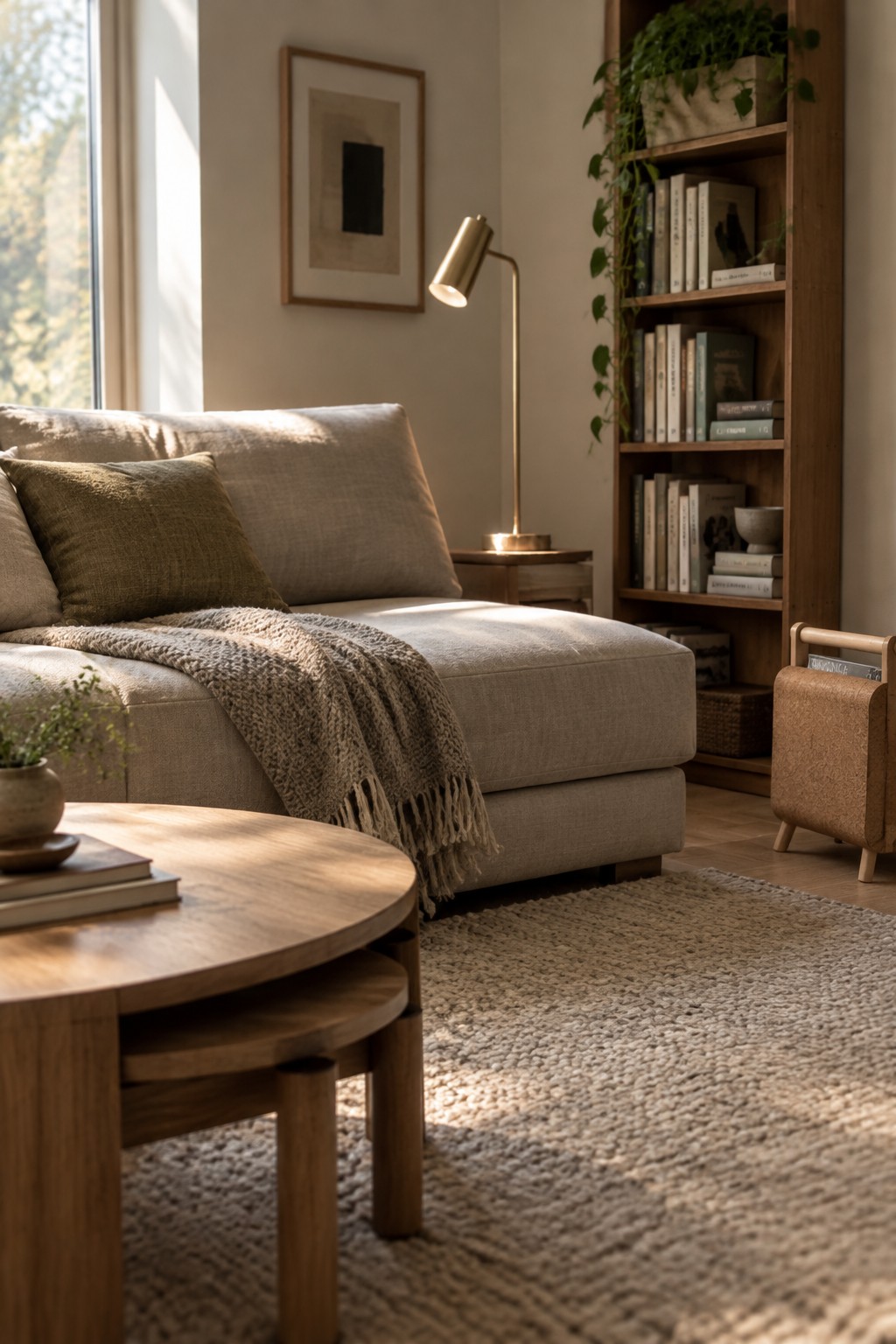
A chaise sectional can give a small living room a comfortable place to lounge without needing a separate footstool or extra chair. Its long seat makes good use of one side of the room, while the rest of the seating stays together.
Look for a compact model with a slim profile, and check that the chaise leaves a clear path through the room. A light, neutral upholstery can also help a large piece feel less imposing.
Hide Laundry Appliances Behind Sliding Doors
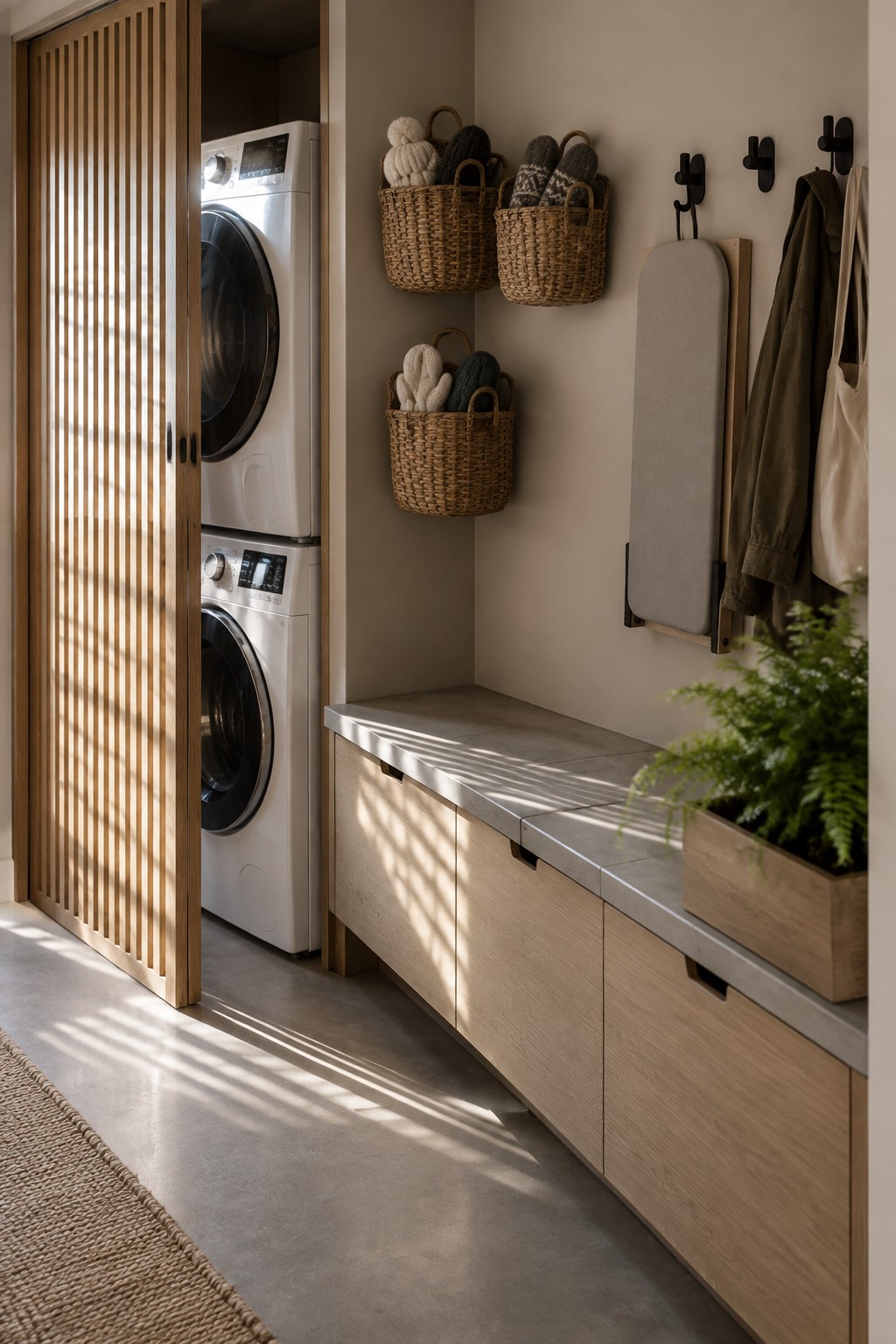
A laundry nook can fit into a small apartment without making the machines part of the everyday view. Here, a slatted sliding door closes over a stacked washer and dryer, while the narrow footprint leaves room for useful storage nearby.
This approach works well in a hallway or utility corner where swing-out doors would take up space. Use a door that slides clear of the machines, and leave enough ventilation and access for maintenance.
Frequently Asked Questions
Q: How do I keep multifunctional furniture from making a small apartment feel crowded?
A: Choose a few pieces that solve real problems, like a storage bench or a dining table that folds away. Leave some open floor space around them so the room still feels calm and easy to move through.
Q: What colors work well for a Japandi apartment with very little natural light?
A: Try warm whites, pale wood, and soft beige rather than stark white, which can feel chilly in dim rooms. Add contrast with a few darker accents, such as a black lamp or walnut-toned shelf.
Q: Can I mix secondhand furniture with Japandi style?
A: Absolutely. Look for simple shapes and natural materials, then focus on how each piece functions in your space. A few signs of age can make the room feel more lived-in, not less Japandi.
Q: What should I look for in a sofa bed for a small apartment?
A: Check that it opens without blocking a doorway or leaving you with no room to walk. A clean-lined design with built-in storage can help keep bedding tucked away when the sofa is in use.
