

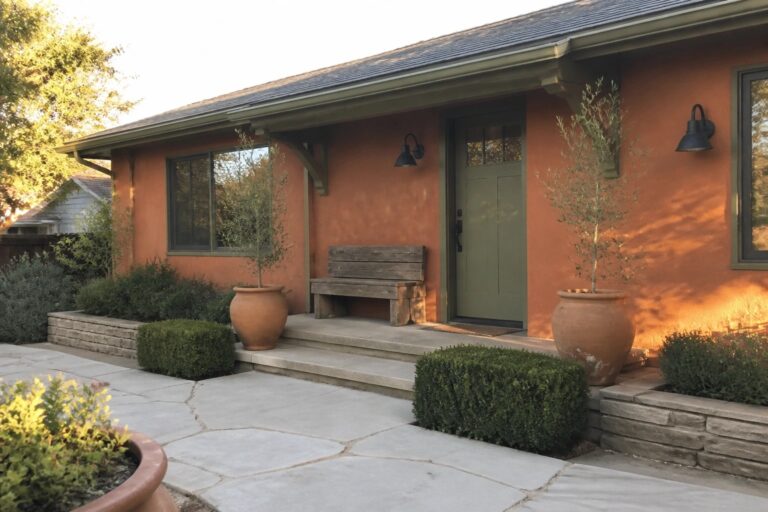
I have walked by plenty of homes where green and orange exteriors stand out mainly because the olive accents tie the materials together in a natural way that suits the surrounding landscape.
Picking colors for a facade means thinking about how they interact with the roofline and entry rather than just matching a palette in isolation.
The details matter most here.
Over time I have seen that olive accents placed near windows or along the porch can prevent the brighter orange from feeling too harsh against the green base.
Adapting these pairings to my own place would start with checking how the light hits the front of the house at different times before making any final choices.
Pairing Earthy Orange With Olive Green Accents
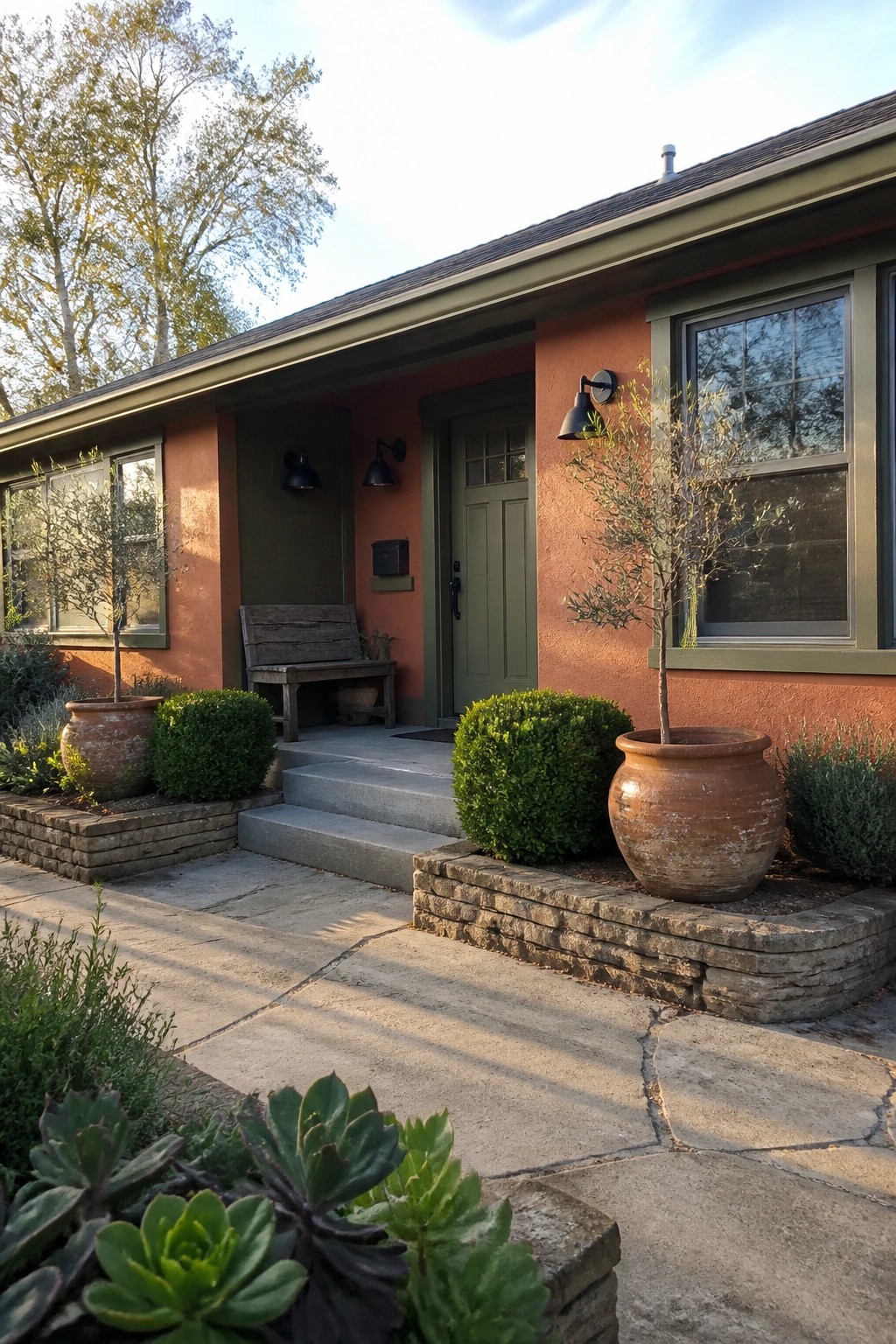
This color mix gives an exterior a settled, warm look without feeling heavy. The orange stucco acts as a soft base while the olive green on the door and trim adds quiet structure that keeps the whole front from drifting into one flat tone.
It works best on simple stucco homes where you want the entry to stand out in a natural way. Keep the green on the muted side and let a few large pots or low shrubs carry the same tones so the colors feel connected rather than added on.
Pairing Green Siding With Orange Accents
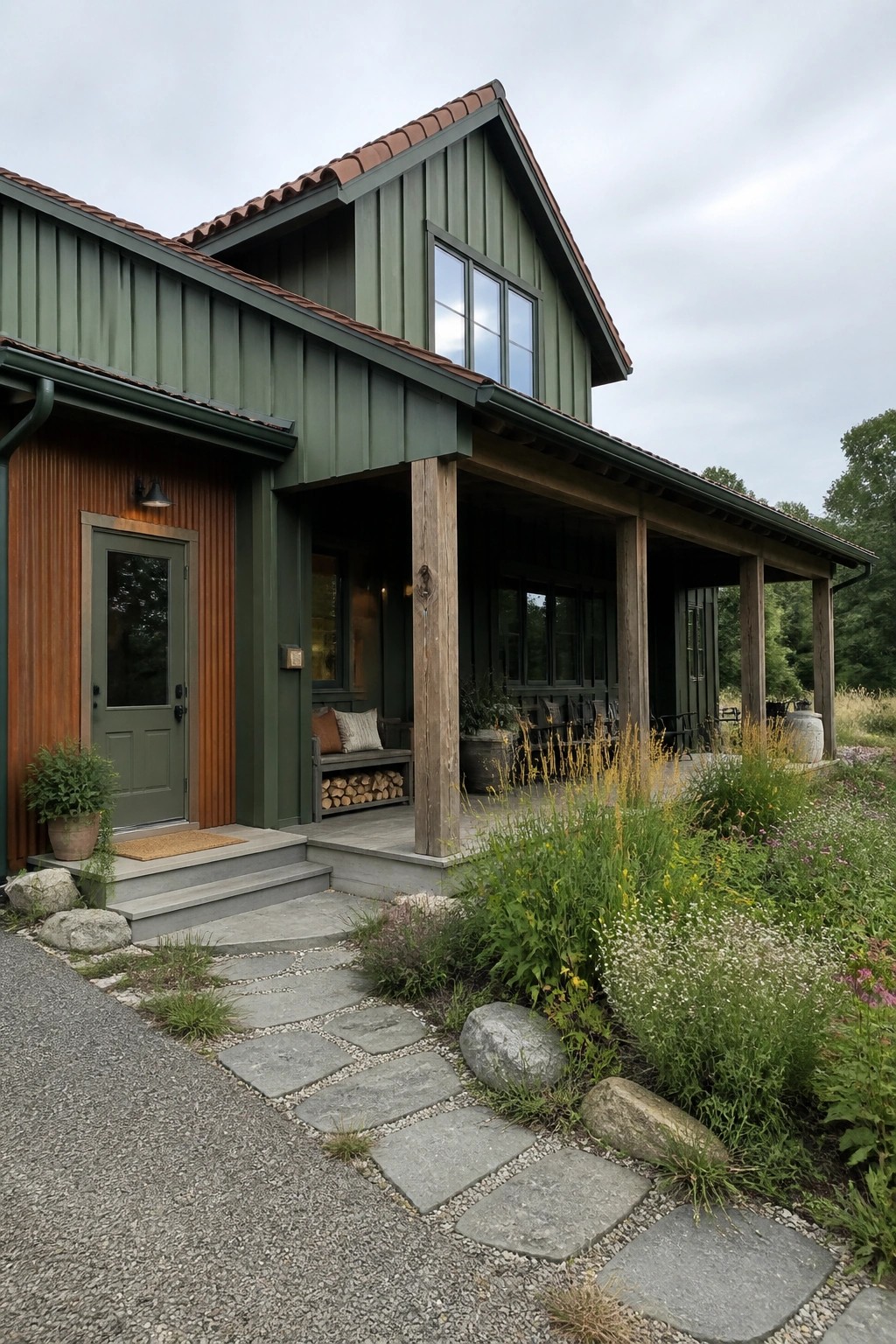
Green siding stands out more when you add a warm orange accent right at the entry. The contrast keeps the house from feeling flat and gives it a simple, grounded look that works in most seasons. Many homes use this mix because it feels natural without needing a lot of extra color.
This approach suits houses with clean rooflines and wood porch details. Keep the orange limited to one panel or the door itself so it does not overpower the green. It works best on homes that already have some wood or stone nearby to tie the colors together.
Olive Green Shutters on Warm Orange Walls
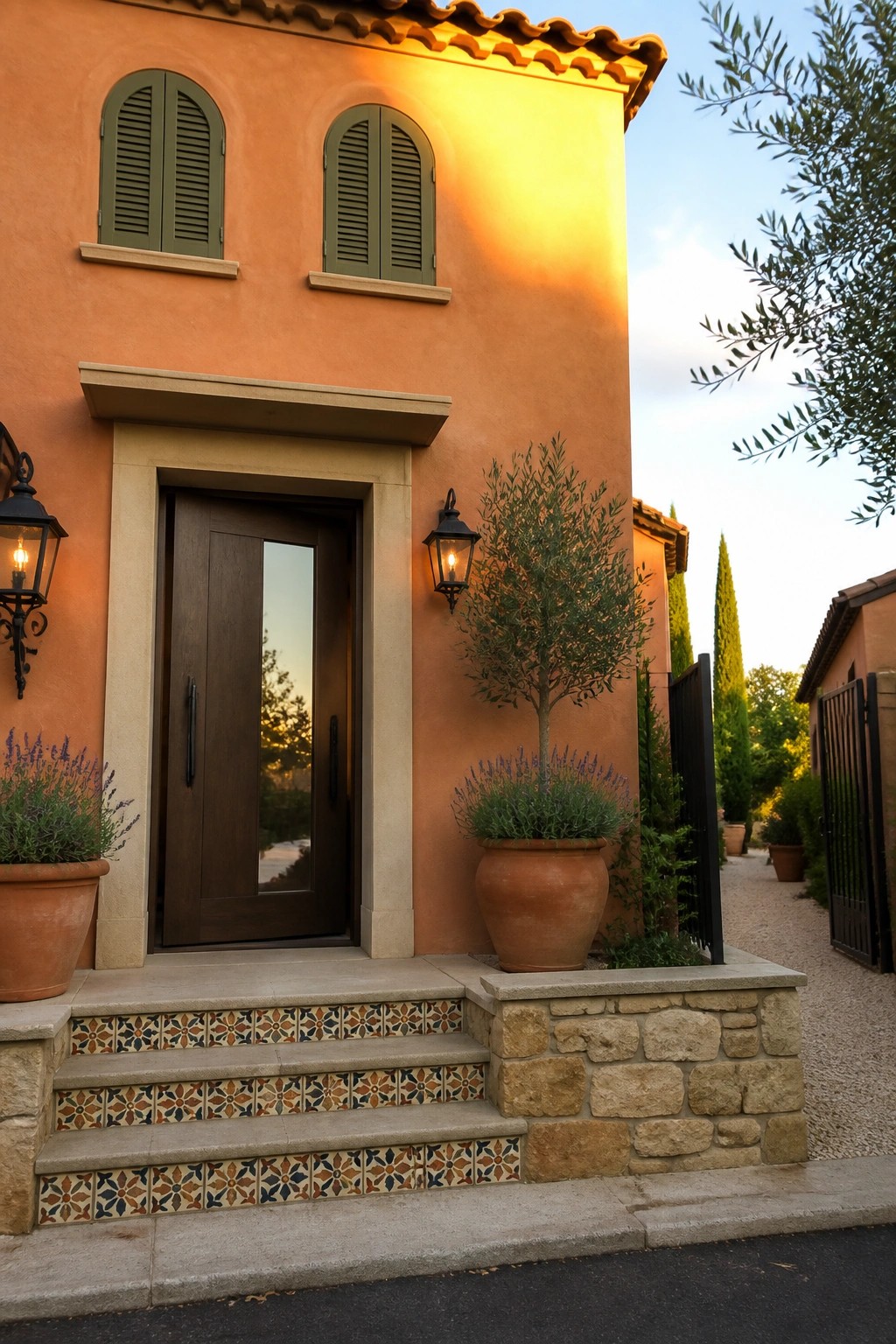
Many people like the way olive green shutters sit against a warm orange stucco wall. The contrast feels natural and gives the front of the house a settled look without needing a lot of extra trim or detail.
This approach works best on simple facades where the shutters can be the main accent. Keep other elements like the door and pots in wood tones or terracotta so the green and orange stay the focus.
Mixing Wood Siding with Metal on the Facade
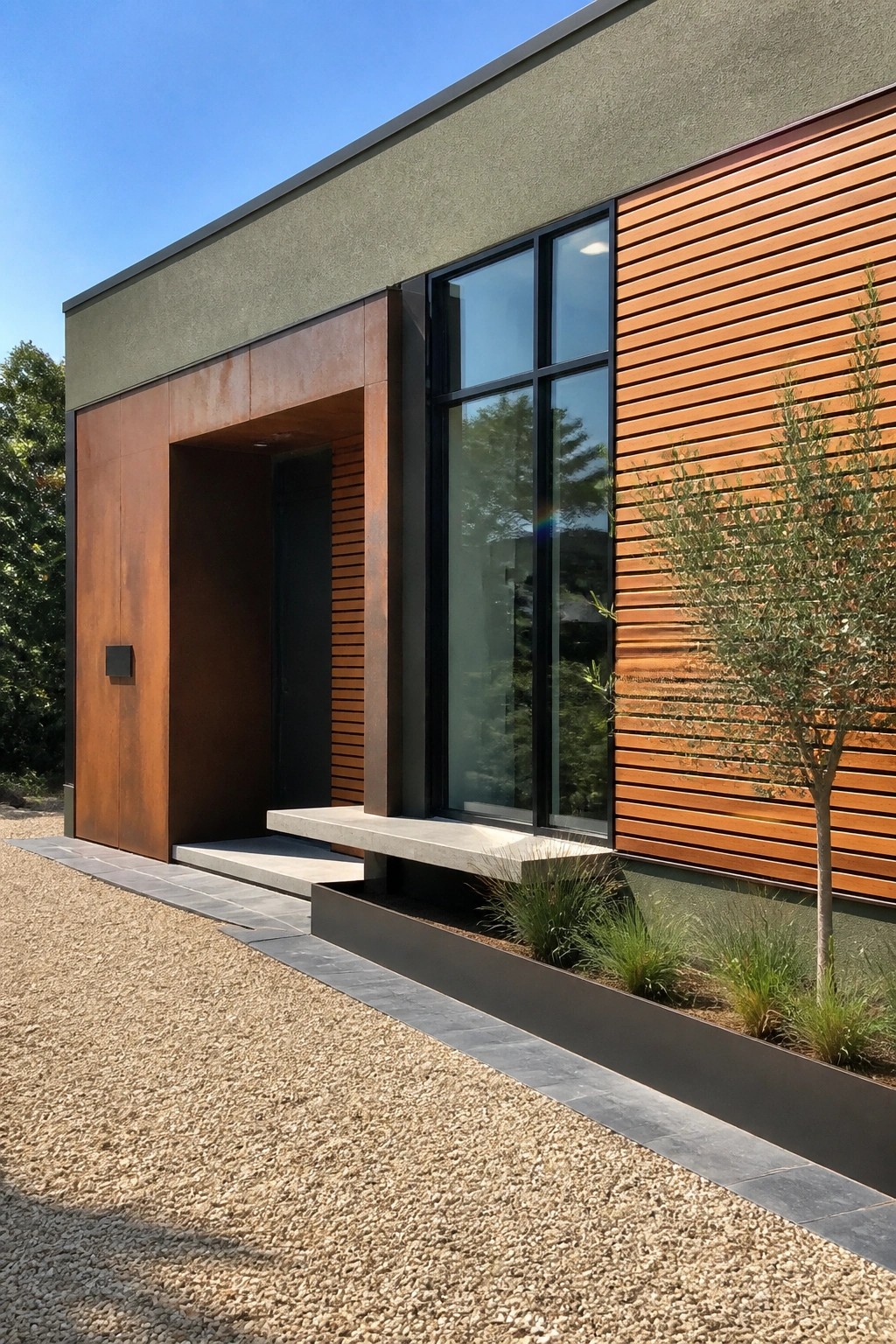
One simple way to give a house an earthy look is to run warm orange wood siding next to a soft green wall and add rusted metal around the entry. The mix keeps the exterior feeling natural while still looking modern and structured.
This works best on homes with straight lines where you want the materials to do the talking. Use the wood in a horizontal pattern and keep the metal to key spots like the door surround so the colors stay balanced instead of competing.
Olive Green Trim On Warm Wood Siding
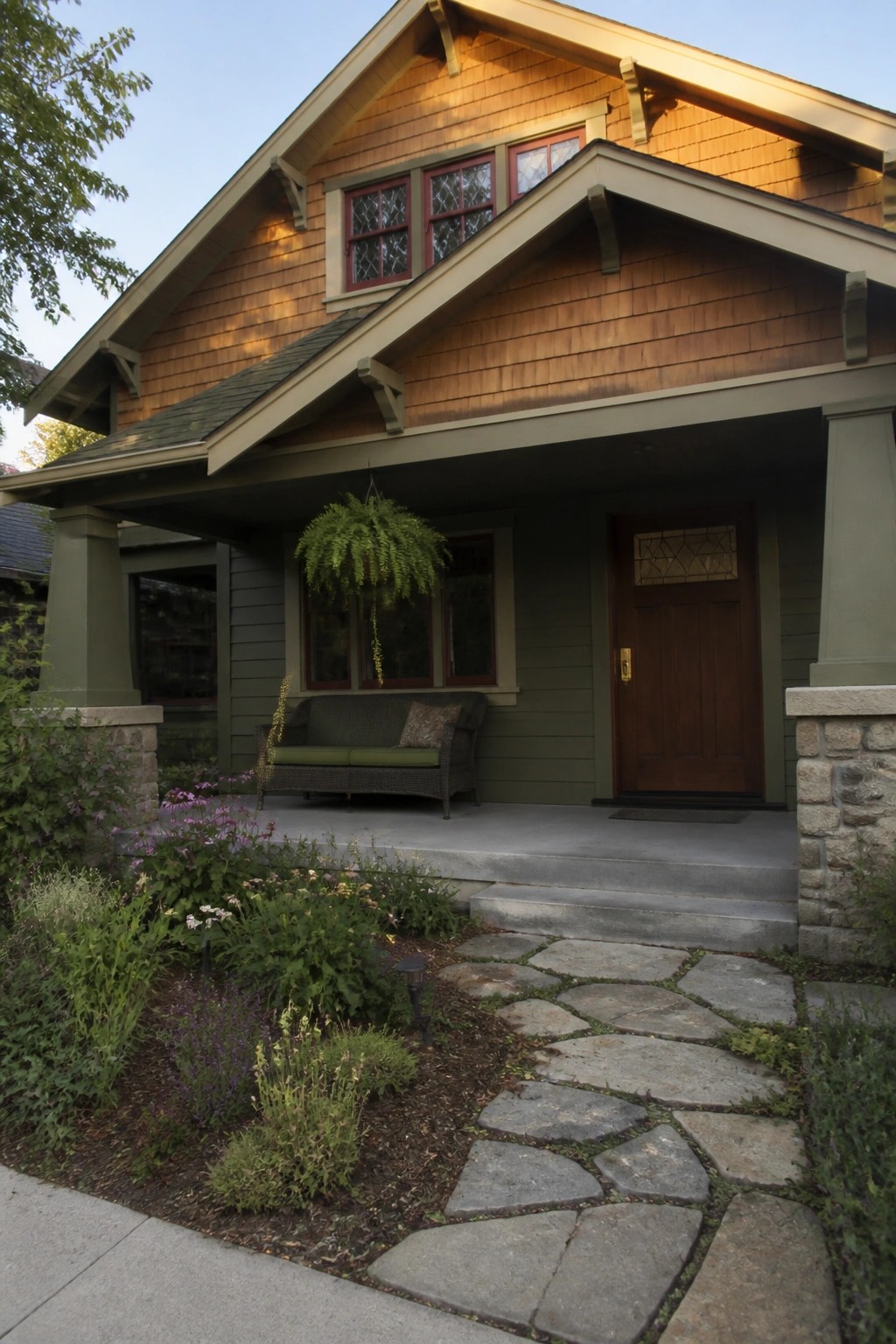
This mix works because the olive green pulls the warm wood tones down to earth without dulling them. The green reads as a natural extension of the surrounding plants and keeps the front from feeling too heavy or orange.
It suits homes with straightforward rooflines and some stone or concrete near the base. Use a muted olive rather than a bright green so the colors settle together instead of fighting for attention.
Pairing Orange Brick With Olive Green Siding
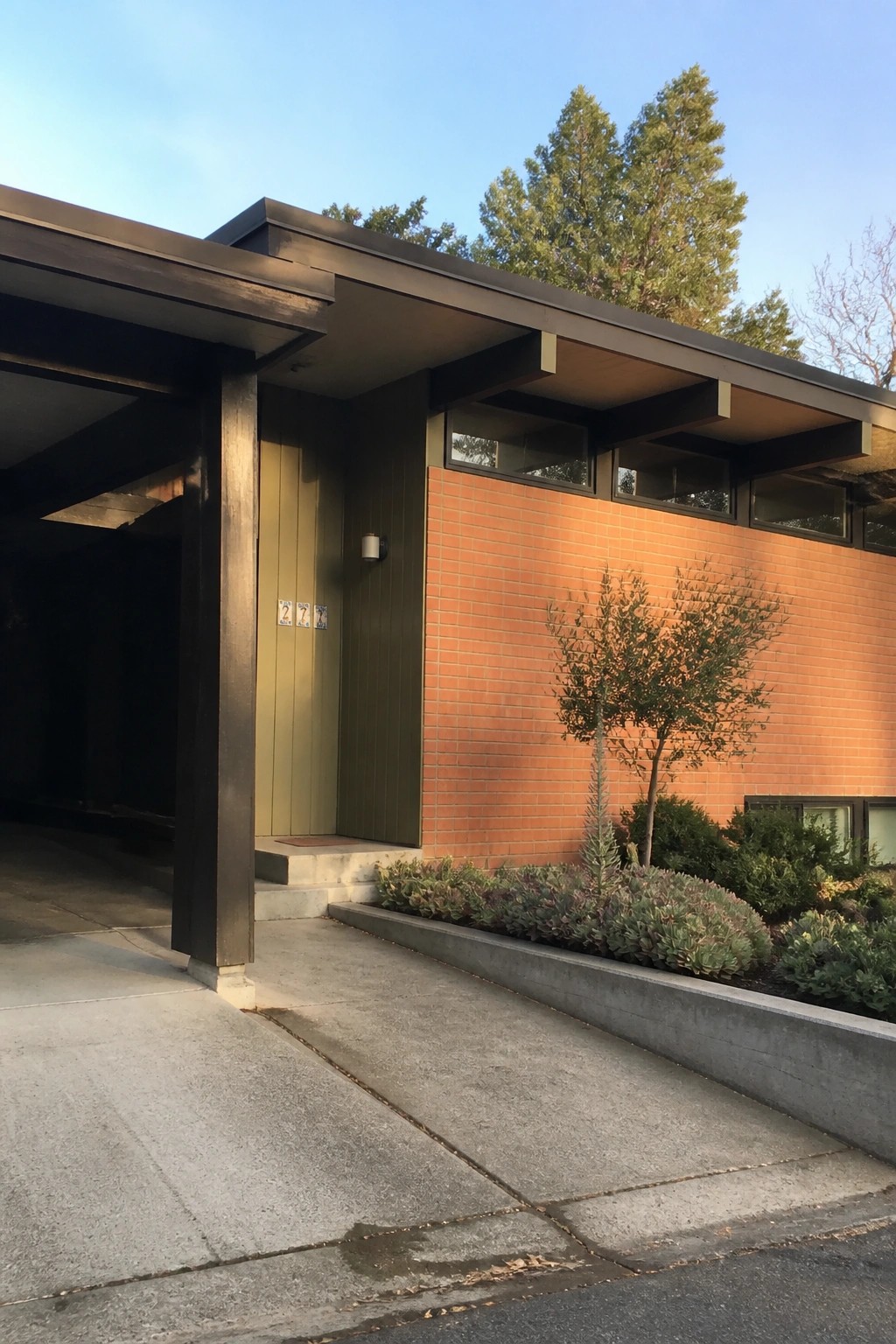
Many homes look better when orange brick meets a muted olive green on the siding. The two colors balance each other without one overpowering the other, and the green softens the stronger tone of the brick.
This mix works well on mid century houses or any exterior that already has some planting nearby. Keep the roofline and trim dark so the colors stay clear and the whole front stays simple.
Green House Color With Terracotta Entry Tile
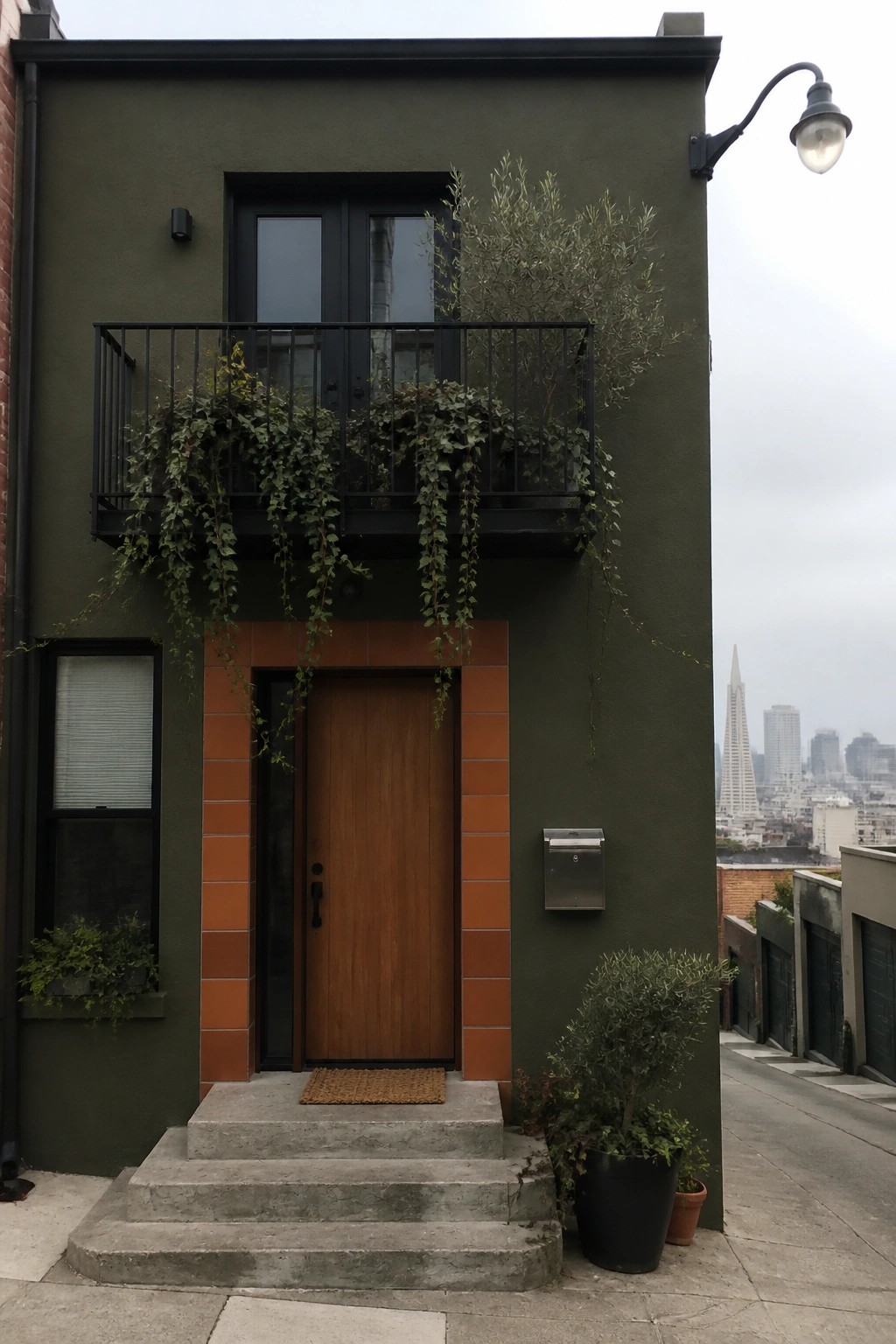
A deep green exterior can feel flat on its own, but wrapping the door in warm orange tile gives it an immediate lift. The tile adds contrast without needing extra trim or bright paint, and it works especially well on simple, boxy homes where the entry needs a little weight.
This approach suits homes with clean lines and small front setbacks. Keep the tile to just the door surround so the green stays the main color, and choose a matte finish on the tile to match the earthy tone of the walls.
Olive Green Accents for Orange Brick Exteriors
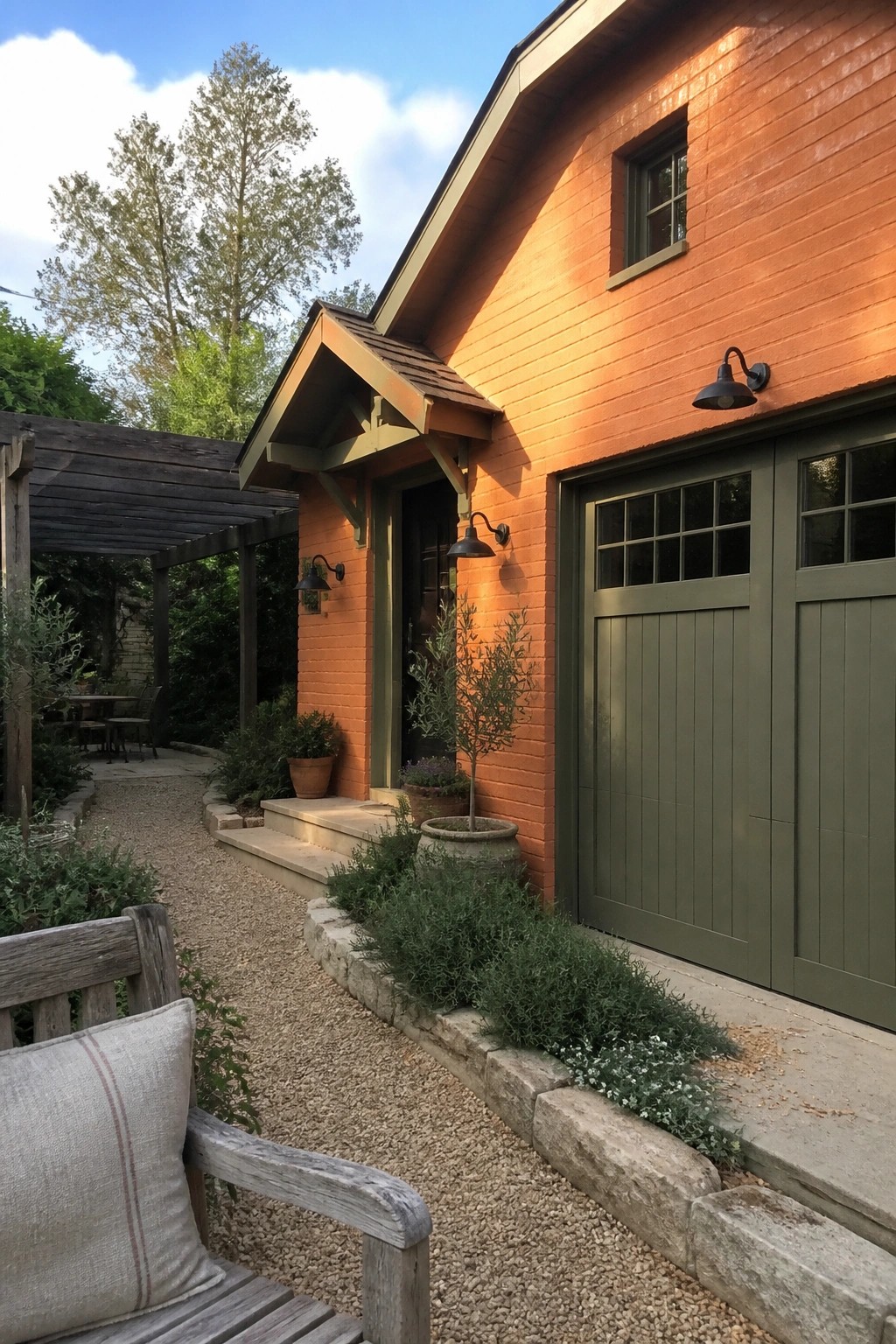
Olive green works well as an accent color on an orange brick house because it keeps the warm tones from feeling too bright. The darker green doors and trim add a quiet contrast that blends with surrounding plants and trees.
This color pairing suits homes with simple shapes and natural materials. Use it on the main doors and garage first, then match any trim or hardware to keep the look consistent across the facade.
Olive Green Cushions on Wooden Porch Chairs
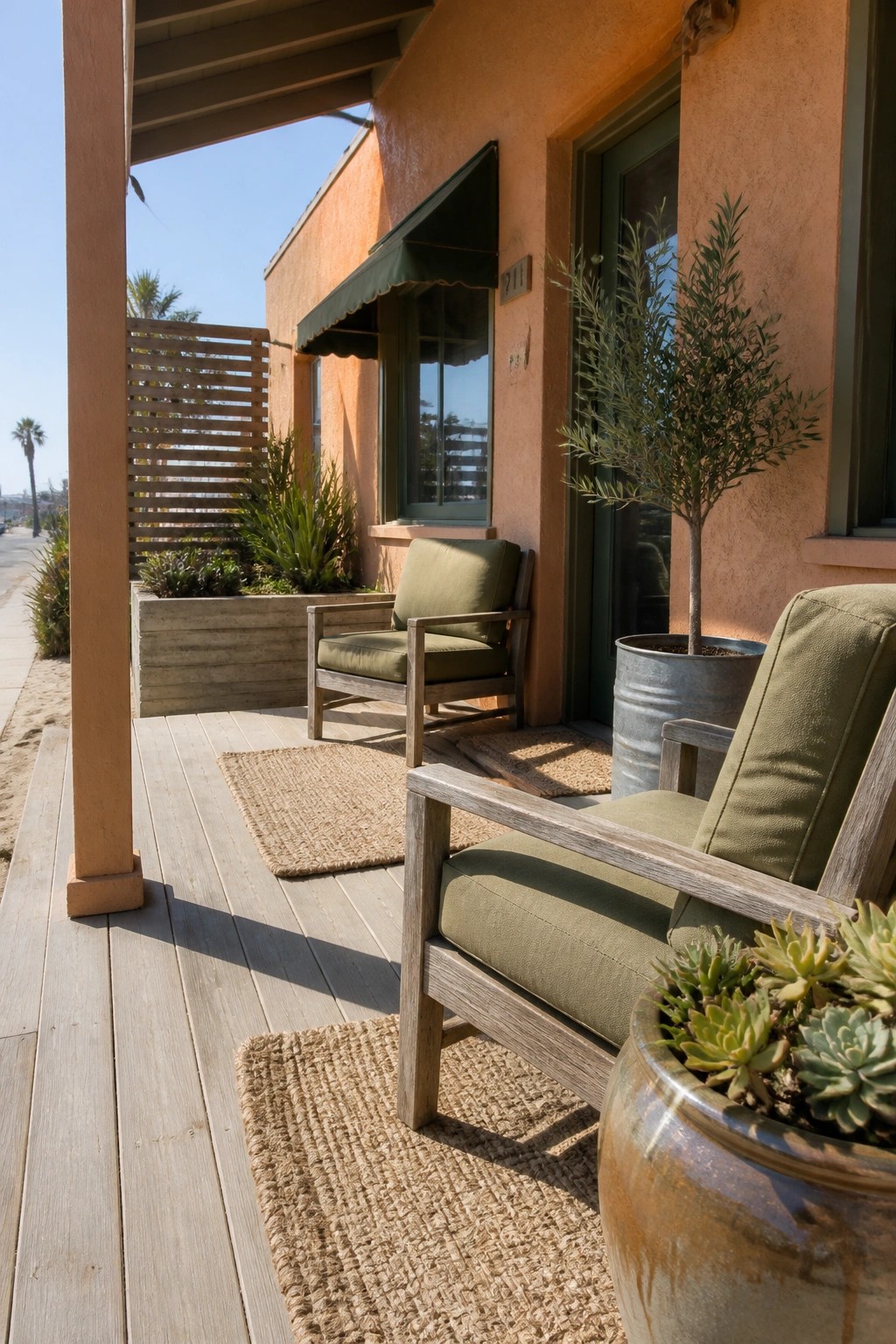
Olive green cushions work especially well on natural wood chairs when the house has warm stucco walls. The color sits nicely against the orange tone and keeps the seating from feeling too stark or separate from the rest of the exterior.
This approach suits homes with simple porches or decks where you want the furniture to feel relaxed rather than styled. Stick to a couple of woven rugs and a few large pots so the green stays as an accent instead of taking over the space.
Olive Green Accents On Brick Exteriors
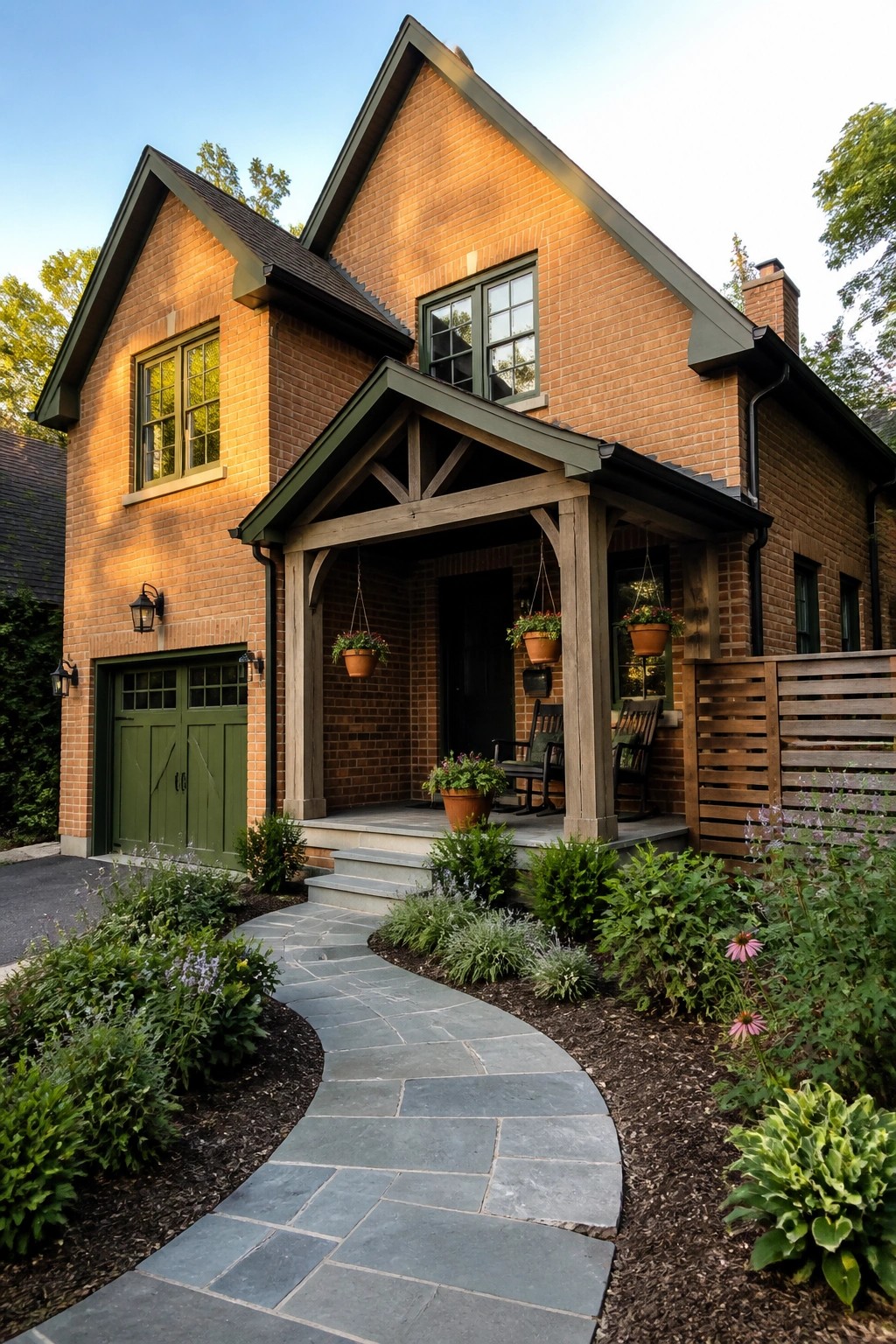
Olive green trim and doors bring a quiet balance to warm brick exteriors. The color sits well against the orange tones in the brick and keeps the whole front from feeling too heavy or flat. It works especially well on homes that already have a simple roofline and a few strong architectural details like exposed beams or divided windows.
This approach suits older brick houses or newer builds that want a softer traditional look. Stick to two or three main accent spots such as the front door, garage doors, and porch posts so the green does not get spread too thin. Darker olive shades hold up better in full sun than lighter greens.
Olive Trees With Warm Orange Exteriors
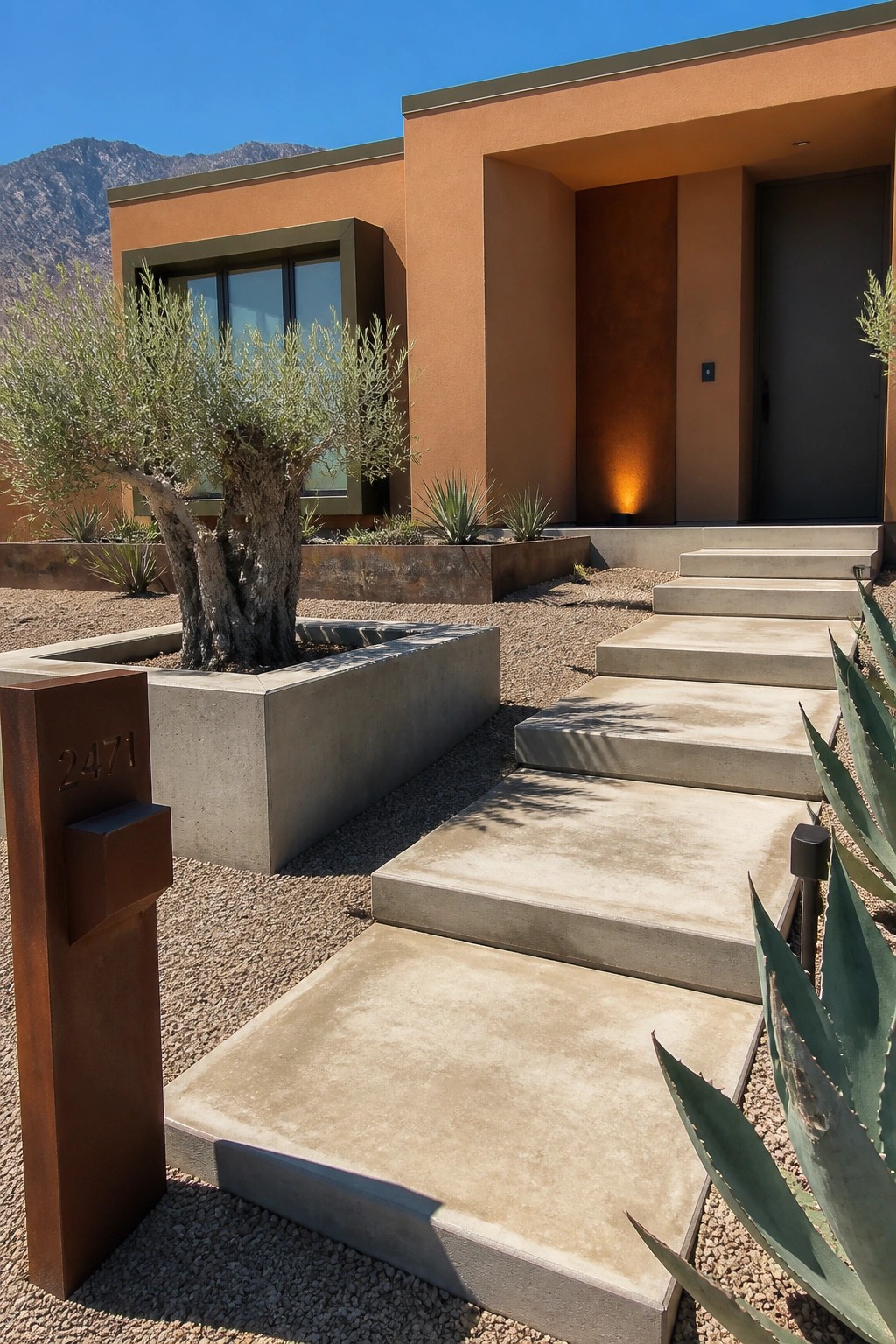
Many homes in dry areas use a bold orange stucco on the outside walls. An olive tree planted close by adds a soft green note that tones the color down and makes the whole front feel more natural.
This approach suits modern houses with simple shapes and concrete details. Set the tree in a large planter near the entry path so the branches frame the door without blocking light or views.
Orange Walls with Olive Green Doors
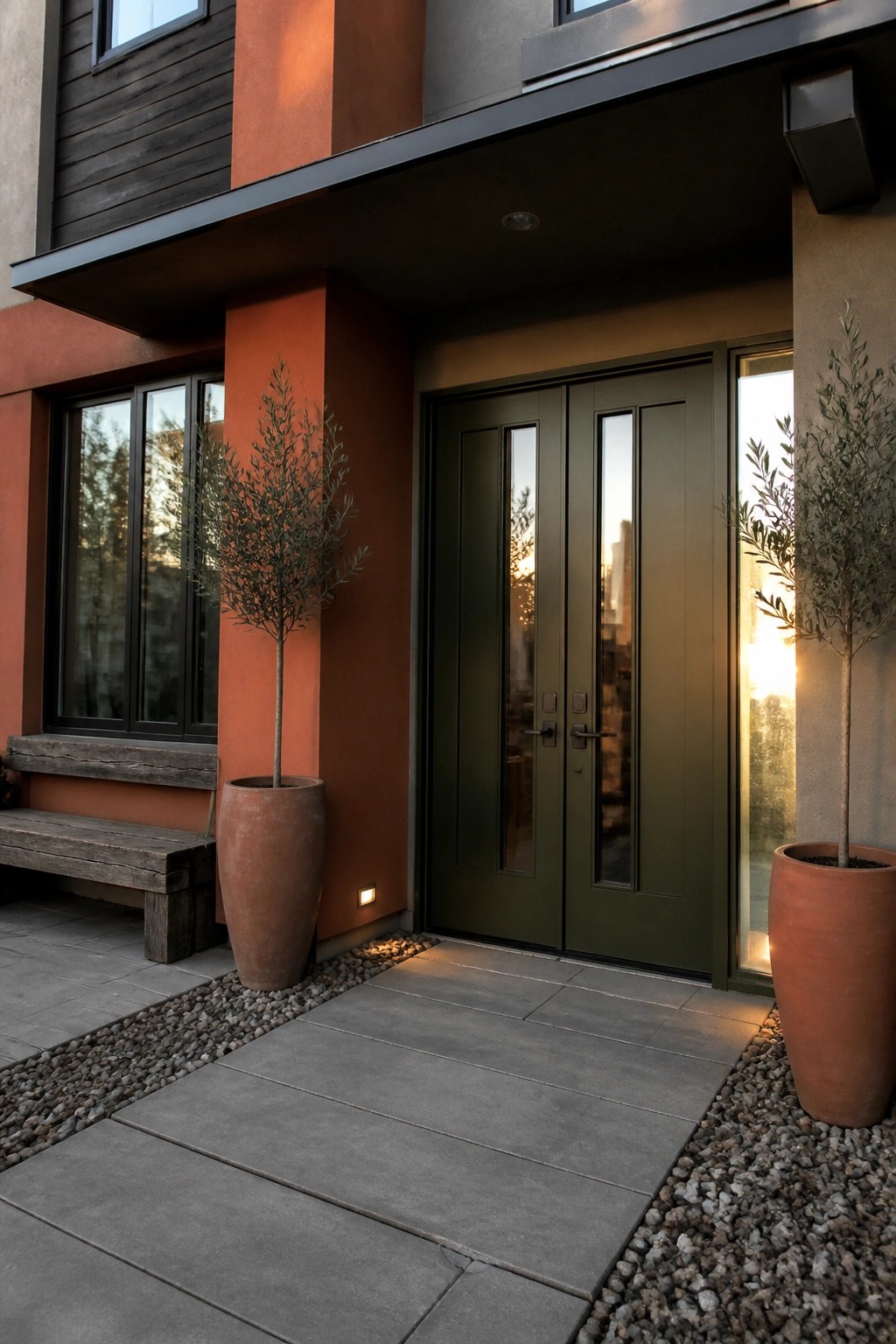
Many homes gain a grounded feel when they use a warm orange tone across the main walls and pair it with deep olive green on the doors. The contrast keeps the entry from feeling flat while still looking natural and simple.
This approach suits houses with straightforward shapes and larger doorways. Use the green on the doors and any nearby trim so the orange stays the main color without overpowering the whole front.
Built-In Seating For Compact Courtyards
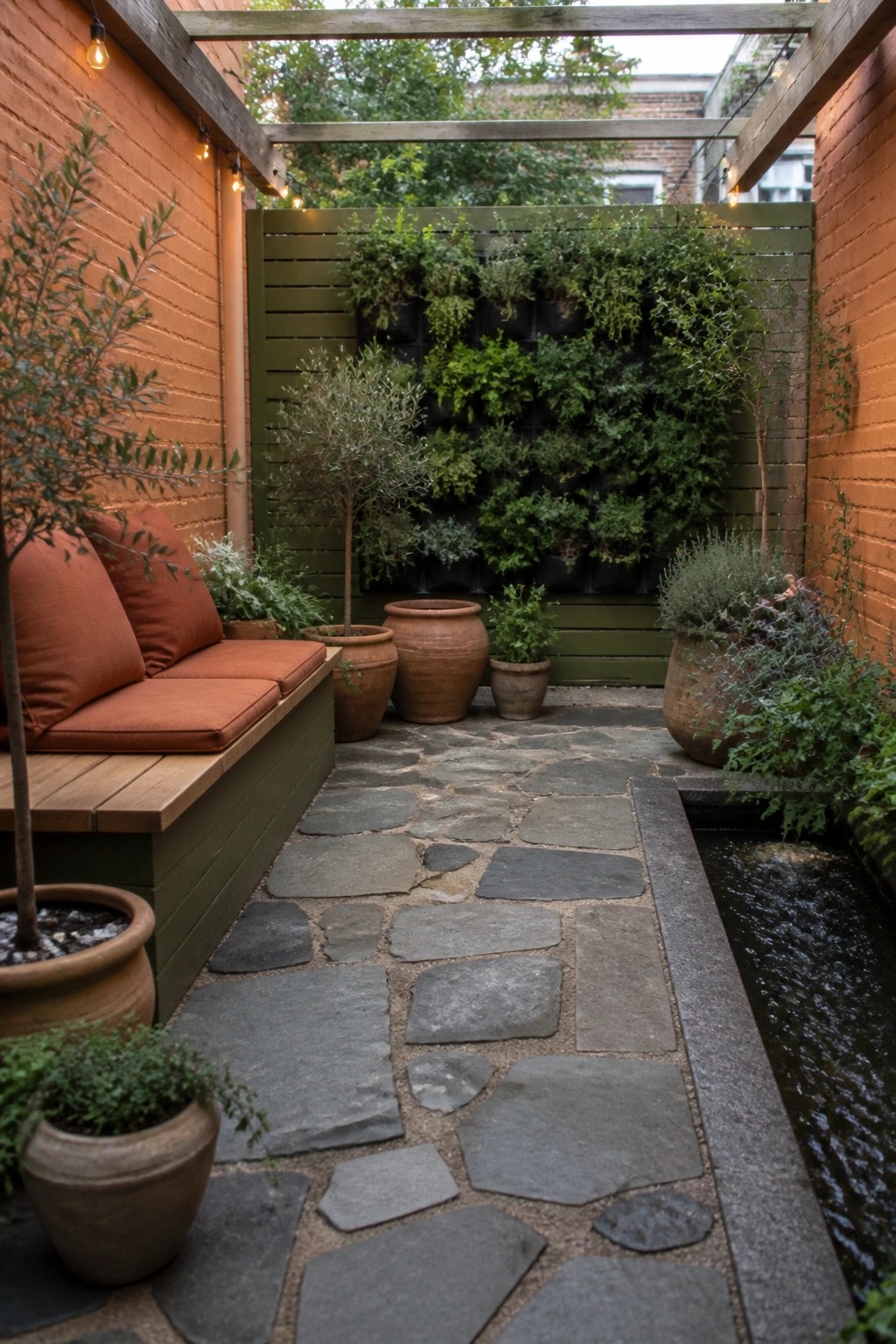
A built-in bench turns the side wall of a narrow courtyard into actual seating without eating up floor space. It keeps the path clear and gives the area a settled look that feels more like an extension of the house than a leftover strip.
This works best in tight urban yards where freestanding furniture would block movement. Paint the bench structure to match nearby fencing or walls, then add cushions in warm tones so the whole spot feels connected to the surrounding greenery and brick.
Orange And Green Walls For A Grounded Look
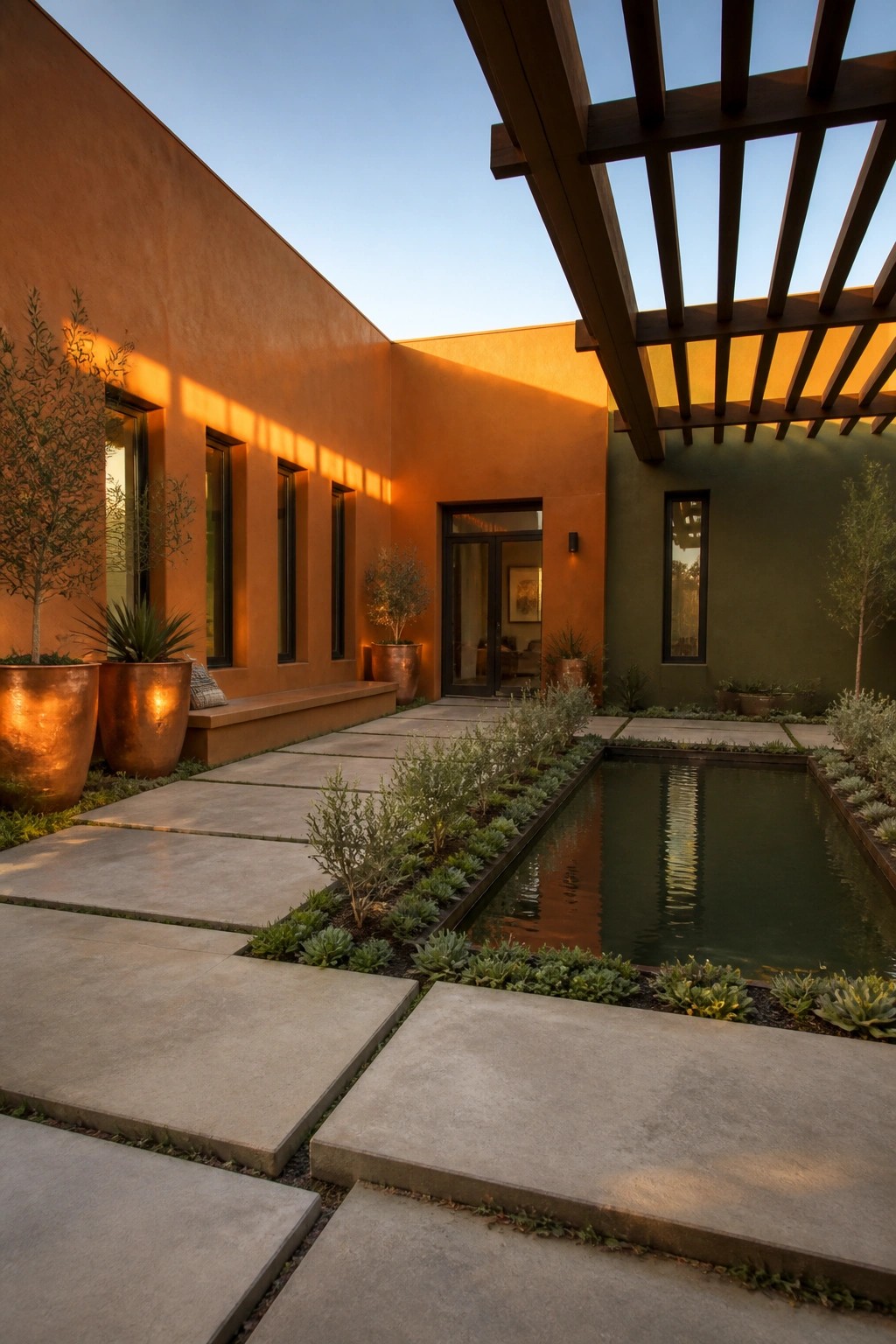
Many homes feel more settled when the exterior walls use two earthy tones instead of one. The warm orange stucco next to the deeper green section creates a simple contrast that still reads as calm and natural. It works because both colors sit comfortably with the surrounding plants and paving instead of fighting them.
This approach suits homes with flat or low-pitched roofs and clean wall planes. Keep the palette limited to these two colors plus the natural tones of wood or metal accents so the look stays balanced rather than busy.
Frequently Asked Questions
Q: How do I balance the green and orange without one overpowering the other?
A: Start with a muted green on the main walls and use orange on smaller areas like shutters. Add olive around windows to tie them together. Test samples on different sides of the house to see how light changes them.
Q: What if my roof is a dark gray?
A: Dark gray roofs pair nicely with earthy greens because they ground the whole look. Keep the orange to accents like the front door so it pops without fighting the roof. Olive trim can soften any edges where colors meet.
Q: Do these colors need special paint for outdoor use?
A: Regular exterior paint holds up fine as long as you pick a good quality one with UV protection. Focus on matte or low-sheen finishes to match that earthy feel.
