

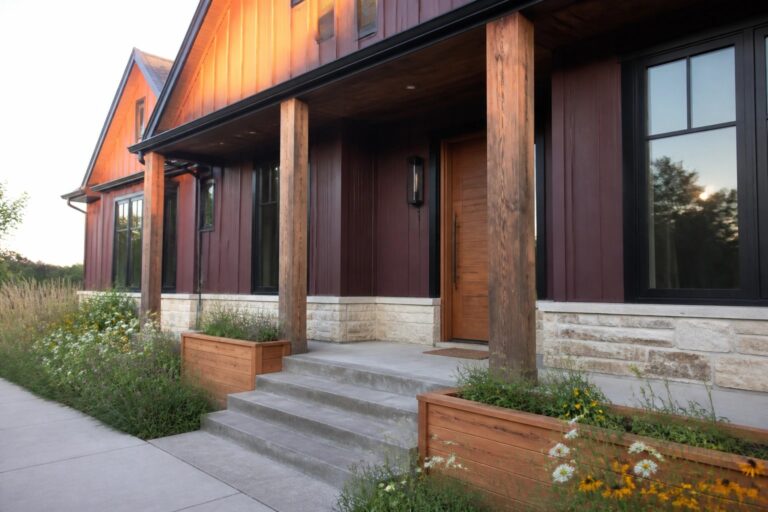
Over the years I’ve seen how a deep burgundy on the main walls can either give a house real presence or weigh it down depending on how the cedar is introduced around entries and windows.
Pairing the two materials works best when the cedar breaks up the color in places that actually catch the light rather than just filling random panels.
I keep coming back to the fact that some facades handle this mix cleanly because they let the roofline and siding proportions guide where the wood goes.
Cedar accents tend to age in ways that either enhance the burgundy or fight it.
The combinations worth trying are the ones that still feel balanced once the wood starts to gray.
Burgundy Siding With Cedar Accents
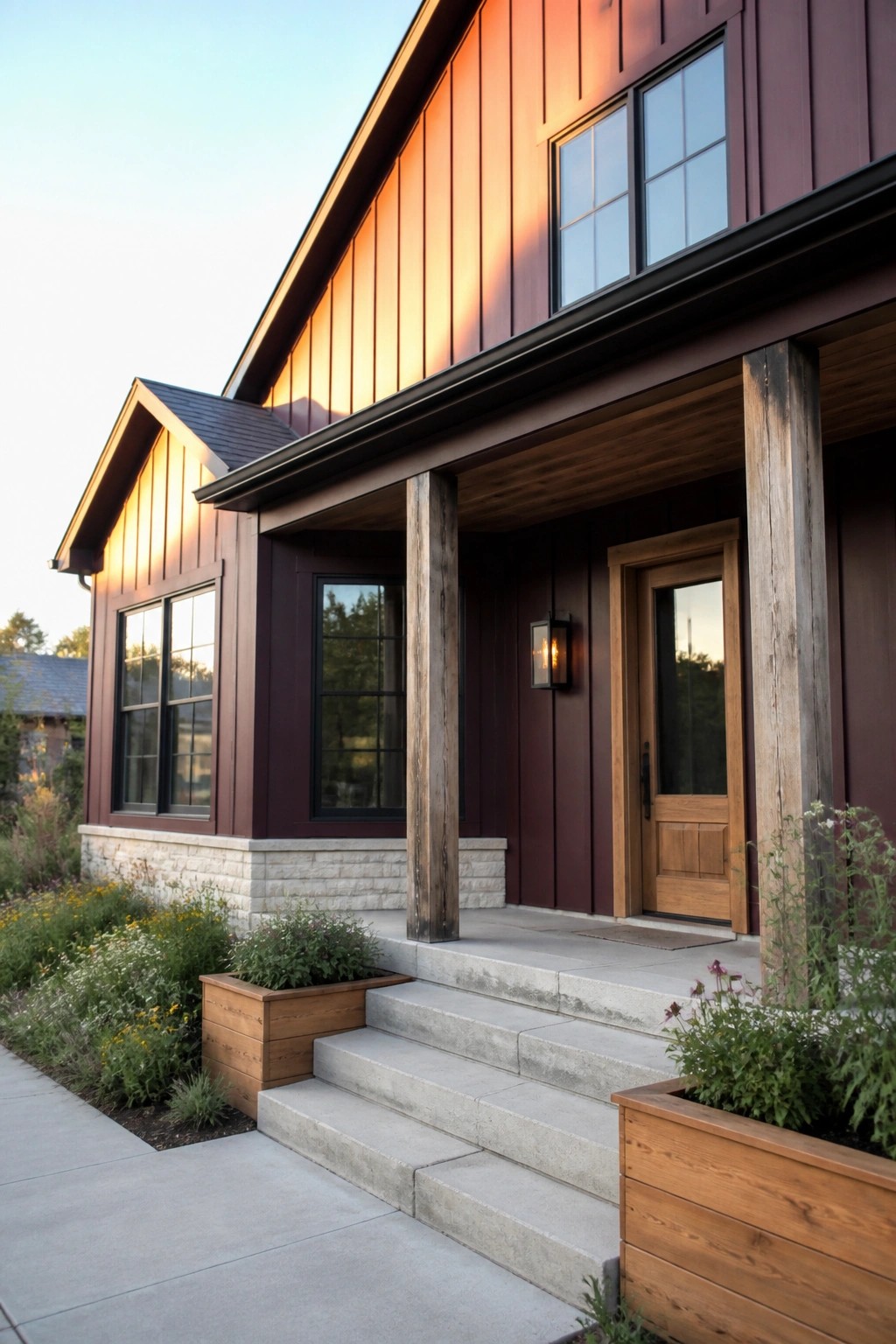
The mix of deep burgundy siding and natural cedar accents gives a house a grounded look without extra effort. The wood tones cut through the dark color and keep the whole front from feeling flat or cold.
This works best on homes that already have a simple porch or covered entry. Use the cedar on posts, the door, and maybe a few planters so the materials repeat in a quiet way rather than compete.
Cedar Accents Against Burgundy Siding
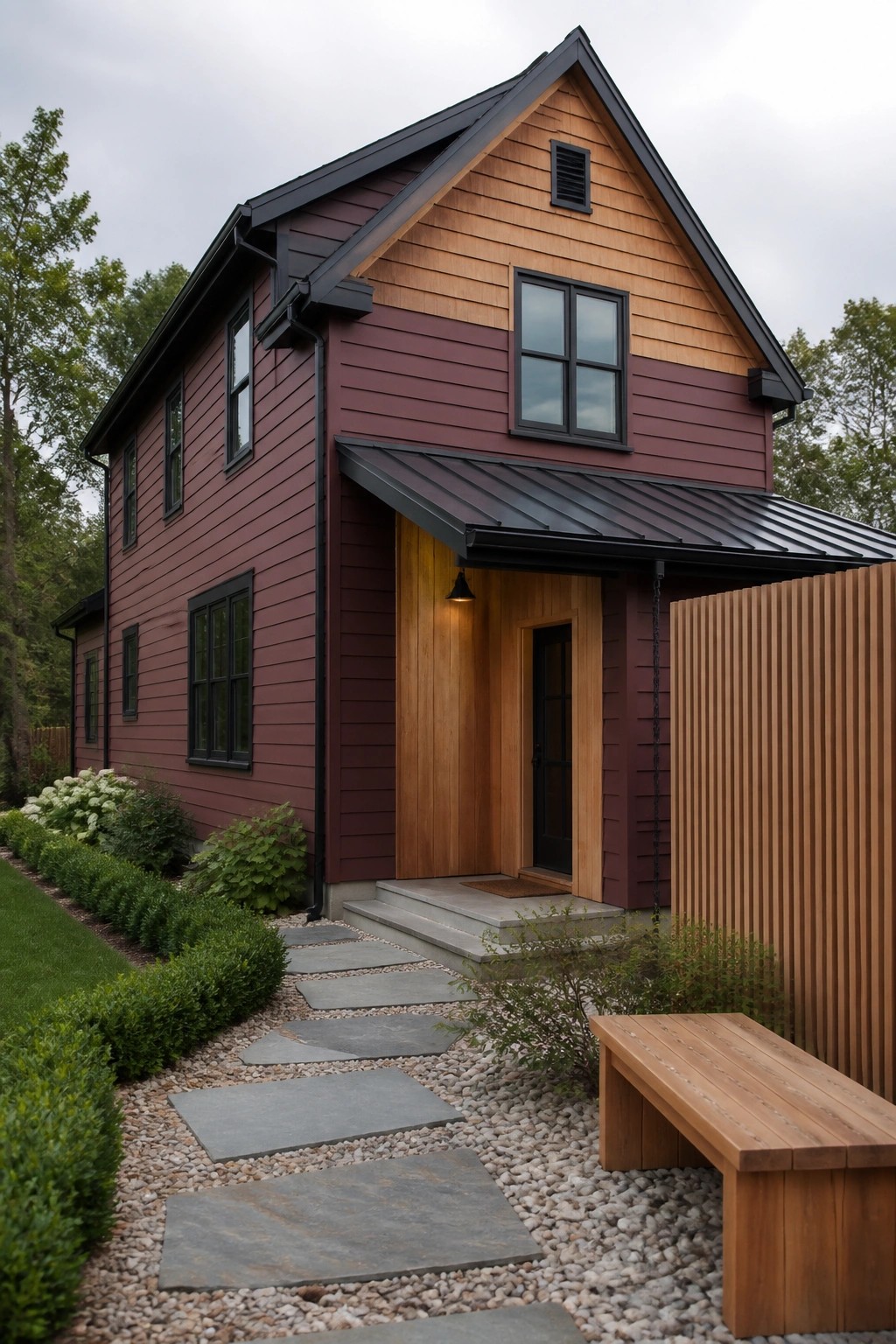
Burgundy siding can feel heavy on its own, but adding natural cedar around the entry and on the upper gable softens the color right away. The wood brings warmth and keeps the deep red from looking too flat or stark against the black roof and trim.
This approach works best on smaller homes or those with simple rooflines where the wood can stand out without competing with too many other details. Use it on the front door surround and maybe one gable section rather than spreading it everywhere. Keep the rest of the trim dark so the cedar stays the main accent.
Cedar Accents On Burgundy Siding
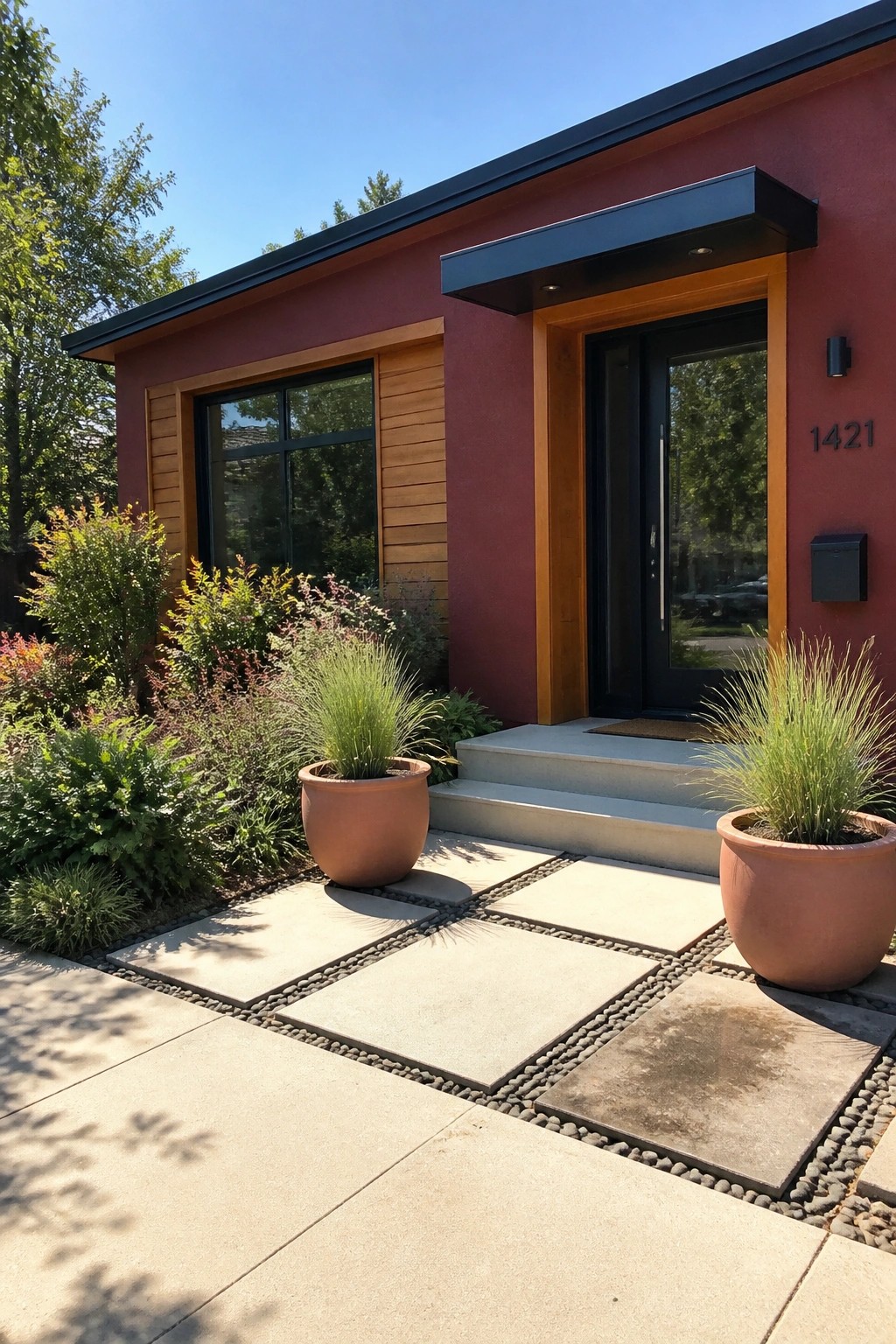
Cedar trim around the door and windows gives the deep red paint a softer edge. The wood keeps the color grounded and adds a natural contrast that feels warmer than paint alone.
This approach works best on homes with simple shapes where the siding color needs a little texture to feel balanced. Keep the wood tone natural rather than stained dark so it reads as an accent instead of another layer of color.
Cedar Accents on Burgundy Exteriors
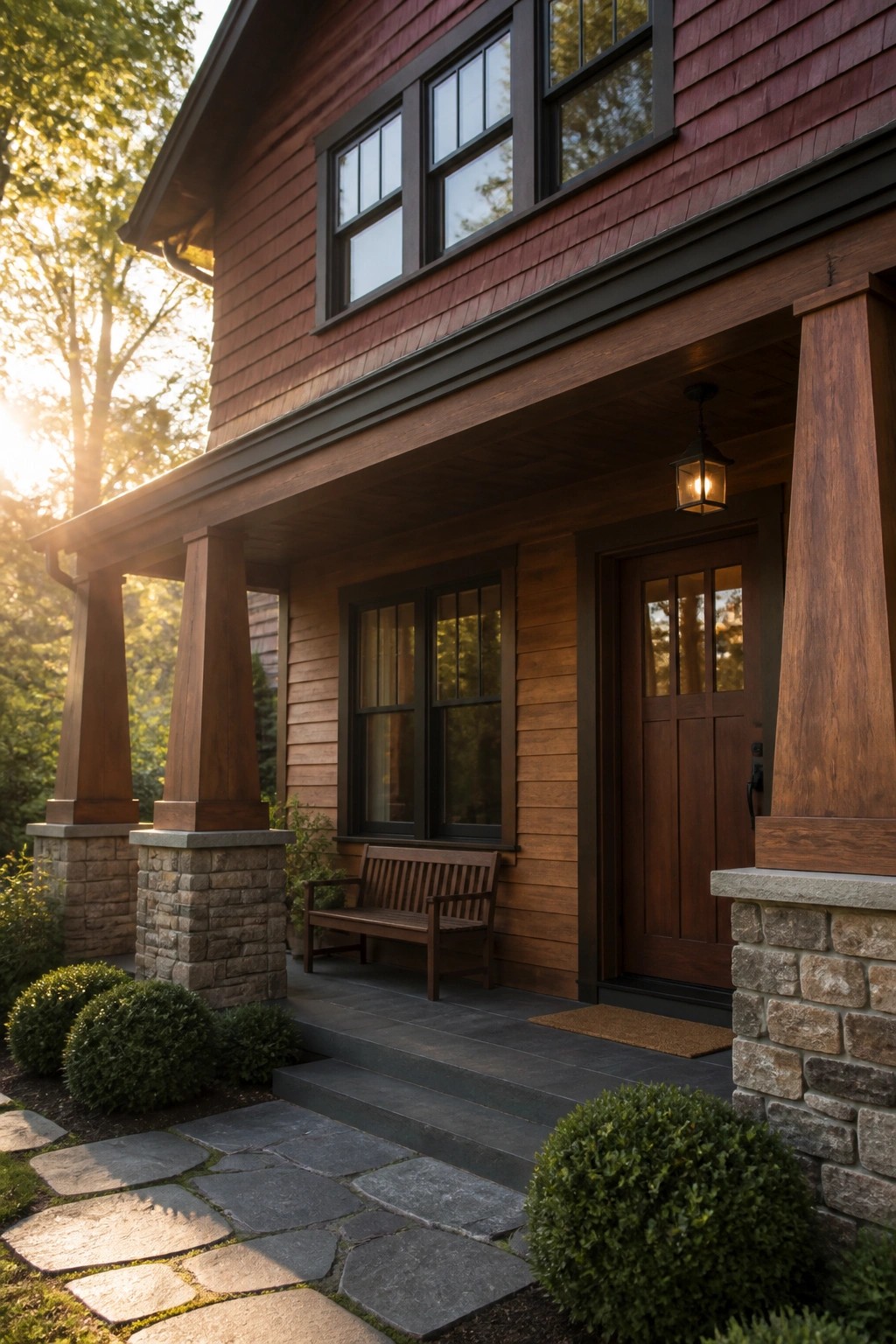
The deep burgundy siding stands out more when it meets natural cedar on the porch posts and trim. The wood brings warmth that keeps the red from feeling too heavy or flat.
This works best on homes with a covered entry or simple porch. Keep the cedar in a few key spots like columns and beams, then let the siding carry the rest of the look so the contrast stays balanced.
Burgundy Siding With Cedar Accents
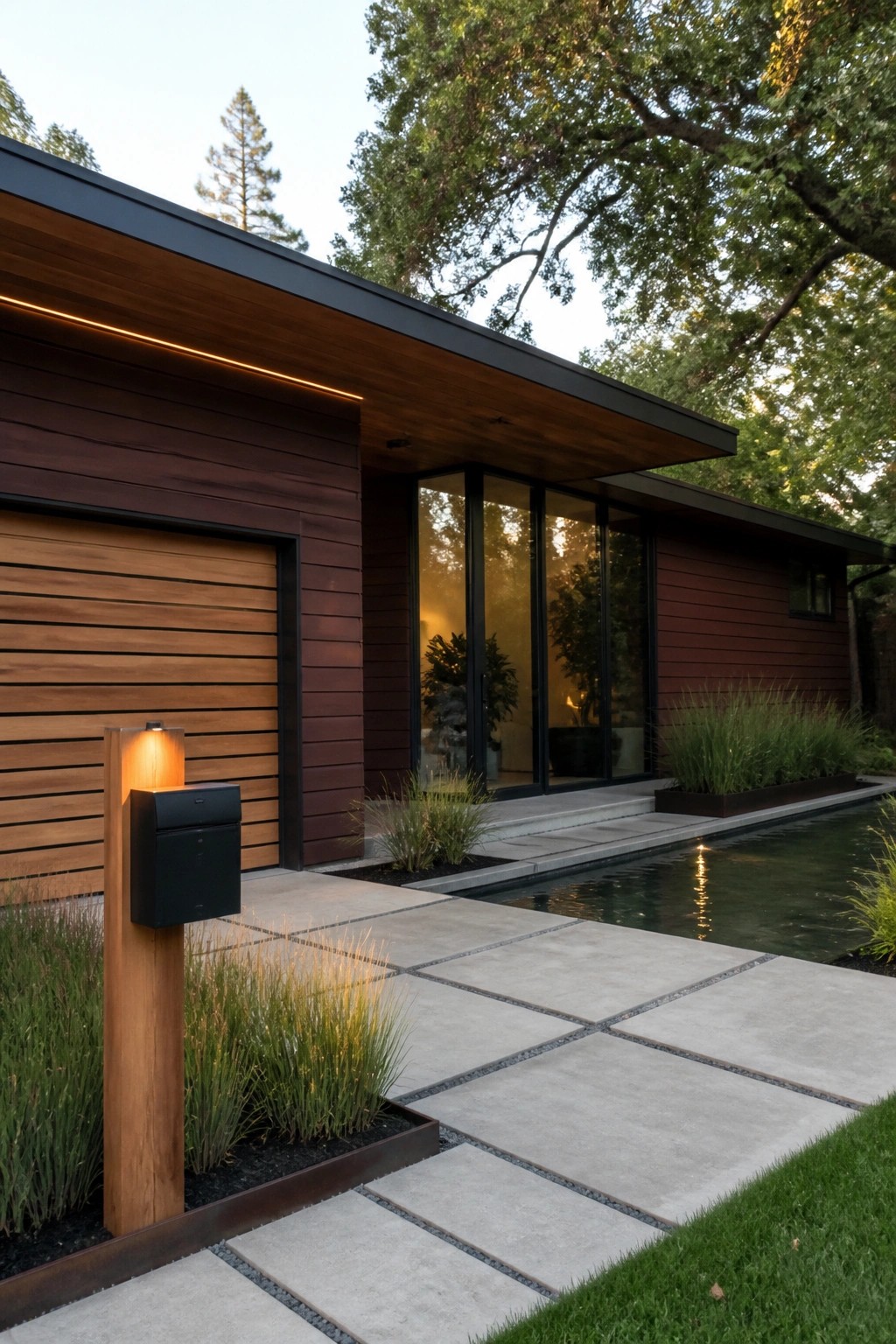
Many homes feel more settled when the main siding is a deep burgundy and the accents are left in natural cedar. The wood softens the strong color and keeps the exterior from looking too flat or heavy.
This approach works best on houses with simple rooflines and large openings. Use the cedar on garage doors, posts, or narrow trim bands so the wood reads as a deliberate contrast rather than scattered detail. Keep the finish on the wood matte and let it weather slightly so the tones stay warm over time.
Cedar Posts On Burgundy Siding
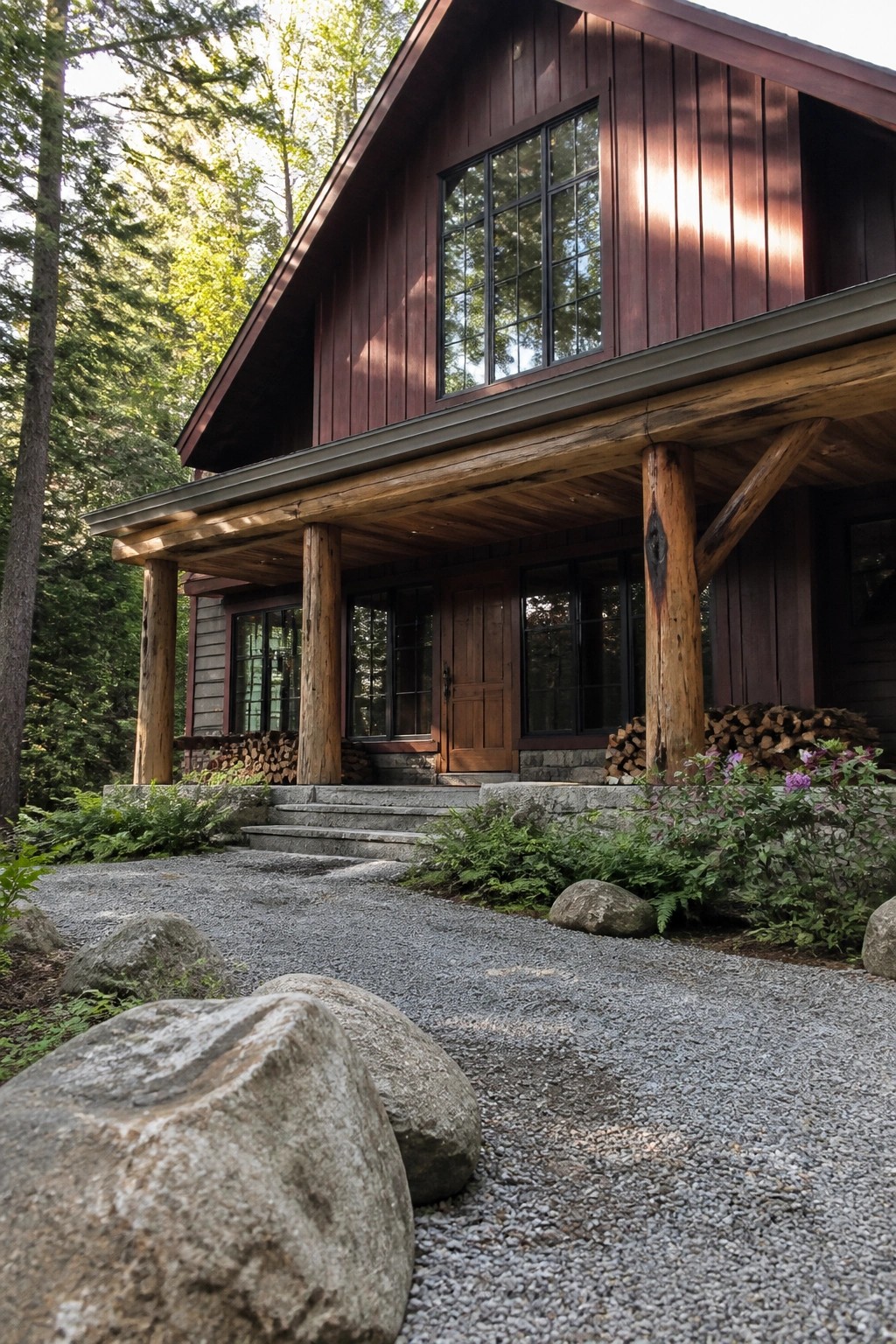
Natural cedar logs stand out against deep burgundy siding because they bring a raw, warm texture that softens the bold color. The contrast keeps the house from feeling too heavy while still looking grounded in its wooded setting.
This works best on homes that already have a simple gable shape and a stone base. Keep the cedar in its natural tone rather than staining it, and limit the logs to structural posts and beams so the siding remains the main color story.
Cedar Accents Warm Up Burgundy Siding
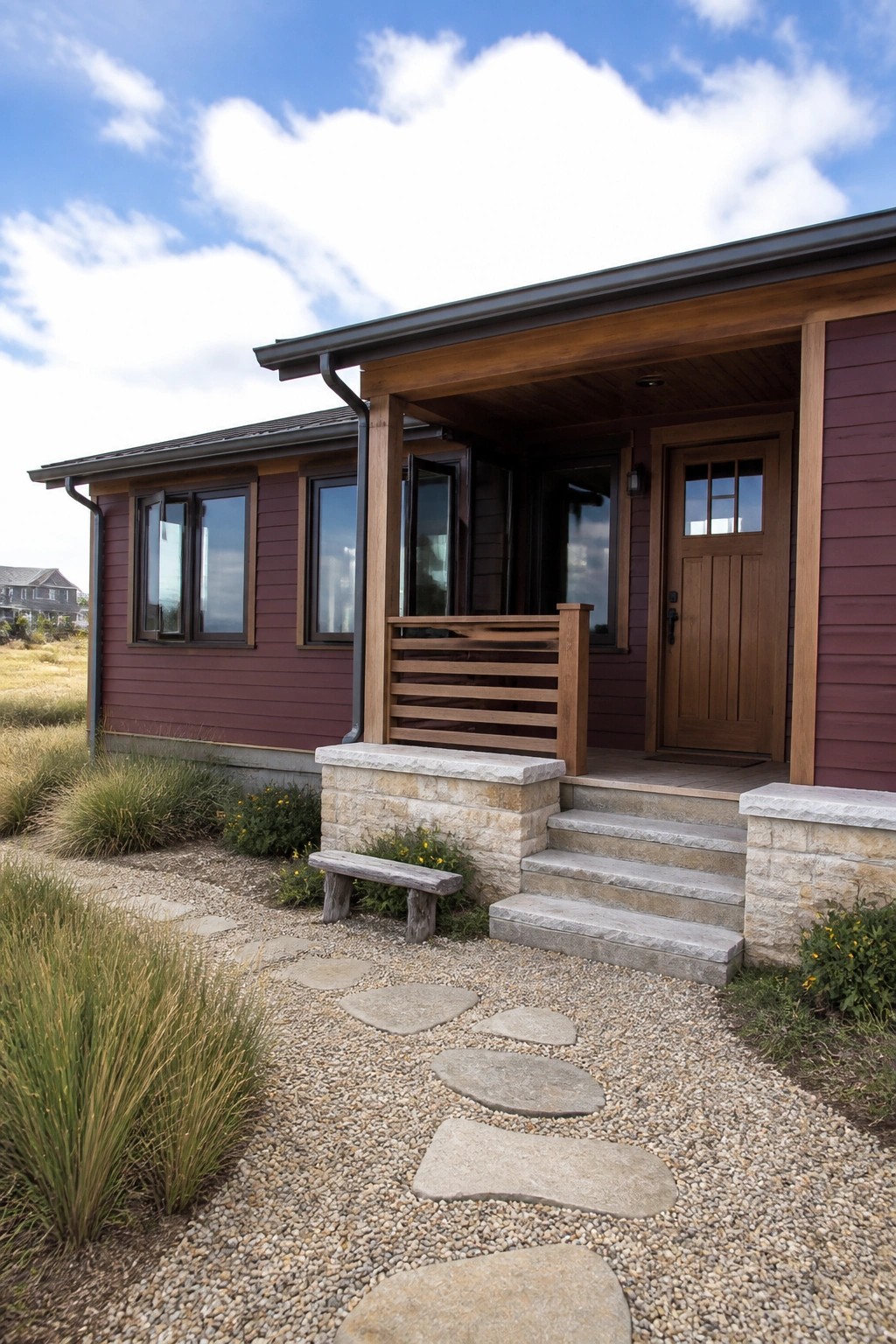
Burgundy siding can feel a bit stark on its own, but adding natural cedar changes that fast. The wood on the porch posts, railing, and door frame brings warmth and texture that makes the color feel more settled and inviting.
This approach works best on homes with simple shapes where the color contrast can stand out. Keep the cedar limited to the main entry area and trim so it highlights those spots without competing with the rest of the siding.
Pairing Brick With Natural Wood Accents
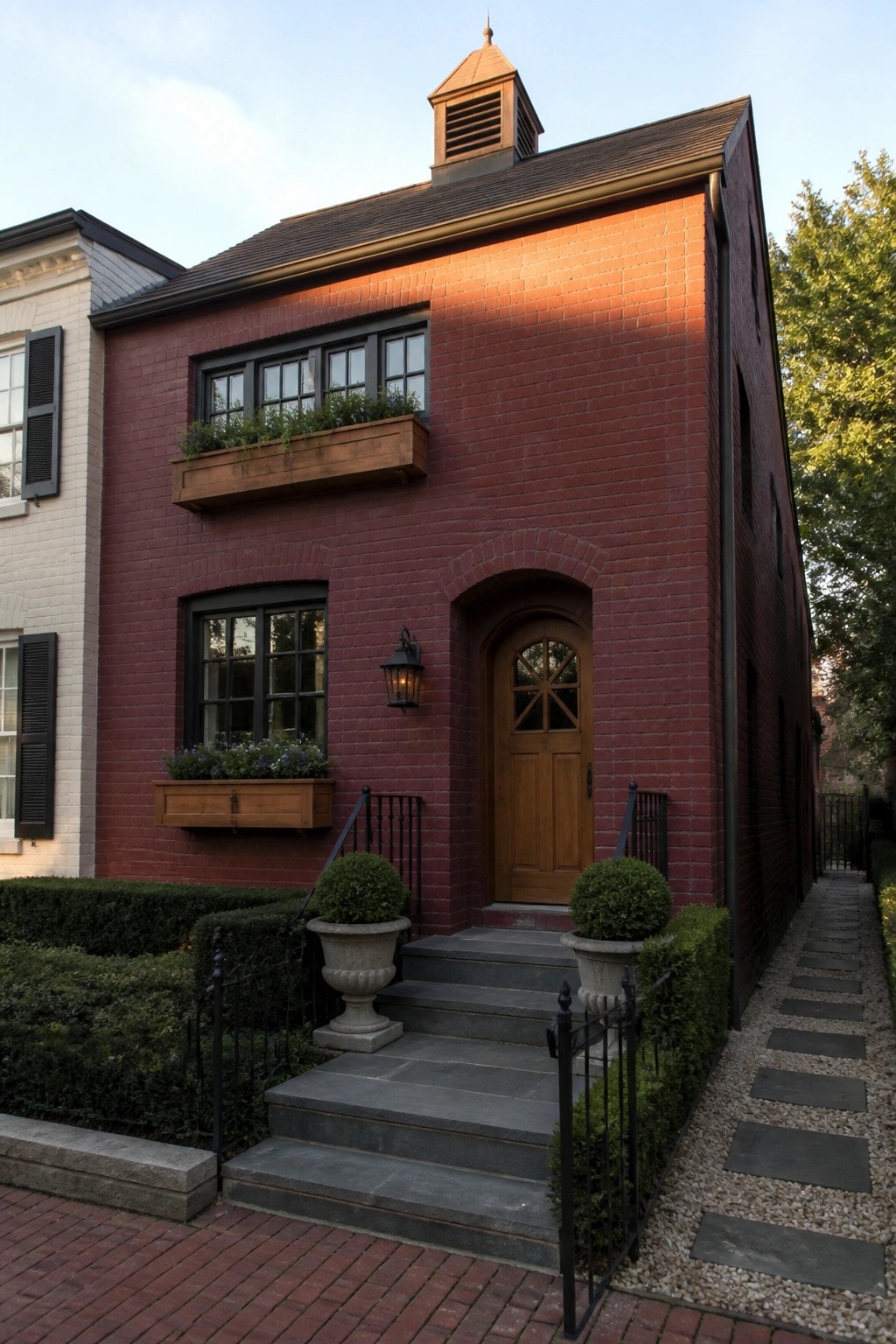
Red brick already has plenty of warmth, but adding natural wood details makes it feel more lived in. The wood door and window boxes here keep the deep color from looking too heavy and give the front a simple, approachable look.
This approach suits smaller homes or narrow lots where the entry needs to stand out. Keep the wood tones natural and limit the accents to key spots like doors and boxes so the brick stays the main feature.
Vertical Cedar on Bold Exterior Color
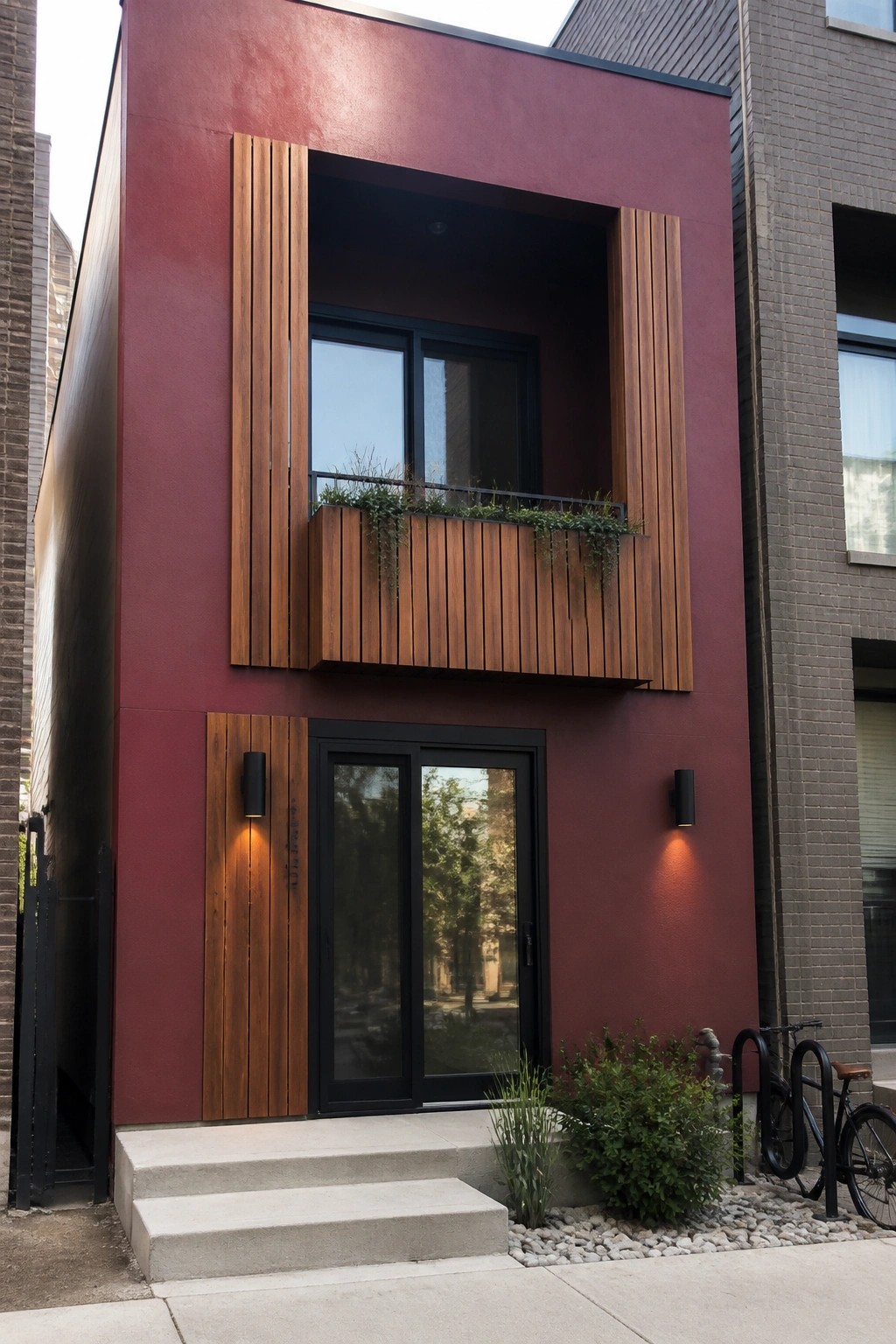
Many people like the look of a deep burgundy house but worry it can feel heavy or flat on its own. Adding vertical cedar slats in a few key spots breaks up the color and brings in natural warmth without changing the overall modern shape of the house.
This works well on narrow urban homes or any facade where you want texture and contrast. Keep the wood in narrow vertical runs around windows or entries, and let the rest of the wall stay simple so the cedar reads as an accent rather than an overhaul.
Extend the Patio with a Cedar Pergola
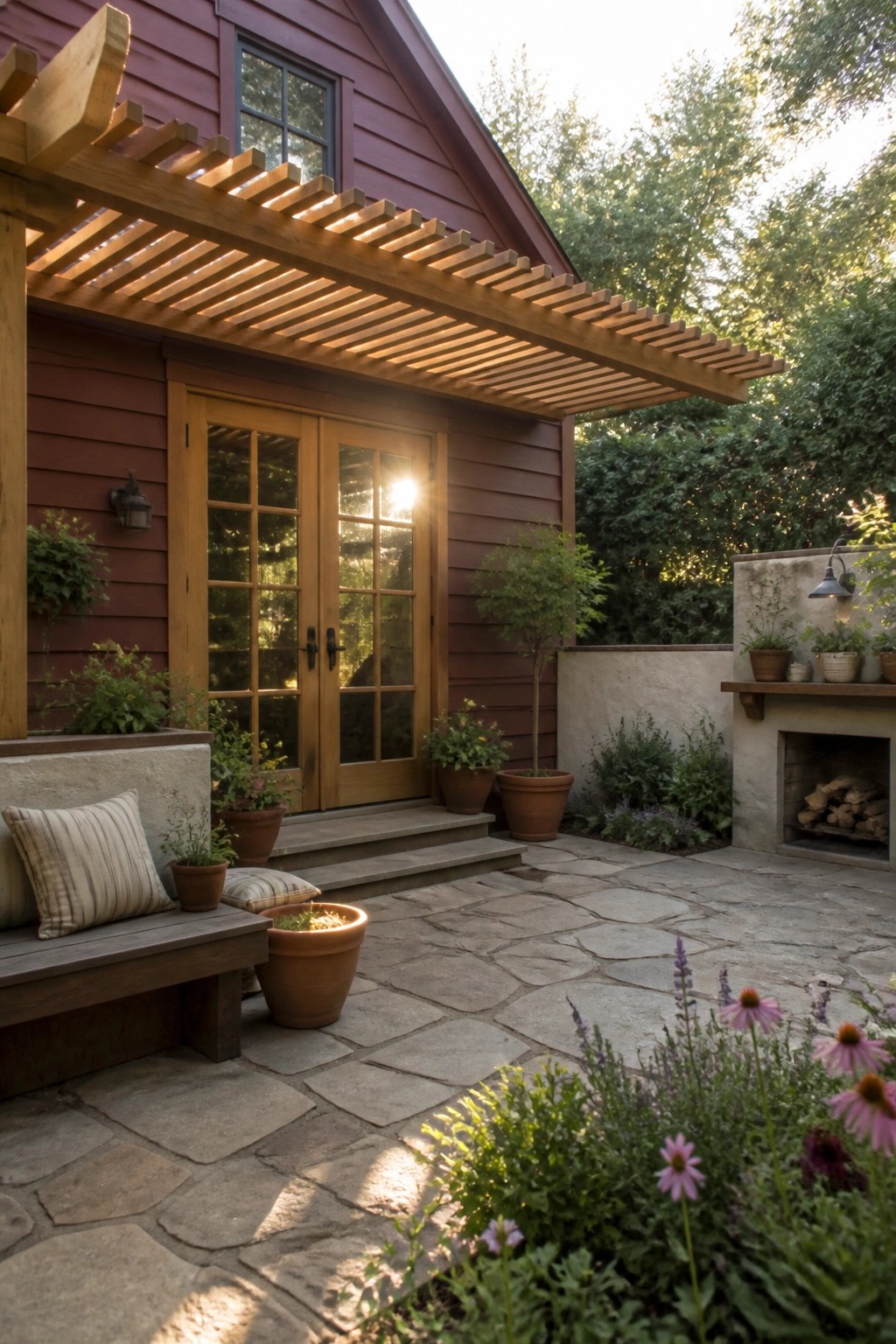
A cedar pergola attached right to the house gives the patio some real shade and makes the space feel more like an extra room. It works especially well when the house has warm siding, since the natural wood softens the color and creates a simple transition between inside and out.
This setup suits homes that already have a decent sized patio or a clear spot off the back or side door. Line the posts up with the edge of the paving so the pergola feels like it belongs there, and keep the wood unfinished so it ages naturally over time.
Cedar Accents That Warm Up Burgundy Siding
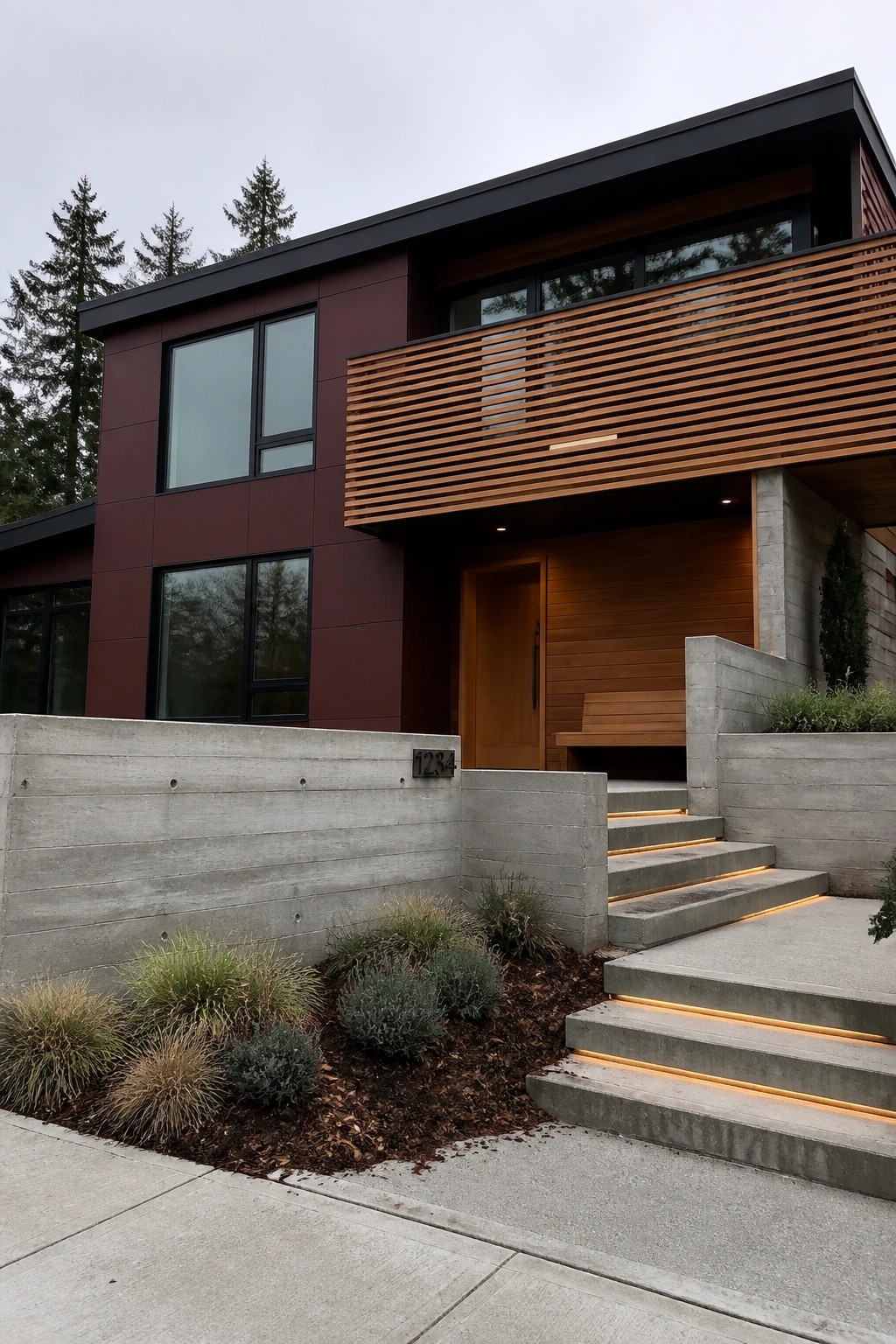
One simple way to keep a deep burgundy exterior from looking flat is to add natural cedar in a few focused places. The wood brings in texture and a bit of warmth that the solid color alone cannot provide.
This works best on modern homes where the lines stay clean. Use the cedar as screening or trim around the entry and upper levels so it feels intentional rather than scattered. The contrast with concrete or dark metal helps the wood read clearly without needing a lot of extra detail.
Burgundy Siding With Cedar Accents
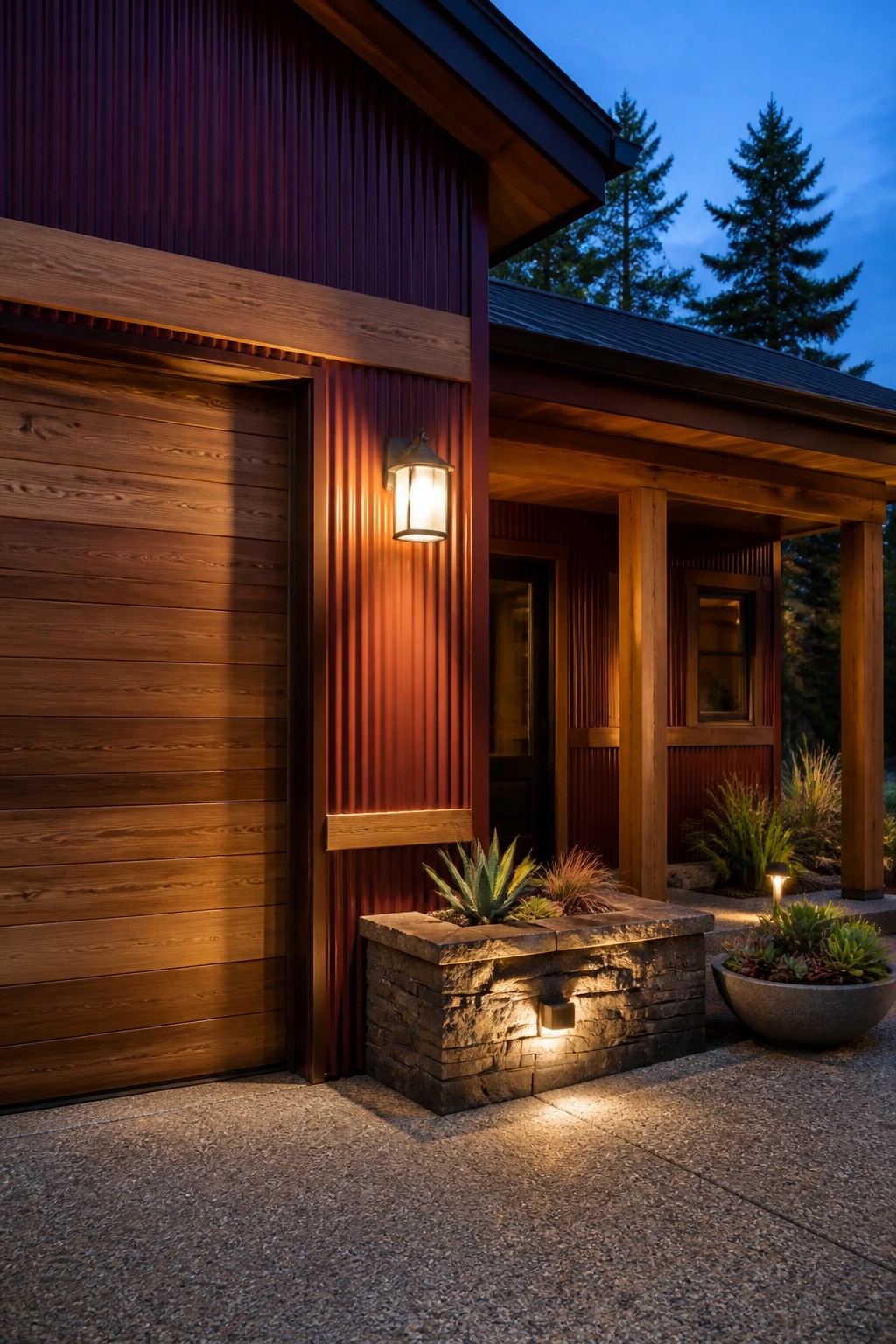
Deep burgundy siding stands out when it is paired with natural cedar wood on doors, trim, and posts. The wood softens the color and gives the house a warmer feel without losing its clean lines.
This mix works best on homes that already have some wood structure or sit near trees. Use the wood on larger elements like garage doors or porch posts so the siding does not feel too flat on its own.
Burgundy Stucco With Natural Cedar Details
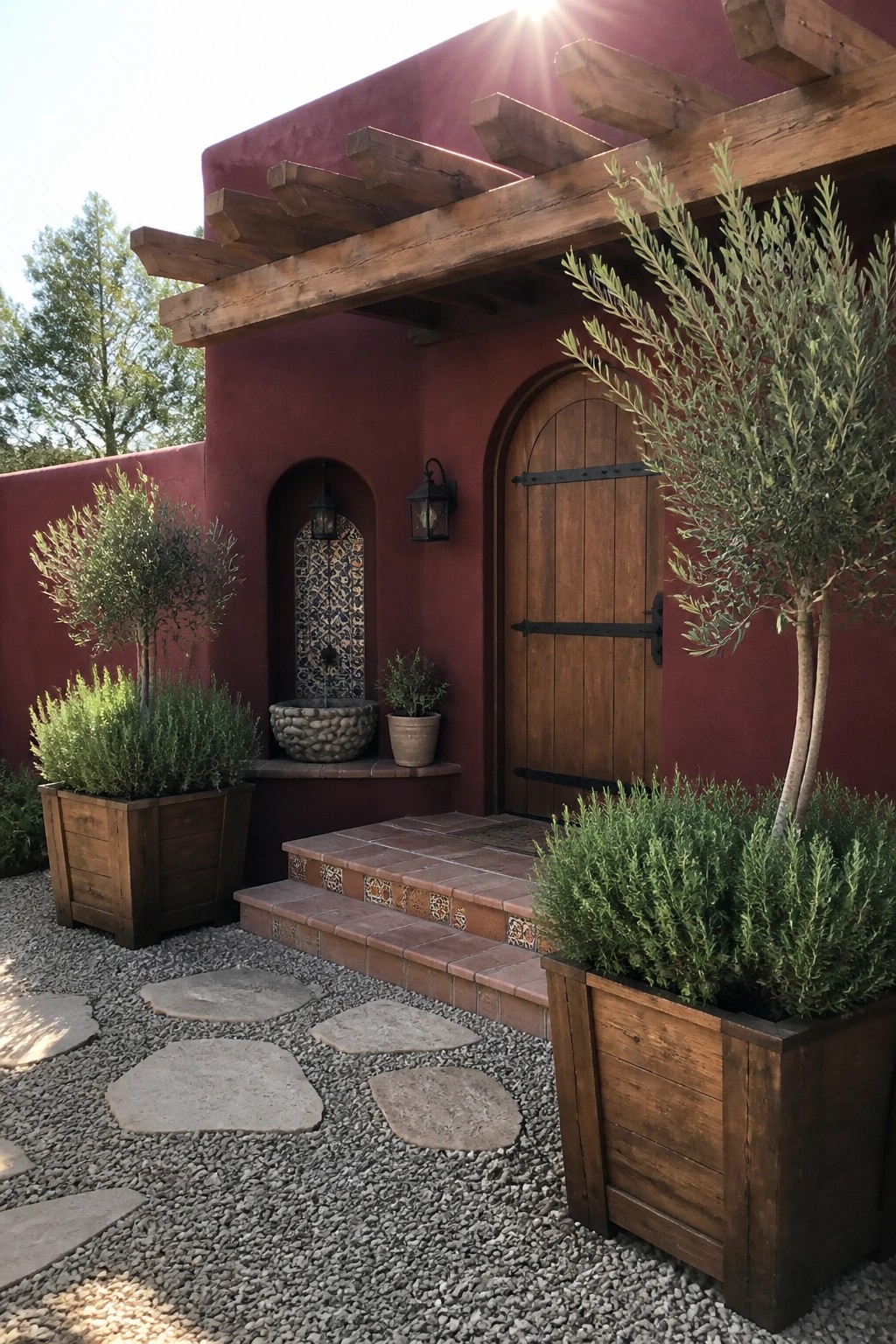
A deep burgundy stucco wall gains warmth when paired with natural cedar in larger pieces rather than thin trim. The wood pergola and door frame here show how the material can soften the solid color without breaking up the simple shape of the house.
This works best on homes with clean stucco surfaces and enough sun to keep the tones from feeling heavy. Use the cedar on overhead structures or entry doors first, then add smaller wood planters if the space needs more layering.
Cedar Accents With Burgundy Siding
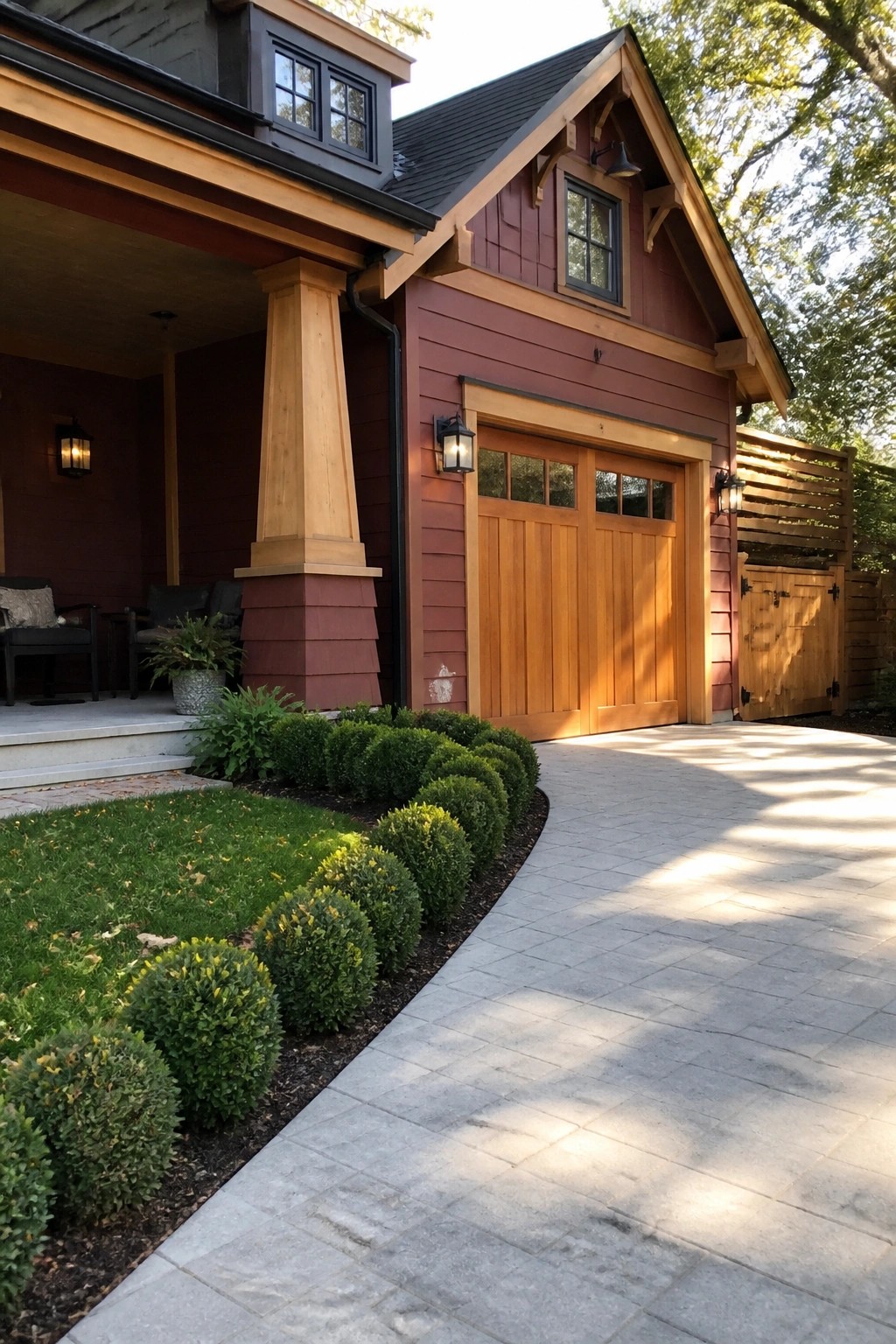
Deep burgundy siding looks more settled when it is paired with natural cedar on the trim, columns, and garage door. The wood softens the strong color and gives the whole front a warmer, more finished look without adding extra ornament.
This mix works best on homes that already have exposed beams or wide trim. Use it where the cedar can be kept in good shape so the tones stay balanced over time.
Pergolas That Shade Outdoor Dining Areas
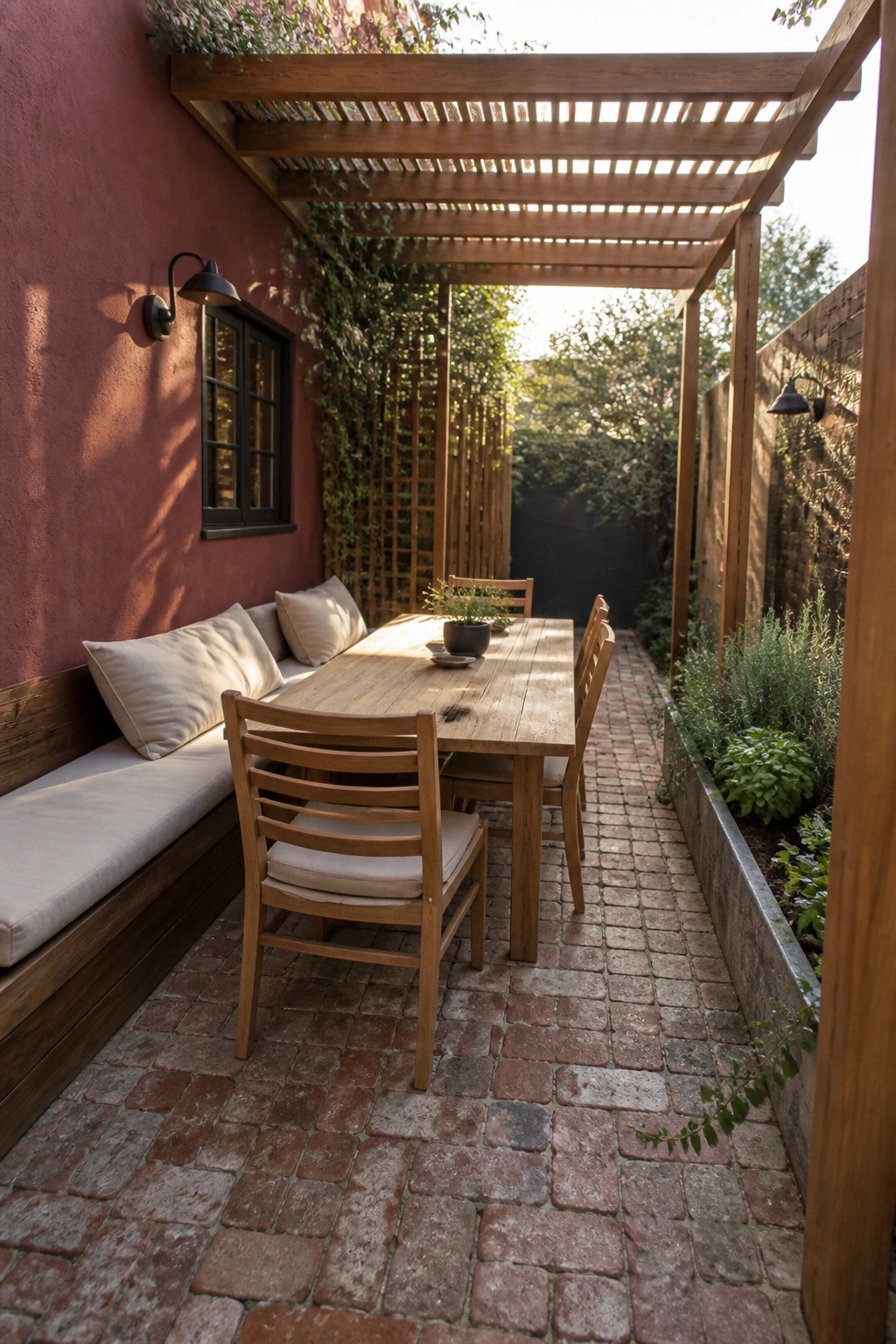
A pergola makes a patio feel more like a real room you can use at any time of day. It blocks harsh sun while still letting in some light, so meals outside stay comfortable instead of turning into a hot spot.
This setup works especially well on narrow side yards or right against the house where you want a defined eating area without building a full roof. Keep the wood tone natural so it pairs with other cedar details on the exterior, and make sure the posts leave enough room for chairs to pull out easily.
Cedar Accents Against Burgundy Siding
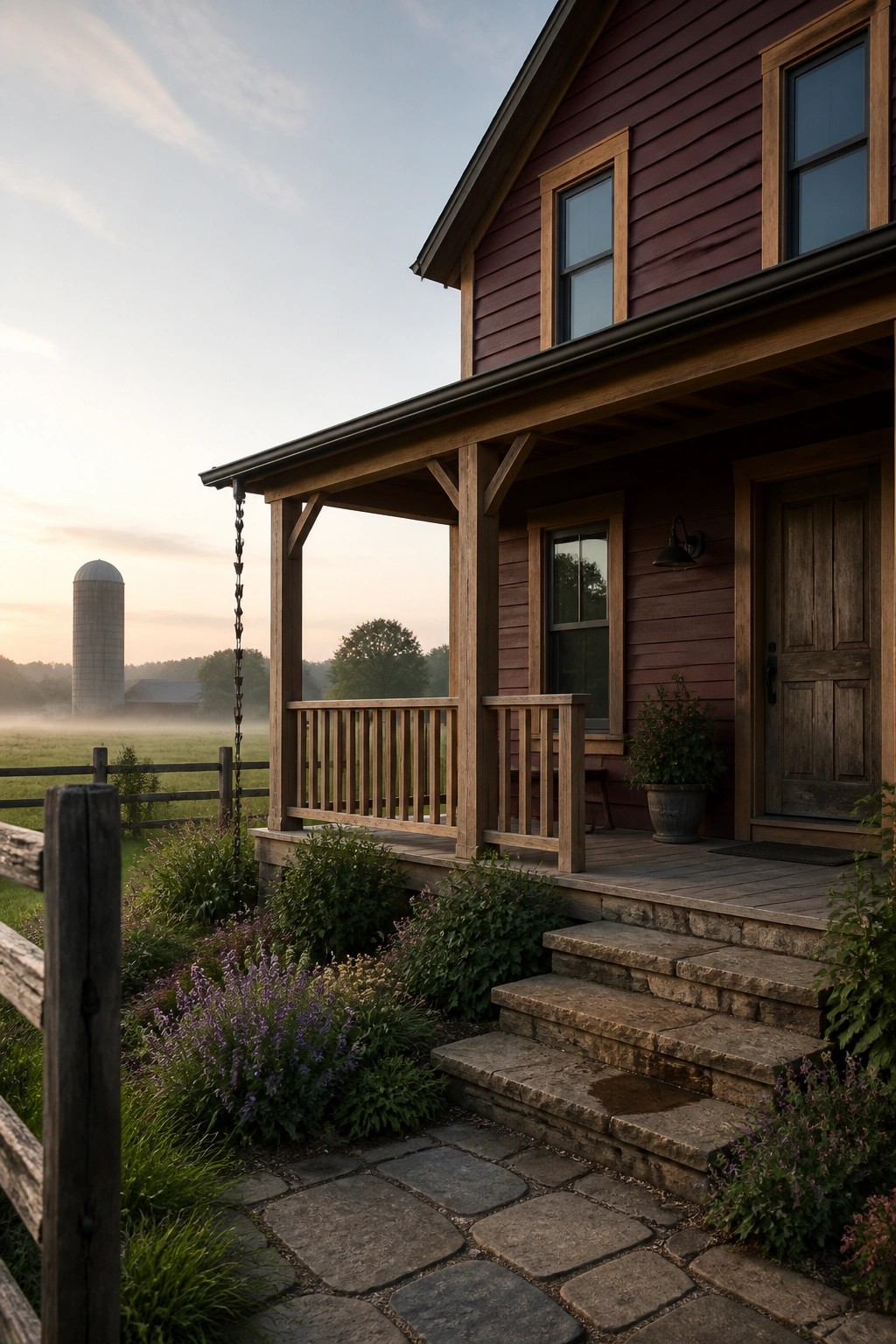
A deep burgundy house exterior gains warmth when paired with natural cedar on the porch structure and trim. The wood softens the bold color and gives the whole front a settled, lived-in feel that still reads clean.
This mix suits older homes or new builds that lean traditional. Keep the cedar on larger elements like posts and beams rather than scattering it everywhere, and let it weather on its own so the tones stay honest.
Cedar Accents On Burgundy Siding
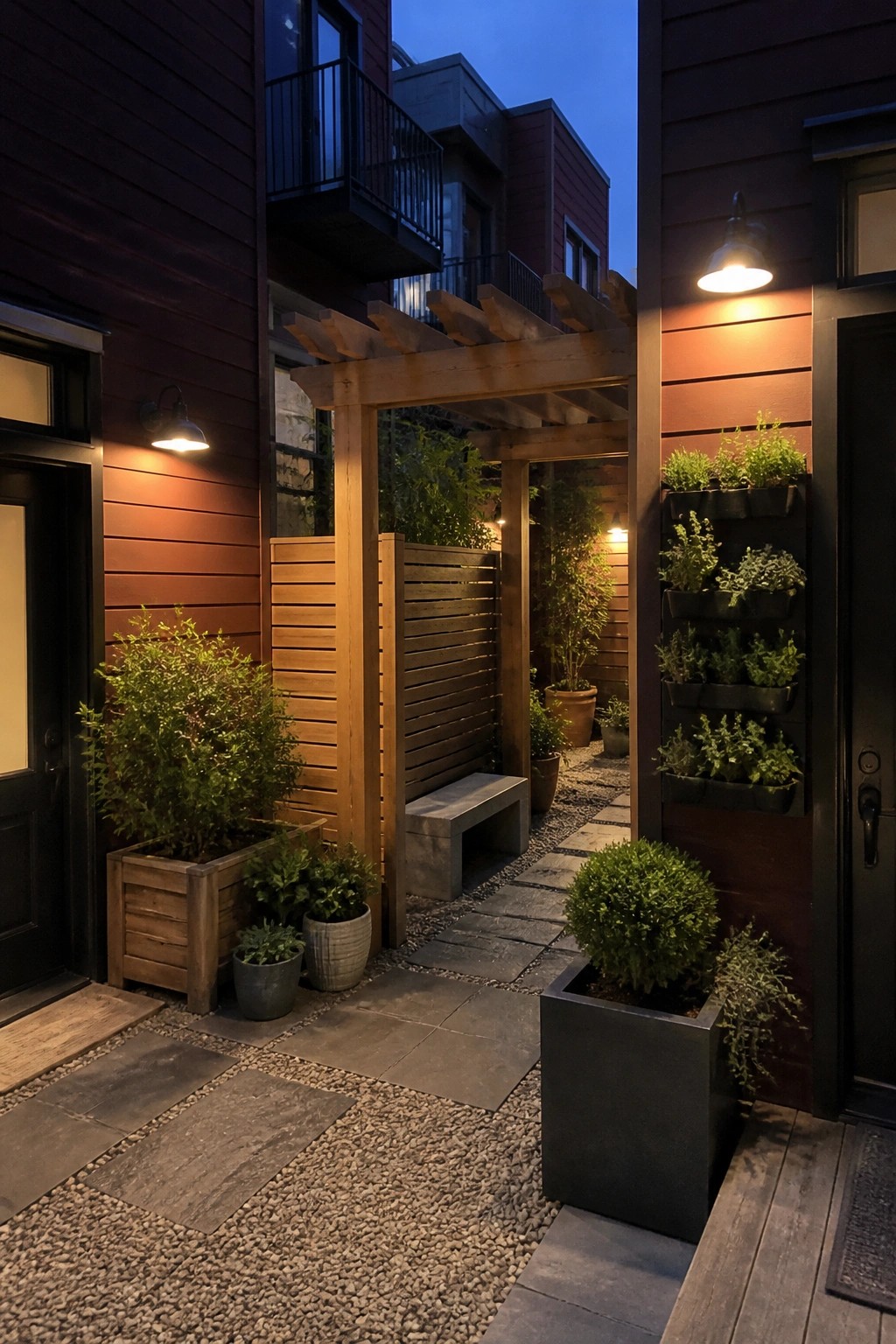
Natural cedar stands out nicely against deep burgundy siding because the wood brings in warmth and texture that the dark paint alone can lack. A simple pergola or a few wood planters are often enough to create that contrast without overdoing it.
This approach suits homes with straightforward shapes and narrow side areas where you want the path to feel more inviting. Keep the wood tones natural rather than stained dark so the difference stays clear.
Cedar Screens That Add Privacy To Pool Areas
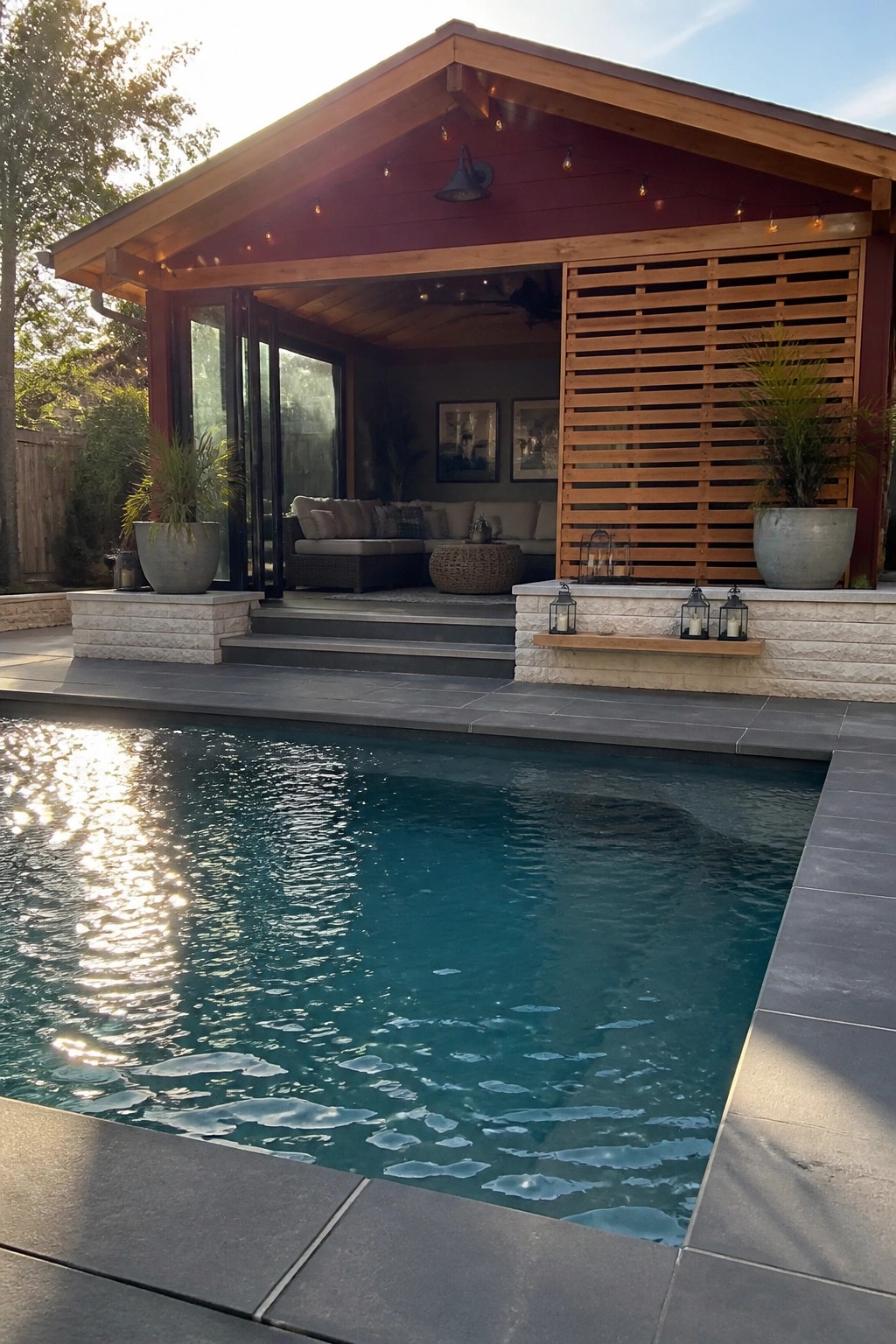
A simple cedar screen can turn an open pool deck into a more usable outdoor room. The horizontal slats here let light and air through while giving the seating area a bit of separation from the rest of the yard. That mix of solid wall and open wood feels balanced instead of closed off.
This approach works well on homes where the outdoor space sits right next to the main living area. It suits smaller yards or spots where you want some privacy without building a full wall. Just keep the wood natural so it picks up the warmth from any painted siding nearby.
Burgundy Siding With Cedar Accents
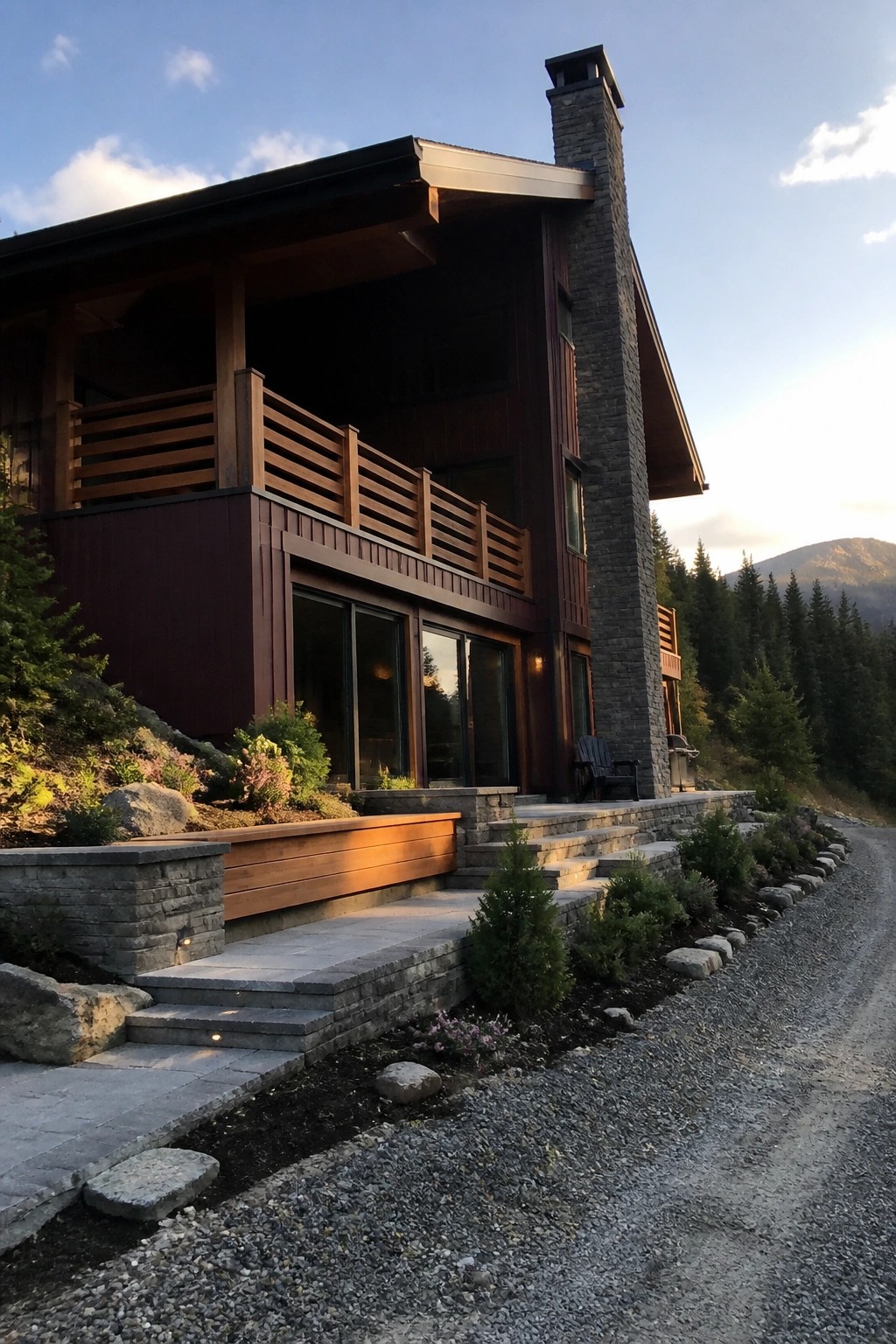
Pairing deep burgundy siding with natural cedar accents gives an exterior real presence without looking heavy. The wood softens the darker color and adds warmth that still feels current rather than rustic. It works especially well on homes with clean lines where you want some texture and contrast.
This combination suits wooded lots and modern or transitional styles. Keep the cedar in its natural tone instead of staining it dark, and let the burgundy carry most of the color on the main walls. It reads best when the wood is used on railings, trim, or small overhangs rather than spread everywhere.
Cedar Accents Against Burgundy Siding
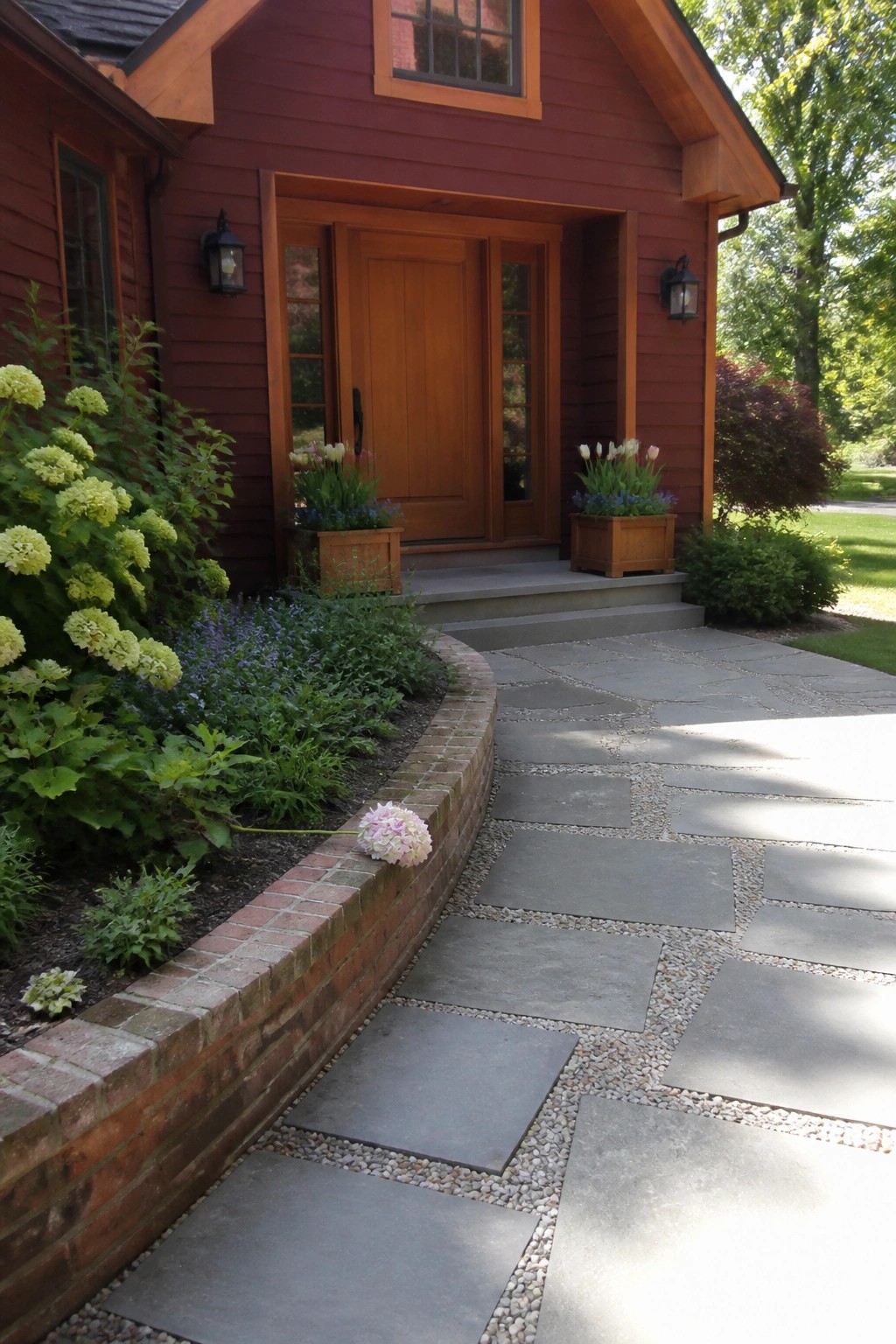
One simple way to make a burgundy house feel warmer is to add natural cedar on the door and trim. The wood softens the bold color and gives the entry a grounded look that still feels clean.
This works best on houses with straightforward shapes where the wood can stand out without competing with lots of other details. Keep the cedar tone light and let it age naturally so it continues to contrast with the siding over time.
Cedar Accents on Burgundy Siding
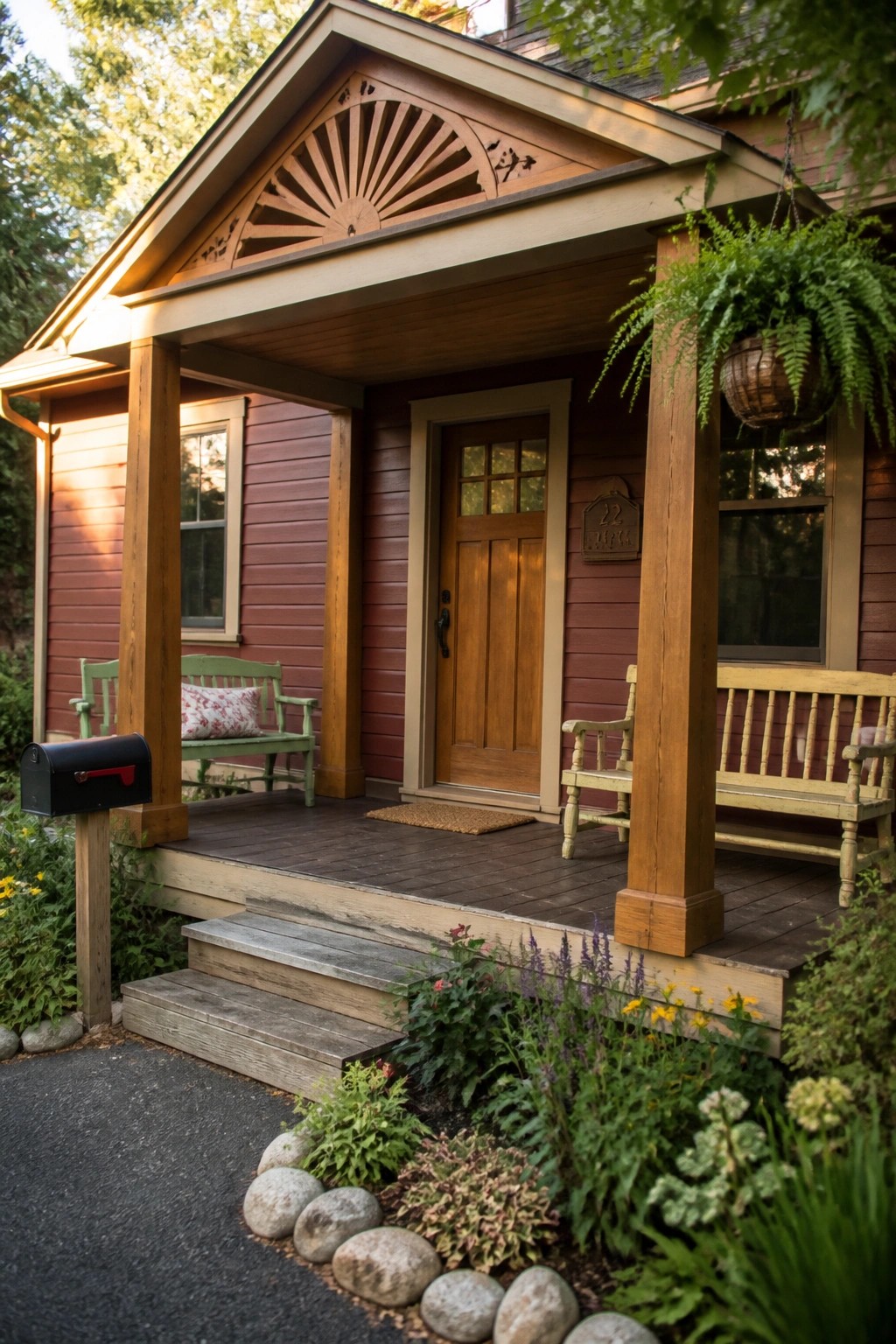
Natural cedar trim and posts give a burgundy exterior more warmth and balance. The wood softens the depth of the color and keeps the house from feeling flat or too bold, especially on smaller homes with simple rooflines.
This mix works best on traditional or cottage style houses where the wood can be left natural or sealed lightly. Match the scale of the posts and trim to the siding so nothing feels oversized, and let the cedar age on its own for a more relaxed look over time.
Integrating a Fire Pit Into the Deck
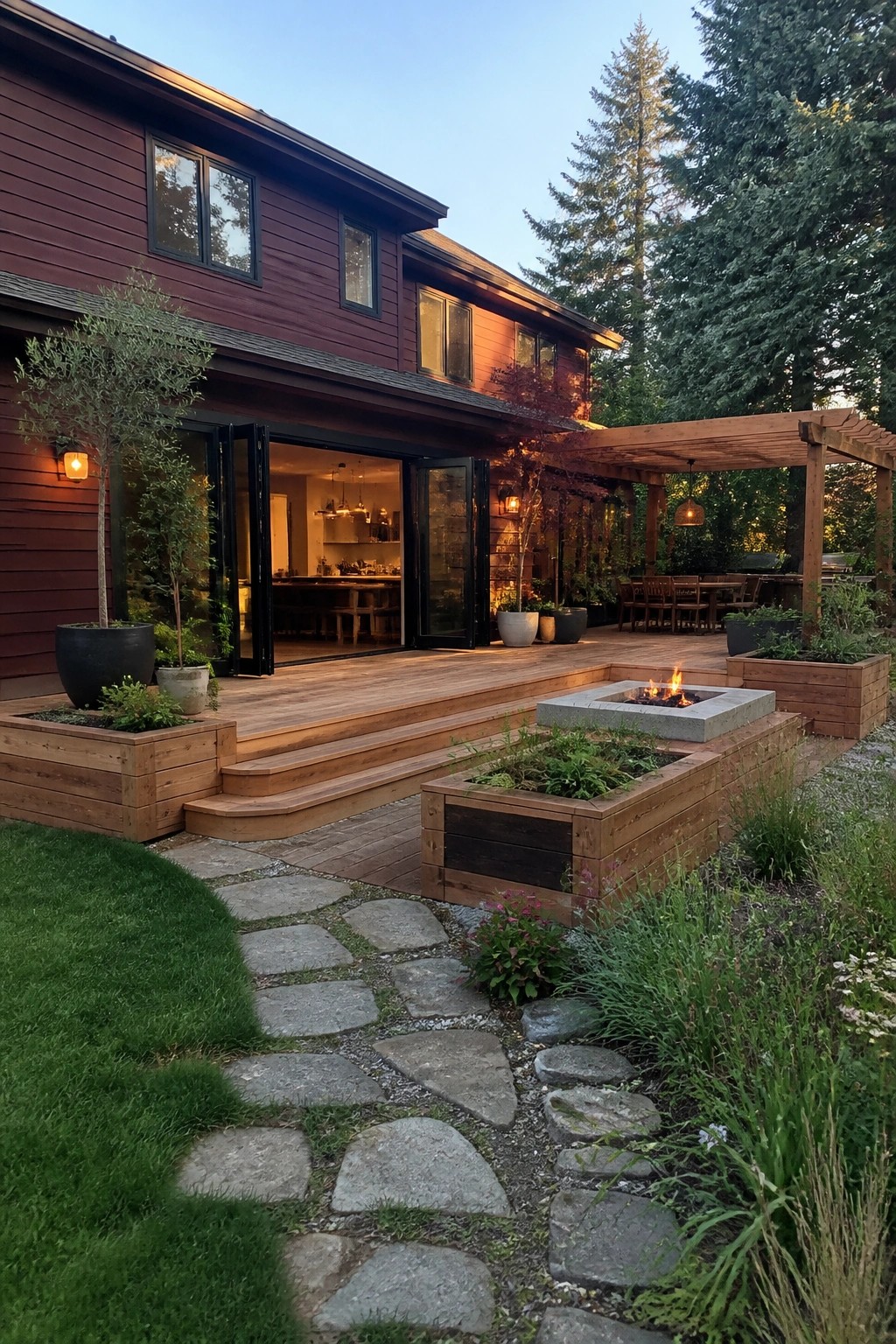
A fire pit set right into the deck surface gives the outdoor space a real reason to be used once the sun goes down. It turns an empty wooden platform into a gathering spot without adding separate furniture or structures that might crowd the area.
This approach works well on homes where the deck already has some height changes or room for steps. Keep the pit low enough for seating around it and let built-in planters do the work of softening the edges and marking the zone.
Cedar Benches Along the House Wall
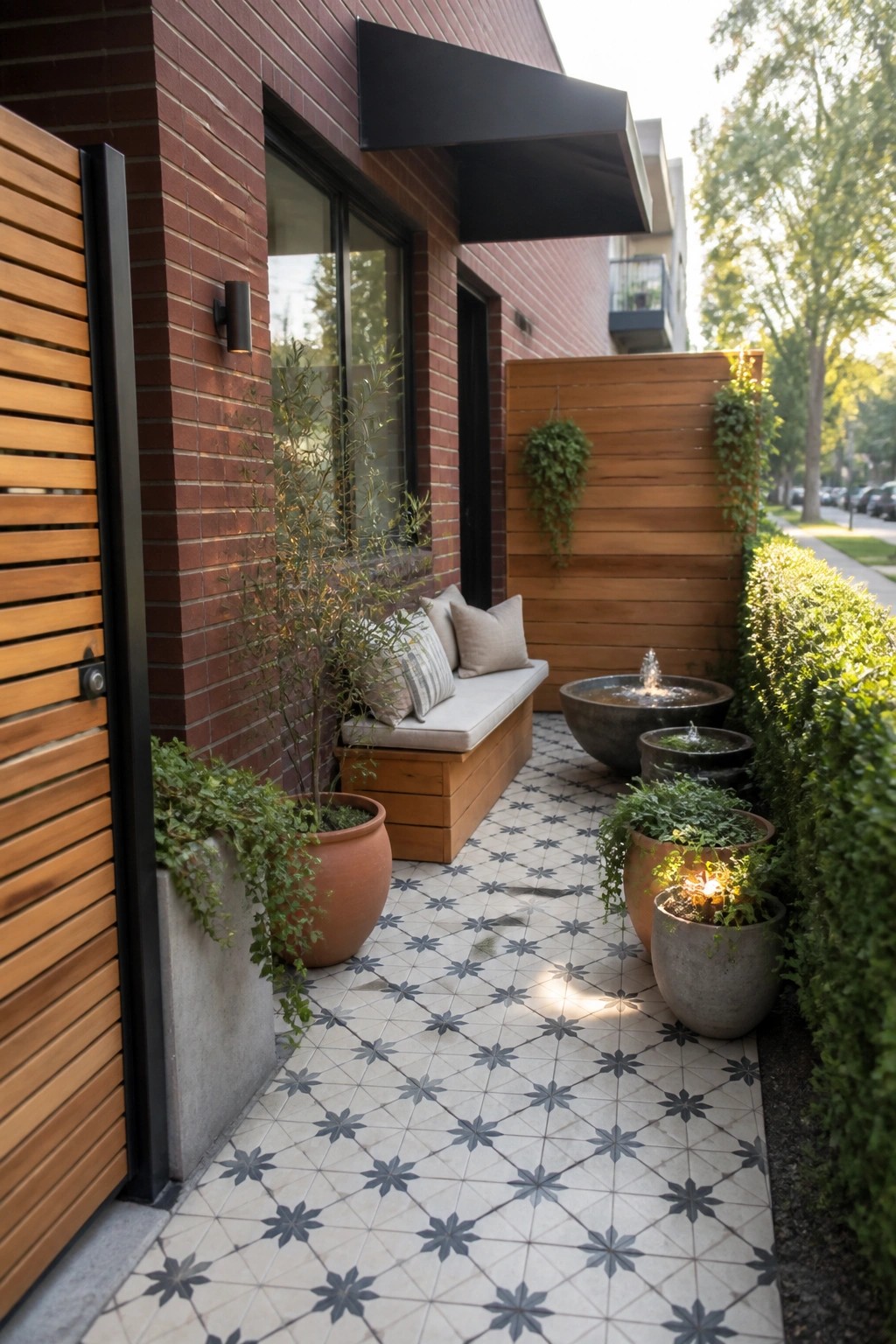
A cedar bench with a lift-up lid gives you seating and hidden storage in one piece. It works especially well in narrow side areas where a full patio set would feel crowded. The natural wood tone also picks up the cedar accents already on the house, so the whole spot feels pulled together without much effort.
Place the bench on a simple tiled or gravel surface and keep the cushions neutral. Add a couple of large pots on either side and you have a spot for morning coffee or evening drinks. This setup suits brick homes with limited side yard space and needs almost no structural changes.
Frequently Asked Questions
Q: How do I keep the cedar accents from turning gray too fast? A: Seal the cedar right after installation with a clear oil based finish. Reapply every couple of years or when the wood starts to look dry. This keeps the natural tone that pairs so well with the burgundy.
Q: Will a darker burgundy make my house feel smaller? A: It can if the shade is too deep and the house already sits in shade. Pick a warmer tone with some red in it instead. That way the color still reflects light and the cedar brings in contrast.
Q: What roof color works without fighting the burgundy and cedar? A: Go with a medium gray or charcoal shingle. It grounds the warmer tones below and lets the cedar accents stand out without extra effort.
