

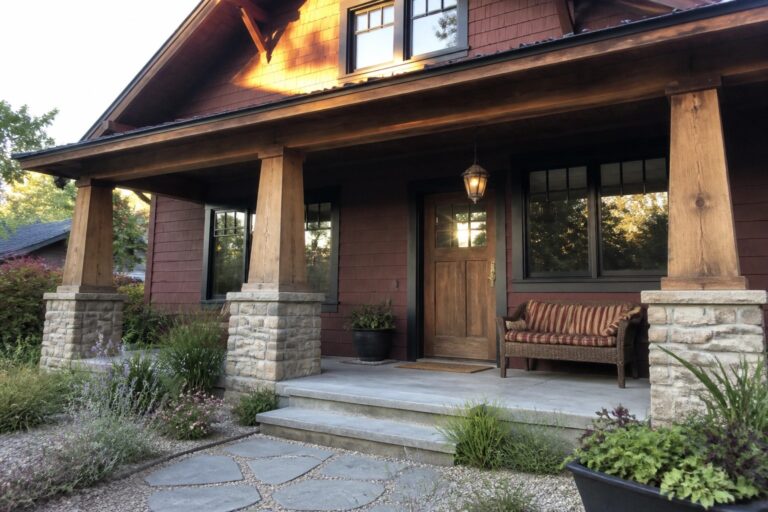
I have noticed that pairing deep burgundy siding with natural wood tones often creates a stronger first impression than I anticipate from drawings alone.
The way the timber frames the porch can shift how the entire front reads once you stand in front of it.
Balance comes down to how the colors interact with the roofline and entry rather than any single element.
Details shift everything.
I would try scaling the porch trim first if adapting any of these approaches to a real house.
Stone Bases Under Timber Posts
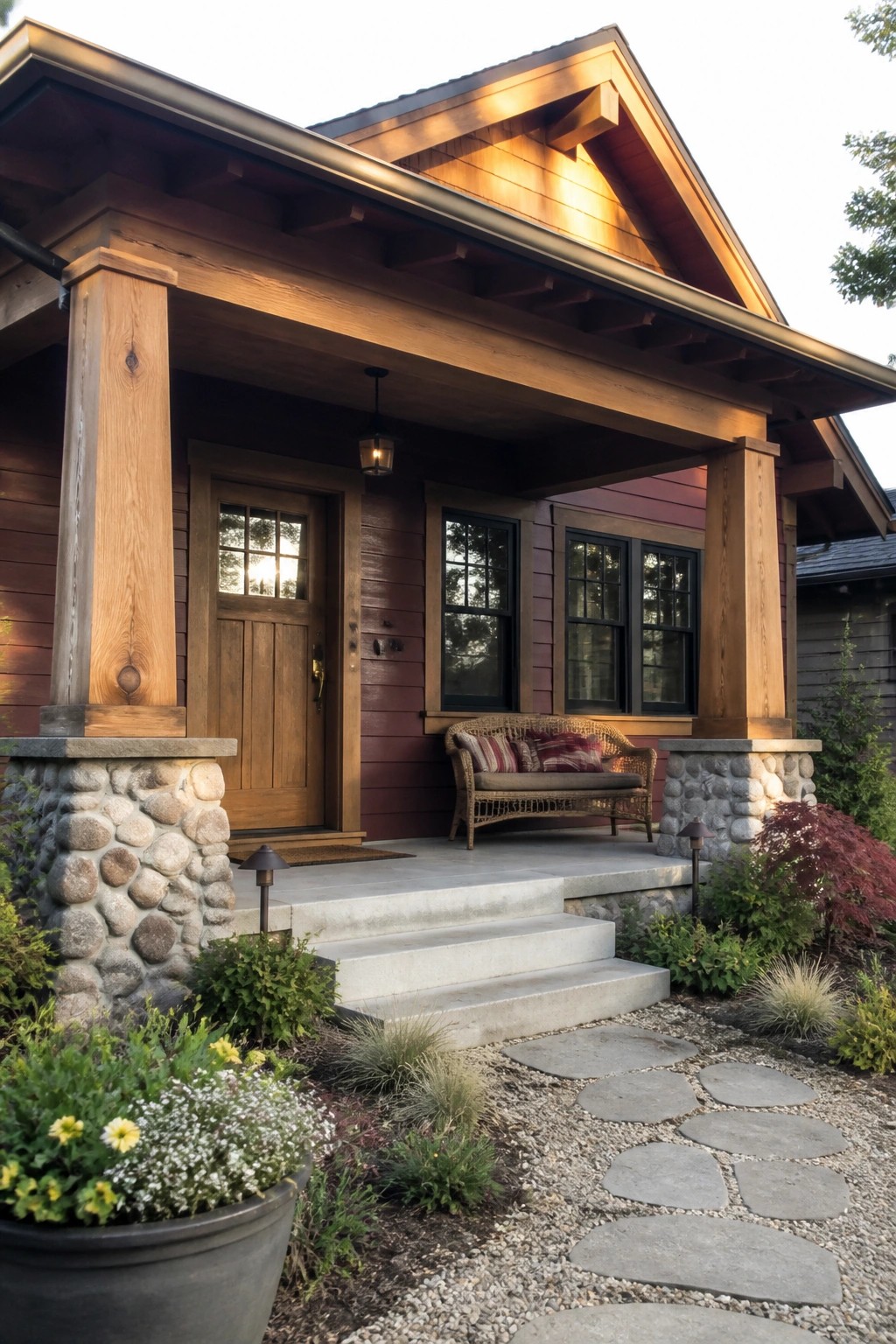
Stone bases under heavy timber posts give a porch real weight and help it settle into the site. The rough texture of the stone balances the smoother wood and painted siding, so the entry feels solid rather than light or temporary.
This detail works best on houses with deeper siding colors and simple plantings. Keep the stone low and natural, let the posts run tall, and the porch will anchor the whole front without extra trim or decoration.
Timber Porch Posts With Burgundy Siding
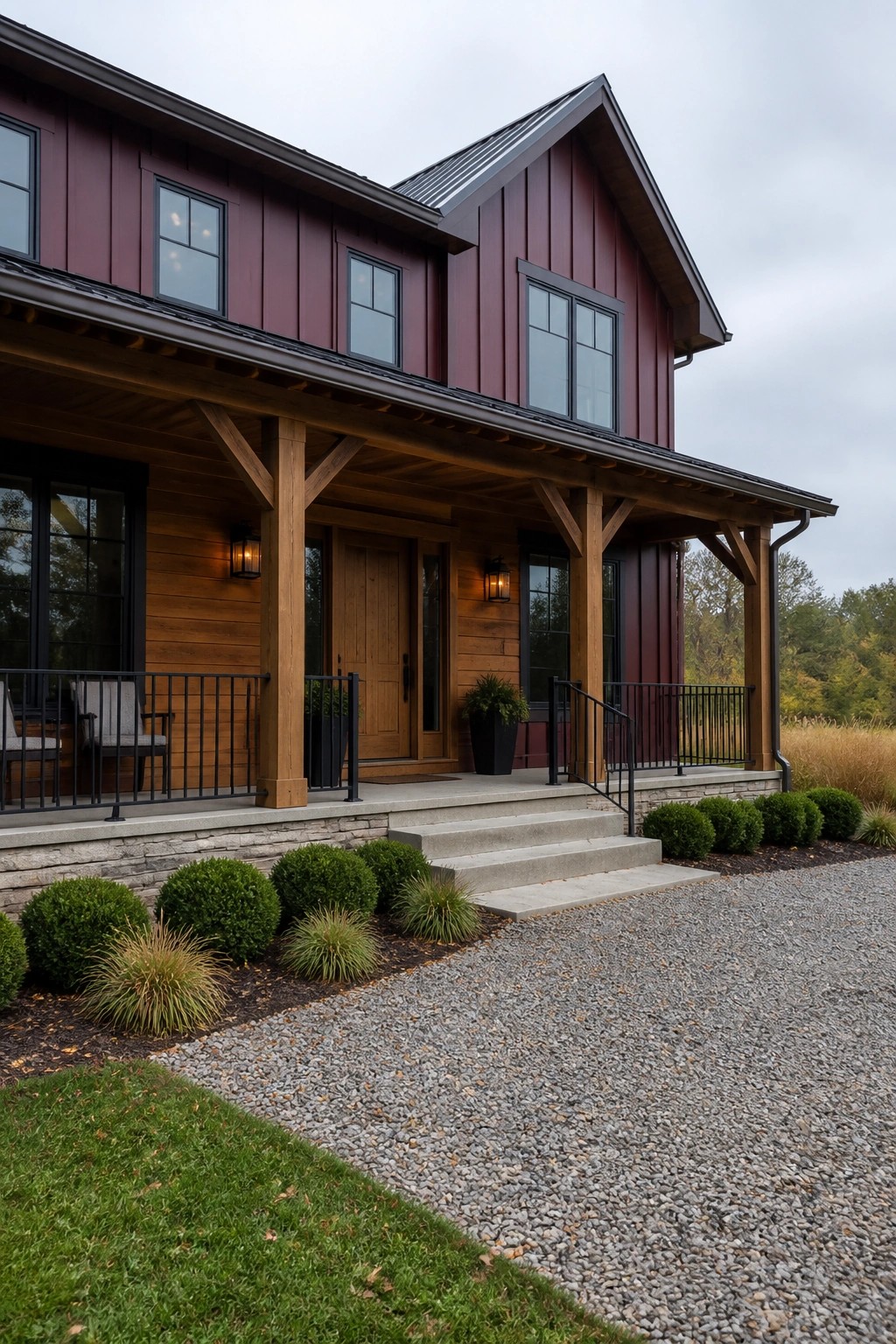
The deep burgundy siding stands out more when paired with the heavy wood posts and beams on the porch. The natural tone of the timber keeps the color grounded and gives the whole front a steadier feel instead of letting the red take over.
This approach works best on houses that already use wood around the windows or doors. Keep the posts thick enough to match the siding scale, and let the wood run across the main entry area so the two materials read as one planned choice rather than separate pieces.
Timber Porch Details On Brick Exteriors
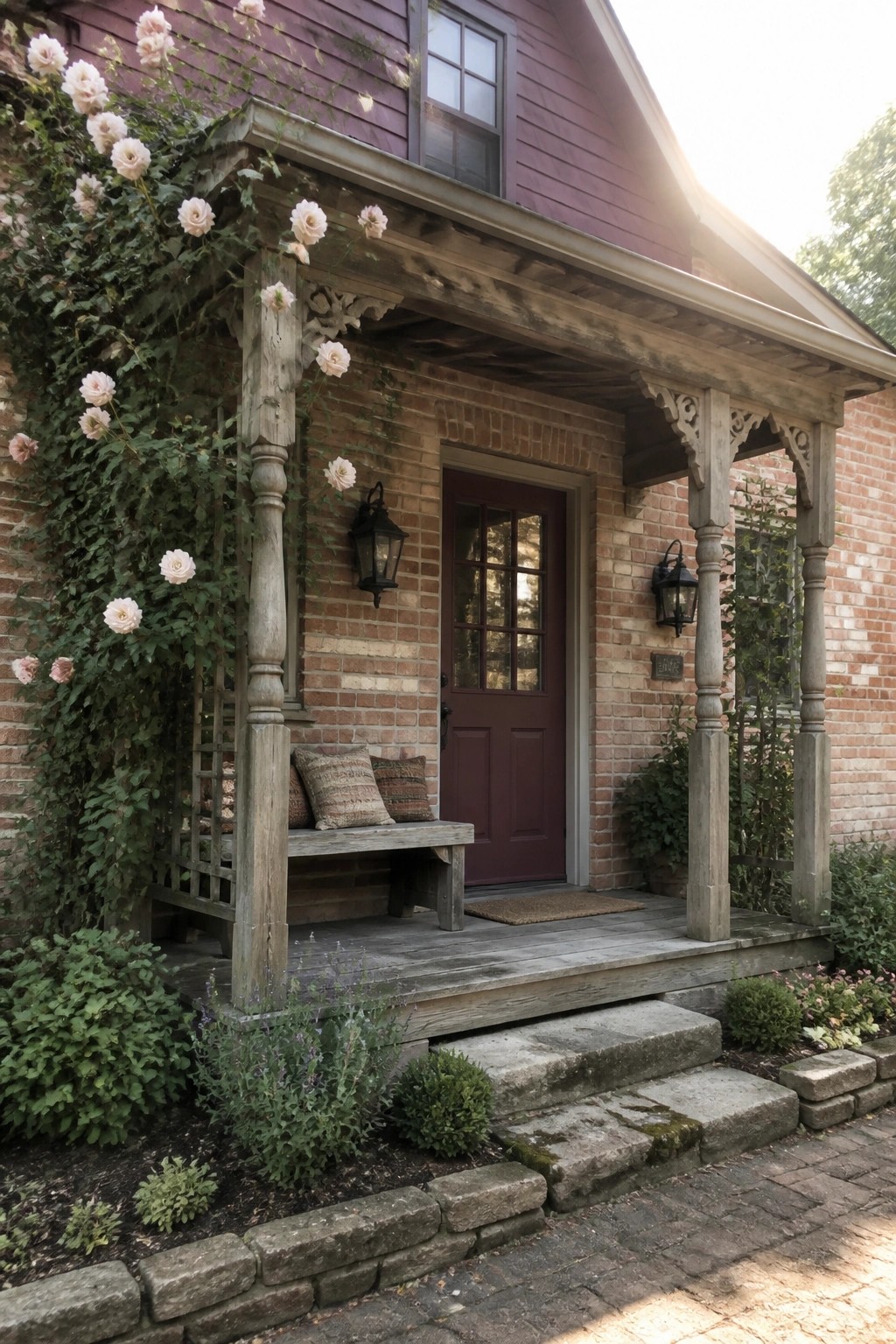
A simple timber porch can soften a brick facade without overpowering it. The posts and trim add warmth and age that plain brick often lacks, especially when the wood is left to weather naturally.
This works best on smaller homes or those with a cottage lean. Keep the wood tones muted and let a few climbing plants fill in around the edges so the structure feels like part of the house rather than an add-on.
Letting Wood Porch Details Balance Burgundy Siding
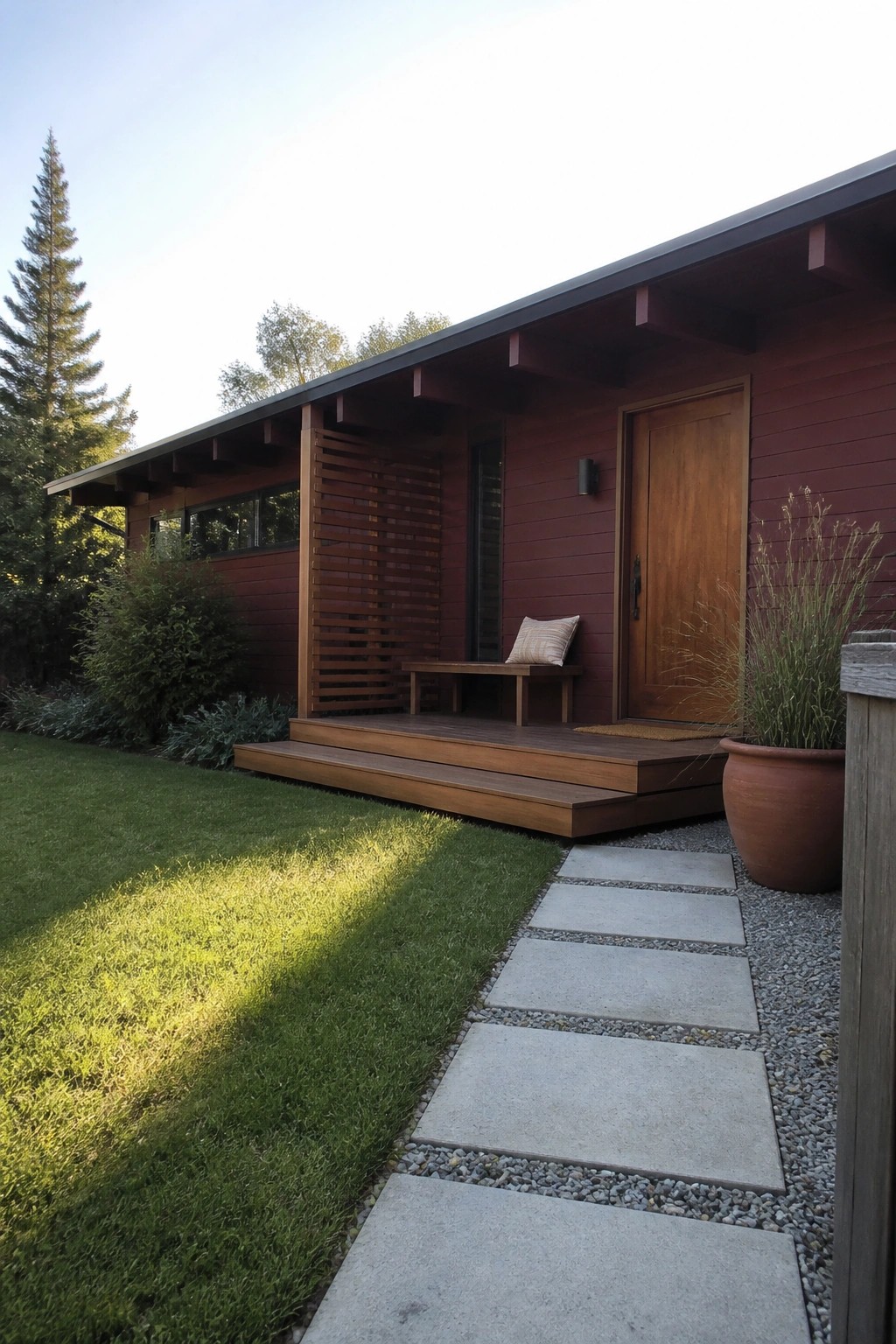
The deep burgundy siding gives this house a strong presence, but the natural wood on the porch and door keeps it from feeling too heavy. That simple mix of painted boards and raw timber creates a warmer, more approachable look without adding extra color or trim.
This works best on straightforward house shapes where the siding color is the main feature. Keep the wood tones consistent on the door, steps, and any small seating, and let the porch stay low and open so the materials do the work.
Wood Porch Details On Brick Houses
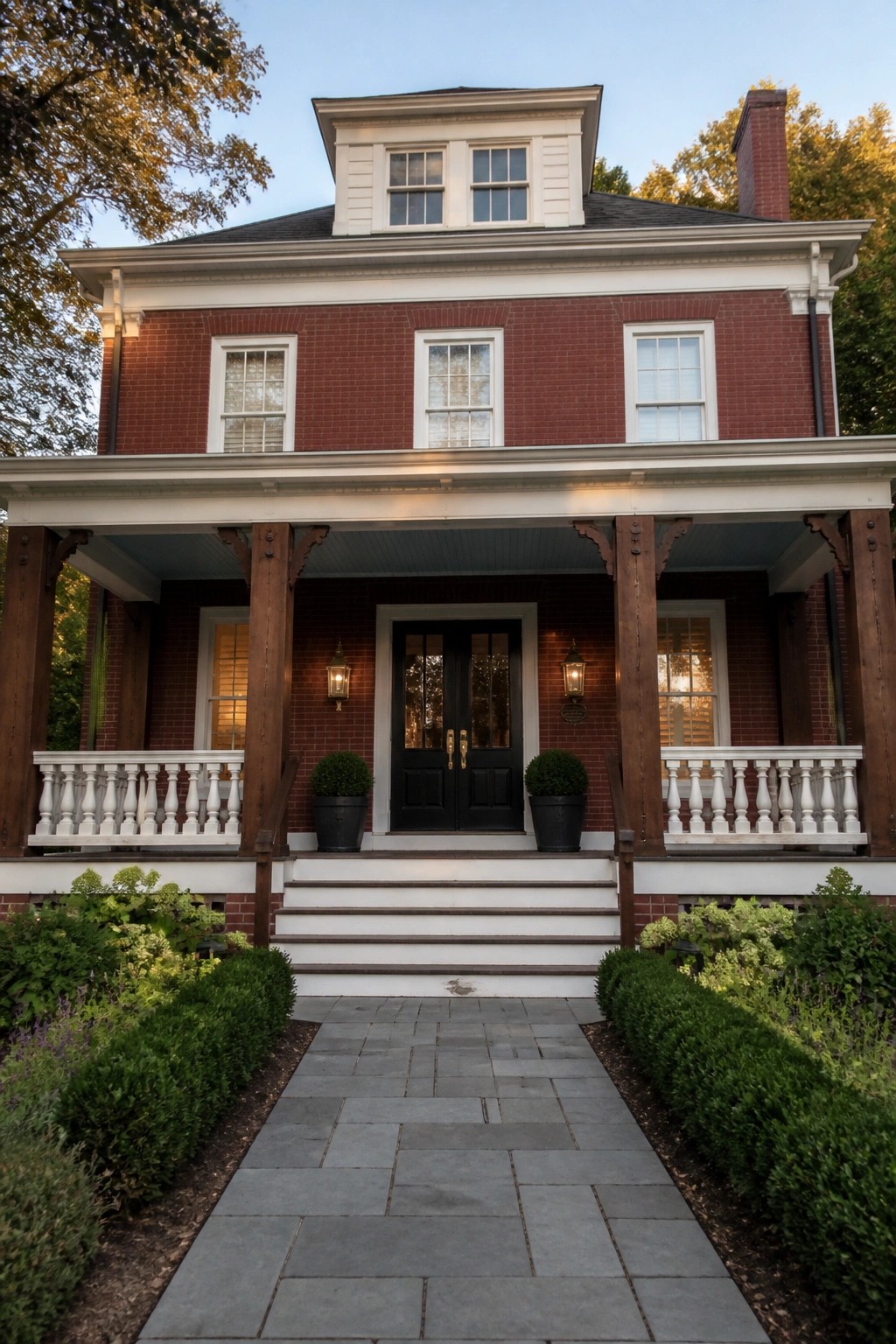
Wood porch posts and trim give a brick exterior more warmth and structure. The dark timber columns here stand out against the red brick and help define the entry without making the front feel heavy or flat.
This mix works best on traditional two-story homes where the porch needs to feel solid but still open. Use a deep stain on the wood so it holds its own next to the brick, and keep the surrounding trim light to maintain balance.
Timber Details At The Entry
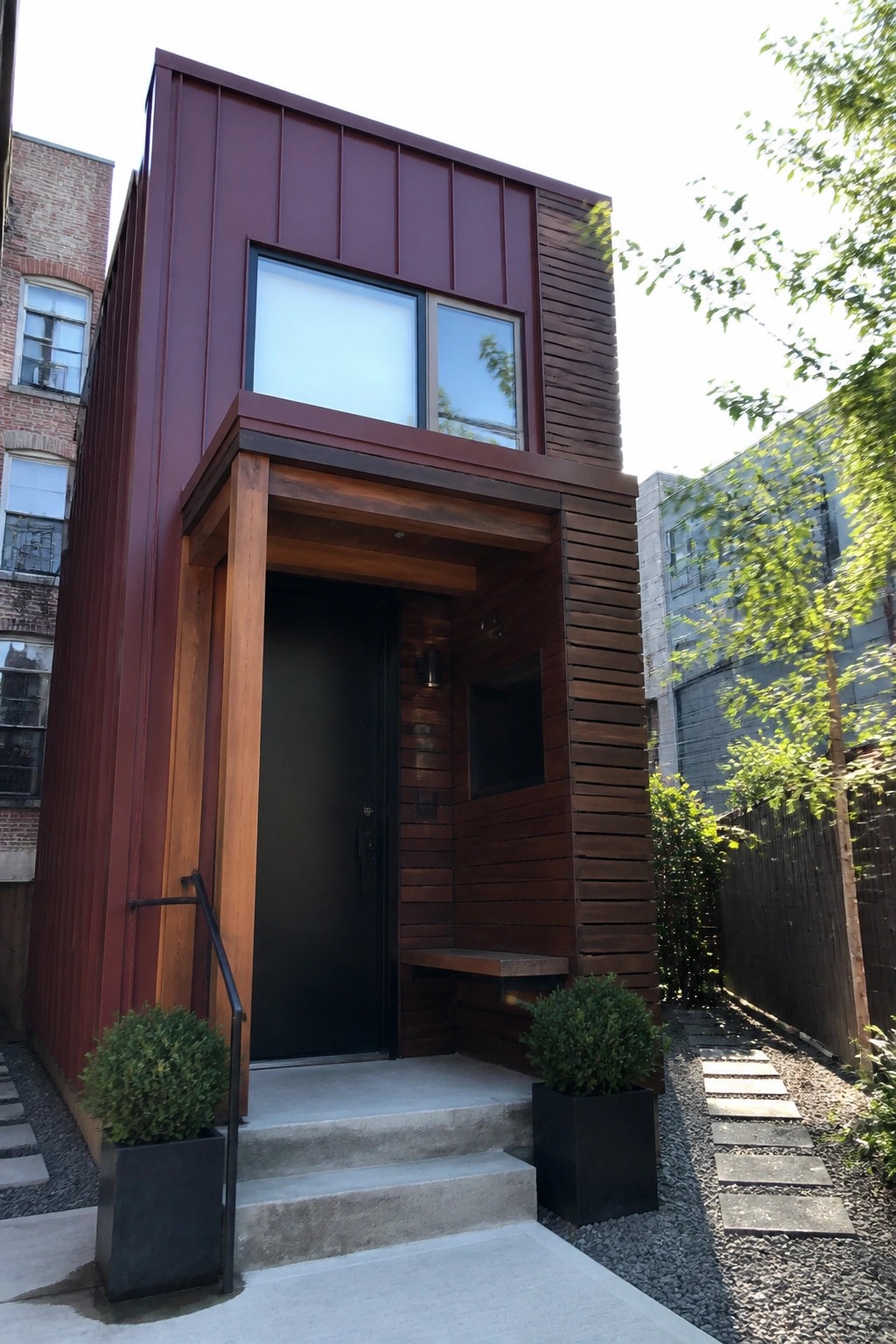
Deep burgundy siding can feel a bit stark on its own, so adding wood around the door helps soften the look and makes the entrance feel more grounded. The wood overhang and trim create a clear focal point without needing extra decoration.
This approach suits compact modern homes that use bold colors. Keep the wood tones warm and natural, and use it mainly around the door and porch so the siding still reads as the main material.
Burgundy Siding Balanced With Timber Porch Details
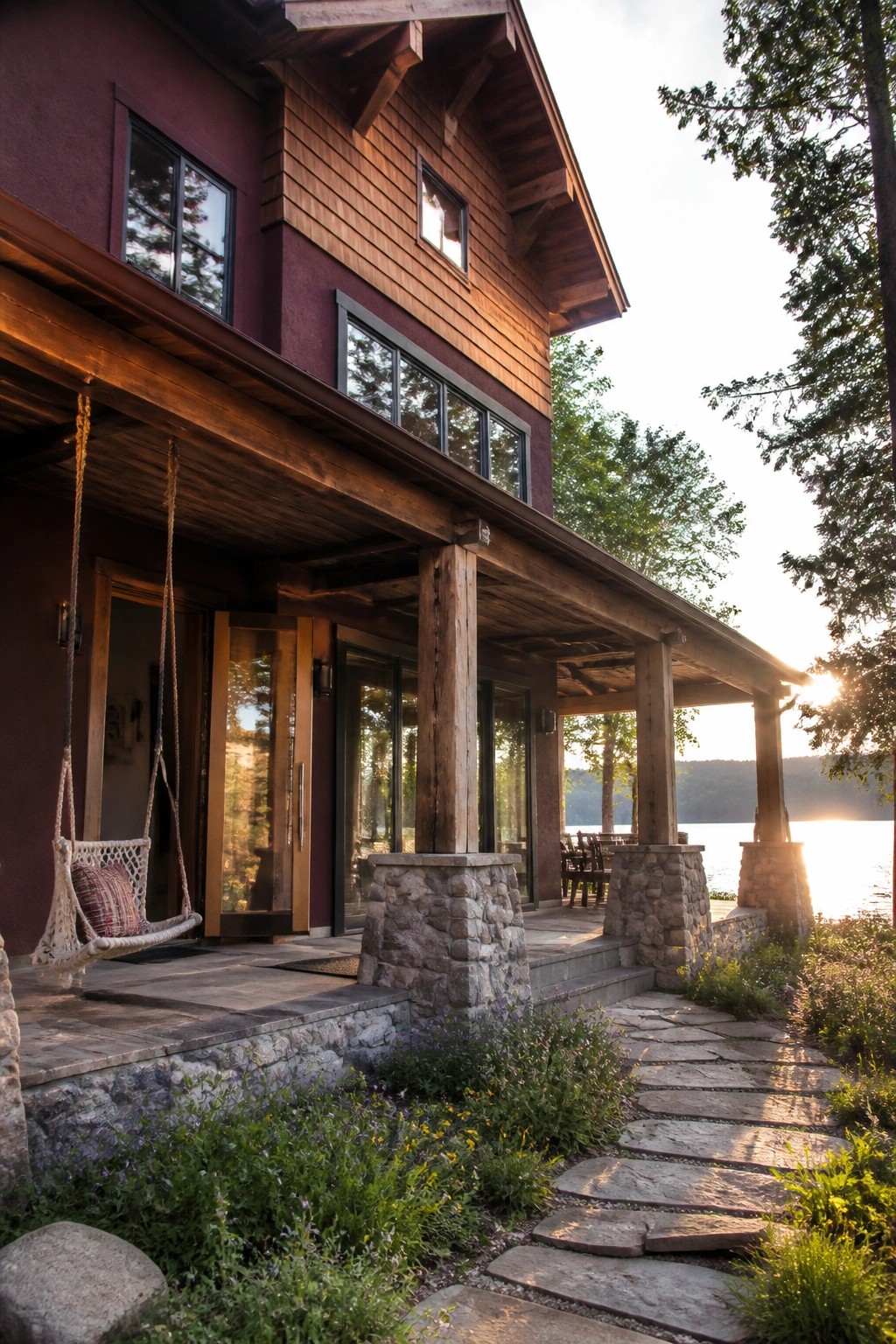
Deep burgundy works well on house exteriors when paired with natural wood because the color stays rich without turning too heavy. The wood siding and porch posts bring warmth that keeps the look grounded instead of stark.
This combination suits homes near water or trees where the tones can echo the setting. Use stone bases under the porch posts to anchor the structure and let the wood run full height for better proportion.
Burgundy Siding With Timber Porch Accents
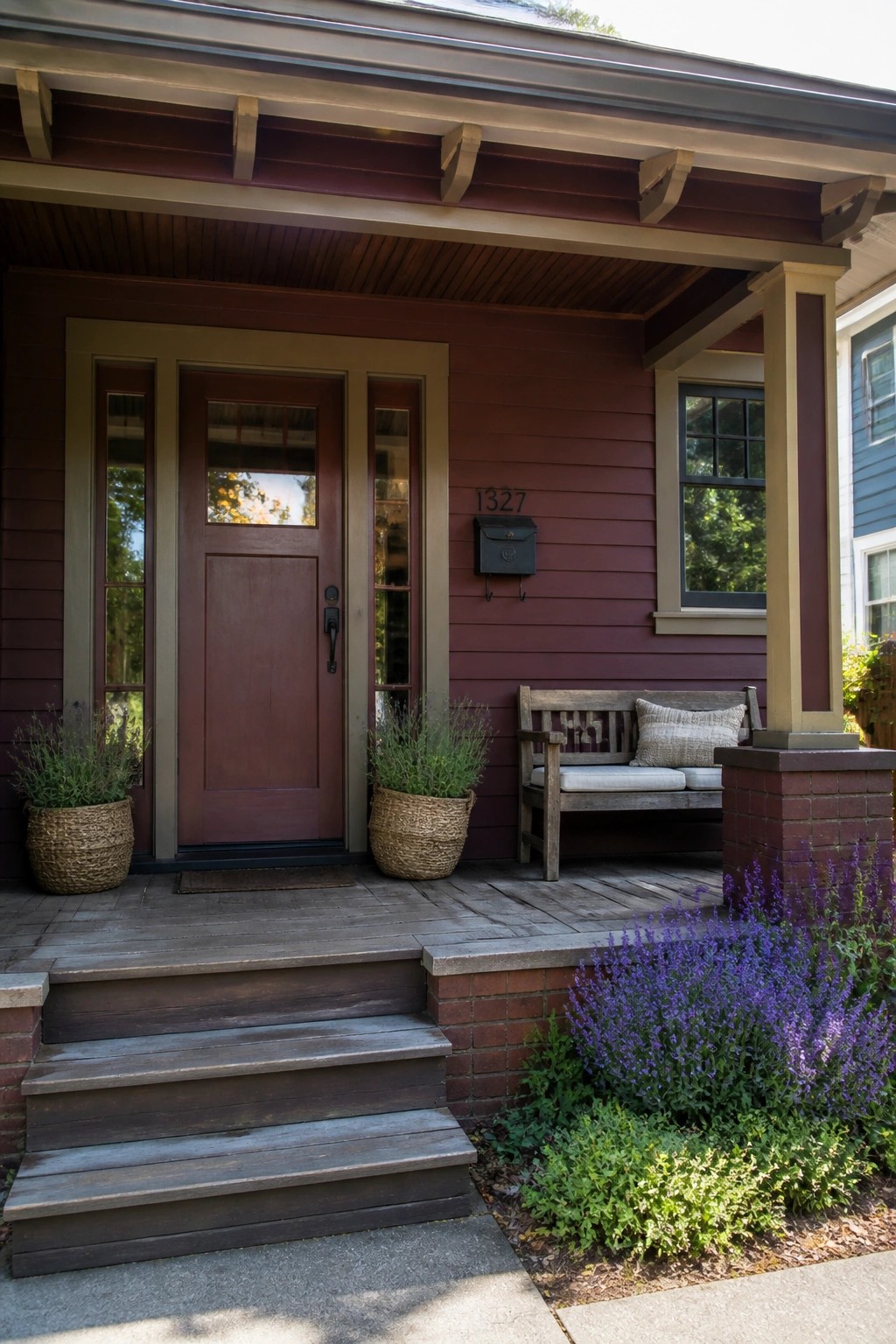
A deep burgundy house exterior gains balance when the porch uses natural wood tones instead of painted trim. The contrast keeps the color from feeling heavy and gives the entry a grounded look that works on many older homes.
This approach suits homes that already have wood siding or details elsewhere. Match the porch wood to any existing trim or railings so the whole front reads as one plan rather than separate pieces. Keep the plants simple so the color and wood stay the main focus.
Timber Porch Details That Balance Burgundy Siding
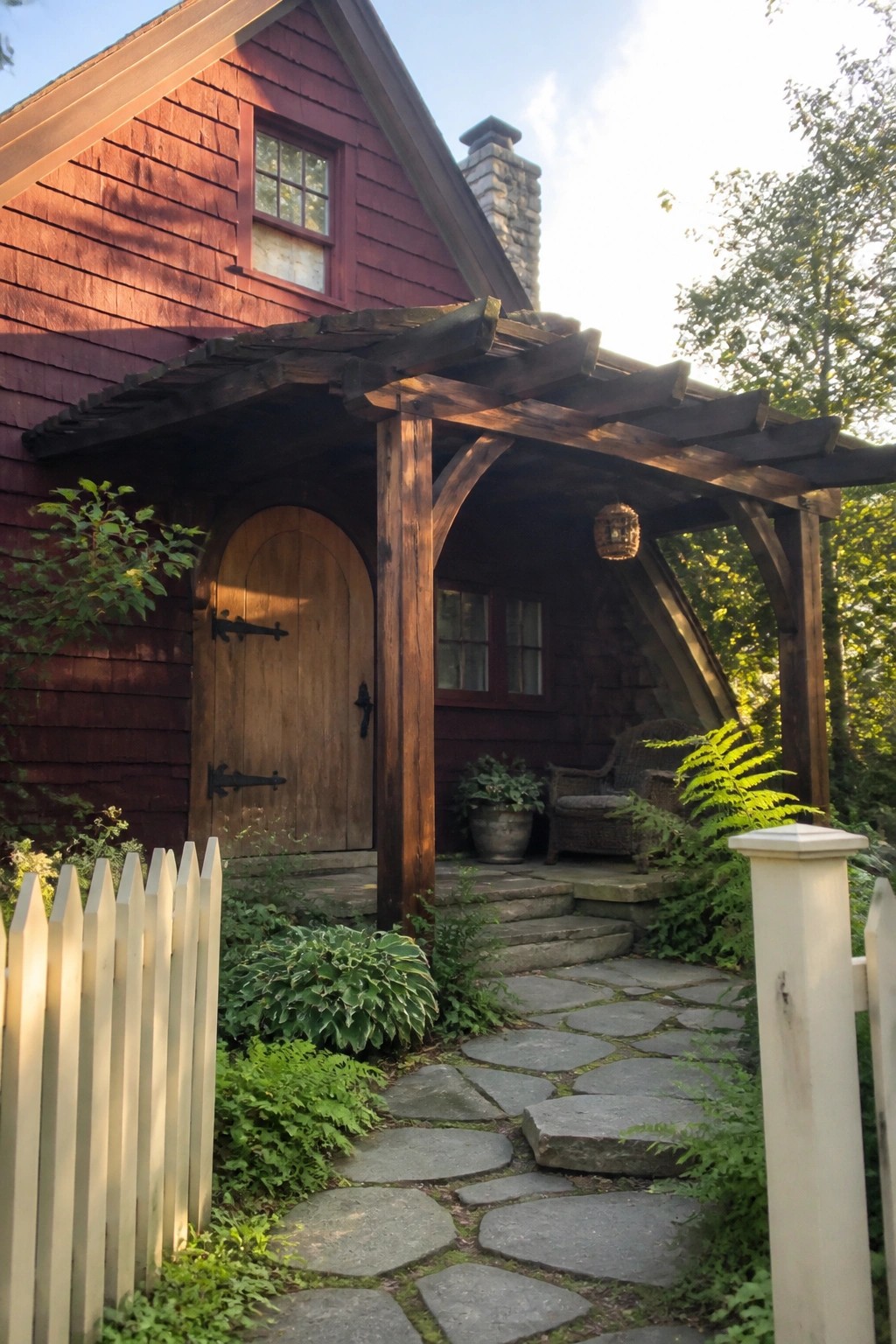
A timber porch adds structure to a deep burgundy exterior without competing with the siding color. The dark wood creates clear lines around the entry and helps the red feel more settled on the house.
This approach works best on smaller homes or cottages where the siding covers most of the facade. Keep the porch framing straightforward so the wood tones support the color rather than taking over.
Timber Porches Bring Balance To Dark Burgundy Homes
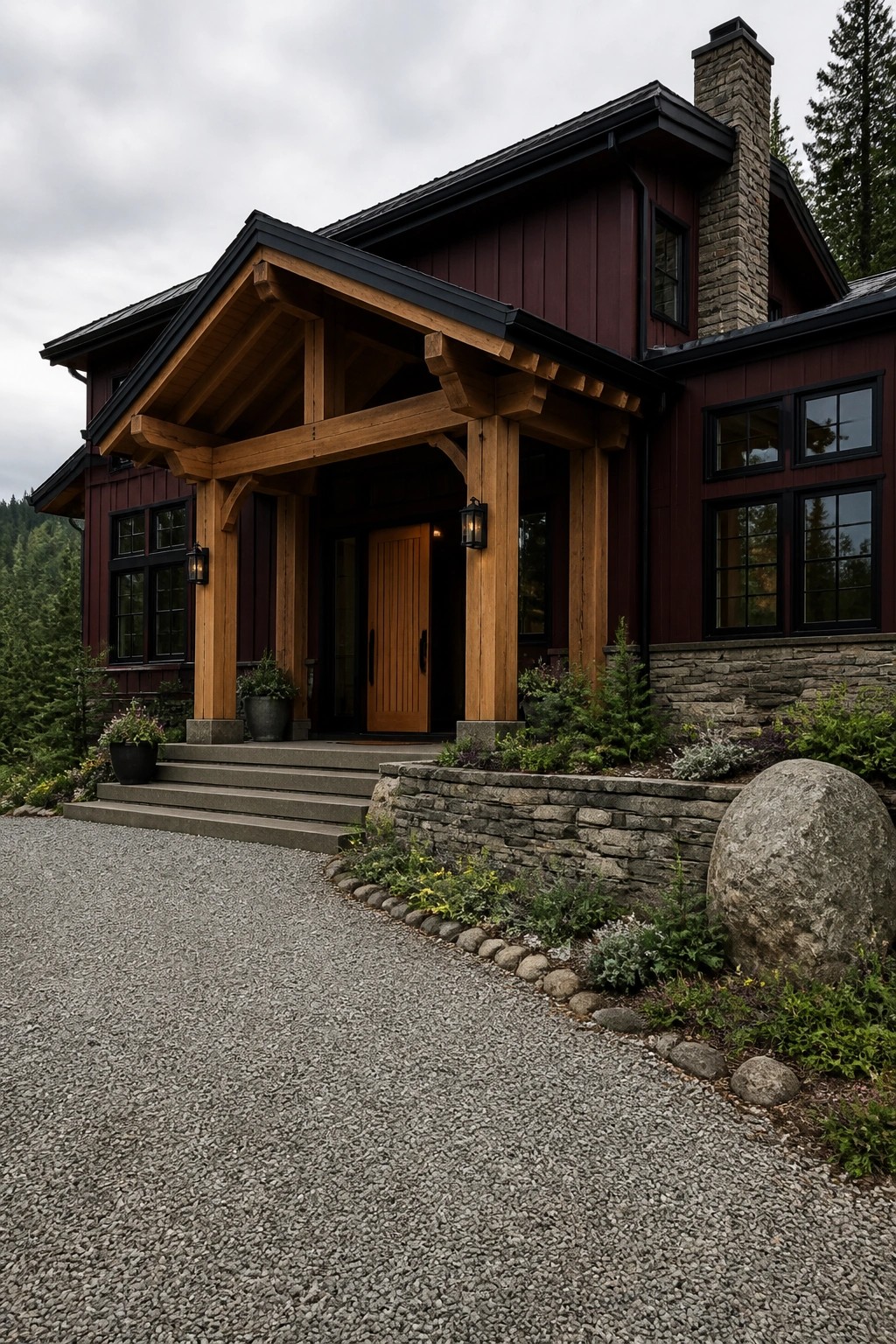
A heavy timber porch like this one gives deep burgundy siding something solid to lean on. The big wood beams and posts break up the strong color and keep the whole front from feeling flat or closed in.
This works best on homes with straightforward rooflines and enough height for the porch to sit comfortably under the eaves. It suits wooded or rural settings where the wood tones can pick up on nearby trees without needing a lot of extra trim or color changes.
Built-In Benches Along Timber Porches
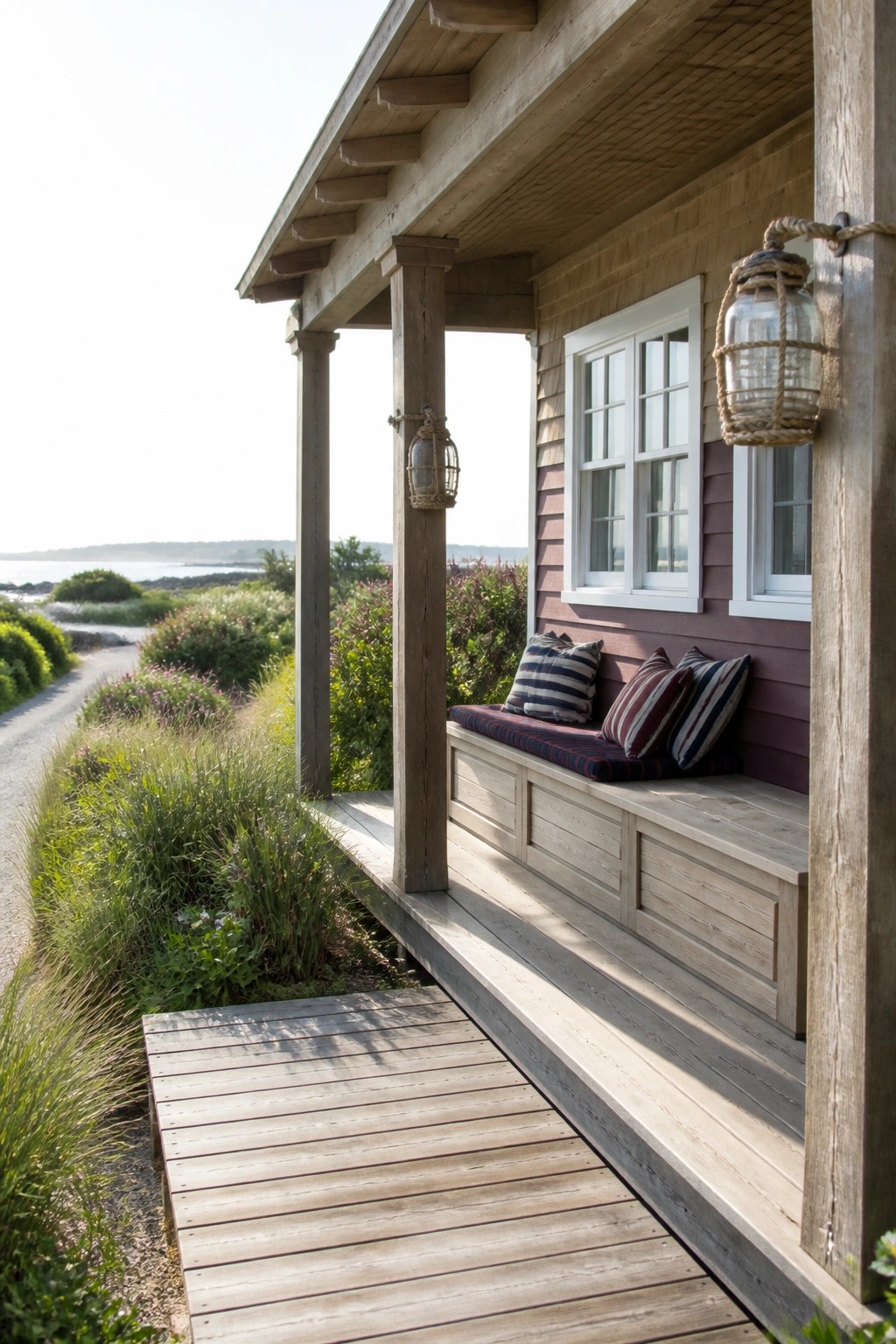
A built-in bench made from the same wood as the porch structure adds seating without cluttering the space. It fits right under the windows and keeps the look clean while giving people a place to sit and enjoy the view. The burgundy siding next to the natural wood creates a simple contrast that still feels balanced.
This works best on smaller porches where freestanding furniture would get in the way. It suits homes near the coast or in wooded areas where you want the exterior to feel sturdy and practical. Just make sure the bench height lines up with standard seating so it stays comfortable.
Burgundy And Wood On The Porch
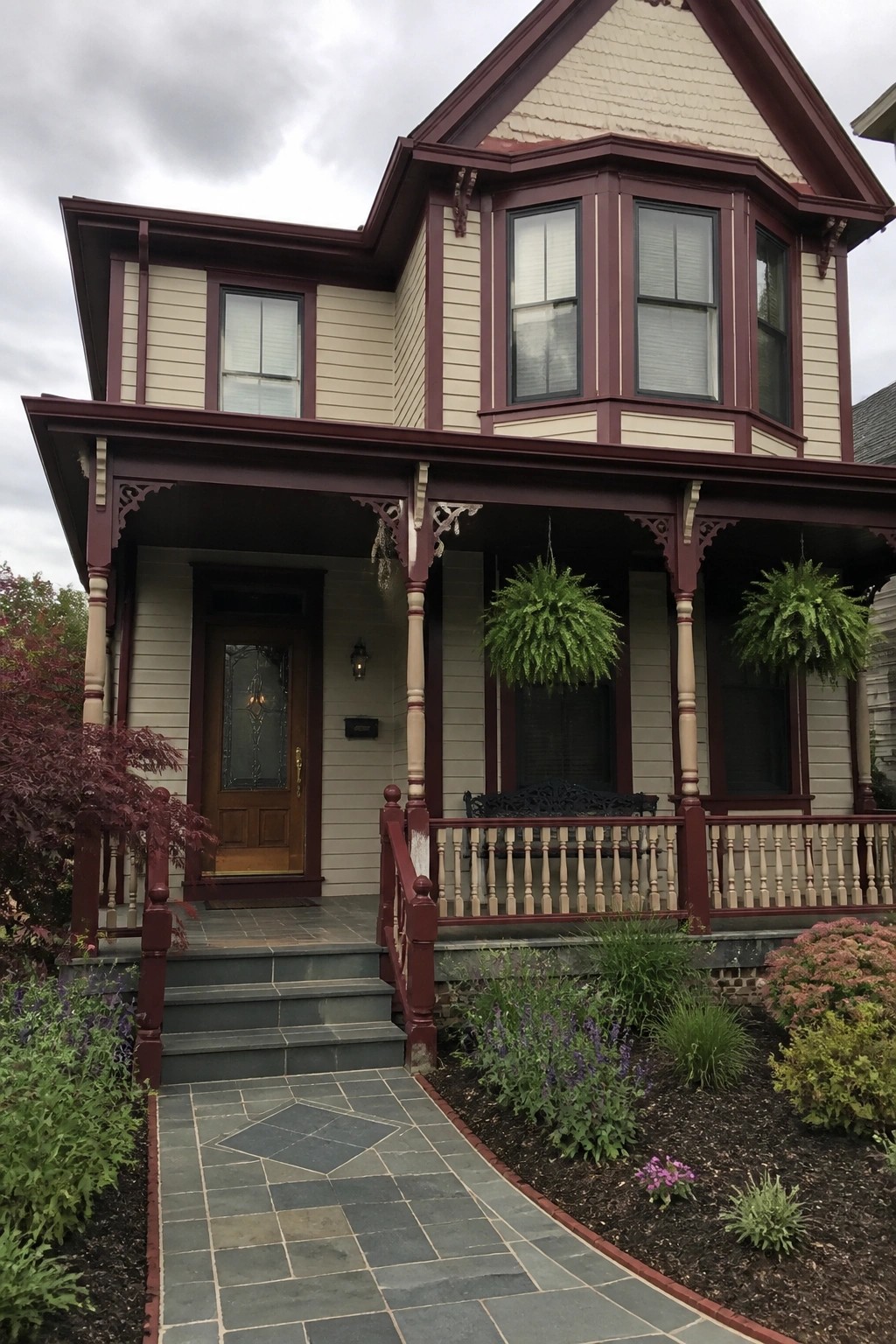
Deep burgundy paint on the trim pairs nicely with the natural wood tones on the posts and railings. The contrast keeps the porch from looking flat while still letting the wood feel warm and simple.
This works best on homes with older details where you want color without losing the timber look. Stick to one main wood tone and let the burgundy handle the rest of the trim so the balance stays easy to maintain.
Timber Porch Framing With A Deep Red Roof
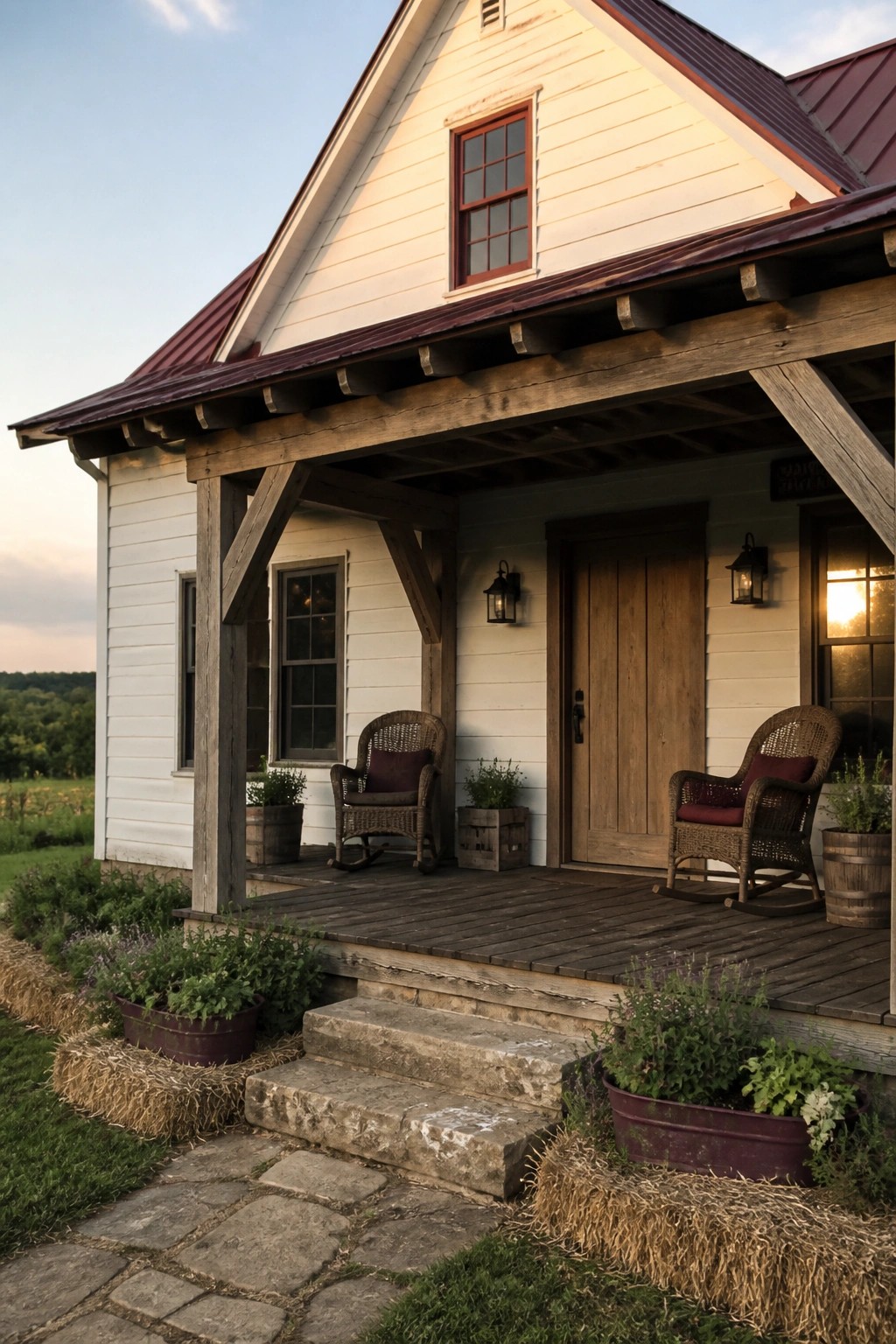
A deep burgundy roof can feel bold on a simple house, but the heavy timber porch keeps it from looking too stark. The wood beams and posts add weight and warmth that ground the color and make the whole front feel more settled.
This approach works best on smaller homes with light siding where you want the roof to stand out without taking over. Keep the wood natural or lightly weathered so it reads as structure rather than decoration, and let the beams run thick enough to match the scale of the roof.
Timber Porch Details That Balance Burgundy Shutters
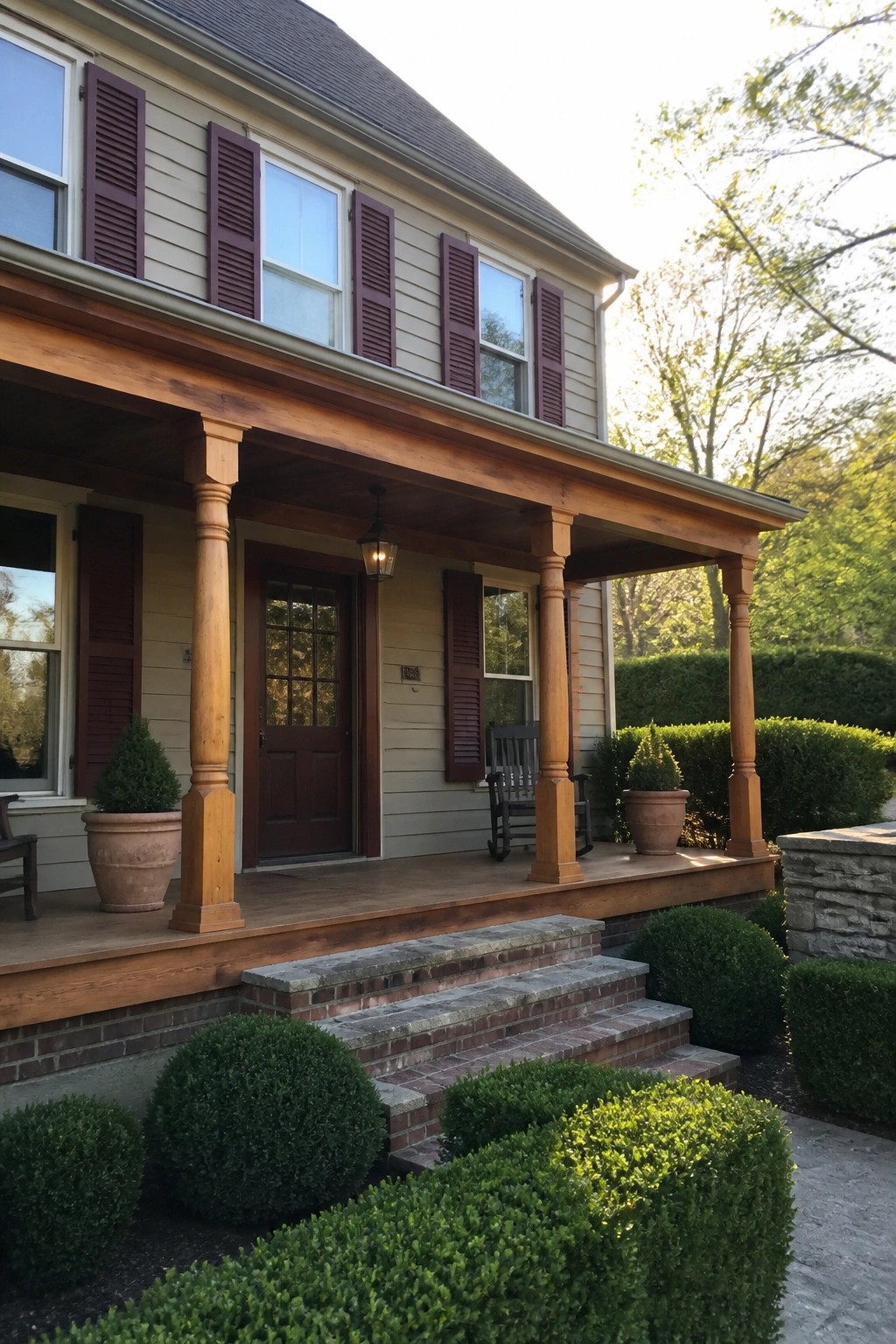
The burgundy shutters give the house a clear focal point, but the natural wood on the porch keeps everything grounded. The columns, beams, and deck add warmth that stops the darker color from taking over the whole facade.
This works best on homes with light or neutral siding where you want the shutters to stand out without looking heavy. Keep the wood finish simple and let it connect to the front door trim so the colors feel intentional rather than scattered.
Burgundy Siding With Natural Timber Accents
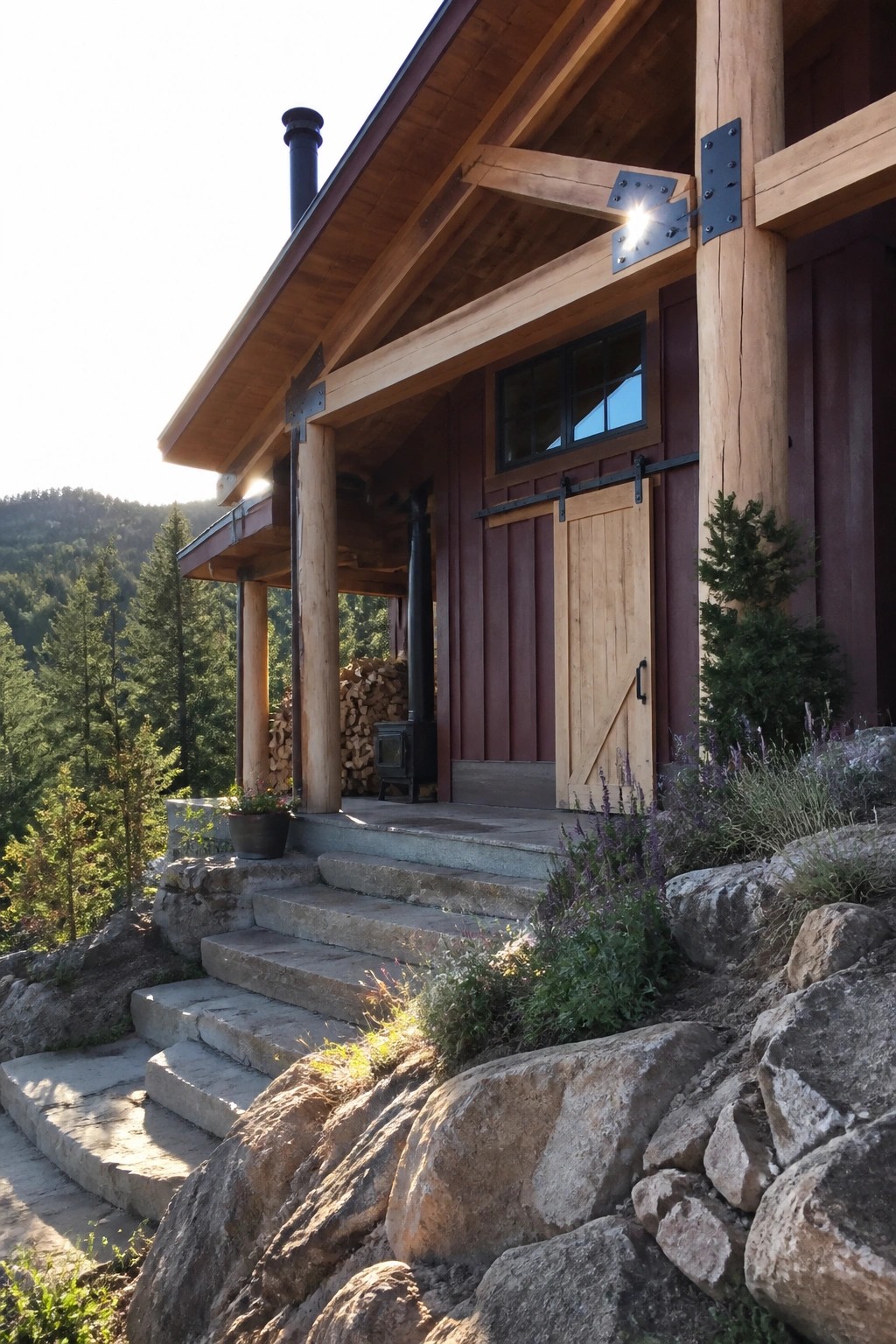
A deep burgundy finish on the main walls pairs well with raw wood posts and beams because the color stays bold while the timber keeps things grounded. The contrast draws attention to the porch structure without needing extra trim or decoration.
This look suits homes in wooded or hilly areas where the surrounding trees already provide plenty of green. Use it when you want the entry to feel solid but still tied to the natural setting, and keep the wood finish simple so it does not compete with the painted siding.
Wood Trim on Burgundy Brick Entries
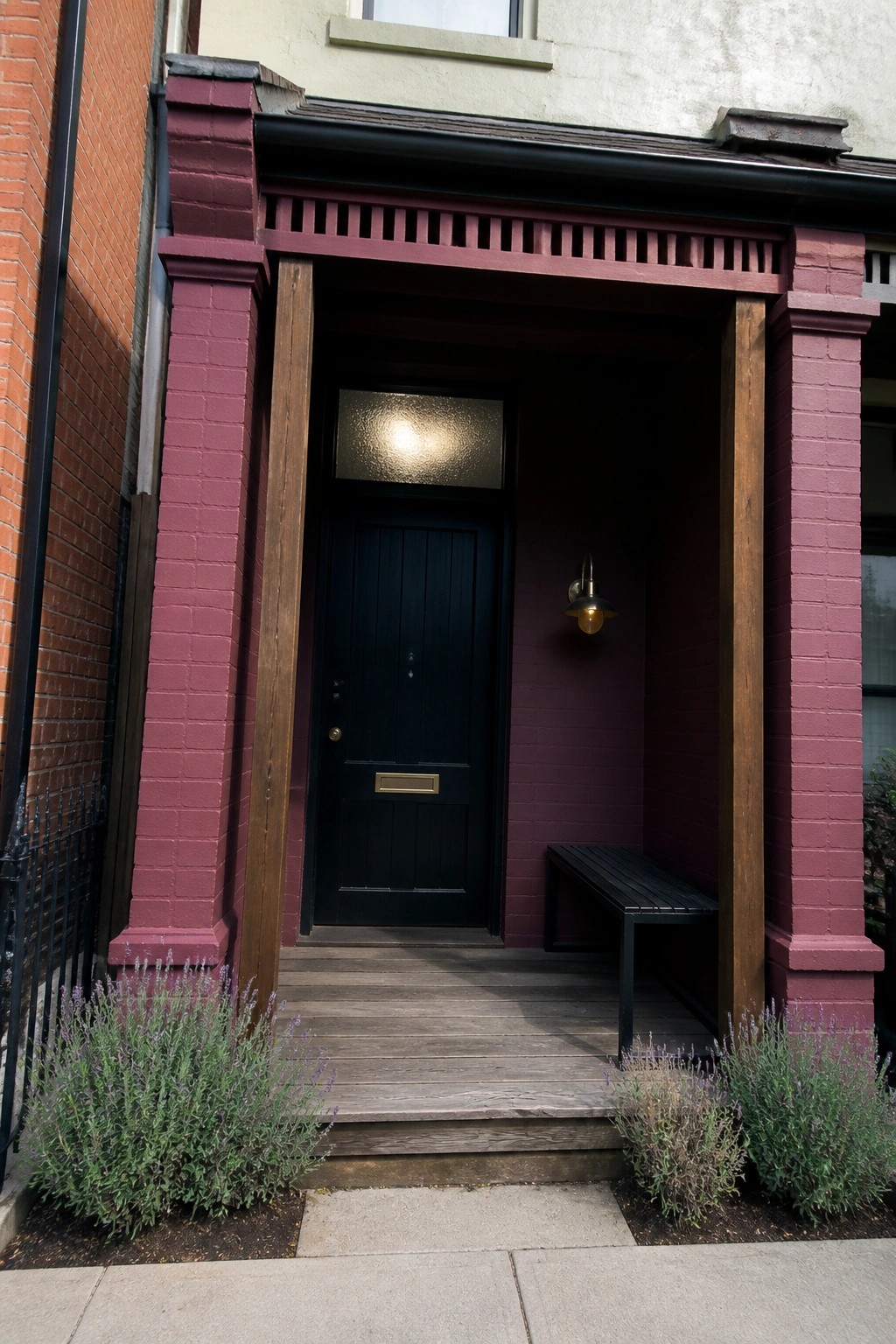
A deep burgundy brick facade gains a lot from simple wood trim around the door and porch structure. The natural tone softens the strong color and gives the entry a clear shape without adding extra decoration.
This works best on homes that already lean traditional or transitional. Keep the wood in its natural finish and limit it to the main opening and any supporting posts so the color stays the focus.
Wood Details That Balance Bold Siding
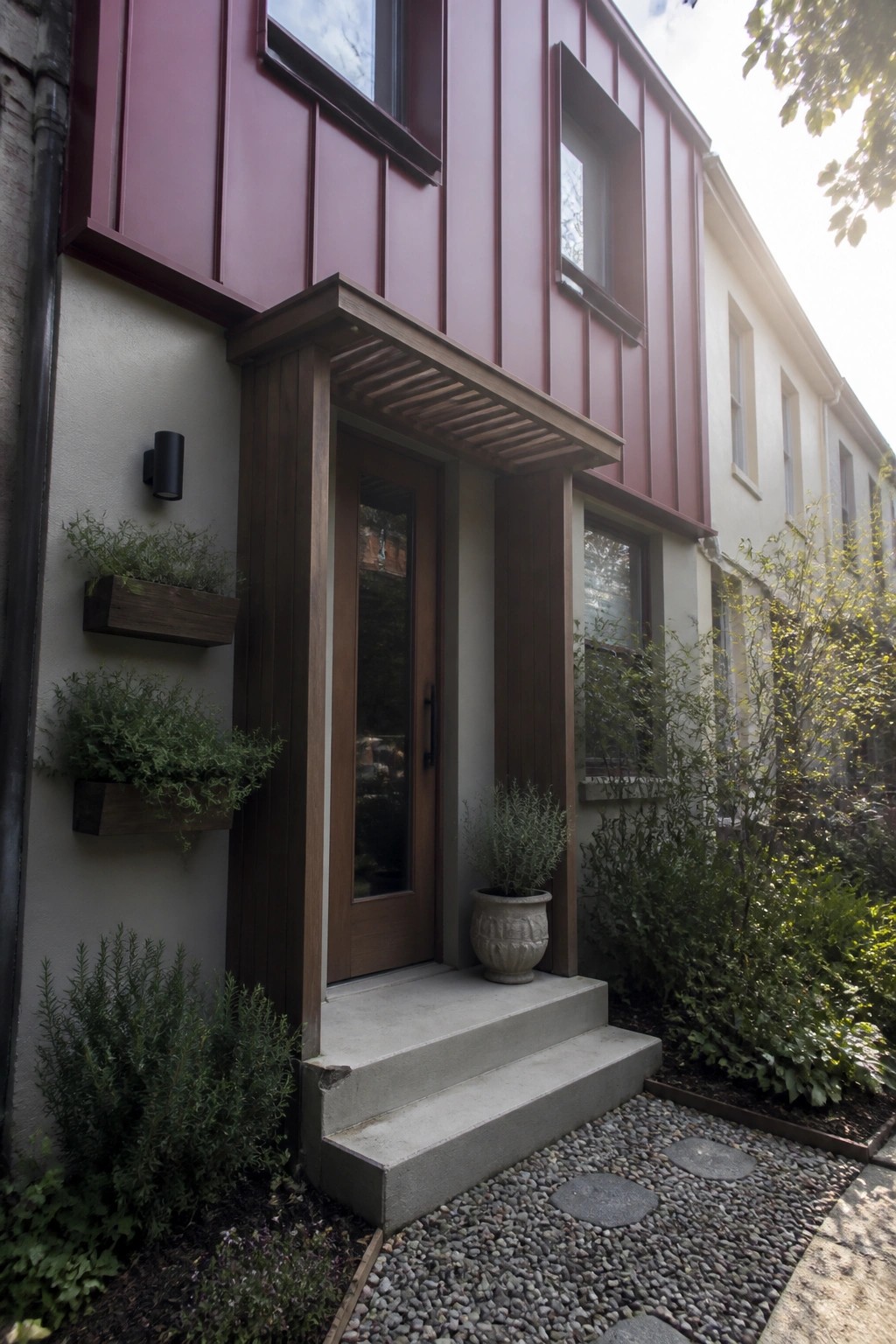
Deep burgundy siding can feel heavy on its own, but adding wood around the door and a simple overhead canopy keeps the color from taking over. The wood adds warmth and breaks the surface without needing extra trim or decoration.
This works best on straightforward facades where the siding is the main color statement. Use a matte wood tone that matches the door frame scale so the entry feels grounded rather than busy.
Burgundy Siding With Timber Porch Details
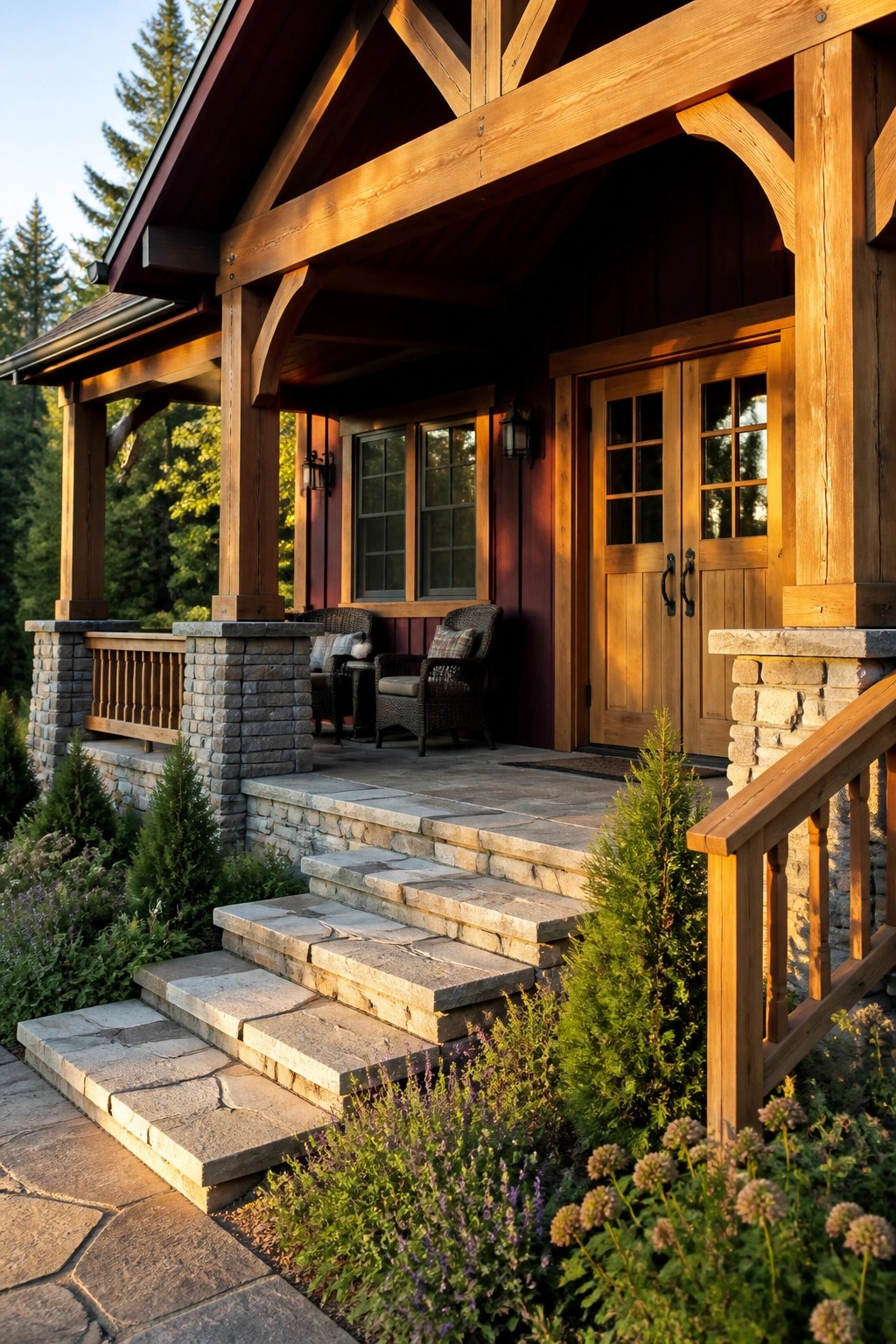
Burgundy siding gives a house real presence, and pairing it with heavy timber posts and beams keeps the look from turning too dark or heavy. The contrast adds warmth while still letting the wood structure do its job of framing the entry and porch.
This works best on homes set among trees or in cooler climates where deeper colors feel at home. Use the same wood tone on the doors and trim, and let the siding stay matte so the timber reads as the main architectural feature.
Burgundy Siding With Timber Porch Supports
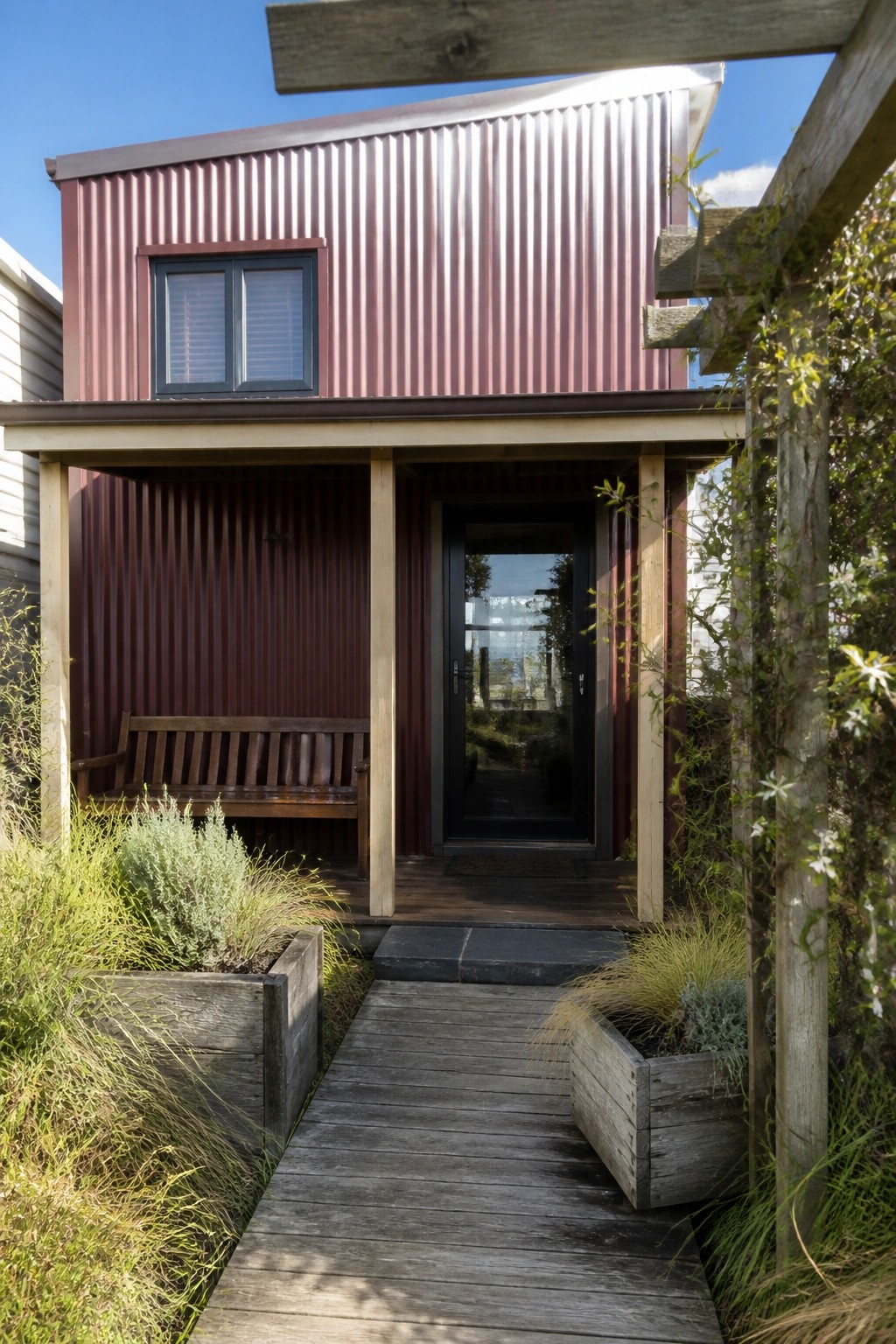
A deep burgundy exterior can feel heavy on its own, but adding natural wood posts and decking around the porch helps keep the whole look grounded. The wood brings in warmth and texture that stops the color from overpowering the house.
This approach works well on smaller homes or cottages where you want the siding to stand out without making the entry feel closed off. Keep the wood tones light to medium so they contrast the burgundy instead of blending into it, and make sure the porch structure stays simple.
Timber Porch Details Balance Burgundy Exteriors
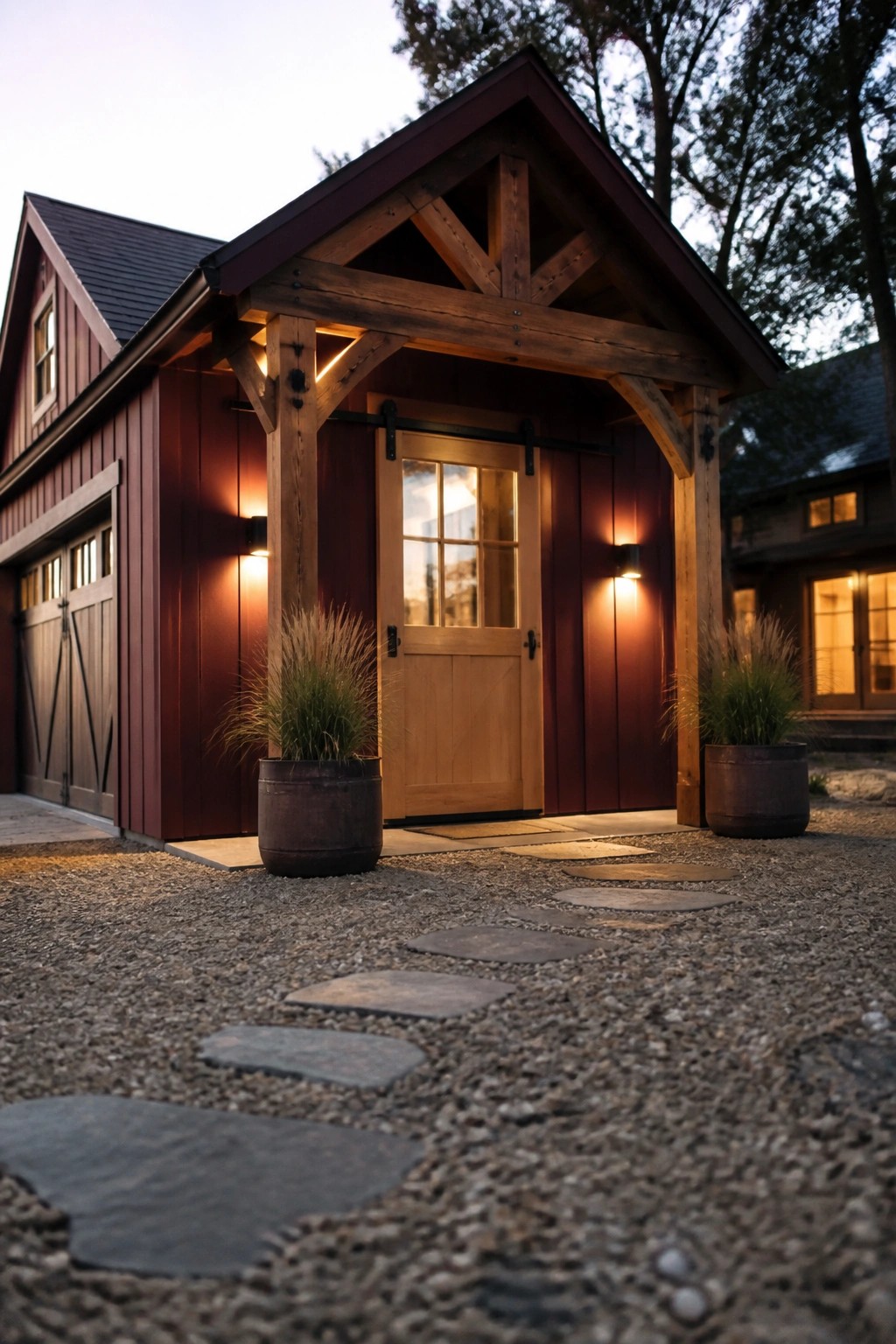
A timber-framed porch adds structure and warmth to a deep burgundy exterior without competing with the color. The exposed beams and posts create a clear entry point that feels solid and grounded.
This works best on smaller homes or outbuildings where the goal is to keep the facade simple. Use the same wood tone for the door and porch framing, and place lights on the posts so the entry reads clearly after dark.
Timber Porch Details at the Entry
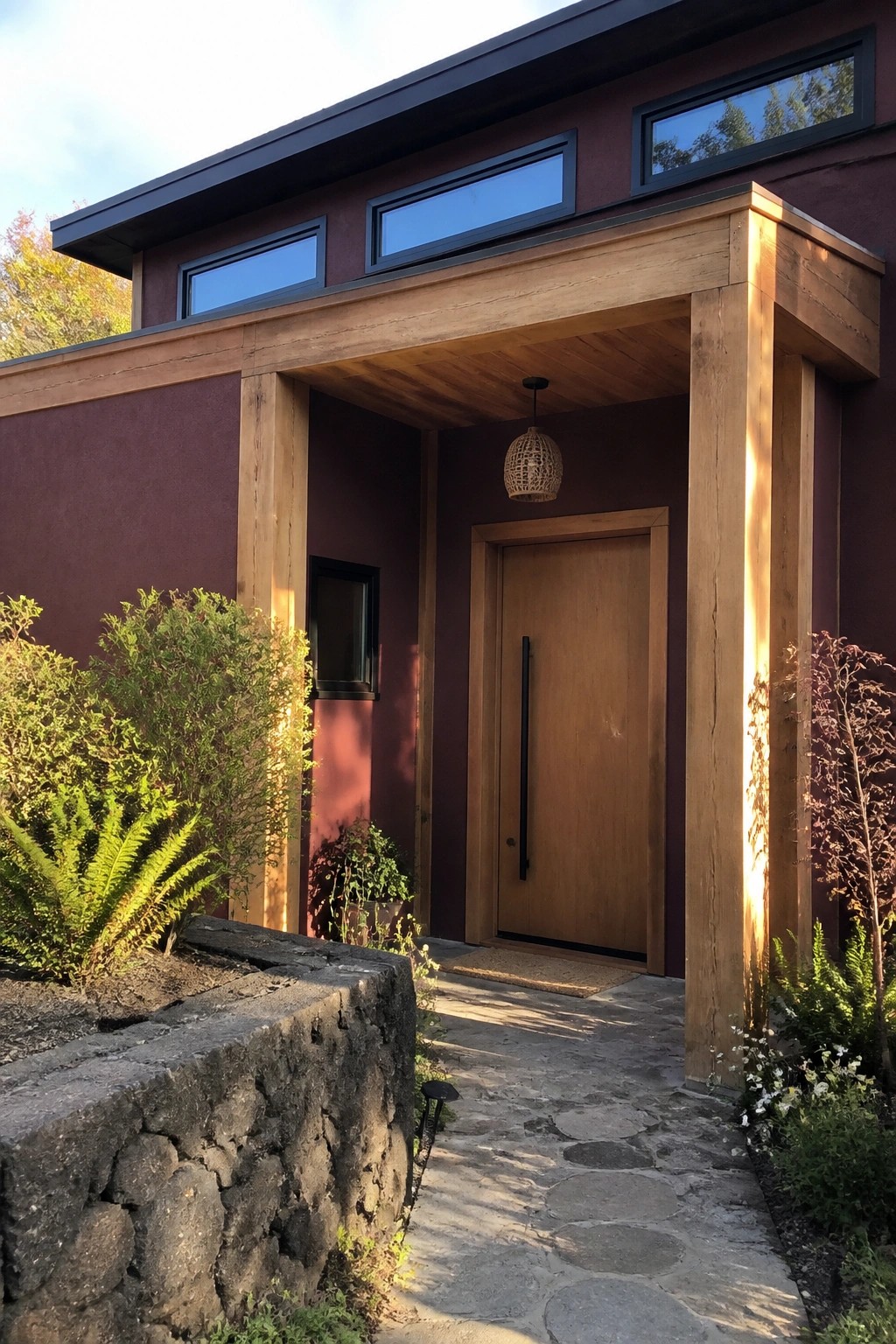
A timber porch structure over the front door gives the entrance real weight without any extra fuss. The thick beams create a clear frame that helps the bold wall color feel more grounded and the whole facade look more finished.
This approach works best on homes with strong siding colors and simple rooflines. Use natural wood tones that contrast with the walls, and keep the beams substantial so the shelter reads as part of the architecture rather than a light add-on.
Timber Porch Structures With Deep Burgundy Siding
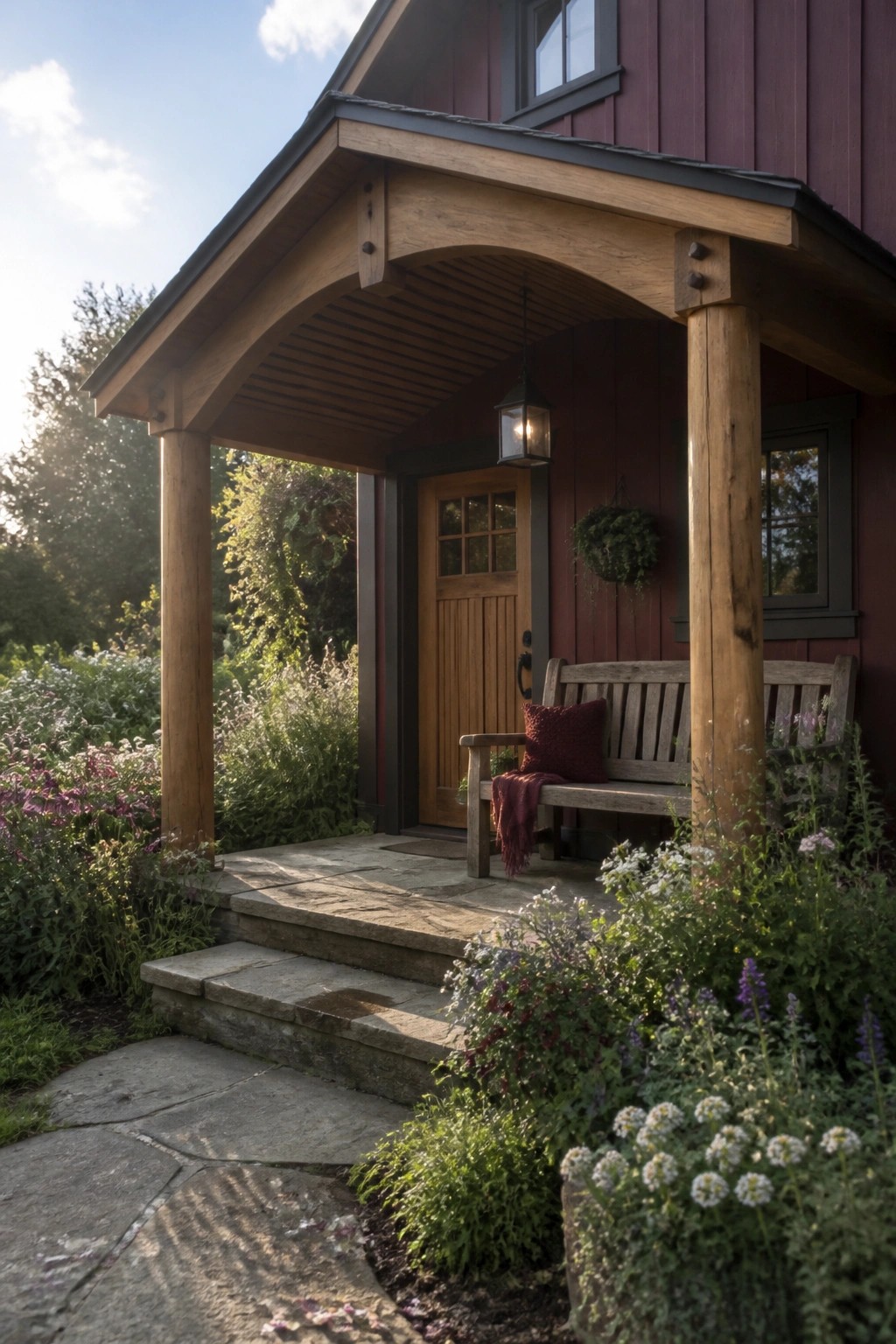
A timber porch can give a burgundy house a more settled look. The natural wood tones cut through the strong color and keep the front from feeling too heavy or flat.
This works best on homes that already have a clear siding color. Keep the wood simple in shape and finish so it reads as a practical addition rather than an extra layer of decoration.
Frequently Asked Questions
Q: How do I choose the right burgundy for my wood siding? A: Go with a shade that has warm undertones to echo the timber. Paint a test patch on the wall and check it in morning light and evening. The porch will look more balanced this way.
Q: How do I protect the timber porch from weather damage? A: Apply a clear sealant every two years. Inspect the wood each season for any cracks or wear. Early fixes save time and money down the road.
Q: What if my current trim is a different color? A: Swap just the trim to burgundy. The mix of wood and this rich tone creates interest without overwhelming the design.
