

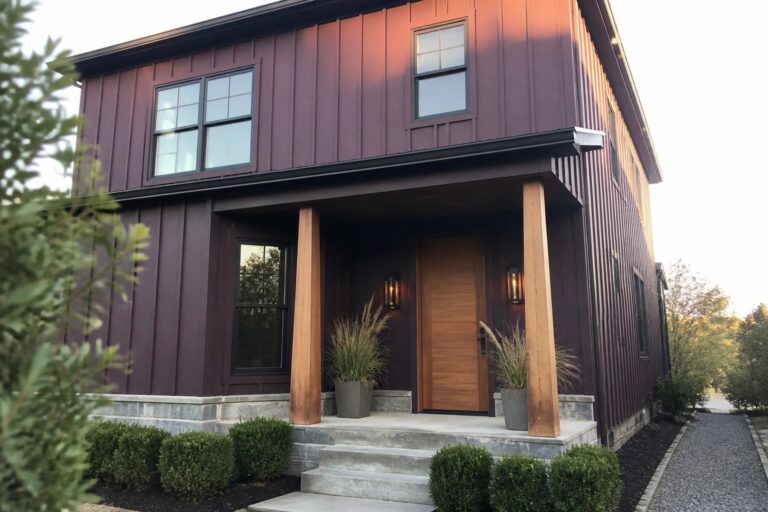
I often notice that the color of a house’s siding sets the tone for the entire exterior long before anyone steps inside or sees the backyard.
Aubergine siding in particular can make a home stand out in a neighborhood while still blending with natural surroundings if the roof and window choices are handled carefully.
I learned this the hard way when a sample looked different once it was up on the actual walls under full sun.
Testing matters more than it seems.
Looking at different combinations helps show which approaches keep the facade balanced and welcoming from the curb.
Aubergine Siding With Natural Accents
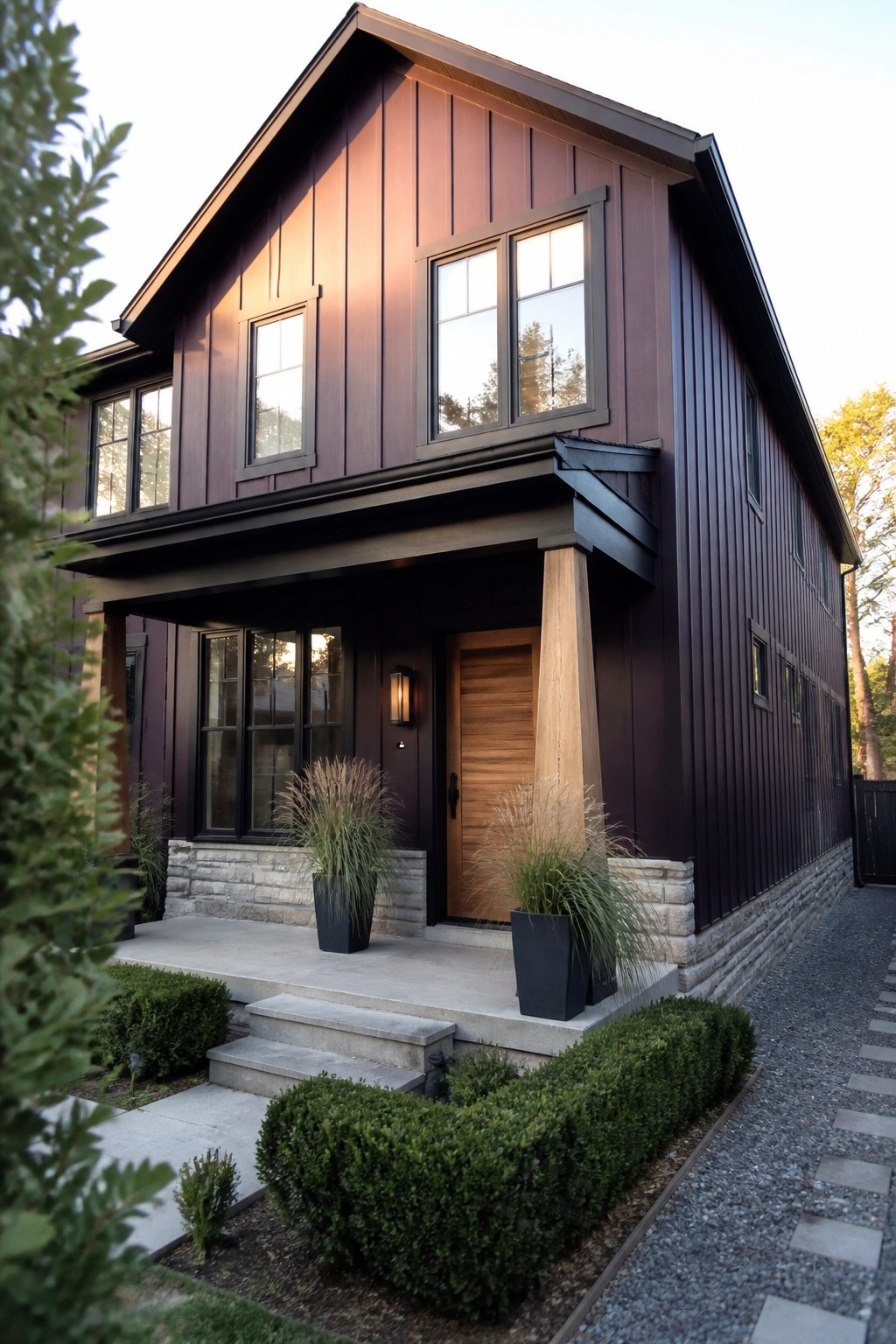
Aubergine siding gives a house a strong presence without looking too stark. The deep purple tone has enough warmth to keep the exterior from feeling cold, especially when paired with wood and stone at the base.
This approach works best on homes with clean lines and simple roof shapes. Keep the trim dark and let the wood door or accents bring in some softness so the color does not overwhelm the whole facade.
Aubergine Siding on Modern Homes
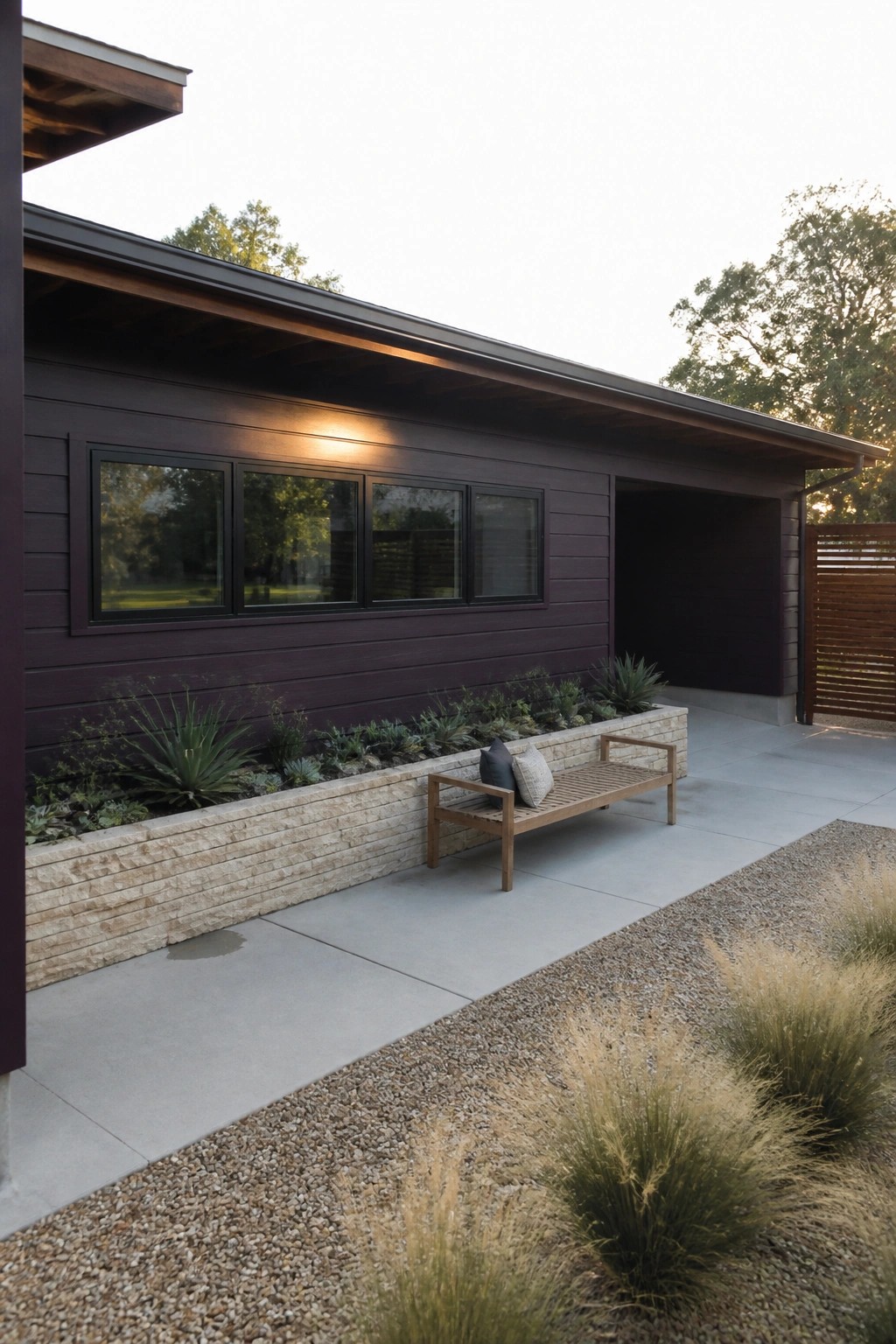
Aubergine siding gives a house a strong presence that still feels grounded. The deep color works well on clean, horizontal siding because it emphasizes the lines without needing extra trim or decoration.
This approach fits homes with simple architecture and open yards. Pair the siding with a low stone planter at the base and keep the rest of the landscaping light so the color remains the main feature.
Aubergine Siding With Dark Frames
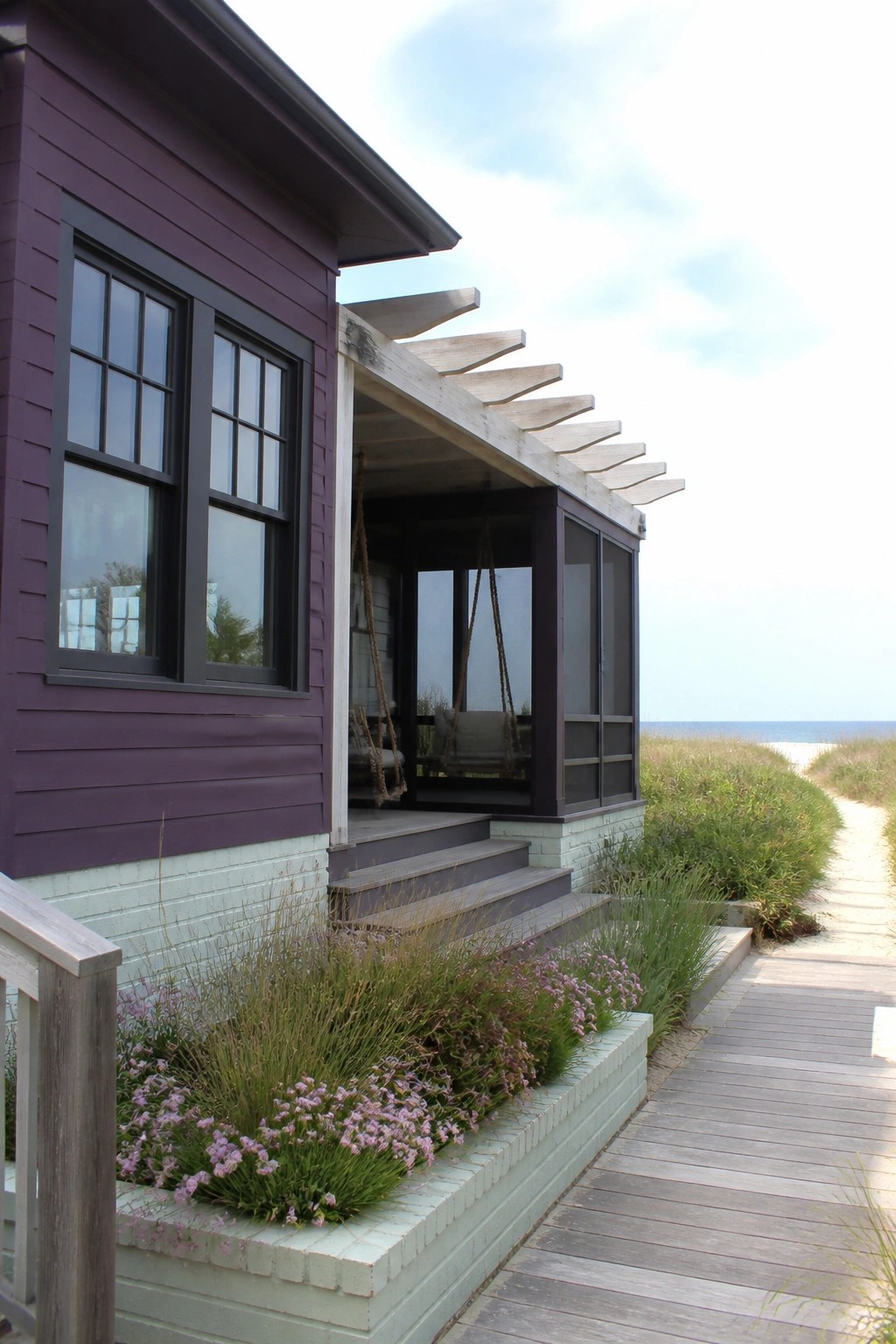
A deep purple like this holds up well on an exterior because the color has enough depth to feel solid rather than flashy. The dark window frames help keep the look steady instead of drifting into something too bright or playful.
This works best on homes with a simple shape and a lighter base color along the foundation. It can handle coastal light without fading too fast, though it is worth testing a sample on the actual wall first since purple can shift more than expected once it is up.
Aubergine Siding with Light Trim
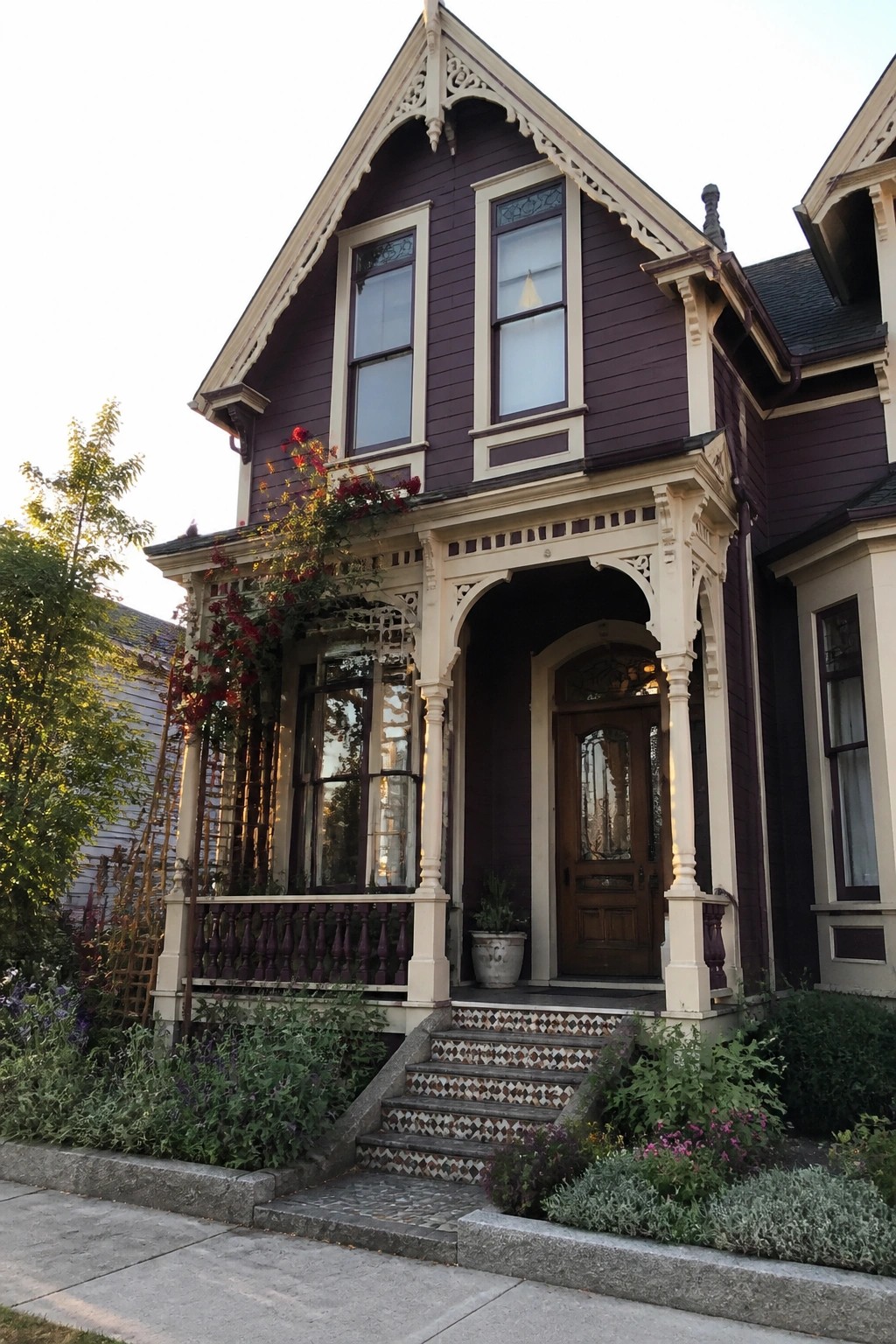
A rich aubergine shade like this works well on older homes because it highlights the shape and trim without overpowering the details. The contrast against the cream colored porch and window frames keeps the house from looking flat or heavy.
This approach suits Victorian or similar styles where there is already plenty of woodwork to play off the color. Stick with a soft off-white or pale gray for the trim so the purple stays the main focus rather than competing with too many tones.
Aubergine Siding With Dark Accents
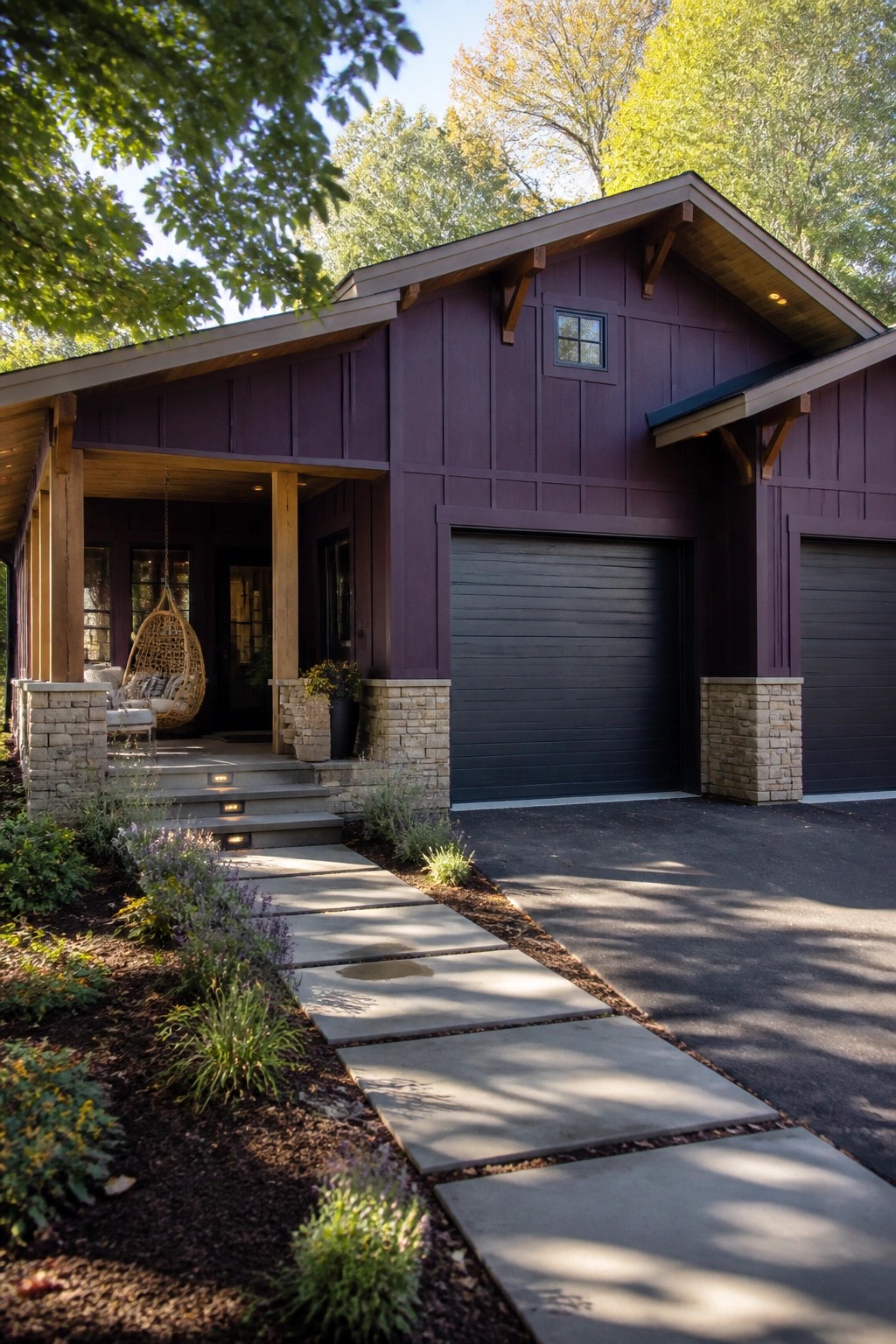
A deep purple siding color like aubergine gives a house real presence while still feeling approachable. The dark garage doors help anchor the color so it does not read as too bright or overwhelming on the main facade.
This works best on homes that already have simple shapes and a few natural materials nearby. Stone bases at the corners and posts keep the purple from feeling flat, and the same dark tone on the doors ties everything together without extra effort.
Adding a Living Wall by the Entry
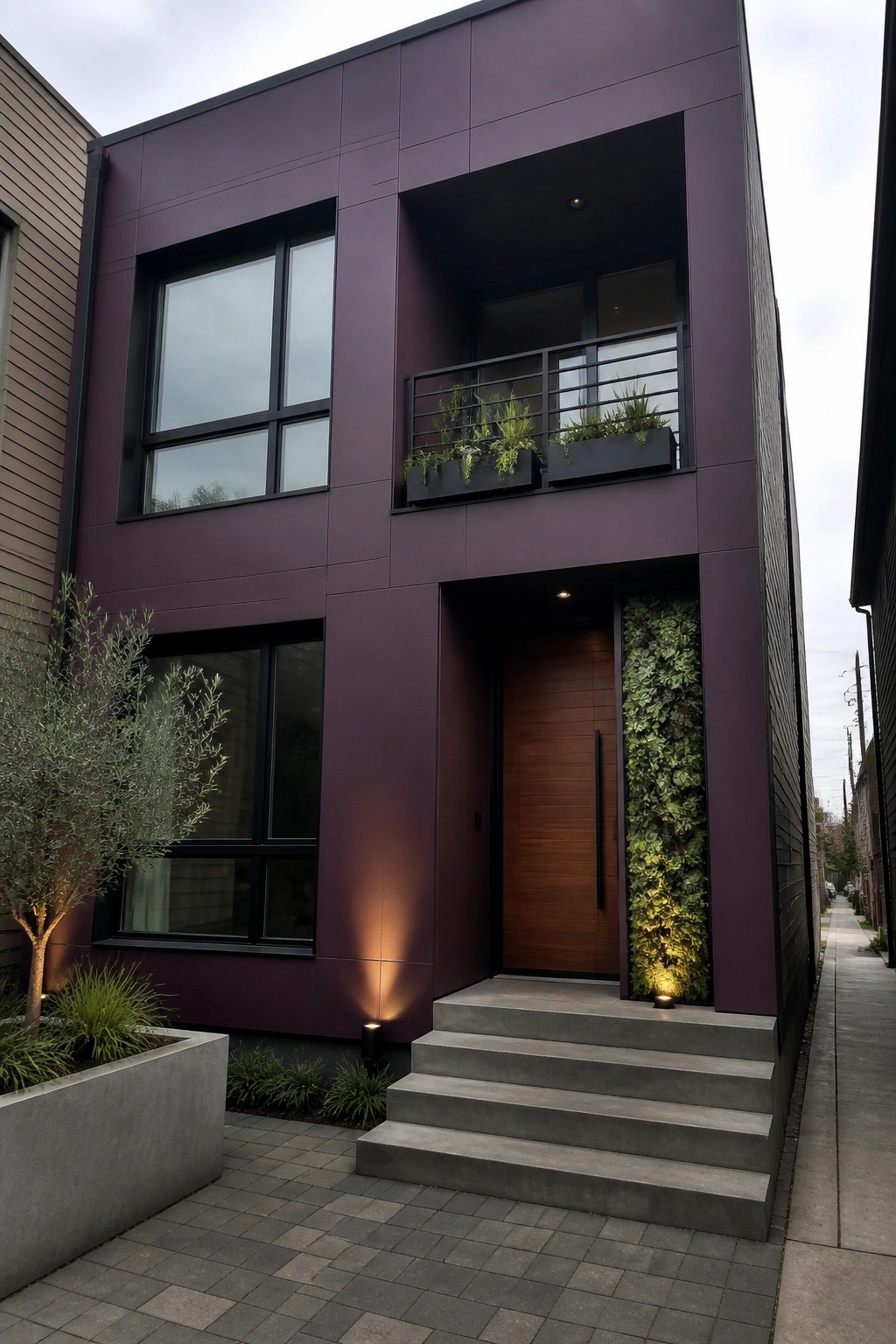
A living wall next to the front door gives a strong purple house something natural to play against. The green texture breaks up the solid color and makes the entrance feel more welcoming without changing the overall modern shape of the house.
This works best on homes with clean siding and a simple door. Keep the plants low maintenance and add a couple of small lights at the base so the wall stays visible at night. It suits newer builds or updated older homes where you want the purple to stay bold but not flat.
Pair Aubergine Siding With Wood Accents
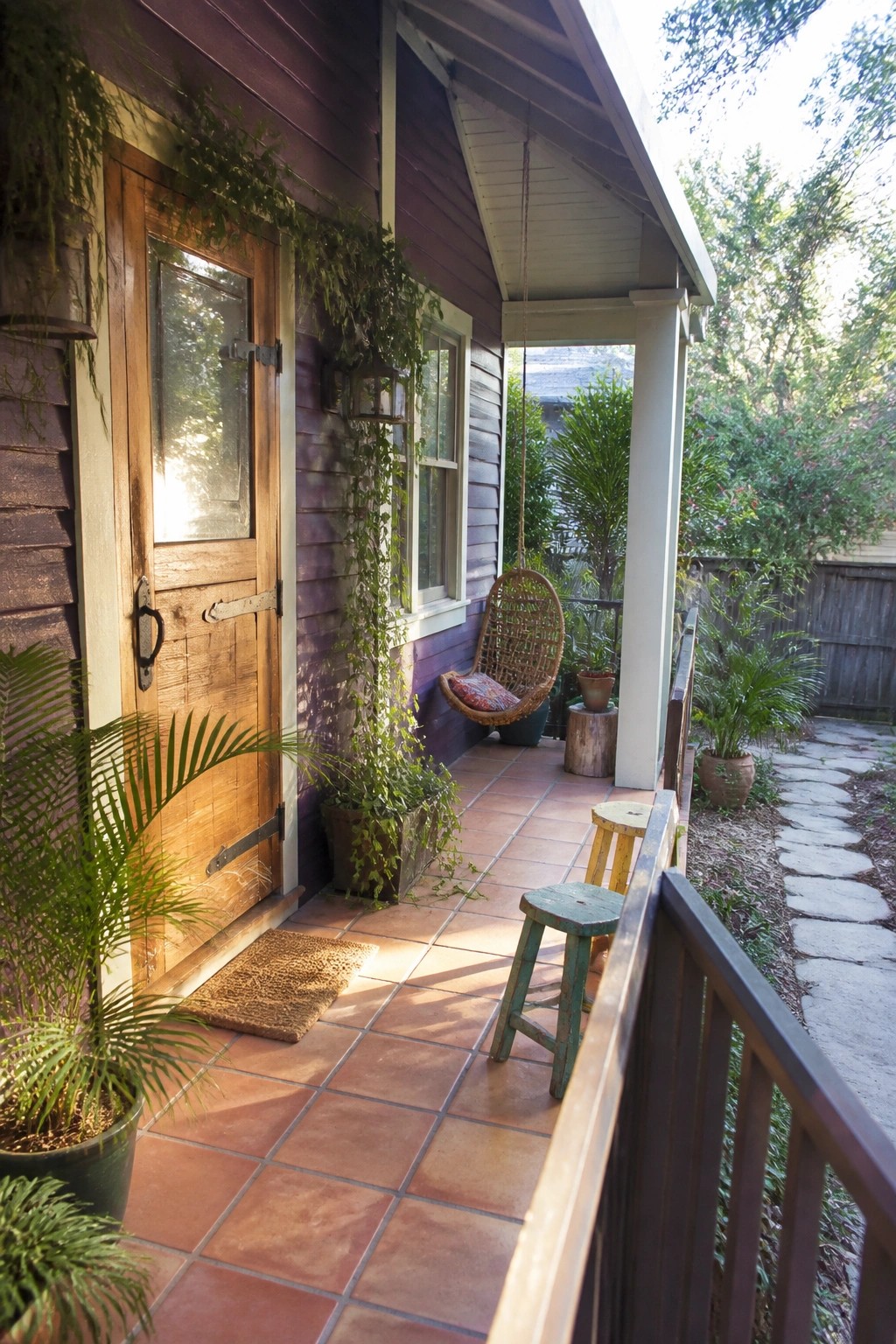
Deep purple siding stands out more when it sits next to warm wood. The natural grain on the door and trim softens the bold color and keeps the front from looking flat or too heavy.
This works best on smaller homes or simple shapes where the siding can be the main color statement. Keep the wood tones in the door, window frames, and any porch posts so the purple feels grounded rather than loud.
Stone Bases With Dark Siding
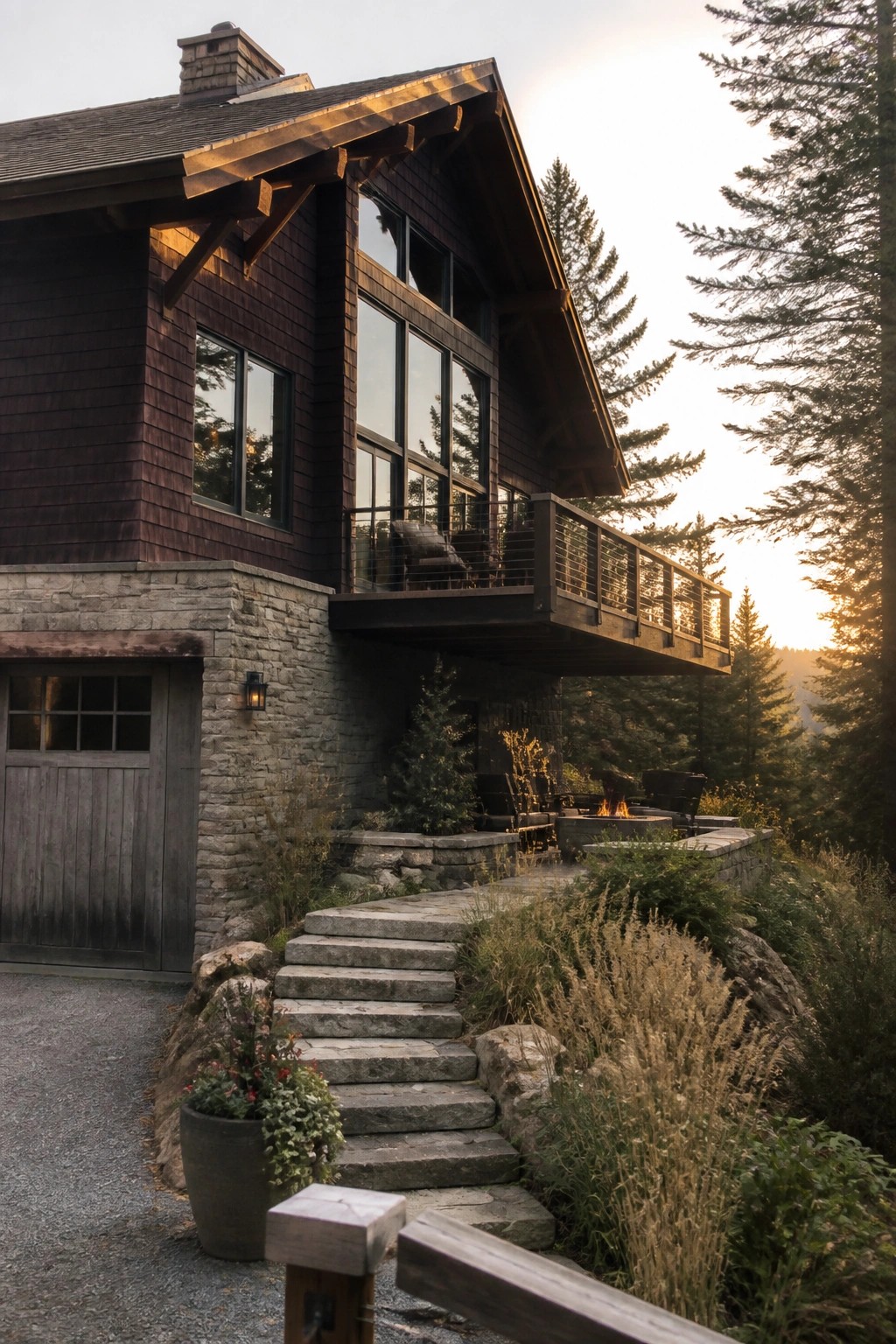
A stone foundation paired with dark siding above gives the house a grounded feel that holds up well in wooded settings. The lower stone section handles moisture and adds texture while the darker material above keeps the overall look simple and cohesive.
This approach works best on homes with some slope or where you want the base to feel permanent. It suits mountain or forest locations especially, and the stone can run just high enough to protect the siding without overpowering it.
Aubergine Siding With Terracotta Accents
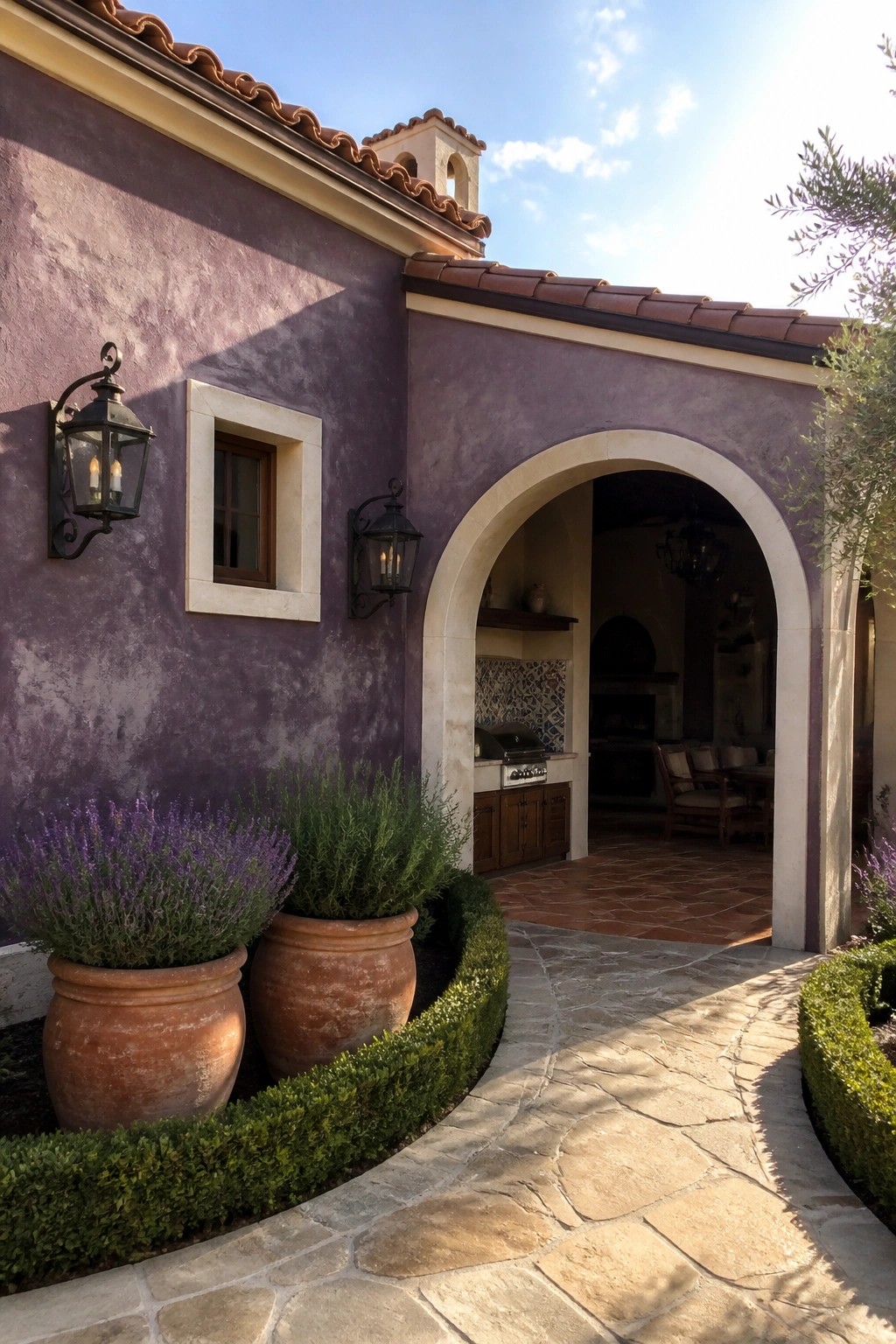
A deep purple like aubergine works well on stucco because it gives the house a strong presence without looking too heavy. The warm terracotta roof tiles and pots help keep the color grounded so the whole exterior feels balanced rather than stark.
This approach suits homes with simple shapes and Mediterranean or Spanish details. Stick to natural materials like clay pots and stone paths to prevent the purple from feeling too bold on its own.
Limit Aubergine Siding to the Upper Level
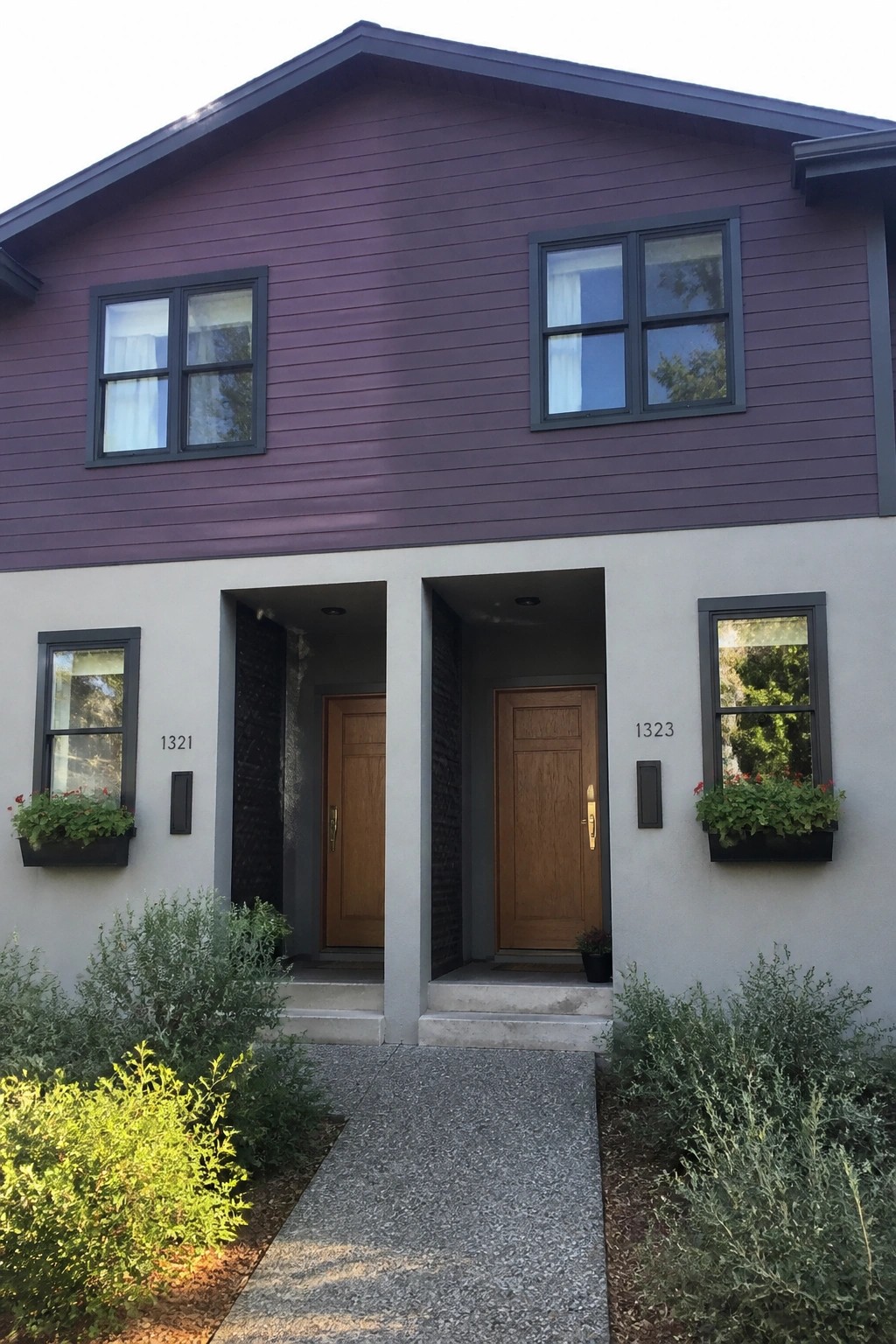
Many people want to try a bold color like aubergine but worry it will take over the whole house. Keeping it to the upper section gives the color room to stand out while the lighter base keeps the look from feeling heavy.
This works best on two-story homes where the roofline creates a natural break. It suits both modern and updated traditional styles and makes the house feel taller without extra trim or details.
Aubergine Siding for Waterfront Homes
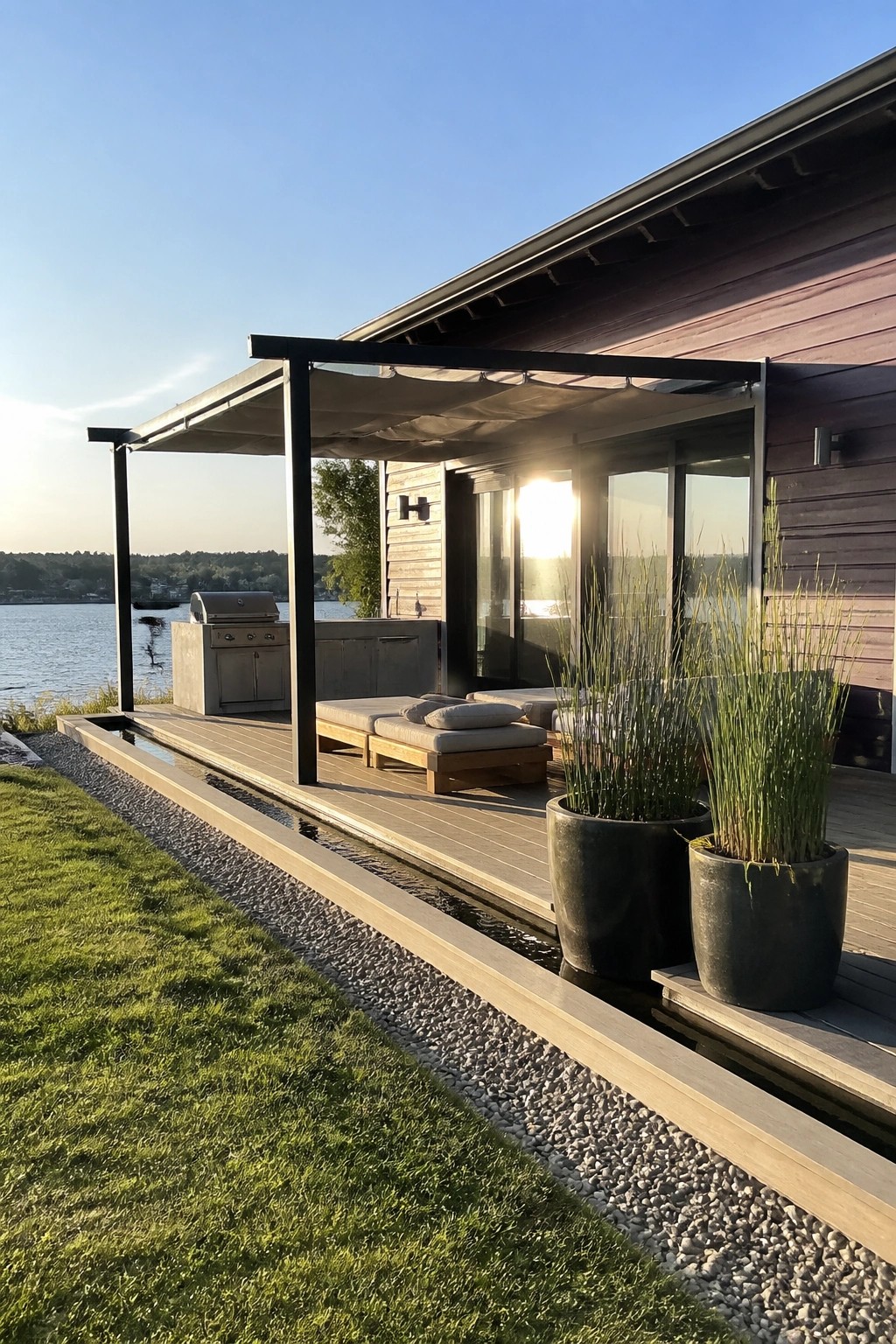
Aubergine siding gives a house real presence without fighting the view. The deep color holds its own against water and sky, and it works especially well on homes with simple shapes and large windows that open to the outside.
This choice suits modern or updated homes that already have strong outdoor connections like a deck or patio right off the main living space. It pairs best with dark trim and natural decking so the purple stays the main feature instead of competing with too many other materials.
Combine Aubergine Siding with Dark Accents
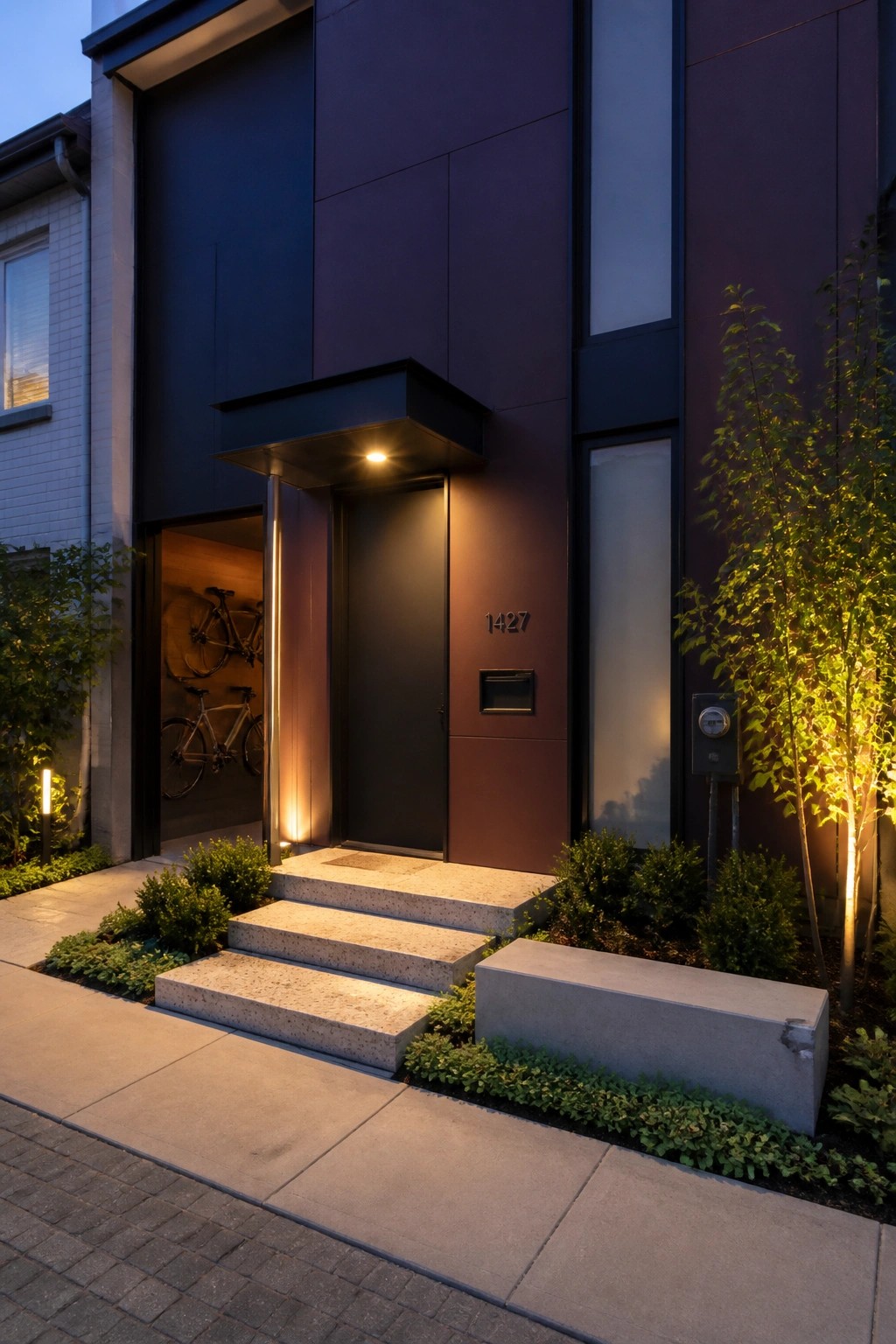
Aubergine siding stands out best when it is paired with dark trim and a simple entry. The deep color gives the facade weight and keeps the look from feeling too plain or flat.
This works well on modern homes where the goal is a clean shape rather than lots of detail. Use matte black for the door and window frames, and add a small overhang with lighting so the color stays visible at night.
Aubergine Siding With White Columns
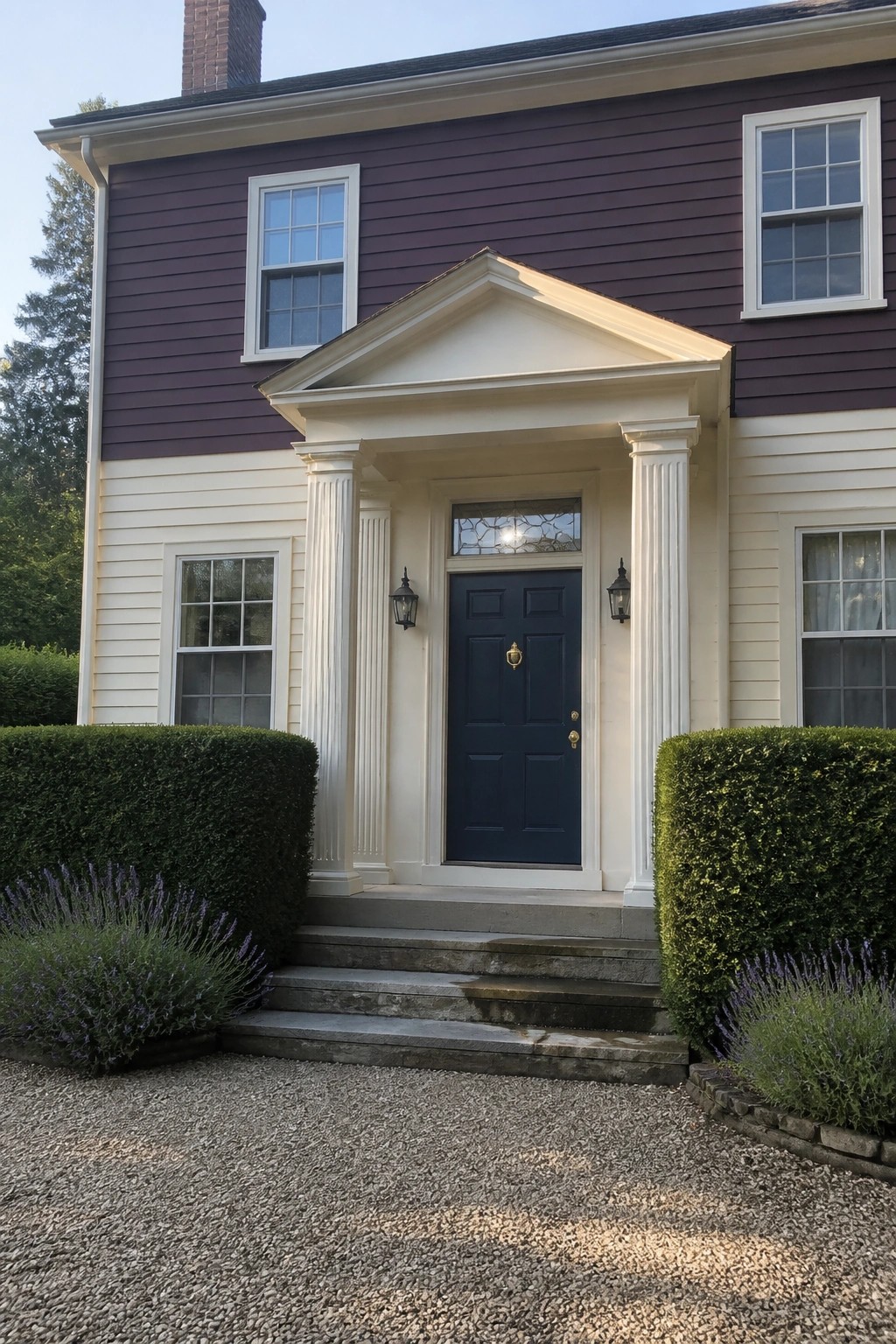
Aubergine siding can give a house real character when it is paired with crisp white trim. The deep color holds its own on the facade while the white columns and pediment keep the entry looking clean and balanced.
This approach works best on traditional homes that already have some architectural detail. The white elements highlight the door and break up the purple without overwhelming it. Just keep the rest of the trim consistent so the contrast stays sharp.
Aubergine Siding For A Strong Facade
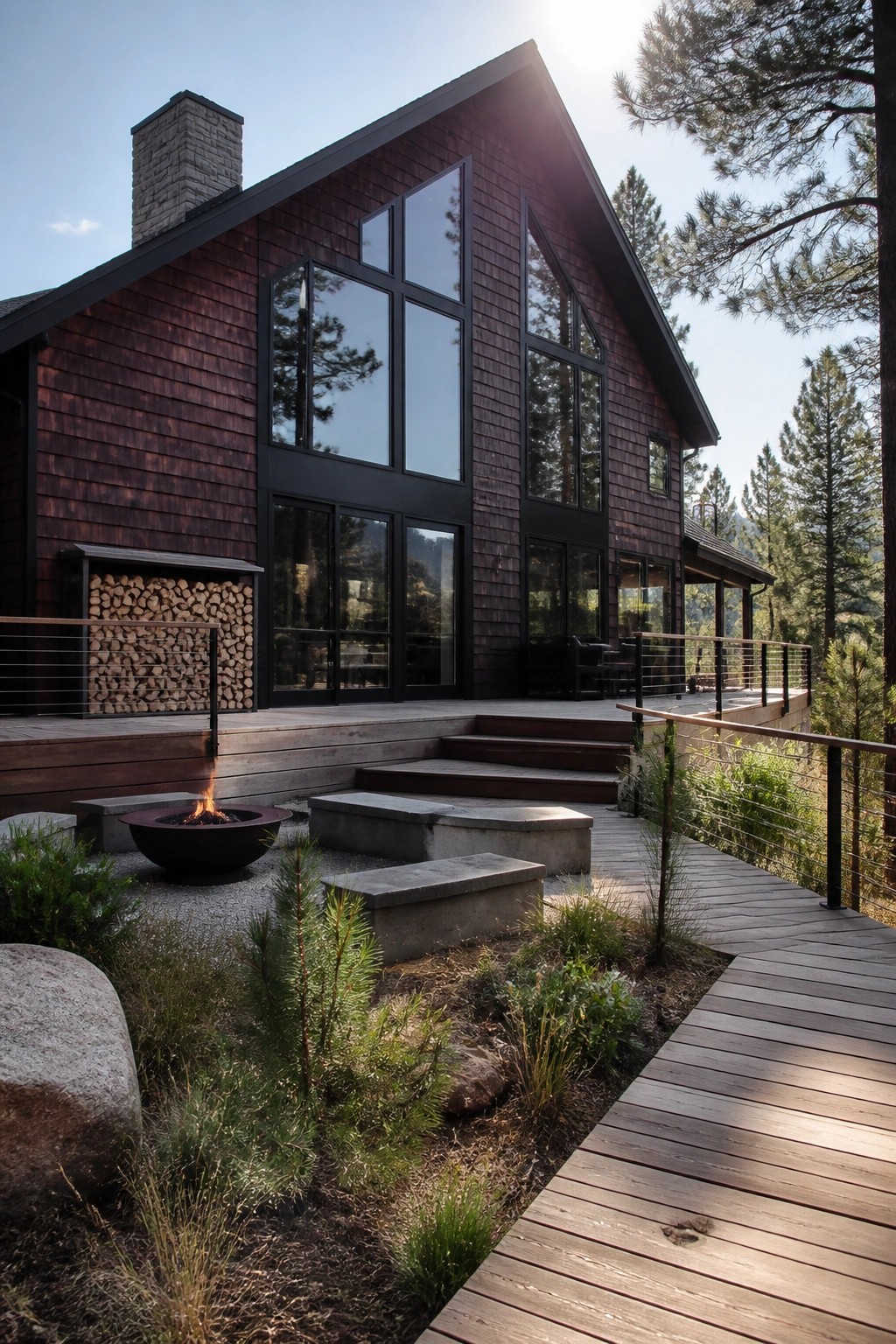
A deep aubergine siding can give a house real presence without relying on bright colors. The dark tone absorbs light in a way that makes the structure feel solid and settled, especially when paired with simple black trim and large windows.
This approach works well on homes with clean rooflines and wooded surroundings. It helps the house blend into the landscape while still standing out from typical brown or gray exteriors. Just keep the trim and accents minimal so the color stays the focus.
String Lighting Over a Pergola Patio
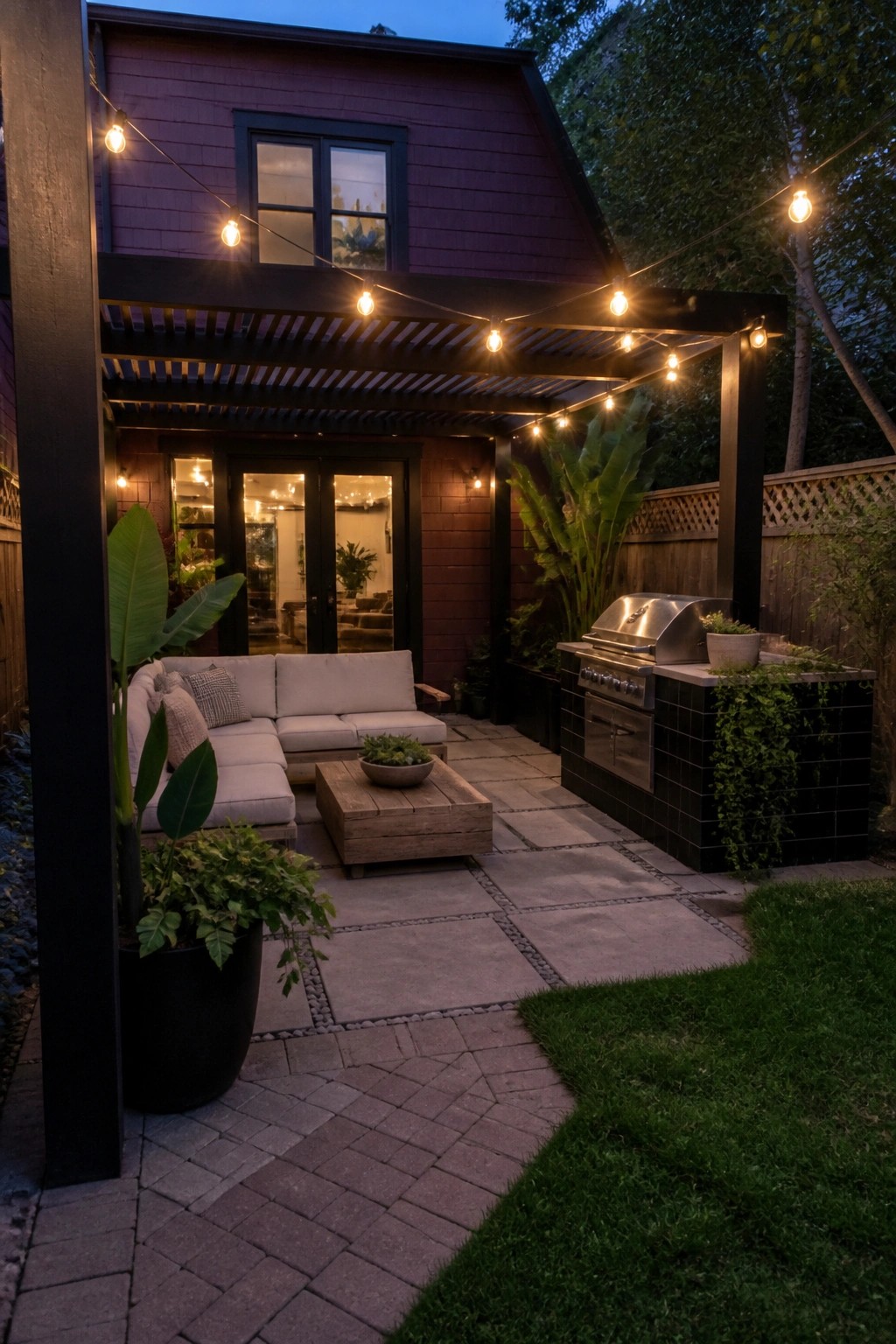
String lights on a pergola give an outdoor seating area a simple way to feel finished after dark. With aubergine siding on the house, the warm bulbs help keep the space from going flat once the sun goes down and they make the whole patio usable into the evening.
This setup works best on homes where the back doors open straight onto a paved area. Run the lights along the beams so they cast even light over the seating without needing extra fixtures on the siding itself.
Pair Aubergine Siding With Wood Accents
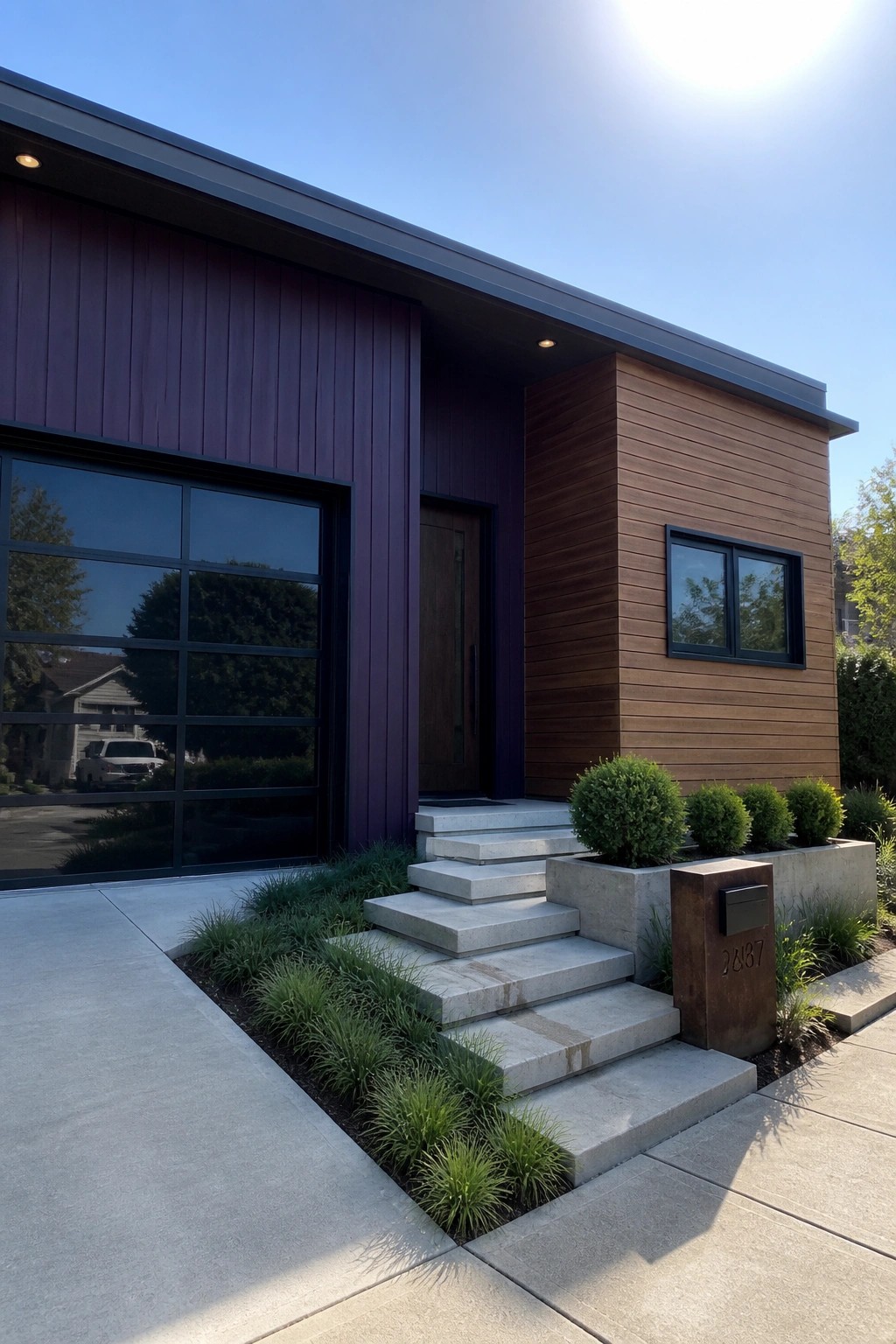
Aubergine siding makes a strong statement on its own, but it gains more interest when paired with wood on a secondary section of the house. The contrast keeps the purple from feeling flat or overwhelming while adding warmth that suits many modern homes.
This approach works best on houses with clear volume changes, where one block can take the bold color and another can carry the wood. It gives the exterior some breathing room and helps the color read as intentional rather than overpowering.
Aubergine Siding Behind Outdoor Kitchens
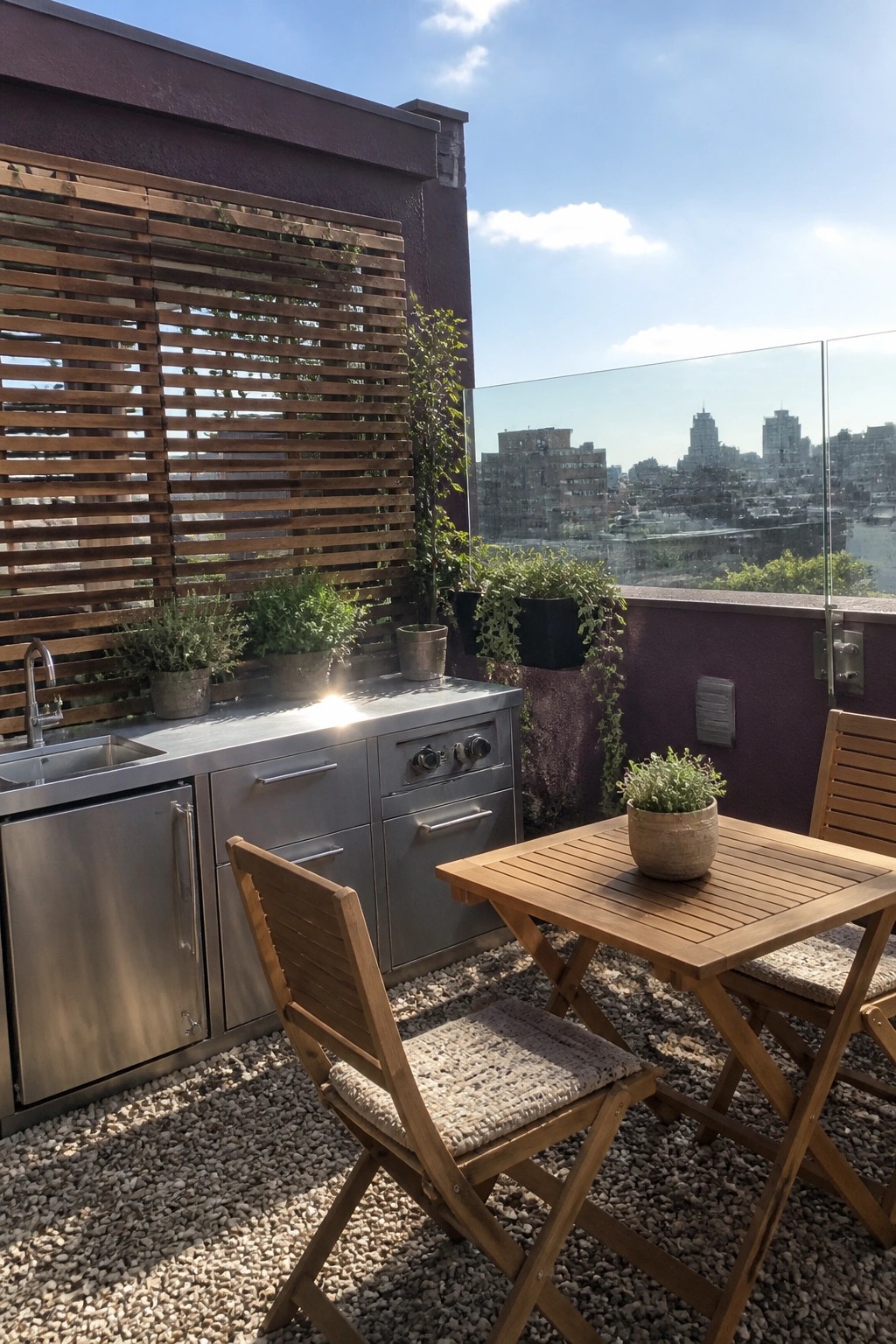
A deep purple wall can turn an open balcony or patio into a more defined outdoor room. The color gives the space a solid backdrop without needing extra structures, and it works especially well when the rest of the area stays simple with wood and metal.
This approach suits homes that already have some outdoor cooking or dining space and want it to feel intentional rather than leftover. Keep the purple limited to one or two walls so it highlights the area instead of taking over the whole exterior.
Aubergine Siding by the Pool
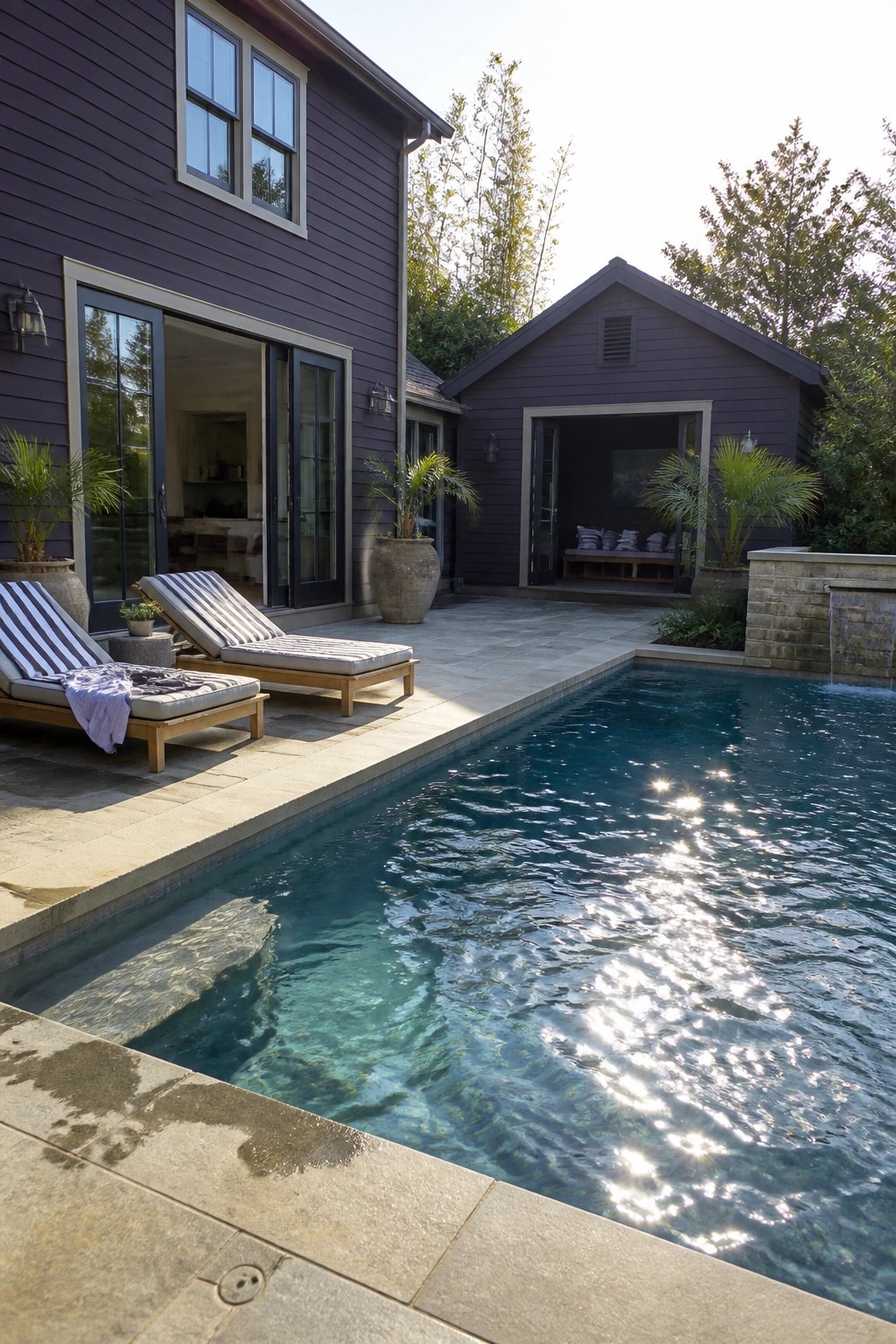
Aubergine siding can feel especially strong when the house sits right next to a pool. The deep color stands out against the water and gives the whole backyard a clear focal point without extra decoration.
This works best on homes where the pool and patio get heavy use. Keep the trim simple and let the siding carry the look, since the bold shade already does most of the work.
Aubergine Siding With White Trim
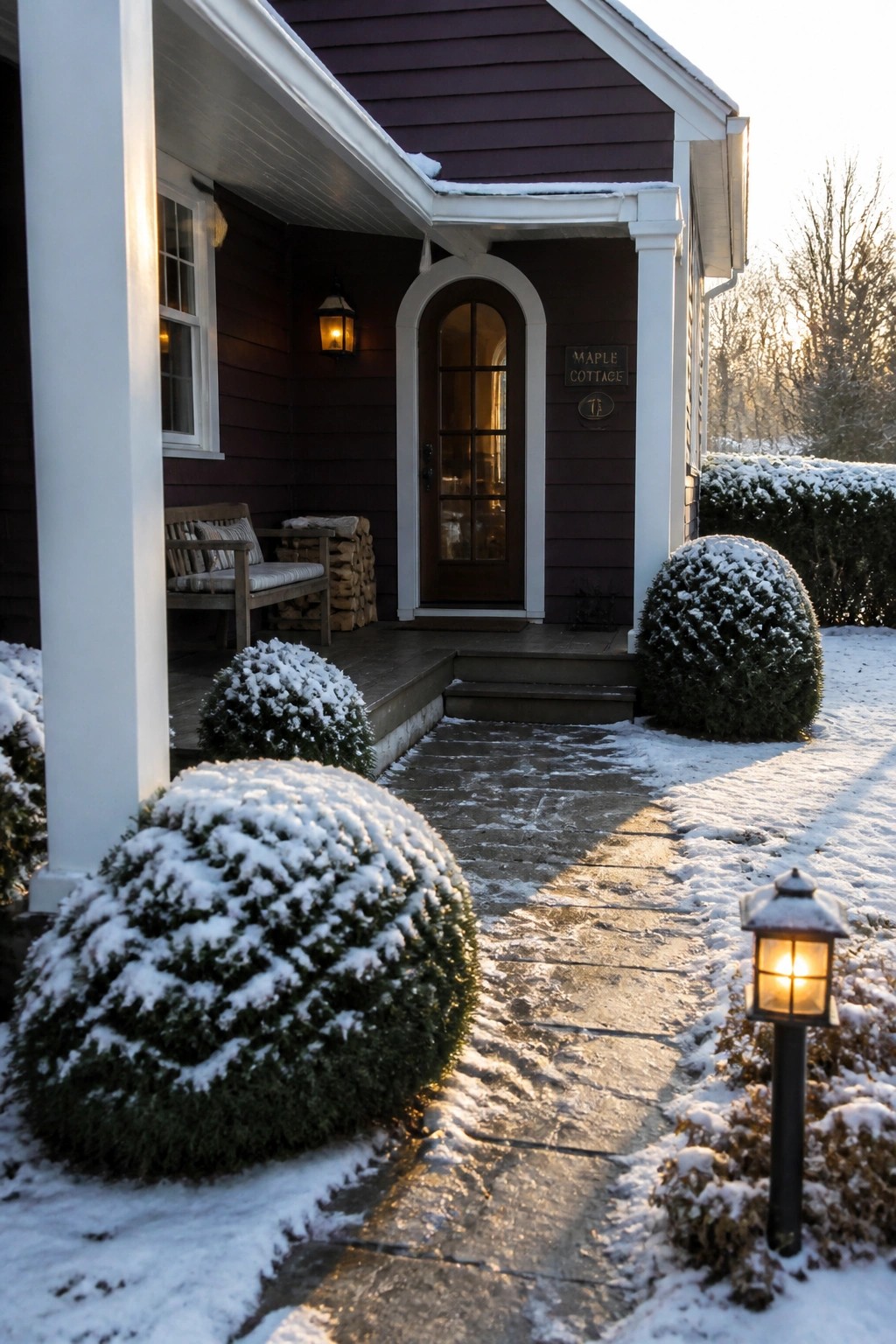
Deep aubergine siding gives a house real presence while still feeling approachable. The white trim around the door, windows, and porch posts keeps the color from feeling heavy and helps the shape of the house read clearly.
This combination works especially well on smaller homes or cottages. It makes the entry stand out and stays effective even when the surrounding landscape is simple or seasonal.
Frequently Asked Questions
Q: How does aubergine siding hold up in harsh weather? A: It stands up well if you choose quality material. Check for UV protection in the finish. This keeps the color from washing out after a few seasons.
Q: Should I go all purple or mix it with other colors? A: Mix it on the main walls with a lighter shade on accents (white works especially well). Aubergine works great as the star color without taking over everything.
Q: Will plants and flowers look good against it? A: They pop nicely. Go for greens and yellows in your garden beds. These contrast the deep purple without fighting it.
