

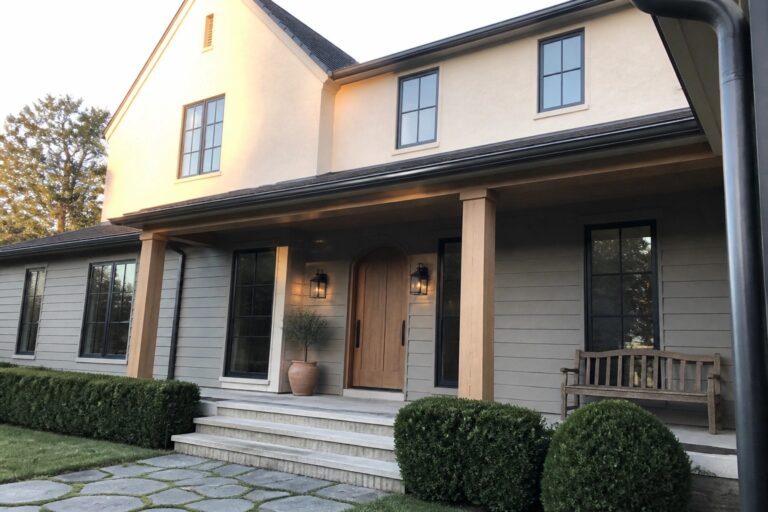
I keep coming back to how beige and gray exteriors handle cool-toned roofs because the contrast can either soften a home or make it look flat depending on the siding texture.
When I drive past houses in my area the ones that hold up best usually let the roof color guide the rest of the facade instead of fighting it.
Rooflines change the outcome.
I have seen plenty of homes where a slightly warmer beige next to a cool gray roof creates a quiet depth that works better than strict matching ever could.
Some of these combinations are the ones I would sketch out first if I were updating my own front elevation.
Mixing Beige And Gray Siding
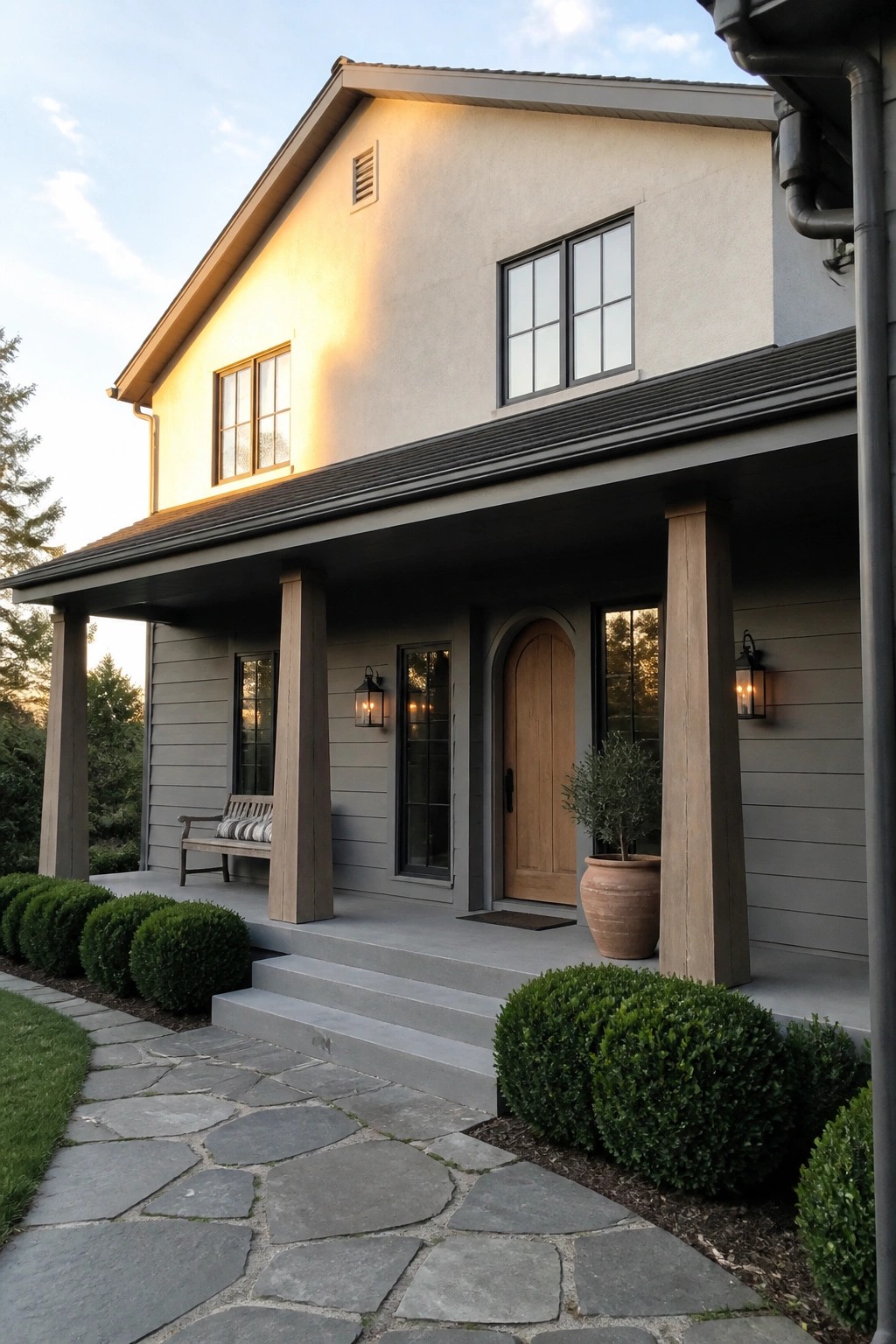
One way to keep a house exterior interesting without adding too many materials is to split the siding colors. A warmer beige on the upper gable gives a little lift, while the cooler gray on the main walls sits nicely under a dark roof and helps the whole house feel grounded.
This works especially well on homes with a clear roofline break or a front-facing gable. Keep the trim and roof in similar dark tones so the two siding colors stay the focus instead of competing with other details.
Pairing Beige Brick with a Dark Metal Roof
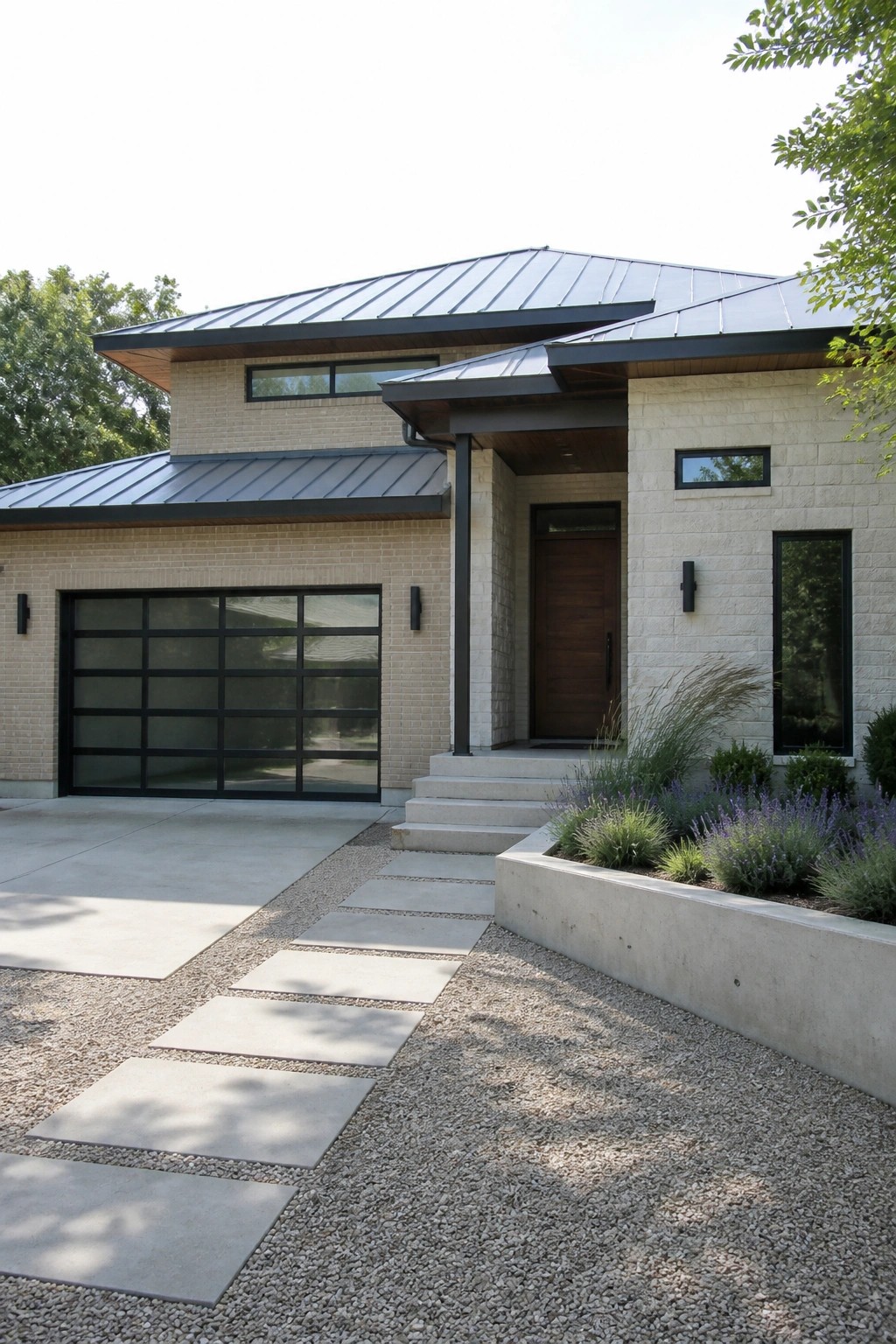
A dark metal roof can give a beige brick house a sharper look without making it feel cold. The roof color pulls the whole exterior together and adds contrast that keeps the lighter walls from fading into the background.
This works best on homes where you want a modern edge but still need the warmth that beige tones provide. Keep the rest of the materials simple so the roof stays the main focal point.
Gray Siding With a Dark Roof
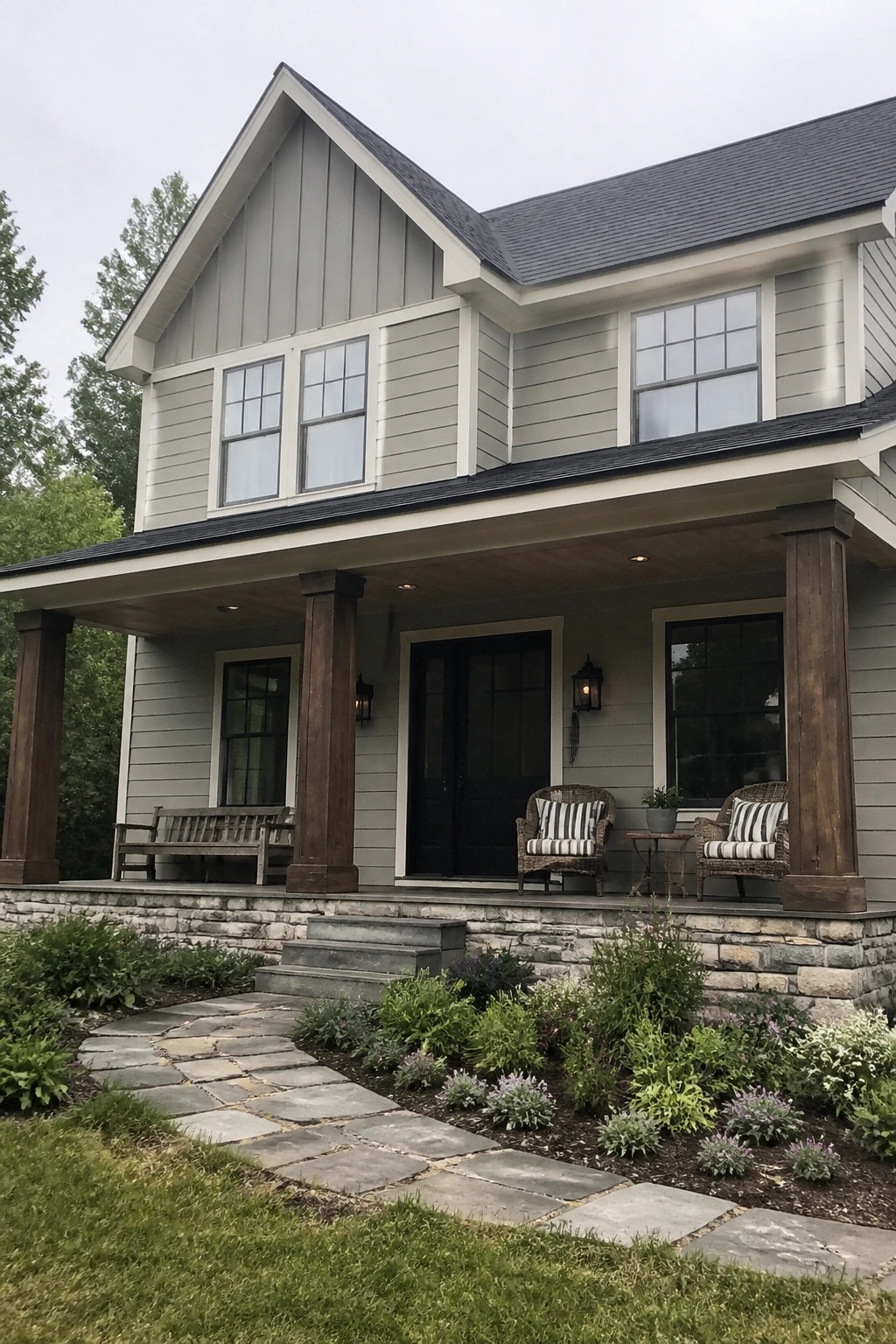
Gray siding holds up well when paired with a dark roof. The cool tones balance each other and give the front a steady, finished look instead of feeling too pale. This approach keeps things simple while still looking put together.
It works best on houses with fairly clean shapes and a few dark accents like black windows or a dark door. The light trim helps the contrast stay sharp. Most homes in this style do not need much extra color to feel complete.
Arched Entries Give Stucco Homes More Character
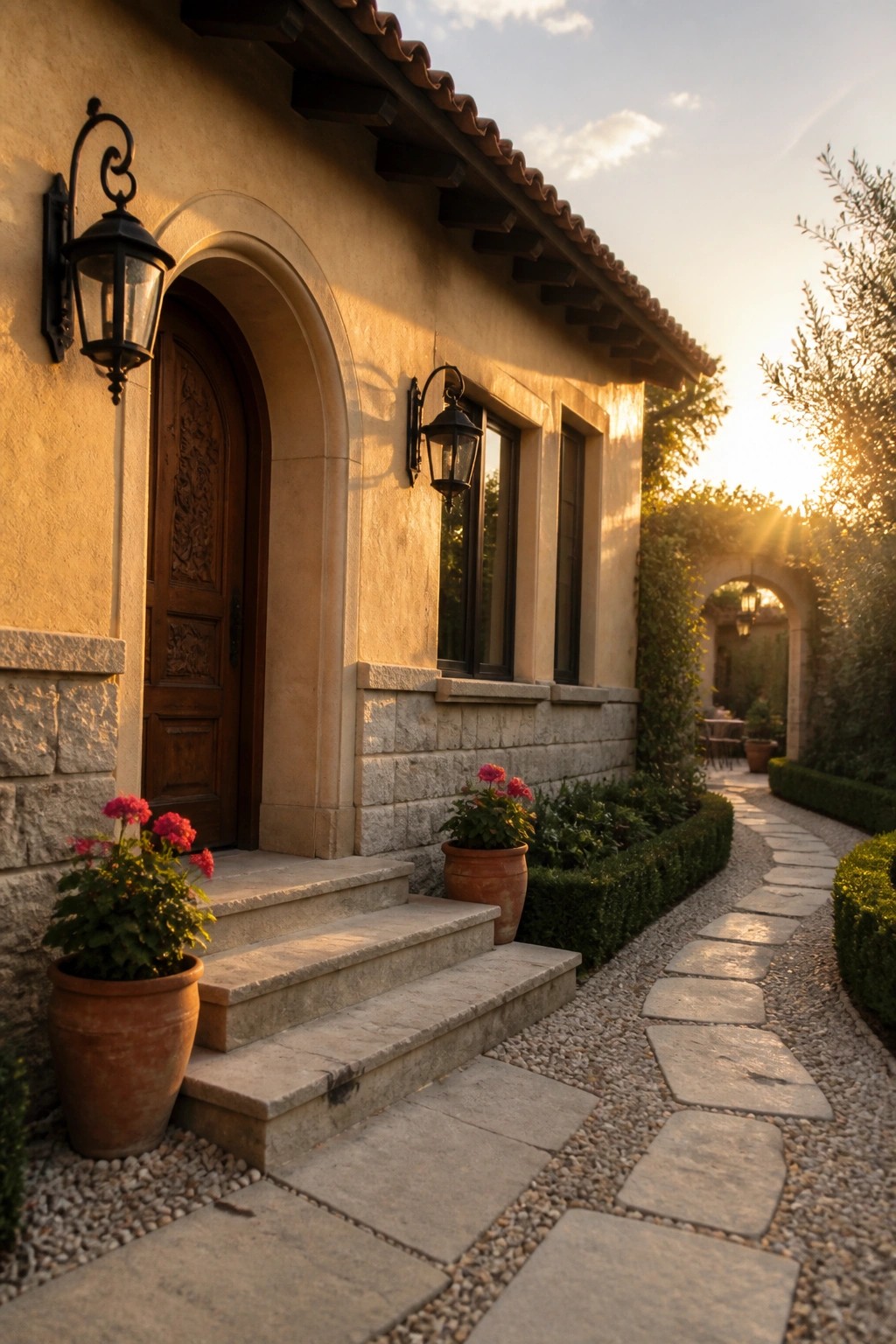
An arched doorway stands out on a simple stucco exterior because it adds shape and a bit of history without extra trim or ornament. The solid wood door inside the arch keeps the look grounded and warm against the cooler tones of the roof and stone base.
This approach suits one-story homes that need a stronger front focal point. Keep the surrounding walls plain and let the arch and door do the work. Stone steps or a low base help tie everything together without crowding the entry.
Gray Frames Around Doors and Windows
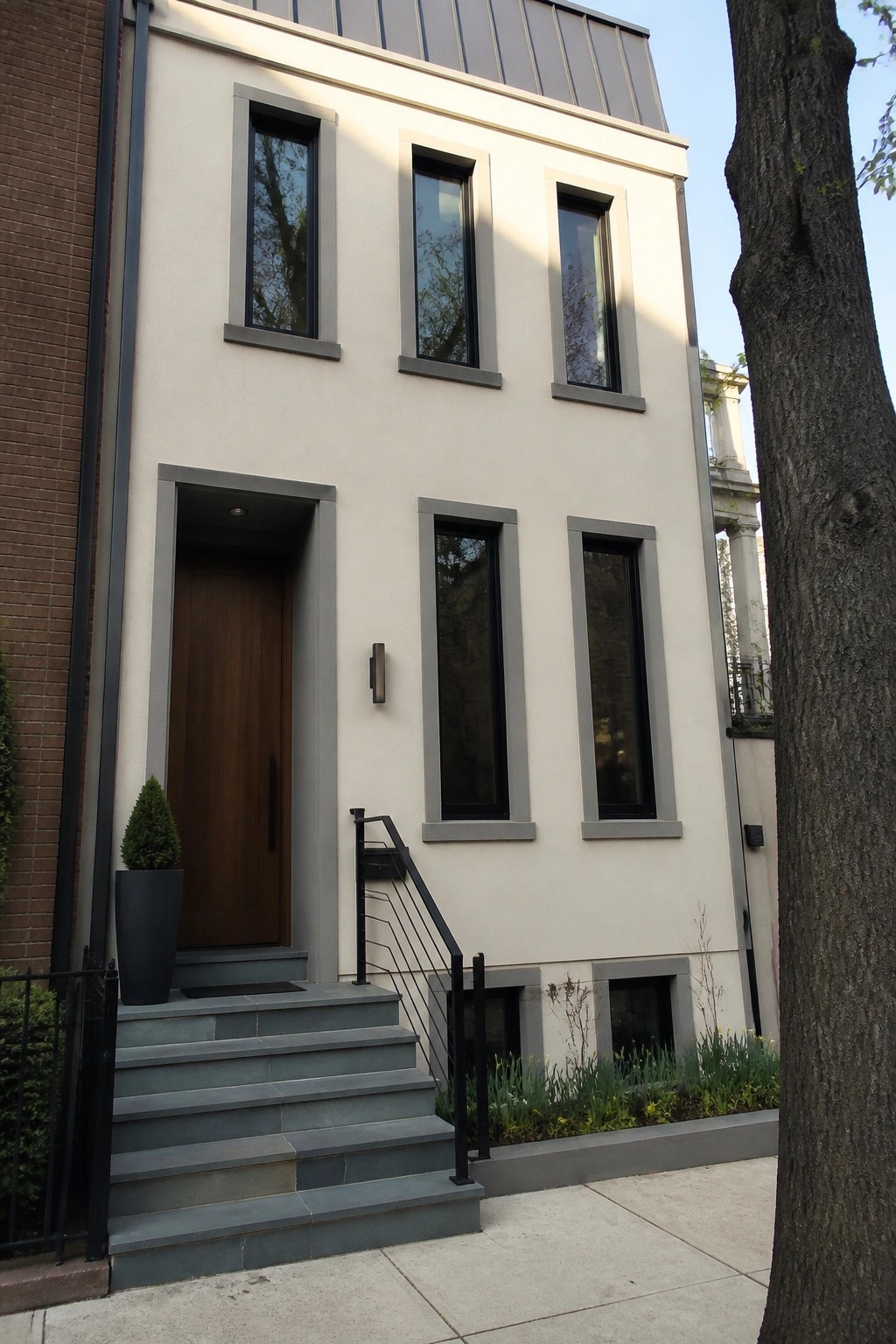
One simple way to give a light beige house more structure is to wrap the main openings in a darker gray frame. The contrast makes the door and windows read as intentional parts of the design rather than just holes in the wall.
This move works especially well on narrower homes or row houses where you want the entry to feel grounded. Keep the frames in a similar tone to the roof so the gray elements connect without competing.
Mixing Brick and Stucco on a Beige Exterior
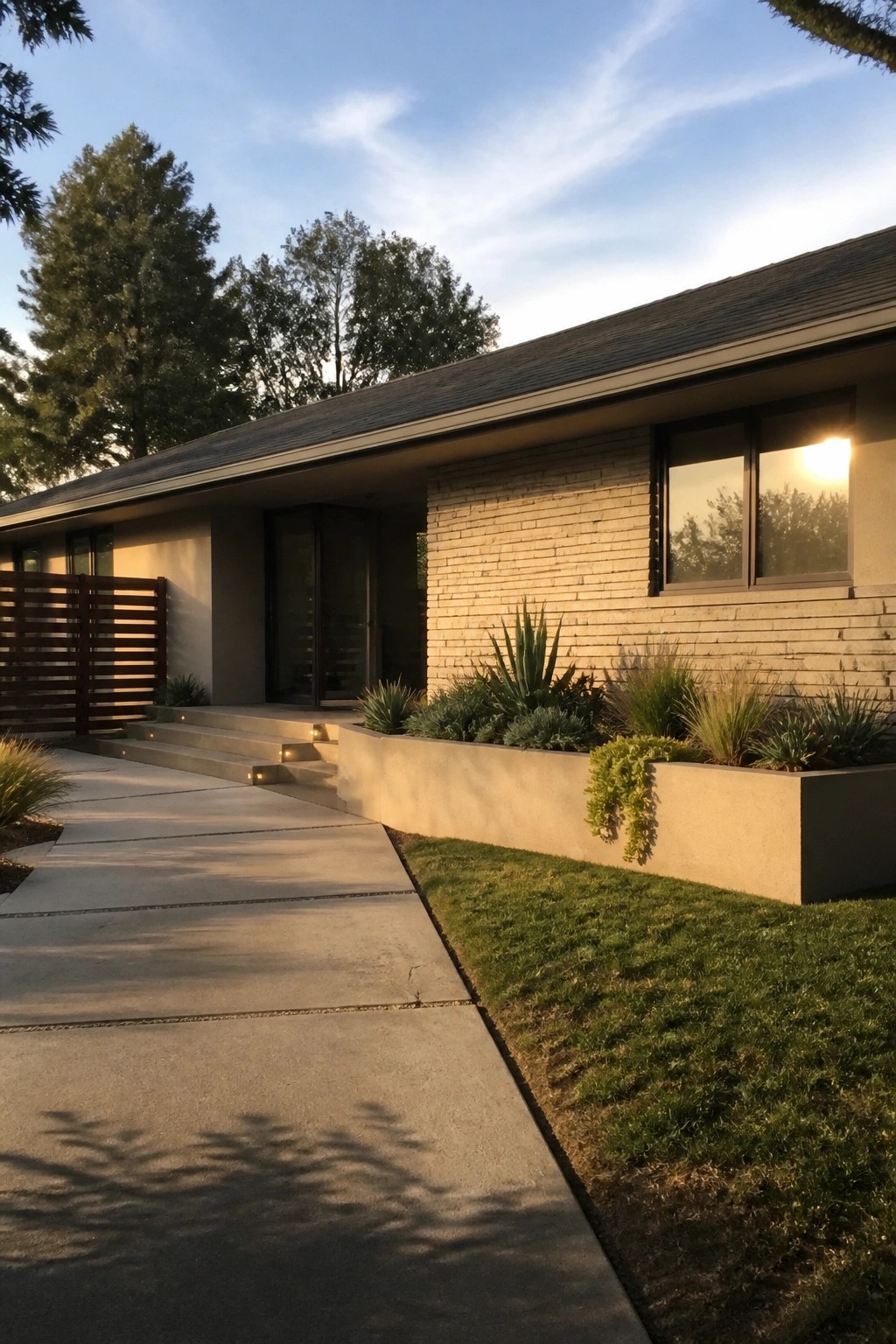
A mix of brick and stucco keeps a beige house from feeling flat. The brick adds a bit of texture and breaks up the wall, while the stucco gives a smoother surface that lets the dark roof stand out without competing.
This approach works well on single story homes with cool toned roofs. It suits places where you want some warmth in the materials but still need the overall look to stay calm and simple. Keep the brick to one main section rather than spreading it everywhere.
Beige Brick Homes With Gray Roofs
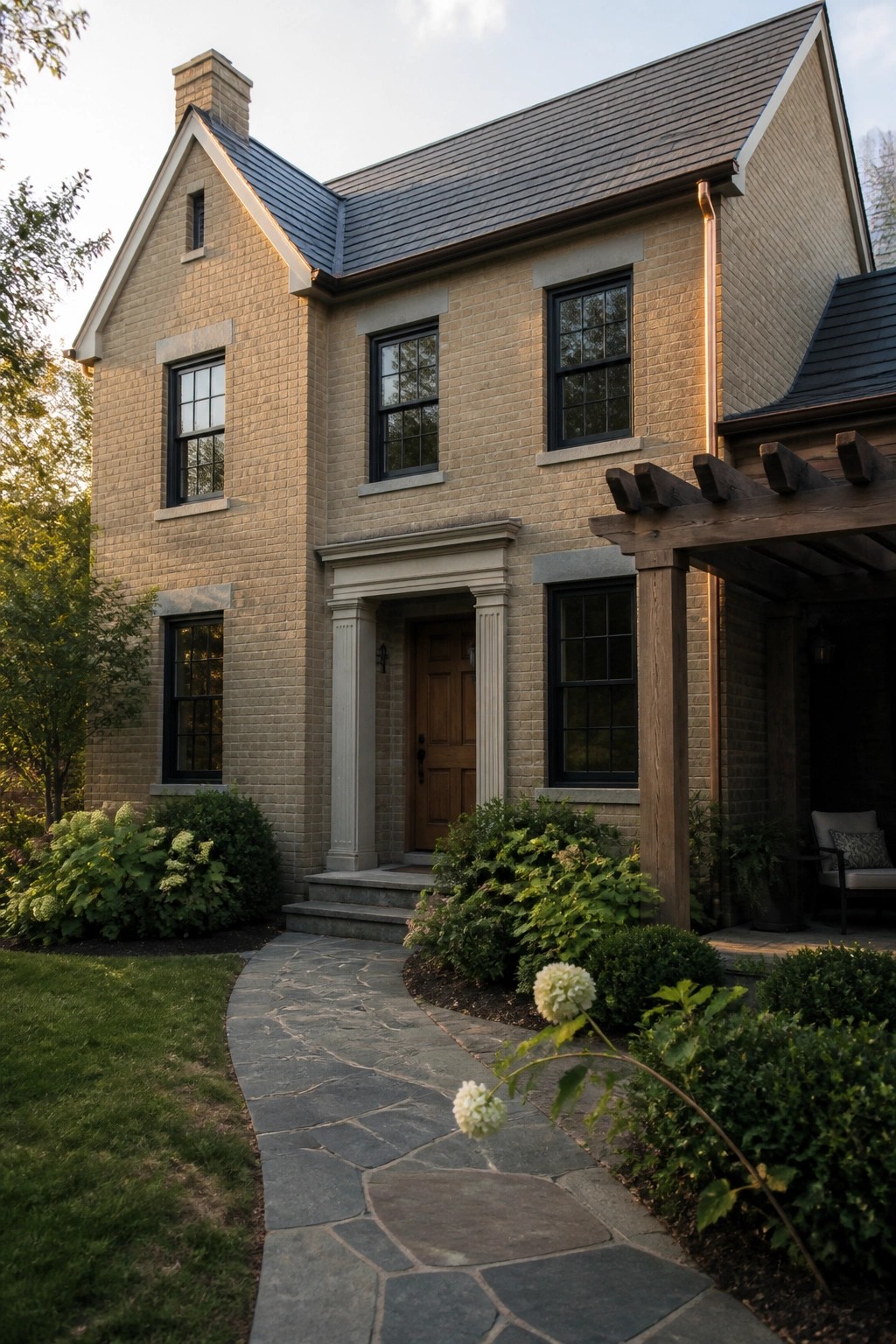
A dark gray roof gives beige brick a clean edge that keeps the whole house from looking too soft or washed out. The contrast works because the brick stays warm while the roof brings in a cooler note that feels more current.
This approach suits two-story homes with straightforward window placements and simple rooflines. It holds up well in neighborhoods where you want the house to read as solid without needing extra trim or color accents.
Mix Gray Shingles With Beige Siding
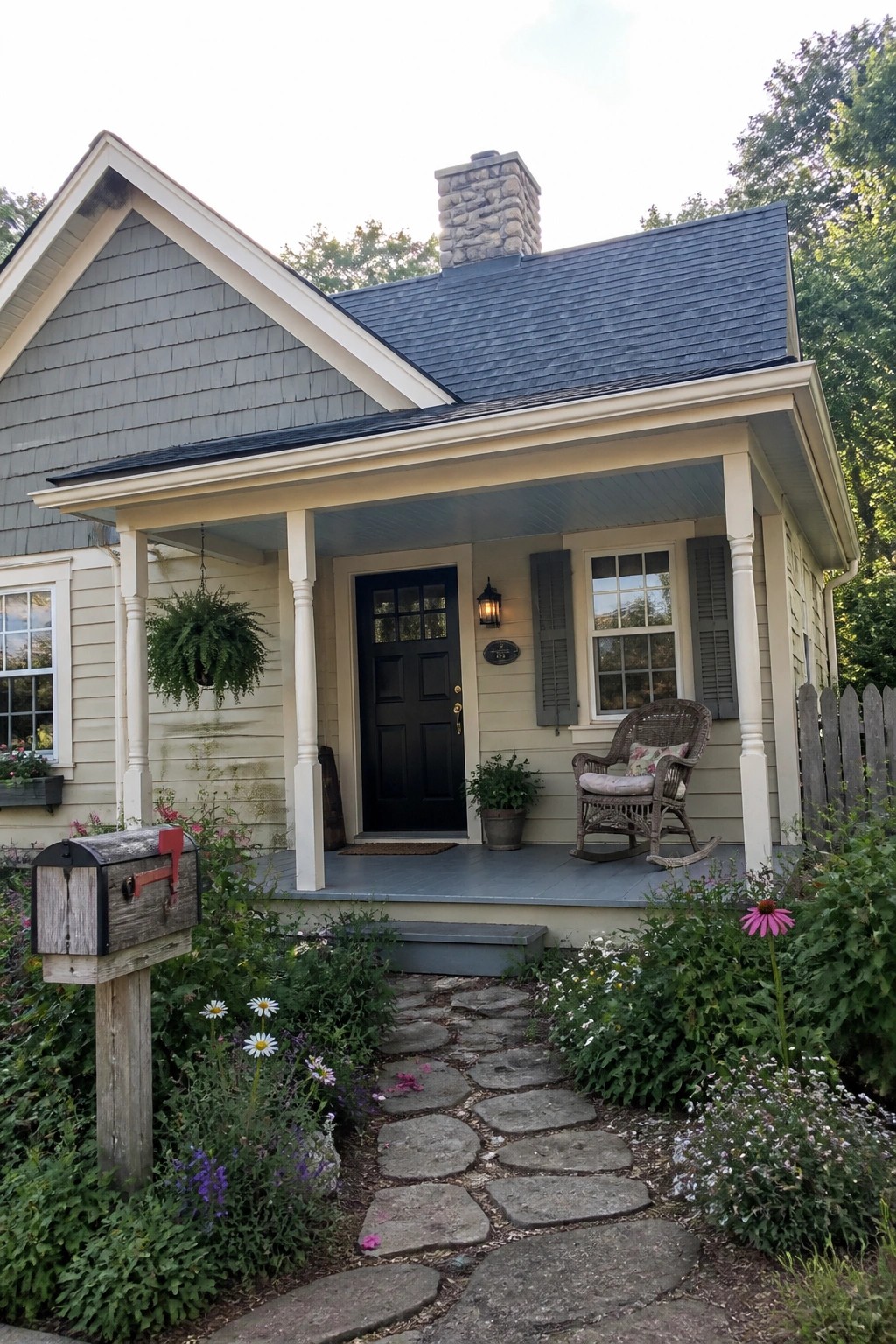
Gray shingles on the upper section give a house a clear visual break that pairs nicely with a dark roof. The lighter beige siding below keeps the whole look balanced instead of heavy.
This approach works best on smaller homes or those with simple rooflines. Keep the siding tone soft and let the gray shingles handle the contrast near the roof edge.
A Columned Portico for Stronger Curb Appeal
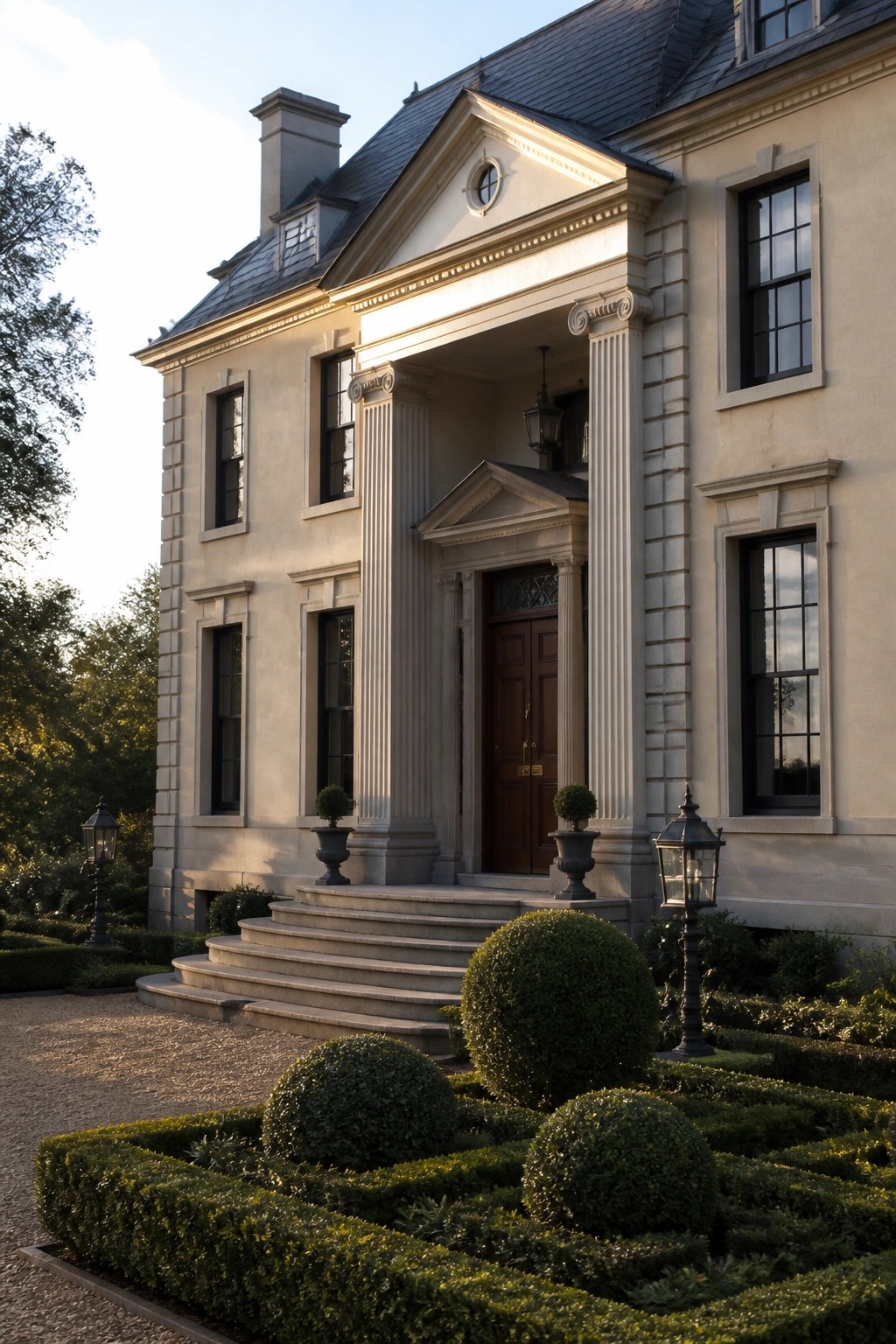
A portico with tall columns gives the front of a house real presence without needing a lot of extra decoration. On this beige exterior the white columns stand out cleanly against the darker roof and create a clear focal point at the door. The look feels balanced and settled rather than busy.
This works best on homes with a fairly simple wall plane and a cool-toned roof. Keep the columns and trim light so they read against the gray shingles, and make sure the roof overhang lines up with the pediment. It suits two-story houses that already have some width at the entrance.
Wood Screens to Define the Entries
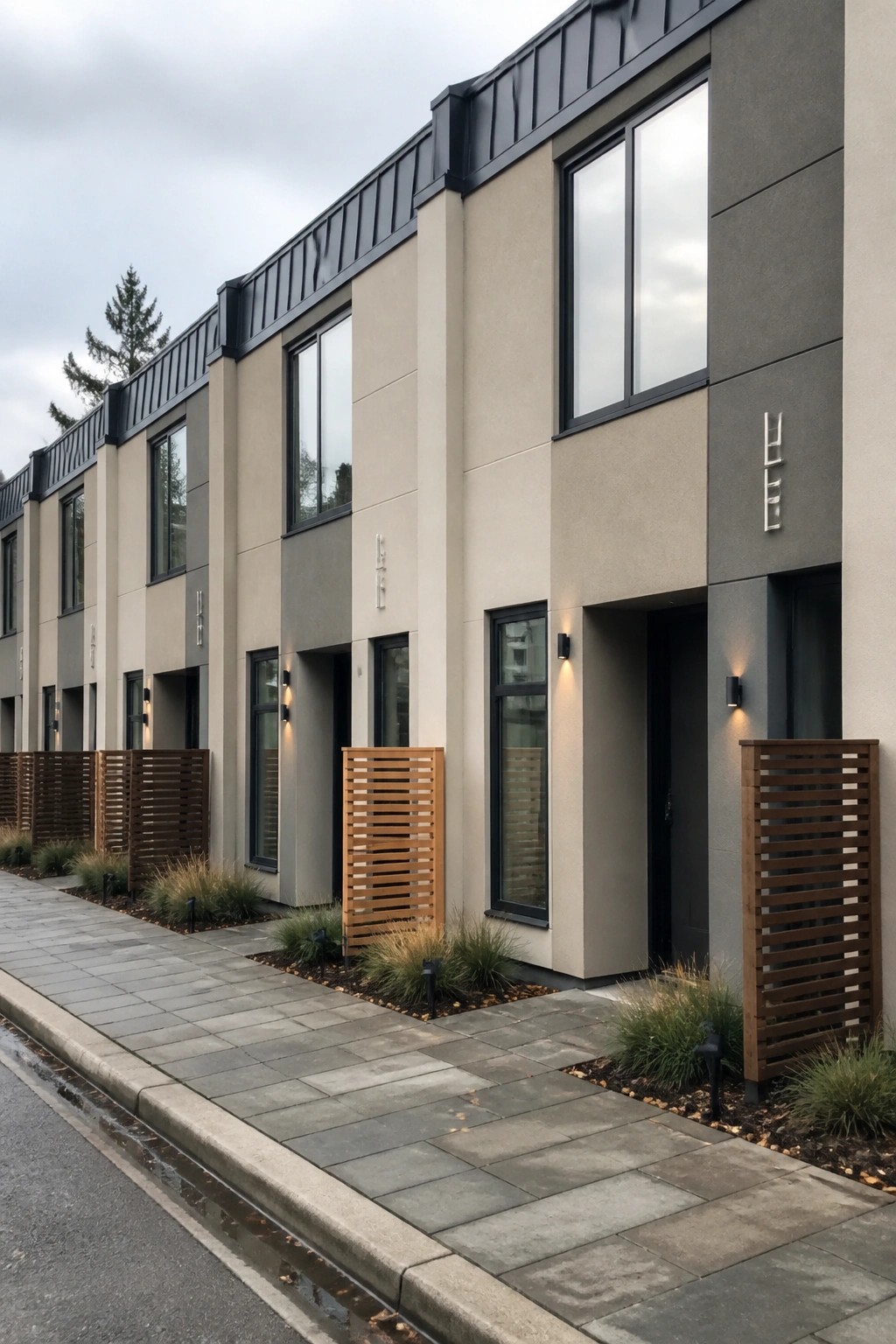
Many modern homes with cool roof tones end up looking a little flat along the front. Adding simple vertical wood screens at the entries gives the facade some depth and breaks up the long wall without adding color or clutter.
These screens work best on townhomes or row houses where each unit needs a bit of separation. Keep the wood natural or lightly stained so it sits quietly against the beige and gray walls. Just make sure the spacing stays even so the look stays clean rather than busy.
Beige Walls With Gray Stone Bases
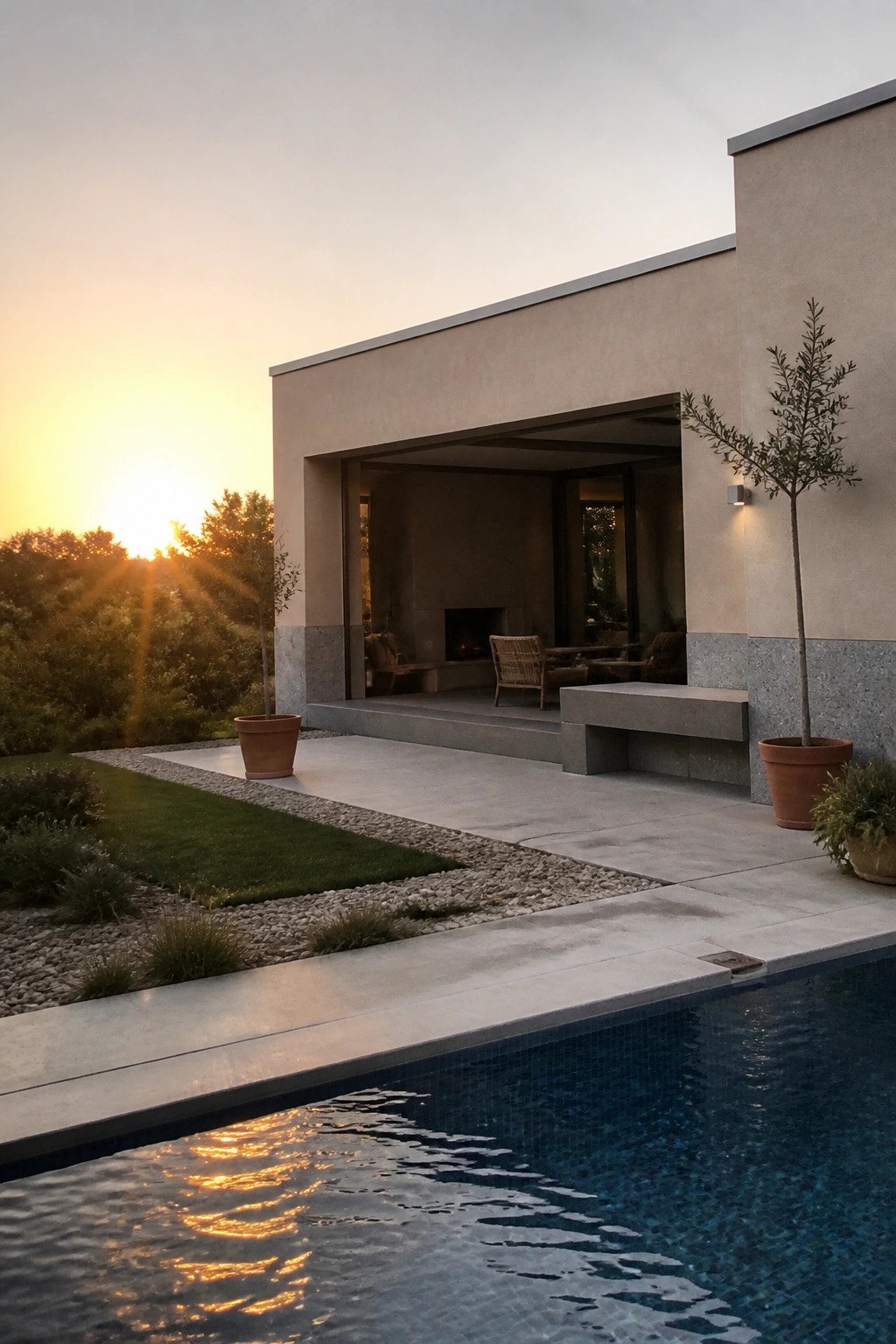
Many homes get a cleaner look when the upper walls stay in a soft beige while the lower sections switch to gray stone. This split keeps the house from feeling too flat or heavy and gives it a simple structure that reads well from a distance. The stone also protects the base from wear while the beige keeps things light.
This approach suits houses with cool toned roofs because the gray tones can echo the roof without matching it exactly. It works best on modern or minimalist homes where you want the materials to do the work instead of adding lots of trim or color changes. Just keep the transition line low and let the two materials meet cleanly.
Gray Metal Roofs On Beige Exteriors
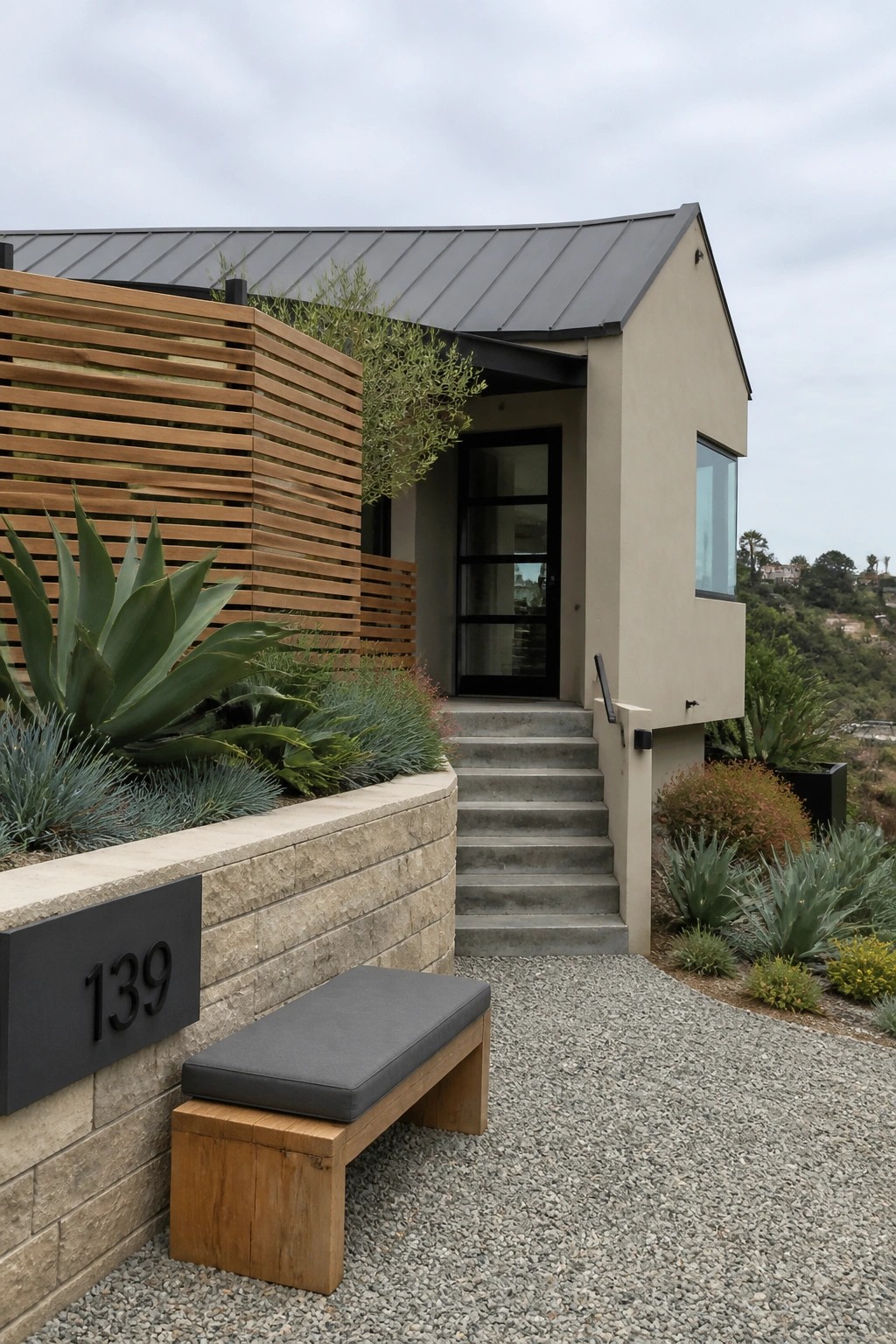
A gray metal roof gives a beige house a sharp but balanced look. The cool tone of the roof stands out against the warmer walls and keeps the whole exterior from feeling too soft or plain.
This works best on homes with straightforward shapes and a few natural materials like wood or stone nearby. It suits modern or updated houses that want a quiet, put-together feel without extra decoration.
Black Shutters Add Clear Contrast to Light Facades
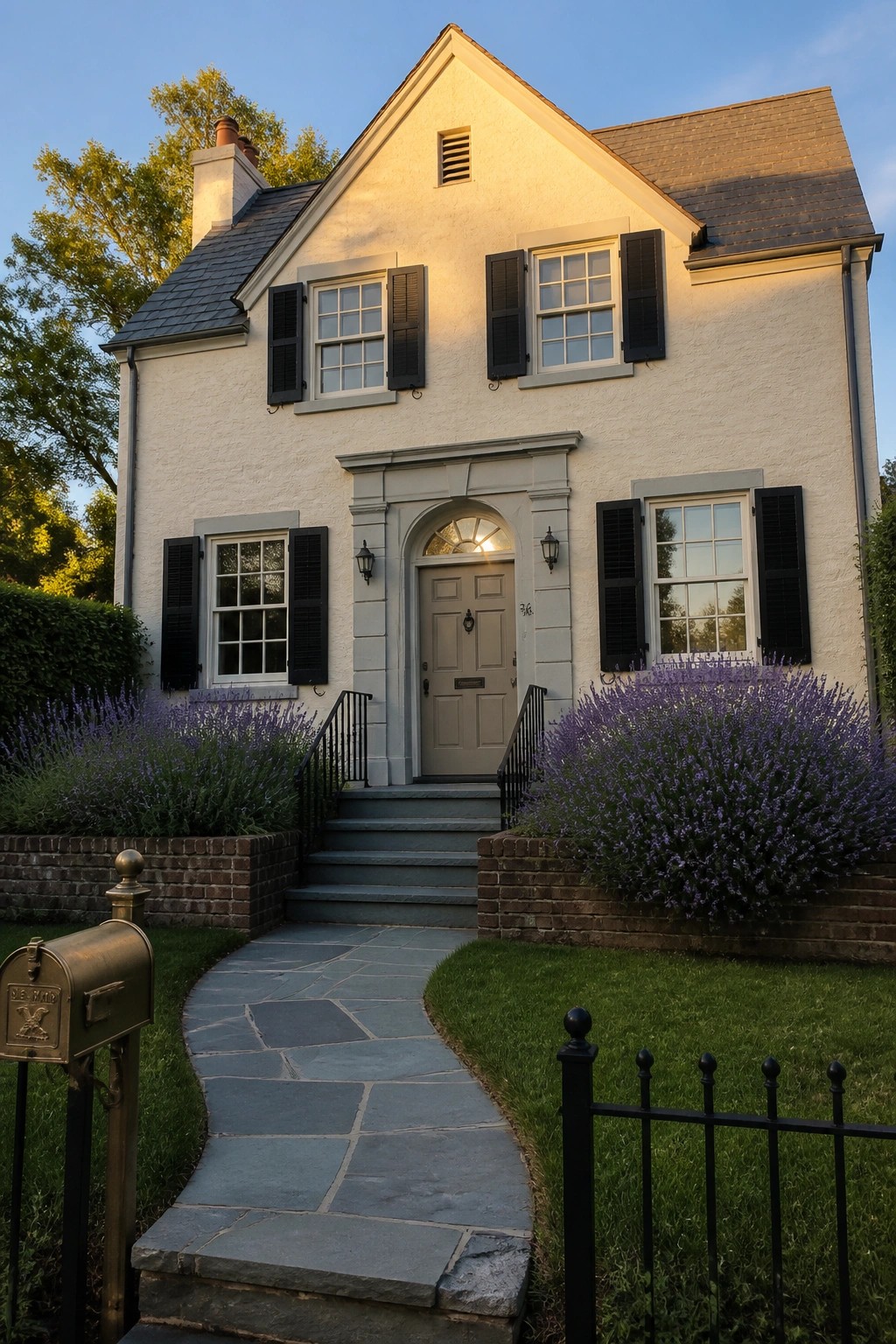
Many beige houses with gray roofs gain a sharper look when the windows get framed in black shutters. The dark color pulls attention to each opening and keeps the light walls from feeling too soft or washed out against the cool roof.
This approach works best on traditional homes where the roof already sets a deeper tone. Use a matte or slightly weathered black so it sits comfortably with the gray rather than competing with it.
Cool Metal Roofs with Beige and Gray Walls
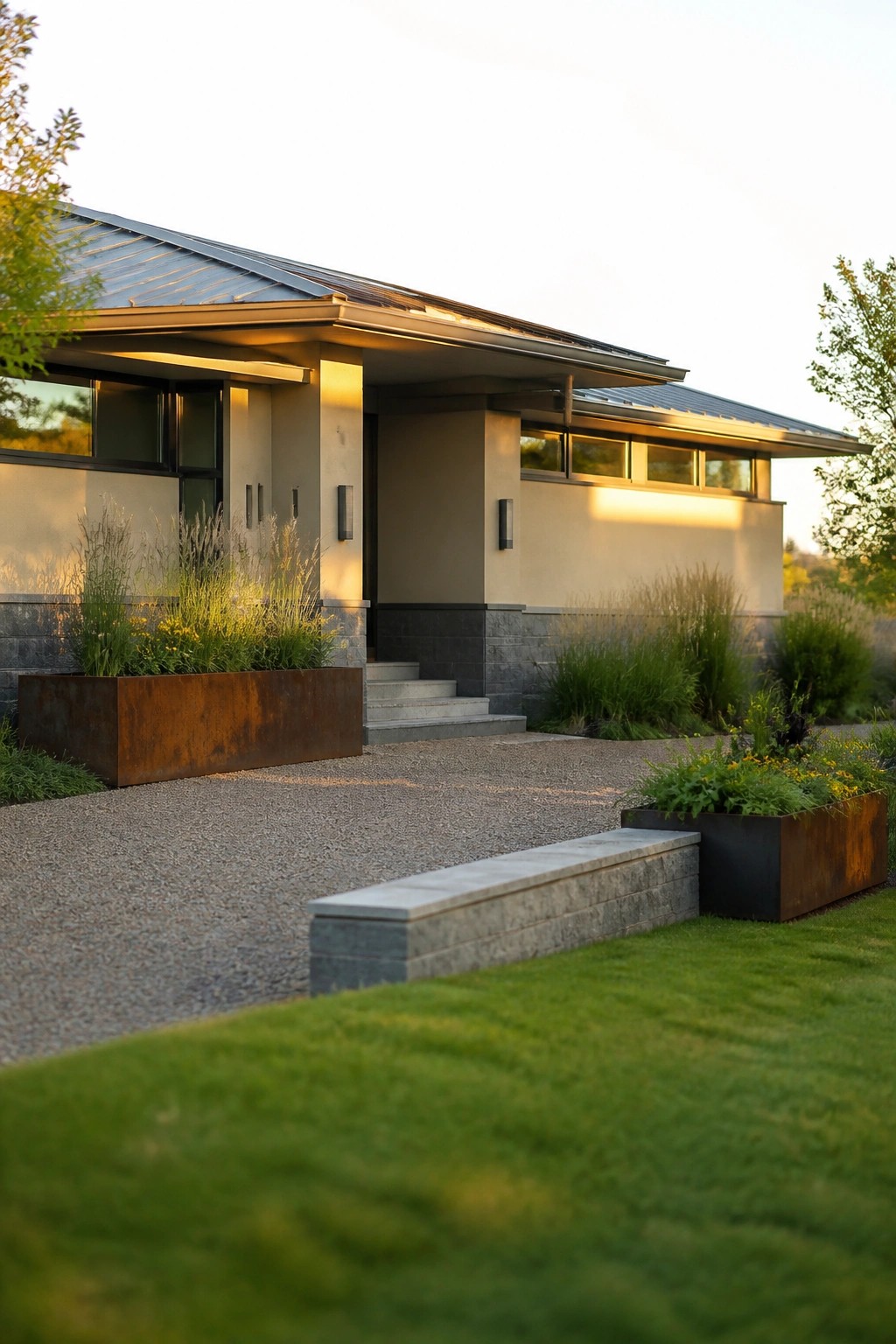
A metal roof in cool tones can look sharp when the rest of the house stays simple. Beige walls paired with a darker gray base give the roof room to stand out without competing. The lower stone section also helps the house feel anchored on the site.
This approach works well on single-story homes that already have clean lines. Keep the color changes limited to two or three materials and let the roof color do most of the work. Too many extra tones can make the look feel busy.
Stone Columns on Stucco Walls
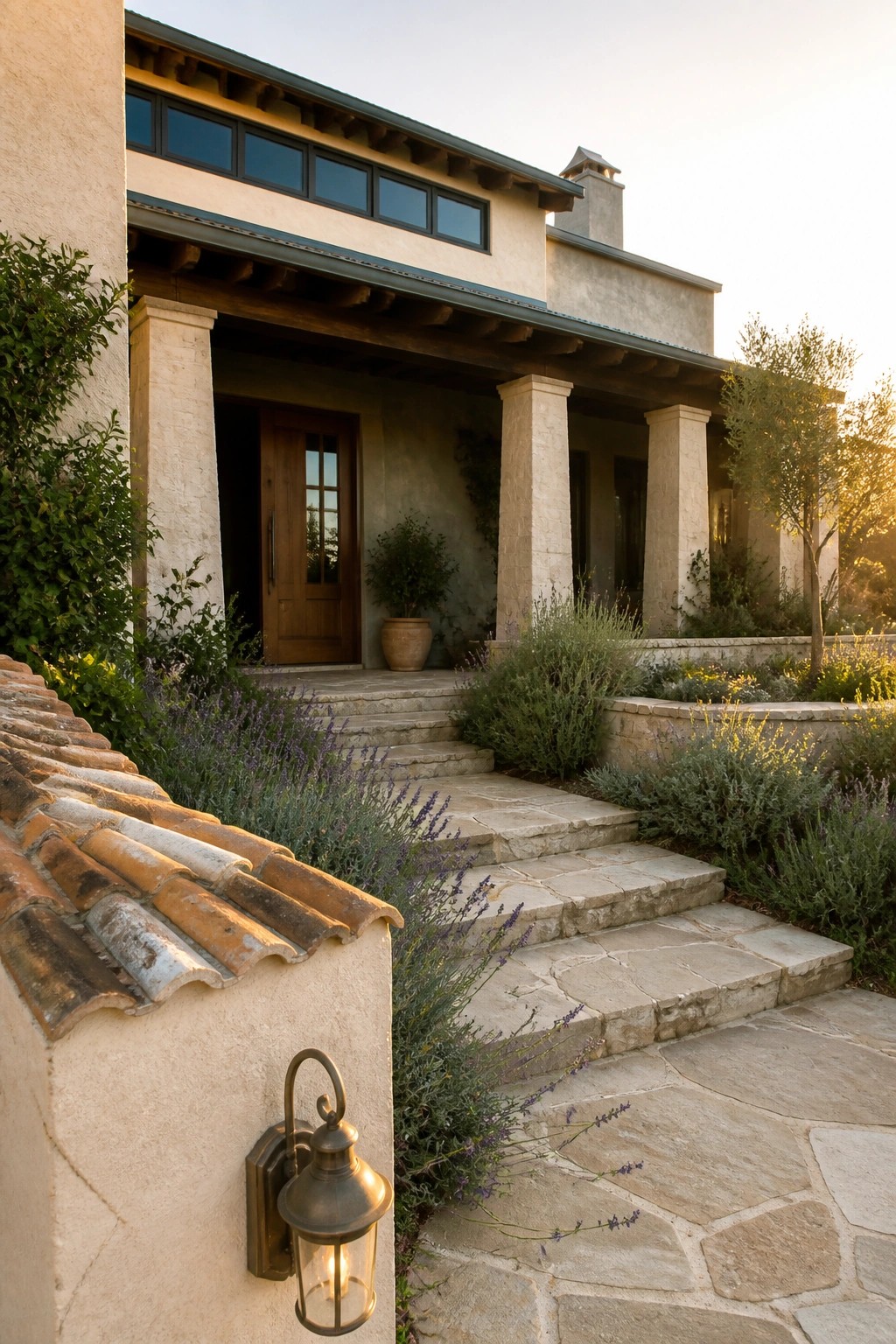
Stone columns give a stucco house a bit more weight and structure. They break up the flat surface and help the whole exterior feel more solid, especially when the roof is a cooler tone like dark green or gray. The natural variation in the stone also keeps the beige from looking too plain.
This approach works well on homes with simple rooflines and larger wall areas. Try matching the stone color to any hardscaping around the entry or driveway so the materials feel connected rather than added on later. Keep the stucco finish fairly smooth so the stone stands out without competing.
Dark Roofing on Light Brick Homes
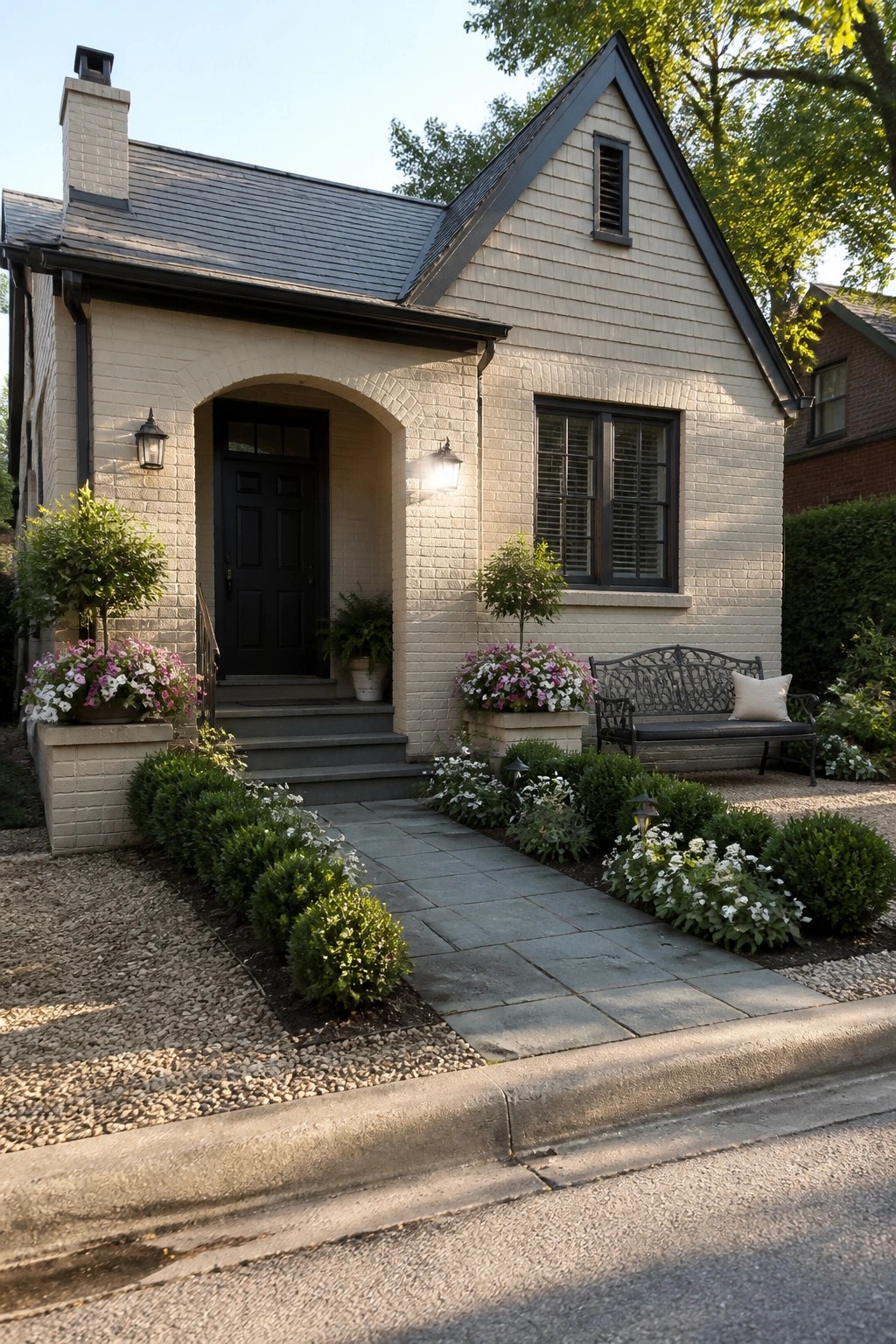
A dark roof gives a light beige brick house more weight and definition. The cool tone of the shingles stands out against the pale walls and helps the roofline feel intentional rather than flat.
This approach suits homes with simple shapes and classic details like an arched entry. Keep the trim dark as well so the contrast stays clean and the roof does not look like an afterthought.
Dark Doors That Balance Cool Roofs
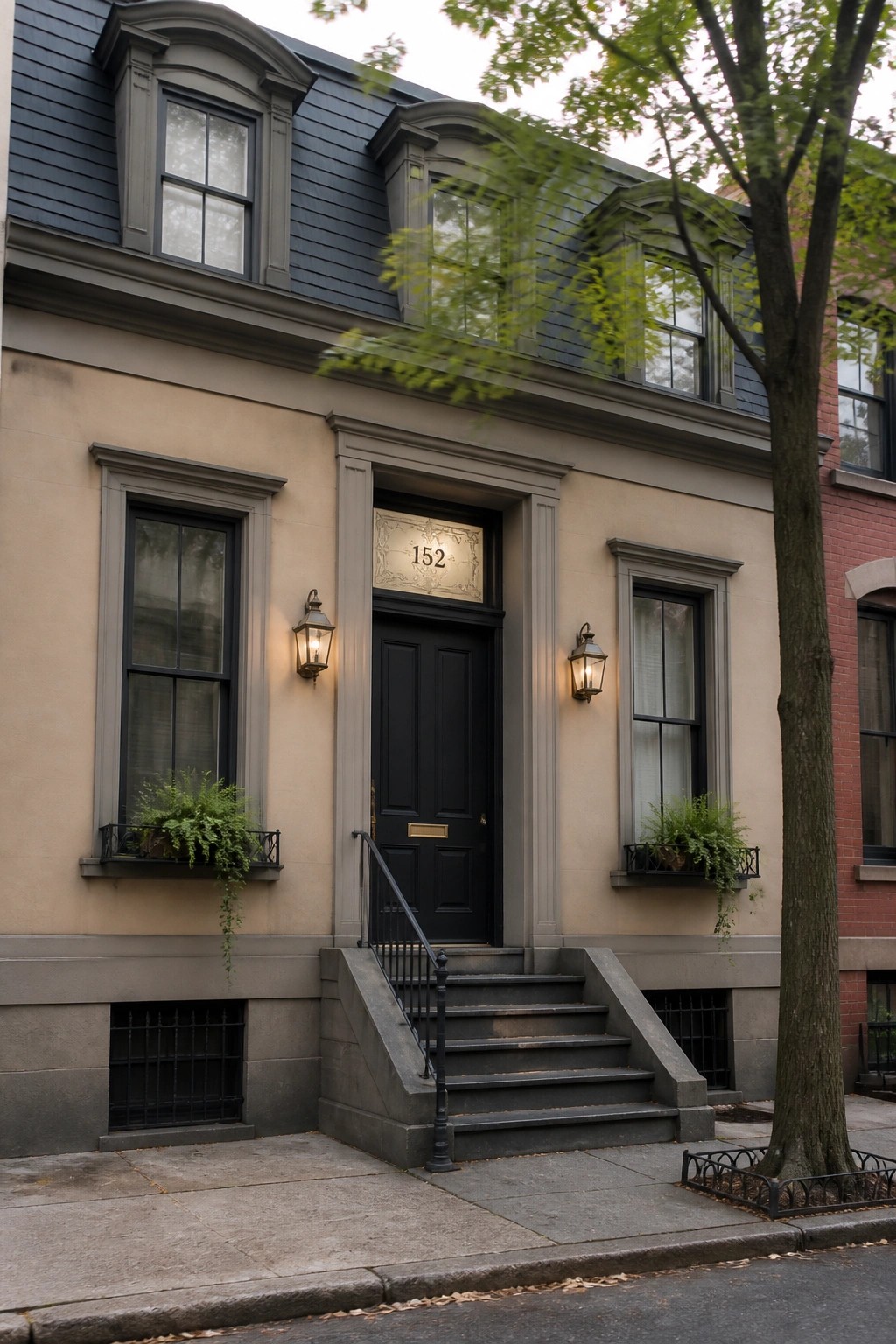
A dark front door gives the whole front a clear center point. It stands out against the lighter walls and keeps the look simple rather than busy.
This choice works especially well when the roof is already a cool dark tone. The door repeats that color and pulls the facade together without extra trim or color changes. Keep the surrounding walls soft beige or gray so the contrast stays easy to live with.
Cool Metal Roofs With Beige and Gray Walls
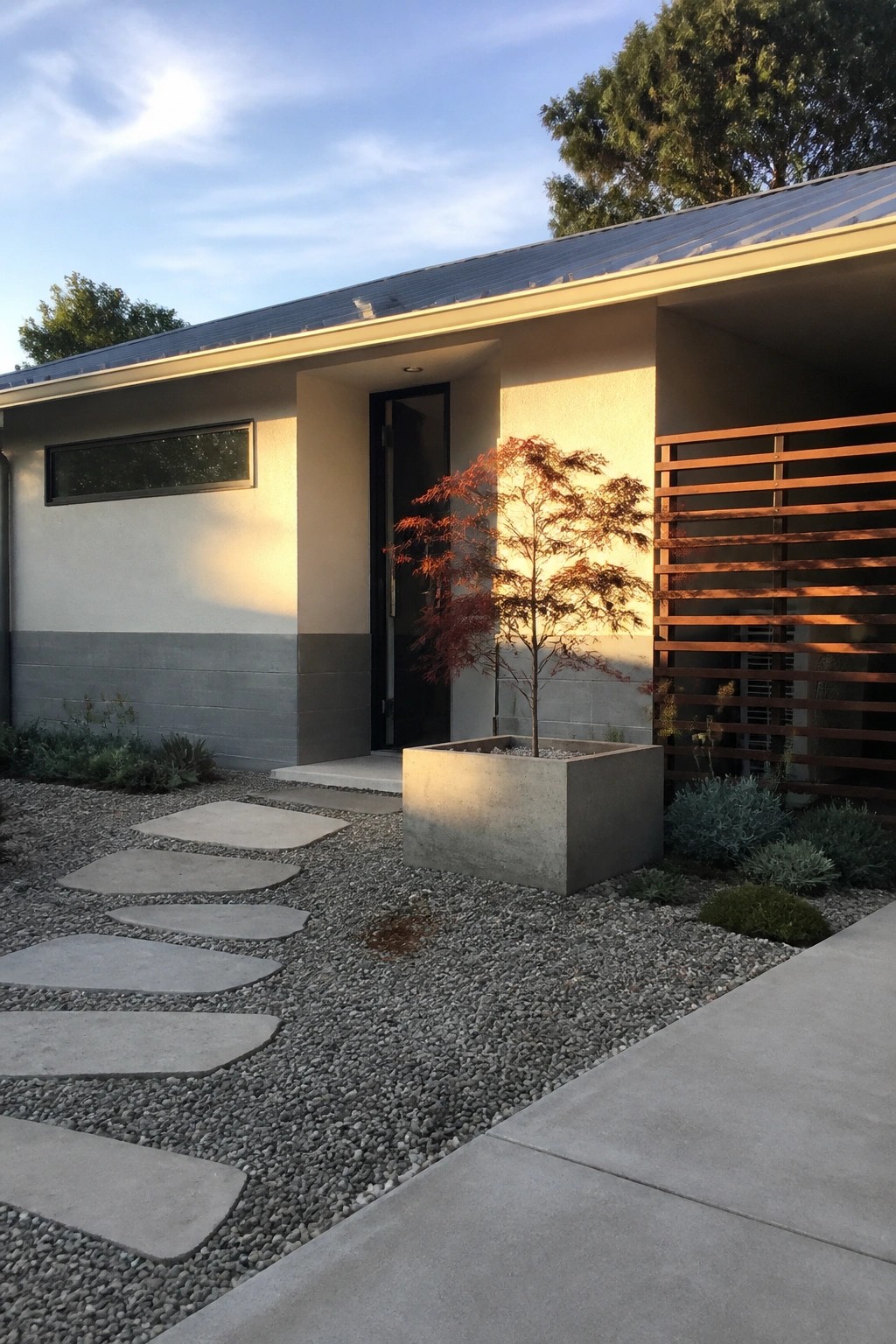
A cool gray metal roof sits well with beige walls and a darker concrete base. The combination keeps the house looking clean and current without needing lots of extra detail.
This approach works on homes that already have simple shapes and few trim pieces. It helps the roof feel like a deliberate choice rather than an afterthought, and it holds up in bright sun without looking washed out.
Stone Bases on Porch Columns
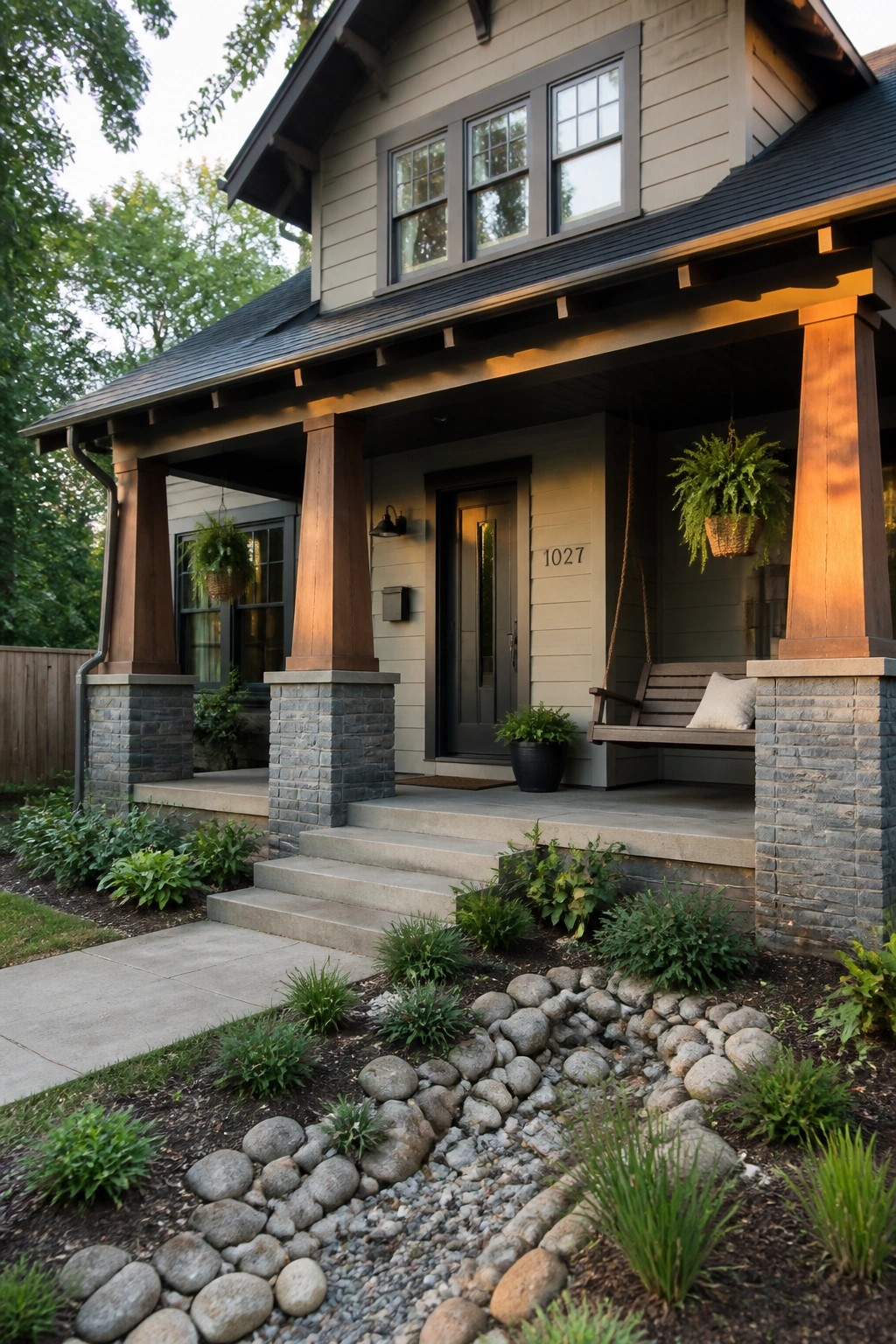
Stone at the base of porch columns gives a house with a cool roof a bit more weight where it matters. It keeps the lighter siding from feeling too light and helps the whole front sit better on the lot.
This works best on homes that already have some trim color in the gray family. Keep the stone simple and stop it at the right height so the wood above still reads as the main support.
Arched Entries That Pair Well With Gray Roofs
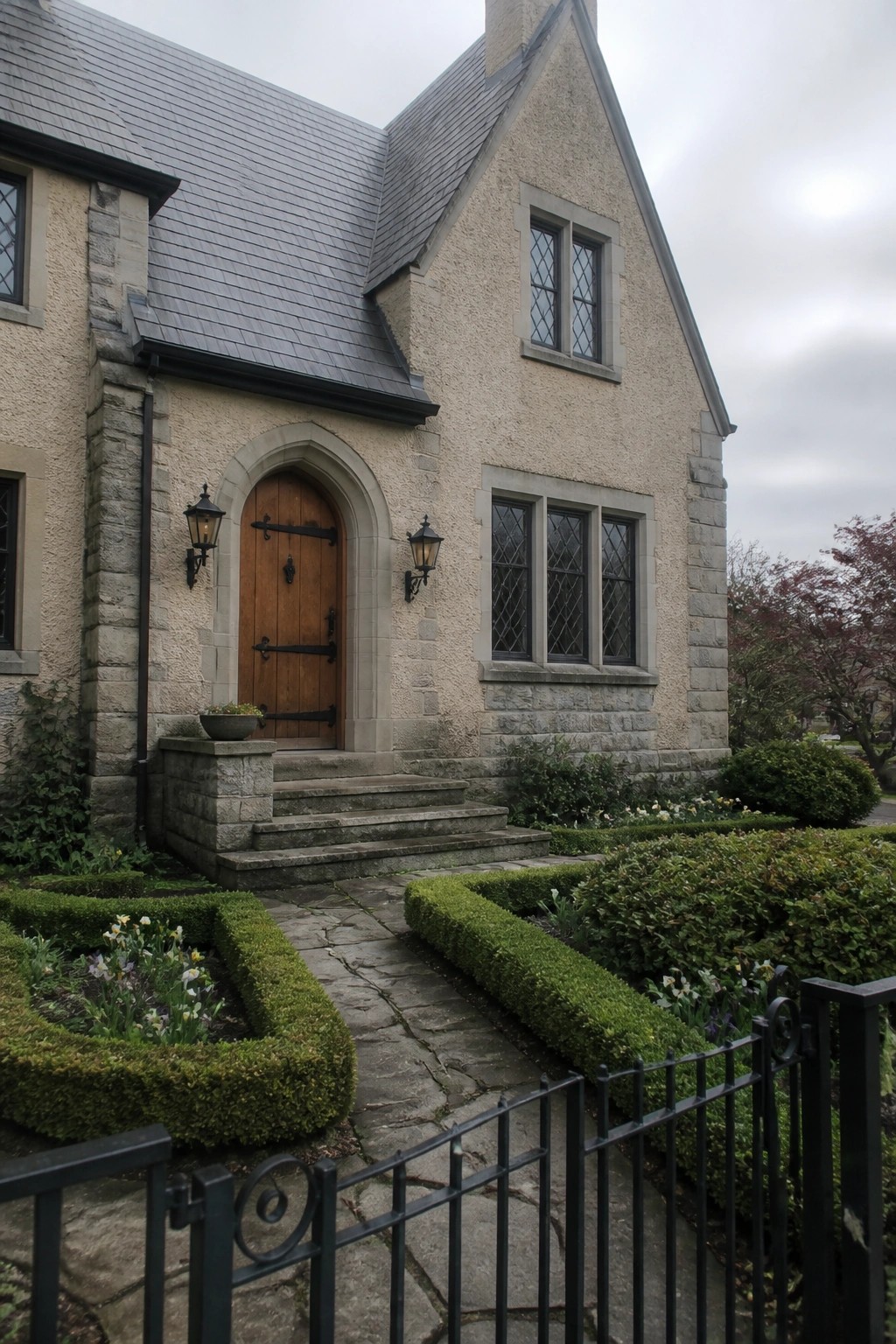
An arched stone entry gives a house with a cool gray roof a bit more shape and warmth. The curve softens the roofline and helps the beige stone walls feel less flat against the darker shingles.
This approach works best on homes that already have some stone or masonry around the door. Keep the door itself in a simple wood tone and let the arch carry the detail instead of adding extra trim or color.
A Covered Porch With Columns for a Stronger Entry
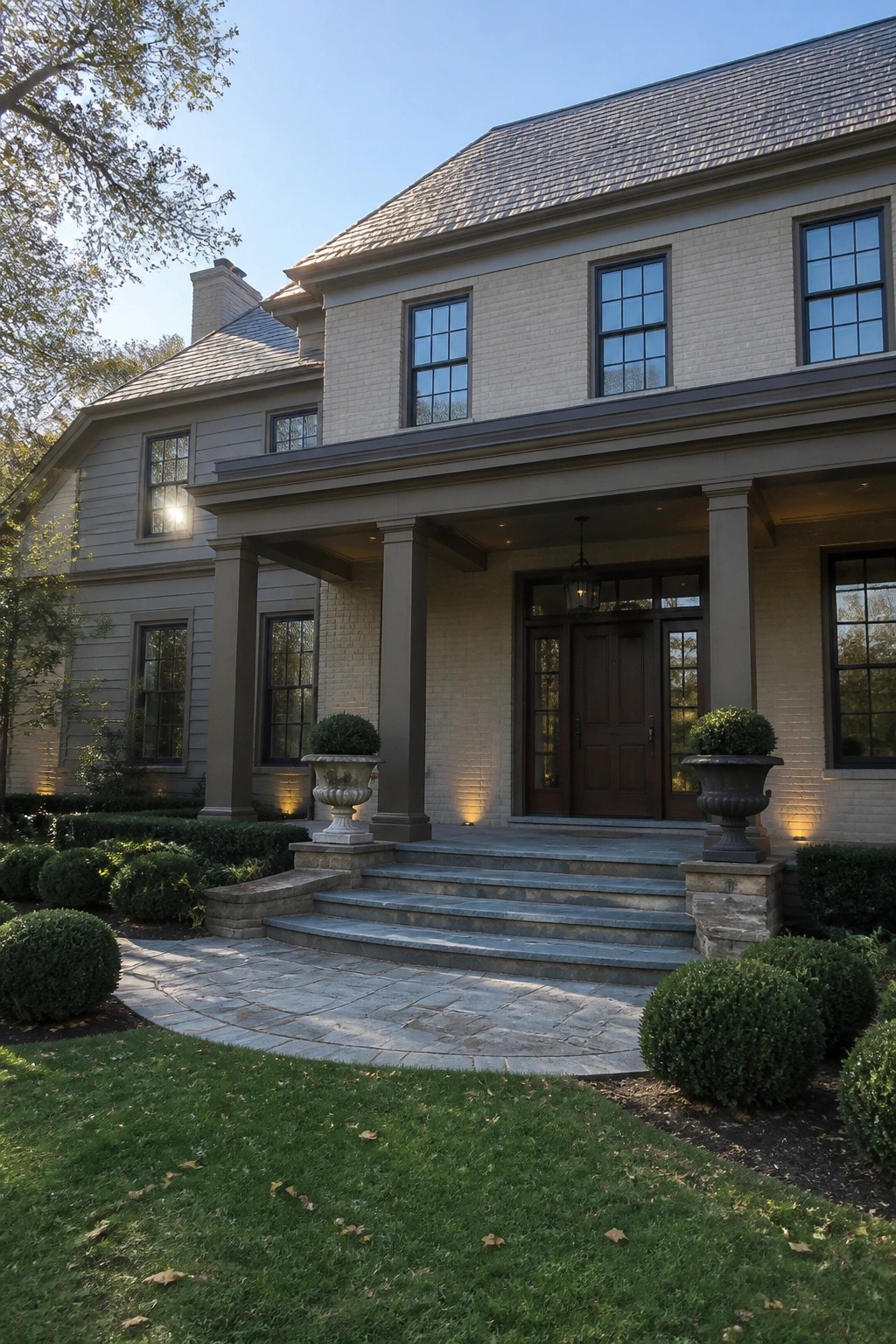
A porch like this gives the front of the house more weight and makes the entrance feel intentional. The columns break up the flat wall and help the beige siding and brick sit better against the cool gray roof.
This approach works on homes with fairly straight rooflines and simple shapes. Keep the columns in a neutral tone and use matching stone or brick on the base so the whole entry feels tied together without extra trim or color changes.
Frequently Asked Questions
Q: My trim is already white. Does that pair well with these colors?
A: White trim sharpens both beige and gray nicely. It frames the house and keeps the look clean. Go for a soft white rather than bright to avoid harsh contrast.
Q: How do I decide between beige or gray for my cool roof?
A: Look at the roof’s undertones first. Beige softens the overall feel while gray leans more modern (try samples on cloudy days too). Walk around your neighborhood to see what feels right for your style.
Q: Will dark gray make my house absorb too much heat?
A: Lighter grays reflect heat better than dark ones. Stick to mid tones if heat is a concern in your area. The cool roof already helps manage that.
