

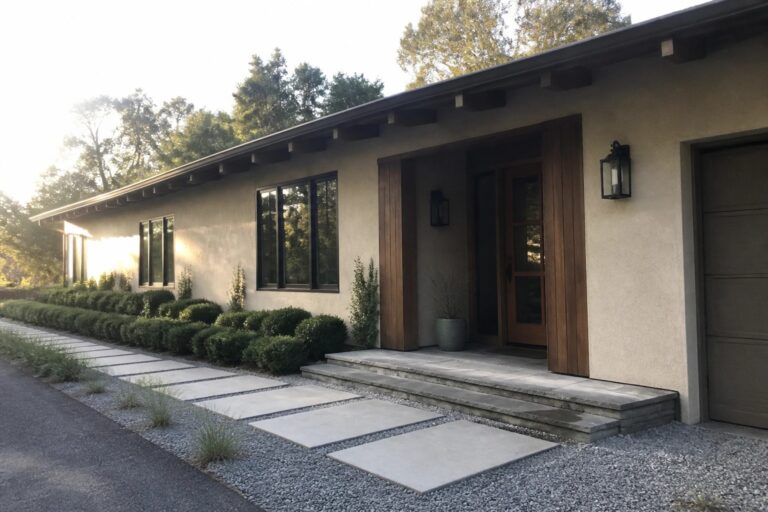
Long ranch houses often read as one long line from the street unless the exterior details create some real separation along the front.
I have seen plenty of beige choices that either blend everything together or pull the eye forward depending on how the siding meets the trim.
Details matter more than the color alone.
The way windows sit on a wide wall or how a porch breaks the length changes how the house feels when you drive up to it.
Some of these setups show simple ways to add that sense of depth without overcomplicating the whole look.
Vertical Wood Siding Adds Depth To Long Ranch Facades
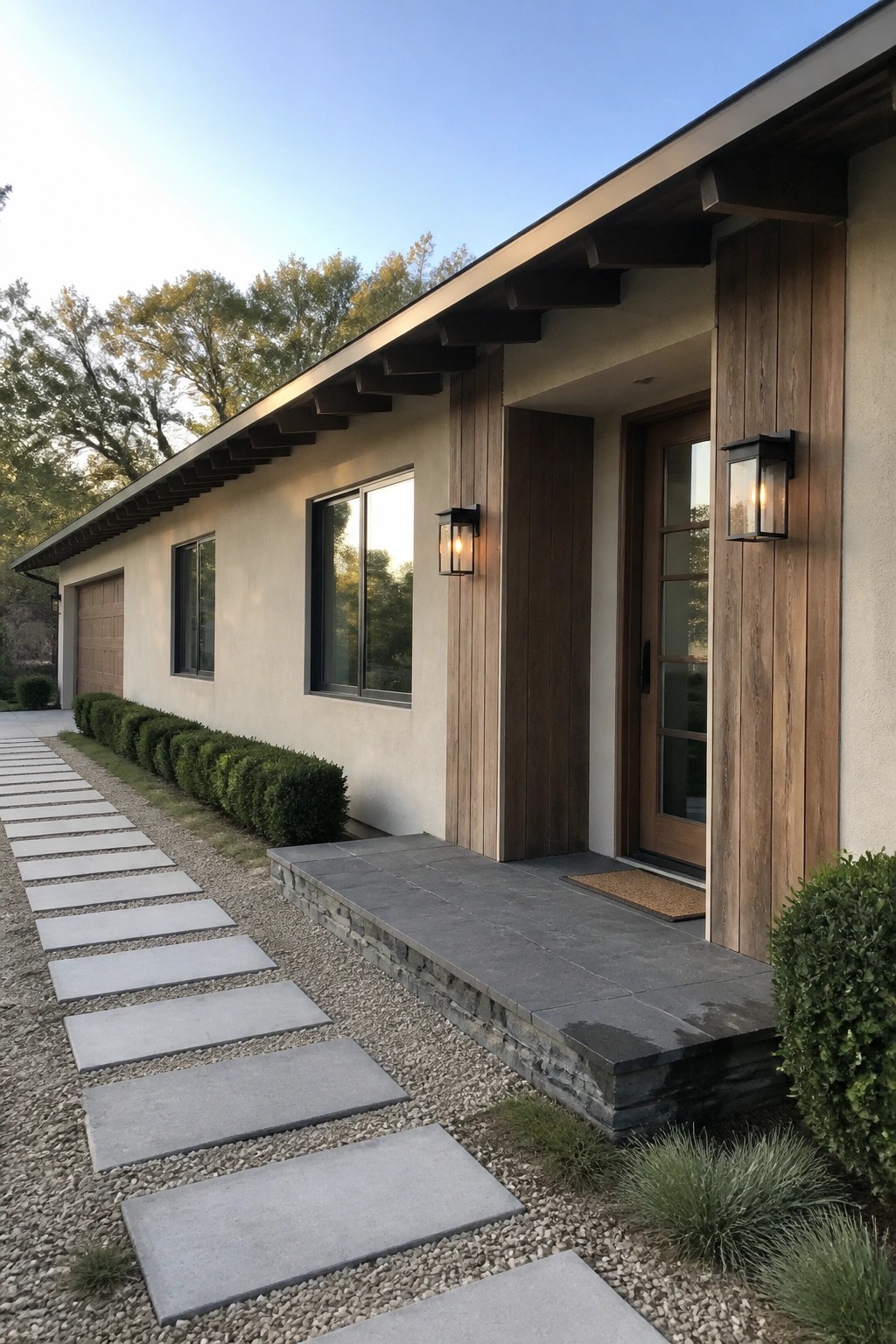
Many ranch homes end up with long, flat walls that can look a little plain from the street. A simple way to fix that is to run vertical wood siding on part of the facade, especially around the entry. The change in texture and direction breaks up the horizontal line without needing a lot of extra detail.
This approach works best on light-colored homes where the wood can stand out clearly. Keep the siding limited to one area so it feels intentional rather than busy, and match the tone of the wood to other accents like trim or doors. It is an easy update that gives the whole front more shape.
Add a Covered Porch to Break Up Long Lines
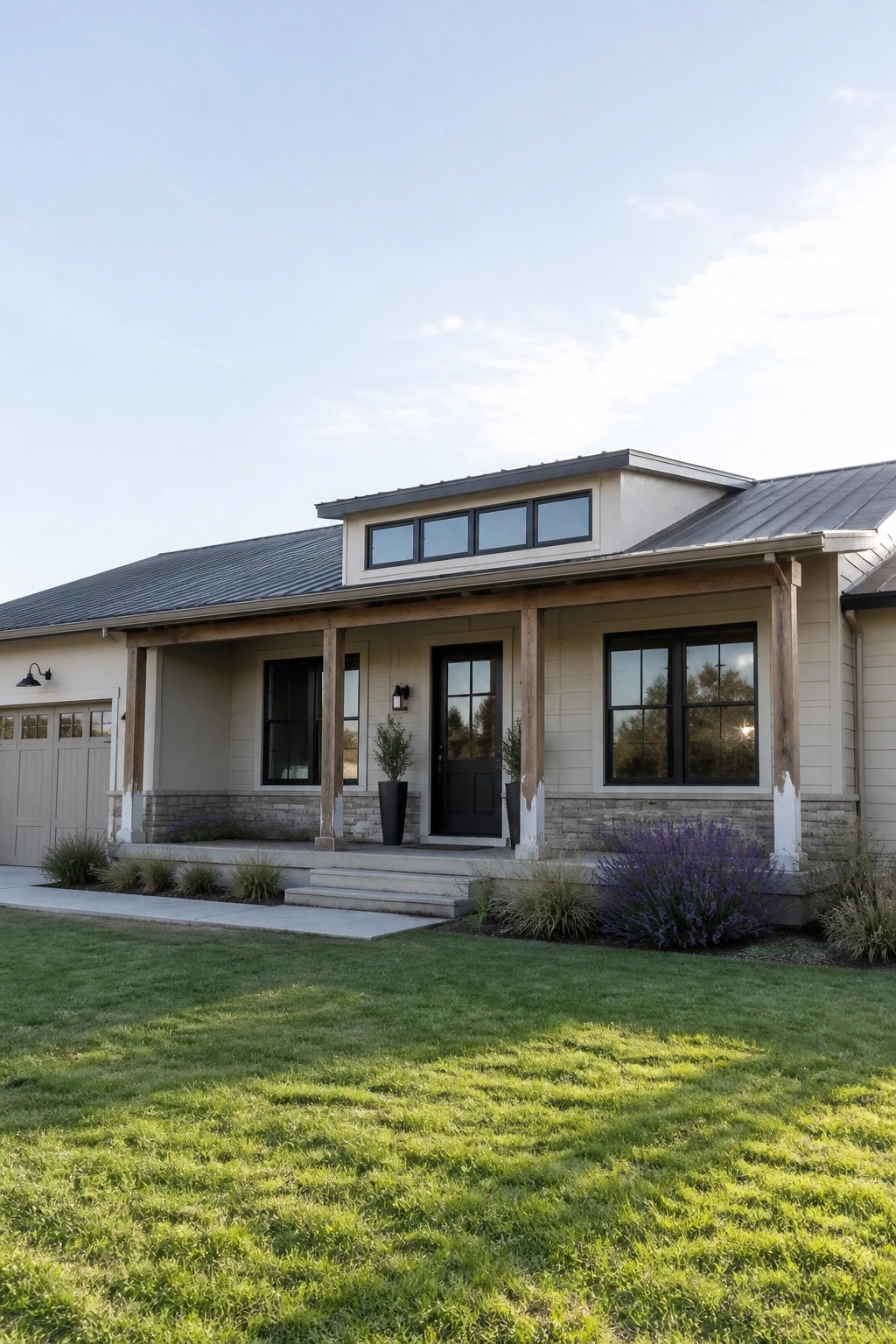
A covered porch running across the front gives a long ranch house more shape without needing extra wings or bumps. The posts and overhang create layers of shadow that stop the siding from looking flat and endless.
This approach works best on single-story homes with simple rooflines. Keep the porch depth around eight to ten feet so the scale feels right, and use a few different materials like wood posts and a low stone base to add texture without clutter.
Using Stone Edging to Ground a Long Facade
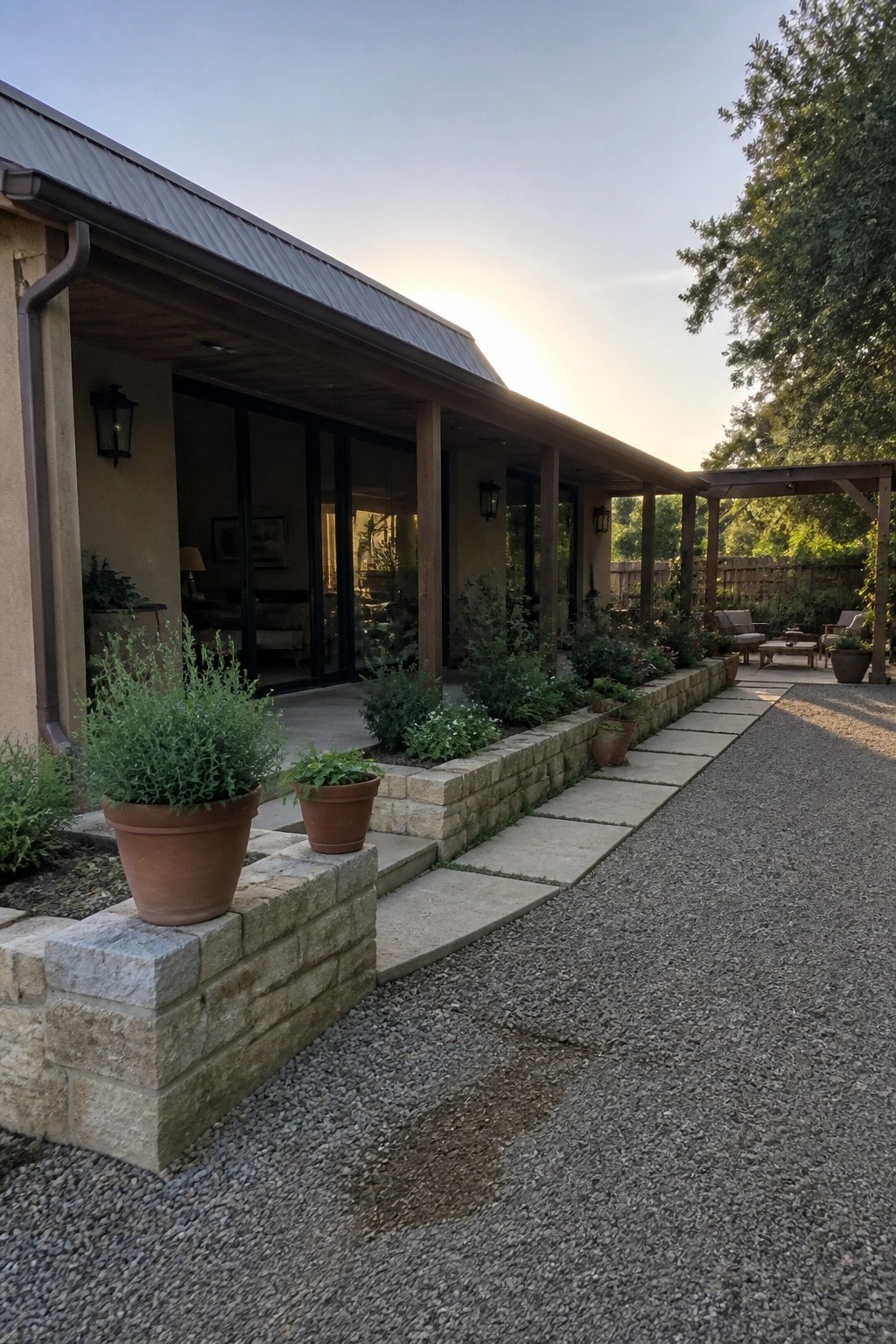
A low stone wall running along the front of a ranch house gives the eye something to follow and keeps the whole length from reading as one flat surface. It also creates a clear planting zone right against the house, which softens the wall and adds a bit of shadow and texture without any extra structure.
This approach works especially well on beige or light-colored homes where the siding can start to feel plain over a long distance. Keep the wall height modest, around eighteen to twenty-four inches, and use it to hold a simple mix of shrubs and a few larger pots. The result feels settled rather than added on later.
Breaking Long Ranch Facades With a Tall Chimney
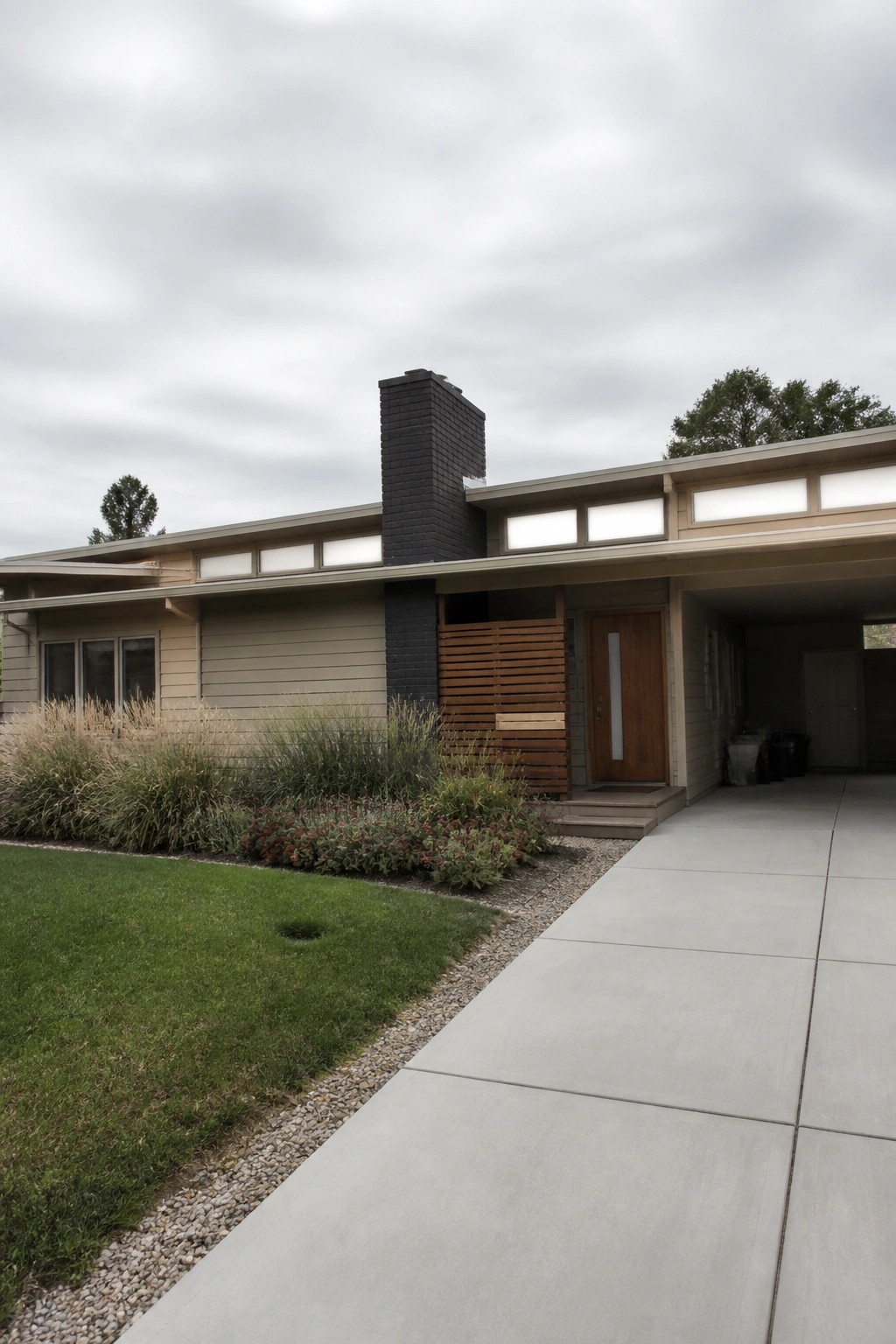
A long, low ranch house can start to feel flat across the front when everything runs in one direction. Placing a dark, solid chimney right where the eye travels along the siding gives the whole length a clear stopping point and adds some height without changing the roofline.
This move works best on homes with simple horizontal siding and a fairly low profile. Keep the chimney material different from the main walls so the contrast does the work, and position it closer to the entry rather than at the far end.
Anchor a Long Ranch with a Strong Entry Structure
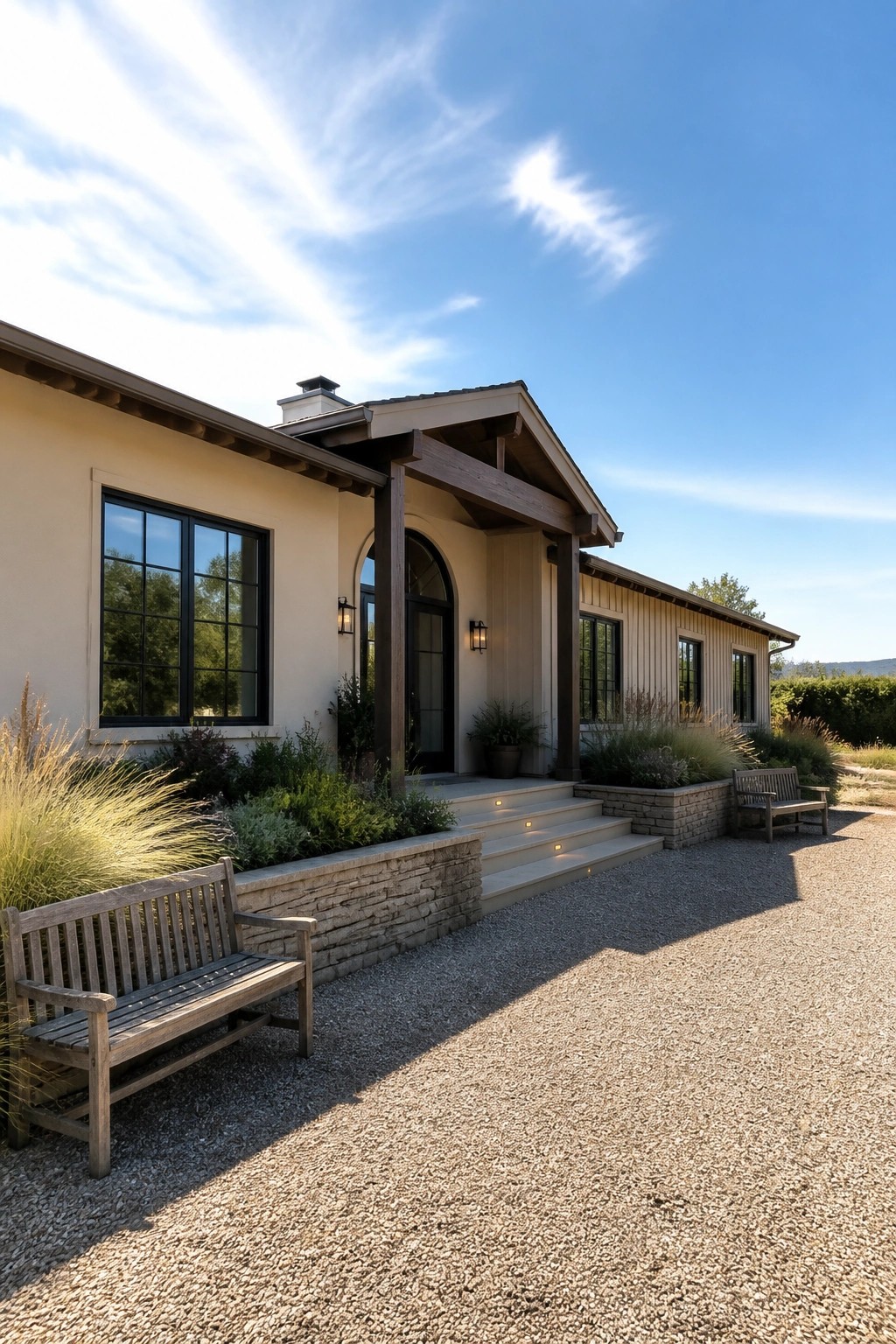
A covered entry built with heavy wood beams gives a long beige ranch more weight and focus. The structure breaks the horizontal run of the facade and makes the front door feel like the main point instead of just another section of wall.
This approach works best on single-story homes that need a clear center without adding extra stories or wings. Keep the siding and roof simple so the entry does the work, and match the wood tone to any other trim or posts already on the house.
Frame The Entry With Paired Columns
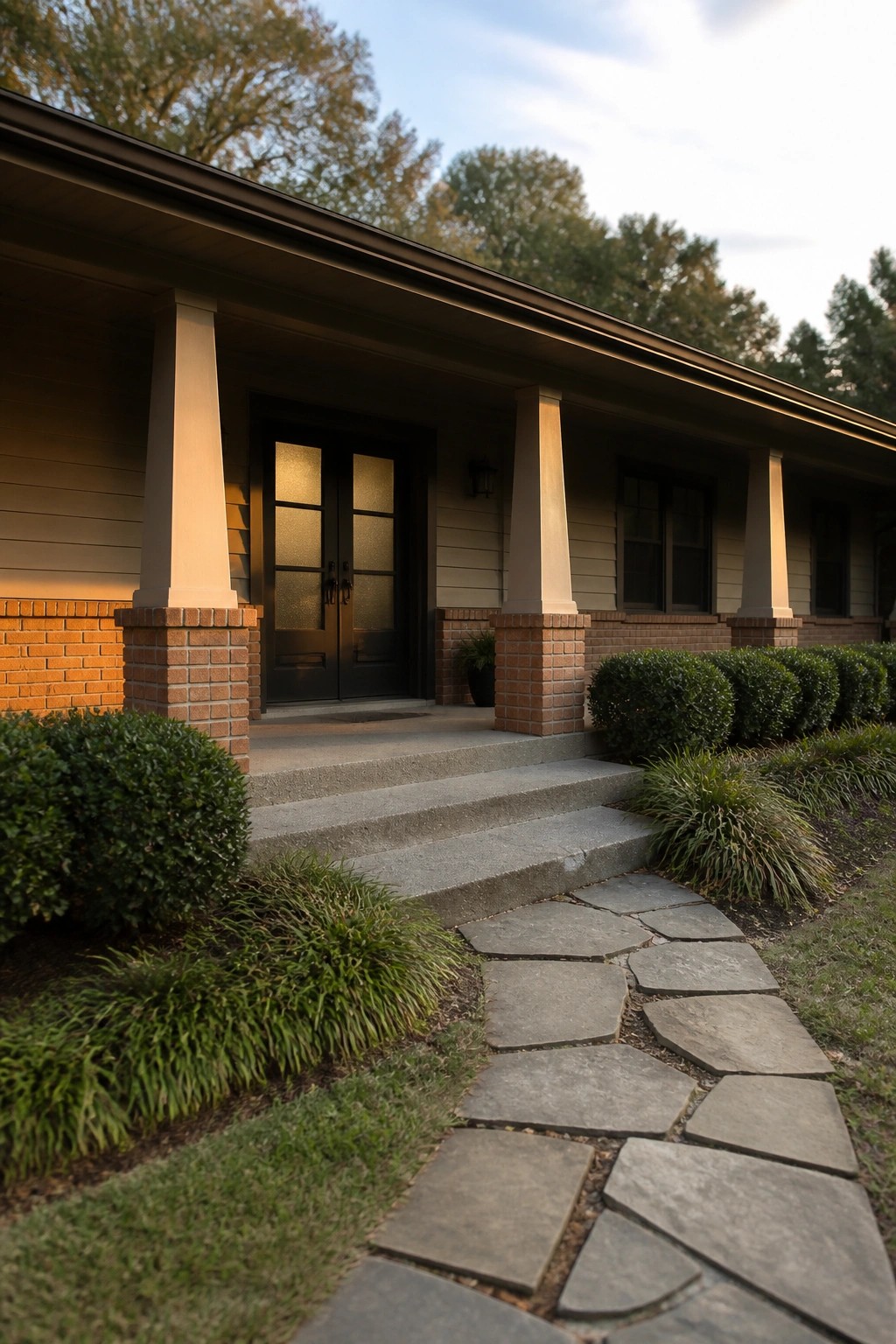
Ranch houses often stretch out in a long line, which can make the front door feel lost. Setting a pair of columns on brick bases right at the entry gives the door a clear spot to stand out and adds some height without changing the roofline.
This approach works best on single-story homes with simple siding because the vertical lines from the columns create contrast and keep the facade from looking too flat. Keep the columns in a light tone that matches the house and let the brick bases tie into any existing masonry so the whole front feels pulled together.
Run a Pergola Along the Facade
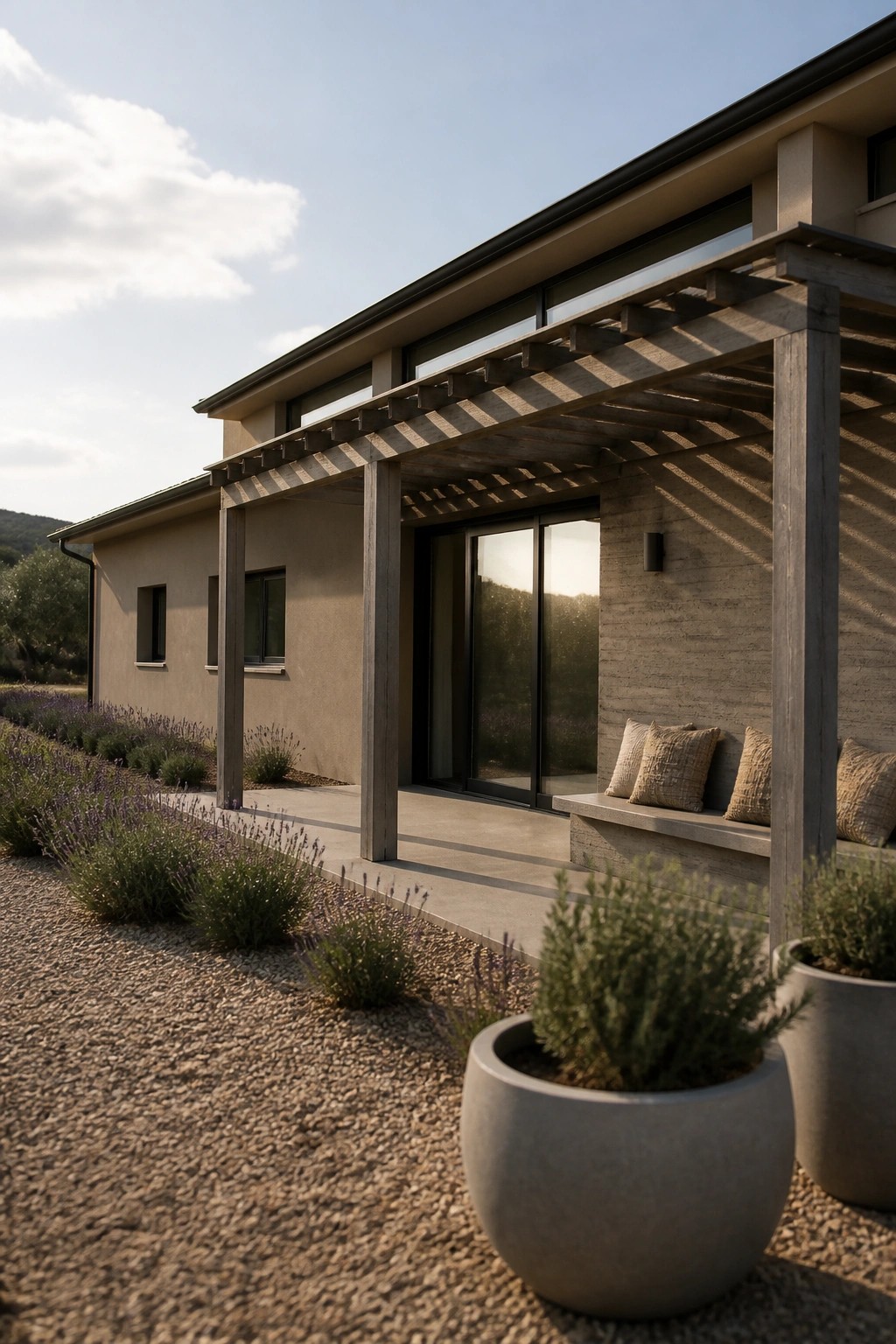
A pergola gives a long, low house more shape without needing to change the roof or add big new volumes. It creates a covered zone that breaks the flat wall into smaller sections and adds some shadow play through the day.
This setup works best on ranch homes where the siding stays simple and the wood tones stay warm and natural. Line it up with the main doors or a patio edge so the posts line up with the windows and the whole thing feels like part of the original build rather than an add-on.
A Front Planter Adds Depth to Long Ranch Facades
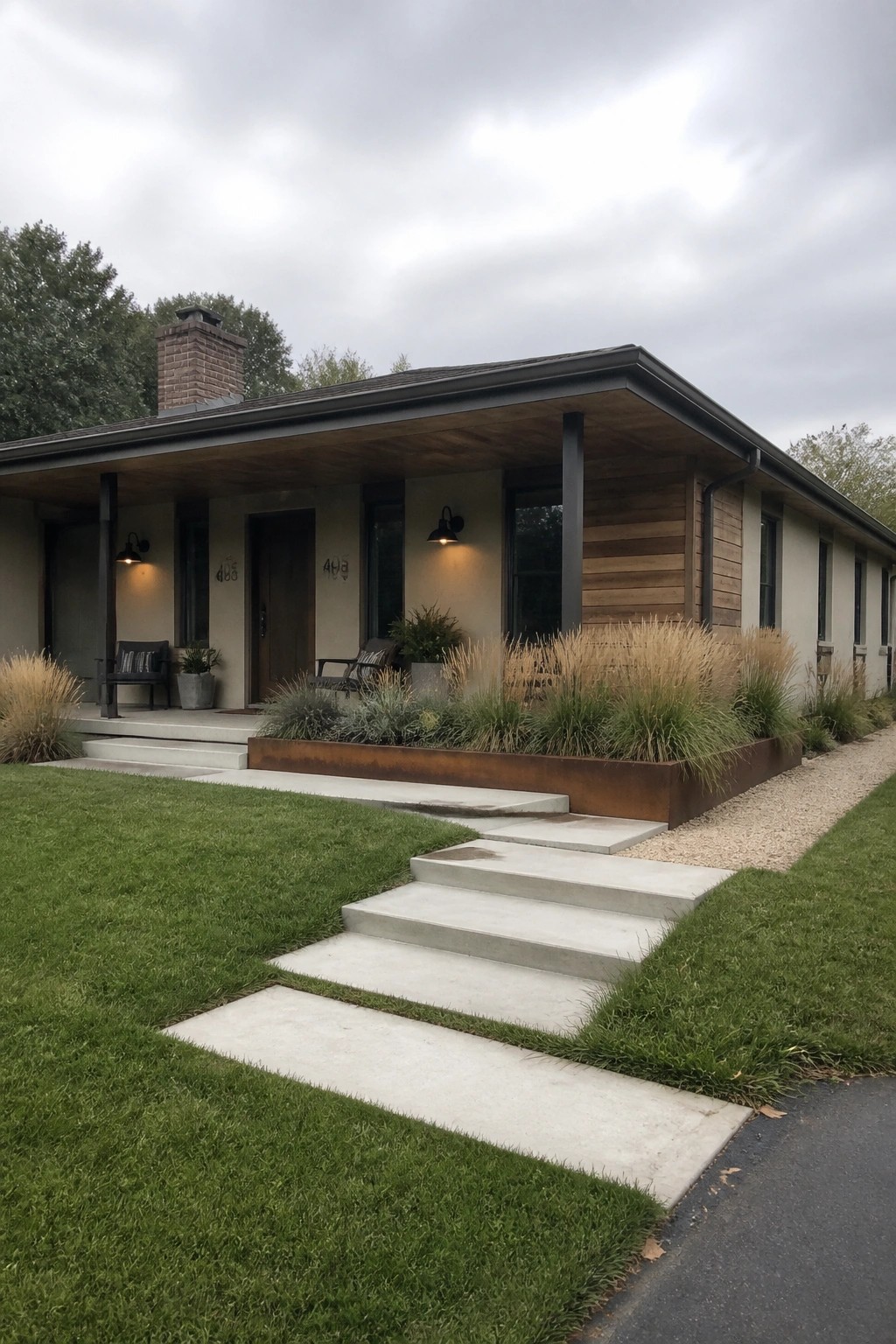
A raised metal planter running along the front of a ranch house gives the facade a layered look without adding bulk. It pulls the eye forward in sections and keeps the long, low shape from feeling flat, especially on lighter colored homes.
This approach works best when the planter stays low and follows the natural line of the porch or entry. Use it on homes where the siding runs straight for many feet, and fill it with grasses or low shrubs that add texture but do not block windows or doors.
Stone Bases For Porch Columns
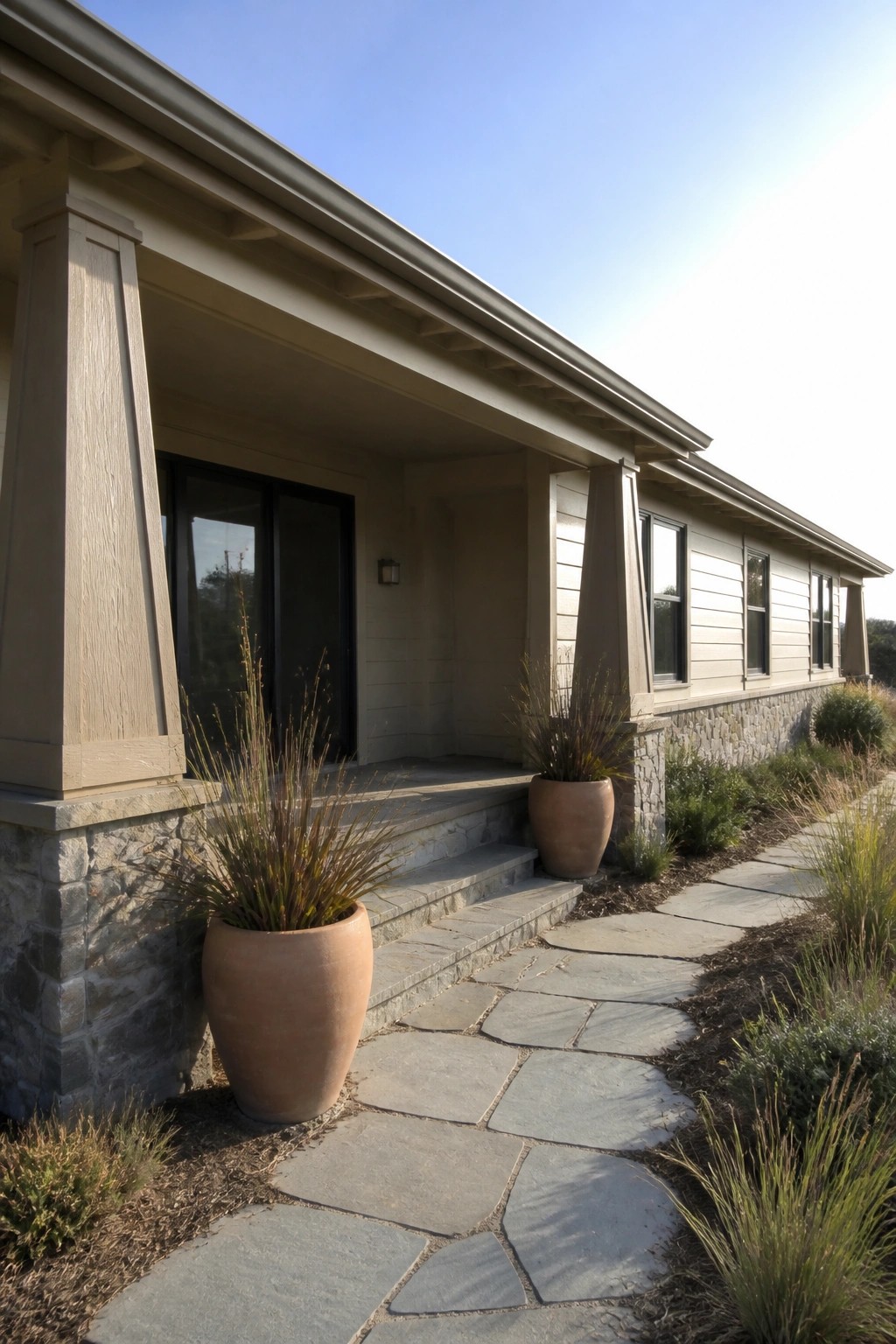
Stone bases at the bottom of porch columns add weight and texture that helps a long ranch facade feel less flat. The contrast with the beige siding keeps the eye moving instead of sliding straight across the whole length of the house.
This approach works best on homes that already use simple materials and need one solid detail to anchor the front. Keep the stone limited to the columns and foundation so it does not compete with the siding or windows.
Low Stone Walls Add Depth To Long Ranch Facades
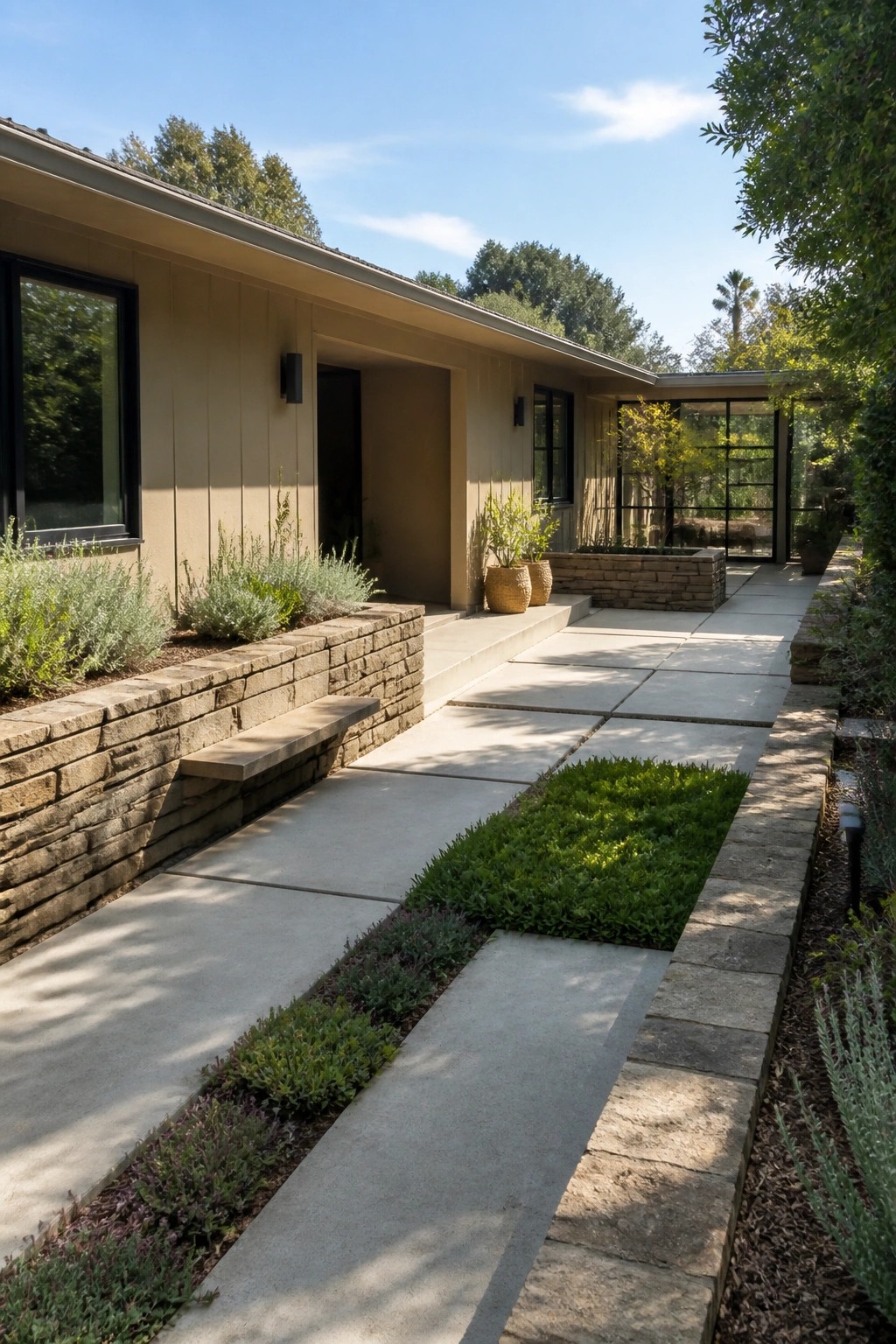
Many ranch homes stretch out in a single story that can feel flat from the side. A low stone wall running parallel to the house creates a simple break that adds some structure and keeps the eye moving along the length.
This setup works best on neutral exteriors where you want texture without extra height. Set the wall a short distance from the foundation, tuck a narrow planting strip between them, and let the wall double as a seat or edging. It suits long facades on flat lots that need a grounded look rather than added ornament.
Adding a Covered Porch to a Long Facade
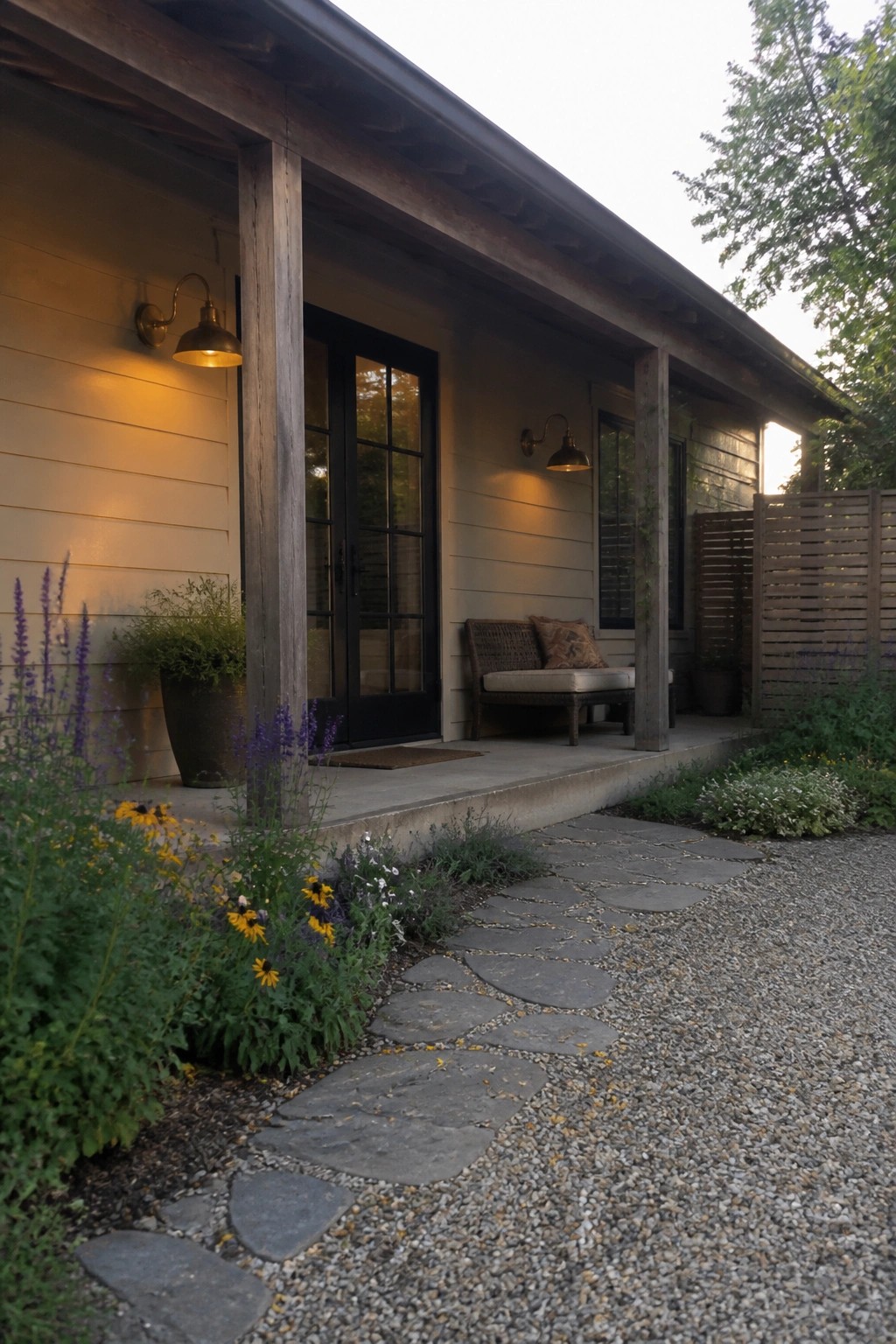
A covered porch gives a long ranch house a clear stopping point and breaks the flat run of siding. The wooden posts bring in some texture while the roof overhang creates useful shadow that keeps the beige from feeling too plain across the whole front.
This works best on homes where the entry sits toward the middle or one end of the facade. Keep the posts simple and let the bench or seating stay modest so the porch feels like part of the house rather than an added room.
Stone Walls Add Layers Along Ranch Fronts
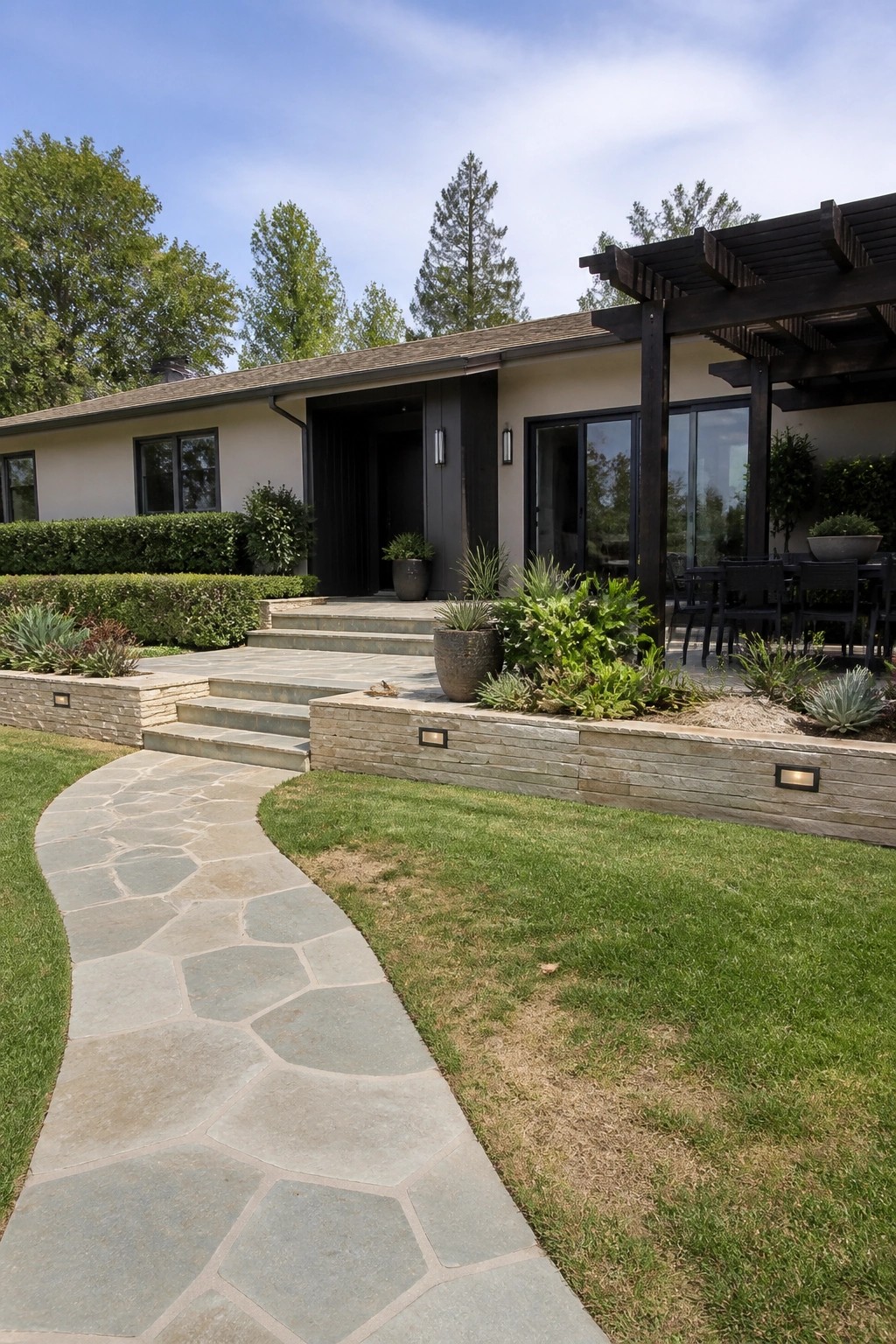
Many ranch homes stretch out in a single plane that can start to feel flat from the street. Low stone retaining walls and steps break that line into tiers so the eye moves up and down instead of just side to side.
This approach works best on houses with a gentle grade or where the front yard sits a little below the main floor. Keep the walls modest in height, repeat the same stone on the path, and let the plantings spill over the edges. The result gives the facade more presence without adding bulk or new rooflines.
Dark Roofing Against Light Walls
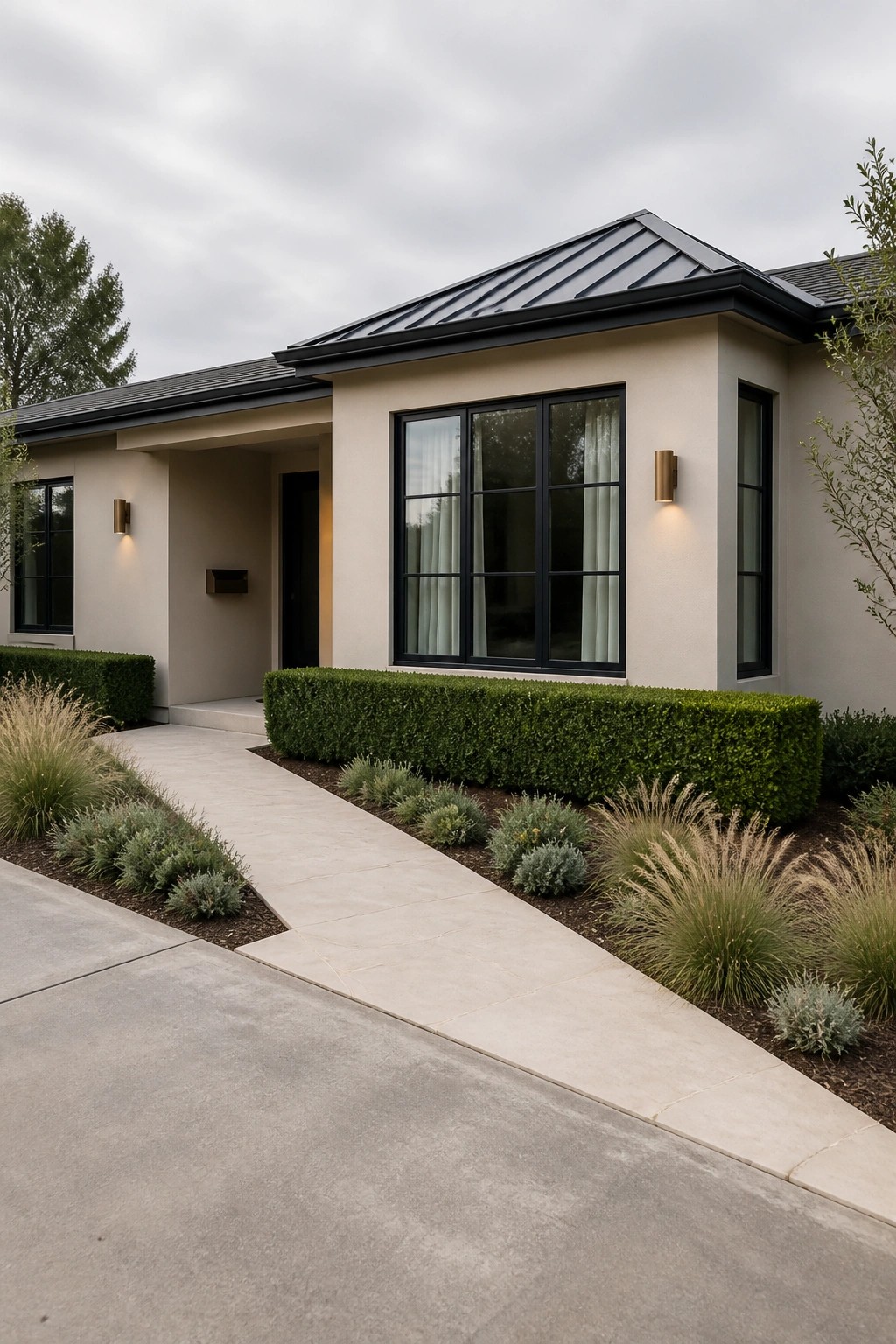
A dark metal roof paired with black window frames gives a long beige ranch house more structure. The strong contrast breaks up the horizontal lines so the facade feels balanced rather than stretched out.
This works best on simple single-story homes where the roofline runs the full length. Keep the walls in a warm neutral and let the darker elements define the shape without adding extra trim or details.
Keep One Siding Color Across the Whole Front
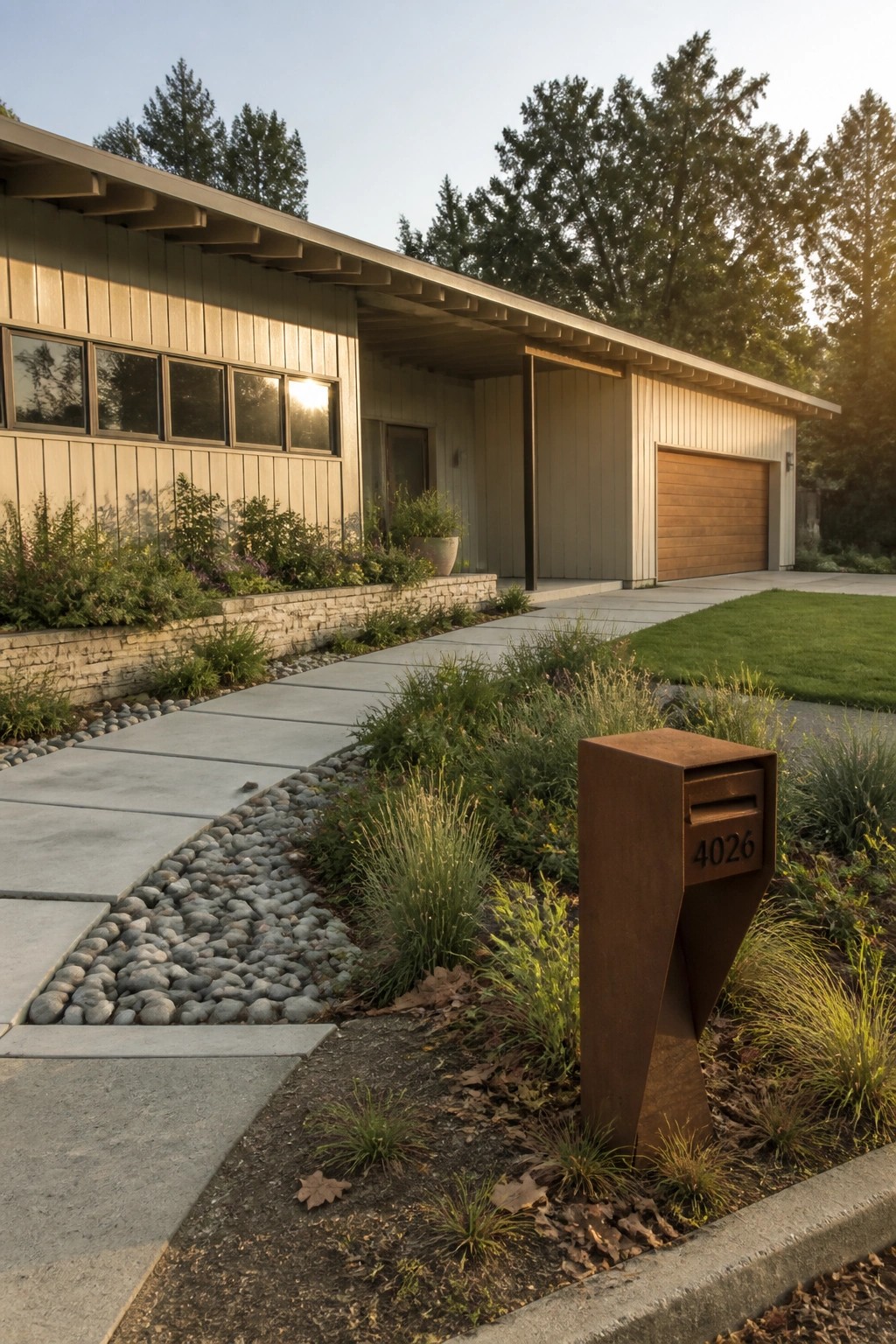
A single tone of horizontal siding can make a long ranch feel more settled instead of stretched out. It lets the roof overhangs and the natural rhythm of the windows do the work of adding depth, rather than relying on lots of color changes or extra trim.
This approach works best on homes where the garage sits a little forward or back from the main wall. The wood door then gives just enough contrast without splitting the facade into competing sections. Stick with the same siding run on both sides of the entry so the eye travels smoothly along the length.
Arches Break Up Long Ranch Facades
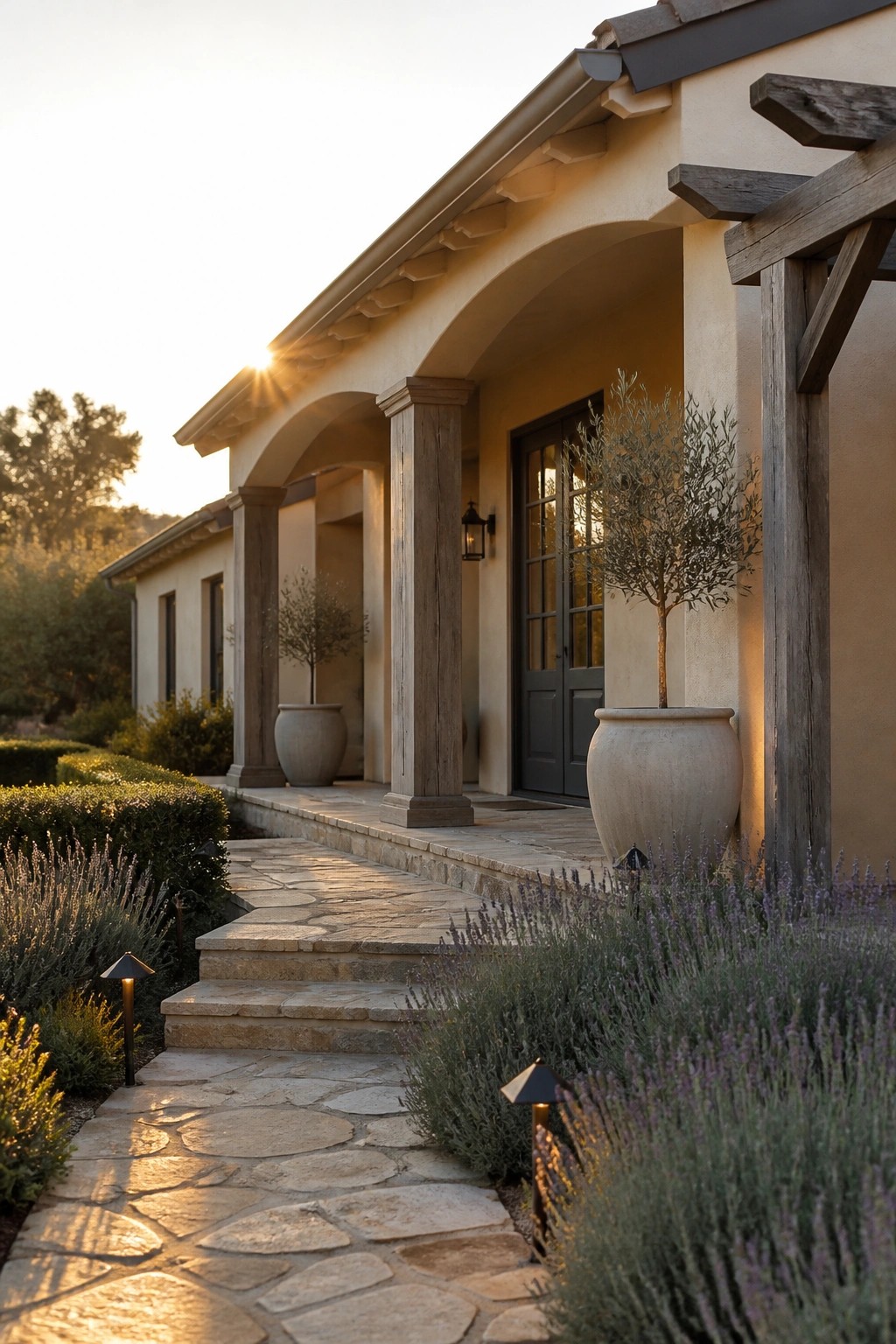
A row of arches supported by heavy posts gives a long beige house more shape without adding extra rooflines or clutter. The repeated openings create shadows and visual pauses that keep the front from reading as one solid wall.
This works especially well on ranch homes where the goal is to add some traditional weight while keeping the overall lines simple. Pair the arches with a stone walkway that leads straight to the door and let the planting stay low so the architecture stays the main feature.
Deep Porch Overhangs Add Shape to Long Walls
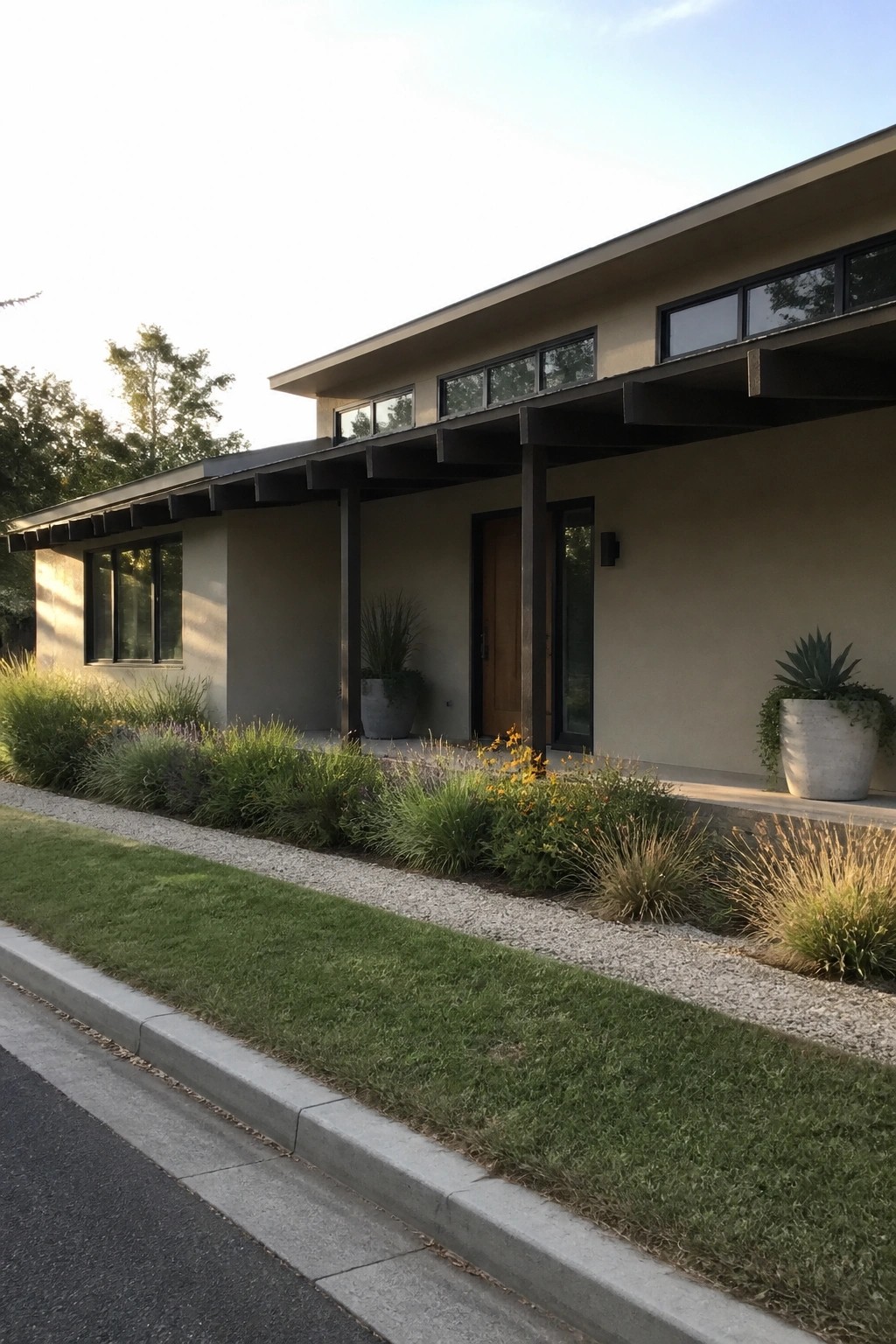
A deep overhang supported by dark posts gives a long ranch facade more presence. The structure creates steady shadow lines that break up the horizontal run of the house and keep the beige walls from reading flat.
This approach works best on single-story homes with simple rooflines. Match the porch roof to the main one, keep the posts slim and dark, and let the covered area run only partway across the front so the depth feels intentional rather than added on.
Stone Accents Break Up Long Ranch Walls
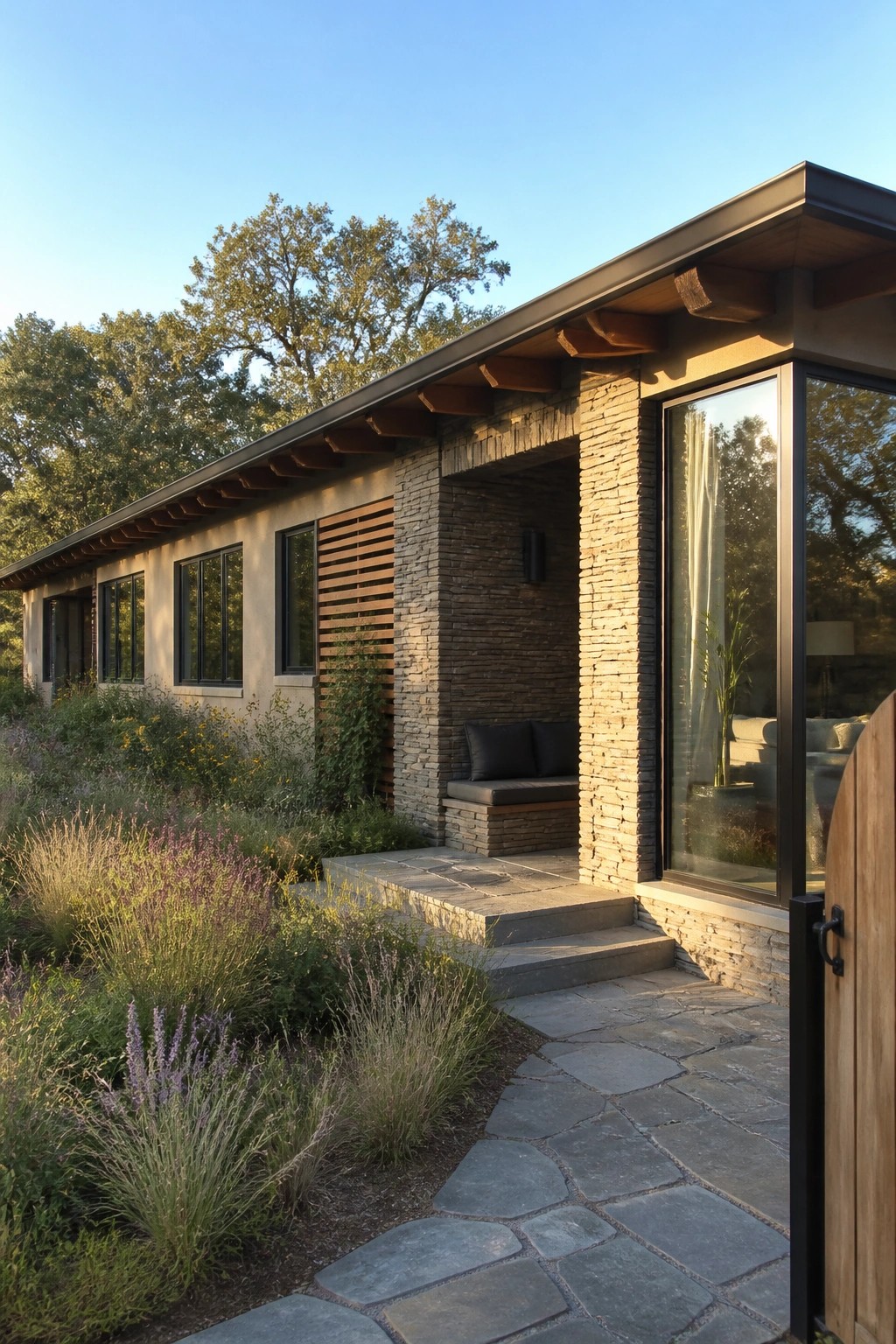
Ranch homes often stretch out in one long line, and that can make the front look flat. Stone columns or sections placed along the facade give the eye places to stop and create real depth without adding extra bulk.
This works especially well on light beige homes because the rough texture of the stone stands out against smooth siding. Place the stone near the entry or at window groupings so the breaks feel natural rather than forced.
Pergolas Over Patios for More Outdoor Living
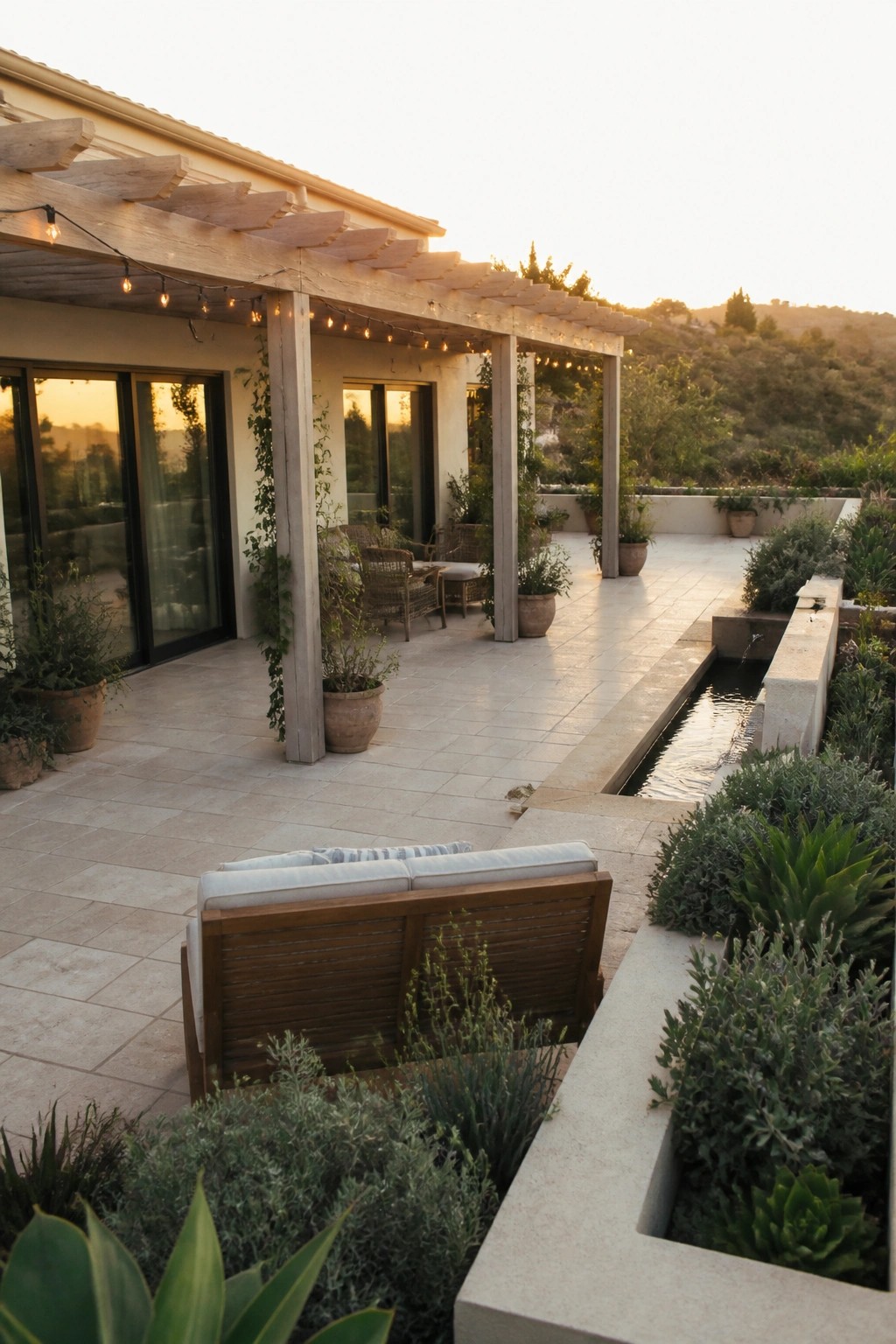
A pergola gives a large patio some structure without making it feel closed off. It creates a clear spot for seating and dining right outside the house, which helps turn an open stretch of tile into a space people actually use.
This setup works especially well on ranch homes with long facades, since the overhead beams break up the length and add a bit of shade. Keep the design simple with wood posts and basic string lights so it stays practical rather than fussy.
Recessed Porches Help Break Up Long Ranch Facades
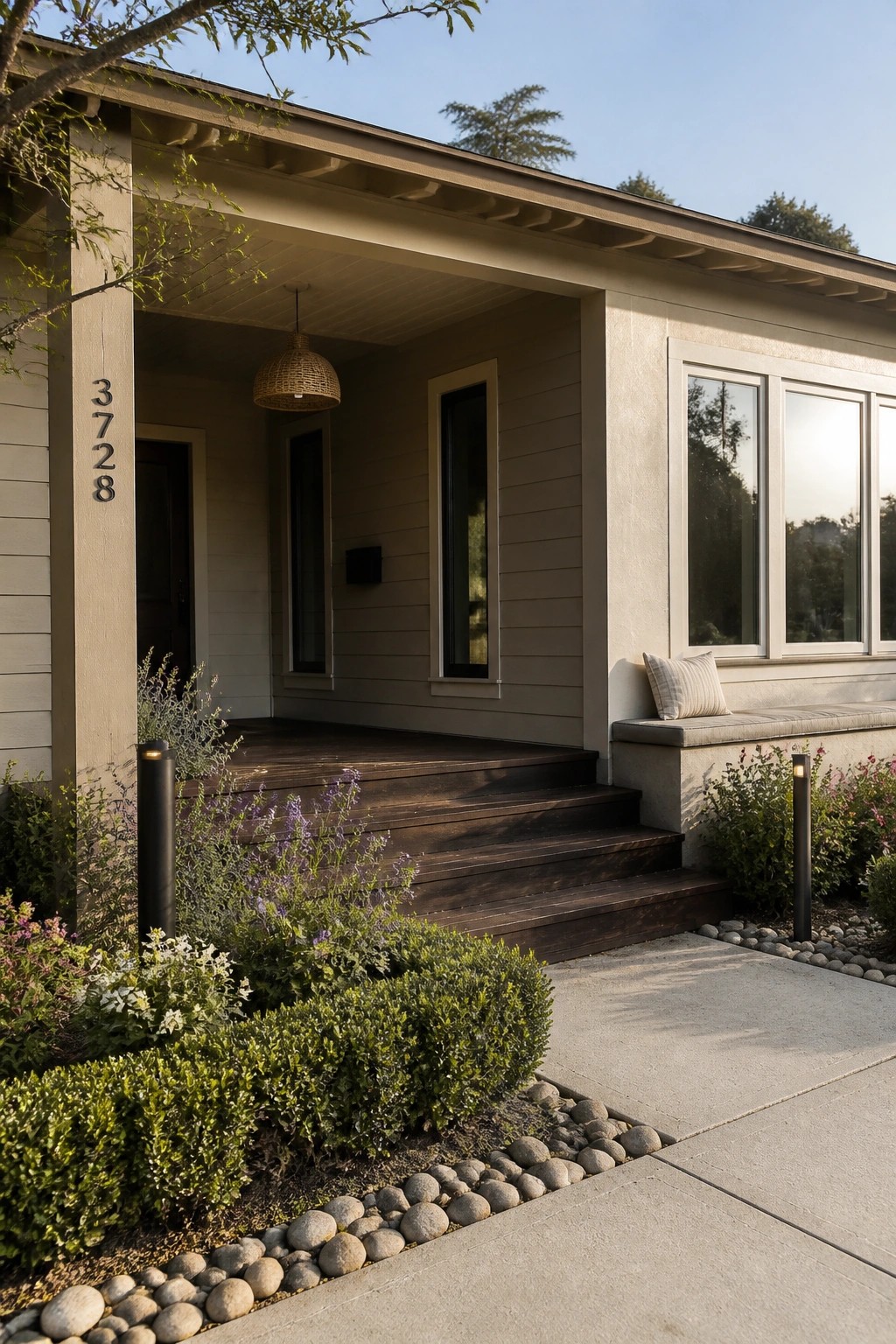
A recessed porch gives a ranch house more structure along its length. The overhang creates shadow and the steps add a clear stopping point, so the eye does not just slide straight across the siding.
This works especially well on beige exteriors because the lighter walls make the darker wood inside the porch stand out. It suits single-story homes that need a stronger entry without adding extra height or busy trim.
Add Wood Siding on One Gable
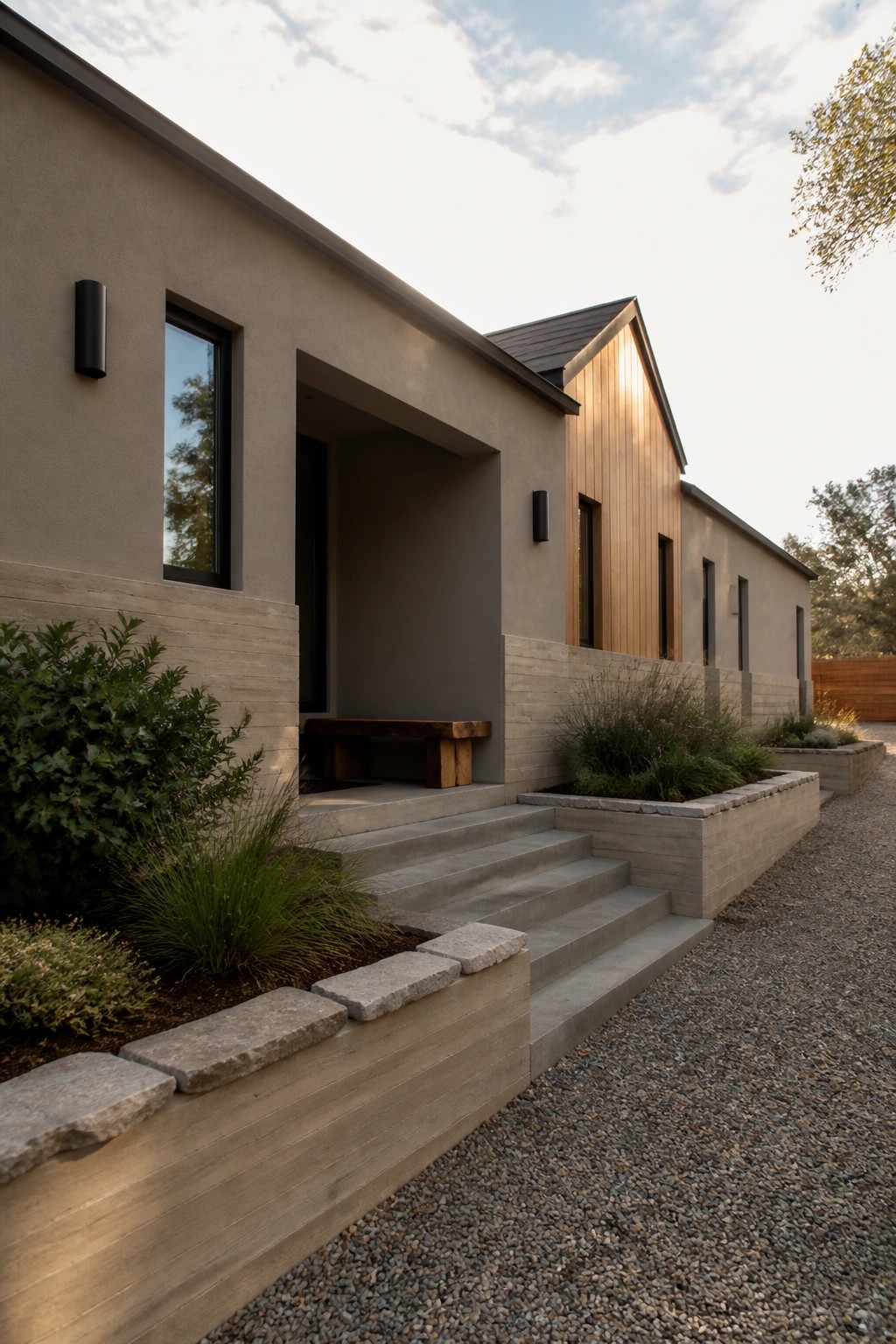
Many long ranch houses start to feel flat when the walls run in the same material for the full length. Adding vertical wood siding on just one gable gives the facade a clear focal point and a bit of texture that keeps the beige from looking too plain.
This move works well on simple rooflines where one section can stand out without competing. Keep the wood tone warm and natural so it reads as a quiet contrast rather than a big change, and let the rest of the house stay in the same stucco or siding.
Use Columns and Sconces to Break Up Long Walls
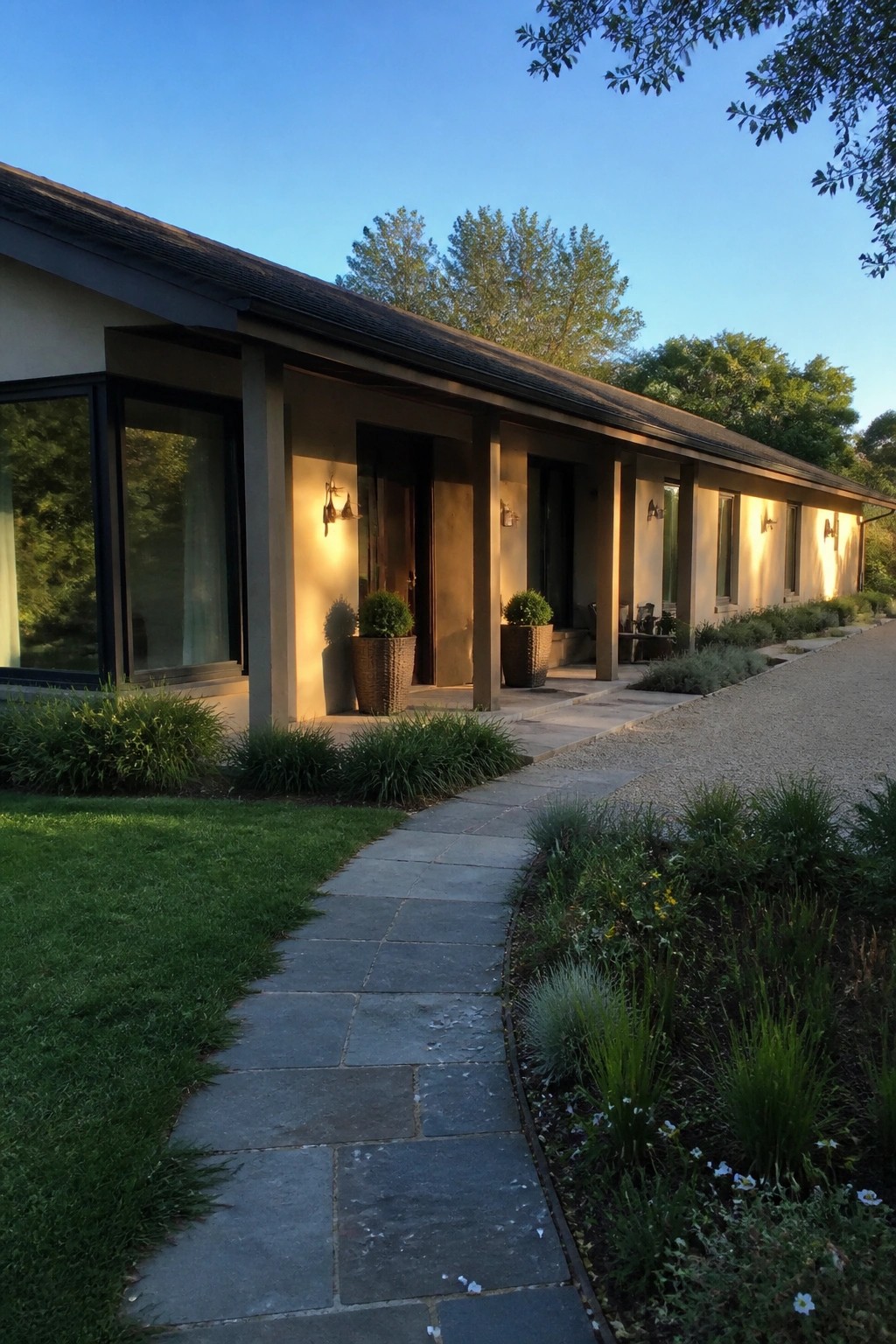
A long ranch facade often needs something to keep it from reading as one flat plane. Columns set under a deep overhang paired with wall sconces create regular pauses that add shadow and visual rhythm without adding bulk.
This approach works best on simple stucco or painted exteriors where the structure itself stays quiet. Match the spacing of the lights to the columns so the pattern feels built in rather than tacked on, and keep the fixtures modest in scale so they suit the low roofline.
Frequently Asked Questions
Q: How do I pick a beige that adds depth instead of just sitting flat on a long wall?
A: Choose a beige with soft warm undertones and a touch of texture in the paint or siding. Apply it in two close shades so light hits the surface unevenly and breaks the straight line. Test samples on the actual wall at different times of day before committing.
Q: My ranch has a wide garage that stretches the whole front. How do I keep it from looking like one big blank box?
A: Paint the garage door a shade or two deeper than the main walls. Add narrow vertical trim pieces beside the door to split the width into smaller sections. Keep the rest of the beige consistent so the eye moves across without stopping.
Q: Do I need new landscaping to make the beige exteriors work on my long facade?
A: Plant a few taller shrubs or small trees at uneven spots along the front. They cast moving shadows that give the wall more interest without any building changes. Keep the plantings low near the center so they frame rather than hide the house.
