

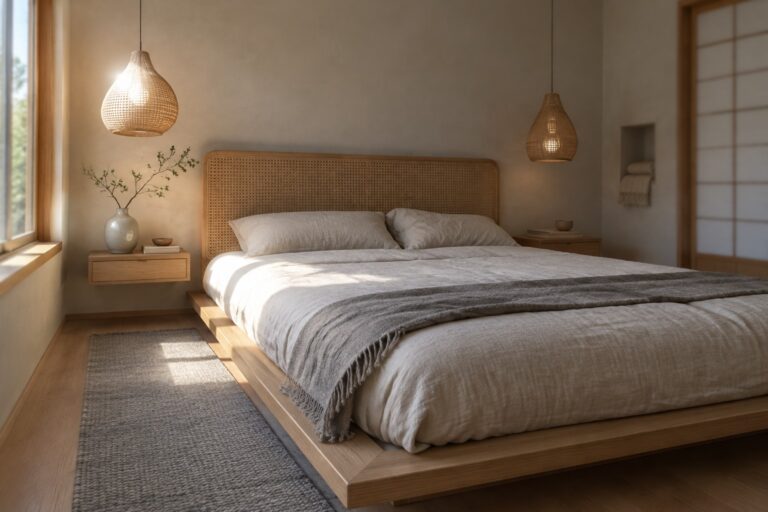
Bedside lighting can change how a bedroom feels at night, but it also needs to work around the bed, nightstands, and everyday routines.
I find pendant lights especially useful when table space is limited, as long as they hang at a comfortable height and do not crowd the bedside.
Japandi designs bring together simple forms and natural materials, which can soften a room without adding visual clutter.
The balance matters: a shade that looks calm in a photo may feel too heavy or too stark once it is beside the bed.
I’d save the ideas that suit your ceiling height and bedtime habits, then adapt their finishes or placement to fit your own room.
Rattan Pendants Add Texture to the Bedroom
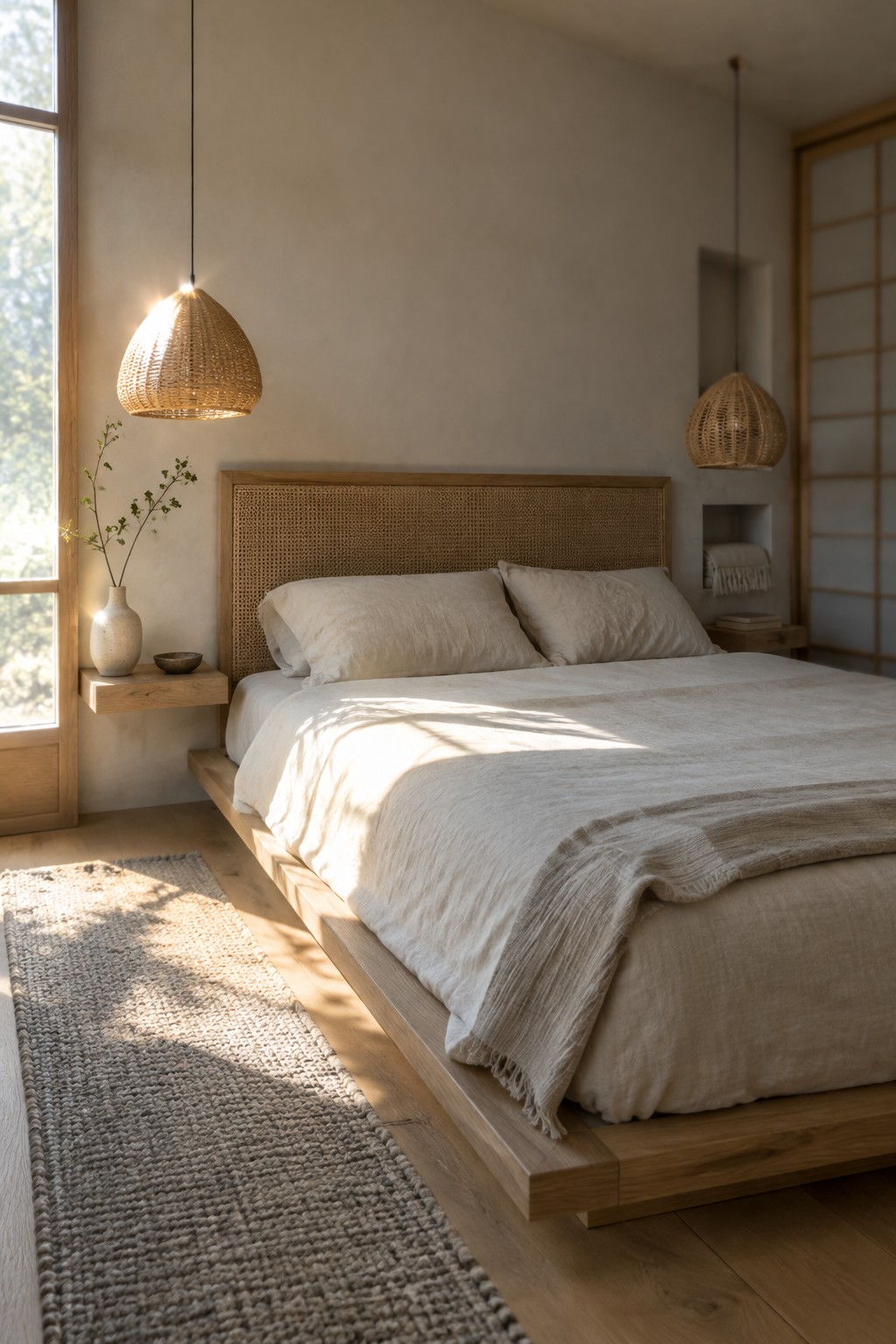
A rattan pendant can bring a little texture to a bedroom without making the space feel busy. Its woven shade gives a softer look than a metal fixture, which works well with simple bedding and natural wood.
Hang one where it can light the bed without getting in the way, and check that the shade is high enough to avoid bumping into it. A woven pendant suits Japandi rooms especially well, though a smaller shade may be better in a compact bedroom.
Use Pendant Lights To Keep Bedside Tables Clear
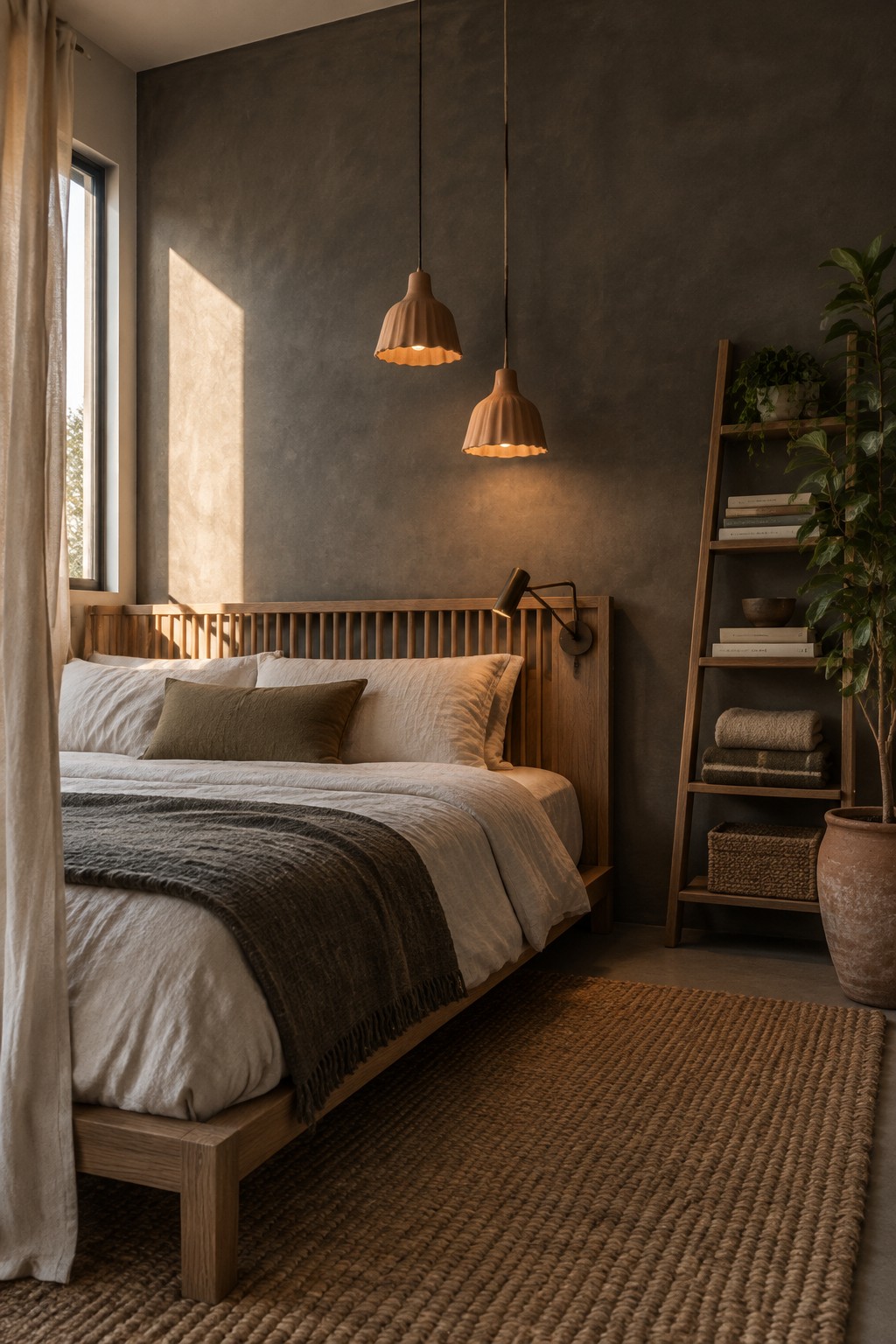
Pendant lights free up space around the bed while still providing useful light for reading. In this room, two simple shades hang above the wooden headboard, leaving the bedside area less crowded than a pair of table lamps might.
Hang each light where it can illuminate the bed without getting in the way when you sit up. Check the height and spacing before installing, especially if the bed is shared or the ceiling is low.
Choose a Soft Pendant for the Bedroom
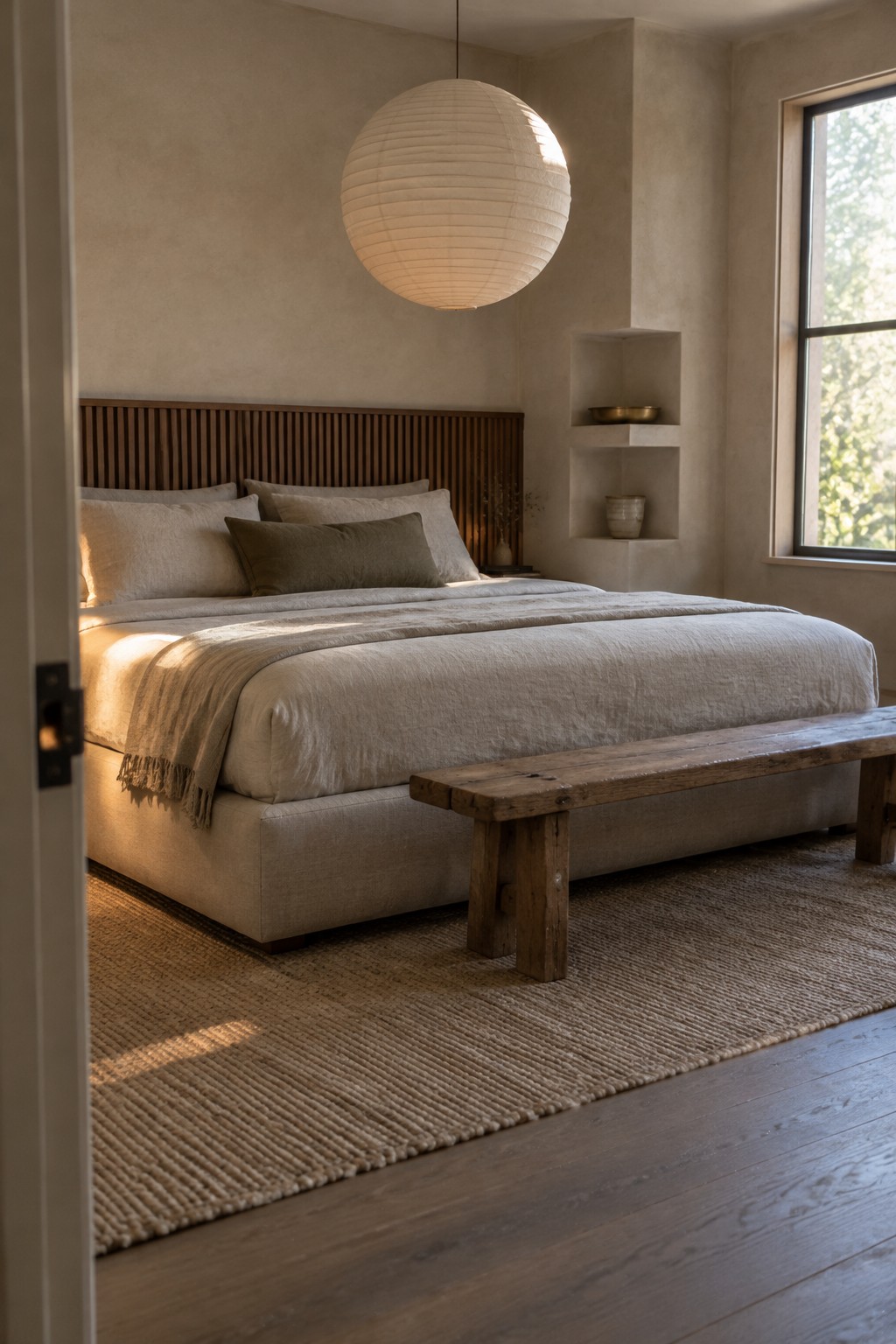
A large paper pendant can make a bedroom feel more settled without adding much visual clutter. Its simple shape suits a calm, pared-back style, and the warm shade works well with natural wood.
In a bedroom, hang it where it gives comfortable light without getting in the way of sitting up or moving around the bed. A dimmer is useful if you want softer light at night.
Use Pendant Lights to Frame the Bed
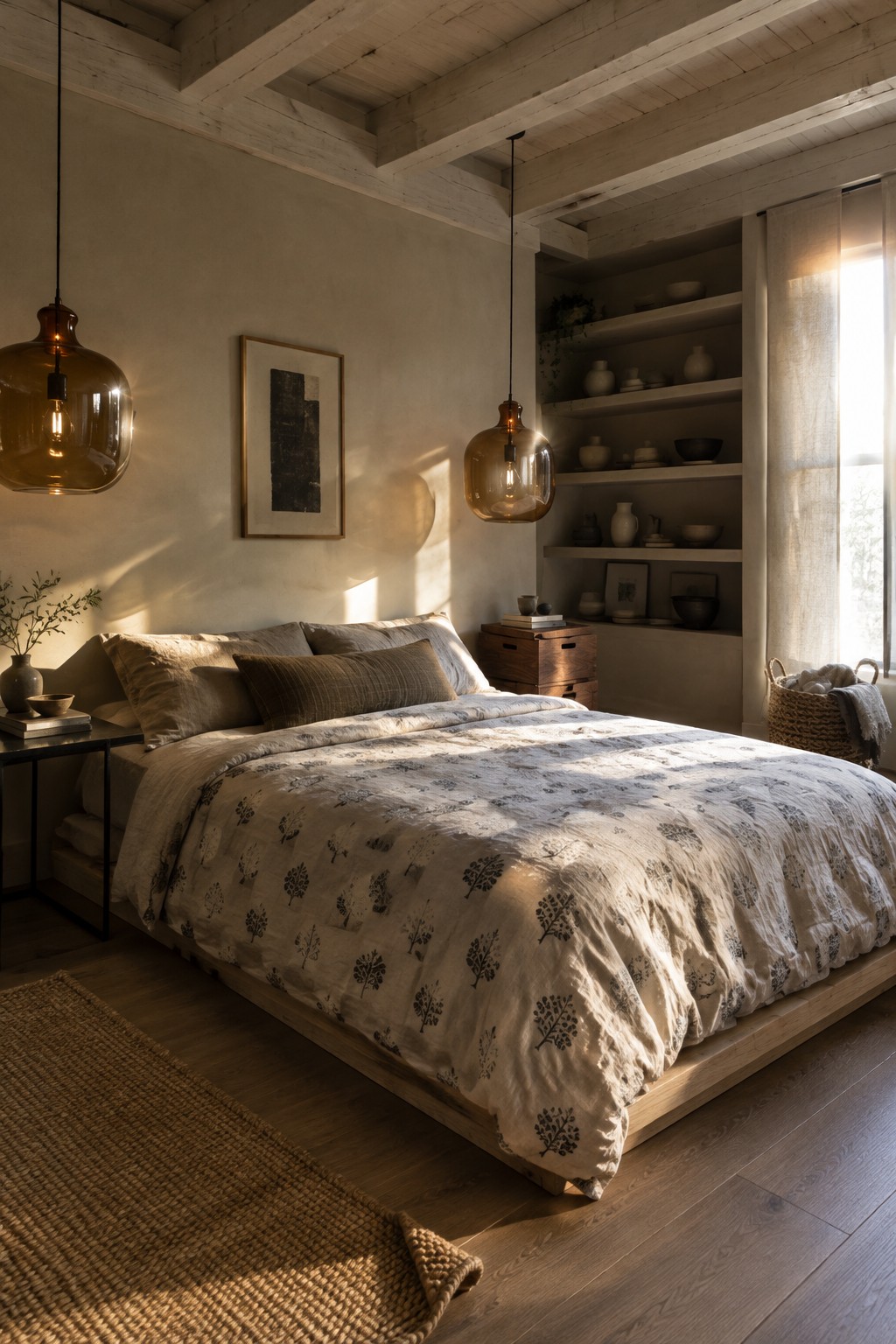
Pendant lights can free up space on bedside tables while giving a bedroom a more settled look. Hung beside the bed, they provide useful light without needing a pair of bulky table lamps.
Choose shades that suit the room’s materials and keep the bulbs easy to reach for reading. In this bedroom, amber glass pendants hang near the head of the bed, with slim cords that work well beneath the high timber ceiling.
Choose Paper Pendants for a Softer Bedroom Light
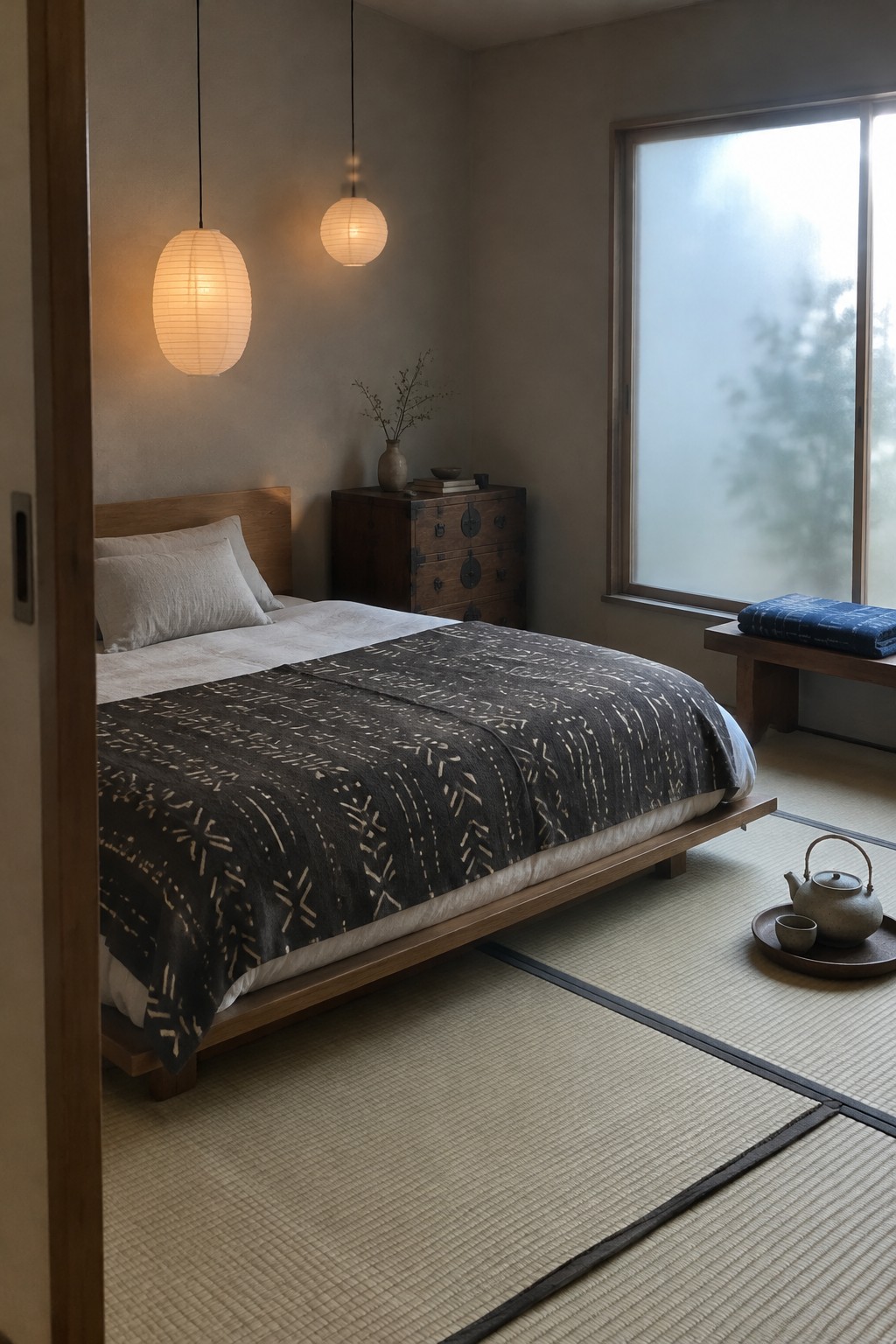
Paper pendant lights bring a gentle, diffused glow to the bedside without taking up space on a table. Their simple shapes suit a calm bedroom, especially alongside natural wood and plain bedding.
Hang them at a height that leaves room to sit up and move around the bed. A larger pendant can work on one side, while a smaller one nearby keeps the look from feeling too matched.
Woven Bed Frames Suit a Natural Bedroom Style
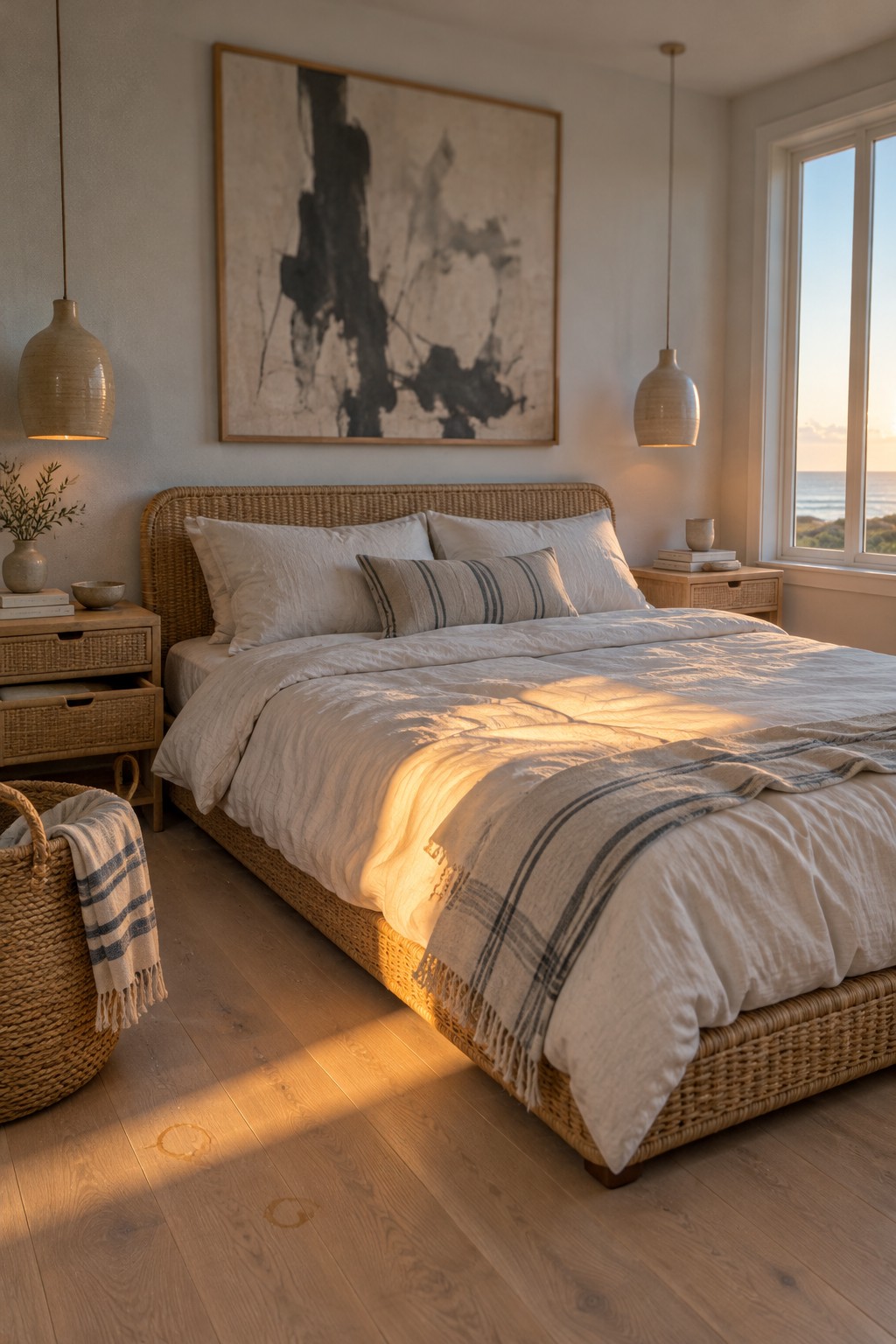
A woven bed frame can give a bedroom a relaxed, natural feel without adding more pattern to the bedding. The texture stands out, but it still works well with simple linens and neutral colors.
This look suits a coastal or Japandi-inspired room, especially when the other furniture stays fairly simple. A woven pendant can carry the same material idea through the room, but keep its scale modest so it does not compete with the bed.
Choose Warm Metal Pendants for a Dark Bedroom
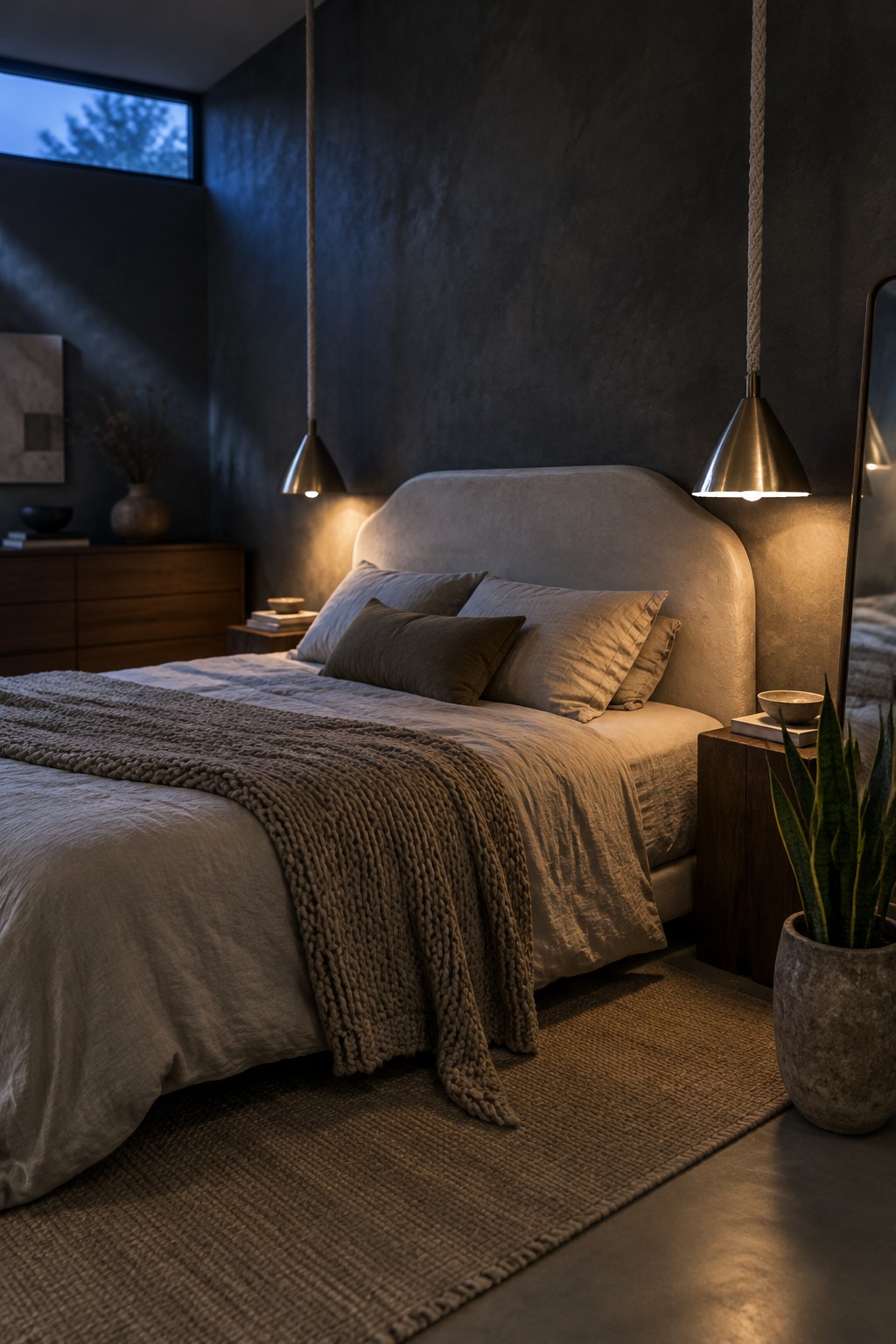
Warm metal pendants can stand out against dark walls without making the bedroom feel busy. Here, the brass shades bring a soft glow beside the bed, while the simple shapes suit a calm, pared-back style.
Hang each light where it can be reached from bed, and check that the bottom of the shade won’t get in the way when you sit up. This look works well with charcoal or other deep wall colors, especially when you want bedside lighting without adding a table lamp.
Use Natural Materials for a Softer Bedroom
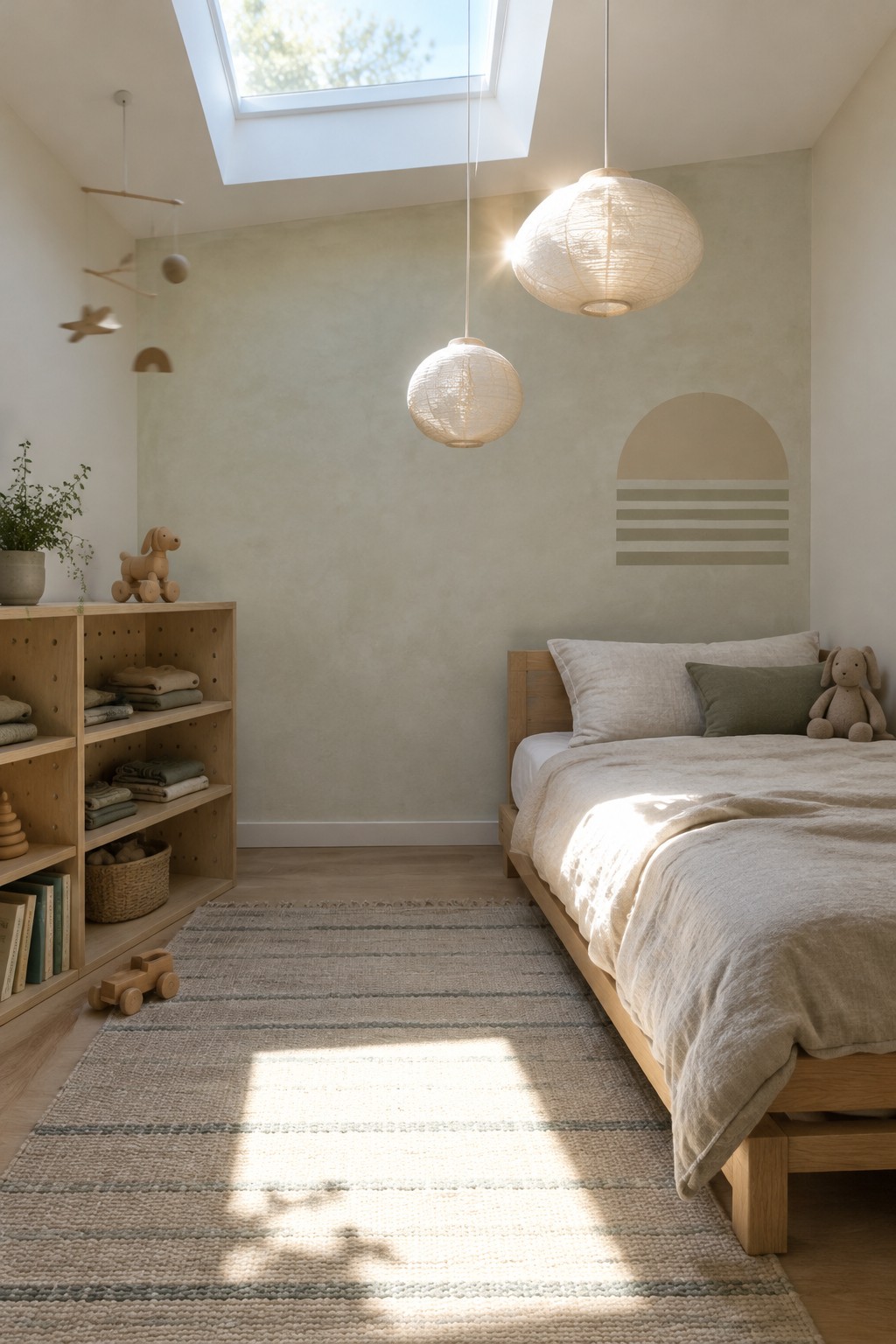
Natural-fiber pendant lights bring texture to a bedroom without making the look feel busy. Here, the woven shades work well with the simple wood bed and keep the overhead lighting relaxed.
This style suits a Japandi room with pale, natural finishes. Hang the lights high enough to keep them clear of the bed, and check that the bulbs provide comfortable light for winding down.
Use Ceramic Pendants for a Natural Bedroom Look
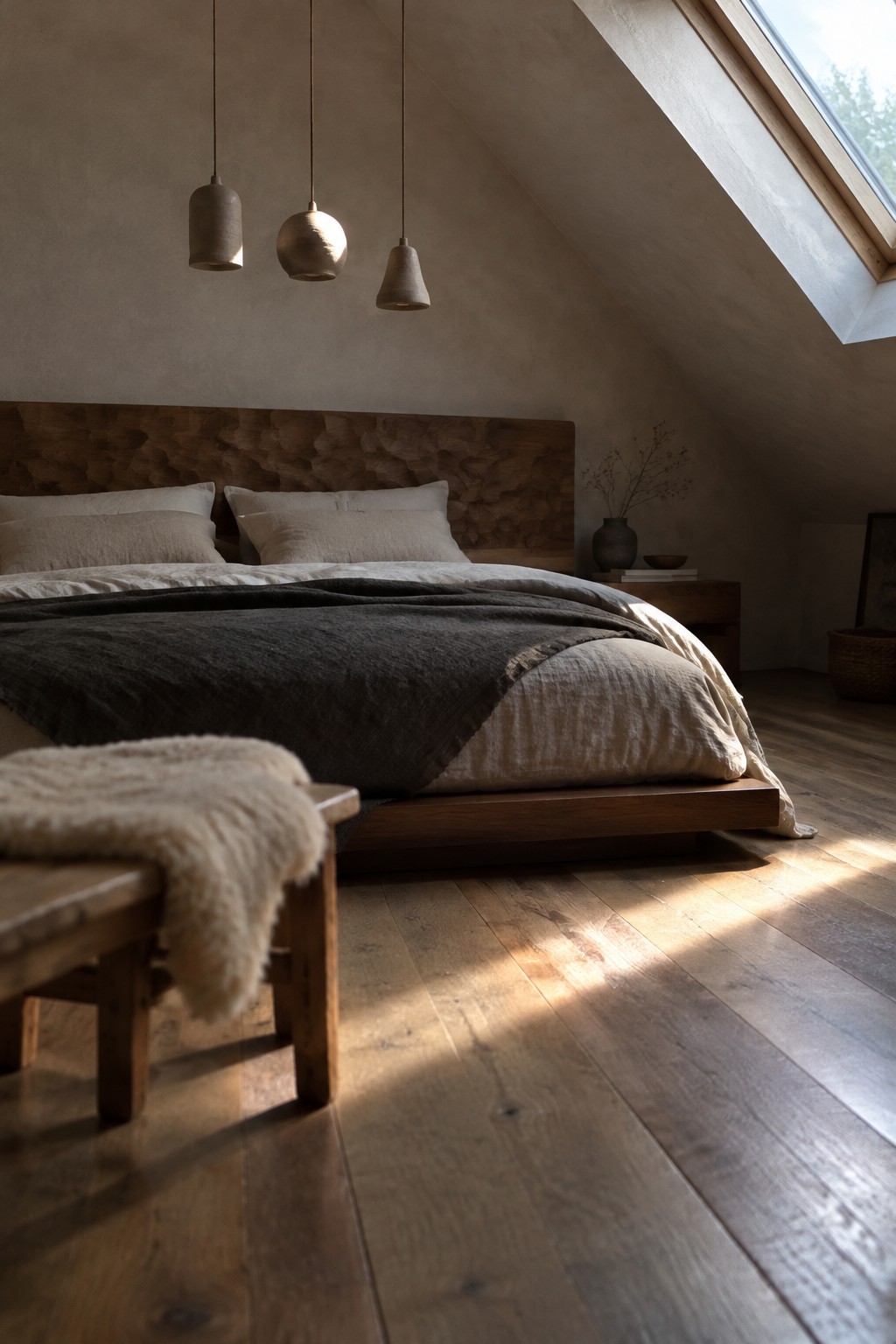
Ceramic pendants bring a simple, handcrafted feel to bedside lighting. Their rounded shapes suit a room with natural wood and plain bedding without making the space feel overly decorated.
Hang them above the bed, taking care to leave enough clearance for sitting up and making the bed. A few different ceramic shapes can add interest, but keep their finishes and colors close so the arrangement feels considered.
Use a Woven Pendant to Bring Texture Into the Bedroom

A woven pendant gives a bedroom gentle texture without adding more objects to the bedside area. Its rounded shape works especially well in a calm, simple room, where a natural material can keep the look from feeling plain.
In a child’s bedroom, choose a lightweight shade that suits the scale of the bed, and hang it high enough to leave clear headroom. A woven shade can cast patterned light, so use a suitable bulb and check that the room still has enough light for reading.
Use a Pair of Pendants for Balanced Bedside Lighting
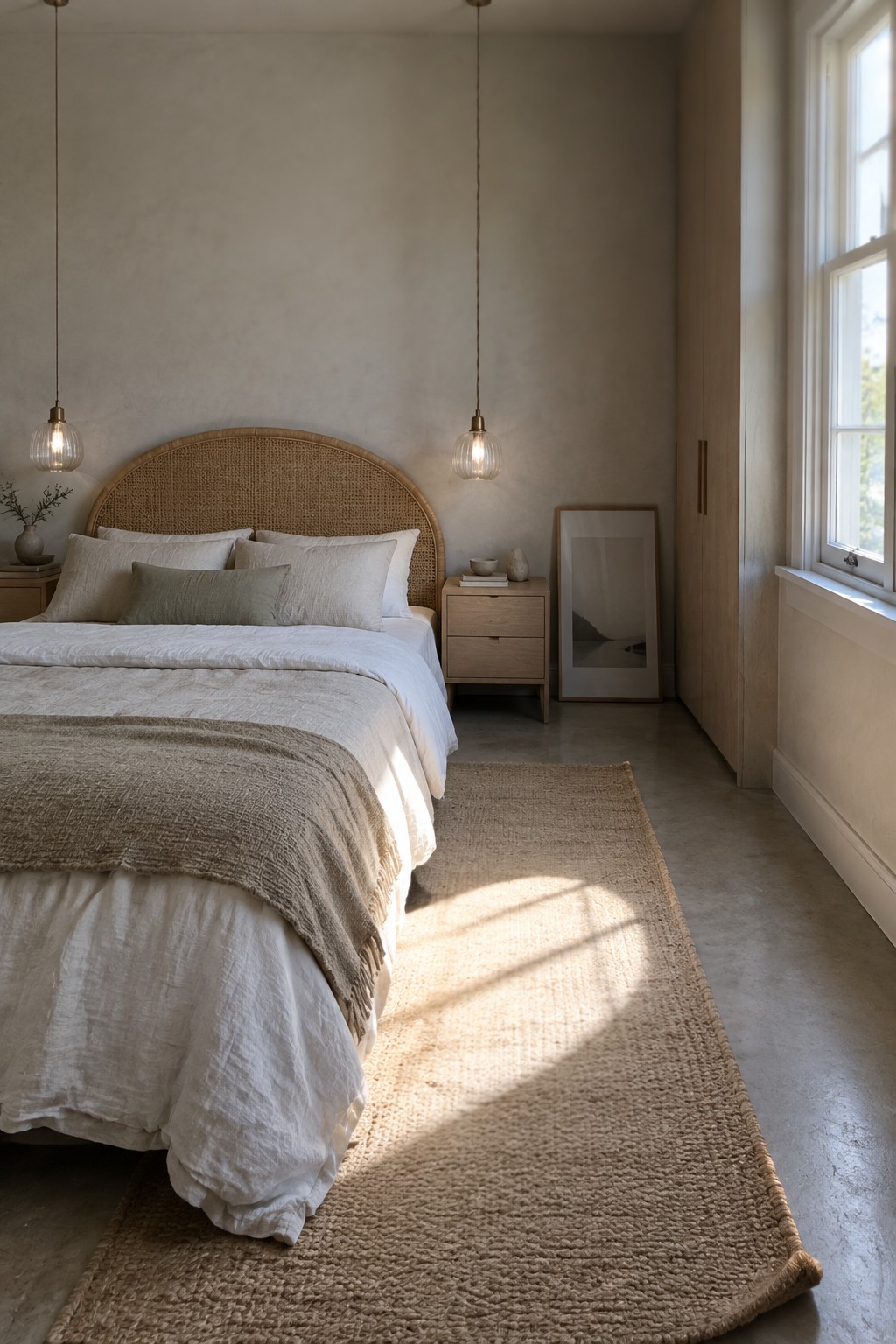
Two hanging pendants can give each side of the bed its own light while keeping the bedside tables free for other things. In this room, the matching glass shades sit on either side of the woven headboard, making the arrangement feel even without adding bulky lamps.
This setup works well when there is enough ceiling height to hang the lights comfortably above the tables. Place each pendant where it is useful for reading, and choose a shade that gives a gentle light rather than a harsh glare.
Choose an Oversized Pendant for a Small Bedroom
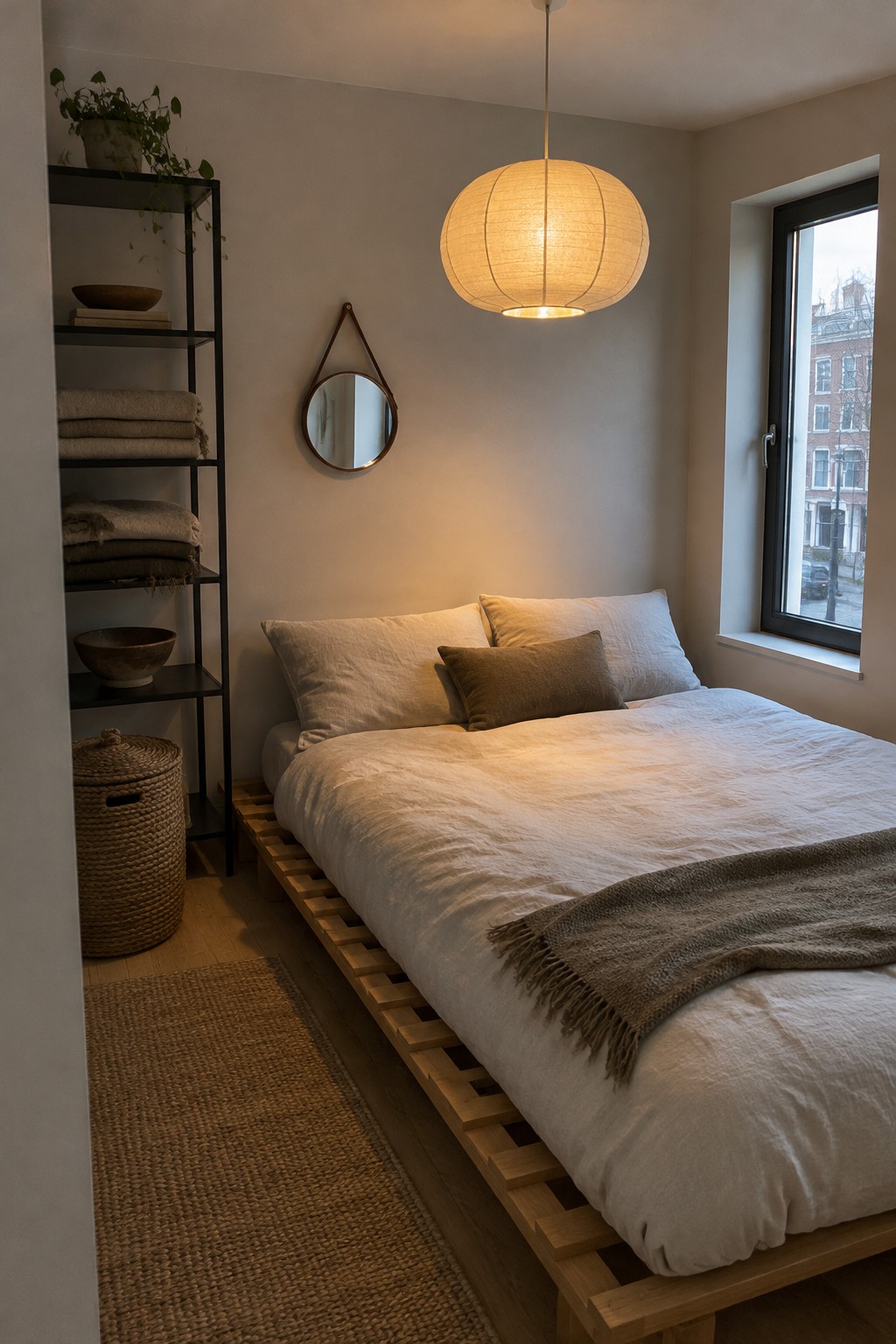
A single large pendant can give a small bedroom a clear focal point without needing extra bedside lamps. Here, the rounded paper shade hangs above the bed and gives off a gentle glow, while the rest of the room stays fairly simple.
For a similar look, choose a lightweight shade and hang it high enough that it does not obstruct views across the bed. Check the ceiling height and the pendant’s scale first, since an oversized fixture can feel crowded in a very low room.
Use Pendant Lights to Frame a Built-In Headboard
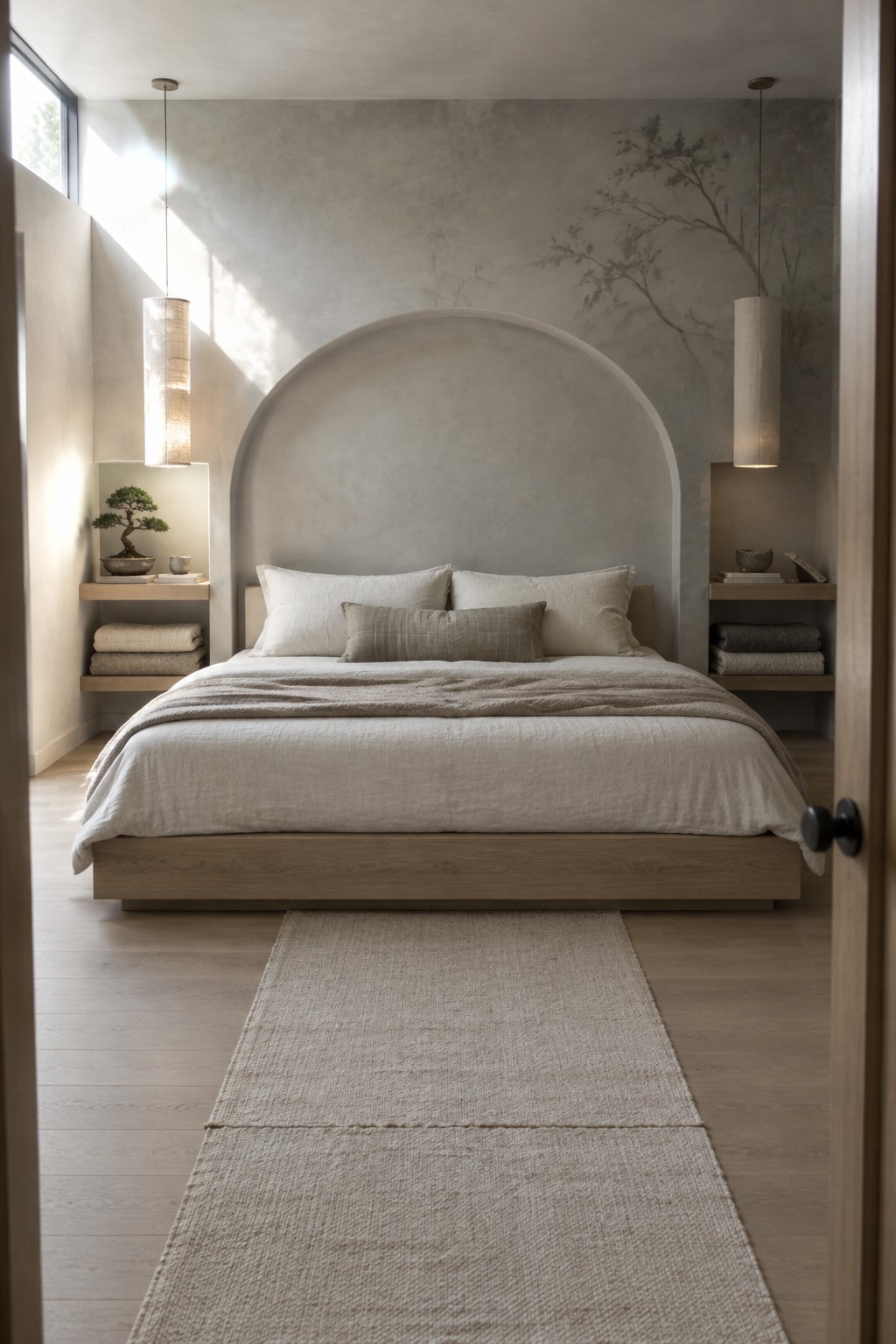
A pair of pendants can make a built-in headboard feel more like a finished part of the room. Placing one on each side gives the bed a clear center, while leaving the bedside shelves free for a few useful things.
This works especially well when the headboard has a wide alcove or arched shape. Hang the lights at a comfortable height for reading, and check that they do not get in the way of opening drawers or using the shelves.
Use Woven Pendants for a Natural Bedroom Look

Woven pendant shades bring texture to a bedroom without adding more furniture or decor. Their open weave suits a simple, natural scheme, and the light feels less harsh than it might from a solid shade.
Hang pendants beside the bed where they can light the sleeping area without taking up space on a bedside table. In a room with a high ceiling, check the hanging height so the shades feel connected to the bed rather than floating too far above it.
Choose a Textured Pendant for a Calm Bedroom
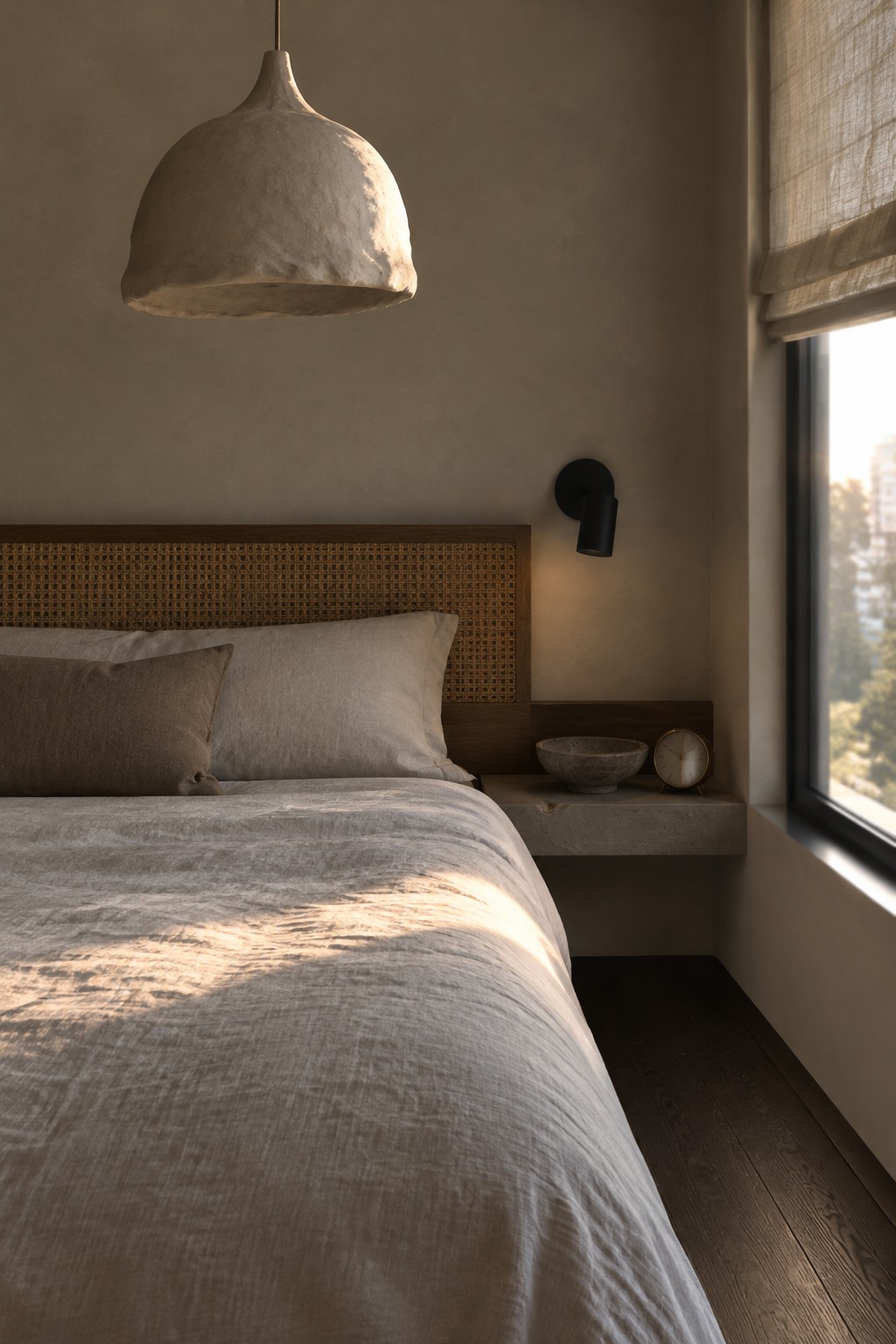
A pendant made from a rough, natural material brings a little texture to a bedroom without making the space feel busy. Its simple shape suits the quiet colors often used in Japandi rooms, where a few considered materials can do more than lots of decoration.
A pendant like this works well above the bed, especially when its size leaves enough room to move around comfortably. Keep the bulb warm and not too bright, and check that the fixture hangs high enough to avoid getting in the way.
Choose Pendant Lights That Suit a Natural Bedroom

Pendant lights made from simple natural-looking materials fit easily into a bedroom with wood furniture and muted bedding. Here, two paper lanterns bring a gentle glow without making the room feel overly decorated.
Hang them at a height that leaves the bed easy to use and keeps the light comfortable at night. This look works well in a relaxed, rustic bedroom; choose shades that are large enough to feel in proportion to the bed.
Keep Bedside Lighting Clear of the Tables
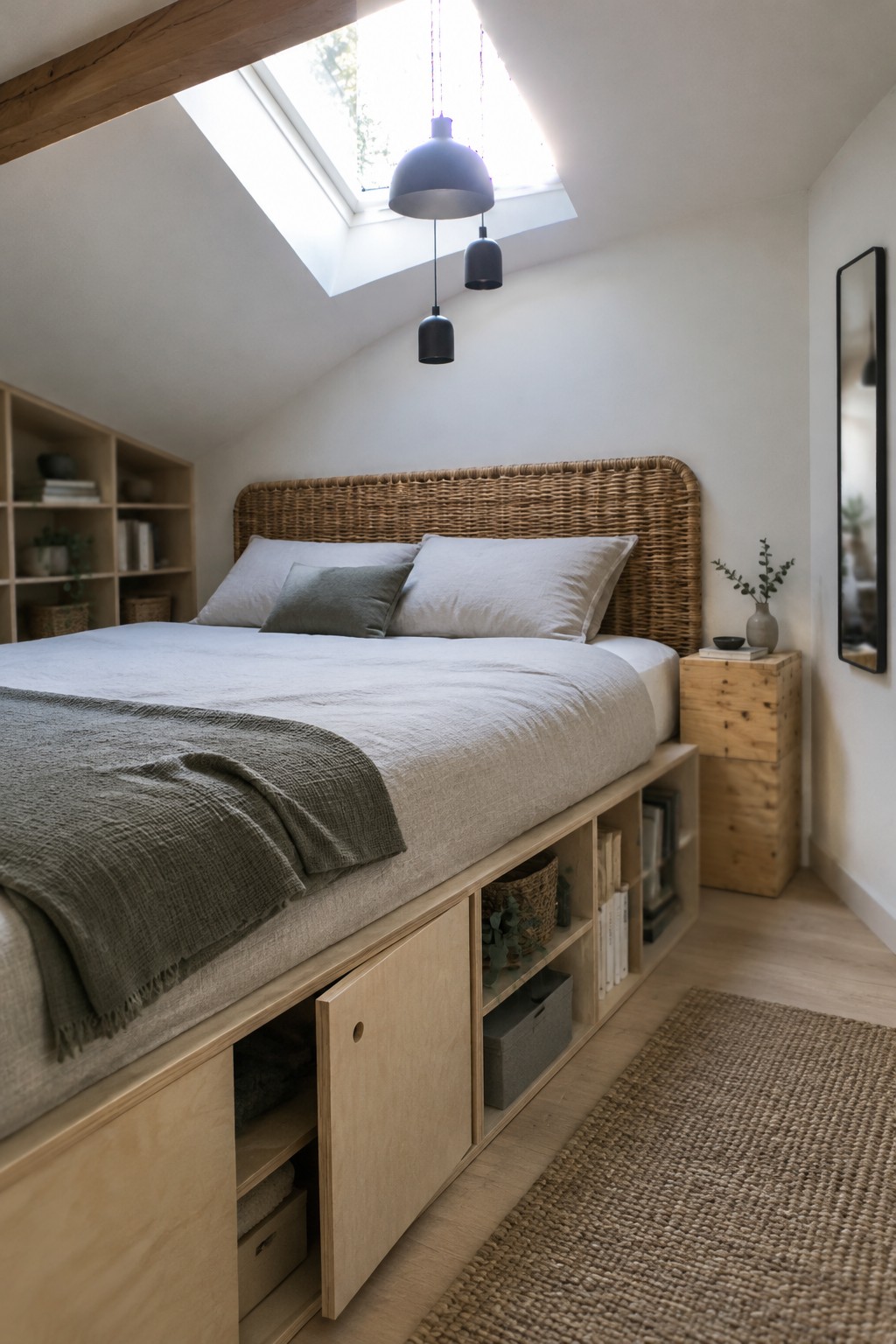
Pendant lights leave bedside surfaces free for the things you actually use, which is especially helpful in a compact bedroom. Hanging the lights beside the bed also gives each side its own reading light without adding table lamps.
Set the pendants so they are easy to reach from bed, and check that they will not get in the way when you sit up. This setup works well with a built-in bed base or small nightstands, where every bit of surface space matters.
Use Ceramic Pendants for a Simple Bedside Look
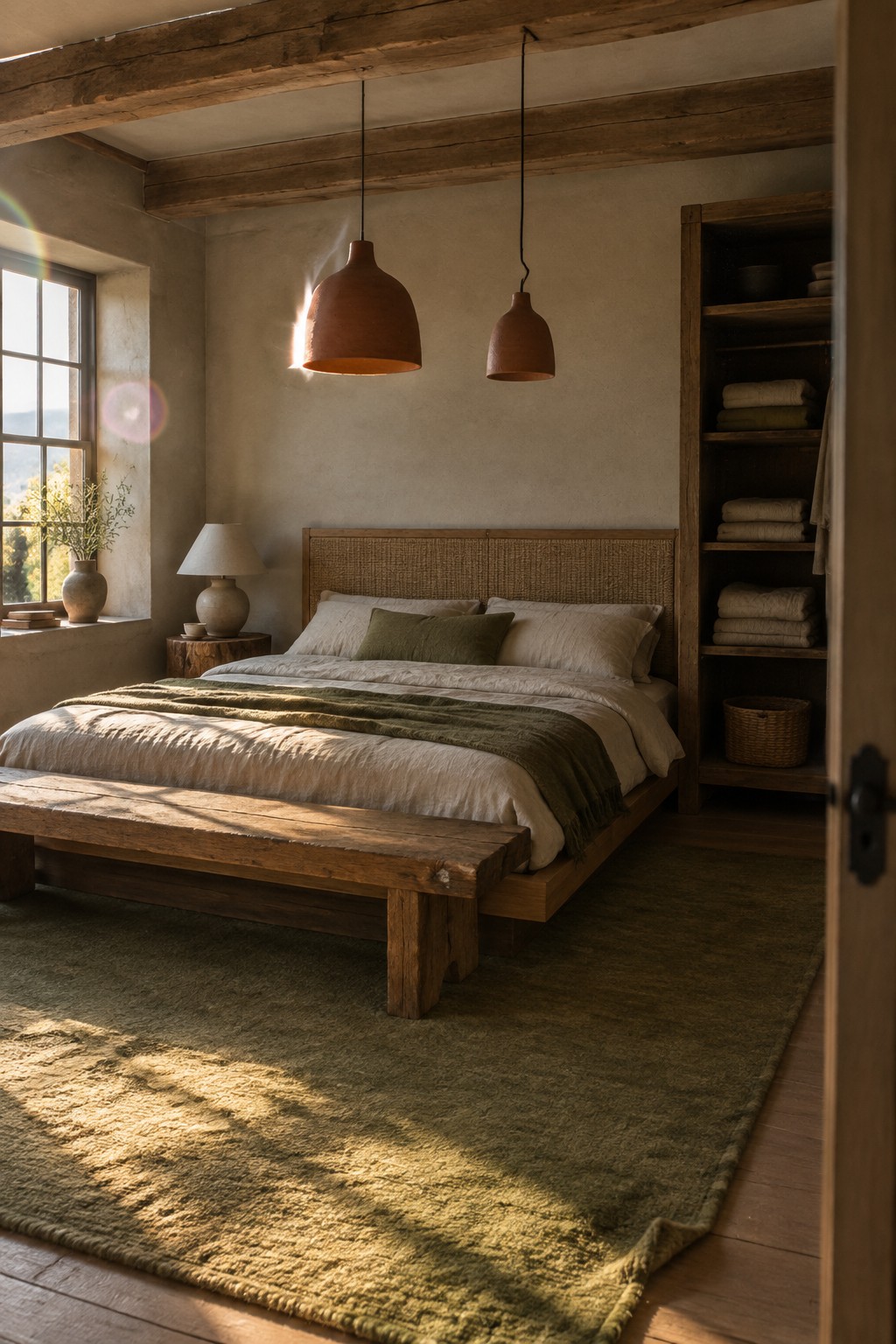
Ceramic pendants can bring a natural, handmade feel to bedroom lighting. Hung beside the bed, they keep the light source off the nightstands and make the space feel less cluttered.
Choose shades that suit the scale of the bed, and hang them low enough to light the bedside area without getting in the way. A pair of terracotta pendants works well with natural wood and simple bedding.
Frequently Asked Questions
Q: How low should a pendant hang above the bed?
A: Keep it high enough that you won’t bump it while sitting up, but low enough to cast useful light over the bedside. A pendant beside the bed usually works better than one directly over the pillows.
Q: Can I use pendant lights instead of bedside lamps?
A: Yes, especially if you want to free up space on your nightstands. Choose a shade that directs light downward for reading, and add a wall switch or dimmer so you can turn it off without reaching far.
Q: What pendant style suits a Japandi bedroom?
A: Look for simple shapes and natural-looking materials like wood, linen, paper, or woven fibers. A soft, warm glow tends to feel calmer than a bare bulb.
Q: Do I need matching pendants on both sides of the bed?
A: Not necessarily. Matching pendants give the bed a balanced feel, while different designs can still work if their shapes and visual weight feel similar.
