

Pendant lights can change how a room feels, but their scale and placement matter as much as their shape.
In a Japandi interior, I find that a warm, simple fixture works best when it supports the room’s calm lines without making the space feel bare.
Over a dining table or kitchen island, the light should sit comfortably within the layout and give enough illumination for everyday use.
Natural materials, soft forms, and restrained details can help a pendant connect with wood, neutral colors, and the other textures already in the room.
I’d save a few of these designs to compare with your room’s proportions and lighting needs before choosing one.
Use Pendant Lights to Define the Dining Area

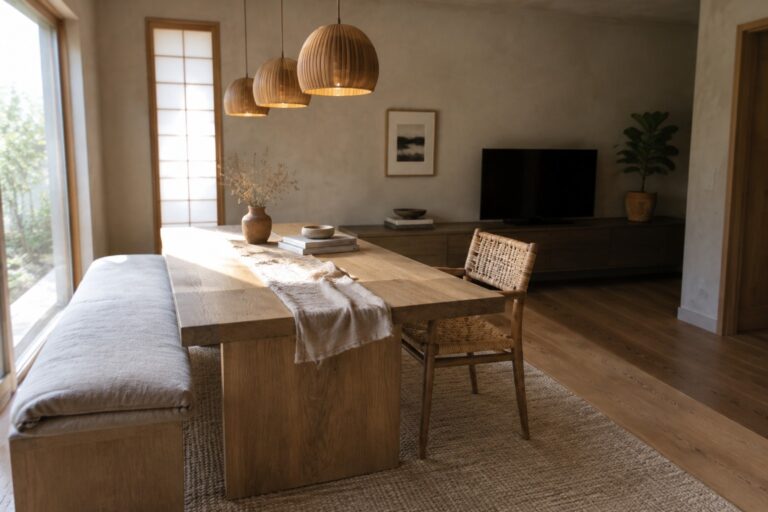
Pendant lights can give a dining area its own focus, especially in an open room. A small group of ribbed wooden pendants hangs above the table here, making the eating area feel settled without adding more furniture.
For a similar look, hang the lights low enough to relate to the table, but high enough to keep conversation comfortable. Natural materials suit Japandi interiors well, though simple shapes and warm bulbs matter more than matching the wood exactly.
Use a Sculptural Pendant As Kitchen Lighting
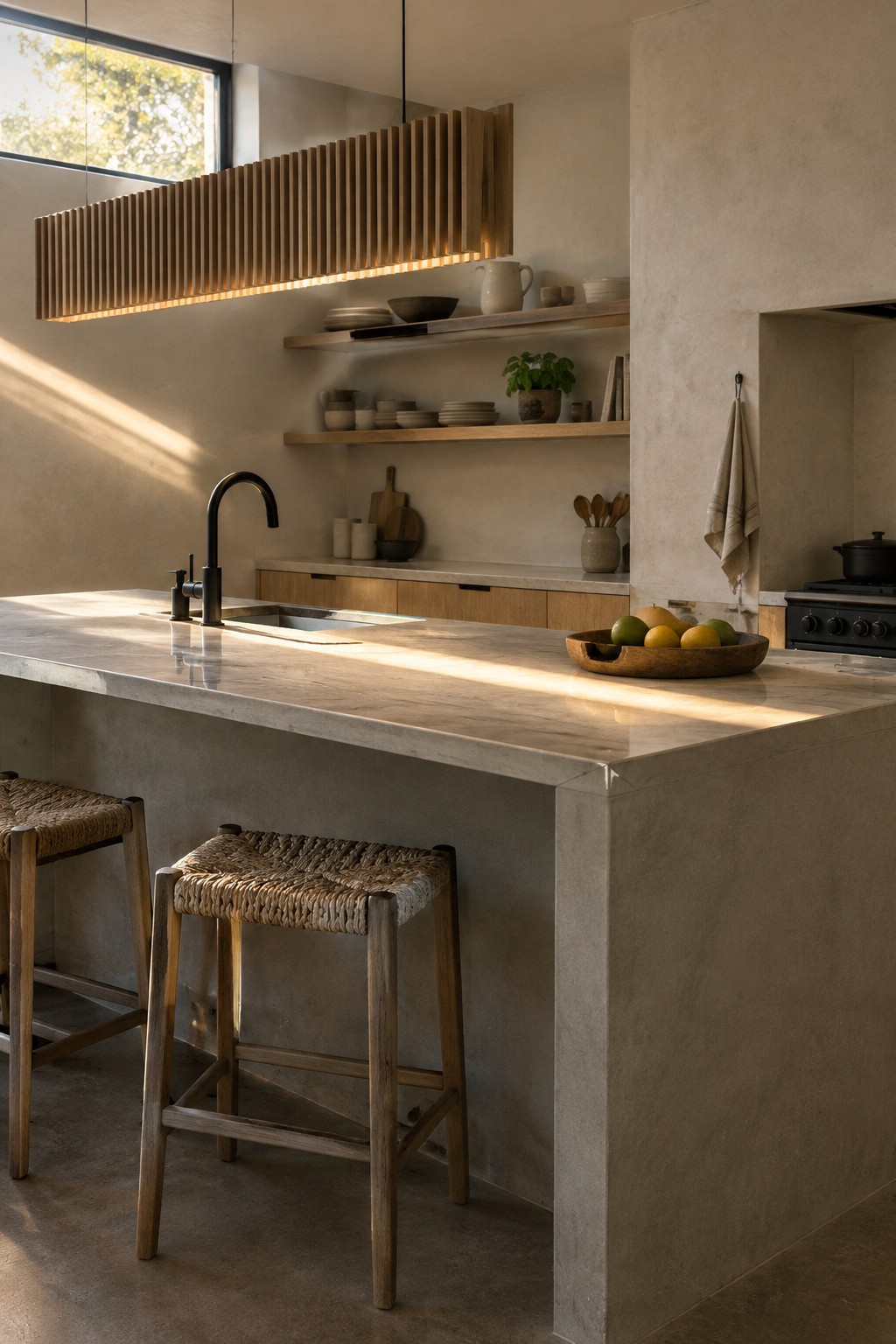
A slatted wood pendant can give a kitchen a clear focal point while still feeling natural and simple. Its open shape lets light pass through, and the wood suits a Japandi interior without making the room feel overly decorated.
This style works well above an island, especially in a kitchen with quiet finishes and a few warm wood details. Choose a size that fits the island, and check that the light sits high enough to keep sightlines open.
Use a Paper Pendant to Warm Up a Dining Area

A large paper pendant can make a dining table feel like the natural center of the room. Its soft, diffused light suits Japandi interiors, where simple shapes and natural materials keep the space calm.
Choose a pendant that fits the table without blocking conversation, and hang it low enough to define the dining area. A round paper shade works especially well above a wooden table, but leave plenty of open space around it so it does not overwhelm the room.
Make a Pendant Light Part of the Bedroom Plan

A pendant can take the place of a bedside lamp and free up room on a small nightstand. In this bedroom, the softly shaped shade suits the natural materials without needing a lot of extra decoration.
Hang one beside the bed where it gives comfortable light for reading, and check that the bottom sits high enough to avoid bumping into it. A warm bulb helps keep the light gentle in the evening.
Use a Paper Pendant in a Nursery

A paper pendant can give a nursery a softer kind of overhead light. Its simple shape suits the calm, natural look of Japandi interiors without making the room feel too formal.
Choose a pendant that gives enough light for everyday tasks, and check that it hangs safely above clear floor space. A warm bulb works well here, especially alongside natural wood and neutral fabrics.
Use a Pendant Light to Warm Up a Bathroom

A simple pendant can make a bathroom feel less stark without taking up counter space. Here, its soft glow suits the natural wood vanity and stone surfaces, while keeping the overall look calm.
This idea works well in bathrooms with enough ceiling height and a suitable spot near the vanity. Choose a fixture rated for damp areas, and check local rules for how close it can be to the shower.
Use a Pendant to Set the Tone in an Entryway
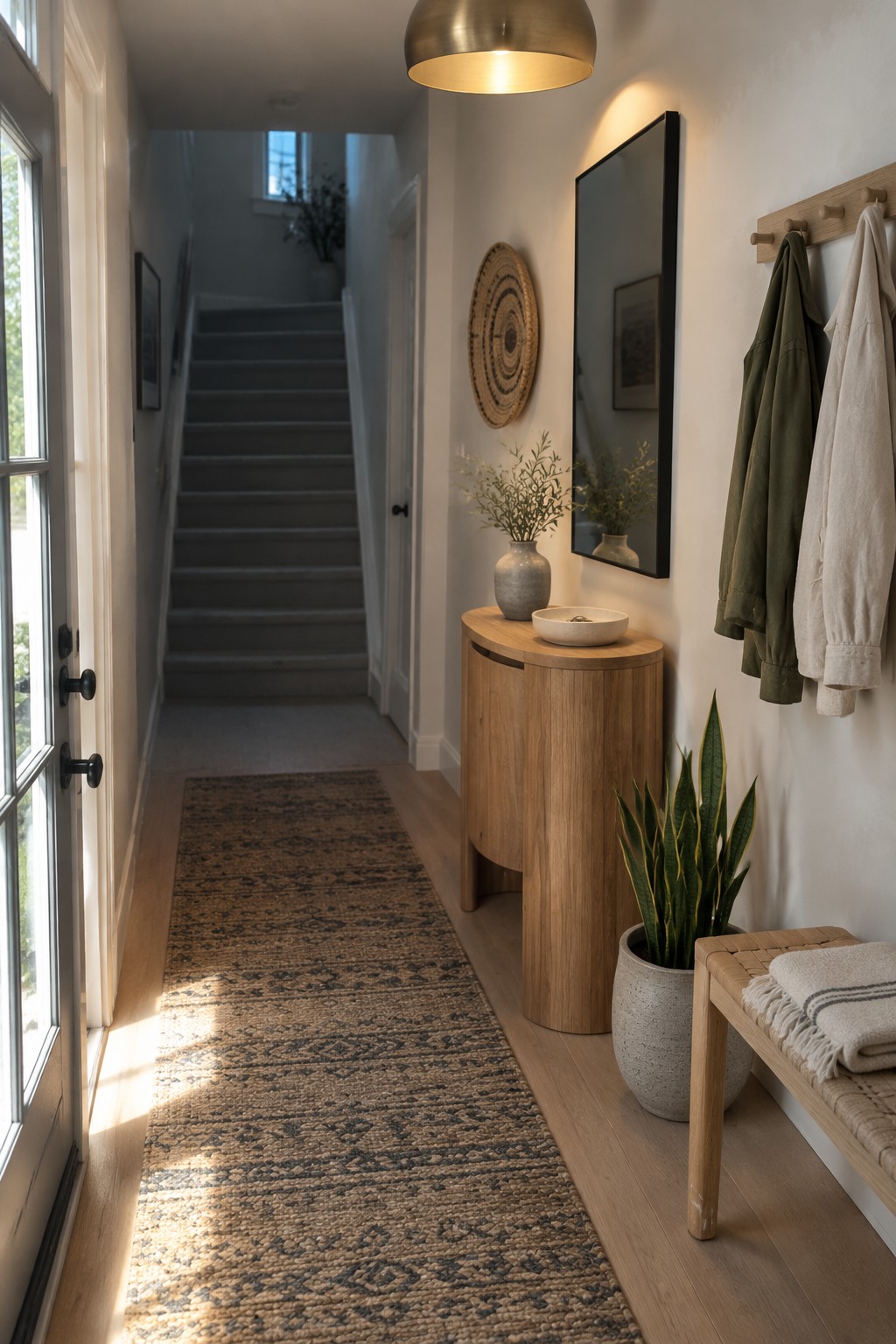
A simple pendant can make an entry feel considered without taking up floor or wall space. Here, the rounded brass fixture suits the natural wood and muted finishes, while its light marks the hallway as a space of its own.
In a narrow entry, choose a pendant that leaves a clear path and does not hang too low. A warm metal finish can work well with wood and neutral walls, especially in a home with a calm, natural style.
Choose a Pendant for a Small Home Office
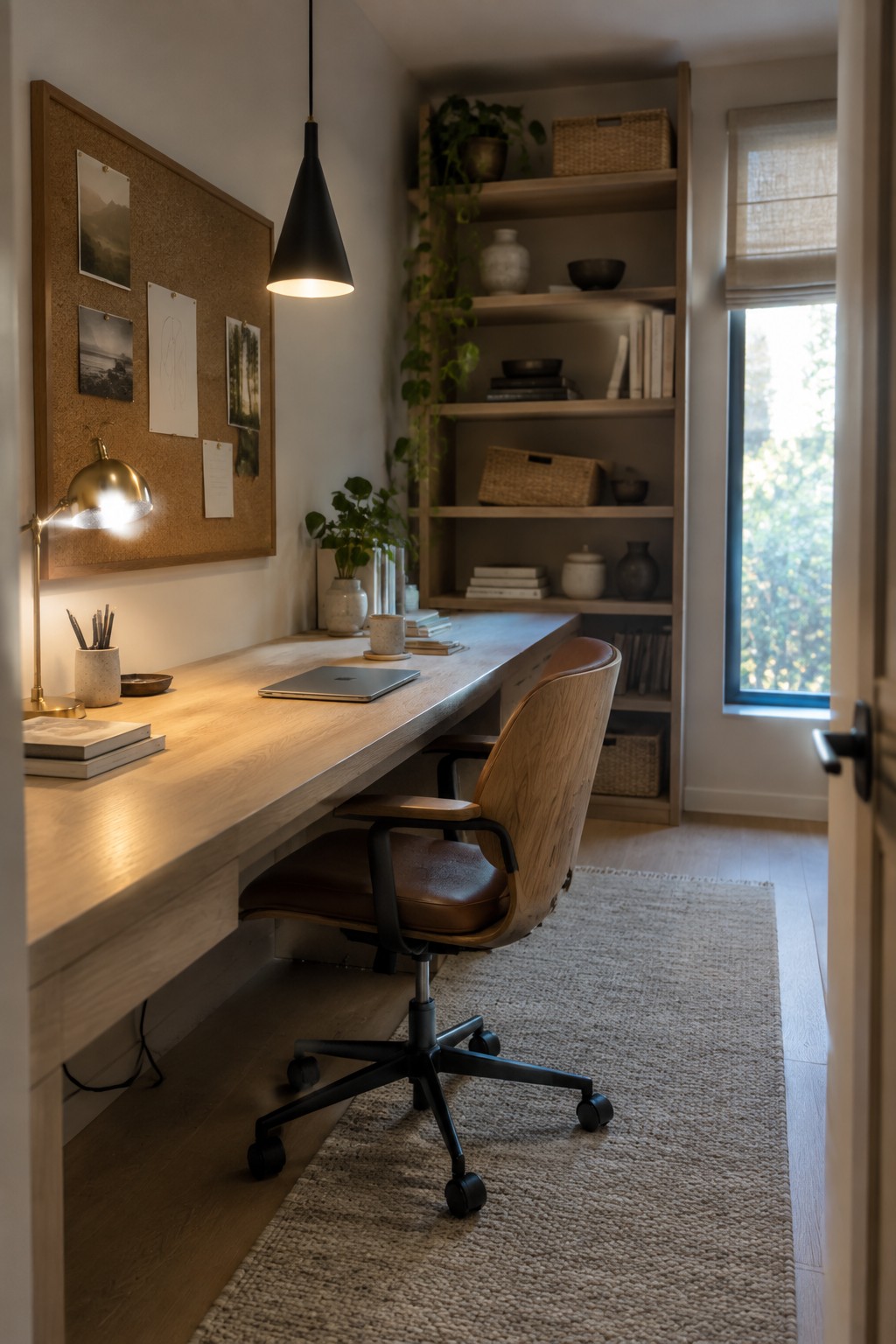
A pendant can give a home office a clear light source without taking up desk space. Here, a simple black shade hangs above a long wood desk, making the work area feel planned while leaving the surface free for everyday use.
This approach suits a compact study or a desk tucked into a spare room. Hang the light where it will illuminate the main work surface, and check that it does not block your view or shine directly into your eyes.
Use a Pendant to Make a Laundry Room Feel More Finished

A pendant light can make a small utility room feel considered without adding more decor. Here, the pleated shade gives the simple laundry area a softer touch while still providing light for everyday tasks.
This works well in a room with a clear walkway and enough ceiling height for a hanging fixture. Choose a shade that suits the room’s scale, and make sure it will not get in the way when you reach for shelves or work at the counter.
Choose a Wooden Pendant for a Cozy Reading Spot

A layered wooden pendant can make a reading corner feel settled without needing much extra decoration. Its rounded shape and natural material suit the simple, relaxed look of a Japandi interior.
Hang one above a favorite chair, keeping it high enough to leave the seat feeling open. A warm bulb works well here, but check that the pendant gives enough light for reading rather than relying on its glow alone.
Use Pendant Lights to Brighten a Stairwell
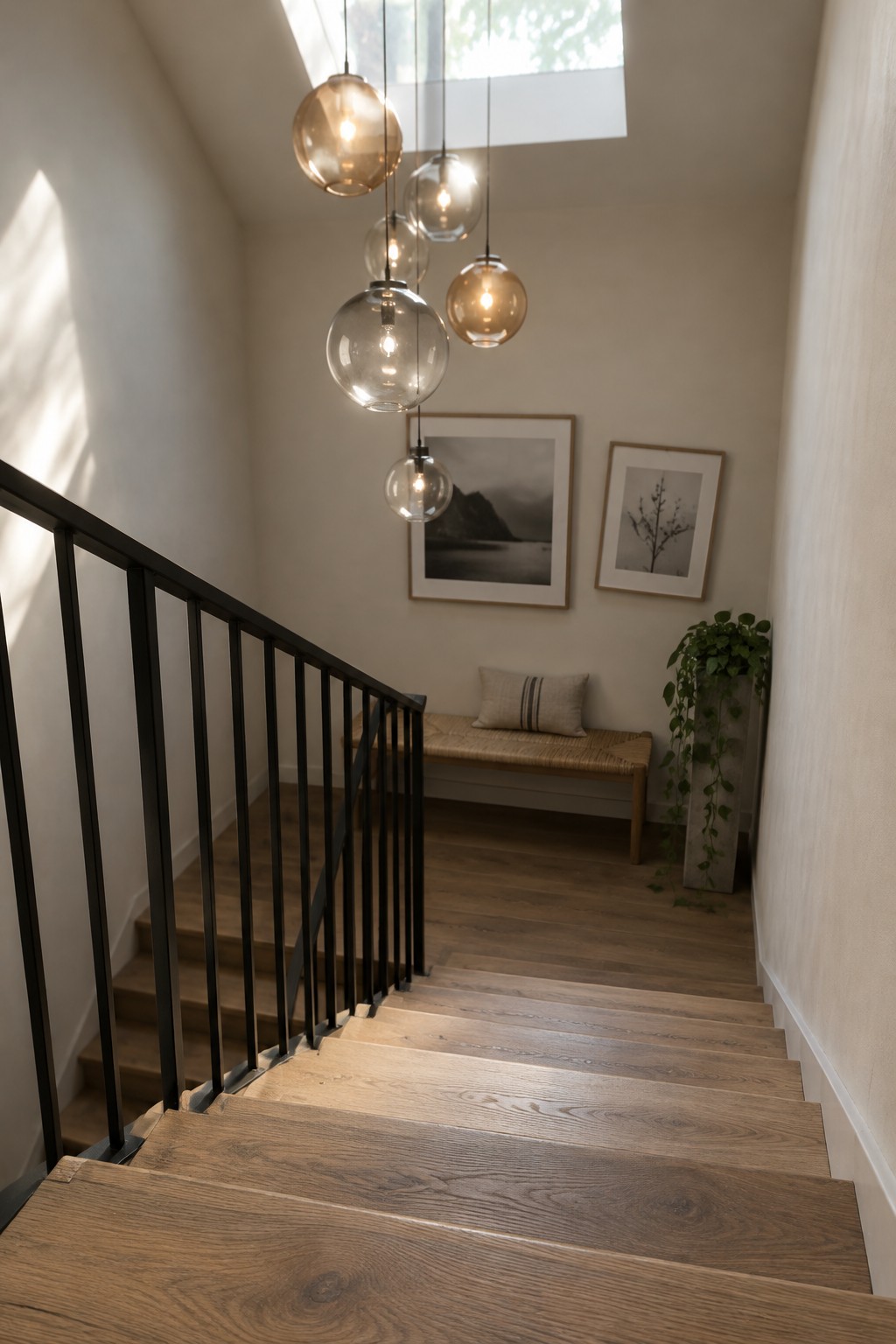
A stairwell can be a good place for a cluster of pendant lights. Hanging them at different heights helps fill a tall space, while glass shades let the fixtures feel light rather than bulky.
For a similar look, choose a simple group of pendants that suits the scale of the stairs and leave enough clearance for people moving between floors. Warm bulbs work well here, especially alongside natural wood.
Use a Pendant to Define a Bathroom Vanity
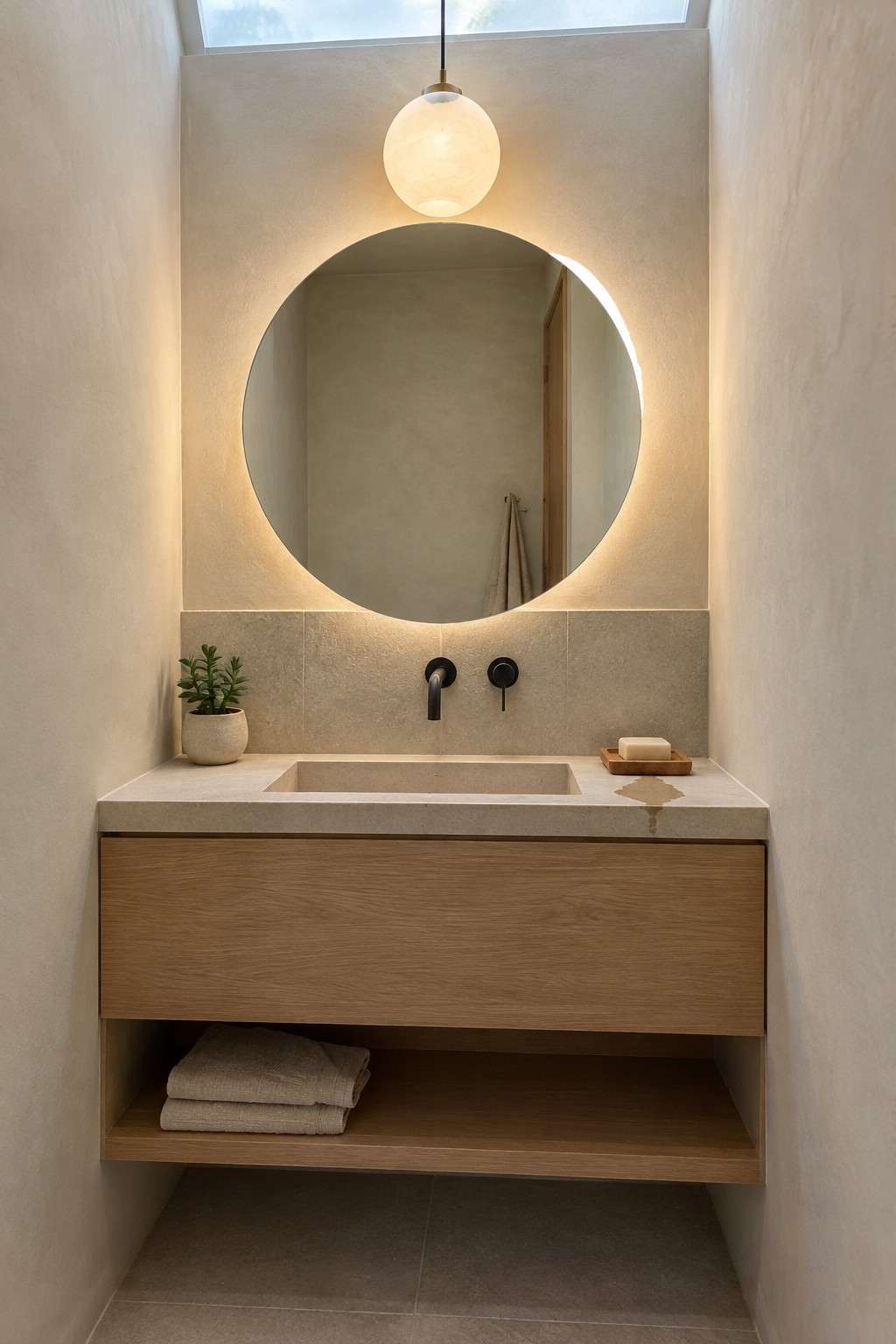
A single pendant can give a bathroom vanity a clear focal point without adding much visual clutter. Here, the round shade sits above a circular mirror, making the simple shape easy to notice.
This approach suits a small bathroom or a narrow vanity area where wall space is limited. Choose a shade that gives enough light for everyday tasks, and check that it hangs high enough to stay out of the way.
Choose a Pendant That Suits a Small Kitchen
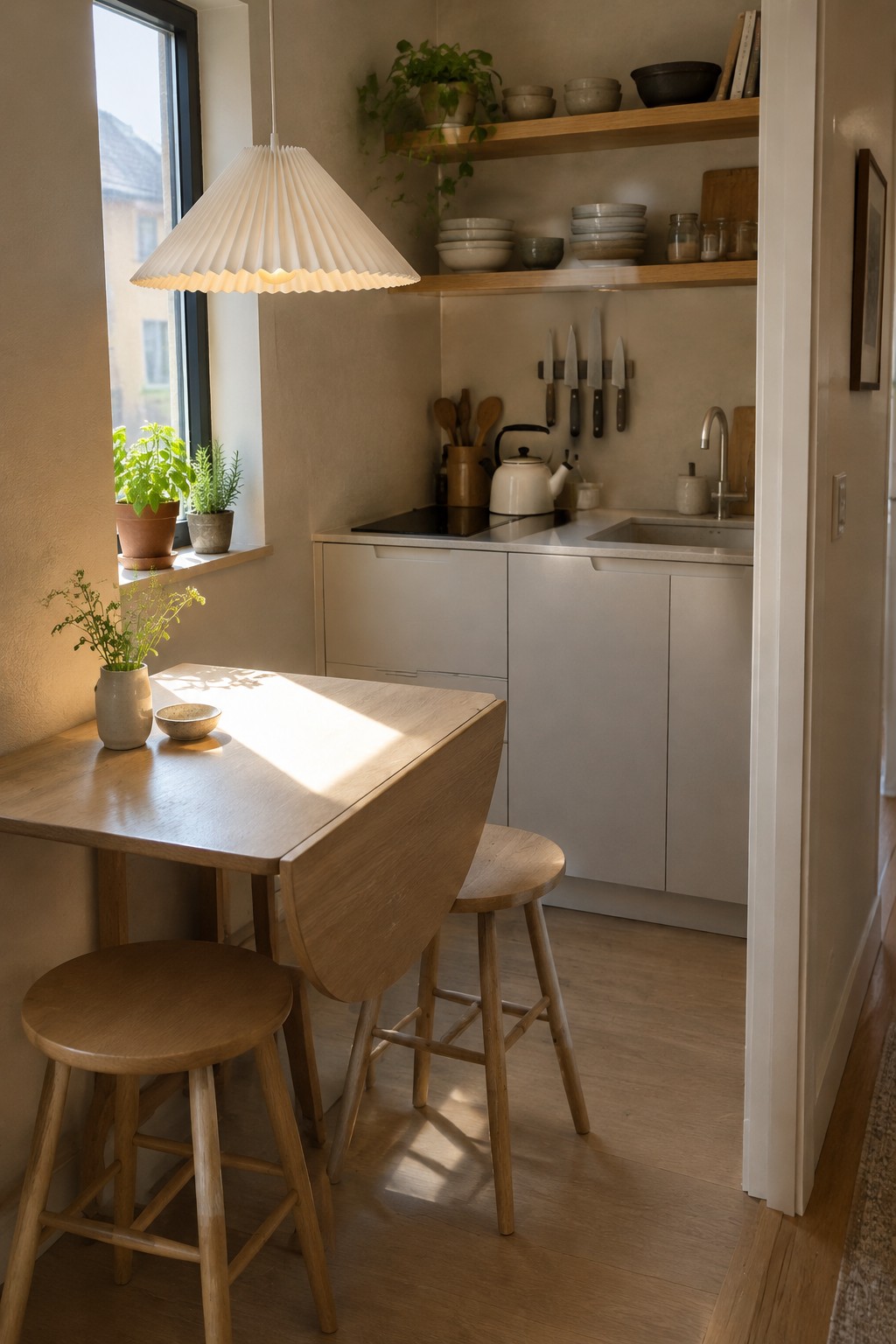
A large pendant can give a compact kitchen a clear focal point without taking up counter space. Here, the pleated shade hangs above the dining table, making the eating area feel distinct from the work zone.
In a small home, look for a fixture that gives enough light but does not block sightlines or crowd the table. A light-colored shade can keep the fixture from feeling too heavy, especially in a narrow kitchen.
Use a Woven Pendant to Warm Up an Entryway

A woven pendant can make an entryway feel more settled without adding much furniture. Its natural texture suits a simple scheme, and a broad shade gives useful light over the everyday comings and goings.
This approach works especially well in a compact mudroom or front hall. Choose a shade that leaves enough headroom, and keep its tone close to other natural materials in the space.
Use Pendant Lights to Highlight Built-In Shelving

A row of pendant lights can make built-in shelving feel like a feature rather than just a place to store things. The black shades stand out against the wood here, while their warm light helps the shelves feel less shadowy.
This idea works well in a living room or study with tall bookcases. Hang the lights where they won’t block the shelves, and keep the shades simple so the books and objects remain easy to see.
Use a Wooden Pendant to Bring Warmth to a Bedroom
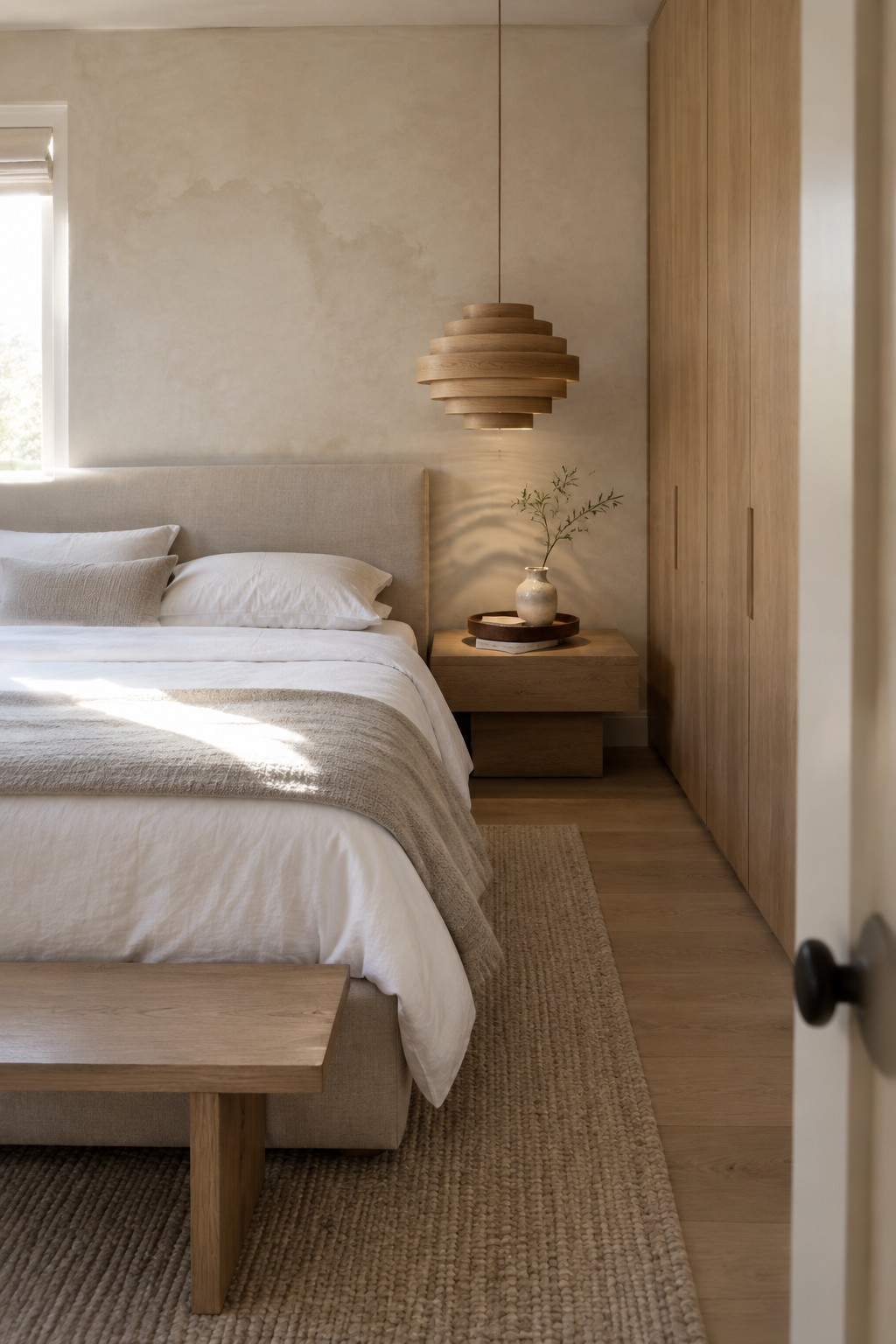
A wooden pendant can make a bedroom feel more settled without adding another piece of furniture. Its natural finish stands out against quieter materials, while a simple sculptural shape gives the room a clear focal point.
Hang one beside the bed where it can light a nightstand, and choose a size that leaves enough space around the headboard. It works especially well in a calm, neutral bedroom; keep nearby decor simple so the wood grain can show.
Use a Star Pendant to Add a Gentle Focal Point

A paper star pendant can bring a little character to a room without making the rest of the decor feel busy. Its sculptural shape stands out above the craft table, while the light paper shade keeps the look soft.
Try one in a playroom, reading nook, or casual dining space with simple furniture and natural materials. Check the pendant’s size against the room, and hang it where it won’t get in the way of everyday activities.
Use a Pendant to Light a Dressing Table
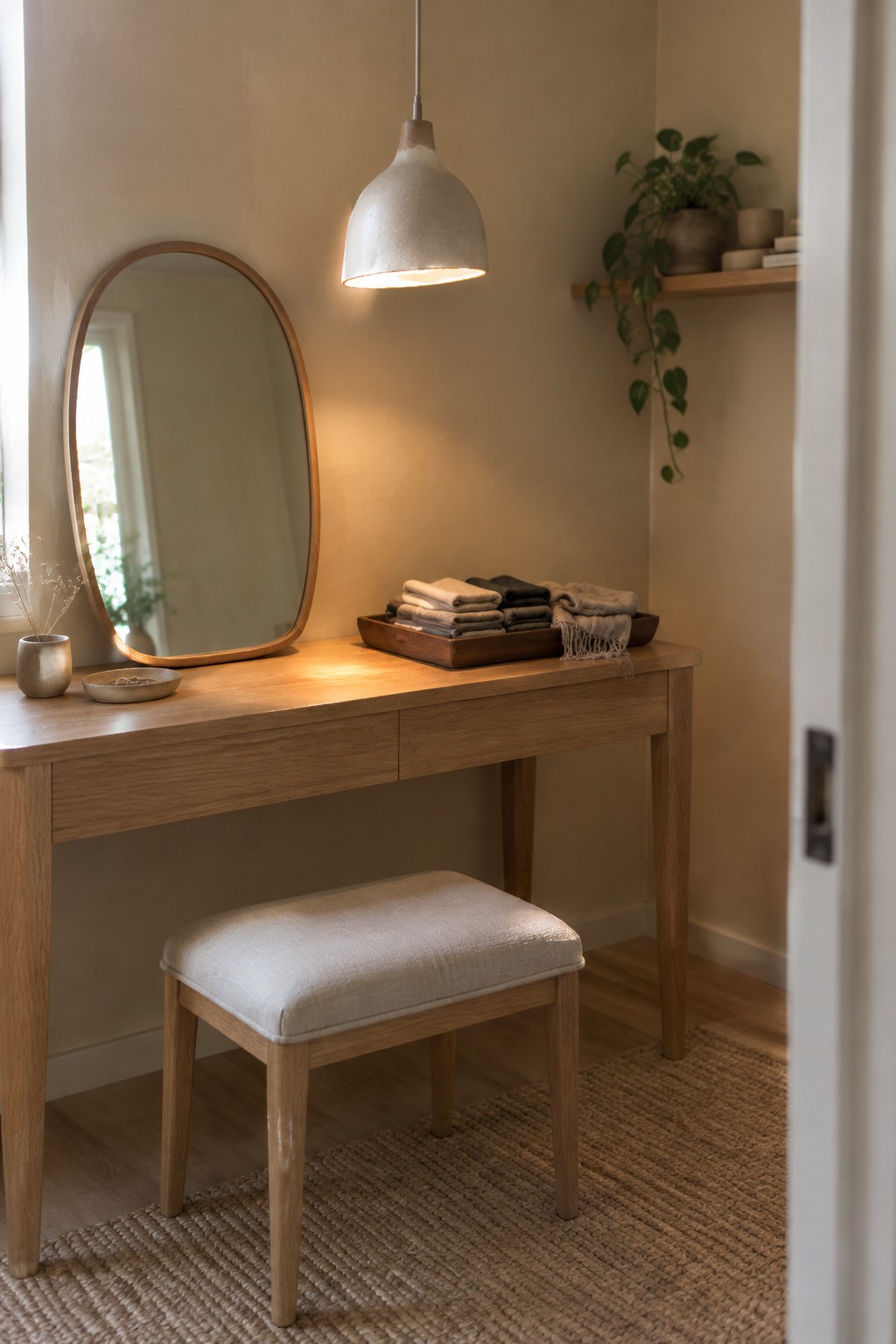
A pendant can make a dressing table feel like a useful spot in its own right, not just a surface for getting ready. Here, the simple shade hangs above the wooden table and casts light where it is needed.
This works well in a bedroom or dressing area with enough ceiling height to leave the table clear. Choose a shade that directs light down, and add a mirror or wall light if you need even lighting for grooming.
Frequently Asked Questions
Q: What size pendant works best over a dining table?
A: A single pendant should feel substantial without blocking anyone’s view across the table. For a long table, two or three smaller lights often spread the light more evenly.
Q: Can a Nordic pendant still feel right in a warm Japandi room?
A: Yes. Look for natural materials like paper, wood, or woven fibers, and pair them with warm-toned bulbs. A simple shape keeps the room calm rather than overly rustic.
Q: How low should I hang a pendant over a dining table?
A: Start with the bottom of the shade about 30 to 36 inches above the tabletop, then adjust until it lights the table without getting in the way. A dimmer is useful if the room does double duty for meals and quiet evenings.
Q: Do I need a matching pendant in every room?
A: Not at all. Choose lights that share a similar feel, such as soft shapes or natural finishes, rather than buying an identical set.
