

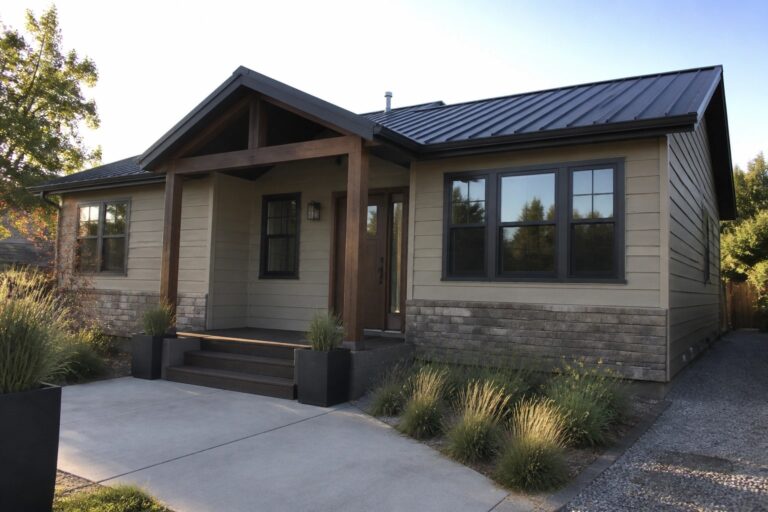
When I drive through suburban neighborhoods I notice that the siding color often sets the first impression before anyone gets close to the door.
Beige has a way of making the roofline and windows stand out without needing extra details that add to the upkeep.
That balance matters more than it seems.
I have seen homes where the siding held its color for over a decade with almost no cleaning required.
A few of these approaches would be worth trying on my own place to see how they handle the local weather.
Beige Siding With Metal Roofing
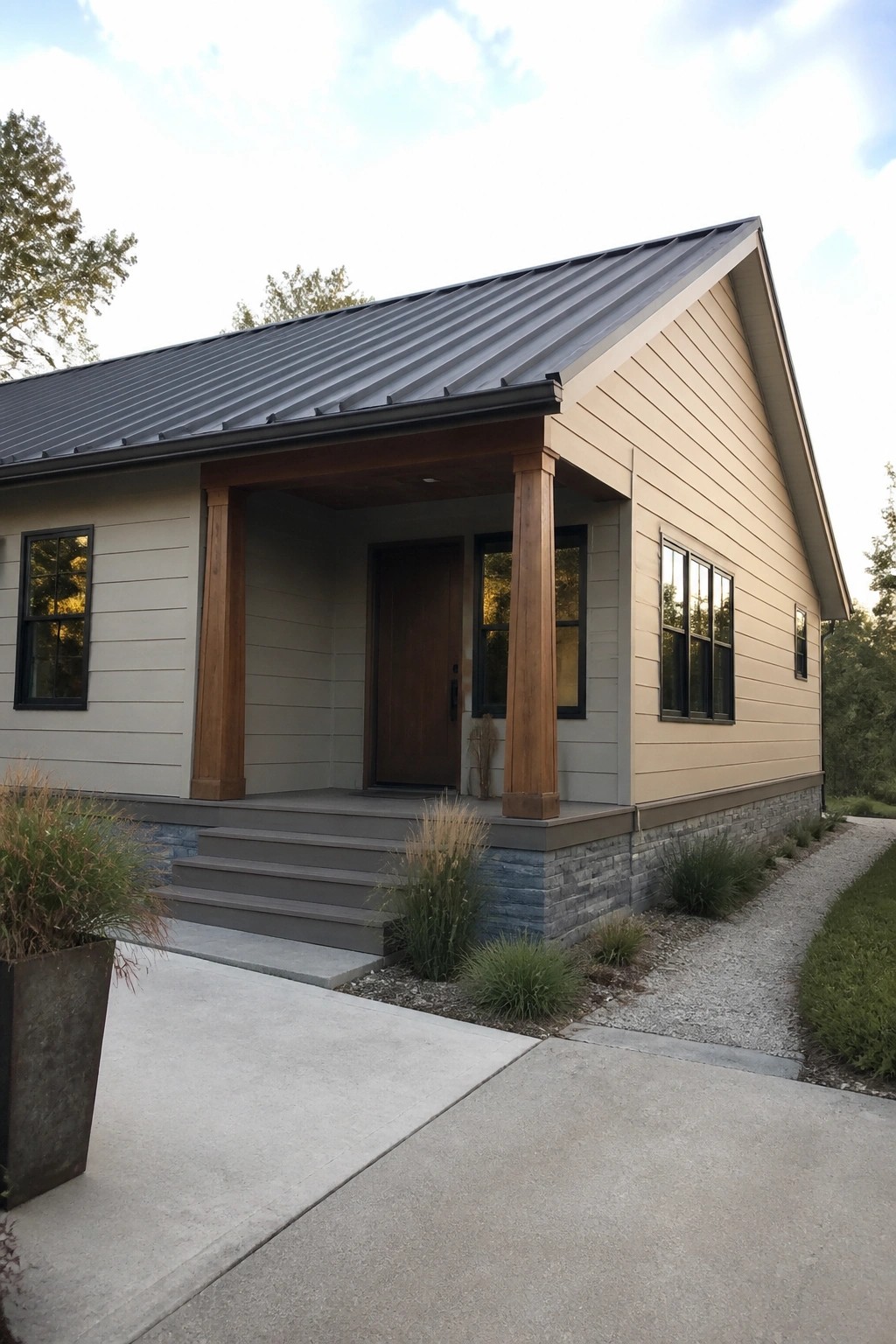
Beige siding works well on suburban homes because it hides dust and minor wear better than white or darker tones. Adding a dark metal roof gives the house a clean contrast that does not require frequent painting or staining.
This combination suits single story homes where the roof makes up a large part of the view from the street. It keeps upkeep simple while still giving the exterior enough depth to feel finished rather than plain.
Beige Siding With Dark Trim
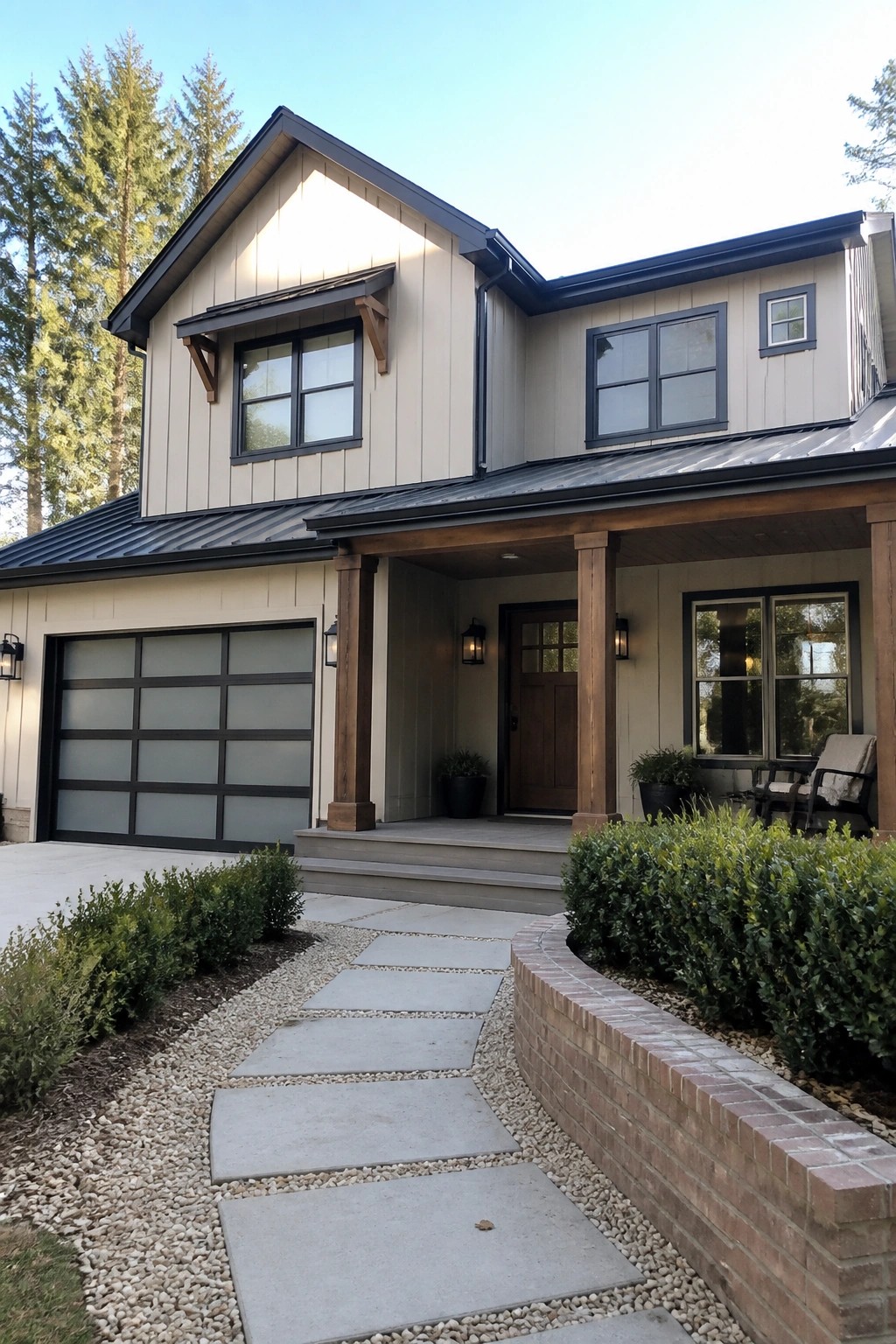
Beige siding holds up well on suburban homes because it hides dust and minor marks better than white or very light shades. The dark trim around the windows and roof edges gives enough contrast to keep the front from looking flat while still keeping the overall look simple.
This combination works best on homes where the siding covers most of the exterior and you want to avoid frequent repainting. Adding wood posts or accents on the porch can give a little warmth without adding much upkeep.
Beige Siding for Low-Maintenance Homes
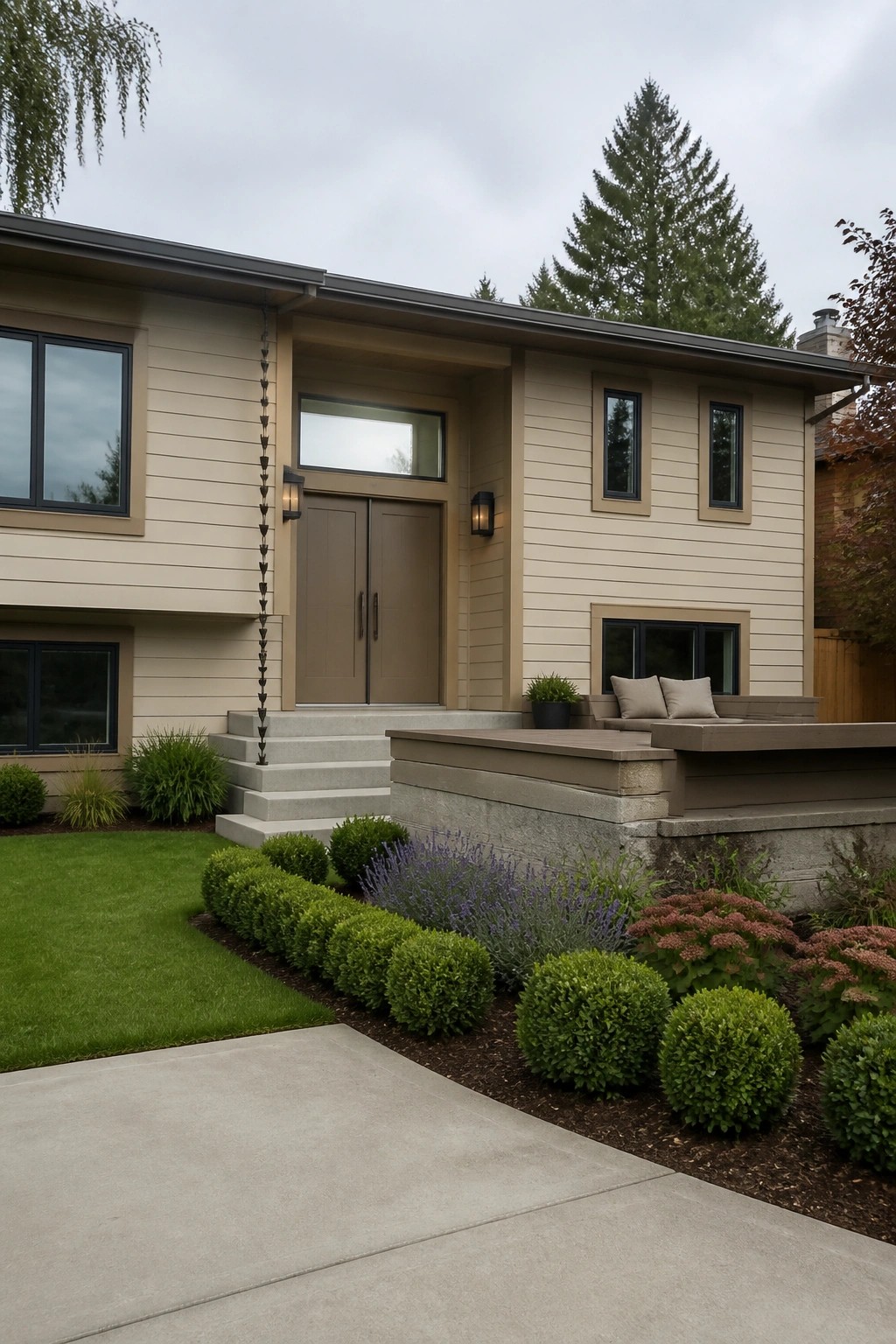
Beige siding works well when you want an exterior that stays looking fresh with little upkeep. The color hides dust and minor wear better than white or very dark shades, and it pairs easily with simple trim and stone accents at the base.
This choice suits suburban homes with straightforward shapes and balanced windows. Keep the siding in a matte finish and match it with darker doors or window frames to add contrast without extra materials.
Vertical Beige Siding for Low Maintenance
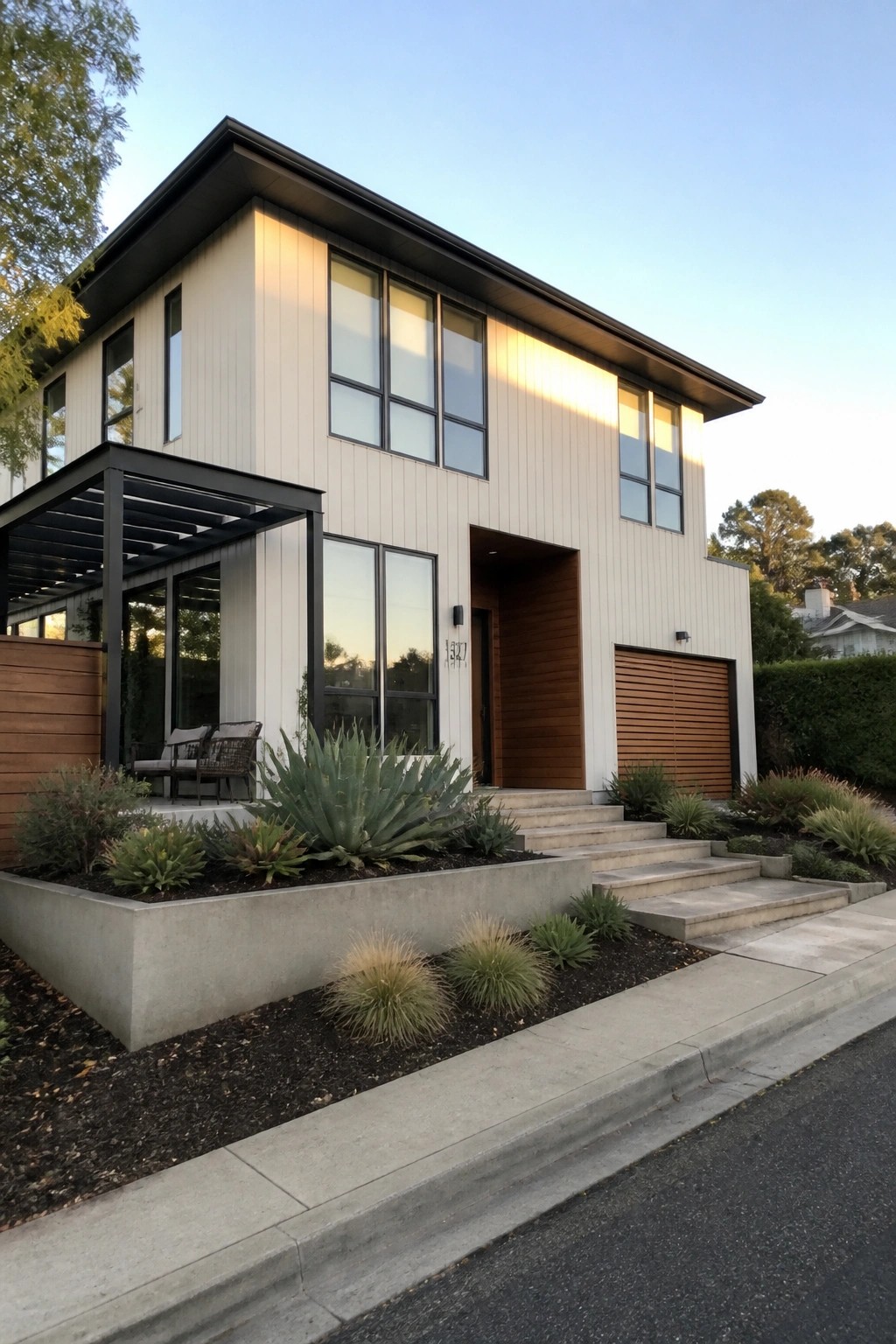
Vertical siding in a soft beige works well on suburban homes because it runs in clean lines and hides wear better than horizontal boards. It keeps the look simple without needing frequent touch ups or repainting.
This approach suits two story homes that want a modern feel without standing out too much. Pair it with wood accents on the garage or entry and dark trim around the windows to add just enough contrast. It holds up in most climates and blends into neighborhoods that favor practical updates over high upkeep.
Beige Siding With A Dark Door
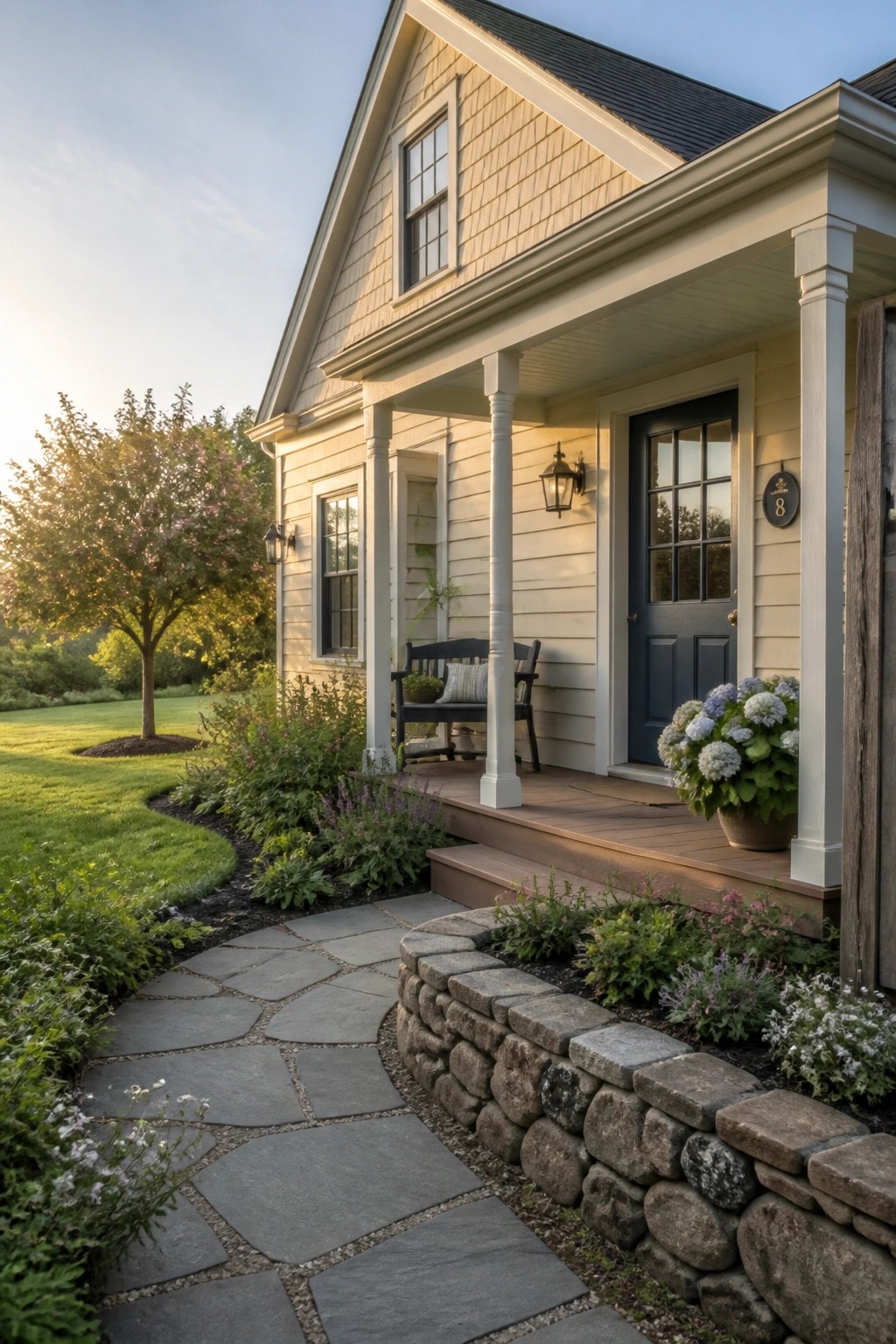
Beige siding keeps the look simple and hides everyday dirt better than white. It pairs with white trim and a darker door to give the house some contrast without needing constant upkeep or bold colors.
This works best on smaller suburban homes with a basic gable roof and a front porch. Stick with a dark painted door and a few low plants along the walk so the siding stays the main low-maintenance feature.
Beige Siding and Brick Bases
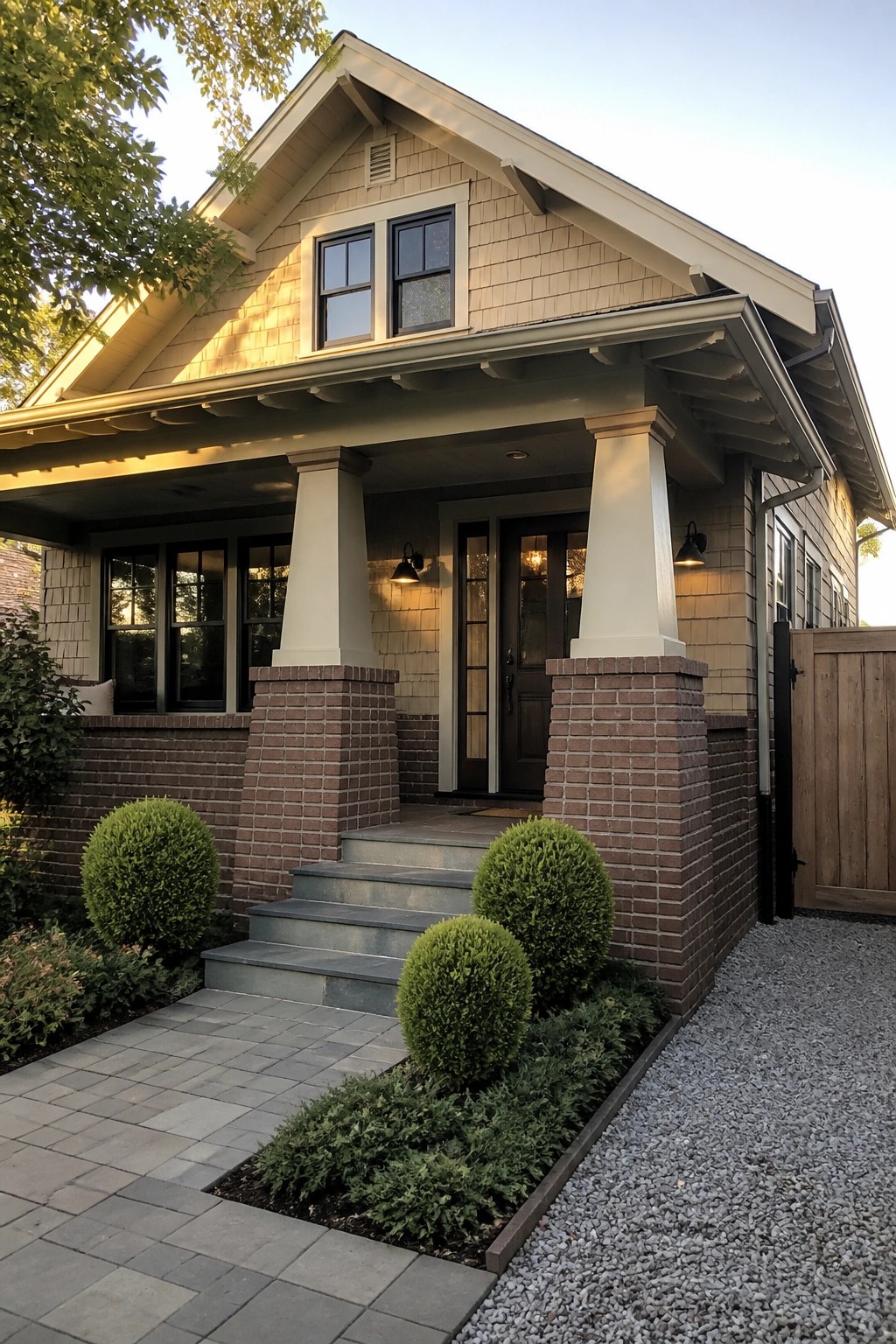
Beige siding works well on suburban homes because it keeps the look simple and needs little upkeep over time. Pairing it with brick at the bottom of the porch columns adds some weight and texture without making the whole house feel heavy.
This mix suits houses that want a bit of traditional character while staying practical. The brick holds up to weather and daily use near the entry, and the siding above keeps the rest of the facade light and easy to maintain.
Beige Siding With Dark Accents
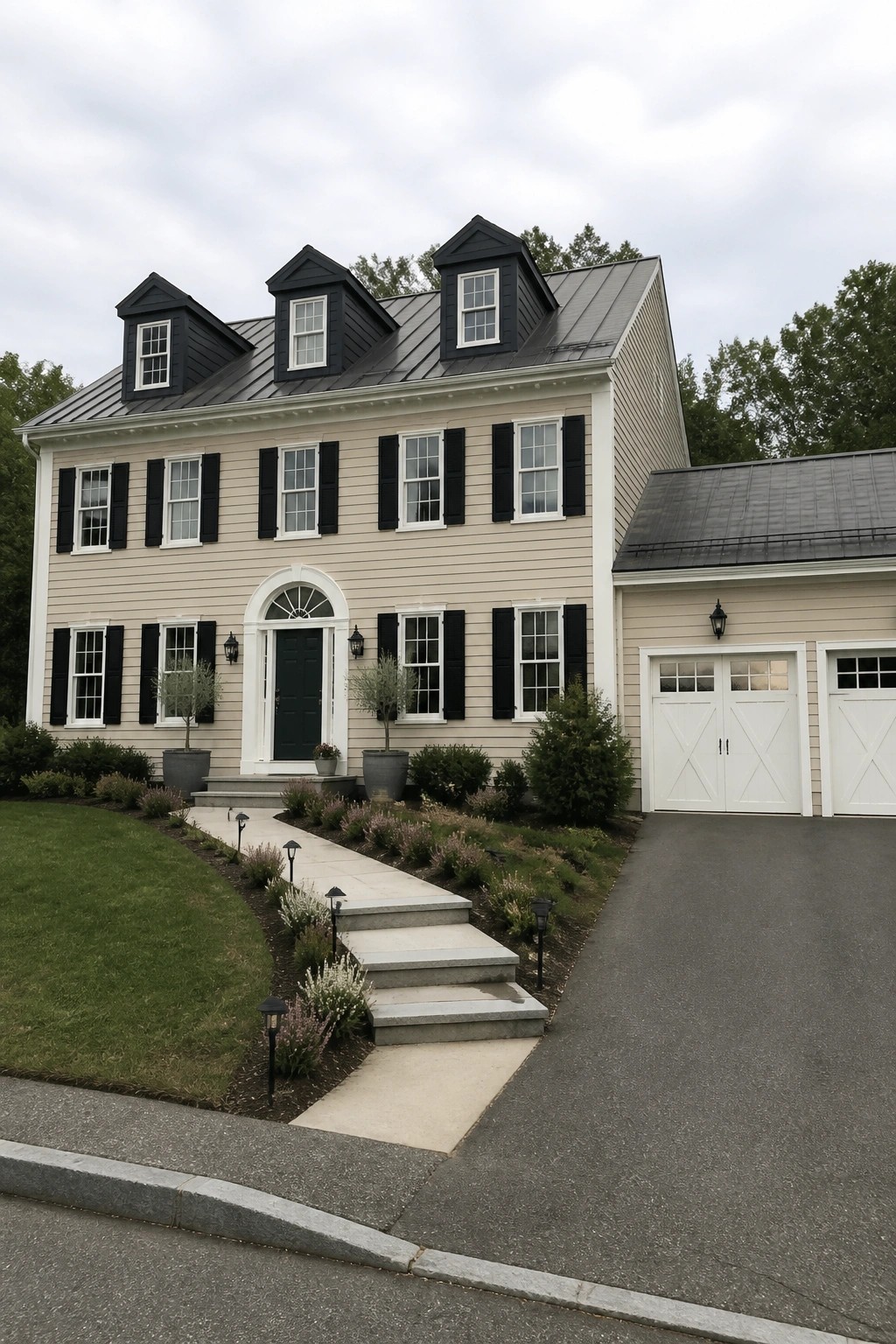
Beige siding works well when you want a clean look that does not demand much upkeep. The light tone keeps the house bright, while the black shutters and trim give it enough contrast to feel finished.
This combination fits suburban homes that sit close to the street. It holds up in changing weather and pairs easily with a dark roof, so the whole exterior stays simple to maintain over the years.
Stone Foundations With Beige Siding
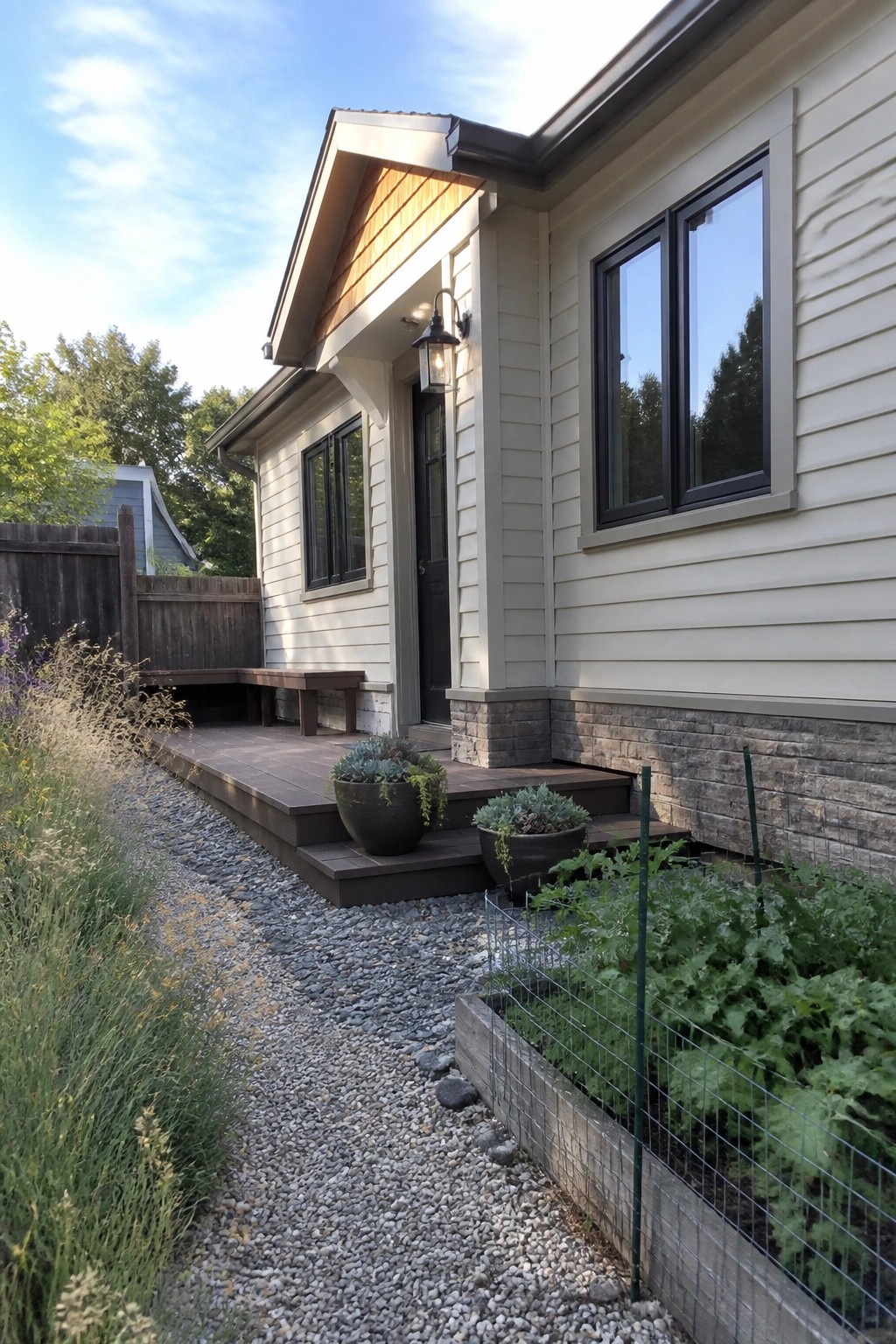
Beige siding looks cleaner and holds up better when it sits on a stone foundation. The stone takes the hits from rain splash, mowers, and daily wear, so the siding itself stays in good shape longer with less work.
This setup fits suburban homes that want a simple color but still need something practical at ground level. Keep the stone in a neutral gray or tan tone and let the beige run the rest of the way up. Dark window frames help tie it together without adding extra trim.
Beige Siding With Dark Window Trim
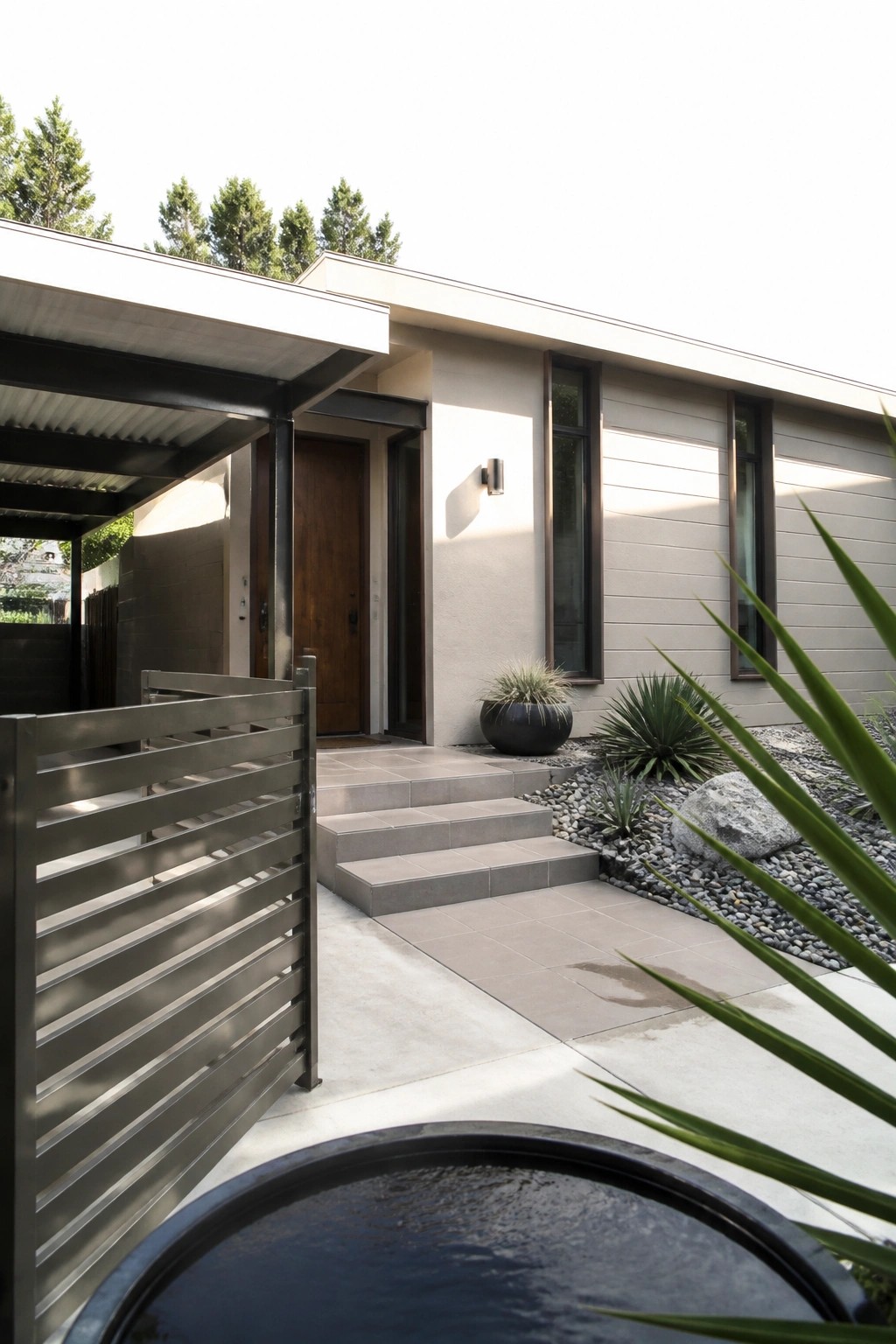
Beige siding works well when it has some contrast to keep the house from looking flat. In this case the dark frames around the windows and door give the beige a sharper edge while still keeping the overall look simple and easy to care for.
This approach suits suburban homes that want a modern feel without needing constant upkeep. The siding itself holds up in most climates and the darker trim hides wear better than lighter colors would. Just make sure the trim color is close in tone to the door so
Dark Trim With Beige Siding
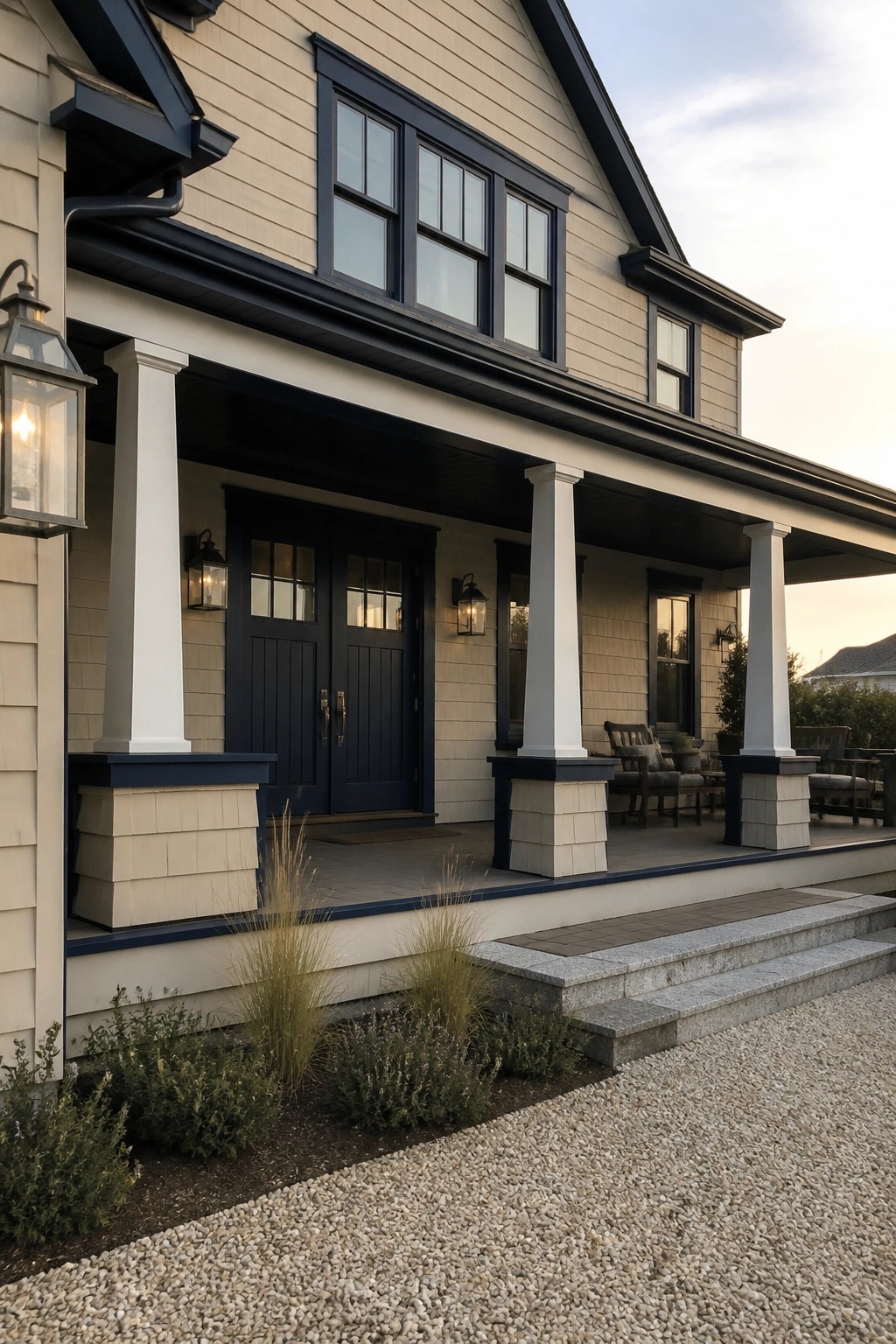
Beige siding stays popular on suburban homes because it holds up well and does not show dirt or wear quickly. Dark trim around the windows and doors adds clear lines that keep the front from looking flat.
This approach works best on houses with straightforward shapes. Use the same deep color on the front doors and porch supports so everything reads as one choice rather than scattered accents. It gives a neat look without extra materials or frequent painting.
Beige Siding With Dark Brown Trim
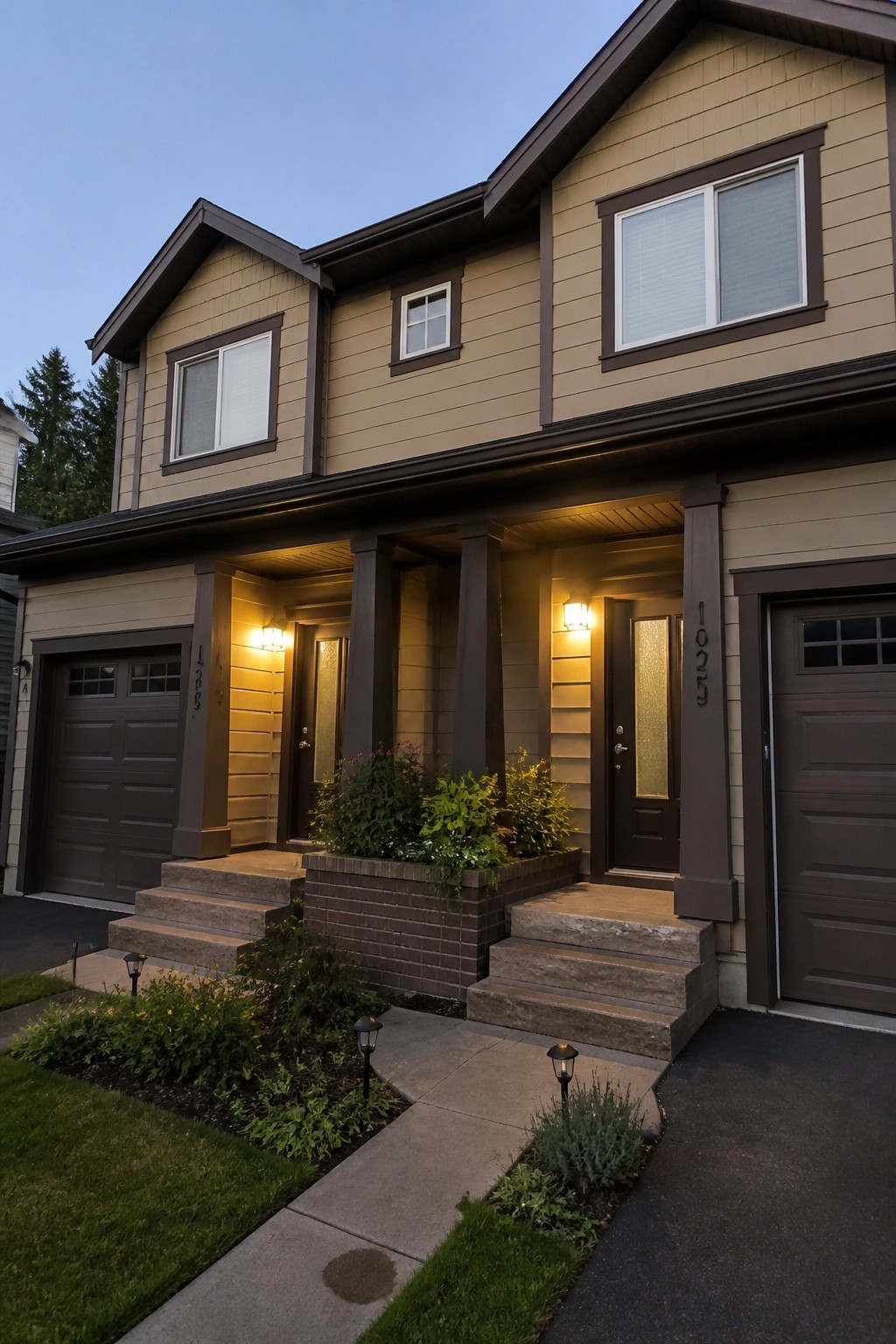
Beige siding works well on suburban homes because it holds up without constant cleaning or repainting. Pairing it with dark brown trim around the windows, doors, and garage doors gives the front enough contrast to keep the look from feeling flat.
This combination suits attached homes or side-by-side units where the siding needs to read as one clean surface. The darker accents help define each entrance and garage without adding extra materials that would require more upkeep later.
Large Beige Panels for Simple Upkeep
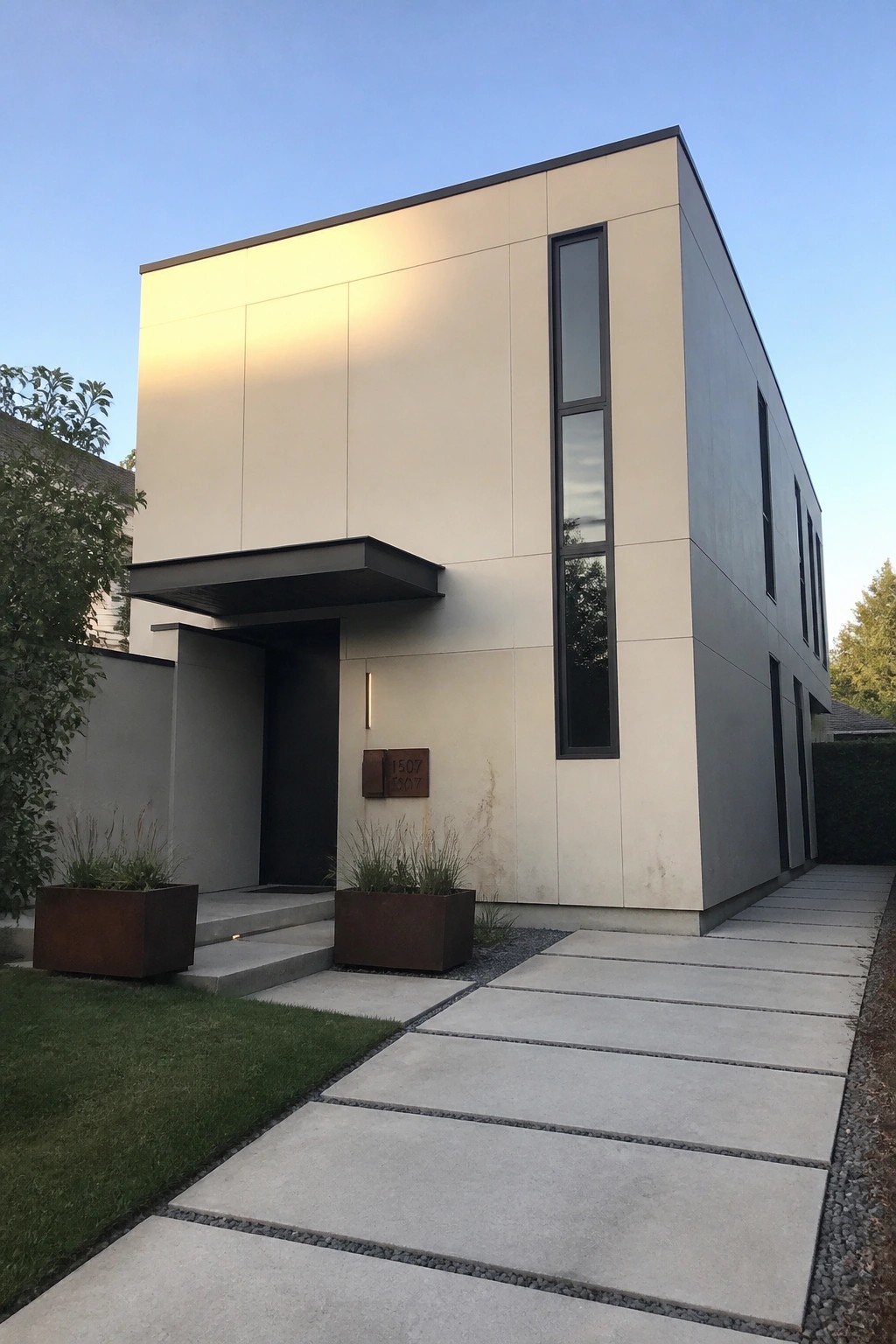
Large flat panels in a soft beige tone cut down on the number of seams and edges that usually collect dirt. This approach gives the house a smooth surface that rinses off easily and needs little more than an occasional wash.
The style works best on homes with straight lines and few small details. Keep windows and doors dark so the panels stay the main feature, and avoid adding trim that would create more places for dust to settle.
Beige Siding Works Well With a Covered Entry
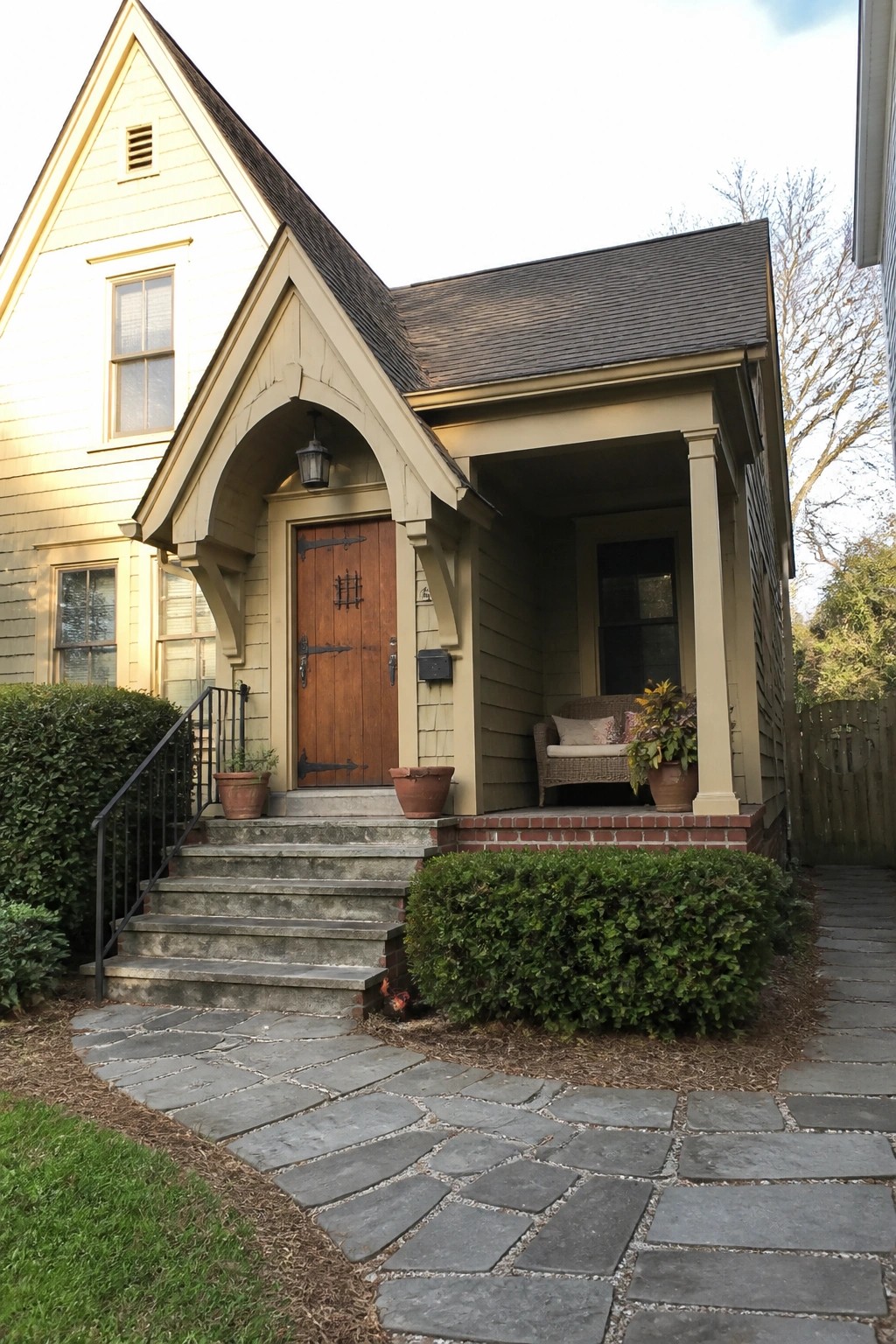
Beige siding gives a house a quiet, steady look that does not need much work to stay presentable. The covered entry here adds some shape and shelter without making the whole front feel busy or hard to keep up.
This approach suits suburban homes that want a bit of traditional character but still keep things simple. The siding holds color well over time, and the entry keeps the door protected from weather while giving visitors a clear place to stand.
An Arched Entry Adds Interest to Beige Siding
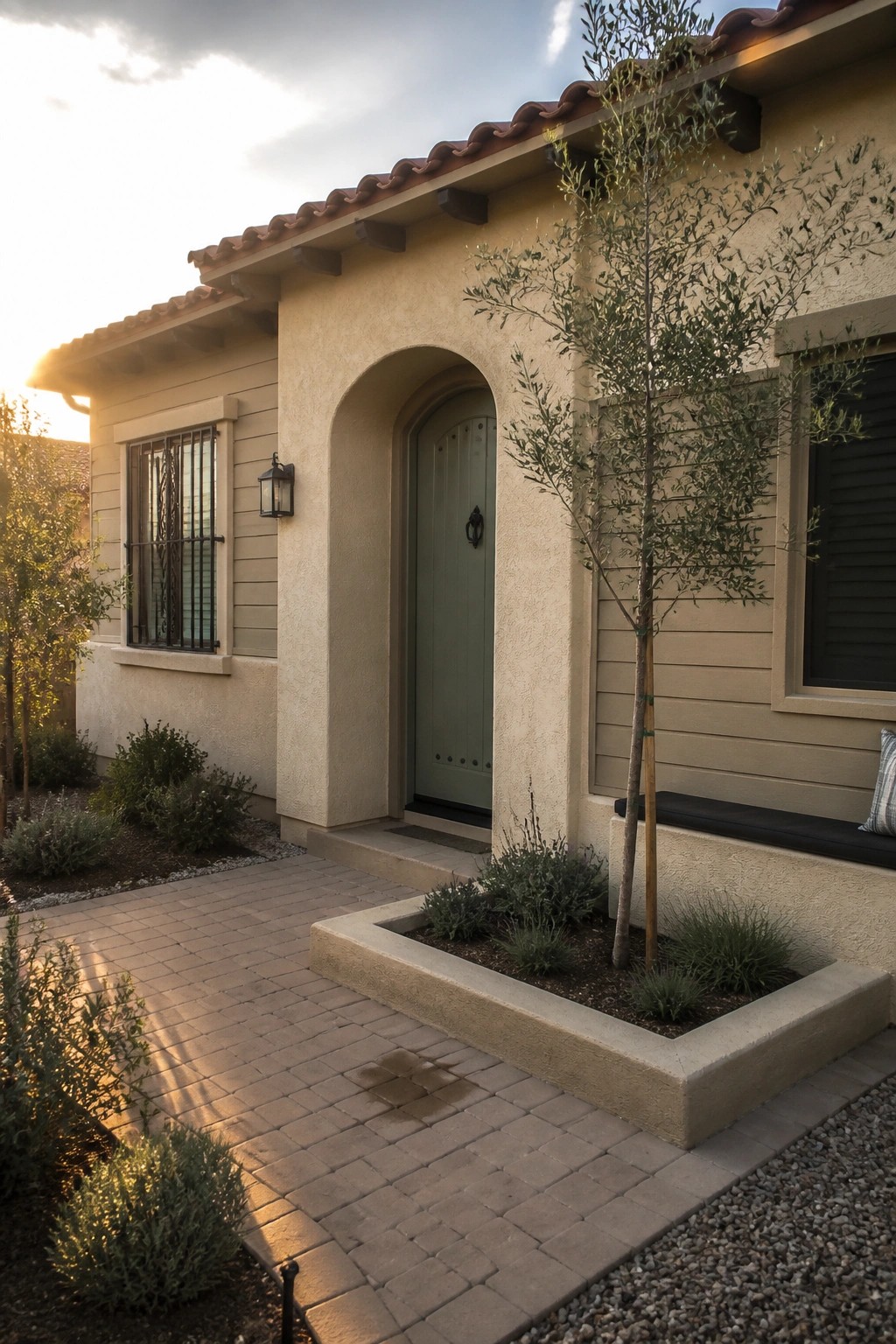
Many beige siding homes can look a little plain without some kind of detail to break up the front. An arched entry gives the house a bit more shape while keeping the overall look simple and low maintenance.
This approach works well on suburban homes that already use straightforward materials. The arch can be built in stucco or a matching finish so it does not add extra upkeep, and it helps the entry feel more welcoming without any fancy extras.
Beige Vertical Siding For Simple Exteriors
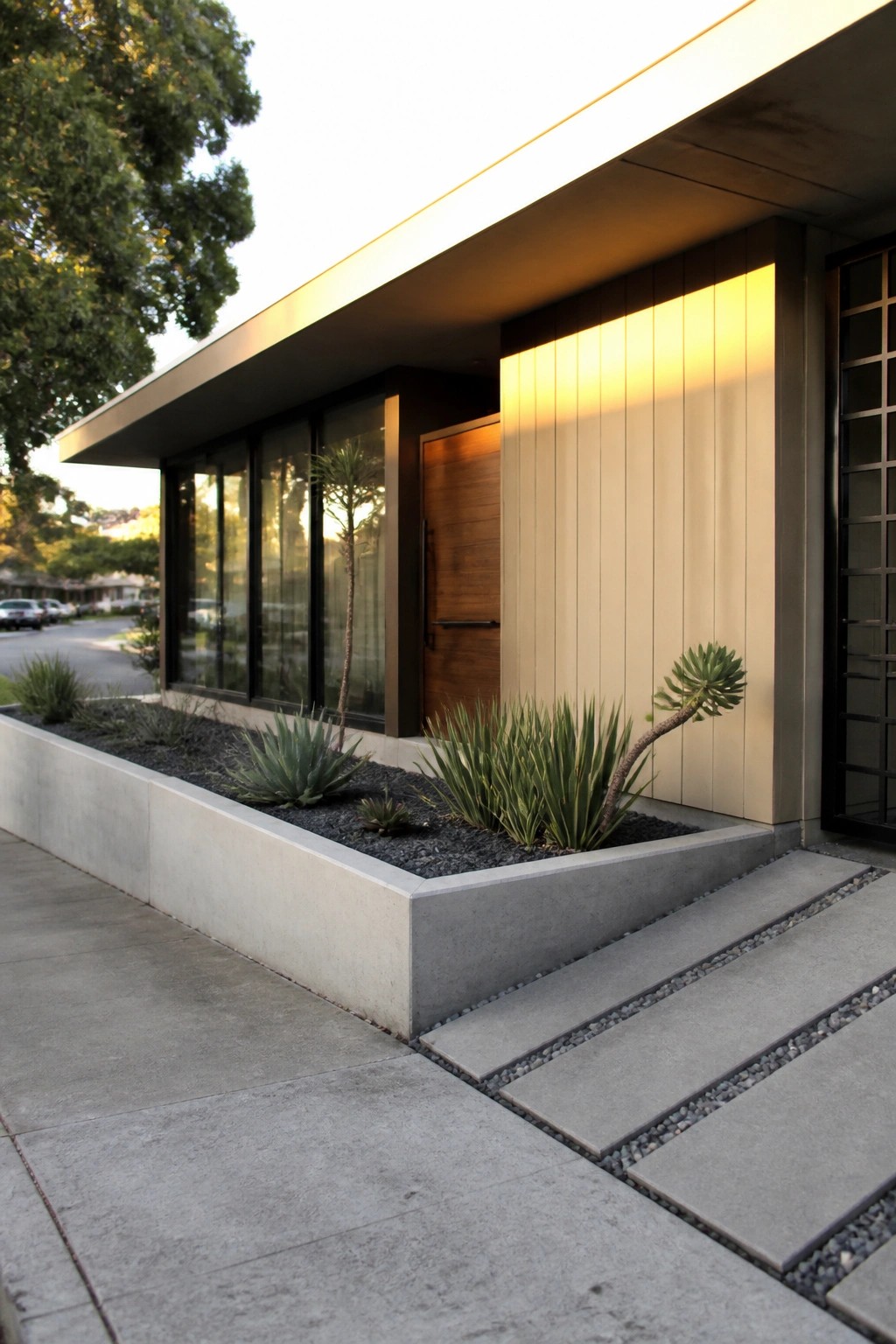
Many homes gain a cleaner profile when they use vertical beige siding instead of horizontal boards. The lines run straight up and make the house feel taller without adding extra trim or detail that needs painting later.
This approach works best on one-story or low-slung suburban houses where you want low upkeep. Pair the siding with a raised concrete planter and a few tough plants so the front stays neat without constant work.
Beige Siding With Dark Trim
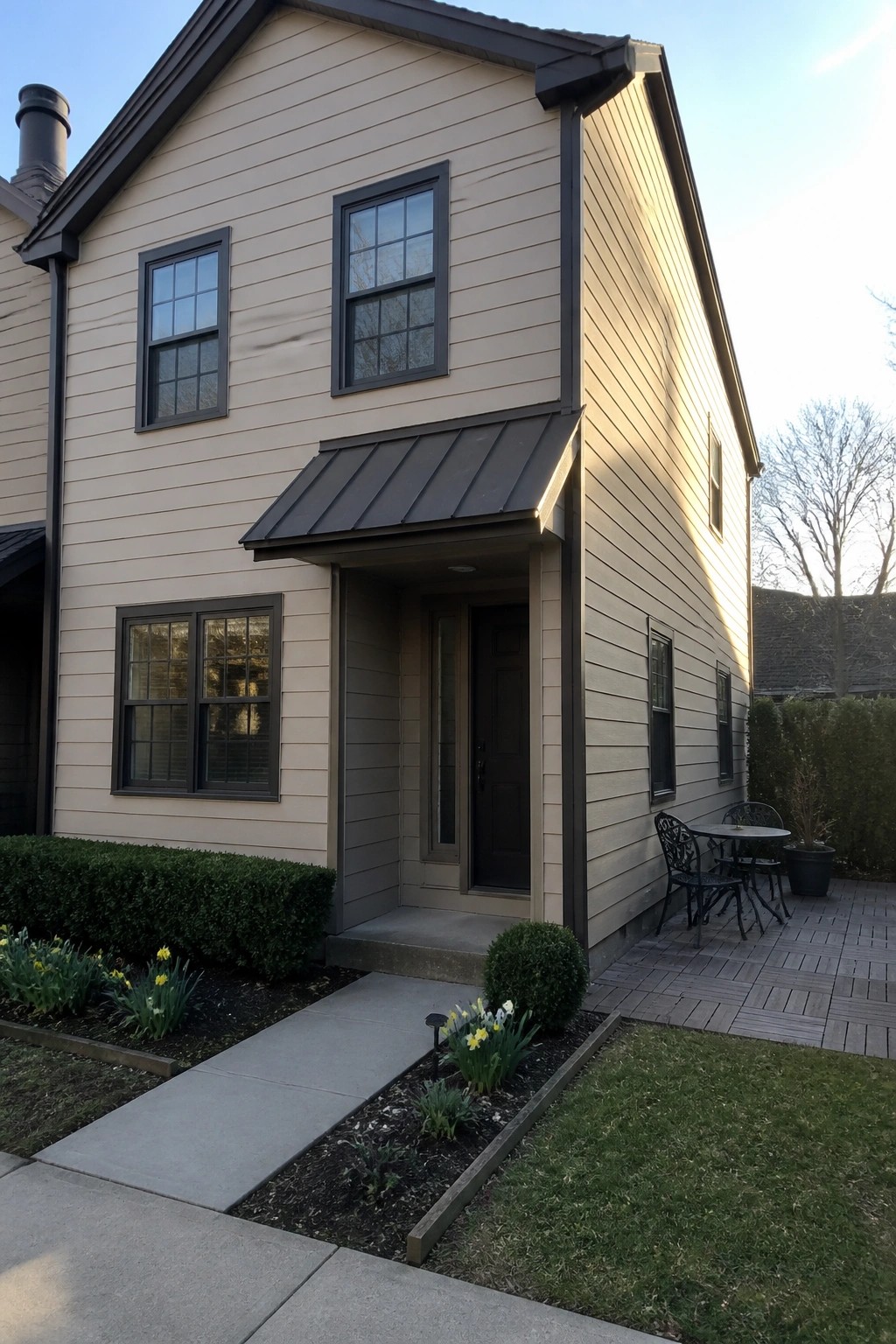
Beige siding gives suburban homes a clean look that holds up over time without constant upkeep. The soft color blends in with most neighborhoods while still standing out enough to feel intentional.
Pairing it with dark trim around the windows and doors adds just enough contrast to keep the facade from feeling flat. This combination works especially well on two-story homes where you want the shape to read clearly from the street.
Beige Siding With Brick Edged Beds
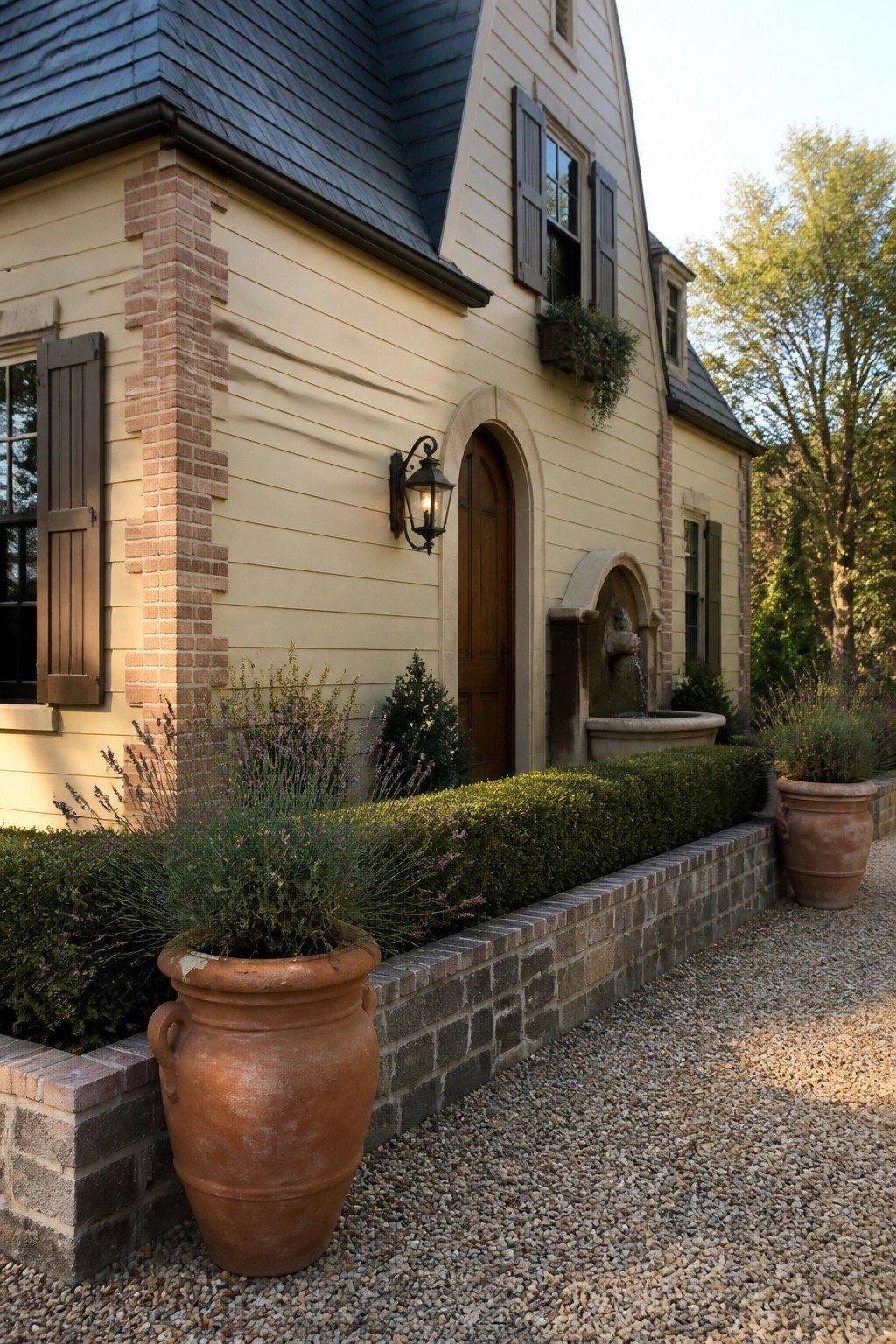
Beige siding stays looking fresh longer when the foundation plantings sit inside a low brick border. The edging gives the house a clean line and keeps mulch and soil from spilling onto the path or driveway. It also makes trimming and weeding simpler because the bed shape stays fixed.
This approach works best on suburban homes where you want some structure without constant upkeep. Match the brick tone to any existing accents on the house so the whole front stays coordinated. Skip tall shrubs that will block windows or require frequent pruning.
Black Shutters On Beige Siding
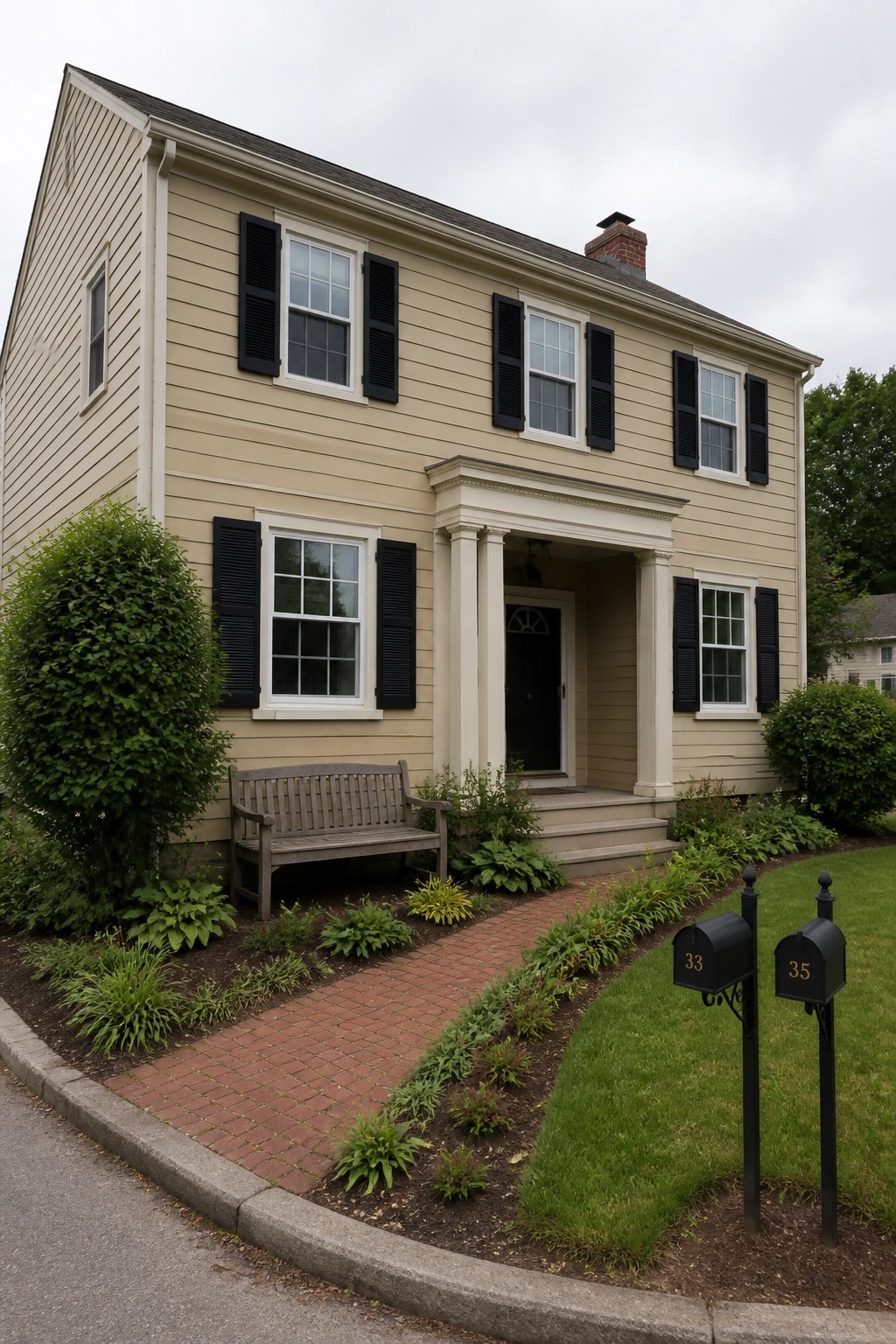
Beige siding already offers a low-maintenance base that holds up in suburban settings. Black shutters add just enough contrast to keep the front from looking flat while still letting the house feel simple and traditional.
This works well on two-story homes with a straightforward shape. Keep the trim light and the shutters a true black so the contrast stays clean without extra upkeep or busy details.
Beige Siding With Dark Accents
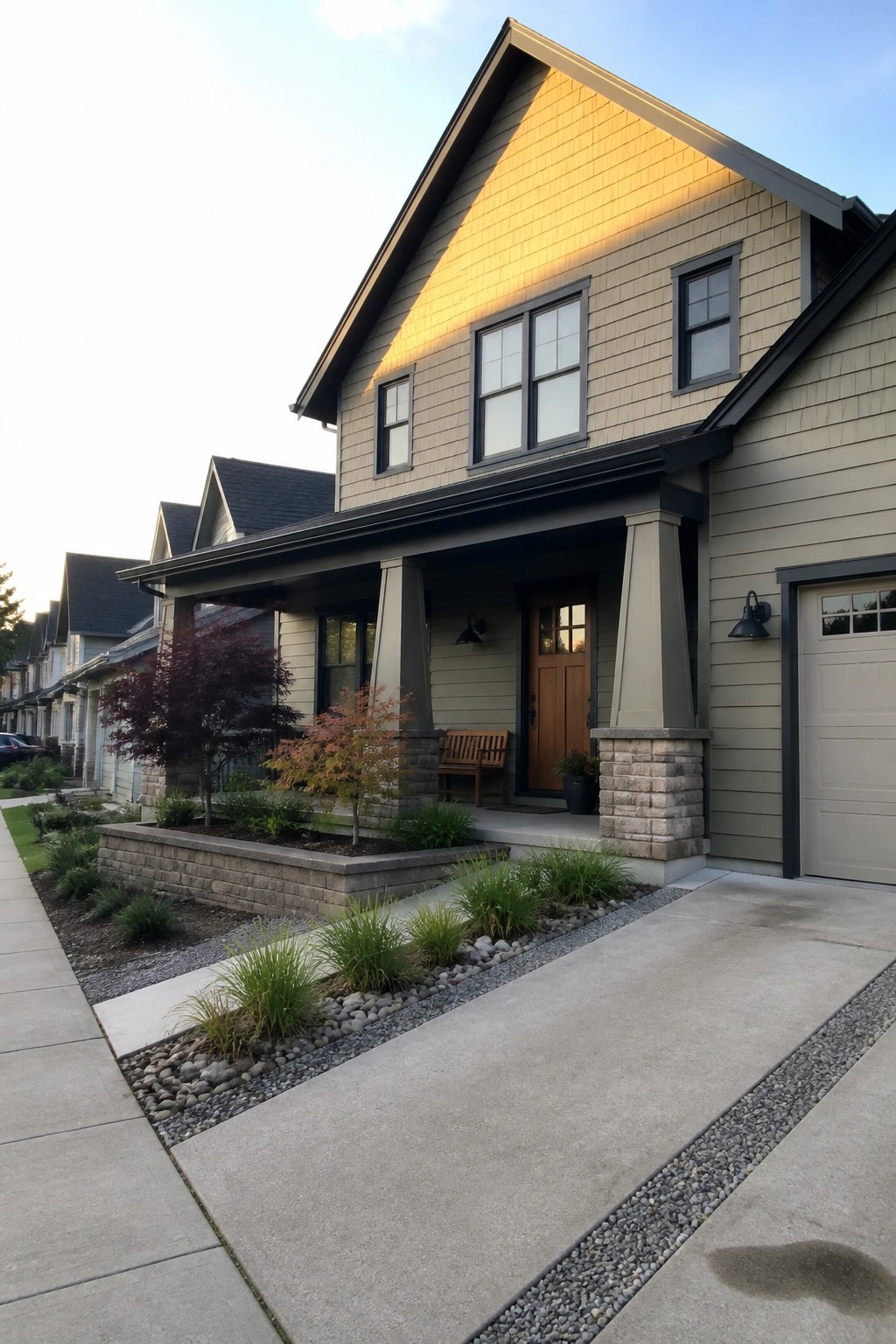
Beige siding gives a suburban house a quiet, steady look that does not demand much work. The color sits well with dark window frames and roof edges, so the whole front stays neat without constant touch ups or repainting.
This approach fits homes that want a simple shape and low upkeep. Stone bases on the porch columns add a little weight at the bottom and help protect the lower walls from wear. Keep the trim consistent in color and skip busy patterns if you want the siding to do most of the work.
Beige Siding That Stays Simple
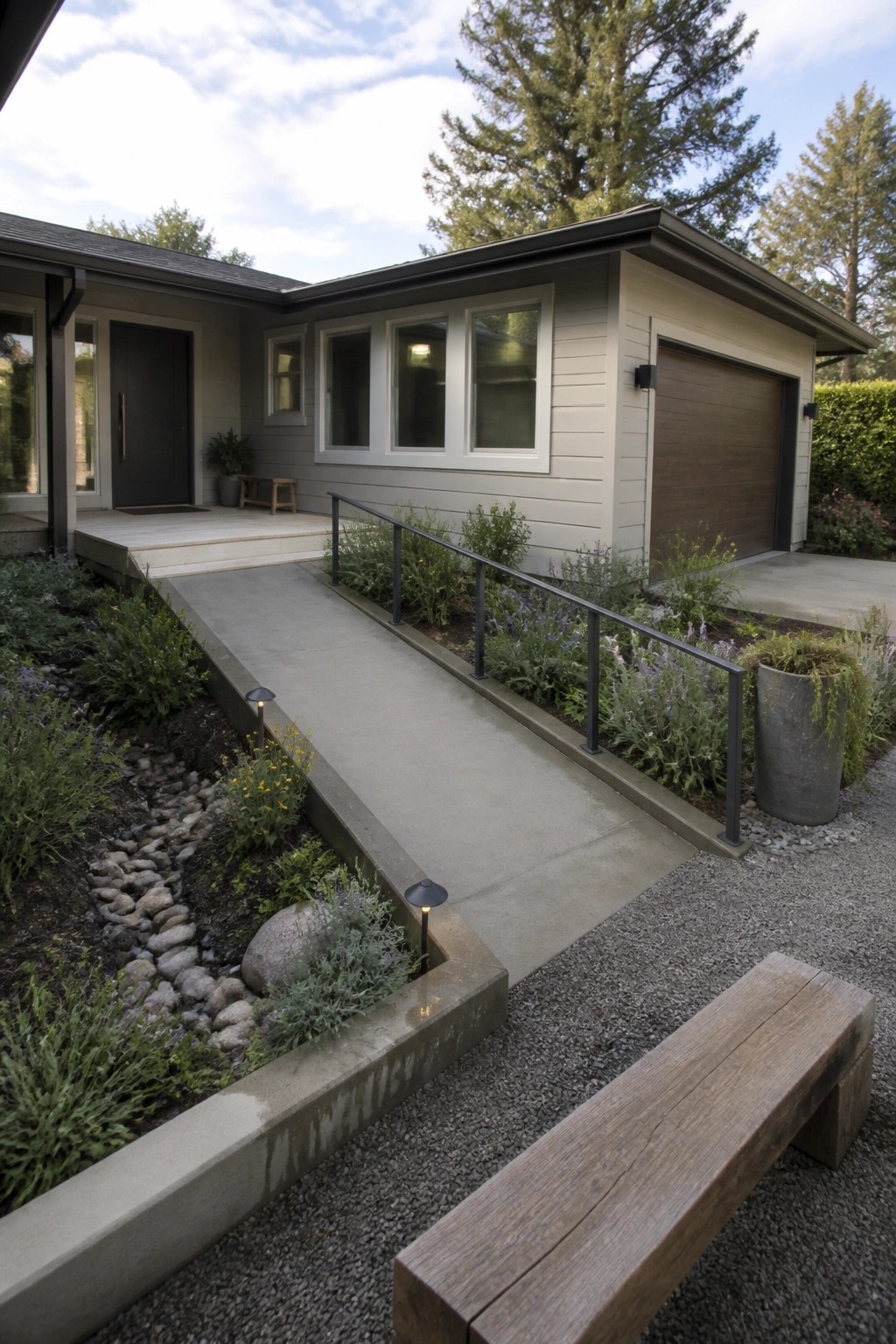
Beige siding works well when you want an exterior that does not demand constant attention. The light tone on this home keeps the look bright without showing every bit of dust or pollen the way a darker color might. It pairs easily with dark trim and a simple roofline, which helps the whole front stay neat over time.
This approach suits suburban homes that sit close to the street or have moderate sun exposure. Stick with a good quality fiber cement or vinyl in a matte finish, and keep the trim and accents in a contrasting dark shade. The result feels current but still blends into the neighborhood without extra work.
Dark Trim With Beige Siding
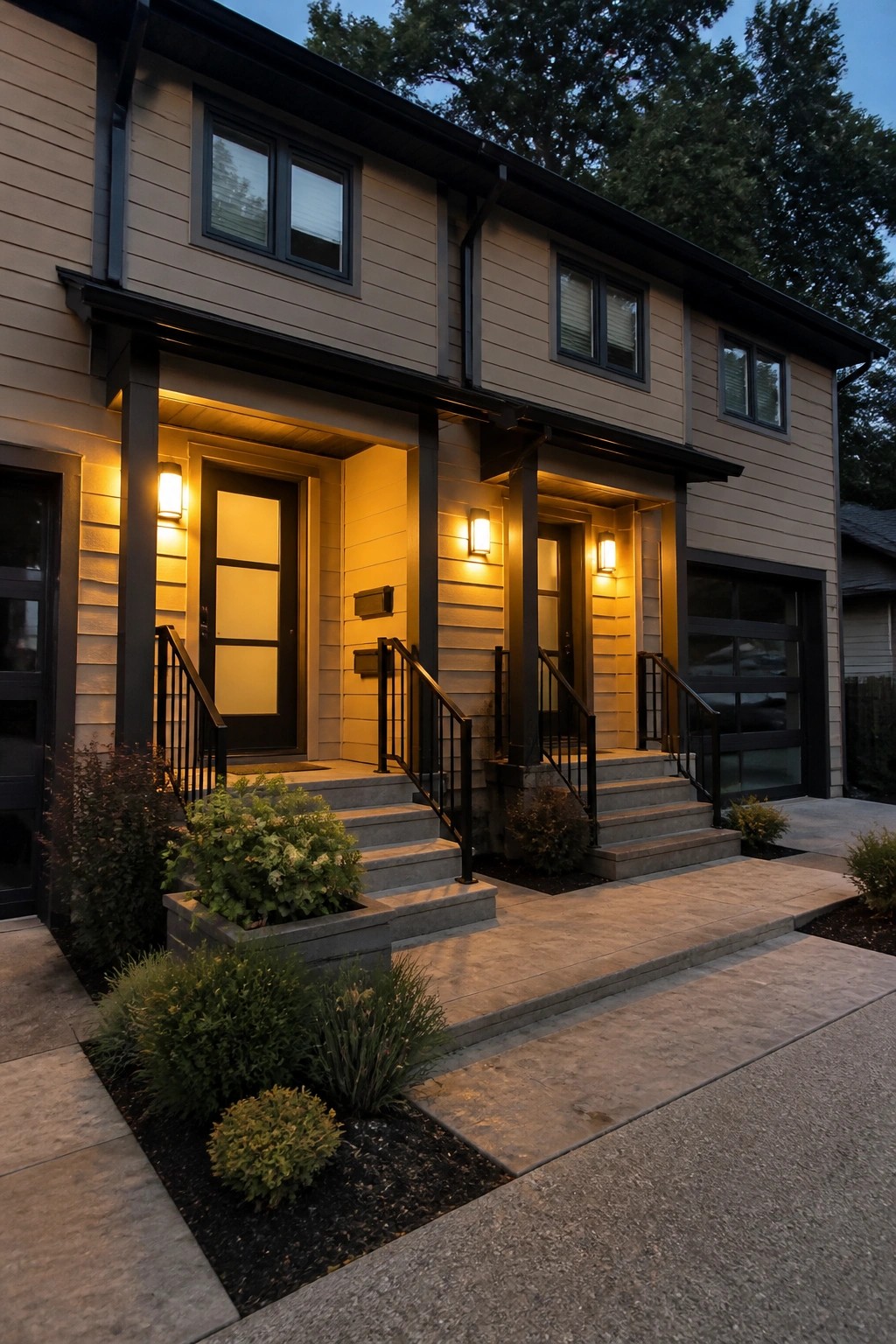
Beige siding often needs a little help to avoid looking plain, and dark trim does that job without much effort. Black window frames and door surrounds give the house clear lines and keep the whole exterior from blending into one color.
This approach suits suburban homes that want a low-maintenance finish. Use it on the main windows and entry doors, then leave the rest simple so the siding stays the focus and upkeep stays easy.
Frequently Asked Questions
Q: Will beige siding show dirt and pollen more than darker colors? A: Beige actually hides everyday dust pretty well in most suburbs. Just hose it down a couple times a year to keep it fresh. Skip harsh cleaners since they can strip the protective coating.
Q: What trim colors work best with these beige exteriors? A: Stick with crisp white or soft gray for the trim. Those choices keep the whole look clean and bright without competing.
Q: How does beige hold up against fading from sun exposure? A: Good quality beige siding comes with UV protection built in. It stays even longer if you pick a mid-tone shade instead of the lightest ones.
Q: Can I add some color accents without ruining the low-maintenance vibe? A: Yes, try a muted green door or navy shutters. They add interest but still let the siding do the heavy lifting on upkeep.
