

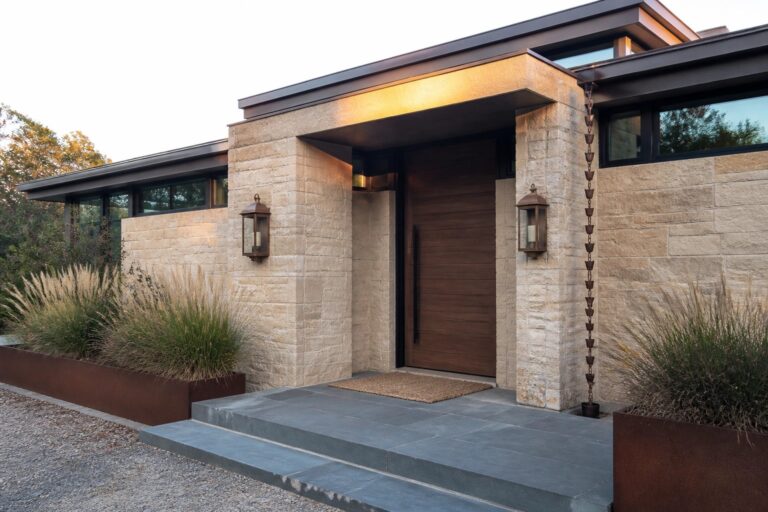
Beige stone exteriors tend to age gracefully when the materials stay simple and local to the setting.
The way the stone wraps around windows and doors can change how the whole front reads from the road.
Texture matters most.
I often wonder whether a house will hold that same calm feeling once the landscaping grows in around the base.
Matching the stone to the roofline keeps the exterior from feeling like separate pieces added together over time.
Wood Doors On Stone Exteriors
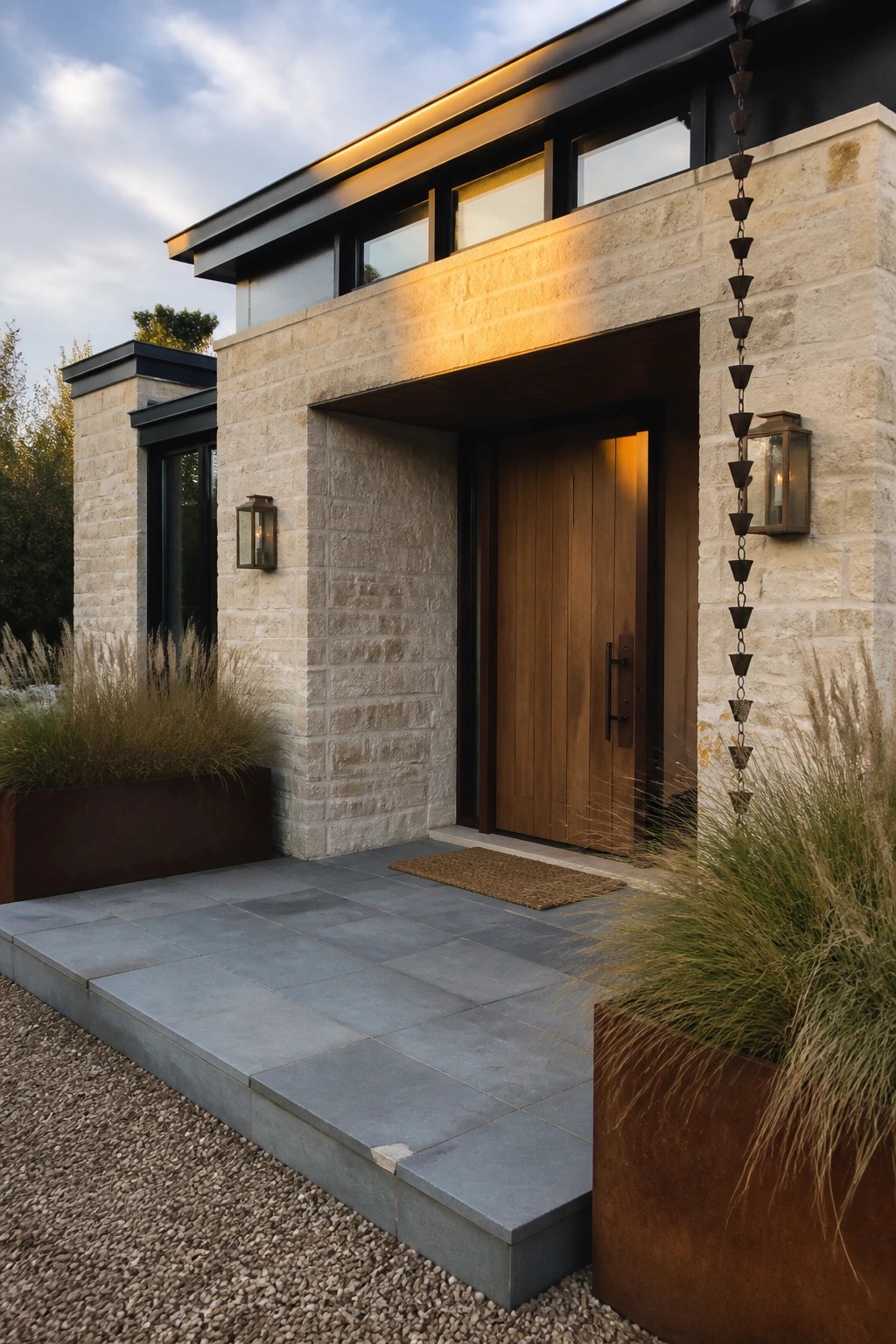
A wood door stands out against stone because it adds a bit of natural warmth without changing the overall look of the house. The contrast keeps the stone from feeling too cold or heavy while still letting the material stay front and center.
This approach works well on homes that already use earthy tones and simple forms. Keep the wood tone medium to dark so it reads as part of the same material family as the stone and any metal accents nearby.
Using Beige Stone For A Simple Exterior
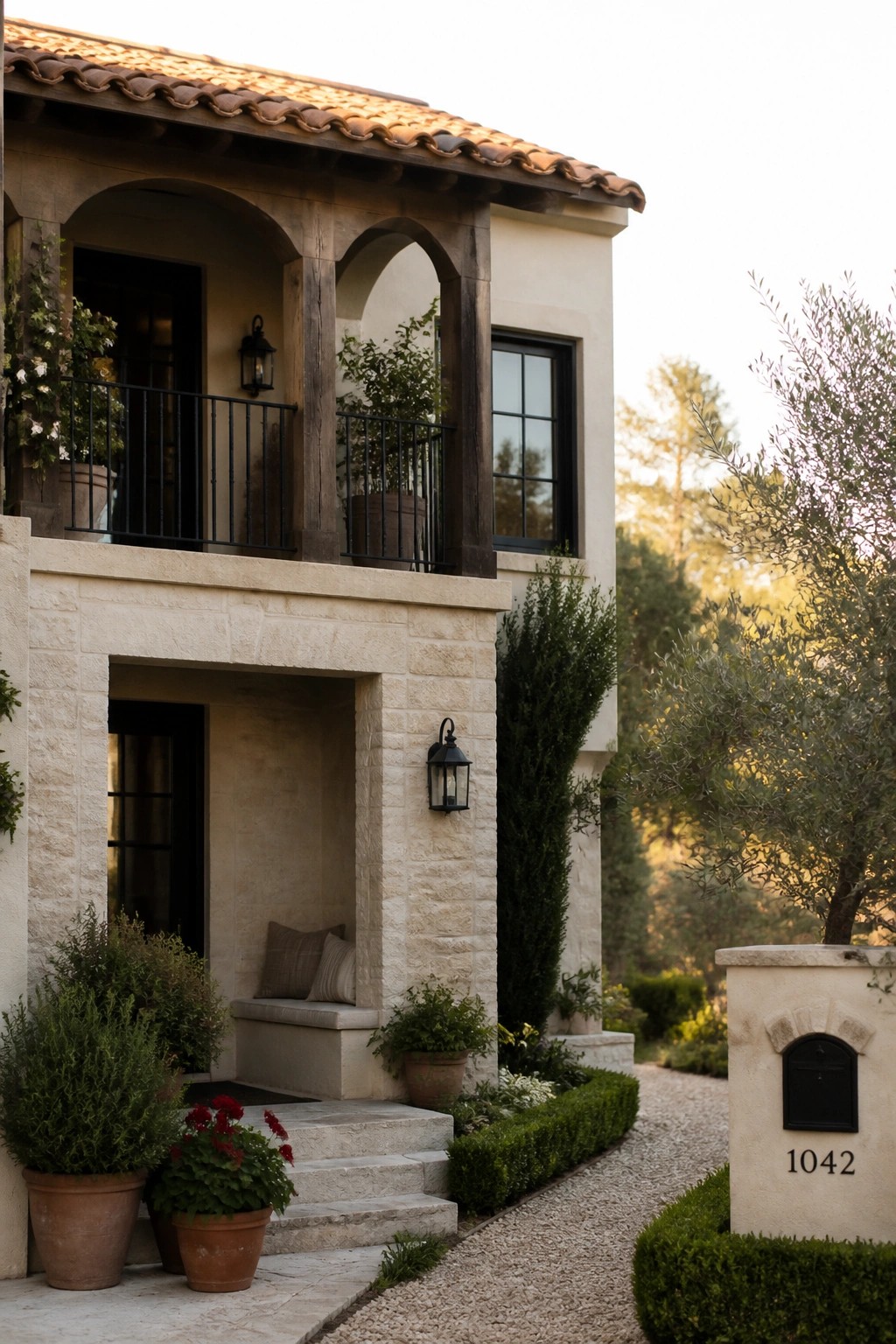
Beige stone gives a house exterior a steady, grounded feel that works with the land around it. The material shows its age nicely over time and pairs well with gravel, low shrubs, and clay pots without needing extra color.
This choice suits homes in drier or sunny climates where the stone can stay light and warm. Keep trim and metal details dark and minimal so the stone remains the main surface instead of competing with too many added layers.
Mixing Wood Siding With Stone Foundations
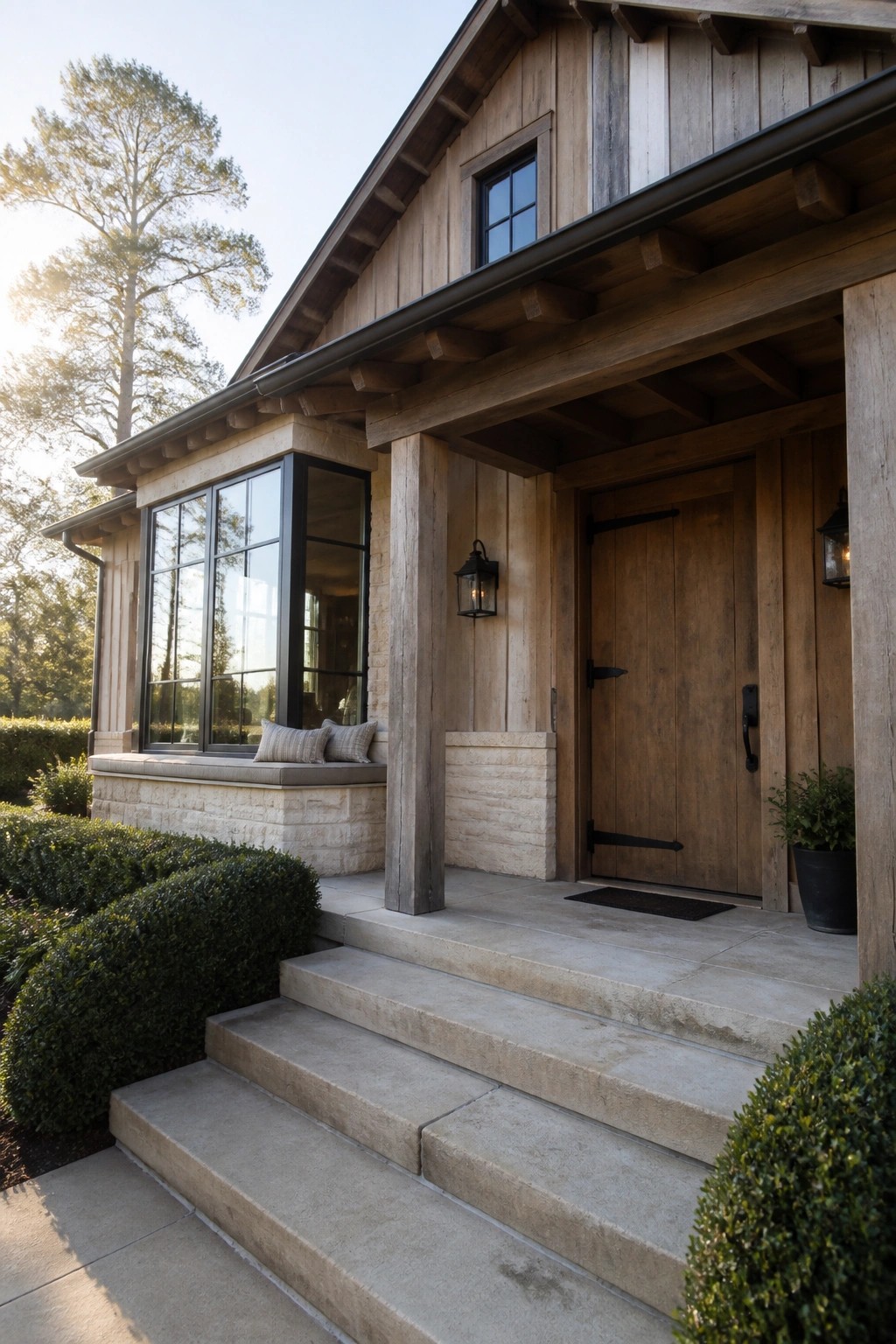
Many homes feel more settled when wood siding rests on a stone base. The two materials bring different textures that balance each other and keep the exterior from looking too flat or too heavy.
This combination suits houses in wooded or open settings where you want the building to blend with its surroundings. Use a light stone like the one shown here and let the wood age on its own so the colors stay soft and natural over time.
Beige Stone Facades With Dark Accents
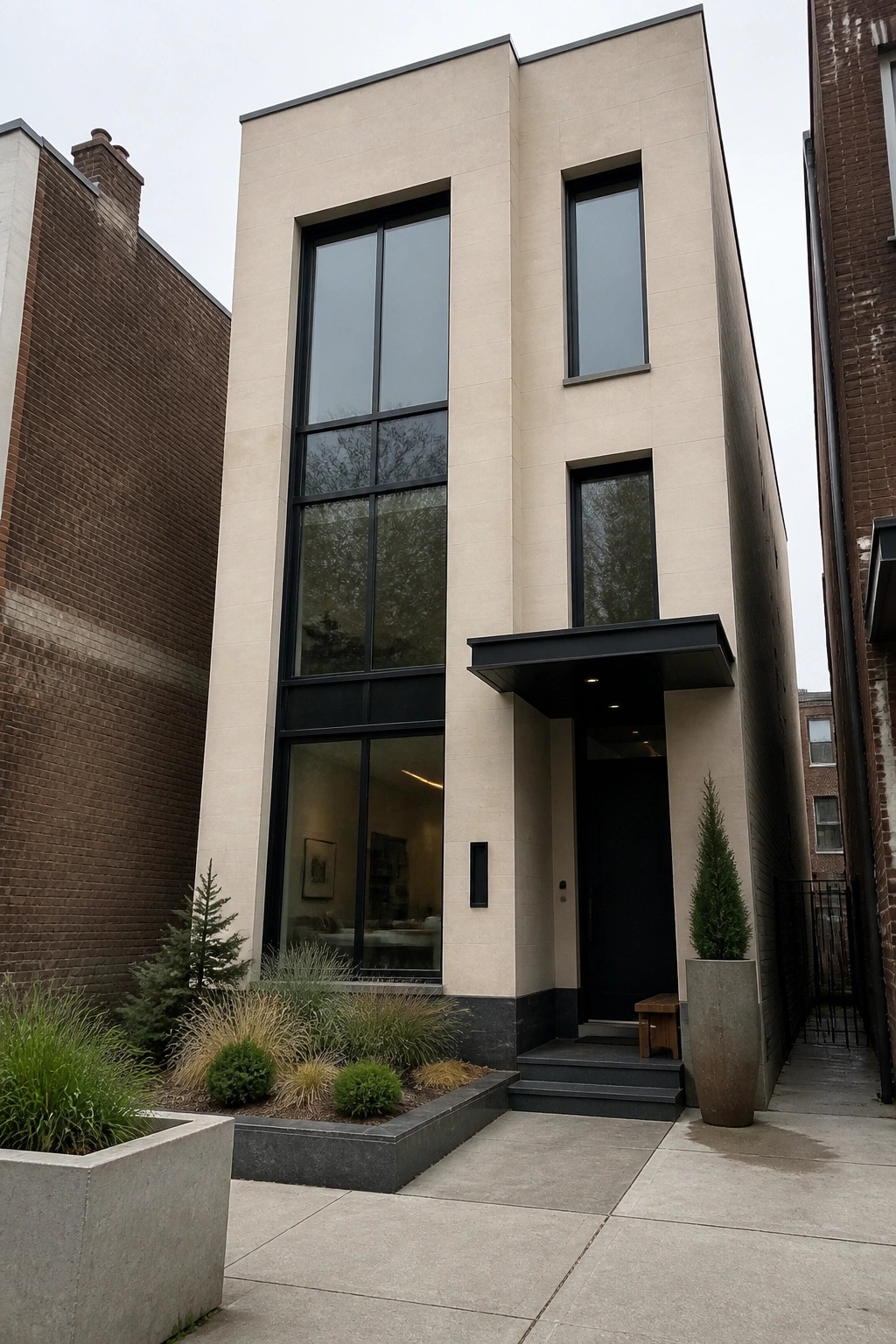
Light stone works well on tall narrow homes because it keeps the shape from feeling too stark or heavy. The uniform tone runs the full height and gives the house a calm, solid presence that still reads modern.
This approach fits city lots where space is tight and the goal is to stay simple. Use it on clean rectangular forms and let dark window frames and door trim do the contrast work. Skip extra trim or patterns so the stone stays the main material.
Stone Facades That Blend Into the Landscape
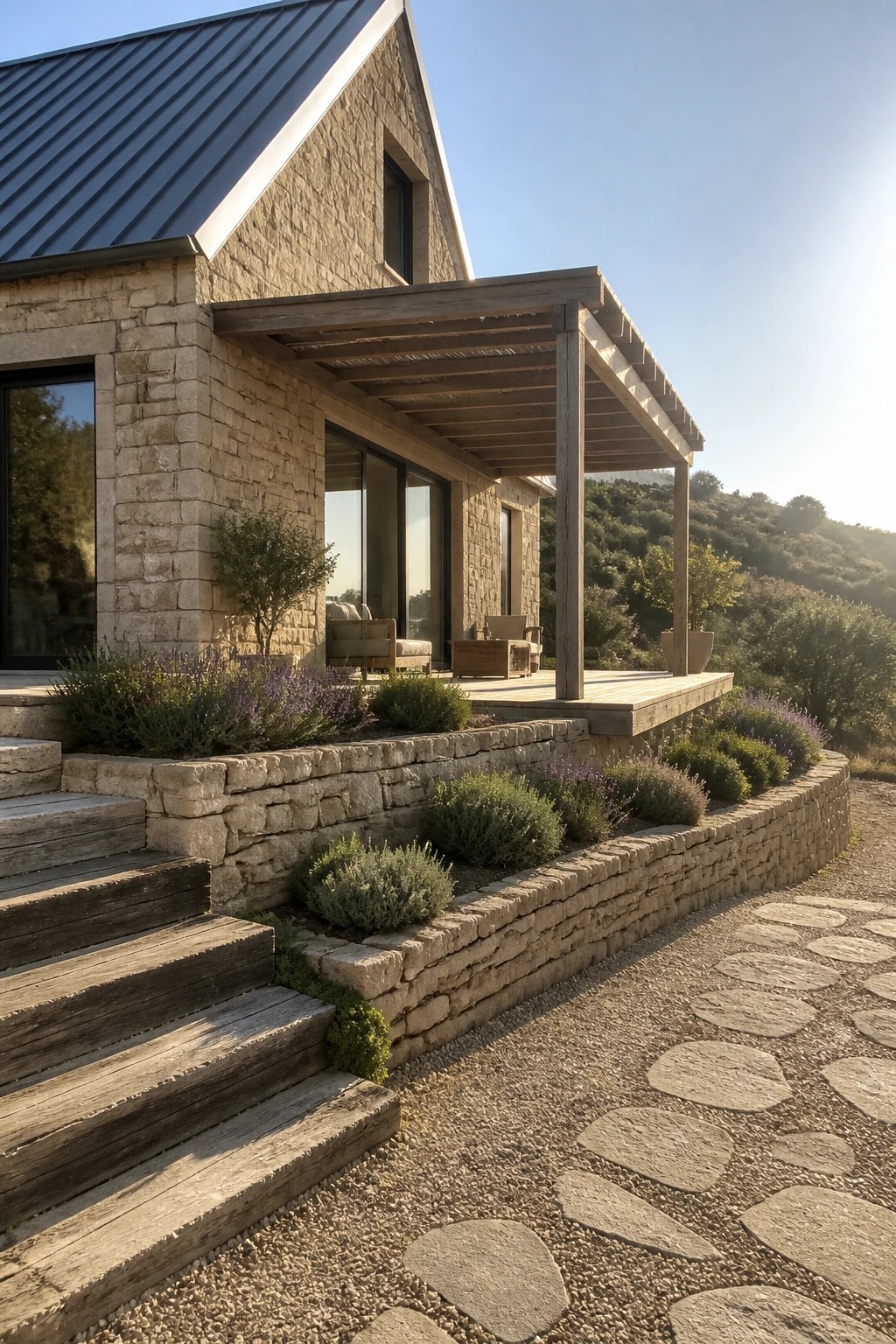
Natural stone on the exterior walls gives a house a settled, grounded feel that newer materials often miss. The beige tones here let the structure sit comfortably against the hills instead of standing out as a sharp addition.
This approach suits homes on sloped or open land where you want the building to feel like part of the site. Keep the stone the main surface and use simple wood accents only where needed for shade or steps.
Choosing Natural Wood Furniture For Stone Patios
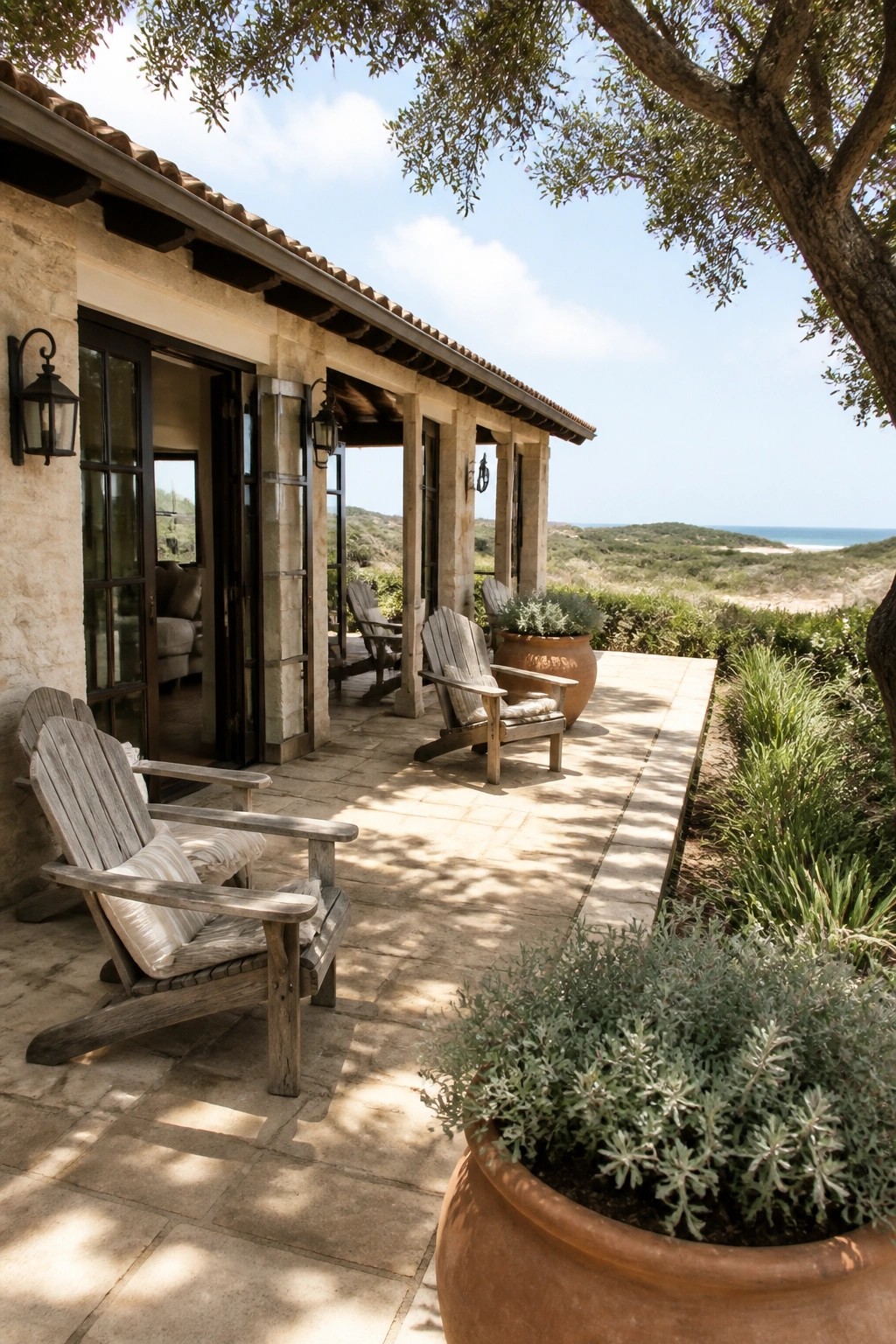
Weathered wood chairs work especially well with stone surfaces because both materials age in a similar way. The simple lines of the seating keep the focus on the texture of the stone and the surrounding plants instead of competing with them. This approach feels practical for homes that already use earthy materials on the exterior.
It suits houses in dry or coastal areas where the furniture can stay outside year round. Stick to a few chairs rather than filling the space, and let the wood gray naturally over time so it matches the stone tones. Avoid bright cushions or metal accents that break the quiet material mix.
Mixing Stone And Wood On The Facade
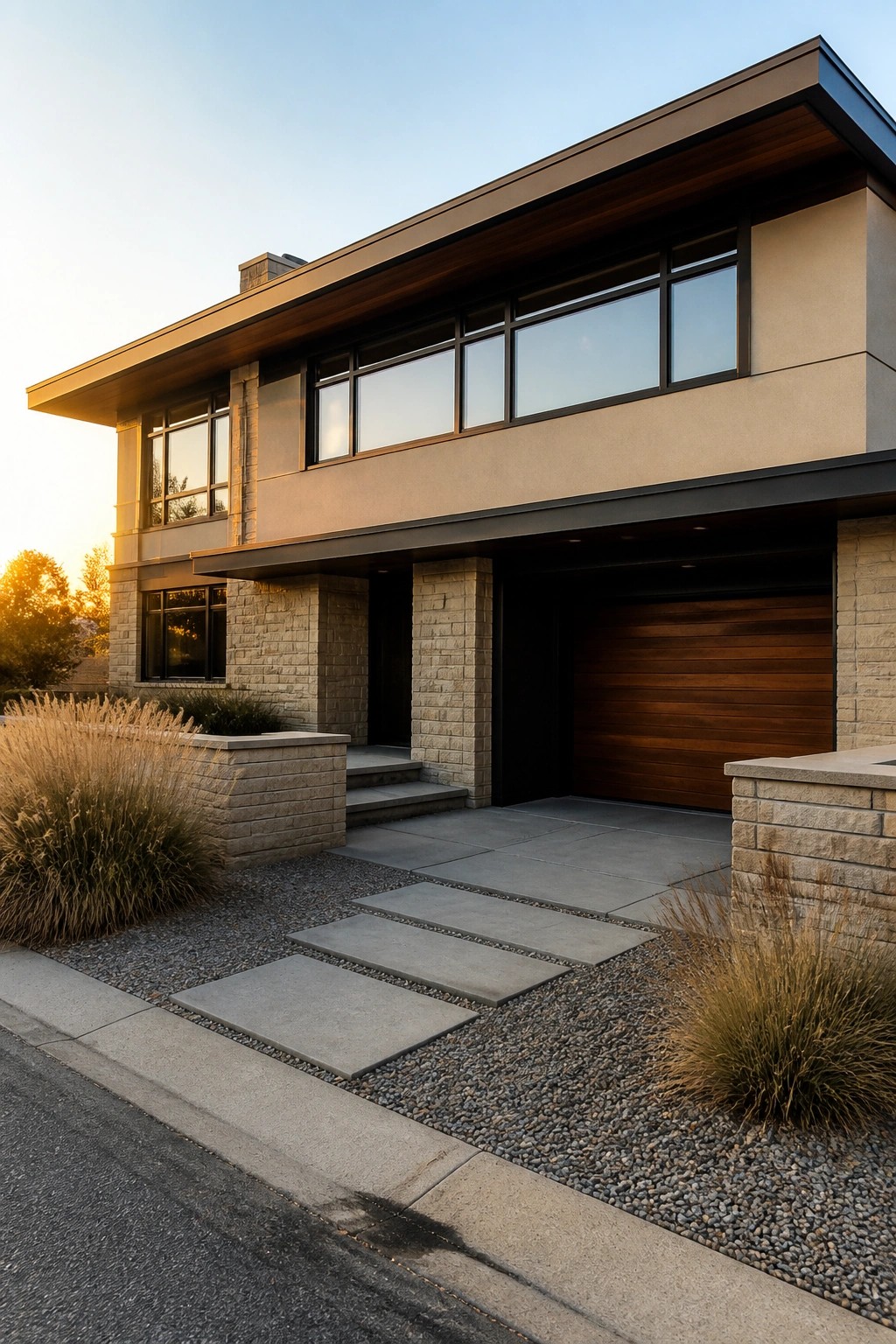
Many homes gain a quiet strength when stone and wood sit side by side. The stone gives weight and a sense of permanence while the wood softens the look and brings in natural color that changes nicely with the light.
This mix works best on houses with fairly clean shapes. Use the stone on lower walls or columns to ground the building, then bring in wood for garage doors or overhangs so the two materials balance each other without fighting for attention.
Built-In Stone Seating For Courtyards
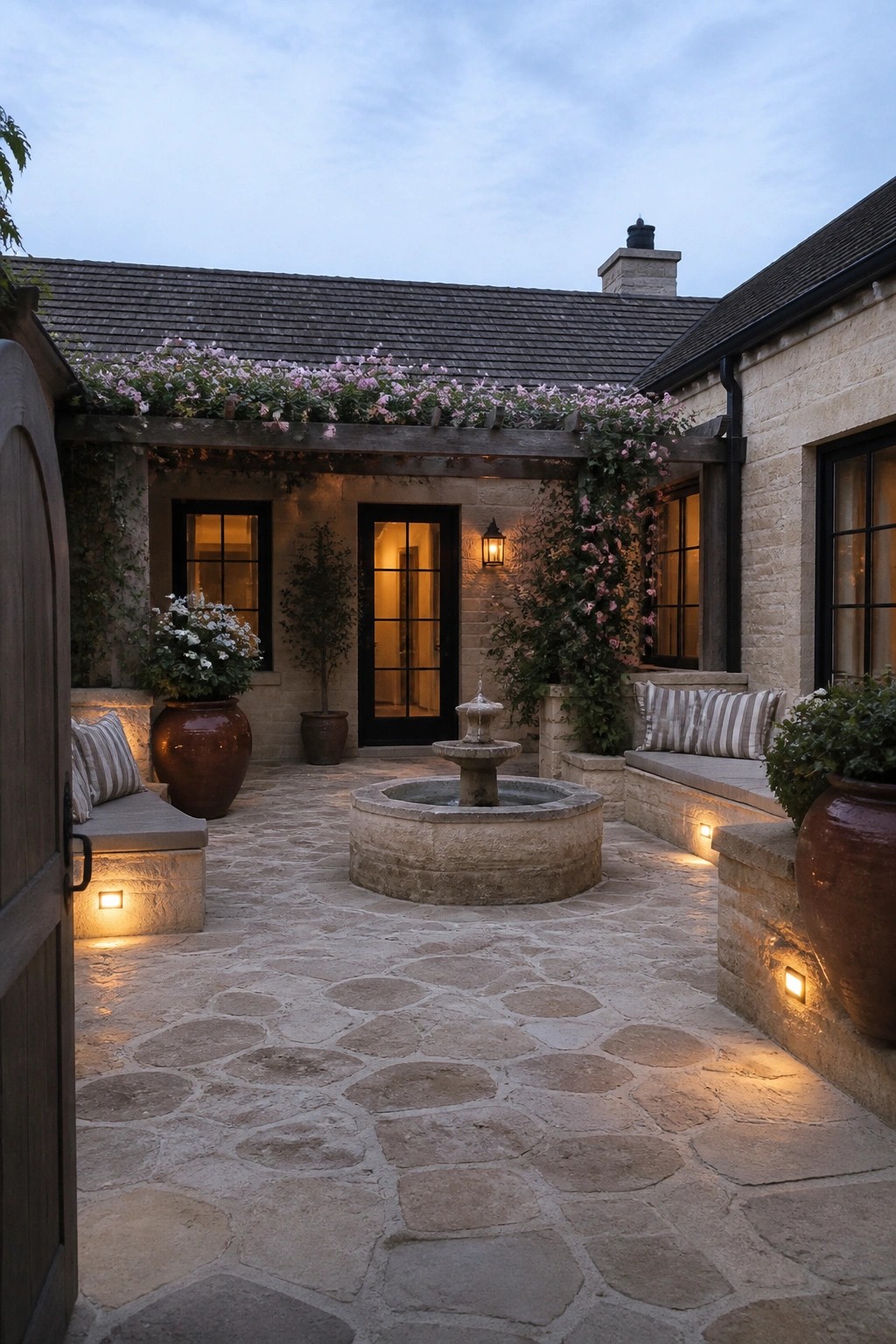
Built-in seating works well in outdoor spaces because it stays put and blends right into the structure. Here the benches are made from the same beige stone as the paving and house walls, so the whole area feels like one solid room instead of separate pieces added later.
This approach suits stone homes or places where you want low upkeep and a calm look. It gives you places to sit without crowding the floor with extra furniture, and it holds up through weather better than wood or metal options.
Stone and Timber Work Well Together
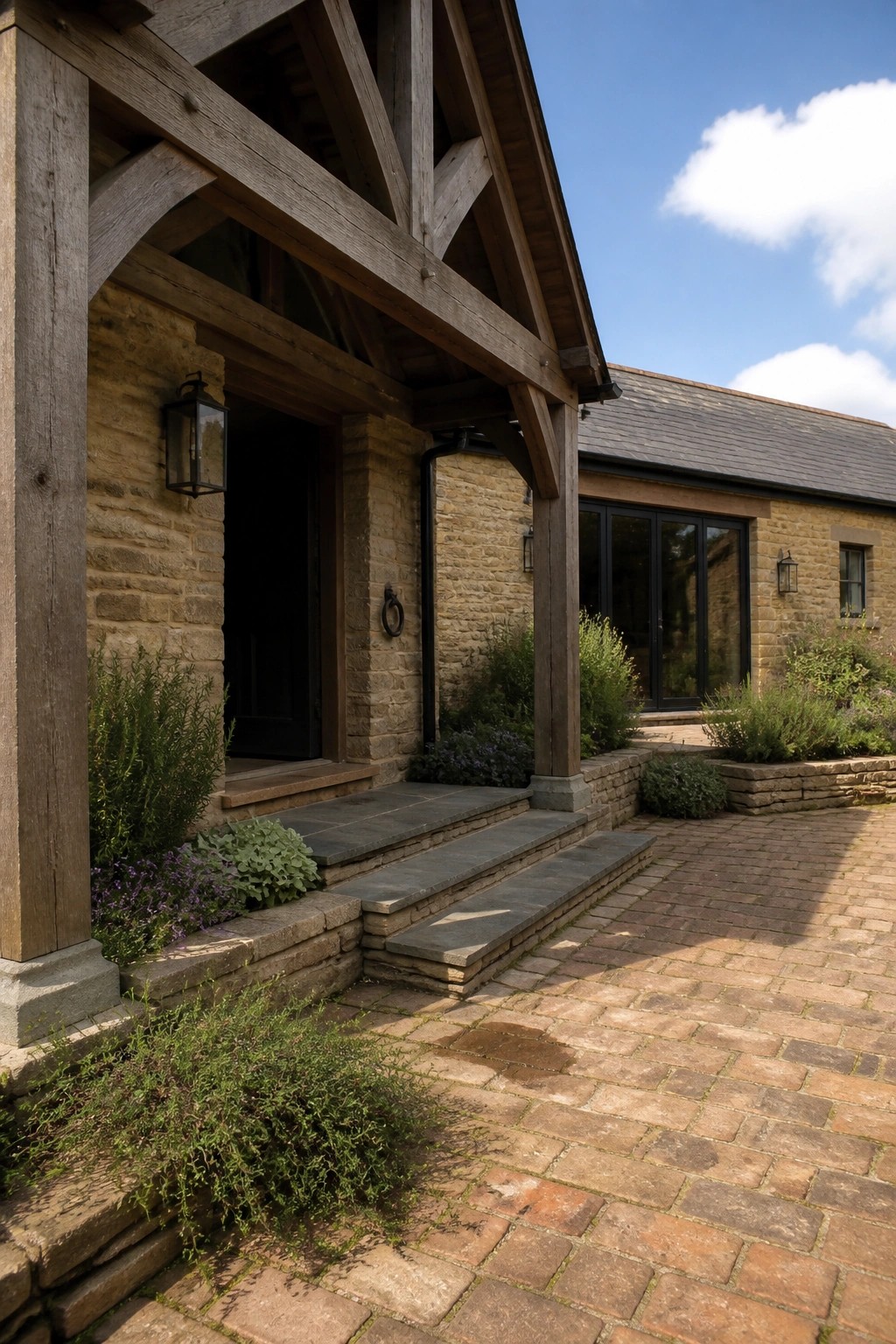
Stone walls paired with heavy timber beams give a house a solid and honest look that feels right at home in the landscape. The materials do most of the work without needing extra trim or decoration.
This mix suits homes in open or rural settings where you want the exterior to age gracefully. Stick with local stone tones and let the wood weather on its own so the whole front stays simple and low maintenance.
Dark Accents On Light Stone Exteriors
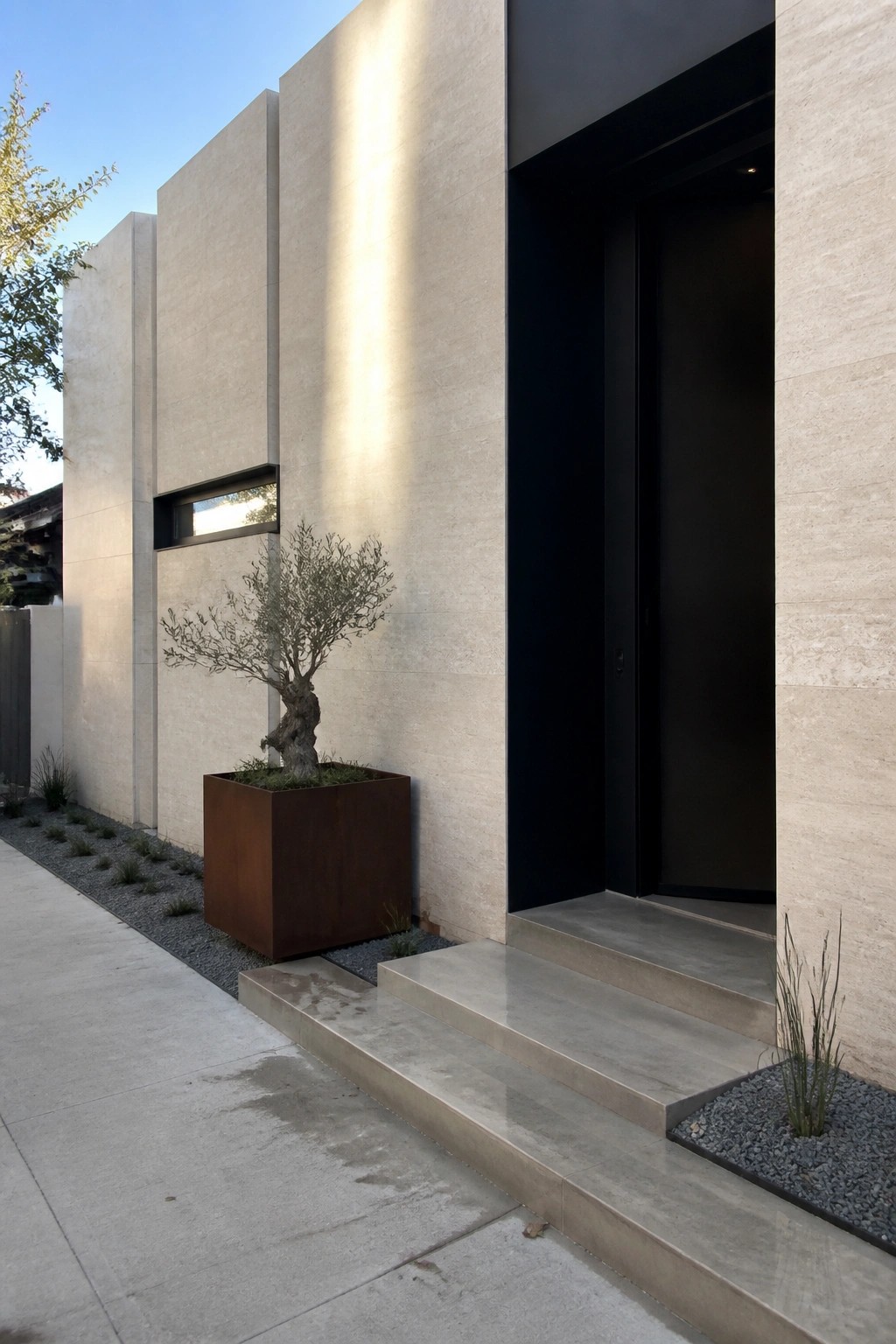
Light stone gains definition when paired with a dark door and trim. The contrast keeps the material from feeling flat while still letting the natural texture lead.
This works best on homes that already lean into earthy tones. Keep the dark elements limited to the entry and a few metal accents so the stone stays the main feature.
Stone Fireplaces on Covered Porches
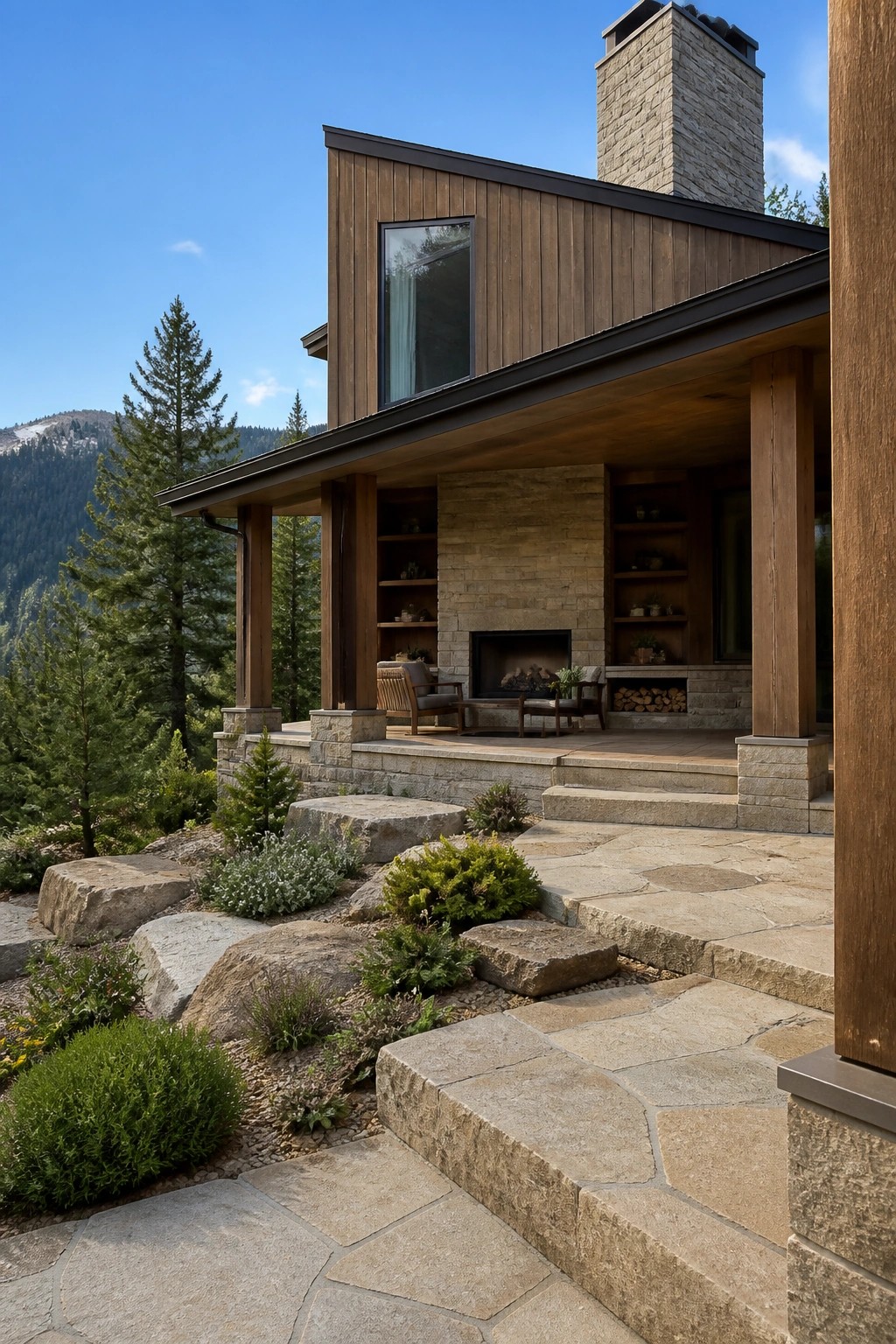
A stone fireplace built right into the porch gives the outdoor space a real sense of permanence. It turns what might feel like a seasonal area into something you can use more months of the year, especially when the materials match the house itself.
This works best on homes that already use stone at the foundation or along the lower walls. Keep the scale modest so the fireplace feels like part of the structure rather than an added feature, and make sure the seating stays close enough to benefit from the heat without crowding the firebox.
Stone Benches Built Right Into The Patio
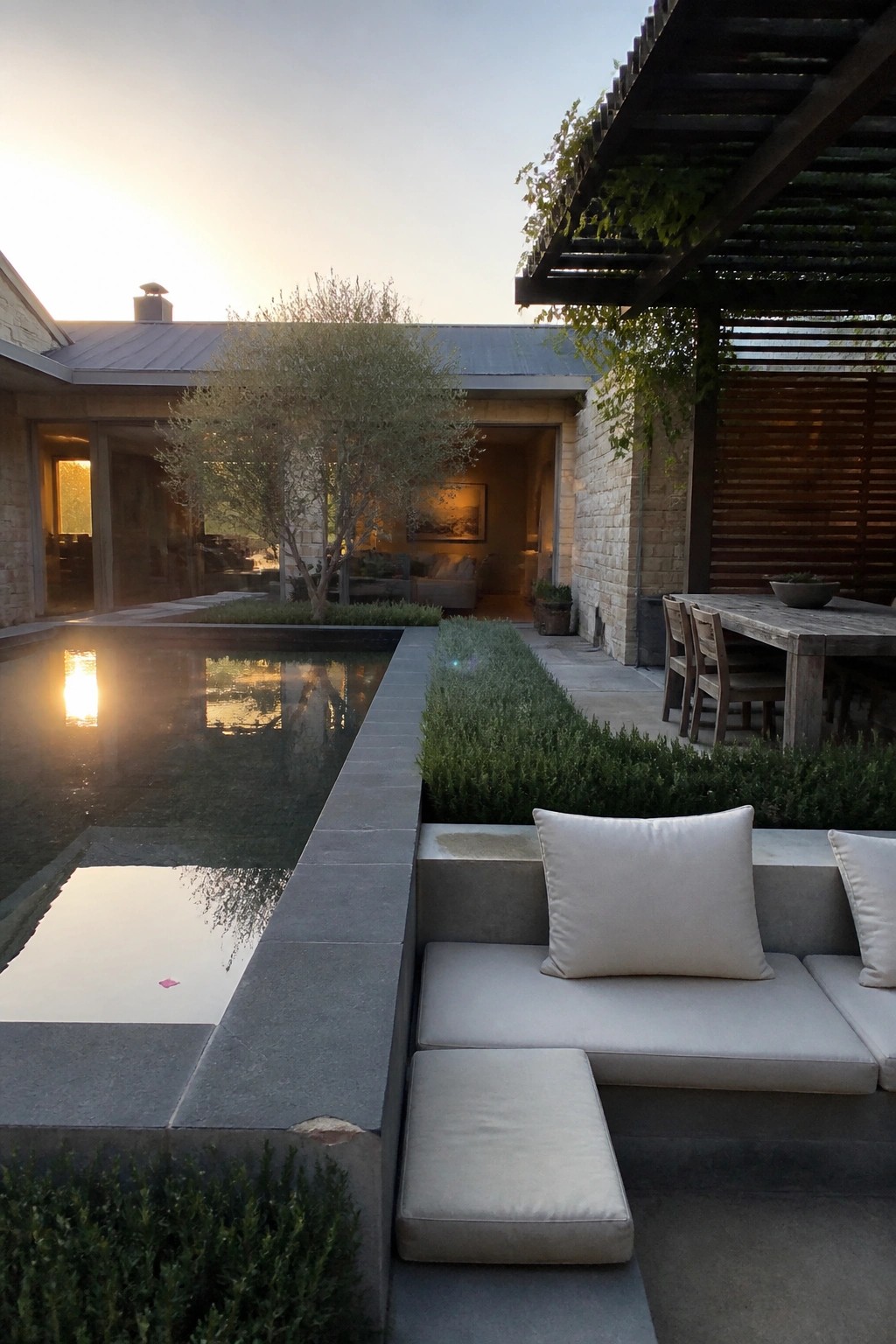
One simple way to make an outdoor space feel finished is to build the seating from the same stone used on the house. It cuts down on extra furniture and keeps the whole area looking calm and connected instead of cluttered with separate pieces. The cushions can stay loose so they are easy to move or store when the weather changes.
This works best on homes that already use stone or concrete for the walls and hardscaping. It suits places where you want low upkeep and a steady look year round. Just make sure the bench height stays comfortable for sitting and that drainage is handled so water does not pool on the surface.
Using Beige Stone to Balance Modern Lines
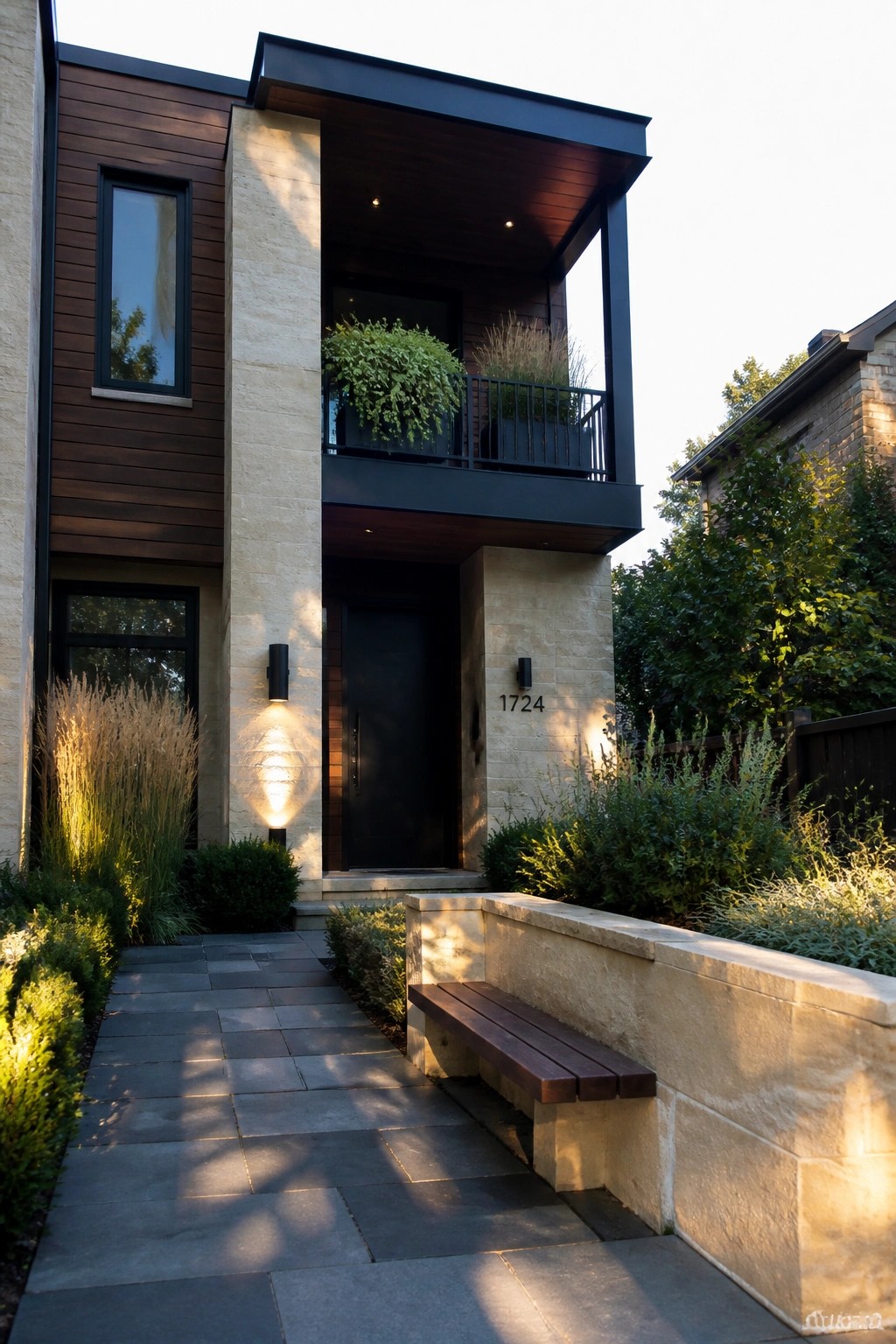
Beige stone works well when you want a house to feel grounded without looking heavy. In this case the light stone columns stand out against the darker wood siding and metal trim, which keeps the whole front from feeling too stark or cold. The material adds some texture that changes with the light and helps the entry feel more welcoming.
This approach suits homes that already lean modern but need a bit of warmth. Keep the stone in larger blocks or columns rather than spreading it thin, and let the wood and metal stay in smaller doses. It works best on houses with clean shapes where the stone can do the main job of softening the edges.
Frequently Asked Questions
Q: How do I choose stone that actually blends with the dirt around my lot? A: Walk the edges of your property and note the exact shades in the soil and any exposed rock. Match those tones as closely as possible when you look at samples. The house will sit better in the landscape that way.
Q: Will the beige stone stay clean without constant scrubbing? A: Rain usually washes most dust off these surfaces. If you notice buildup in sheltered spots, a quick rinse with a garden hose takes care of it. Skip harsh cleaners that can lighten the natural color.
Q: Can I add a small wood element without breaking the earthy look? A: Pick a weathered board or beam in a similar warm tone. Place it as a simple lintel or door surround. The wood will age alongside the stone and keep the materials feeling connected.
Q: What if my climate gets heavy snow? A: Choose stone rated for freeze-thaw cycles and make sure the base sits a few inches above grade. That single step keeps water from pooling and staining the lower courses.
