

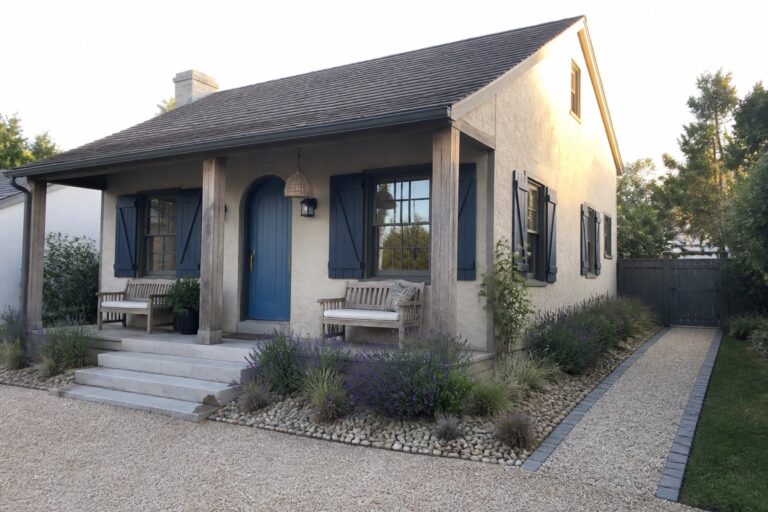
I have walked past plenty of coastal style homes and noticed that beige paired with blue often gives the facade a quiet balance that stands out without trying too hard.
The way these colors catch the light can change how the rooflines and windows read from the street.
One thing I always check first is how the entry area ties into the rest of the exterior because that spot sets the tone for the whole house.
Materials like weathered wood or simple siding hold up better in salty air when they stay in this palette.
Some just work better than others once you see them in person.
Pairing A Blue Door With Beige Walls
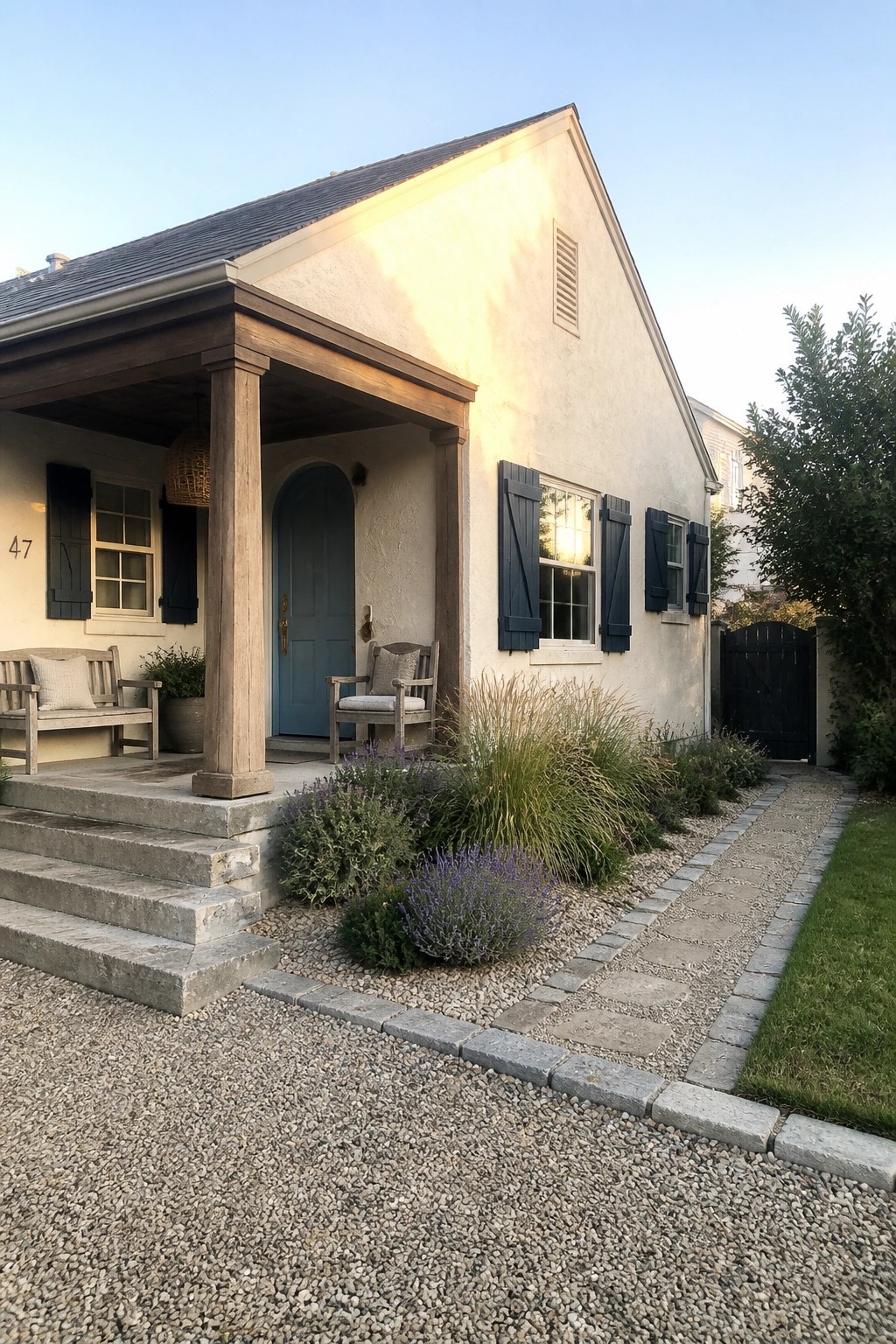
A soft blue door stands out nicely against warm beige walls. It adds just enough color to make the entry feel friendly while keeping the overall look calm and coastal.
This works best on homes with simple stucco or siding. Add dark shutters or wood trim to balance the blue and keep the palette from feeling too sweet.
Navy Blue Trim on Shingle Siding
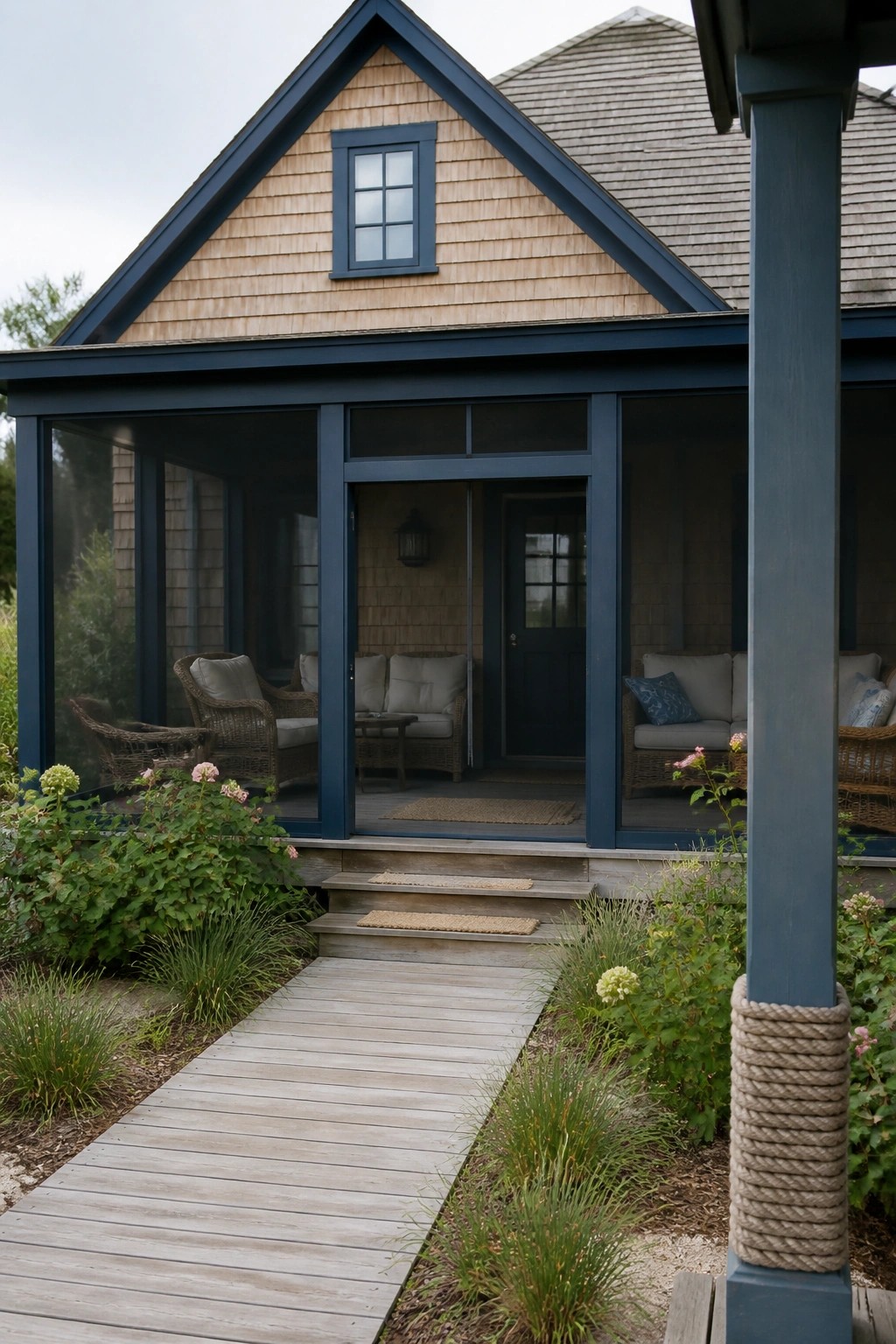
Many coastal homes use a deep navy on the trim to give the exterior some weight without making it feel heavy. It works well against the light tone of cedar shingles because the blue defines the windows, doors, and porch structure while the shingles keep the whole thing soft and natural.
This approach suits homes near the water that already have a simple gable shape and a front porch. Keep the siding in its natural or lightly weathered state and limit the blue to the trim and framing so the color stays crisp instead of overwhelming the house.
Breeze Block Screens Add Texture at the Entry
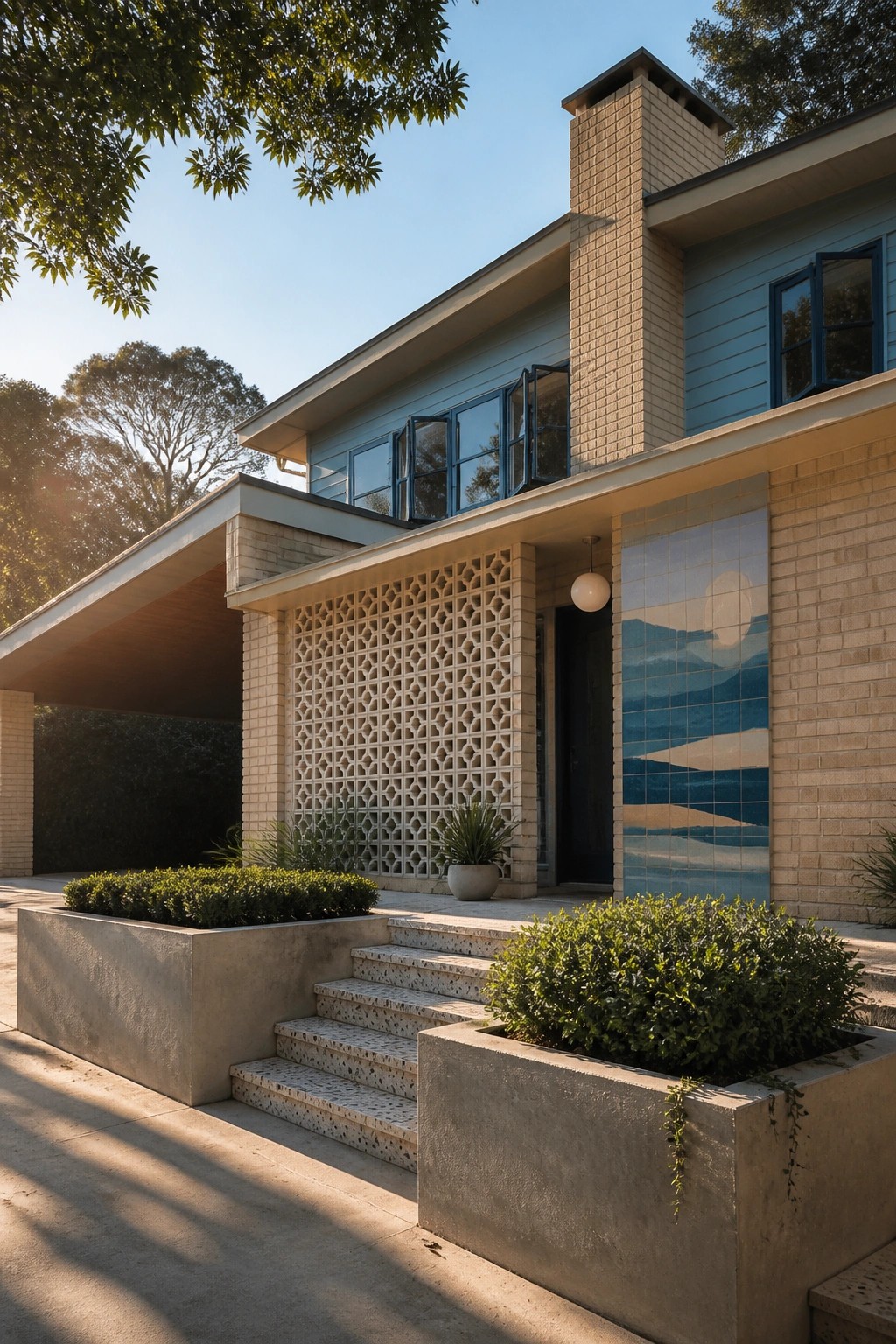
A breeze block screen gives the front of the house some pattern without making the entry feel closed off. The open design lets light and air move through while creating a soft boundary between the walkway and the door area. It pairs easily with simple brick and painted siding.
This detail works best on homes that already lean coastal or mid-century. Keep the blocks in a light neutral so they blend with the main materials, and let low plants soften the base. Avoid crowding the screen with too many layers or heavy colors that fight the open look.
Blue Trim on Beige Shingles
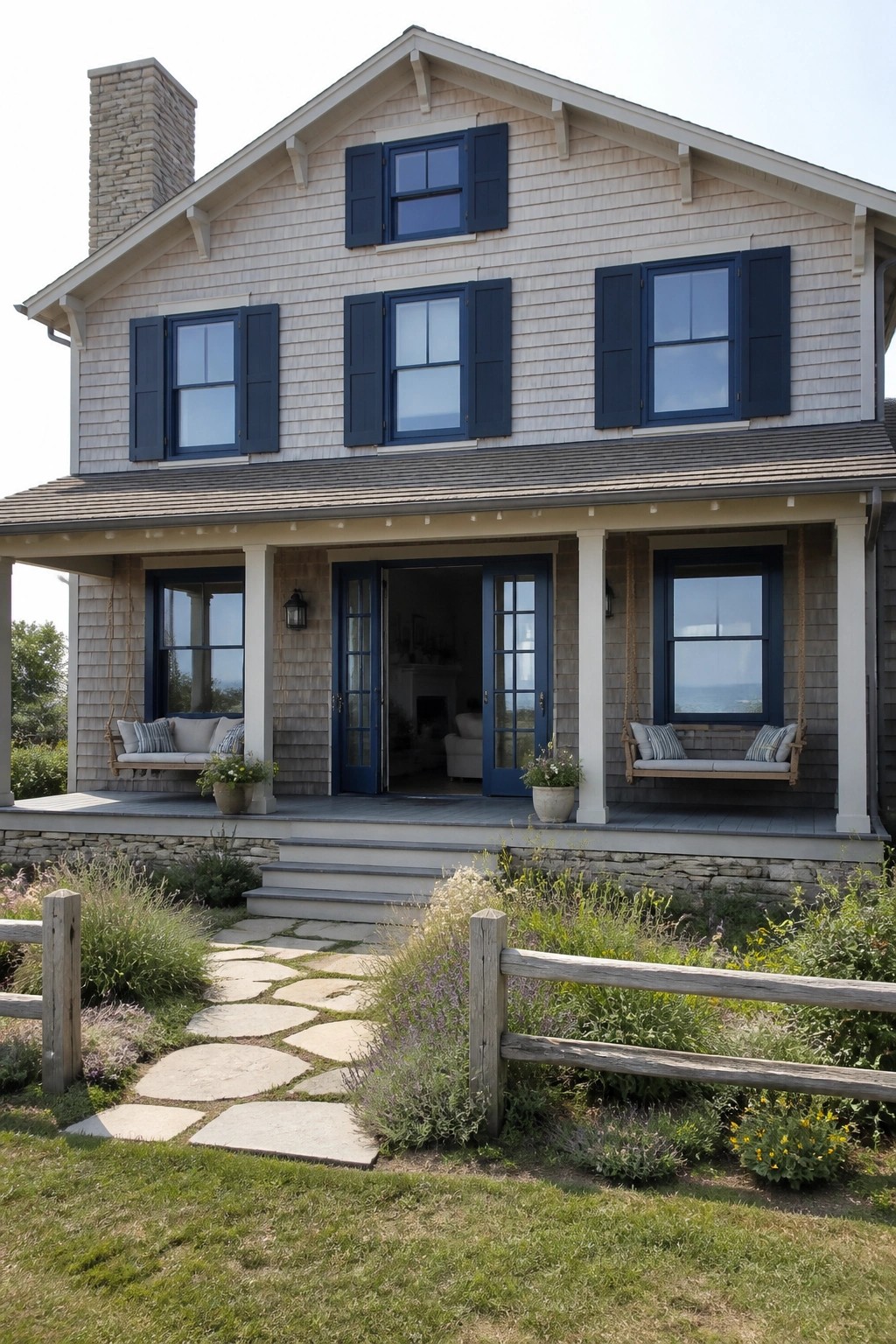
Using the same deep blue on shutters, doors, and window frames keeps the whole front simple and pulled together. The soft beige shingles give it a quiet background, so the blue stands out without fighting for attention. Many coastal homes use this mix because it feels fresh but still classic.
This approach works best on shingled houses that already have a lot of surface texture. Stick with one blue shade across every painted detail, and let the siding stay light so the color reads clearly from the street.
Striped Awnings Over the Front Door
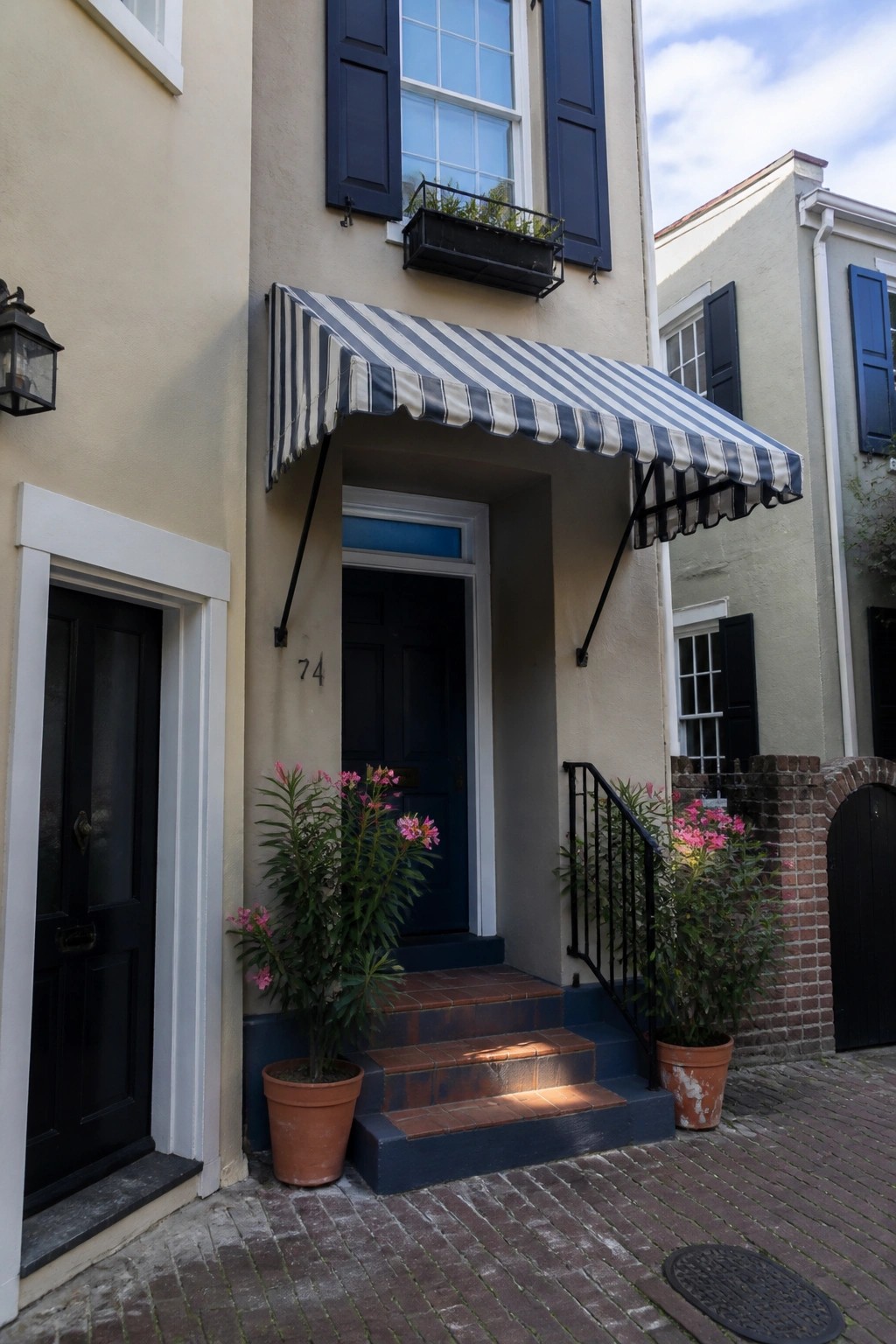
A striped awning gives the entry some needed shade and breaks up the flat look of a simple facade. The blue and white stripes here work nicely with the dark blue door on the light beige wall.
This detail suits homes in sunny or coastal spots where you want a bit of cover without adding a full porch. Keep the stripes fairly wide and the colors soft so the whole entry stays light rather than heavy.
Built-In Benches for the Front Entry
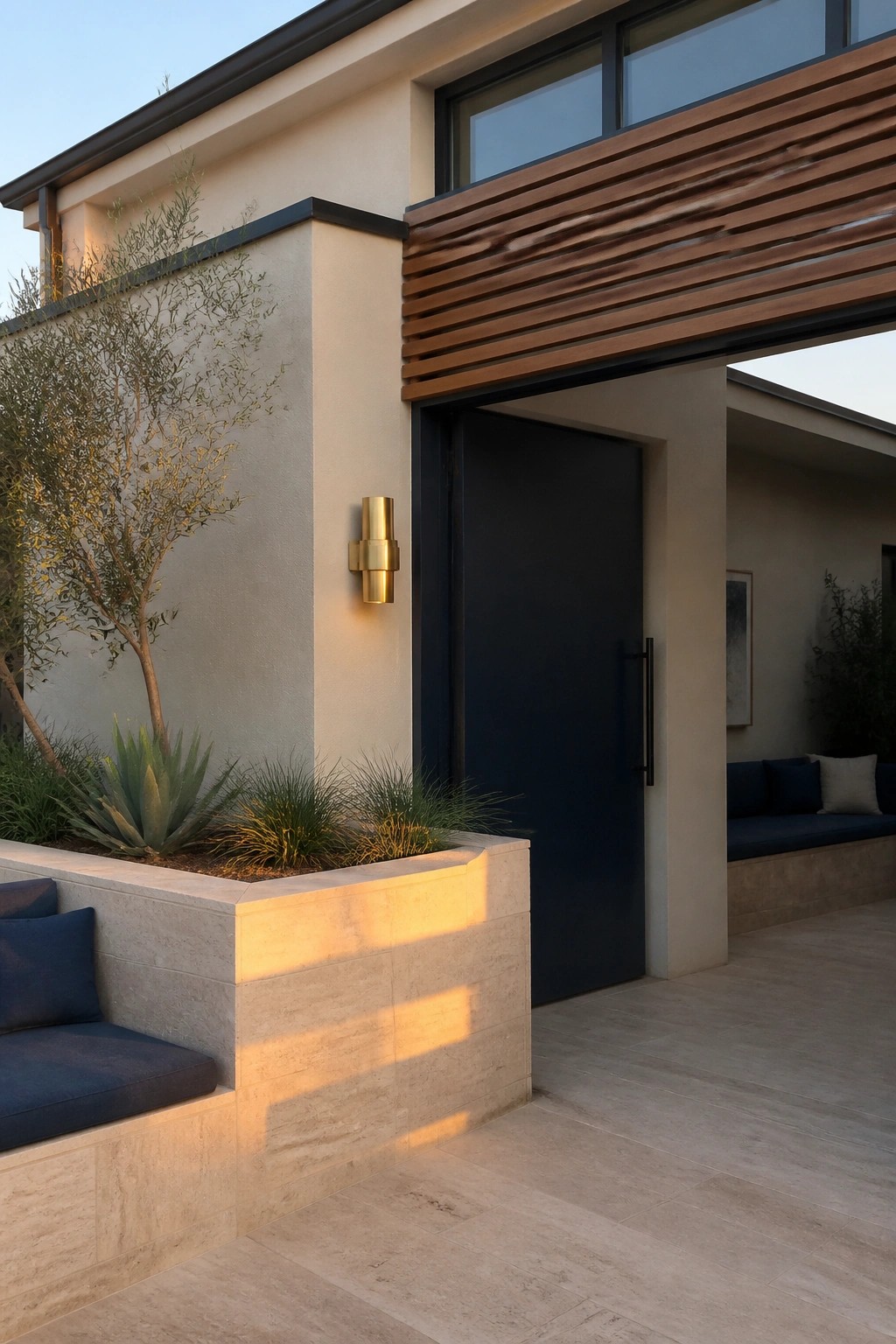
Built-in seating right at the entry gives a house an easy, lived-in feel without taking up extra space. The cushions in deep blue stand out nicely against the light stone and warm walls, which helps the whole front look more coastal and relaxed.
This works best on homes with a simple, modern shape where the bench can tie into a planter or low wall. It suits places that get regular use, like coastal areas where people spend time outside. Just keep the cushions in a sturdy fabric so they hold up to sun and weather.
Navy Doors On Light Beige Homes
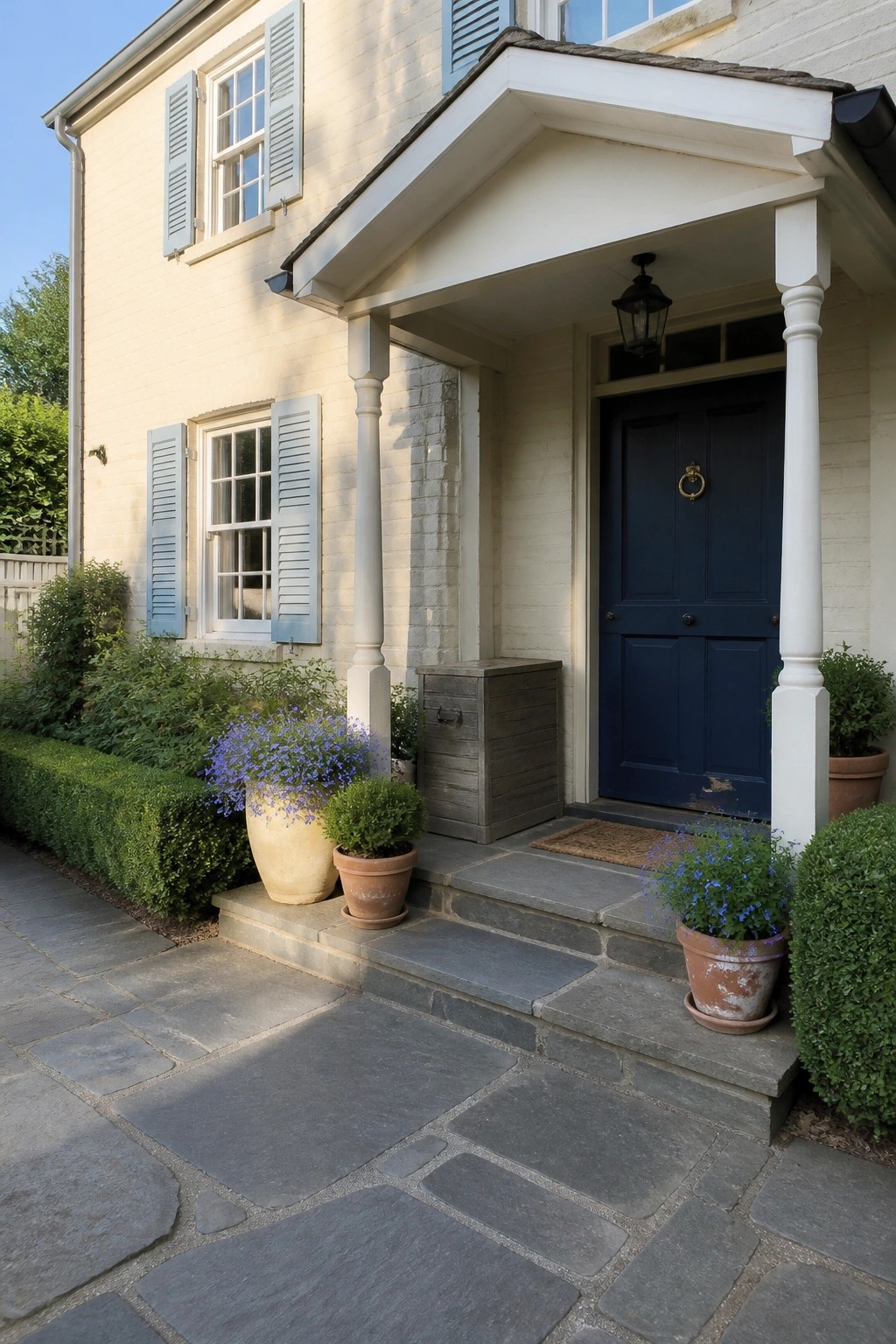
A navy front door gives a beige house real presence without needing extra trim or fancy details. The dark color pops against the pale siding and pairs naturally with white columns and shutters.
This approach suits traditional or coastal homes that already have clean lines. Stick with simple hardware and let the door color do the work rather than adding too many other accents.
Built-In Bench Seating on the Deck
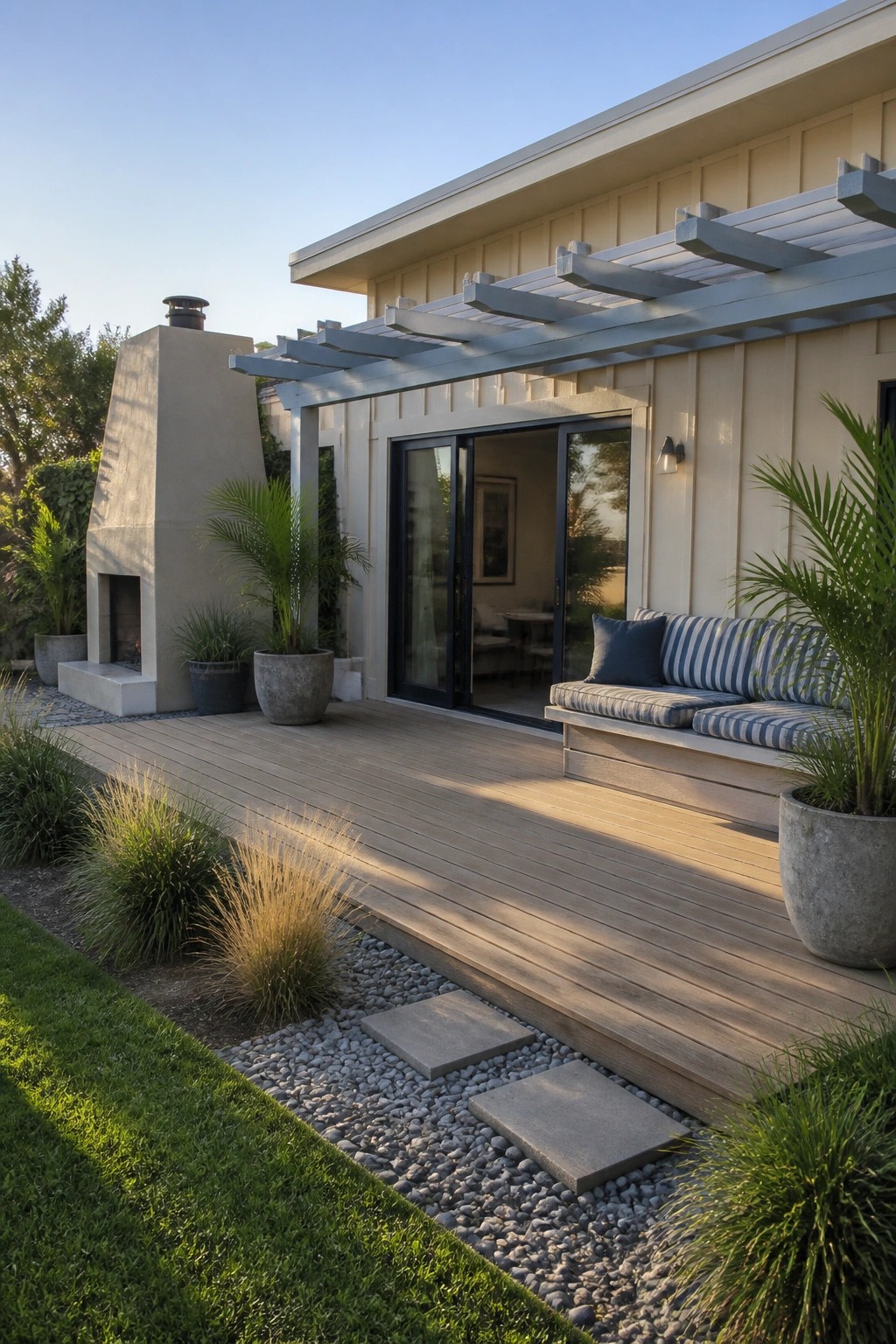
Built-in bench seating along the edge of a deck gives you a permanent place to sit without crowding the space with extra chairs or tables. It feels like part of the house itself, which makes the outdoor area more usable on a daily basis.
This setup works especially well on homes near the coast where you want simple, low-maintenance seating that can handle wind and salt air. Place the bench under a pergola or overhang and add a few weather-resistant cushions so the area stays comfortable through the seasons.
Gravel Strips Along Pool Edges
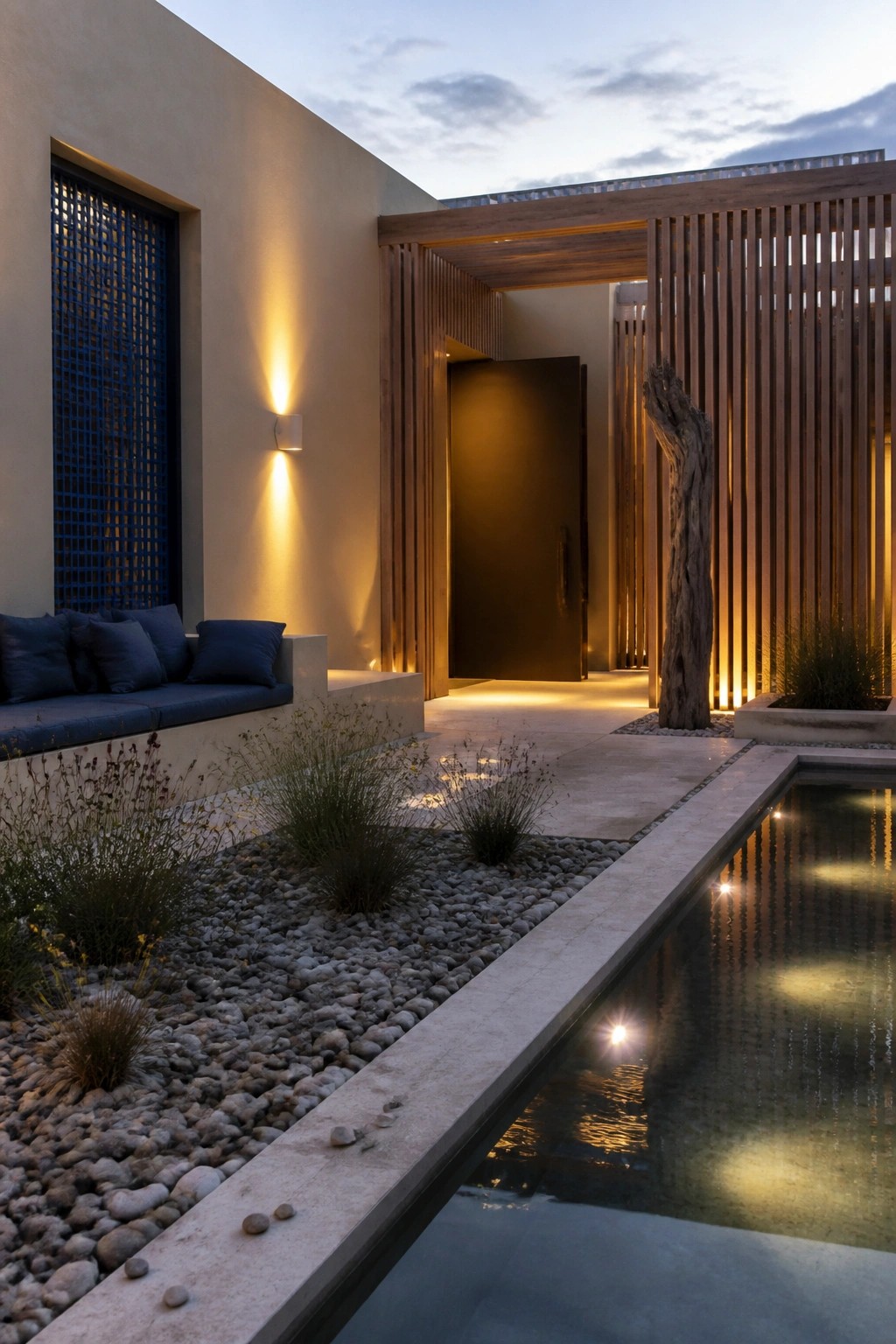
A strip of gravel and low grasses right next to the water keeps the whole area feeling open and relaxed. It cuts down on hard surfaces, lets rain drain easily, and gives the space that dry, coastal look without needing constant care.
This setup works best in smaller side yards or courtyards where you want the pool to feel part of the landscape instead of sitting on a big slab of concrete. Keep the plant choices simple and drought-tolerant, and the gravel color light so it stays cool underfoot.
A Portico Creates a Welcoming Entry

A portico with tall white columns gives the front of the house more weight and makes the entrance feel more inviting. It works well on light-colored homes because the columns stand out without needing extra trim or detail.
This approach suits coastal homes that want a touch of classic style without looking heavy. Keep the columns simple and centered over the door so the whole facade stays balanced.
Blue Trim on Beige Exteriors
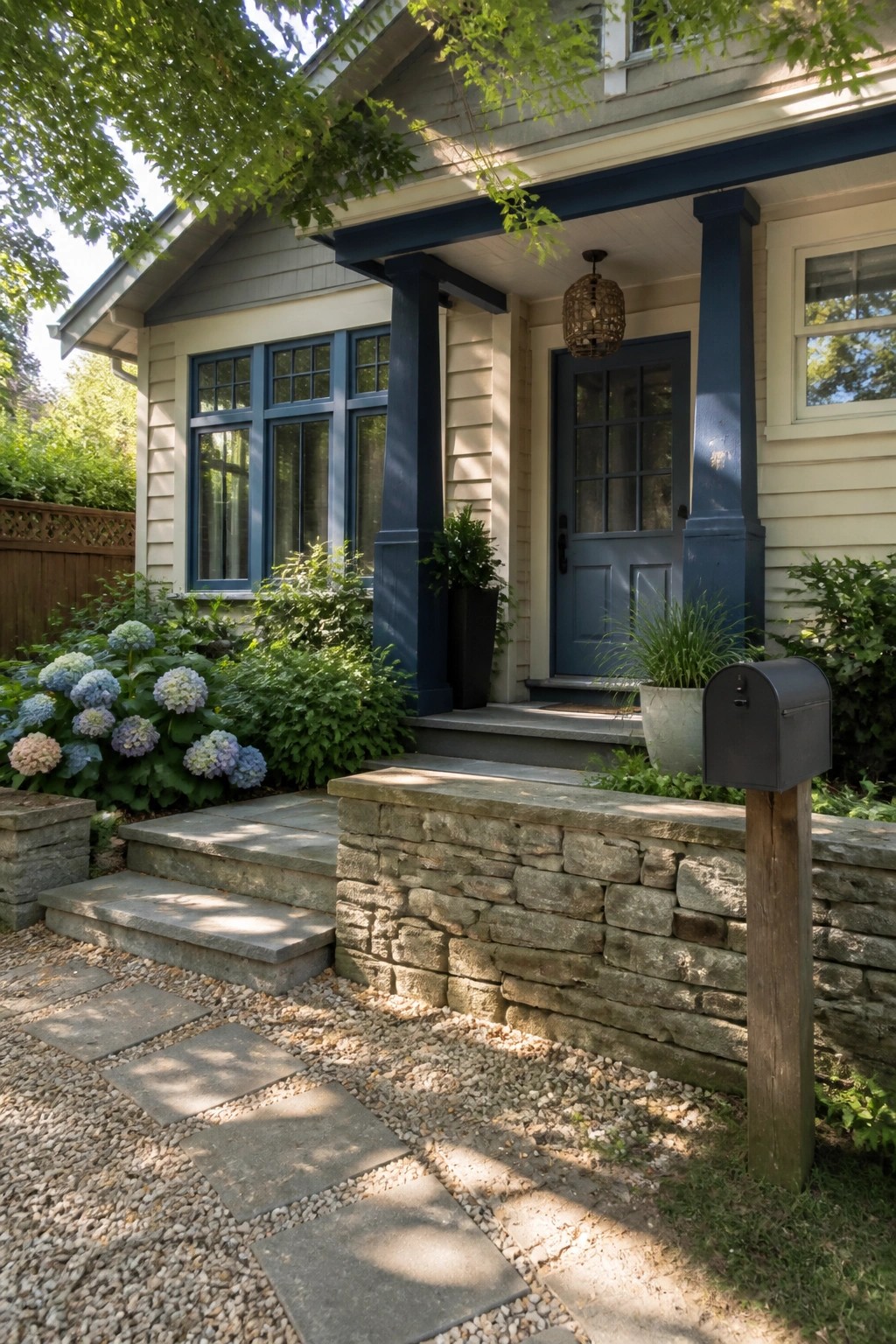
Blue trim and a matching front door give a beige house a sharper, more finished appearance. The color choice highlights the porch structure and entry without overpowering the lighter siding.
This works best on homes that already have some architectural detail to frame. Use the blue on columns, window frames, and the door itself, then let the rest of the exterior stay simple so the contrast stays balanced.
Pergolas Turn Patios Into Everyday Spaces
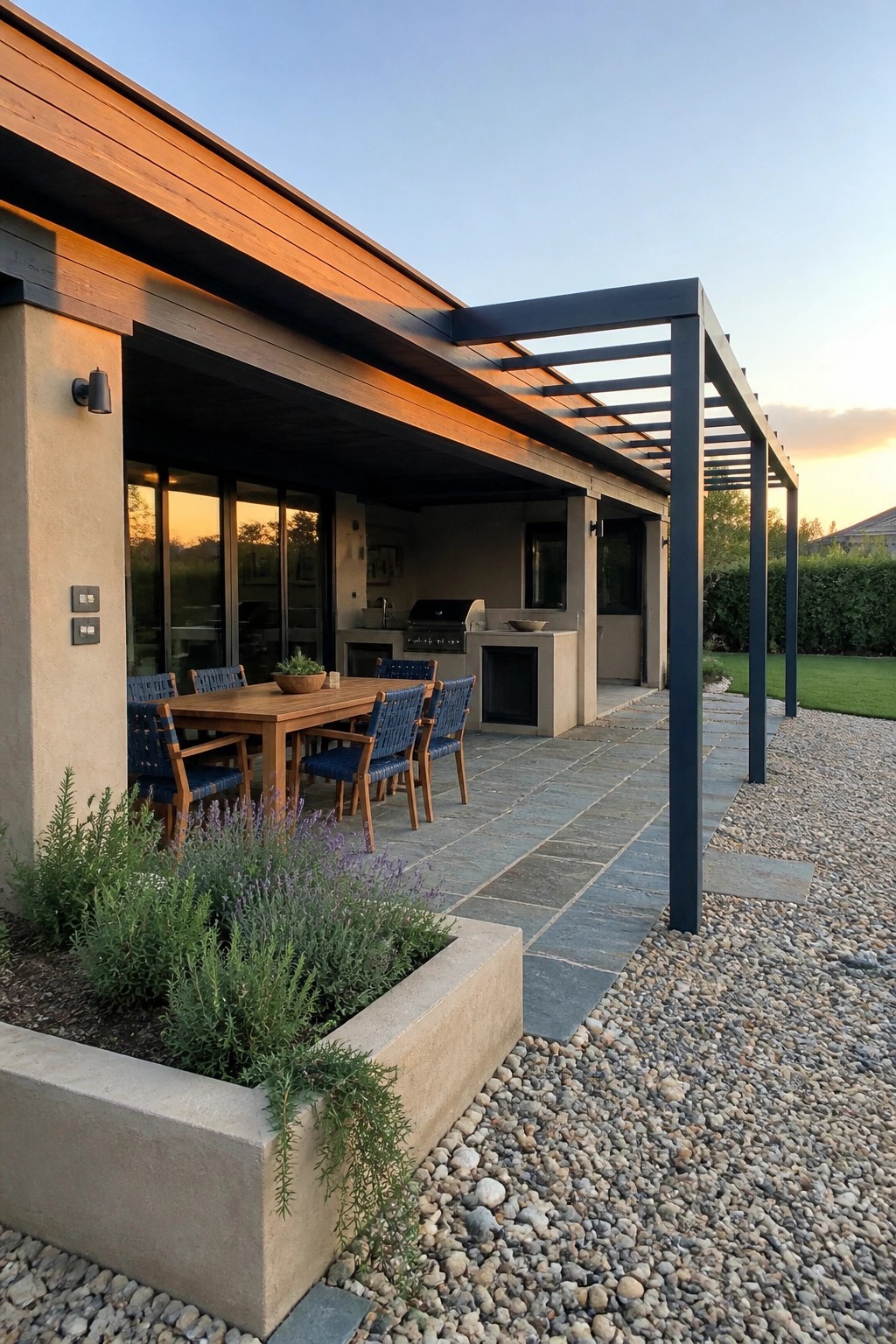
A simple pergola attached to the house gives the patio a clear sense of being a room rather than just an open slab. It provides enough shade to make meals comfortable without blocking all the light, and it ties the outdoor area back to the architecture so the whole setup feels intentional.
This works best on homes where you already have a decent amount of flat space right off the main living areas. Keep the structure straightforward, match the color to your trim or roofline, and add seating that can stay outside most of the year. Avoid making the pergola too deep or it can start to feel heavy.
Navy Doors on Beige Exteriors
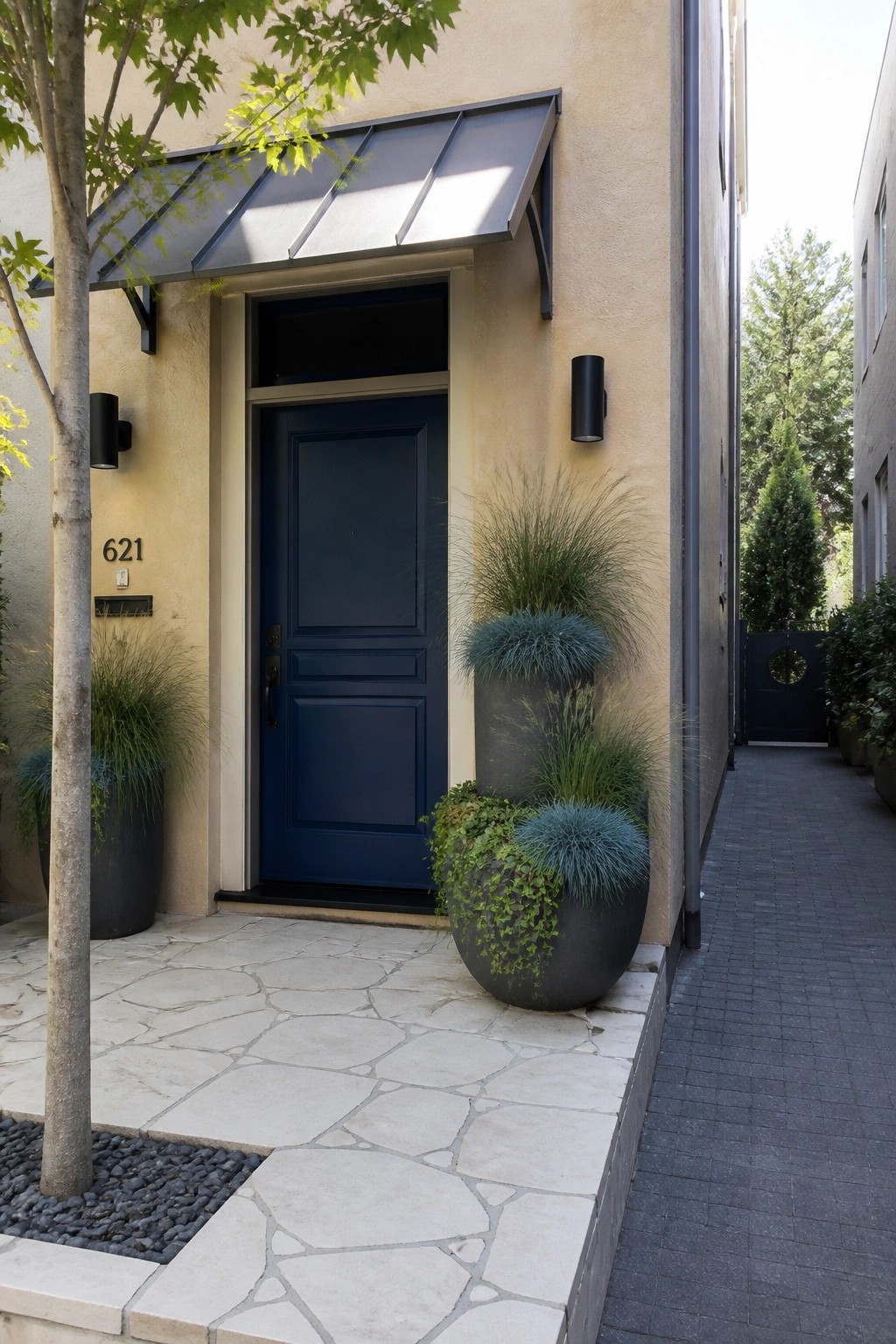
A deep navy door gives a beige house a clear focal point without extra trim or busy details. The contrast feels fresh and simple, which suits coastal homes that want color but still keep the overall look calm.
This approach works best on stucco or plaster walls where the surface stays plain. Match the door hardware and any overhang in black or dark metal so the blue stays the main accent rather than competing with other finishes.
Frequently Asked Questions
Q: How do I keep the blue from fading too fast near the water? A: Pick a paint with built-in UV protection and apply it over a solid primer. Check the color each spring and do small touch-ups before full coats become necessary. Beige holds up better so save the blue for smaller areas like shutters.
Q: Can I add a third color without losing the coastal feel? A: Stick to crisp white on
