

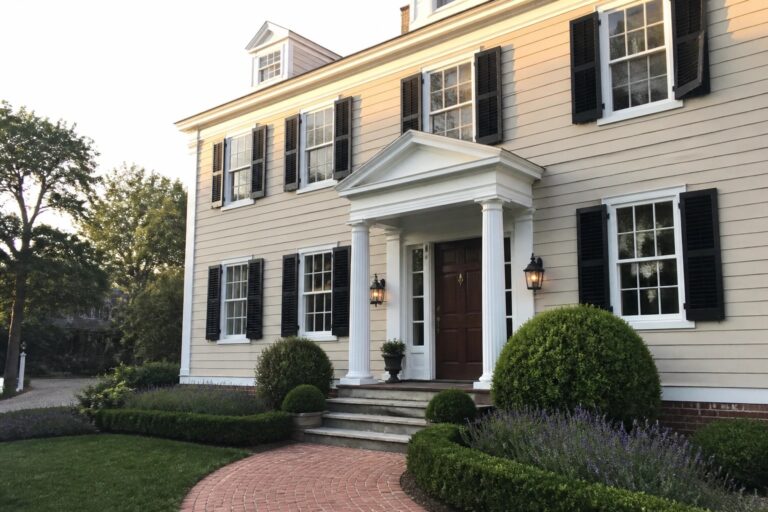
I have always noticed that colonial homes look their best from the street when the beige and white tones are balanced against the roof overhangs and window trim.
The right combination keeps the facade from feeling heavy while still letting the entry and siding details stand out in daylight.
Small shifts in the beige tone can change how the whole front reads once you walk up to it.
Many homeowners end up repainting because the contrast they chose on paper ends up washing out against the actual brick or wood.
I have a few of these color pairings noted because they seem to hold up better than trends that rely on stark white alone.
White Columns Brighten Beige Colonial Entries
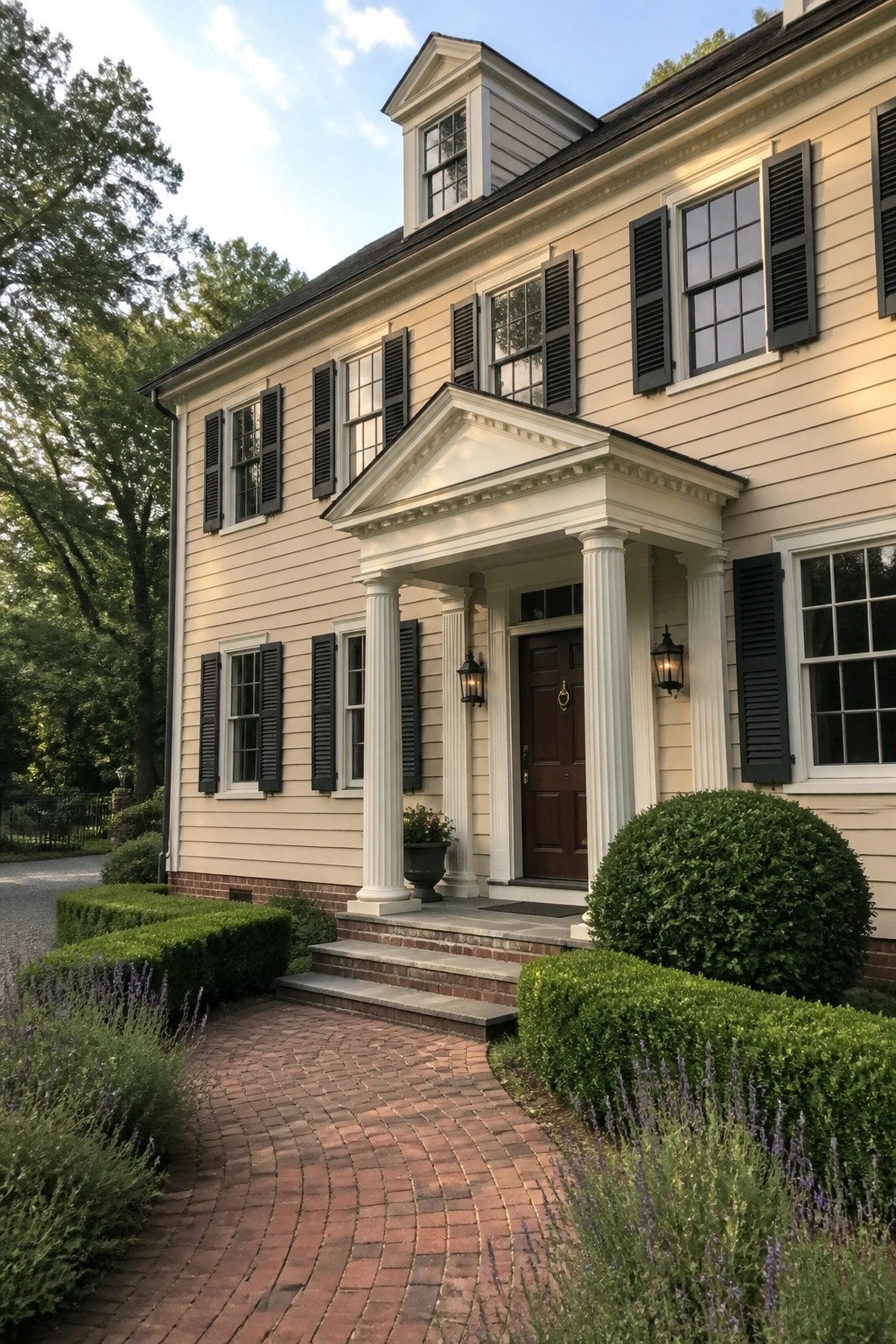
White columns and a simple pediment over the front door give this beige house a lighter, more open feel. The contrast keeps the facade from looking flat while still reading as classic colonial.
This approach works on most two-story colonials where the entry needs a bit more presence. Stick with clean white paint on the columns and trim, and keep the siding a warm beige so the white does the work of lifting the whole look.
White Trim on Beige Colonial Exteriors
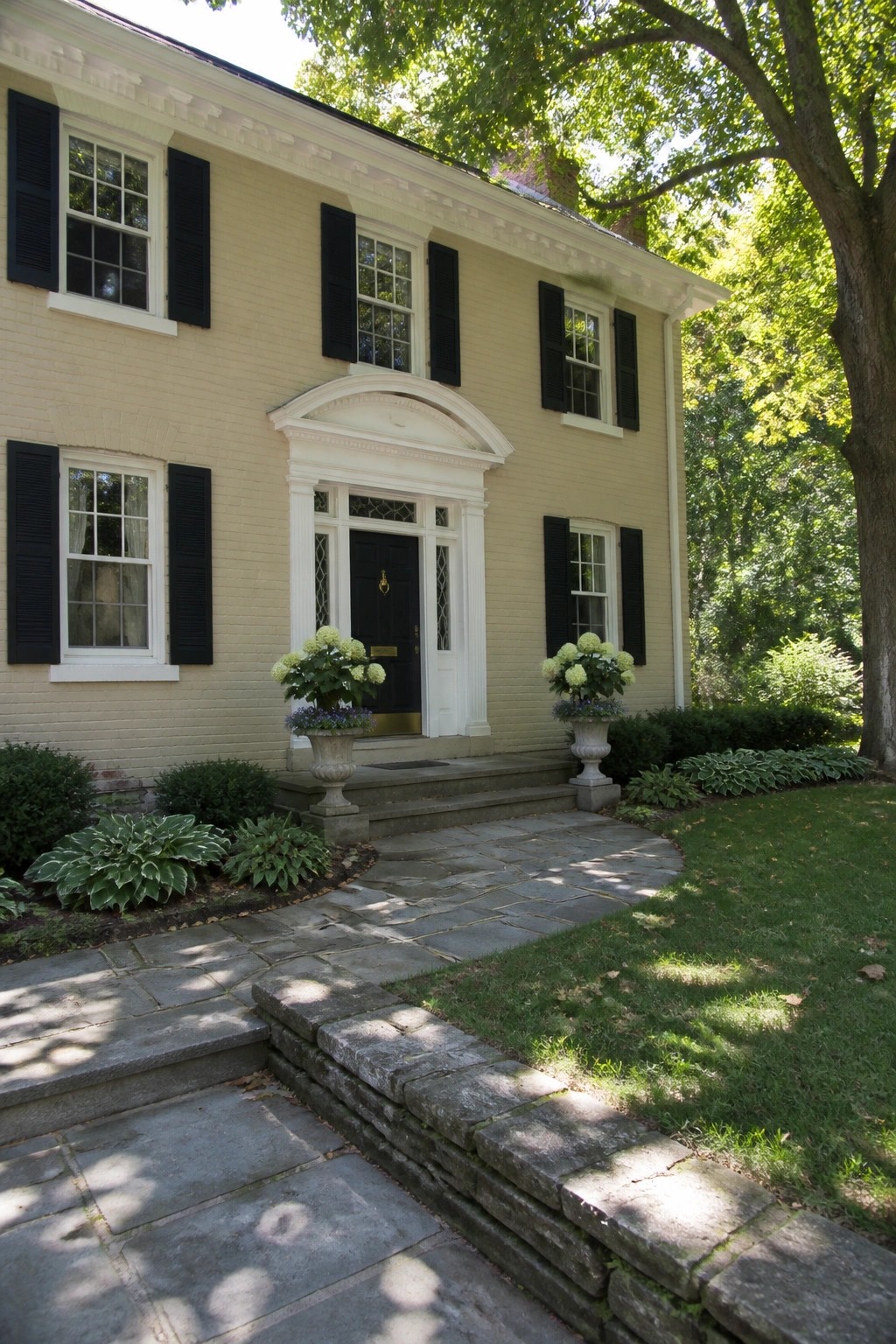
A white surround around the front door gives a beige house a clean focal point without changing the overall color. It catches the light and makes the entrance feel more defined, which helps the whole front stay bright even on overcast days.
This works best on older colonial homes where the siding already has a soft tone. Keep the trim simple, match it to the window casings, and let the door itself stay a darker color so the white really stands out.
Beige Siding With White Trim For Classic Colonial Brightness
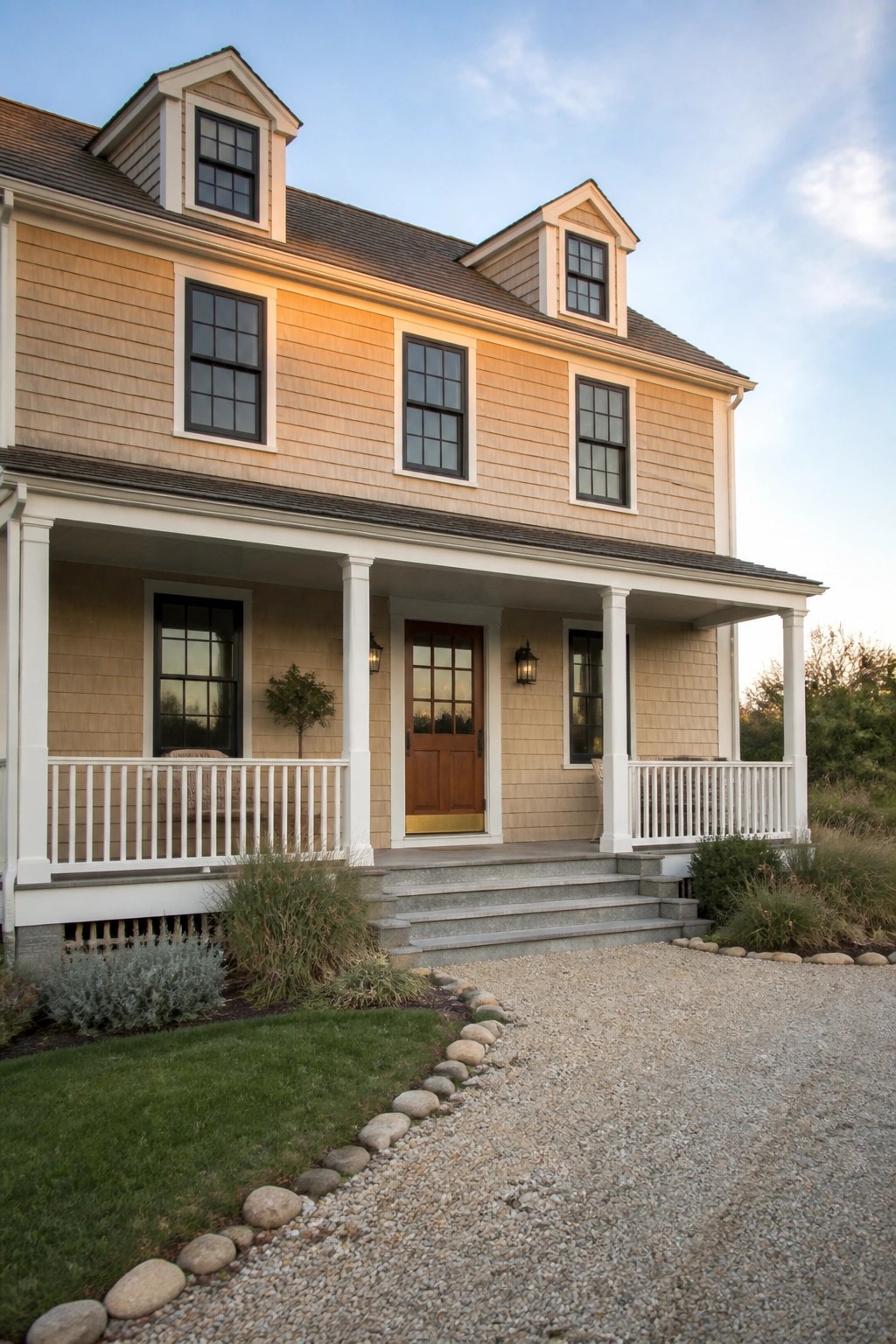
Many colonial homes stay brighter when the main walls stay a warm beige instead of a stark white. The color gives the siding a soft glow while white trim on the windows, porch posts, and railings keeps the whole front from feeling heavy.
This works best on two-story homes where the roofline already casts some shadow. Use the same beige on the upper and lower levels so the white accents stand out cleanly and the house reads as one calm shape rather than a stack of parts.
White Columns Frame the Entry
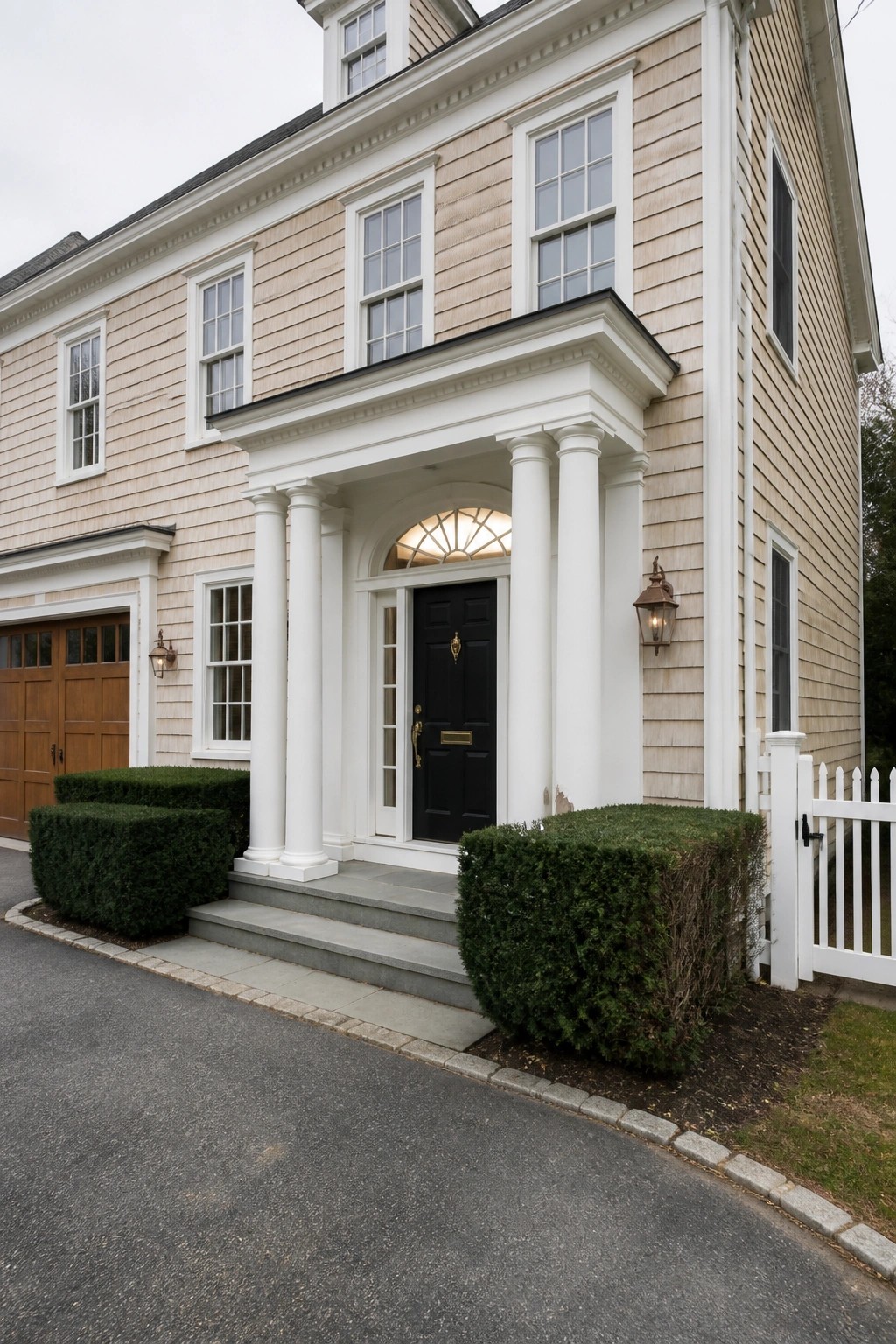
A portico with tall white columns gives a beige colonial house a clear focal point at the front door. The bright trim stands out against the siding and helps the entrance feel more open without adding extra color or ornament.
This approach suits homes with a centered door and a fairly flat facade. Keep the columns and trim freshly painted so the contrast stays sharp, and pair it with a dark door if you want the whole entry to read even brighter.
White Trim On Beige Colonial Homes
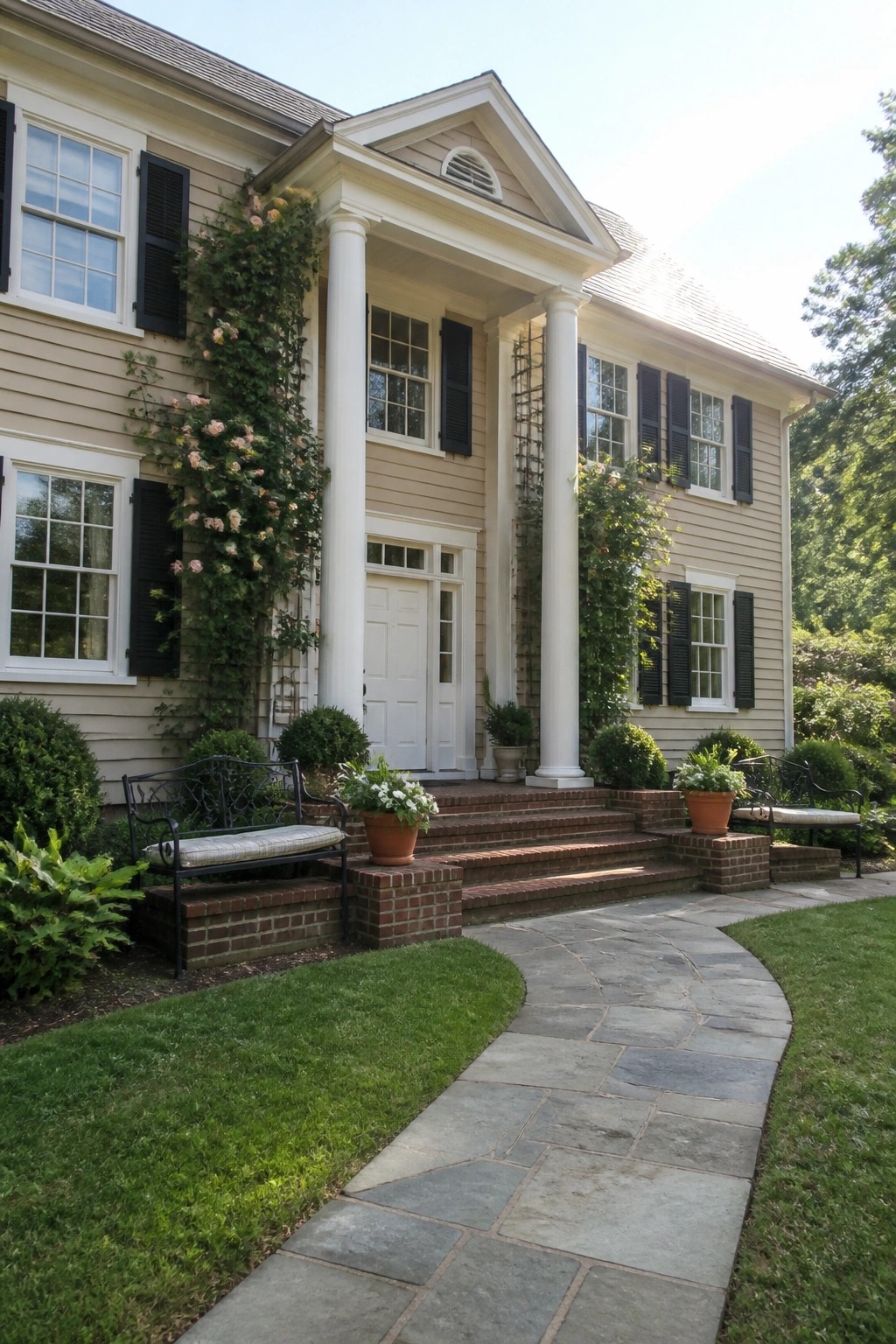
Beige siding can look a little flat on its own, but adding crisp white columns and trim changes that fast. The contrast keeps the whole front bright without needing bold colors or extra decoration.
This works especially well on traditional colonial houses where the architecture already has strong lines. Keep the siding in a soft neutral and let the white handle the lightening. Just make sure the trim stays clean so it does not start to look dingy over time.
Black Shutters Create Clear Definition
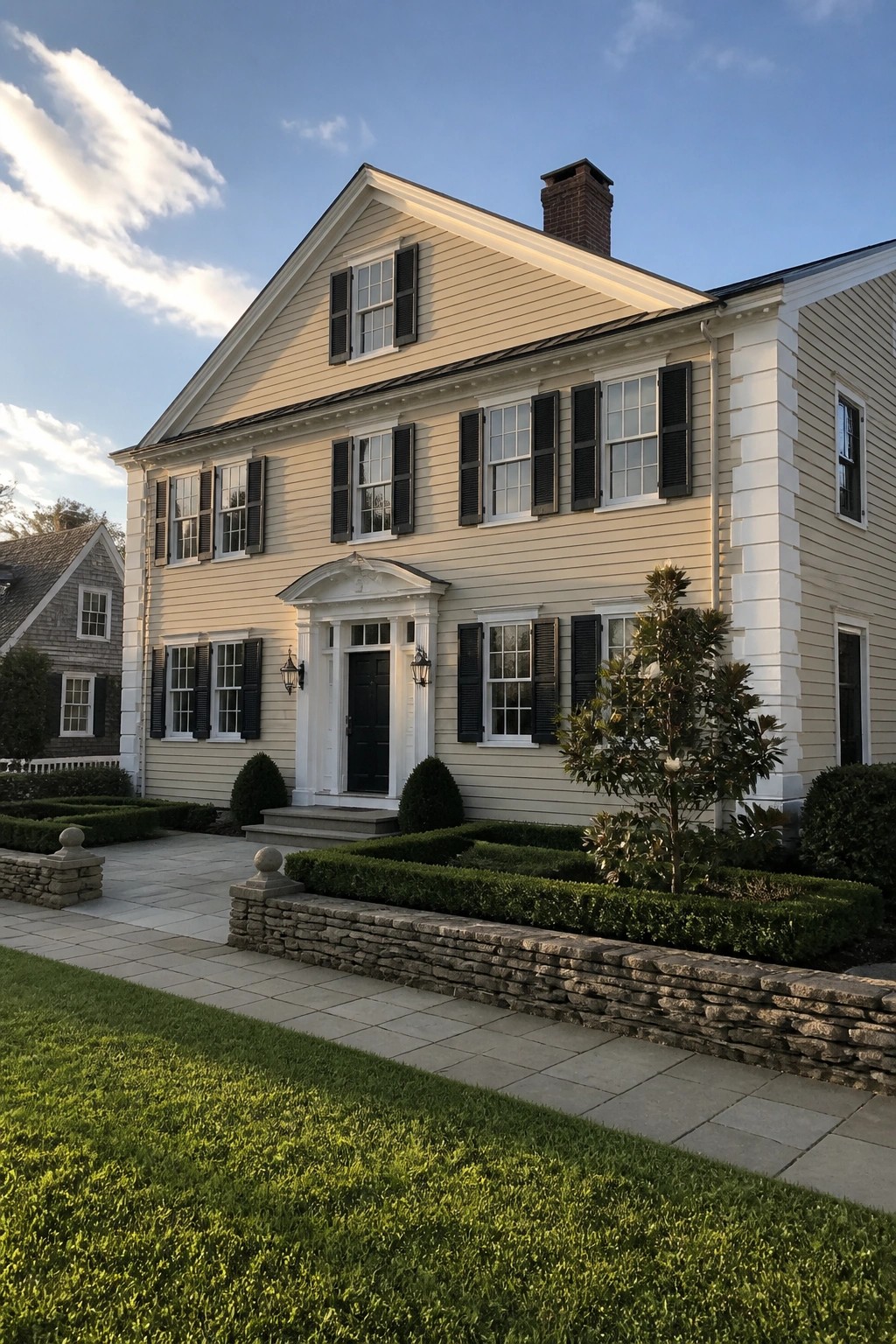
Black shutters give a beige colonial house the contrast it needs to stay bright without looking flat. They frame each window and keep the light siding from blending into the background.
This approach works best on traditional two-story homes where the windows sit in even rows. Match the shutter color to any dark accents like the front door, and make sure the shutters are sized to the glass so the whole front stays balanced.
Light Beige Brick With White Trim Brightens Colonial Homes
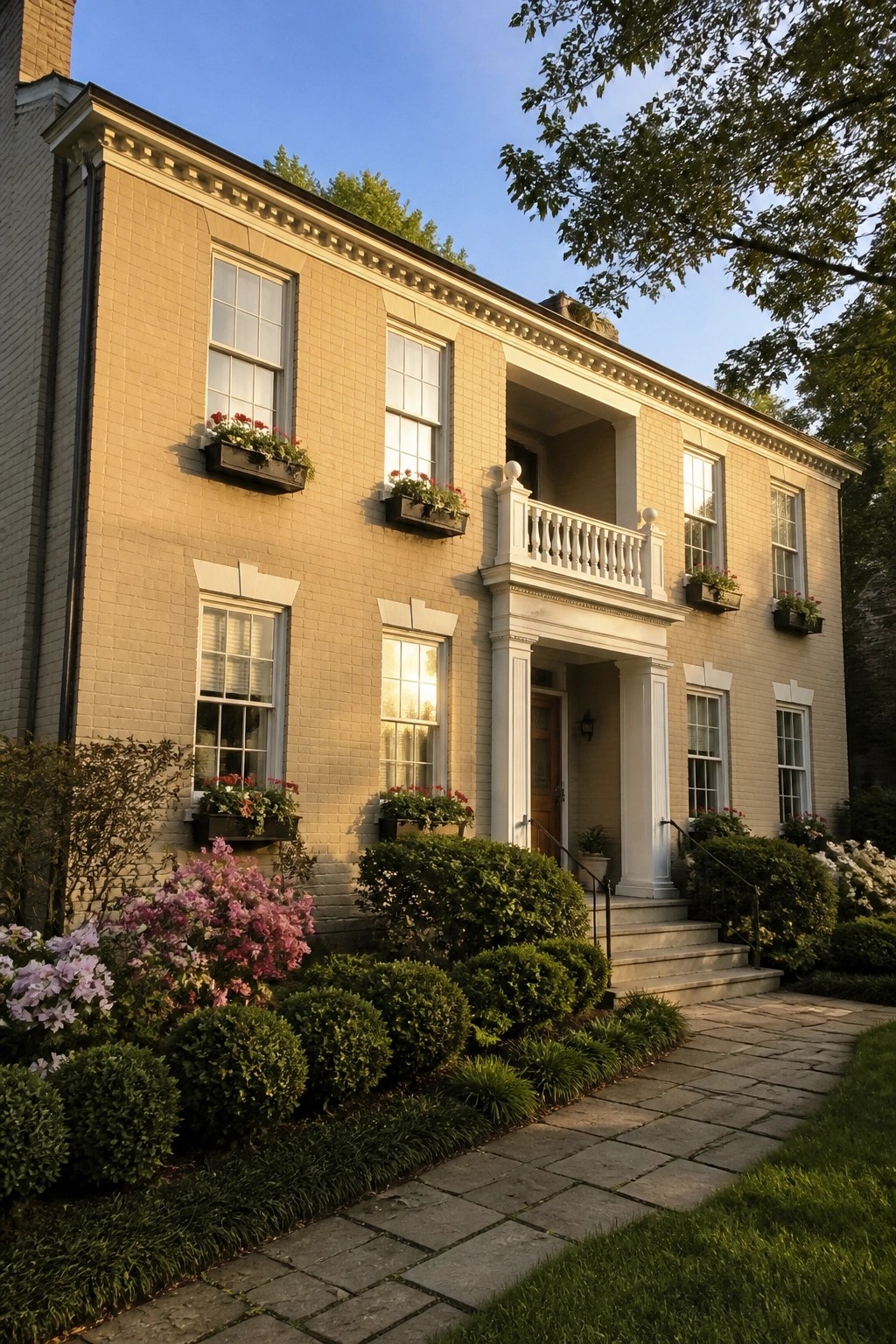
Many older colonial homes lean on light beige brick because it reflects sunlight and keeps the whole front from feeling heavy. The white columns, window frames, and trim give enough contrast to hold the classic shape while stopping the color from going flat.
This works best on houses that already have strong window placement and simple rooflines. Keep the trim bright white and add just a few planted window boxes if you want a bit of color without changing the main palette.
A Dark Front Door Adds Contrast To Beige And White
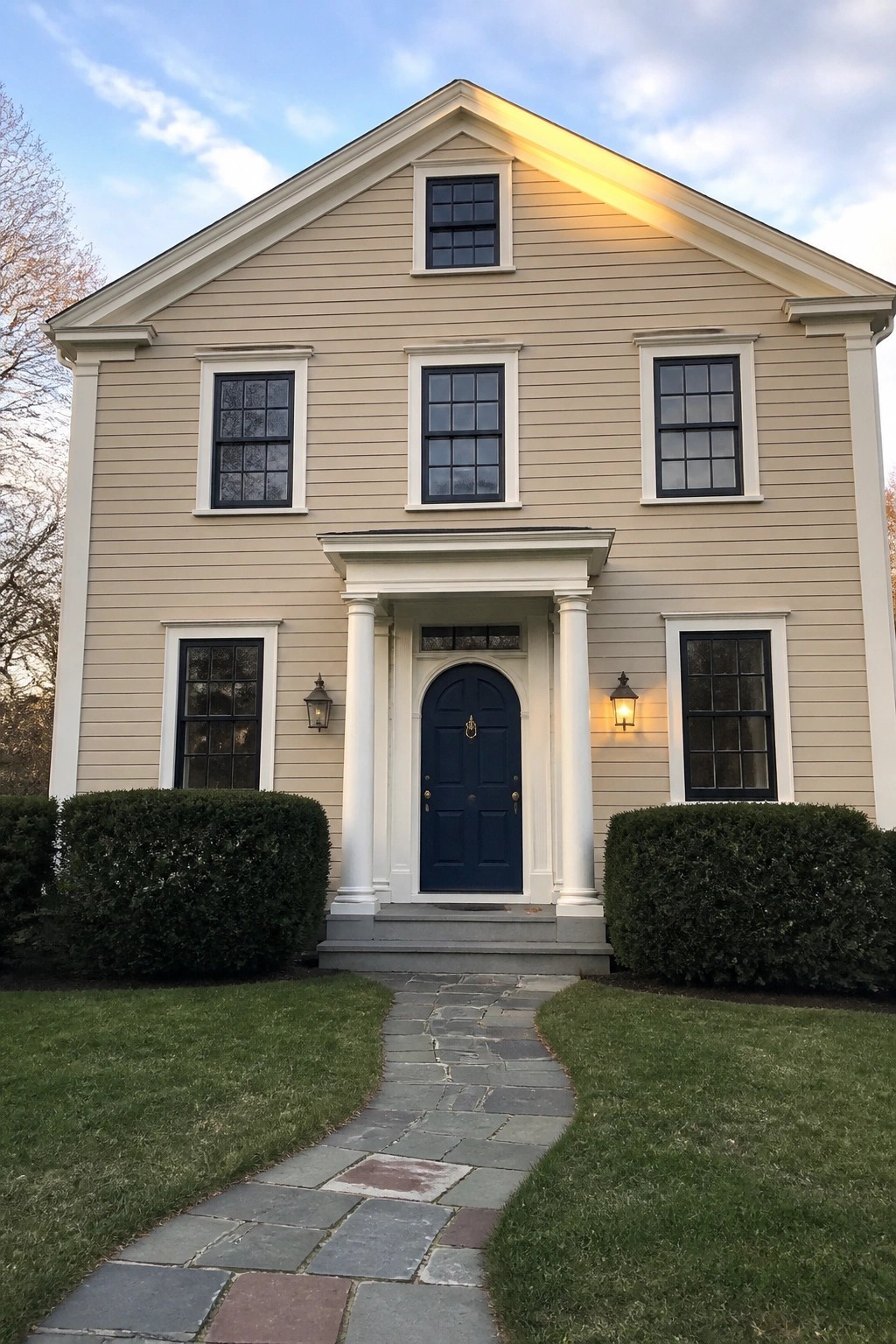
Many colonial homes painted in beige with white trim stay bright by using a strong color on the front door. The navy door here gives the entry a clear focal point against the light siding and columns.
This works best on houses that already have balanced windows and simple rooflines. It adds definition without darkening the overall look, and it suits traditional homes where you want the entry to stand out in a quiet way.
Beige Siding With White Trim
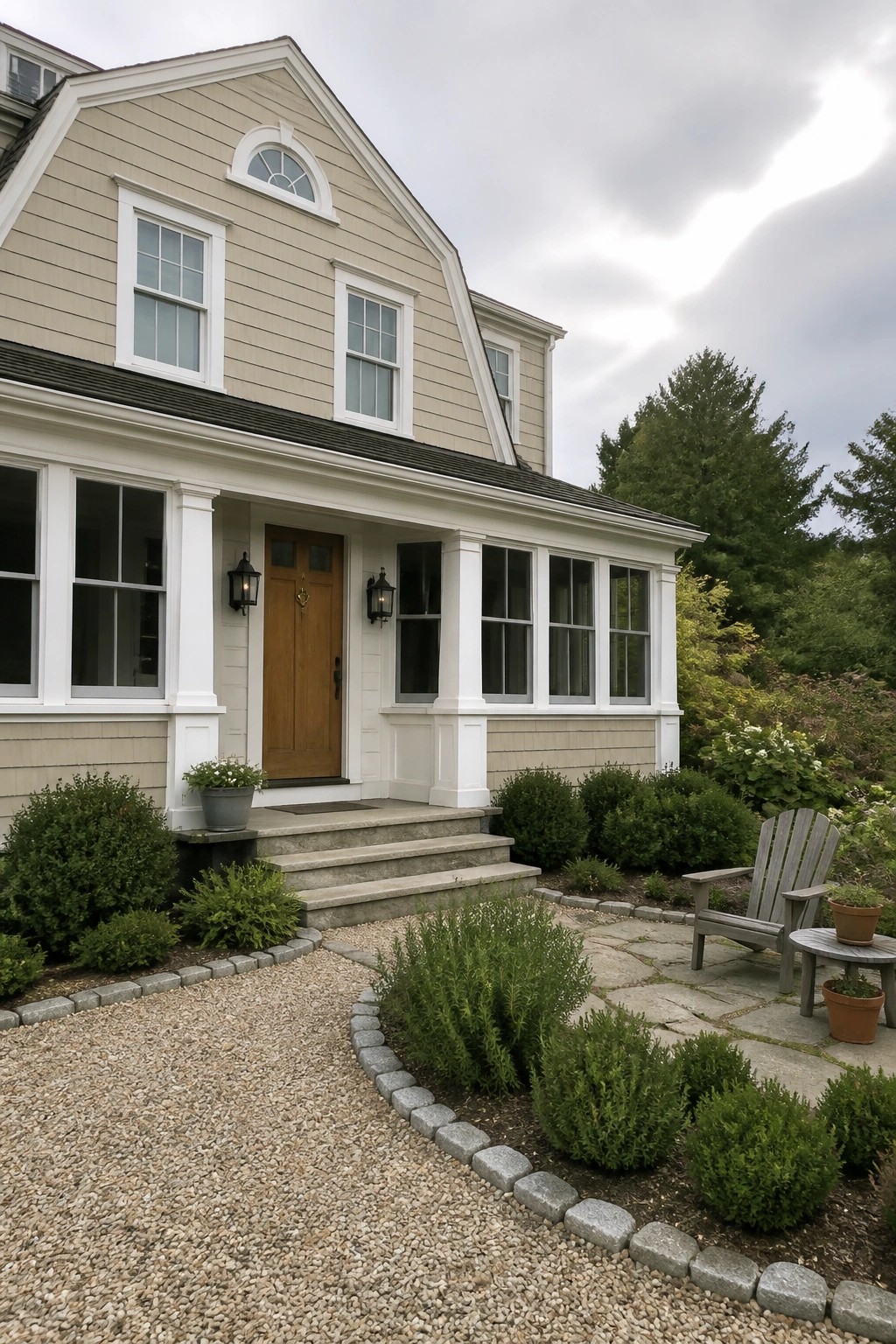
Beige siding paired with white trim gives colonial homes a clean look that still feels warm. The soft color keeps the whole facade bright even on overcast days, and the white details around windows and columns help define the shape without overpowering it.
This works best on houses that already have a balanced roofline and simple porch structure. Stick with a wood door in a natural tone to add a little contrast, and keep the landscaping low so the colors stay the main focus.
Black Shutters Add Definition to Beige Colonial Exteriors
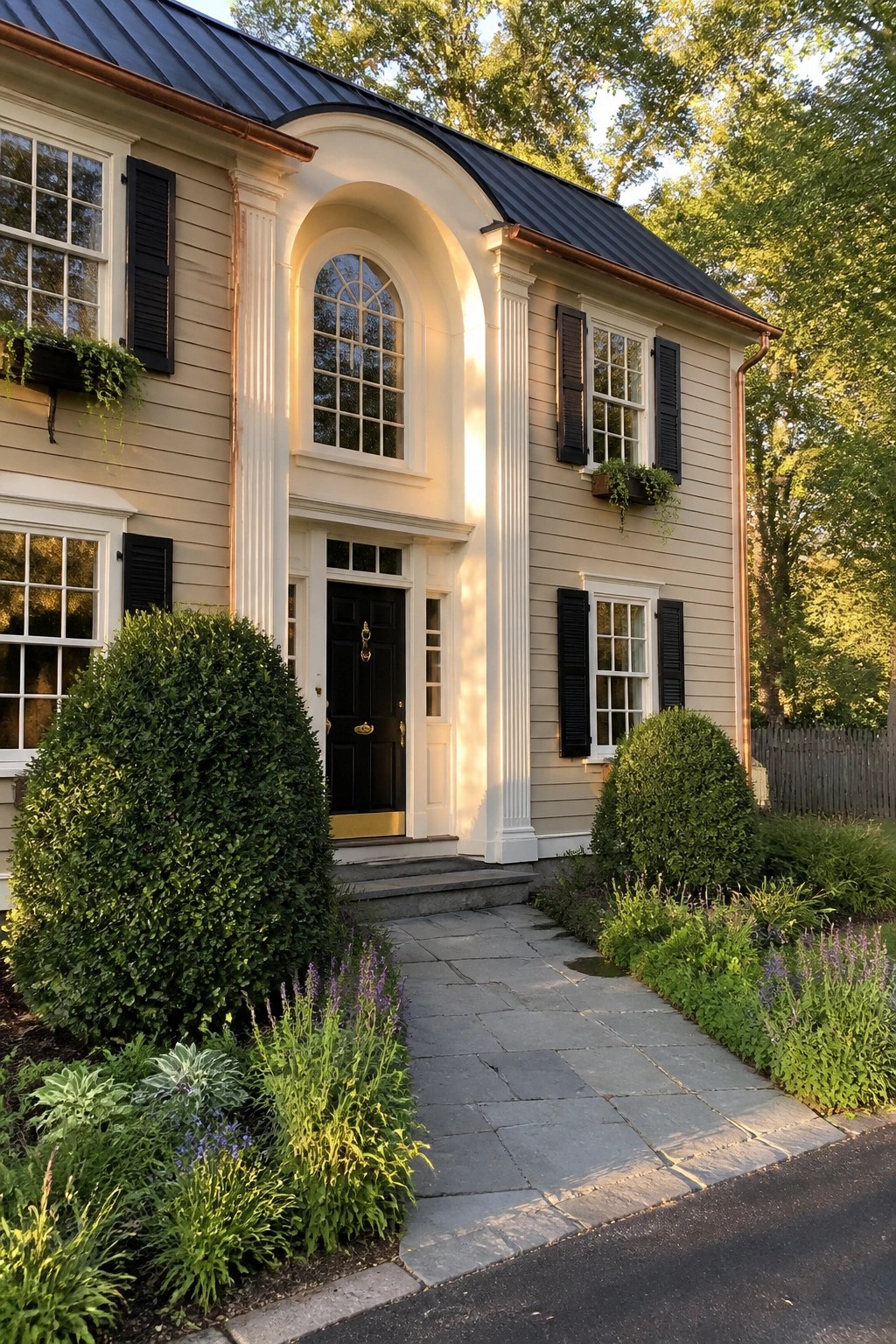
A light beige exterior can start to feel flat without some kind of contrast. Black shutters and a black front door give the facade clear lines and keep the whole house looking sharp instead of washed out.
This approach works especially well on colonial homes with white trim. Keep the black elements limited to shutters and the door so the siding still reads bright. The arched window above the entrance helps the entry feel balanced without adding more color.
Dark Door on Light Beige Siding
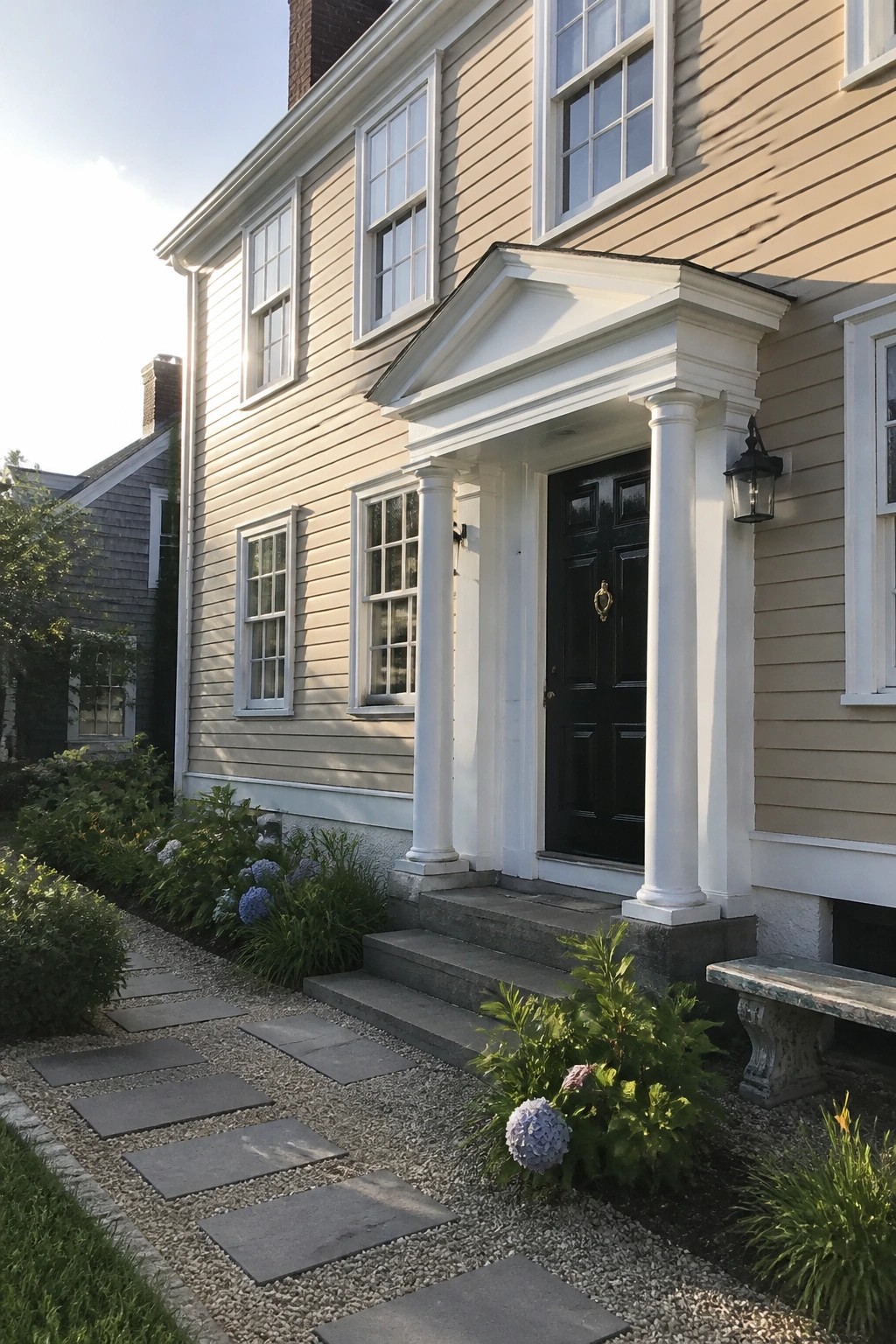
A dark front door gives a clear focal point on a light colonial exterior. The contrast keeps the house bright overall while the door itself feels solid and welcoming.
This approach suits homes with beige siding and white trim already in place. It works best when the rest of the facade stays simple so the door can carry the main visual weight without extra color.
Beige Siding With White Trim For Classic Colonial Exteriors
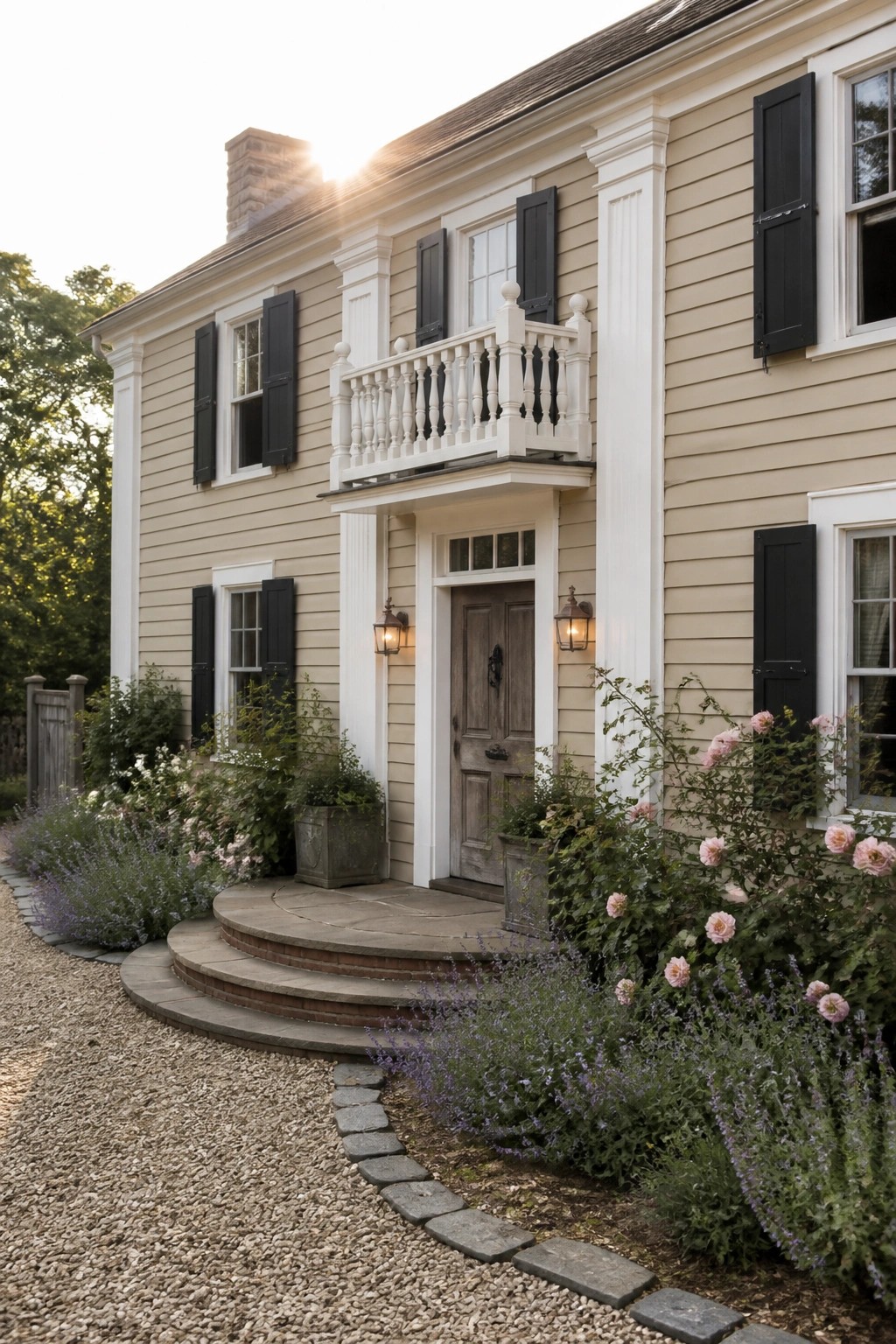
Many colonial homes stay brighter when the siding stays a soft beige and the trim stays white. The white brings out the columns, window frames, and balcony without overpowering the simple lines of the house.
This color mix works best on homes that already have strong architectural details. Keep the shutters and door a darker tone so the white trim stays the main source of light on the facade.
Beige Siding With White Columns
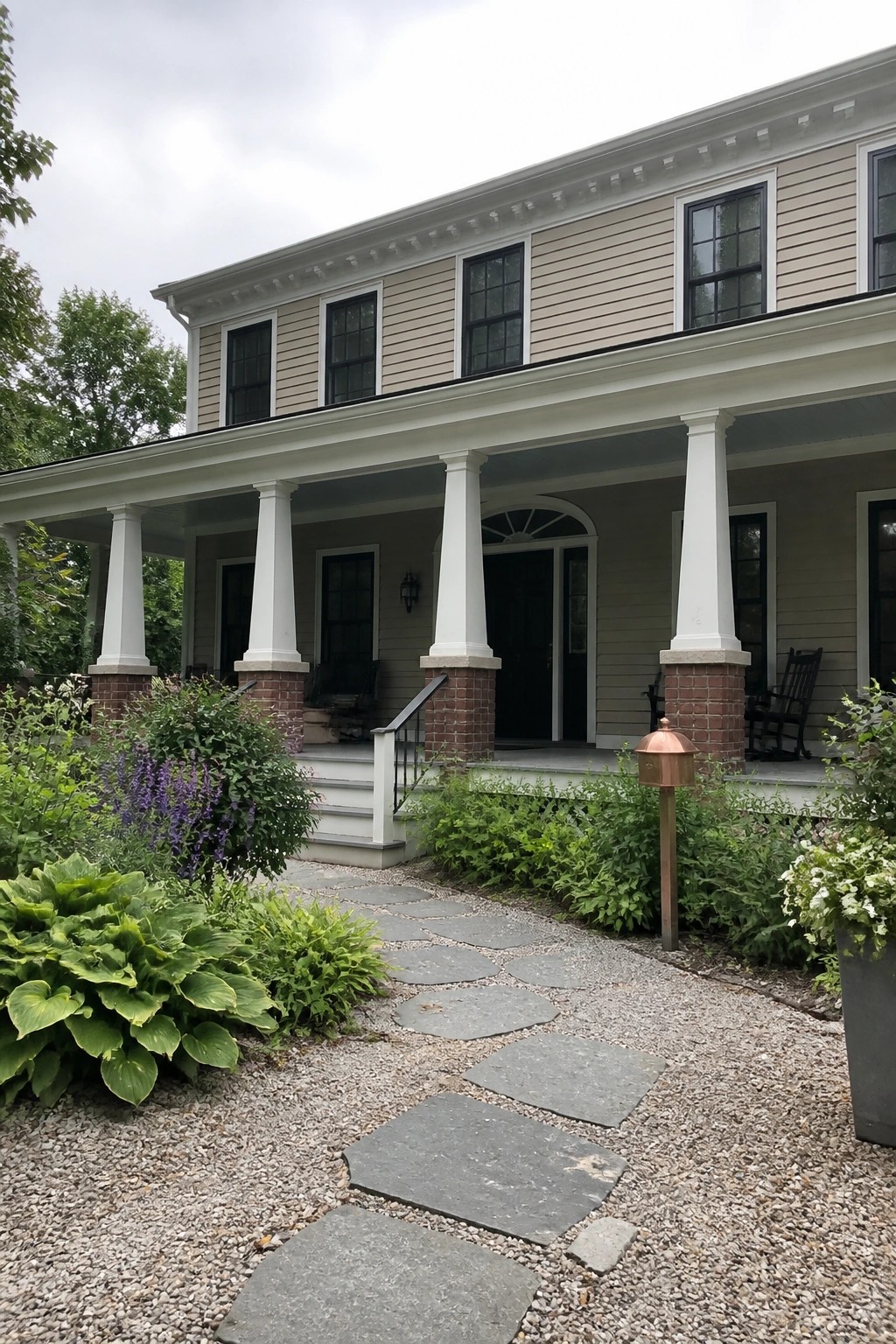
Many colonial homes look brighter when the siding stays in a soft beige. The white on the columns and trim gives the facade a clean lift without needing extra color.
This approach works best on homes that already have a porch or covered entry. Keep the white limited to structural pieces like columns so it stands out against the beige and any darker windows or doors.
White Porticos on Beige Colonial Homes
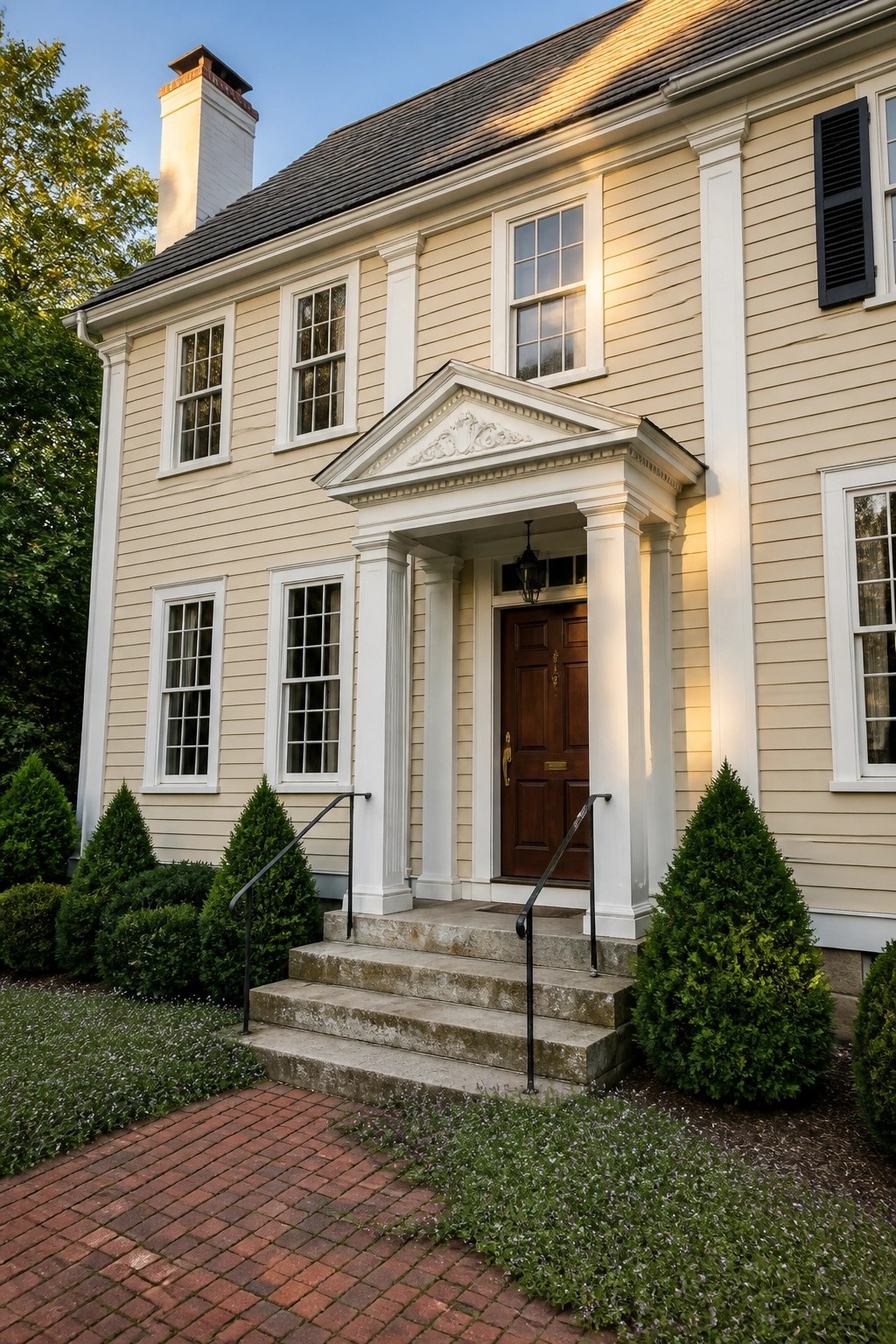
A white portico with columns and a pediment gives the front of a beige colonial house a clear focal point. The contrast keeps the whole facade from feeling flat and helps the entrance stand out without adding extra color.
This approach works best on homes with a centered door and simple window layouts. Pair it with a darker wood door and keep the rest of the trim white so the entry feels balanced rather than busy.
White Trim Keeps Beige Siding Looking Fresh
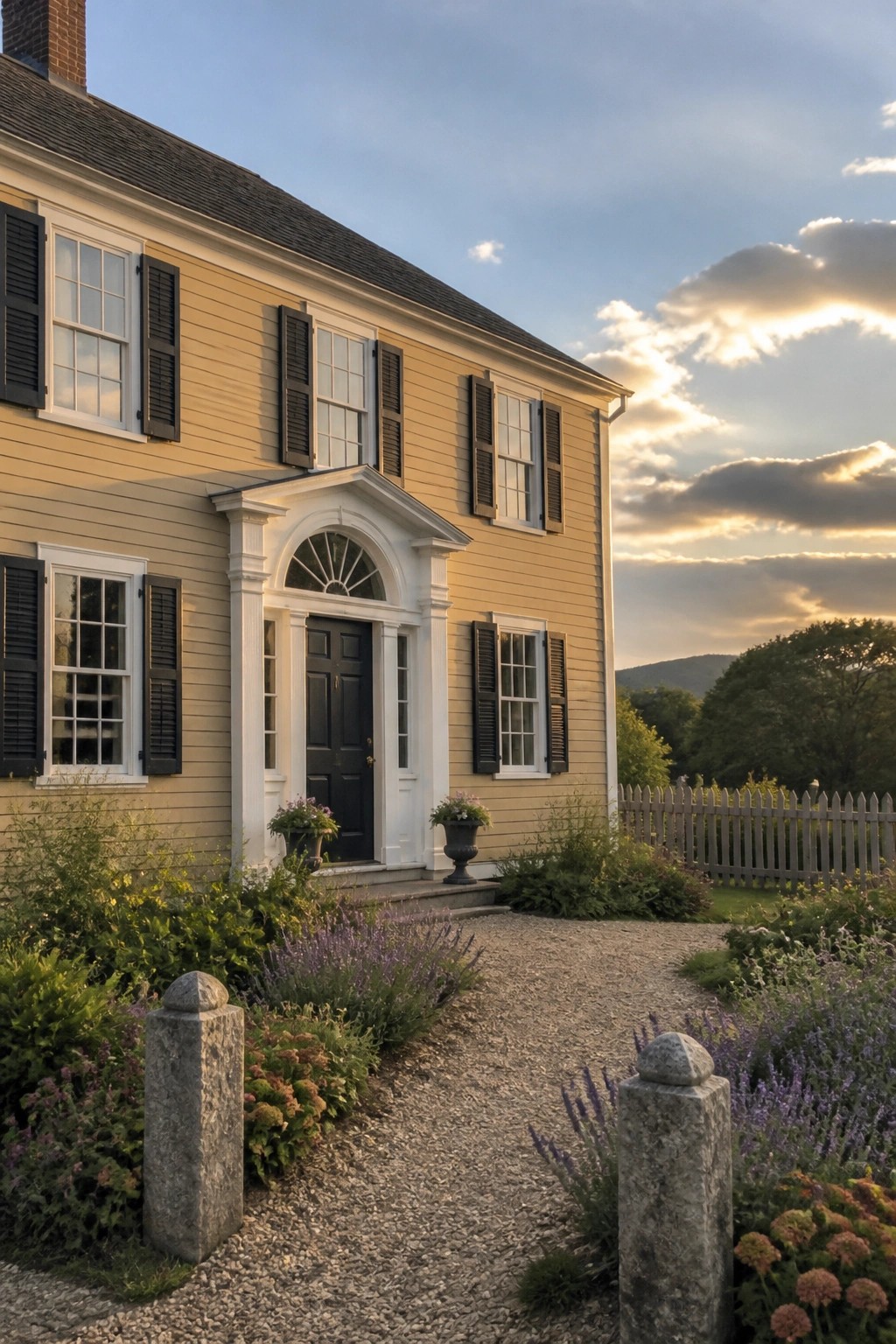
White trim and a simple portico around the entry give the beige siding a cleaner, lighter look. The contrast stops the color from feeling flat and helps the house read as classic rather than dated.
This approach suits colonial homes with straightforward rooflines and balanced windows. Keep the trim bright white and let the siding stay a soft neutral so the entry stays the main point of interest.
Light Beige Siding With White Trim
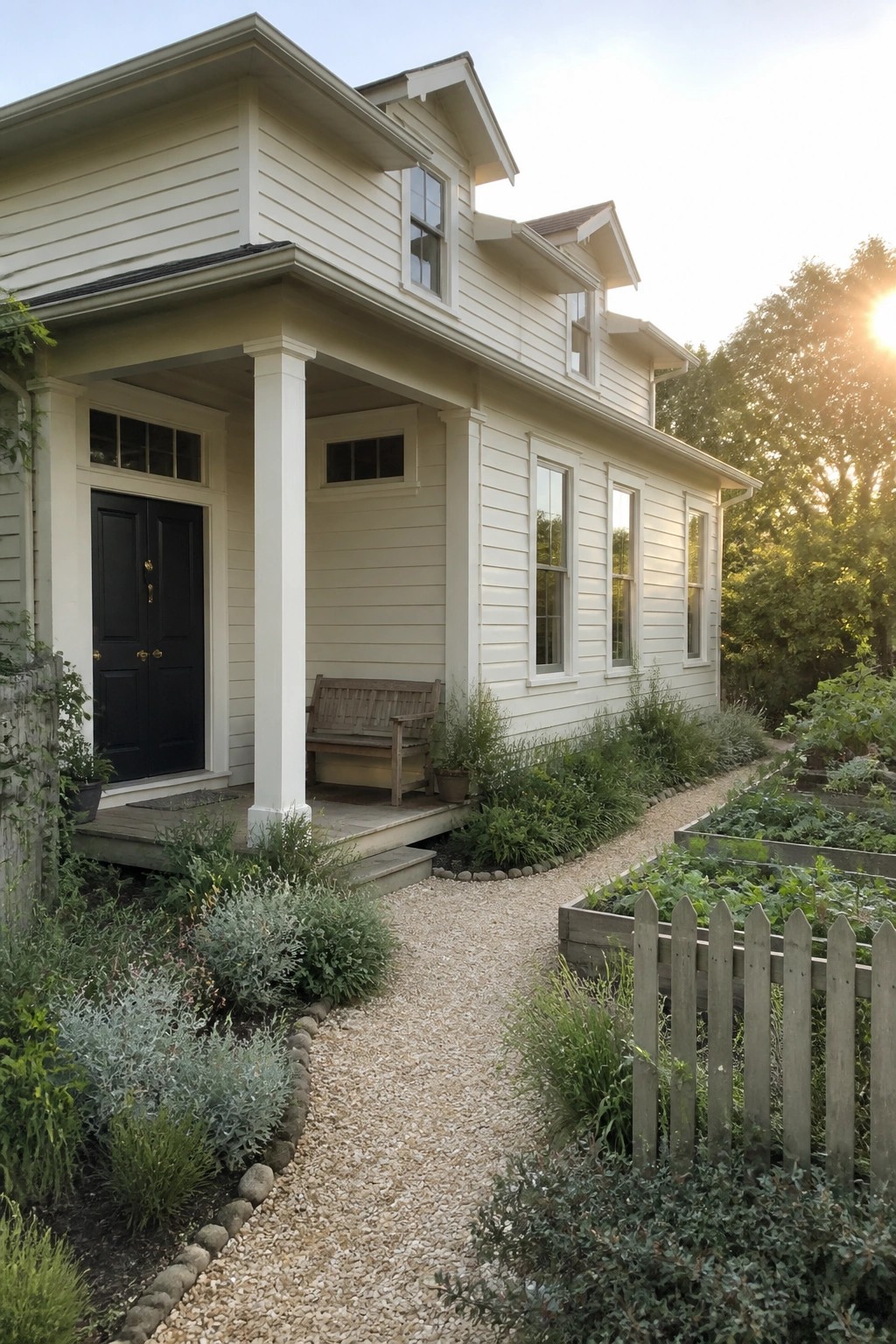
A soft beige exterior paired with white trim gives colonial homes a bright look without going full white. The color still feels traditional and works well on older homes that have simple lines and gabled roofs.
This approach suits houses that already have good natural light and some landscaping around the base. Keep the trim and porch columns white, then add one darker accent like a black door if you want a bit more contrast.
Beige Siding With White Trim
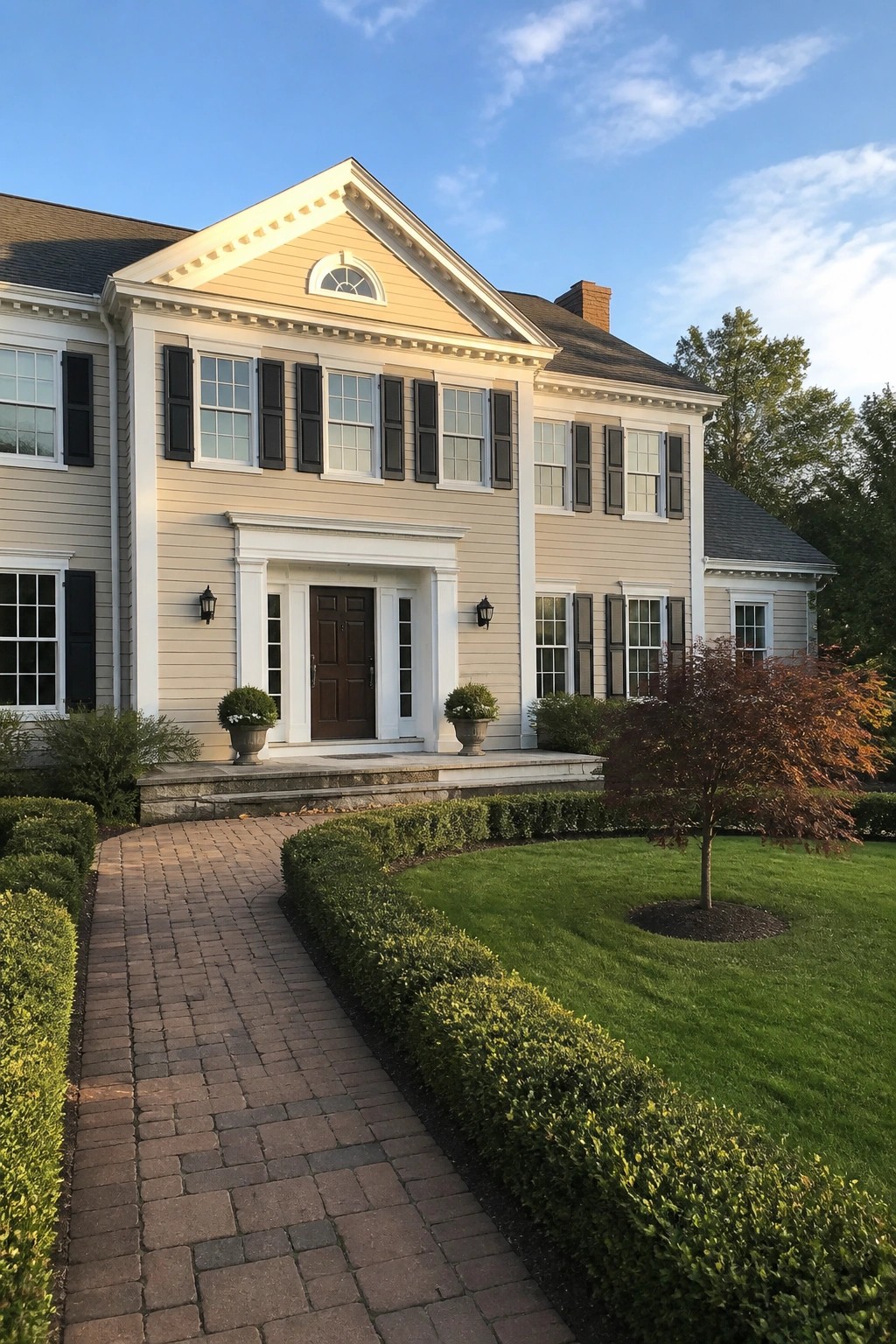
Many colonial homes stay bright and welcoming when the main color is a soft beige instead of stark white. The light tone reflects sun well and keeps the house from looking heavy, while white trim around windows and columns gives it clean lines that feel traditional.
This works best on two-story homes with simple rooflines and a centered entry. Keep the shutters dark so they stand out against the beige, and make sure the trim paint stays fresh so the whole look stays crisp over time.
White Columns on Beige Siding
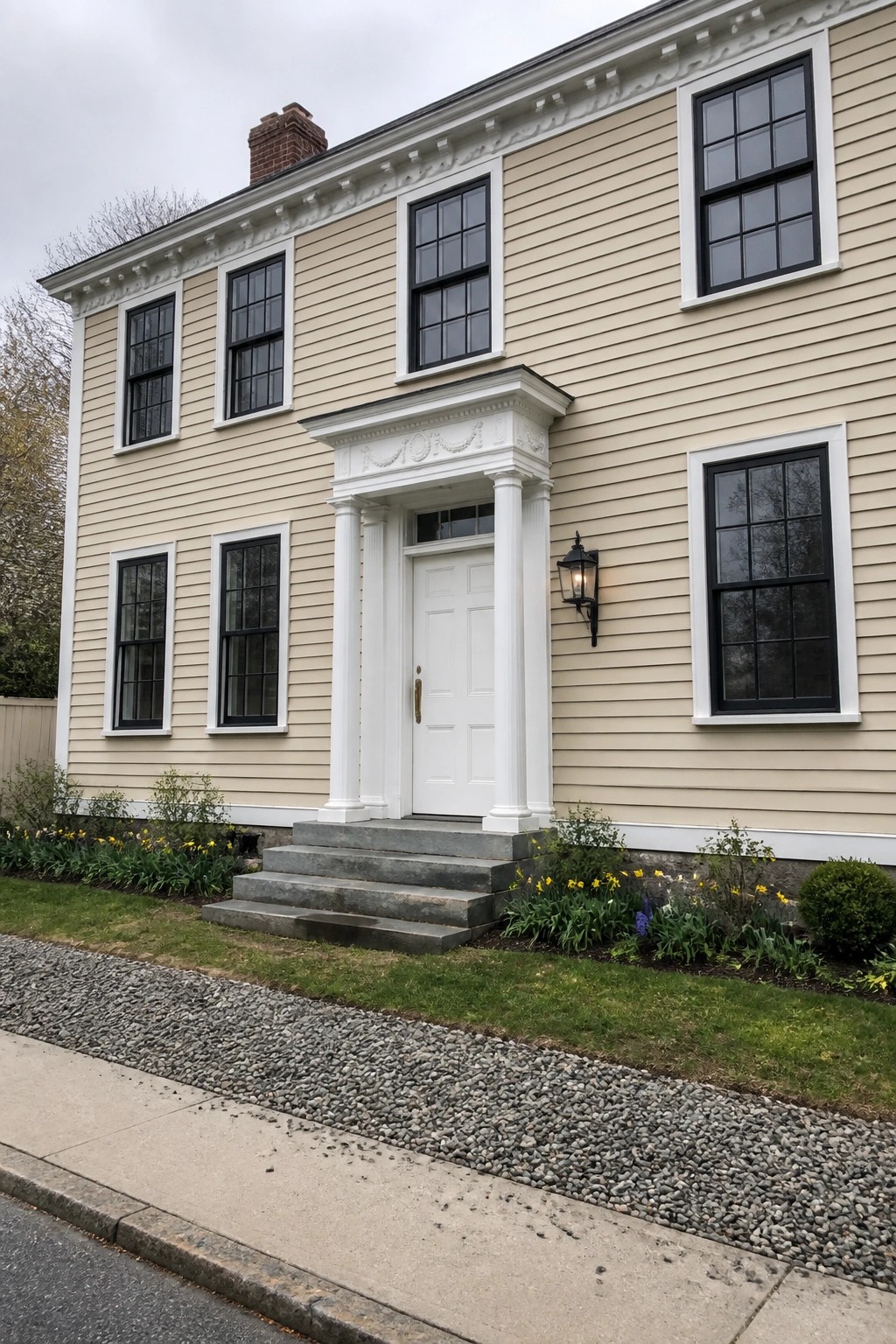
White columns and trim give beige siding a clean lift without any extra color. The contrast keeps the front looking bright and simple, which suits colonial homes that already have balanced windows and a centered door.
This approach works best on older houses where the entry needs a bit of weight. Keep the columns and door a true white, and the beige will read lighter even in flat light.
Beige Siding With White Trim
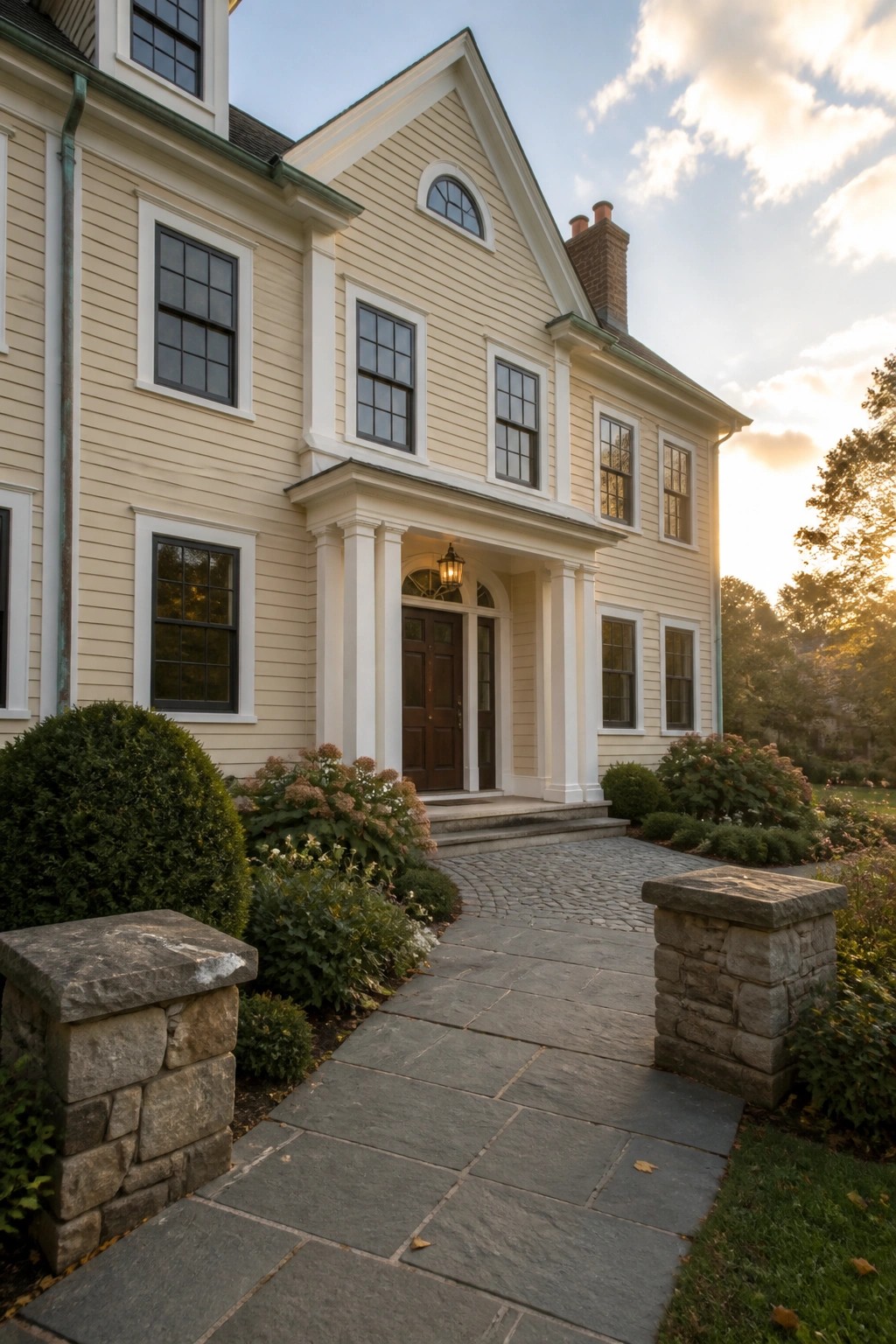
Many colonial homes stay brighter when the main siding stays in a light beige rather than a deeper tone. The color reflects daylight and keeps the facade from feeling heavy even on overcast days.
Use the same beige across the main body and let white trim define the windows, door surround, and columns. This approach suits traditional two-story colonials and works best when the roof and foundation stay in neutral tones that do not compete with the lighter walls.
Frequently Asked Questions
Q: How do I choose between beige and white for my colonial? A: Start with white if you want maximum brightness. Beige adds a bit more warmth while still reflecting light well. Look at how each shade plays with your roof and landscaping.
Q: What trim color pairs best with beige siding? A: Stick with bright white on the trim. It creates clean lines that keep the house looking fresh and open. Avoid anything too dark or it can weigh down the light feel.
Q: Do these light colors show dirt more easily? A: They do pick up some dust but a quick wash a couple times a year keeps them bright. Focus on the lower areas near the ground first.
