

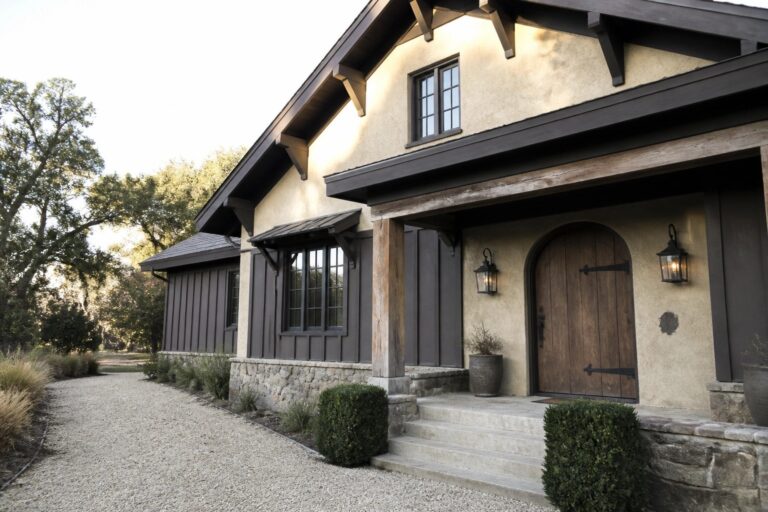
I have always noticed how beige and dark brown tones settle into rustic architecture when the siding and trim choices match the roof pitch and window placement from the curb.
Walking past homes that get this balance right shows how the entry steps and porch depth can make the whole front feel settled rather than added on later.
Materials matter more than people think.
The exteriors that age well usually keep the dark brown on the lower half so it grounds the lighter beige above without creating a sharp line that draws the eye wrong.
I keep a few of these facade pairings in mind when I look at older houses because the small shifts in how the colors meet the stone or wood often decide whether the look holds up in person.
Dark Wood Trim on Beige Stucco
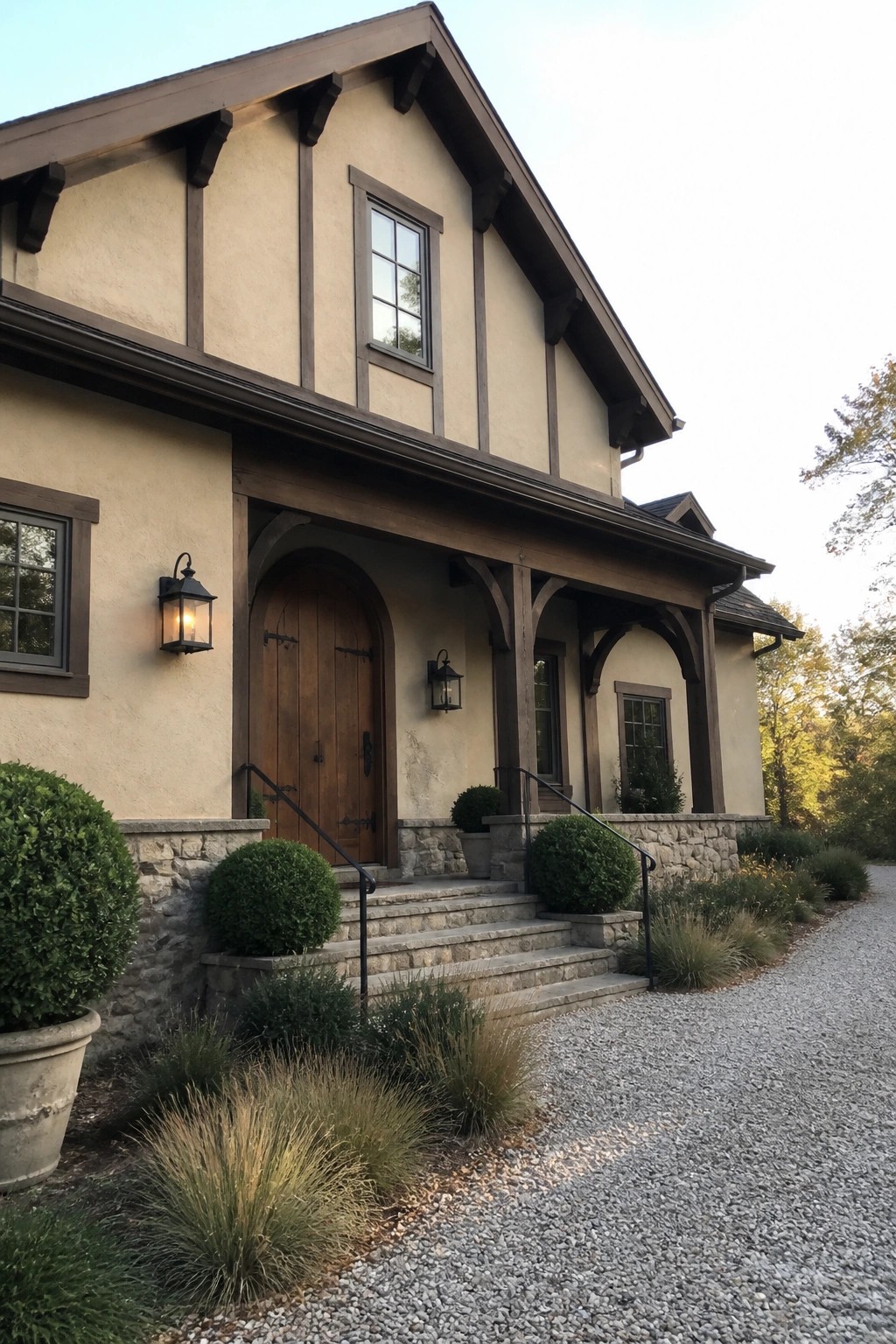
Dark wood trim gives a beige stucco exterior a clear structure that feels solid without looking heavy. The beams and framing pull the eye toward the entry and keep the whole front from reading flat.
This works best on homes that already have some roof overhang or gable detail. Use a deep brown on the wood so it holds up against the lighter wall color, and let the trim follow the actual architecture rather than adding extra pieces just for show.
Pairing Dark Wood With Beige Stucco
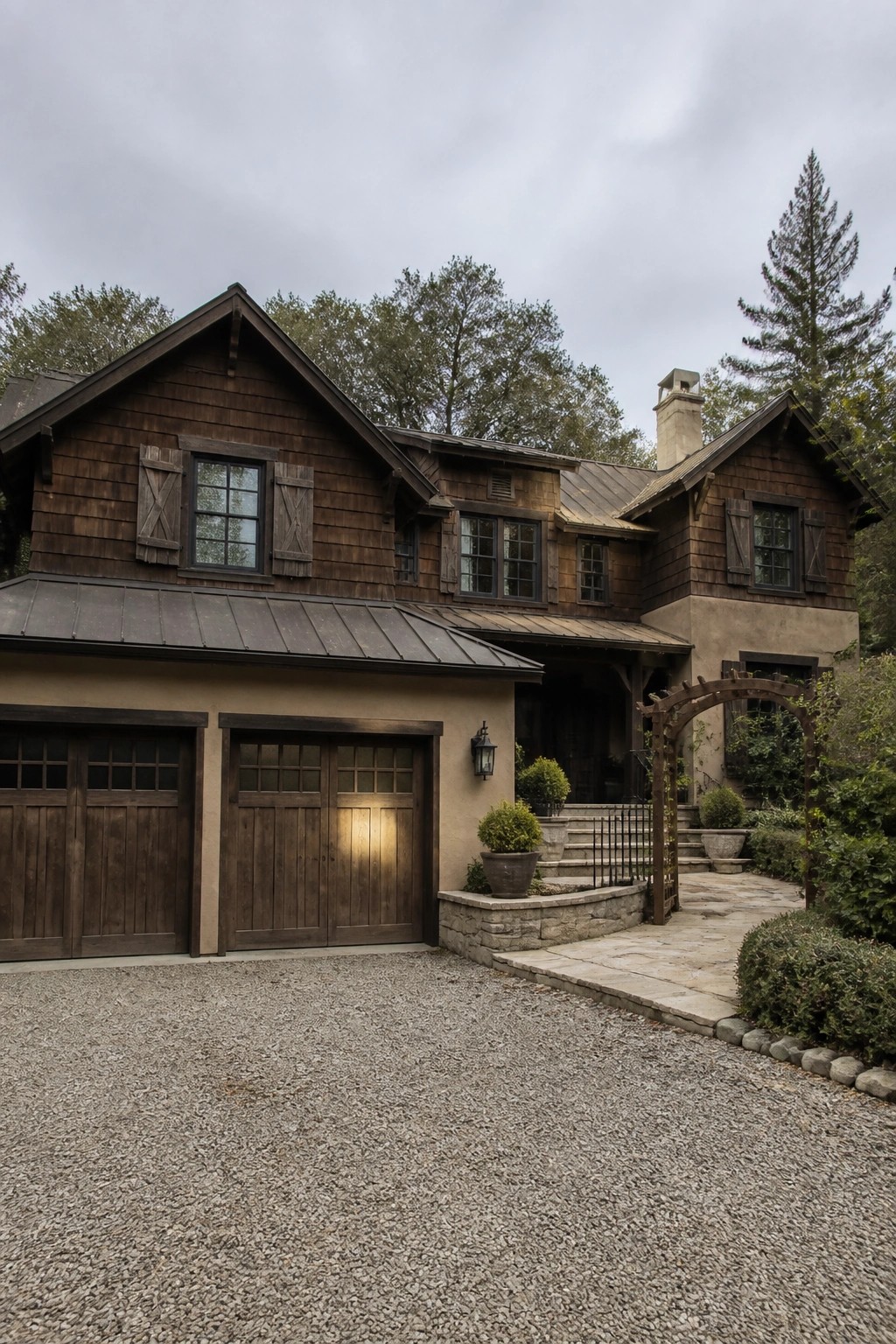
Many houses look better when they use two materials instead of one all the way around. Dark wood on the upper parts next to a warmer beige stucco on the base gives the house a clear division that feels settled and straightforward.
This mix works especially well on homes with more than one level or a simple roofline change. It keeps the lower walls from feeling too heavy while letting the wood add texture higher up. Stick with wood tones that are close in value to the stucco so the shift reads as intentional rather than busy.
Stone Details On Beige House Exteriors
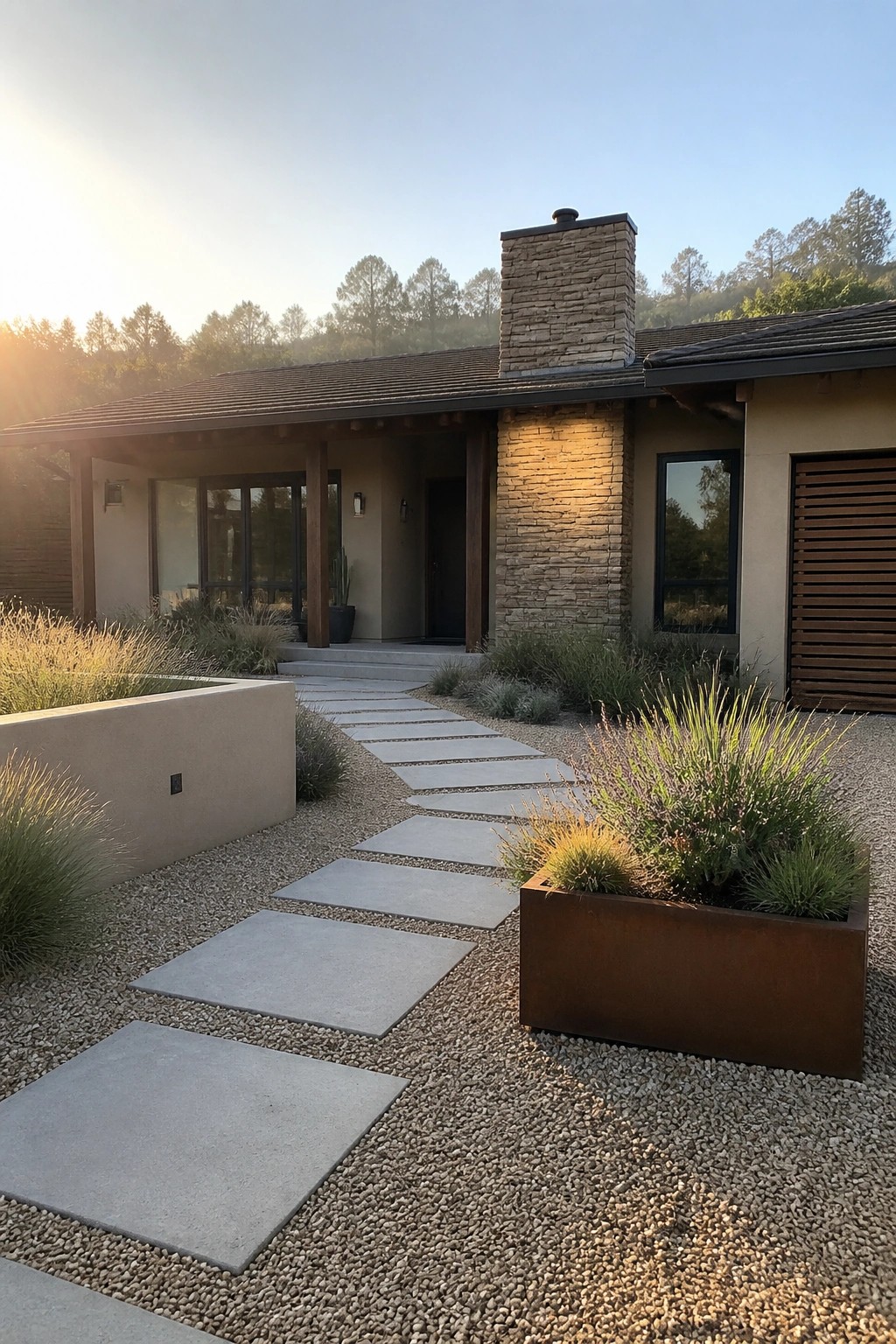
A tall stone chimney can add real texture to a simple beige exterior without making the whole house feel busy. The rough surface stands out against the smooth walls and pairs naturally with dark wood beams and roofing. This mix keeps the look rustic while still feeling clean and current.
It works best on homes where the stone is used in one or two spots only. Place it on the chimney or an entry column so the rest of the facade stays calm. Too much stone can make the house feel heavy, so balance is key.
Arched Entries Give Rustic Homes a Clear Focal Point
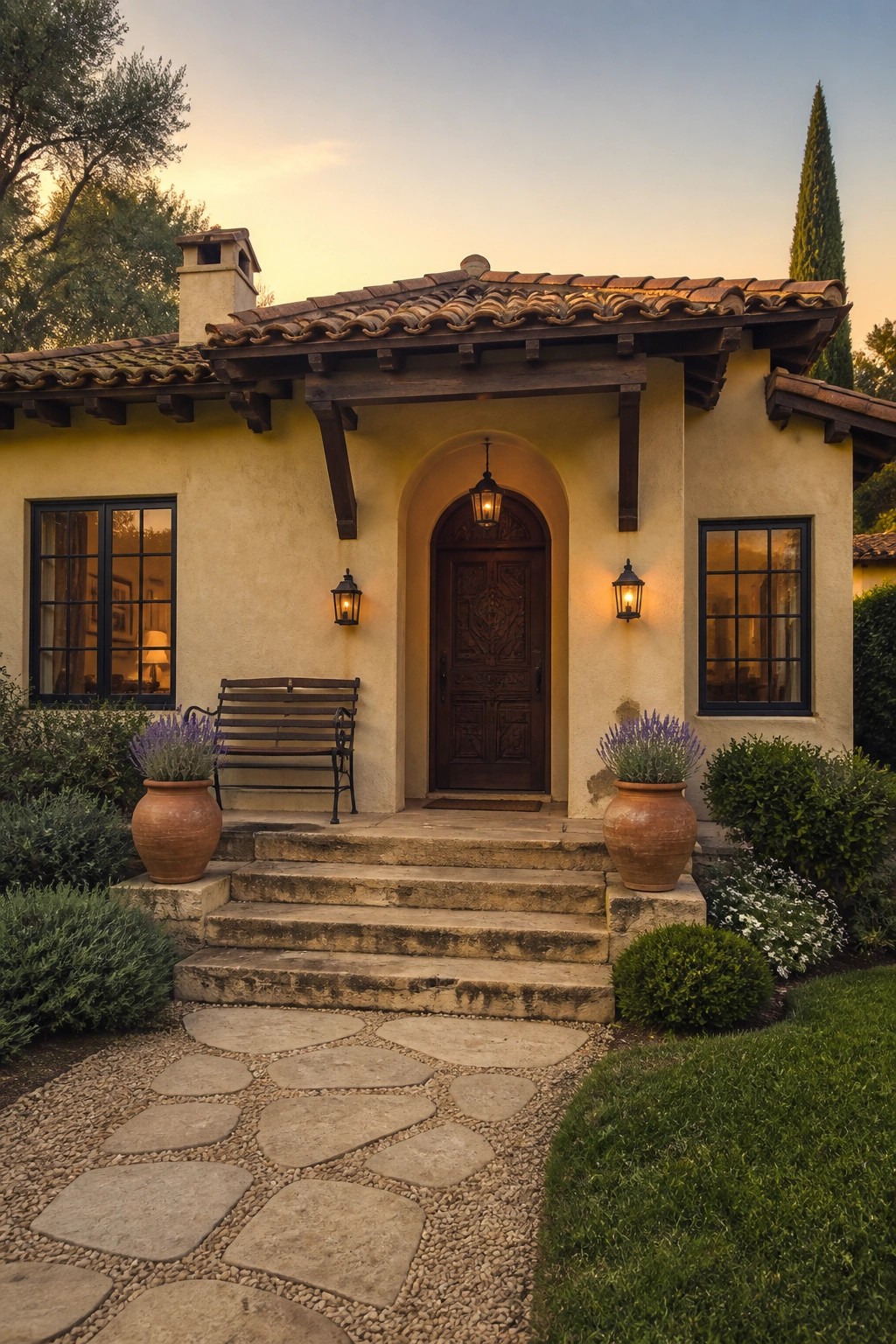
An arched doorway helps a simple stucco exterior feel more finished without needing lots of extra trim or ornament. The dark wood door stands out nicely against the warm beige walls and ties in with the roof and beams.
This works well on smaller homes that already lean rustic. Keep the rest of the facade fairly plain so the arch and door stay the main focus.
Stone Bases Under Wooden Posts
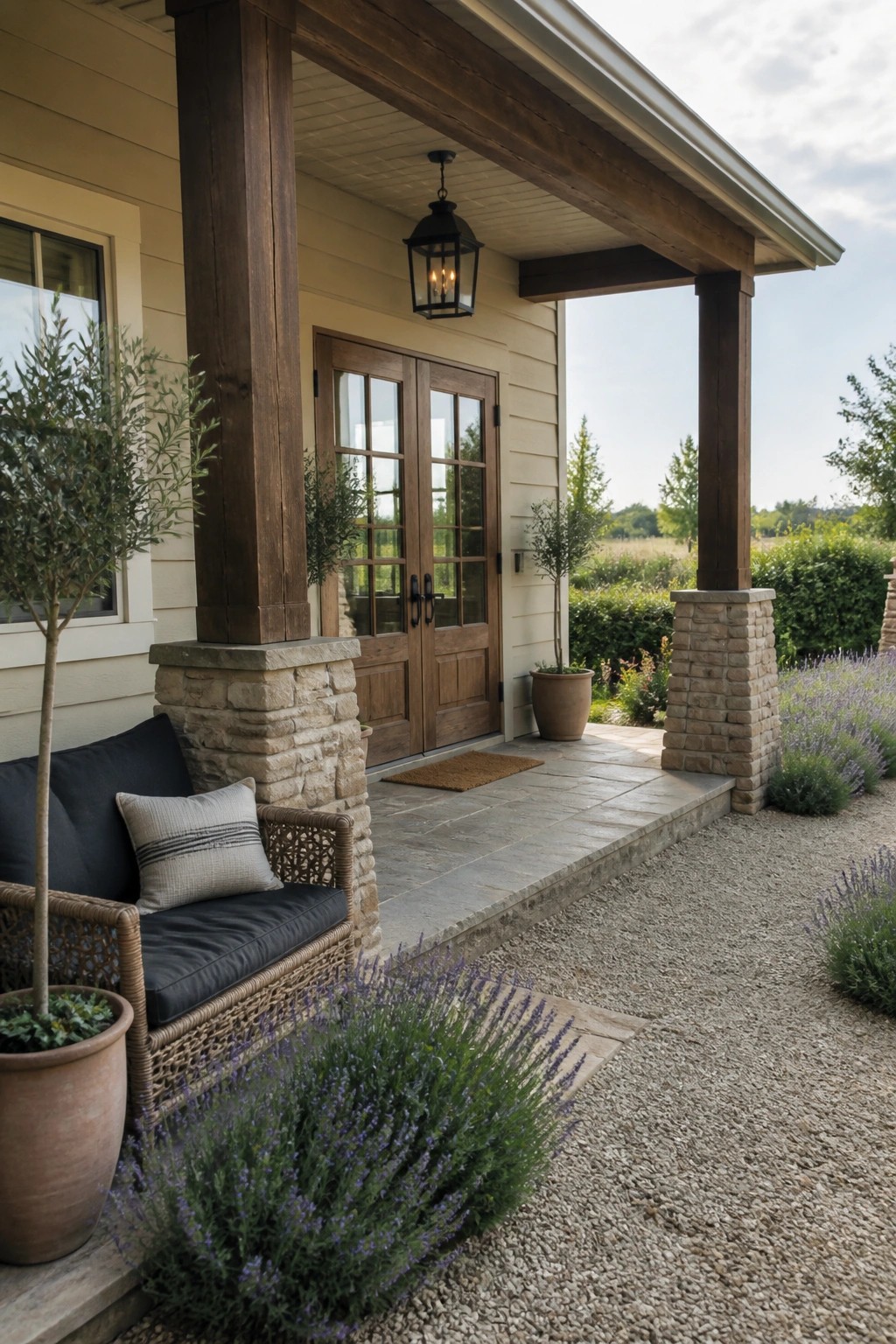
Stone bases under porch posts give the whole front a settled, permanent look that plain wood or siding alone cannot match. The contrast between the rough stone and the smoother wood above it adds weight right where the structure meets the ground, which helps the house feel more connected to the site.
This approach works best on homes with simple gable roofs and neutral siding in beige or tan tones. Keep the stone natural and irregular rather than too uniform, and let the wood stay a dark brown so the two materials play off each other without needing extra trim or decoration.
Dark Wood Trim Defines the Facade
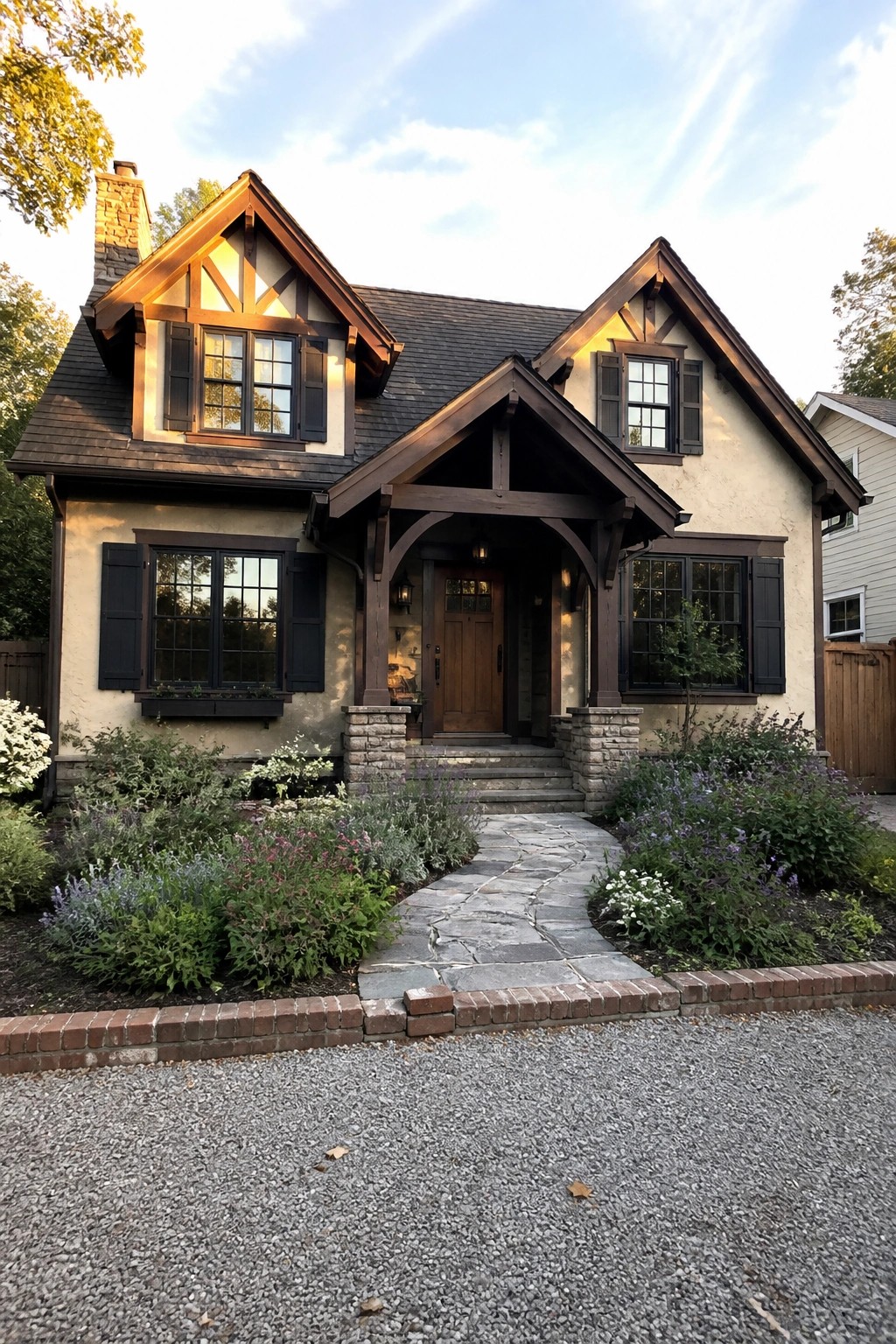
Dark wood beams and trim give this house a clear structure without making it feel heavy. The contrast against the light beige stucco helps the gables and windows stand out, which is useful when you want a rustic look that still reads as simple.
This works best on homes that already lean traditional or cottage style. Keep the trim color consistent across the entry, windows, and roofline so the whole front stays balanced.
Dark Wood Doors on Beige Walls
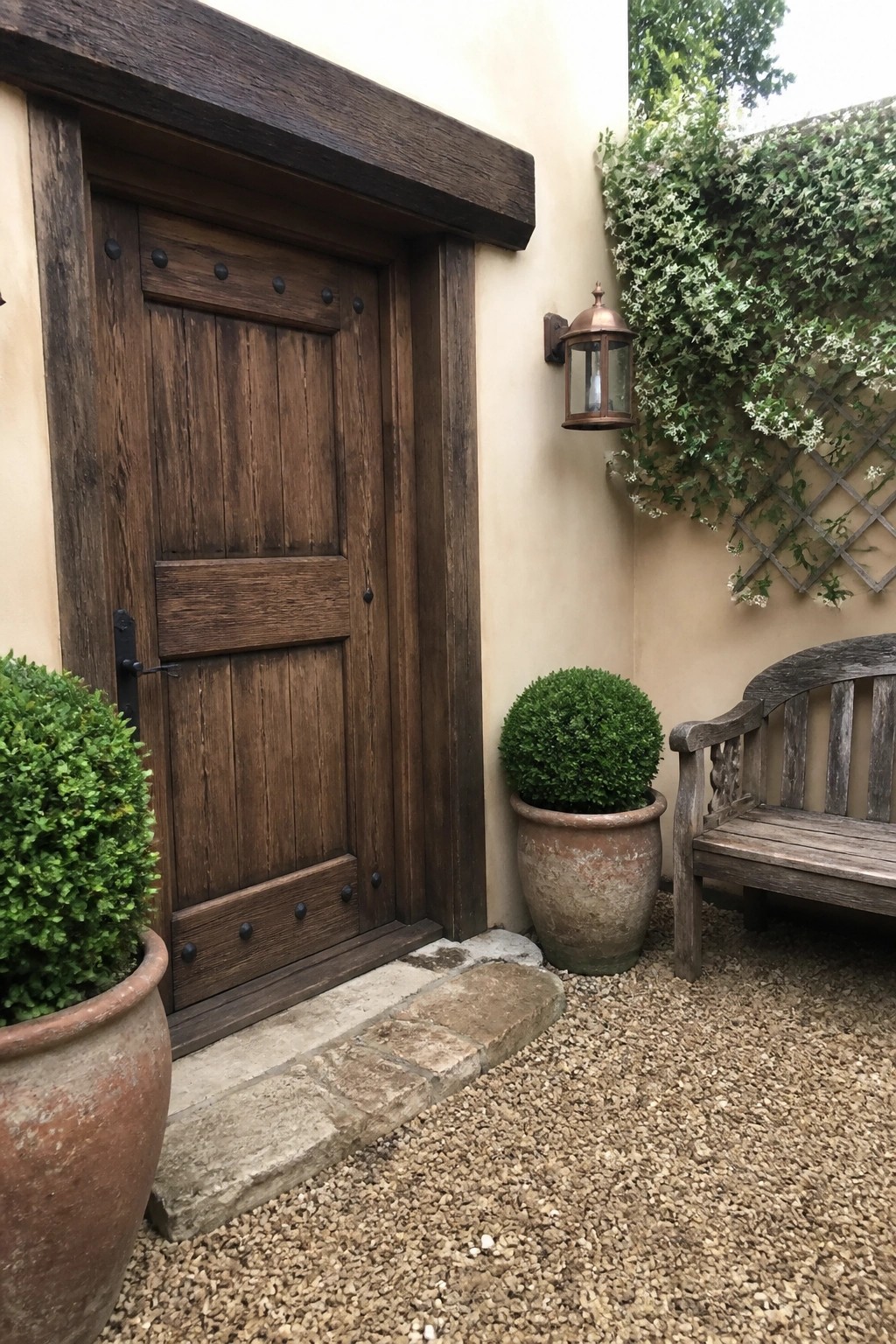
A dark wood door stands out nicely against beige walls and gives a rustic exterior some weight. The contrast feels natural and helps the entry look solid without extra trim or decoration.
This approach suits homes with simple stucco finishes and works best when the rest of the space stays plain. Gravel underfoot and a couple of large pots keep the focus on the door itself.
Stone Piers With Dark Wood For Rustic Entries
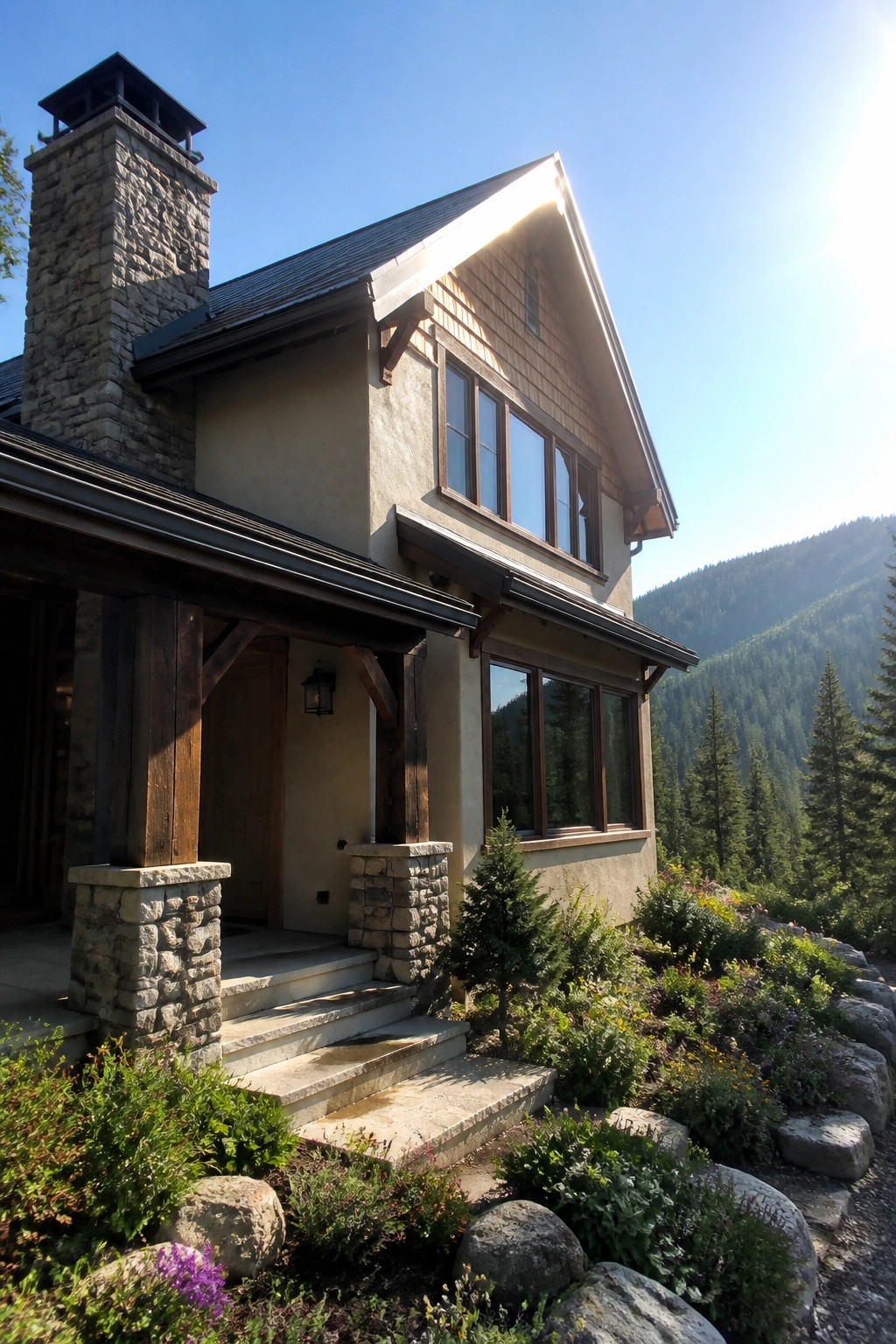
Stone piers at the entry give the front of the house real weight. They anchor the porch and balance the lighter stucco walls above while the dark wood beams add just enough contrast to keep everything feeling solid.
This works best on homes that already lean rustic or mountain style. Use rough stone at the base and keep the wood trim dark so the materials read as intentional rather than mismatched.
Beige Walls With Dark Brown Wood Details
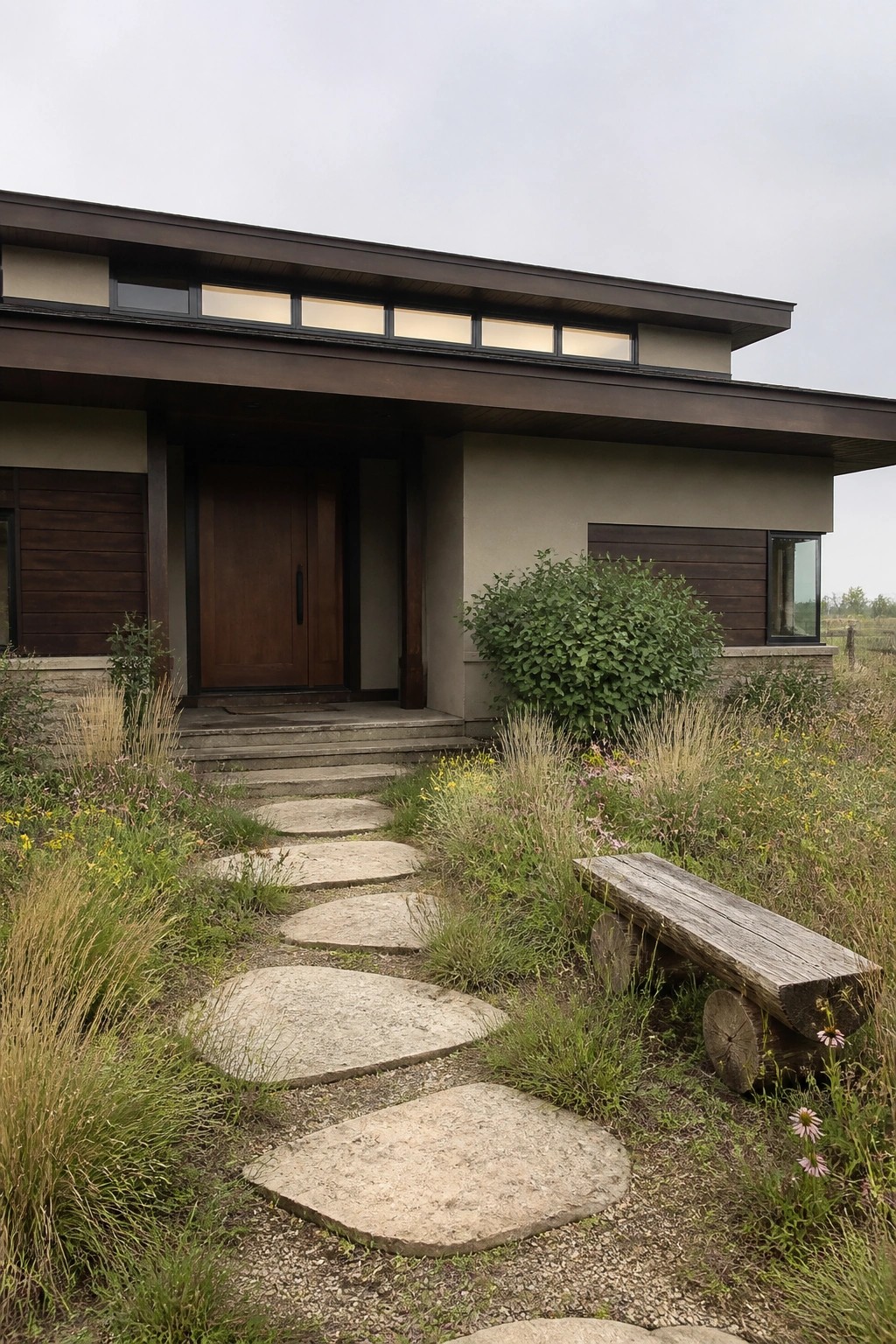
This combination gives a house a solid, grounded look without feeling heavy. The dark wood brings depth and a bit of rustic character, while the beige keeps the whole exterior from looking too dark or closed in. It works especially well on homes that want a modern shape but still feel tied to natural surroundings.
Use it on the main body of the house in a light warm beige, then add the darker wood on doors, window trim, or accent panels. It suits rural or edge-of-town homes best, where the contrast can stand out against open land or fields. Just keep the wood tones consistent so the house does not end up looking pieced together.
Pairing Beige Walls With Dark Wood Accents
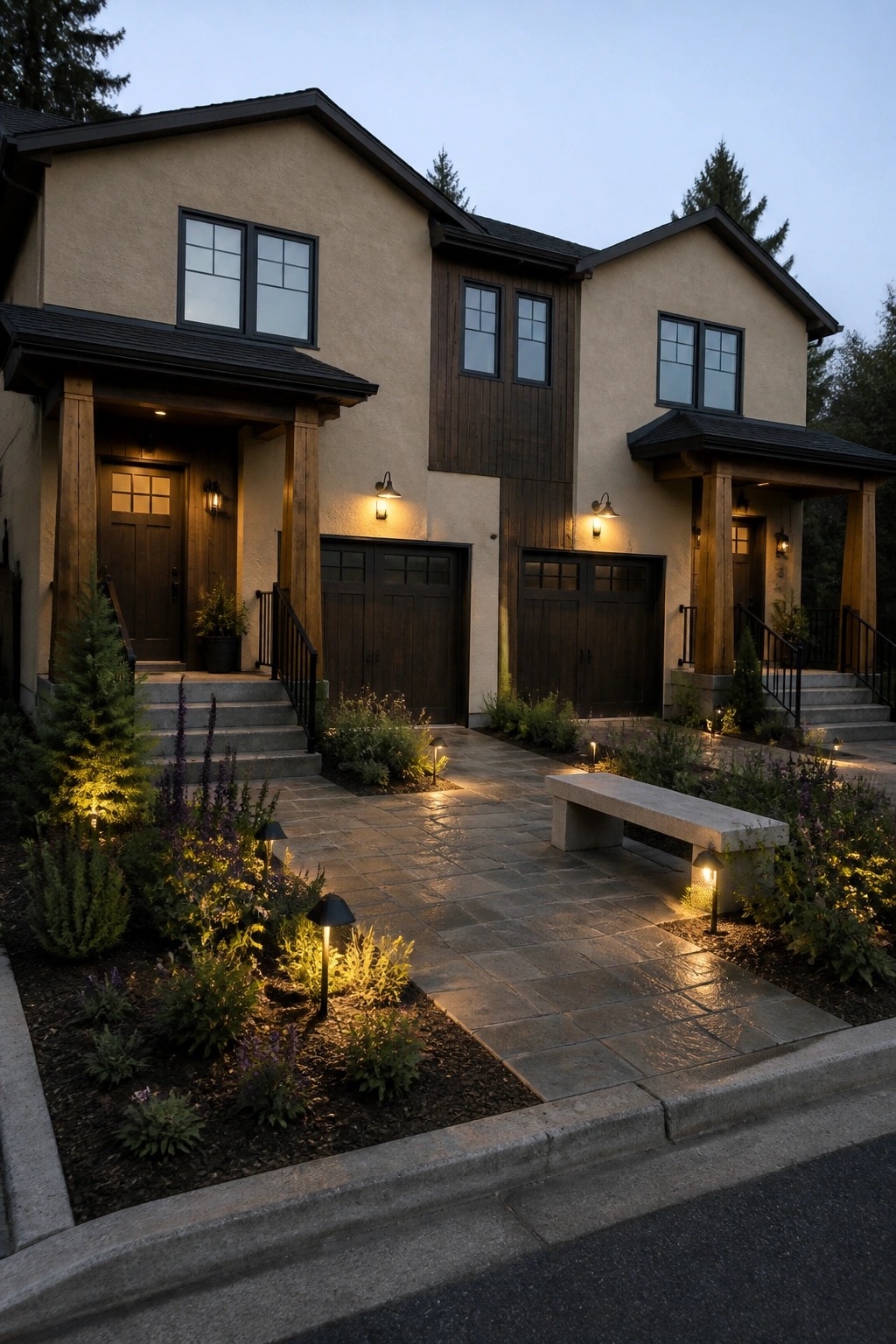
Many homes start with a simple beige exterior and then add dark wood panels or trim to give it more character. The contrast keeps the house from looking flat while still feeling warm and straightforward.
This works best on homes with clean rooflines and larger wall areas where the wood can break things up without taking over. It suits places that already lean rustic or want to add a bit of weight to the facade.
Rustic Wooden Tables For Outdoor Patios
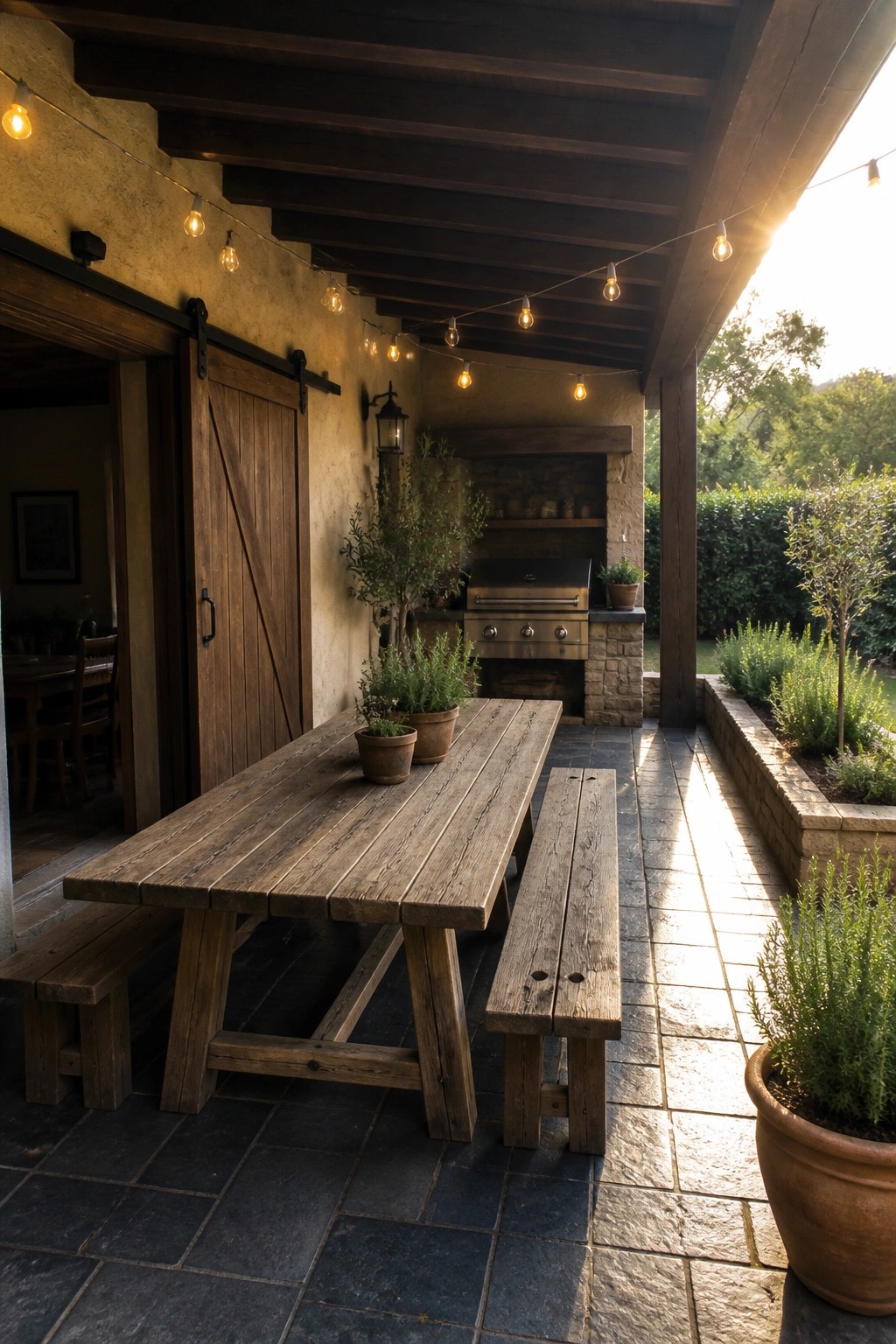
A long wooden table with attached benches gives an outdoor space a clear purpose without adding clutter. It fits well under a covered area where the wood tones echo the ceiling beams and the nearby stonework, and it keeps the focus on simple, everyday use rather than fancy furniture.
This kind of table works best on homes that already lean rustic, especially when it sits close to a built-in grill so meals can move straight from cooking to the table. Keep the wood sealed for weather and choose a size that leaves walking room around it.
Wooden Brackets To Highlight The Entry
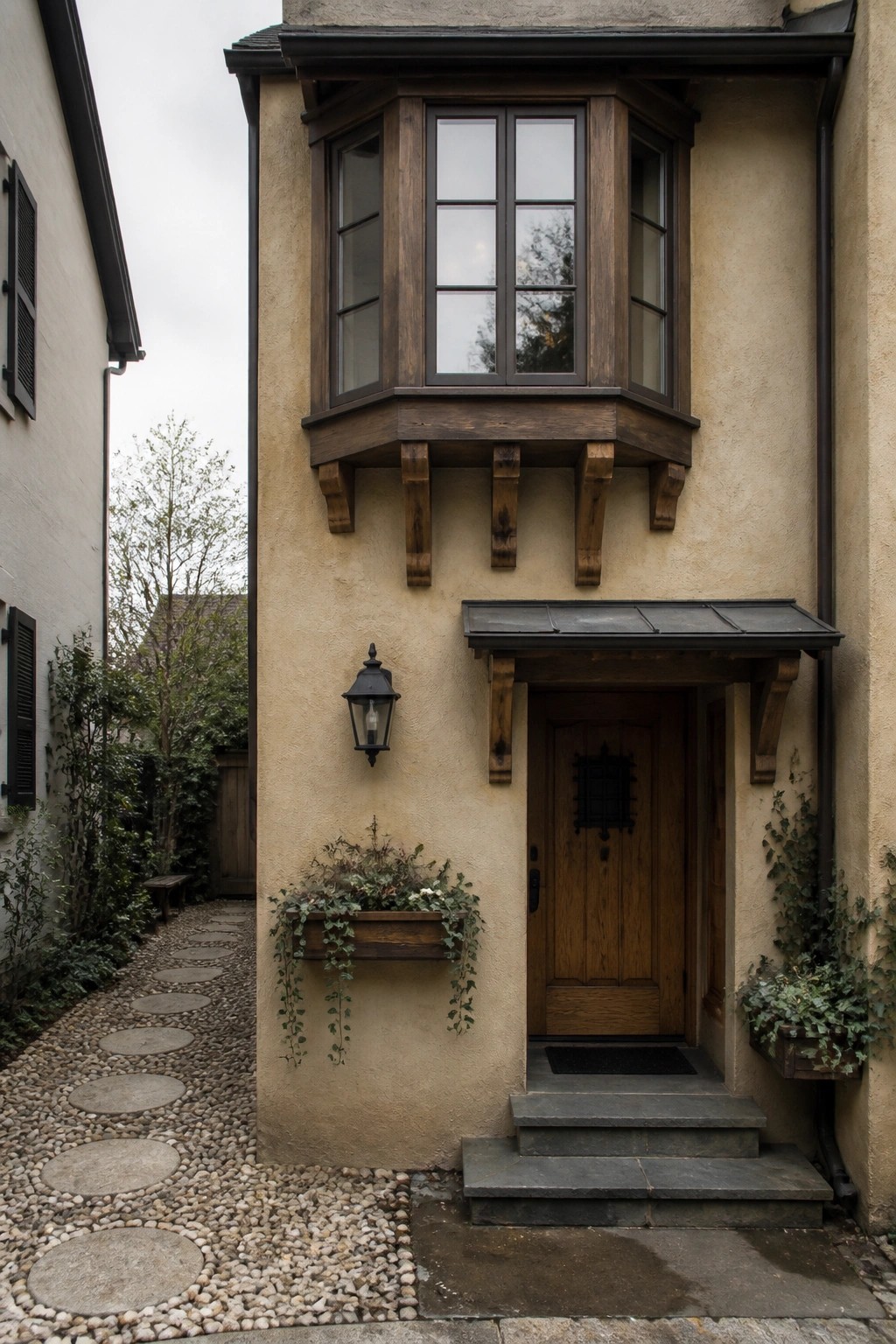
One simple way to add rustic character to a stucco exterior is to use wooden brackets under small overhangs and windows. They break up the flat wall surface and tie the dark wood door and trim together without much extra work.
This works best on homes that already lean toward a straightforward shape. Match the brackets to the door and window frames, and keep the shapes basic so the detail feels natural rather than added on.
Barn Doors That Open The Whole Exterior
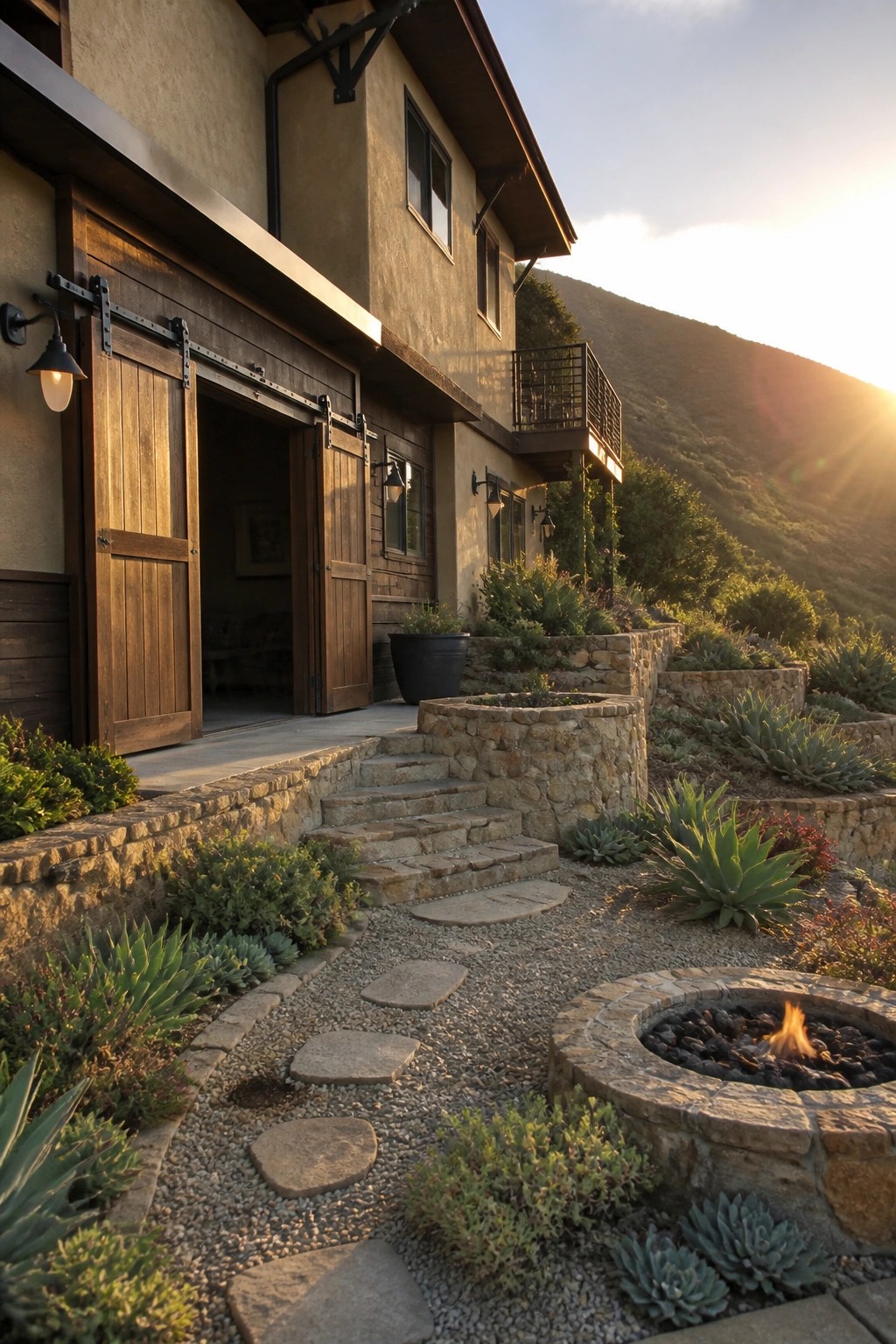
Large sliding barn doors work especially well on a rustic house because they let the inside and outside feel connected without any fancy framing. The dark wood stands out nicely against the warm beige walls and gives the front a simple, sturdy look that fits right into the surrounding hills.
They suit homes that already lean toward natural materials and casual living. Just make sure the doors are sized right for the wall and the hardware feels solid, since that is what keeps the whole thing looking balanced instead of fussy.
Dark Wood Trim on Beige Exteriors
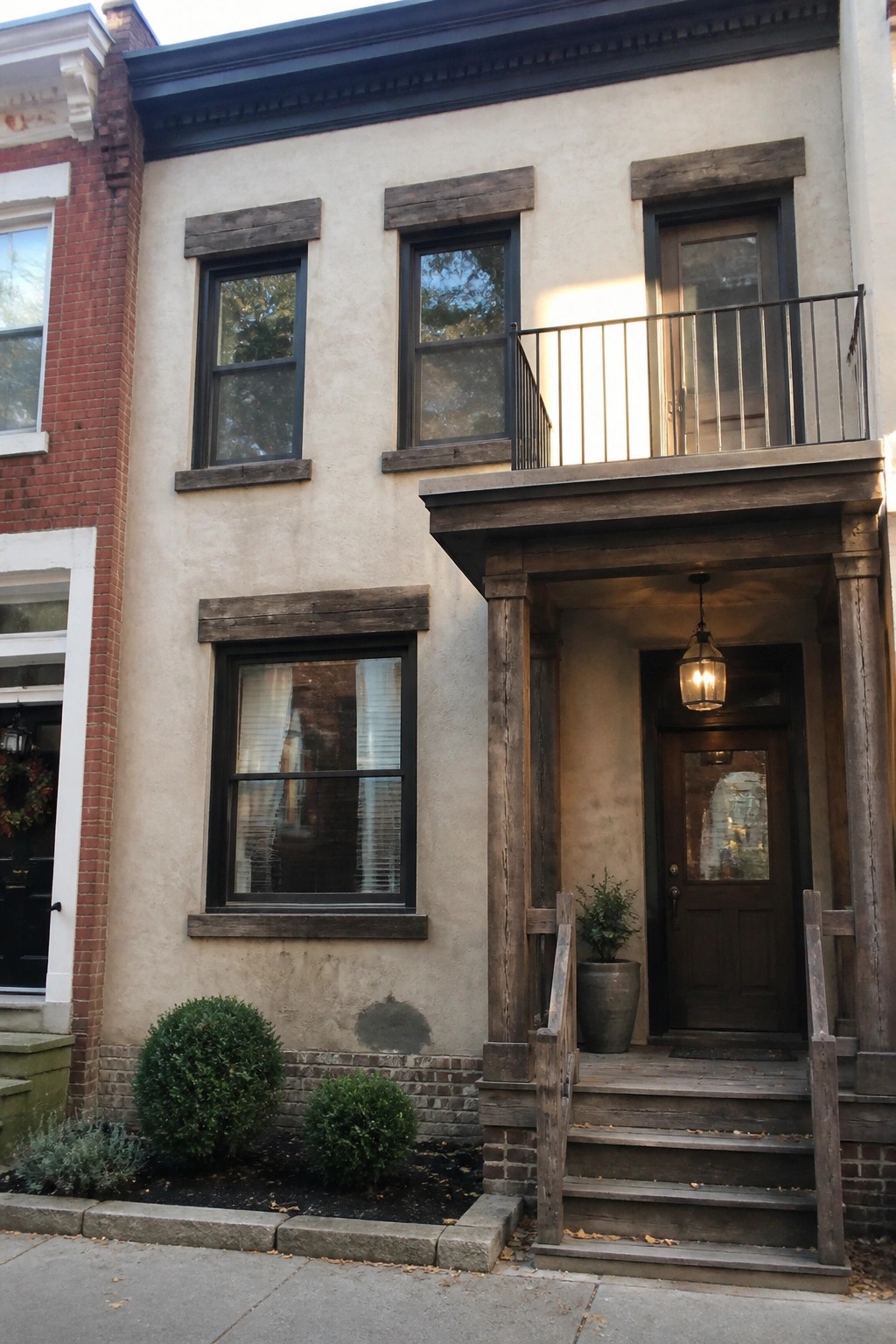
Dark wood trim around windows and doors gives a beige stucco house more structure and a clear rustic direction. The contrast keeps the light walls from looking flat while adding warmth through the natural grain and deeper tone.
This approach suits homes with straightforward facades where you want some character without extra ornament. Match the wood color to the front door and any porch posts so the details feel intentional rather than scattered.
Combining Stone and Dark Wood on the Facade
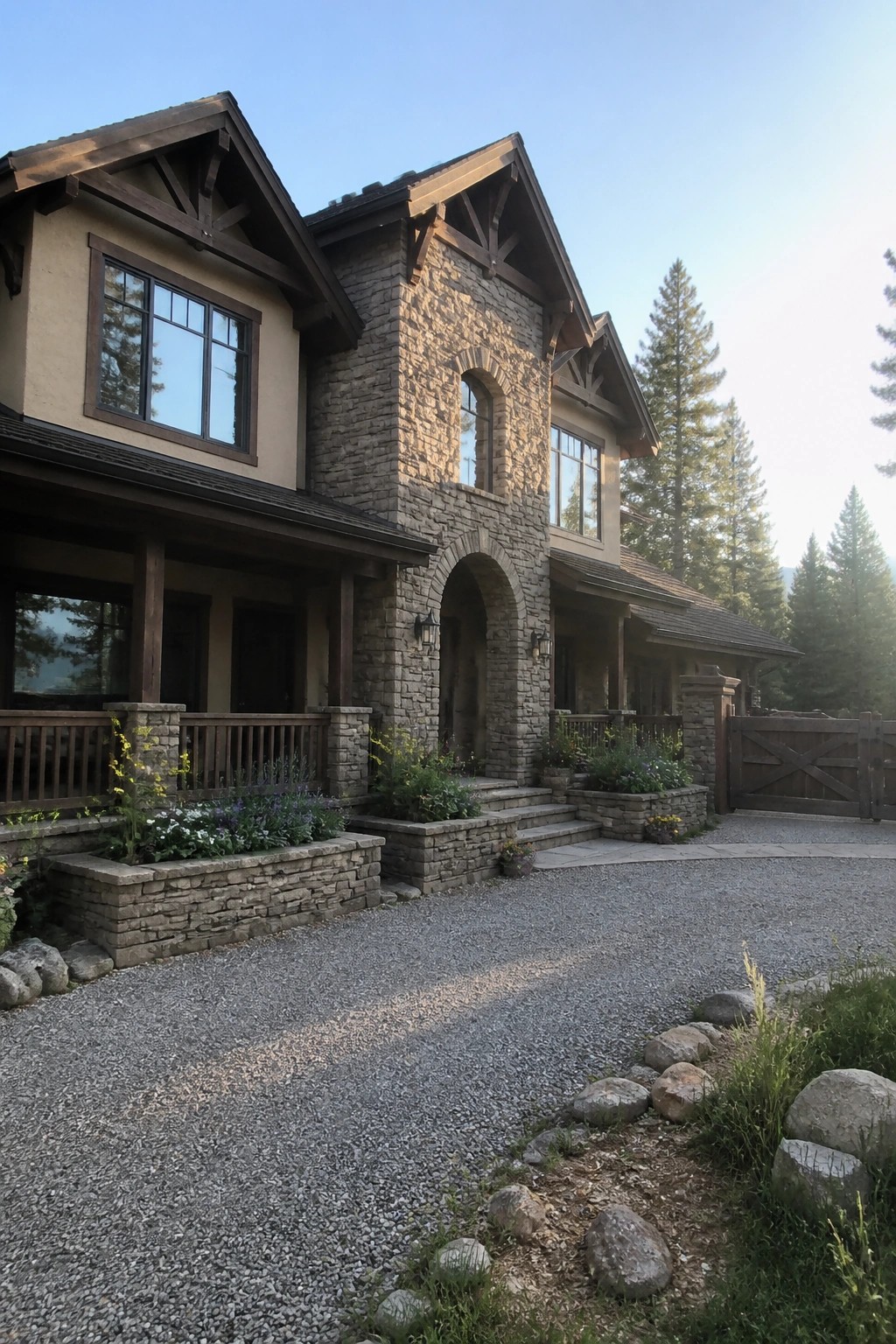
Many homes in this style get their character from the way stone and dark wood are used side by side. The stone gives the central sections real weight, while the wood trim and beams add structure without making the whole house feel heavy.
This mix works best on larger homes that already have strong rooflines and some height. Use the stone on the main body or around the entry, then let the wood handle the trim and overhangs so the colors stay balanced.
Dark Wood Framing on Light Exteriors
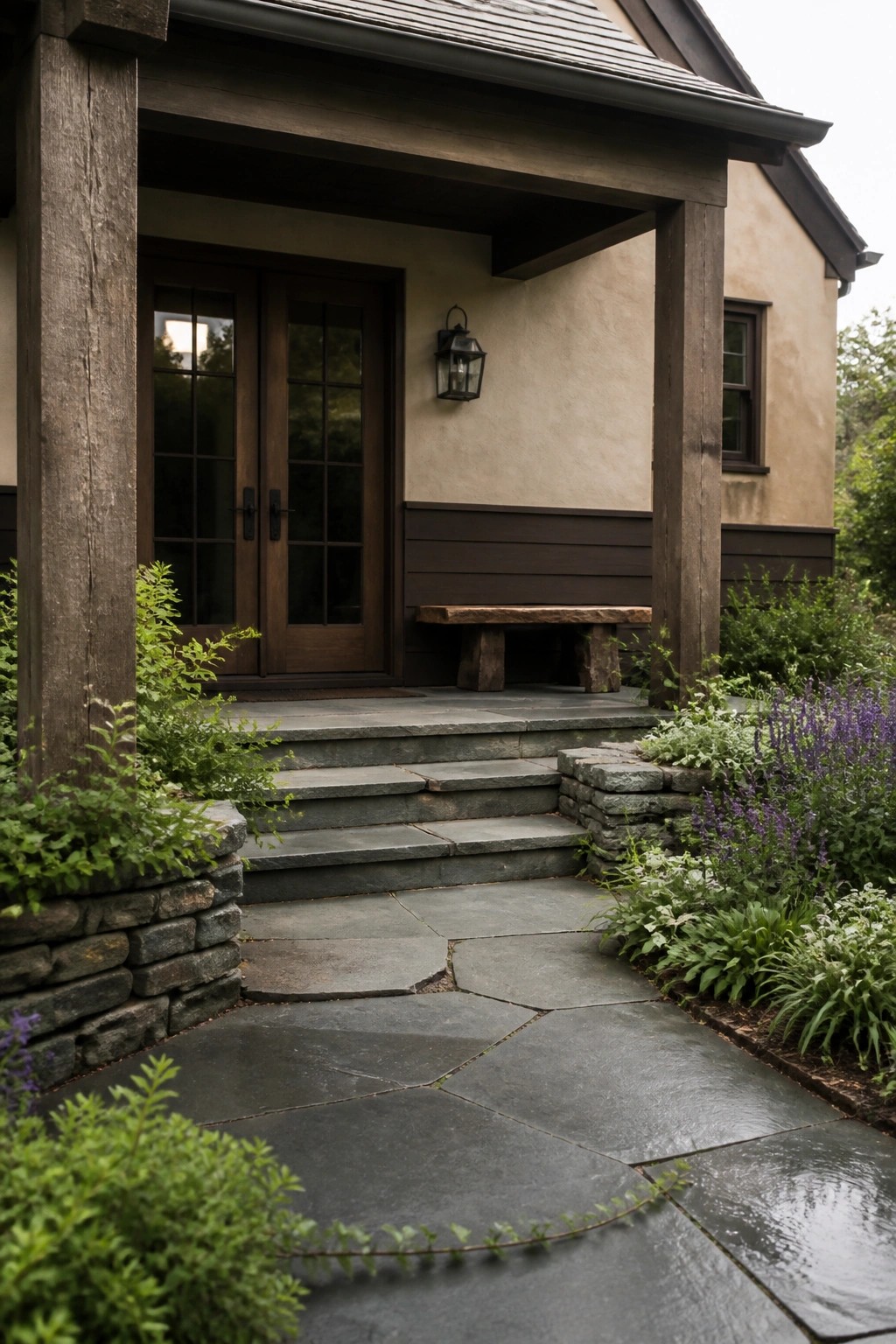
Dark wood against a light beige wall gives the entry a clear, grounded look. The heavy posts and door frame stand out without needing extra trim or decoration, and the contrast keeps the front from feeling flat or washed out.
This approach works best on homes with simple rooflines and natural materials. It suits rustic or traditional styles where you want the entry to feel solid but not overly formal. Just keep the wood tones consistent so the contrast stays clean rather than busy.
Frequently Asked Questions
Q: My house faces west and gets blasted with afternoon sun. Will the dark brown hold up okay?
A: Dark brown holds color well if you choose a quality exterior grade. It actually hides dirt and fading better than lighter shades. Check the product for UV protection before you buy.
Q: Can I mix in some lighter wood tones without losing the rustic look?
A: Yes but keep them to accents like porch posts or shutters. Too many light spots can break up the rich contrast the designs rely on. Stick close to the beige base and dark brown main areas.
Q: What about adding plants to tie the colors in?
A: Choose greenery with similar earthy tones. It softens the edges and makes the whole exterior feel more natural.
