

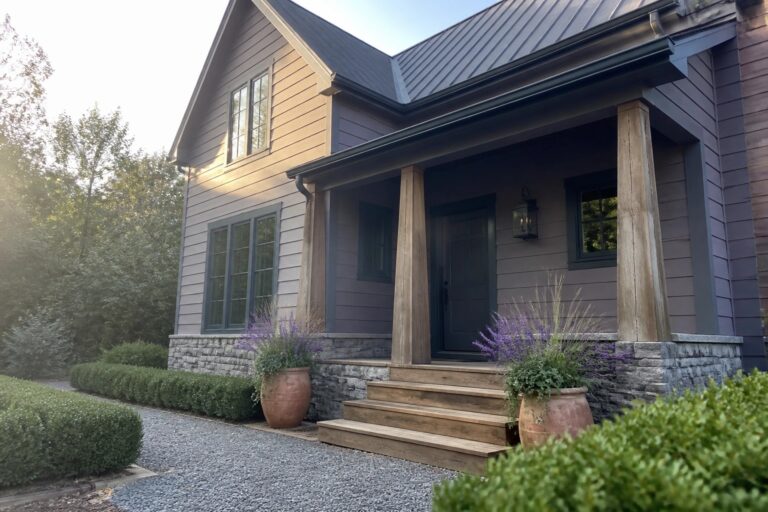
When I look at homes with purple gray siding paired with charcoal details, what catches my eye first is how the darker accents define the windows and trim against the softer main color.
Over time I have learned that these combinations often read more balanced in person than they do in renderings because real sunlight brings out subtle variations in the gray.
The roofline changes everything.
Choosing the right charcoal for the accents also depends on whether the house has brick, wood, or stucco because each material reflects light differently and affects how sharp the contrast appears from the curb.
I usually start by imagining how the front door would fit into that scheme since it is the first thing visitors approach.
Purple Gray Siding With Charcoal Accents
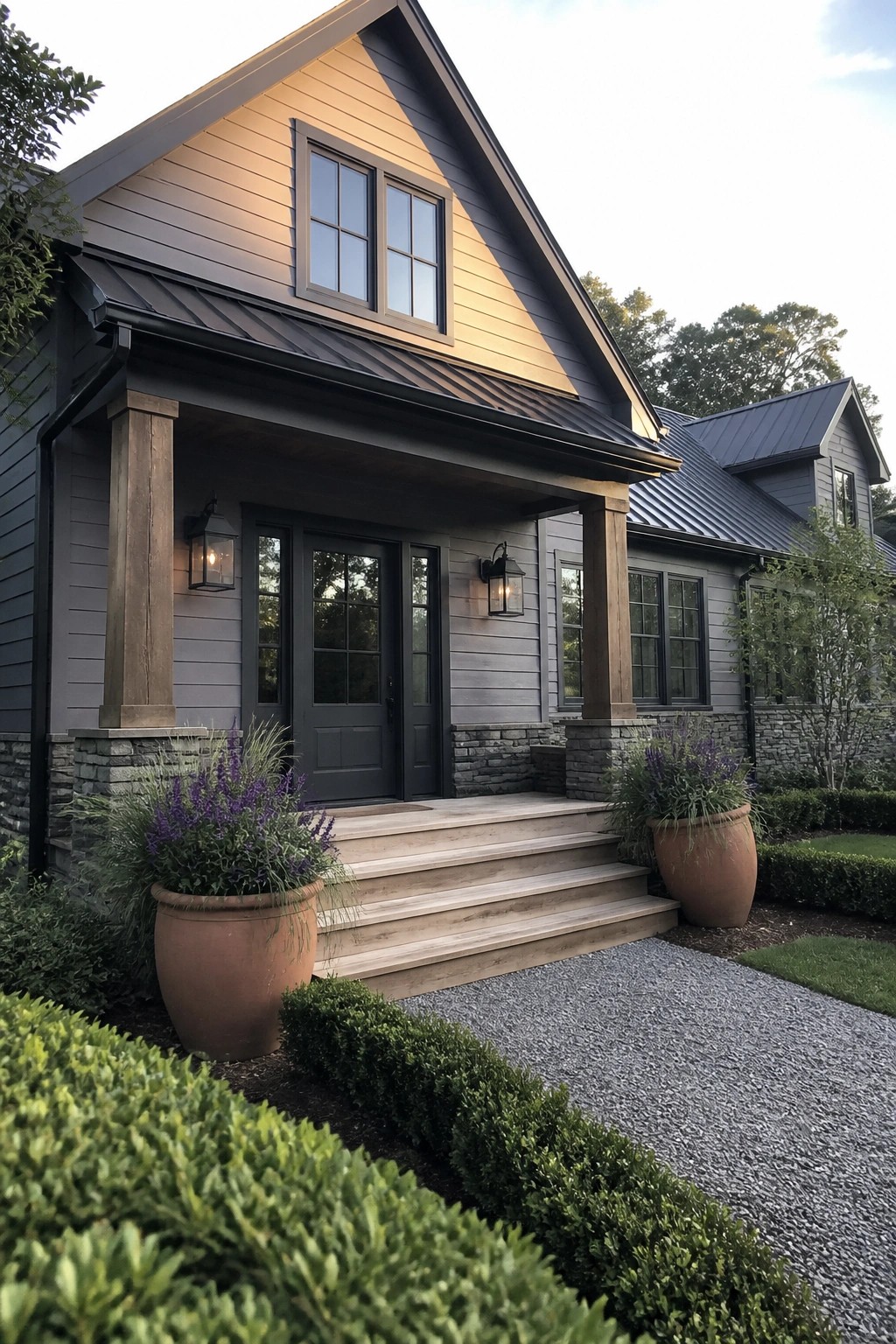
Purple gray works well as a main house color because it sits between cool and warm without leaning too far either way. The shade holds its own next to charcoal roofs and trim, giving the facade a quiet presence rather than a stark contrast.
This approach suits homes with simple gable lines and a clear entry. Adding wood posts or similar natural elements helps keep the overall look balanced instead of flat.
Pairing Purple Gray With Charcoal Accents
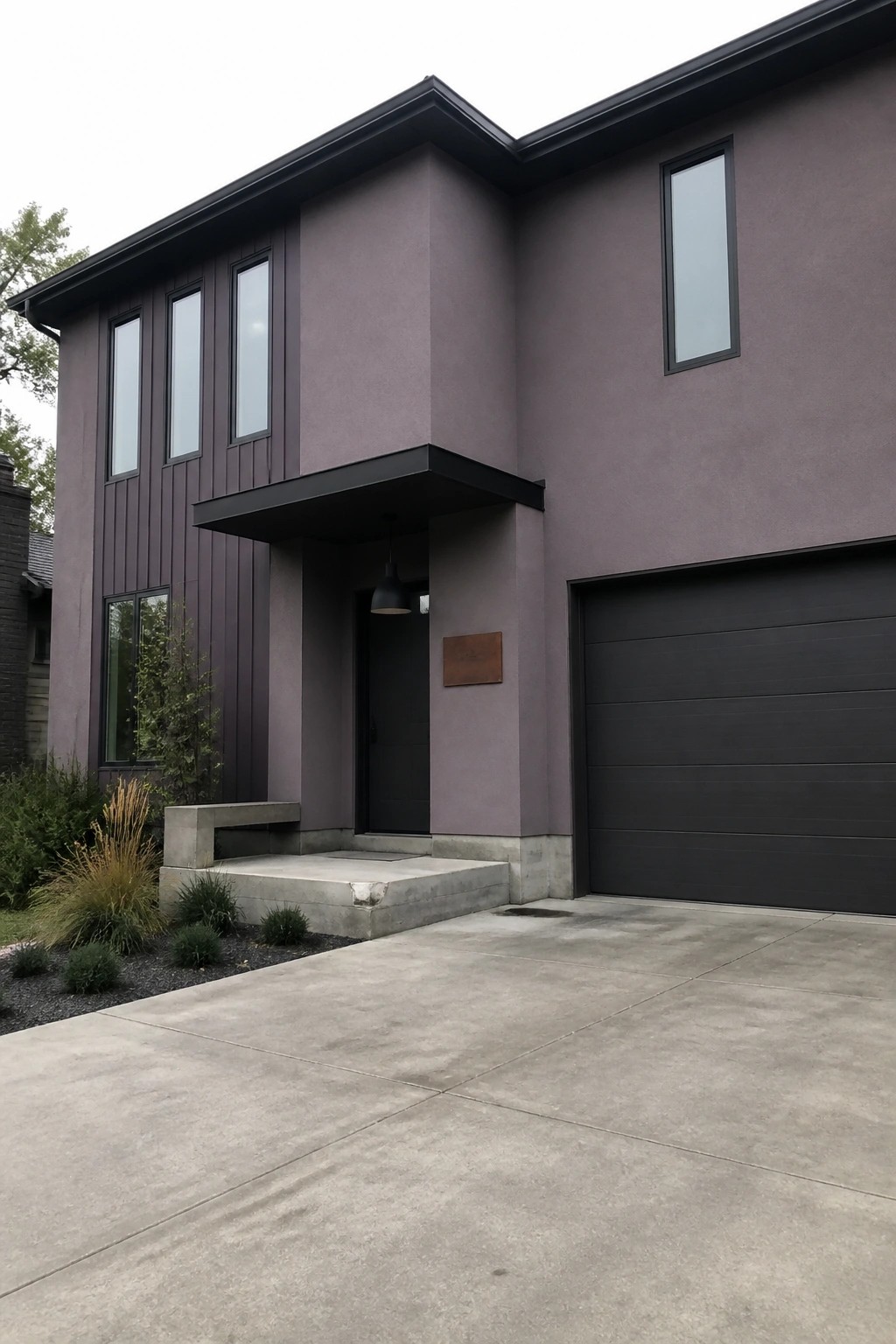
A soft purple gray exterior can feel a bit flat on its own, so adding strong charcoal elements helps give it more structure. The dark roofline, window frames, and garage door here pull the color together and stop it from looking too pale against the sky or surrounding landscape.
This works best on homes with clean lines and larger flat surfaces. Keep the charcoal limited to the bigger architectural pieces like trim, doors, and overhangs so the purple gray remains the main color instead of getting broken up.
Purple Gray Siding With Charcoal Accents
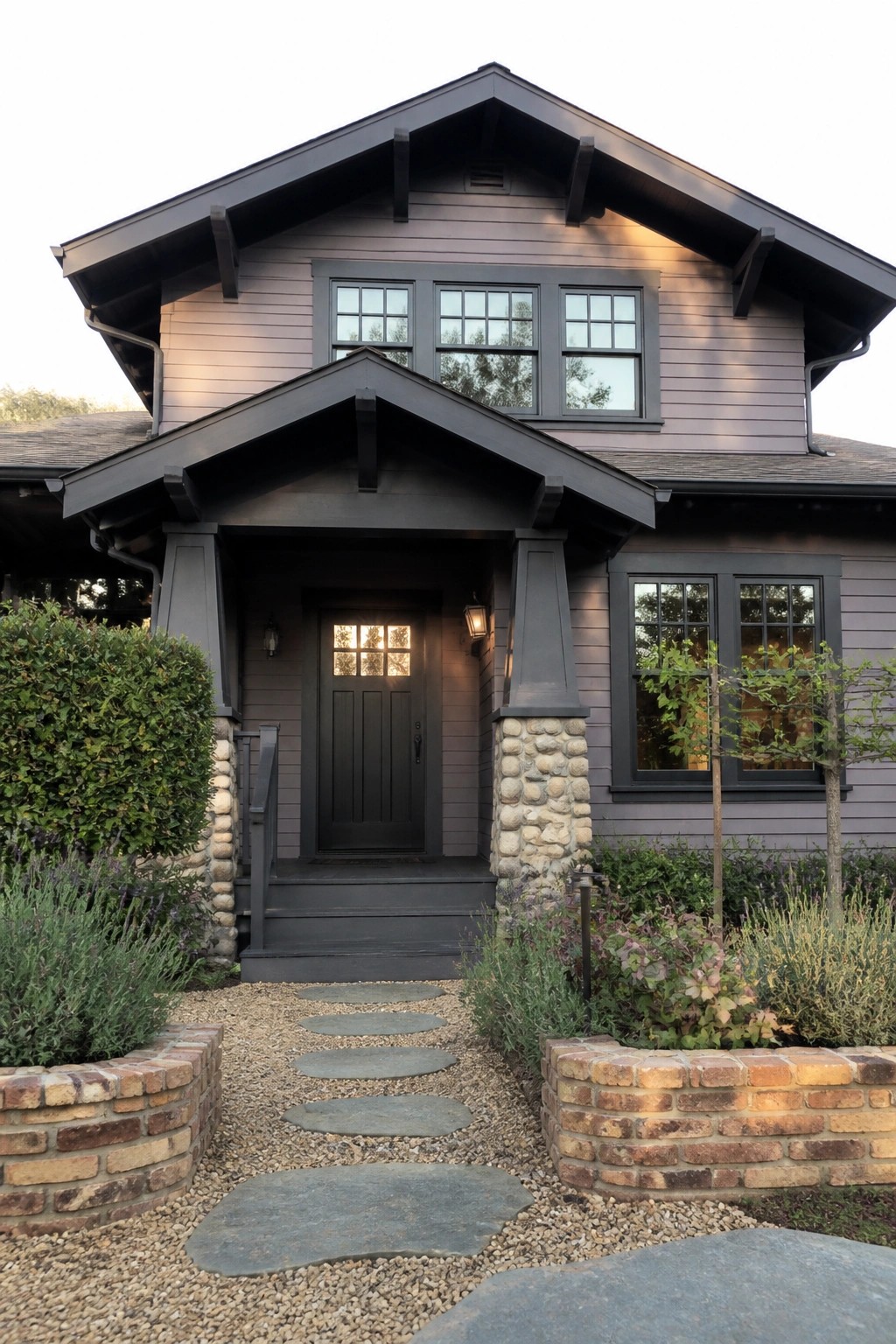
A soft purple gray siding gives the house a quiet presence that stands out from plain grays without feeling bold. The charcoal trim on the windows, roof edges, and porch structure adds definition and keeps the color from looking washed out.
This combination works best on homes with clear rooflines and simple trim details. It suits older neighborhoods or suburban streets where you want a bit of personality while still staying traditional. Using stone at the base of the porch posts helps tie the lighter siding to the ground.
Purple Gray Siding With Charcoal Accents
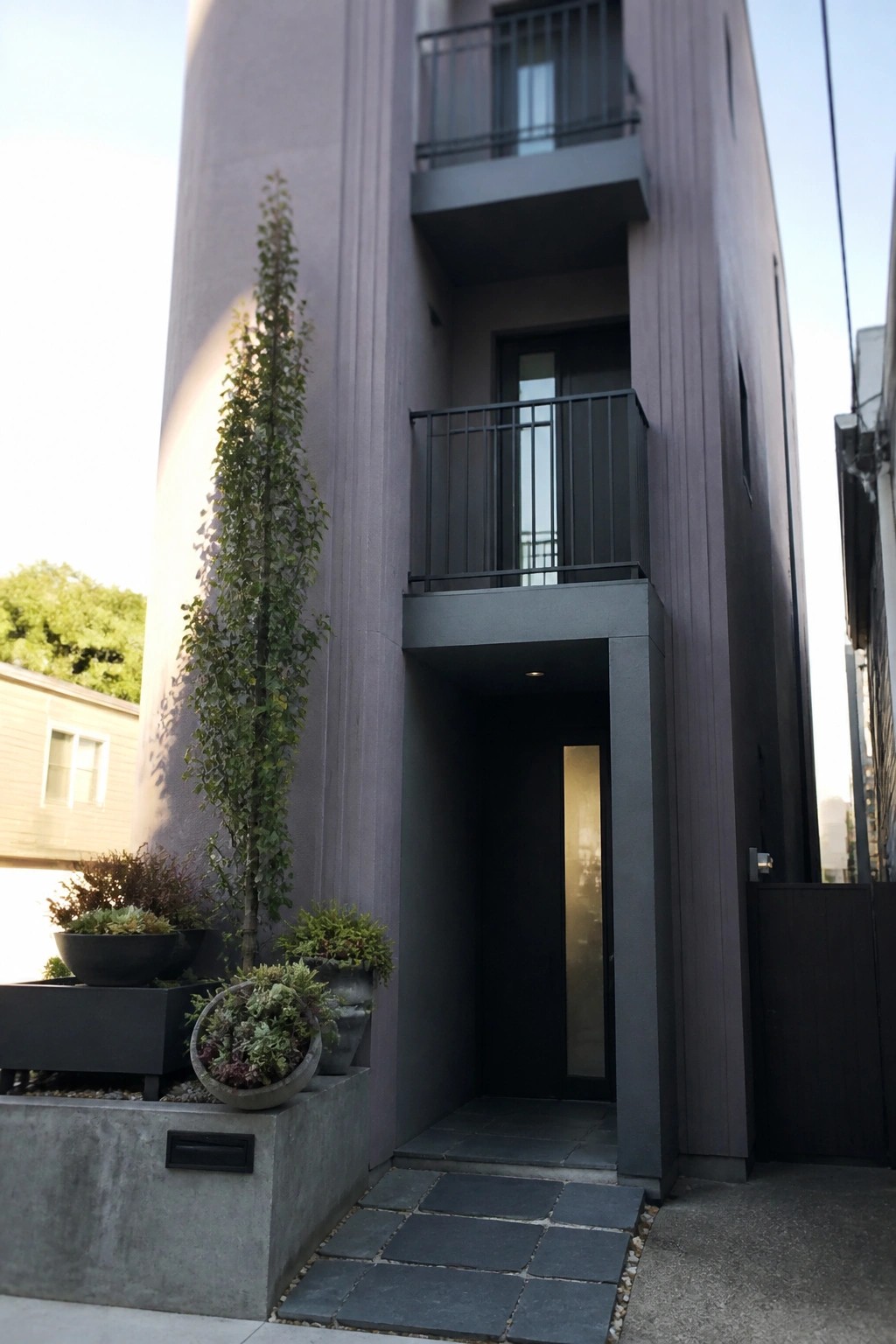
A muted purple gray on the main walls gives a house a calm, modern look that still feels substantial. Adding charcoal on the balconies, door frame, and trim sharpens the edges and keeps the color from fading into the background.
This approach suits narrow or tall homes where you want the shape to read clearly from the street. Stick with a simple concrete base and limit extra colors so the contrast between the purple gray and charcoal stays the main feature.
Pairing Purple Gray Siding With Charcoal Accents
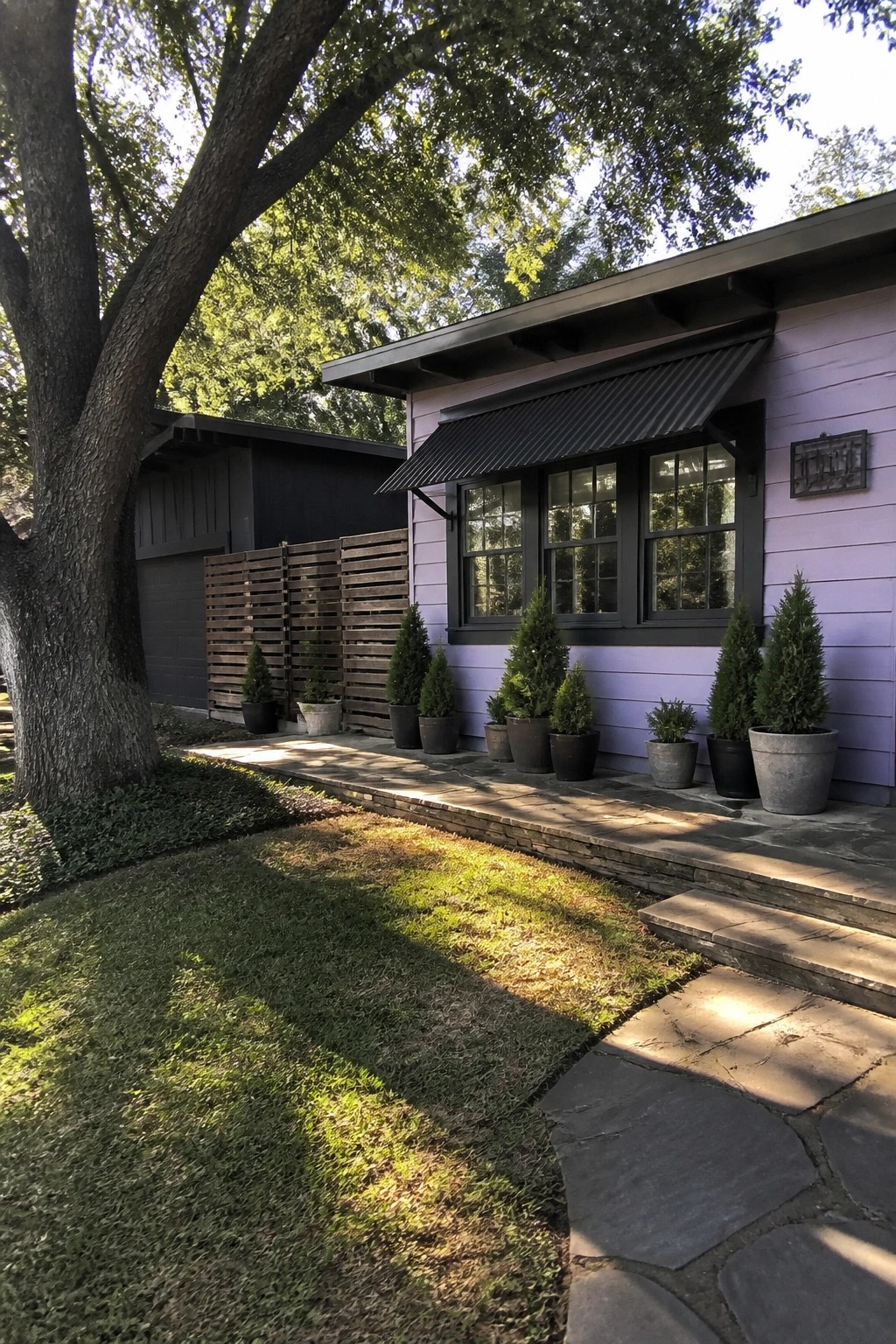
A muted purple gray on the siding gives a house some color without making it feel bold or trendy. Charcoal accents on the windows and awning keep the look grounded and help the proportions read clearly from the street.
This works especially well on smaller homes or one-story cottages where you want the color to stay soft. Keep the trim and metal details dark so the siding does not wash out, and use a simple row of potted shrubs along the base if there is no deep planting bed.
Purple Gray Siding With Charcoal Trim
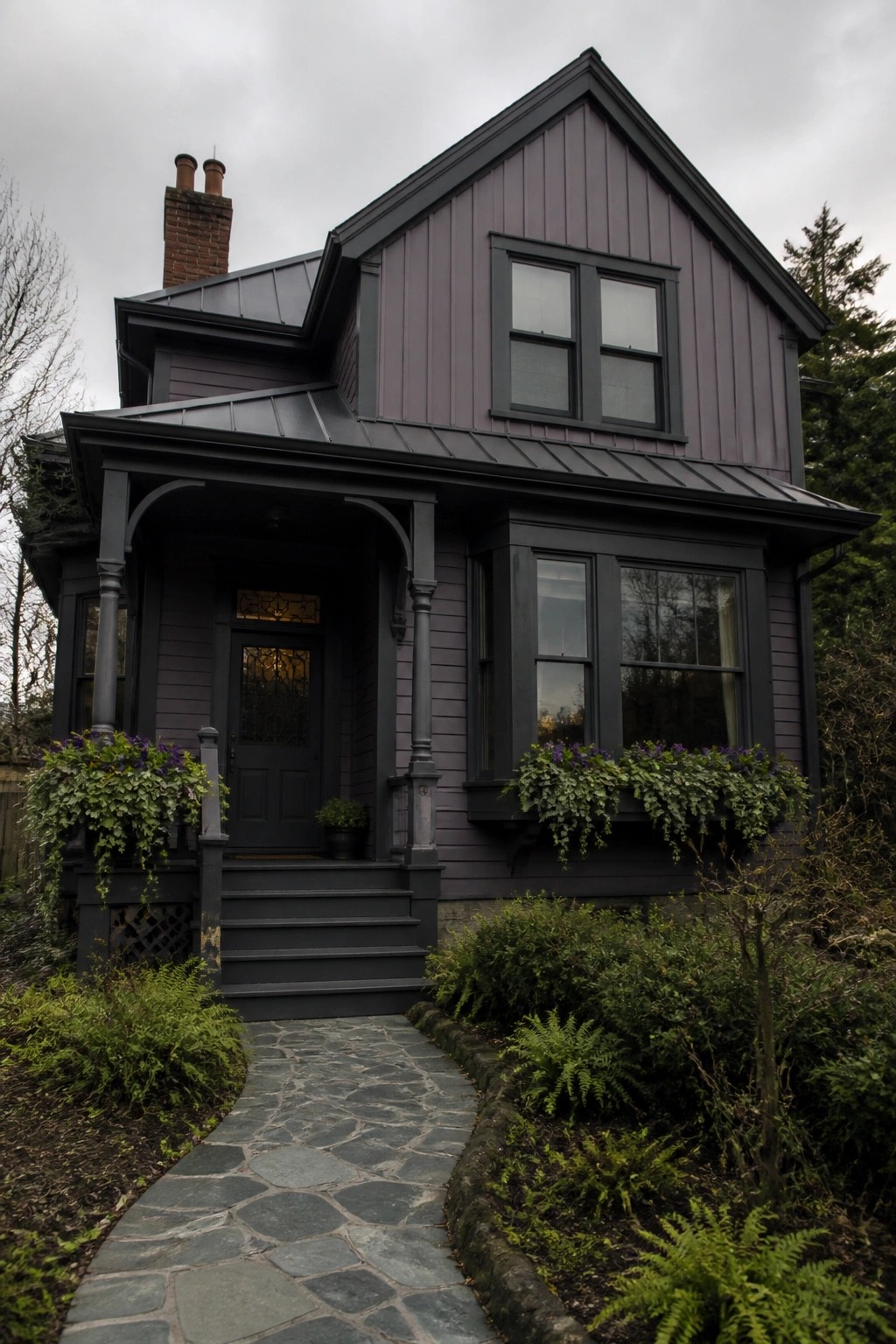
A deep purple gray on the siding gives a house a richer look than plain gray while still feeling calm. The charcoal trim around the windows and roof edges keeps the color from feeling flat and helps the shape of the house stand out more clearly.
This color works best on homes with simple rooflines and a few strong architectural details. Use it when you want something a little different from standard gray but still easy to live with year after year.
Purple Gray Walls With Charcoal Accents
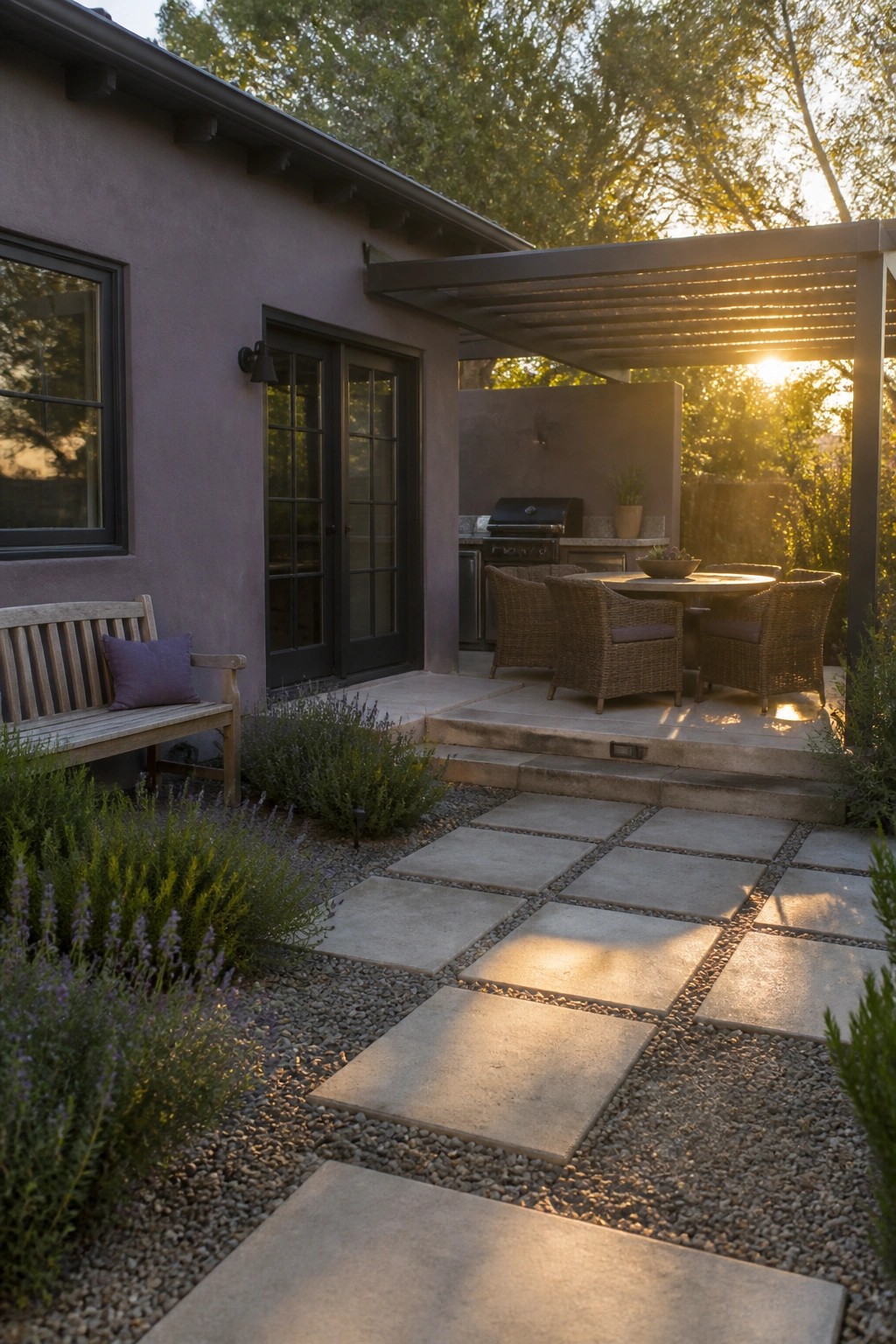
A soft purple gray on the exterior pairs well with charcoal on doors, windows, and overhead structures. The contrast keeps the color from feeling flat while still looking calm and settled rather than stark.
This approach suits stucco homes that already have clean lines. Match the dark tone on any attached pergola or trim so the whole outdoor area reads as one simple palette instead of separate pieces.
Purple Gray Siding With Charcoal Accents
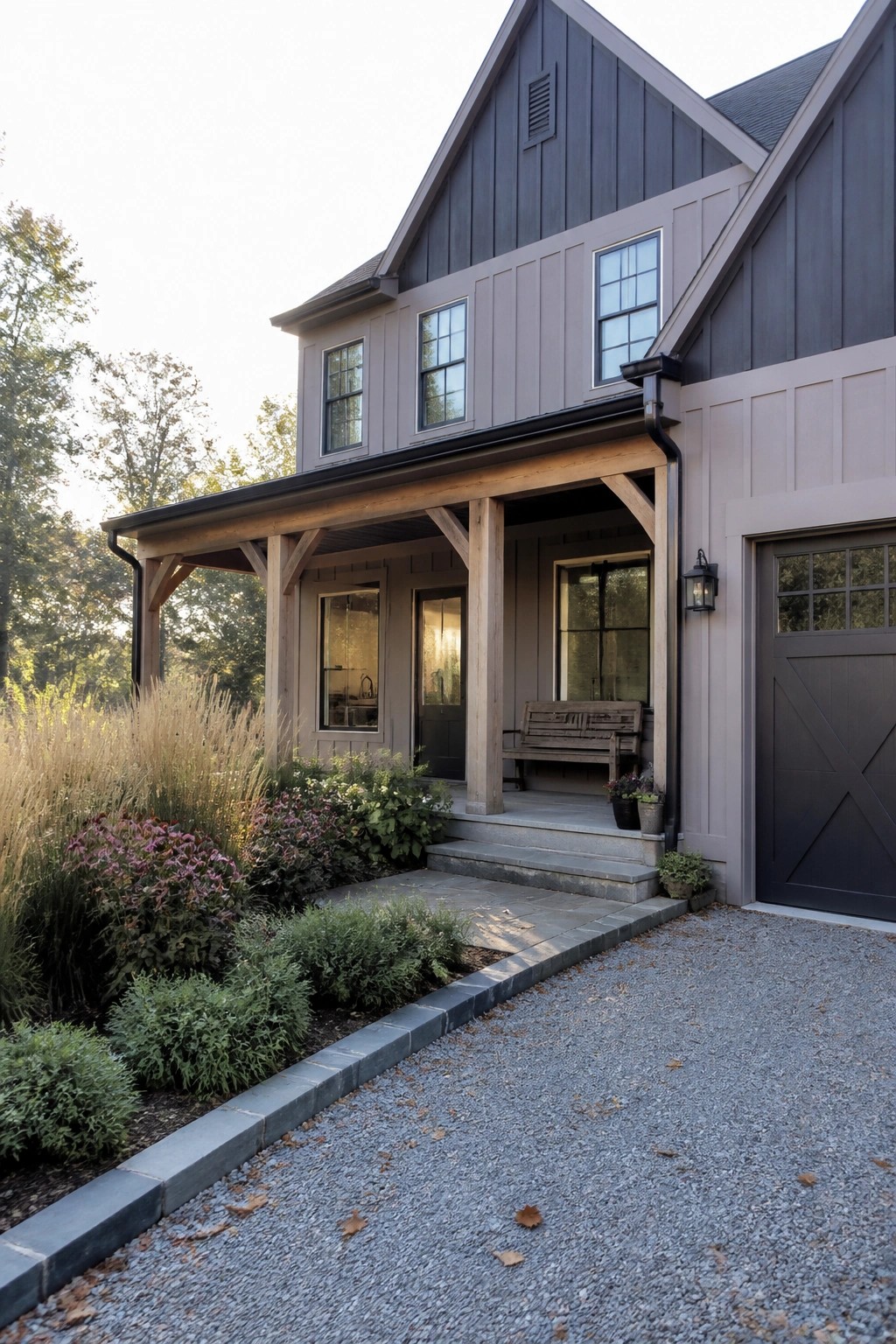
This color pairing keeps the house from feeling flat while still looking calm and put together. The purple gray reads soft in most light but gains depth next to the darker charcoal on the garage door and window trim.
It suits homes with wood porch details and a straightforward roofline. Keep the accent color limited to doors, trim, and gutters so the main siding stays the focus.
Pairing Purple Gray Siding With Charcoal Accents
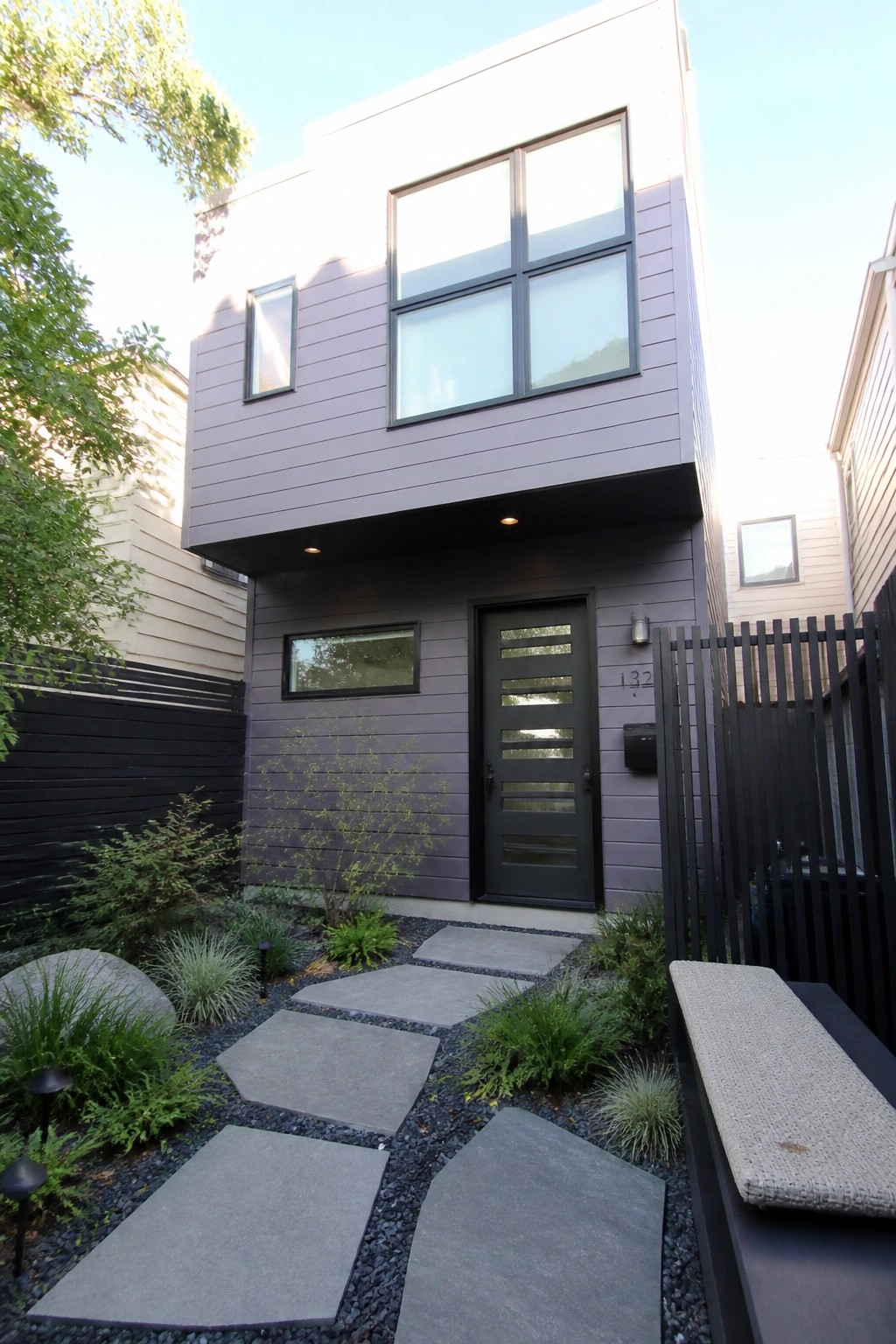
A muted purple gray on the main siding gives a house a quiet modern feel when the trim, overhang, and door stay in a deep charcoal. The contrast keeps the color from looking flat while still letting the house blend into its surroundings instead of standing out too sharply.
This works especially well on compact homes with clean rooflines. Keep the purple gray on the larger surfaces and save the darker tone for the door, window frames, and any projecting elements so the balance stays simple. Test the siding color in full sun and shade before committing, since it can shift more than expected.
Pairing Purple Gray Siding With Charcoal Accents
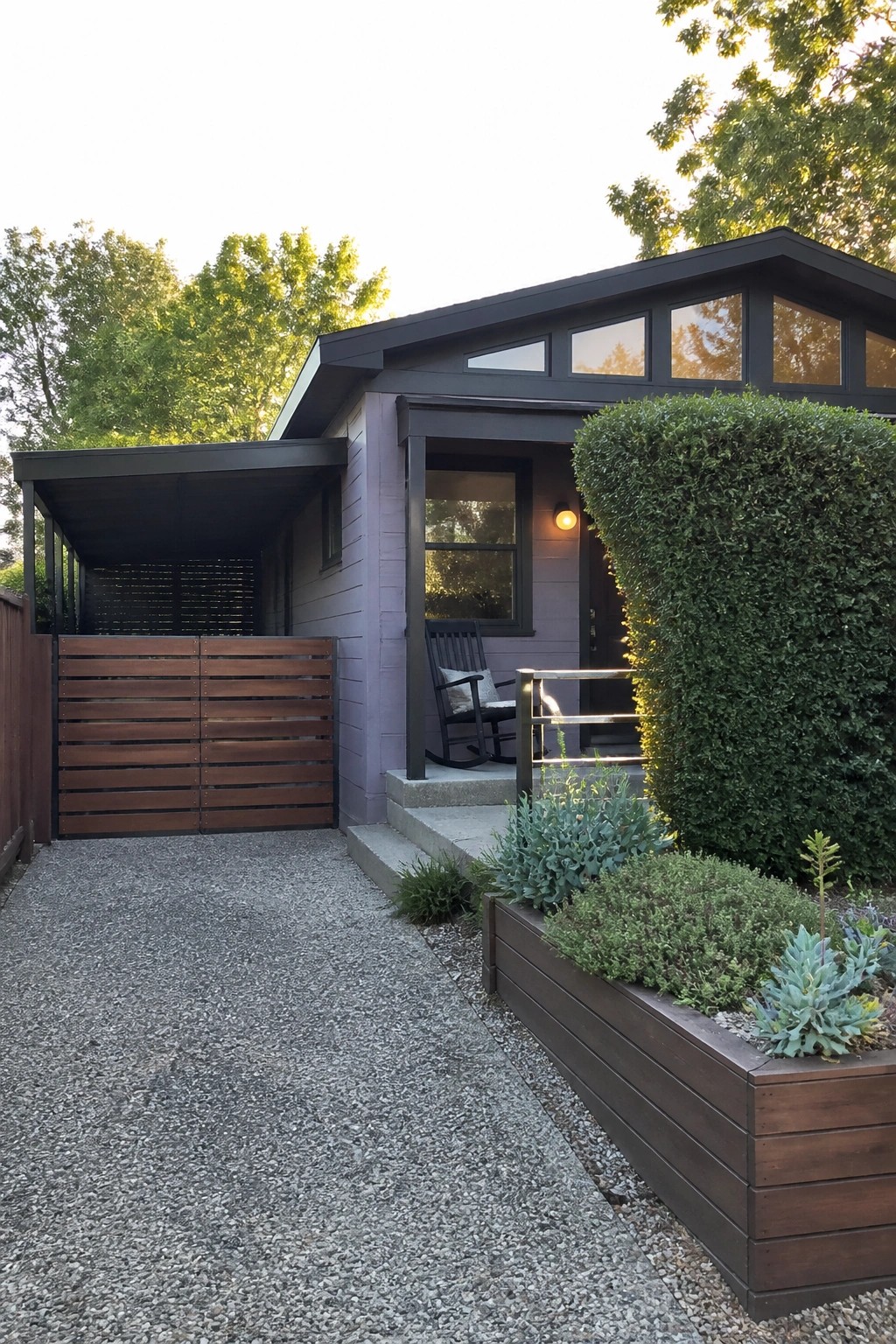
Purple gray siding feels calmer when the trim and roof stay dark. The charcoal pulls the whole house together and keeps the softer wall color from looking washed out.
This works best on smaller homes where you want a clean outline without adding too many materials. Keep the accents matte and limit them to the roof, window frames, and porch posts so the look stays simple.
Purple Gray Siding With Charcoal Trim
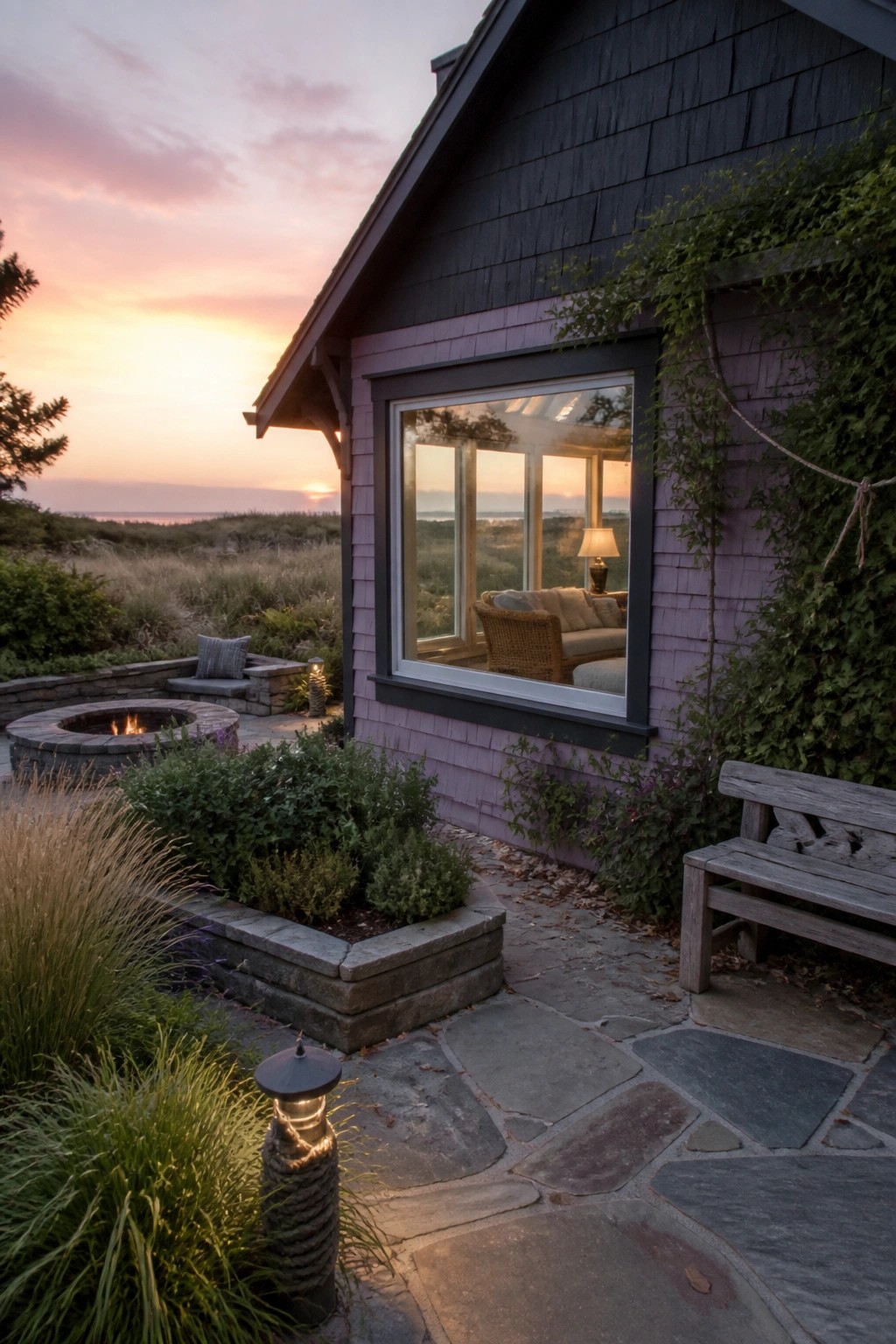
A soft purple gray siding can give a house a quiet, settled look that still feels distinct. The charcoal trim around the windows and roof edge keeps the color from drifting into something too pale or washed out.
This works best on homes with simple shapes and few extra details. Keep the trim dark and the roof in a matching charcoal tone so the siding stays the main focus without competing with other elements.
Purple Gray Brick With Charcoal Trim
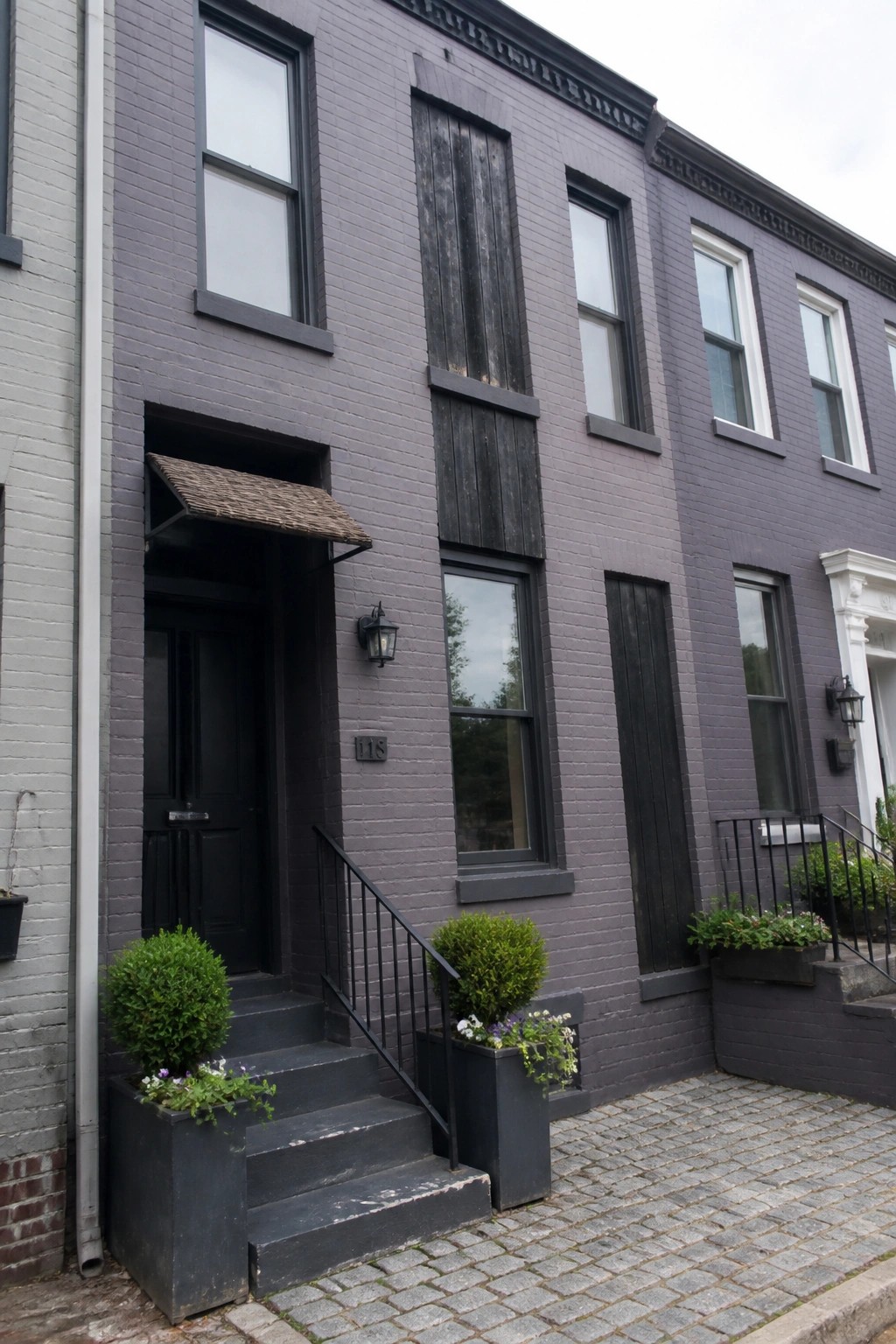
A deep purple gray on brick gives a house weight without looking heavy. The color sits between gray and muted purple, so it reads calm from the street but still stands out next to typical brick or white homes. Charcoal trim, doors, and window frames keep the whole thing grounded and sharp.
This works best on older brick homes that already have simple lines and solid proportions. Keep the trim and door a true black or very dark charcoal rather than a soft gray, and test the purple gray in different lights since it shifts more than a standard gray. Avoid adding too many other colors in the trim or planters or the effect gets busy fast.
Folding Doors That Connect Kitchen and Patio
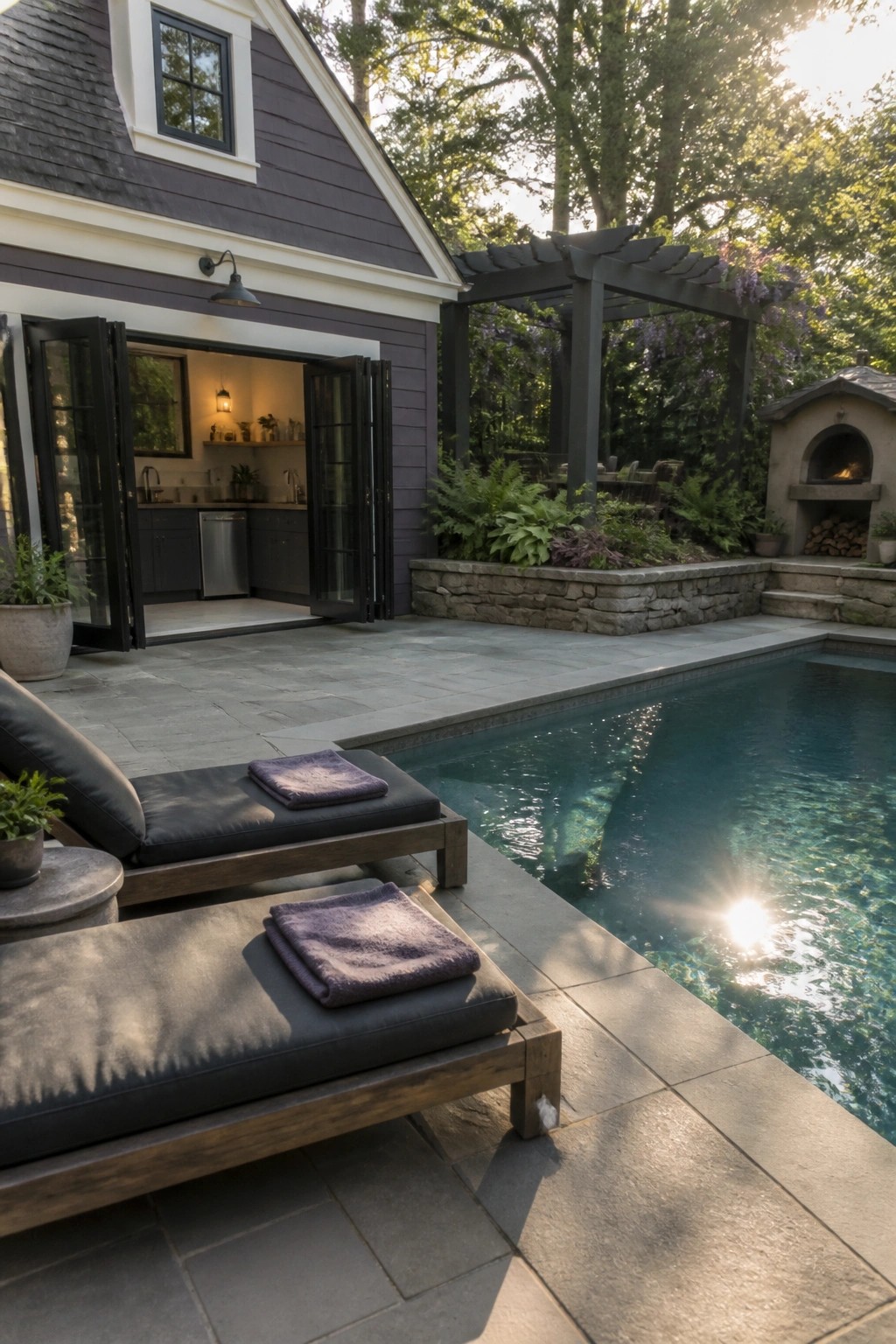
Folding doors make the back of the house feel much more open. When they are pushed wide, the kitchen flows right onto the patio without any real break between inside and out.
This setup works well on homes where the pool or seating area sits close to the main living spaces. Keep the door frames dark to match other accents on the house, and choose a patio material that sits level with the indoor floor.
Charcoal Accents Against Purple Gray Siding
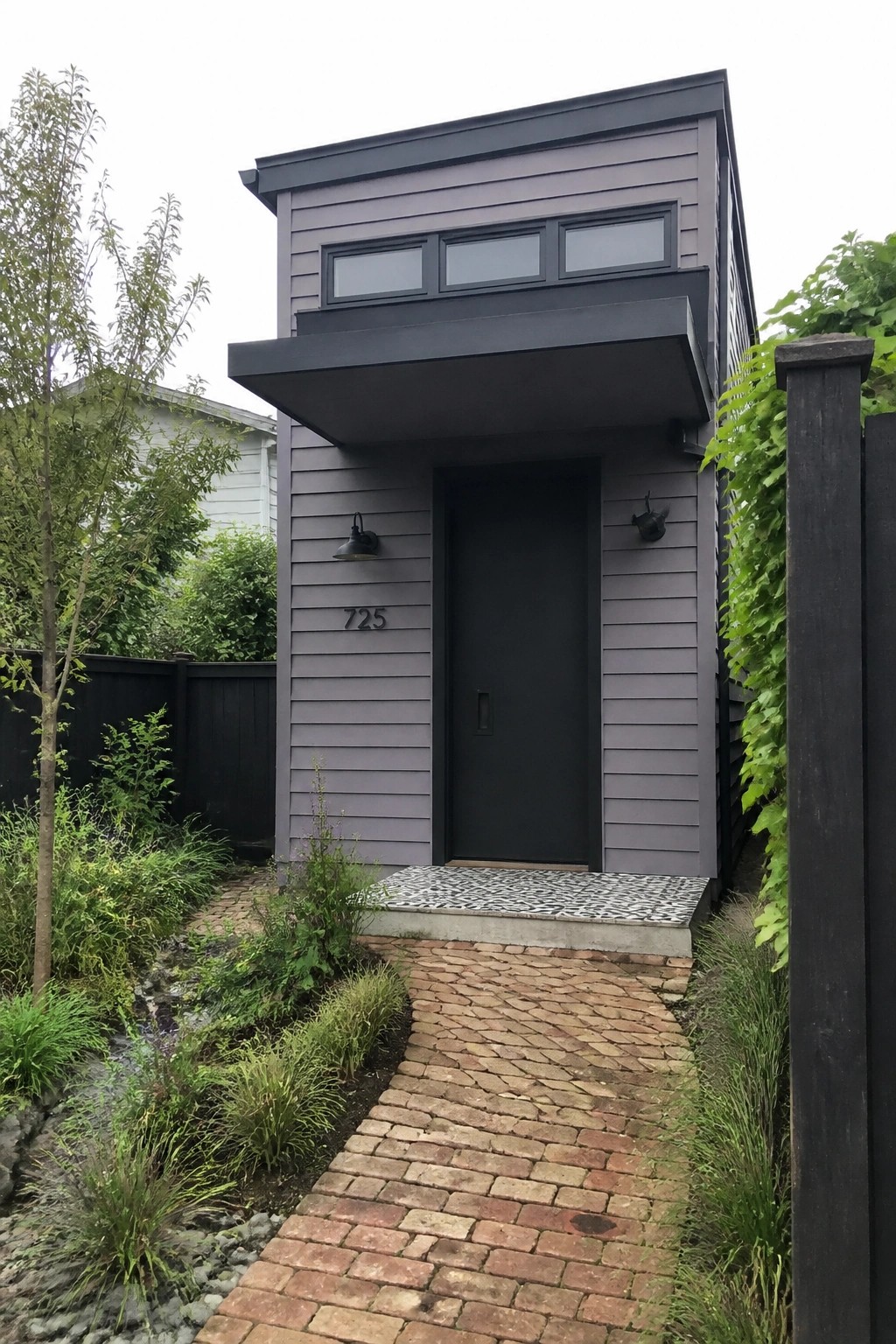
The dark charcoal pieces here give the purple gray siding a clearer shape. The canopy and door pull the eye straight to the entry and keep the whole front from feeling flat or washed out.
This works best on compact modern houses that need a little extra weight at ground level. Keep the accents matte and limit them to the door, trim, and one main overhang so the siding stays the main color.
Pairing Purple Gray With Charcoal Accents
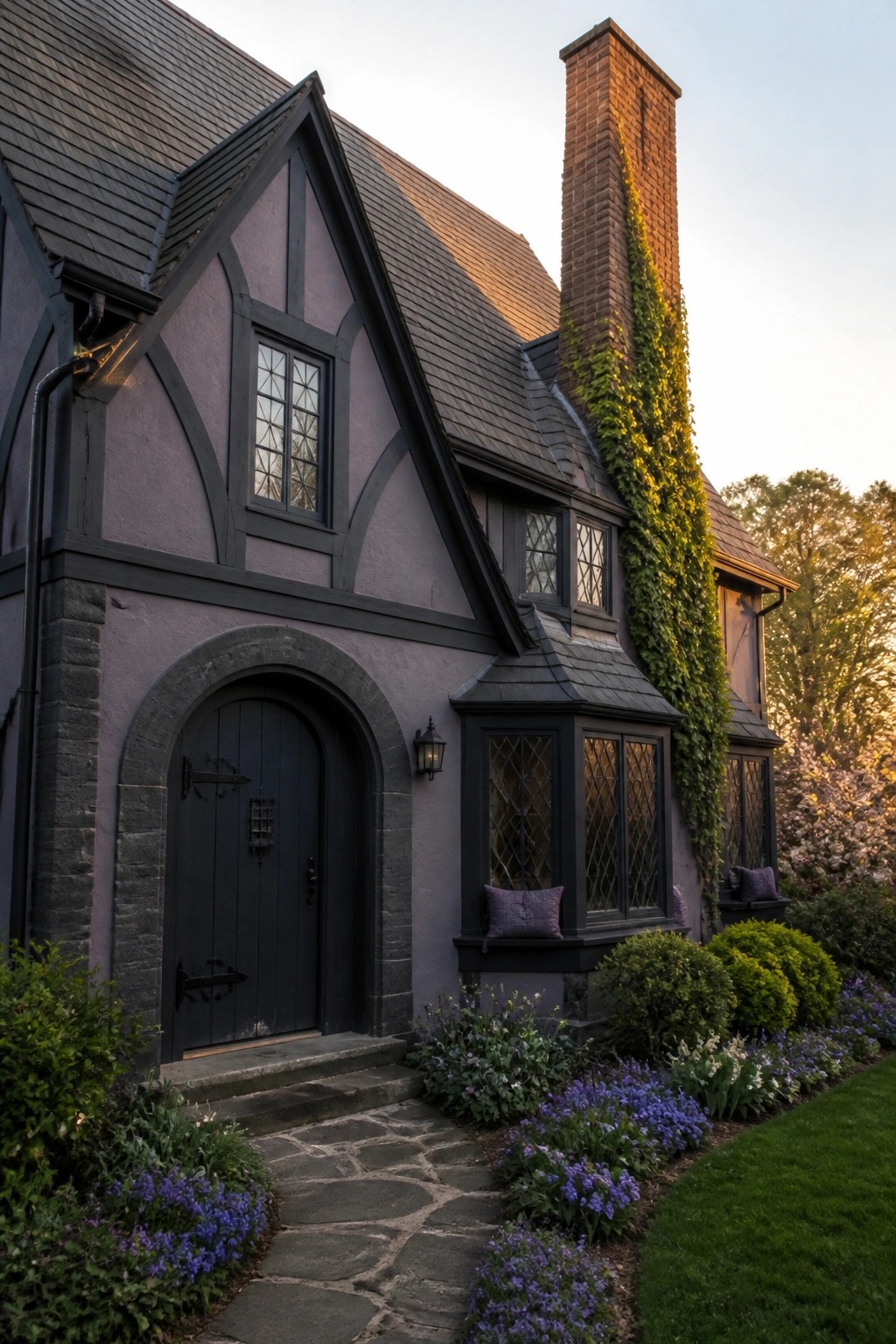
A soft purple gray works well as a main house color because it feels a little different from standard grays while still staying calm. The charcoal trim and details give it enough contrast so the whole look stays sharp instead of fading into the background.
This approach suits homes that already have some texture, such as stone around the door or divided windows. Keep the charcoal deep and consistent on the trim, door, and window frames so the purple gray reads clearly instead of looking muddy.
Pairing Purple Gray With Charcoal Accents
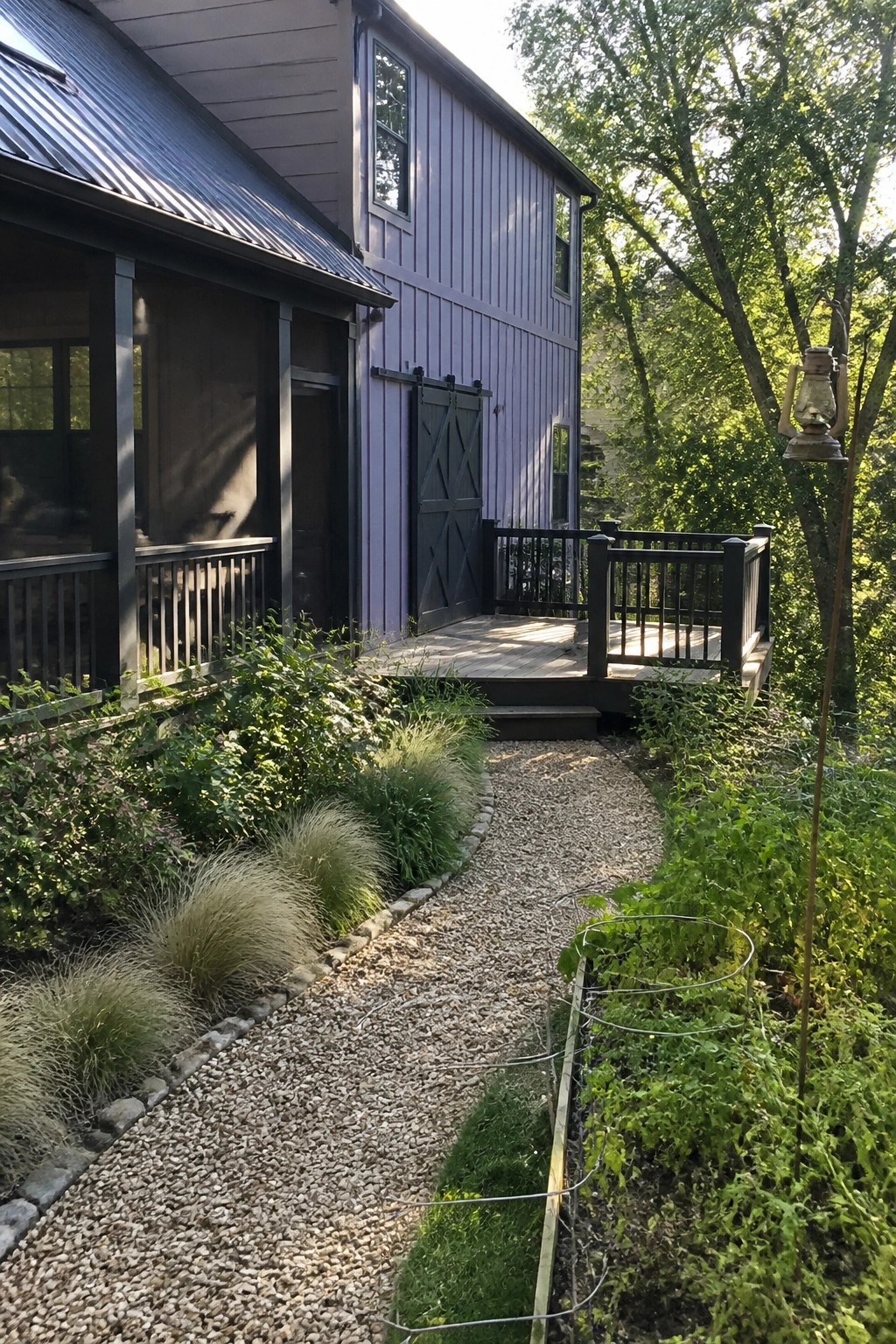
Purple gray siding looks more interesting when it sits next to deep charcoal on doors, trim, and railings. The darker pieces give the lighter color a clean edge so it does not drift into looking pale or dull.
This works well on homes with simple shapes and a few strong details like a sliding barn door or a low deck. Keep the charcoal consistent across those elements rather than mixing in other dark tones that can break the look.
Pairing Purple Gray Siding With Charcoal Accents
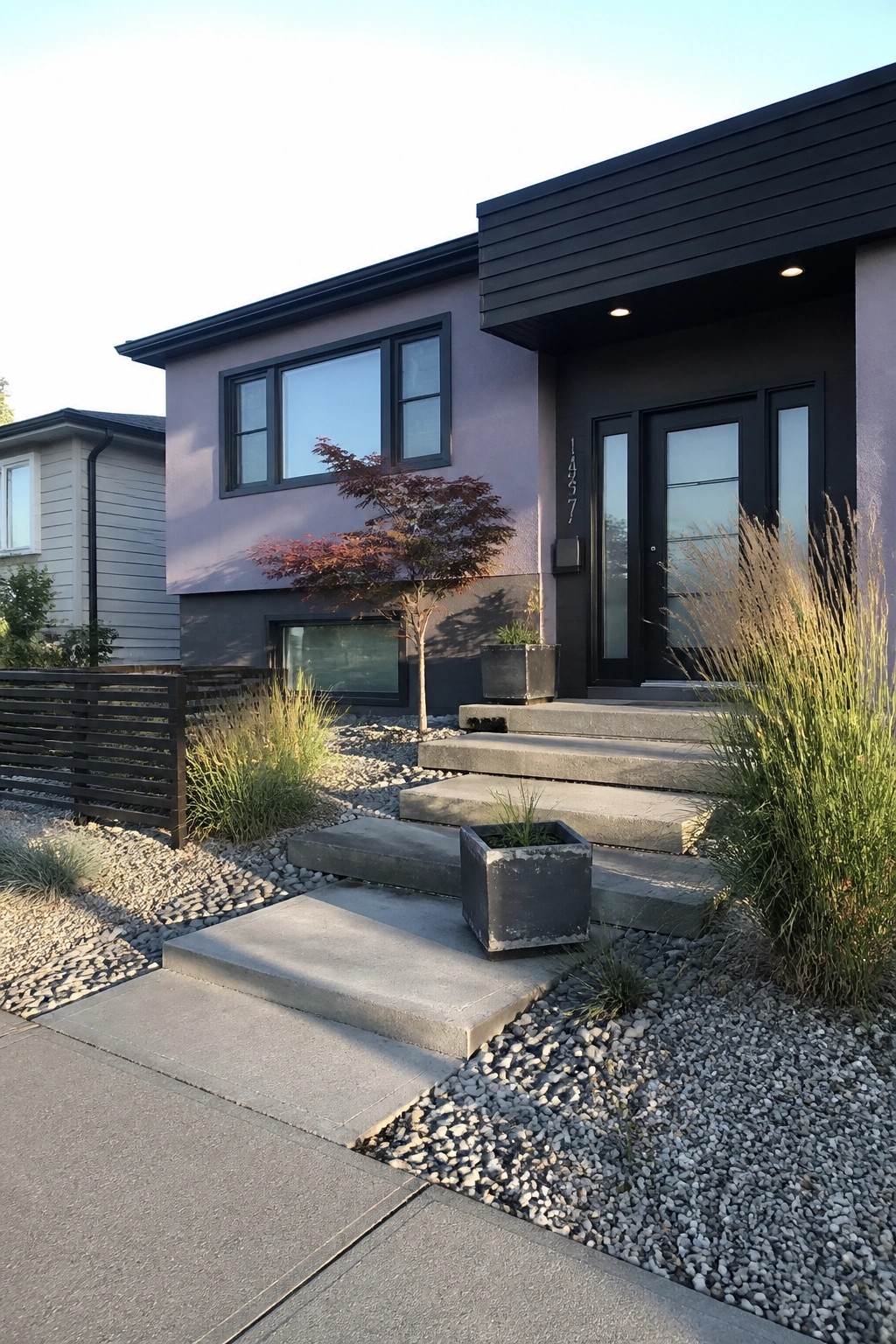
A muted purple gray exterior gains a lot of definition when the trim, windows, and doors shift to a deep charcoal or black. The contrast keeps the color from looking flat and gives the front a cleaner, more updated feel without going fully dark.
This works best on homes with simple rooflines and larger window openings. Keep the purple gray on the cooler side so it stays balanced next to the darker accents, and test the paint in both morning and afternoon light before committing.
Pairing Purple Gray Siding With Charcoal Accents
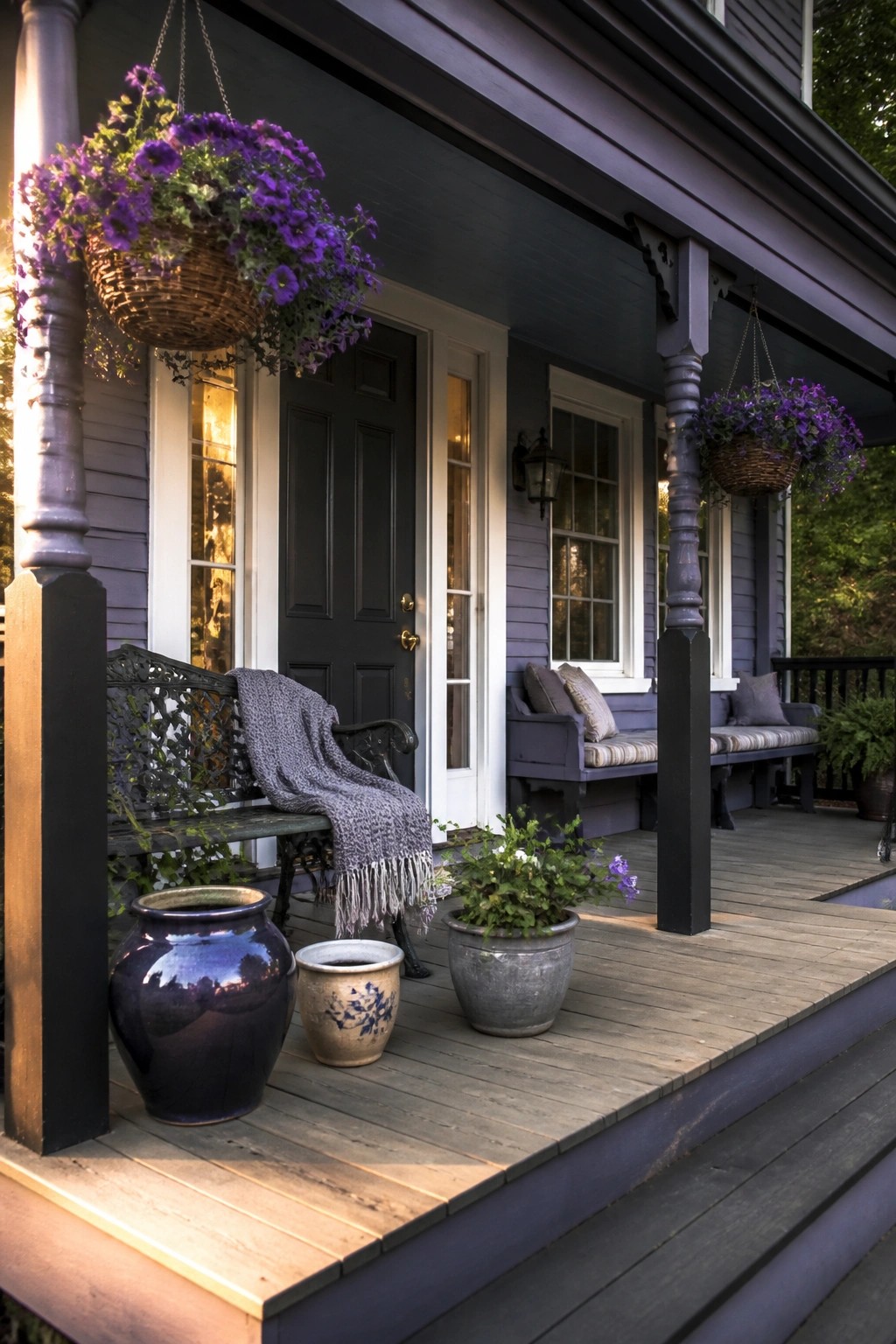
A muted purple gray on the main siding gives a house a calm, slightly unexpected look that still feels grounded. Charcoal accents on the posts, door, and trim sharpen the whole thing without making it feel heavy or stark. The combination stands out in a quiet way and works especially well on older homes that already have simple trim lines.
This approach suits houses with front porches or covered entries because the darker details help define the structure. Keep the purple gray fairly soft so the charcoal does not overpower it. Stick to one or two accent colors for the hardware and fixtures to avoid crowding the look.
Pairing Purple Gray With Charcoal Accents
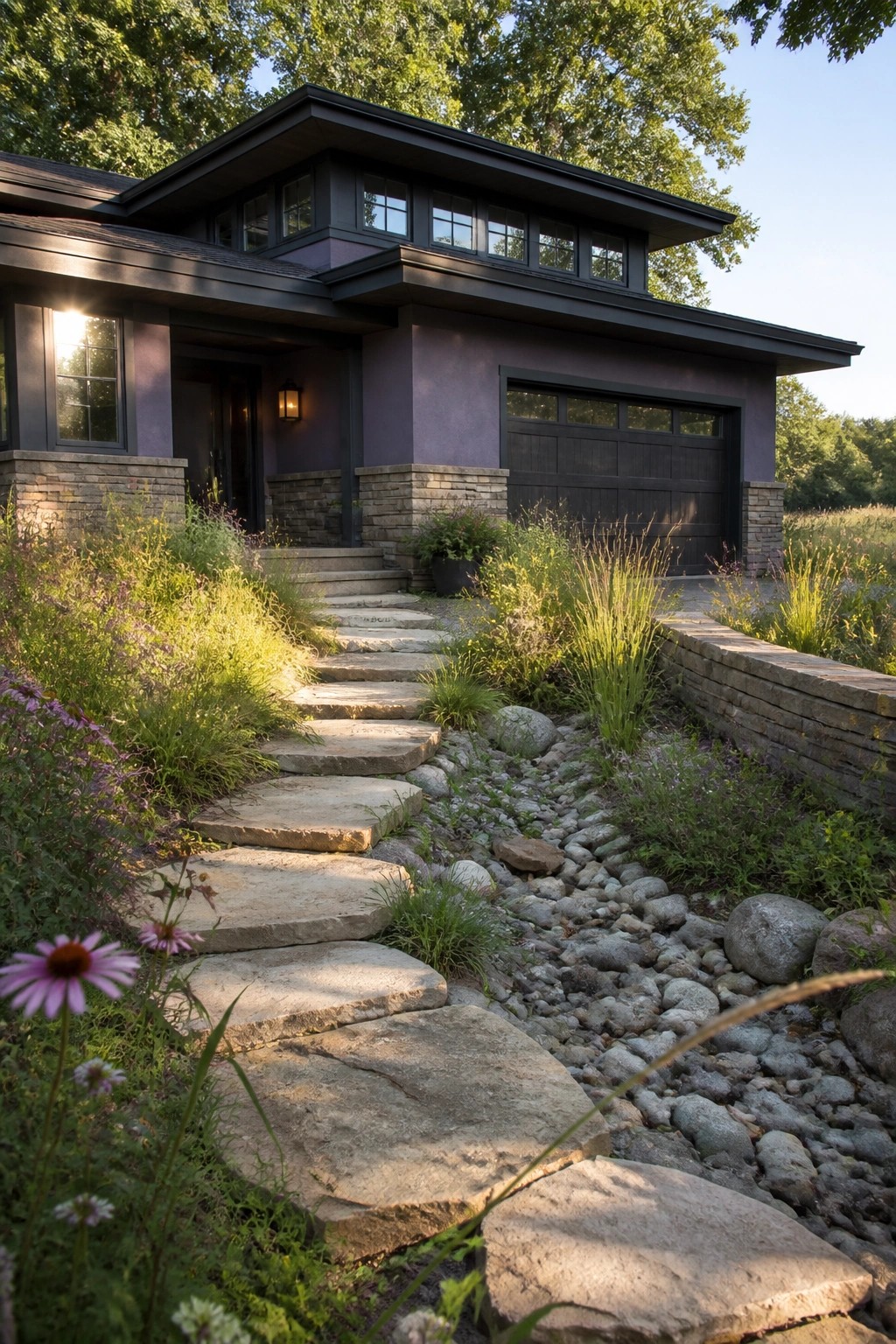
Purple gray siding gives a house a calm presence without fading into the background. When paired with charcoal trim around the windows, doors, and roofline, the color gains definition and looks more intentional. The contrast keeps the house from feeling flat while still reading as quiet rather than bold.
This works best on homes with simple shapes and some stone at the base. Use the same dark charcoal on the garage door and window frames so the purple gray stays consistent instead of competing with too many other tones.
A Stone Fire Feature for the Patio
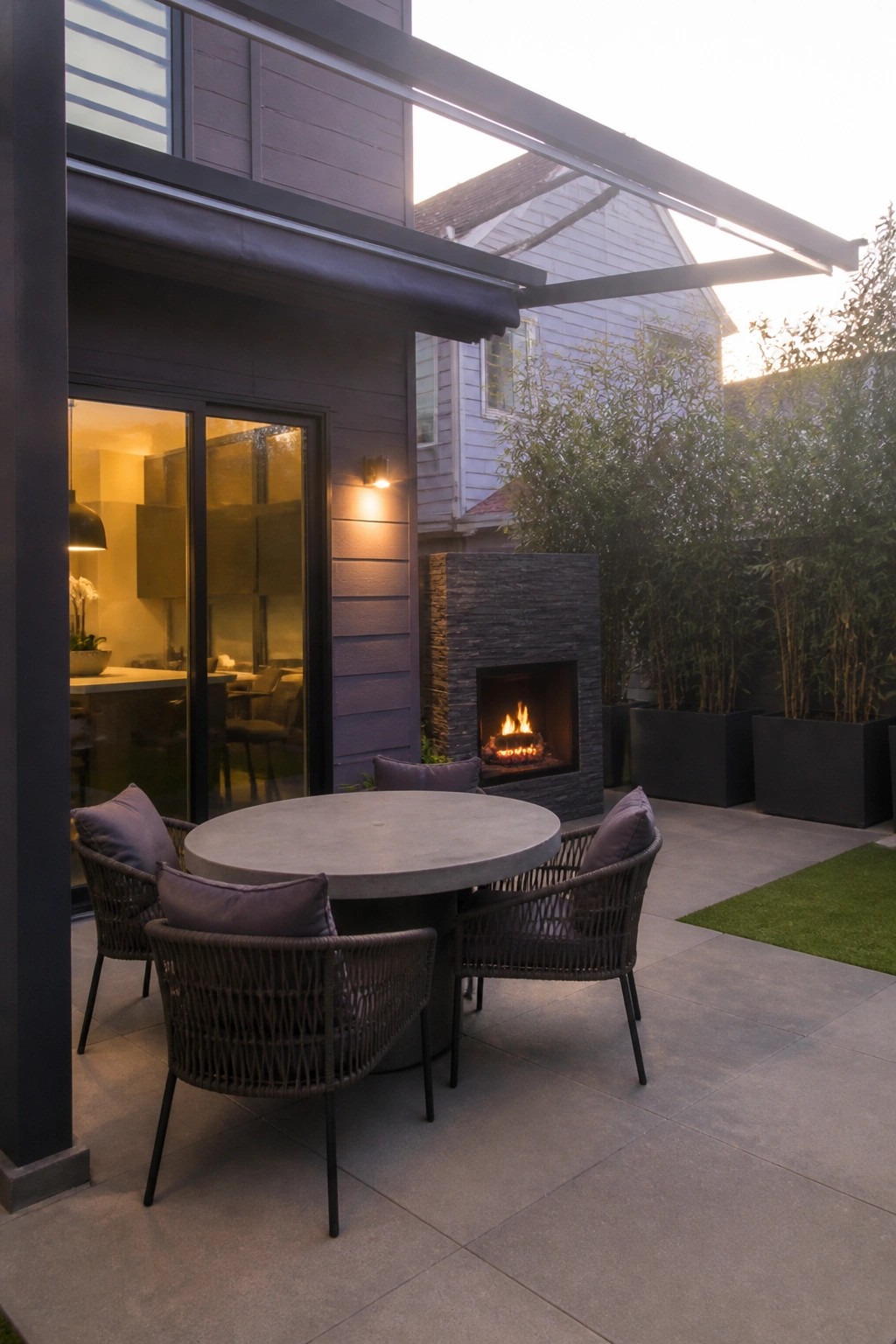
A built-in fire feature gives an outdoor dining area a clear focal point and makes the space usable later into the evening. It works especially well when the stone matches the darker accents already on the house, so the whole setup feels tied together rather than added on later.
This idea fits homes with purple gray siding and charcoal trim. Place the fire element close to the seating so the heat reaches the table, and keep the surrounding paving simple so the stone wall stays the main draw.
Pairing Purple Gray With Charcoal Accents
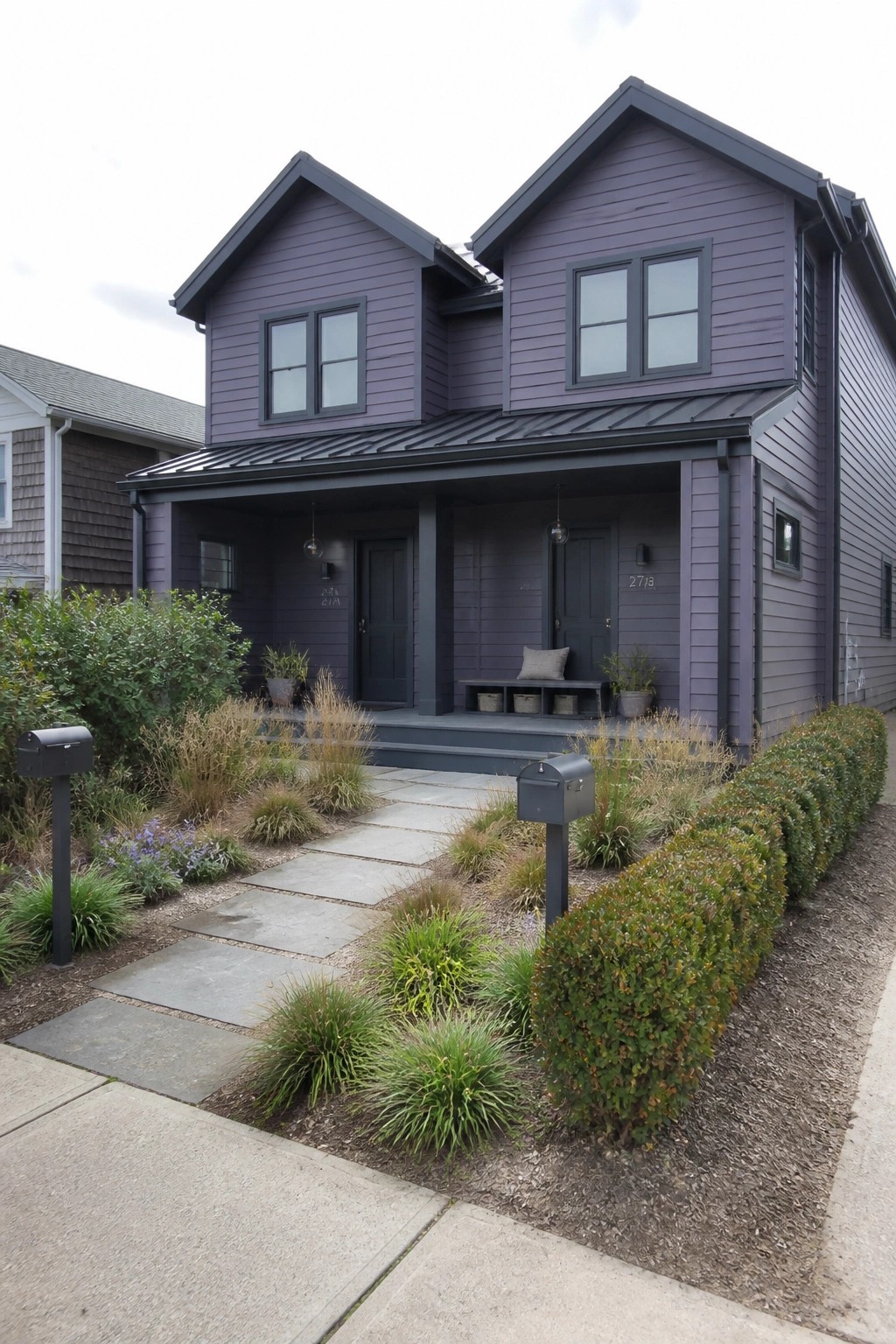
Many homes gain a quiet strength when the main color stays soft and the accents stay dark. A muted purple gray on the siding lets the charcoal trim, roof, and doors do the work of defining the shape without making the house feel heavy.
This approach suits homes with straightforward rooflines and a front porch. Keep the darker color on the posts, window frames, and doors so the lighter siding does not wash out. It gives the exterior a finished look that still reads as approachable rather than stark.
Frequently Asked Questions
Q: My lot gets partial shade. Which purple gray shade holds up best there?
A: Go for a slightly lighter purple gray in shaded spots so it does not appear dull. Pair it with charcoal on the trim to add depth. Samples on the wall (try a few different spots) help you see the effect before committing.
Q: Can I use metal charcoal accents instead of painted wood?
A: Metal works well and adds a modern touch to the purple gray base. Make sure it has a matte finish to match the refined style in the examples. It also resists weathering better over time.
Q: How do I keep the charcoal accents from looking patchy after a few years?
A: Choose quality paint made for accents and apply two coats. Yearly cleaning prevents the charcoal from fading unevenly against the purple gray.
