

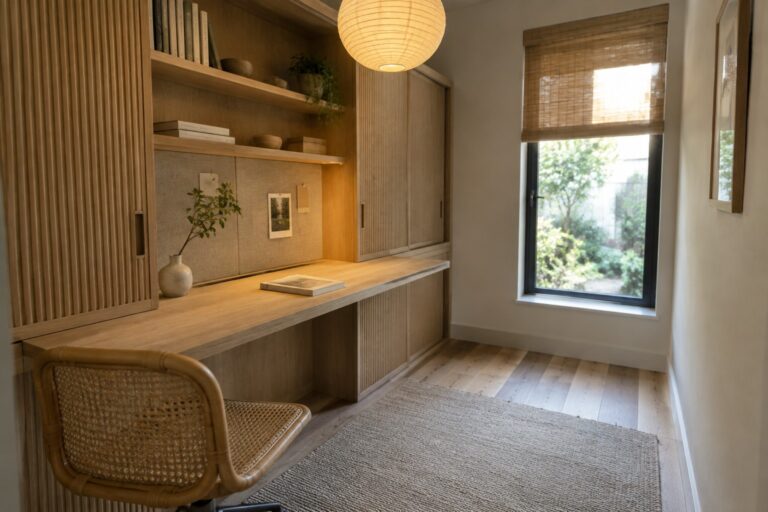
A home office can feel cramped quickly when papers, cords, and supplies stay in view, even if the room itself is calm and uncluttered.
I find that Japandi rooms work best when the furniture feels simple but still handles everyday tasks without fuss.
Concealed desk storage helps keep the work area clear, while wood tones, soft colors, and thoughtful lighting make it feel connected to the rest of the home.
The first thing I notice is whether the desk fits naturally into the room, rather than looking like a separate workstation dropped into a corner.
Some of these layouts are worth adapting, especially if you need storage that disappears at the end of the workday.
Concealed Desk Storage Keeps a Home Office Calm
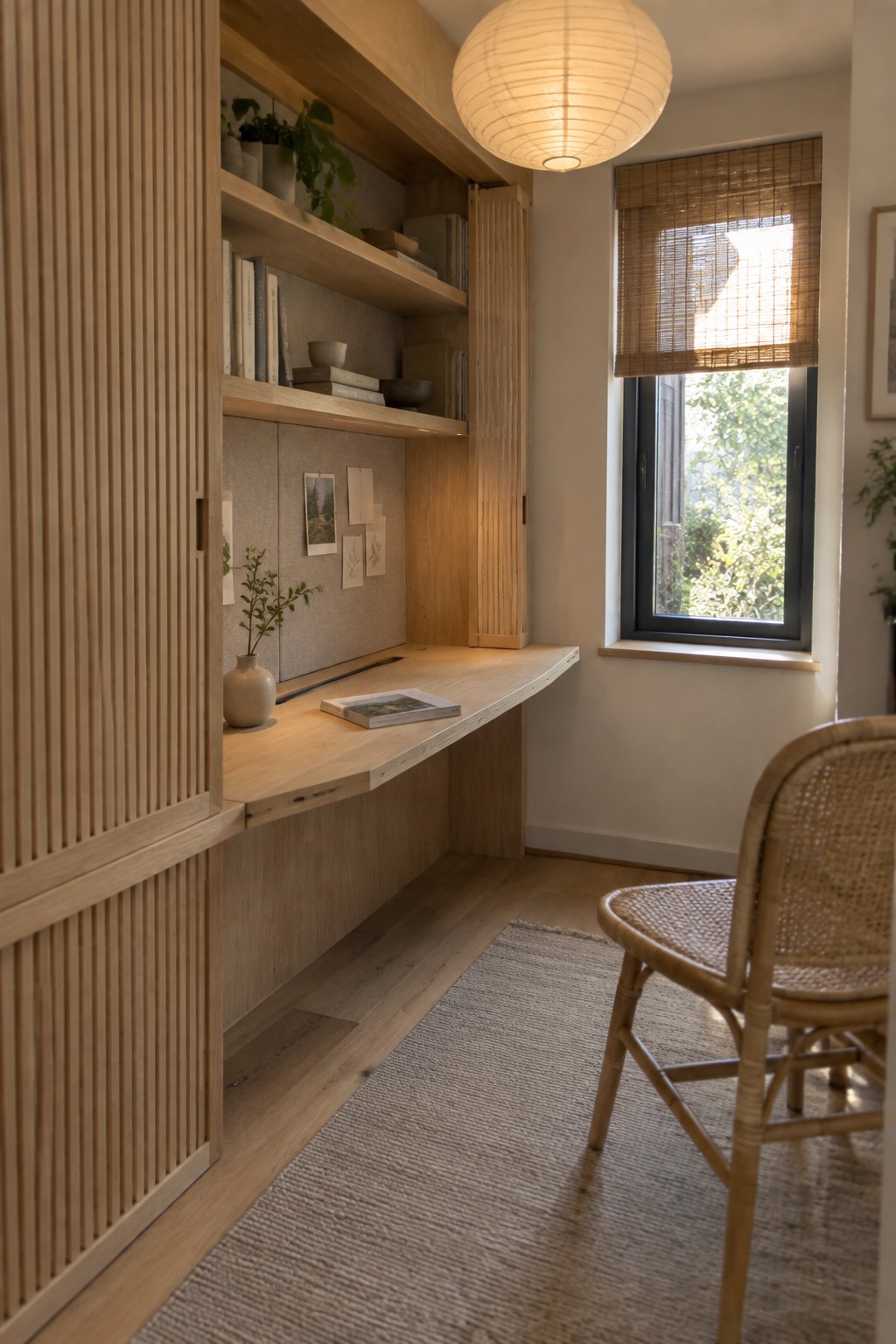
A built-in desk can tuck work supplies out of sight while keeping the office useful every day. Here, the desk sits within wood cabinetry, so it feels like part of the room rather than a separate workstation.
Use closed cupboards around the work area for papers and equipment, and leave open shelves for a few things you reach for often. This approach works especially well in a small room that serves another purpose, but make sure the desk has enough clear space to work comfortably.
A Desk That Disappears When the Workday Ends
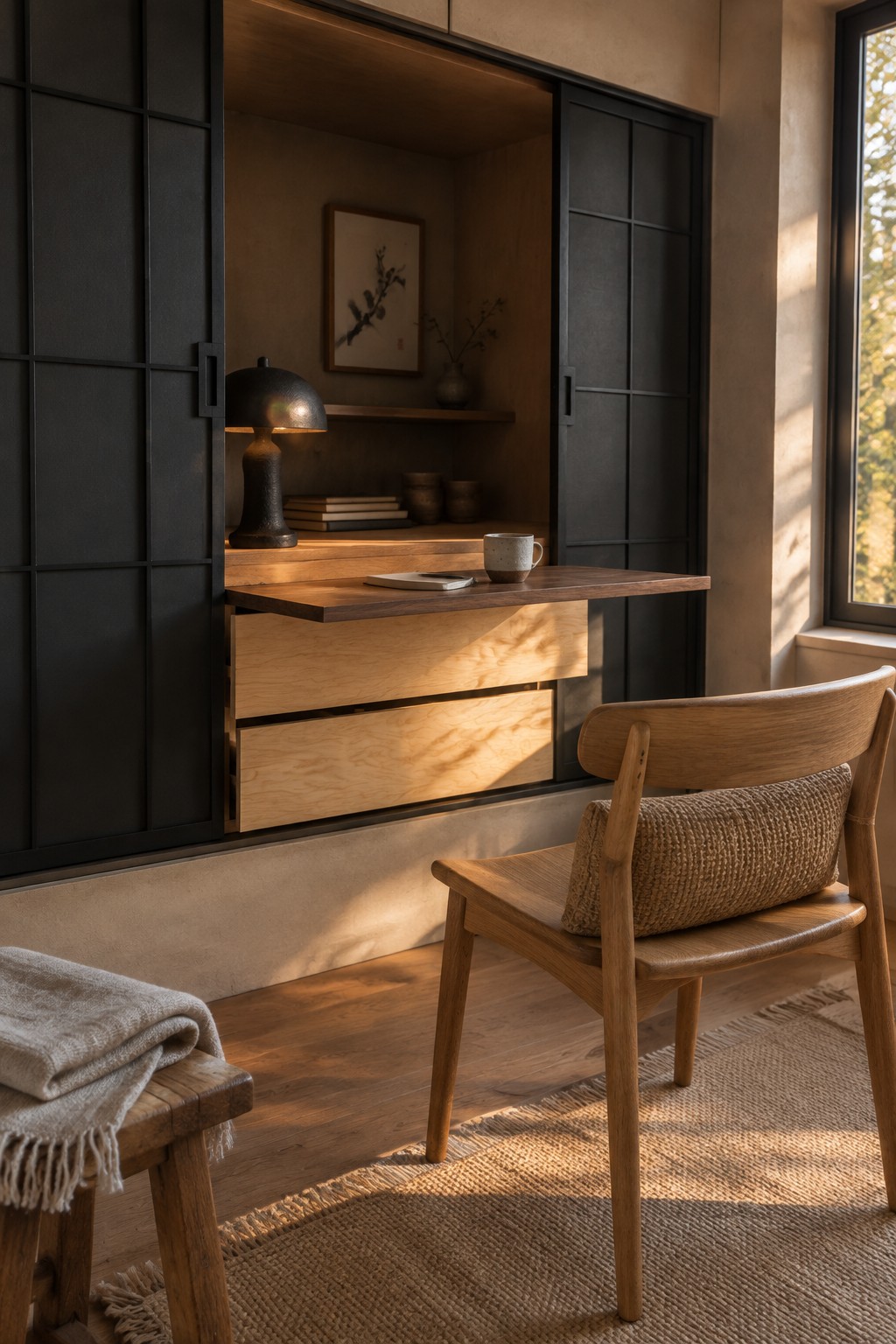
A desk built into a cabinet can give a home office a place to work without leaving office gear on display all day. Here, dark sliding doors hide the desk when it is not in use, while the wood work surface and drawers keep everyday supplies close at hand.
This setup works well in a small room or a shared living space where a separate office is not practical. Plan for enough depth to work comfortably, and include storage for papers and cables so the desk can close up neatly.
A Desk That Disappears Into Built-In Storage
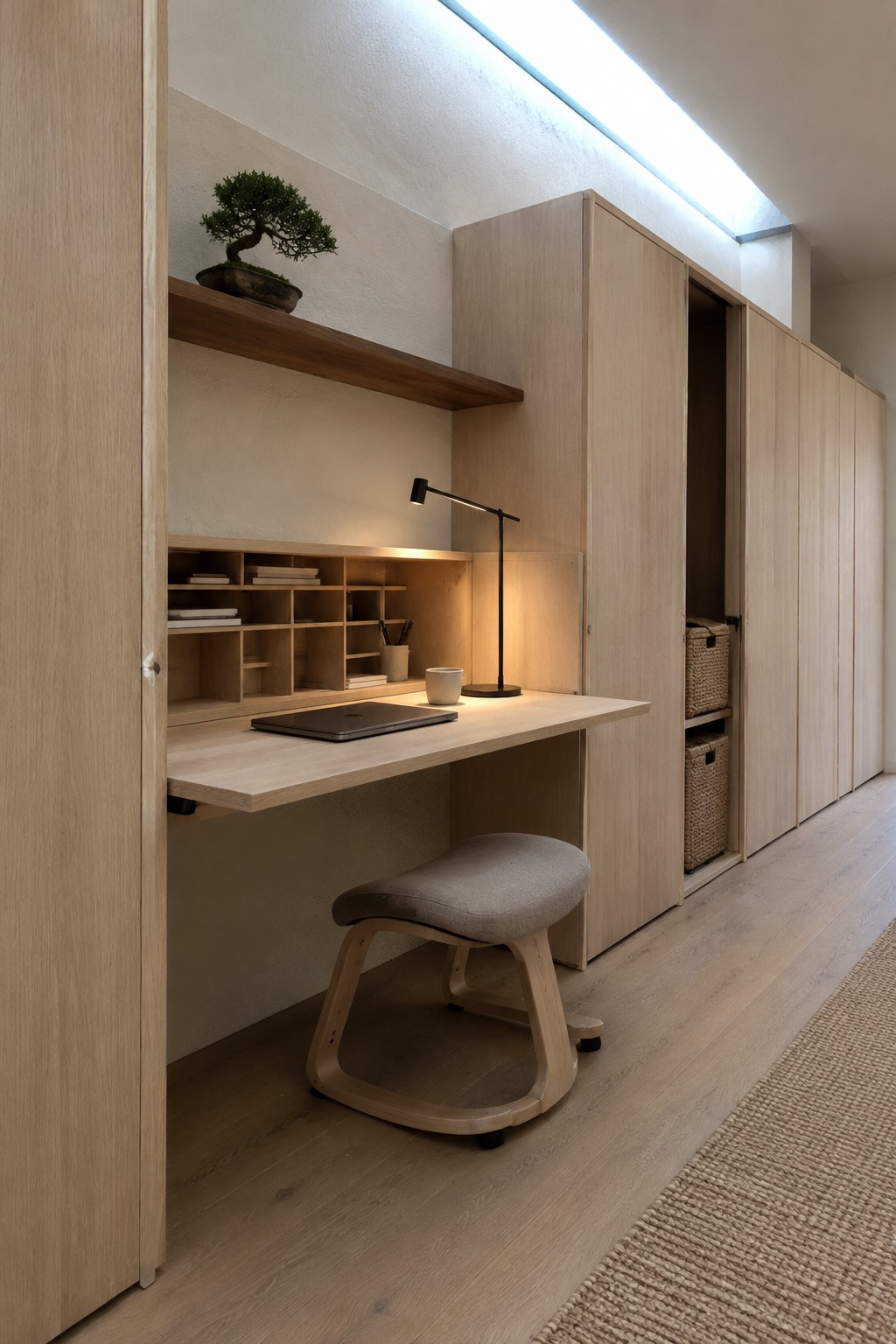
A desk tucked into a wall of cabinetry keeps a home office useful without making it the main feature of the room. The work surface can stay simple, while cupboards conceal supplies and everyday clutter when the workday is done.
This idea works especially well in a narrow room or a shared living area where a separate office may not be possible. Add shelves for items you use often, and keep the surrounding cabinet fronts plain so the workspace blends in when it is not in use.
A Desk That Can Close Away
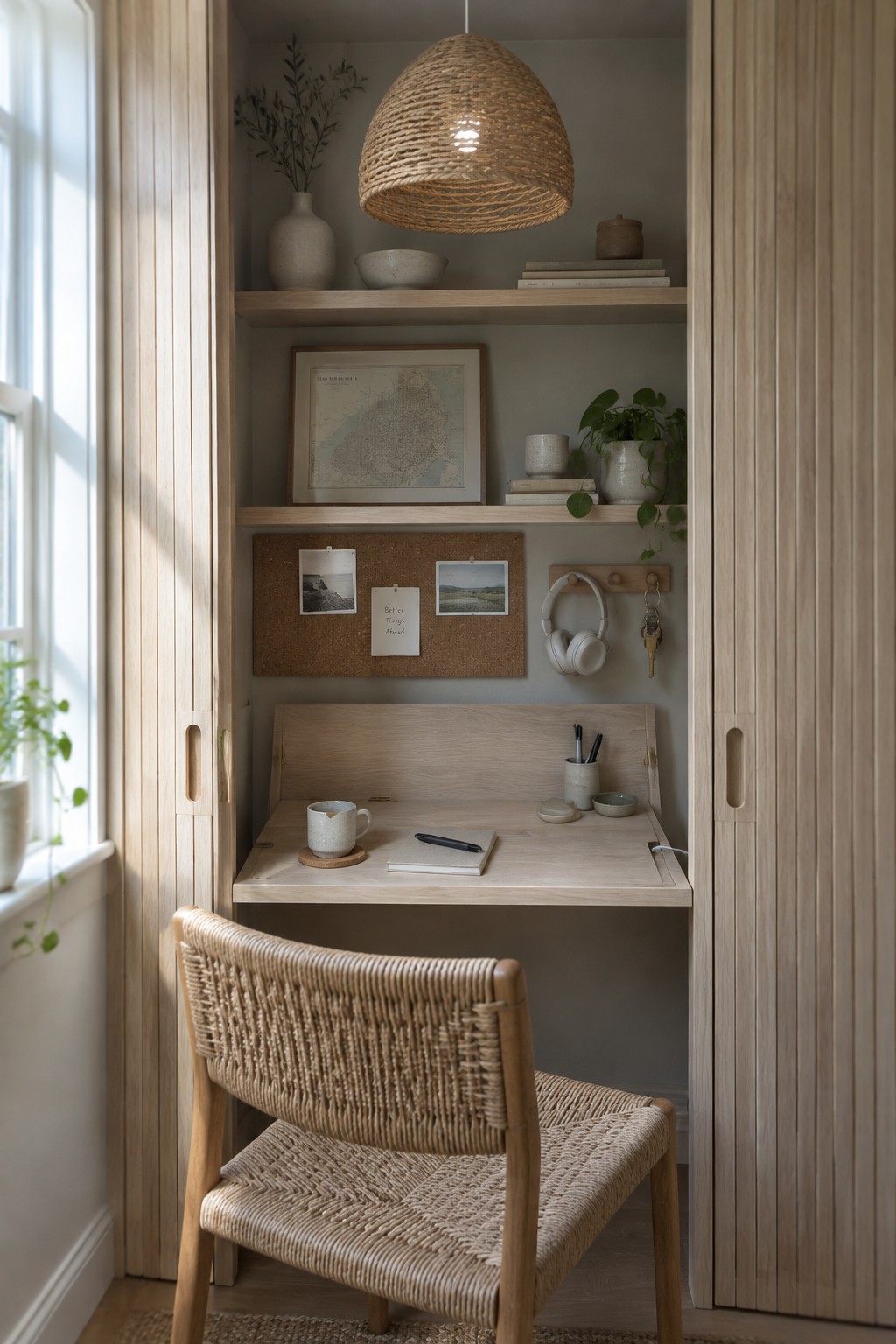
A built-in desk tucked between cabinet doors is a useful way to fit a workspace into a small room without leaving it on display all day. The simple wood finish helps it sit naturally within the surrounding storage.
Use this setup in a bedroom, hallway nook, or any room where floor space is limited. A fold-down work surface and shelves above it keep essentials close, while doors can hide the desk when work is done.
Built-In Storage Makes a Small Office More Useful
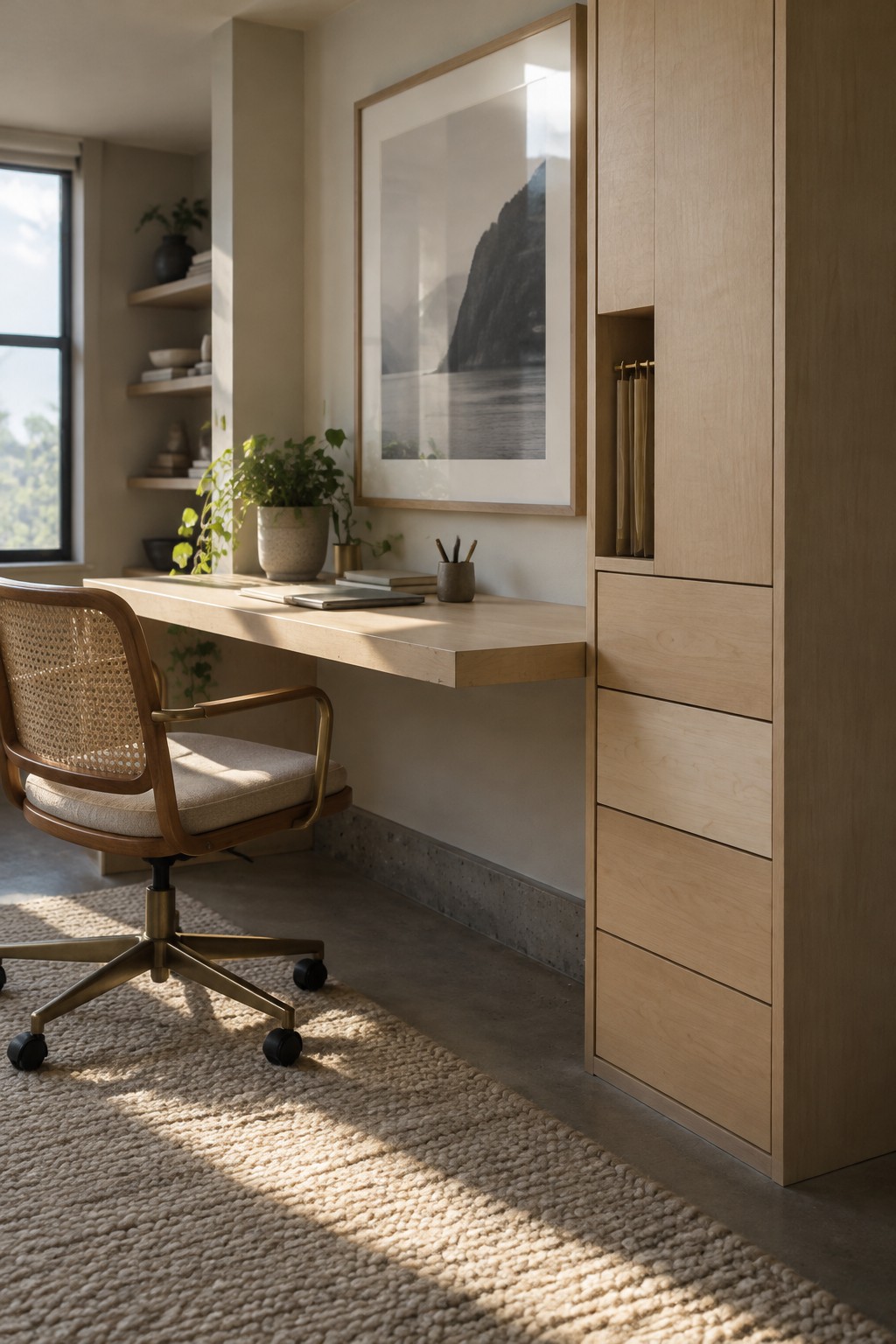
A desk can feel like part of the room when it’s built into a wall of cabinetry. Here, the pale wood work surface meets tall cupboards, so office supplies can be put away without giving up a proper place to work.
This approach suits a home office where floor space is limited or where you want the room to stay tidy between work sessions. Plan a clear spot for the chair and make sure the desk has enough depth for everyday tasks.
A Built-In Desk Can Keep Work Out of Sight
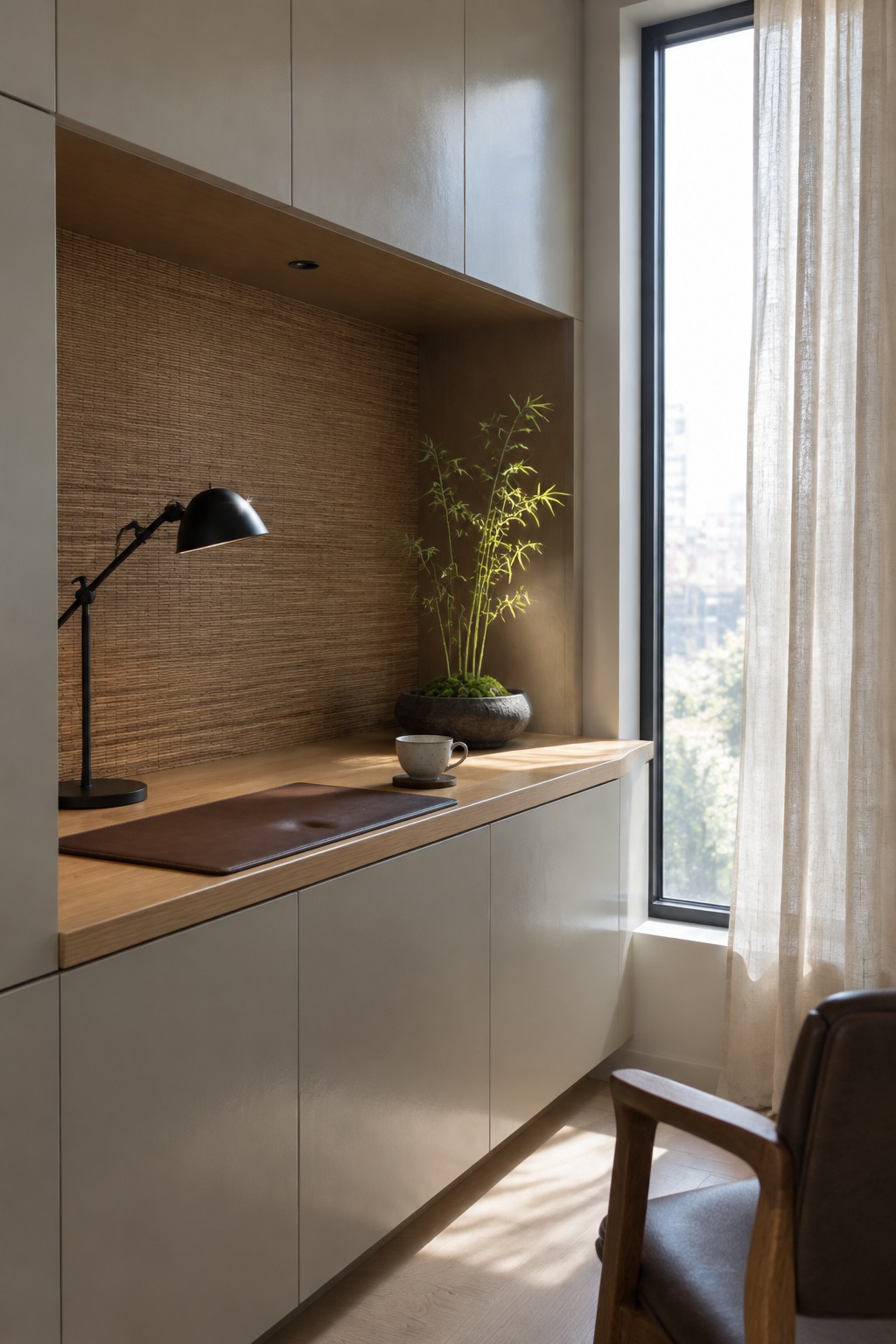
A desk set into a run of cabinetry makes a home office feel more settled, especially when the work surface can be cleared and closed away. Here, the wood counter sits neatly between simple cabinet fronts, so the work area feels like part of the room rather than a separate workstation.
This approach suits a small office nook or a multipurpose room where visual clutter can quickly take over. Plan enough counter space for daily tasks, and use the cabinets for supplies so the desk can stay clear when the workday ends.
A Fold-Down Desk Makes a Small Office Easier to Hide
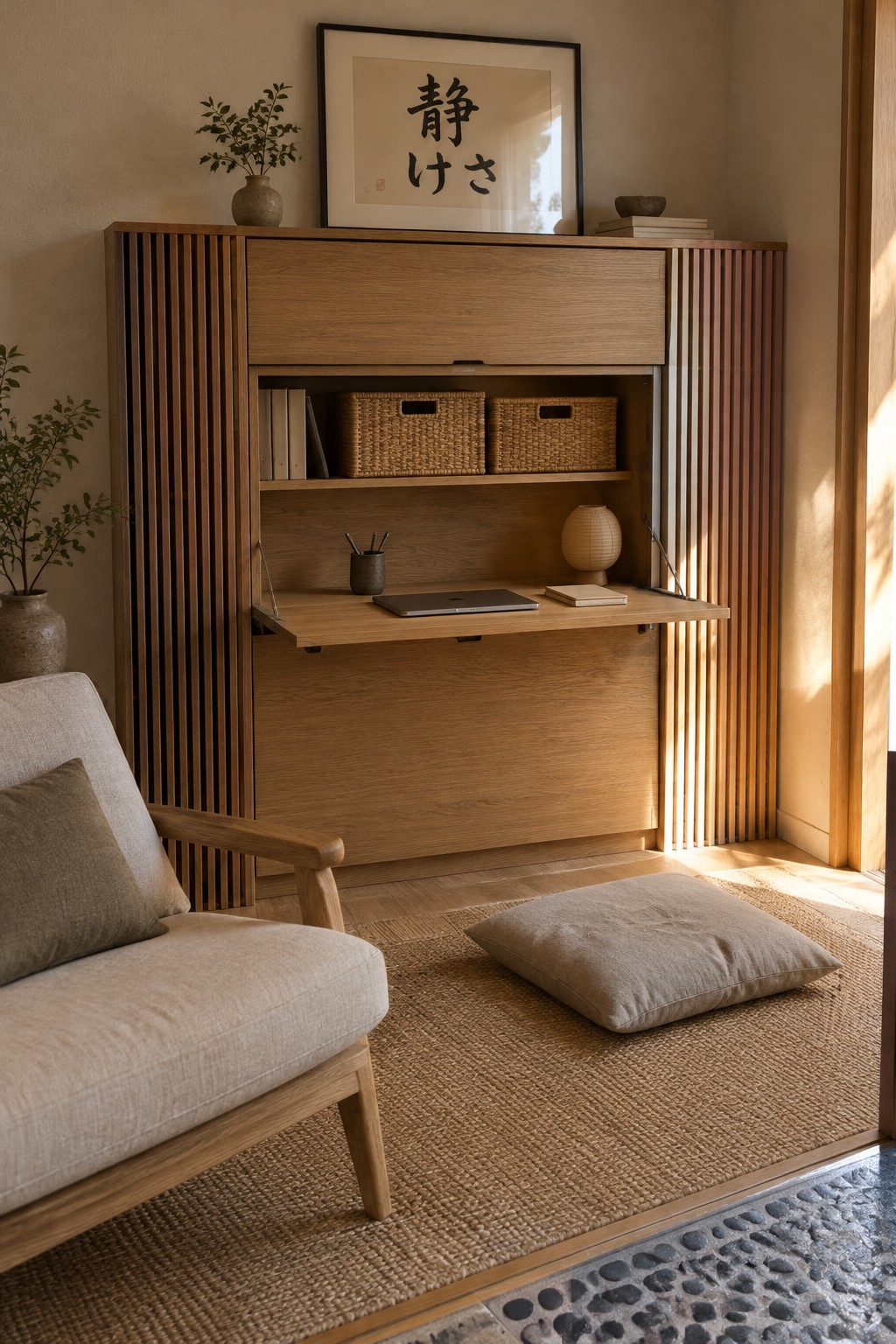
A built-in desk that folds away is useful when work needs to happen in a living room or another shared space. The broad front panel closes over the work area, so the room can return to its everyday use when the day is done.
This setup suits a compact home office where a separate room is not practical. Keep the shelves inside simple, and leave enough clear space in front for the desk to open comfortably.
A Window Desk Keeps the Work Area Simple
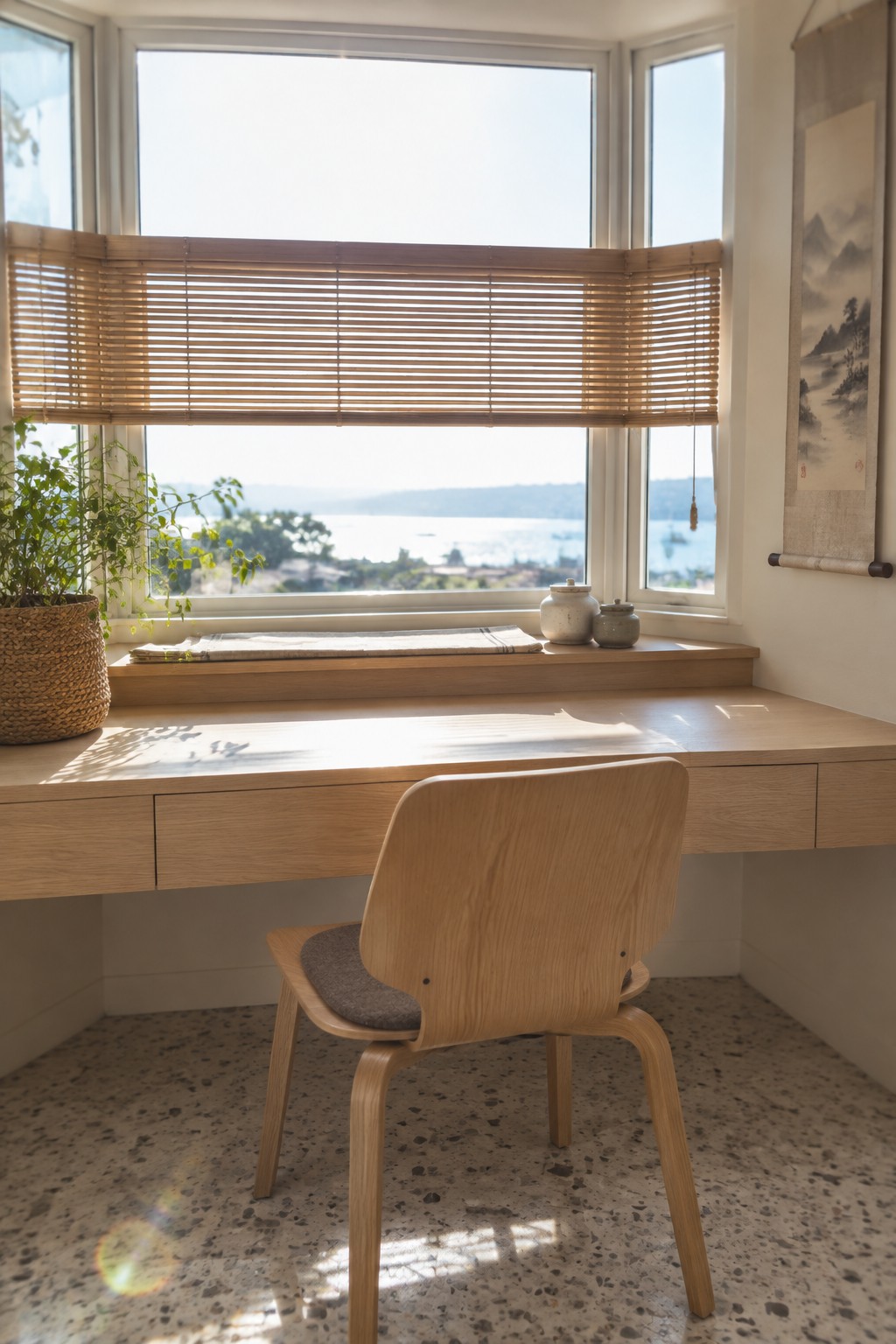
A desk set into a window alcove can make a home office feel like part of the room rather than a separate work zone. The broad wood surface here stays uncluttered, while the storage beneath it keeps the setup practical.
This approach suits a small room or an unused window nook. Add drawers or concealed cabinets below the desk for supplies, and keep the work surface clear enough to use for other things when the laptop is put away.
A Dining Room Cabinet Can Hide a Useful Desk
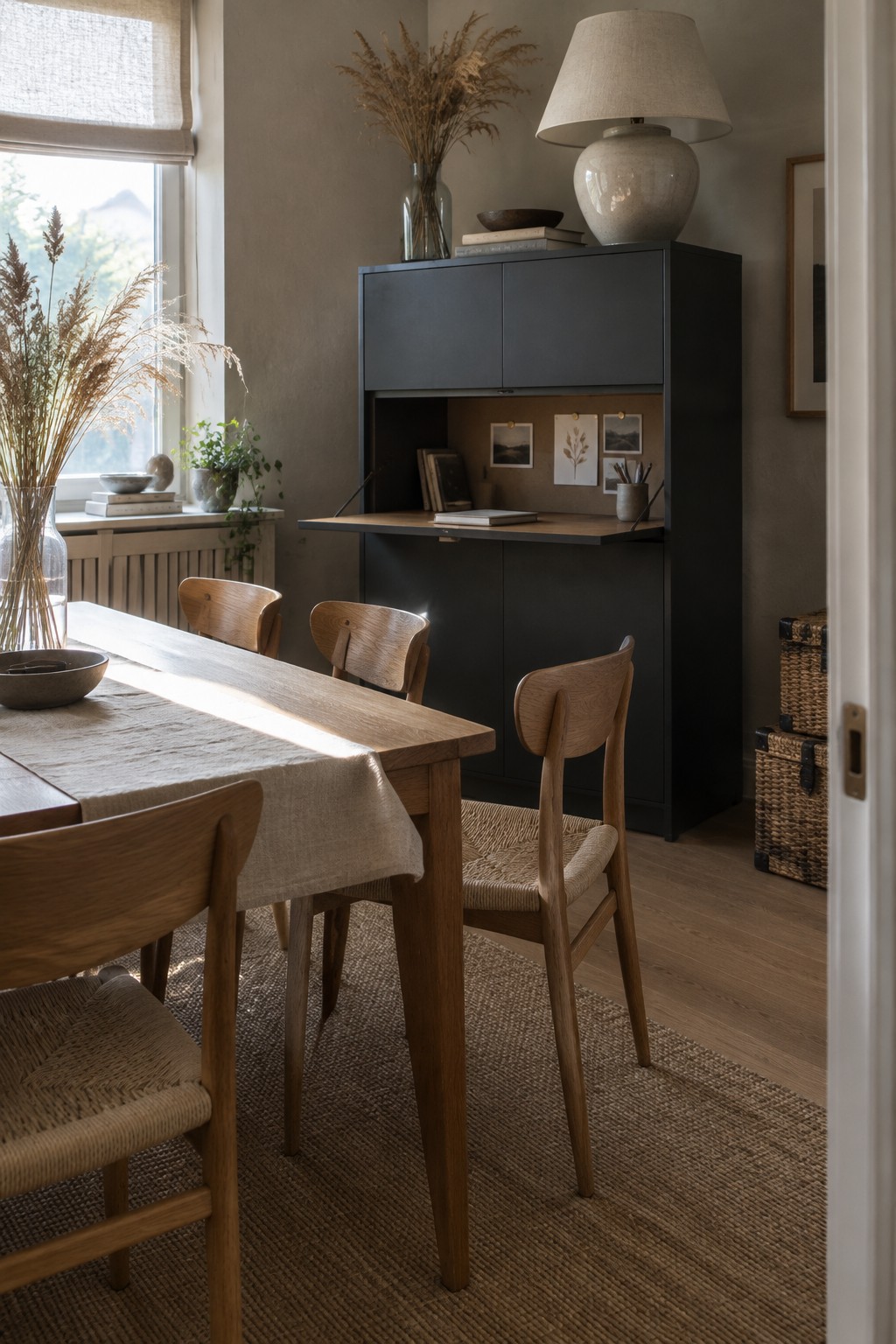
A cabinet with a fold-down work surface lets a dining room do double duty without leaving an office setup on display. Here, the dark cabinet keeps the desk area tucked behind closed doors when it is not in use.
This idea works well in shared spaces where a full-time desk would take up too much room. Choose a cabinet with enough depth for a laptop and a few supplies, and keep the work surface clear so it is easy to fold away at the end of the day.
Sliding Panels Hide a Built-In Work Area
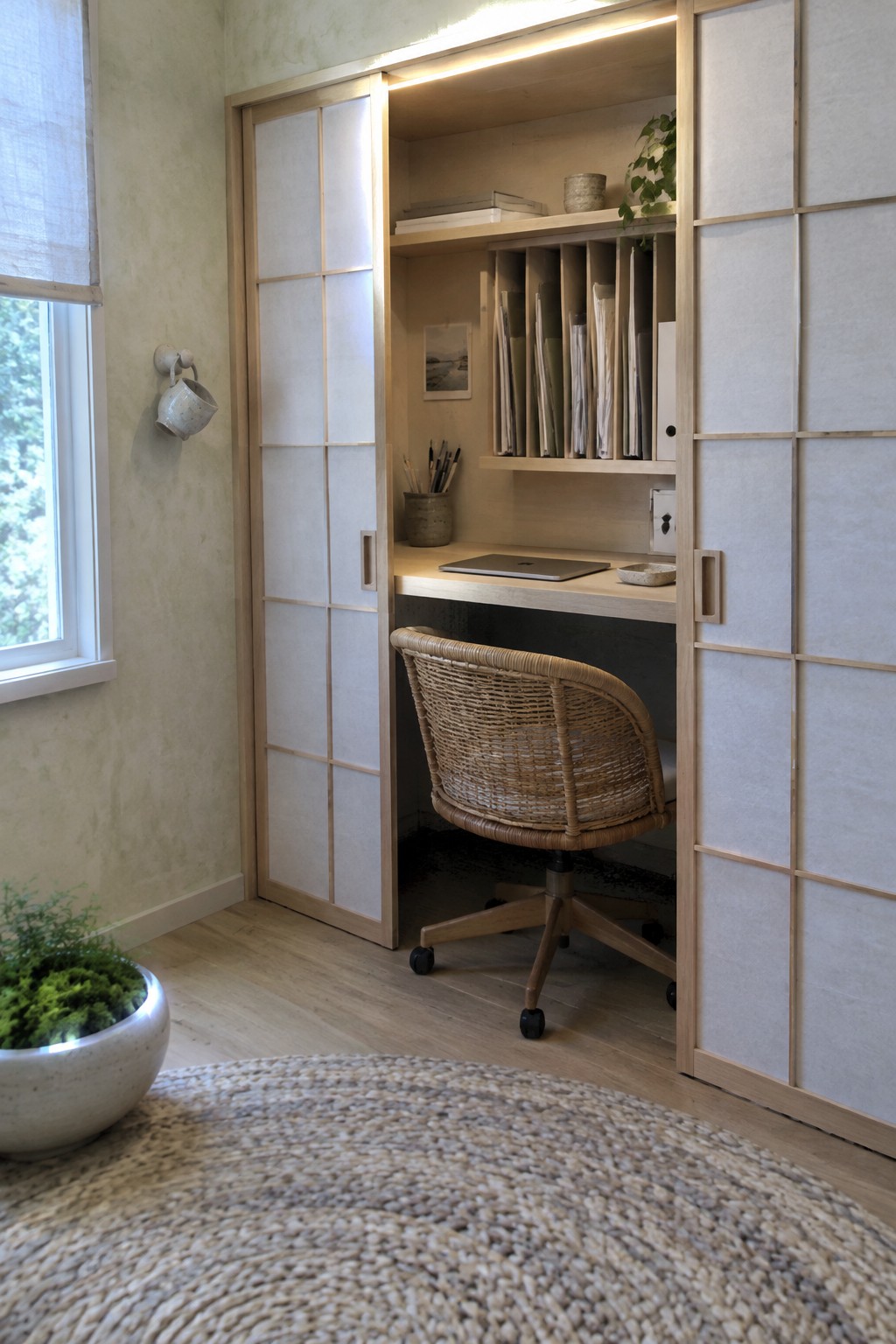
A built-in desk tucked behind sliding panels gives a home office a place to disappear when the workday is done. The panels keep supplies and papers out of sight, while the desk stays ready to use.
This setup works especially well in a small room or a shared space where a permanent desk might feel intrusive. Leave enough room for the panels to slide smoothly, and plan storage inside for the items you use most.
Built-In Cabinetry Helps a Home Office Stay Tidy
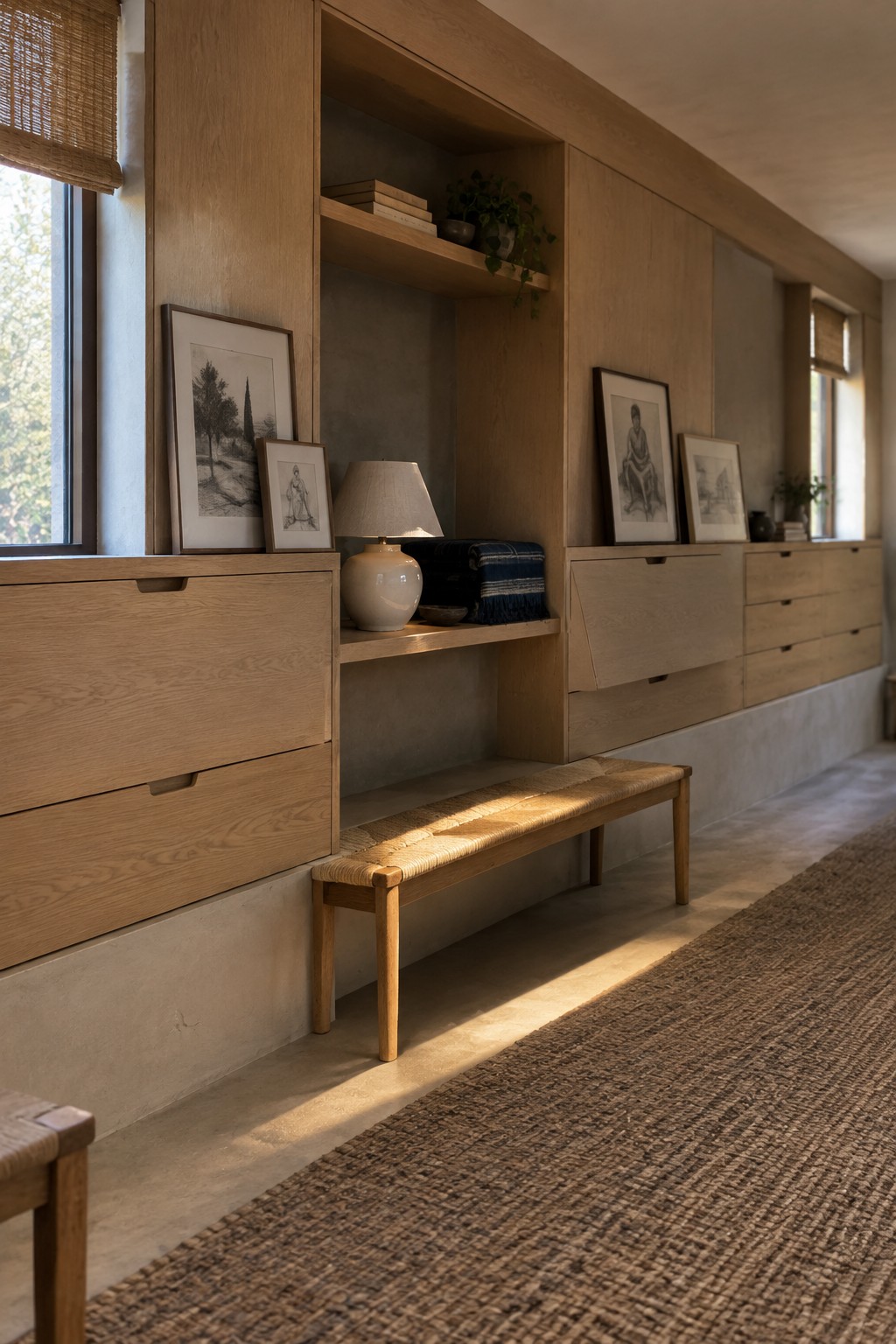
A run of built-in cabinets can give a home office plenty of storage without leaving the room feeling like a workspace all the time. Closed drawers keep supplies out of sight, while a few open shelves leave room for books or personal pieces.
This approach works especially well along a wall or in a hallway nook where separate office furniture might feel bulky. Include a desk surface that can be cleared or tucked away, and plan enough closed storage for the items you use every day.
A Built-In Desk Makes an Attic Office Work
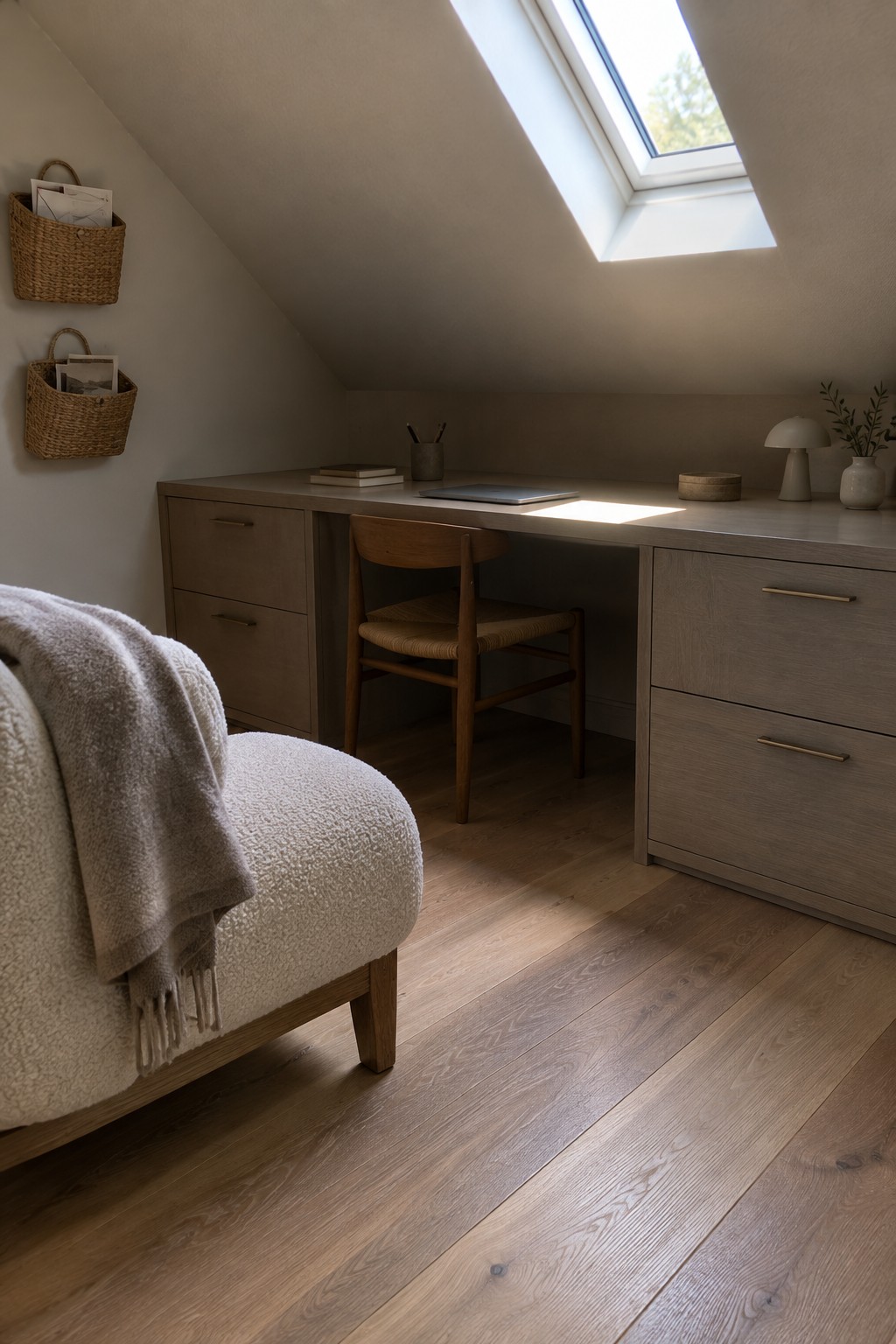
A desk fitted along the wall can make an attic office more useful without taking up the open floor area. Here, the drawers sit beneath the work surface, keeping everyday supplies close while leaving the desk itself uncluttered.
This approach suits a spare room or an awkward space beneath a sloped ceiling. Use drawers that match the desk cabinetry for a tidy, continuous look, and leave enough legroom for a comfortable chair.
Concealed Storage Keeps the Office Neat
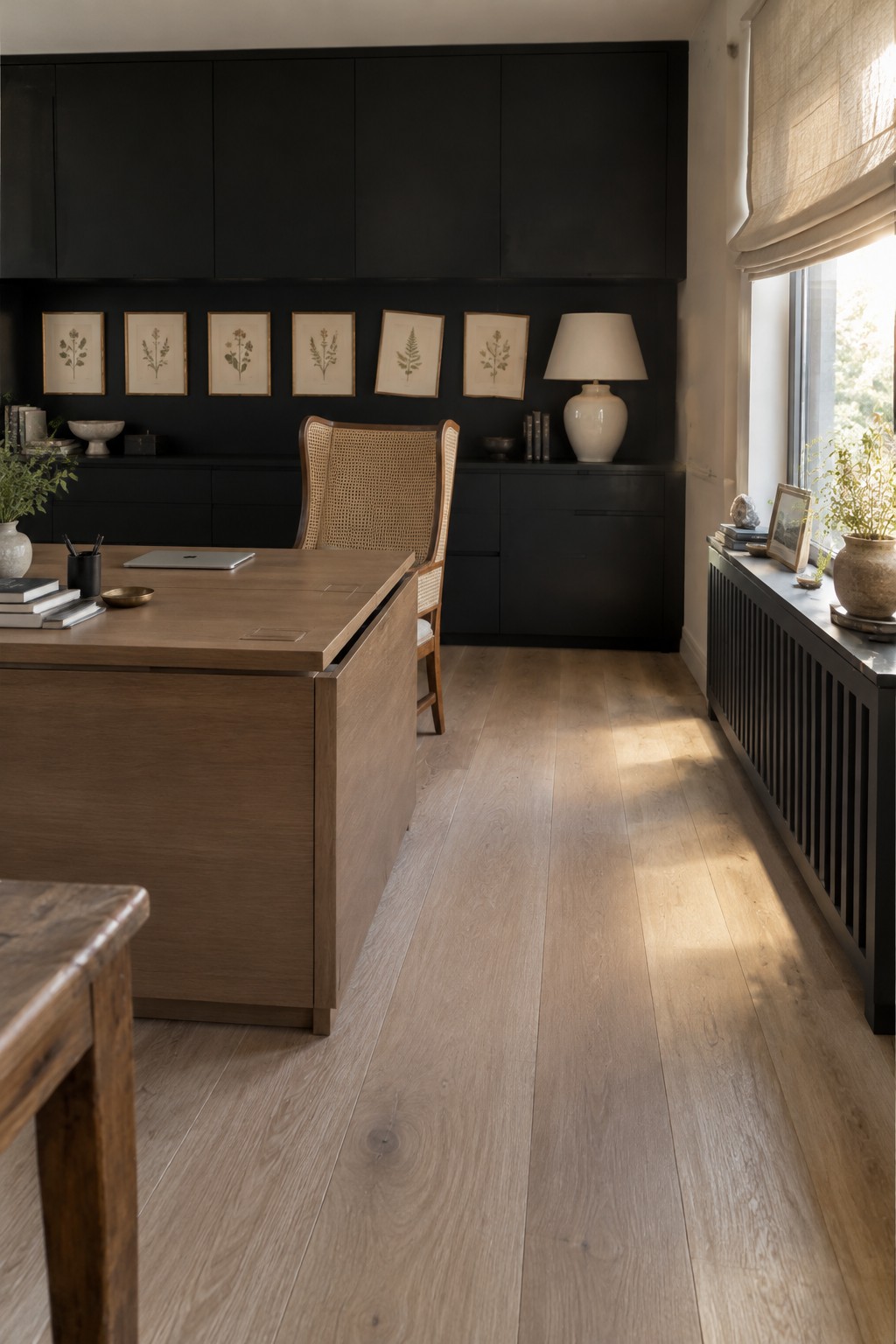
Closed cabinetry can make a home office feel calmer by keeping everyday supplies out of sight. Here, dark built-ins hide storage around a simple wood desk, while the work surface stays clear enough for focused tasks.
This approach works well in a dedicated office where you want a tidy look even when the room is not in use. Plan for a mix of shelves and closed cupboards so frequently used items are easy to reach without leaving everything on display.
A Wall-Mounted Desk Keeps the Office Light
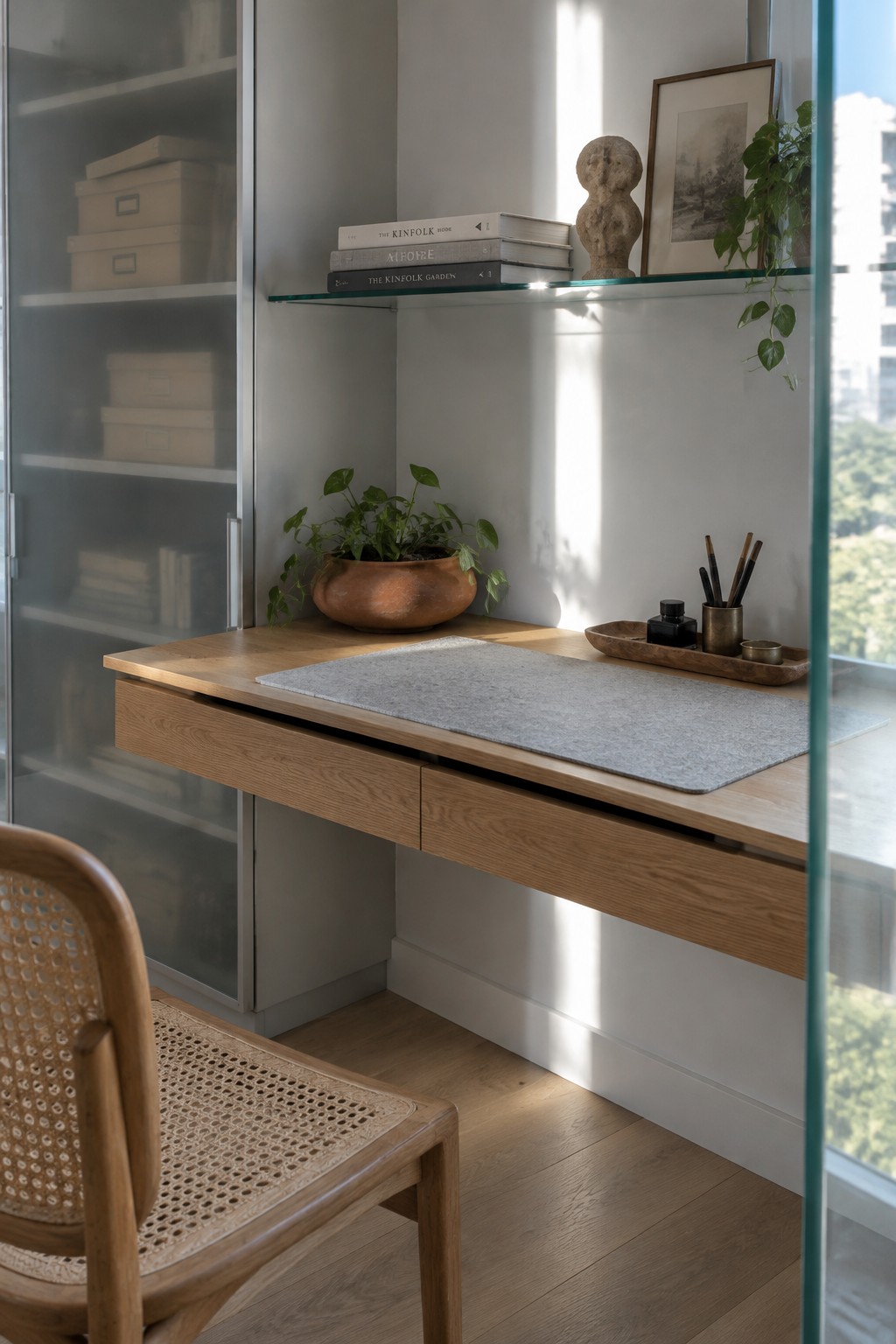
A slim desk attached to the wall leaves the floor clear and helps a home office feel less bulky. Here, the simple oak work surface has no visible legs, so the storage and work area stay neat without taking up more visual space than needed.
This approach suits a small office or a spare corner where a full desk would feel cramped. Add drawers or cabinets nearby for supplies, and keep the desktop easy to clear when work is done.
A Built-In Desk Makes a Bedroom More Useful
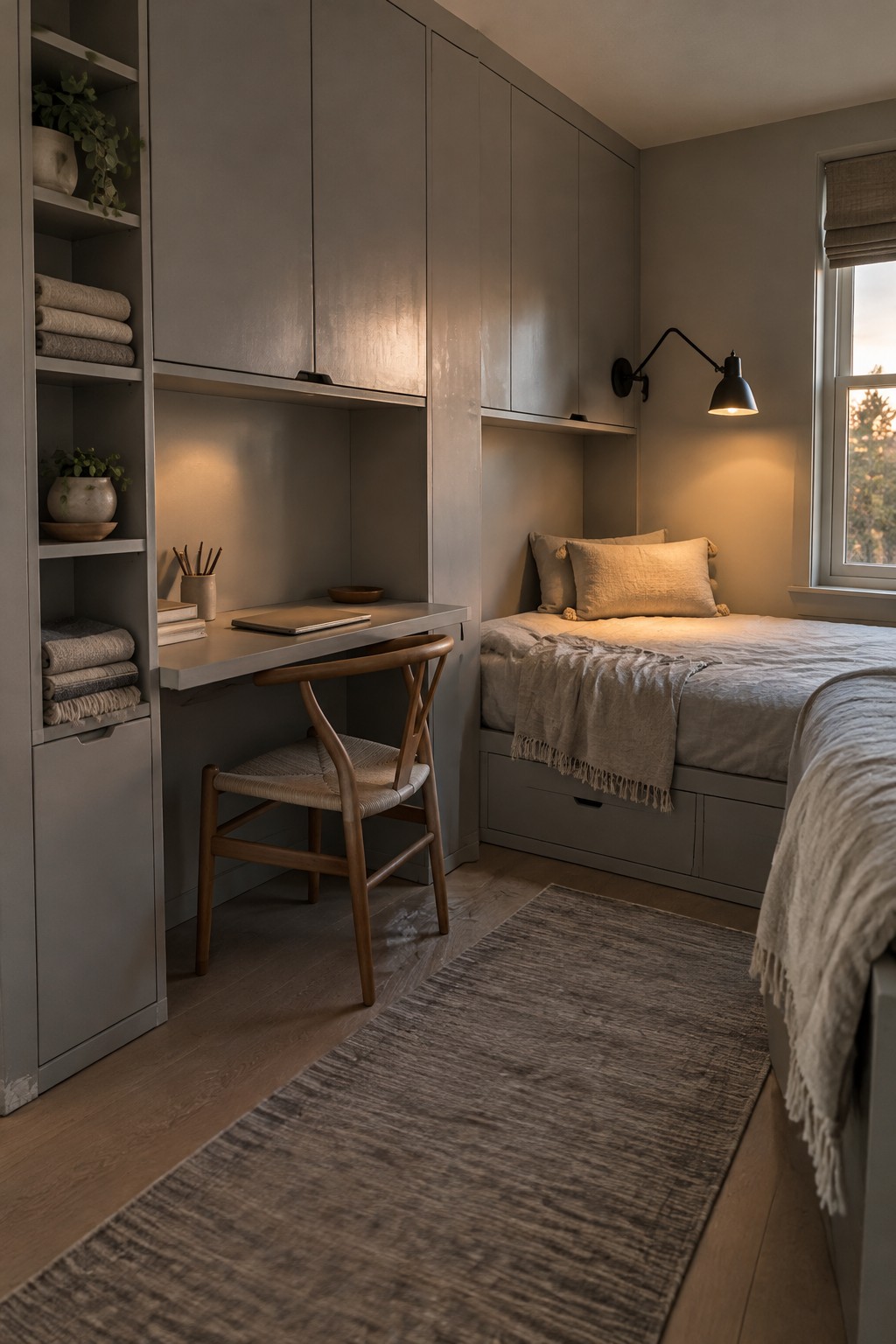
A built-in desk can turn part of a bedroom into a practical work area without bringing in a separate office setup. Here, the desk sits within the cabinetry, so it feels like part of the room rather than an extra piece of furniture.
This idea suits small bedrooms where floor space is limited. Keep the desk shallow and store everyday supplies in nearby cabinets, so the surface can stay clear when work is done.
A Fold-Down Desk Fits a Hallway Nook

A wall-mounted desk can make use of a narrow spot without turning it into a permanent work area. Here, the angled wood front folds down to form a desk, then closes over the built-in storage when work is done.
This approach suits a hallway or small room where floor space matters. Keep the desk shallow and make sure there is enough room for a stool when it is open.
A Roll-Down Front Hides the Desk
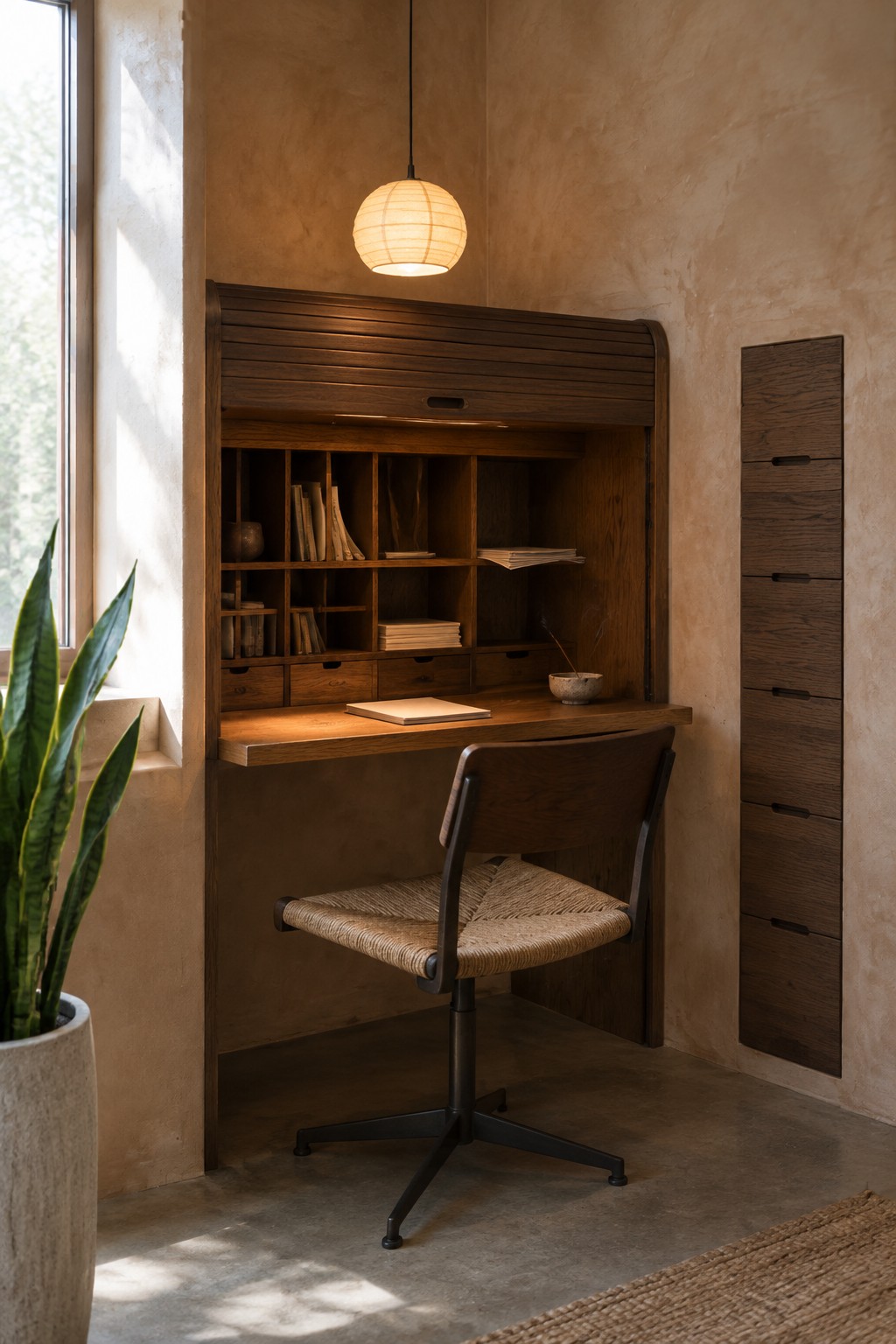
A roll-down front lets a built-in desk close away when work is done, so papers and shelves stay out of view. It is a practical choice when the office shares space with the rest of the home.
This setup works especially well in a small alcove, where a full room is not available. Keep the shelves useful but not crowded, and leave enough room for the desk surface to clear when the front comes down.
A Long Desk Can Hide Everyday Office Supplies
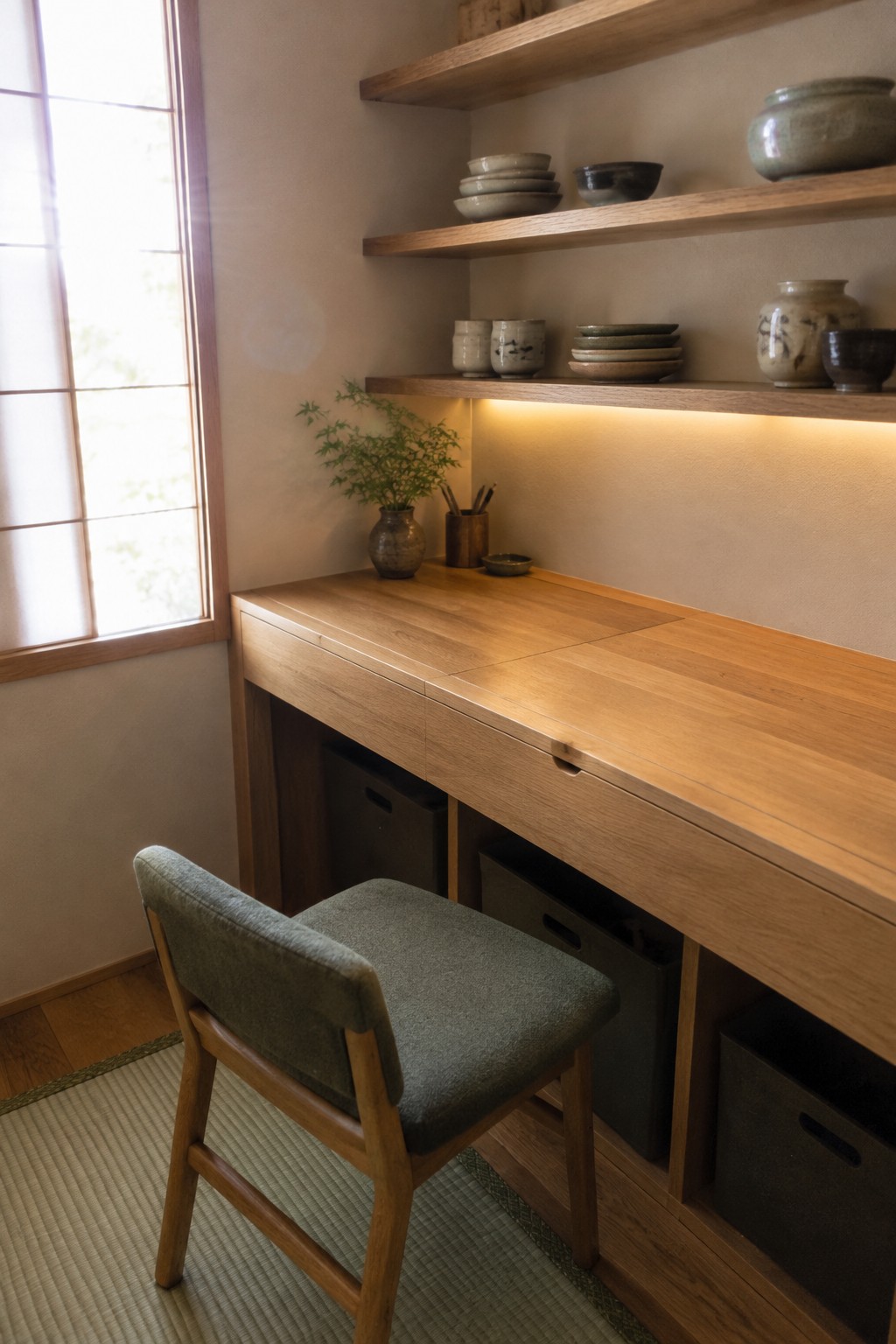
A built-in desk with storage tucked beneath it keeps a home office useful without leaving boxes and equipment in view. The open work surface stays clear, while dark fabric bins slide into the lower compartments.
This approach suits a study nook or a spare room where you want storage close at hand but prefer a quiet, uncluttered look. Measure the bins before building the compartments so they fit neatly and remain easy to pull out.
A Built-In Desk Can Double as a Window Seat
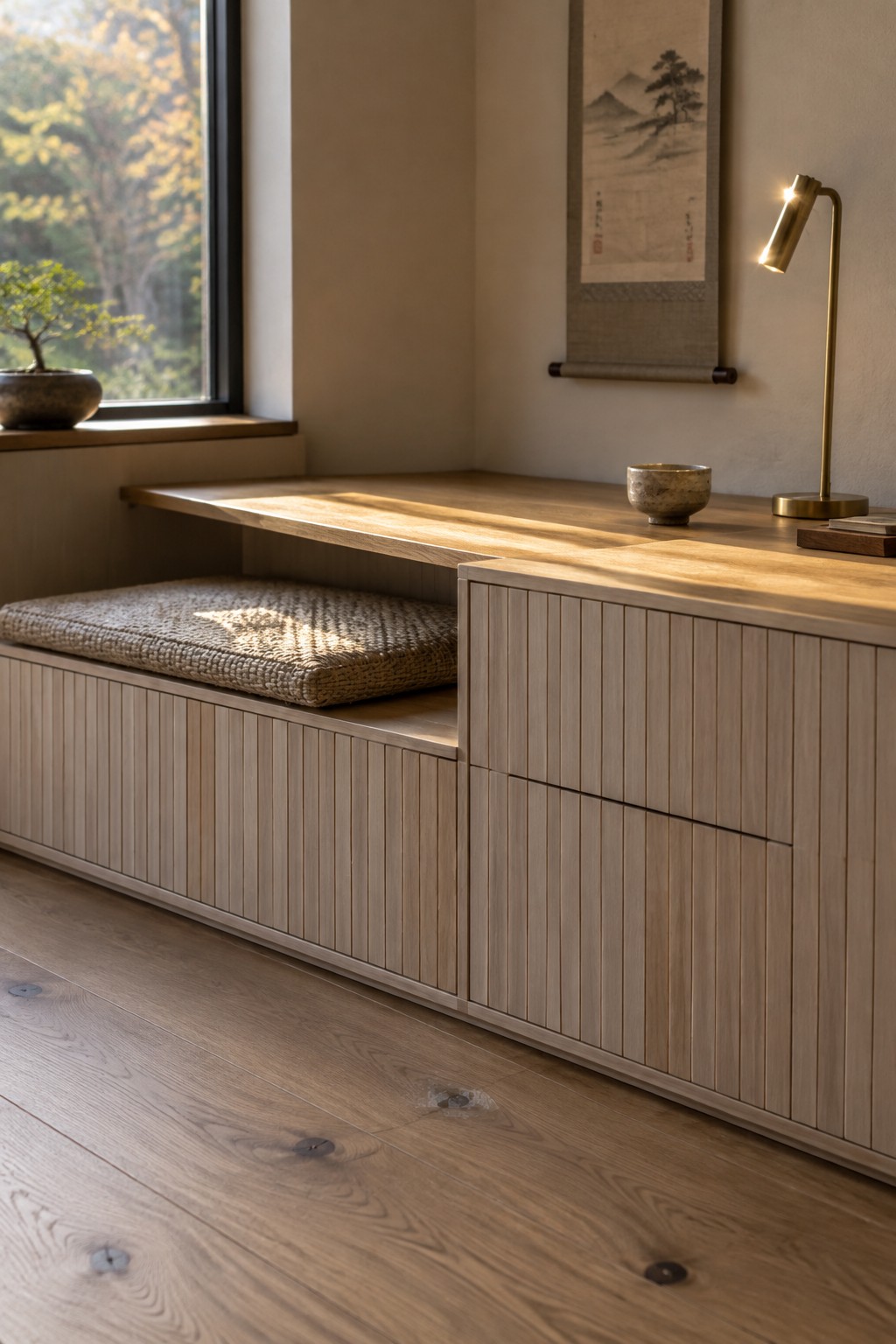
A desk that extends over built-in storage makes a small office feel more useful without adding a separate work table. Here, the lower cabinets keep the furniture looking tidy, while the cushioned nook gives the same area another purpose.
This setup suits a spare room or a quiet corner where space is limited. Use closed cabinets for papers and supplies, and keep the desk surface fairly clear so the room can still feel restful when work is done.
A Fold-Down Desk Keeps Work Out of the Way

A wall-mounted desk can give a small home office a proper work surface without taking up floor space all day. Here, the wooden panel folds down to become a desk, then closes back into a tall cabinet when work is finished.
This setup suits a spare room or a quiet corner where a full desk would feel bulky. Keep the surface simple, and check that the fold-down panel has sturdy supports and enough clearance for a chair.
A Long Built-In Desk Can Serve More Than One Person
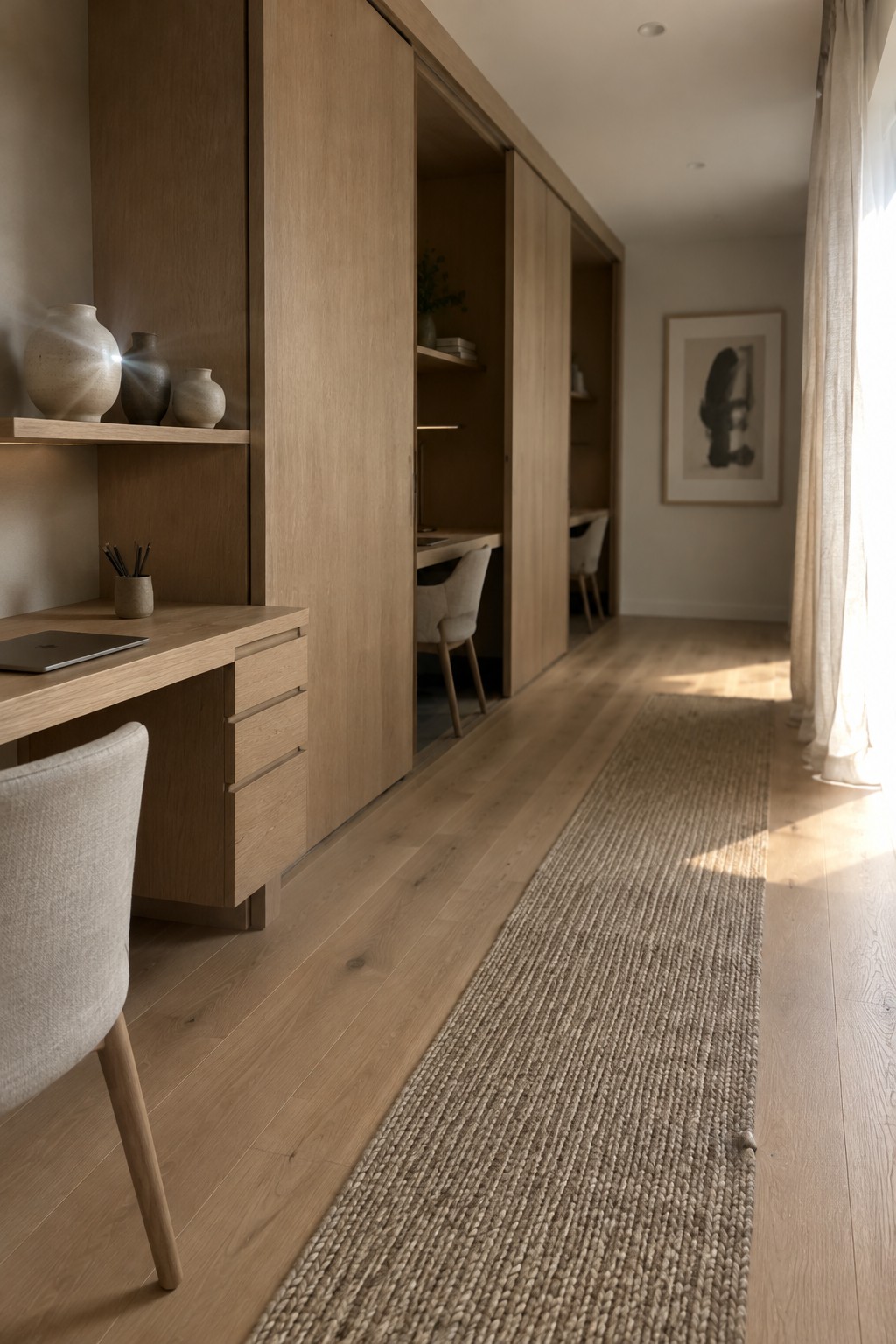
A desk that runs along a wall of built-in cabinets gives a home office room for more than one work spot. The cabinetry keeps the look orderly, while the open desk sections make it easy to sit down and get to work.
This setup suits a long, narrow room or a shared office. Use closed cabinets for supplies you do not need every day, and keep the desk surface clear so each person has space to work.
Frequently Asked Questions
Q: How do I hide cables without making a Japandi desk feel bulky?
A: Run cables through a small opening at the back of the desk and tuck the power strip inside a drawer or cabinet. Leave a little slack so you can move your laptop without pulling on the cords.
Q: What should I keep on the desk if I want the room to feel calm?
A: Keep out the things you use every day, such as your laptop and one notebook, and store the rest behind closed fronts. A small lamp or simple vase can add warmth without turning the desk into a display shelf.
Q: Can concealed storage work in a small home office?
A: Yes. A narrow desk with one deep drawer can hide the essentials without taking up much floor space. Wall shelves above it can hold less-used items while keeping the work surface clear.
Q: How do I keep hidden drawers from becoming cluttered?
A: Give each drawer a clear purpose, like stationery or chargers, and use a small divider to keep items from piling up. A quick tidy at the end of the week helps the storage stay useful.
