

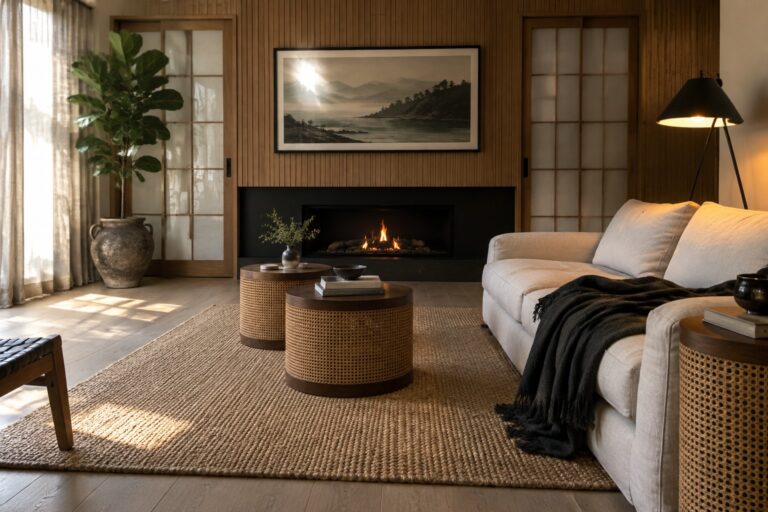
Black accents can give a Japandi room definition, but they work best when the rest of the space feels warm and considered.
I find that natural textures do much of that work, from pale wood and woven fibers to stone and softly rumpled linen.
In a real home, the balance matters: too many dark details can make a calm room feel heavy, while a few well-placed touches help furniture and architectural lines stand out.
The rooms that hold my attention tend to mix smooth and tactile surfaces without crowding the layout or making everyday use feel like an afterthought.
I’d save the ideas that show how small shifts in material and contrast can make a space feel more grounded.
Use Wood Slats to Add Interest to a Fireplace Wall

A wood-slat wall can give a fireplace a clear focal point without relying on bold color or busy decor. The narrow vertical lines add pattern, while the natural wood keeps the feature feeling at home in a Japandi room.
Try this treatment on one wall, especially behind a simple fireplace or media unit. Keep the surrounding finishes fairly quiet, and use a dark fireplace surround for contrast. Since wood slats already bring plenty of texture, a few simple accents are usually enough.
Use Black Accents in a Natural Bedroom

A few black details can give a Japandi bedroom a clearer outline without taking away from its natural materials. Here, the dark wall lamp and charcoal bed runner stand out against pale bedding and a woven headboard.
Try this approach in a room with wood, linen, or textured walls, and keep the black accents to a few purposeful spots. Too many dark pieces can make a quiet palette feel heavy.
Use Black Cabinetry to Give Japandi Kitchens Definition

Black cabinetry gives a Japandi kitchen a clear outline while natural materials keep the room from feeling stark. Here, dark lower cabinets and a matte black faucet sit alongside oak cupboards, making the contrast easy to use without adding extra color.
Try this approach when you want a calm kitchen with a little more structure. Keep the darker finish to selected cabinets or fixtures, then use wood and stone on larger surfaces so the room still feels comfortable.
Use Black Accents in a Warm Dining Room
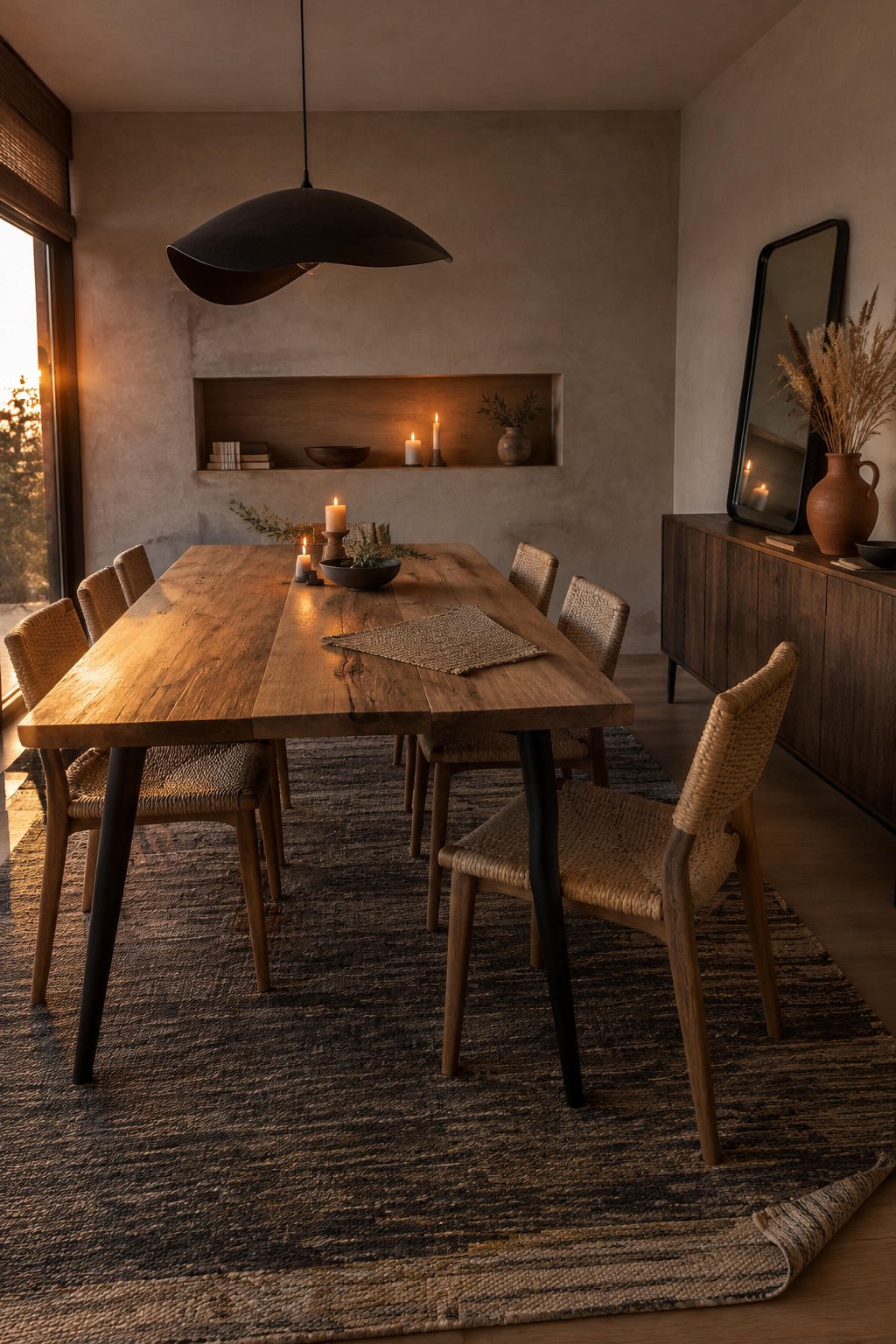
Black accents can give a Japandi dining room a little definition without taking away from its natural materials. Here, the dark pendant and table legs stand out against the wood and woven seating, while the overall look stays simple.
Try this approach in a dining area where you want wood and natural fibers to feel a bit more structured. A few black details are usually enough. Too many can make the room feel harsher than intended.
Choose Natural Tile to Add Texture to a Small Bathroom
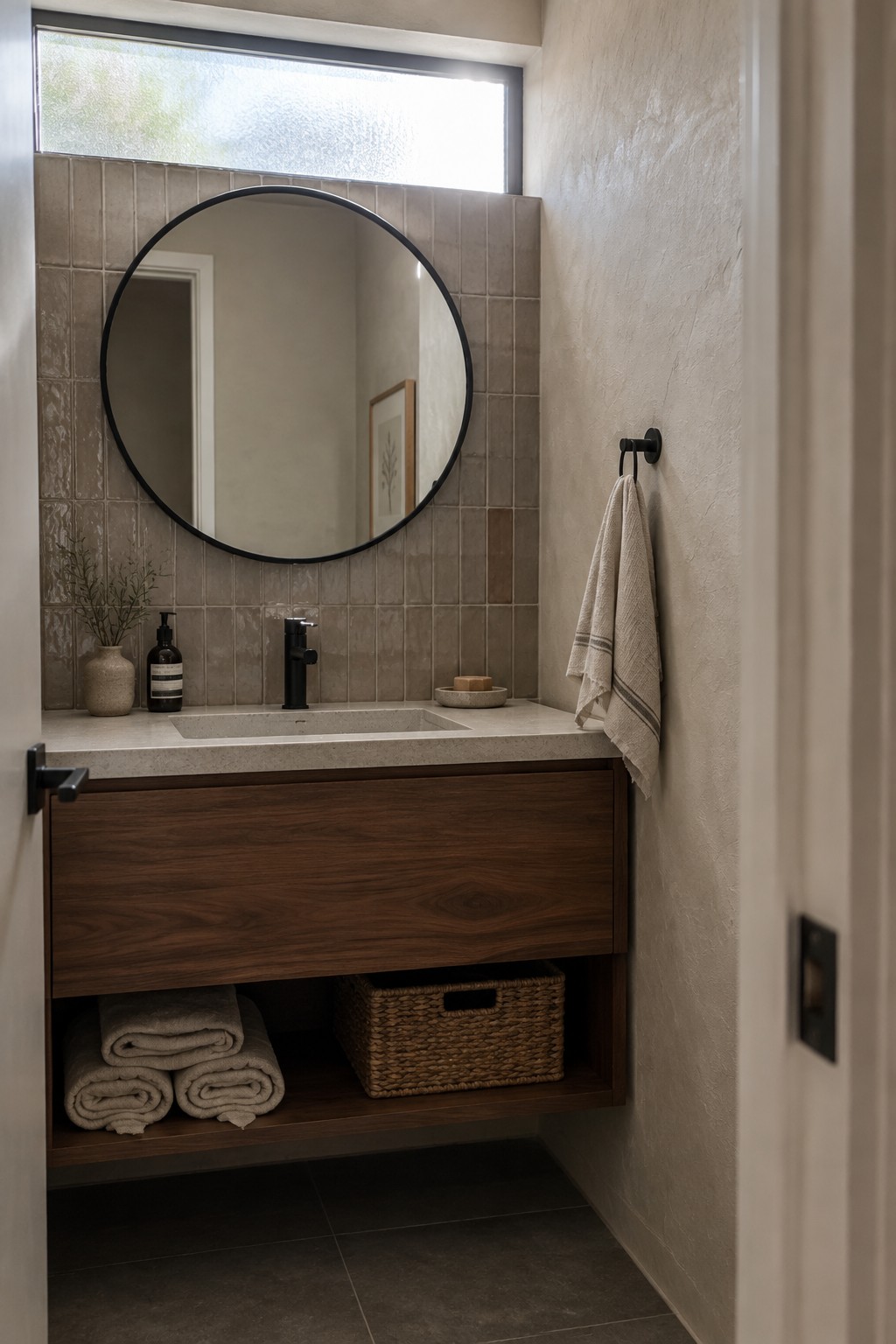
A simple way to bring Japandi style into a bathroom is to use tile with a little variation in its surface and color. The muted square tiles behind this vanity give the wall interest without needing a bold pattern, while the black mirror frame and faucet keep the look defined.
This approach works well in a small bathroom, where too many finishes can feel busy. Keep the tile colors close together, then use black in one or two details rather than repeating it everywhere.
Set Up a Practical Japandi Work Nook
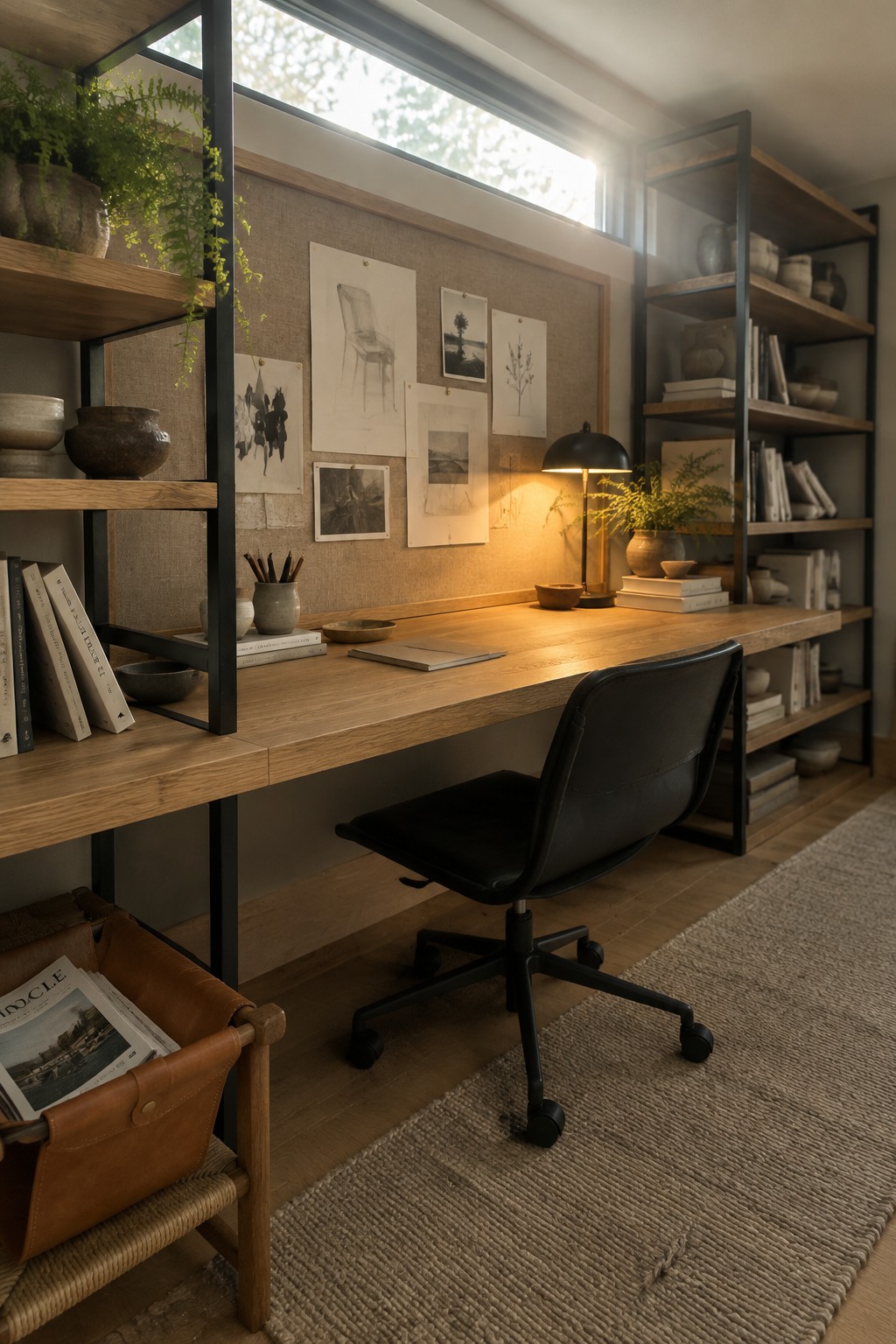
A simple desk nook can feel calm and useful when it combines natural wood with a few black accents. Here, the dark metal shelving gives the long wood worktop a clear outline without making the space feel busy.
This approach suits a study corner or a room with limited space for a separate office. Use open shelves for books and everyday supplies, but leave enough clear desk surface to work comfortably.
Use Black Details to Keep a Nursery Simple
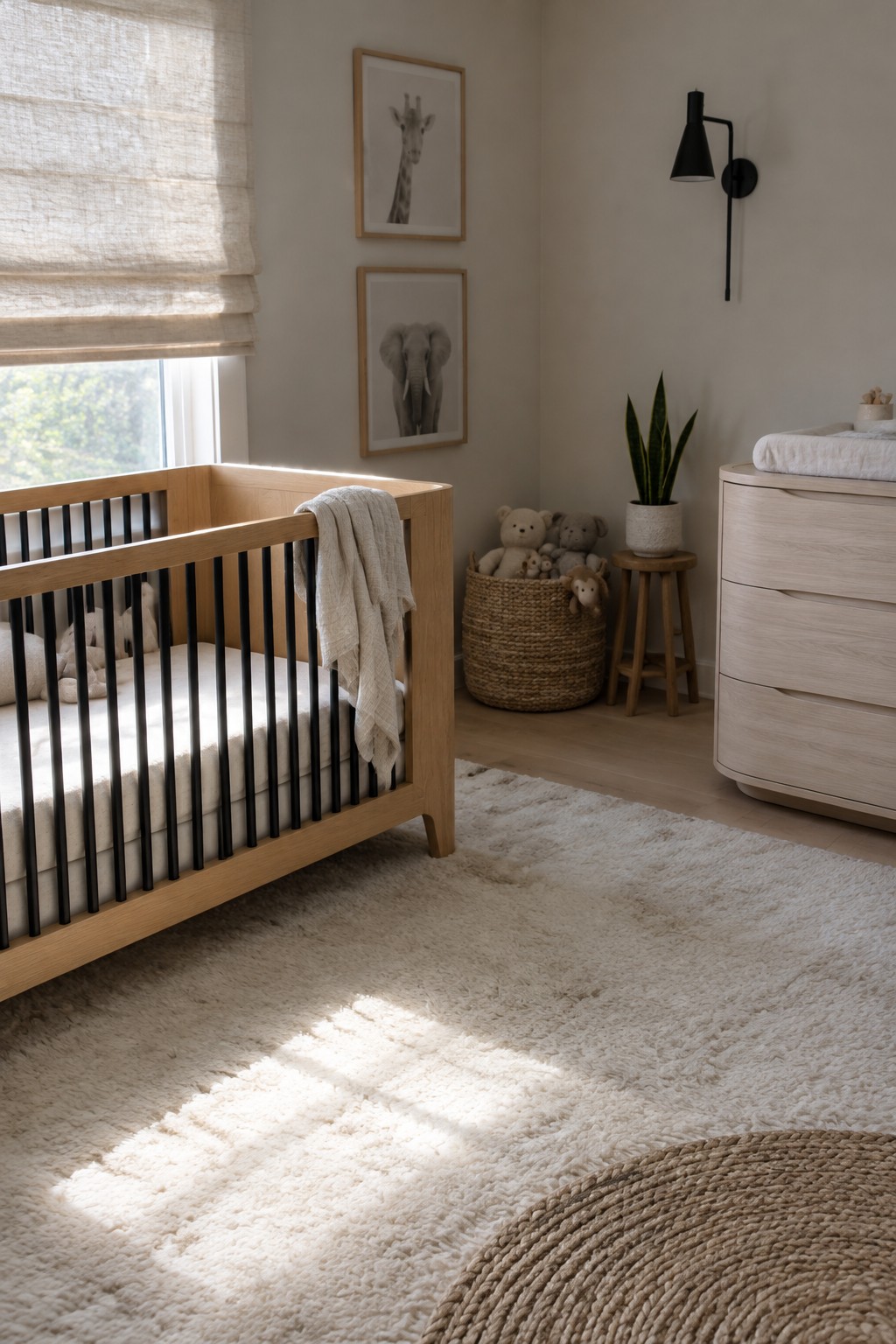
A Japandi nursery can feel calm without looking plain. Natural wood and woven textures do much of the work, while a few black details, like the crib rails and wall lamp, give the room a little definition.
Try this approach in a small nursery, where too many colors and decorations can feel busy. Keep the main furniture and textiles in soft, natural shades, then use black in just a couple of practical spots.
Add Practical Storage to a Japandi Laundry Room
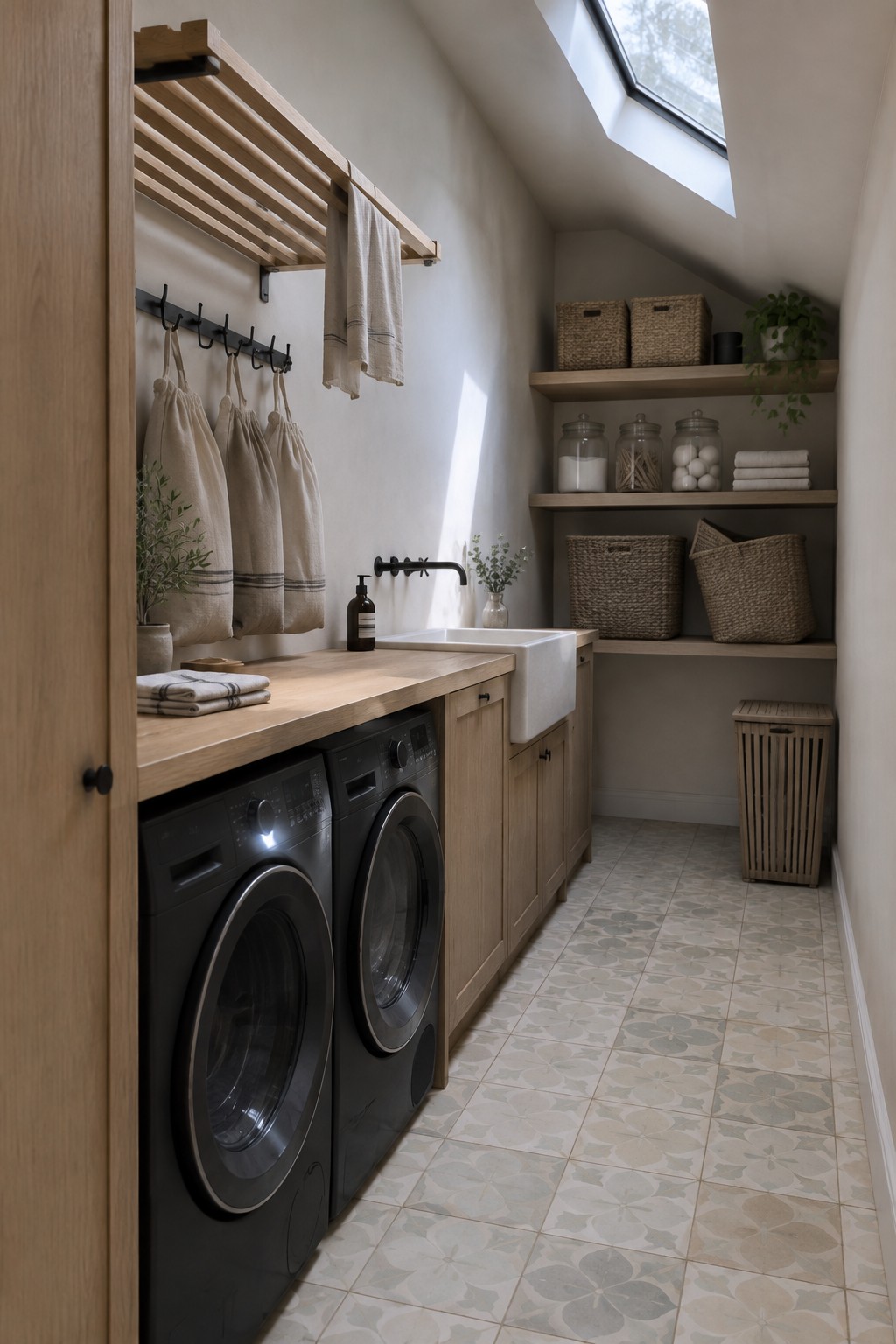
A little built-in storage can make a laundry room easier to use without adding visual clutter. Here, a wood counter runs over the machines, while a simple slatted shelf keeps everyday items close by.
This idea suits a narrow utility room where floor space is limited. Use closed cupboards for supplies you would rather keep out of sight, and leave only a few useful items on open shelves.
Use a Recessed Shower Niche for Practical Storage
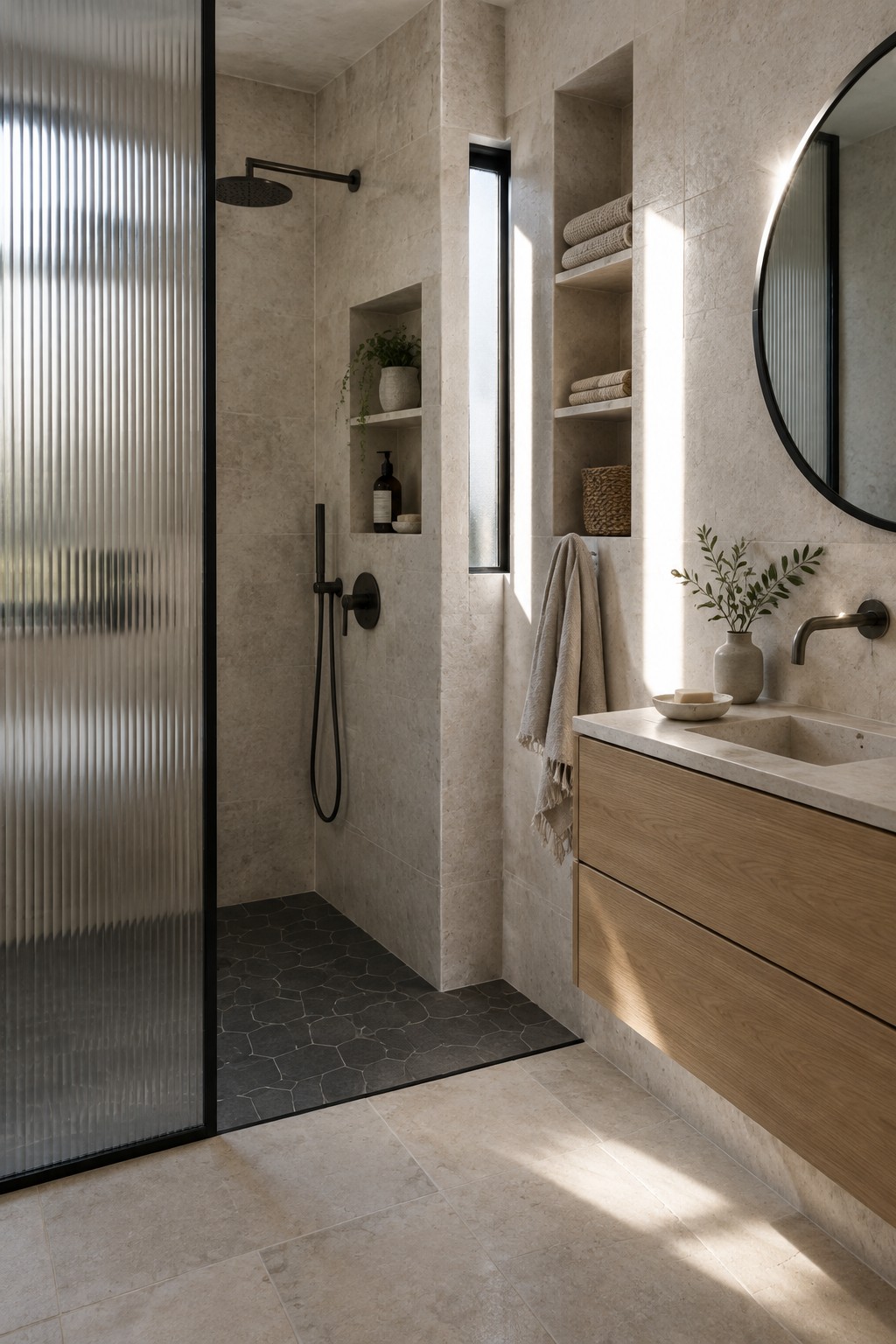
A built-in niche keeps shower essentials close without adding a separate rack. In a Japandi bathroom, matching the niche to the wall tile helps storage feel like part of the design, while a dark floor gives the light stone a little contrast.
This works especially well in a small bathroom where floor space is limited. Plan the niche between studs where possible, and make sure it is properly waterproofed before tiling.
Use a Daybed to Make a Japandi Reading Corner
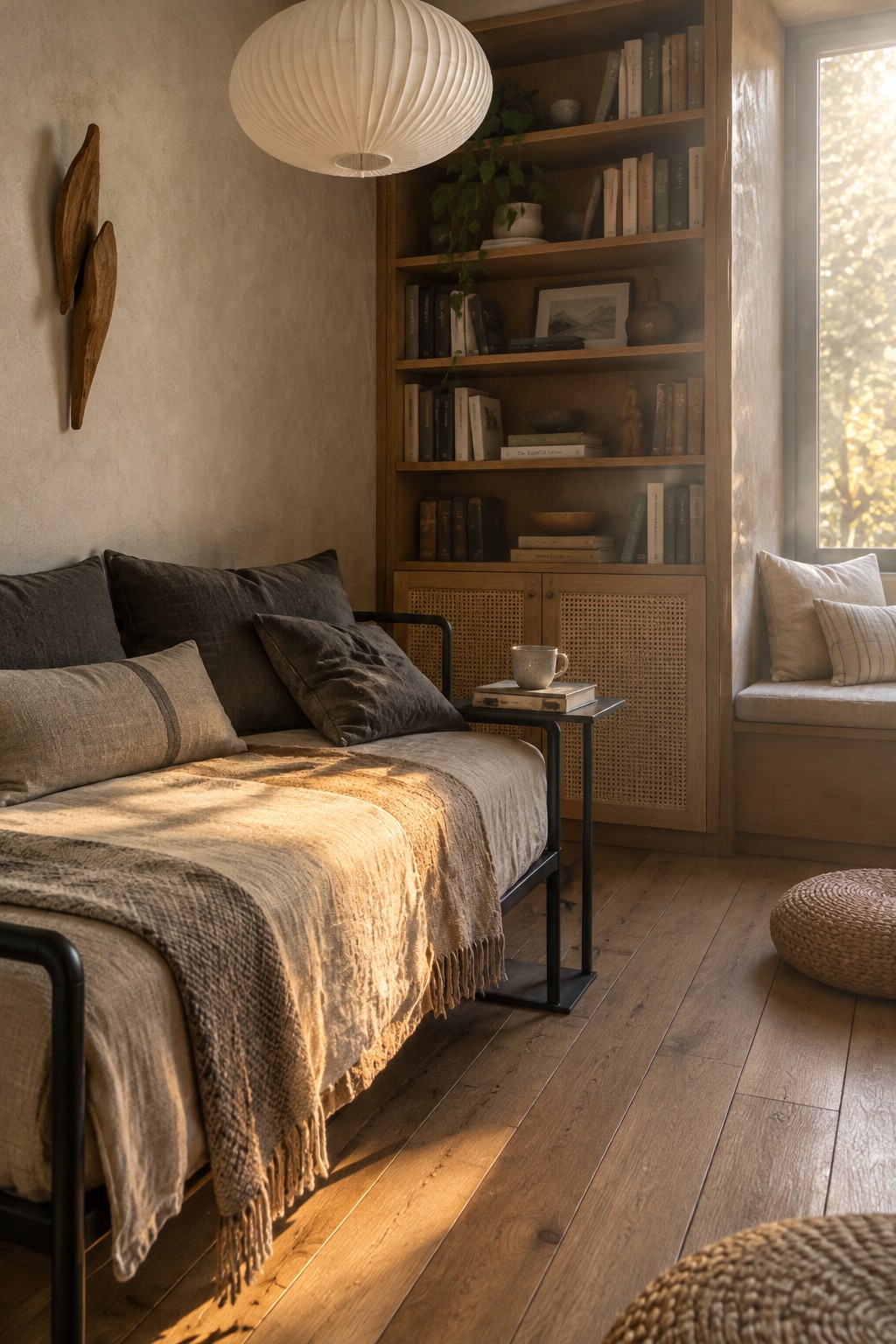
A daybed can give a quiet corner more than one purpose. It works for reading or resting, and its simple shape suits a Japandi room without making the space feel crowded. Here, a black metal frame sits beside a slim table, while a built-in bookcase keeps reading material close by.
This setup works well in a small living room or spare room where a full sofa might take up too much space. Choose natural, textured bedding to keep the daybed comfortable, and leave enough room beside it to move around.
Use a Textured Runner to Warm Up a Staircase
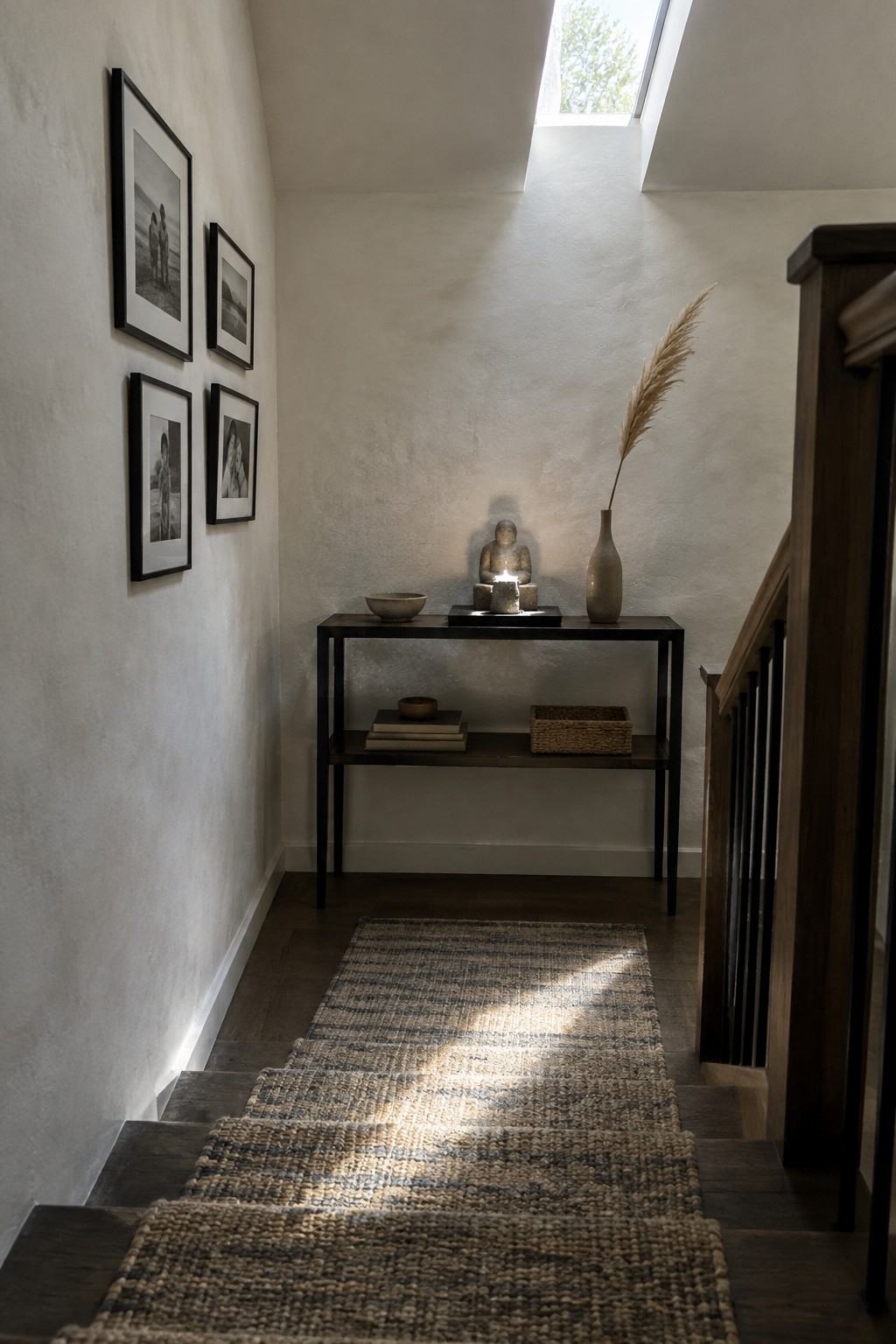
A woven runner makes a staircase feel more comfortable and helps break up a stretch of dark wood. Its natural fibers add texture without needing much extra decoration.
This idea works well in a narrow stair hall, where a runner can bring softness underfoot without taking up floor space. Choose a durable weave and secure it well so the edges stay flat on the steps.
Make a Walk-In Closet More Practical With Built-In Storage
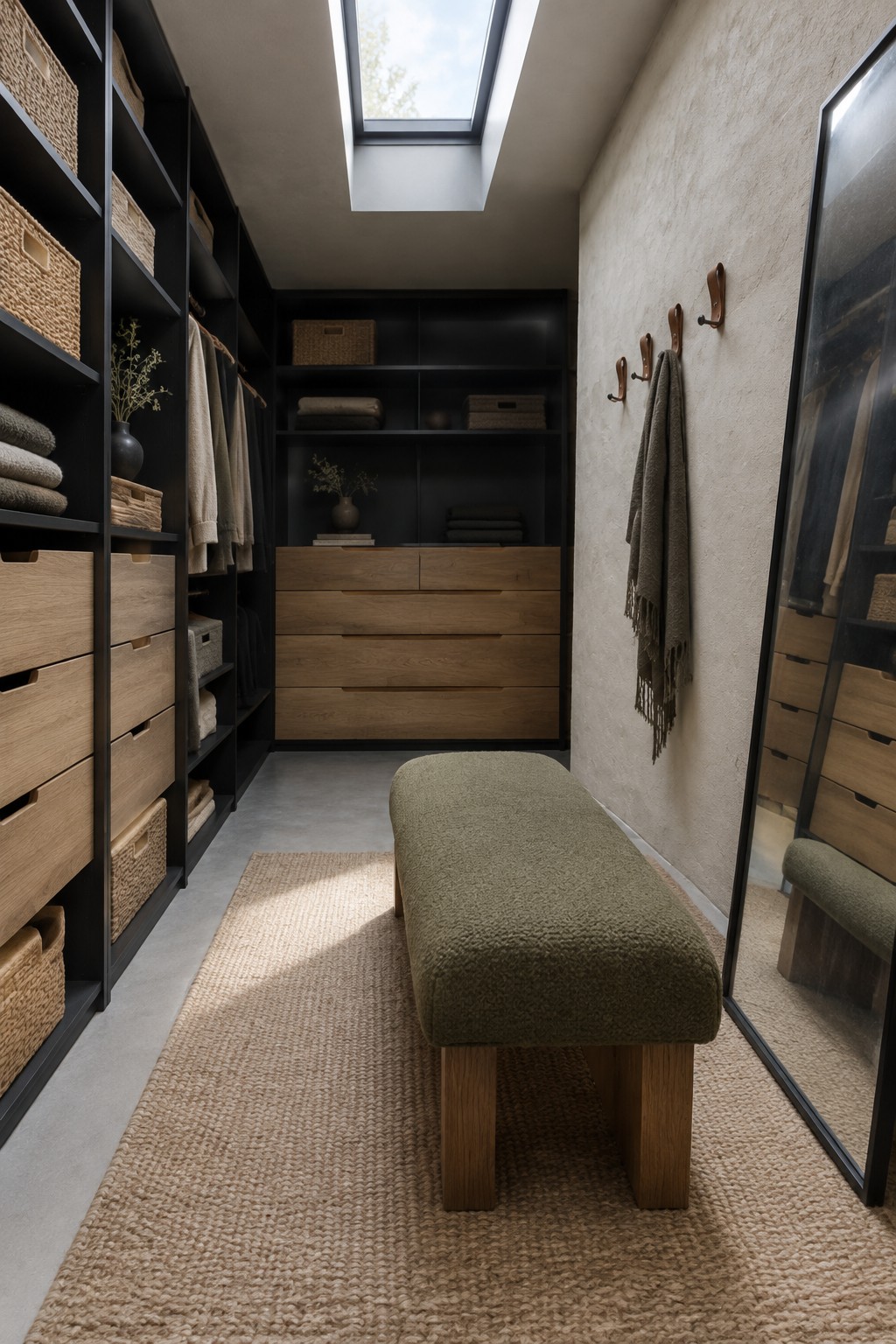
Built-in shelves and drawers make good use of a narrow walk-in closet, keeping everyday items close without crowding the walkway. Black shelving gives the storage a clear outline, while wood drawer fronts keep it from feeling too stark.
This approach works well in a small dressing room where freestanding furniture would take up too much space. Use a mix of open shelves and closed drawers, and leave enough room to move comfortably through the center.
Make a Japandi Work Area Feel Practical and Calm
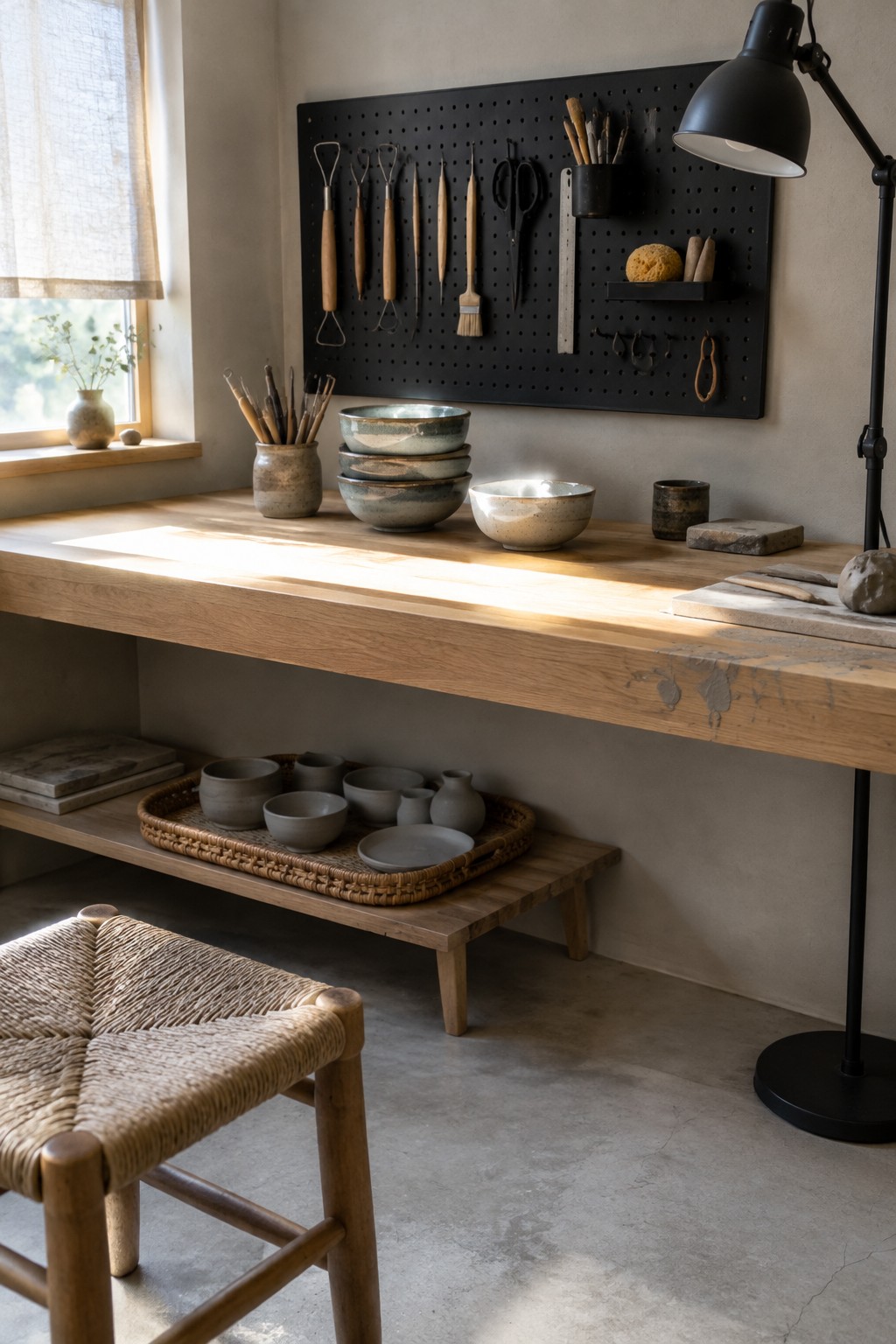
A simple work surface can do more than provide room for a task. Here, the black pegboard keeps tools visible and easy to reach, while wood and handmade pottery keep the setup from feeling overly utilitarian.
This approach suits a craft corner or small studio where storage needs to stay close at hand. Use a pegboard for items you reach for often, and leave some open space on the worktop so the area remains comfortable to use.
Use Natural Wood Shelves for Simple Living Room Storage

Natural wood shelves offer useful storage while keeping a Japandi living room from feeling too stark. Their rough, simple finish gives books and a few favorite objects a place to sit without needing more furniture.
This approach works well in a small alcove or beside a media cabinet, where open shelves can make use of wall space. Keep the display fairly spare, and choose sturdy wood with a finish that suits the rest of the room.
Use a Built-In Banquette to Make a Cozy Dining Nook

A built-in banquette makes a small dining area feel settled without needing a lot of extra furniture. Here, the curved bench follows the shape of the table, and its wood base gives the seating a clear place in the room.
This setup works well in a breakfast nook or an unused corner. Choose a table that leaves enough room to slide in and out, and use removable cushions so the seat stays practical.
Use a Low-Profile Chair to Make a Reading Corner
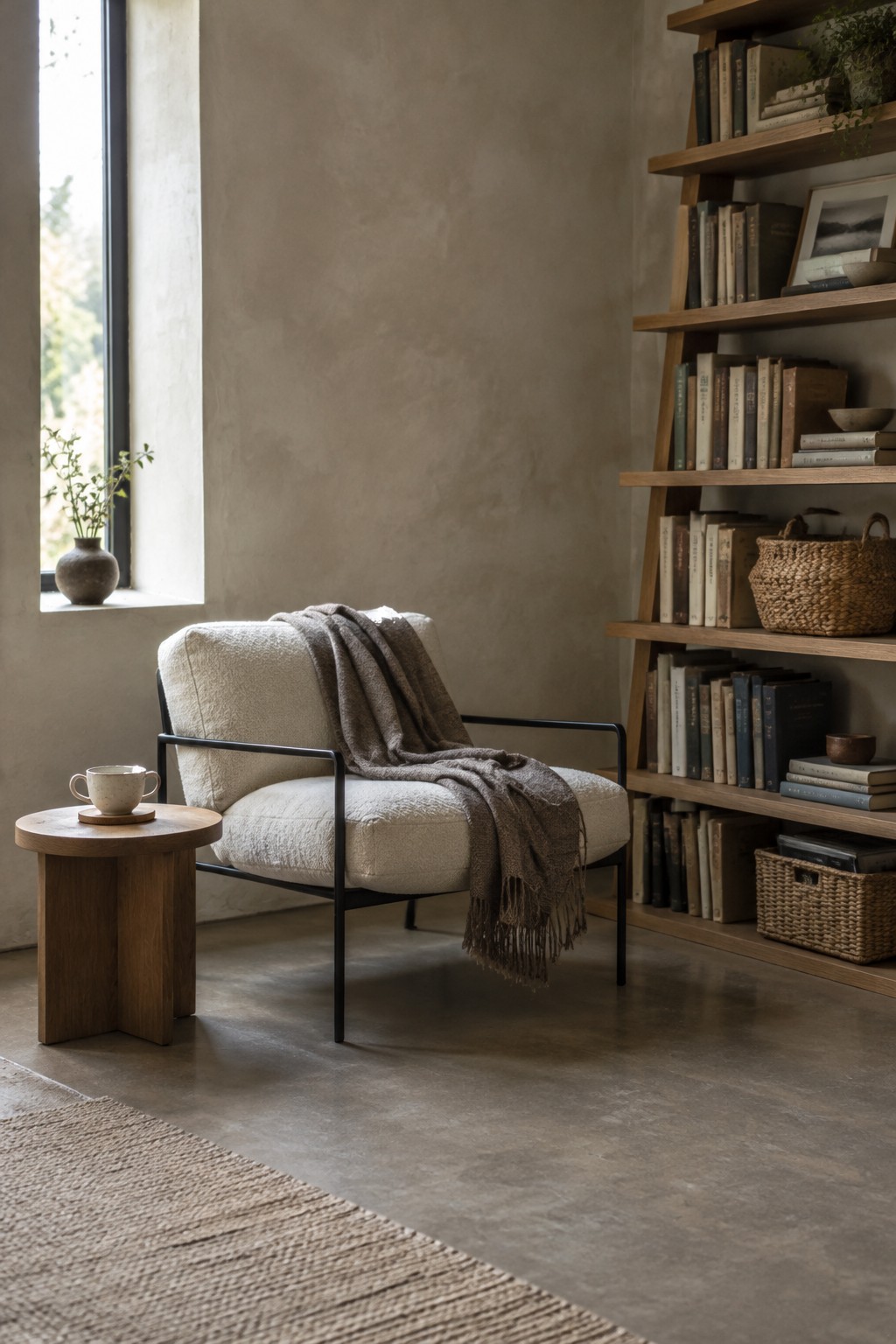
A simple armchair can make a reading corner feel settled without taking up much room. Here, the pale upholstered seat and slim black frame keep the furniture visually light, while the dark frame gives the natural textures a little definition.
This kind of chair works well beside a bookshelf or in an unused corner. Look for a comfortable seat with a straightforward shape, then add a throw for extra softness. Keep nearby furniture small so the spot stays easy to move around.
Use Open Shelving to Make Kitchen Storage Feel Simple
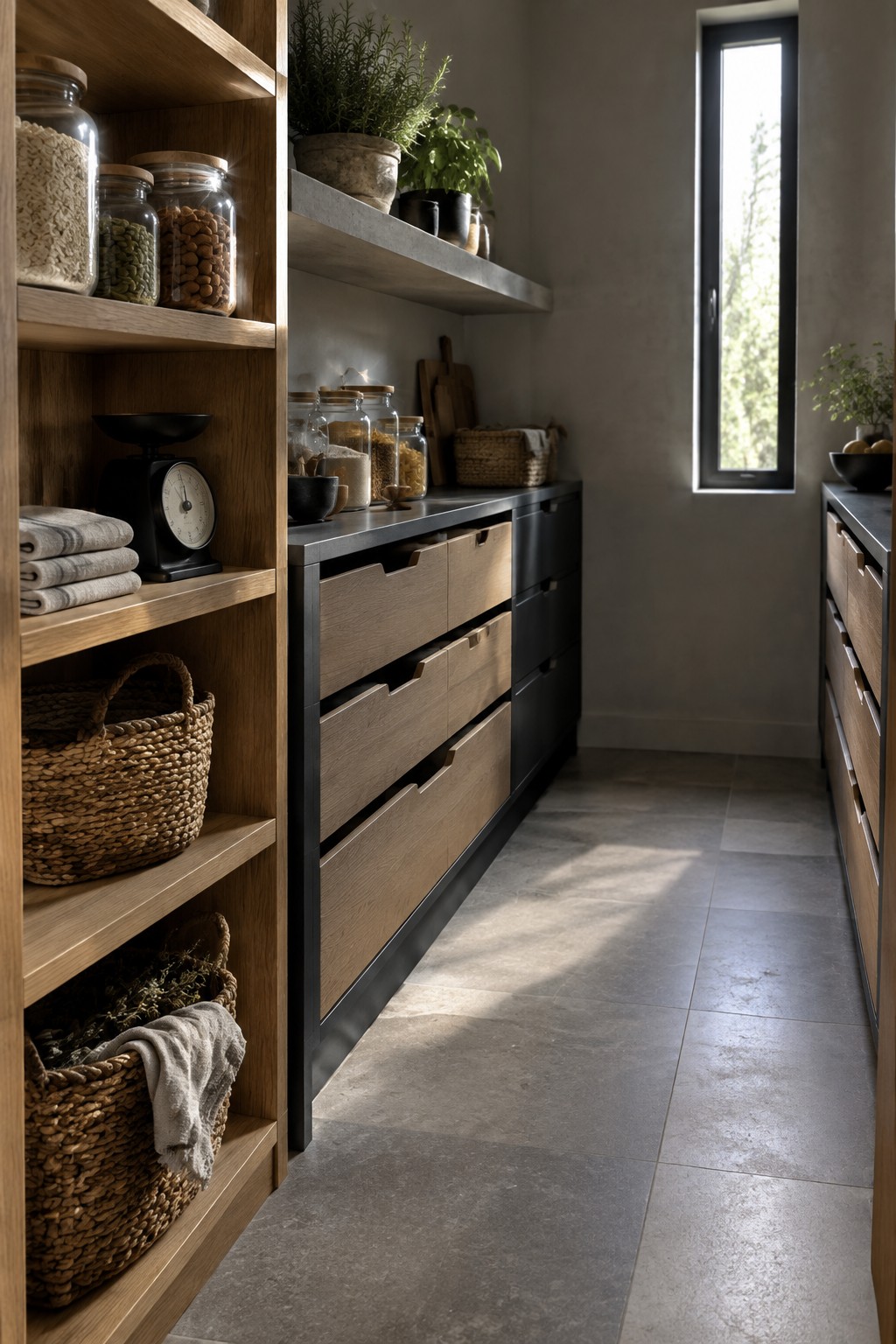
Open shelving keeps everyday storage easy to reach while letting a kitchen feel less closed in. Natural wood shelves and woven baskets suit Japandi interiors, where useful items can also serve as simple decor.
Use open shelves for things you reach for often, such as jars or folded linens, and keep the rest behind cabinet doors. A little editing helps the shelves stay practical rather than cluttered.
Use a Black-Framed Screen to Separate the Shower
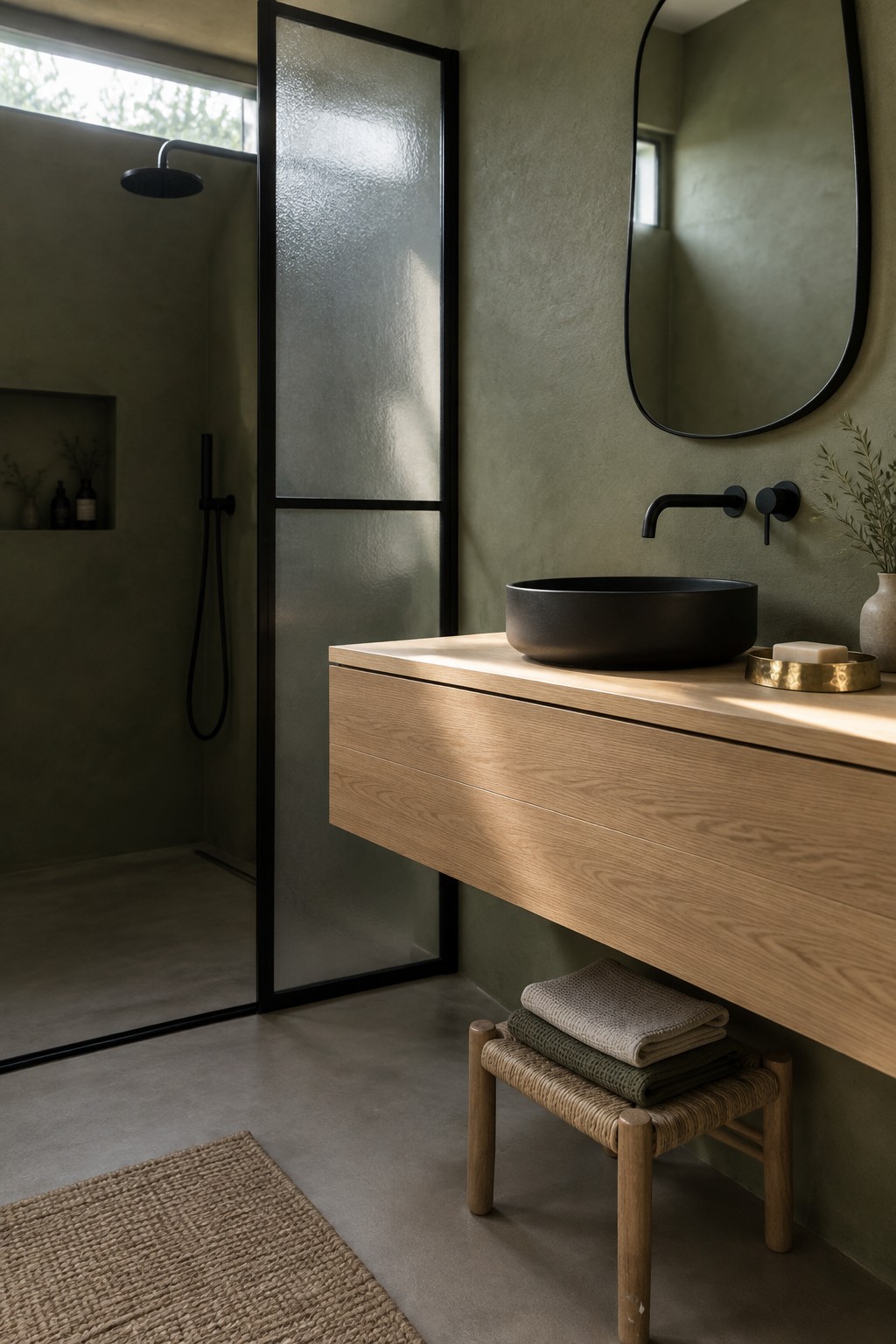
A framed glass screen gives a walk-in shower a clear boundary without closing off the room. The black frame adds a simple line of contrast, while the textured glass keeps the screen from feeling too stark.
This approach works well in bathrooms where you want an open layout but still need to contain splashes. Pair it with a few other black fixtures, and keep the surrounding finishes fairly quiet so the frame stays in proportion.
Use Built-In Storage to Keep an Entryway Tidy
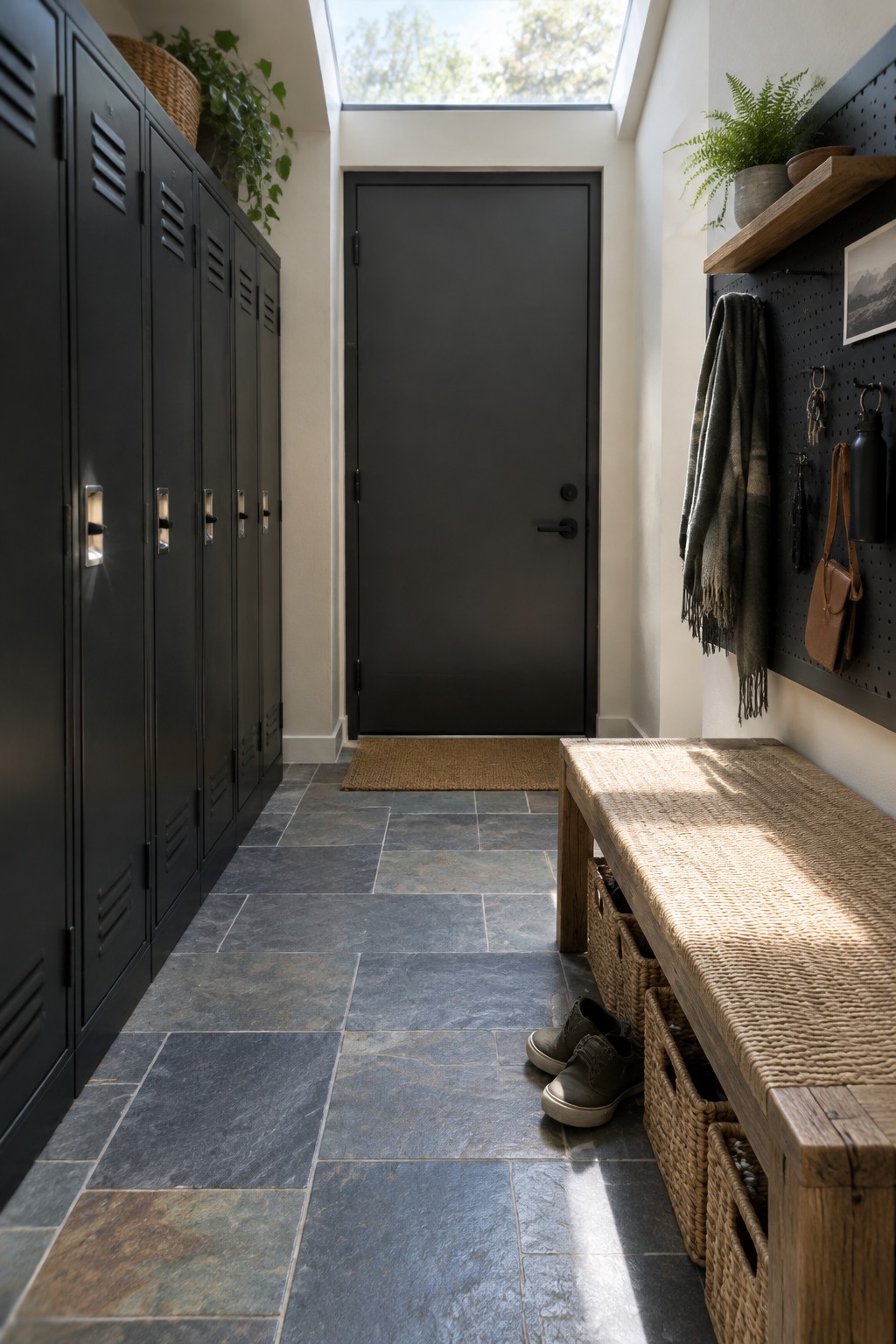
A row of tall lockers is a practical way to manage coats, bags, and shoes near the door. The dark finish gives the storage a clear outline, while woven baskets and a wood bench keep the entry from feeling too stark.
This setup works especially well in a narrow mudroom or busy family entry, where keeping everyday items off the floor matters. Add hooks or baskets for smaller belongings, and leave enough room to open doors and move through comfortably.
Use Natural Textures in a Japandi Dining Nook
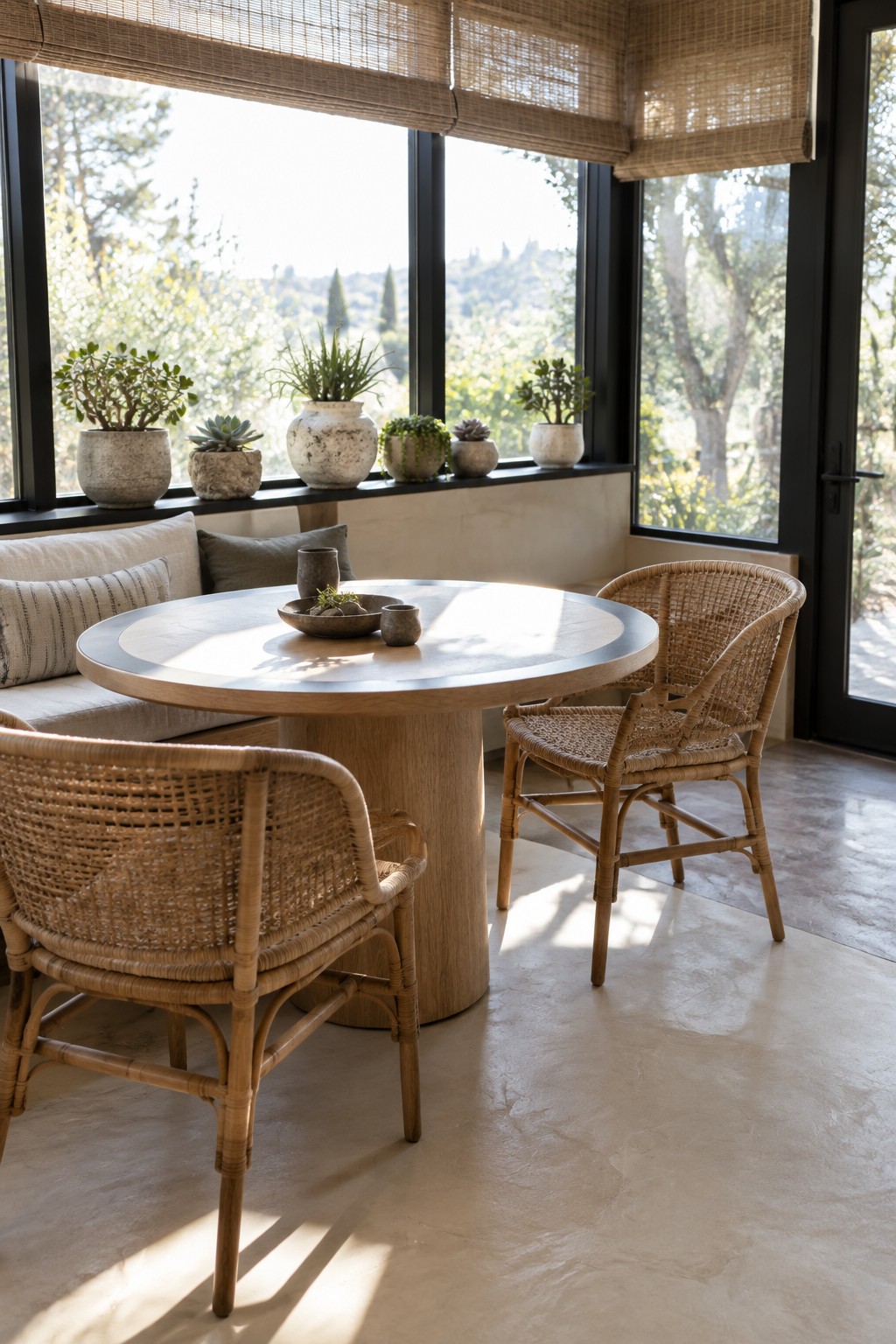
A built-in banquette can make a dining area feel settled without taking up as much room as a row of chairs. Here, the pale upholstery and woven chairs keep the setup relaxed, while dark window frames give the natural materials a little definition.
This idea works well in a breakfast nook or along a window wall, especially in a smaller home. Keep the table easy to move around, and choose durable upholstery if the bench will get everyday use.
Frequently Asked Questions
Q: How do I add black accents without making a Japandi room feel too dark?
A: Keep black to a few clear details, like a lamp, picture frame, or chair legs. Pale wood, soft textiles, and plenty of natural light will keep the room feeling open.
Q: What natural textures work well with black accents?
A: Try linen, woven baskets, matte pottery, and wood with a visible grain. These softer, varied surfaces balance black’s sharper edges and keep the room from feeling flat.
Q: Can I mix different wood tones?
A: Yes. Pick one main wood tone, then bring in a second that feels close in warmth rather than an exact match. Repeating each tone at least once helps the mix feel intentional.
Q: What if I’m renting and can’t change the floors or walls?
A: Work with what’s already there. A textured rug, light curtains, and a few black accessories can bring in the Japandi feel without any permanent changes.
