


Natural wood and textured plaster can make a room feel calm without making it feel bare.
I find the balance works best when the wood brings warmth and the plaster adds depth, while furniture and lighting still support the way people use the space every day.
The first thing I notice is often how the wall finish catches light beside a timber floor, cabinet, or table.
Too many rough surfaces can make a room feel heavy, so I’d use these examples to spot combinations that feel grounded and easy to live with.
Some details may be worth adapting, even if they need to be scaled to fit your home.
Let Natural Materials Do the Work

A simple mix of natural materials can make a Japandi living room feel settled without much decoration. Here, the woven sofa back and textured plaster wall bring enough detail to keep the room interesting while the overall look stays quiet.
Try this approach in a living room where you want fewer decorative pieces. Choose a few materials with different textures, such as wood, woven cane, and linen, and keep their colors close. Too many competing finishes can make the room feel busy.
Use Textured Walls To Keep A Japandi Bedroom Simple

Textured plaster gives a bedroom a little character without needing much wall decor. It works especially well with natural wood, where the surface variation keeps a quiet palette from feeling plain.
Use this approach behind the bed, and keep the rest of the finishes fairly restrained. A woven headboard is enough to add another layer of texture; too many competing patterns can make the room feel busy.
Use Wood For A Calm, Practical Kitchen

Wood cabinetry gives this kitchen a simple, settled look, while the plaster walls keep the finish from feeling too polished. The natural materials suit Japandi style, which tends to favor useful pieces and a little breathing room.
For a similar kitchen, keep the cabinet fronts plain and let the wood grain show. A pale stone counter and one open shelf are enough to break up the wood; too many exposed objects can make the room feel busy.
Choose a Round Table for an Easy Dining Layout

A round dining table makes it easier for people to face one another, and it can fit neatly into a smaller dining area. A simple wood base keeps the look practical without taking up the space that a set of table legs might.
In a Japandi-style room, choose a table with a modest profile and let the wood grain show. Leave enough room to pull chairs back comfortably, especially if the table sits near a wall or built-in shelving.
Make a Small Office Feel Calm and Useful
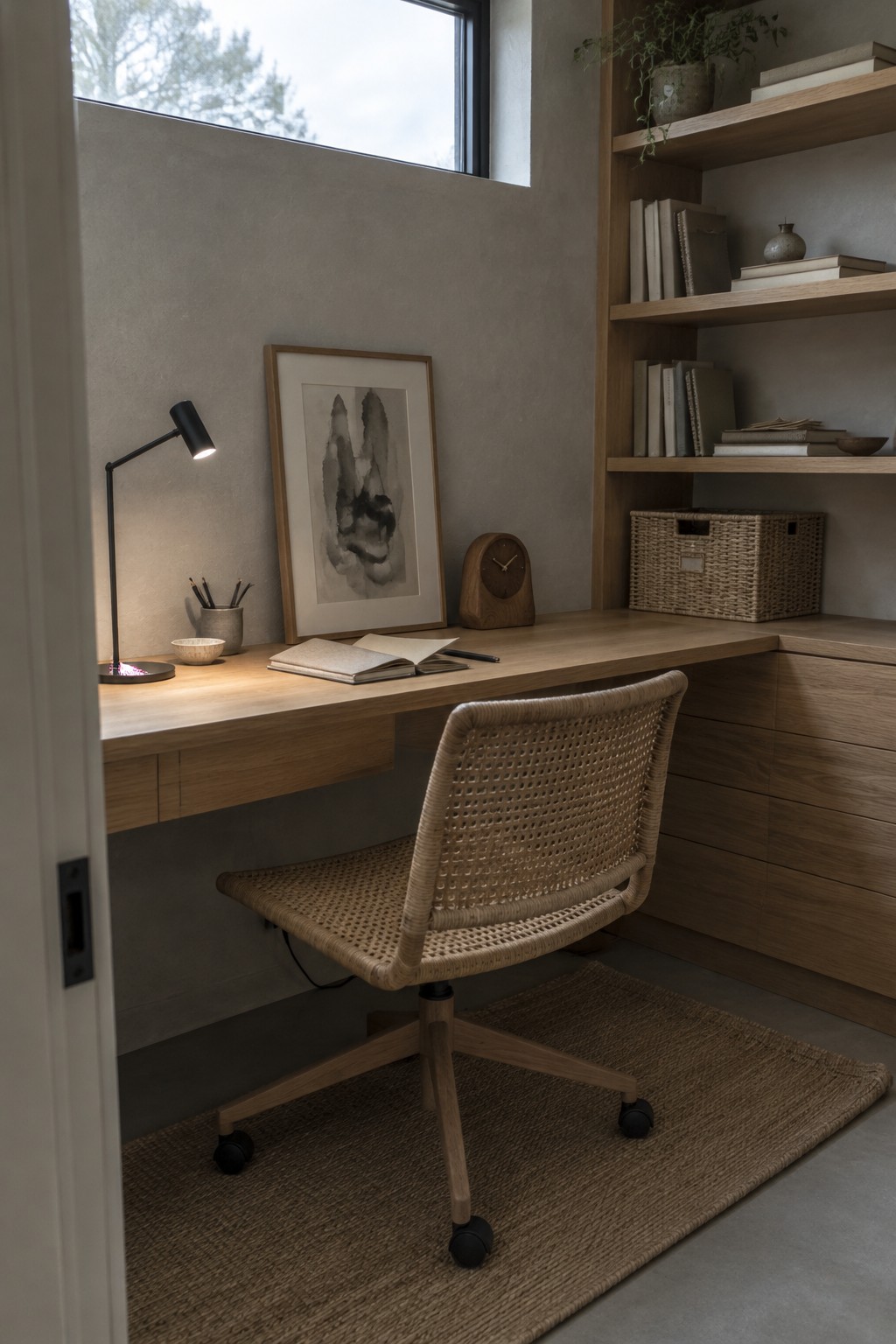
A simple built-in desk can make a small office feel settled without taking up extra floor space. Natural wood keeps the work area from feeling too stark, while textured plaster gives the walls interest without needing much decoration.
This kind of setup works well in a spare room or an unused corner. Use drawers or shelves for supplies, and leave enough clear desk space for everyday tasks. A woven chair adds texture, but choose one that stays comfortable for longer stretches.
Use a Wood Console To Make an Entry More Practical
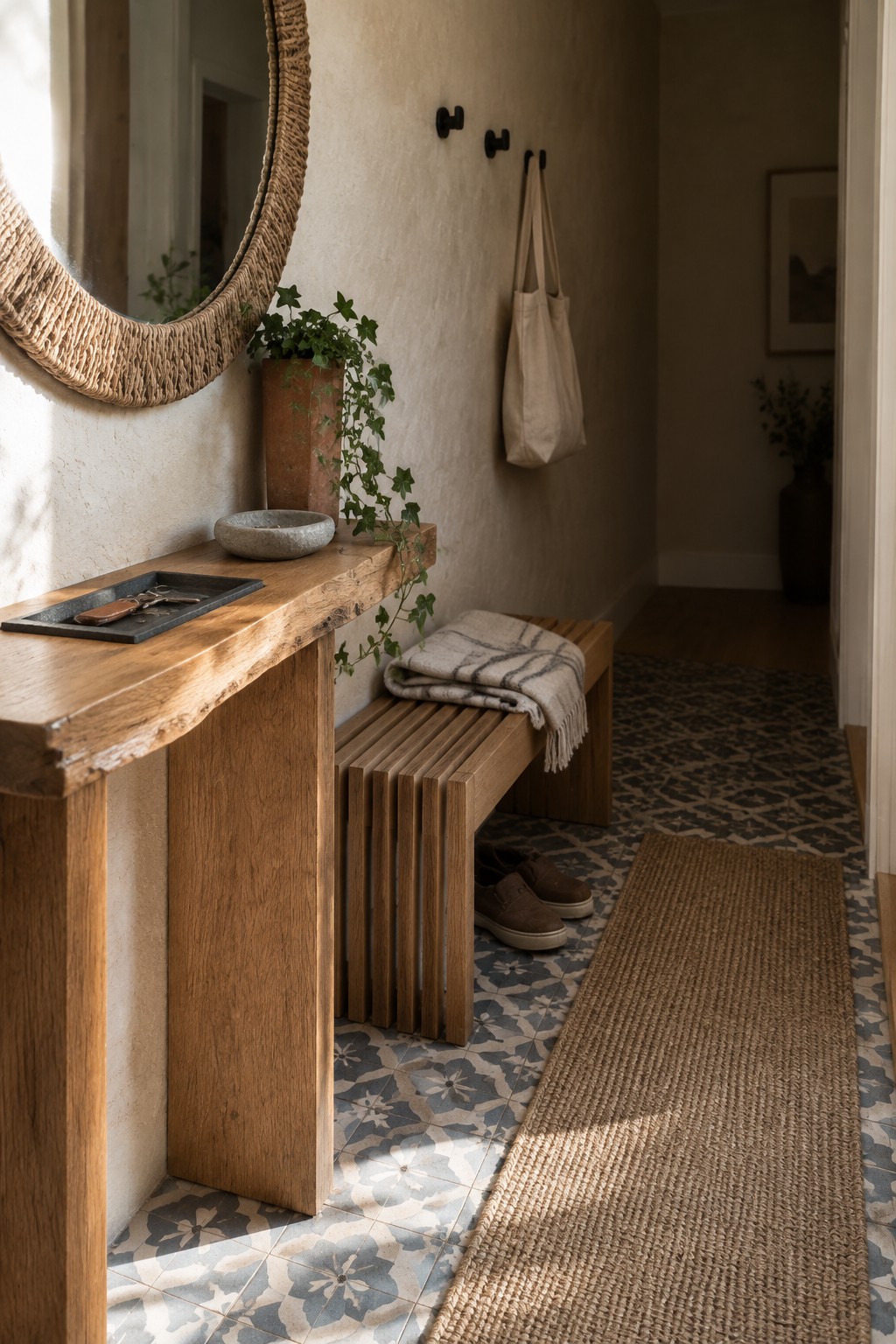
A simple wood console gives an entry a useful landing spot without making it feel crowded. Here, the thick wooden top stands out against the textured plaster wall, while the open space below keeps the furniture from feeling bulky.
This kind of console works well in a narrow hallway where a full cabinet would take up too much room. Leave enough surface for everyday items, and keep the styling light so the entry stays easy to use.
Use a Floating Vanity To Keep the Bathroom Open

A wall-mounted wood vanity gives a bathroom useful storage without making the floor feel crowded. The open space below keeps the room feeling less boxed in, while the wood brings a natural note to the plaster and stone finishes.
This approach works well in a small or narrow bathroom, especially when you can keep everyday supplies tucked away. A simple open shelf can hold towels, but avoid filling it with too many items or the vanity may start to look cluttered.
Make a Nursery Feel Calm With Simple Materials

Natural wood furniture and textured plaster walls give a nursery a quiet, simple look without needing much decoration. A wooden crib is a practical choice that also brings a gentle natural finish to the room.
This approach works well in a small nursery, where too many colors or accessories can feel busy. Keep the main furniture pieces simple, then use a soft rug or fabric shade for a little texture.
Use a Low Bench for a Quiet Sitting Area
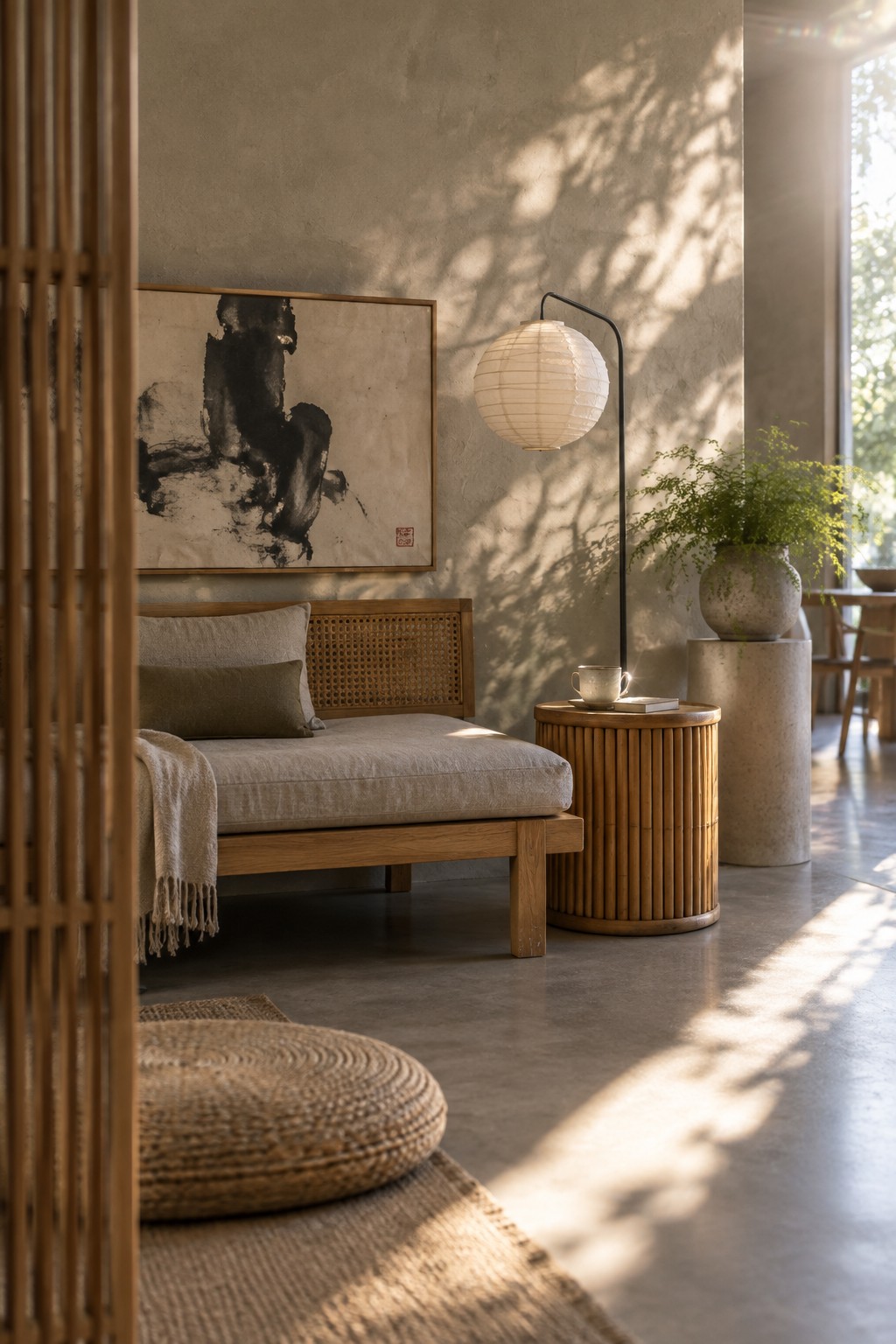
A low wooden bench is an easy way to make a small sitting area feel settled without adding much visual bulk. A simple woven back and plain cushions keep the piece comfortable while letting the wood and wall finish stay in view.
This kind of bench works well in a reading corner or beside a bedroom wall. Choose a seat deep enough to lounge on, and keep the cushions simple so the space stays easy to use.
Make Laundry Storage Part of the Room
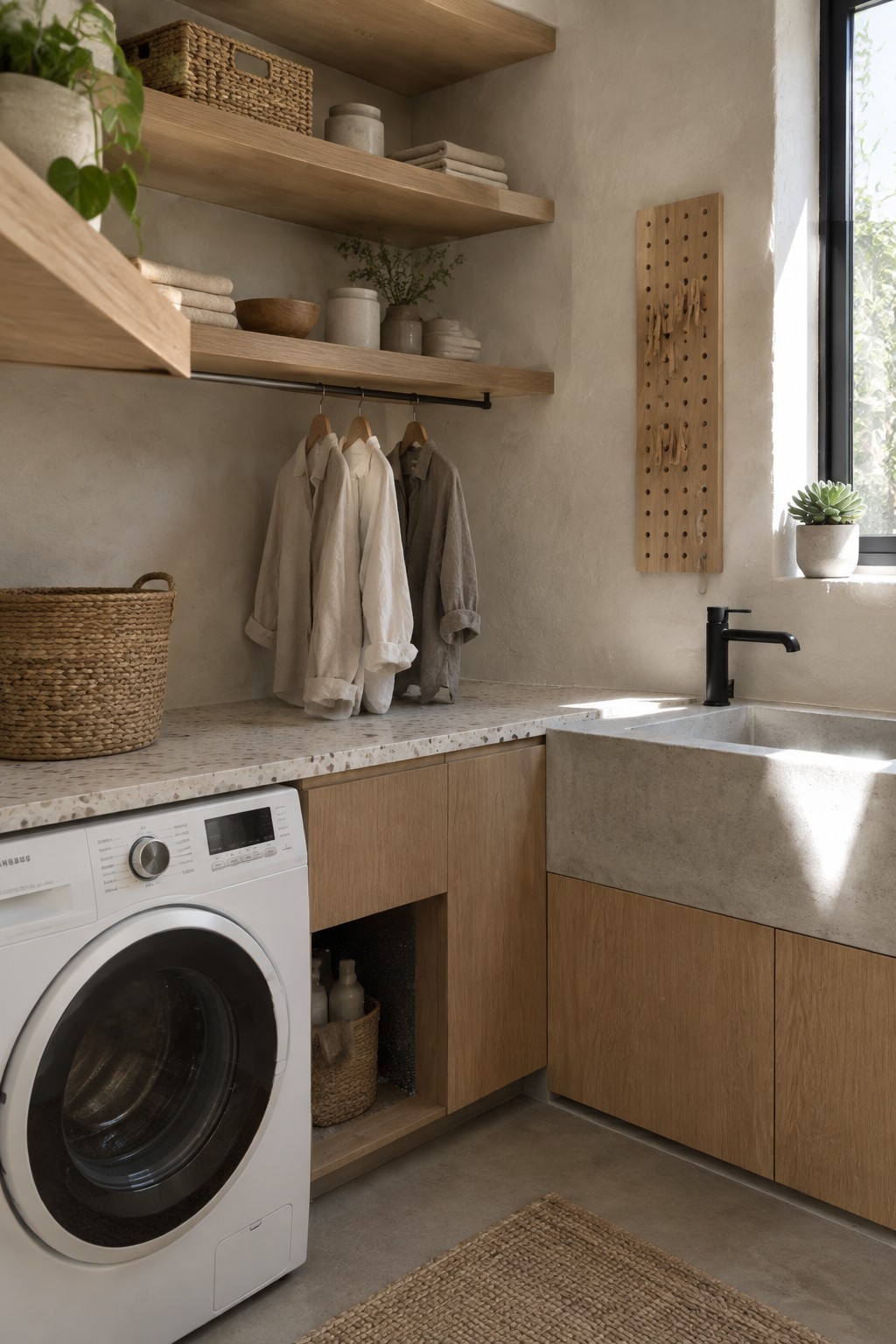
Open shelves and a hanging rail make laundry supplies and everyday clothes easy to reach without adding bulky cabinets. The wood keeps this practical area from feeling too utilitarian, while the textured plaster walls suit the simple, natural look.
This approach works well in a laundry room or a mudroom that also handles washing. Keep the items on display to a manageable amount, and use baskets to tuck away smaller supplies.
Use a Floor Cushion To Make a Quiet Corner

A low floor cushion gives a Japandi room a simple place to sit without bringing in another chair. Its rounded shape also works nicely against the straight lines of wood furniture and a woven rug.
Try one in a bedroom or reading corner where you want flexible seating. Choose a firm cushion in a natural fabric, and leave enough clear floor around it so the spot stays easy to use.
Use Wood To Make a Bathroom Feel Less Stark

A wood vanity can make a simple bathroom feel warmer without adding much decoration. Here, the floating cabinet keeps the look clean, while the textured plaster walls give the room a little variation.
This approach works well in a small bathroom where bulky furniture would get in the way. Choose a wood finish that can handle bathroom humidity, and keep the rest of the materials fairly simple.
Keep a Japandi Bedroom Simple With Natural Textures

A restrained mix of wood and woven fabrics gives a bedroom character without filling it with extra decor. Here, the cane headboard and textured bedding bring enough variation to work against the plaster walls while keeping the overall look quiet.
Try this approach in a small bedroom where too many patterns or accessories can feel busy. Choose a few tactile materials in similar natural shades, and let the bed remain the main feature.
Keep the Reading Chair Simple and Comfortable

A comfortable chair can be the main feature of a quiet reading corner. Here, the curved wood frame and plain upholstery keep the furniture practical without making the space feel fussy.
Choose a chair with a supportive seat and enough room for a cushion or throw. A small table nearby is useful, but leave clear space around the chair so it stays easy to settle into.
Use a Bench To Make a Narrow Hallway More Useful
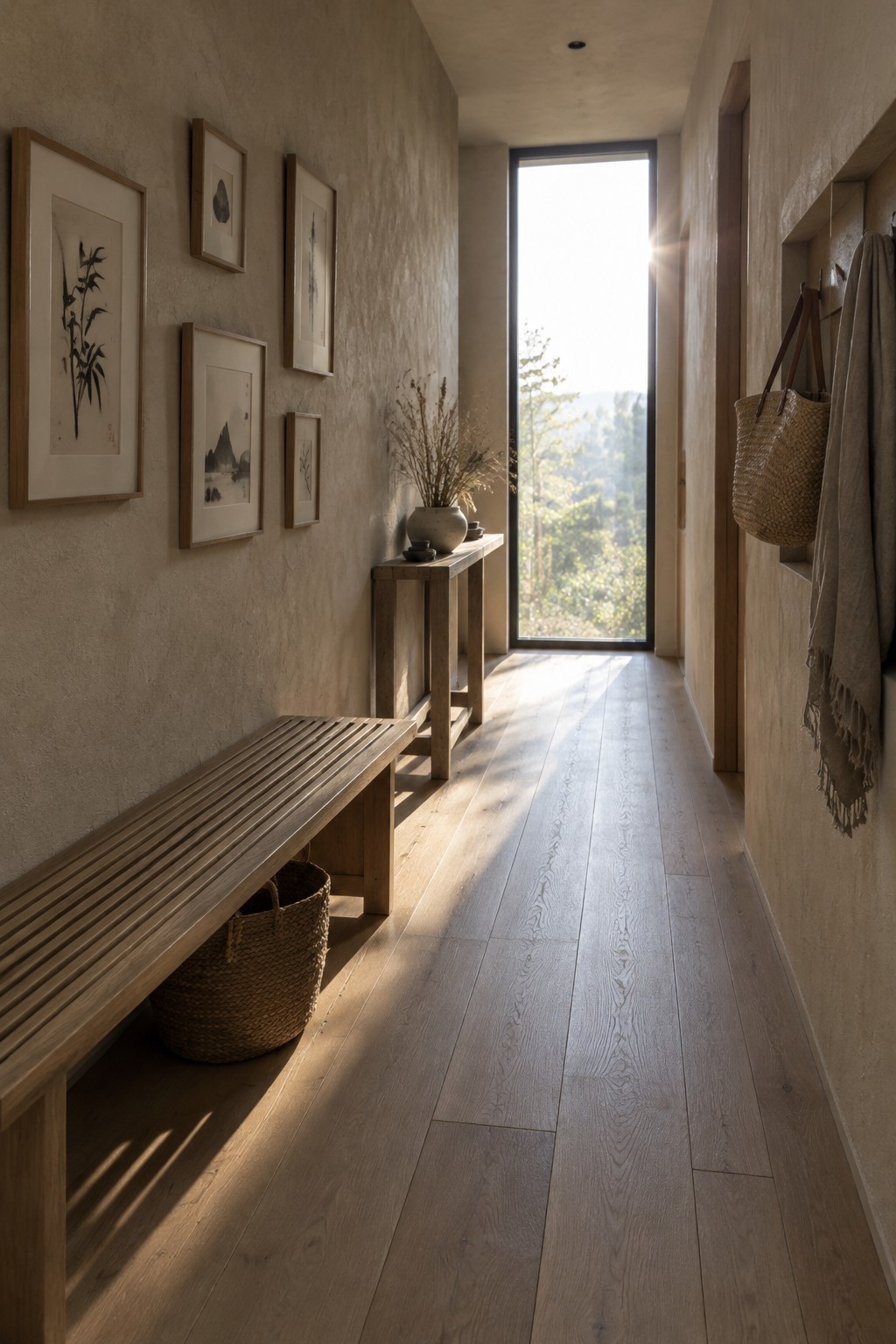
A long, narrow hallway can do more than connect rooms. A slim wooden bench gives it a practical place to sit while keeping the walkway clear, and its simple shape suits a calm Japandi interior.
Choose a bench that leaves plenty of room to pass, especially near doors. A slatted design keeps the piece visually light, while a basket underneath can hold shoes or small everyday items.
Use Wood Cabinets To Simplify Bathroom Storage
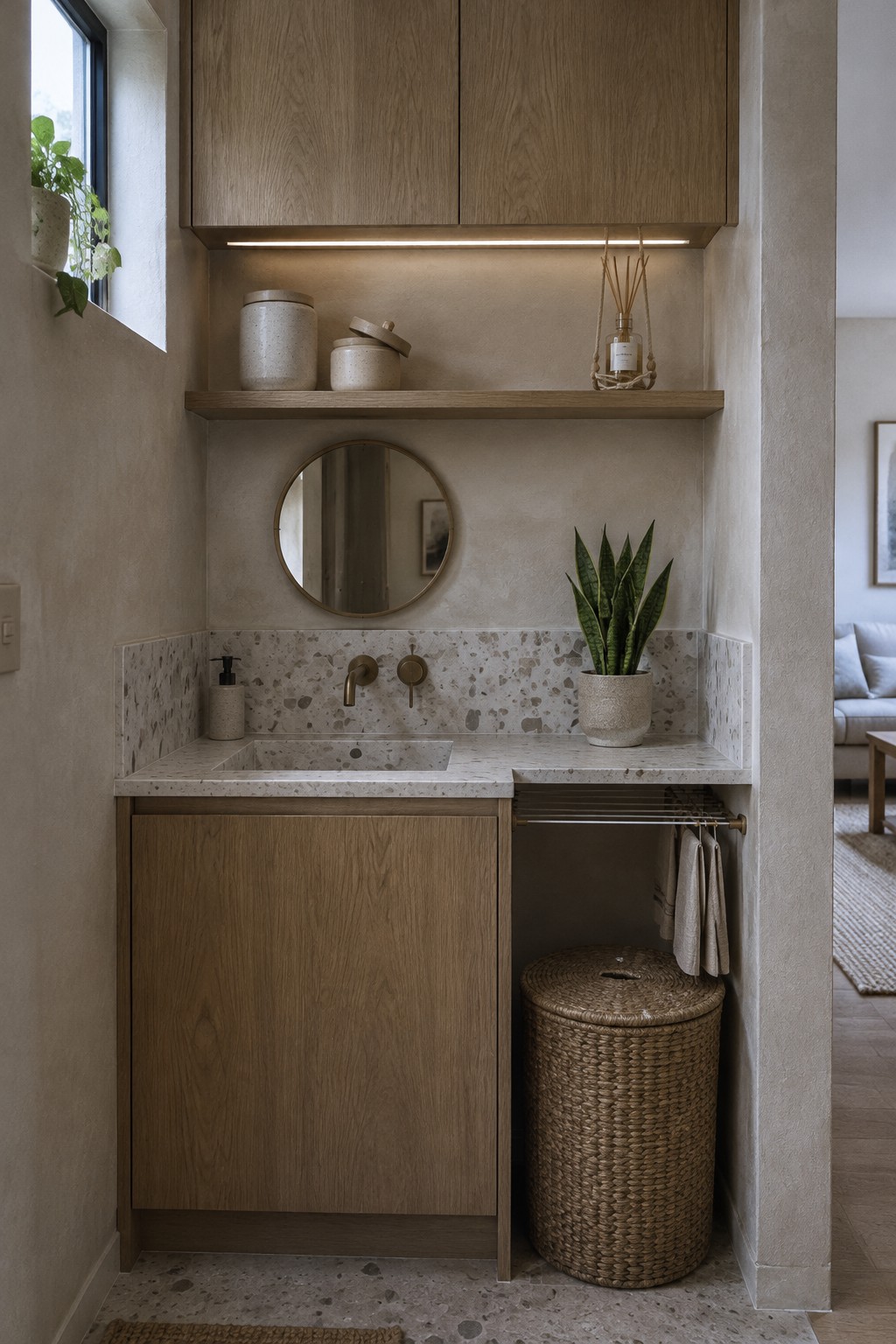
Wood cabinetry gives this bathroom a practical place to hide everyday supplies while keeping the design simple. The natural grain brings enough character to the room, so the shelves and counter can stay fairly clear.
This approach works well in a small bathroom or vanity nook where clutter builds up quickly. Choose plain cabinet fronts and keep the wood finish close to other natural materials in the room.
Keep Kitchen Storage Simple And Open
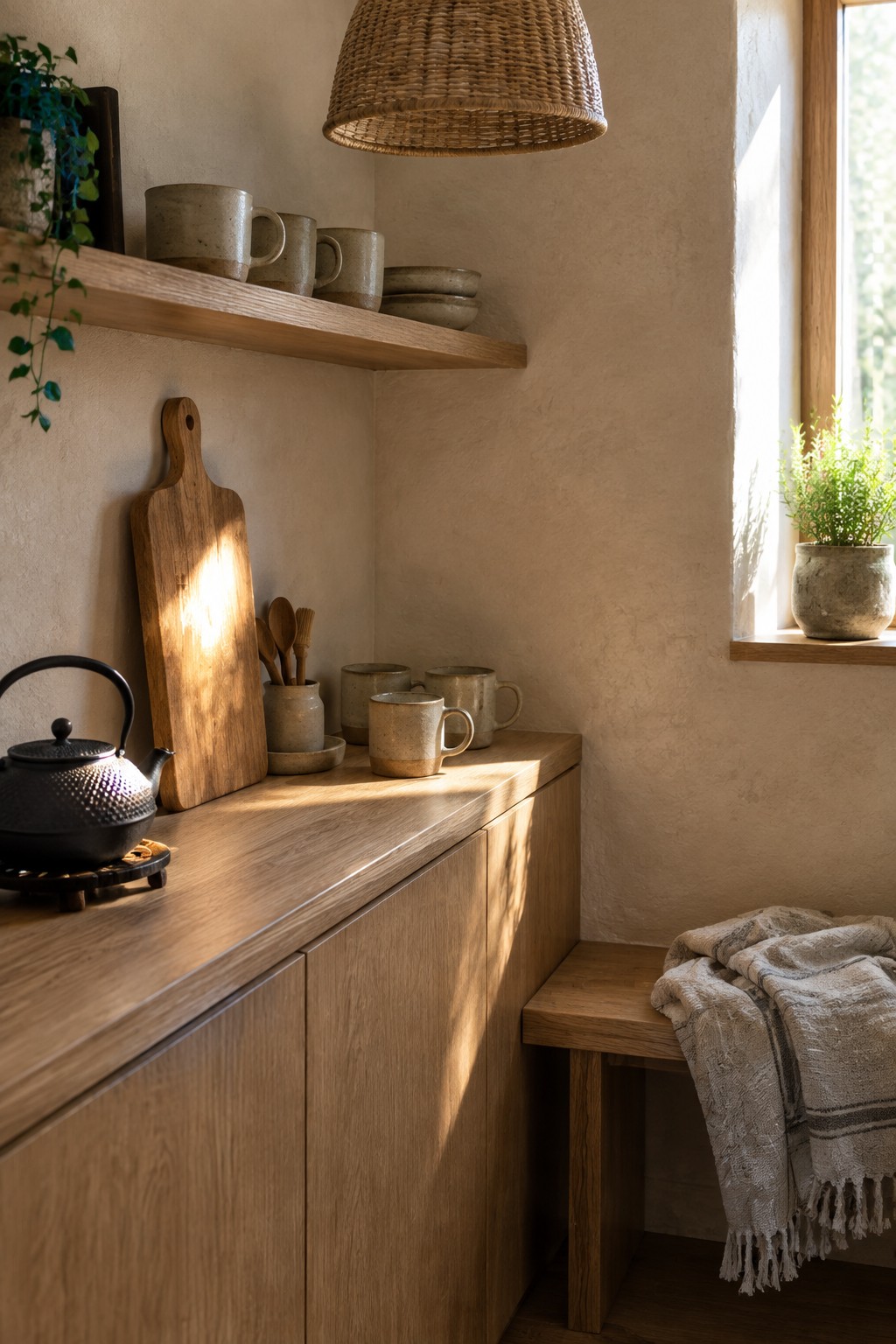
Open wood shelving keeps everyday dishes easy to reach and gives a small kitchen a less crowded feel. A few handmade ceramic pieces are enough to make the shelves useful without turning them into display space.
Use this approach where you have room to keep shelves tidy, and store less attractive essentials in closed cabinets below. A textured plaster wall gives the wood a natural backdrop without needing extra decoration.
Use a Full-Length Mirror in a Narrow Room

A tall mirror can make a narrow room more useful without taking up much floor space. It gives you a place to check your outfit, and its reflection can help the room feel less enclosed.
Lean one near a bedroom wardrobe or dressing area, where it is easy to use but does not block the walkway. A slim wood frame fits naturally with Japandi furniture and textured plaster walls.
Keep a Small Desk Area Simple

A small desk area can feel calm when the furniture and finishes stay simple. A plain wood table and textured plaster wall give the space character without needing much decoration.
This approach works well in a bedroom corner or a small room used for more than one purpose. Choose a desk that fits comfortably, then keep the work surface mostly clear so it remains useful day to day.
Use Natural Materials In A Japandi Bathroom
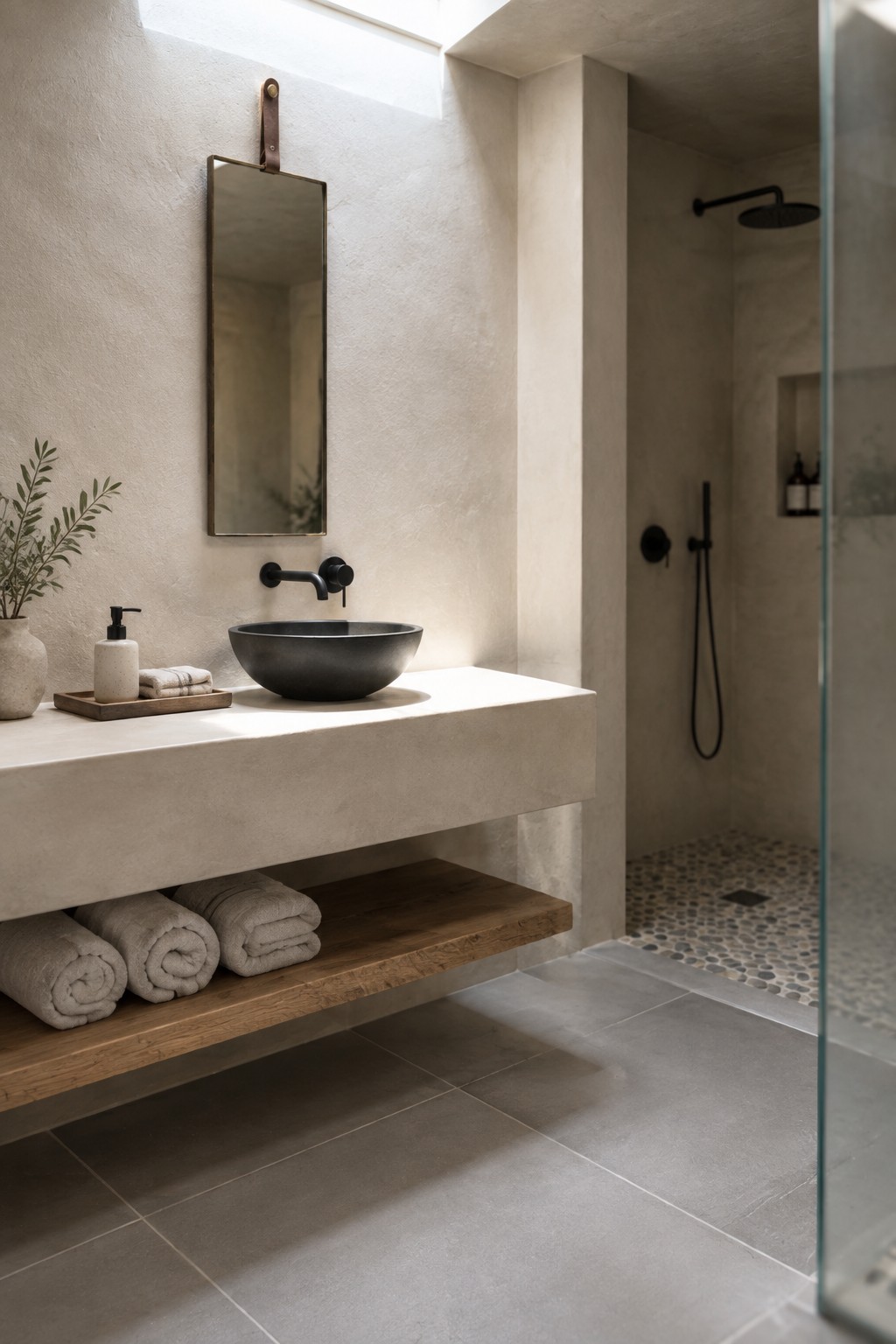
A simple mix of plaster and wood can make a bathroom feel calm without adding much decoration. The textured walls give the room character, while a thick wood shelf brings in a practical, natural touch.
This approach works well in bathrooms where you want a pared-back look that still feels welcoming. Keep the wood to a few useful details, such as open towel storage, so it doesn’t compete with the quiet finishes.
Use a Built-In Bench to Save Dining Space
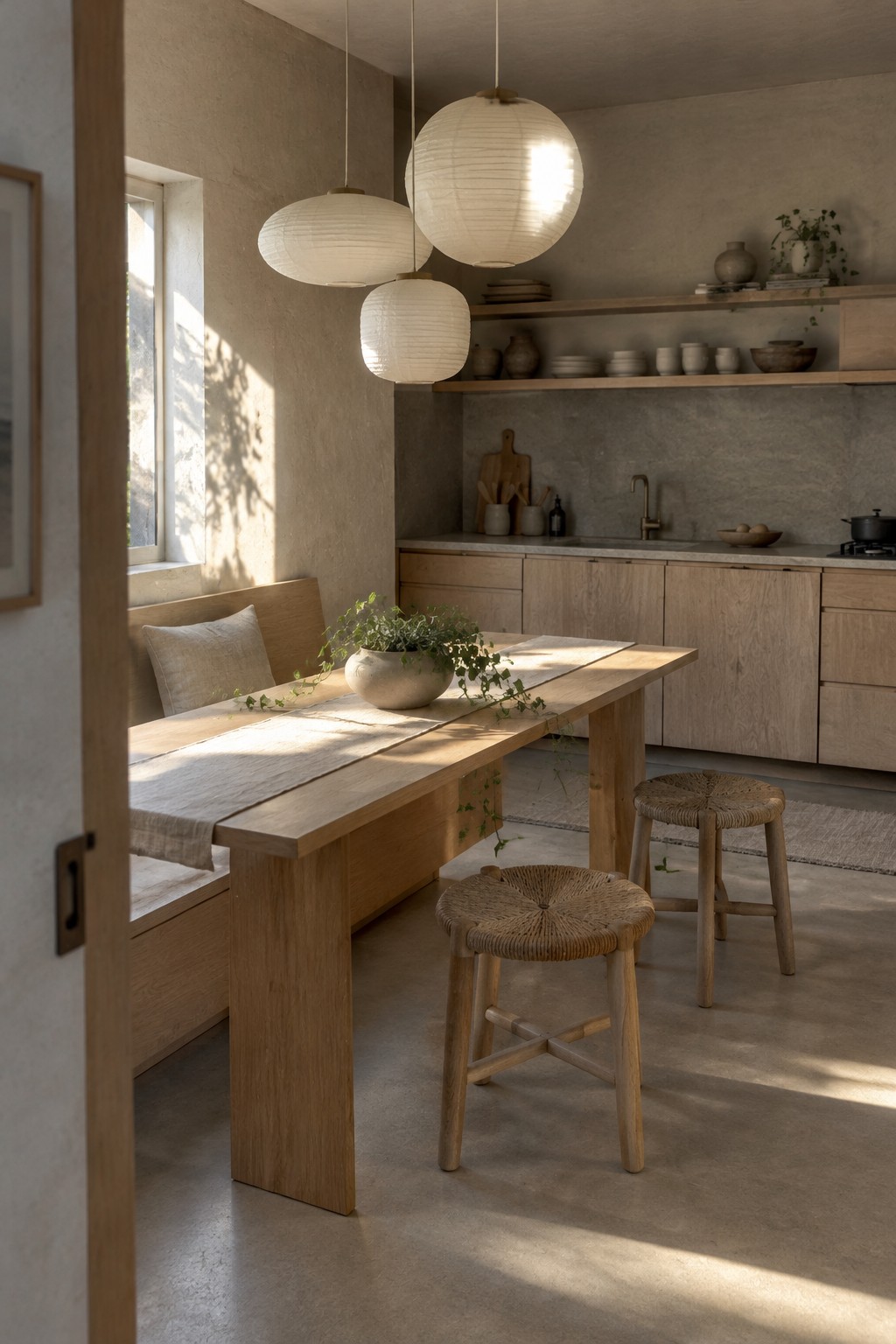
A bench along one side of a dining table is a practical choice when you want seating without filling the room with chairs. It also makes the dining area feel more settled, especially when the bench and table share a natural wood finish.
This layout works well in a kitchen or a smaller open dining area. Leave enough room to pull out the chairs on the other side, and choose a bench with a simple shape so it stays comfortable for everyday meals.
Frequently Asked Questions
Q: How do I keep natural wood and textured plaster from making a room feel too rustic?
A: Choose simple furniture with clean lines, then let the wood grain and plaster add the character. A few smooth surfaces, like a plain ceramic lamp or a linen sofa, keep the room feeling calm rather than cabin-like.
Q: What wood tones work best with warm plaster walls?
A: Light oak, ash, and other pale woods pair easily with creamy or sandy plaster. If your walls lean cooler or gray, try a more muted wood tone so the contrast stays gentle.
Q: Can I use textured plaster in a small room?
A: Yes. Keep the texture subtle and use it on one main wall or throughout the room in a soft, even finish. Too much contrast can make a small space feel busier than it is.
Q: How do I make a Japandi room feel cozy without adding lots of decor?
A: Bring in warmth through tactile materials: a wool rug, soft linen curtains, or a low-pile cushion. A warm lamp and a few well-chosen pieces usually do more than a crowded shelf.
