

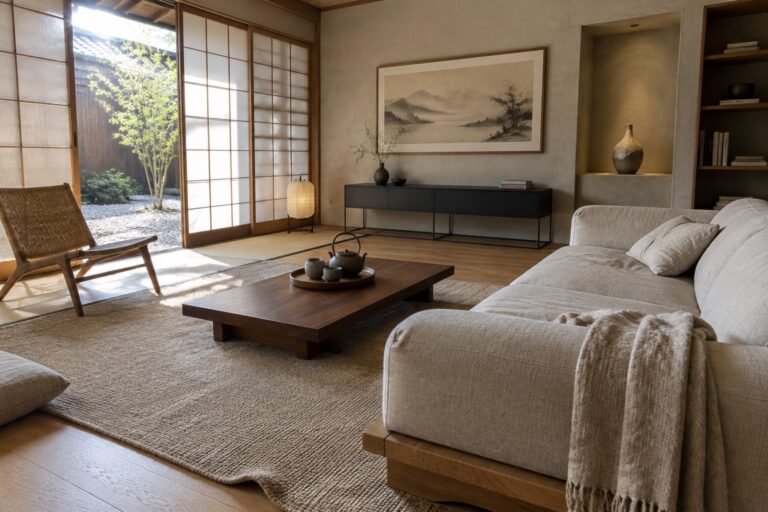
Low furniture can make a living room feel calmer and more open, but it needs to suit the way people actually sit, move, and gather in the space.
I find Japandi rooms work best when the clean lines are balanced with warm wood, soft textures, and enough contrast to keep the room from feeling bare.
The first things I notice are often the furniture’s scale and how much breathing room remains around it, especially in a smaller home.
A low sofa or coffee table can anchor the layout, though it may feel awkward if the seating is too far from everyday surfaces or the walkway gets tight.
These rooms offer details I’d consider adapting at home, from layered natural materials to simple arrangements that leave space for daily life.
Keep Japandi Furniture Low to the Ground

Low-profile furniture suits Japandi rooms because it leaves more open space around the seating area and keeps the room feeling settled. A low wooden coffee table is a practical choice, especially when the sofa is also close to the floor.
This approach works well in rooms with enough floor space to move around the furniture comfortably. Choose pieces with simple shapes and sturdy proportions, and check that the seats are still easy to get in and out of.
Keep Japandi Living Rooms Low to the Ground
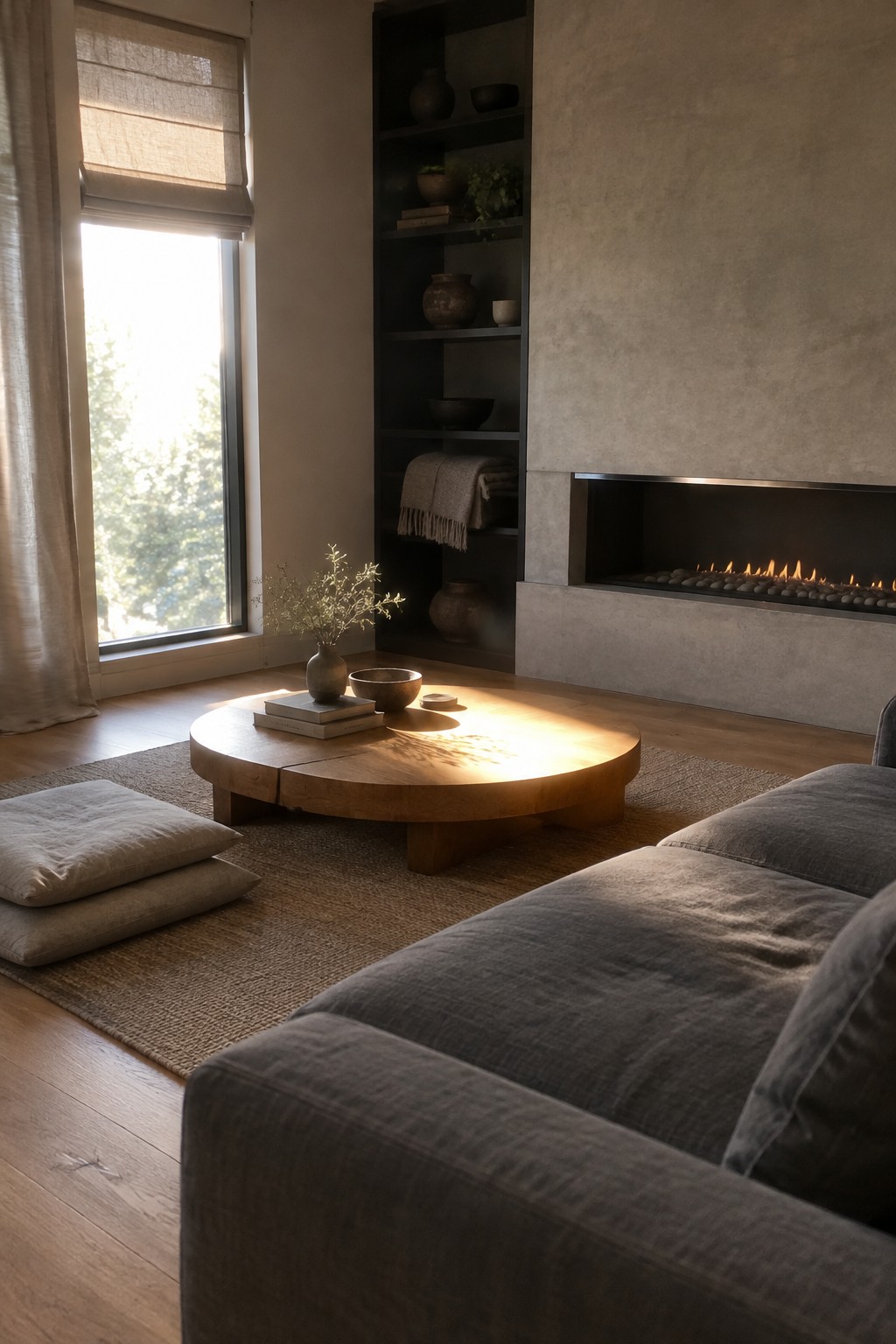
Low-profile furniture helps a Japandi living room feel open without leaving it bare. A low, rounded coffee table and seating close to the floor keep the main area relaxed and easy to move through.
This approach suits rooms where you want a calm layout and a clear view across the space. Choose pieces with simple shapes, and leave enough room around the table so the seating stays comfortable to use.
Keep the Furniture Low

Low-profile furniture helps a living room feel open without leaving it bare. A simple, low sofa or daybed keeps the main seating close to the floor, which suits Japandi rooms and makes the space feel calm and easy to use.
This approach works especially well in rooms with large windows or a smaller footprint. Choose a few sturdy pieces with clean lines, and leave enough room to move around them. A low coffee table can finish the seating area without blocking the view across the room.
Keep Japandi Furniture Low to the Ground

Low-profile furniture is a simple way to give a Japandi living room a quieter, more open feel. A low sofa and coffee table leave more of the room visible, while natural materials keep the look from feeling stark.
This approach works especially well in rooms where you want a relaxed seating area without bulky furniture. Choose pieces with clean lines and enough floor clearance to make cleaning practical, and keep the seating comfortable for everyday use.
Use a Low Coffee Table to Keep the Room Open
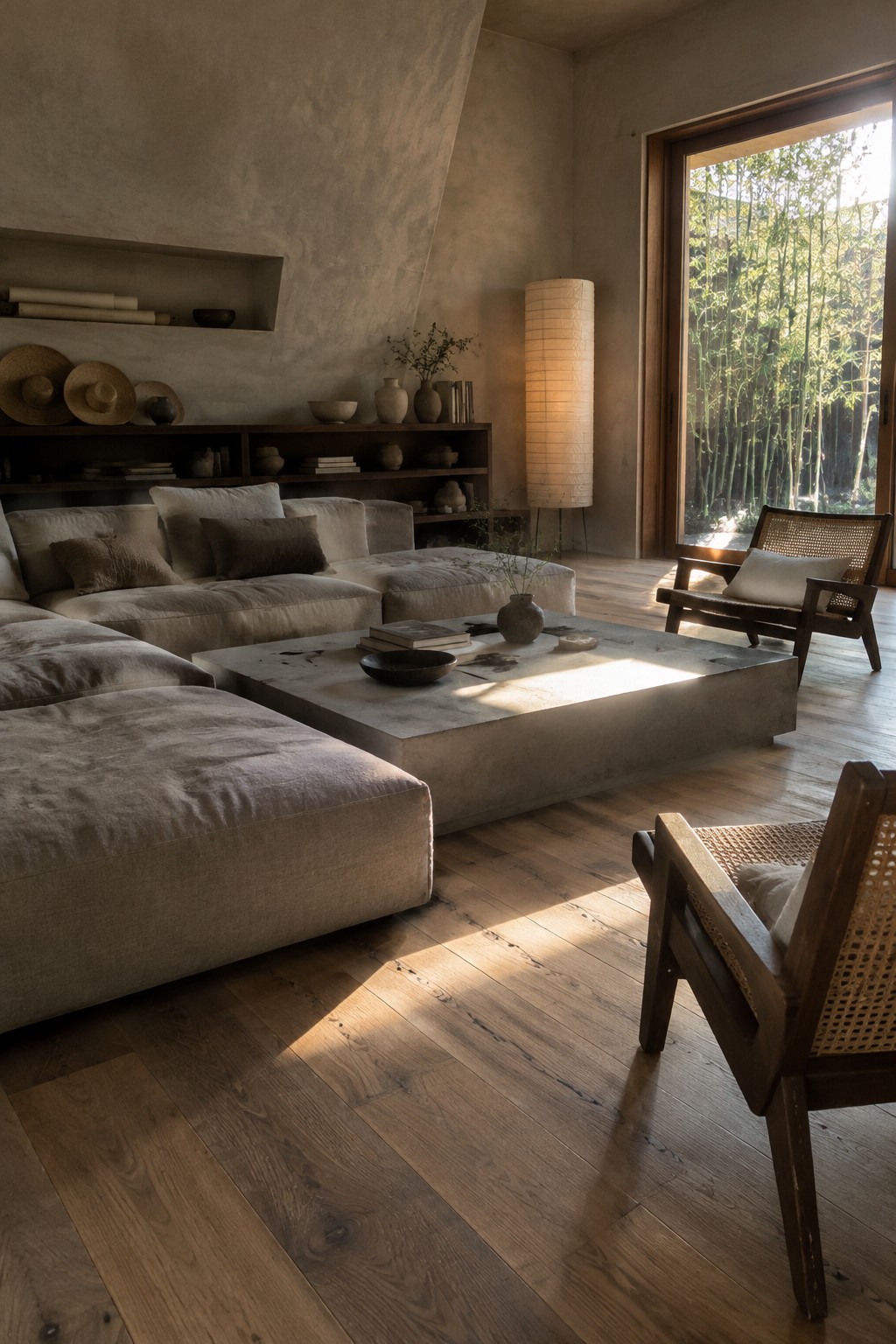
A low coffee table suits a Japandi living room because it keeps the main furniture close to the floor and leaves the space feeling easy to move through. A simple, solid table can also give the seating area a practical center without adding much visual fuss.
This approach works especially well with a low sofa, where a table around seat height or slightly lower is easy to reach. Leave enough room to walk around it, and choose a durable finish if the table will get daily use.
Use a Low Sofa to Keep the Room Open
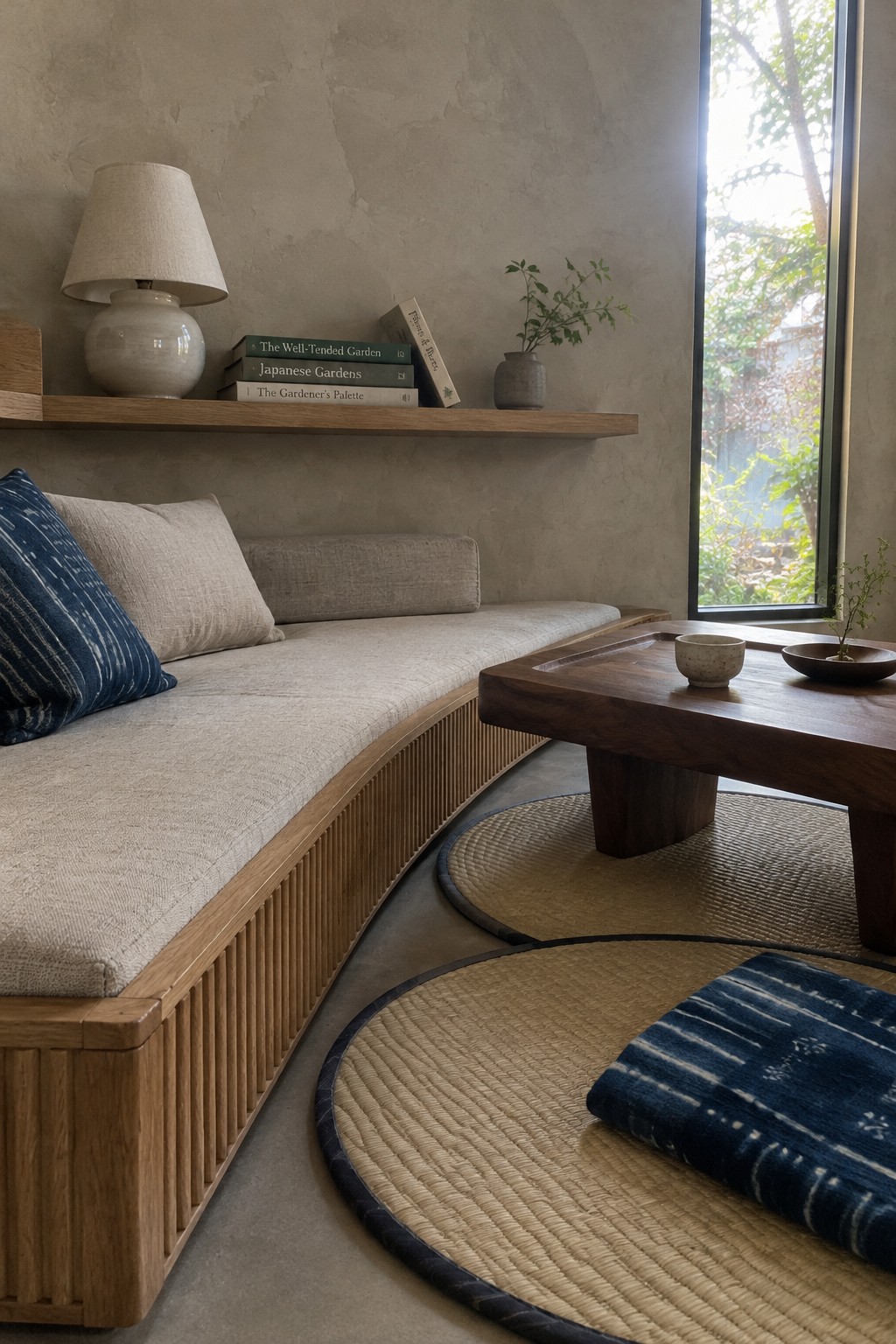
A low sofa is a simple way to give a Japandi living room a relaxed feel without filling the space with bulky furniture. The light-colored seat and open wooden base keep the sofa visually modest while still offering a generous place to sit.
This approach works especially well in a smaller room or one with a low coffee table. Choose a sofa with a slim profile and sturdy, natural materials, and leave enough space around it for easy movement.
Use a Low Coffee Table to Keep the Room Open

A low coffee table suits a Japandi living room because it keeps the main seating area feeling relaxed and easy to see across. A round stone table, like the one shown here, also makes a practical surface without adding a bulky shape.
This style works well with low sofas and floor cushions, especially in rooms where people gather close to the table. Leave enough space around it to walk comfortably, and choose a sturdy surface that can handle everyday use.
Choose a Low-Profile Sofa for a Calmer Living Room

A low sofa keeps the room feeling open and makes the seating area feel relaxed without needing much decoration. Here, a simple frame close to the floor lets the natural materials take the lead.
This approach works especially well in a Japandi living room with a low ceiling or a view you want to keep clear. Choose a sofa with a slim base, then leave enough space around it for easy movement.
Use Natural Materials for a Relaxed Japandi Living Room

Natural materials can make a low-profile living room feel warm without adding much visual clutter. Here, the solid wood coffee table and woven chair seats bring in texture while keeping the furniture simple.
Try this approach in a room with a neutral rug or plain walls, and let a few well-chosen materials do the work. Too many different wood tones or textures can make the space feel busy, so repeat finishes where you can.
Use Sliding Screens to Separate a Quiet Corner
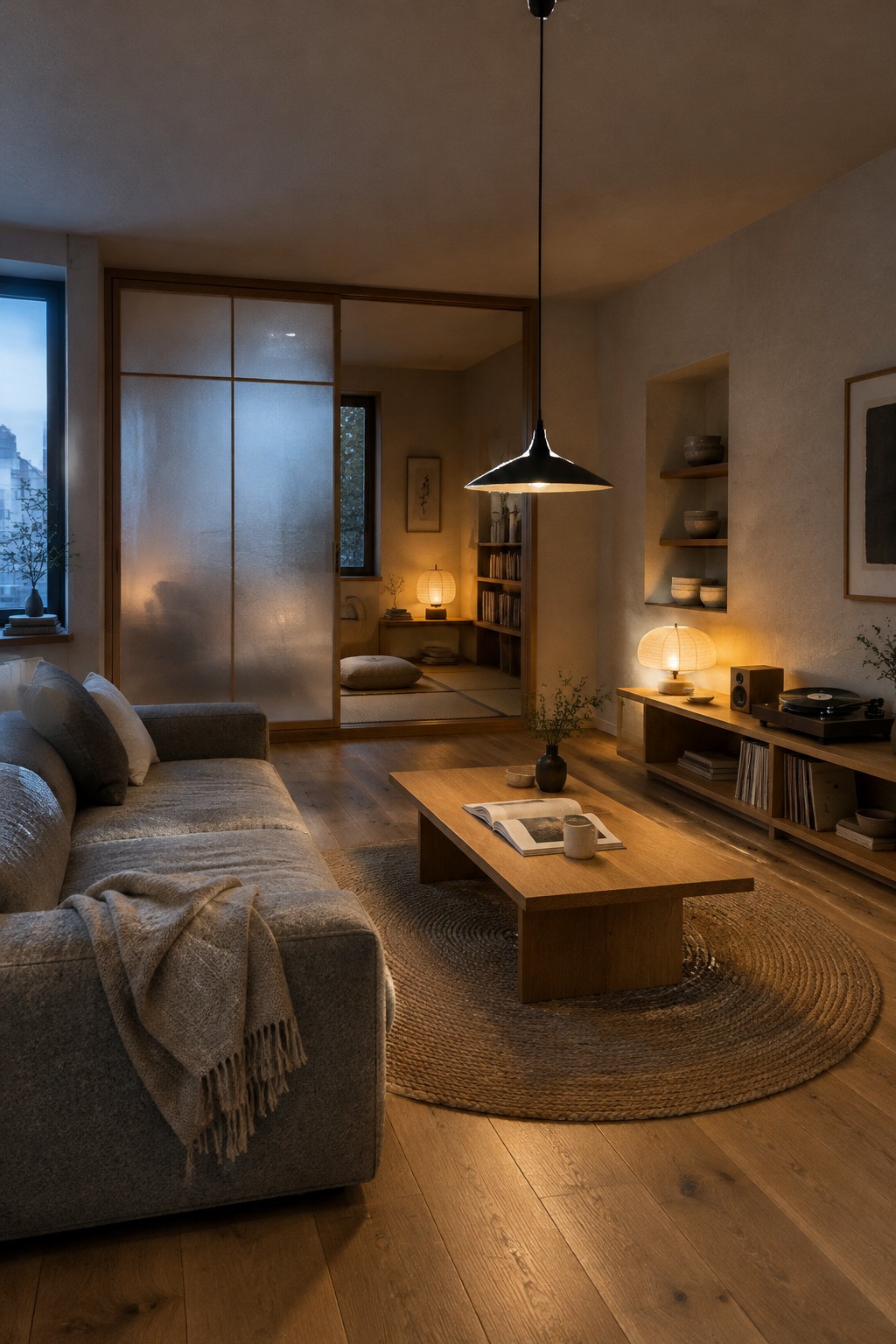
A sliding screen can give a living room a little separation without closing it off completely. Here, the translucent panels divide the sitting area from a small room beyond while still letting light pass through.
This works well when you want a reading nook or guest space that can open back up when needed. Choose simple, low-profile furniture nearby so the screen remains the main dividing feature rather than making the room feel crowded.
Use Built-Ins to Keep the Living Room Simple
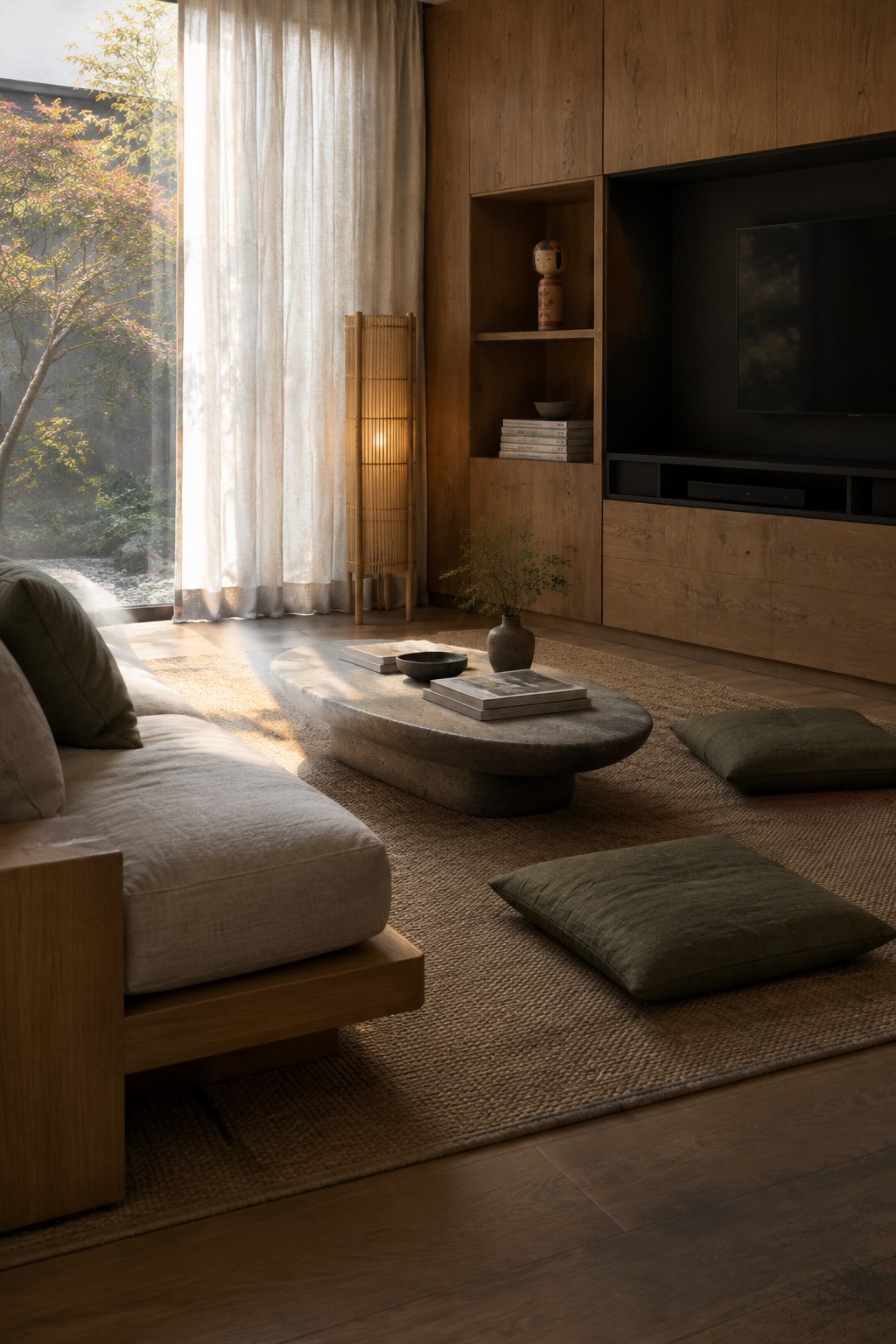
Built-in shelving and media storage can make a Japandi living room feel less cluttered. Here, the wood cabinetry gives everyday items a place to go, while a few open shelves leave room for simple display pieces.
This approach works well when you want storage without adding several separate cabinets. Keep the shelves lightly filled, and choose a wood tone that suits the rest of the room.
Choose Natural Materials for a Calm Living Room

Japandi rooms often feel settled when natural materials do most of the work. Here, a simple wood sofa frame and woven stools bring texture to the low furniture without making the room feel busy.
Try this approach in a living room where you want a quieter, more relaxed feel. Stick to a few materials and repeat them in different places, such as wood for a table and a bench, so the mix feels considered rather than cluttered.
Use Low Furniture to Keep the Living Room Open

Low-profile seating and a low coffee table leave more of the room in view, which helps a living area feel less crowded. The furniture still feels substantial, but it sits closer to the floor and keeps the overall look calm.
This approach works especially well in rooms with built-in shelves or large windows, where taller pieces could compete for attention. Choose a sofa with a low back and leave enough space around the table for easy movement.
Use a Low Coffee Table to Keep the Room Open
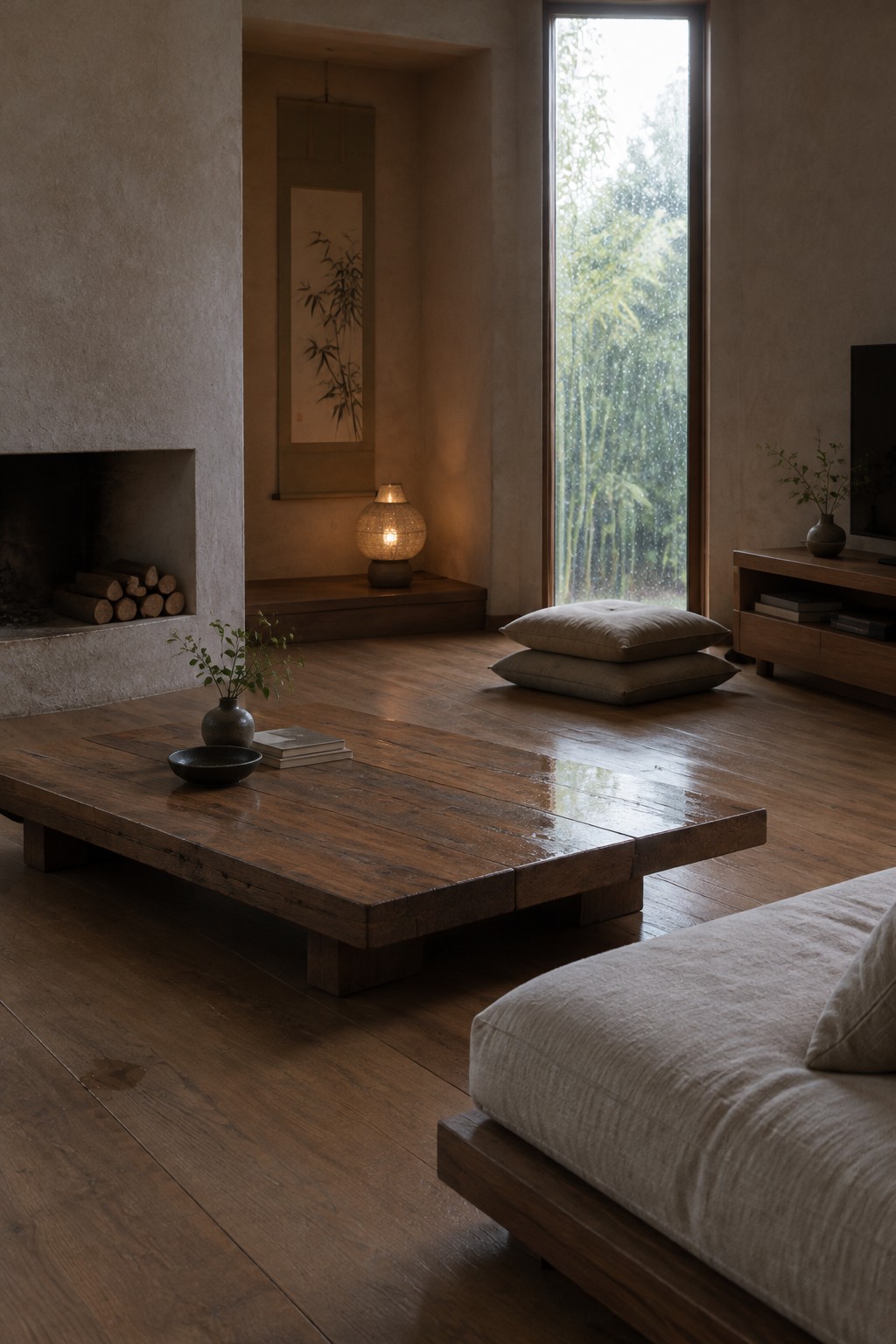
A low coffee table suits a Japandi living room because it leaves more of the room in view and keeps the seating area relaxed. A simple, solid wood design also brings in natural texture without making the furniture feel fussy.
Look for a table with a broad surface and a low, sturdy base, then leave enough space around it to move comfortably. This approach works especially well with low sofas and floor cushions, but avoid choosing a table so large that it crowds the seating.
Use a Low Sofa to Keep the Room Open

A low sofa can make a living room feel more spacious without giving up comfort. Its simple, close-to-the-floor shape leaves more of the wall visible and suits the relaxed look of Japandi interiors.
This works especially well in rooms with a modest footprint or a view you want to keep unobstructed. Choose a sofa with a sturdy base and enough seat depth for everyday use, then keep the nearby furniture low too.
Use Built-In Shelves for Simple Storage
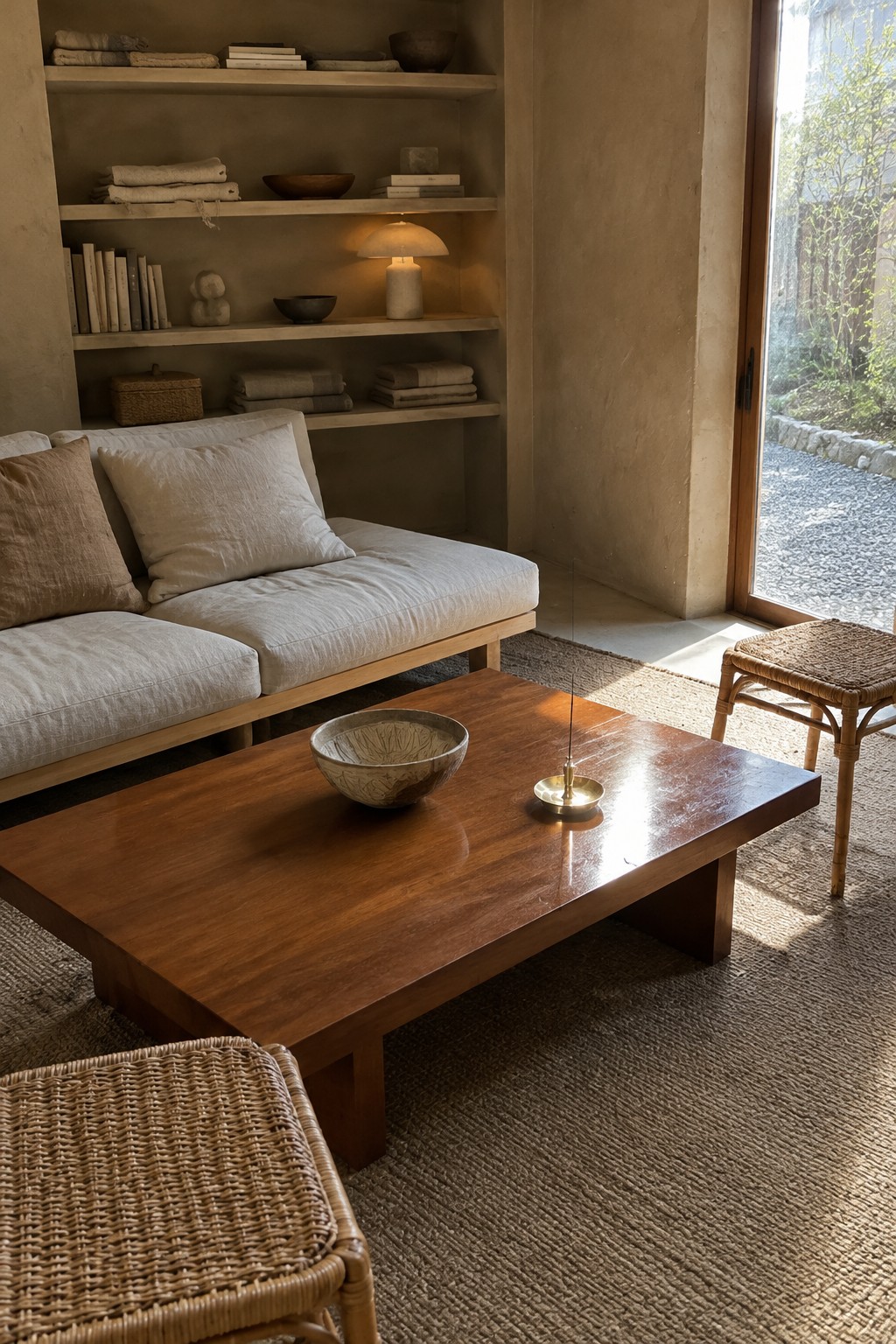
Built-in shelves can keep everyday storage close at hand without adding bulky cabinets to a living room. In this Japandi-style space, open shelves hold neatly folded linens and a few useful objects, while the low furniture keeps the room feeling open.
This approach works well where a wall can take the storage, especially in a smaller room. Keep the shelves simple and leave some space between items so they stay easy to use and don’t look crowded.
Keep the Furniture Low and Simple
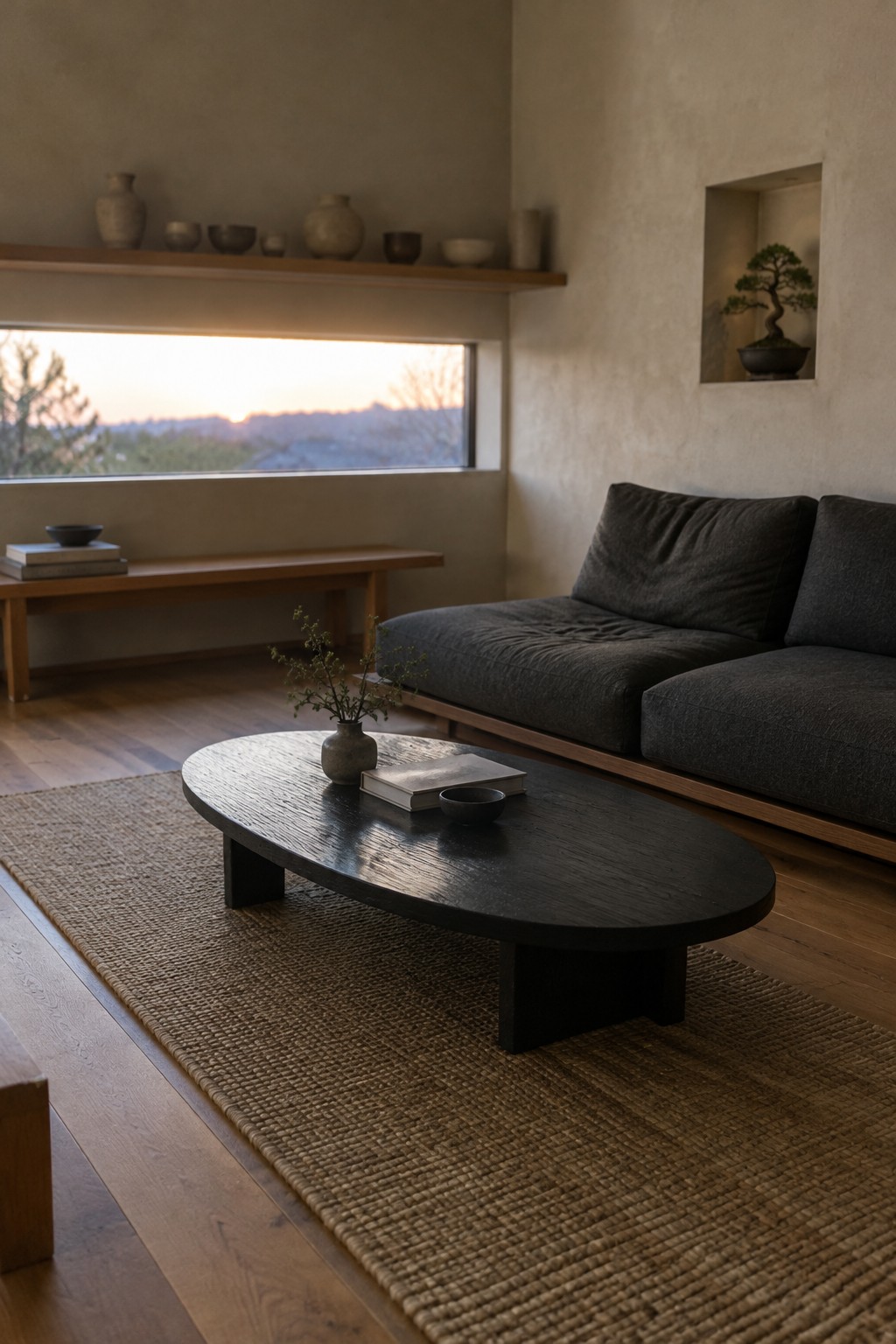
Low seating and a broad coffee table help a living room feel open without leaving it bare. The sofa sits close to the floor, while the table stays below the seat cushions, giving the furniture a relaxed, settled look.
This arrangement suits rooms where you want a clear view across the space and an easy place to gather. Choose pieces with simple shapes, and leave enough room around the table to walk comfortably.
Arrange Low Seating Around an Open Center
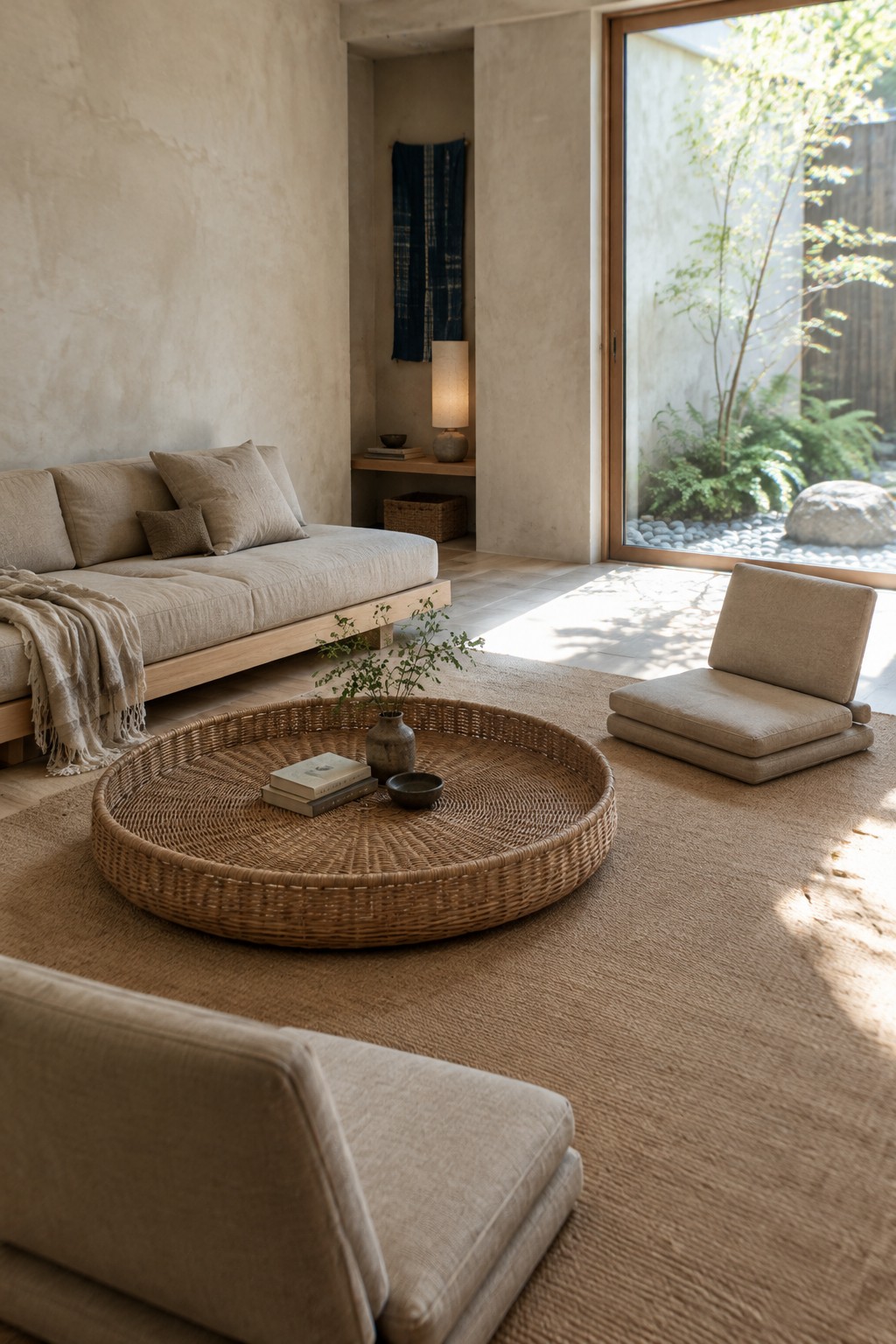
Low sofas and floor cushions keep the main seating close to the ground, leaving more open space above and between the furniture. This makes the living room feel less crowded, even with several places to sit.
Try this layout in a room where you want relaxed conversation without bulky chairs. A round, low coffee table can sit within easy reach, but leave enough room around it for people to move comfortably.
Frequently Asked Questions
Q: How do I make a low-profile sofa feel comfortable for everyday lounging?
A: Look for supportive cushions and a seat that feels deep enough for how you like to sit. Add a few soft pillows, but keep them simple so the room still feels calm.
Q: Can Japandi style work in a small living room?
A: Yes. Low furniture can help a small room feel more open, especially when you leave some floor space visible. Choose a compact sofa and avoid filling every corner with decor.
Q: Do I need to use only neutral colors?
A: Not at all. Warm wood, muted green, or a deep earthy accent can bring in color without overwhelming the room. Try it in a throw or a single cushion first.
Q: What kind of rug works well with low-profile furniture?
A: A flat-woven or low-pile rug keeps the furniture grounded without adding too much bulk. Choose a texture that feels good underfoot and a size that lets at least the front legs of the sofa sit on it.
