

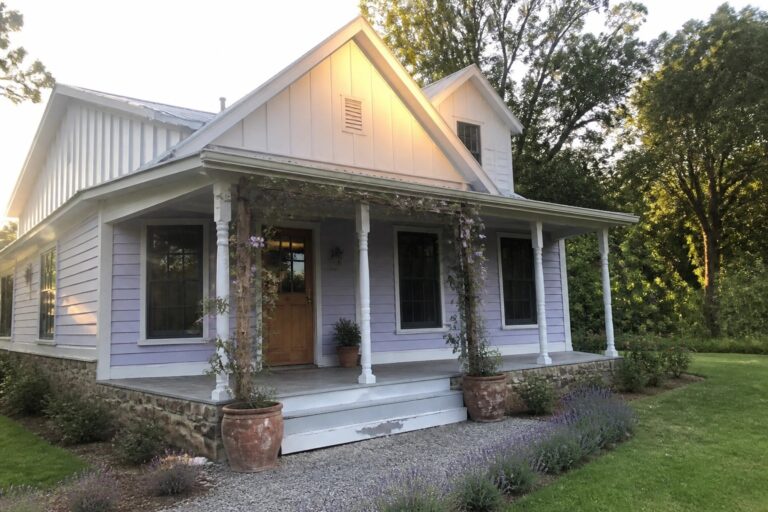
When I drive past homes painted in soft light purple, the white board-and-batten siding tends to sharpen the lines and give the facade a cleaner read from the street. The color choice seems to soften the overall look while still letting the texture of the siding stand out against trim and roof edges. The contrast works better than I expected on most lots. I have noticed that entry details and window placement matter more than people think because they keep the purple from washing out under bright sun. I would probably paint a test panel on my own garage before committing because the shade shifts depending on the time of day and nearby trees.
Light Purple Siding With Simple White Trim
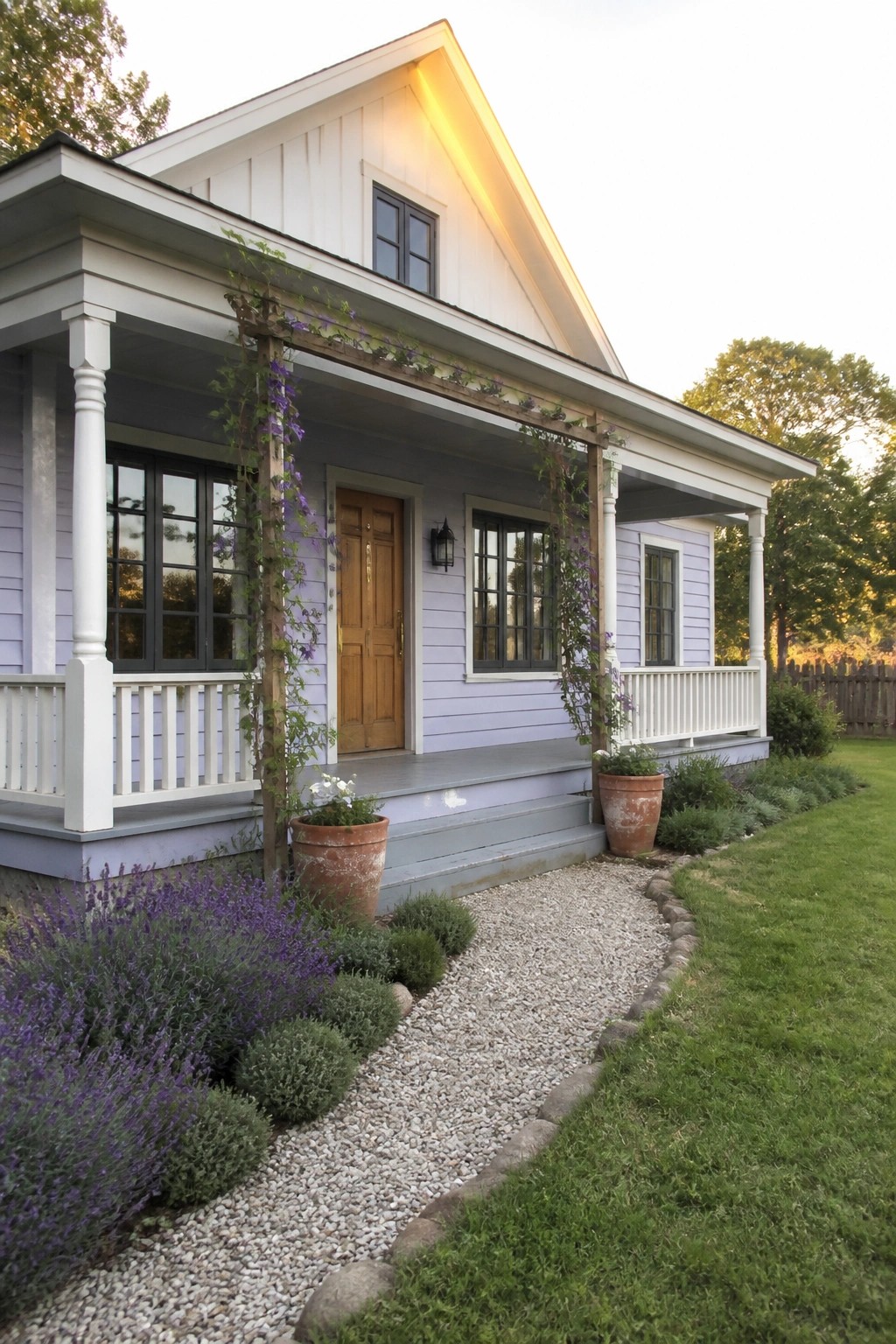
Light purple siding gives a house a gentle, updated look without feeling too bold. It pairs easily with white trim and porch details, which helps the color stay soft and balanced instead of overwhelming the facade. Many homes look fresher when the purple stays on the lighter side rather than going too deep.
This approach works best on smaller houses or cottages where you want some color but still need the exterior to feel calm. Keep the trim and porch posts white, and consider a natural wood door for a bit of contrast. Watch how the purple reads in different light before committing to the full paint job.
Light Purple Siding With White Trim
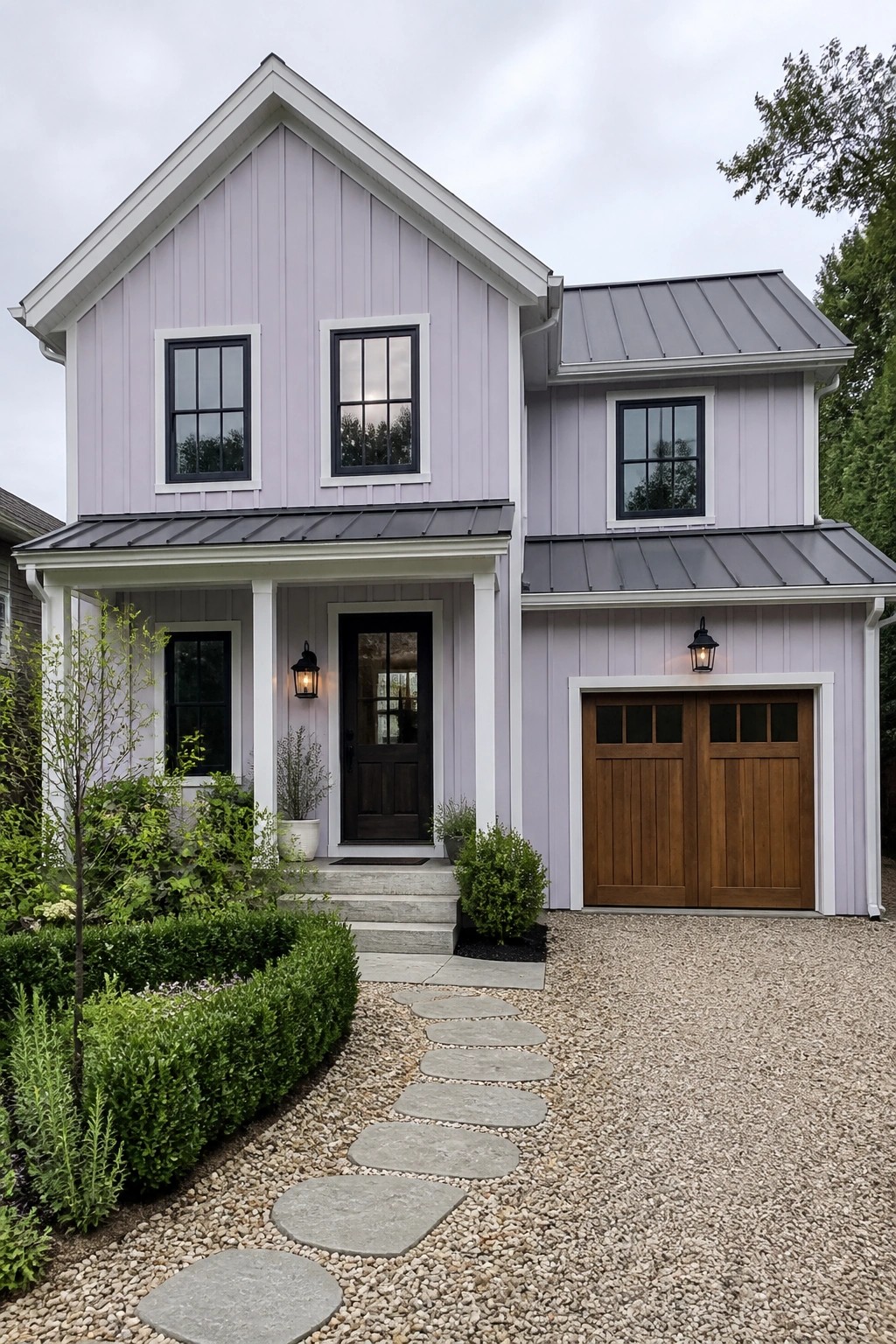
Light purple siding stands out because it feels soft without looking pale or washed out. The white board and batten trim keeps the whole exterior looking sharp and balanced, especially when the roof and door stay dark.
This color works best on homes that already have simple lines and some trim detail to play off. It suits suburban or semi-rural houses that need a bit more personality than gray but do not want anything too bright.
Light Purple Siding With White Board And Batten
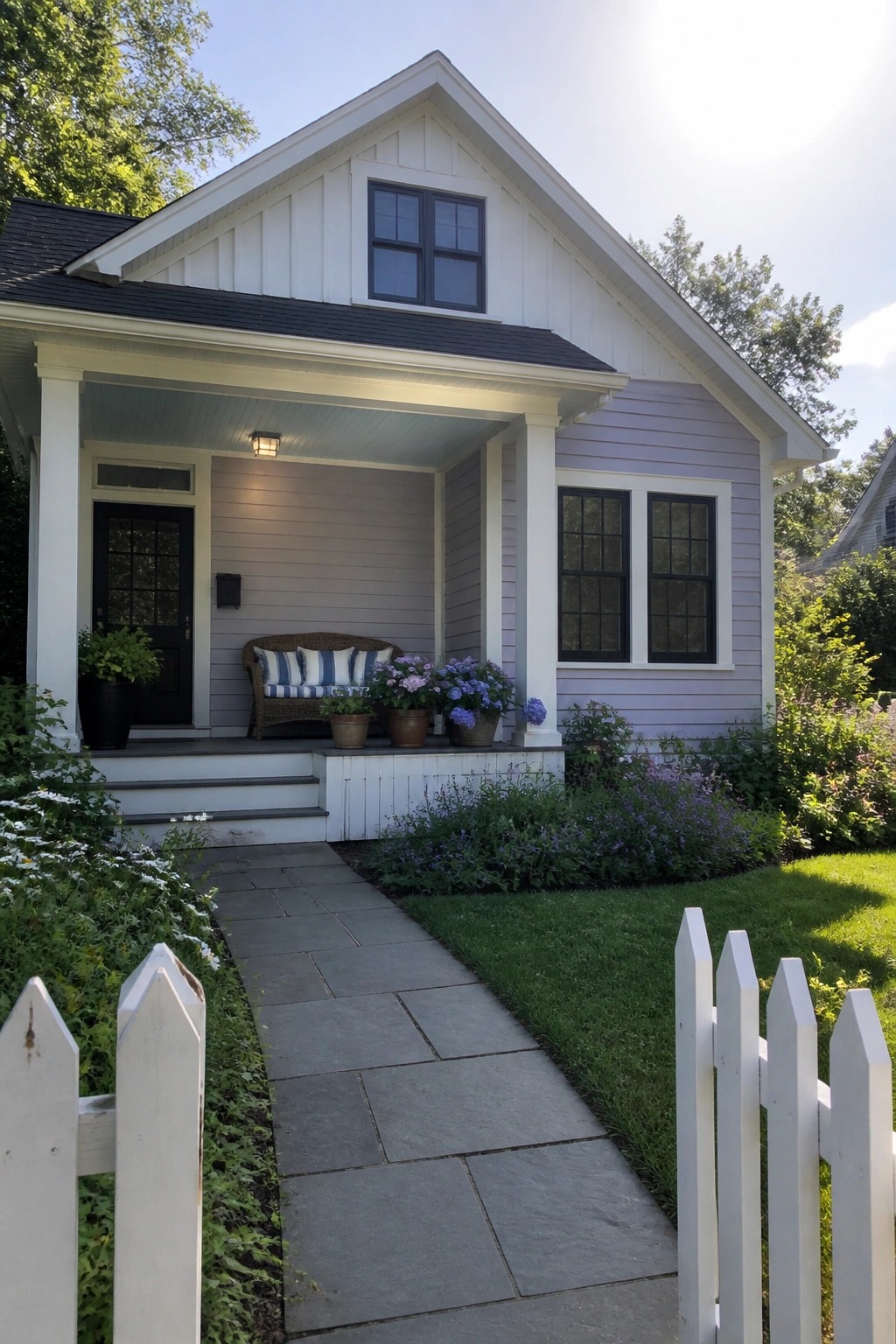
A soft purple shade on the main walls gives the house a gentle color without making it feel bold or trendy. Many older homes use this approach because the muted tone keeps things calm while still standing out from plain white or gray exteriors.
White board and batten on the gable and porch ceiling adds crisp lines that brighten the whole look. This works best on smaller cottages or homes with simple rooflines where you want the color to feel fresh rather than heavy.
Light Purple With White Board And Batten
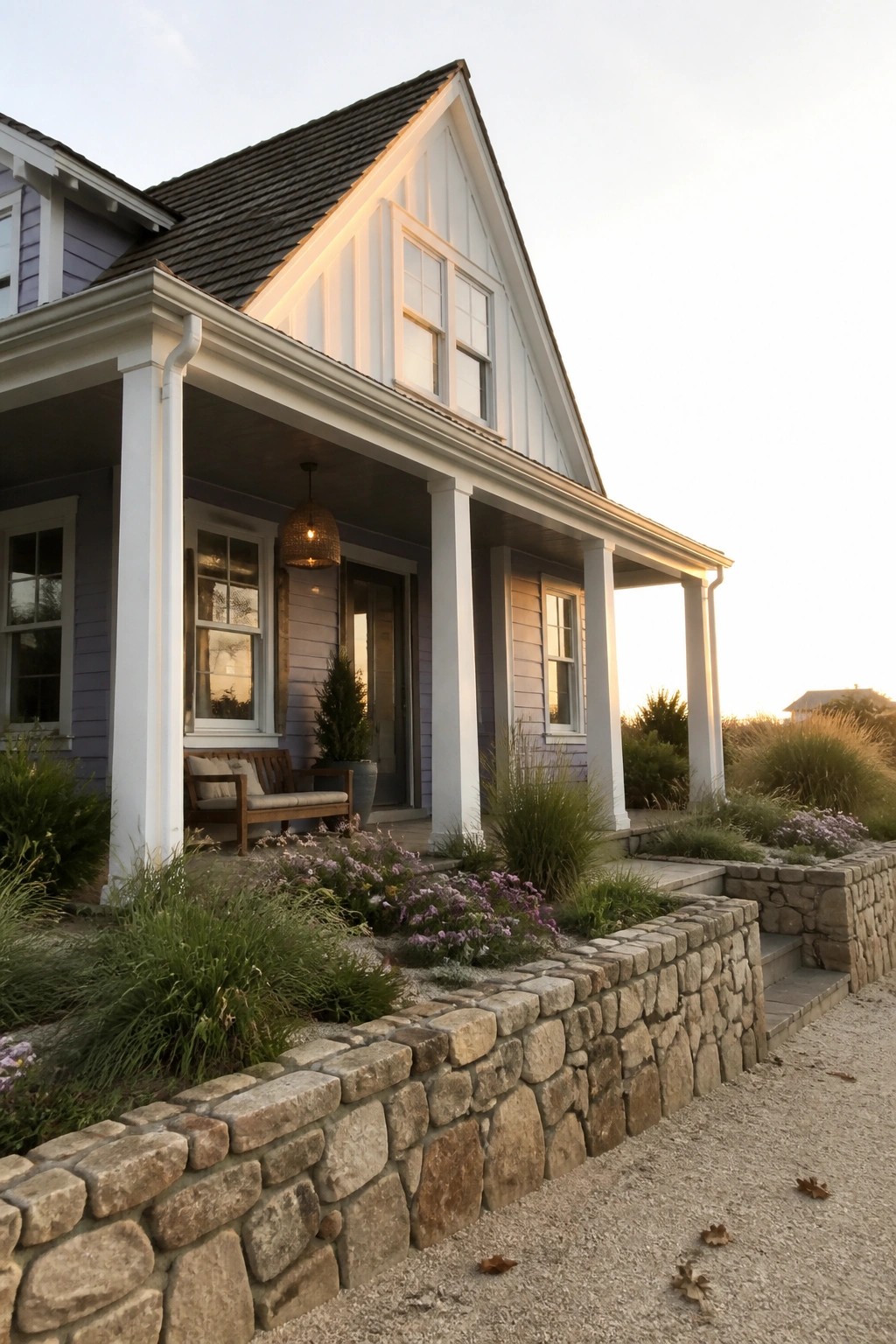
Light purple siding looks calmer when you add white board and batten on the gable and porch ceiling. The white lines break up the color without making the house feel busy or too bold.
This works best on homes with simple roof shapes and a bit of trim detail already in place. Keep the purple soft rather than bright so the white still reads as crisp instead of competing.
Light Purple Siding With White Trim
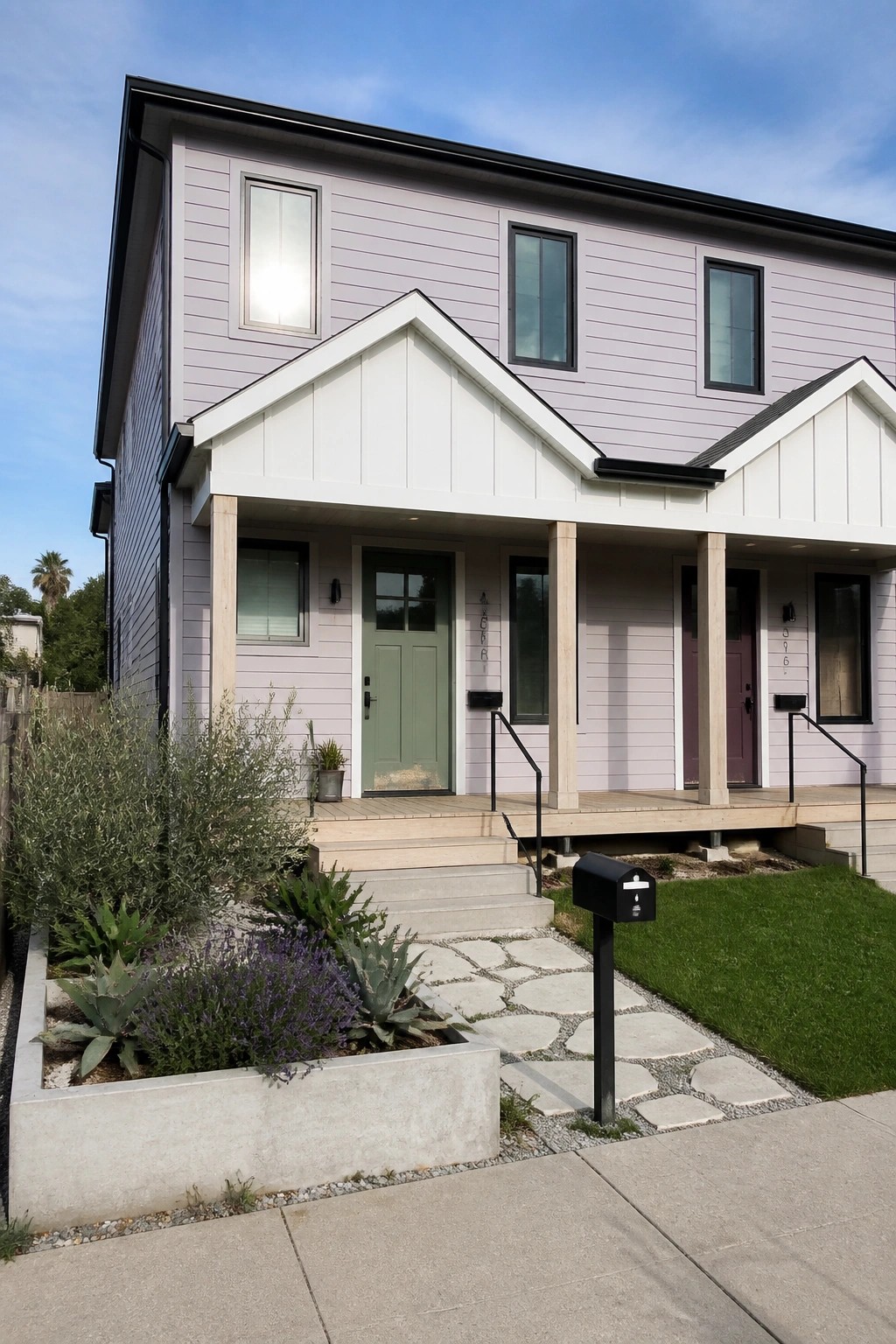
Light purple siding stands out on house exteriors because it feels soft but still gives the home a clear identity. Pairing it with white board and batten on the gables keeps the color from feeling heavy and helps the whole front stay bright.
This combination works best on homes with straightforward roof shapes and simple trim details. It suits neighborhoods where you want a bit of color without losing that clean, updated look.
Light Purple Siding With White Board And Batten
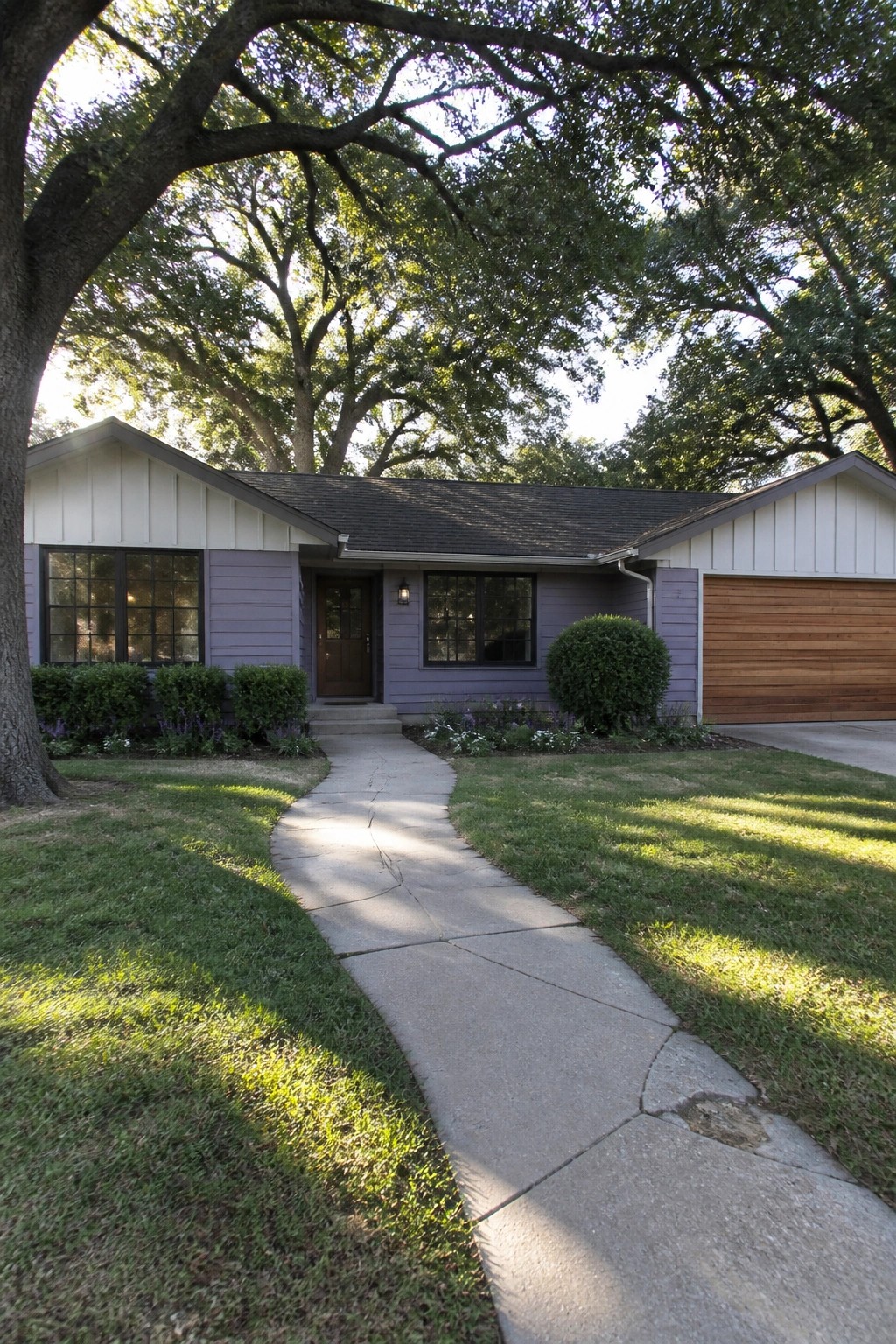
Light purple siding gives a house a soft look that still reads current and friendly. Adding white board and batten on the gables creates a clean contrast that keeps the color from feeling flat or too bold on its own.
This combination works best on single story homes with simple rooflines. It suits neighborhoods with mature trees and helps the house blend in while still standing out from more common beige or gray exteriors.
Light Purple Siding With White Trim
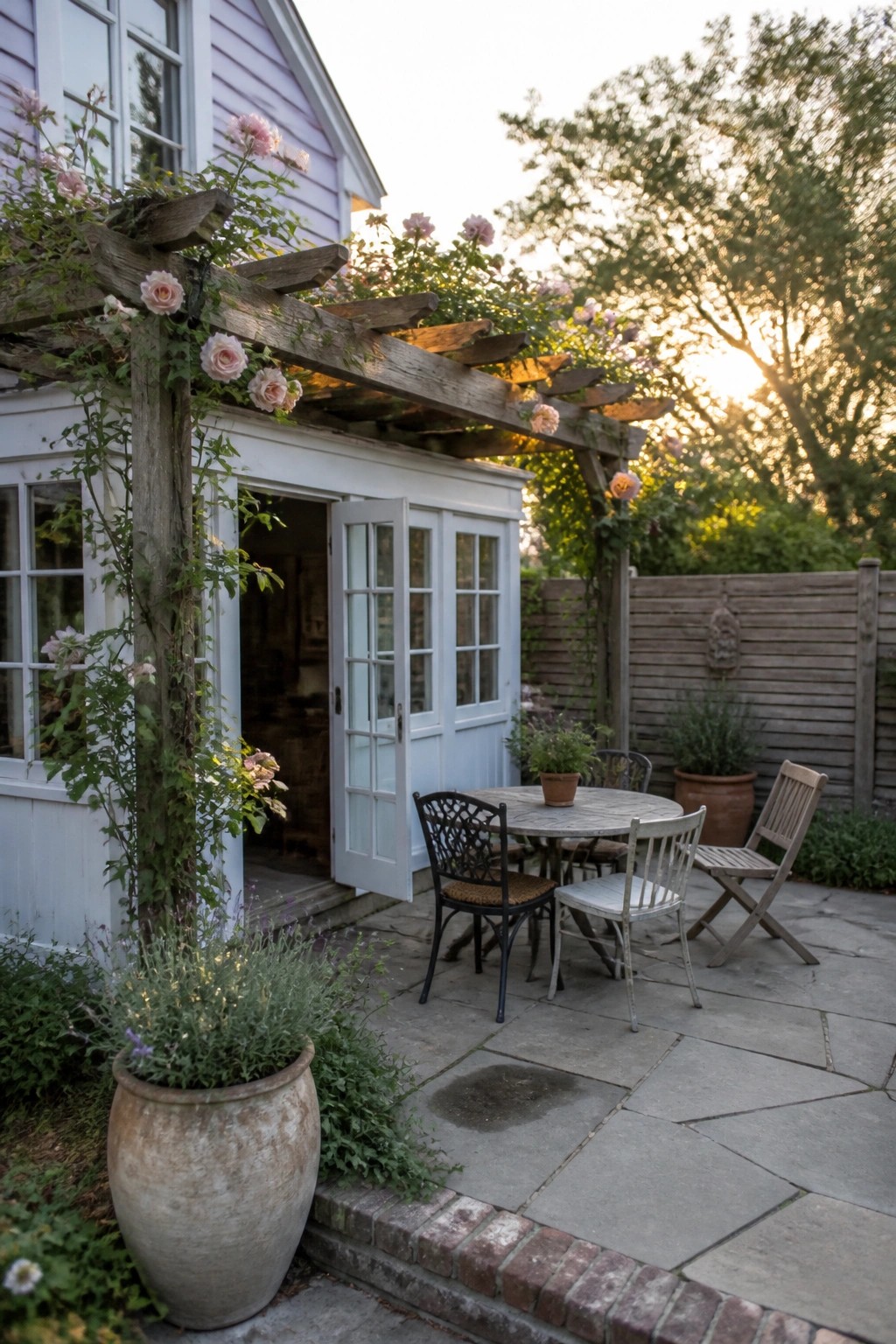
A soft light purple on house siding gives a gentle color without feeling overwhelming. It stands out nicely against trees and garden growth while still reading as calm and welcoming on most days.
This shade works best on homes with simple lines and plenty of white trim to keep the look balanced. It suits cottages or smaller houses where you want a bit of personality but still need the exterior to feel light and easy to live with.
Light Purple Siding With White Board And Batten
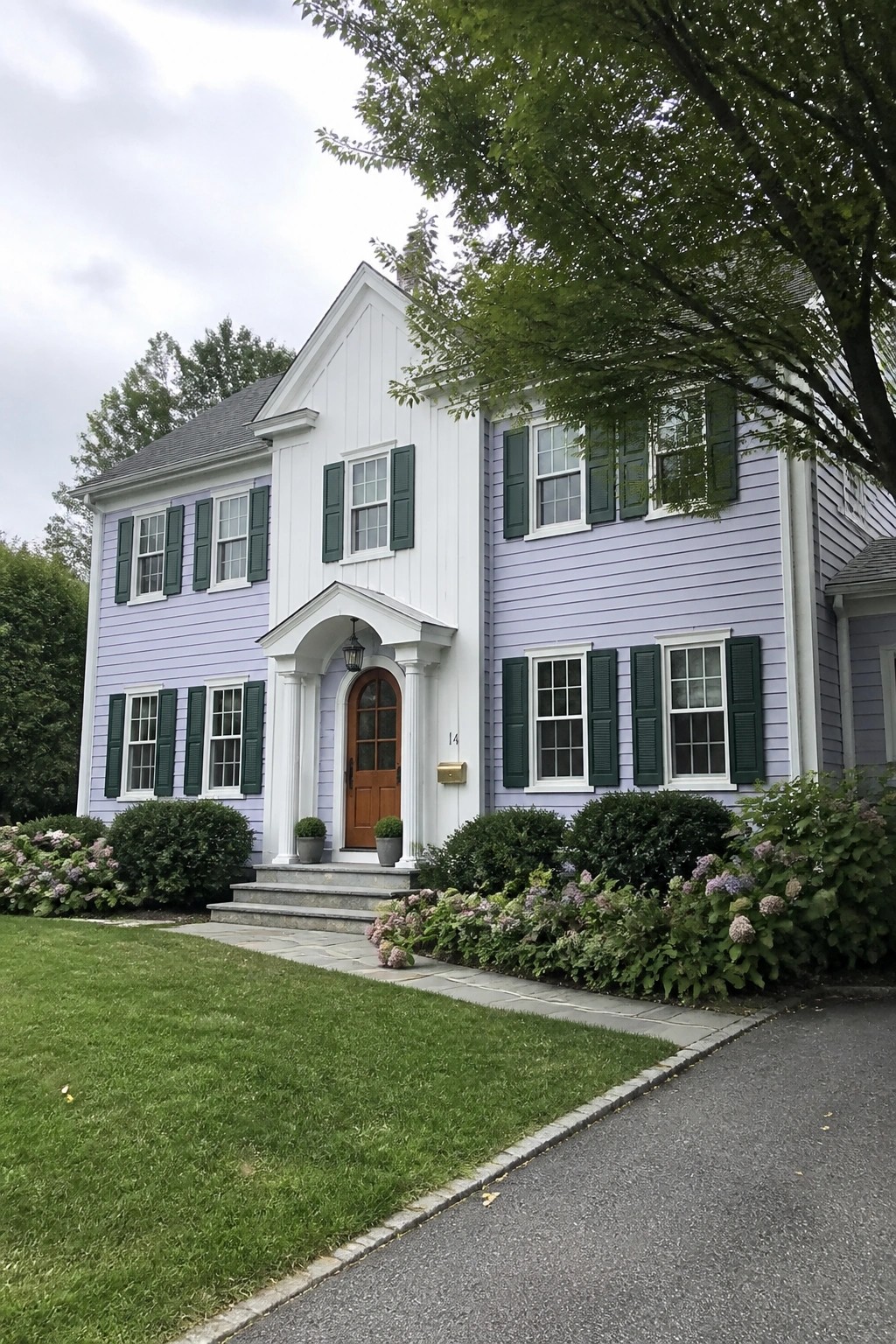
Light purple siding gains a cleaner look when white board and batten is added on the gable and around the entry. The vertical lines break up the color and keep the house from reading too flat or too bold.
This approach suits older homes that need a simple update. Use the purple on the main body and reserve the white for key spots like the front gable or porch structure so the color stays balanced.
Light Purple Brick With White Board And Batten
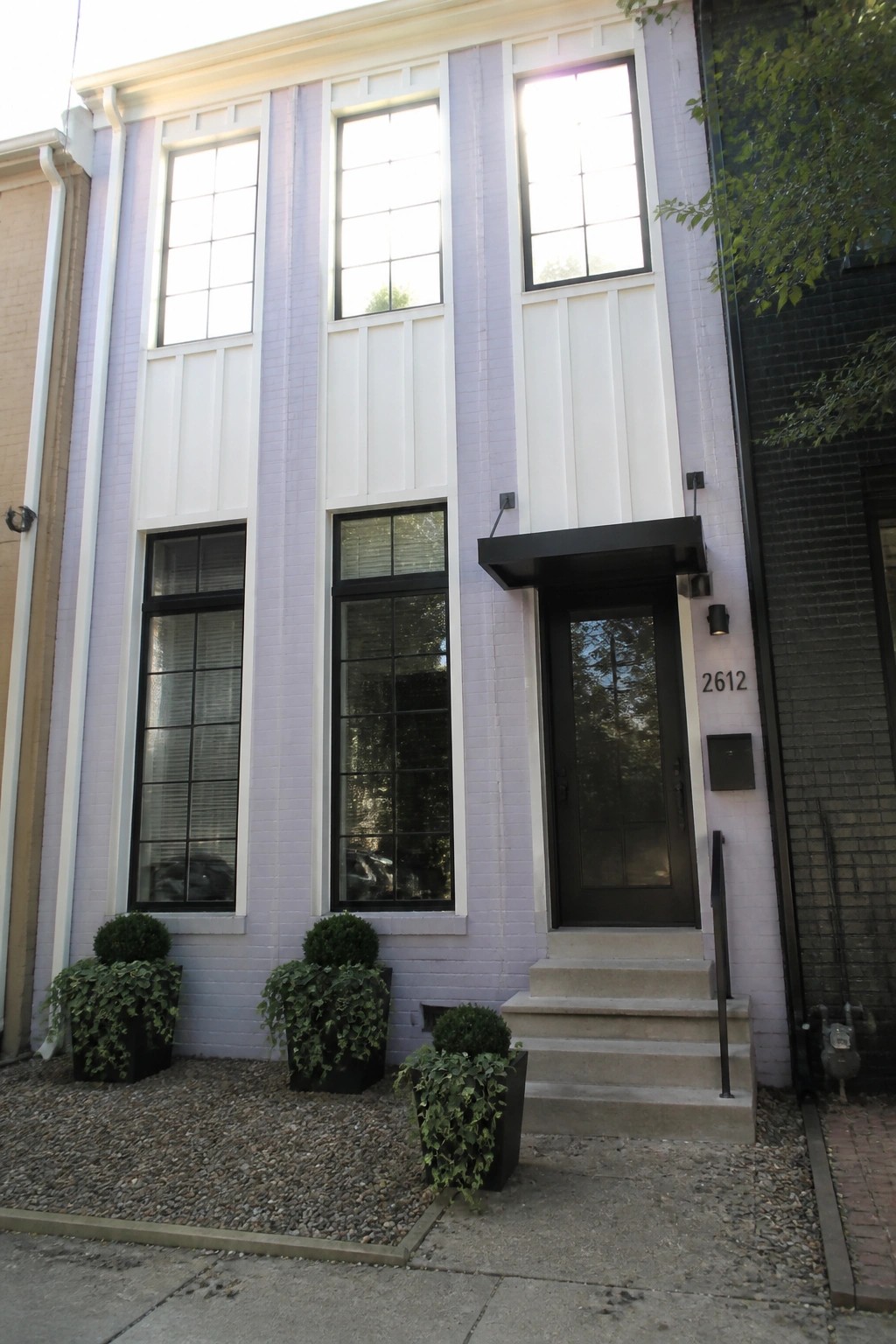
White board and batten sections give a light purple brick exterior some clean vertical lines. The contrast keeps the color from feeling flat while still letting the purple stay the main feature.
This works best on narrower homes where the facade needs a little extra shape. Keep the white bright and limit it to the spaces between windows so the look stays simple rather than busy.
White Board-and-Batten Siding for Outdoor Areas
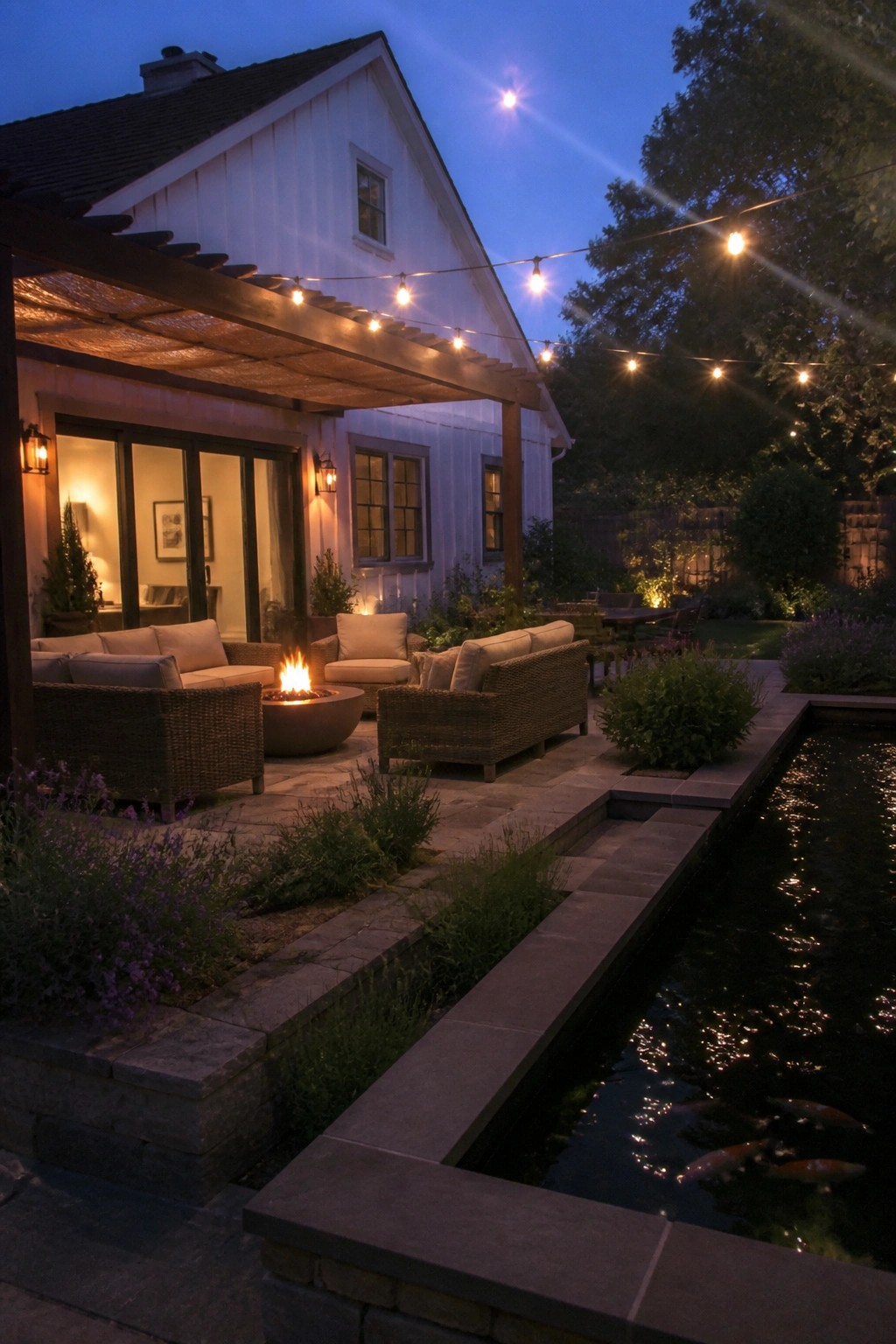
White board-and-batten siding gives a house a clean, simple look that pairs well with an attached patio or seating area. It keeps the exterior feeling open and bright even when the space extends right into the yard with a fire pit or water feature nearby.
This approach works best on homes that already have gabled roofs and basic trim details. It helps the whole setup stay cohesive without adding extra color or ornament, and it holds up well in spaces that get used from afternoon into evening.
Light Purple Siding With White Trim
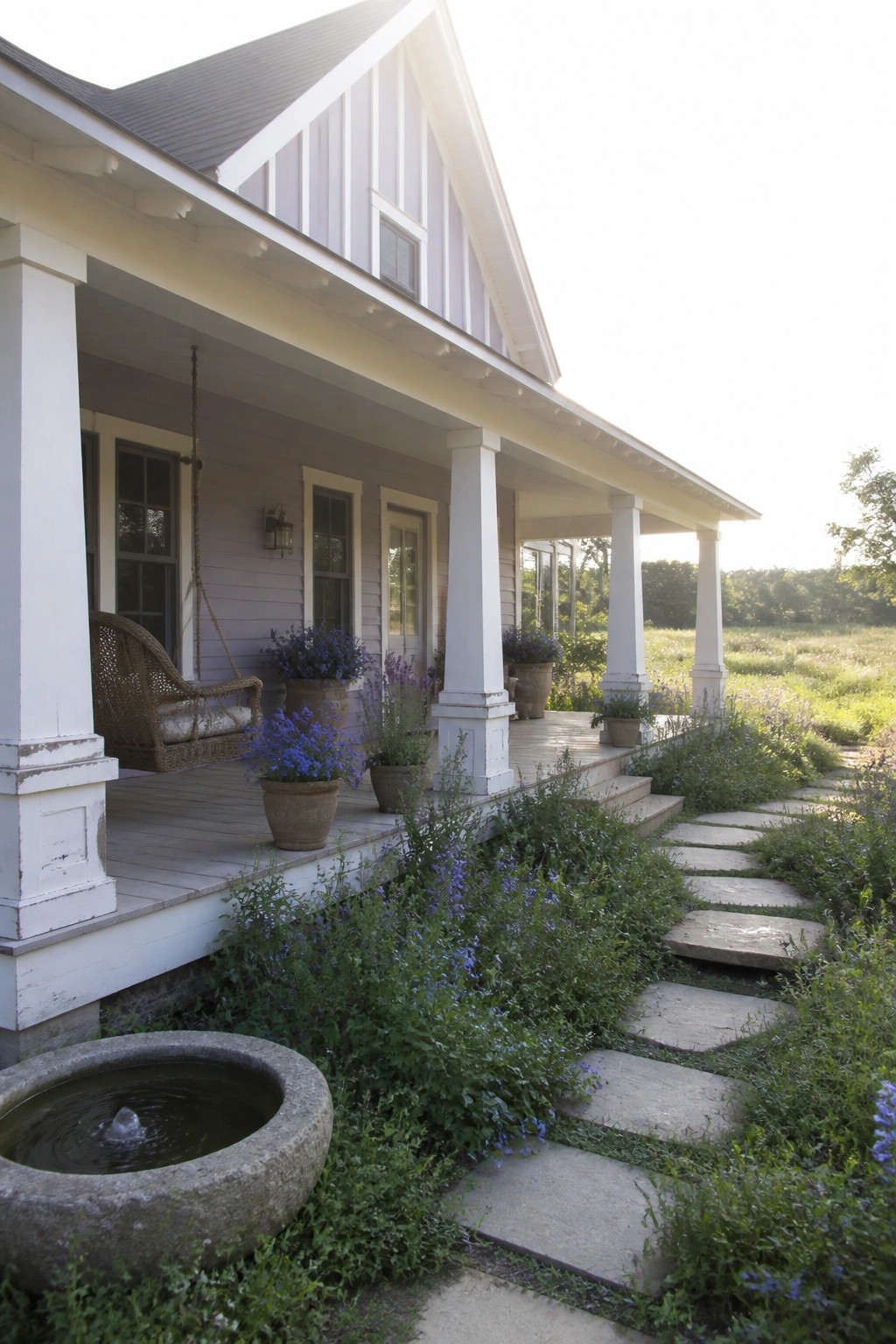
Light purple siding gives an older home a soft look without making it feel too sweet. The white board and batten keeps the color grounded and helps the whole house read as simple rather than busy.
This works best on farmhouses or cottages that already have a front porch. Stick with white trim, columns, and doors so the purple stays calm and the siding pattern stays easy to see.
Light Purple Siding With White Trim
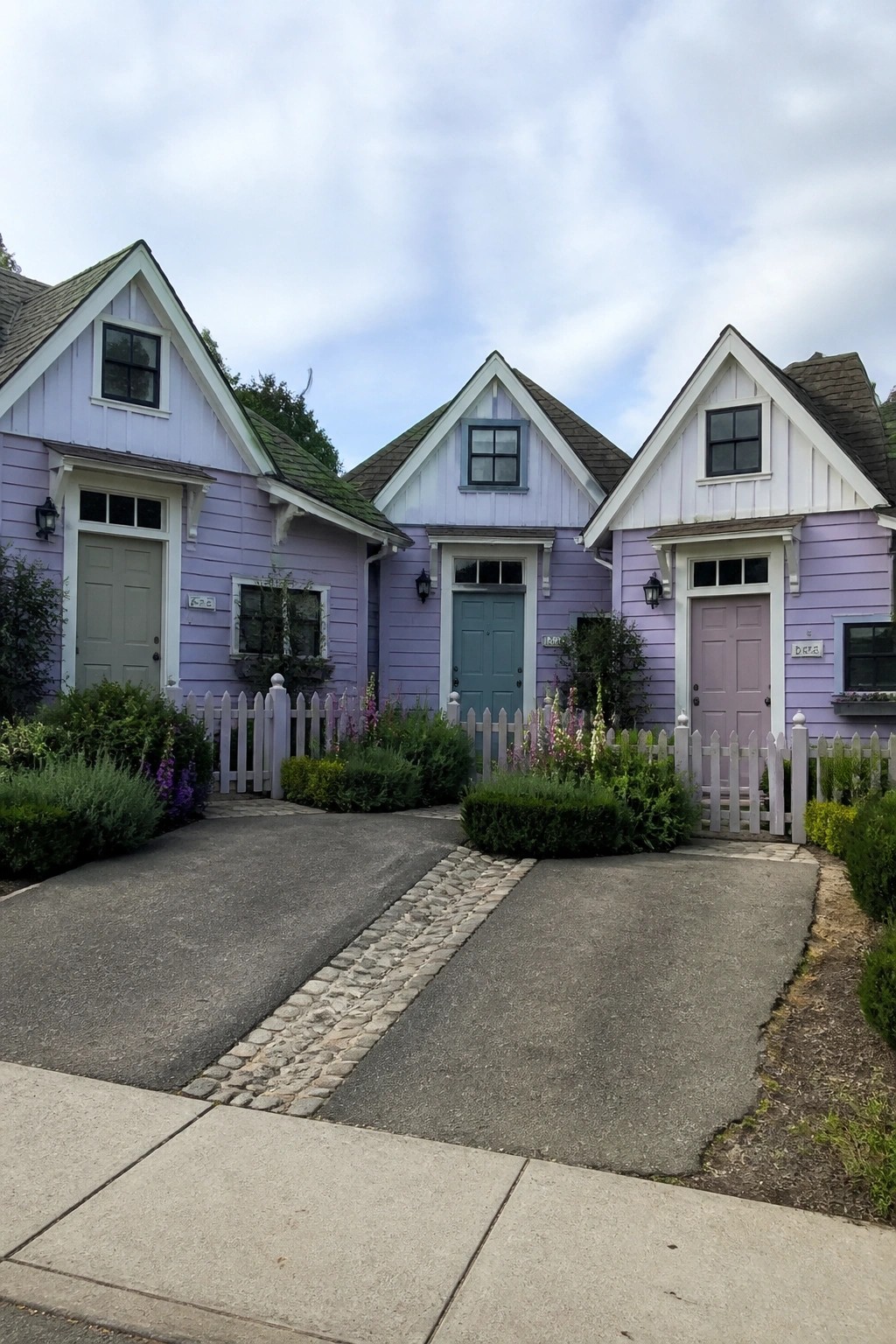
Light purple works well on house exteriors because it gives the siding a soft color without making the whole place feel too bold. The white trim around the doors, windows, and gables keeps the look clean and helps the color read as fresh rather than pastel.
This approach suits smaller homes or groups of homes that sit close together. It creates a consistent street view while still letting each door color add a little personality. Just make sure the purple stays on the lighter side so it does not darken the facade on cloudy days.
Light Purple Siding With White Board And Batten
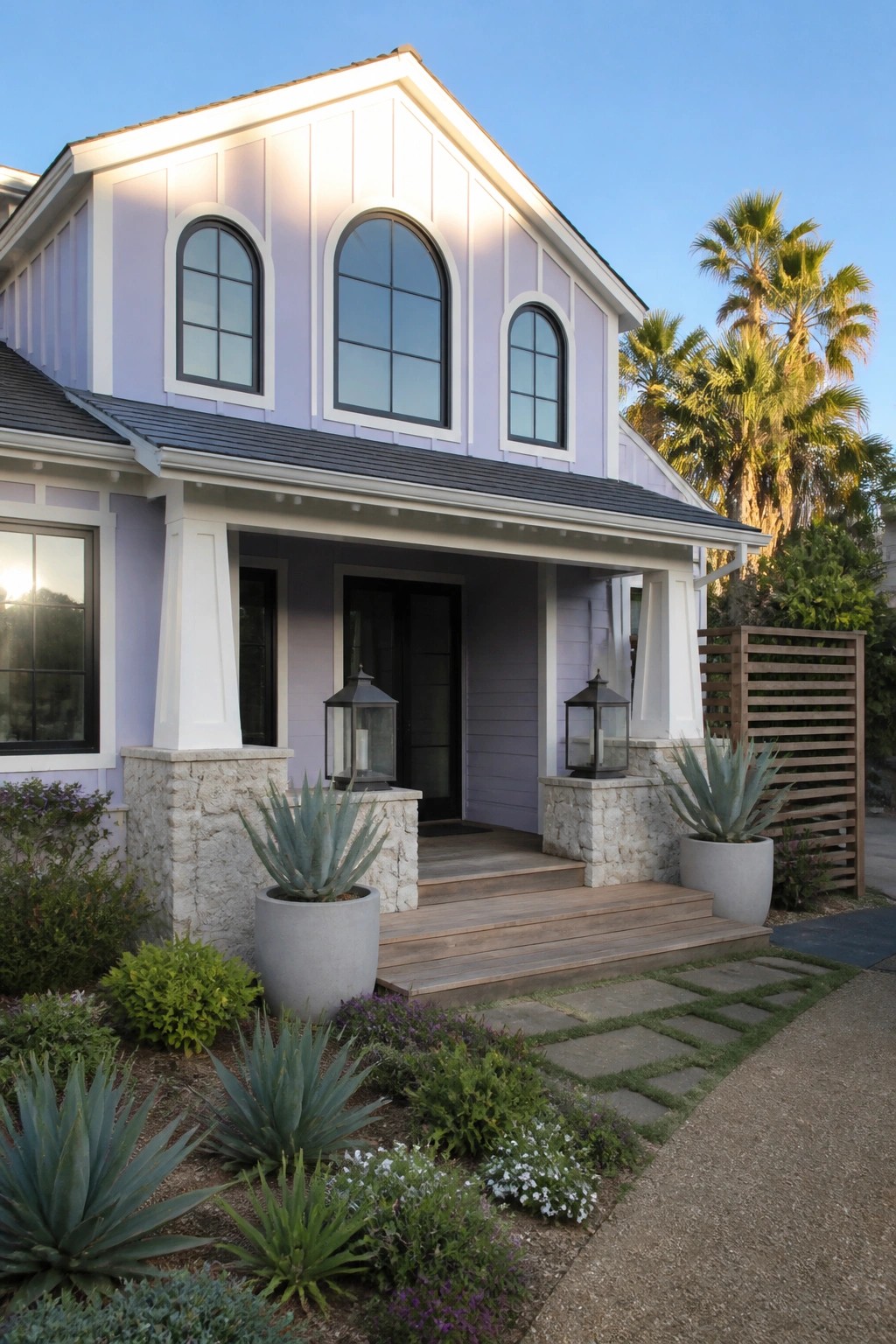
Light purple siding paired with white board and batten gives a house a softer look while still keeping it clean. The white trim breaks up the color so it does not feel too bold on a larger facade.
This approach works best on homes with simple shapes and a few standout windows. It suits neighborhoods where you want a bit of color without standing out too much from the street.
Light Purple Doors with White Board and Batten
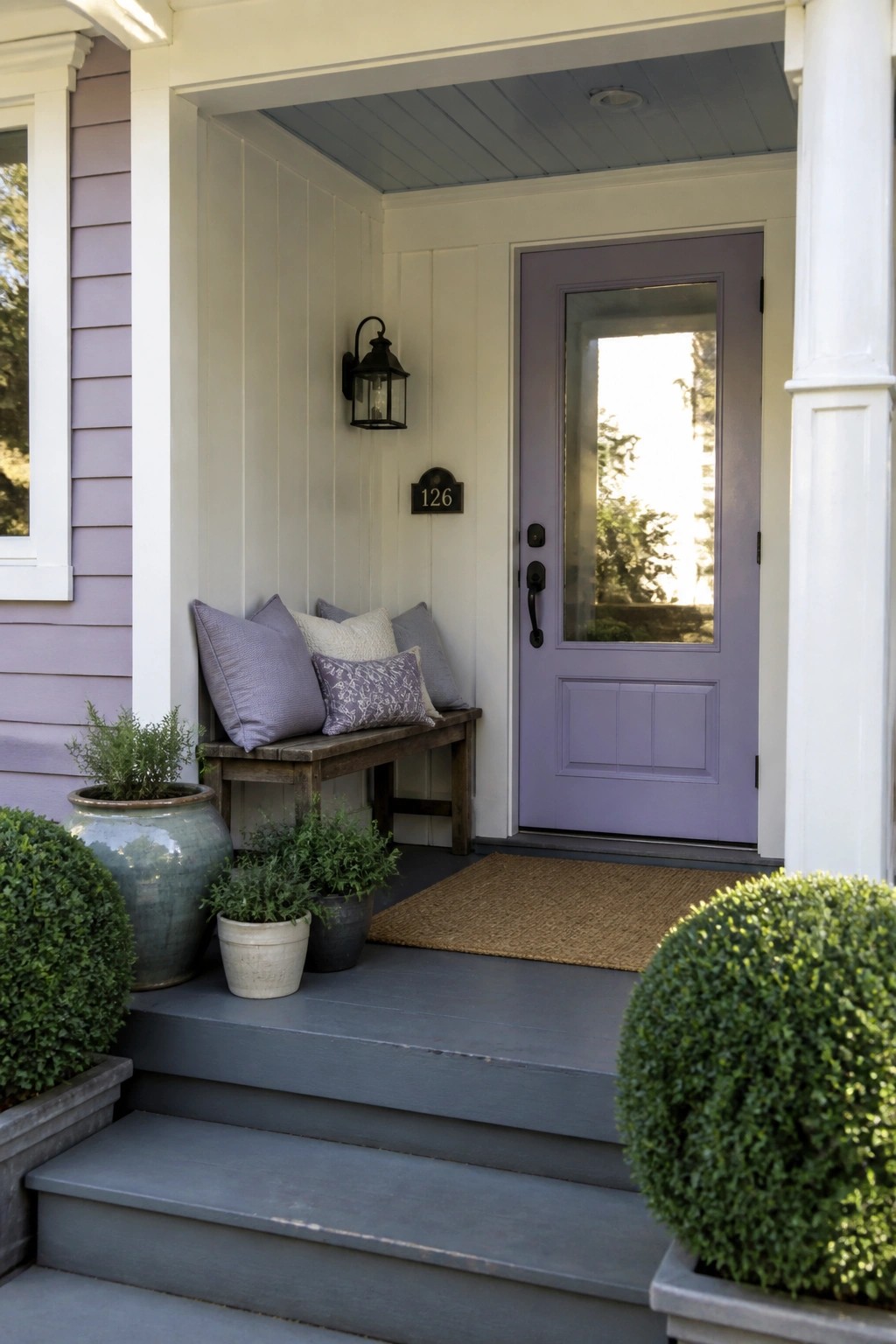
A light purple door stands out in a nice way when the siding around it stays white and simple. The color feels fresh without taking over, and the board and batten gives the whole entry a clean, quiet look that still has some character.
This works best on homes that already lean simple in their trim and siding. Keep the purple on the softer side so it stays friendly rather than bold, and let the white do most of the work.
Light Purple Siding With White Board And Batten
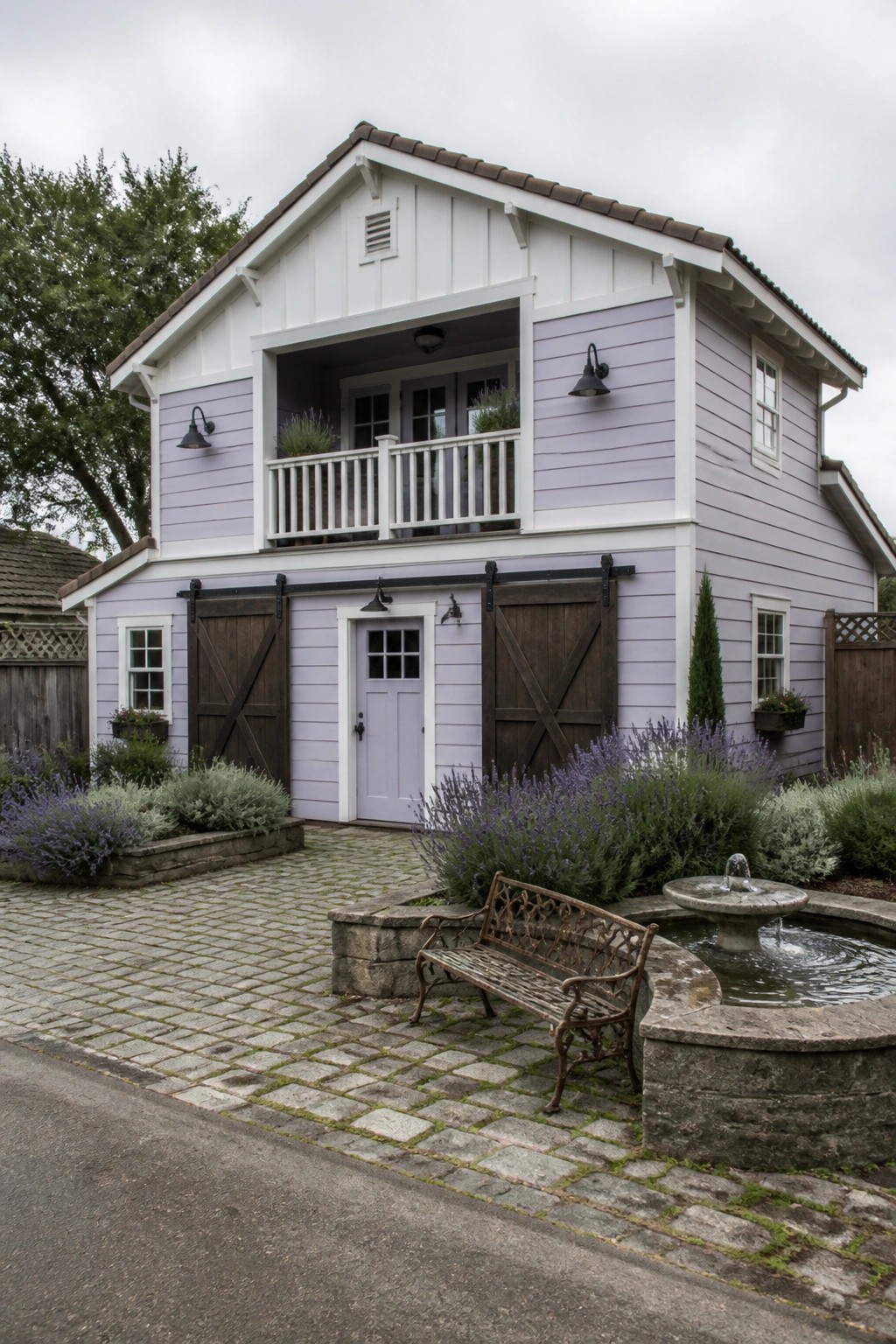
Light purple works well on house exteriors because it stays soft while still giving the facade some color. The white board and batten breaks up the surface and keeps the whole thing from feeling too flat or heavy.
This approach suits two-story homes that already have some architectural detail like a small balcony or roof overhang. Darker doors and hardware add just enough contrast without fighting the main color.
Light Purple Siding With White Trim
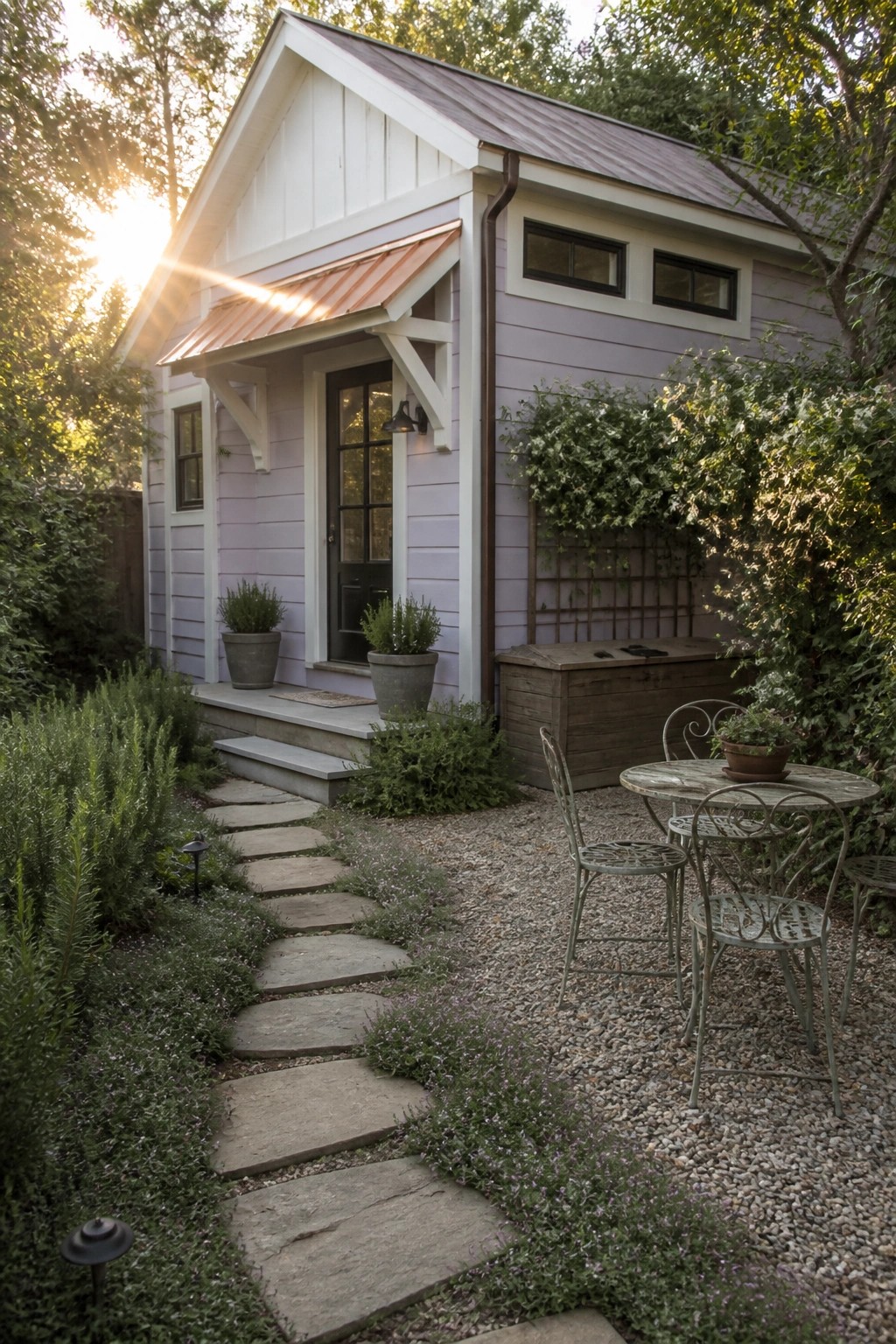
A light purple on the siding gives a house some color without making it feel too bold or heavy. The shade stays soft enough to blend with trees and garden beds, and the white trim keeps the lines clear and the overall look tidy.
This works best on smaller homes or cottages where you want a bit of personality. Use white board and batten on the gables to add contrast and keep the purple from feeling flat.
Soft Light Purple Siding With White Trim
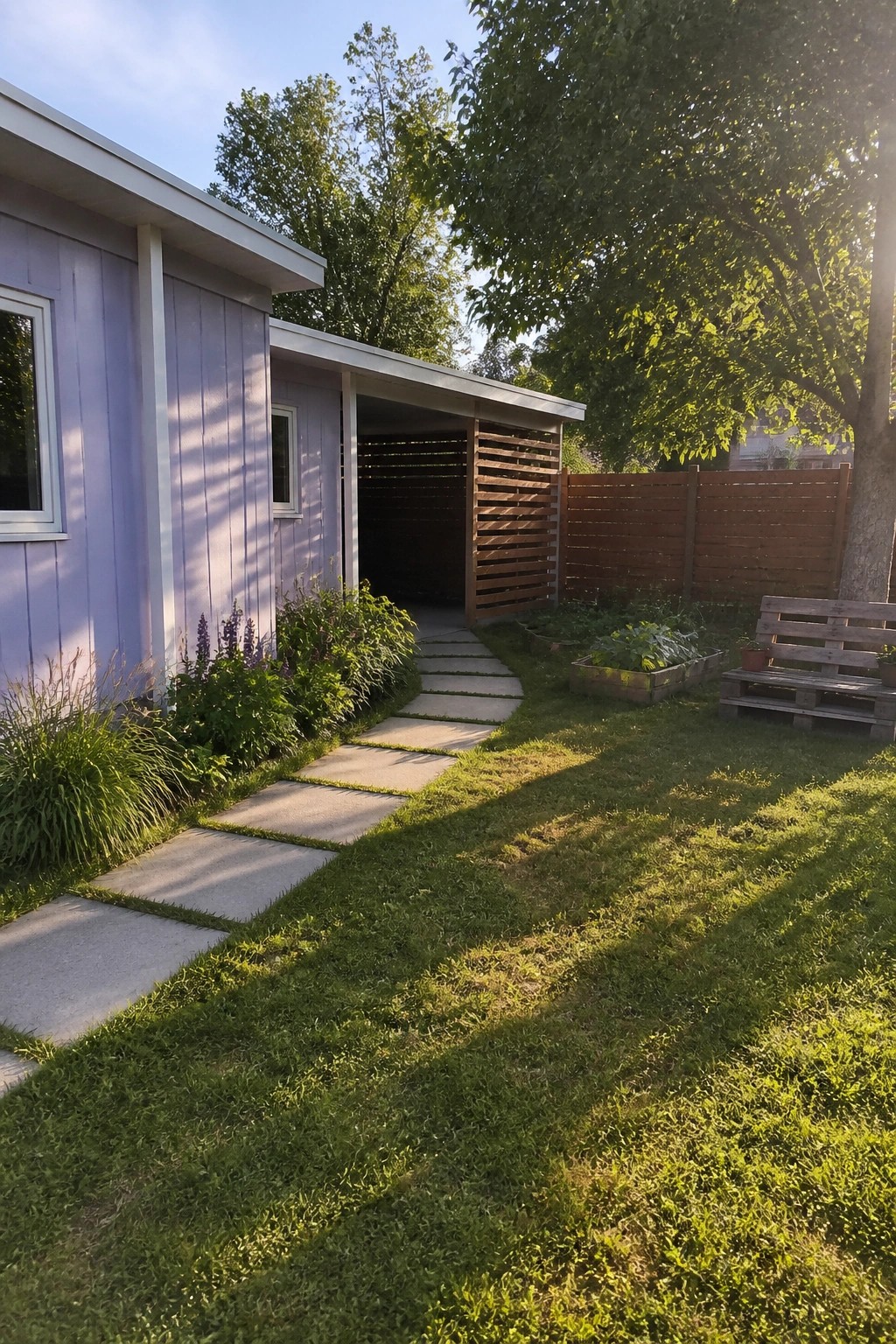
Light purple works well on board and batten because it feels soft without looking washed out. The white trim keeps the whole look crisp and helps the color read as intentional rather than just a pastel experiment.
This color choice suits smaller homes or simple shapes where you want something friendly but still current. It pairs best with clean lines and minimal ornament so the siding pattern stays the main feature.
Light Purple Siding With White Board And Batten
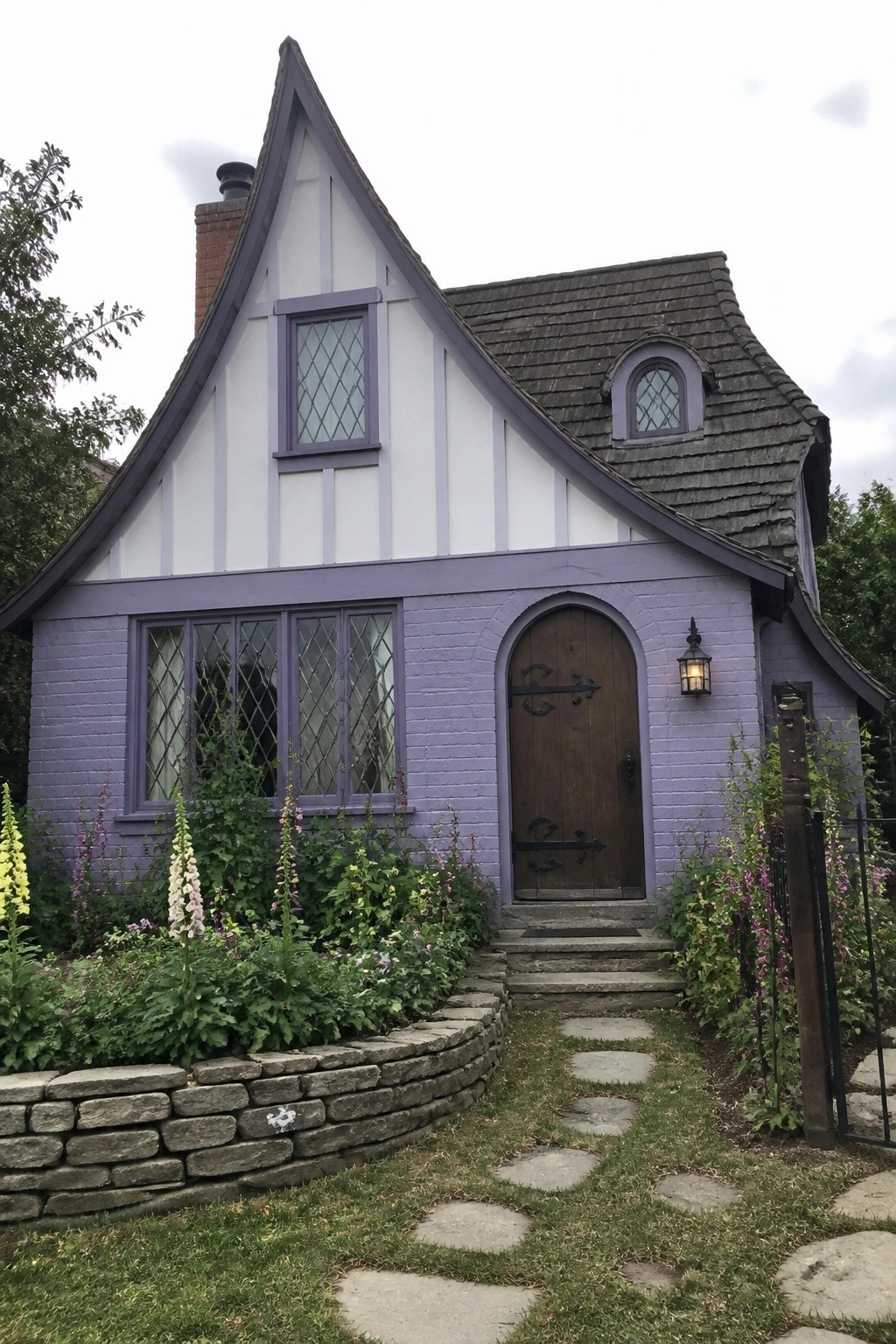
This color mix gives a house a gentle look that still feels structured. The purple covers the lower walls while the white vertical boards and battens on the gables keep the upper parts bright and tidy.
It suits smaller cottages or homes with steep rooflines. The contrast helps the shape stand out without needing extra trim or dark accents.
Frequently Asked Questions
Q: How do I choose a light purple shade that still feels soft next to all that white? A: Pick a pale tone with cool or gray undertones instead of anything too pink or vibrant. Paint a couple of test boards and check them at different hours of the day. The right one will look calm from the curb.
Q: Will the white board and batten need constant cleaning? A: Hose it down a few times a year and it stays looking fresh in most yards. Skip harsh cleaners that can wear the finish faster. A quick rinse handles pollen and dust without much effort.
Q: What roof color works without fighting the light purple walls? A: A soft gray or weathered brown roof keeps the whole house balanced. It lets the purple and white stay the main focus instead of competing. Steer clear of red or black that can make the siding feel washed out.
Q: Can this look work on a small cottage? A: Yes. Keep the purple light and let the white boards break up the space so the house feels bigger. Skip extra trim colors that shrink the view.
