

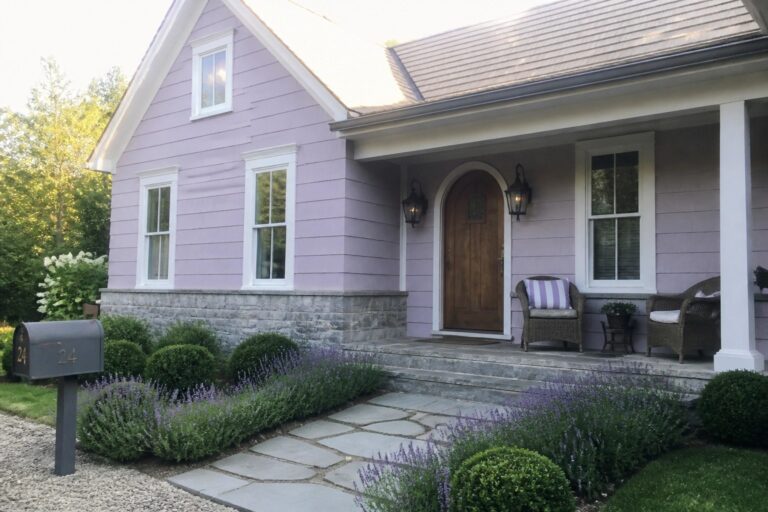
I have noticed that lavender paired with soft gray stone often gives a house a calm front view that still feels grounded in the landscape around it. The material contrast tends to highlight rooflines and window placements without making the facade look busy from the curb. I once watched a neighbor repaint their trim three times before the lavender settled into the stone the way they had pictured on the sample board. Small shifts in how the stone is cut or laid can change the whole balance. It is worth checking how the colors read at different times of day before deciding on the final combination.
Stone Foundations For Lavender Homes
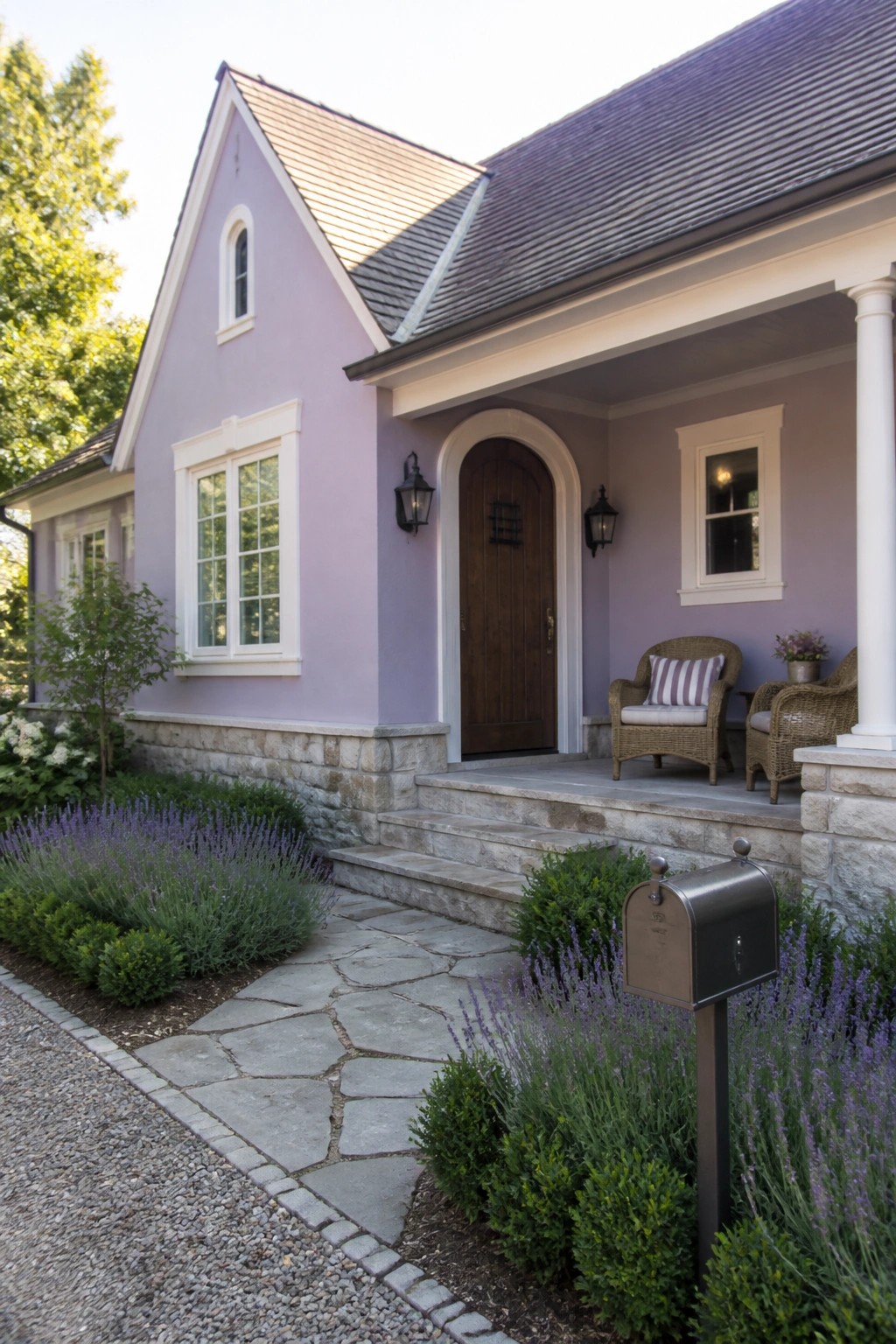
A stone base gives lavender siding something solid to sit on. It keeps the soft color from feeling too light or delicate against the ground and adds a natural texture that balances the painted walls.
This approach works especially well on smaller homes or cottages where you want the color to stay gentle but still look grounded. Keep the stone in a muted gray tone and let it run only a few feet up so the lavender remains the main feature.
Stone Bases That Support Lavender Siding
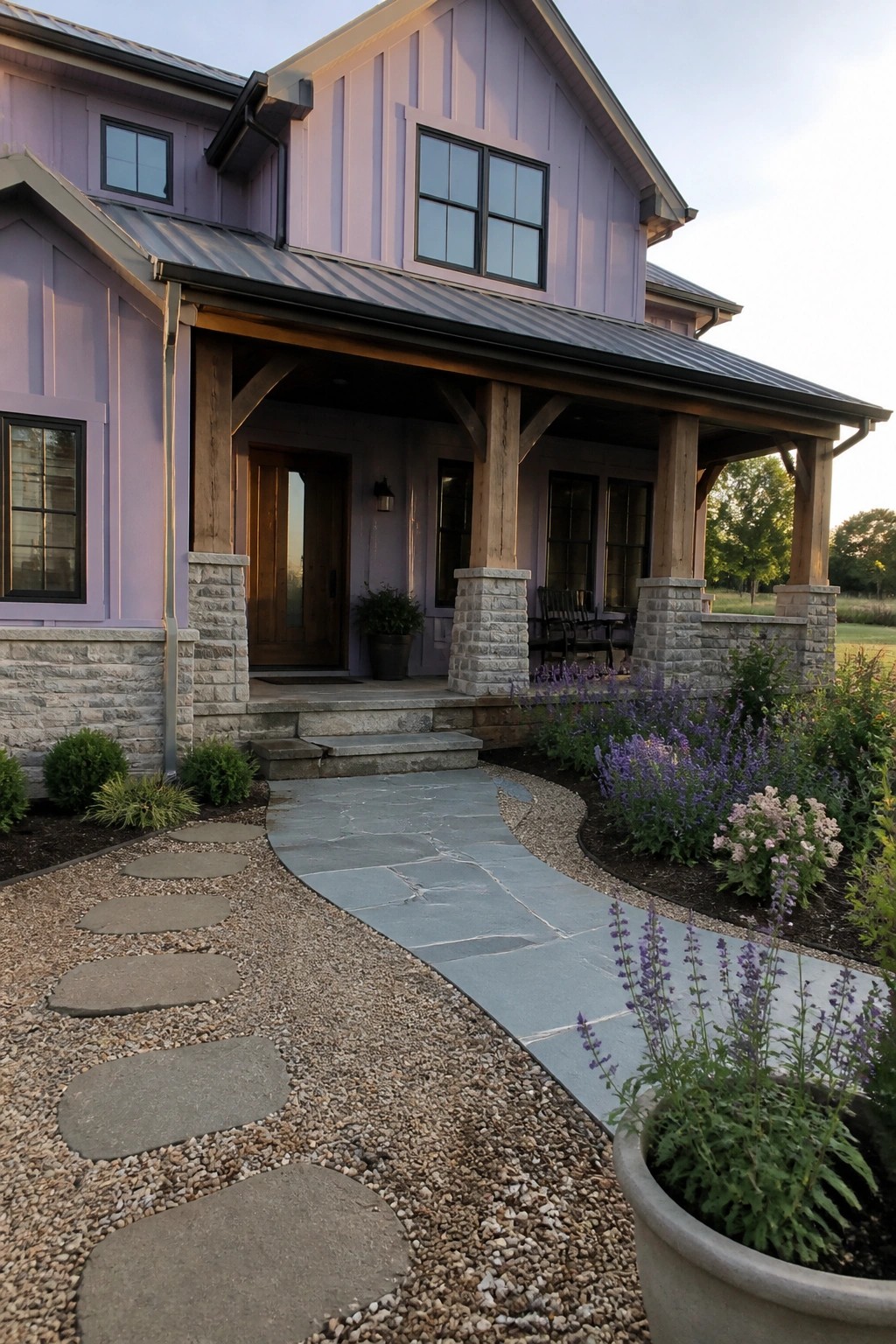
Lavender siding can look a little light on its own, especially on larger homes. Adding gray stone to the foundation and porch columns gives the color something solid to sit on and keeps the whole front from feeling too soft.
This works best on houses that already have a simple roofline and a covered entry. Keep the stone in the same tone as any nearby walkways so the materials feel like they belong together rather than added on later.
Lavender Siding With Soft Gray Stone
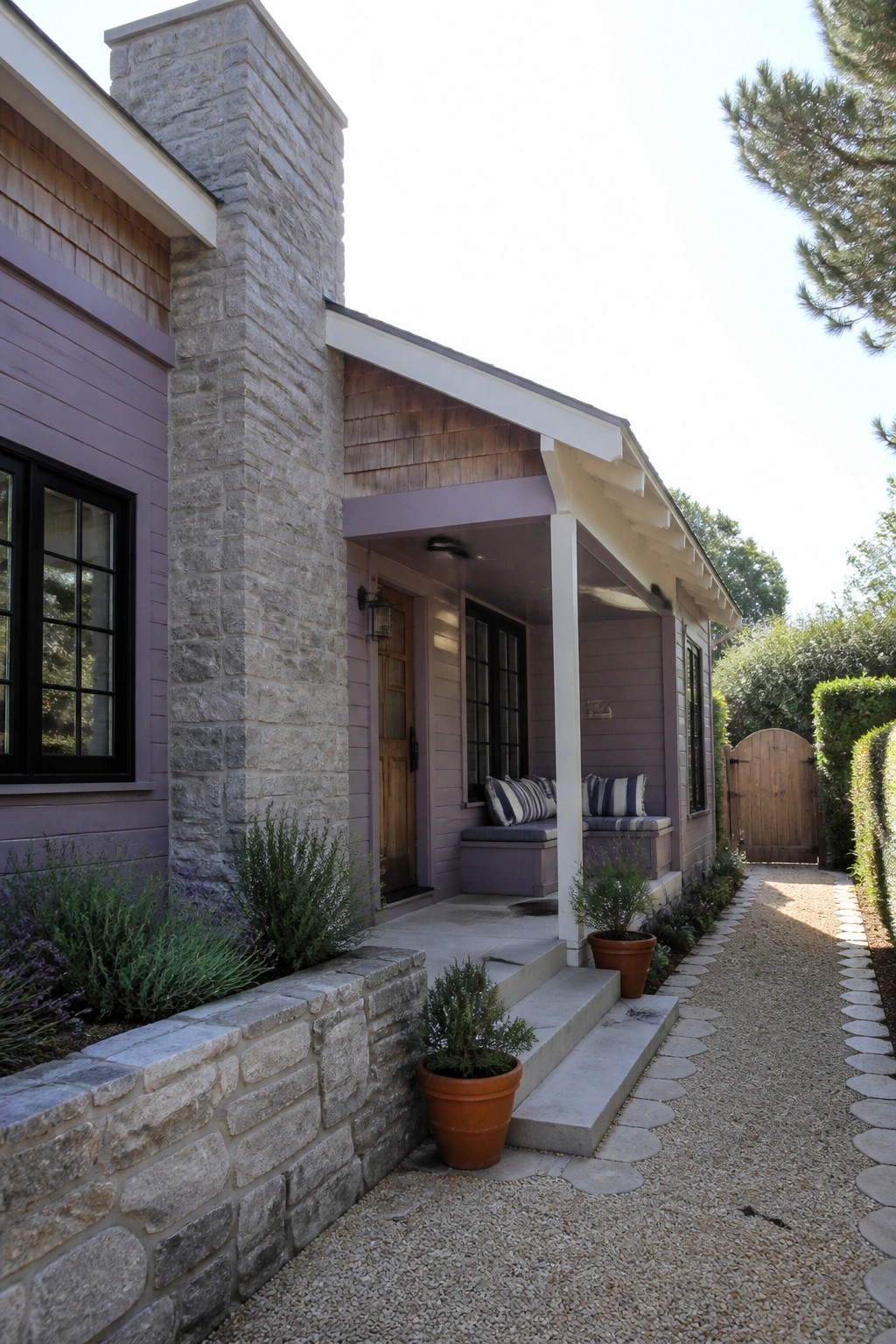
Lavender siding brings a gentle color to an exterior without making the house feel too bold or trendy. When it sits next to gray stone on a chimney or low wall, the two materials balance each other and keep the look calm and simple.
This combination suits smaller homes or cottages where you want some color but still need the structure to feel grounded. Keep the stone on key structural spots like the chimney and base, and let the lavender cover the main walls so the color stays light and easy to live with.
Lavender Siding With Stone Accents
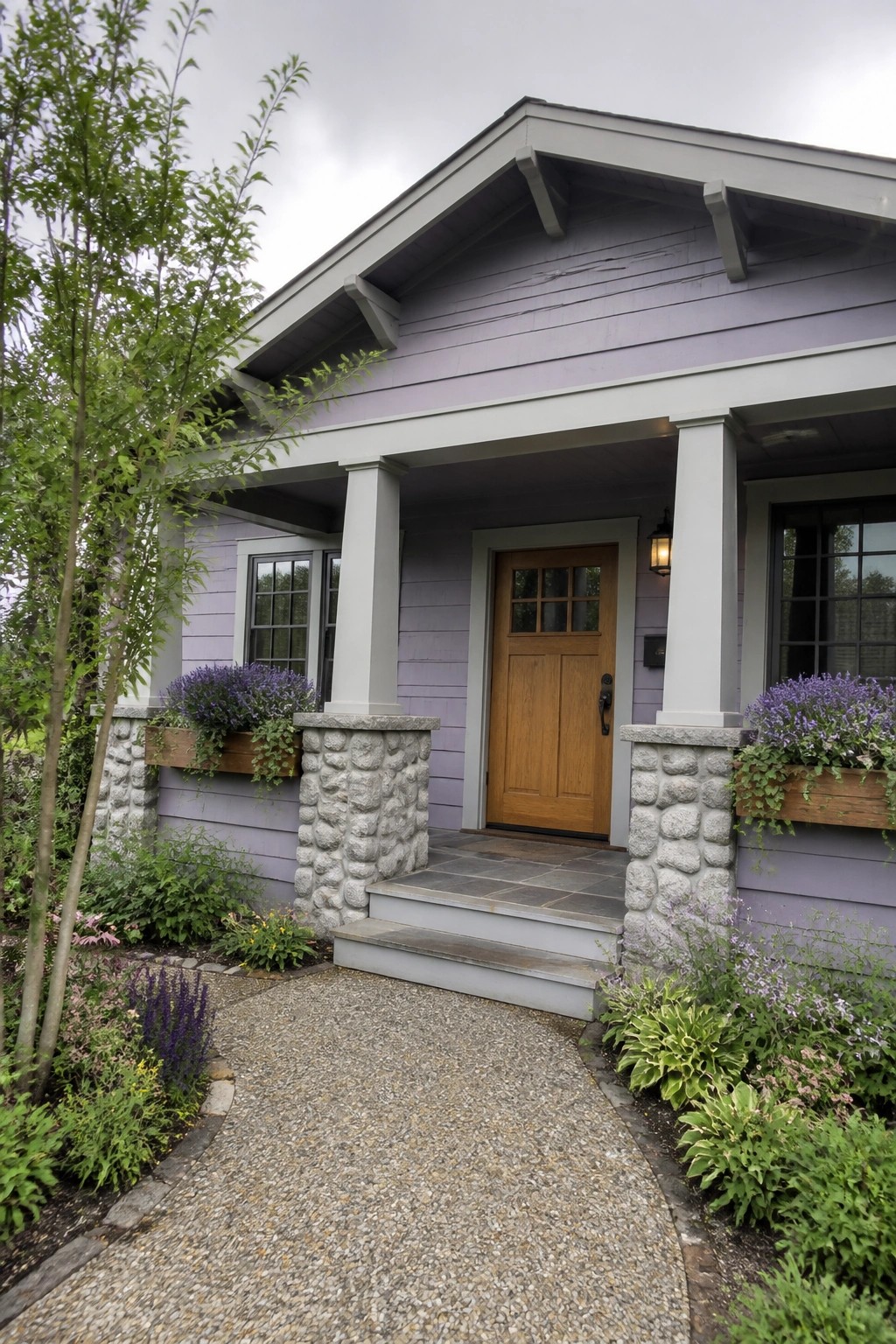
Many people like the look of soft lavender siding when it sits next to gray stone. The stone gives the color a solid base and stops the front from feeling too light or flat.
This works best on smaller homes or cottages where you want a gentle color without going bold. Stone on the porch columns or base helps the siding feel more settled and gives the entry a finished look.
Gray Stone Bases With Lavender Exteriors
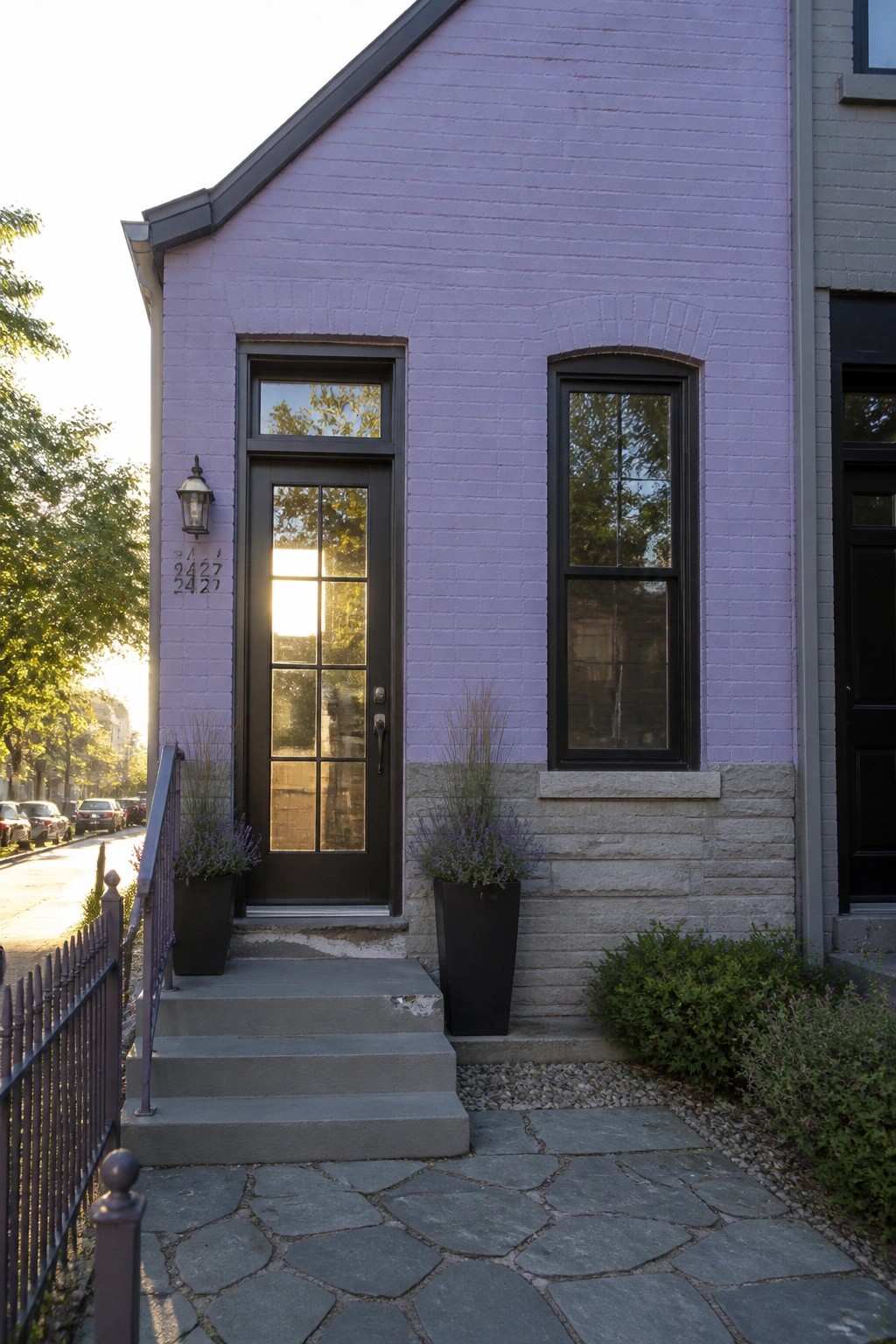
A low stone base in soft gray gives a lavender house a steadier look. The color sits higher up and feels less likely to wash out or appear too bright against the street.
This works best on brick homes that already have a clear change in material at the foundation line. Match the stone tone to any steps or walkway so the bottom half reads as one solid piece rather than a separate layer.
Gray Stone Frames A Lavender Entry
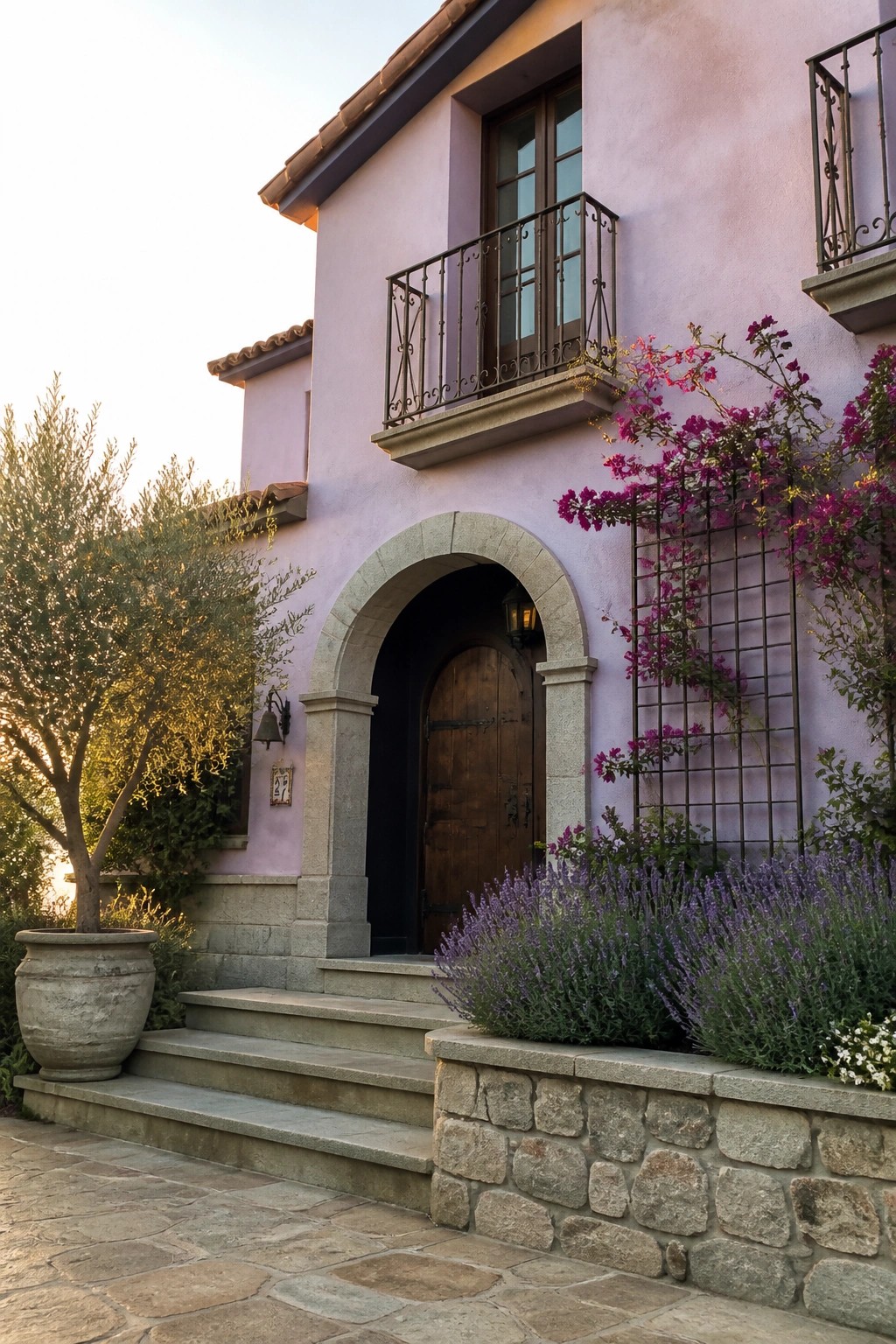
Many homeowners turn to soft gray stone when they want a lavender stucco house to feel grounded instead of too sweet. The stone gives the color a clear edge and makes the front door area stand out without extra decoration.
This approach works best on homes with simple wall planes and a few strong architectural lines. Use the stone for an arch, door surround, or low base wall so the lavender stays the main color while the gray adds quiet structure.
Stone Bases That Ground Lavender Siding
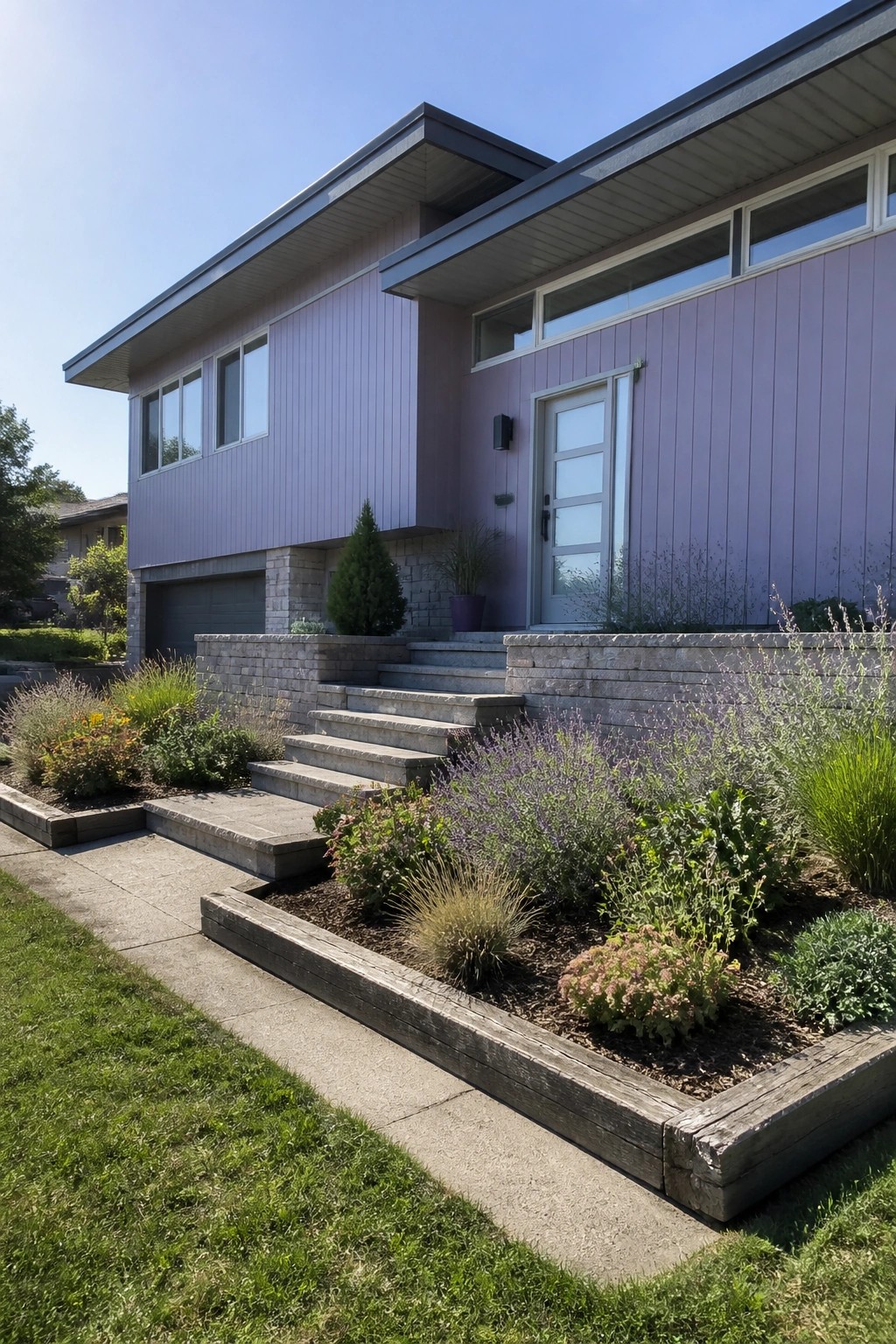
Lavender siding can feel a little light on its own, especially on a taller house. Setting it on a low gray stone base adds weight at the bottom and keeps the color from floating. The stone also picks up the cool tones in the paint, so the whole front stays balanced even when the sun hits it hard.
This approach works best on houses with clean lines and not too many materials already in play. Keep the stone to the lower third or to key spots like the entry steps and retaining walls. That way the lavender stays the main color without needing extra trim or details to hold it together.
Lavender Siding With Gray Stone
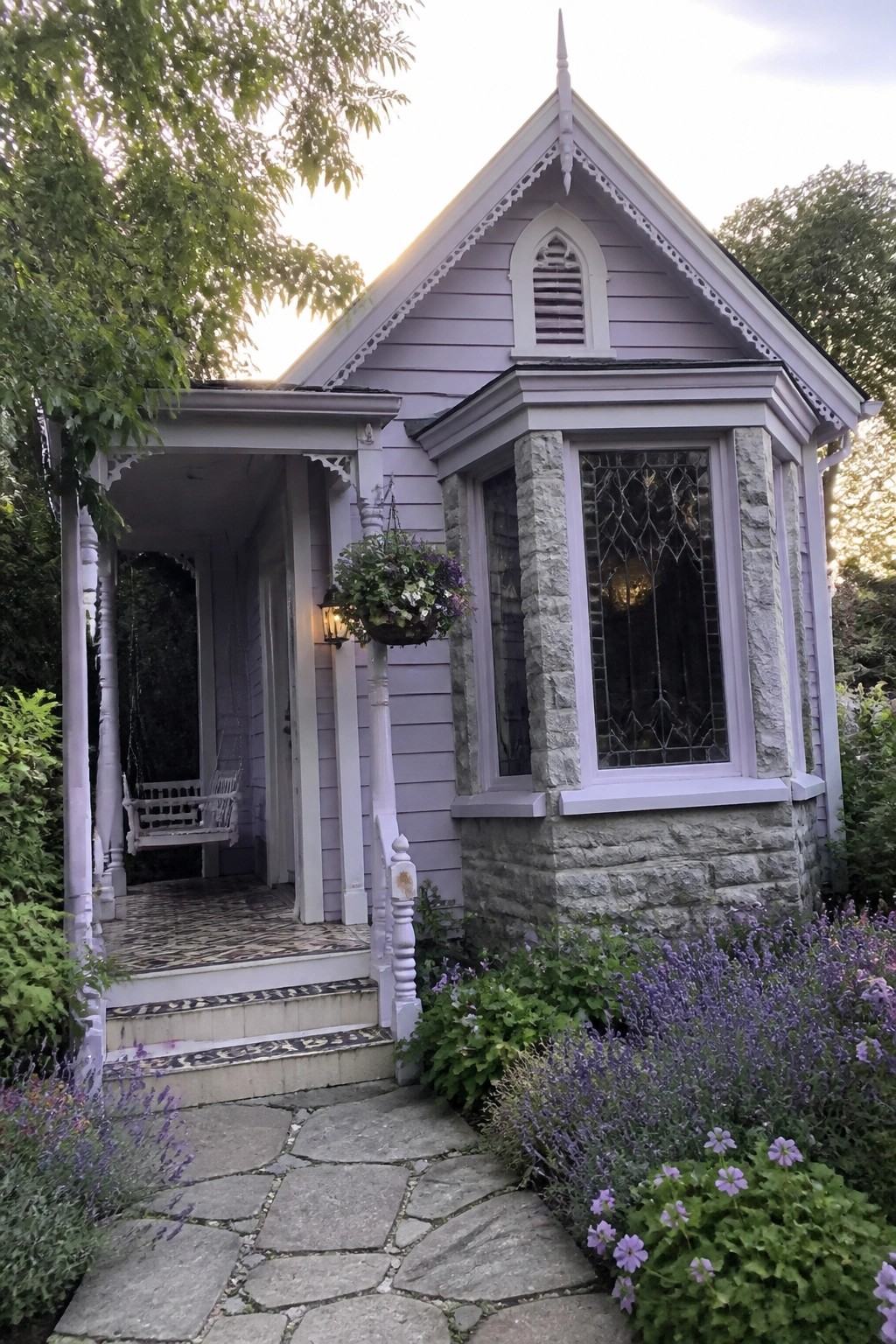
Lavender siding looks softer and more inviting when it sits next to gray stone. The stone gives the house a solid base and keeps the color from feeling too light or flat on its own.
This mix works best on smaller homes or cottages where you want some texture without adding too many materials. Keep the stone on the lower sections or around key windows so the lavender stays the main color.
Lavender With Gray Stone On Modern Homes
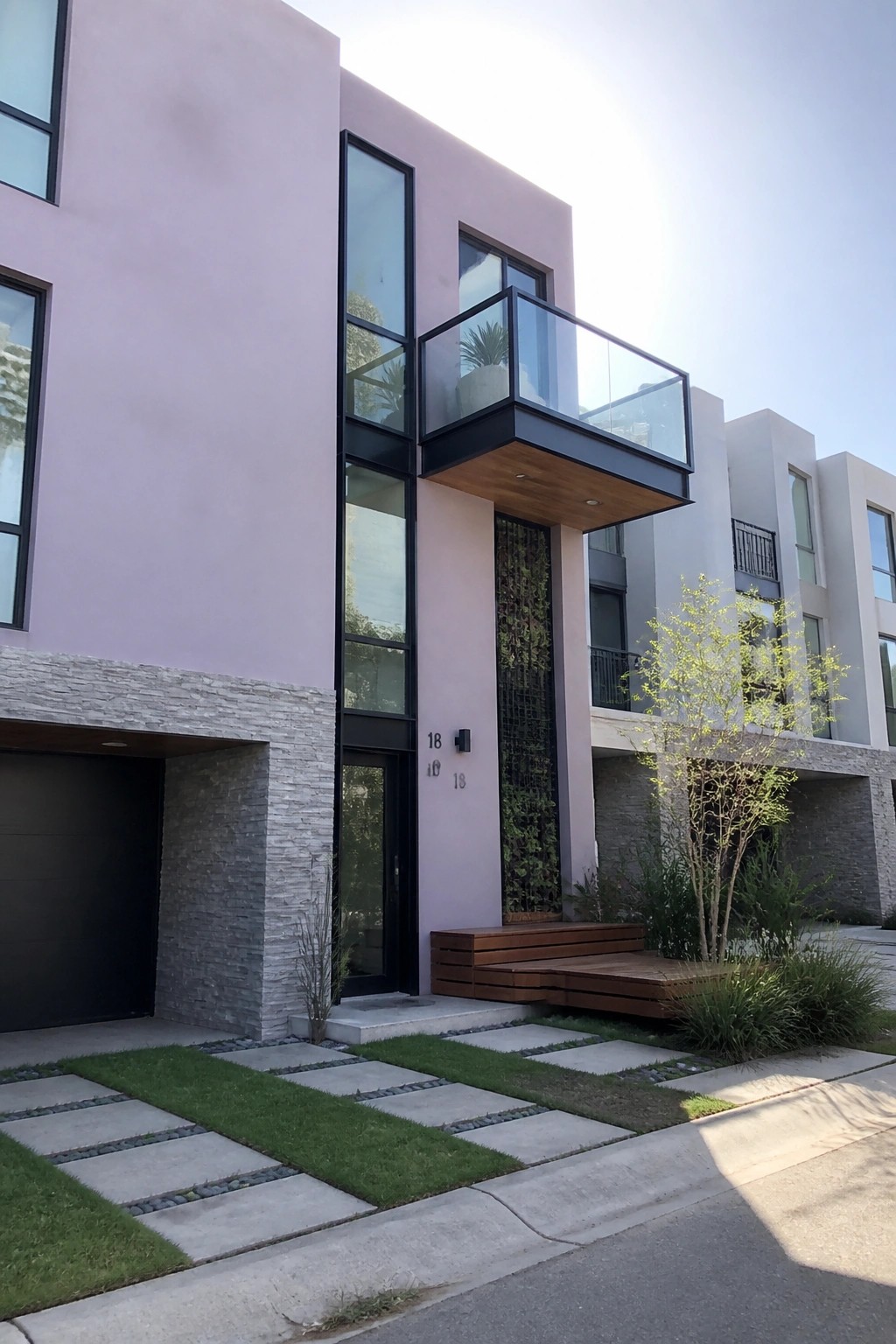
Many people like pairing a soft lavender exterior with gray stone at the base because it gives the color a solid, grounded look. The stone keeps the lavender from feeling too bright or flat, especially on homes with simple shapes and dark window frames.
This works best on newer builds where you want a bit of color without going too bold. Keep the stone in a muted tone and limit it to the lower section so the lavender stays the main focus.
Lavender Paint Over Stone Foundations
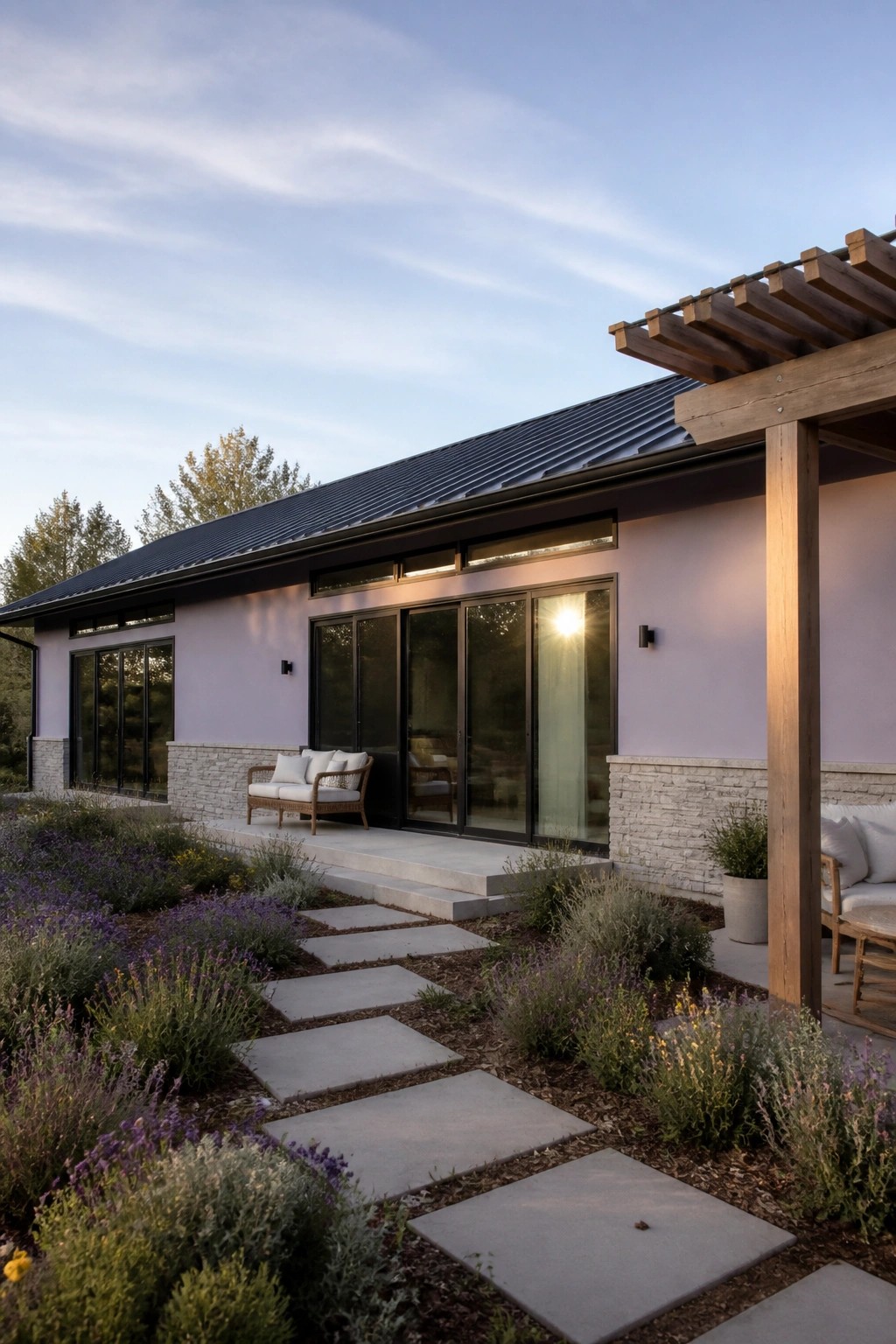
A soft lavender on the walls can feel surprisingly grounded when it sits on a low stone base. The stone adds weight and texture that keeps the color from looking too sweet or temporary, and it works especially well on houses that have clean lines and larger window openings.
This approach suits homes in milder climates where the light stays soft for much of the day. Keep the stone in a pale gray tone and limit it to the lower third of the wall so the lavender stays the main color. Avoid adding too many other materials or the whole look can start to feel busy.
Stone Framing On A Colored Exterior
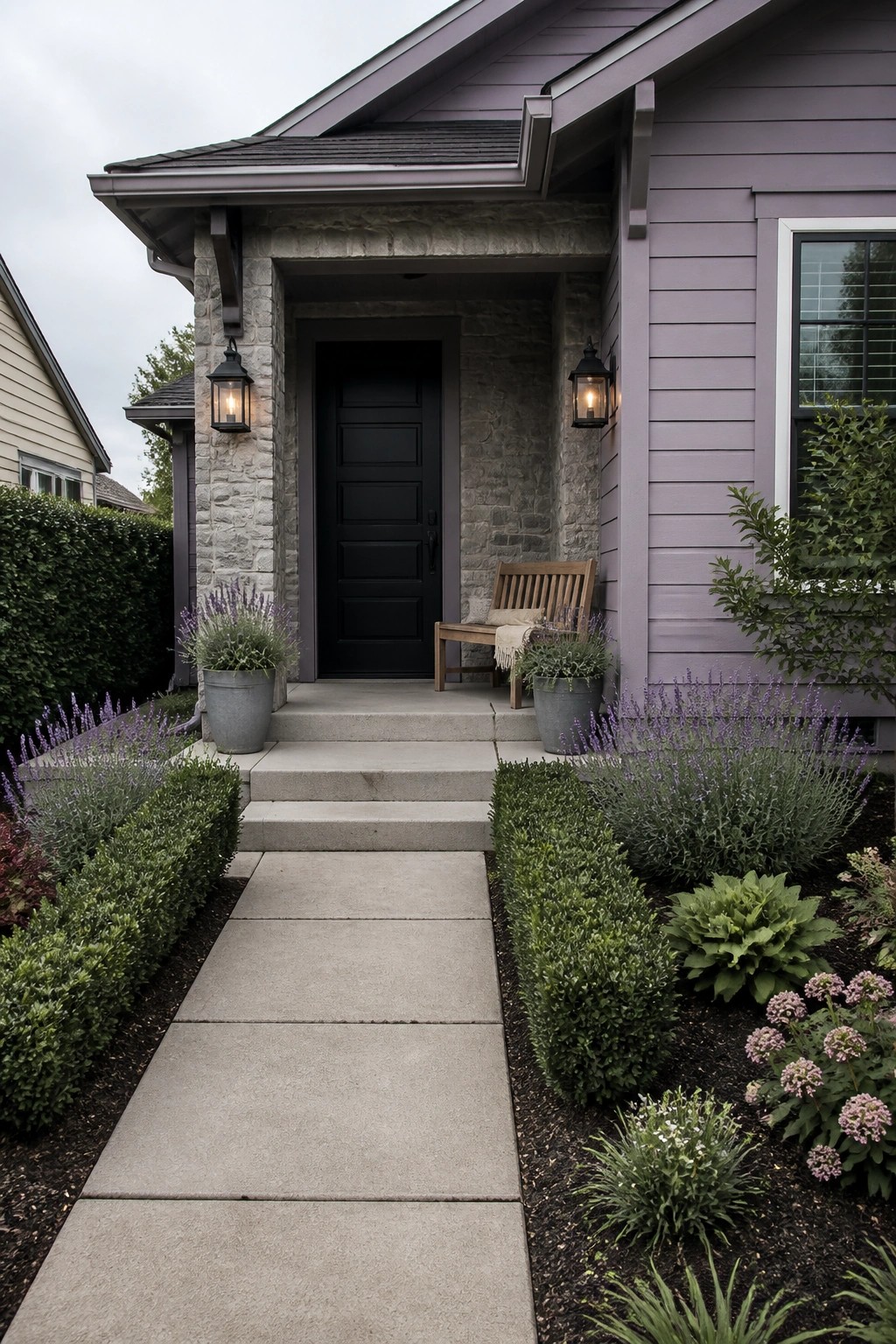
Stone around the entry gives a lavender house some needed weight without overpowering the color. The gray tones sit quietly against the siding and make the black door feel more intentional. It is a simple way to add texture that still lets the main house color stay front and center.
This approach works best on homes where the siding is already a strong shade. Keep the stone limited to the entry area so it reads as an accent rather than a full change. Avoid spreading it across the whole facade or the balance tips too far toward traditional.
Lavender Paint With Stone Accents
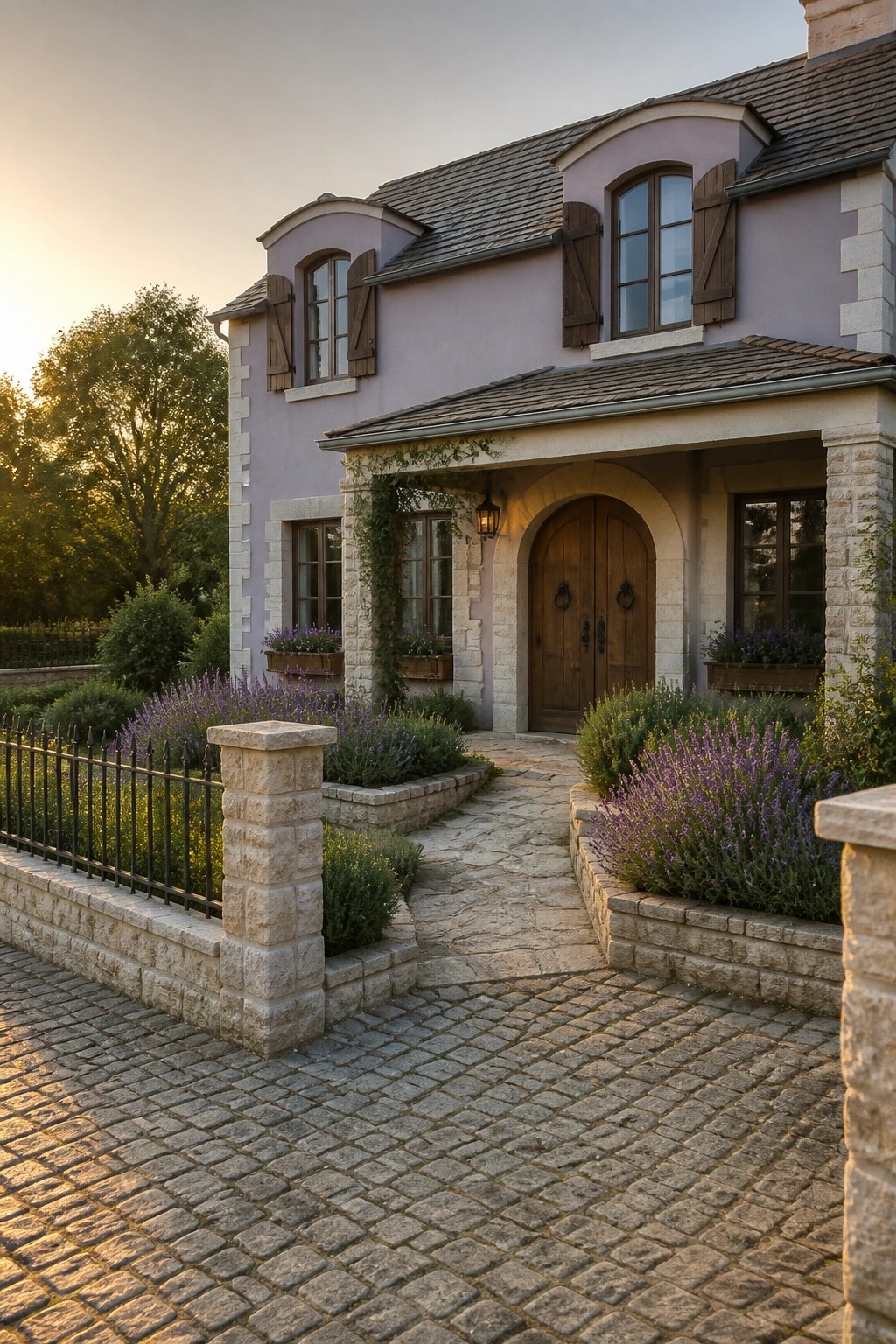
A soft lavender on the main walls gives the house a gentle presence that still feels grounded. The gray stone trim around the windows, corners, and entry adds weight and keeps the color from looking too sweet. This mix works especially well on homes with simple rooflines and traditional window shapes.
It suits older neighborhoods or homes that already have some stone or brick nearby. Keep the trim and shutters in a warm wood tone so the lavender does not feel washed out. Too much stone can make the color look flat, so use it mainly as framing rather than covering large areas.
Lavender Siding With A Stone Base
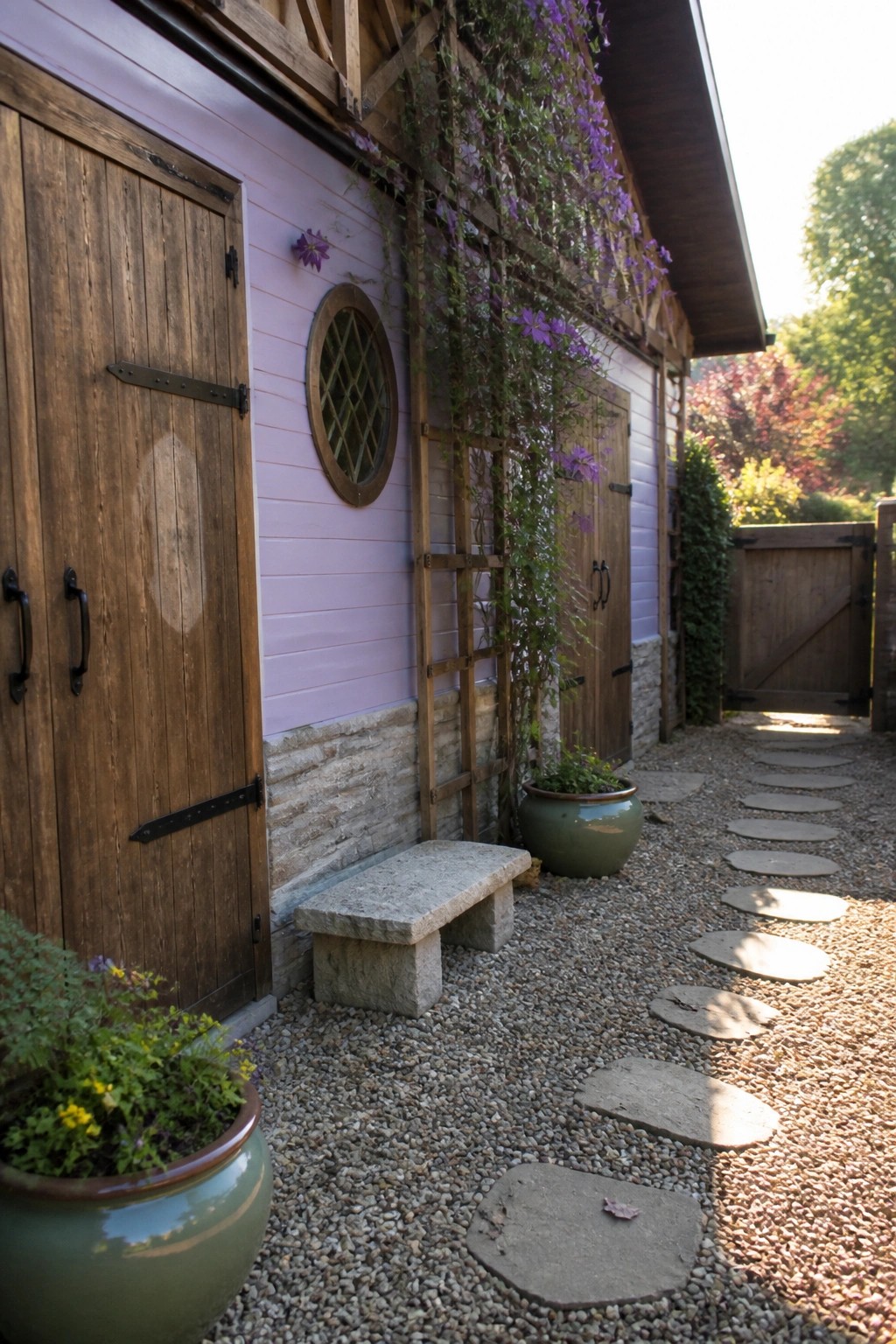
A soft lavender color on the siding gives a house exterior a gentle, slightly unexpected look that still feels grounded. The stone along the lower wall keeps the color from looking too light or floaty, especially when the house sits next to gravel and garden beds.
This approach works well on smaller homes or cottages where you want the walls to feel friendly without becoming the main focus. Keep the stone simple and low so the lavender stays the star while the base adds weight and texture.
Gray Stone With Lavender Brick
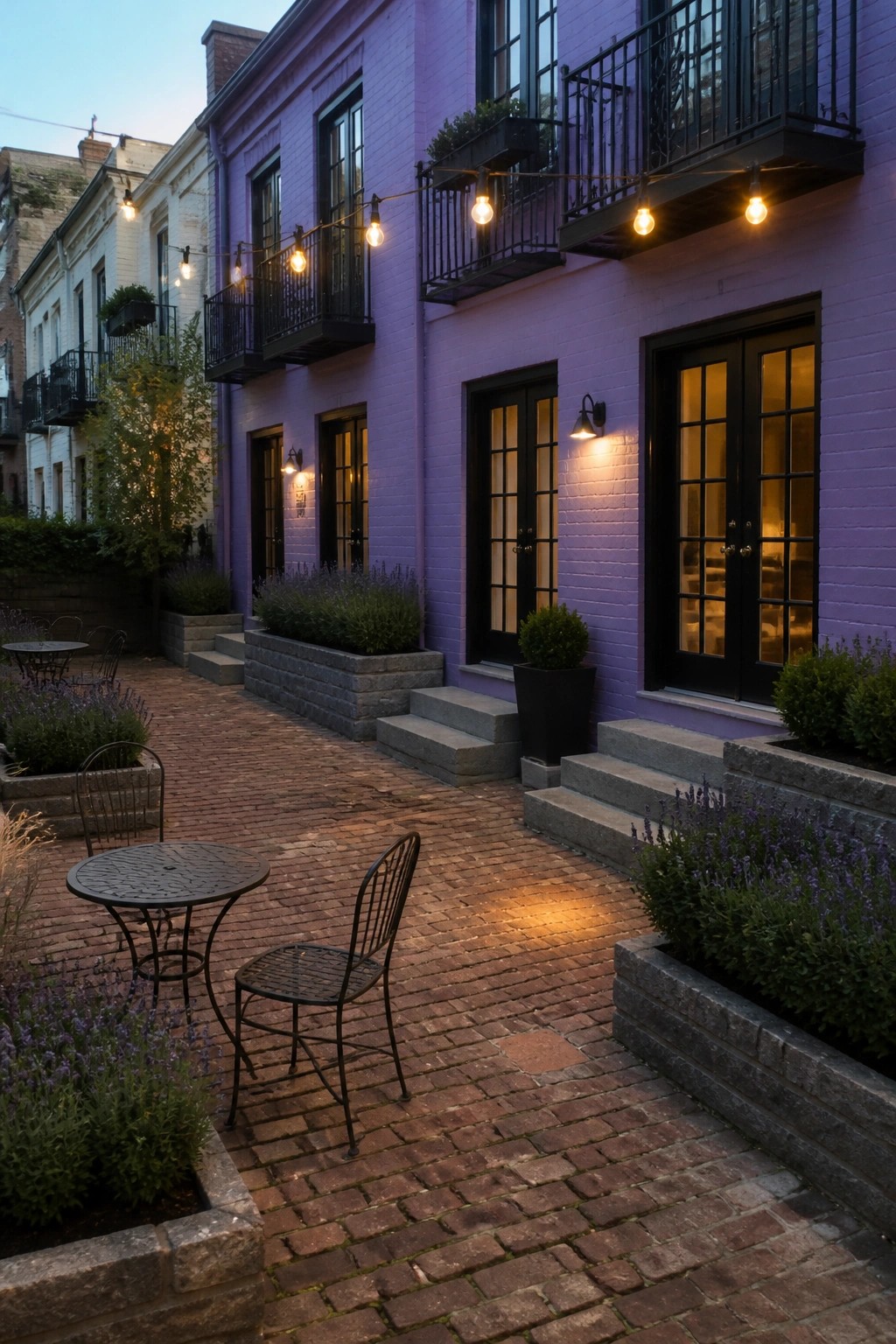
Lavender brick can look a little flat on its own, so adding soft gray stone steps and planters helps give it weight. The stone creates clear lines that make the color feel more settled instead of floating on the facade.
This works best on homes where the front path or entry needs definition. Keep the stone simple and rectangular, and let the lavender stay the main color rather than adding too many other materials.
Lavender Walls With Gray Stone
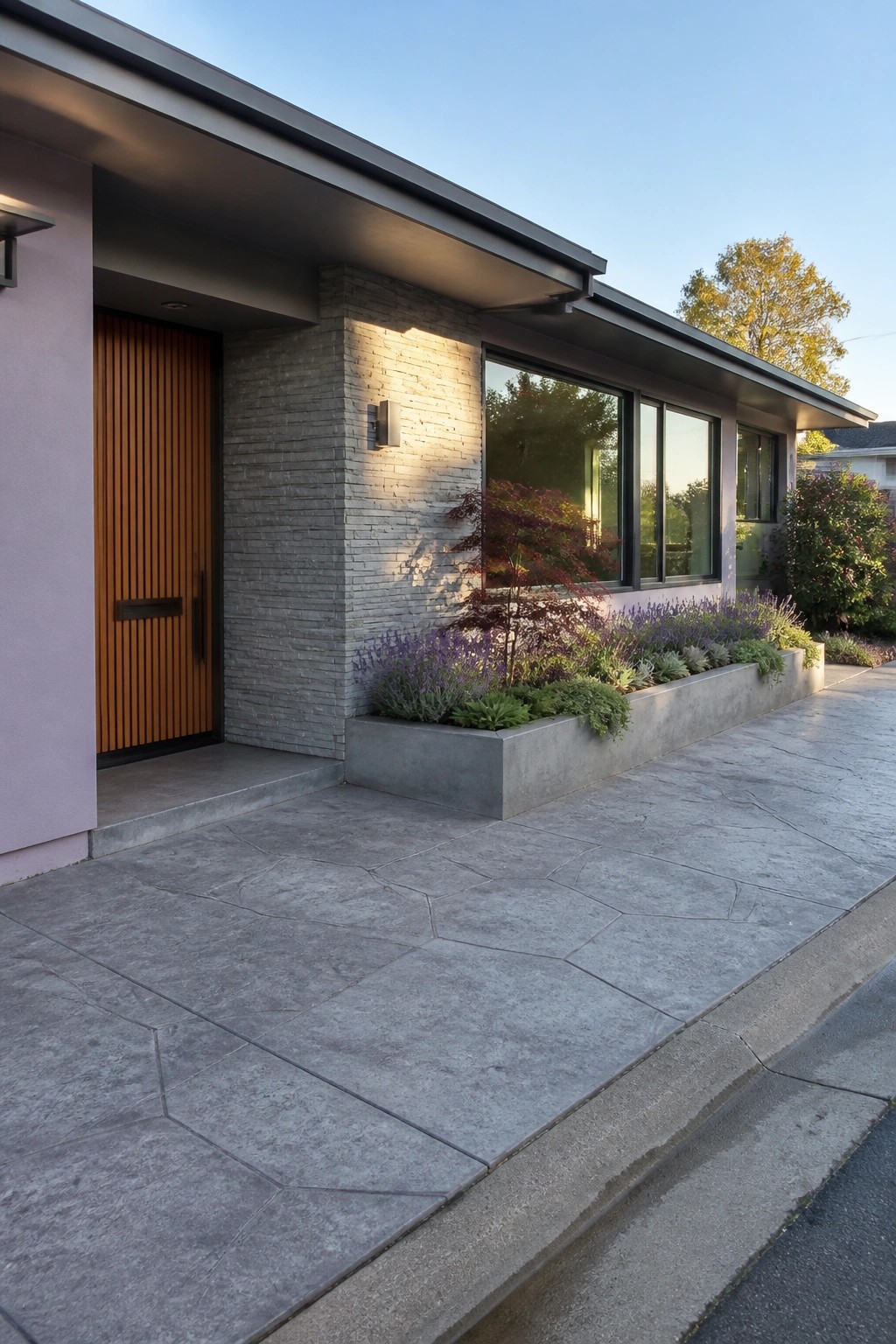
A soft lavender finish on the house exterior gives it a calm color that still stands out. The gray stone section beside it adds texture and keeps the whole front from feeling too light or flat.
This works best on homes with simple rooflines and clean shapes. Try it if you want something different from standard beige or gray houses but still need the stone to provide weight and balance.
Lavender Siding With Gray Stone Accents
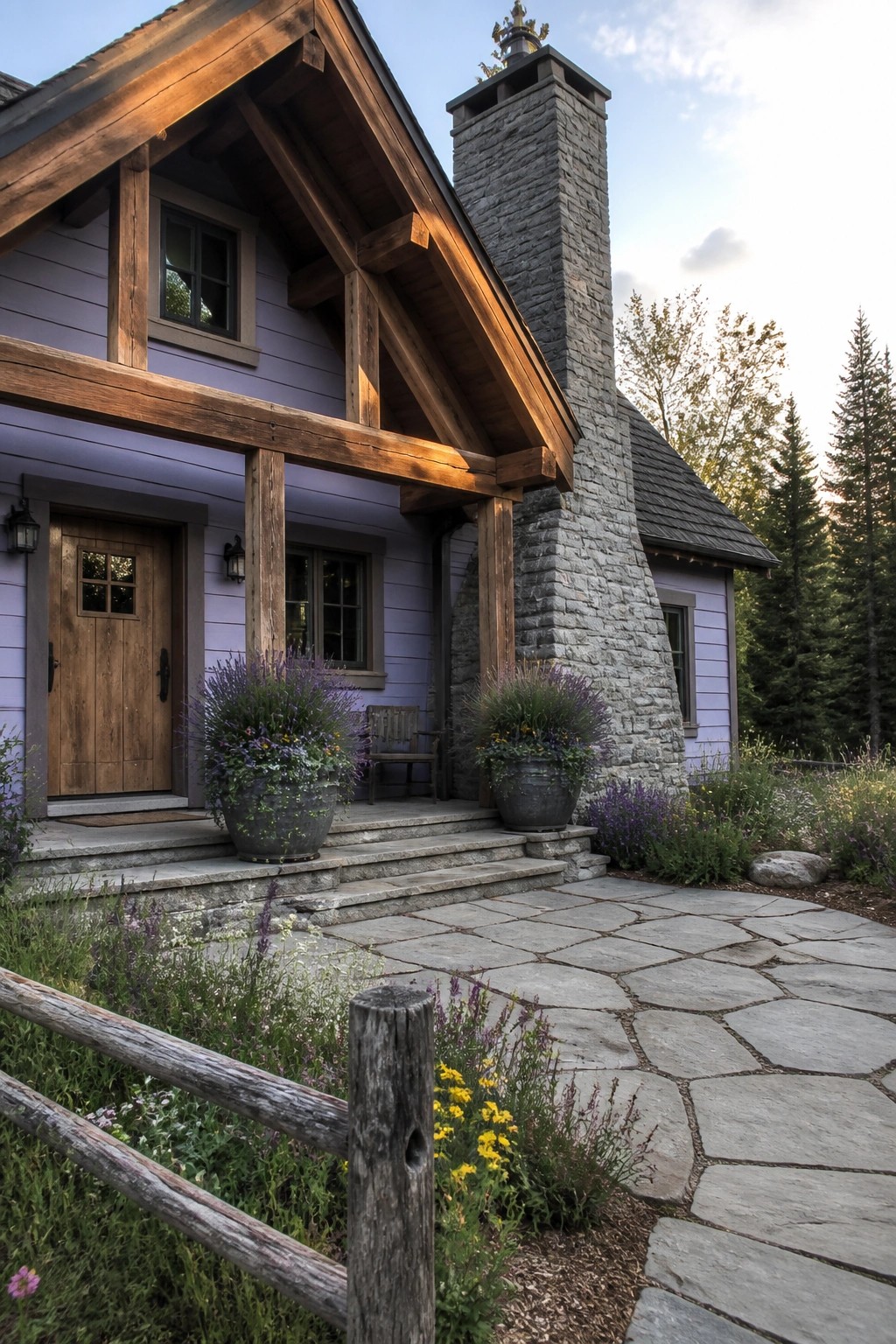
A light lavender paint color on the exterior can feel both fresh and grounded when it sits next to gray stone. The soft tone stands out nicely against the heavier material without fighting it.
This pairing works best on homes that already have a strong stone element like a chimney or foundation wall. It suits wooded lots and gives the front a calm look while keeping the architecture from feeling too heavy.
Lavender Siding With Gray Stone Foundations
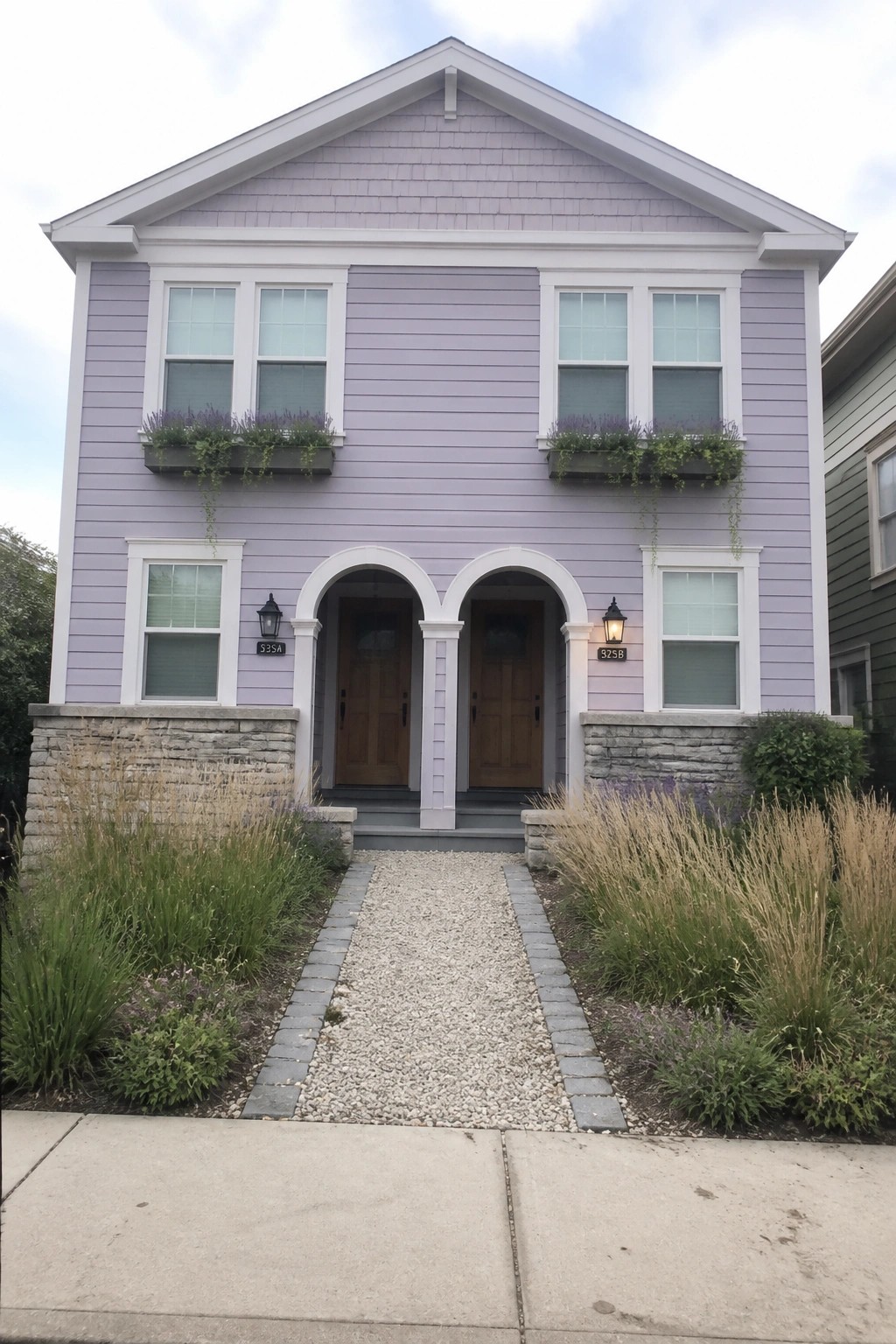
A soft lavender color on the upper walls can feel a little light on its own. Adding a band of gray stone across the base gives the house more weight and keeps the whole front from looking too delicate.
This approach works best on two-story homes where the stone stops around the first-floor windows. It also helps the entry stand out when the doors are a natural wood tone and the path is kept simple with gravel and low plants.
Frequently Asked Questions
Q: Will a deep lavender shade still work if my house gets full sun most of the day? A: Go with a slightly lighter tone that has some gray mixed in so it does not bake out too fast. The soft gray stone helps balance the brightness anyway. A test patch on the wall shows you exactly how it shifts by afternoon.
Q: What if I want to add climbing vines along the stone? A: Pick something like ivy that stays green year round and trim it back from the lavender siding. The vines soften the stone without fighting the color. Just check that they do not trap moisture against the wall.
Q: How do I keep the gray stone looking clean next to the paint? A: A quick rinse with a garden hose every few months handles most dust and pollen. Skip harsh cleaners since they can lighten the stone over time. The pairing stays elegant as long as both surfaces stay simple.
