

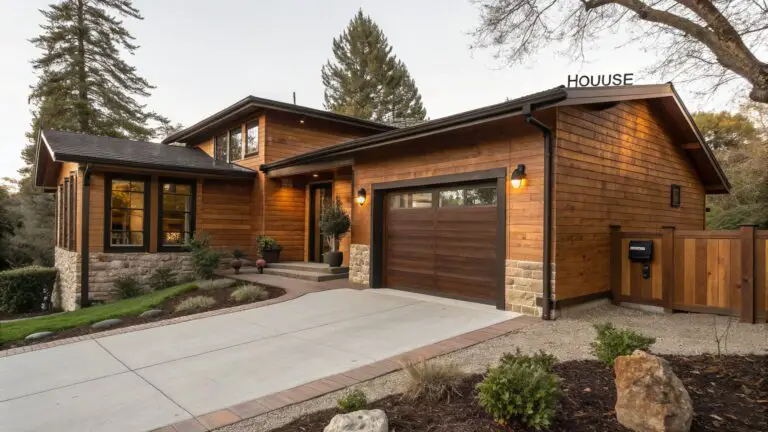
I’ve driven past plenty of homes where the exterior color alone makes you slow down and take a second look, and warm browns do that reliably by grounding the facade in a way that feels timeless.
They work because they play well with natural materials like brick or wood siding, softening rooflines and drawing the eye right to the entry without clashing against green lawns or neighboring houses.
Warm browns ground a home.
I remember testing one on a friend’s house years back, and it shifted the whole front from flat to layered just by how it caught the afternoon light.
You’ll find ideas here worth noting down for your own place, ones that boost curb appeal through smart material mixes or simple accents you can actually pull off.
Warm Brown Shakes on a Craftsman Porch
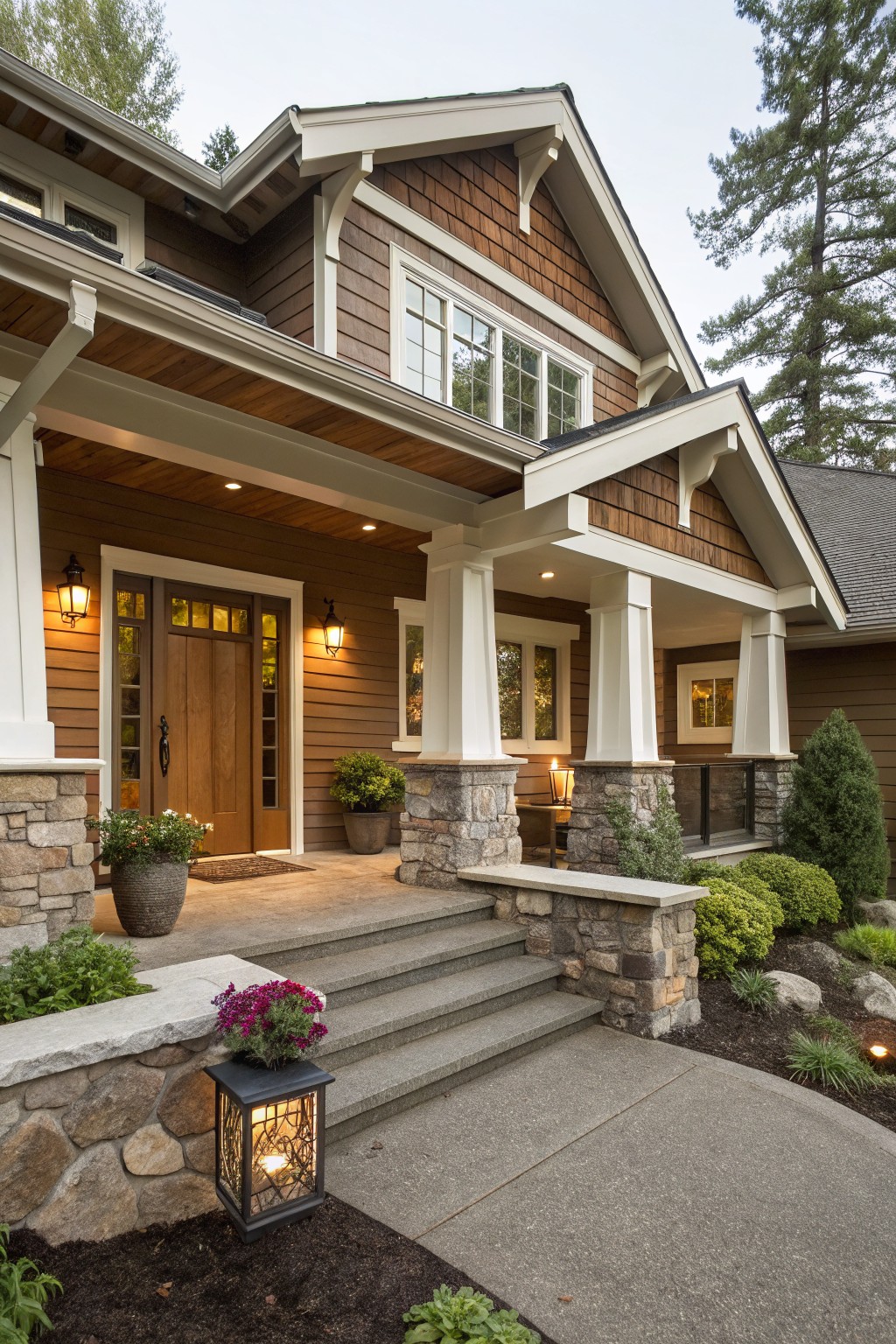
Warm brown shingle siding like this brings a cabin feel right to your front door. It wraps the house nicely, especially under that deep porch roof, and pairs with crisp white trim to make everything look clean and settled. The stone pillars at the base keep it from floating off the ground. Folks notice this kind of look because it feels sturdy yet homey, perfect for pulling in neighbors on a walk by.
Try it on a two-story home in a wooded spot or suburb where you want some tradition without fuss. Stick to shakes in cedar tones for that texture, and keep trim bright white. Add a few pots and steps like here, but skip heavy landscaping if your lot’s small. It works best where the porch gets some shade.
Recommended Products

Tru-Lock state-of-the-art locking system, Random seams
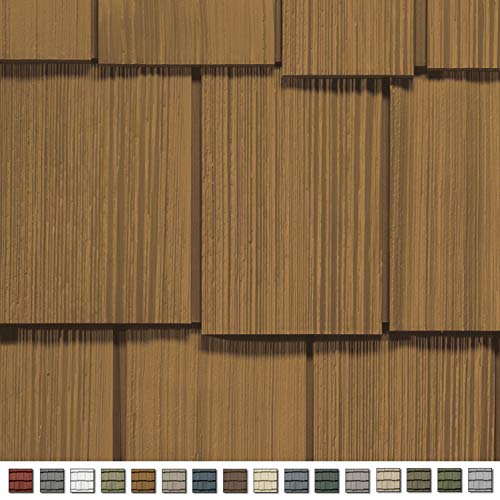
Patented PanelThermometer for precise installation True Texture finish technology

Tru-Lock is a state-of-the-art locking system
Warm Brown Shingle Siding
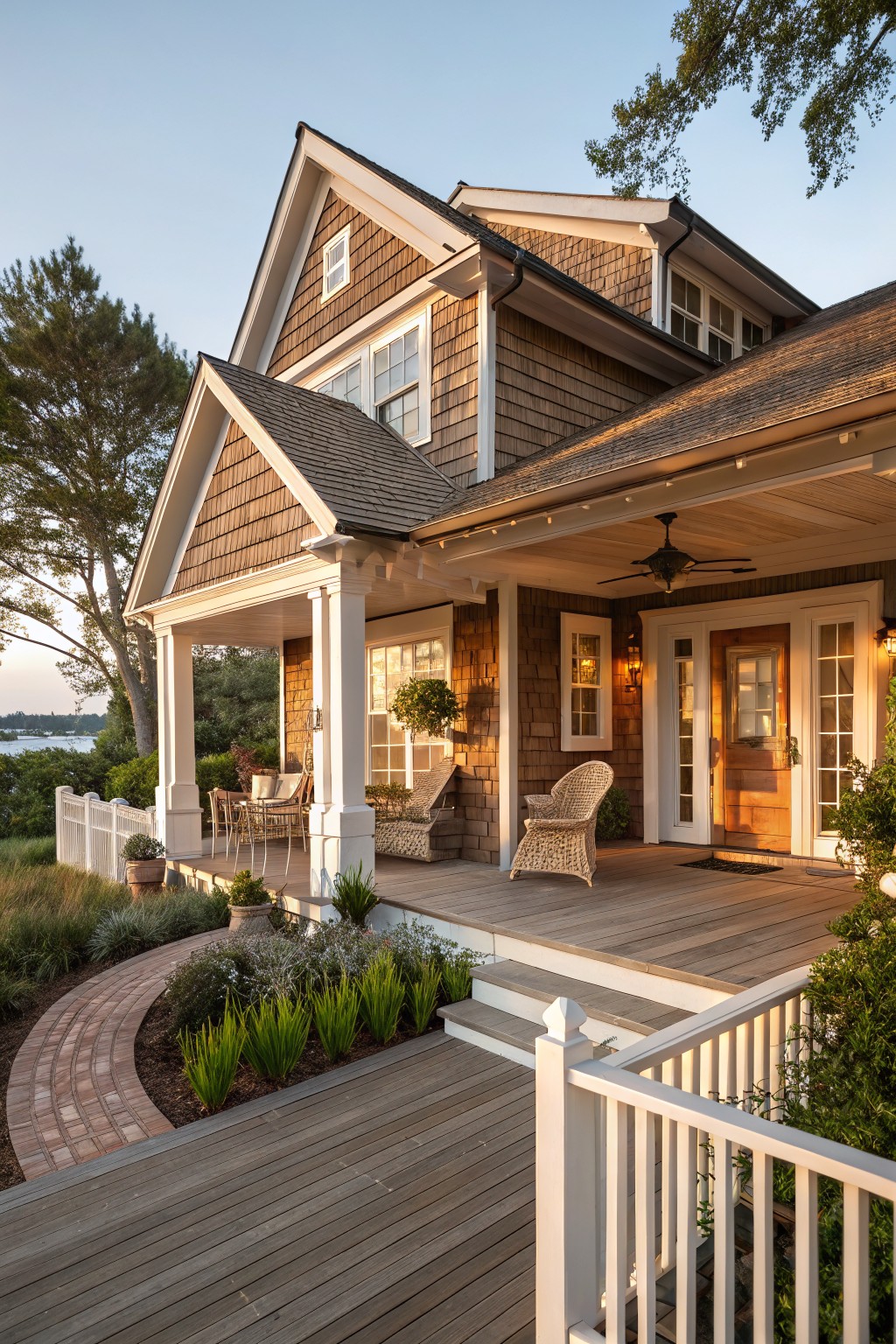
Shingle siding in soft brown tones wraps this house nicely. It picks up the natural wood colors around it, like the trees and decking. White trim on the porch columns keeps things crisp and pulls the eye right to the front door.
This siding style fits homes near water or in wooded spots. It ages well with a little upkeep, staying warm-looking year round. Add a big porch like this one, and you get instant outdoor living space that draws folks outside.
Stone Accents on Warm Stucco Facades
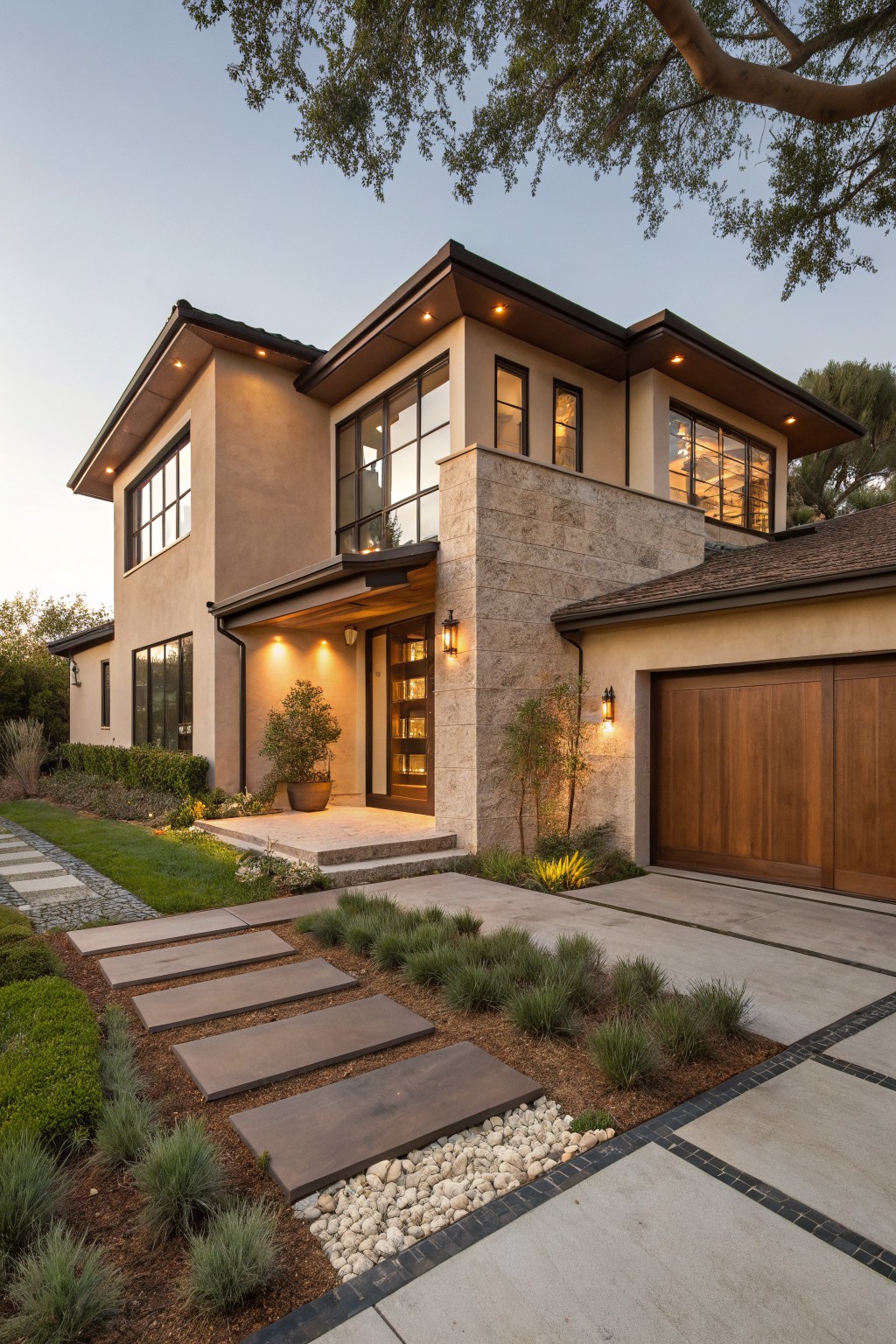
One way to add real interest to a plain stucco house is with stacked stone blocks around the entry or corners. You get that nice contrast between the smooth beige walls and the rougher texture of the stone. It makes the whole front feel more solid and grounded, especially when the tones are all in the same warm brown family. Folks like how it keeps things modern but nods to older craftsman styles too.
This works best on two-story homes where the stone picks up the height without taking over. Pair it with a wood garage door and keep the landscaping simple, like grasses along a stone path. Skip it if your lot is super small, since the stone can feel heavy up close. Just make sure the mortar matches the stucco color so it blends right in.
Warm Vertical Wood Cladding
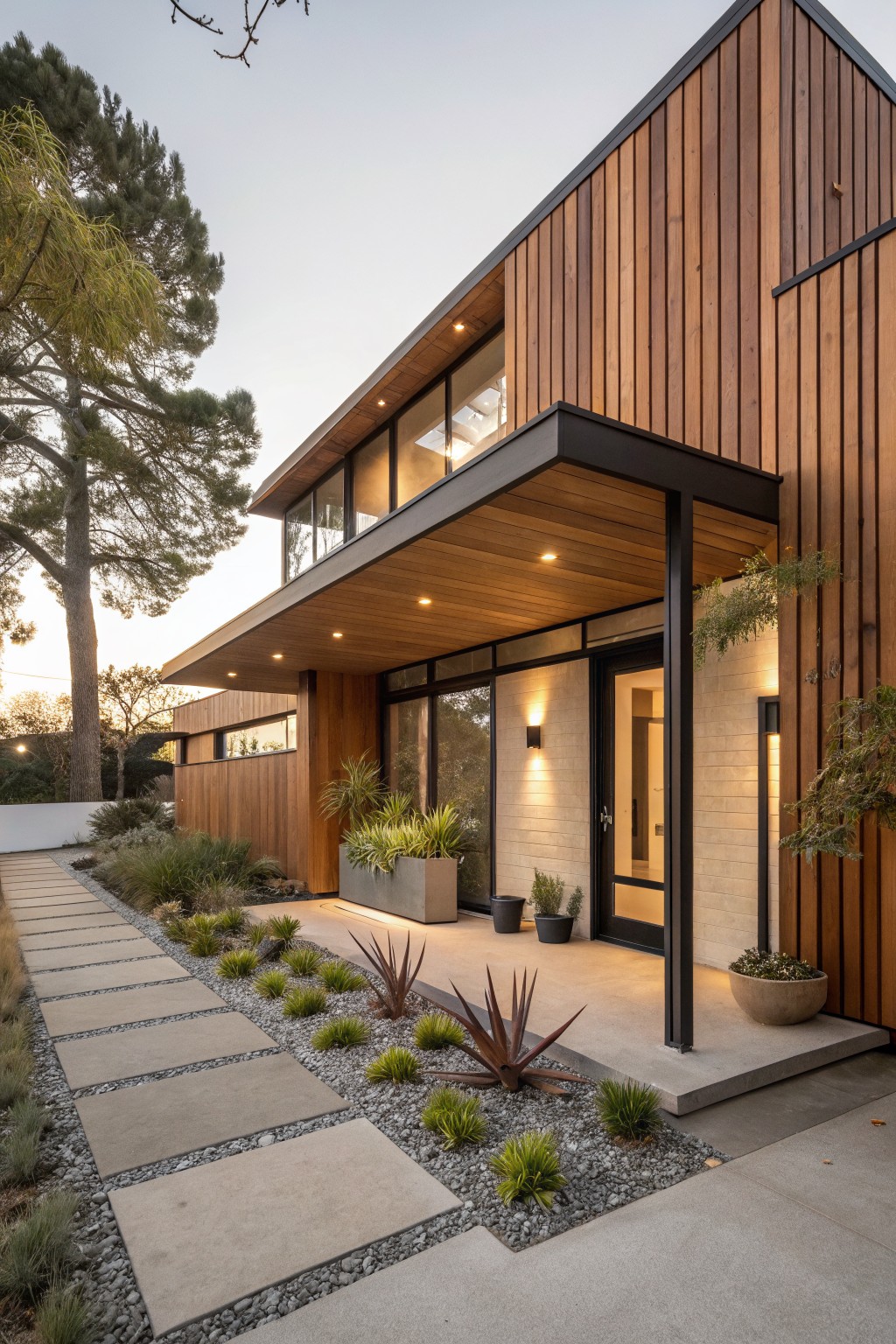
Warm vertical wood cladding like this turns a simple modern house into something that feels right at home in a wooded spot. The brown tones pull in the surrounding pines without overpowering them. And that overhanging canopy at the entry adds shelter while keeping the lines clean.
You can pull this off on mid-sized homes with flat or low roofs. Stick to cedar or similar weather-resistant wood, and let it age naturally for more character. It suits places with some shade from trees. Just keep the landscaping sparse so the wood stays the focus.
Warm Stucco Facade with Tile Roof
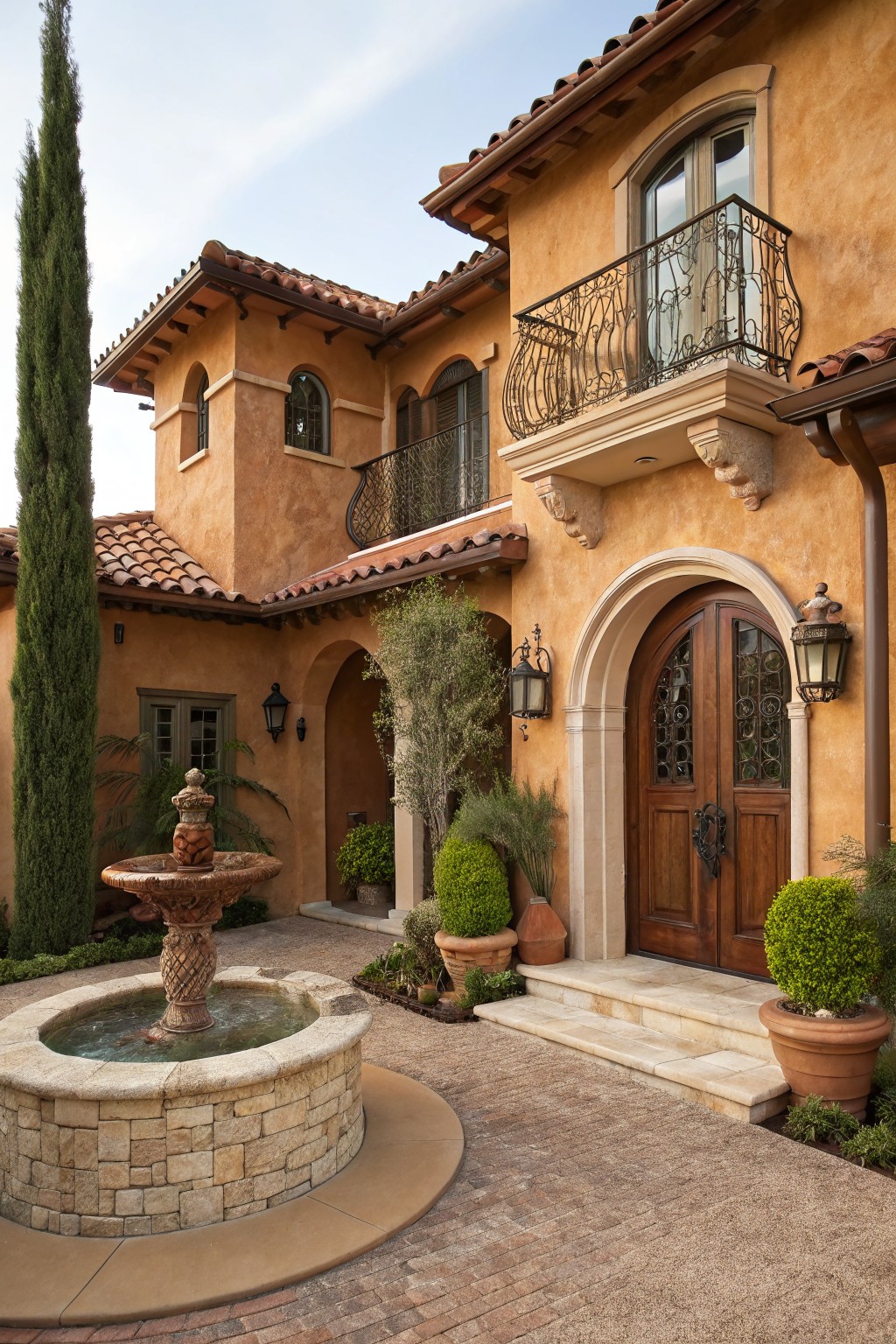
A textured stucco in soft brown tones like this one gives a house real warmth and depth without much effort. Paired with those classic terracotta roof tiles, it pulls together a look that’s sturdy yet homey. The arched entry and balcony details fit right in, making the whole front feel settled and welcoming from the street.
This style suits older homes or new builds in dry areas where the materials hold up well. Frame your door with simple plants and maybe a small fountain in the courtyard to draw folks closer. Just keep the stucco clean… it shows dirt if you don’t.
Classic Arched Entry on Brown Brick
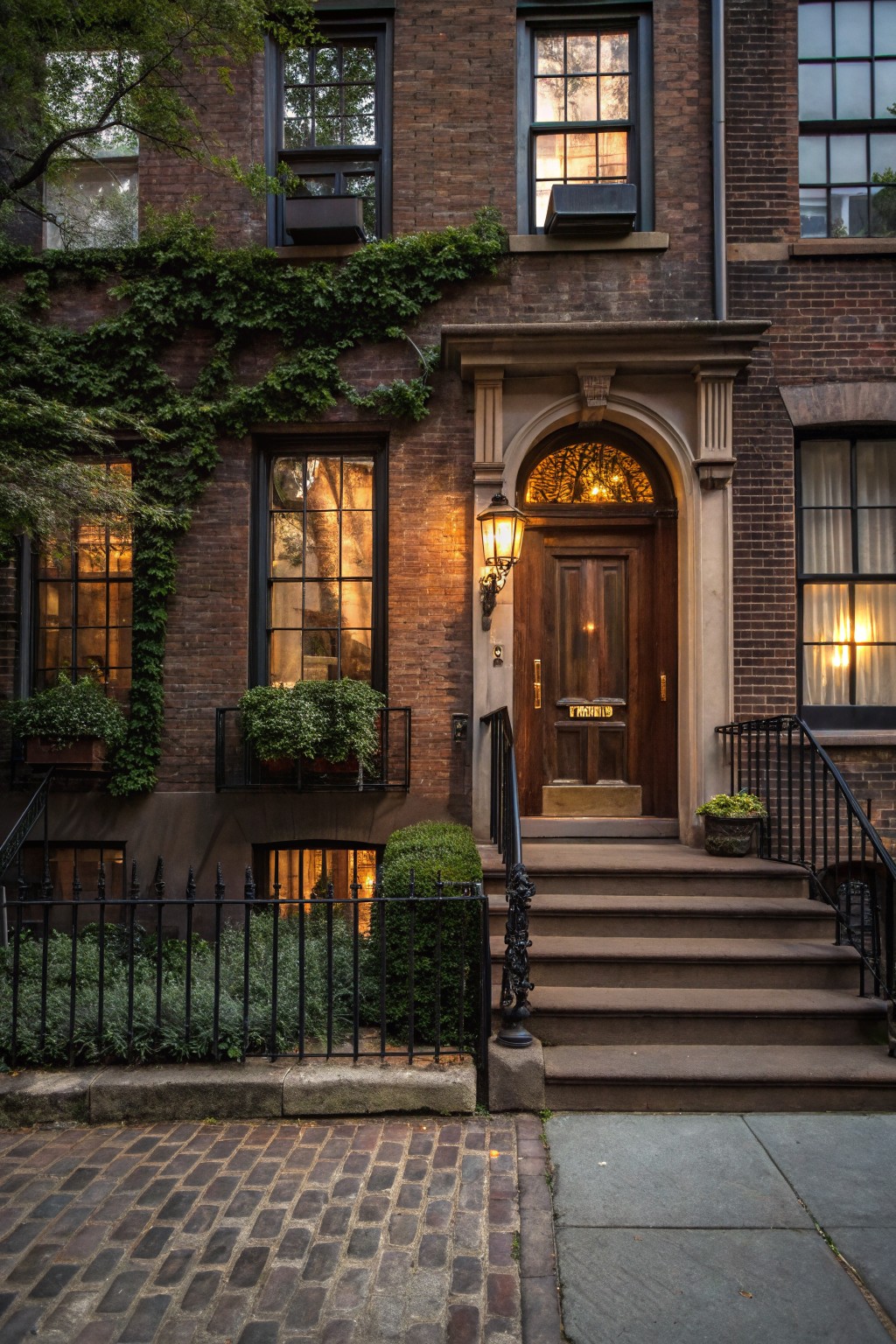
An arched front door like this one gives a brown brick house that old-world charm without trying too hard. The curve over the door pulls your eye right up, and pairing it with a simple lantern light makes the whole entry feel welcoming, especially as the sun goes down. Ivy climbing the brick sides softens things up nicely, turning a solid facade into something a bit more alive.
This works great on townhouses or narrow row homes where you want to stand out from the neighbors. Go for dark wood on the door to match the brick tones, add a brass knocker for detail, and keep plants in pots at the base of the steps. Skip too much fuss on the archway though. It shines on city streets or quiet urban blocks.
Exposed Timber Beams on Warm Wood Siding
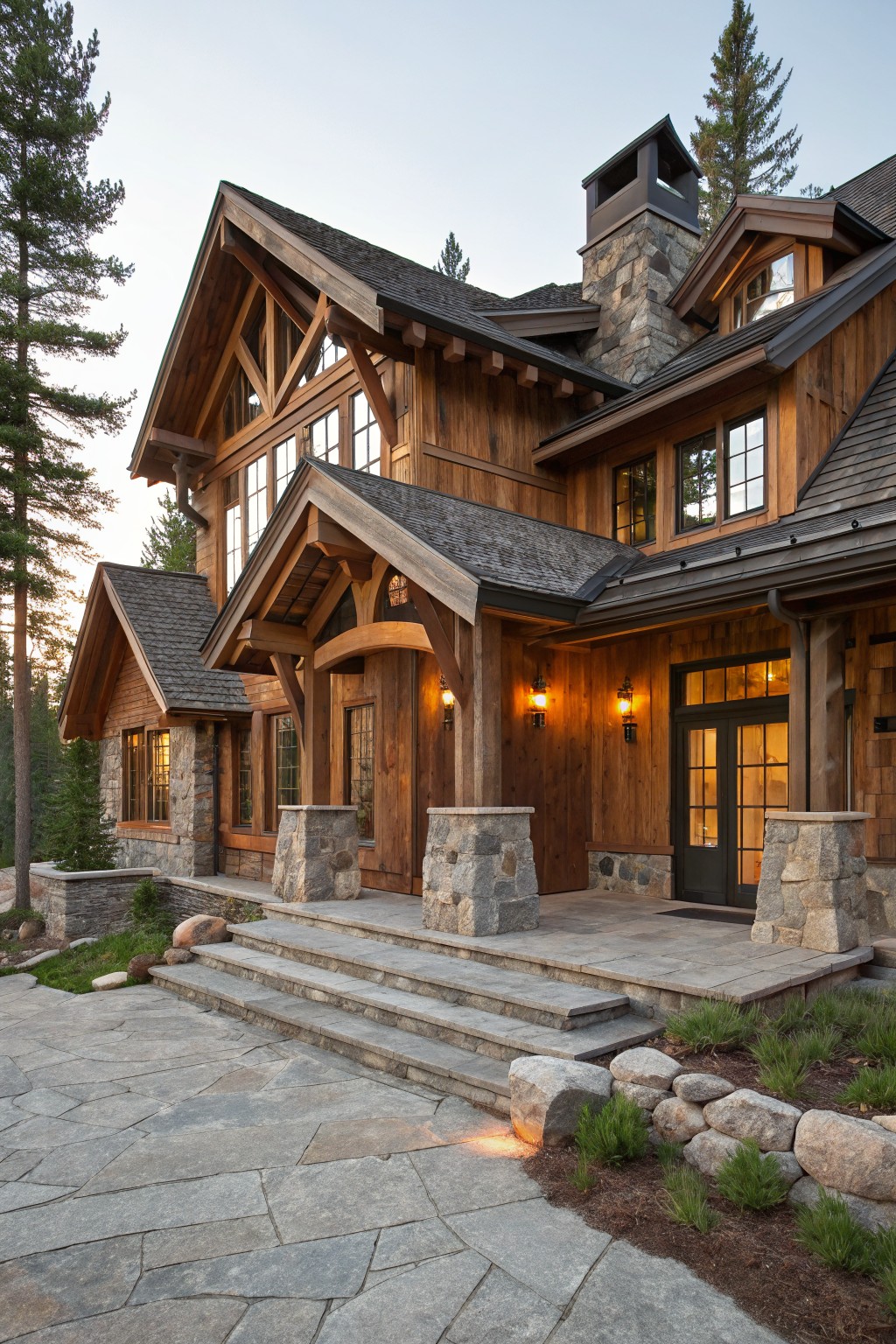
Heavy timber beams stand out on this brown wood house, framing the large windows and entry porch. The dark stain on the beams contrasts just enough with the lighter siding to pull your eye up to the roofline. Stone pillars at the base keep everything feeling solid, like a real mountain home that belongs in the trees.
You can add this look to homes with steep roofs or lots of vertical space. Use reclaimed timbers if you want character without the full log cabin vibe. It suits wooded lots best, where the wood echoes the pines. Skip it on flat modern builds, though. It might overwhelm.
Warm Wood Cladding on Modern Concrete
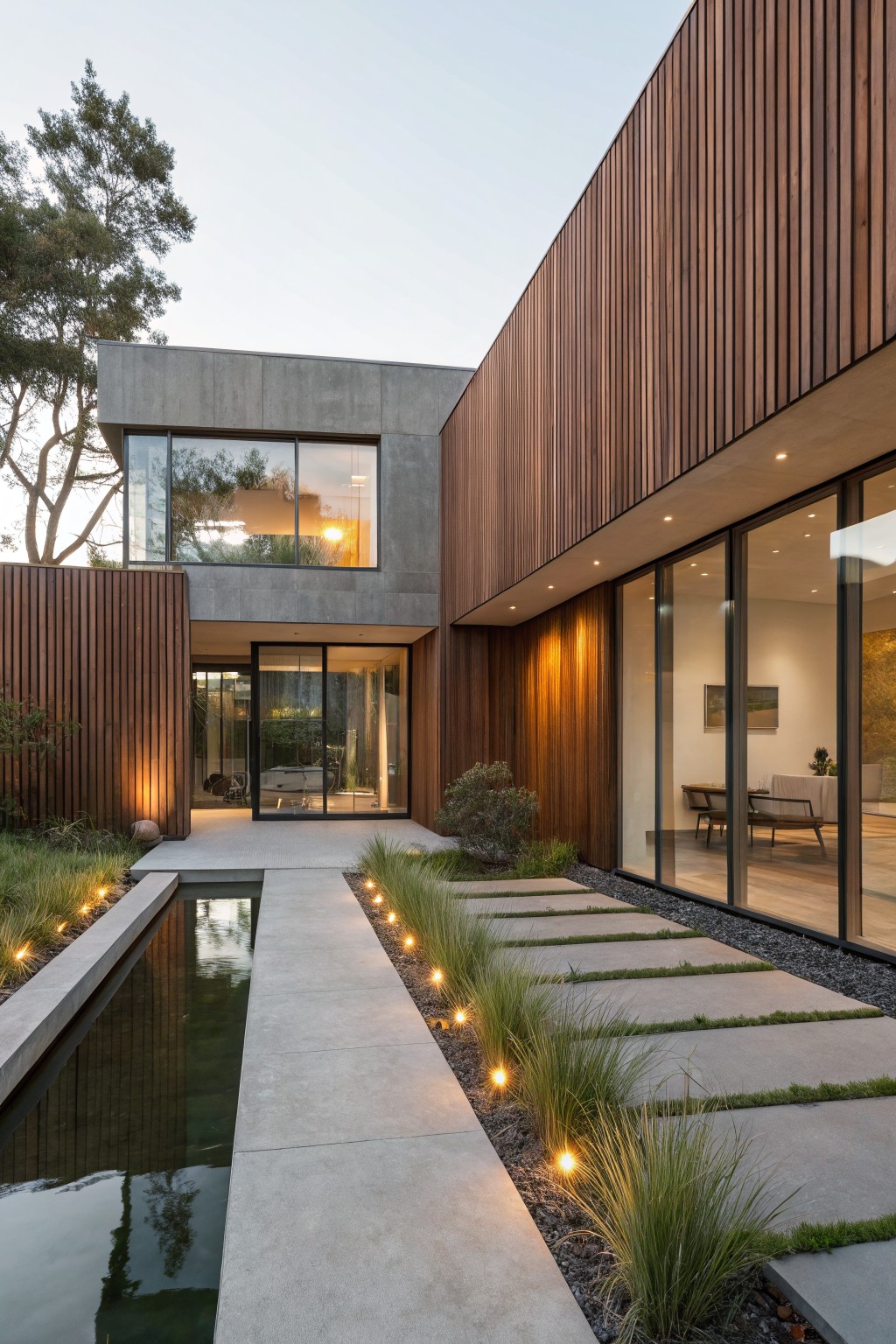
Warm brown wood cladding like this adds real life to a concrete house. The vertical panels run up the side and frame the entry, softening that hard gray surface without losing the clean lines. It pulls in the outdoors too, especially with big glass windows showing the inside glow.
This setup works best on homes that lean modern but need more personality from the street. Try it on taller walls or around doors to guide eyes in. Pick cedar or similar that holds up outside, and plan to restain every couple years to keep the color rich.
Classic Brick Portico Entry
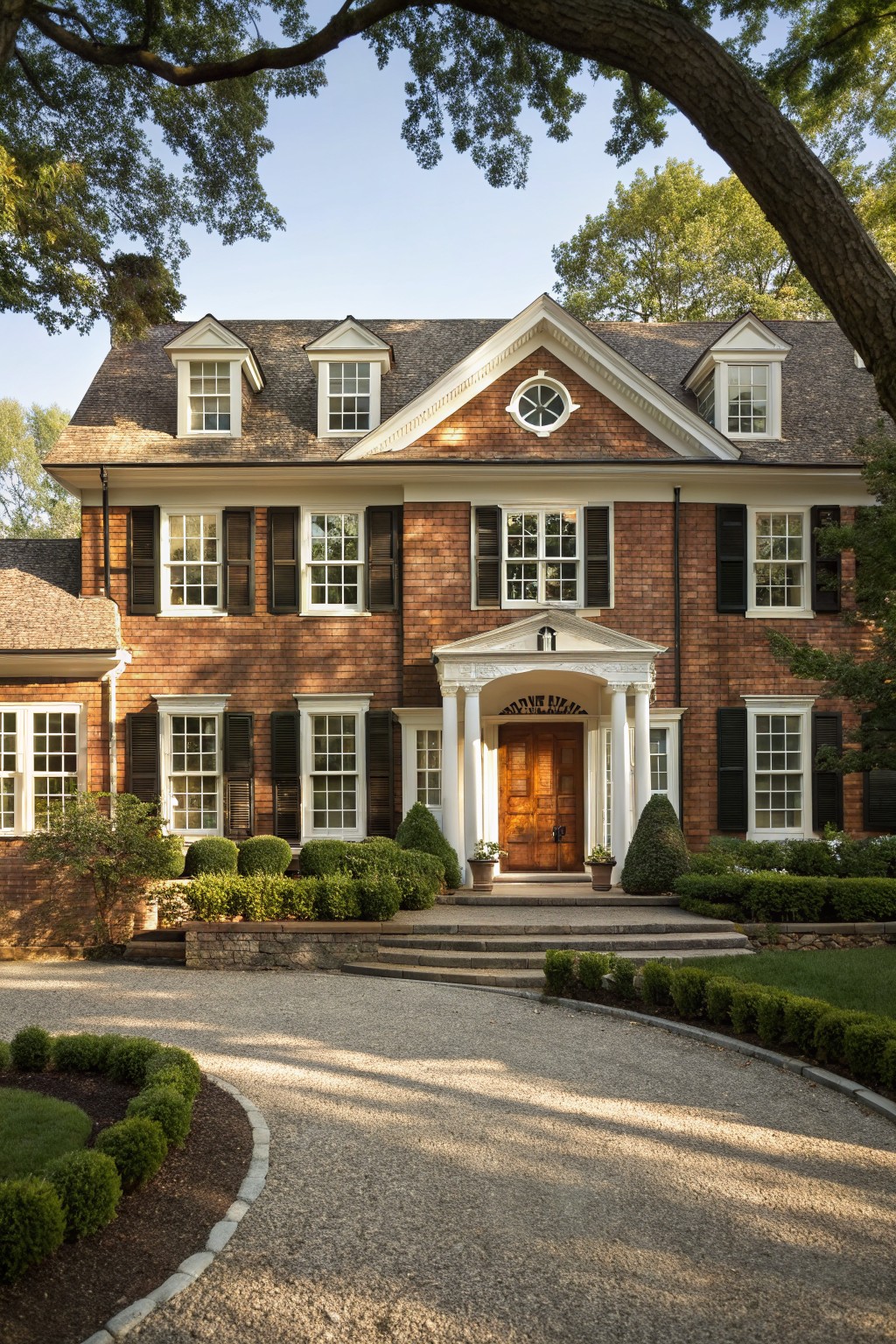
A warm red-brown brick facade like this one really shines when you add a simple portico with white columns framing the front door. It gives the house that straightforward classic feel, making the entry pop without much fuss. The brick’s earthy tone pulls everything together, and those columns add just enough height to draw your eye up.
This setup fits older suburban homes or places aiming for traditional curb appeal. Line the steps with low boxwoods to keep it neat, and pick a wood door in a similar warm stain. Skip anything too modern here, or it might clash with the brick’s cozy vibe.
Warm Brown Shingle Siding
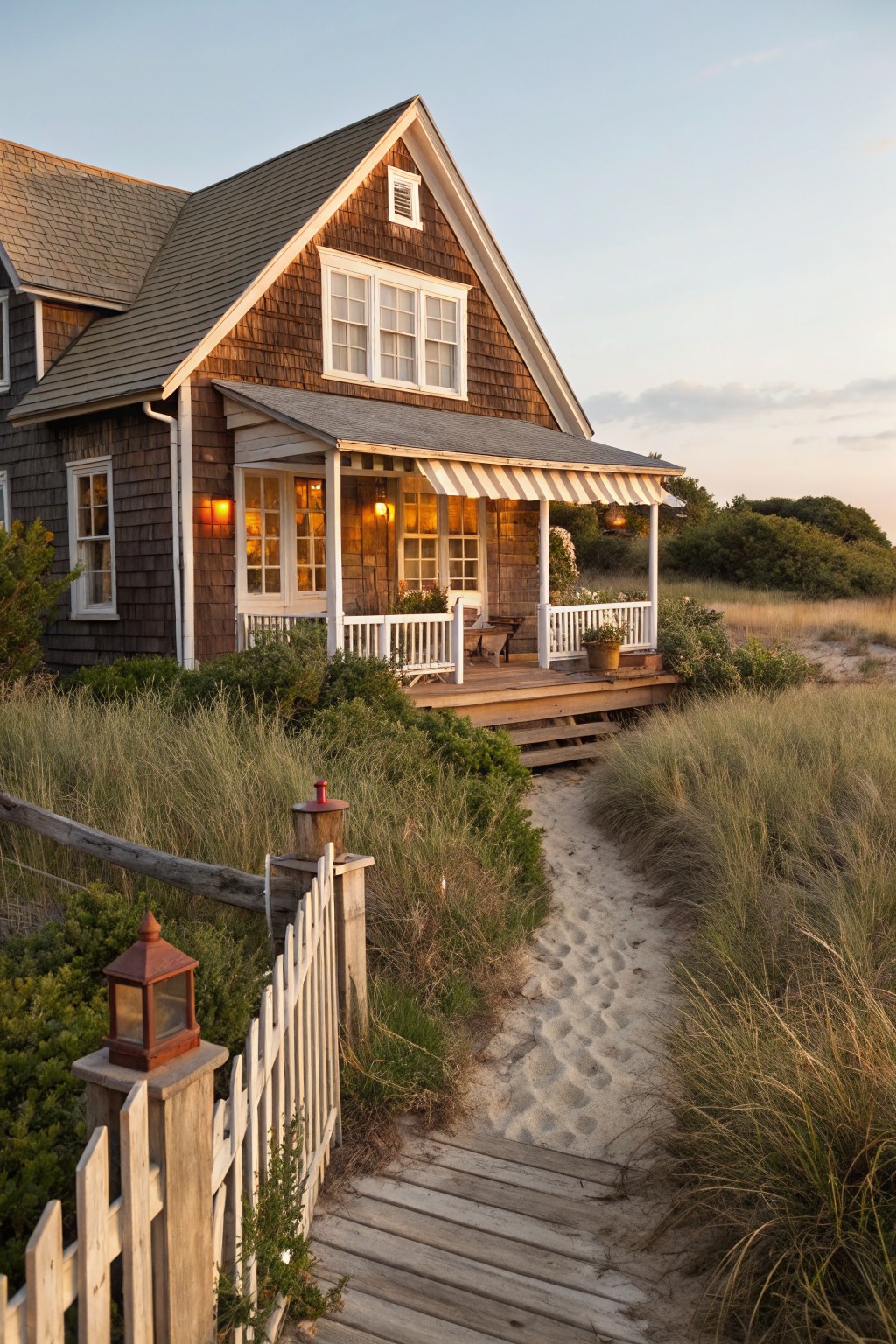
Warm brown shingles like these wrap the house in a textured look that feels at home near the beach. They pick up earthy tones from the sand and dunes, making the place blend right in while still standing out. That subtle warmth draws the eye without overwhelming the simple lines of the roof and porch.
You can pull this off on coastal cottages or even inland spots wanting a relaxed vibe. Pair it with crisp white trim around windows and doors for clean contrast. It’s forgiving on upkeep too, since the natural weathering just adds character over time.
Stone and Timber Tudor Facade
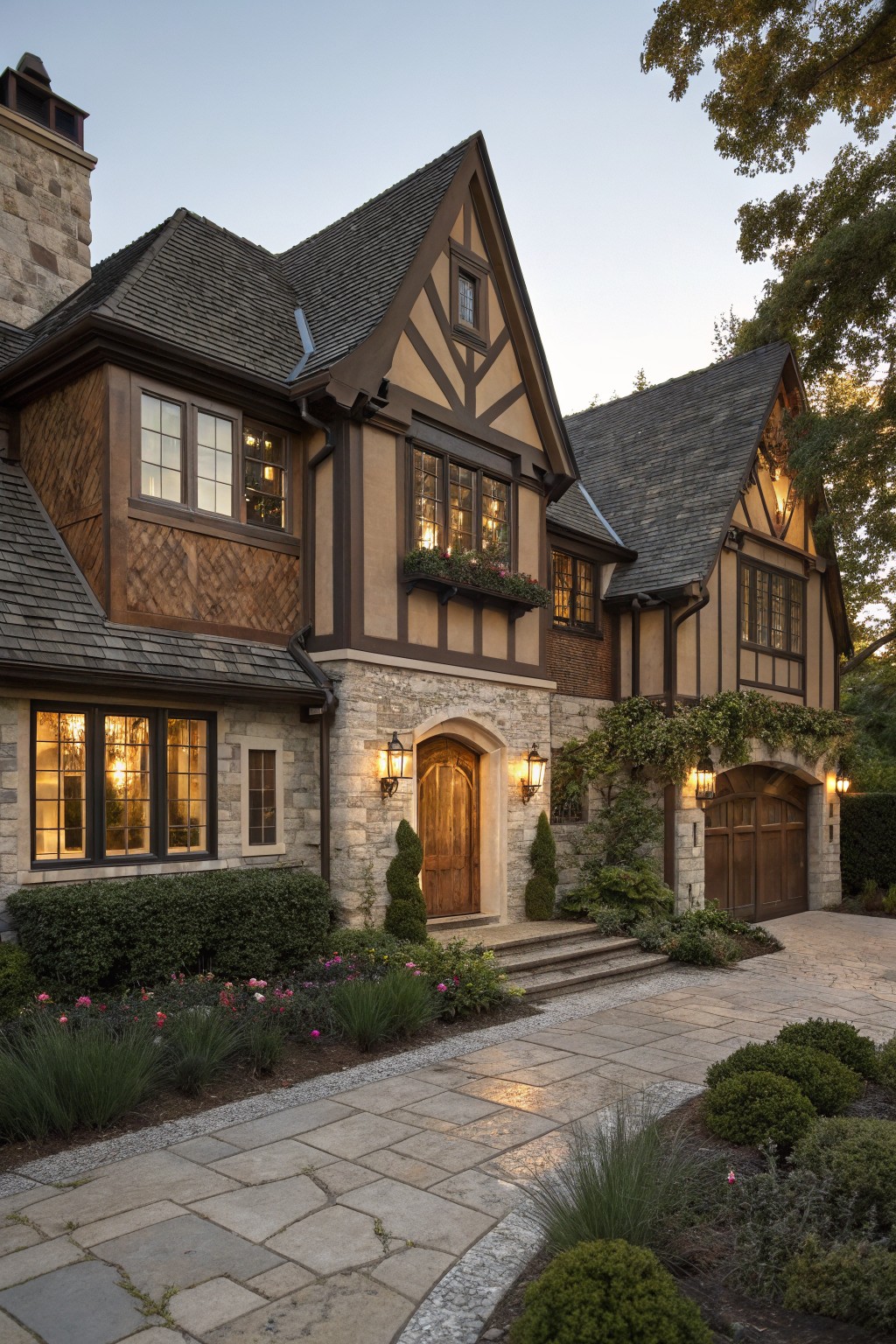
Tudor homes have that cozy old-world feel, and this one nails it with dark timber beams crossing light stucco walls and a rugged stone base. The warm brown shakes on the steep roof tie it all together without overwhelming the look. It’s a simple way to add character to a plain house front.
You can pull this off on most two-story homes in the suburbs or countryside. Stick to natural materials like limestone for the entry and keep landscaping low-key with boxwoods and flower beds along the path. Just avoid too many competing colors, or it starts looking busy.
Warm Wood Cladding for House Facades
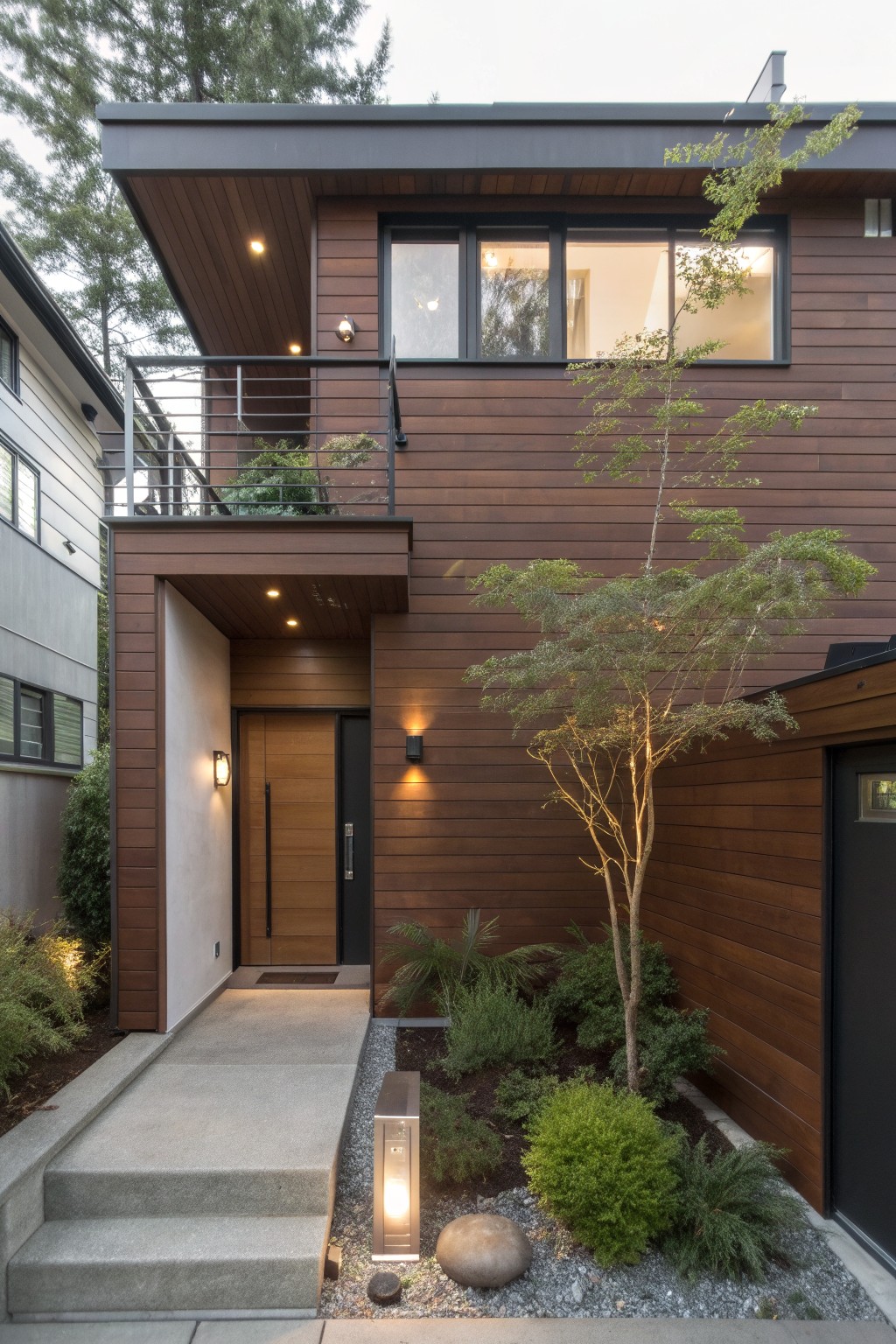
Warm brown wood cladding like this cedar-style siding covers the main body of the house. It brings a natural touch to the clean modern shape, turning what could feel stark into something approachable. That balcony railing and entry overhang tie it together without extra fuss.
Try this on homes in greener neighborhoods where it blends with the trees around. Mix a section of smoother stucco by the door for contrast, or keep black-framed windows to frame the views. It holds up well in damp spots if sealed right, and gives off that lived-in look fast.
Classic Portico Entrance
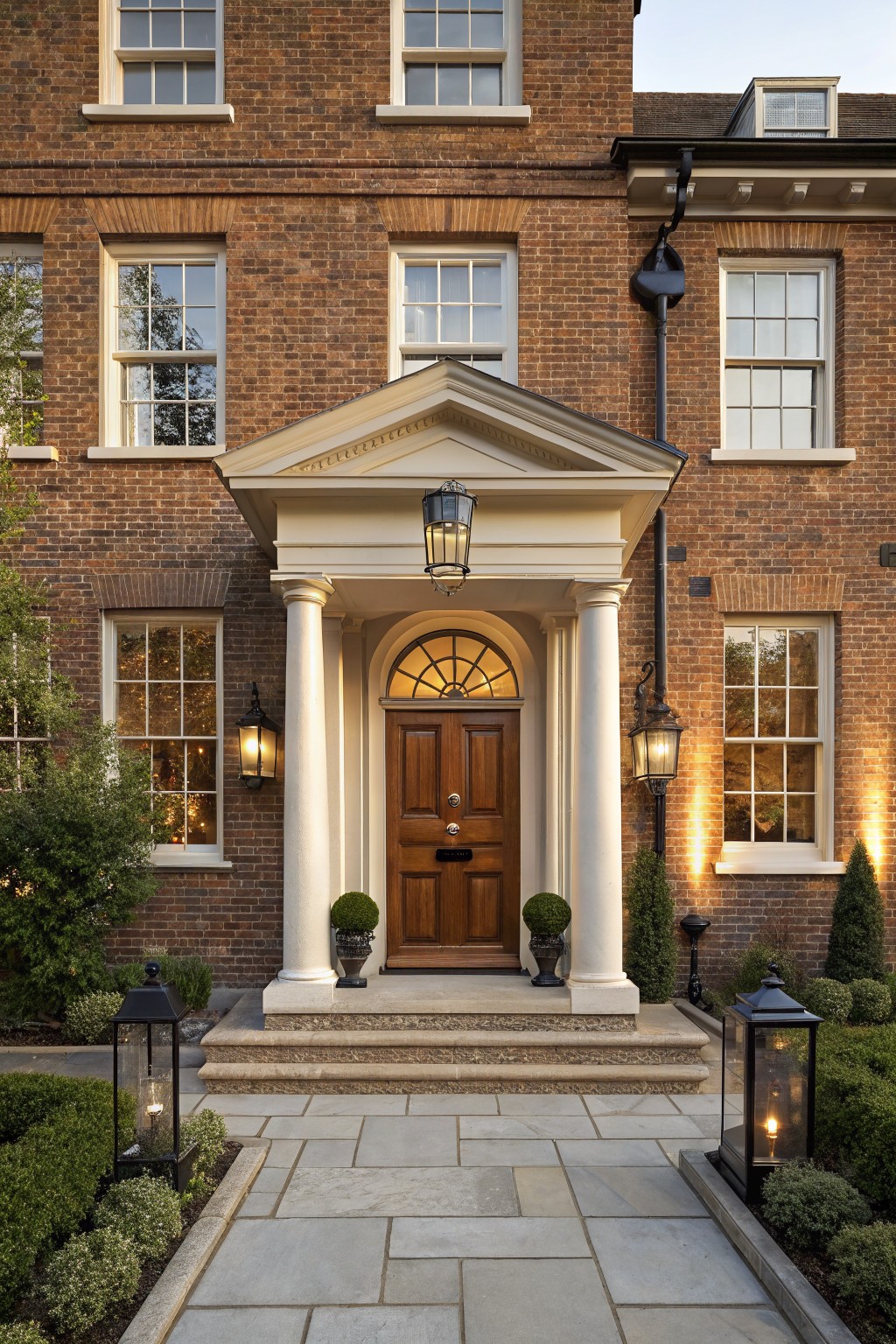
A portico like this one turns a plain brick house into something with real presence. Those clean white columns and the curved fanlight over the door pull your eye right to the entry. Paired with the warm brown bricks it feels solid and traditional, not fussy.
This works well on older homes or any two-story brick facade that needs a focal point. Go for fluted columns if you want subtle detail, and add lanterns for evening light. Skip heavy trim so the brick stays the star. Just make sure your roofline matches to avoid looking added on.
Warm Wood Slats for Facade Texture
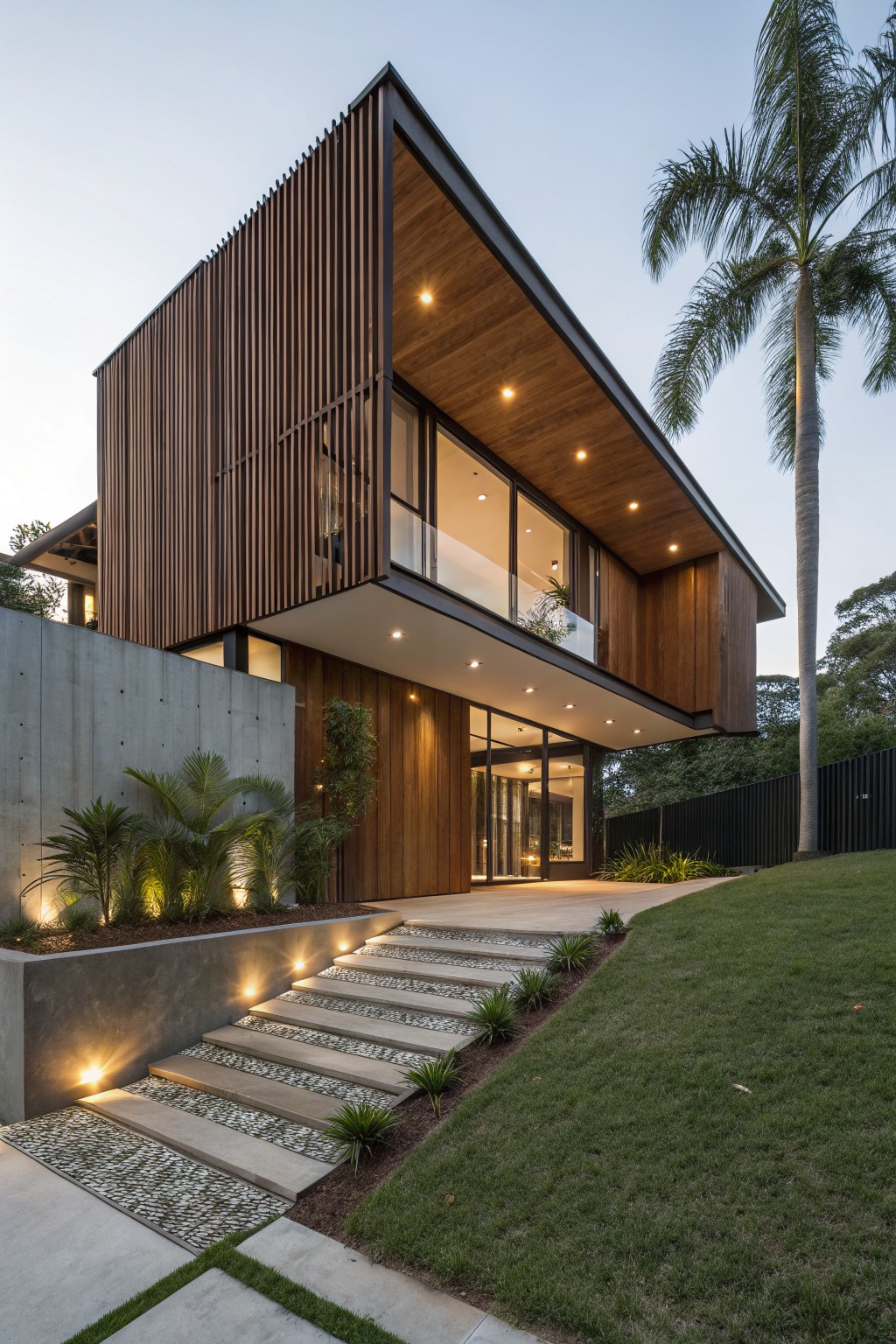
Vertical wood slats in a rich brown tone give this house a modern edge while keeping things warm and inviting. They cover one side fully, creating subtle shadows that add depth without overwhelming the clean lines. Paired with concrete walls below, it feels grounded yet light.
You can use this on a side wall or entry area to break up plain surfaces. It works best on homes in warmer climates, like near palms and grass, where the wood blends with nature. Just make sure to seal it well against weather.
Frequently Asked Questions
Q: How do I test warm brown paint shades on my actual house?
A: Buy sample pints from the paint store and brush large patches right on your siding. Walk by at morning, noon, and dusk to catch the light shifts. You avoid big regrets that way.
Q: What door color pops against warm brown siding?
A: Pick a deep teal or rusty orange for instant drama. It pulls eyes right to the entrance. Test it with a poster board first.
Q: Does warm brown hide dirt and grime well?
A: It sure does, especially compared to whites or pastels. Rain often rinses off pollen and dust. Hose it down once a year to keep that fresh glow.
Q: Can I mix warm brown with stone accents?
A: Layer it with light tan or beige stone for texture that draws people in. And skip glossy finishes, they fight the cozy vibe.
