

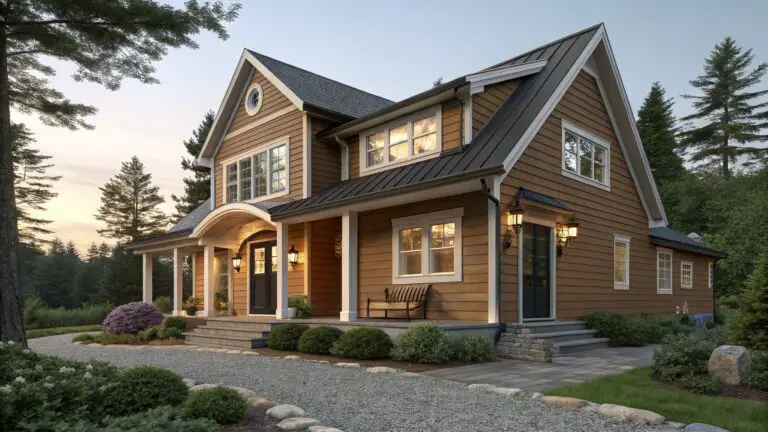
When you drive up to a house, the exterior paint color hits you first, shaping how the whole facade reads against the roofline and yard.
I once tested a few brown shades on our trim, and the right one made our simple ranch feel more solid and tied to the landscape.
These tones ground a home without stealing focus from the entry or windows.
They also hold up well to weather, blending naturally as they age.
One or two from here could refresh yours without much fuss.
Warm Brown Shingle Siding
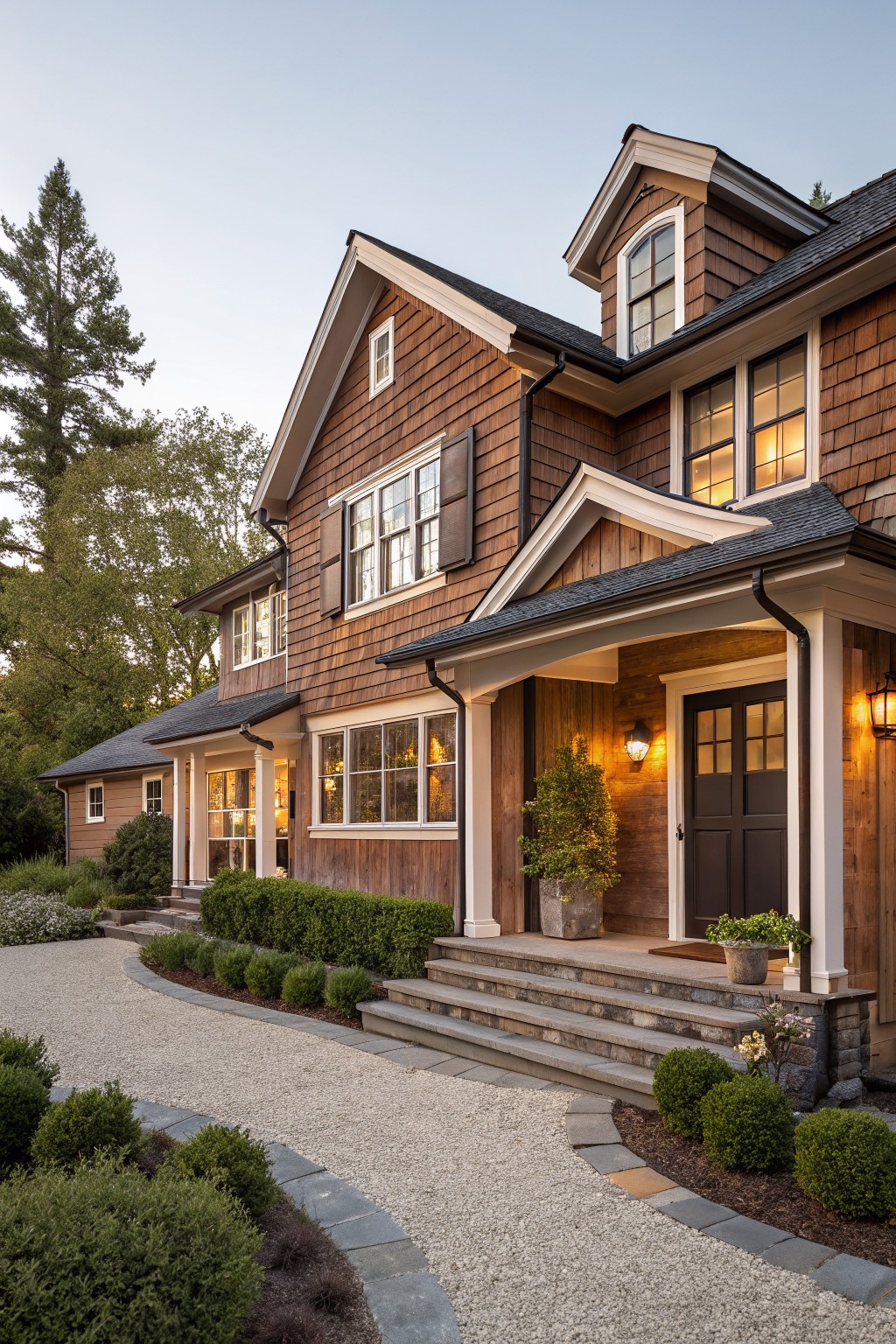
Shingle siding painted in a warm brown tone brings out the best in older homes like this one. It has that natural wood look without being too rustic, and the color blends right into a yard with trees and bushes. White trim on the windows and porch door gives it clean lines that make the whole front feel put-together.
Try this on a two-story house with simple rooflines, especially if you have some slope or greenery nearby. Stain the shingles for fade resistance, pair with stone steps up to the entry, and it updates the look without a full redo. Works well in cooler climates where brown feels homey year-round.
Warm Brown Wood Siding
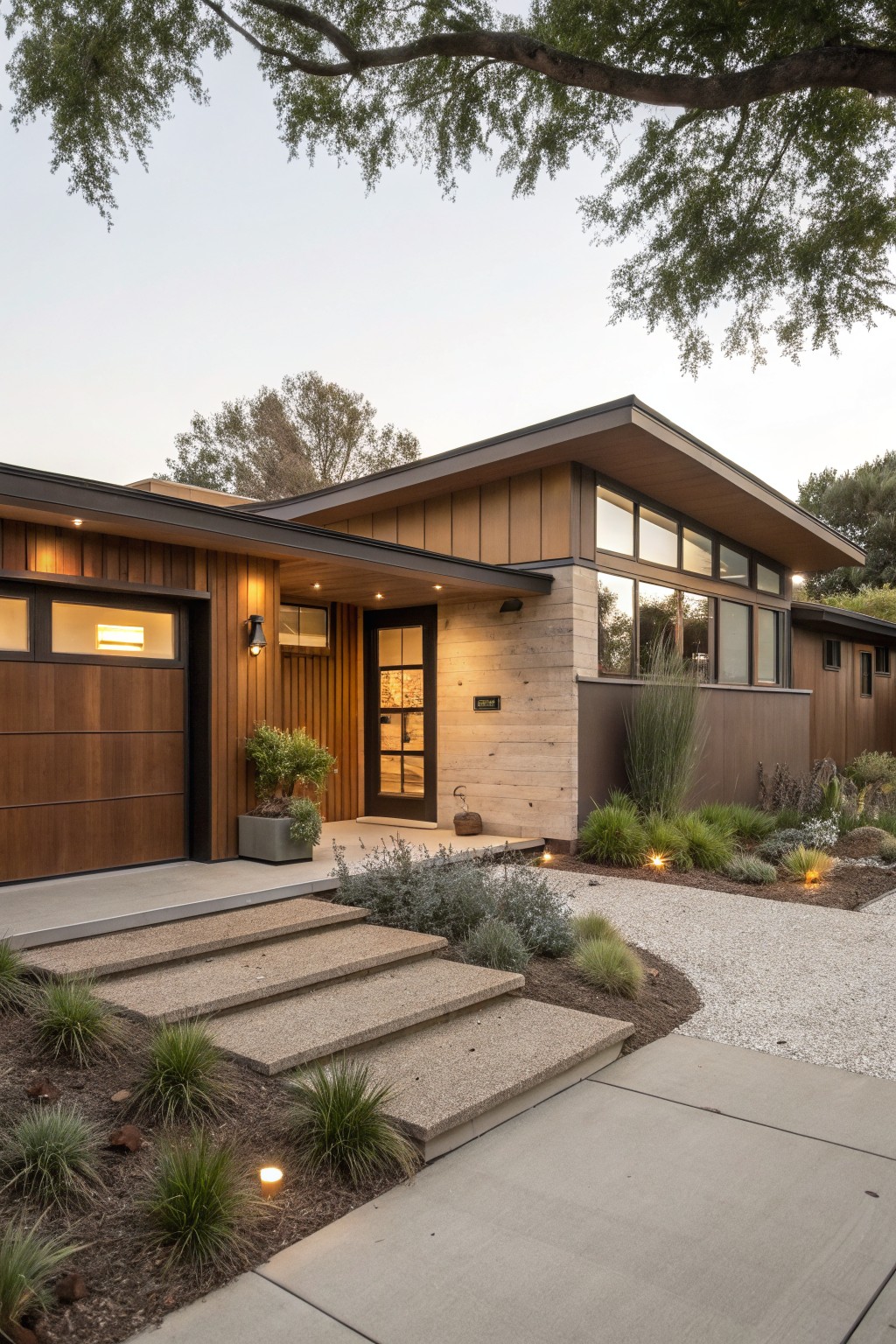
Vertical wood siding in a warm brown tone covers much of this house facade. It keeps things simple and modern while blending right into the natural setting around it. The wood picks up on the earth colors nearby, like the stone block by the door, so the whole front feels connected instead of slapped on.
Try this on ranch or mid-century homes looking for an easy refresh. It suits milder climates where wood holds up well. Just seal it properly to avoid weathering, and keep landscaping low-key with gravel and grasses so the siding stays the focus.
Warm Brown Shingle Siding
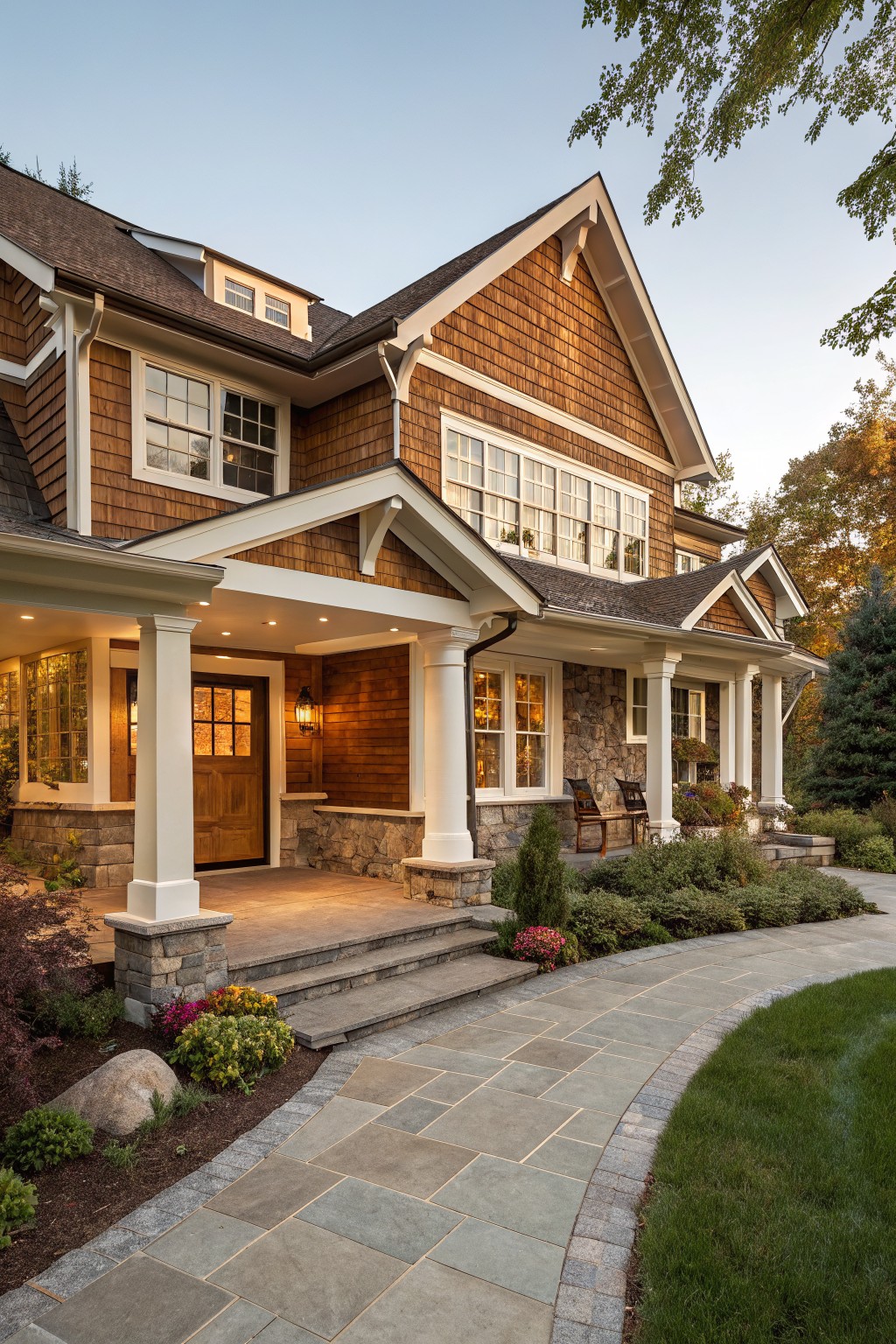
Warm brown shingle siding like this gives a house real texture and depth without much effort. The shakes overlap in that natural way, picking up light through the day, and they fit right into surroundings with trees and stone nearby. White trim keeps it from getting too heavy, letting the brown do the main work.
Try this on a two-story home with a porch, especially if you want something that feels settled and classic. It suits craftsman or shaker styles best, and pairs well with a stone foundation or base. Just make sure the stain holds up in your weather, or refresh it every few years.
Cozy Brown Wood Siding
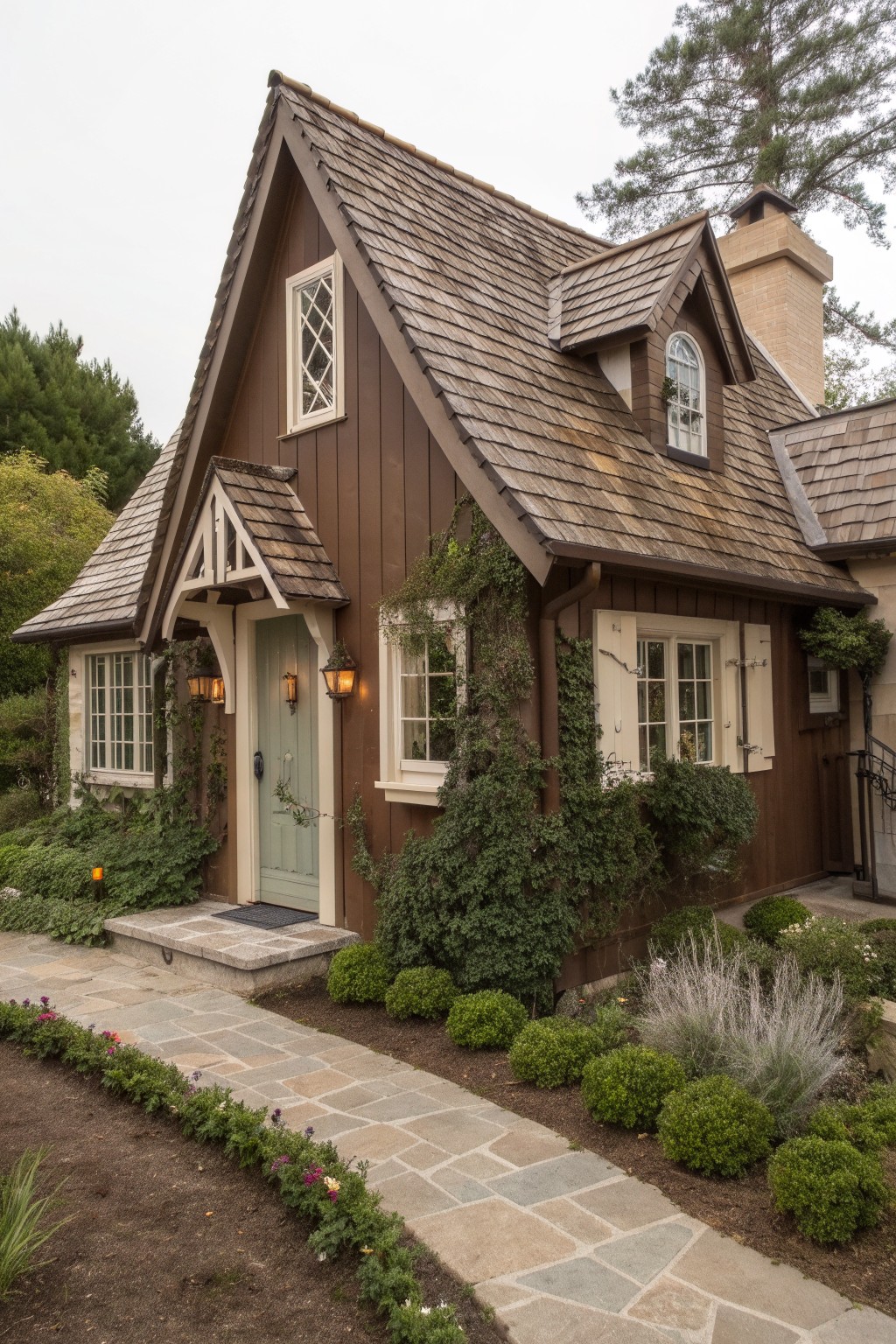
A deep brown stain on vertical wood siding like this turns a simple house into something that feels right at home in the woods. The color pulls from natural tree bark and aged shingles, so it blends without trying too hard. Ivy climbing up the side just settles into those tones.
This look suits older homes or cabins that need a refresh without much fuss. Stain the siding and roof edges to match, add a colored door for the entry, and let plants do some of the work. It holds up well in shady spots, but check for moisture issues first.
Two-Tone Brown Siding for Cozy Farmhouse Look
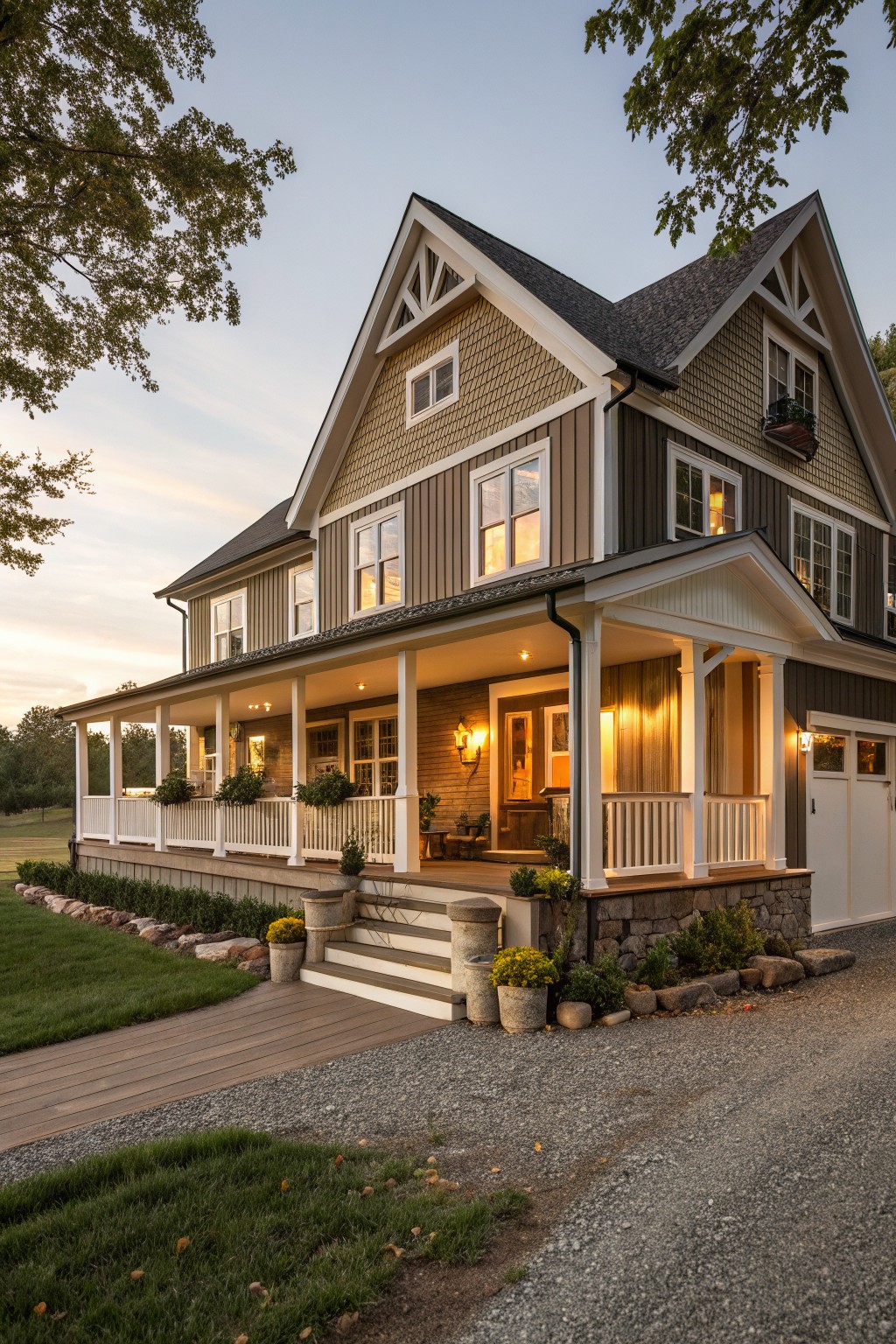
This house pulls off a simple two-tone brown setup that feels warm and settled. The lighter beige clapboard covers most of the walls, while darker brown shingles hit the gables and shakes add texture up top. White trim around the windows and porch keeps things clean and lets the browns stand out without clashing. It’s a straightforward way to add depth to a plain exterior, especially with that wrap-around porch tying it together.
You can try this on ranch or two-story homes where the roofline gives room for shakes. Pick shades in the same warm family, like taupe over caramel, and stick to white or off-white trim for contrast. It works best in rural or suburban spots with some landscaping around the base. Just avoid going too dark overall, or it might feel heavy on smaller lots.
Black Trim on Brown Brick Facades
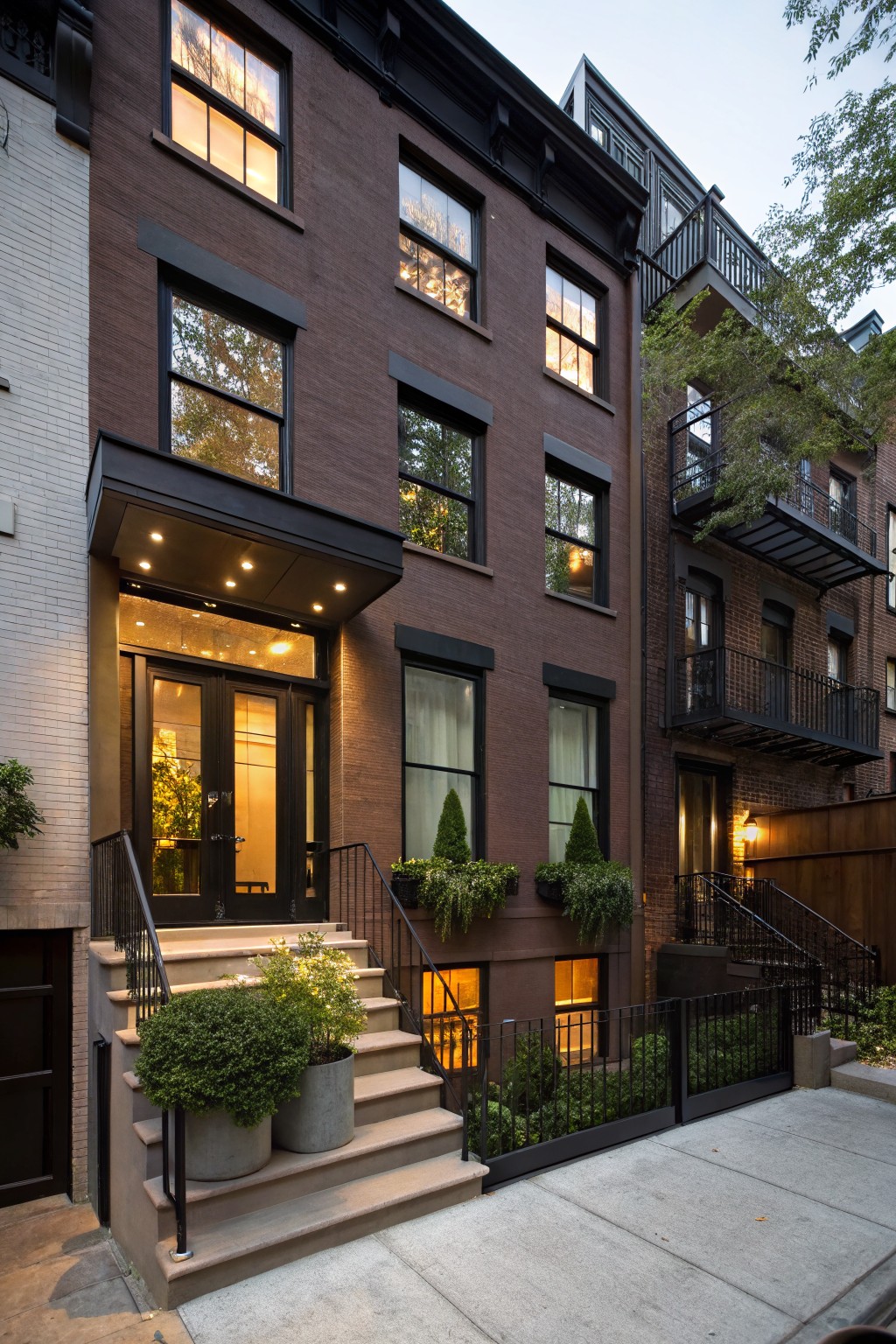
One simple way to update a brown brick house is painting the window frames and entry details in matte black. It adds sharp contrast that makes the warm brick tones stand out more. The black keeps things clean and modern while the brick holds onto that traditional charm. Notice how the entry canopy and door pull it all together.
This look suits older row houses or city homes best. Paint your trim black, add spots of warm lighting at the door, and set a couple large pots on the steps. It boosts curb appeal fast. Just make sure the black is a flat finish so it doesn’t glare.
Warm Beige Stucco Exterior
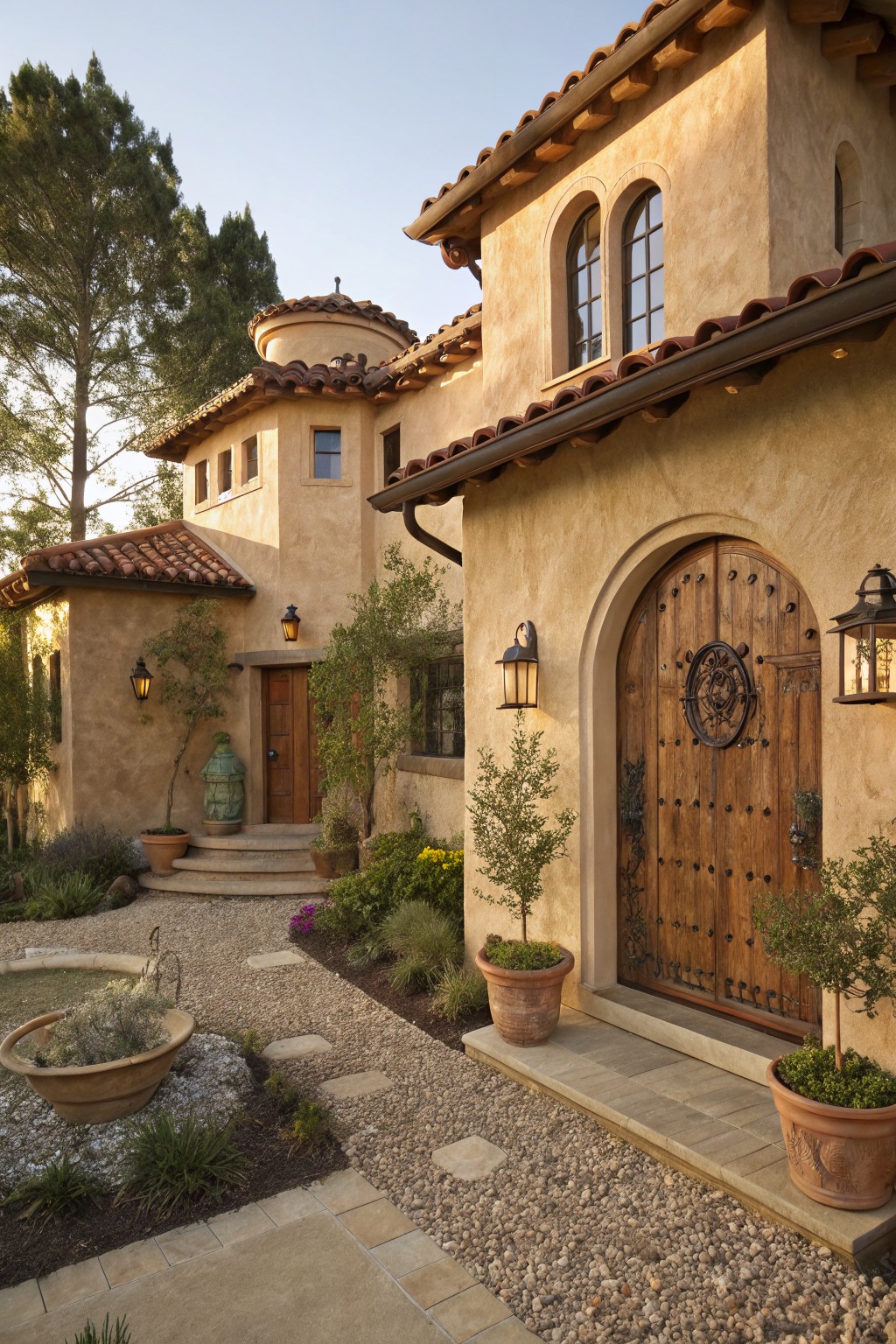
A soft beige stucco paint like this one covers the walls in a warm, textured finish that feels right at home with terracotta roof tiles. It stands out for how it blends the house into its surroundings, especially with pine trees and gravel paths nearby. That earthy tone keeps things simple and grounded without looking too stark.
This paint works best on ranch-style or Mediterranean homes where you want easy upkeep and a cozy feel. Go for it if your roof has red-brown tiles or if you’re adding wooden doors and lanterns around the entry. One thing to watch: pair it with darker accents so windows and doors pop a little.
Warm Brown Siding for Simple Curb Appeal
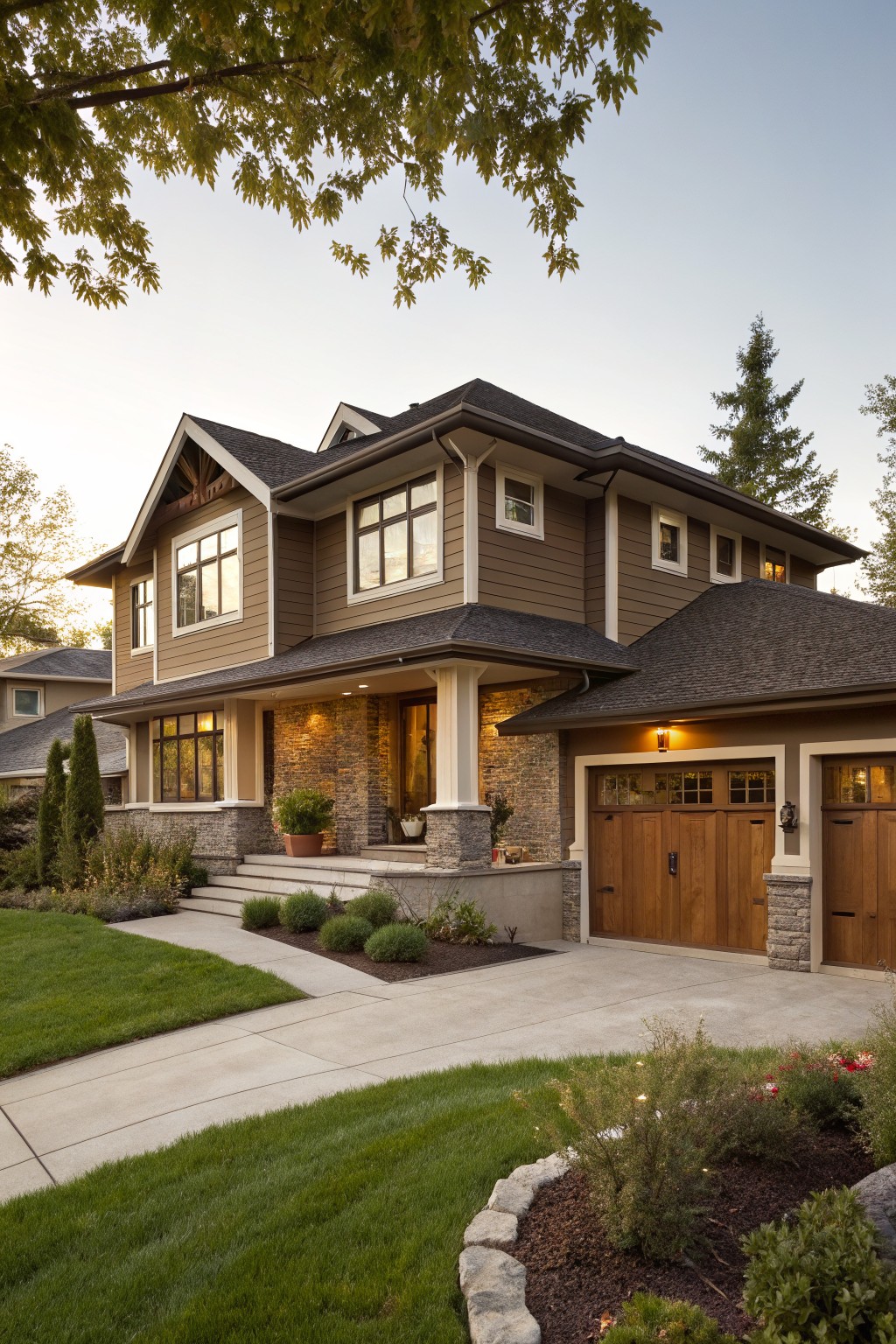
Warm brown siding like this gives a house a solid, welcoming feel without much fuss. It’s not too dark or bold, just right for blending with natural surroundings. The color picks up on tree trunks and earth tones around it, and pairing it with stone accents around the entry keeps things grounded. Folks notice how it makes the front look put-together, especially as the sun sets and lights come on.
This works best on homes with some Craftsman touches, like gabled roofs or wood garage doors. Paint your siding in a medium taupe-brown, then add stone veneer where you can. Skip it if your yard is super modern or stark. It suits suburbs or wooded spots, and holds up well in changing weather.
Shingle Siding in Warm Browns
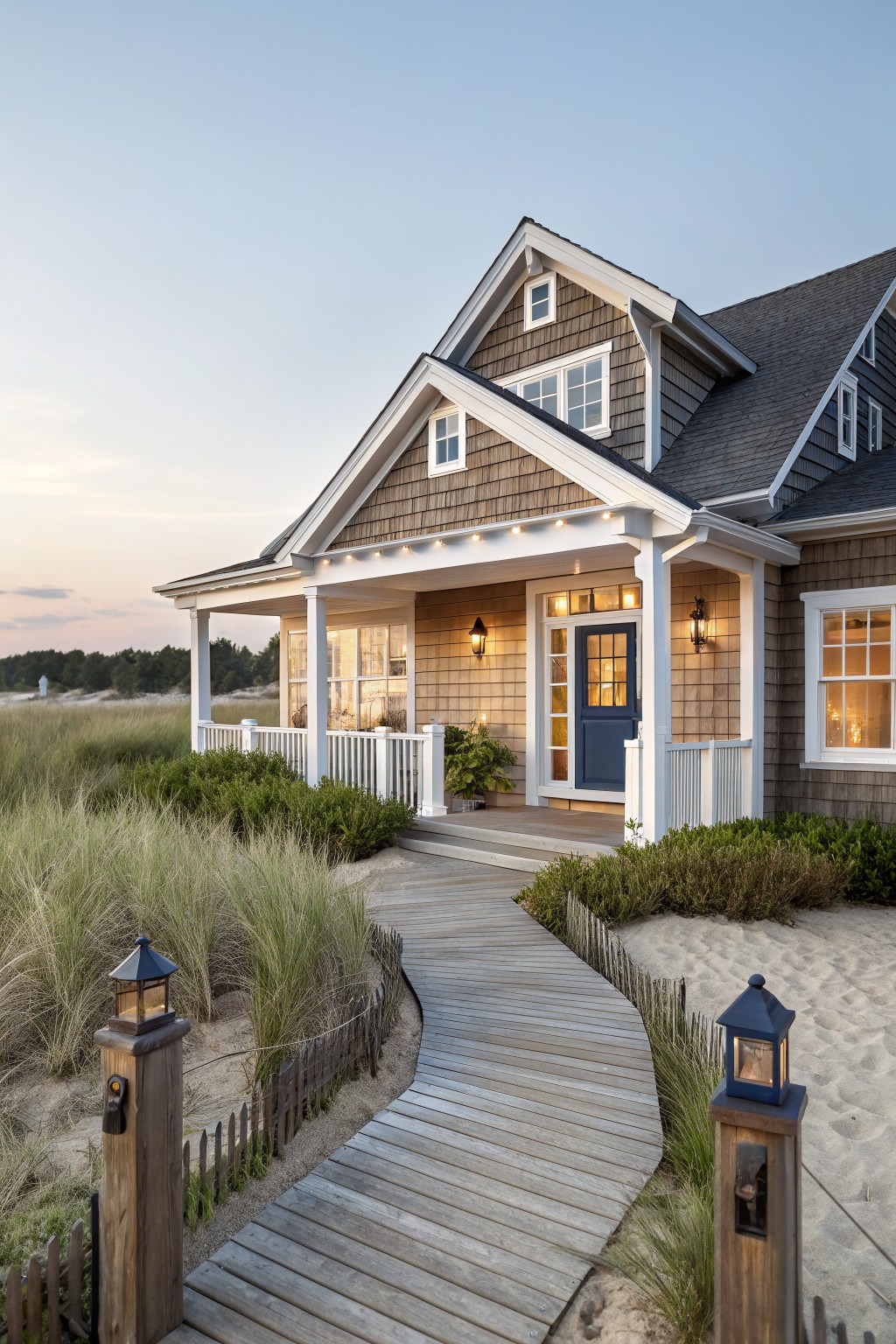
Shingle siding like this takes a simple brown stain and turns a house into something that feels right at home by the beach. The varied texture catches light in a natural way, making the exterior look lived-in but fresh. Here, it covers the main body while white trim keeps things crisp around the windows and porch.
This works best on homes with gables or porches already, especially in coastal or wooded spots where you want low-key blending with the surroundings. Stain existing shakes if you have them, or add new ones over plain siding. Watch the blue door here, though. It adds punch, but skip it if your style runs more neutral.
Warm Brown Wood Siding for Rustic Appeal
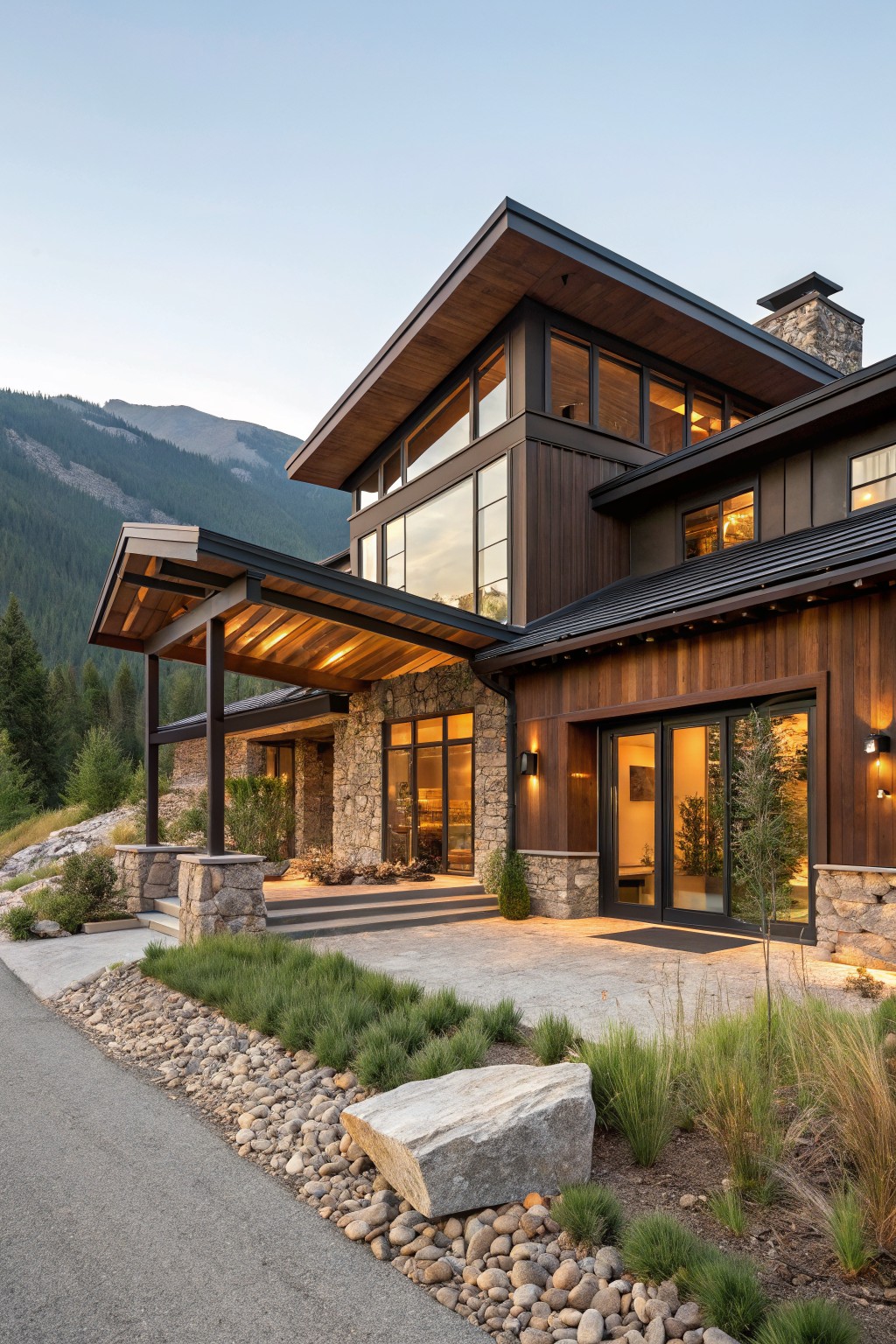
This house uses warm brown wood siding that looks right at home against the mountains. The dark tones on the vertical panels give it a modern edge while keeping things cozy and natural. Stone pillars at the entry pull it together without overdoing it. Folks like this look because it hides dirt well and ages nicely over time.
Try it on homes in wooded or hilly spots where you want the house to blend in a bit. Stain cedar or pine boards to that medium brown shade, then mix in stone at the base or corners. It works best on two-story designs with big windows. Just make sure the roof is dark too, or it might clash.
Deep Green Door on Brown Brick
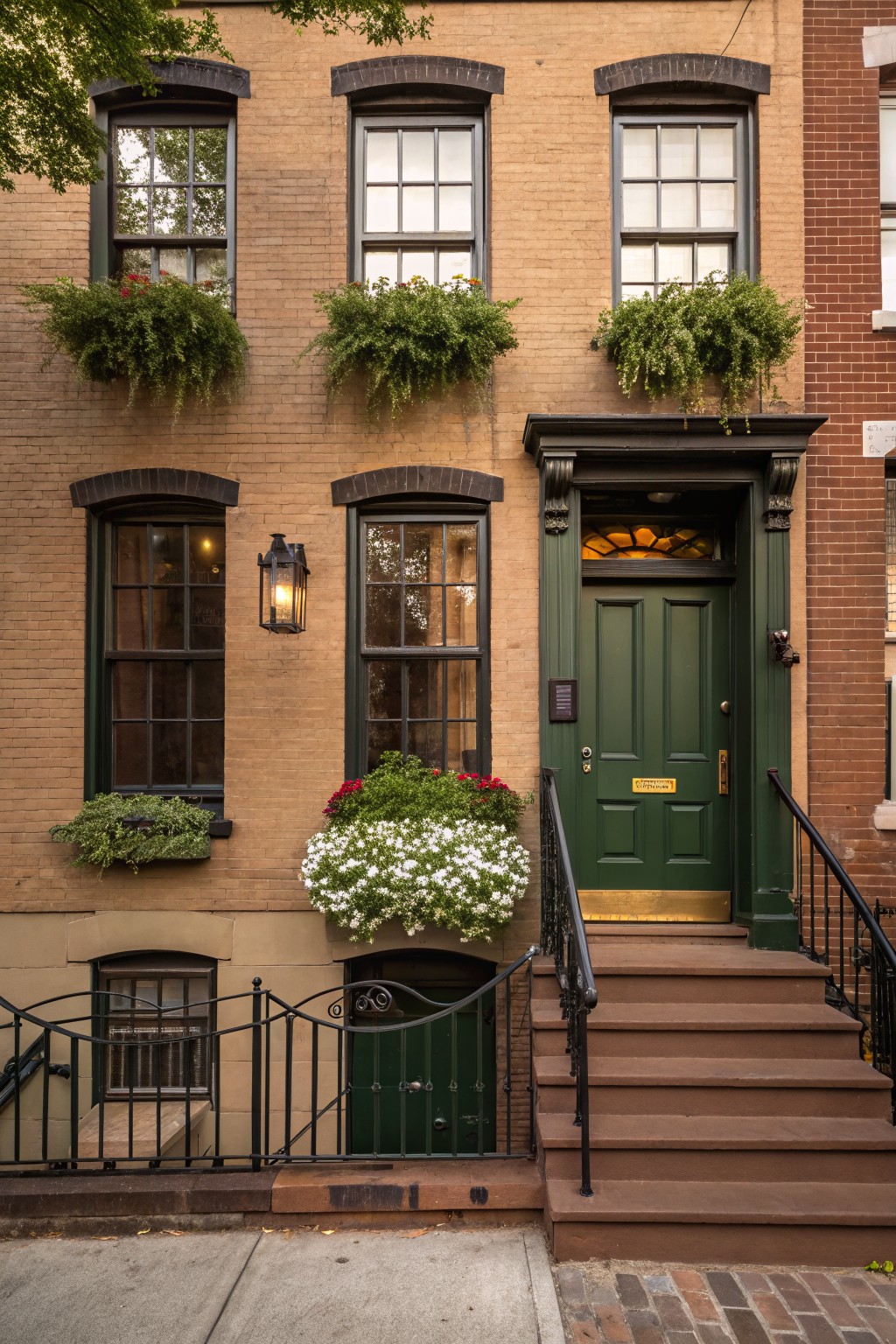
A deep green front door like this one gives a brown brick house that instant pop of color without overdoing it. It stands out against the warm tan bricks and keeps things feeling traditional, especially with the brass knocker and letterbox adding a bit of shine. Those dark window frames help frame it all nicely too.
This works best on older rowhouses or townhomes where the brick is already there. Just paint the door in a shade like hunter or forest green, and add some window boxes with trailing plants for extra life. Skip it if your brick is too red-toned, though. It might clash a little.
Warm Brown Wood Cladding for House Facades
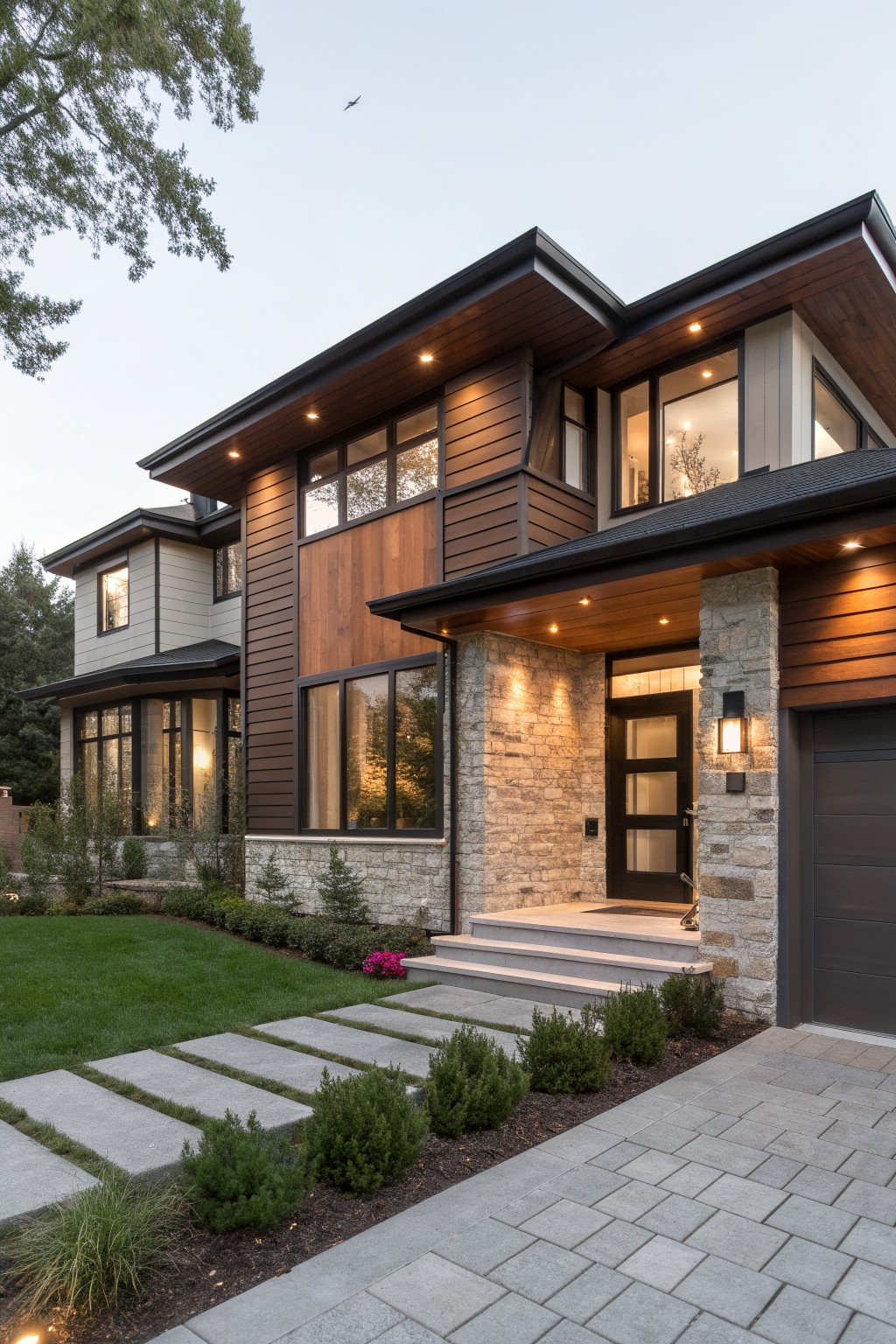
One simple way to update your home’s exterior is with warm brown wood cladding like cedar panels. It brings a natural texture that softens sharp modern lines. In this setup, the brown wood runs vertically on one side and mixes with lighter siding elsewhere. That contrast makes the house feel more approachable without losing its clean look.
This works best on homes with big windows and flat roofs. Stain the wood to get that rich brown tone, then pair it with stone around the entry for balance. It suits suburban spots where you want curb appeal that lasts. Just seal the wood well to handle weather.
Warm Brown Clapboard Siding
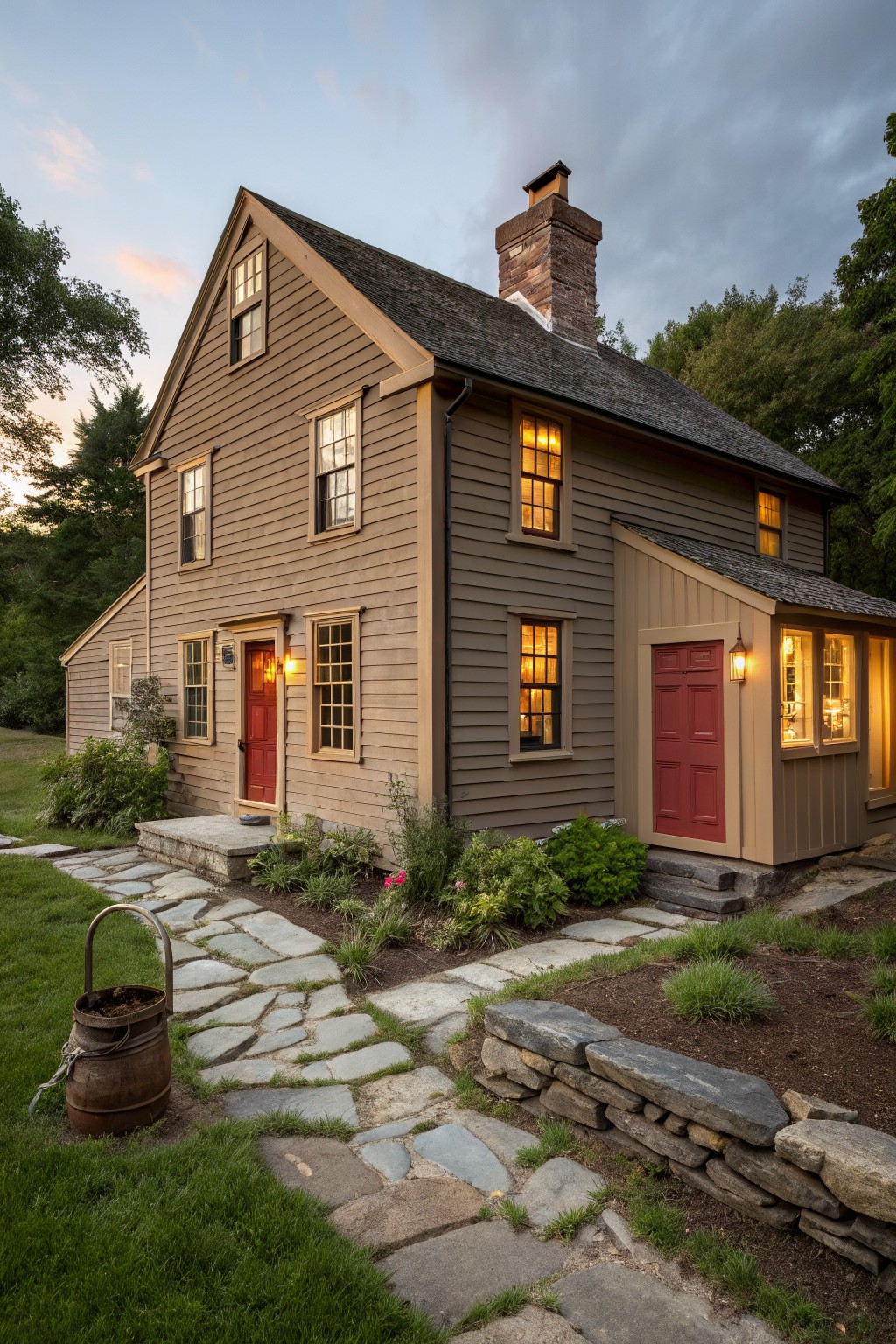
A soft, weathered brown paint on clapboard siding like this gives an old house a fresh but lived-in feel. It picks up the tones from the surrounding trees and stone without trying too hard. That muted shade avoids looking too new or stark. And those red doors? They pop just enough to guide folks right to the front.
This works best on colonial or cape-style homes in wooded spots. Pick a low-sheen paint to mimic natural aging. Pair it with simple stone paths or basic shrubs to keep things grounded. Steer clear of super bright trim. It might fight the calm vibe.
Warm Brown Wood Cladding
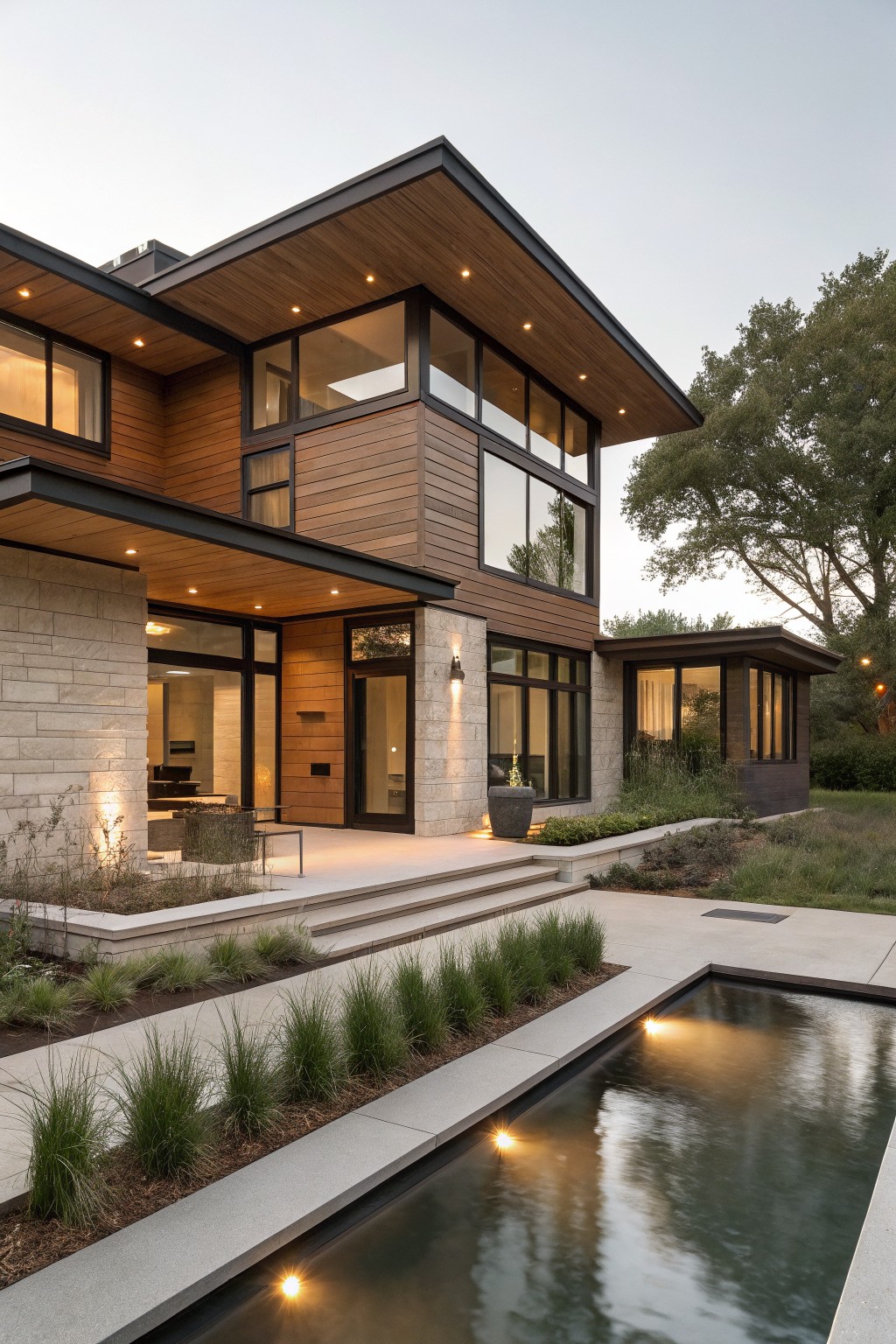
Warm brown wood cladding covers much of this house, wrapping the upper levels and overhanging eaves. It pairs simply with a light stone base around the entry, creating easy contrast that feels modern but not cold. The wood’s natural grain adds subtle texture that catches the light nicely, especially at dusk.
You can get this look by staining existing siding or trim in a mid-tone brown, like cedar or walnut shades. It suits ranch homes or updates to mid-century styles, especially where you want to blend with trees nearby. Just make sure the stone or base stays pale to keep the balance right.
Bold Orange Door on Brown Wood Siding
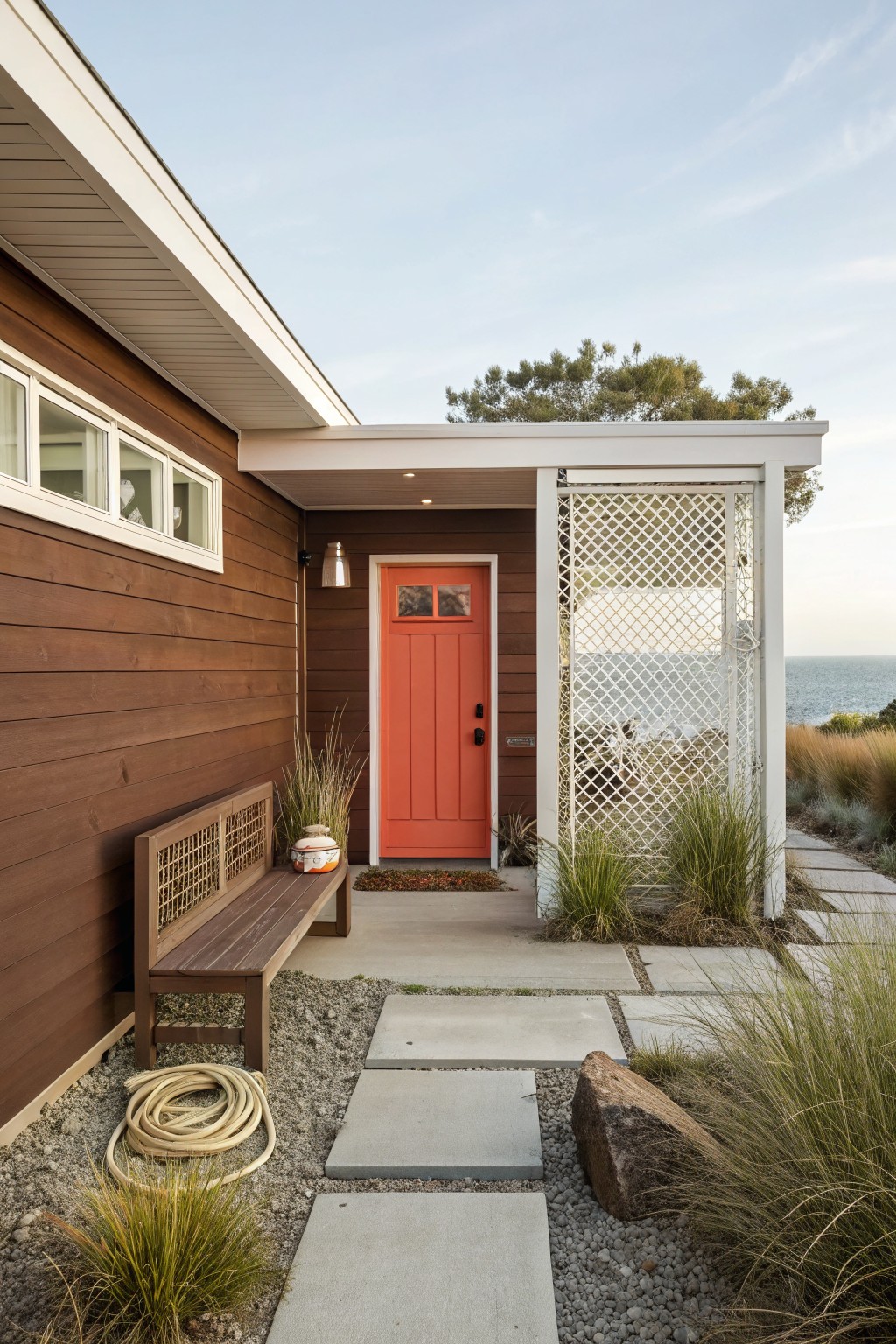
A warm brown wood siding gives this house a cozy, natural feel that blends right into its coastal spot. But that bright orange door? It jumps out and makes the entry the star. The color contrast pulls your eye straight there, turning a simple side entrance into something welcoming and fun without overdoing it.
Try this on homes with earthy brown paint or cedar siding. It works great for a quick update on ranch-style or midcentury houses facing the street or yard. Just pick a durable exterior paint in a true orange tone, and pair it with a plain wood bench nearby for seating. Skip it if your siding is too dark. It might fight the pop.
Rustic Log Home Facade
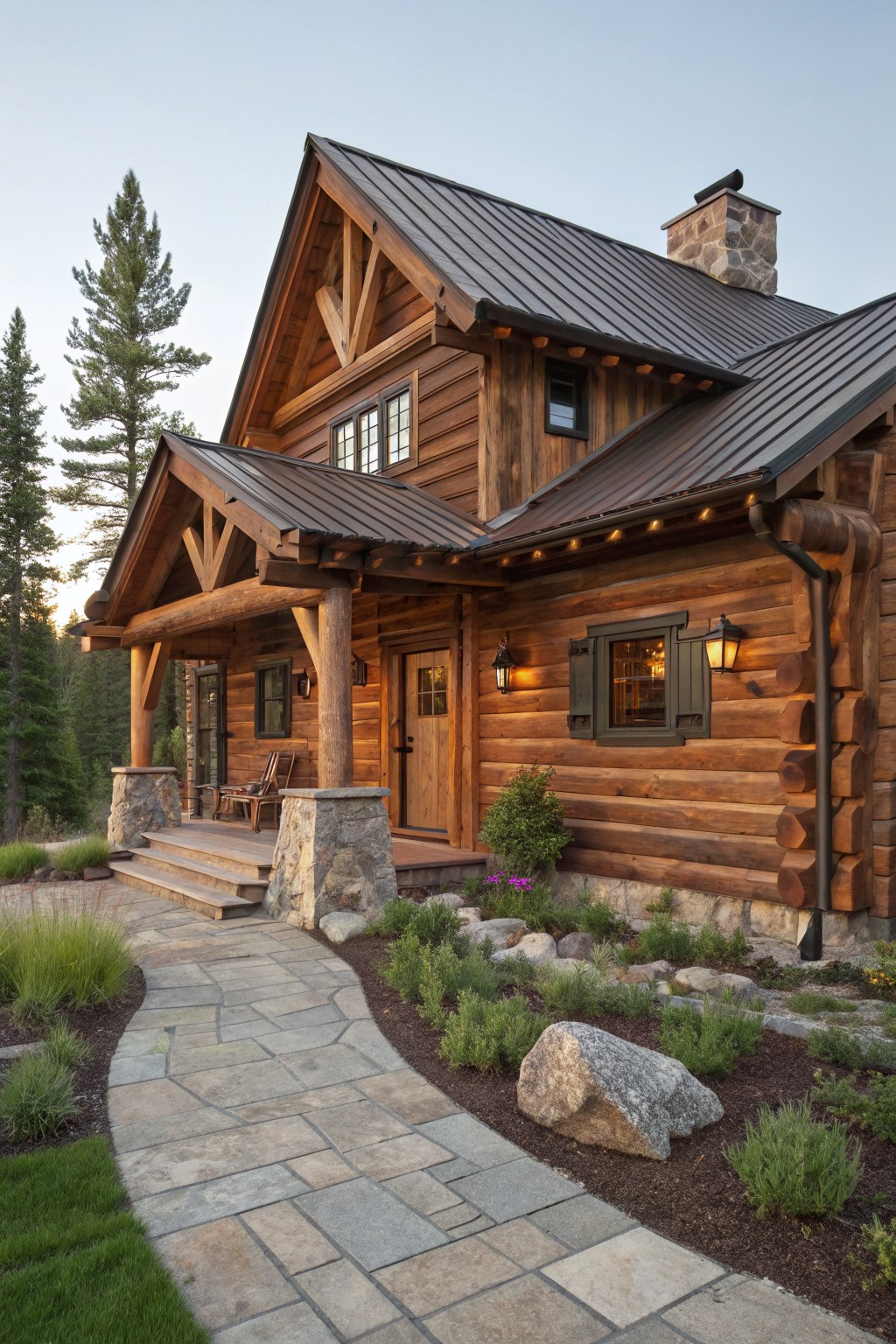
Nothing beats the warmth of a log home exterior when you want brown tones that feel real and lived-in. These round logs give off a rich, natural brown without any paint needed, and they pair nicely with a dark metal roof that keeps things from looking too folksy. Stone at the base and chimney adds just enough heft to make the whole front feel solid.
You can pull this off on a cabin-style house or even update an older place with log siding panels. It works best in wooded spots where the trees echo the browns already. Just make sure the roof overhangs protect the wood from too much rain, or you’ll spend time sealing it every few years.
Rich Brown Shingles with White Trim
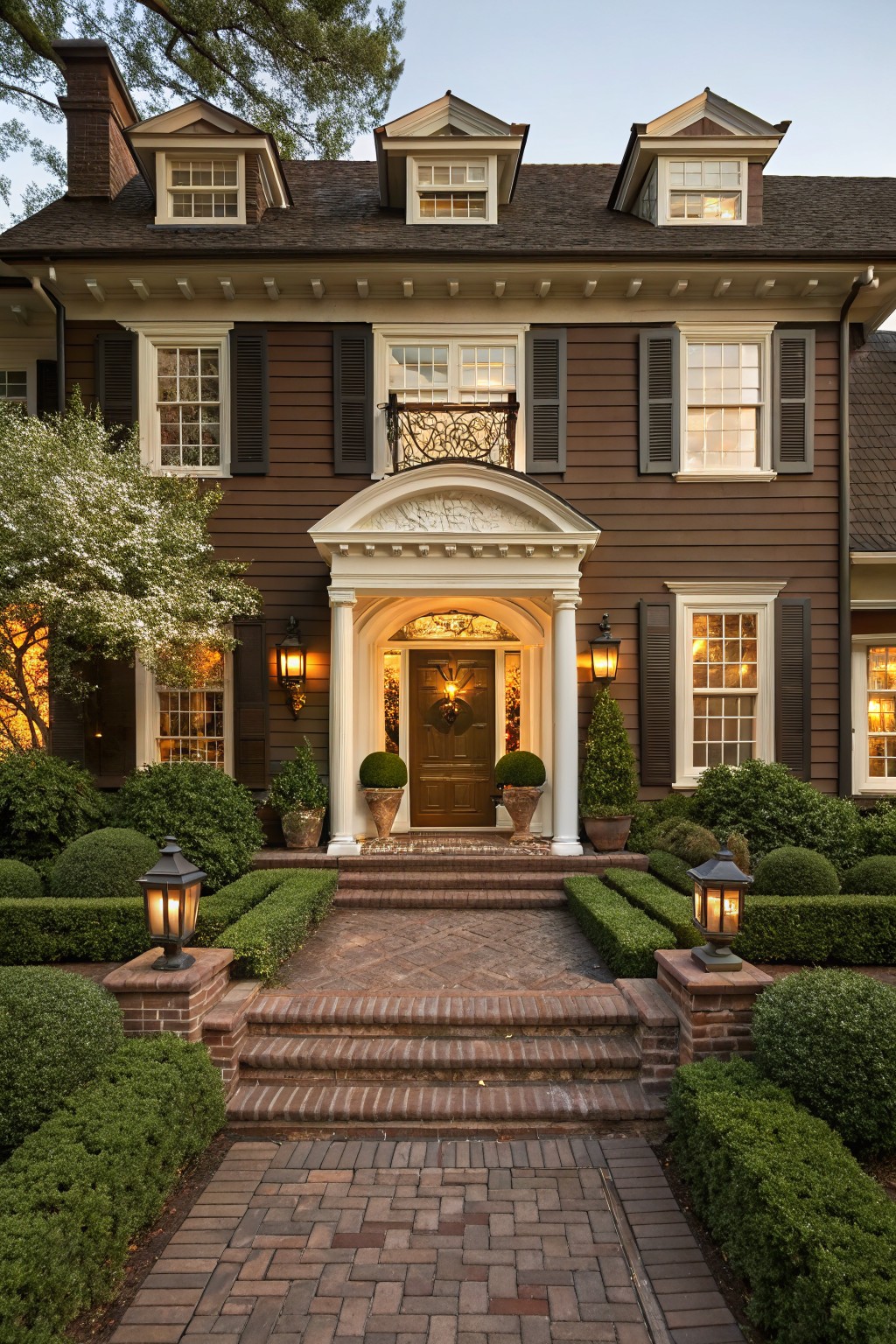
A warm, rich brown on shingle siding sets a cozy tone for this traditional home. The crisp white trim around the windows and entry portico keeps things clean and balanced. It pulls the whole facade together nicely, making the house feel established and inviting right from the street.
This look suits older Colonial or Craftsman-style houses best. Pick a brown with some red undertones for depth, then paint trim bright white to highlight the architecture. Brick steps and simple lanterns add to the charm without much fuss. It’s an easy refresh that boosts curb appeal year-round.
Shingle Siding in Warm Brown Tones
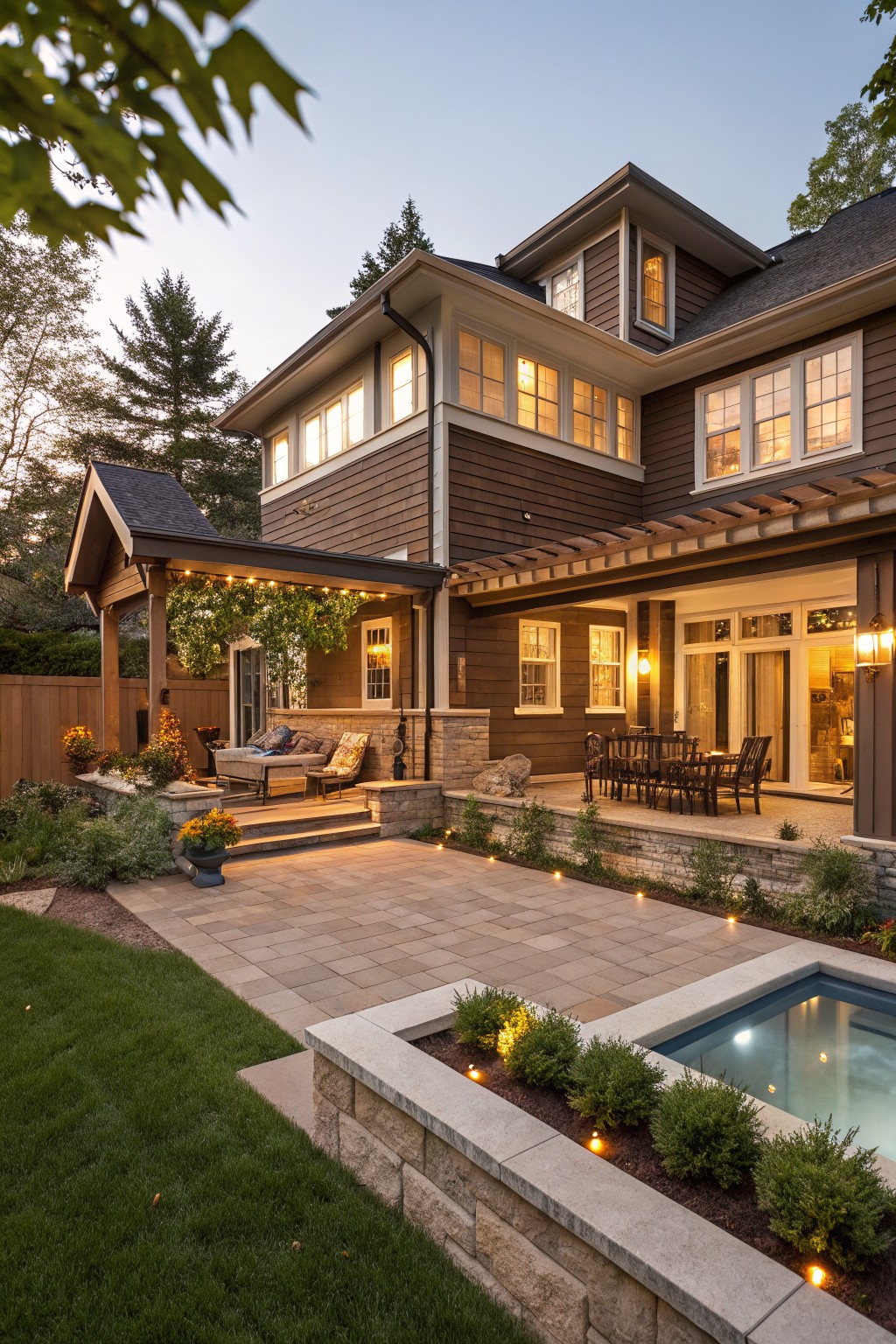
Shingles painted in a warm brown shade give this house exterior a settled, cabin-like feel that ties right into the backyard trees and plantings. The texture from the shakes up top and smoother boards below keeps things from looking flat, and the white trim around the windows pops just enough to guide your eye. It’s a straightforward way to make a bigger home feel more approachable.
This works best on craftsman or northwest-style houses where you want some rustic character without going full log cabin. Pick a semi-transparent stain if your base is wood shakes, or go with a solid paint for fiber cement versions. Just keep the trim crisp white or cream, and it updates the whole back facade nicely for evening gatherings on the patio.
Frequently Asked Questions
Q: How do I pick a brown shade that won’t clash with my red brick foundation?
A: Hold paint samples against your bricks in morning and afternoon light.
Paint stores have fans you can take home for a real test.
That way you see how the brown warms up the red without fighting it.
Q: What trim color makes brown siding pop without looking too matchy?
A: Go for a clean white like Dover White.
It brightens the whole look and lets the brown shine.
Test it on a small board first to check the contrast.
Q: My house gets tons of sun. Will brown paint fade fast?
A: Choose paints with UV blockers, and they hold color well for years.
And refresh with a coat every five years or so.
Q: Do I need to prime before painting dark brown over light siding?
A: Prime every time.
It stops the old color from bleeding through and gives you even coverage.
