

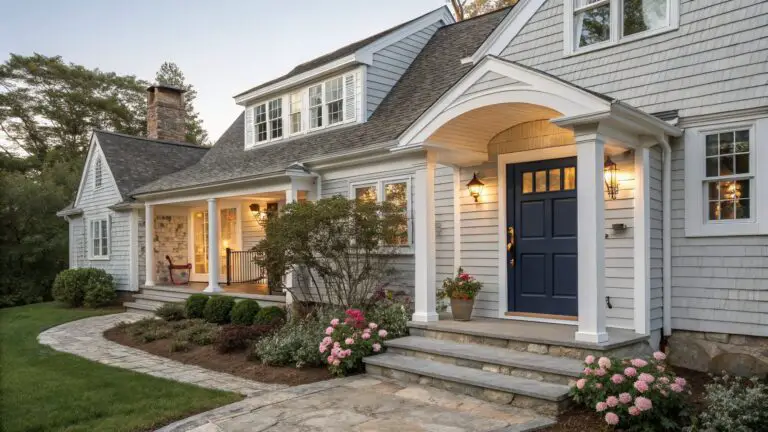
I’ve found that gray exteriors pull off that rare balance where a house looks sharp from the street without shouting for attention.
The key lies in matching the gray’s undertone to the roofline, siding texture, and entry details so the whole facade feels cohesive and grounded.
I remember eyeing a neighbor’s place where a soft gray against brick made the front door pop just enough to guide you right in, something photos never quite capture.
These schemes prove timeless because they lean on materials that age well together, dodging the dated vibes of bolder colors.
A couple here would translate smoothly to sloped lots or mixed cladding if you’re tweaking your own curb appeal.
Gray Shingle Siding Done Right
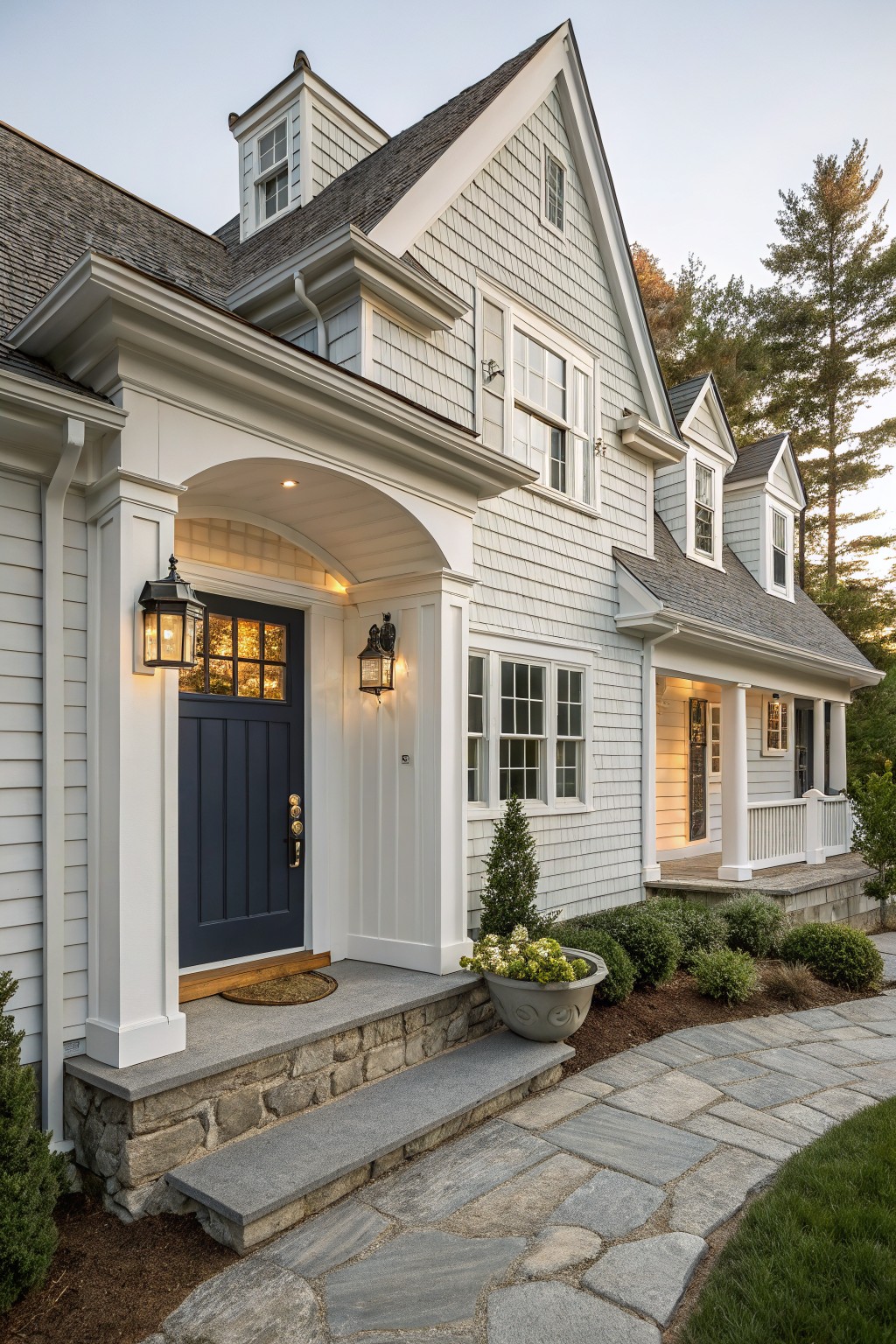
Soft gray shingles give this house a relaxed, coastal feel that never goes out of style. The light color on the upper levels mixes with white trim below, and that navy door adds just enough contrast without overwhelming things. Stone steps and simple lanterns finish the entry in a way that looks put-together year round.
This scheme suits two-story homes in wooded spots or near water, where you want curb appeal that holds up over time. Stick to clean lines on trim and keep plantings low like boxwoods along the path. Avoid darker grays here, they can make the house feel heavier.
Gray Stucco Paired with a Wood Entry Door
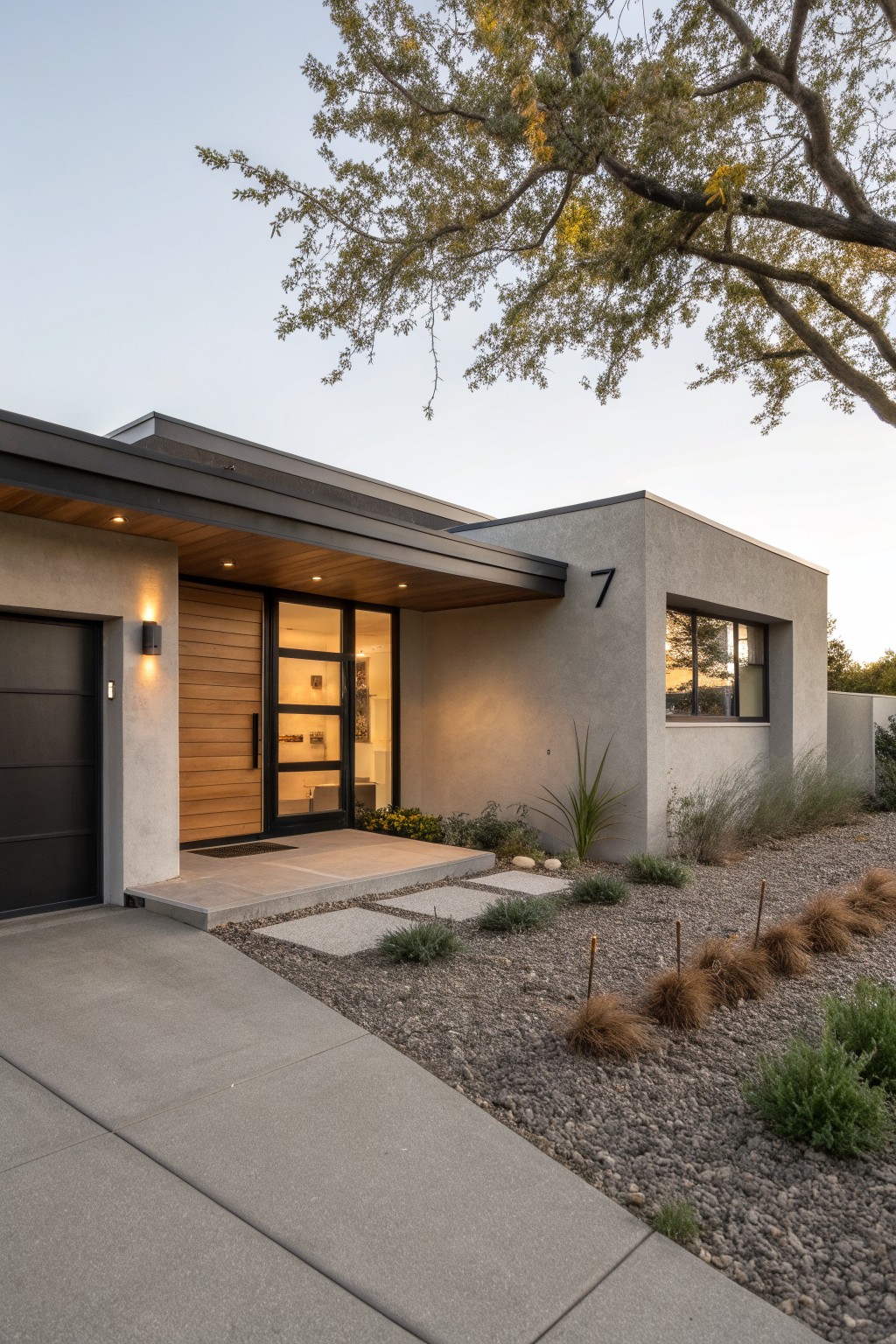
A smooth gray stucco exterior keeps things clean and simple. But that big wood door right at the front changes everything. The warm tones pull your eye in and make the house feel less stark. It’s a classic move for modern homes that still want some natural warmth.
Try this on low-slung houses in dry climates. The stucco holds up well, and the wood adds just enough contrast without overwhelming the gray. Pick a durable teak or cedar door to match the clean lines. Skip busy trim around it. Let the materials do the talking.
Gray Exterior with Crisp White Trim and Red Door
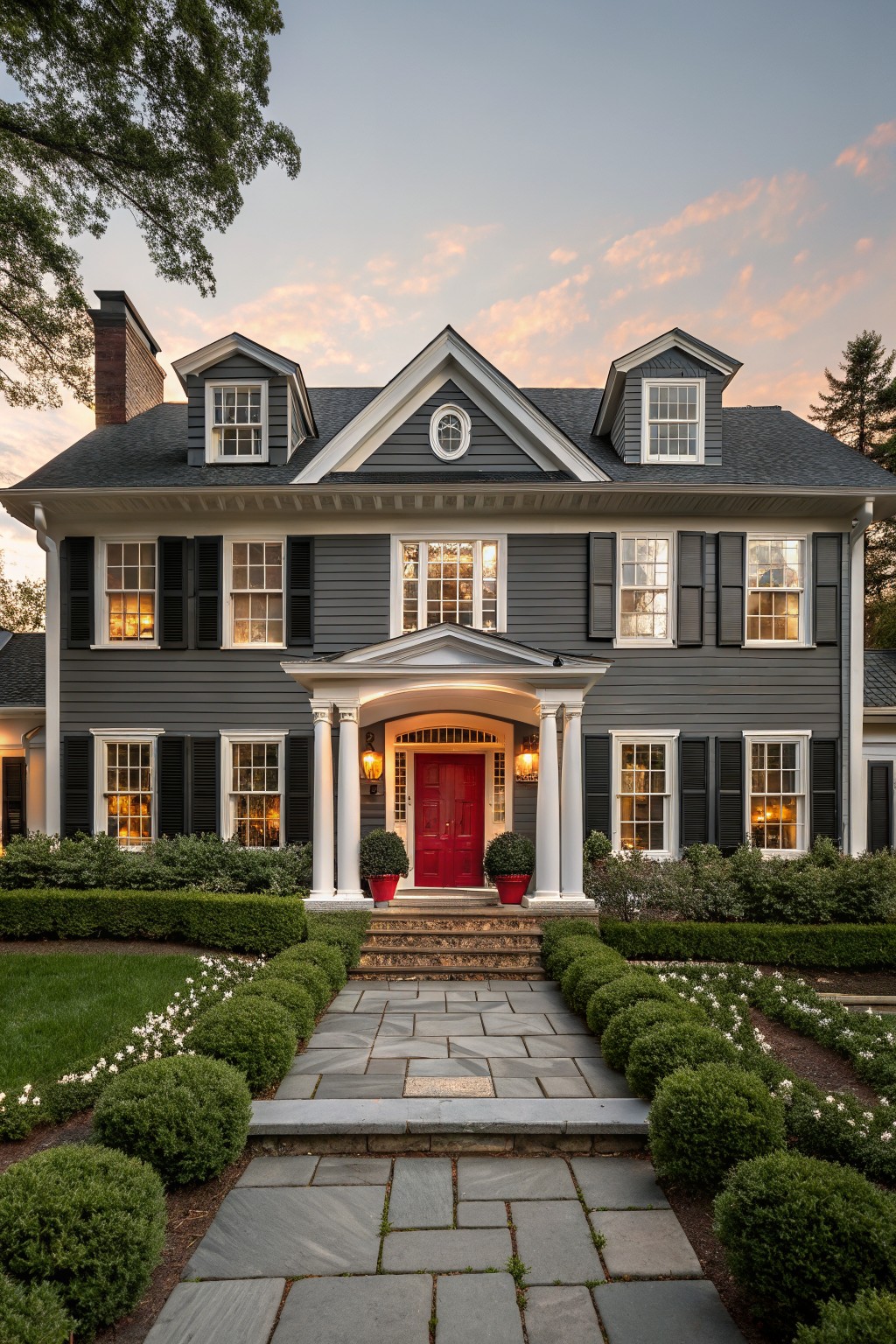
Gray siding like this gives a house a steady, calm look that never goes out of style. The soft shade here works because it picks up the tree shadows and stone path without overpowering the scene. White trim around the windows and roofline keeps everything sharp and clean. Then that red door steps in with just enough color to make the entry feel welcoming. It’s a simple way to add life without messing up the neutral base.
This setup suits older-style homes or neighborhoods where you want classic curb appeal. Try it on a Colonial or Cape Cod house facing east or west for that nice light play at dusk. Keep the landscaping low and boxy so it doesn’t steal focus. One thing. Skip the red if your area has too many bright accents already. Stick to matte finishes on the door to avoid glare.
Recommended Products

Ready to use, pre-mixed door and trim paint offers a fresh new look on interior or exterior metal, wood and fiberglass
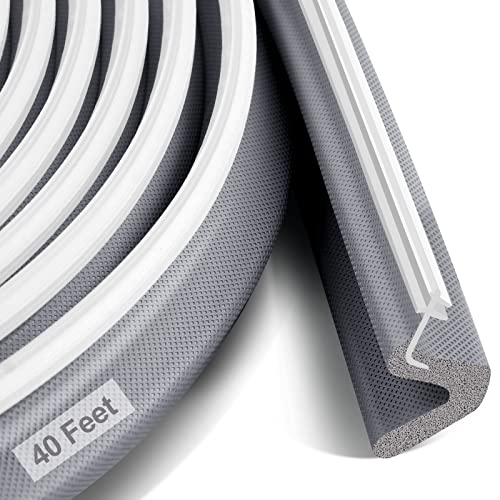
KERF SLOT ONLY: This weather stripping door seal is designed only for door frames with pre-cut kerf slots orgrooves. No adhesive backing or glue required - just press the PVC flange into the groove.Please check your door frame before ordering

Press-In Kerf Fit: This weather stripping door seal fits exterior door frames with built-in 1/8" kerf slots. Not self-adhesive; seals 1/4"–1/2" door gaps. Check your door frame type before ordering
Gray Shingle Siding with Navy Shutters
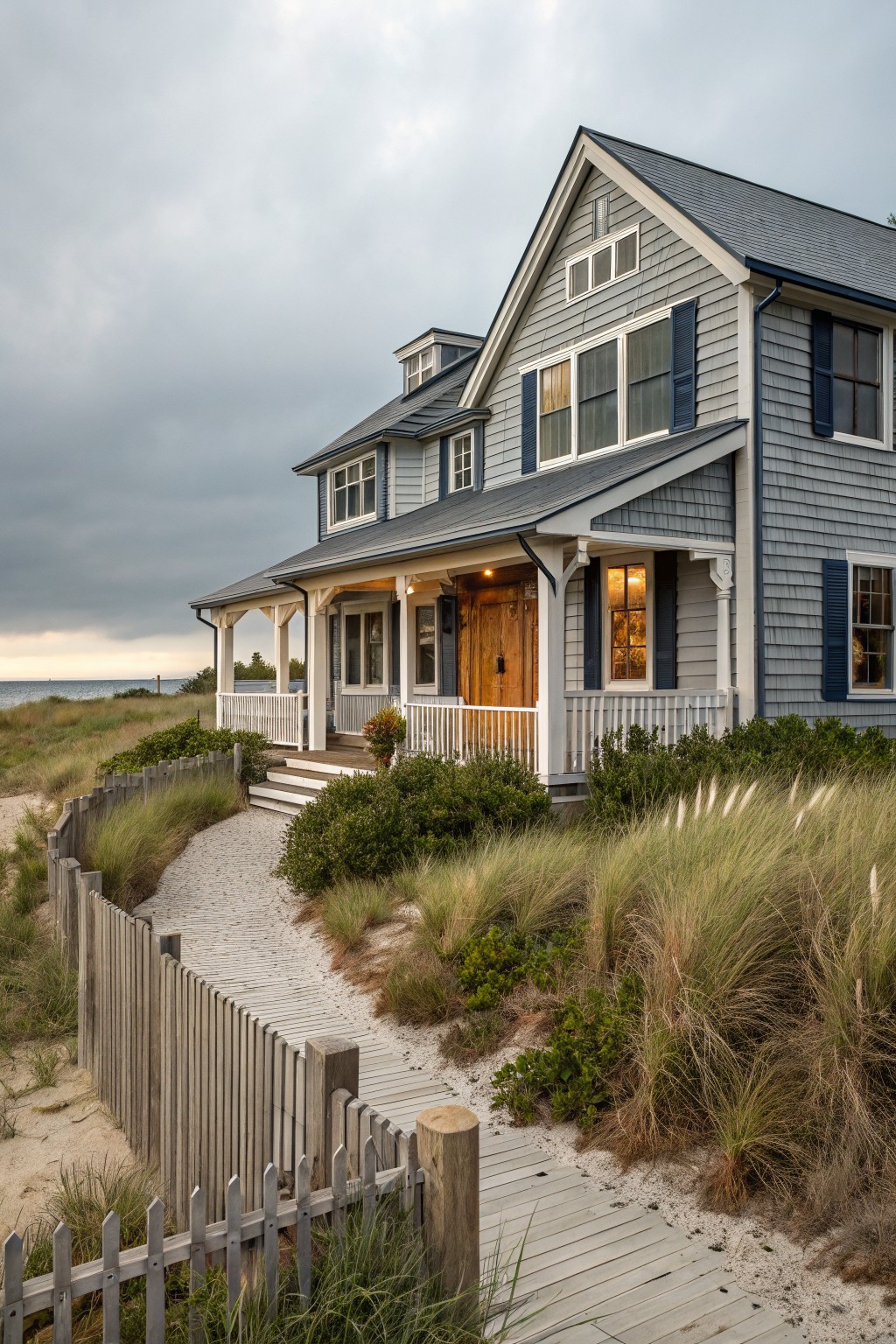
Soft gray shingles give this house a natural, weathered look that fits right in with beach dunes. The navy shutters on the windows pull in a bit of color, keeping things from going too neutral. White trim around the porch sharpens it all up without much fuss.
This setup works best on homes near water or in casual neighborhoods. It holds up to salt air and sun better than paint alone. Just make sure the trim stays bright to keep that clean contrast… otherwise it can fade into the gray. Good for two-story houses with porches.
Deep Gray Brick on City Townhouses
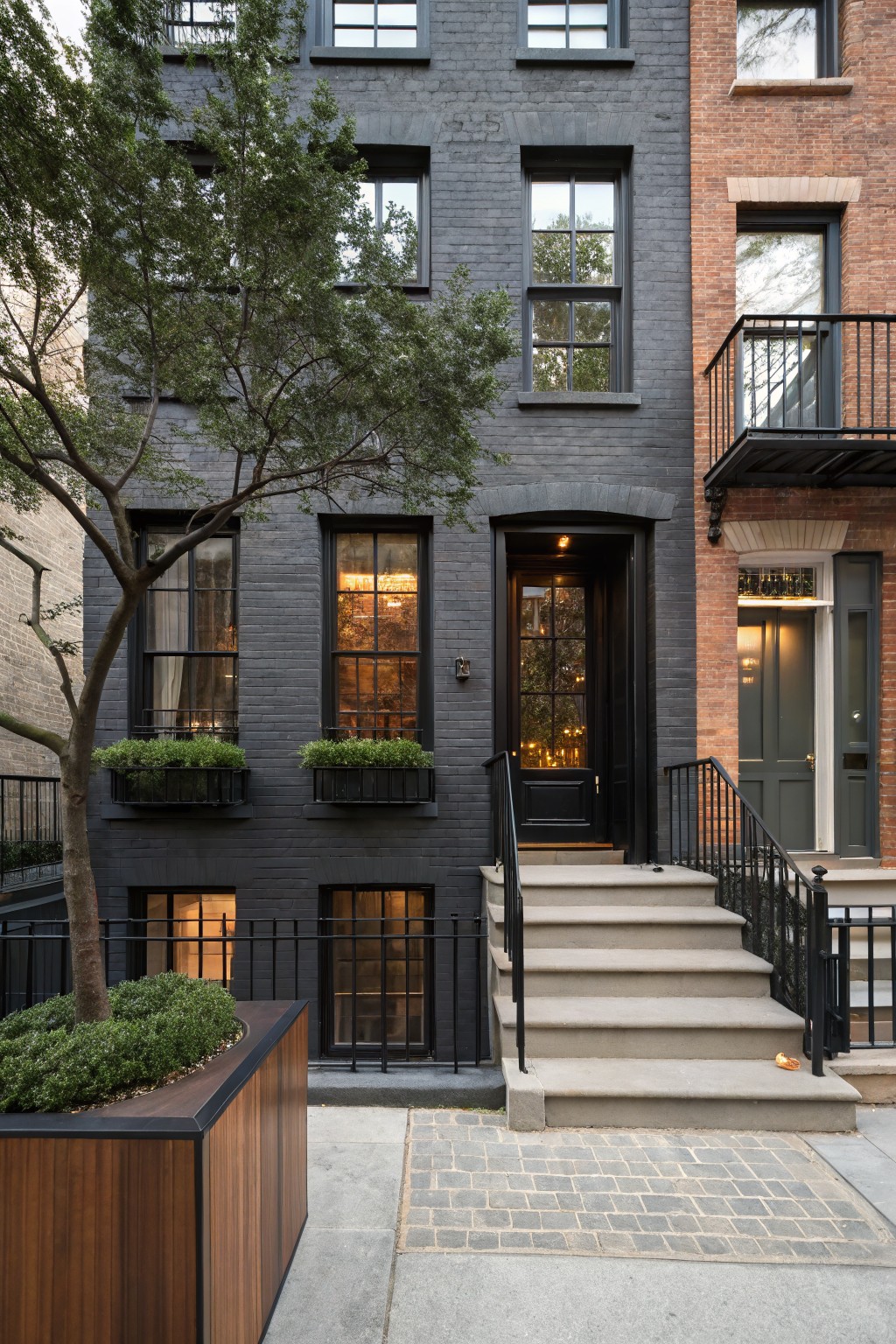
Deep gray brick turns a standard city row house into something sharp and collected. You see it here on this narrow facade, where the matte charcoal tone covers everything from the walls to the subtle arch over the entry. Paired with black-framed windows and a glossy black door, it keeps the look moody yet polished, without any fuss.
This works best on attached homes in older neighborhoods, like brownstone blocks wanting a modern edge. Add window boxes with greenery and a wood planter out front for a bit of life. Skip bright colors nearby, though. It shines against plain streets but might feel heavy next to super colorful neighbors.
Soft Gray Farmhouse Siding with Black Accents
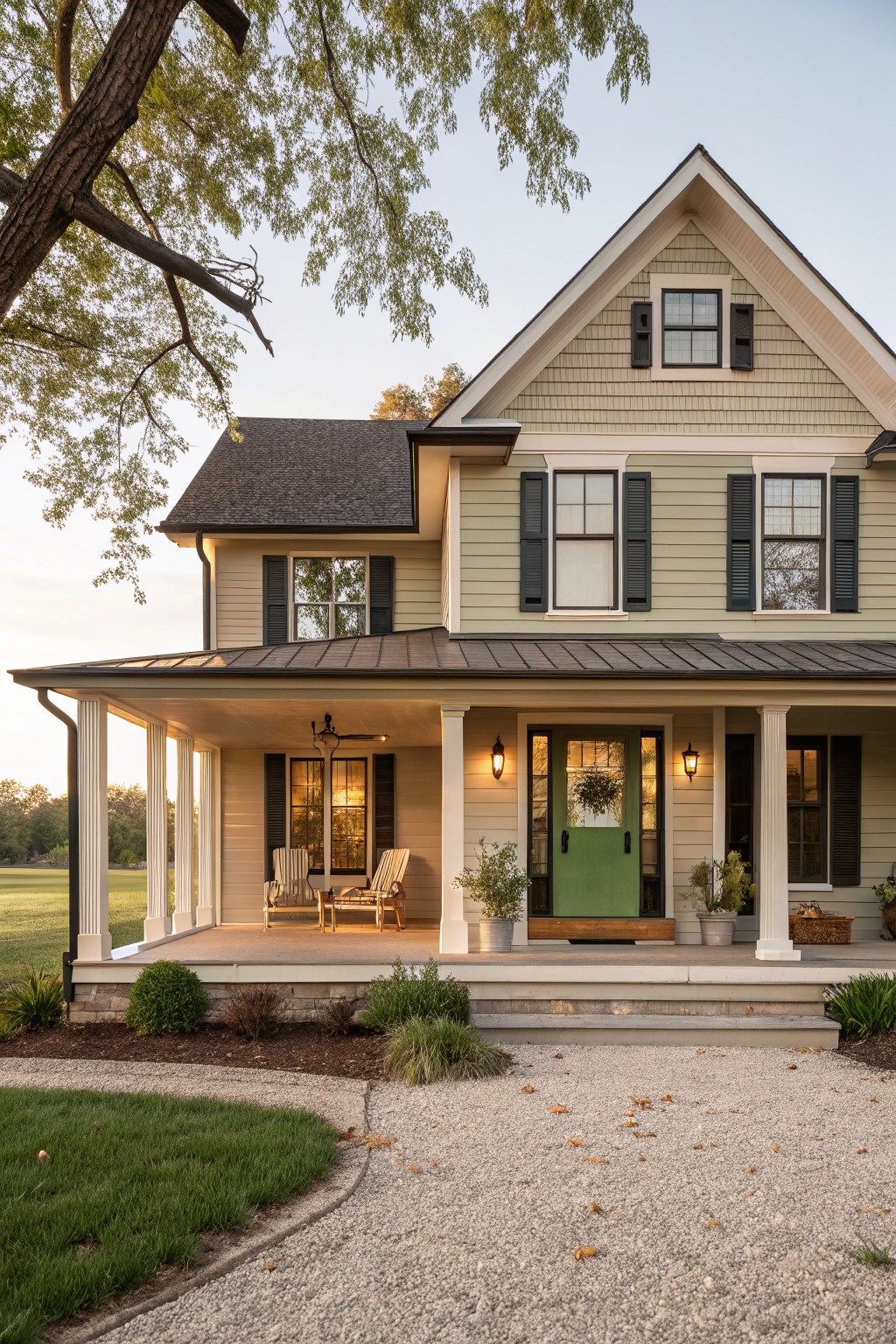
A soft gray shingle siding like this gives a farmhouse a calm, settled look that fits right into the landscape. Paired with black shutters and a metal roof, it adds clean lines and some needed punch. That green door pulls it all together without overdoing things.
This setup suits older-style homes or new builds aiming for classic vibes, especially where you want low-key curb appeal. Go for it on two-stories with a porch. Just keep the gray muted so the black doesn’t fight it. Works year-round, even with fall leaves around.
Dark Gray Siding with Wood Accents
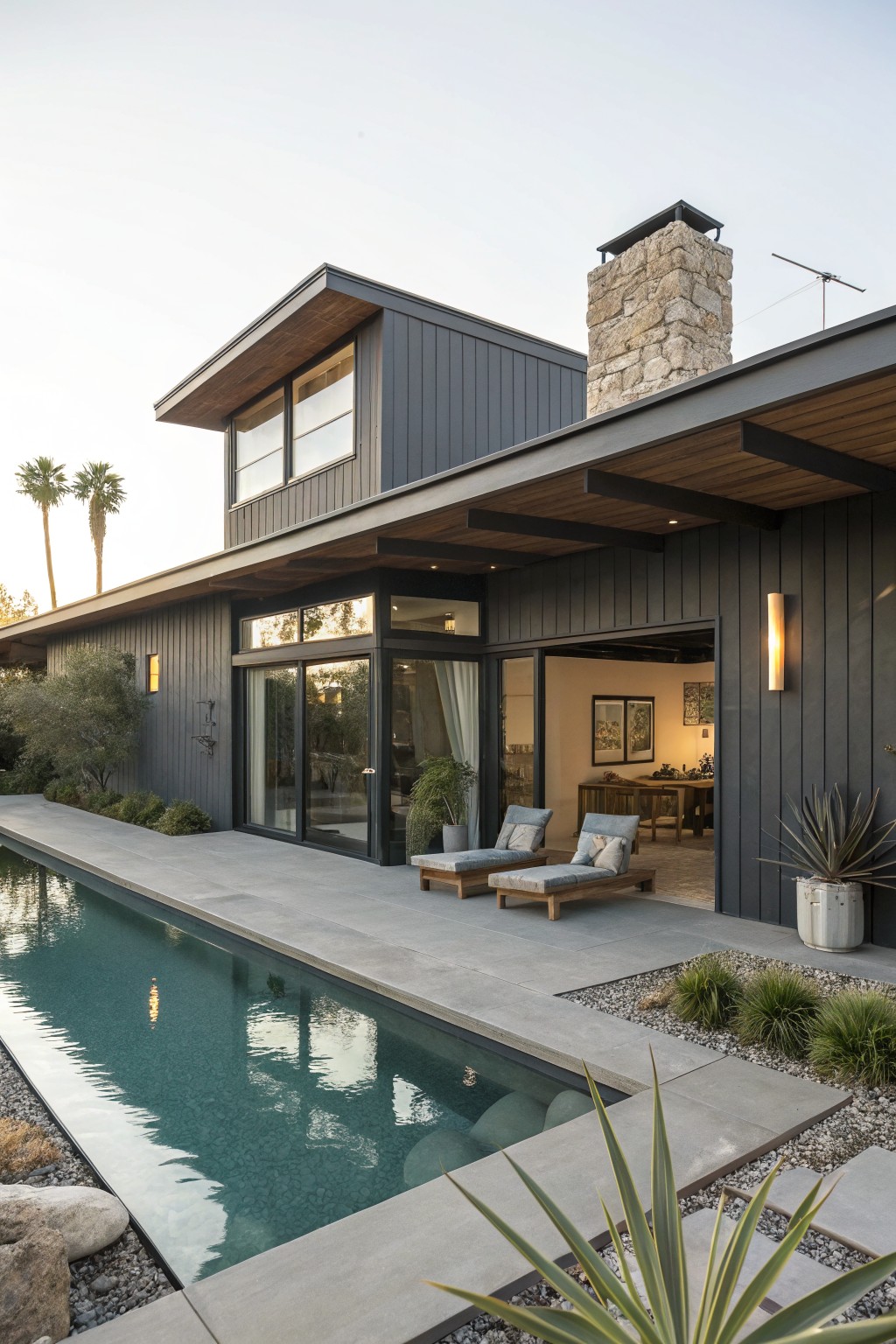
Dark gray siding like this gives a house a clean, modern edge that doesn’t feel cold. The vertical boards catch the light just right, and pairing them with warm wood beams overhead keeps things balanced. That stone chimney up top adds a bit of texture too. It’s a look that stays sharp year-round.
Try it on a midcentury-style home or anything low-slung with big windows. It holds up well in dry climates where you want low upkeep. Just make sure the wood is sealed against weather, and skip busy colors elsewhere to let the gray lead.
Green-Gray Siding with White Trim
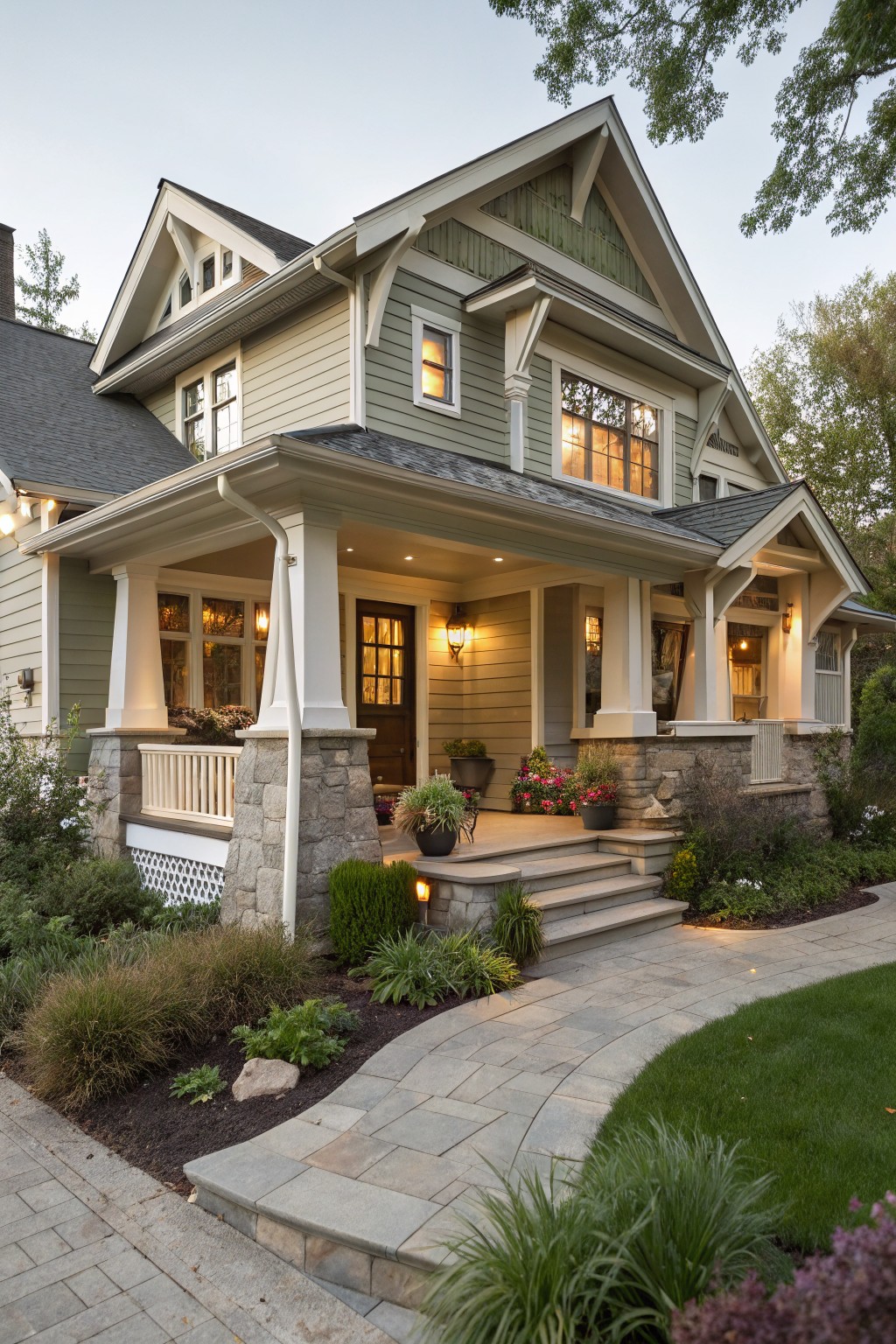
A soft green-gray siding like this one keeps a house looking fresh year after year. It picks up hints from the surrounding trees and stone without going too bold. White trim around the windows and porch columns sharpens everything up, and those stone piers at the base add a sturdy, natural touch that ties it all together.
This scheme suits Craftsman or bungalow styles best, especially where you want some color but not too much. Paint the siding in a muted sage tone, keep trim bright, and use local stone if you can. It holds up well in shady spots or wooded lots… just make sure the roof shingles are dark enough for balance.
Navy Front Door on Gray Stone
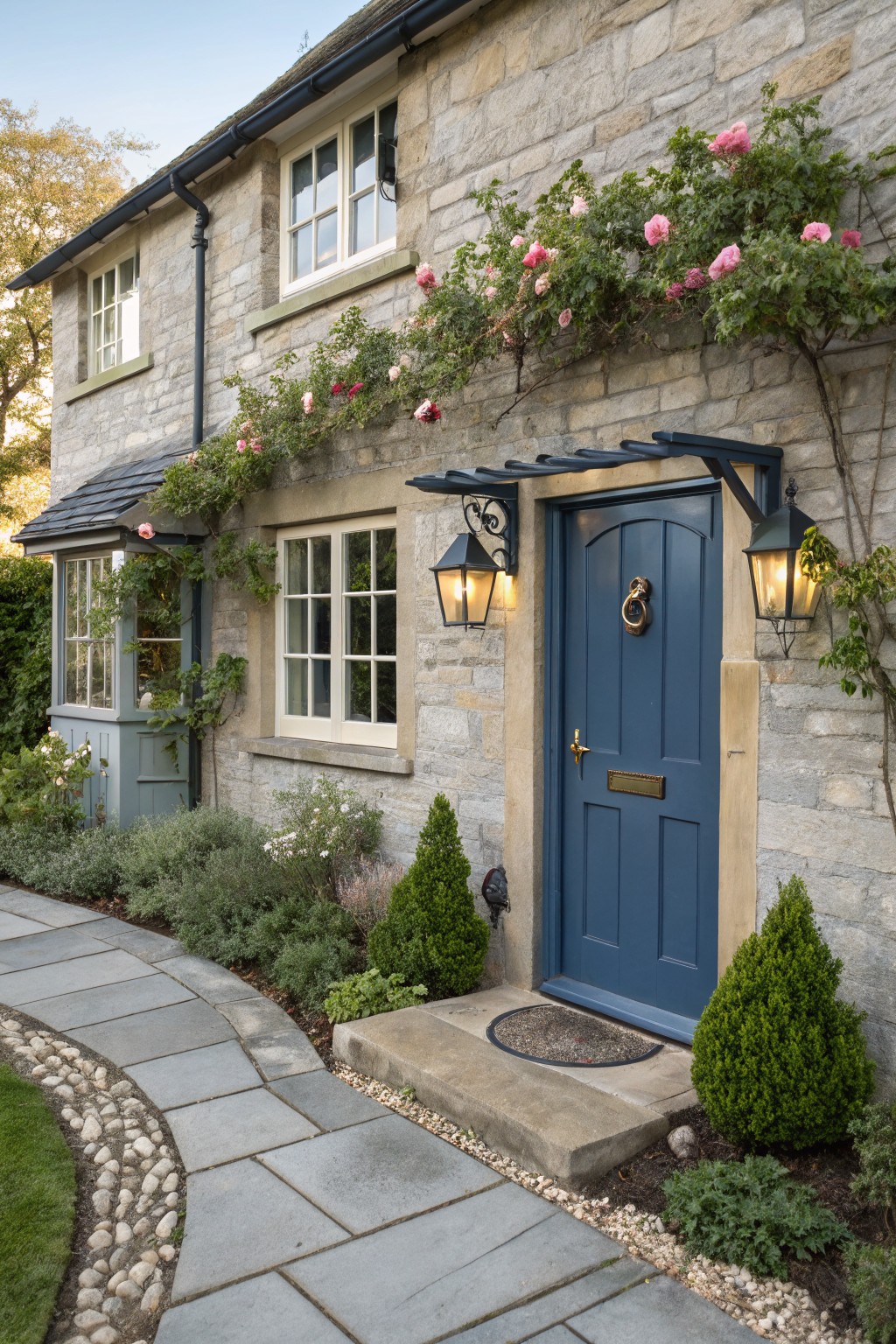
A deep navy door like this one gives a gray stone house an instant focal point. The color pops nicely against the neutral tones of the limestone walls, making the entry feel more welcoming and put together. It’s a simple switch that adds personality without much fuss.
This works especially well on traditional cottages or older homes with natural stone facades. Go for an arched shape if your door allows, and add lanterns on either side for evening glow. Just keep the hardware brass or black to match the vibe… avoids looking too trendy.
Gray House with Stone Chimney
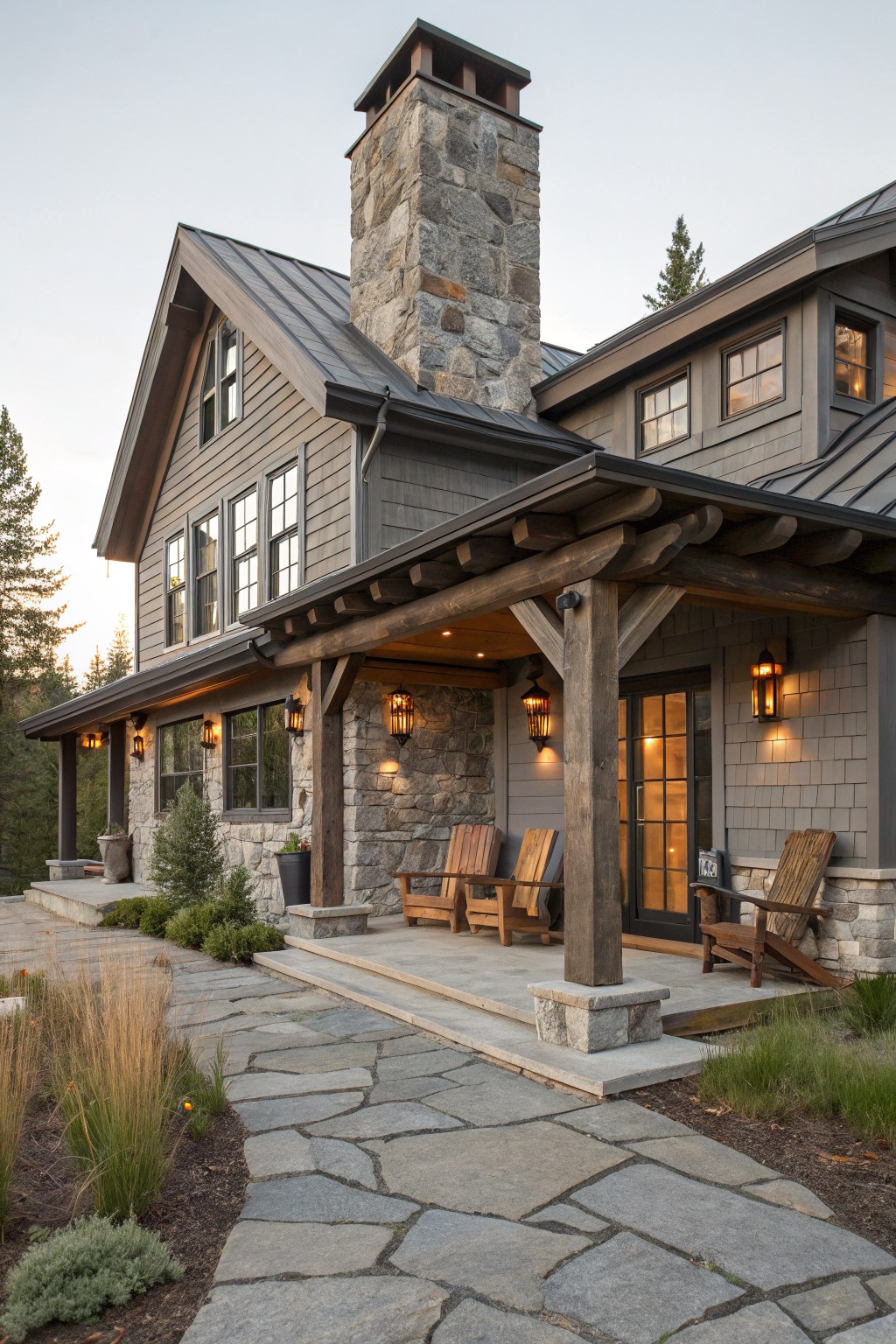
A tall stone chimney like this one gives a gray house plenty of presence. The rough texture of the stones stands out against the even gray siding and metal roof. It pulls the eye up and makes the place feel sturdy, like it’s been there forever.
Try this on a cabin-style home or anything in a hilly spot. Match the stone to what’s around you, maybe fieldstone if you’re in the country. Just don’t go too big if your house is small. It keeps things balanced.
Modern Gray Facade with Black Panels
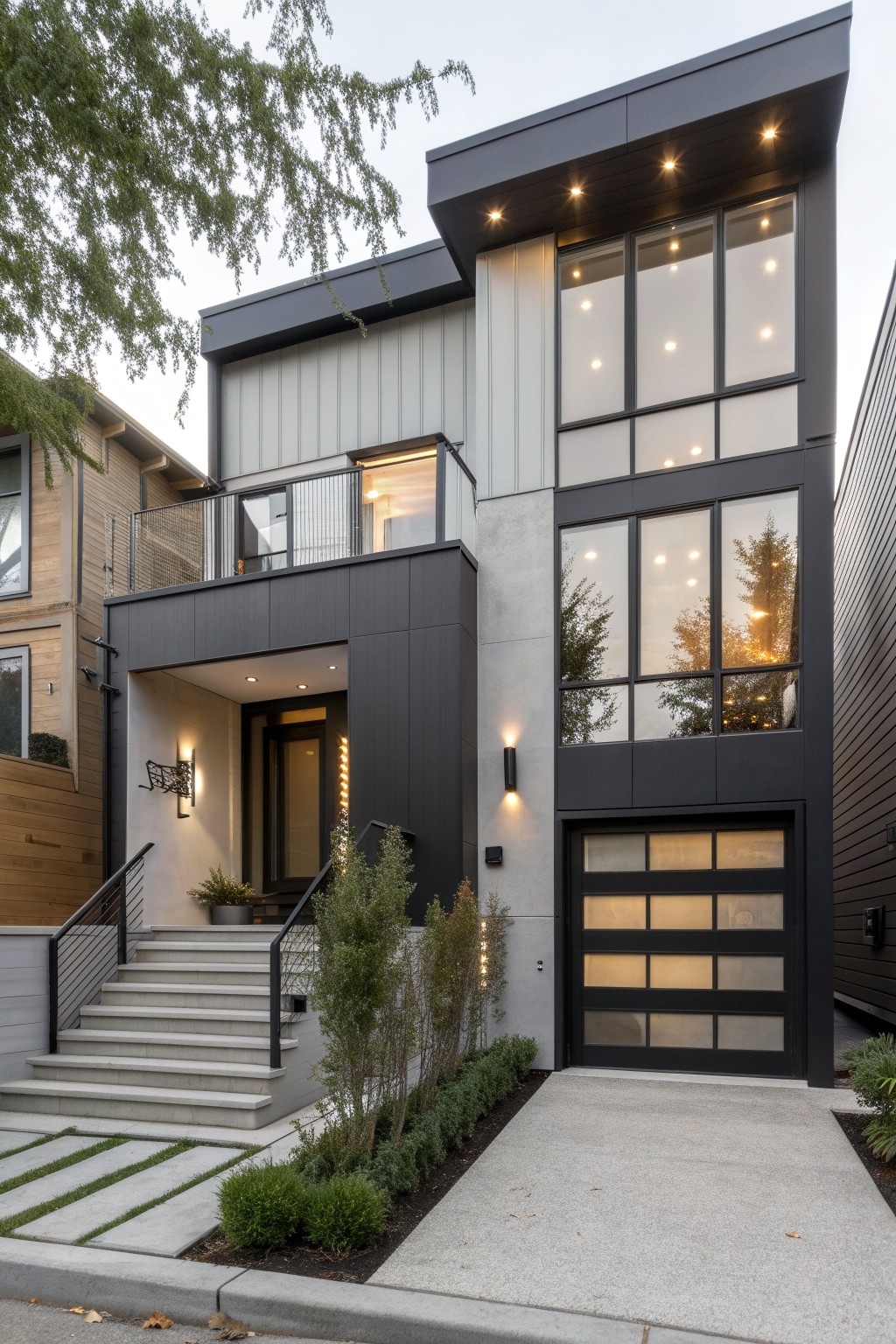
This setup uses light gray siding over most of the front, paired with matte black panels around the entry and big windows. The gray keeps things calm and neutral, while the black adds some edge and pulls focus to the architecture. It’s a straightforward way to make a house look sharp and put-together, especially at dusk when the lights kick in.
Try it on a two-story contemporary home where you want curb appeal without fuss. Let the gray cover the main body, and use black just for framing doors, garage, and tall glass sections. Works best on city lots with clean lines. Skip busy trim, though. Plants tucked along the driveway help tie it down.
Gray Townhouses with Black Railings
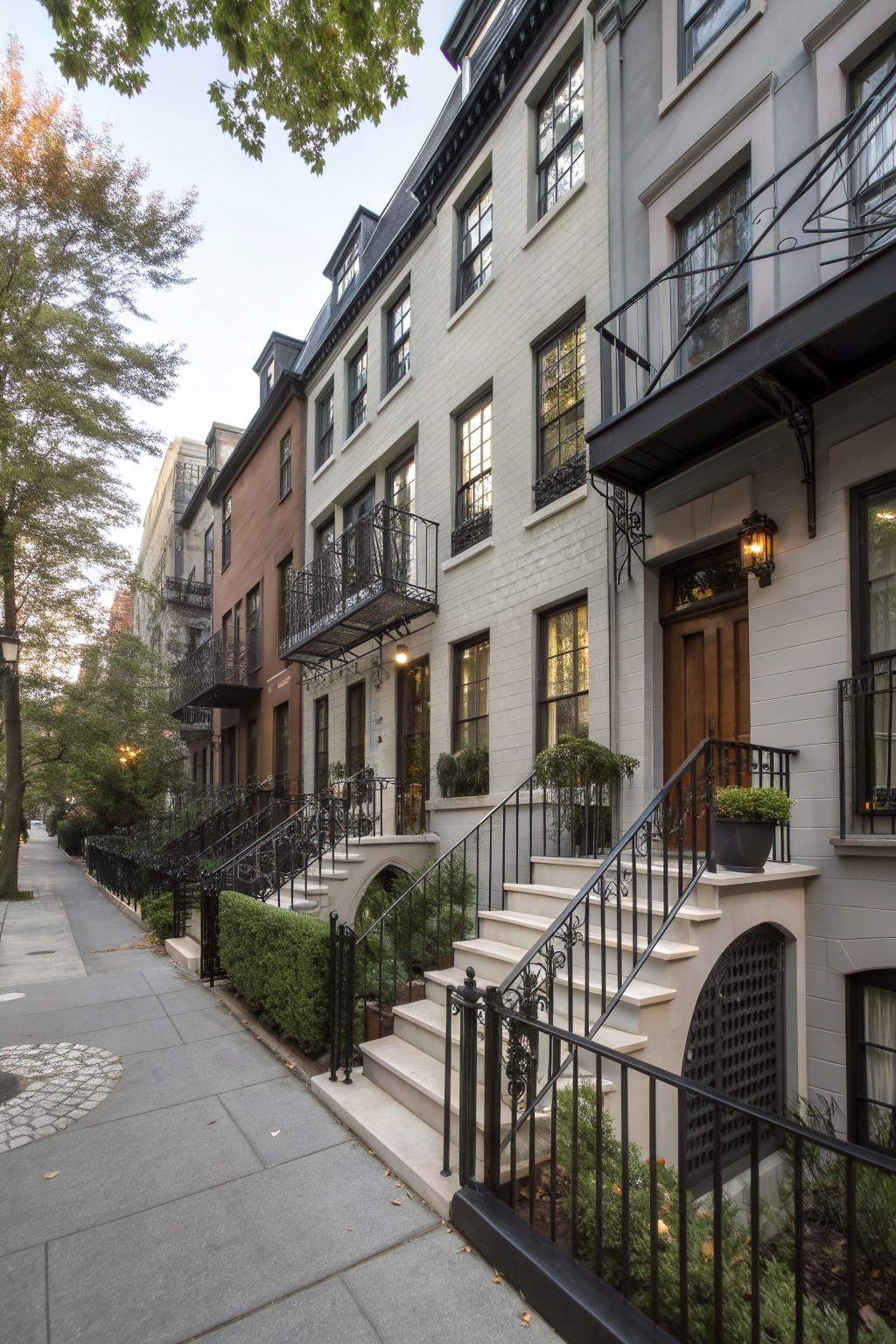
Gray brick and stucco townhouses look sharp when you add black wrought iron railings along the stairs and balconies. That contrast pops without trying too hard. It pulls from old-school architecture but feels clean and current, especially on a street like this with trees overhead.
These setups suit narrow urban lots or row houses best. Keep the stone steps plain and tuck in boxwoods at the base for a bit of green. Skip bold colors on doors or trim, or it gets busy fast.
Soft Gray Siding with Dark Window Frames
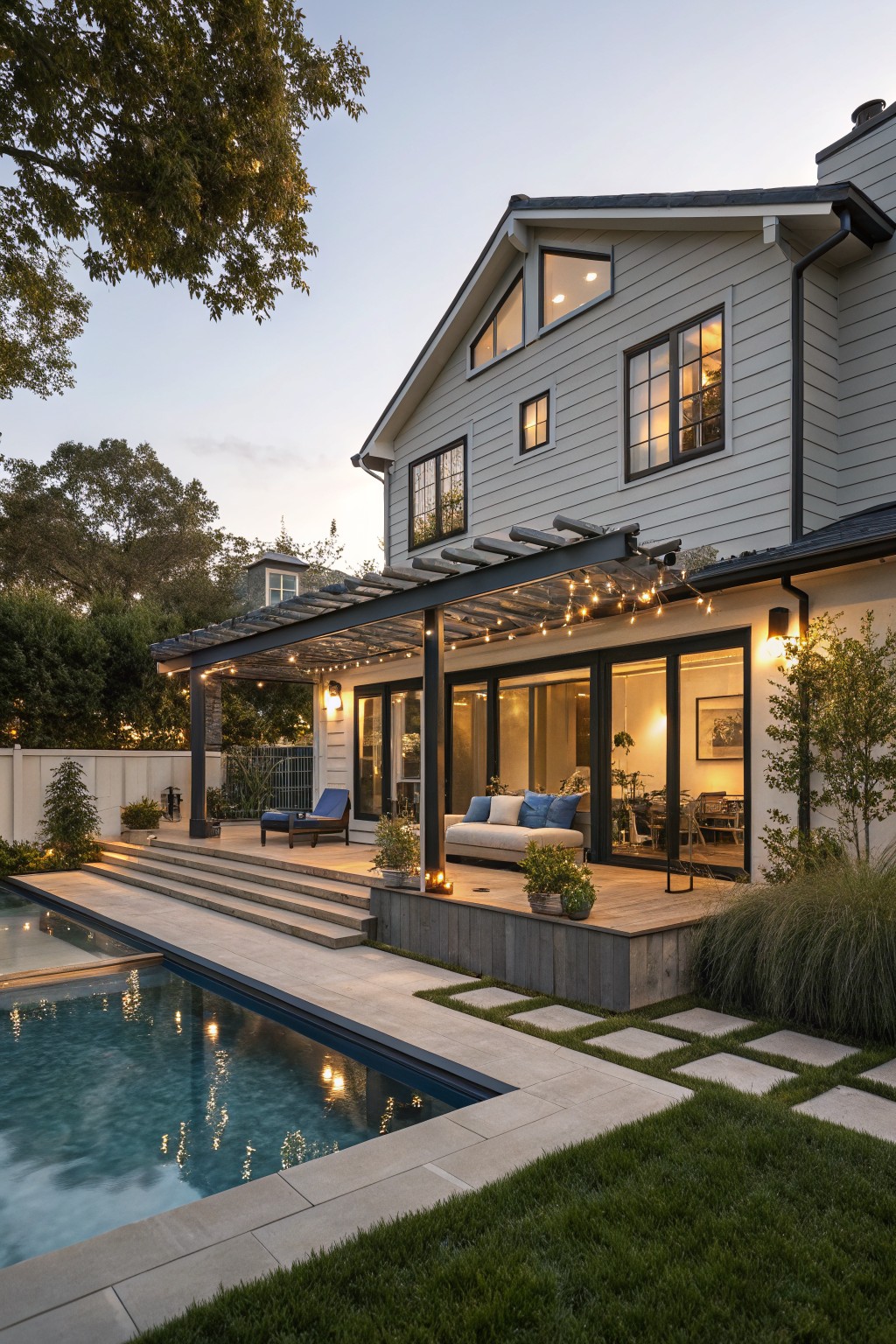
This look uses a light gray horizontal siding that gives the house a clean, calm feel. The dark black frames around the windows stand out nicely against it, adding some definition without overpowering things. At dusk, with the warm lights coming on, it all looks settled and polished, like the house has been there forever.
You can pull this off on most homes, especially ones with simple rooflines or a bit of modern slope. Pair the gray siding with black or charcoal trim on doors and roof edges to keep it sharp. It works great in coastal spots or suburbs where you want low-key curb appeal that doesn’t fade over time. Just make sure the gray isn’t too cool, or it might feel stark in shady yards.
Gray Stone Facade with Black Door and Window Frames
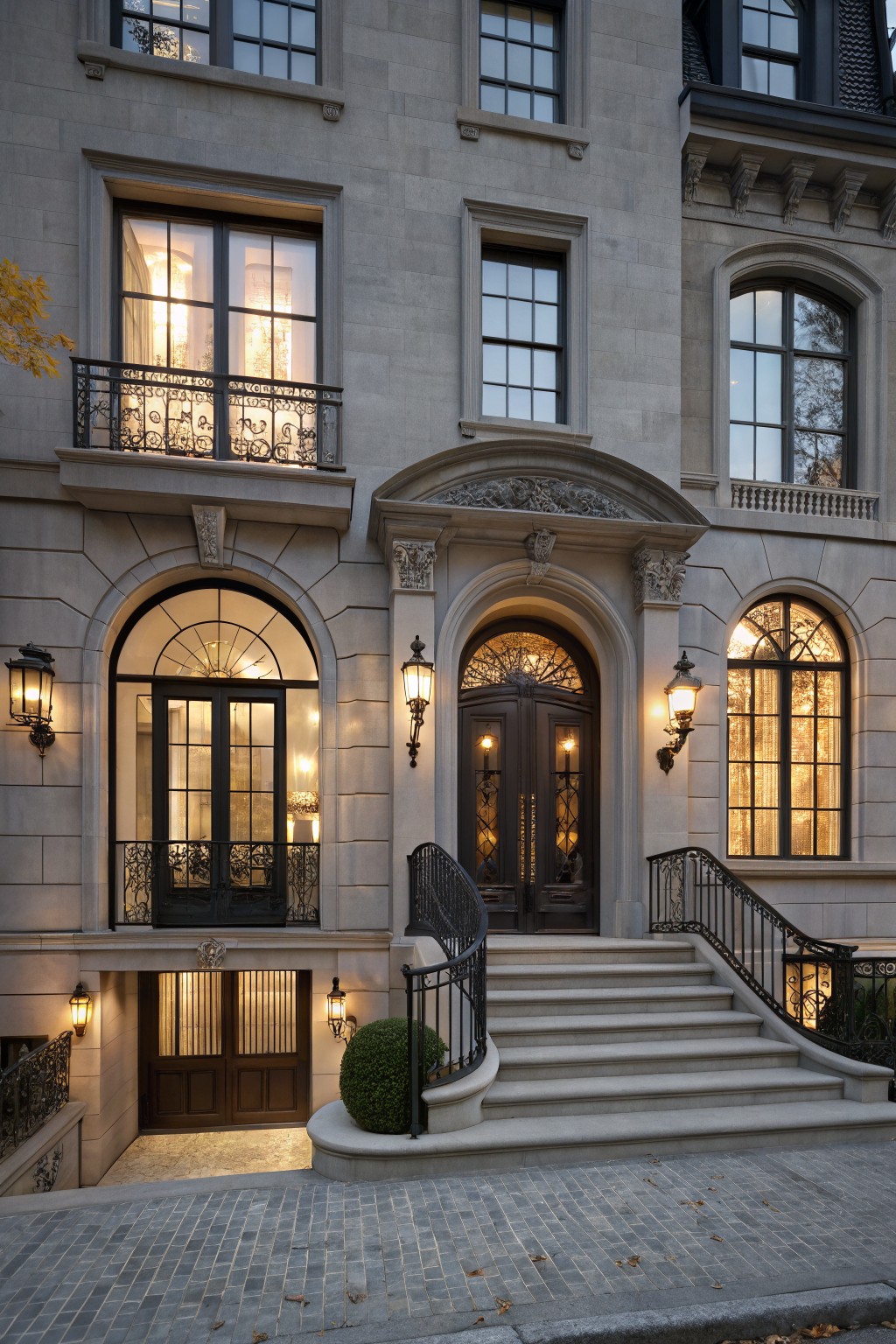
Gray stone houses like this one use a pale limestone base that catches the light just right. Pair it with black frames on the doors and windows, and you get a clean contrast that makes the whole front pop without trying too hard. The dark metal pulls focus to the entry, especially at dusk when lanterns kick in. It’s a look that feels solid and been-there-forever.
This setup works best on townhouses or row homes in city spots, where you want curb appeal that stands up to neighbors. Go for matte black paint on wood or metal frames to keep it from shining too much. Skip it on super-modern builds, though. It suits traditional or transitional styles, and just needs good maintenance on the stone to stay sharp.
Vertical Gray Wood Siding
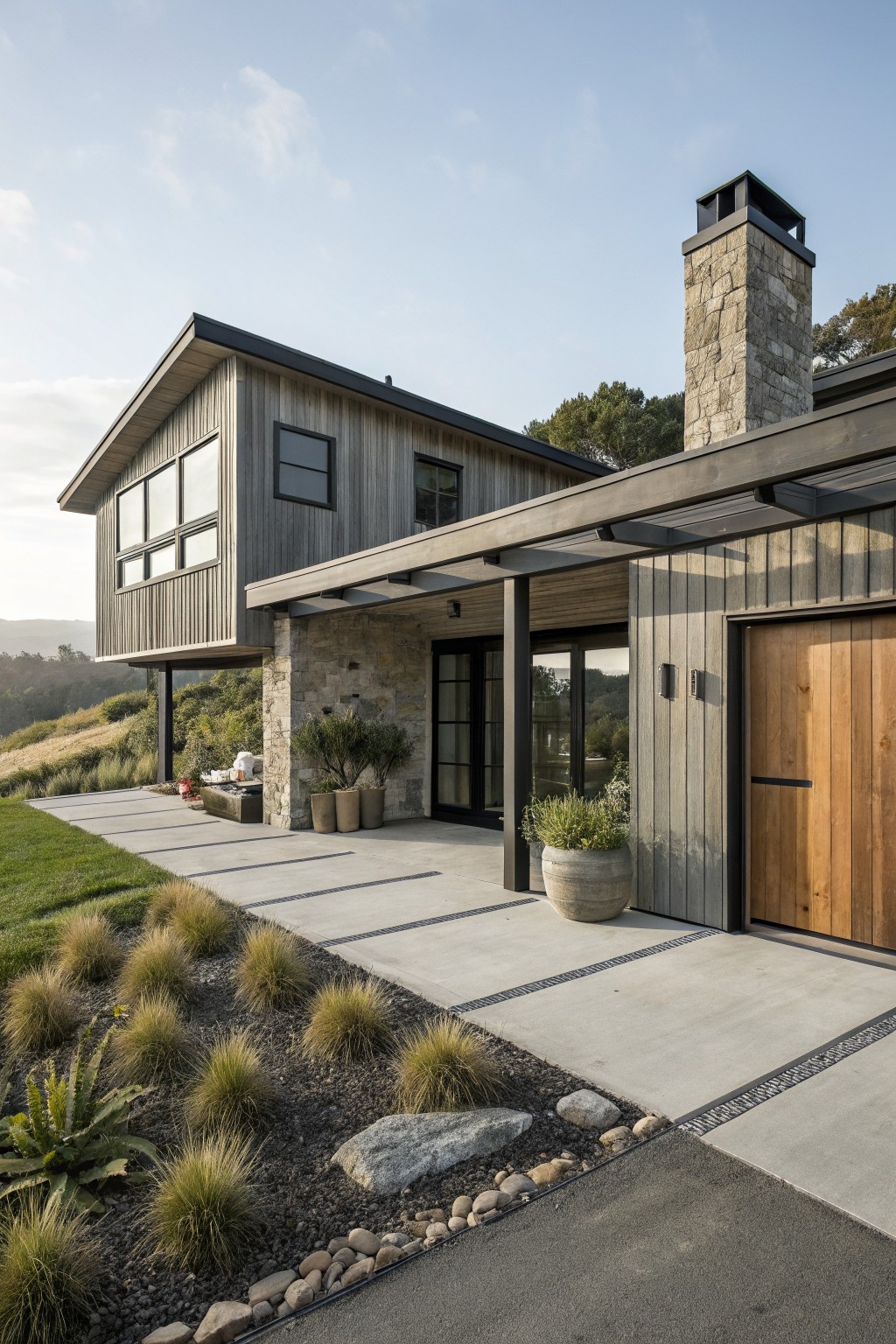
Gray wood siding like this picks up on natural tones without trying too hard. The vertical planks give the house a tall, sleek feel that works well against hills and trees. That weathered gray shade hides wear from weather and blends into the landscape, while the stone chimney adds some solid weight down low.
You can pull this off on mid-sized homes in rural or wooded spots. Stick to black window frames and a simple wood garage door to keep things clean. Skip busy trim. It holds up over time with minimal upkeep, especially if you seal it right at the start.
Gray Half-Timbered Exterior with Red Door
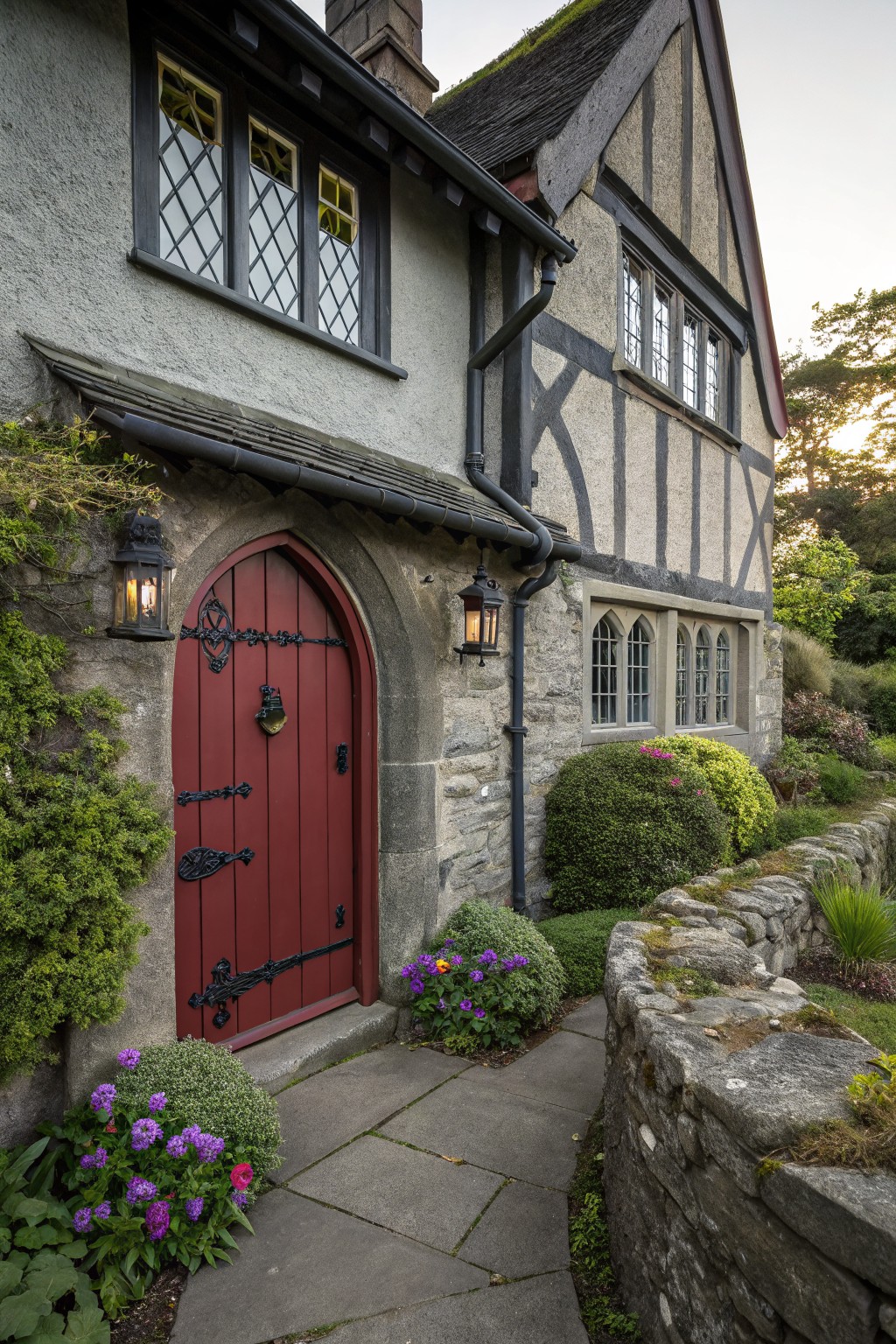
A gray stucco house like this one gets a lot from its dark timber framing and that bright red arched door. The neutral gray walls let the black beams stand out, giving the whole front a solid, old English look. Then the red door pulls everything together. It adds just enough color without overwhelming the quiet gray base.
This scheme fits cottages or storybook-style homes best, especially where you want some welcome without going bold all over. Pick a muted red paint for the door, keep the gray light on the plaster, and match the hardware in black iron. Stone accents around the base help tie it to the ground. Watch the proportions though. Too much red elsewhere and it loses that clean contrast.
Dark Timber Framing on Light Gray Stucco
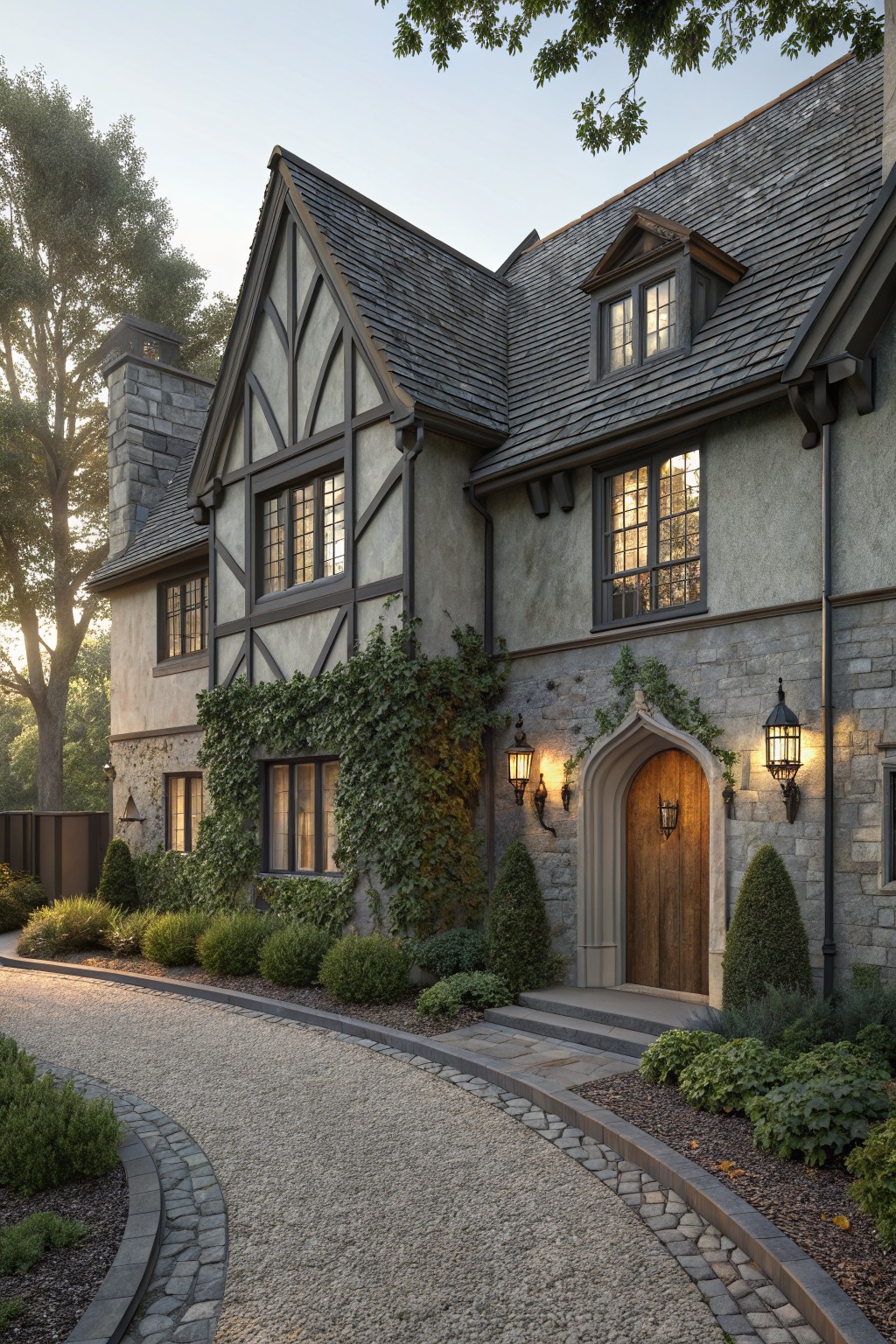
One reliable way to get a polished gray exterior is dark timber framing over light gray stucco. It creates that classic Tudor vibe without going overboard. The beams stand out sharp against the soft walls, and a gray stone base at the bottom keeps everything grounded. Notice how the ivy climbs one corner here. It adds a touch of age right away.
This setup works best on houses with gabled roofs and tall windows. It suits bigger homes in tree-lined spots, where the grays blend with nature. Just paint the stucco a warm light gray, not too cool, or it might feel stark. Darken the timbers enough so they pop, and you’re set for years.
Bright Yellow Door on Dark Gray Brick
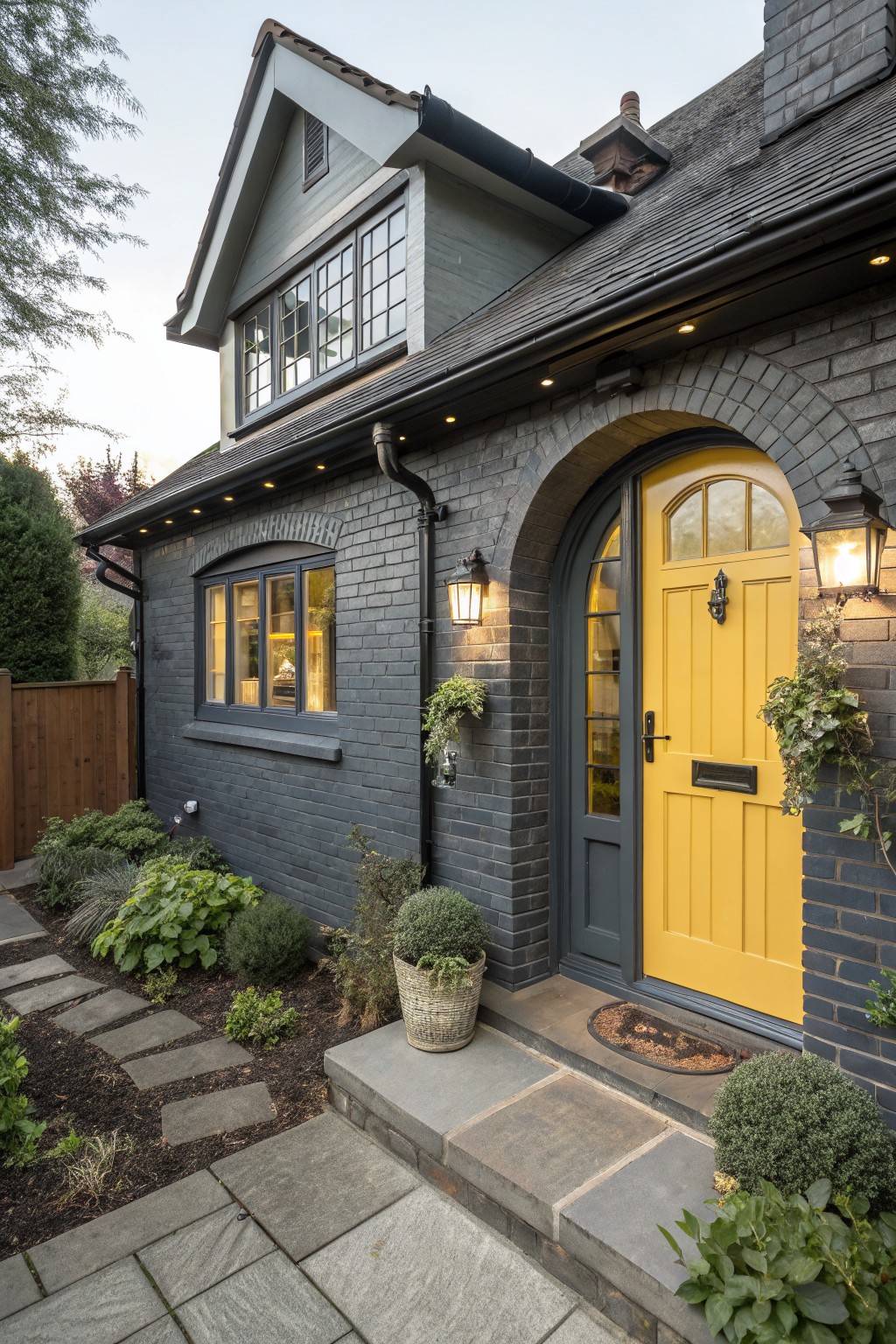
A sunny yellow front door gives this dark gray brick house real pop at the entry. The color pulls attention straight to the arched doorway without overwhelming the slate tones. Black lanterns frame it nicely, keeping things simple.
This look suits older homes or ones with craftsman details. Go for a true yellow, not too orange or pale, on deep gray brick or siding. Pair it with dark hardware and minimal plants nearby. It brightens curb appeal year-round.
Frequently Asked Questions
Q: How do I pick a gray shade that flatters my existing brick or stone accents?
A: Walk around your house at different times of day and snap photos in natural light.
Match the gray’s undertone to your brick’s warmth. Reds and earth tones pair best with warmer grays that have subtle beige hints.
Q: What front door color brings out the best in a gray exterior?
A: Go bold with a deep navy or hunter green. They add warmth without clashing.
Black works too if you want sleek drama.
Q: Does my roof color limit my gray siding choices?
A: Pick siding that echoes your roof’s neutral tones. Asphalt shingles in charcoal let you play with lighter grays up top.
Stick close to avoid a mismatched feel.
Q: How do I stop gray paint from fading too fast in sunny spots?
A: Choose high-quality exterior paint with UV blockers. Prep surfaces well by power washing first.
Refresh every five to seven years.
