

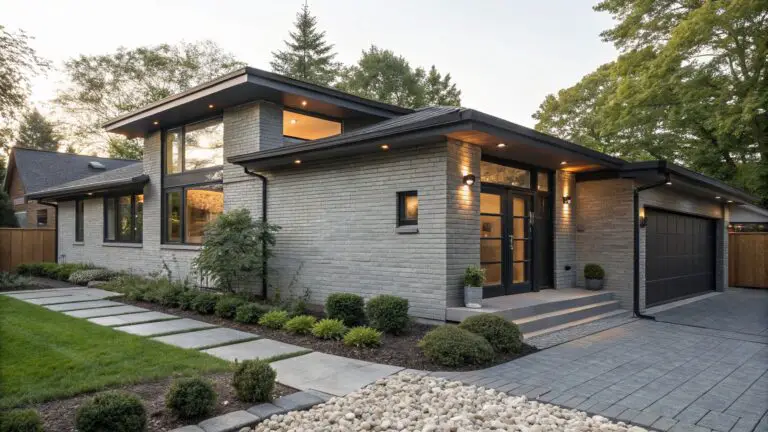
I’ve always slowed down to look at houses wrapped in textured gray brick because they hold their curb appeal through seasons of rain and sun. That rough surface adds depth to the facade in a way smooth materials just can’t match, making the whole front feel grounded on its lot. I remember glancing at my neighbor’s place and thinking how their entry arch blended perfectly with the brick’s tones, pulling everything together without trying too hard. From the street, you notice the texture’s play on light first, long before rooflines or accents come into focus. A handful of these setups strike me as worth sketching out for real updates, the kind that age well in everyday neighborhoods.
Gray Brick House with Cantilevered Entry Overhang
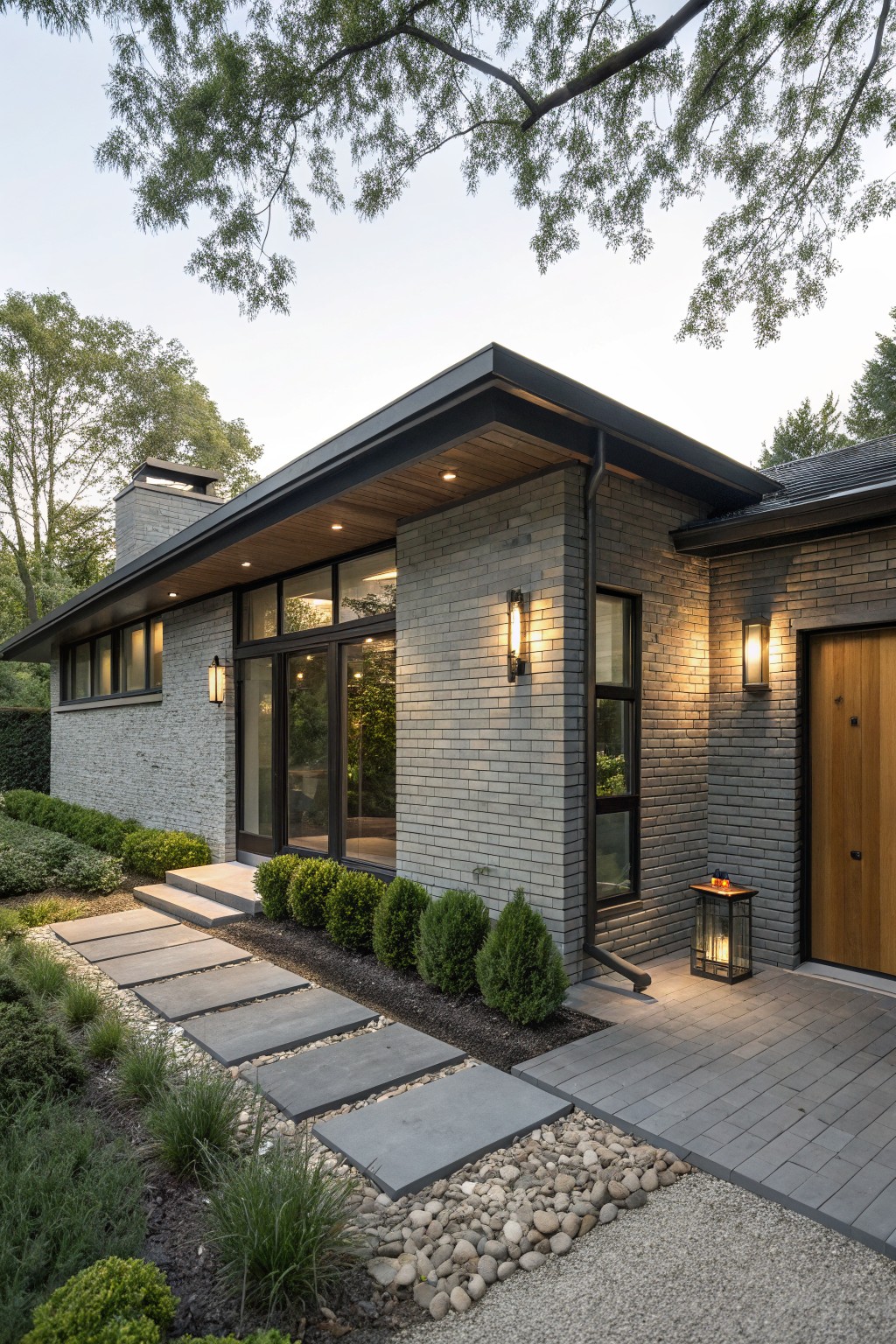
This setup takes textured gray brick and adds a simple cantilevered wood overhang right over the entry doors. The light brick gives the house a soft, lasting look, while the dark wood roof edge pulls your eye up and adds some modern shelter without much fuss. Those wall lanterns tucked into the brick help too, lighting the way at dusk.
It works best on low-slung homes or ones with clean lines already. Side entries like this one shine here, especially if you have trees nearby for that framed feel. Keep the overhang short so it stays balanced… and pair it with a wood door for warmth that offsets the brick’s cool tone.
Gray Brick Home with Wood Garage Doors
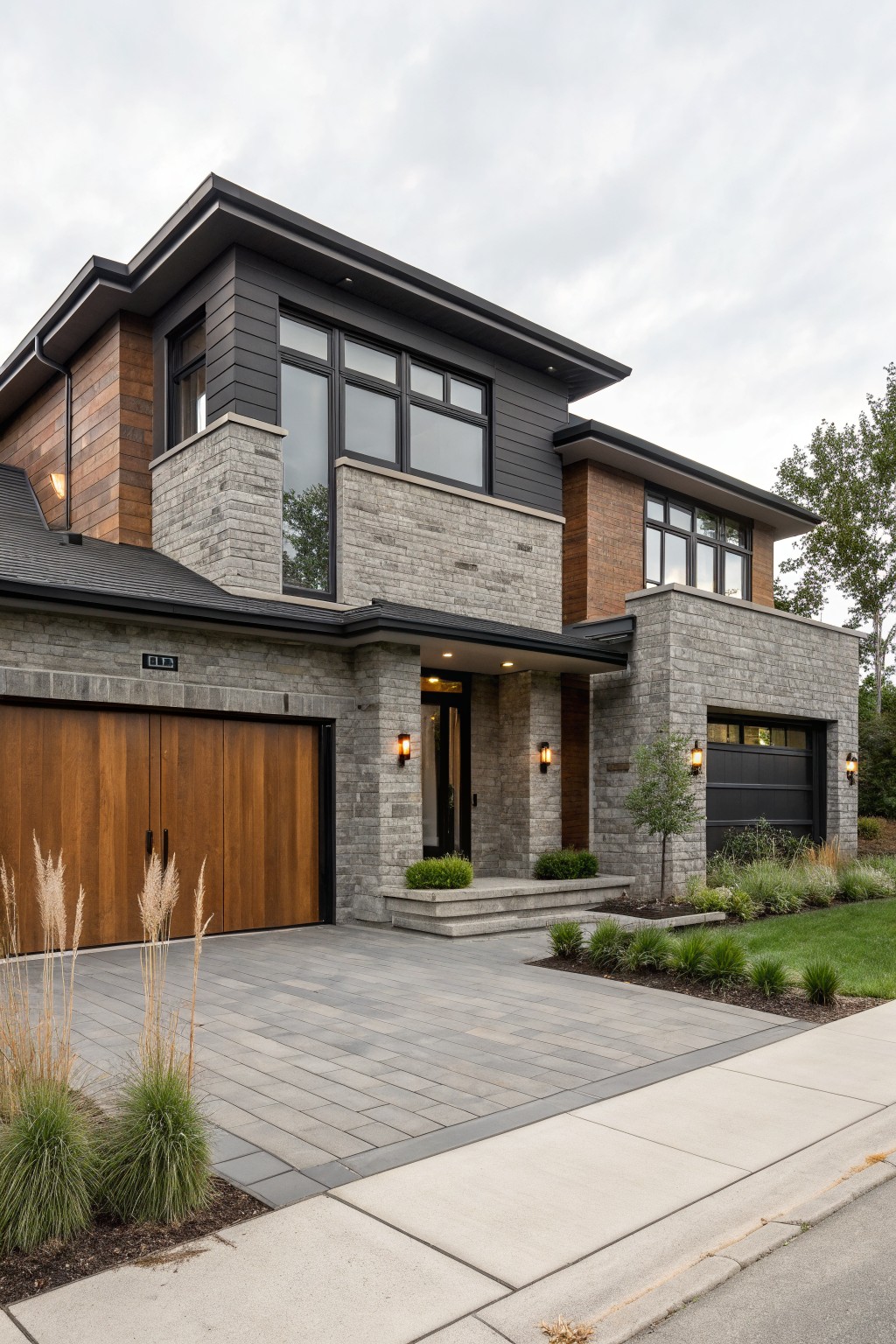
Textured gray brick forms the solid base of this house, wrapping around the garage and entry area. Wood garage doors in a warm tone add just enough contrast to keep things from feeling stark. It’s a straightforward way to mix materials that holds up well over time and gives good curb appeal.
You can pull this off on a two-story modern home facing the street. The pavers in the driveway tie it together nicely, leading straight to those doors. Works best where you want low-fuss charm… pick durable wood stain to handle the weather.
Sage Green Door on Textured Gray Brick
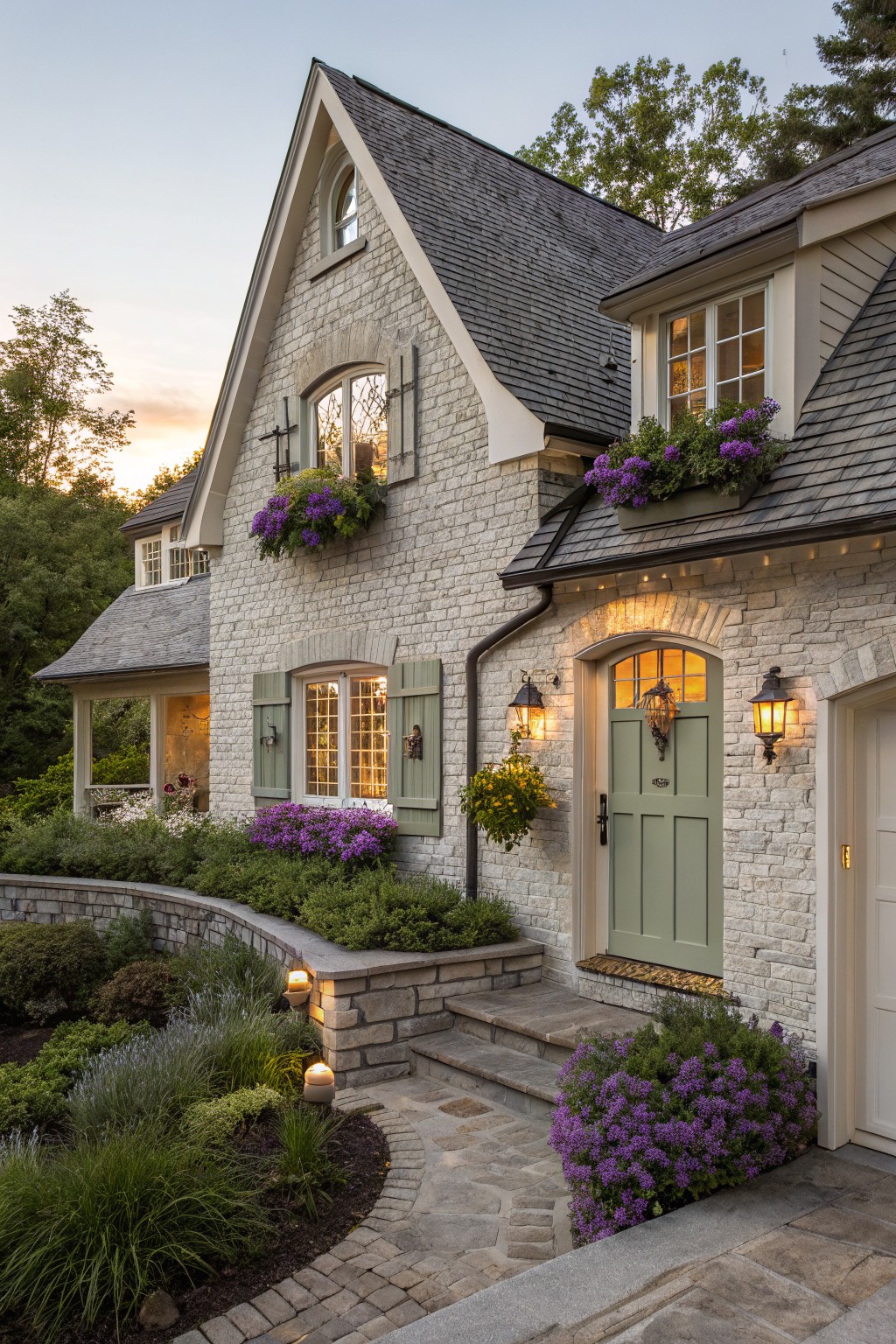
A soft sage green door stands out nicely against the light gray textured brick of this house. The arched shape and brass lanterns give the entry a cozy feel right at dusk. Purple flowers in window boxes and hanging baskets add some color without overwhelming the neutral brick.
This look fits older-style homes or new builds aiming for classic charm. Use it where you want a bit of green to freshen things up, but keep shutters and plants in similar tones. Watch the scale, though. The door needs that arch or some detail to balance the brick’s texture.
Townhouse Facade with Gray and Beige Brick Mix
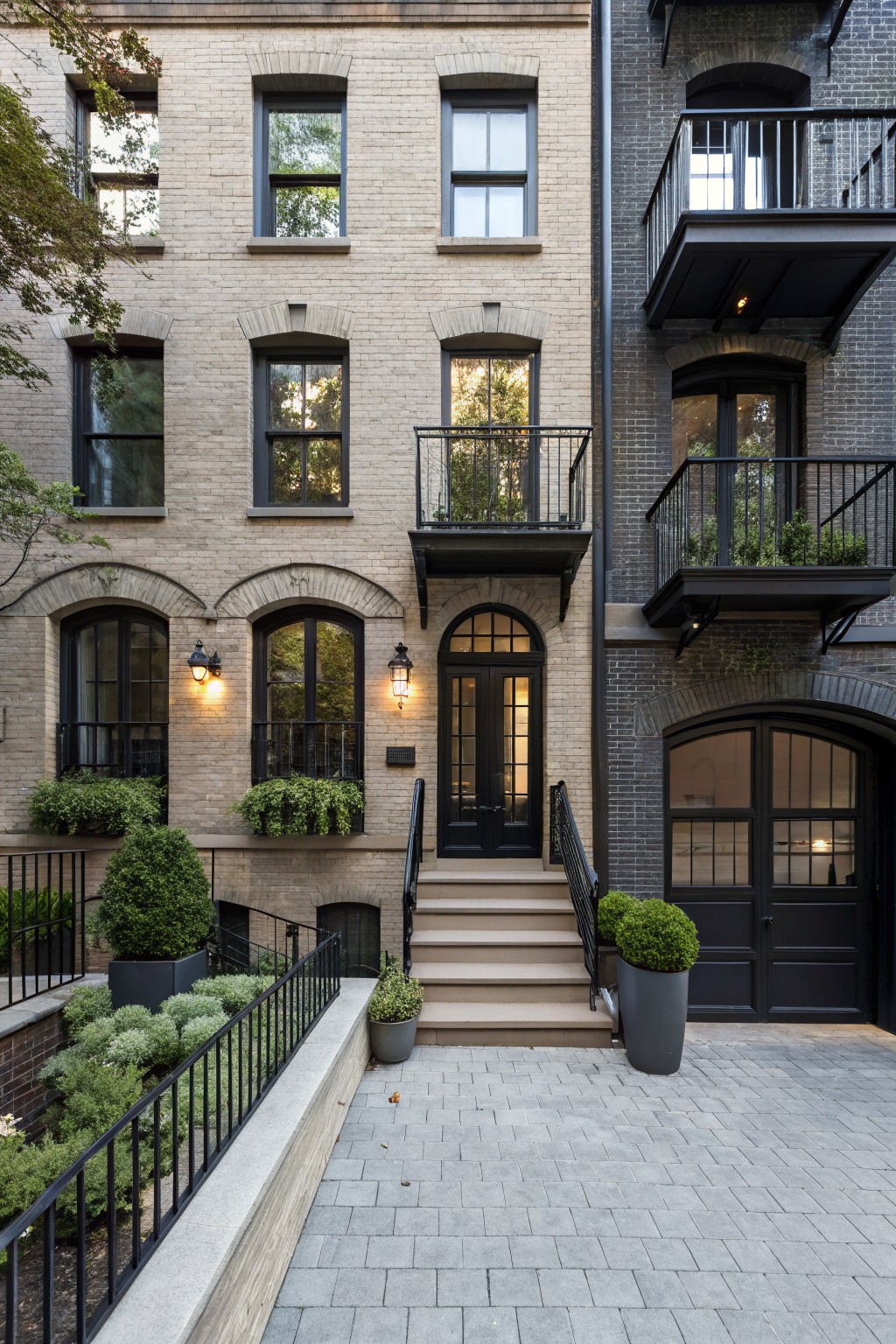
This setup takes a standard rowhouse and splits the front between light beige brick on one side and darker gray brick on the other. The gray brings a modern edge to the balcony and garage area, while the beige side sticks to classic arches and lanterns around the door. That back-and-forth gives the whole place more texture and keeps it from looking too plain or too busy.
Try this on older urban homes where you’re updating just one section, like turning a basement door into a garage. It fits narrow lots best, holds up well over time, and boosts curb appeal without a full redo. Just match the gray tone to your neighborhood so it blends right in.
Cantilevered Entry Cover on Gray Brick House
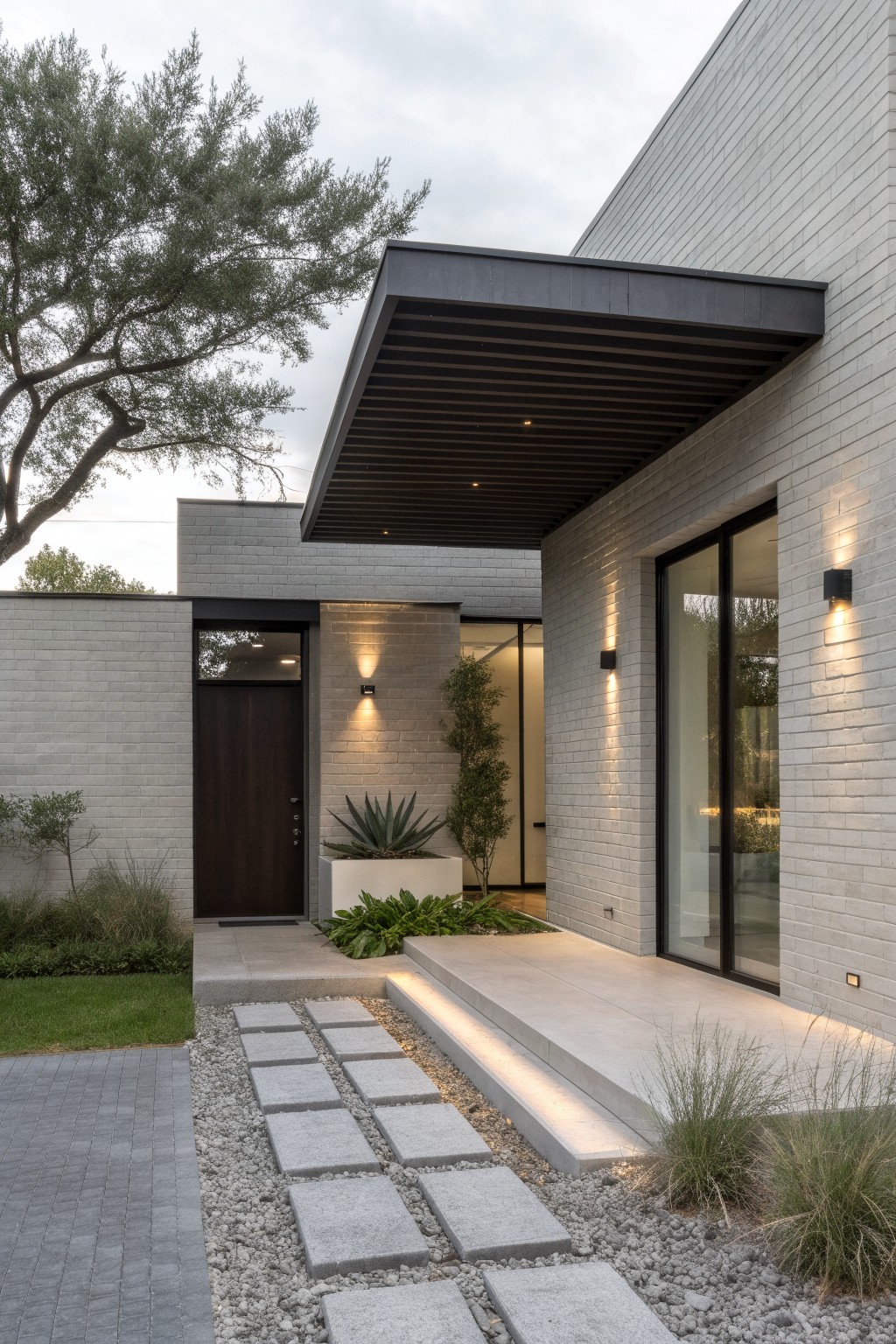
A simple cantilevered roof works wonders over the front door of this gray brick home. It juts out boldly in dark metal, shielding the entry from rain or sun while adding clean lines to the textured brick walls. That dark wood door below stands out just right, and the whole setup feels modern but not fussy.
You can pull this off on most any ranch or midcentury-style house with gray brick siding. Keep the overhang slim, maybe 4 to 6 feet deep, and light it from below for evening appeal. Skip heavy trim. It suits drier spots where plants like agave fit right in along the path.
Stone Pillars Frame a Welcoming Entry
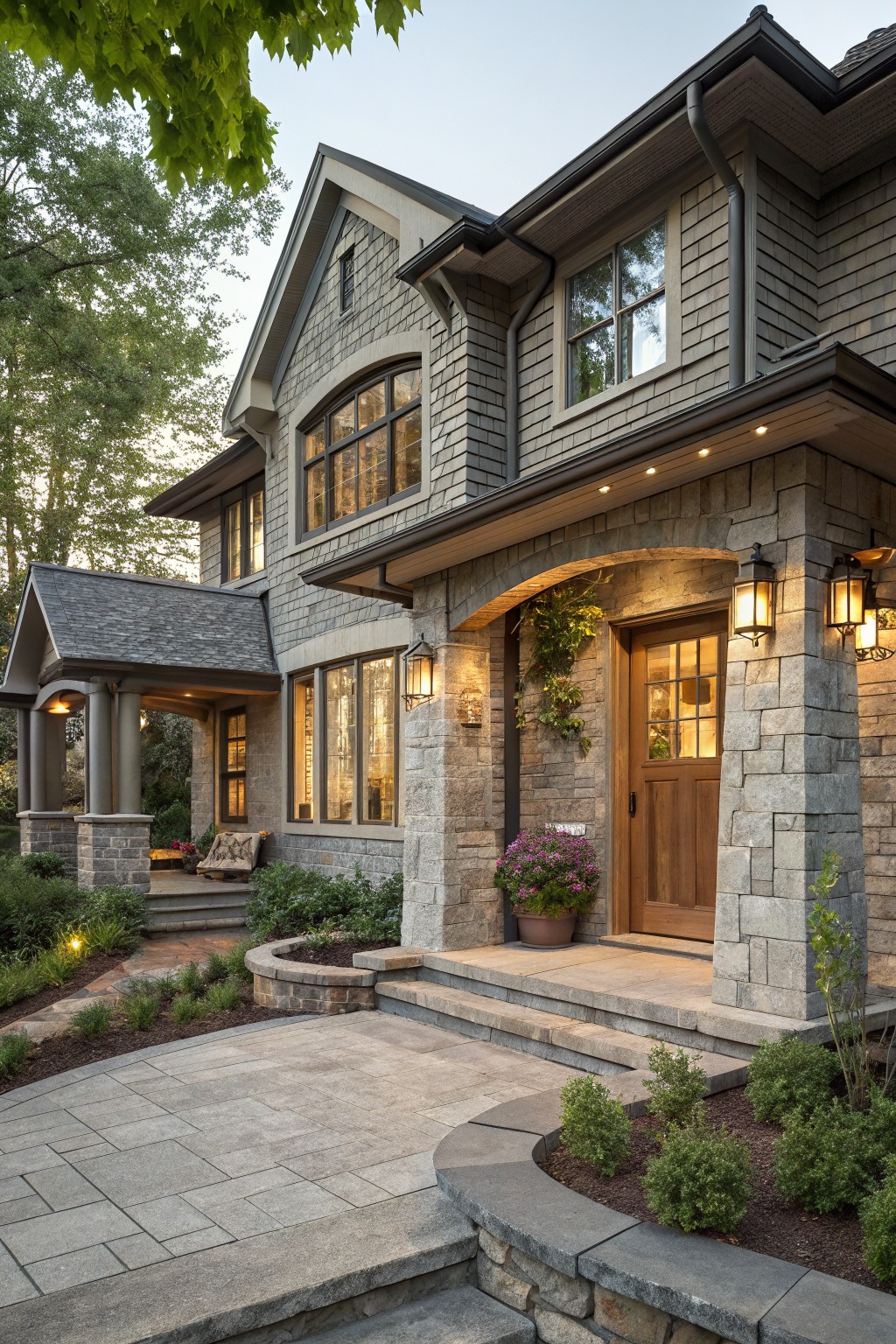
Gray stone pillars like these add real texture to a shingle-sided house. They ground the facade and make the front door feel more special, especially with that gentle arch over the porch. The mix keeps things from looking too plain while staying easy on the eyes.
Try this on homes with some slope or trees around, where the stone ties into the landscape. Focus the pillars at the entry steps and keep the rest shingled for balance. It works well in cooler climates too, since stone holds up year-round.
Classic Portico Entry on Gray Brick
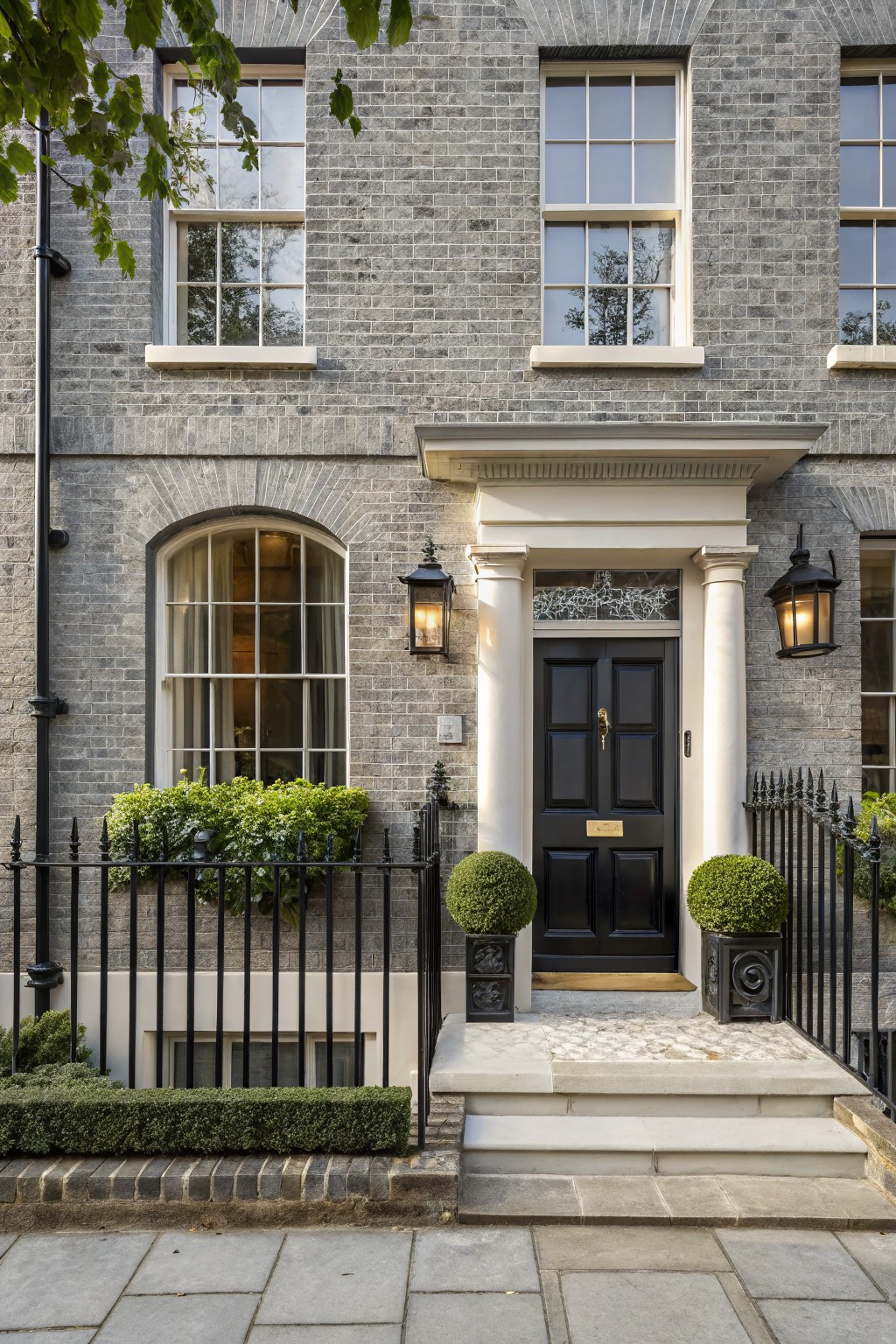
A white portico with slim columns framing a black front door works really well on textured gray brick. It pulls the eye right to the entrance and adds that bit of formality houses from another era often have. The gray brick keeps things understated while the white trim stands out clean.
You can pull this off on row houses or semis where the facade needs a strong focal point. Pair it with lanterns on each side and some clipped boxwoods in the railing planters. It fits city streets best, especially if you want curb appeal that looks put-together year round.
Gray Brick and Wood Cladding Facade
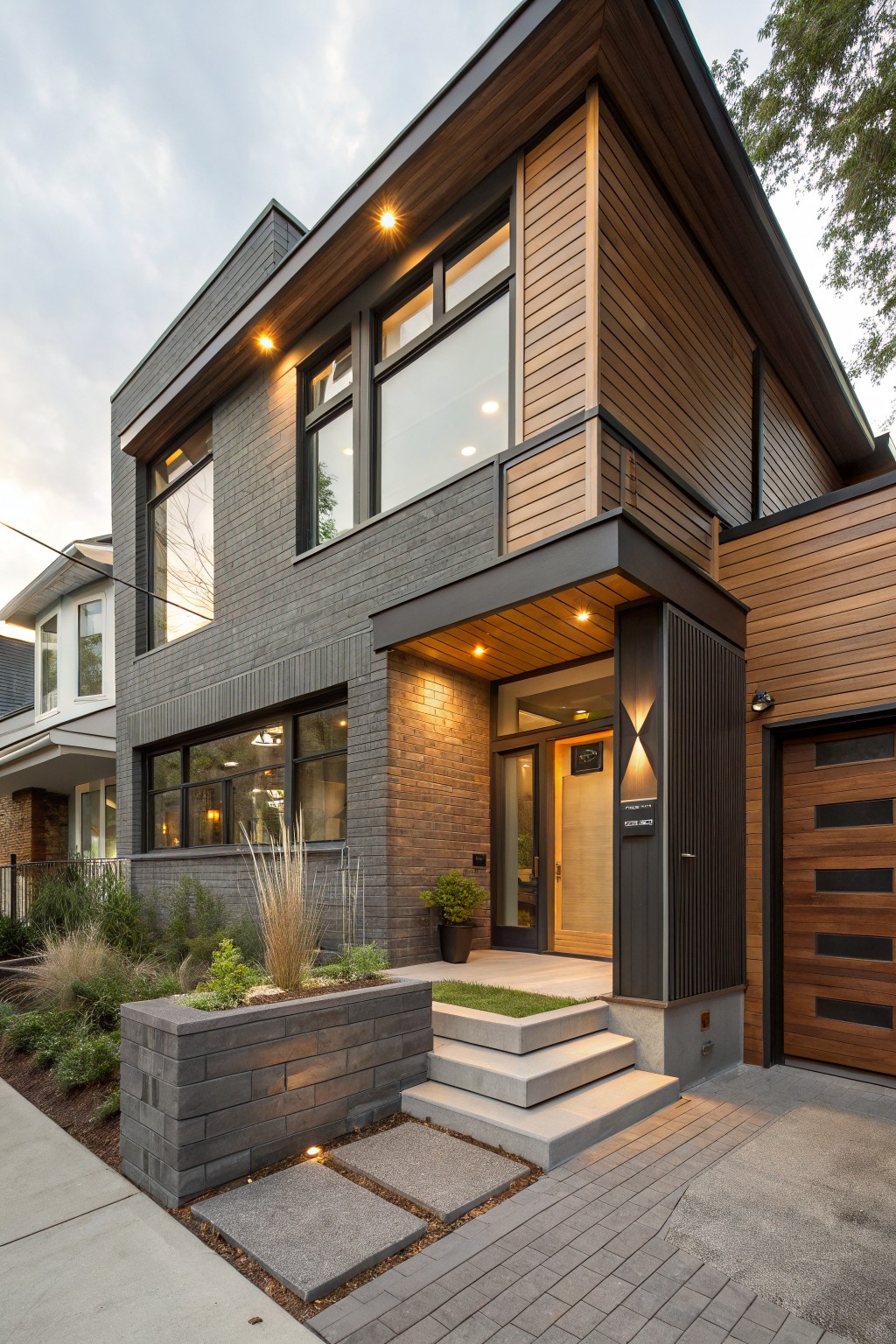
Gray brick gives this house a solid, grounded look on the lower level, while the warm wood cladding up top adds some lift and interest. The mix keeps things from feeling too heavy or cold. Textured bricks like these hold up well over time, and the wood brings in a natural touch that softens the modern lines.
You can pull this off on a corner lot or any street-facing home where you want curb appeal without too much fuss. Use the brick for the base and garage area, then wood panels higher up around windows and the entry overhang. It suits urban or suburban spots with a mix of old and new neighbors. Just make sure the wood is treated for weather.
Gray Brick House with Shingled Porch Entry
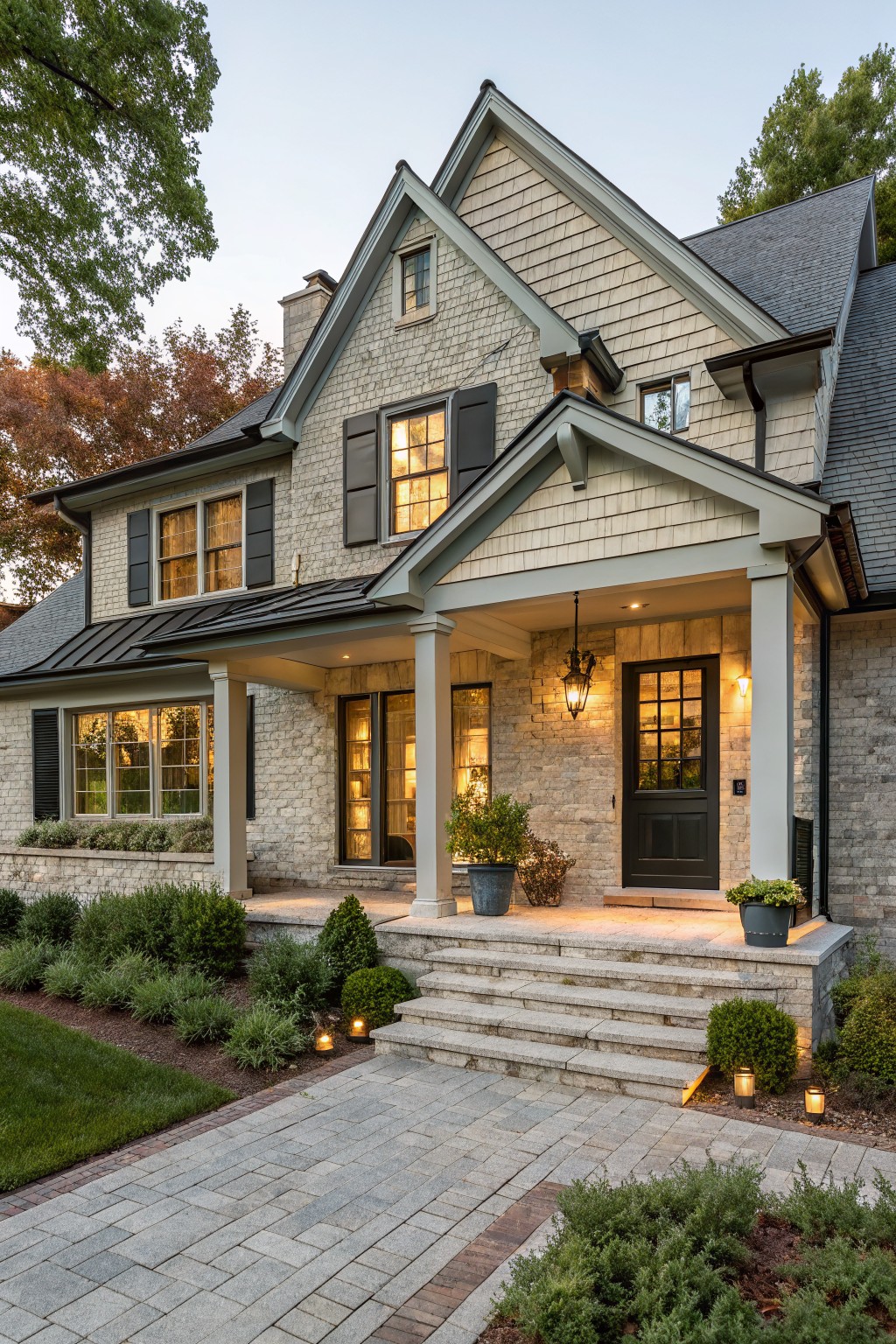
A textured gray brick exterior gets a lot of charm from a classic covered porch like this one. The brick walls form a sturdy base that looks right at home in any neighborhood, while the shingled gable above the porch adds some texture and ties into the roofline. Black shutters on the windows and lanterns at the entry keep things simple but welcoming, especially as the light fades.
This setup suits older-style homes or new builds aiming for that lived-in feel. Build the porch with wide columns and stone steps if your lot allows, and plant boxwoods or low shrubs along the front to frame it without hiding the brick. Just avoid overcrowding the path. It holds up well over time too.
Gray Brick Facade with Cantilevered White Sections
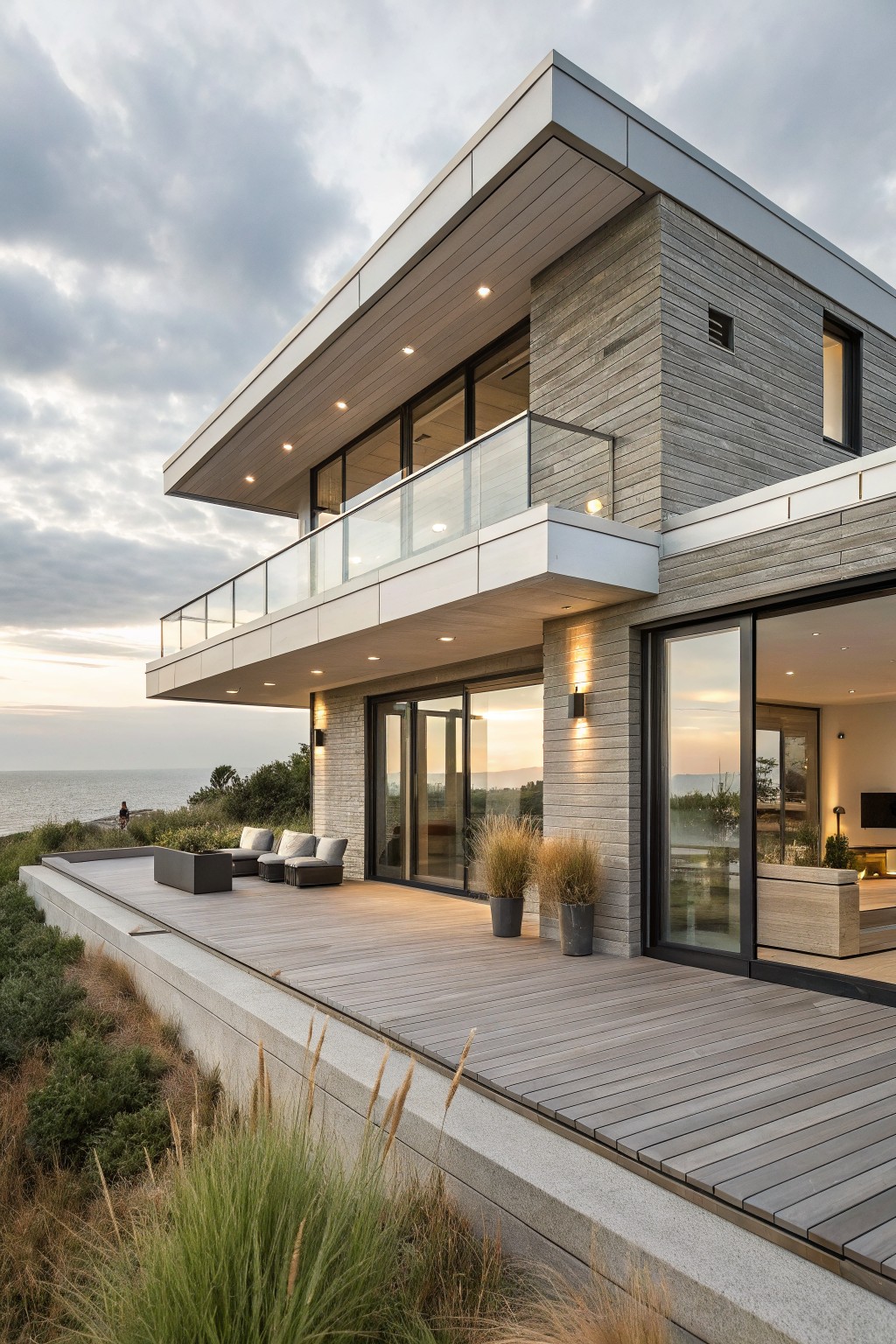
Textured gray brick forms the solid base here, while those crisp white upper sections cantilever out over it. The combo gives the house real depth and a modern vibe that doesn’t shout. Brick like that holds onto subtle shadows, making the walls feel alive even on gray days.
This setup shines on homes with a view or on uneven ground, where the overhangs add drama without extra bulk. Coastal spots love it too, since the materials shrug off weather. Line up big glass doors underneath like this, and you pull the outdoors right inside. Just seal those joints tight.
Tall Stone Chimney Tower Adds Vertical Drama
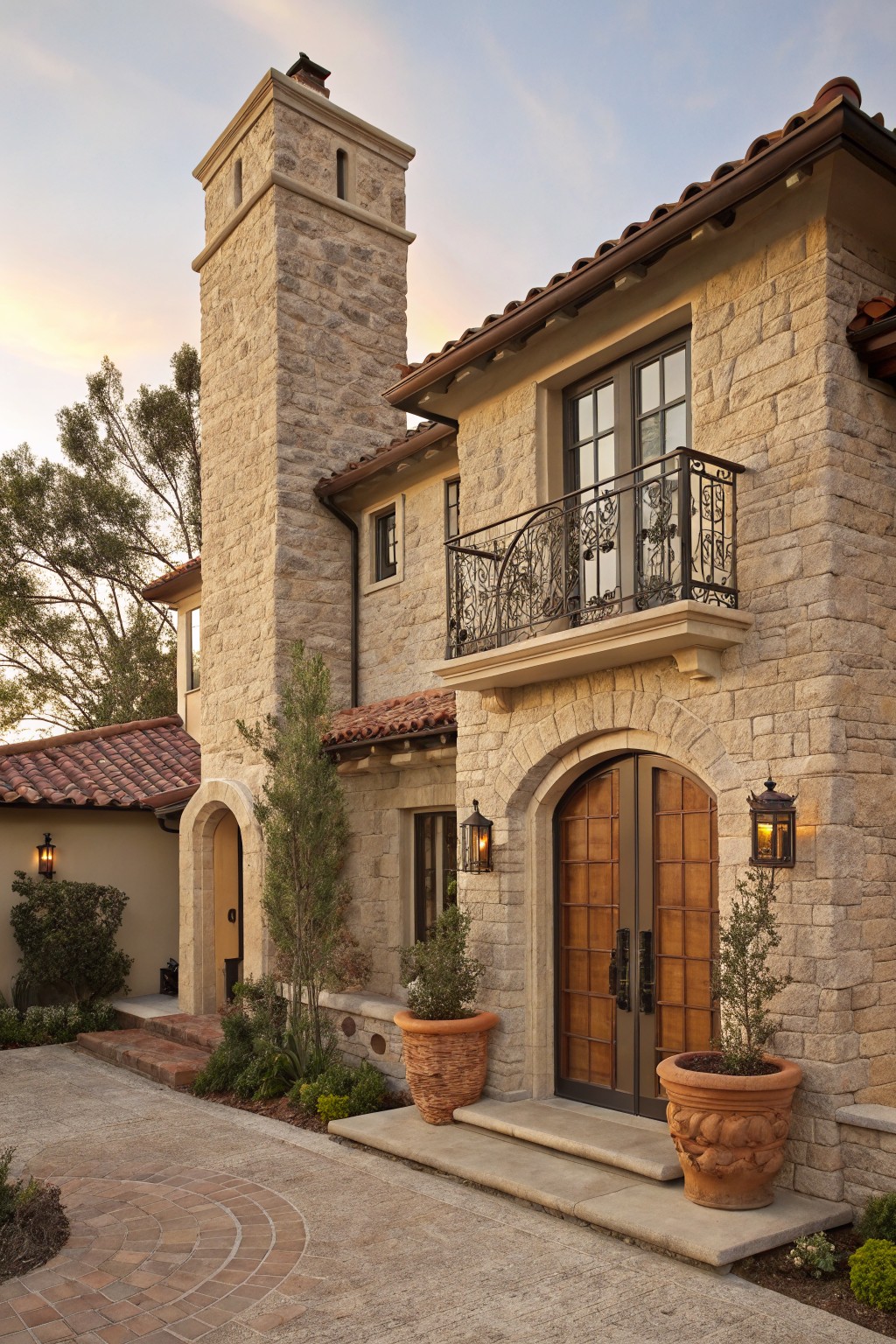
A tall chimney tower like this one really pulls the eye upward on a stone house exterior. Built from the same textured limestone as the walls, it gives the whole facade more presence without feeling busy. Paired with a simple red tile roof, it keeps things grounded while adding that bit of old-world height folks notice right away.
This works best on homes with some two-story scale or even single-story ones wanting more stature. Place it near a corner or entry side to frame the house nicely. Stick to matching stone for easy flow, and keep surrounding details spare, like lanterns by the door. It suits warmer climates or traditional neighborhoods where you want charm that lasts.
Gray Brick Townhomes with Black Cladding
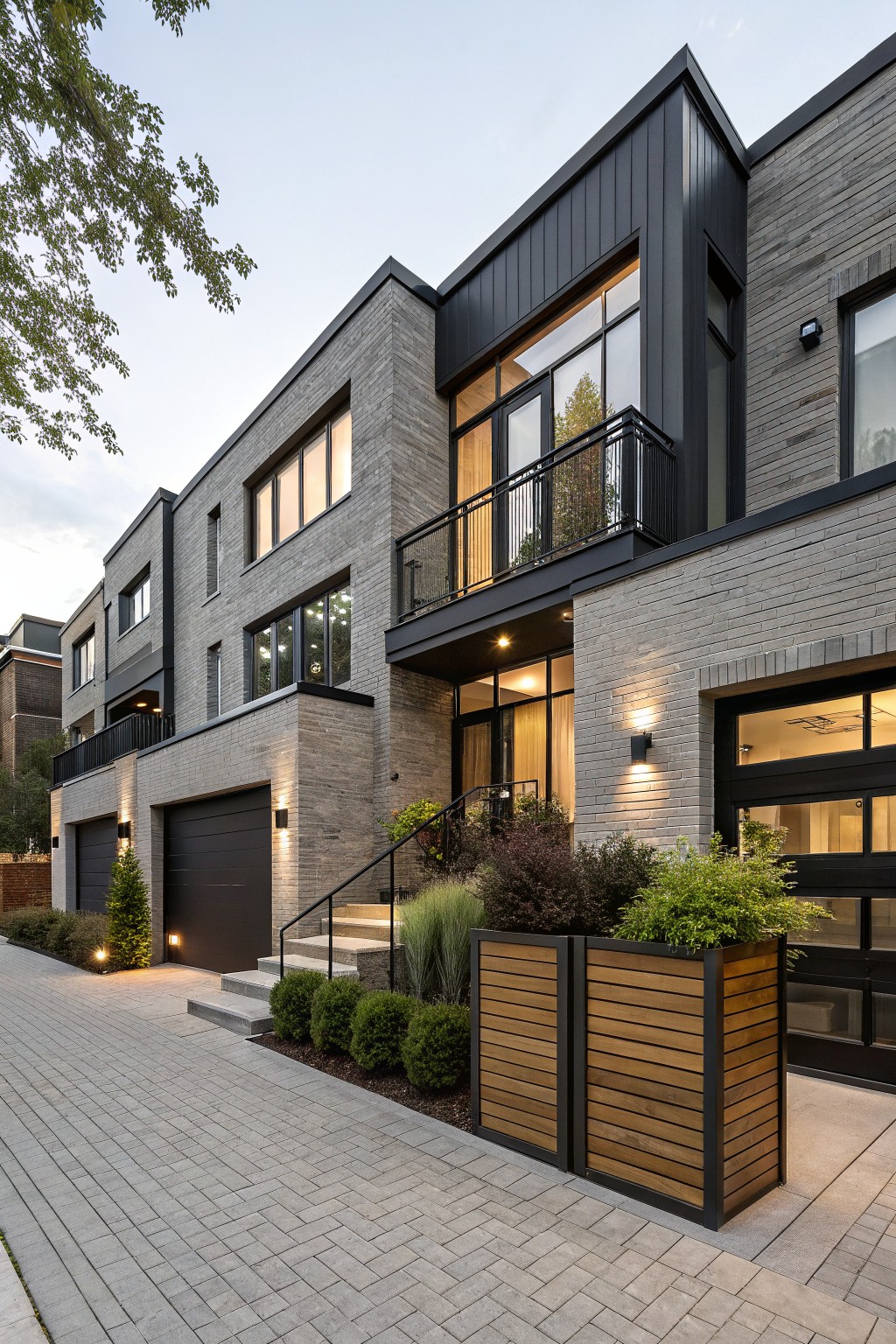
Textured gray brick forms the backbone of this townhome exterior. Black cladding wraps the upper levels and balcony, giving the whole thing a clean modern lift. Wood planters out front add a warm touch without softening the look too much.
This setup shines on row houses or attached homes where space is tight. Stack the brick low and let black panels rise up for that vertical pull. It suits urban spots… just pick a matte black finish to avoid glare, and keep plantings simple so they don’t compete.
Textured Gray Brick with Columned Portico
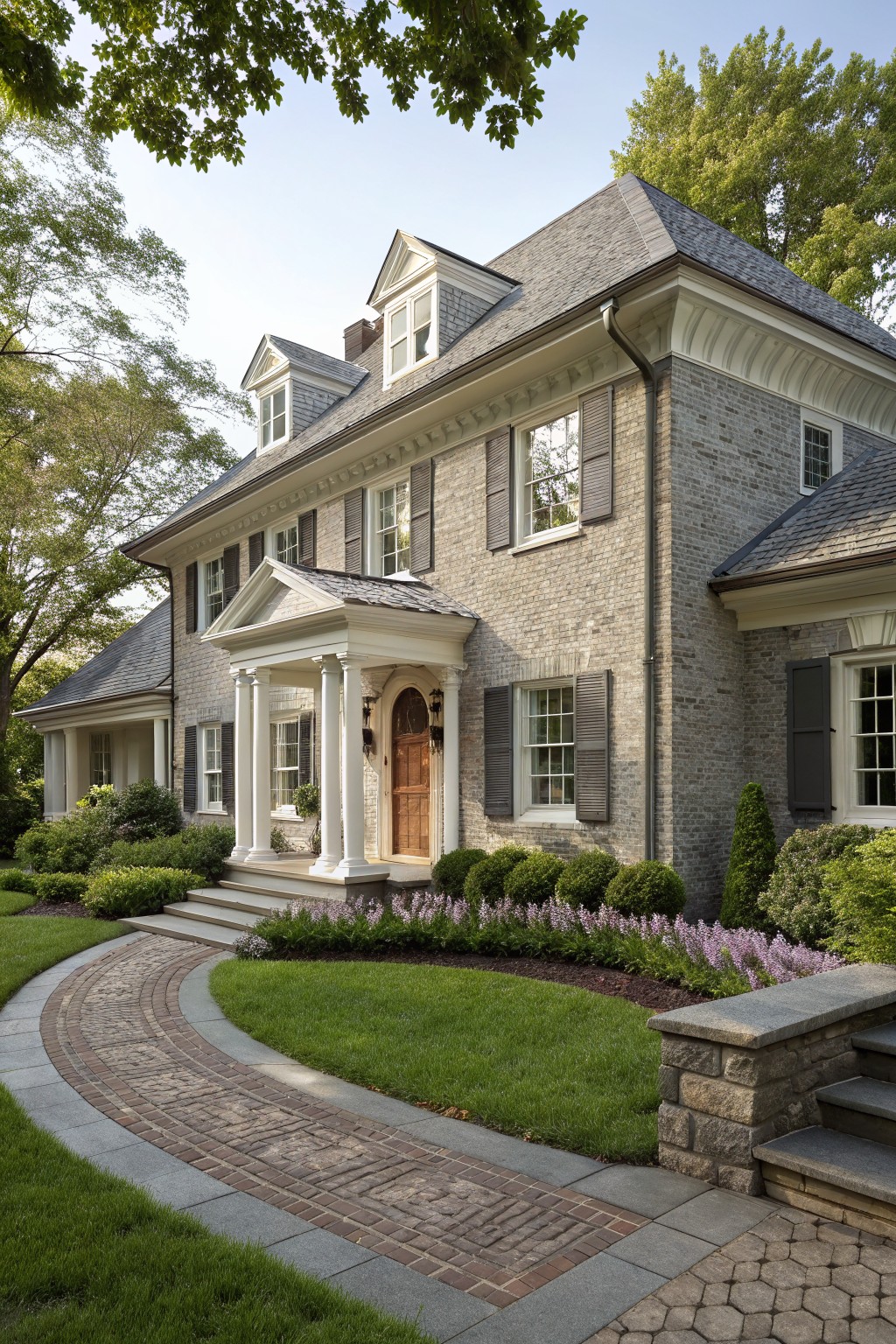
Textured gray brick covers this two-story house from top to bottom, giving it a sturdy feel that holds up over time. The columned portico at the front pulls it all together, framing the entry in a classic way. White trim on the windows and dormers keeps the look clean, and that subtle brick texture stops it from feeling too plain.
This setup suits older-style homes in neighborhoods with mature trees. Use it where you want the house to stand out without trying too hard. Add low shrubs along the base and a brick path curving up to the steps. Just make sure the roofline matches the traditional lines, or it might look off.
Textured Gray Brick Outdoor Fireplace
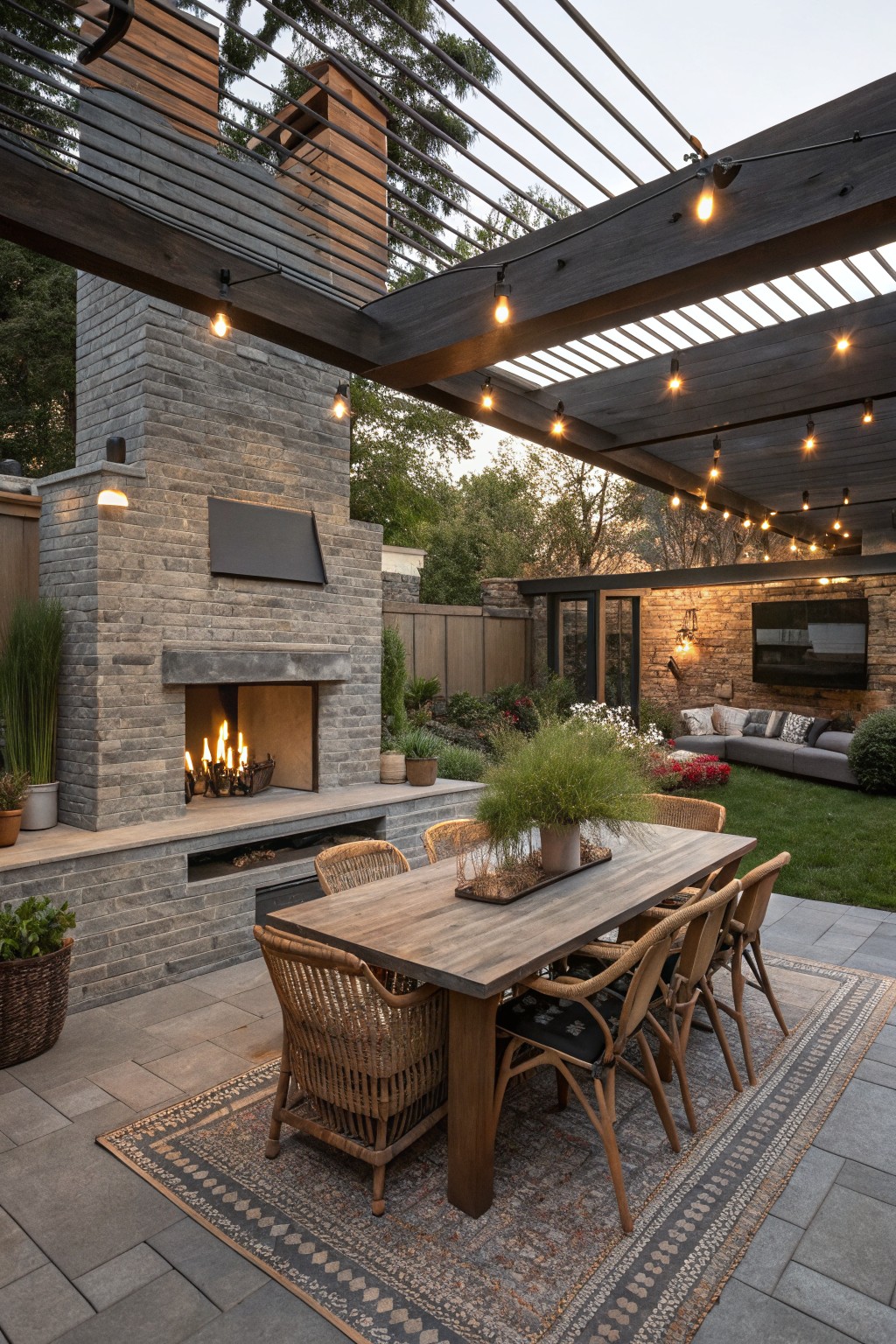
Textured gray brick works really well for an outdoor fireplace like this one. It picks up on house exterior materials so the patio feels like an extension of the home. The rough stone texture holds up to weather and gives a solid, lived-in look that doesn’t fade over time.
Put one at the end of a covered patio near seating or a dining table. It suits homes with clean lines or a bit of rustic style. Just make sure the base is wide enough for logs and keep plants back a bit to avoid fire risks.
Gray Brick Facade with Black Shutters
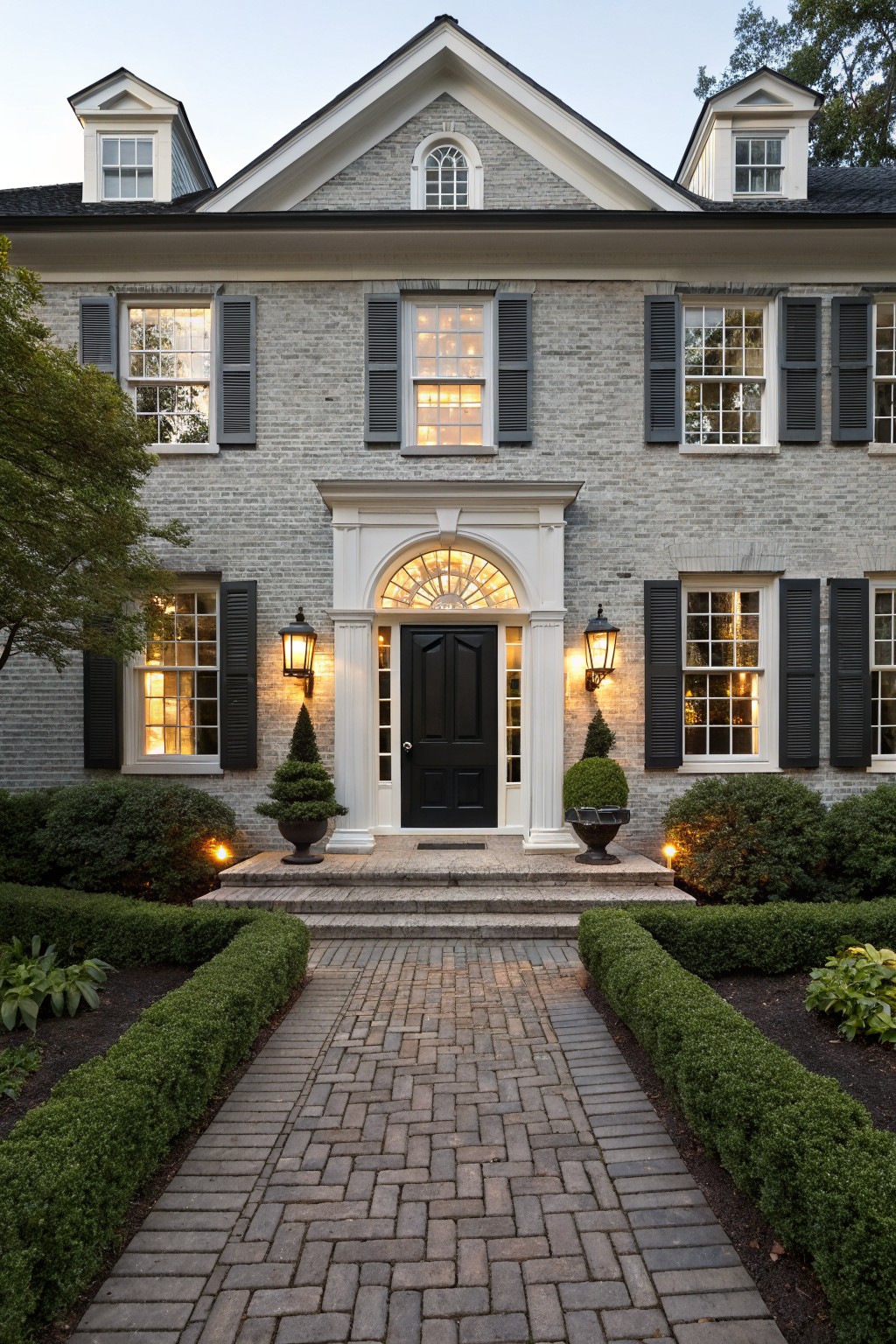
Textured gray brick makes a solid base for this house exterior. It has that subtle variation in tone that catches the light just right, giving the whole front a lived-in feel without looking too busy. Paired with black shutters on the symmetric windows, it pulls the look together in a classic way that doesn’t date.
Try this on a two-story colonial or traditional home where you want curb appeal that lasts. Keep the trim white for contrast, and add lanterns by the black door like here. It works best with simple landscaping around the base, nothing too wild. Just watch the brick color in different lights, it can shift a bit.
Gray Brick Home Opens to Wood Deck
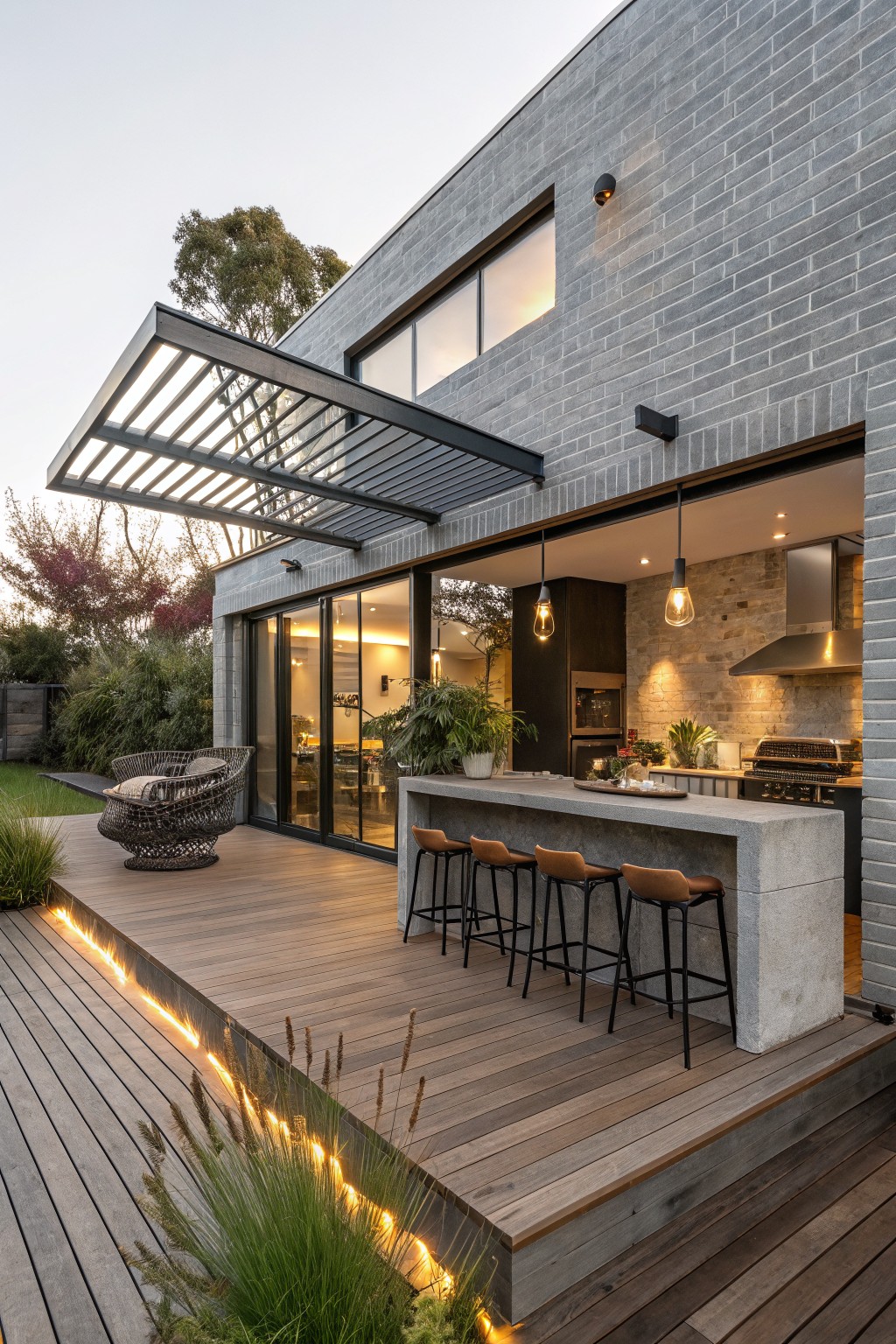
Textured gray brick makes a strong exterior that works well when you add big sliding glass doors straight from the kitchen to a wood deck. The brick stays low-key but gives the whole setup a clean, modern edge. It lets light pour in while keeping the outdoors close.
This kind of opening suits backyard spaces on mid-sized lots, especially if you want easy indoor-outdoor meals. Line up an outdoor bar with your kitchen island for serving drinks right there. Watch the step down to the deck. Add edge lights like these for nice evenings.
Brick-Lined Side Entry Paths
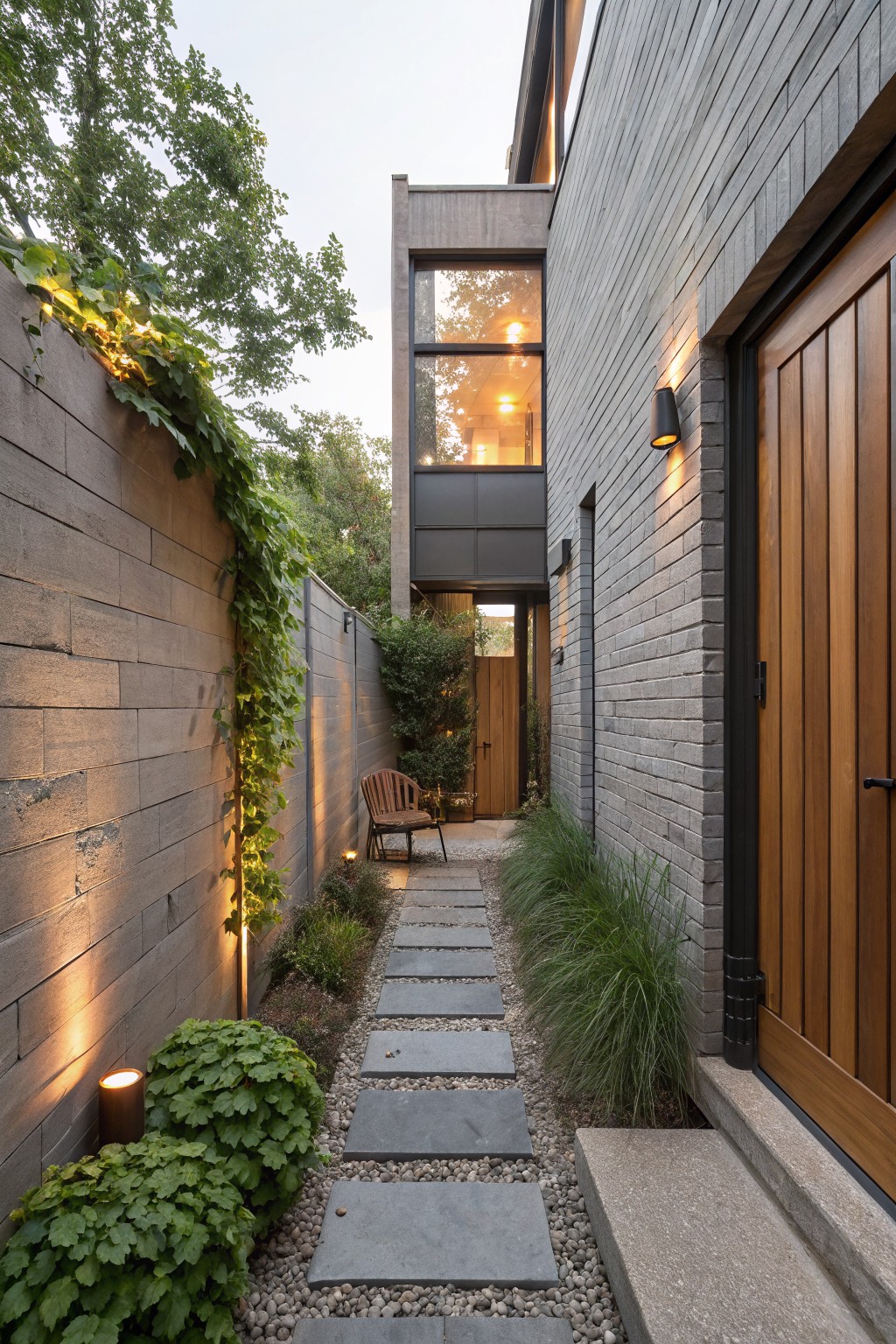
A simple way to make a side entry feel special is to line the path with textured gray brick walls. It gives the walk a quiet structure without overwhelming the space. The brick’s rough texture picks up evening light nicely, and pairing it with a warm wood door keeps things from feeling too stark. That little wooden chair tucked along the way adds a spot to pause.
This setup works great on narrower lots or urban homes where you want to guide people right to the door. Use it for a side or rear entrance to boost curb appeal from the driveway. Keep plantings low and simple so the brick stays the focus, and add uplights at the base for safe evening walks. It suits modern or craftsman styles pretty well.
Frequently Asked Questions
Q: How do I clean textured gray brick without messing up the texture?
A: Grab a garden hose with a gentle spray nozzle and some mild dish soap mixed in warm water. Scrub lightly with a soft-bristle brush in circular motions, then rinse thoroughly. Skip the pressure washer—it blasts away the grit that gives the texture its charm.
Q: What trim colors pop best against gray brick?
A: White trim keeps things crisp and timeless, letting the brick’s subtle shades shine. Black trim adds a modern edge if you want contrast that draws the eye. Test samples in your actual light first.
Q: Does gray brick fade in direct sun?
A: Pick bricks sealed with a high-quality matte protectant from the start. They hold their cool tones through sunny summers. Reapply sealant every few years to lock in that fresh look.
Q: Can I add wood accents to gray brick without it clashing?
A: Go for warm cedar or redwood stains—they warm up the cool gray nicely. Keep the wood simple and vertical to echo the brick lines. And seal it well against moisture.
