

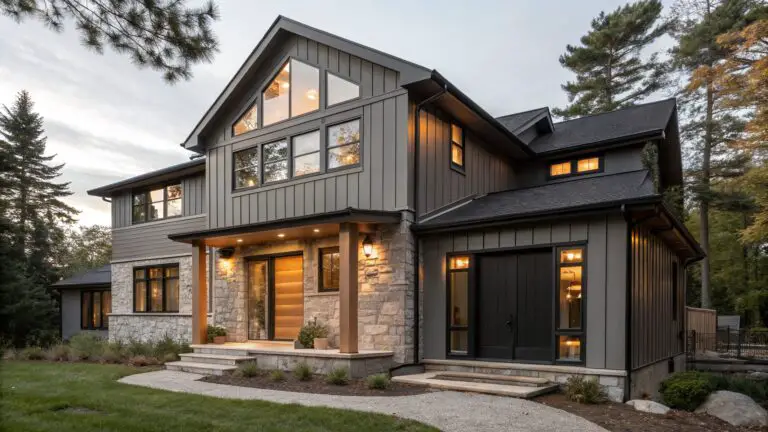
I always notice how a house’s color pulls you in from the street, and warm gray strikes that balance between modern edge and everyday livability without feeling stark.
Wood accents make all the difference in softening those facades, especially when they wrap around entries or contrast with stone bases to add real warmth.
I’ve seen a few where the wood grain peeks out just right under certain lights, turning what could be flat into something that actually welcomes you home.
These examples show how simple material mixes elevate curb appeal while keeping maintenance low.
Save the ones that match your roofline.
Warm Gray Siding with Wood Garage Accents
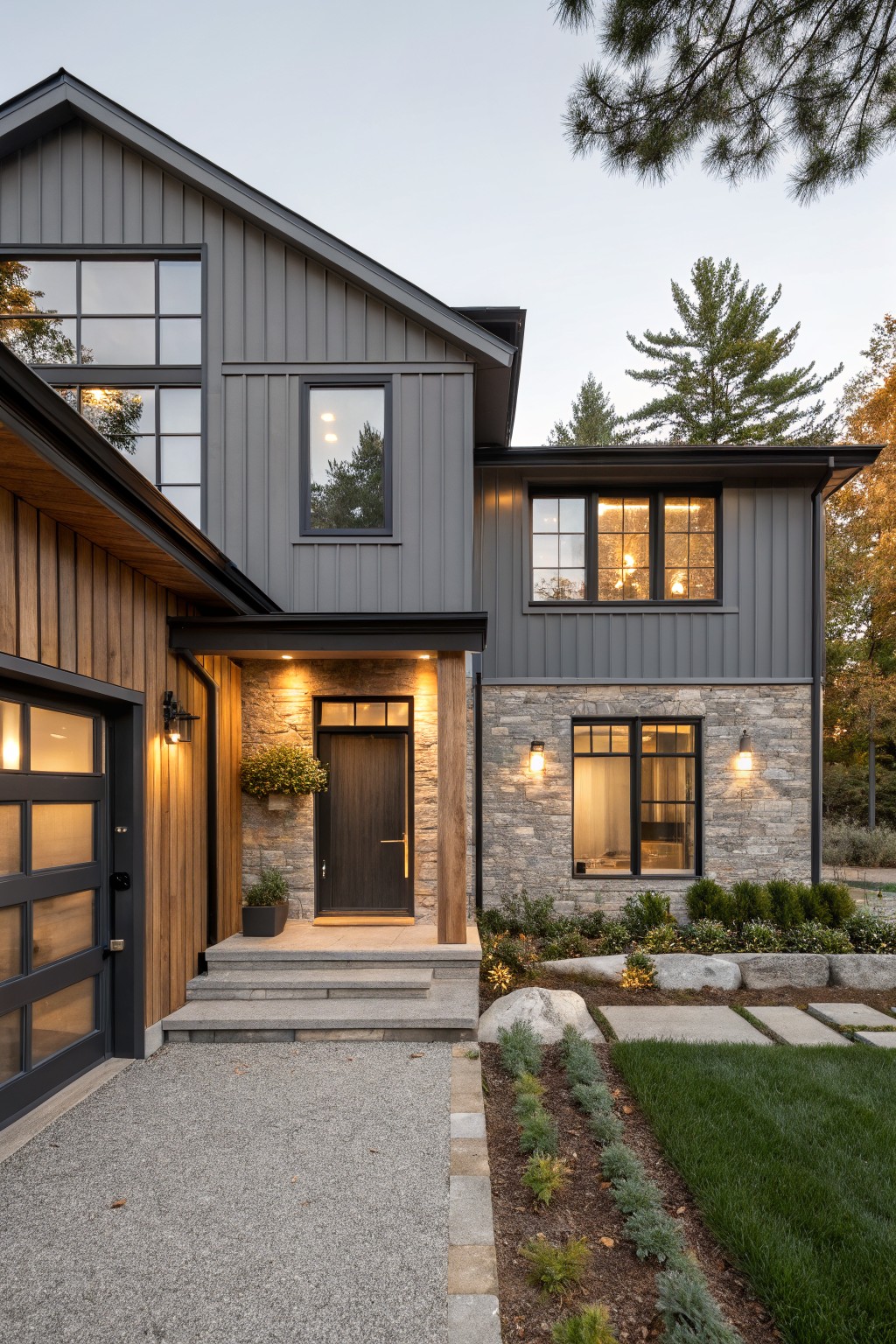
One straightforward way to make a gray house feel less stark is to add wood elements where they count. Here, the warm gray board-and-batten siding covers most of the facade, but the garage door and nearby siding pull in natural wood tones. That wood brings some life to the gray. It keeps things from looking too cold, especially with the stone around the entry tying it all in.
This setup works well on homes with clean lines or a modern cabin vibe. Use it if your lot has trees nearby, since the wood picks up on that natural feel. Just match the wood finish to your climate, so it holds up without much upkeep. Avoid overdoing the wood, or it might pull focus from the gray base.
Gray Brick House with Wood Front Door
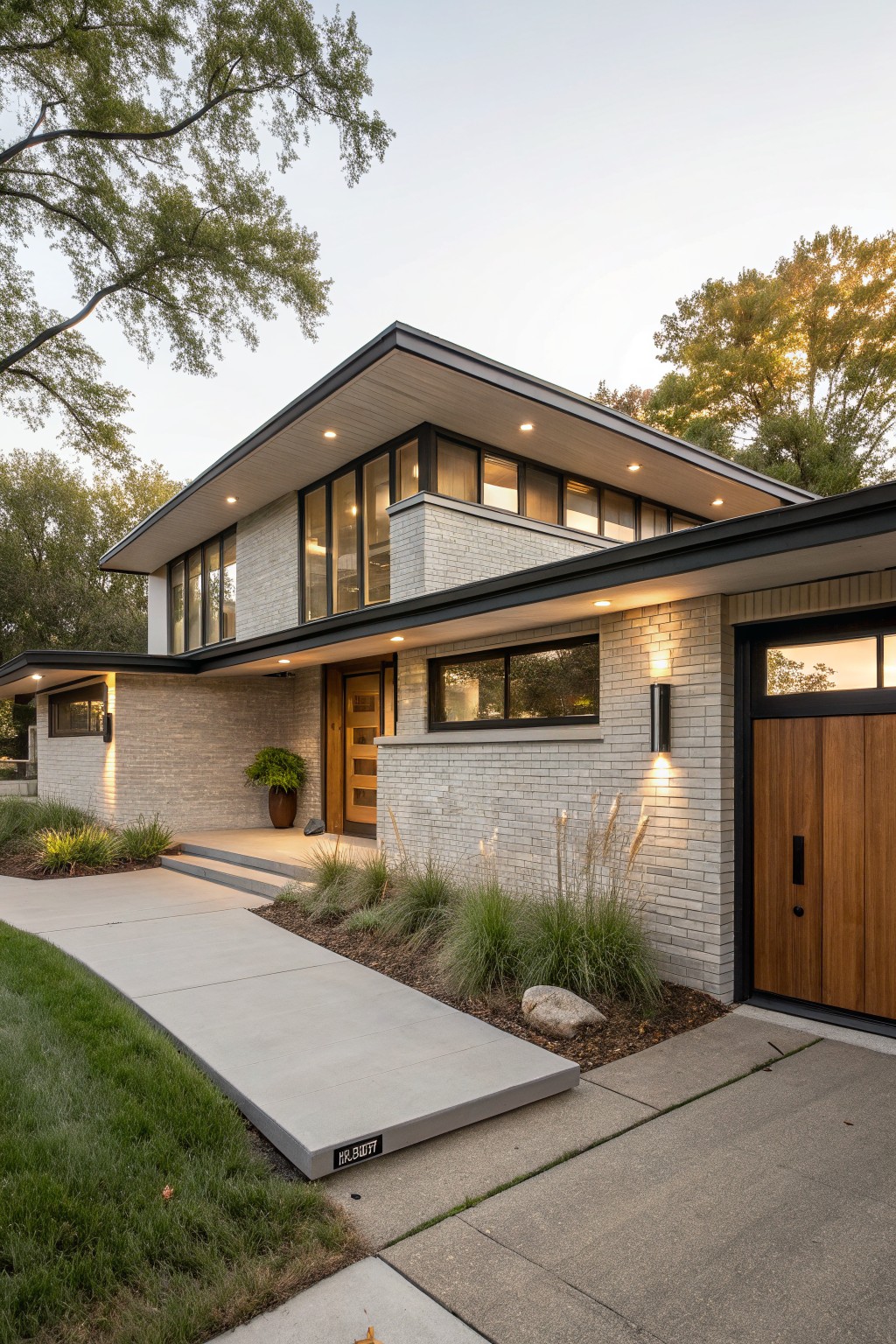
A warm gray brick makes up most of this house exterior. Then there’s that solid wood front door right at the entry. It adds a bit of natural color and texture. Without it, the gray might come off a little plain. The wood pulls your eye in and makes the whole front feel more lived-in.
This setup works well on ranch-style or low-slung modern homes. Pick a door in a medium wood tone to contrast the brick nicely. It suits spots with some landscaping around the walk-up. Avoid super dark woods if you want to keep things light overall.
Wood Canopy Over the Front Entry
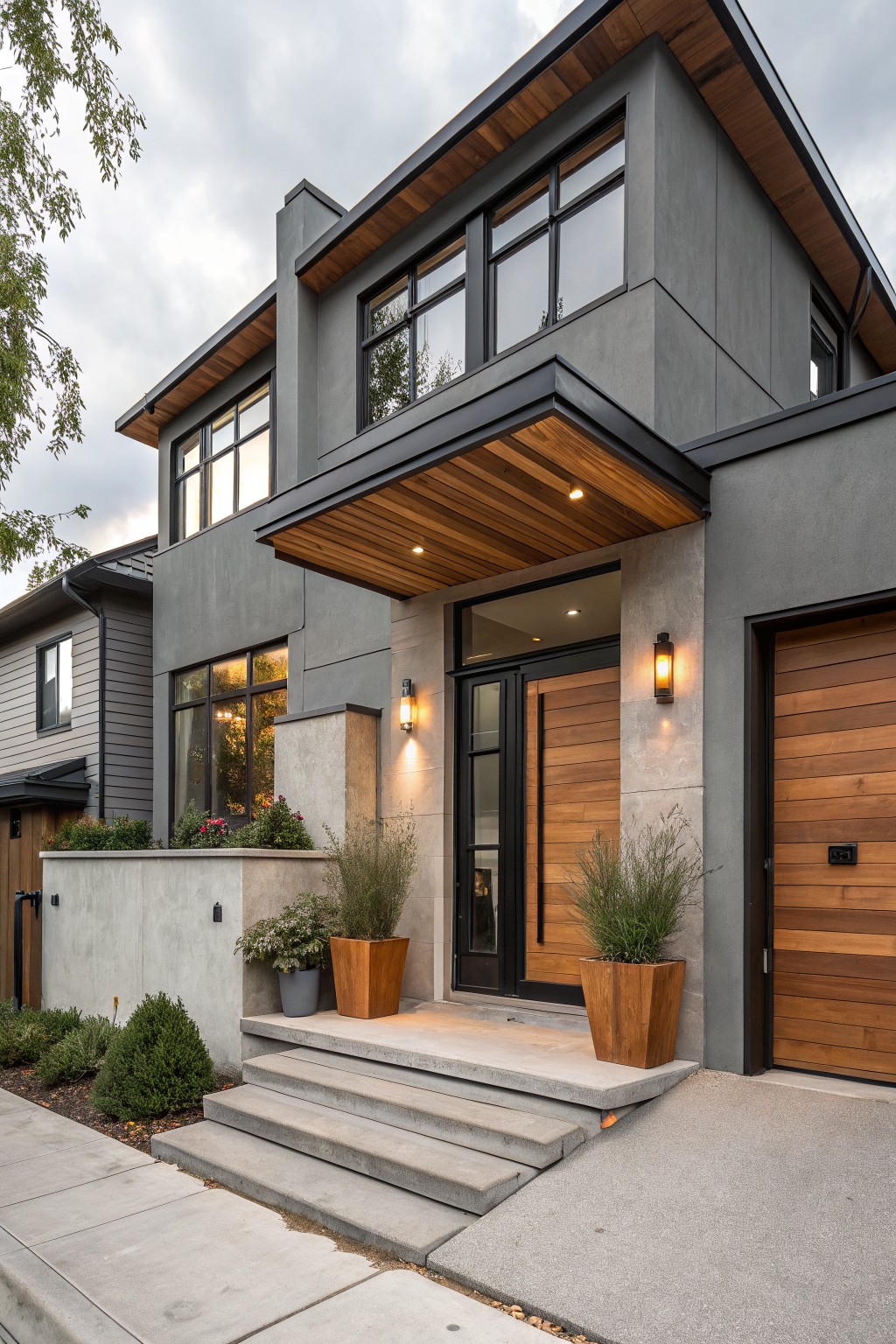
A simple wood canopy like this one pulls the eye right to the front door on a gray house. The warm cedar tones stand out against the stucco siding and make the whole facade less stark. It gives shelter too, which helps on rainy days.
This works well on modern homes with flat roofs or clean lines. Keep the canopy fairly deep, around four to five feet, and add spots for lights underneath. It suits urban lots where you want some entry drama without going overboard. Skip it if your front faces south and gets too much sun, since wood needs protection there.
Gray Stone Home with Wood Siding Accents
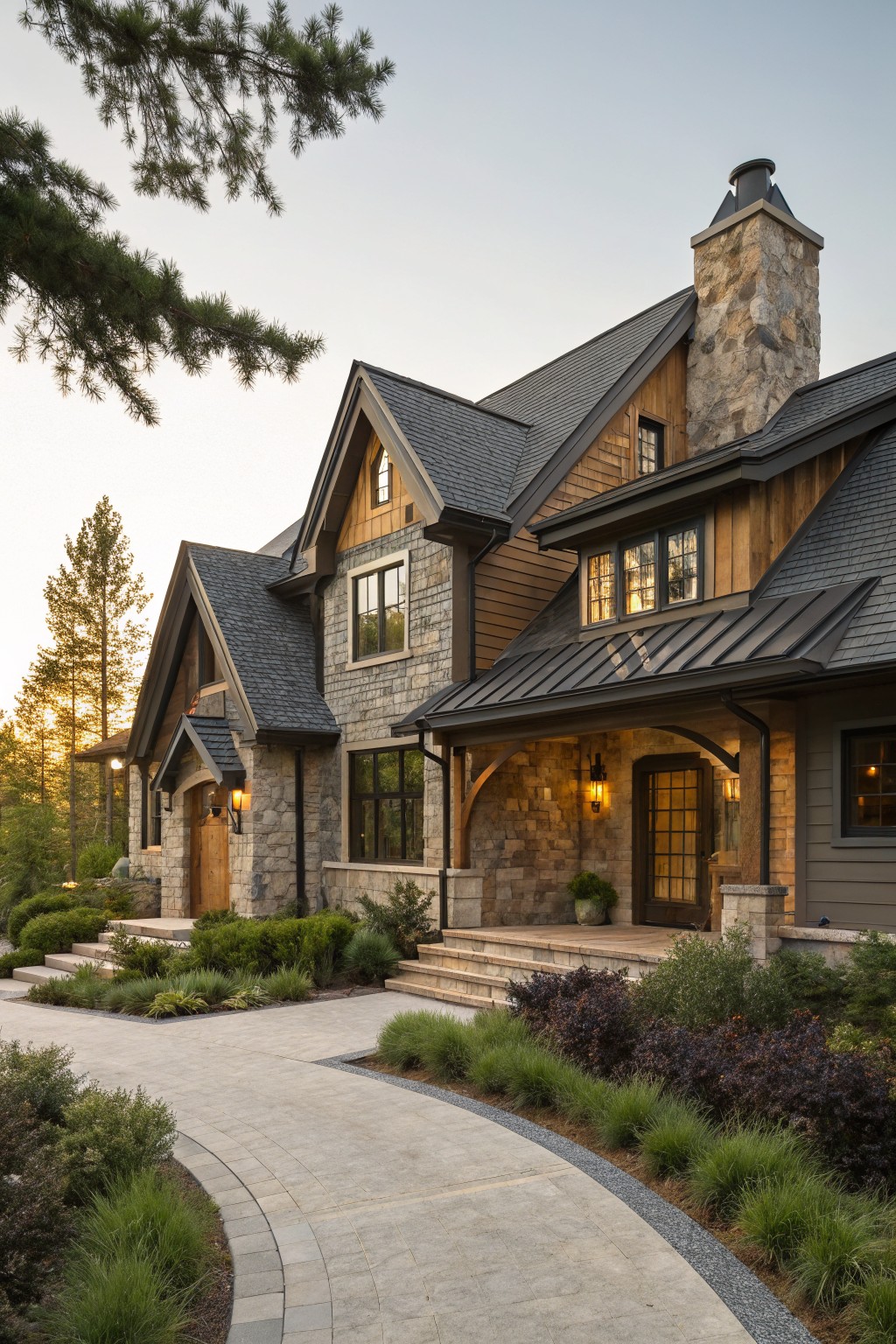
Gray stone makes a solid base for any house exterior. Pair it with wood siding up top like this, and the look gets a lot warmer right away. The mix keeps things sturdy down low but adds that cabin feel higher up. Notice the wood garage door and those exposed beams around the entry. They pull it all together without much fuss.
This setup works best on two-story homes tucked into wooded spots. Stone handles the foundation and lower walls well, while wood siding fits sloped roofs and gables. Skip too much stone all around, or it can feel cold. Go for natural wood tones that echo the trees nearby.
Gray Wood Siding on a Modern Coastal Home
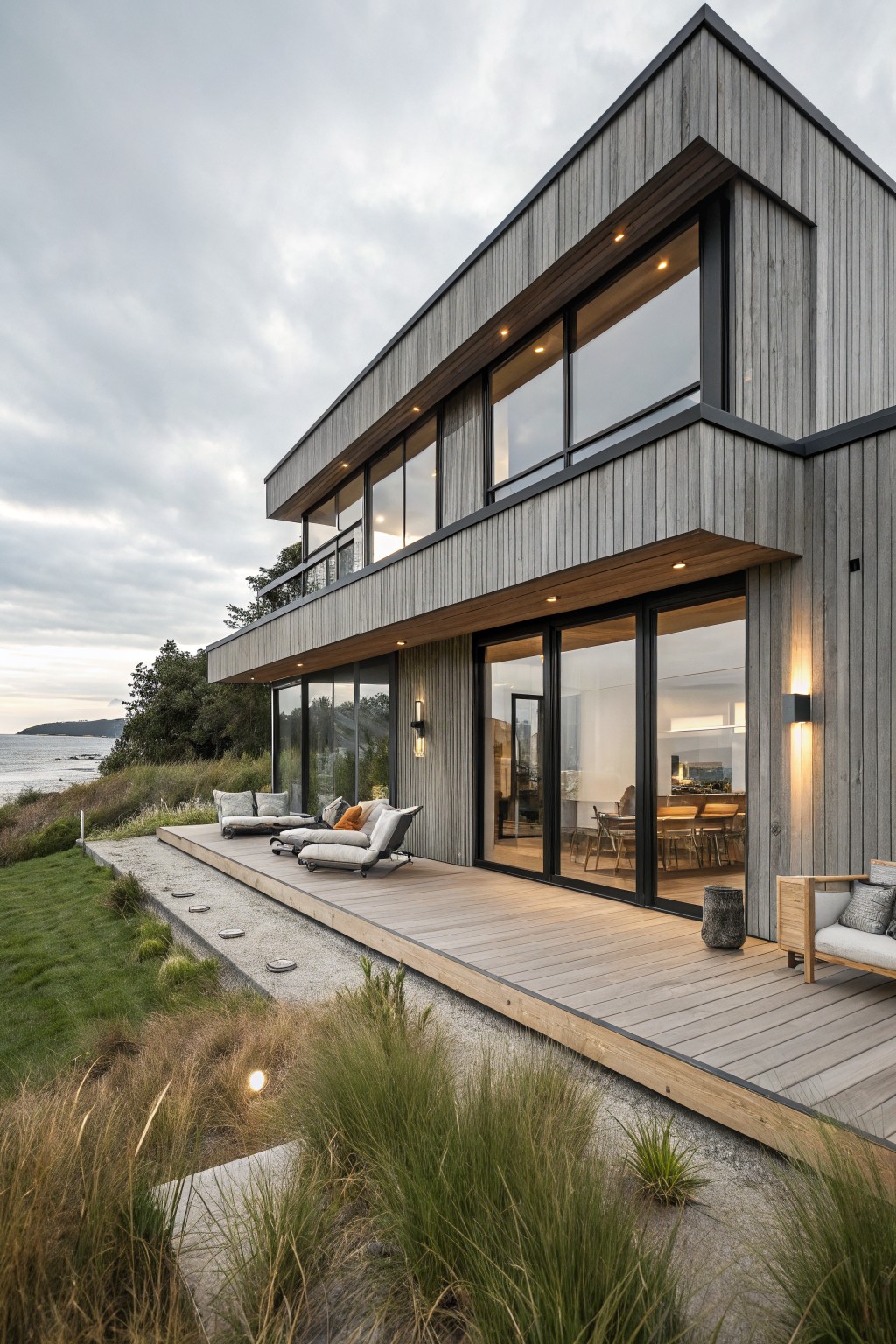
This house uses vertical gray wood siding that gives it a soft, weathered look right from the start. The siding covers most of the exterior, wrapping around corners smoothly, and it pairs well with the natural wood deck below. Large glass doors slide open from the main level, blending the inside living area with the outdoors. That gray tone feels calm against the sea view, not stark at all.
You can pull this off on homes near water or in wooded spots where you want a low-key modern feel. Pick siding like cedar that’s been oiled or charred to hit that gray shade, then match it with a deck in lighter wood tones for contrast. It works best on two-story designs with plenty of windows. Just make sure the wood gets some protection from the weather so the color lasts.
Gray Stone House with Wood Overhangs
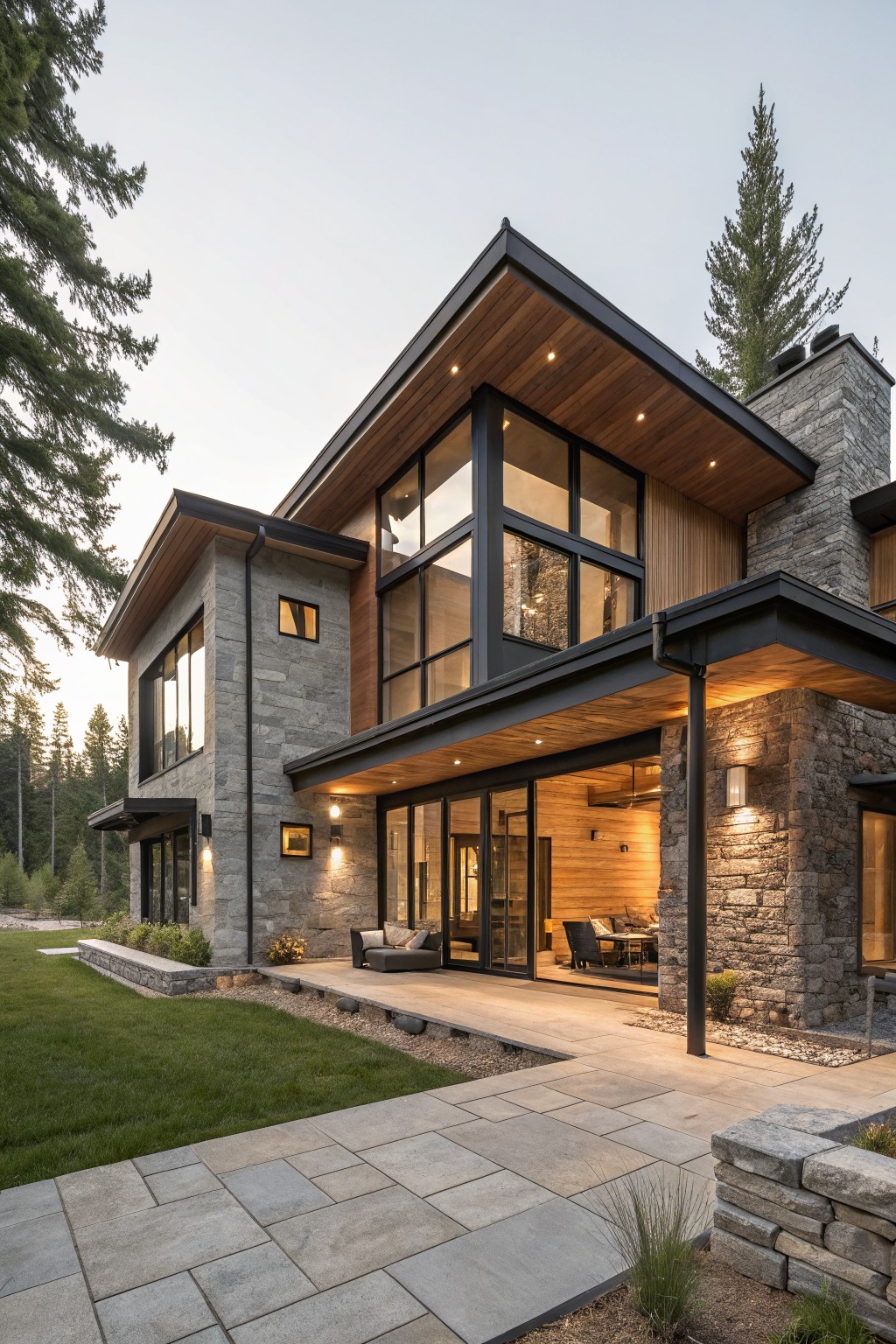
Warm gray stone gives this house a solid, rugged base that fits right into a wooded spot. The wood overhangs and siding up top pull it together. They add a natural touch that keeps things from feeling too cold or boxy. Big glass windows help too, letting light mix with the trees outside.
You can pull this off on any sloped lot where stone holds up against weather. Pick cedar or similar wood that matches local trees for that easy blend. Just make sure the wood gets some protection so it lasts. Works well for folks wanting a modern look without too much upkeep.
Warm Gray Siding Paired with Cedar Shakes
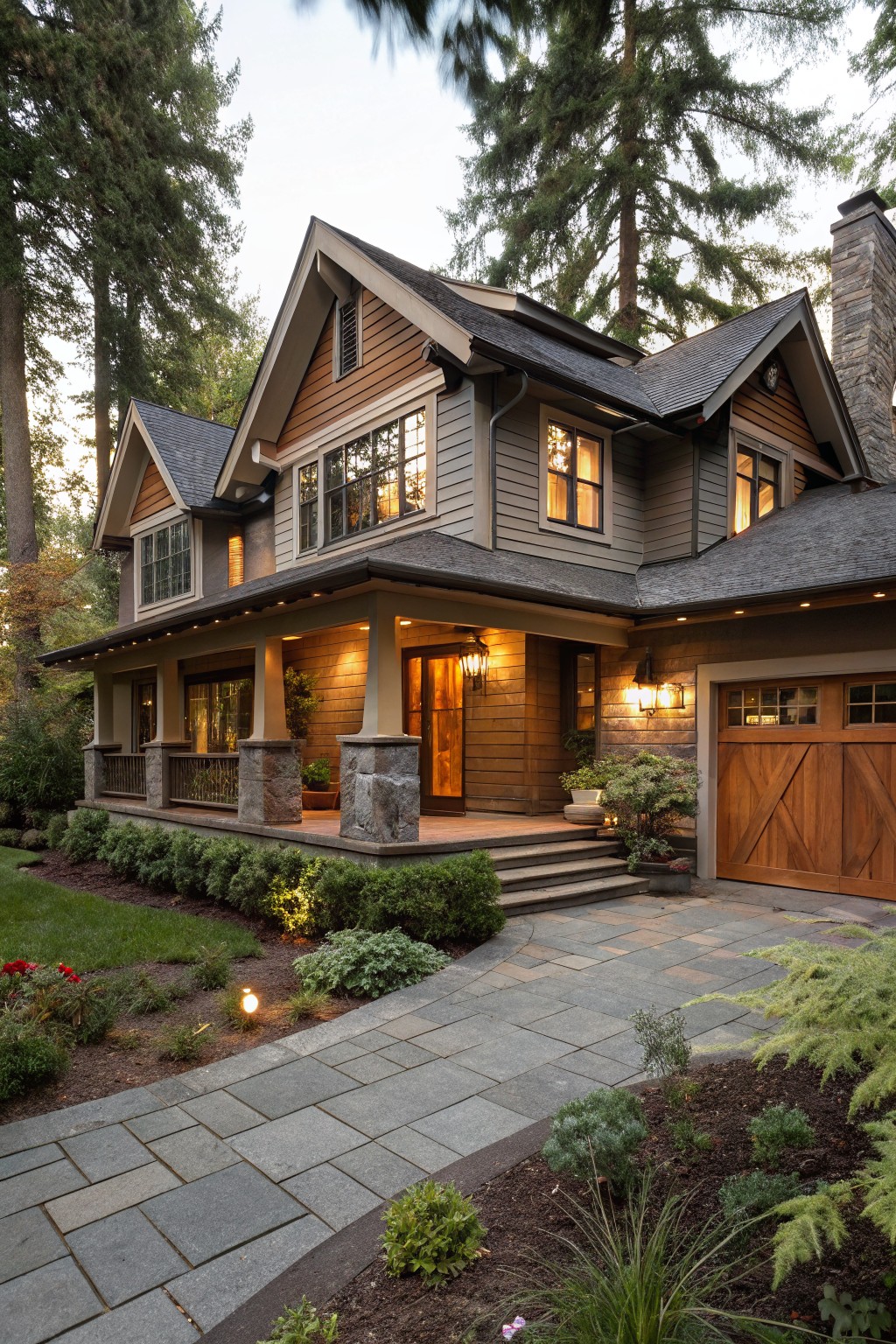
Cedar shakes on the gables and upper sections give this warm gray house a natural texture that feels right at home among the trees. The wood pulls in the surrounding forest without overwhelming the clean lines of the siding. It keeps things from looking too stark, especially with the evening lights highlighting the mix.
Try this on homes in wooded areas or spots with lots of evergreens. Use shakes mainly on gables or dormers, then add wood tones to porch beams or garage doors. Stone at the base, like on these pillars, helps tie it down. Works best where you want subtle warmth, not bold contrast.
Gray Concrete Facade with Wood Cladding
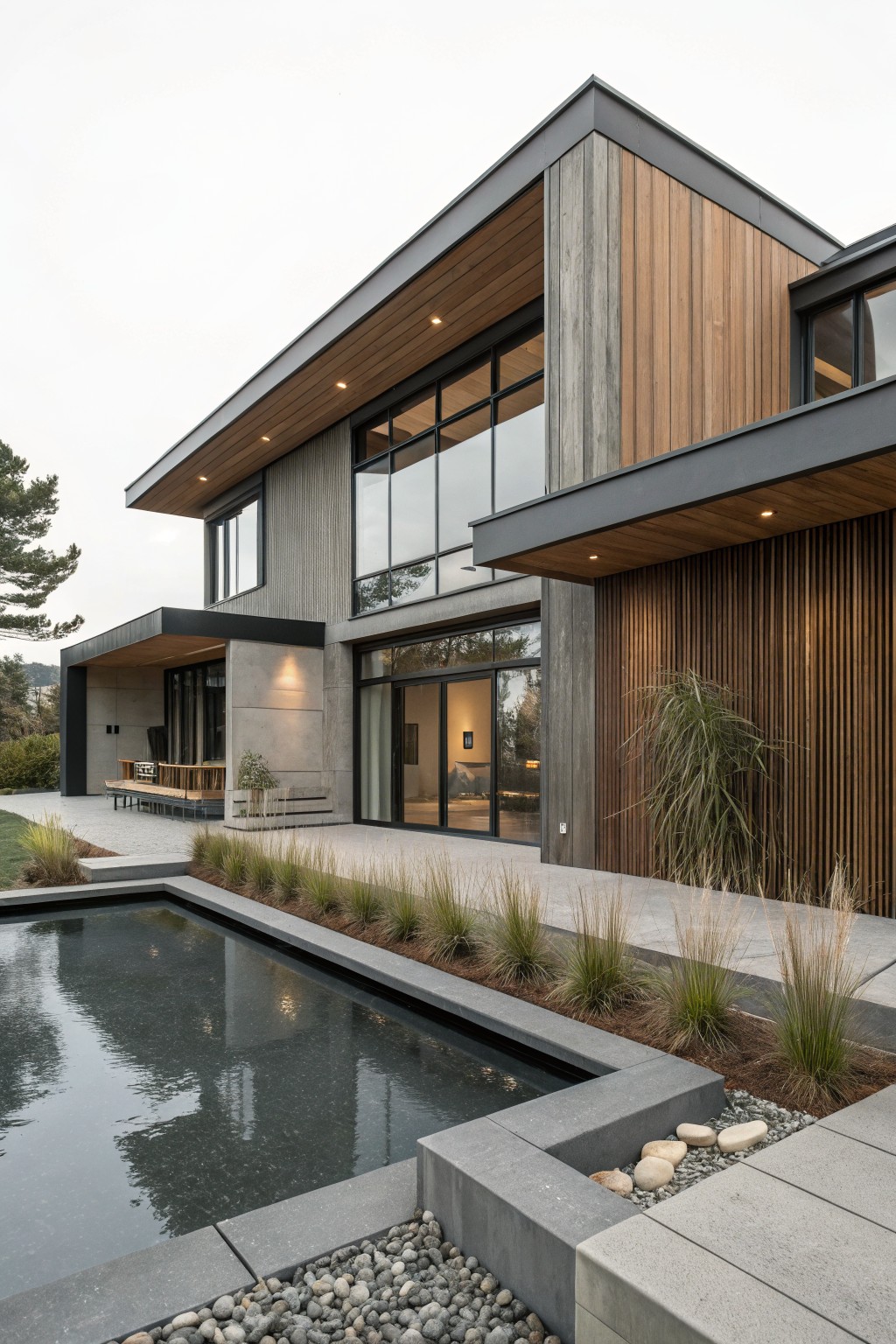
Gray concrete can feel pretty stark on a house. But adding wood cladding like you see here changes that. The vertical wood panels on the side walls bring in texture and a bit of natural color. It keeps the modern lines while making the whole thing look less cold. Those big glass windows help too by letting the inside show through.
This works best on homes with clean angles in a wooded spot. Use cedar or similar wood that weathers to gray over time so it blends in. Just make sure the wood sections aren’t too big or they might take over. It fits mid-sized houses on a lot with some slope.
Gray House with Warm Wood Siding
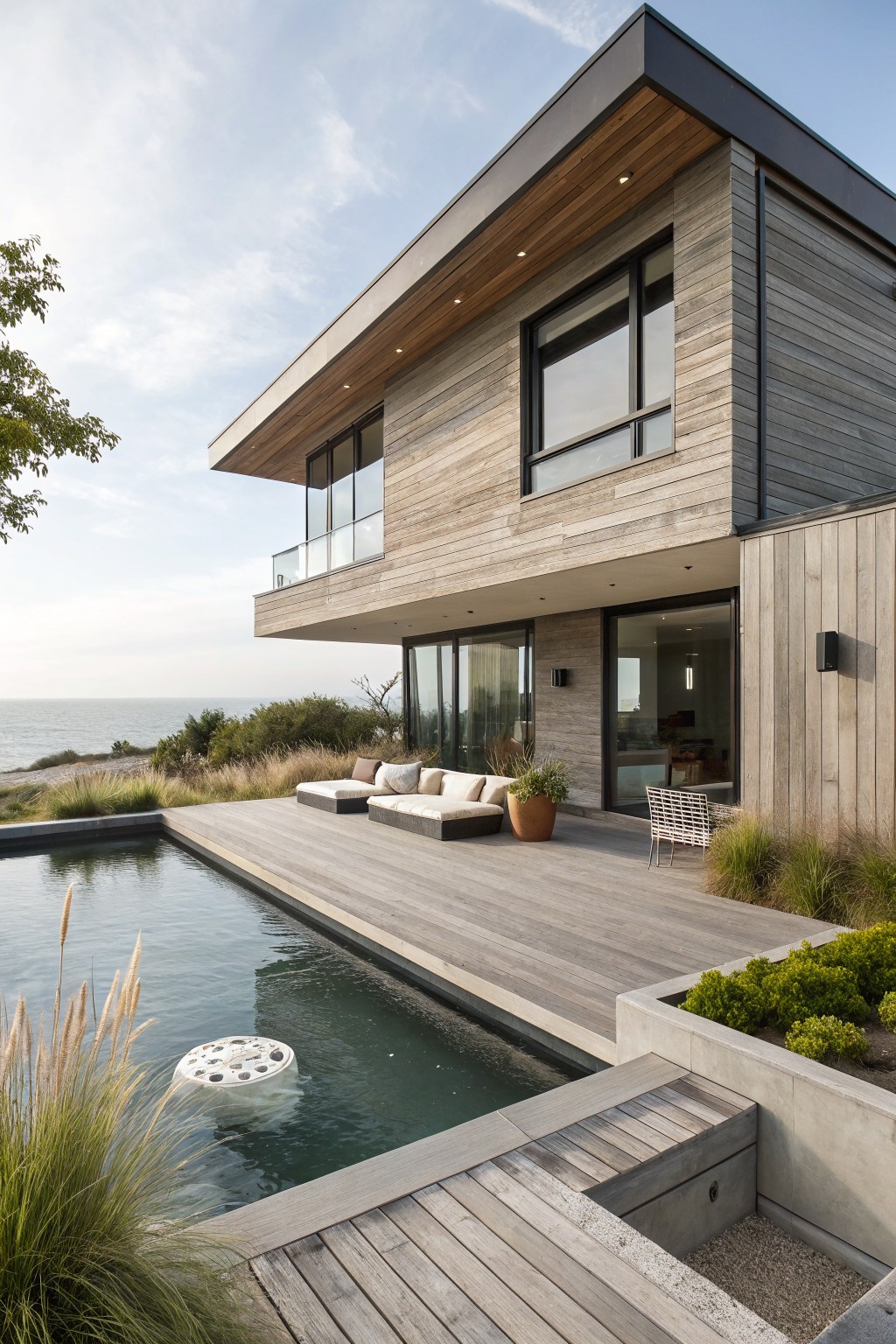
Wood siding in a warm tone covers this modern gray house and gives it a softer feel. The vertical boards run up the side, covering most of the facade, while concrete edges and large glass keep things clean. That wood pulls in the natural surroundings, like the grasses and deck nearby, without overpowering the simple lines.
Try this on homes near water or in wooded spots where you want architecture to blend rather than stand out. It works best on two-story designs with flat roofs. Pick cedar or reclaimed wood that weathers over time… less upkeep that way.
Gray Shingle Cottage with Wood Porch Details
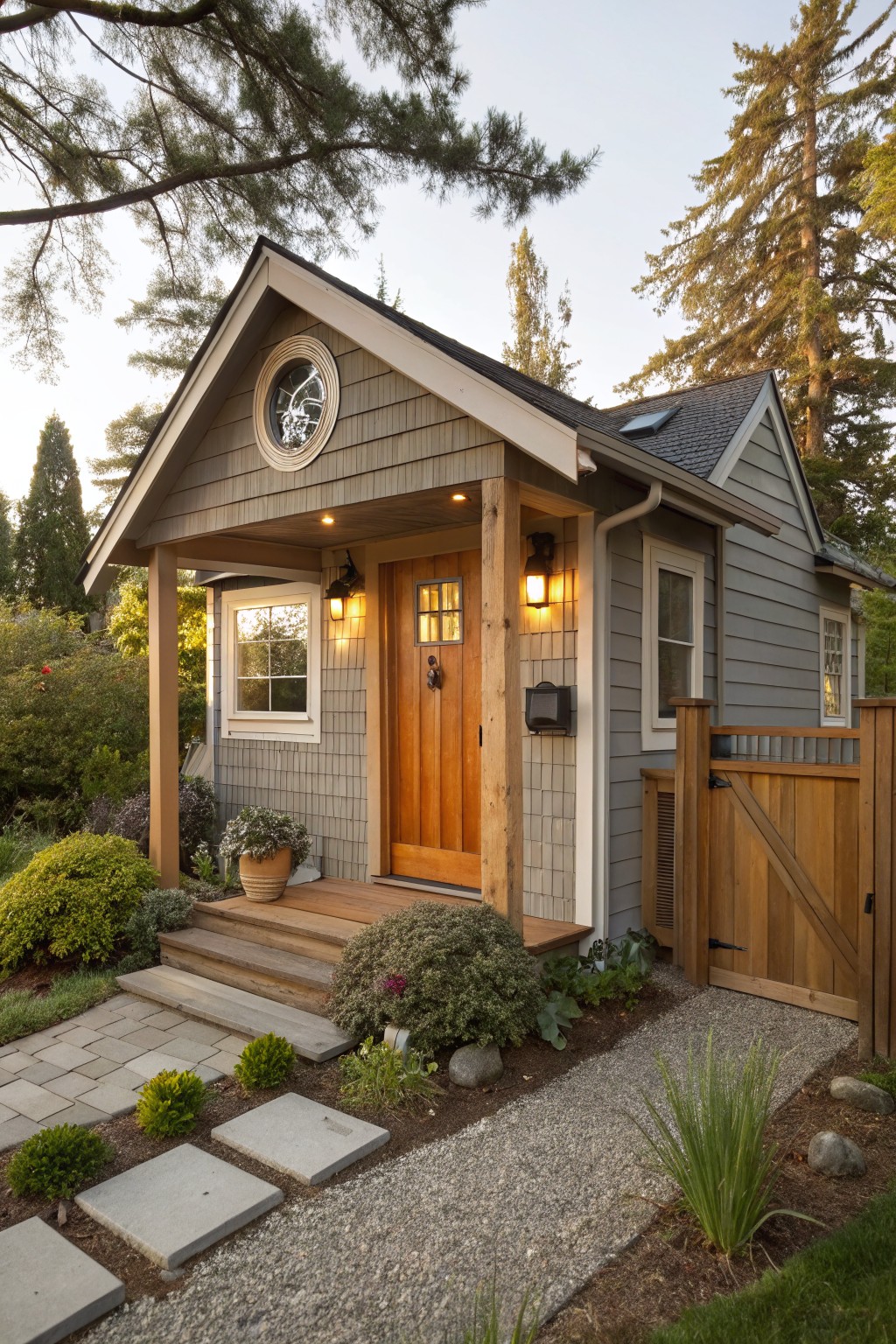
This setup takes a simple gray shingle siding and warms it right up with wood on the porch posts, door, and railing. The natural wood tones pull the gray into something friendlier, more like a backyard cabin than a plain box. It keeps the modern edge but adds that lived-in touch folks notice right away.
You can pull this off on compact homes or even backyard studios. Pick a warm gray shake for the walls and untreated cedar or fir for the wood bits around the entry. It fits wooded lots best, where the trees echo the wood. Just seal the wood lightly so it doesn’t go too orange over time.
Linear Wood Bench Seating
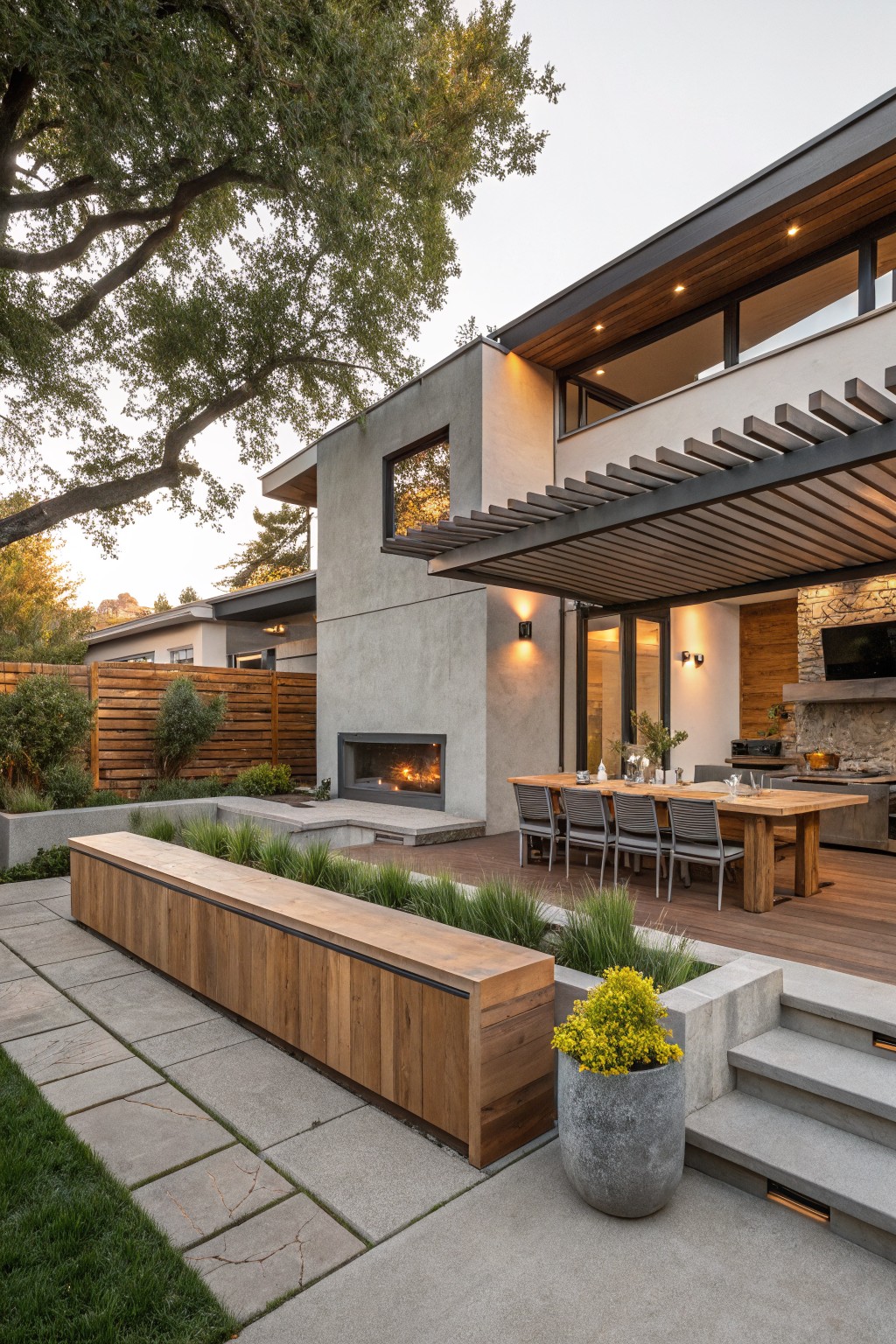
A long wood bench runs right along the edge of a planting bed here, giving extra spots to sit without crowding the main patio. The warm wood picks up on other accents like the deck and pergola, helping everything feel more connected and less stark against the gray walls. It’s a practical way to stretch your outdoor space.
This kind of bench works best in narrower backyards or where you want seating close to the garden. Keep it simple with clean lines and maybe some cushions for comfort. It suits modern homes that already lean gray and sleek, adding that bit of natural texture without much fuss.
Warm Gray Stone House with Timber Entry Porch
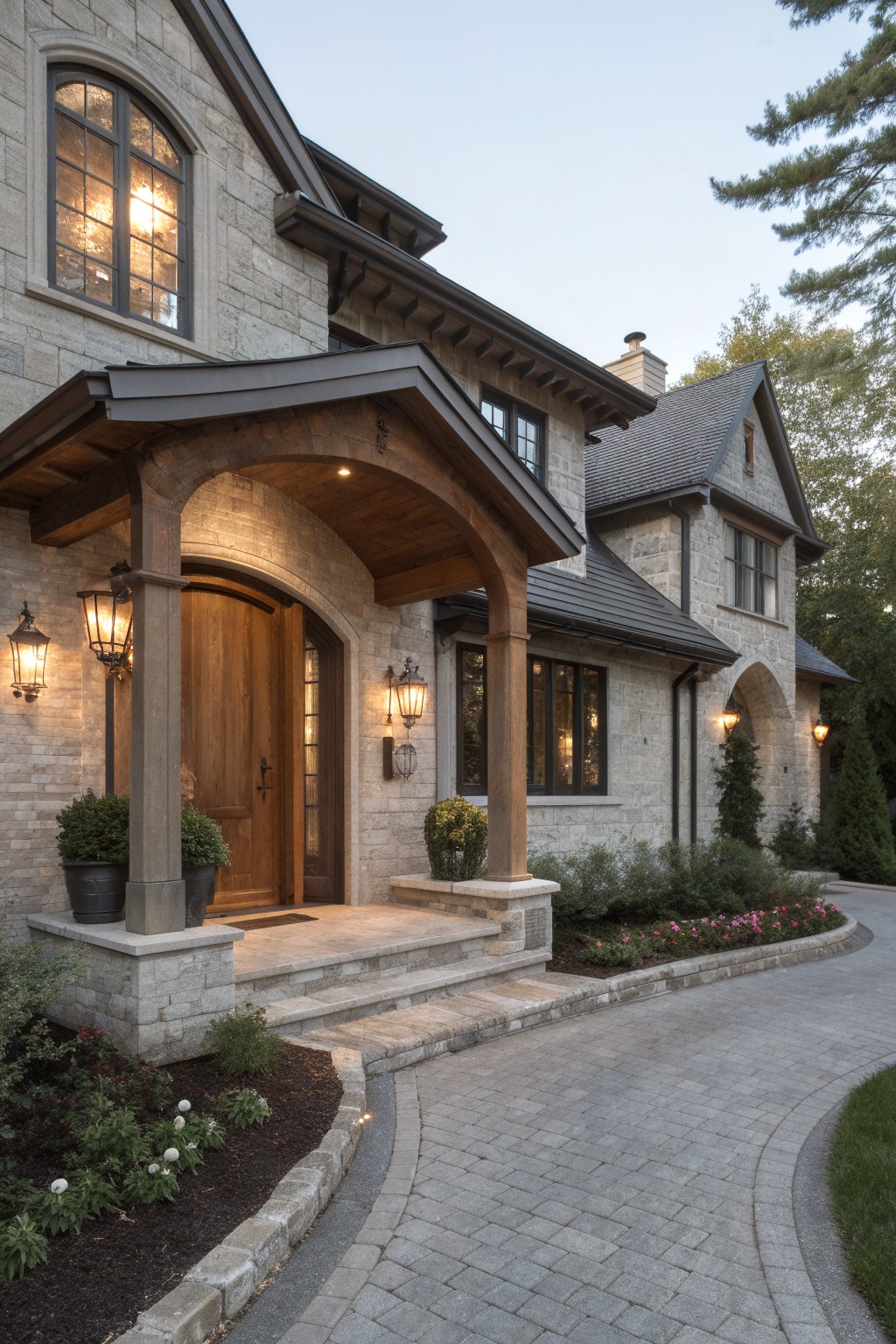
A timber-framed porch like this one works well on a warm gray stone house. The dark wood beams arch over the entry door and tie into stone pillars below. It cuts the hardness of all that stone without going overboard. Those lanterns hanging from the wood add a nice glow too.
You can pull this off on homes with classic lines or even a touch of craftsman style. Keep the wood natural, nothing too fancy. It suits spots with some landscaping around the base, like boxwoods or low flowers. Just make sure the porch scale fits your door height… too big and it overwhelms.
Gray Stone House with Wood Cladding
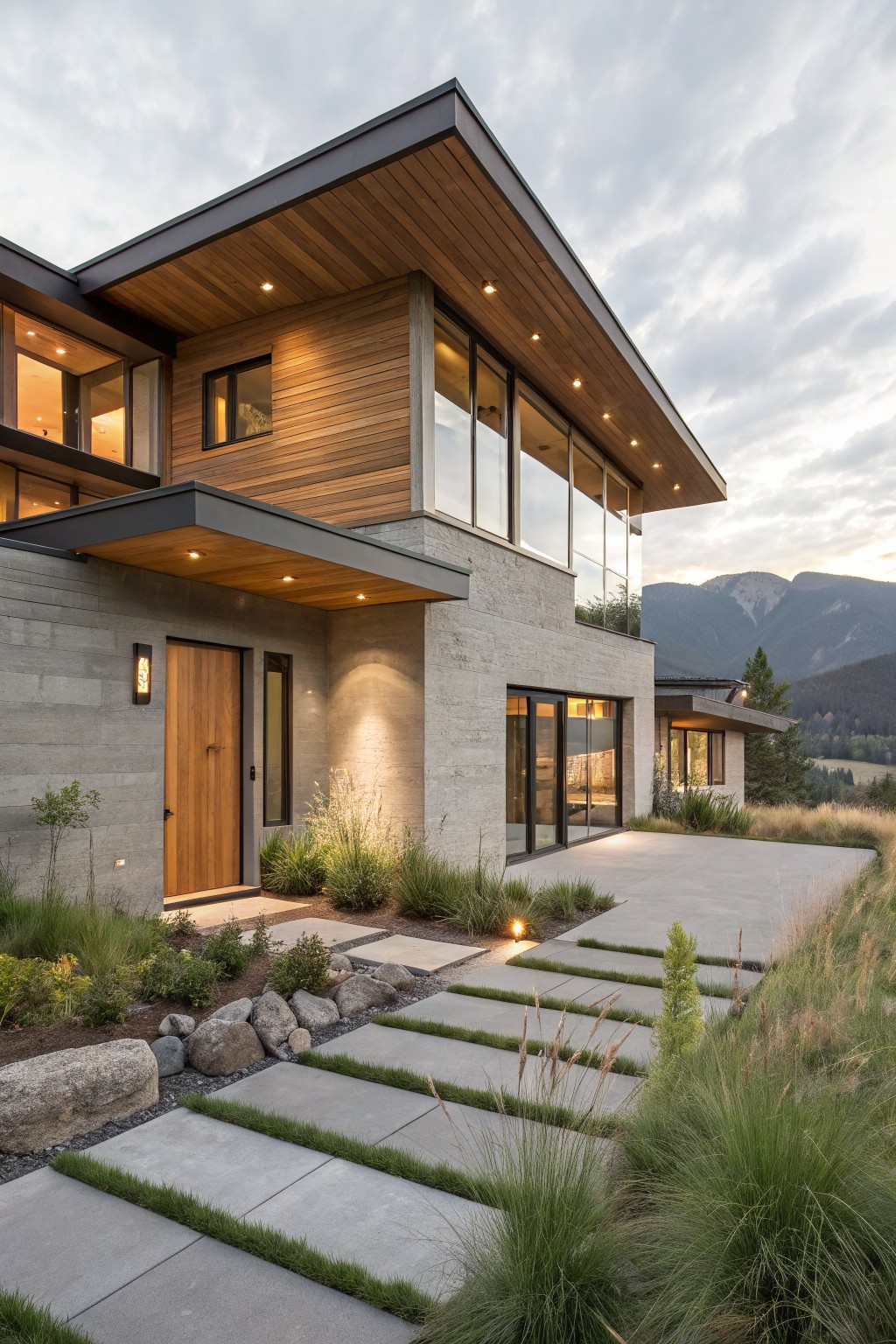
This setup starts with a sturdy gray stone base that gives the house a solid, grounded feel. Then wood cladding takes over higher up, along with a simple wood ceiling under the entry overhang. That mix keeps things modern without feeling too cold. The warm wood tones pull your eye up and make the whole facade more approachable.
Try it on homes tucked into hilly or wooded spots, where the stone holds up to weather and the wood nods to the surroundings. Go for cedar siding that’s naturally durable. Keep landscaping low-key around the base, like rocks and grasses, so the materials stay the focus. Just make sure the wood gets a good sealant to last.
Welcoming Arched Wood Door
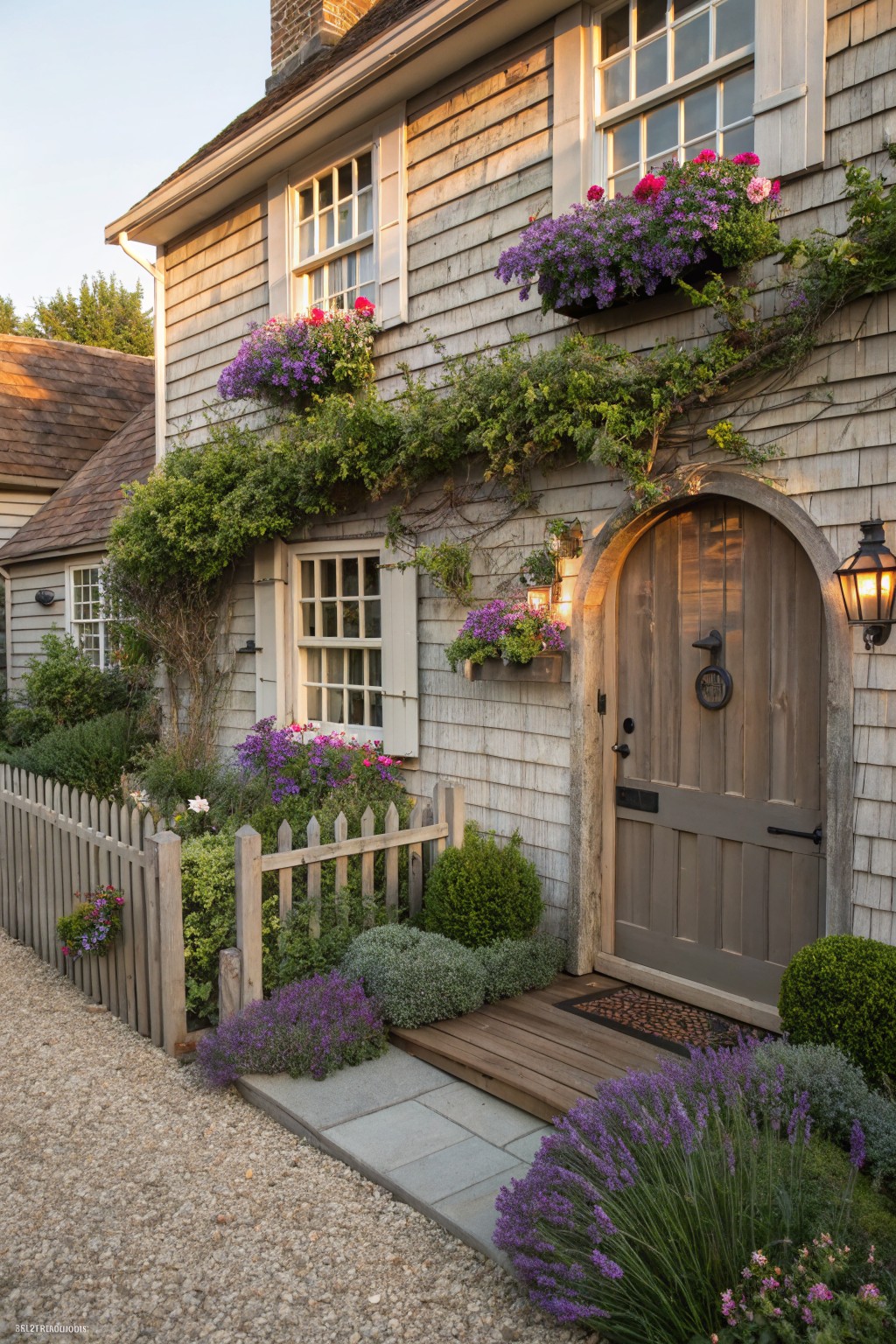
A simple arched wooden door like this one turns a plain shingle exterior into something folks notice right away. The grayish shingles give a solid backdrop, but that curved door frame in natural wood pulls the eye and feels right at home. Vines climbing up beside it keep things from looking too stark.
This setup suits older cottages or seaside houses best, where you want curb appeal without much fuss. Hang a lantern on each side for light at dusk, and add flower boxes to windows nearby. Just trim the vines now and then so they don’t hide the door.
Gray Facade with Wood Slat Accents
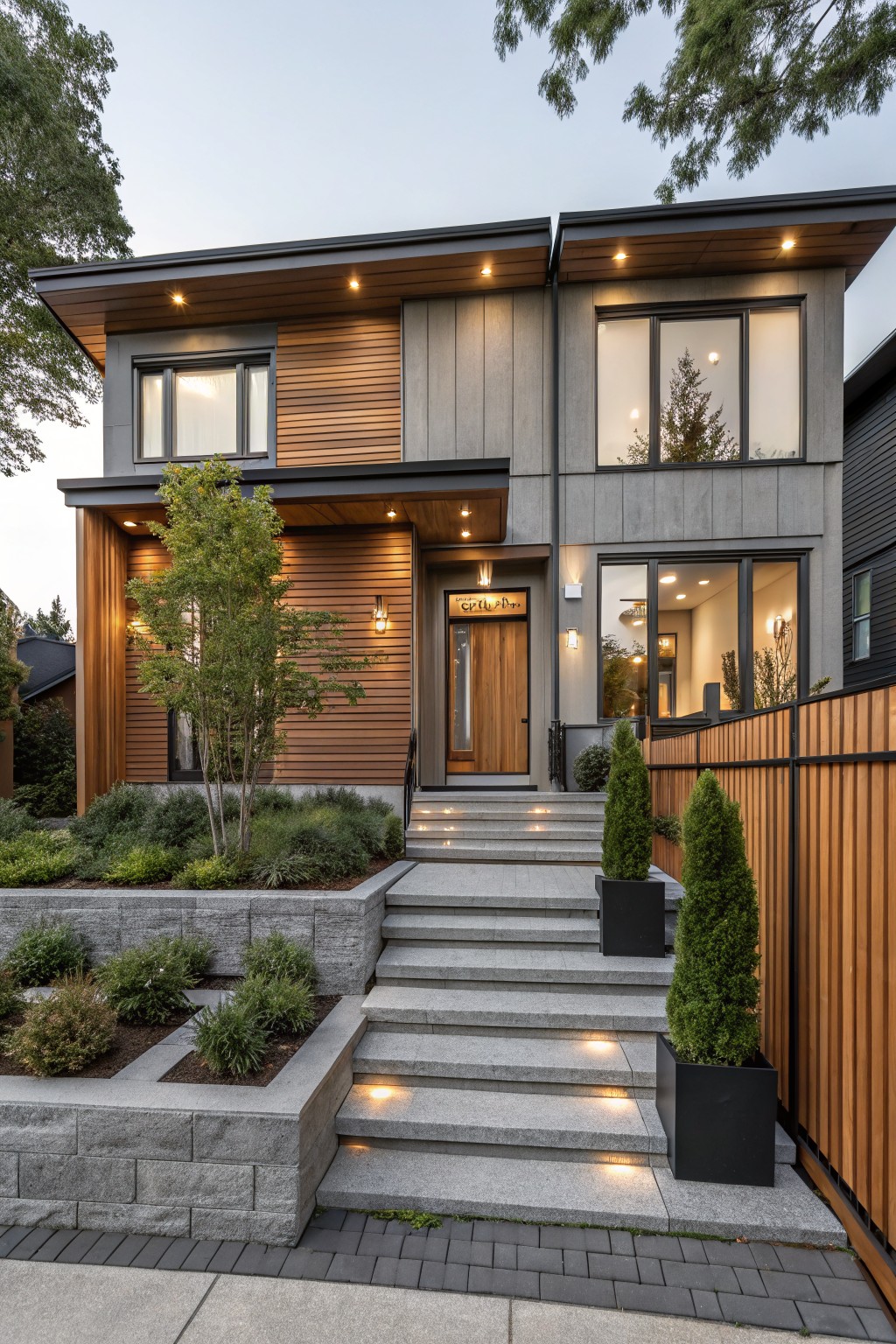
Wood slats running horizontally along parts of this gray house add a natural touch that keeps things from feeling too stark. The gray siding gives a clean, modern base while the wood brings in some warmth and texture right where you notice it most, like around the entry and upper sections. It’s a simple way to make a boxy design feel more approachable.
This setup works well on homes with flat roofs or straight lines, especially if you’re in a rainy or cooler spot where wood holds up under a good stain. Stick to matching tones on the door and fence to tie it together, and keep plantings low so they don’t hide the details. Just check your local climate for wood that won’t warp.
Wood Garage Door on Warm Gray Siding
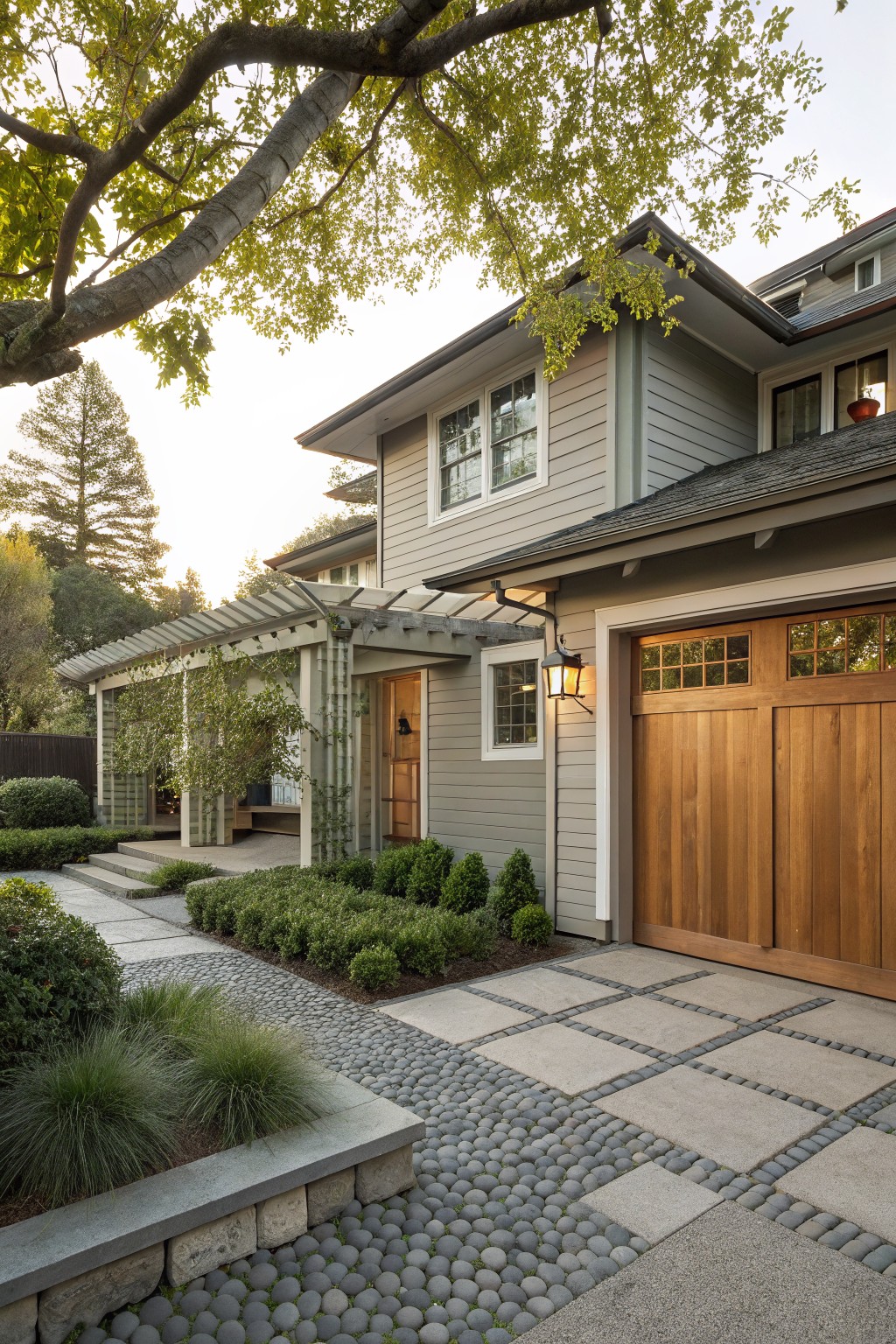
A wooden garage door works well on this warm gray house. The siding has that soft gray tone that goes with lots of neighborhoods. But the door’s natural wood grain pulls in some earthiness. It keeps the front from looking plain. The pergola nearby picks up on that too.
This look fits two-story homes with garages out front. Use it where you want something updated but easy on the eyes. Go for cedar or redwood doors that weather nicely. Add a few shrubs along the drive to tie it together. Skip glossy finishes though. They fight the casual feel.
Wood Garage Doors on Warm Gray Siding
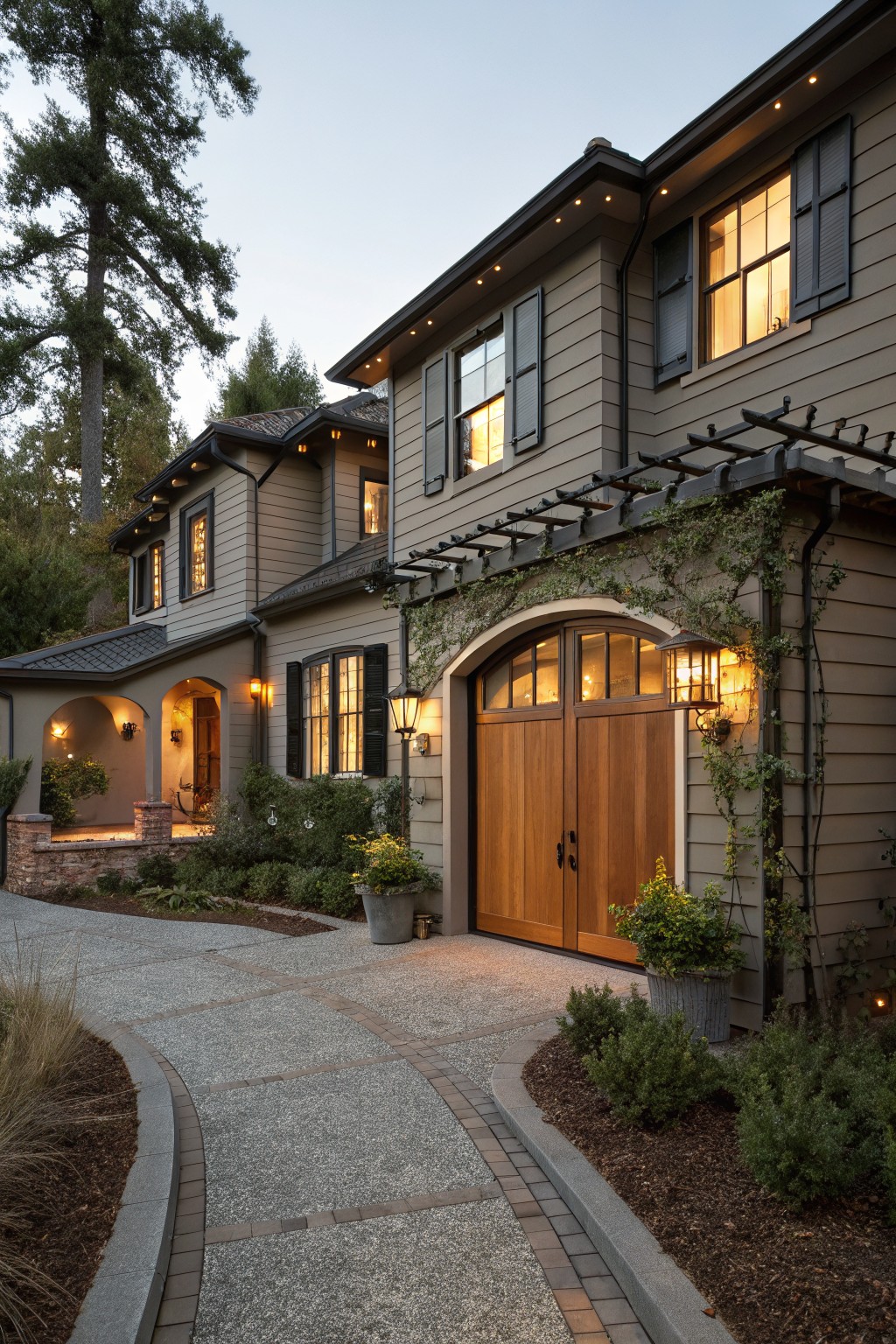
Big wooden garage doors like these make a warm gray house feel less boxy. The rich wood pulls the eye right to the front and adds a bit of natural texture that gray siding alone can’t match. Vines climbing the nearby trellis help tie it all together without much fuss.
This setup works well on two-story homes or anything with a straightforward facade. Pick a wood stain that fits your area, maybe something durable for wet climates. It keeps the look clean but livable, especially if you add simple path lighting nearby.
Gray House Exterior with Wood Entry Overhang
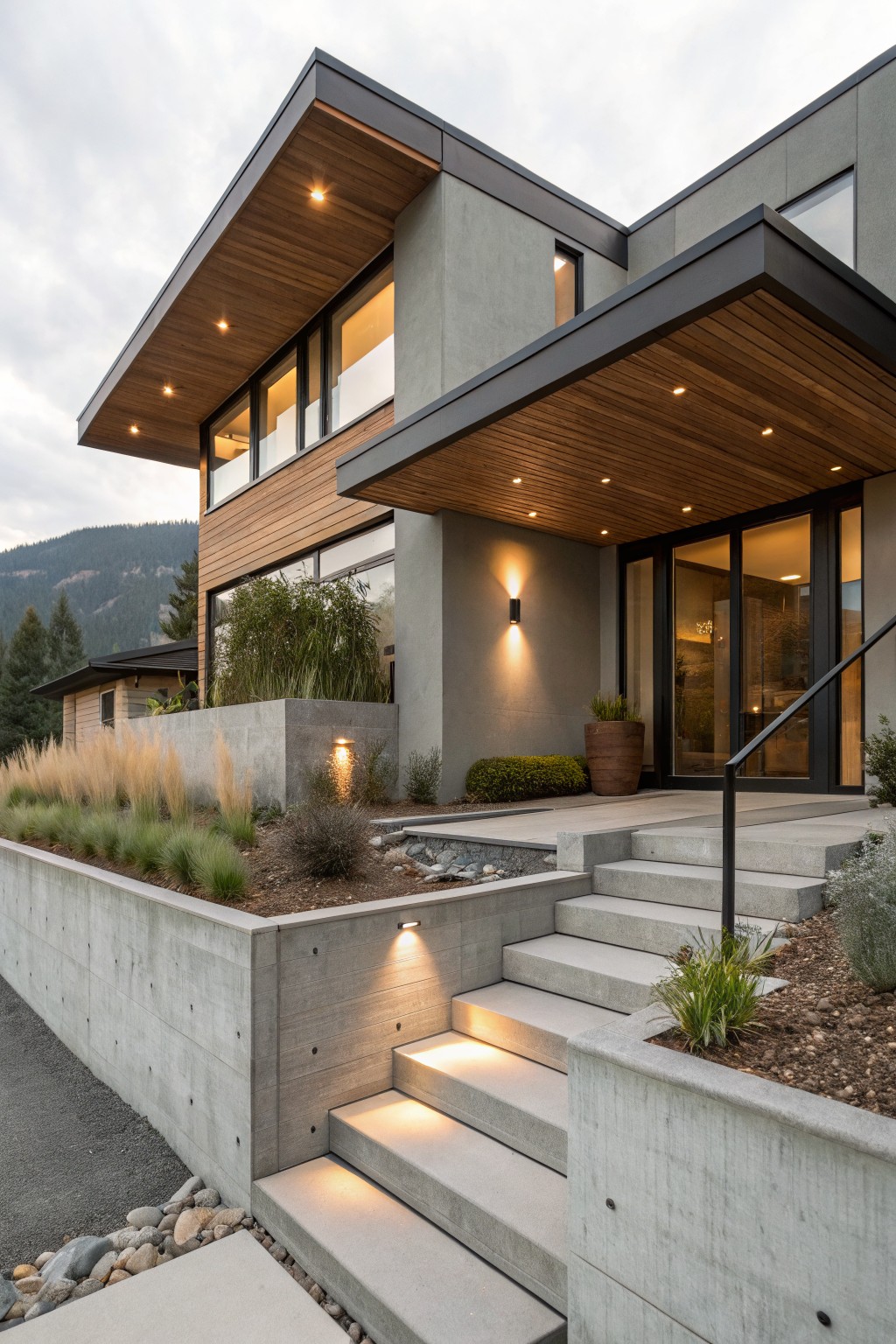
One way to make a gray concrete house feel less stark is to add a wood overhang right at the entry. Here the warm cedar ceiling stretches out over the front door, creating a sheltered spot that pulls your eye up from the plain walls. It breaks up the solid gray with natural texture and ties the house to the wooded surroundings nearby. Those wood panels on the side help too, giving the whole front a layered look without much fuss.
This setup works best on homes with a bit of slope, like this one with steps leading up. The overhang protects the door from rain and makes coming home nicer on gray days. Try it if your place has clean lines already, maybe pair it with simple plants in concrete planters. Just keep the wood sealed so it stays that nice honey color over time.
Frequently Asked Questions
Q: How do I pick a warm gray that actually looks warm on my house?
A: Slap some large paint samples right on your siding facing south and north. Check them morning, noon, and evening as the sun shifts. That beige undertone will glow against wood accents if you choose right.
Q: What kind of wood should I use for those softening accents?
A: Go for cedar siding or beams. It ages to a mellow patina that hugs warm gray perfectly. Natural finish lets the texture shine without overpowering.
Q: Do I need to seal the wood accents every year?
A: Brush on a UV-protectant stain once a year at first, then every two or three after it settles. This keeps the warmth from fading fast. Skip it and you’ll fight graying too soon.
Q: Can this warm gray and wood combo work on a ranch-style house?
A: Absolutely, paint the body warm gray and add wood shutters or a front porch beam. It grounds the low profile and adds instant coziness. Ranch houses eat this up.
