

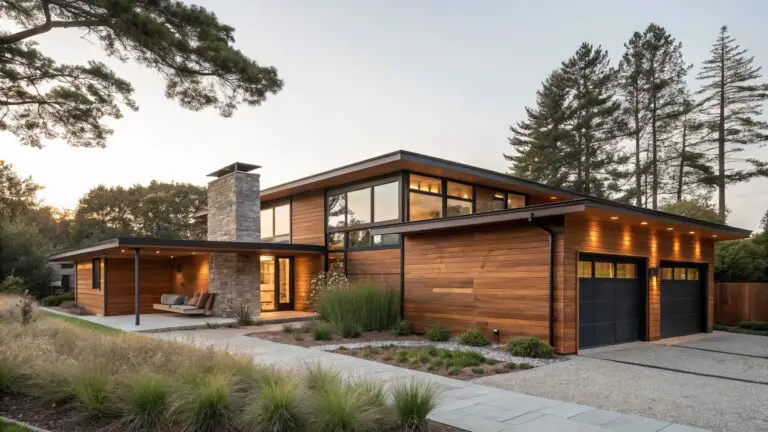
I’ve noticed over the years that neutral browns give house exteriors a quiet strength, tying the siding, trim, and roofline into one cohesive look that stands out from the curb without trying too hard.
They work on so many facades because they let natural light play across the surface, highlighting entries and windows in a way that feels solid and lived-in.
When we updated our own front last summer, I picked a mid-tone brown that grounded the stone accents perfectly, and it changed how the whole place read from the street.
These colors adapt to wood, brick, or stucco without clashing, holding their warmth through changing weather.
A couple here shift just right in afternoon sun.
Warm Brown Wood Siding
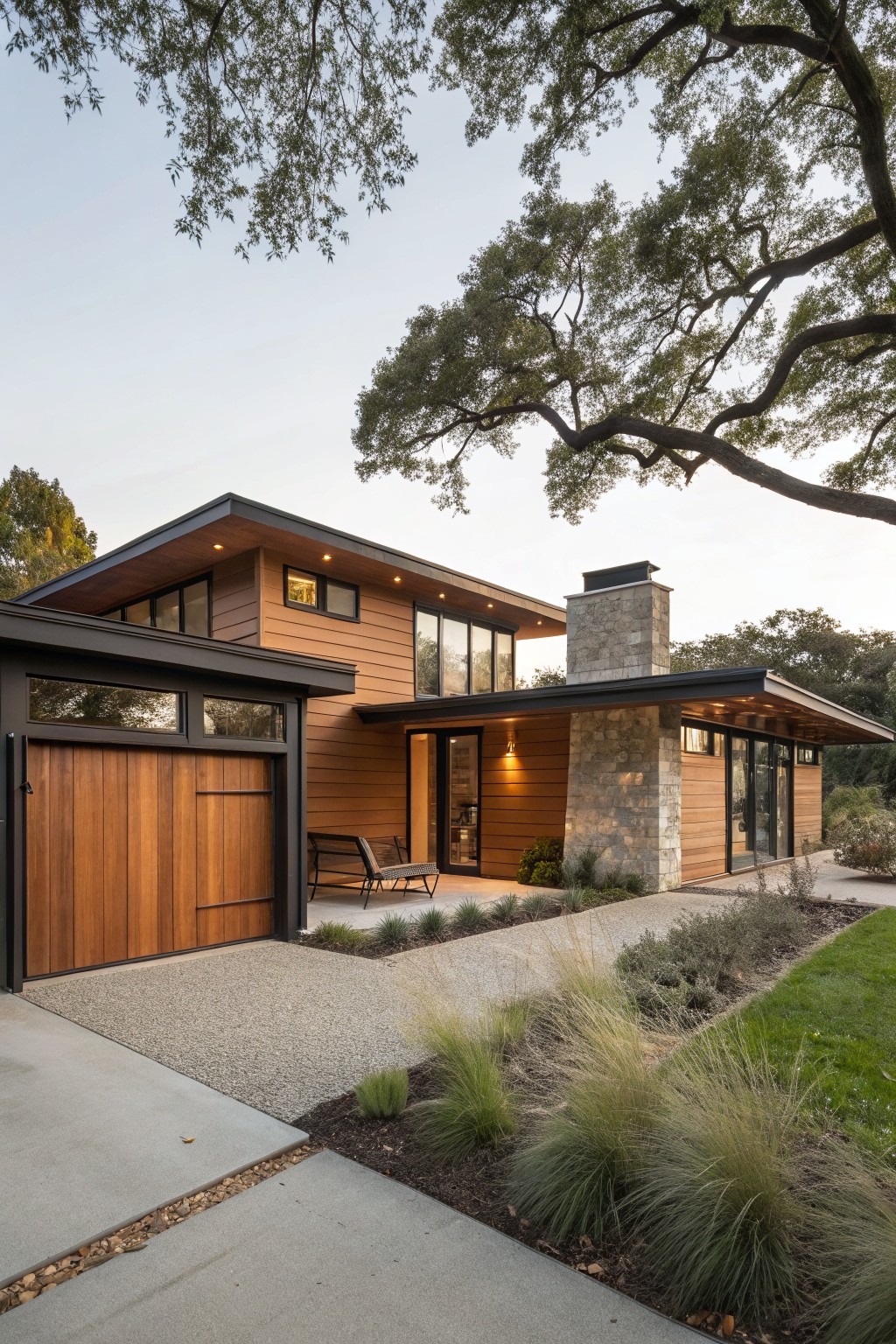
Warm brown wood siding like cedar gives a house a solid, natural feel without going overboard. It works well on modern designs because the vertical boards pick up the clean lines and flat roof, while the color sits easy against trees and sky. Here you see it mixed with black frames around windows and doors, plus a stone chimney that keeps things from feeling too plain.
This siding suits homes in wooded spots or anywhere you want low-key curb appeal. Go for it on a two-story setup or garage front, but seal the wood right to hold the color. It fits ranch styles or updates to older places, and pairs fine with gravel paths or simple plantings out front.
Warm Brown Shingle Siding
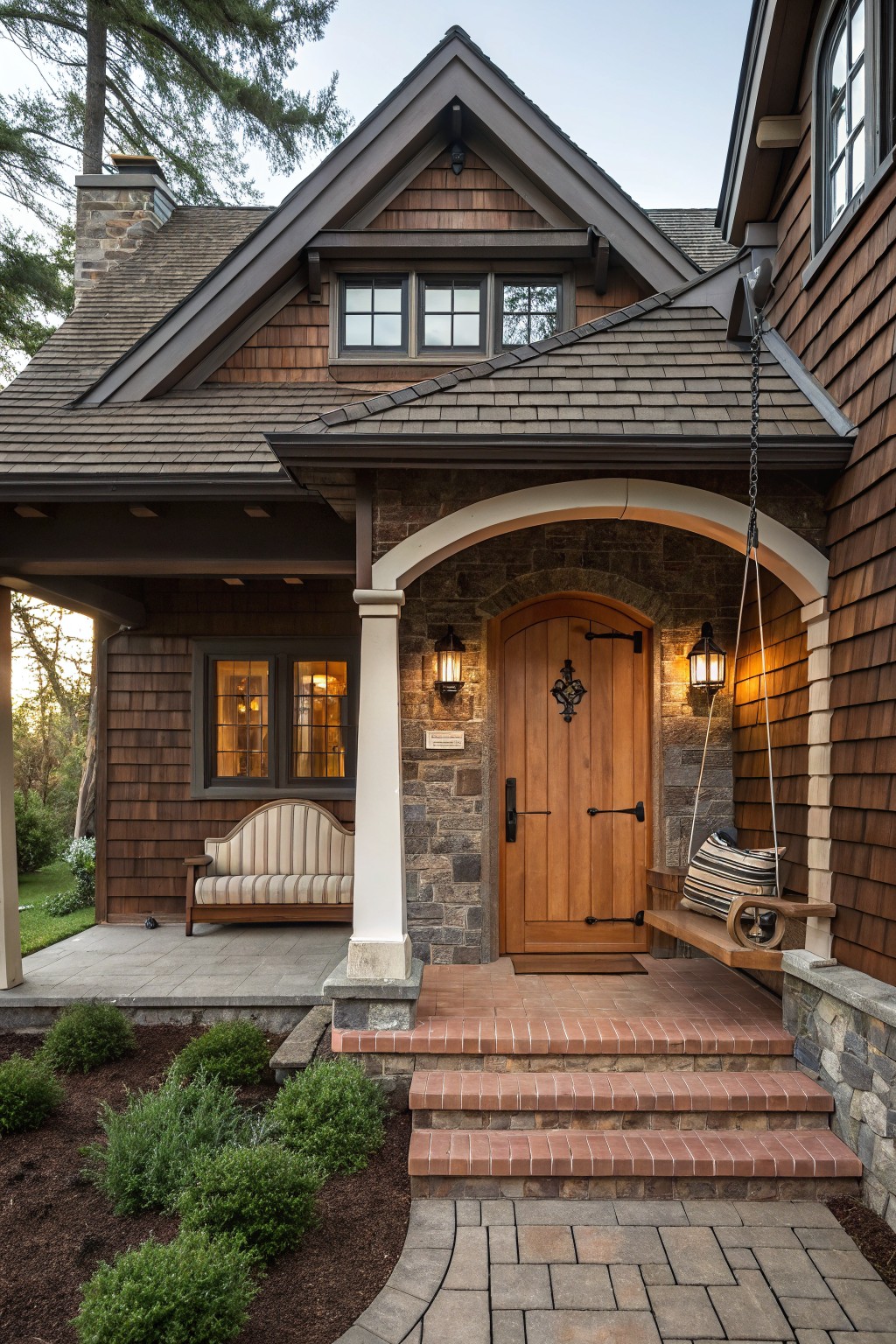
Shingle siding in a warm brown tone wraps this house nicely, making it blend right into the trees around it. The color pulls from natural wood and earth, so it feels settled and not too showy. Stone pillars frame the front door without stealing the show.
This siding works on homes with steep roofs or porches, especially in cooler climates where you want some coziness from the street. Pair it with a wood door and brick steps like here. Skip glossy finishes. It holds paint well if you want to refresh later.
Recommended Products

Weather and corrosion resistant coating protects exterior/interior surfaces like wood, metal, concrete, masonry and more Oil-based formula provides a durable protective...
Vertical Wood Cladding in Neutral Browns
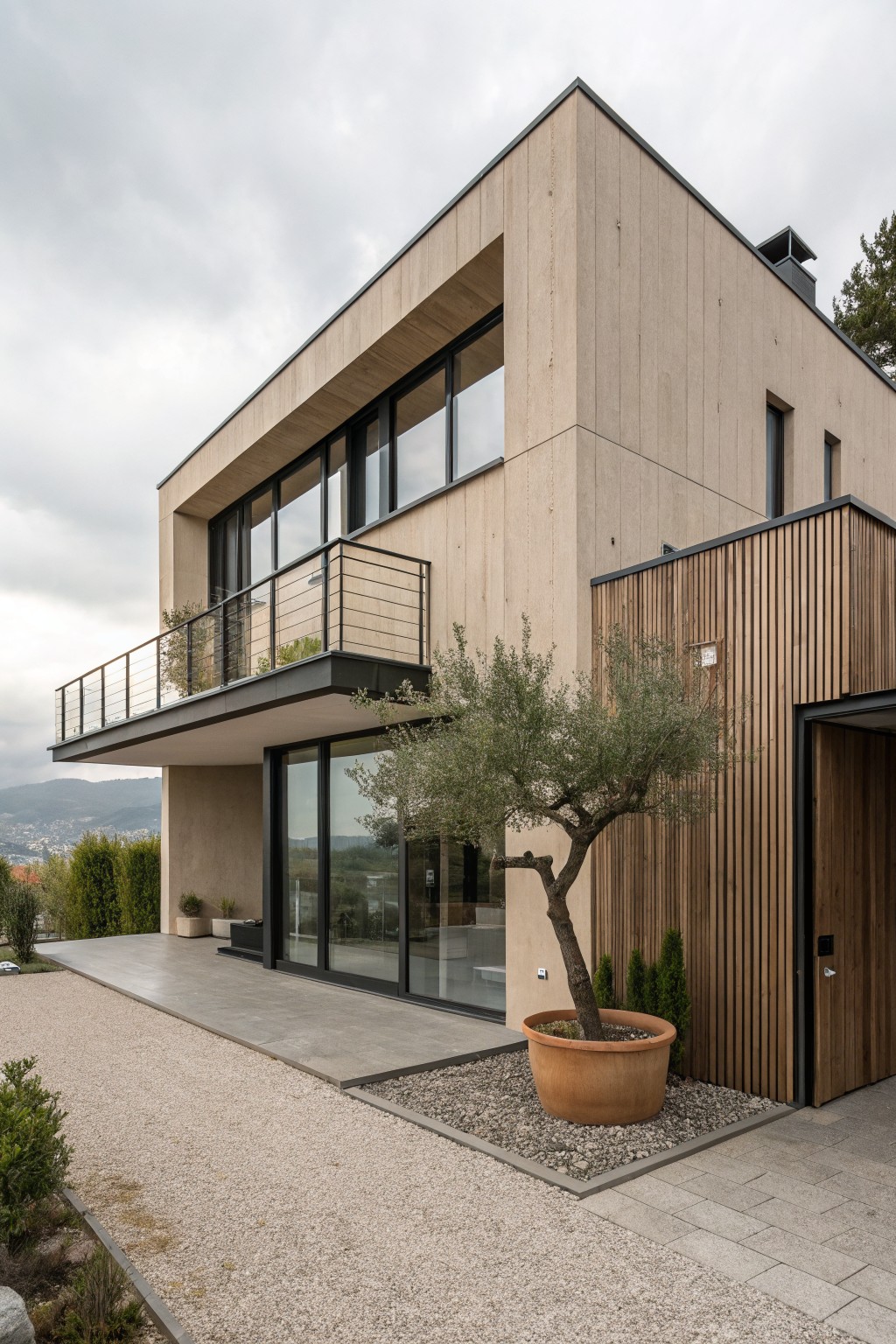
One look at this house shows how vertical wood cladding in a light brown shade can warm up a stark modern design. The boards run straight up the facade, adding texture without much fuss. Black frames around the big windows keep things sharp, and that soft tone blends right into a natural setting.
This approach fits homes on sloped lots or with simple shapes. It holds up well in mild climates, especially if you seal the wood every couple years. Pair it with gravel paths or potted trees for easy curb appeal… nothing complicated.
Natural Shingle Siding in Muted Brown Tones
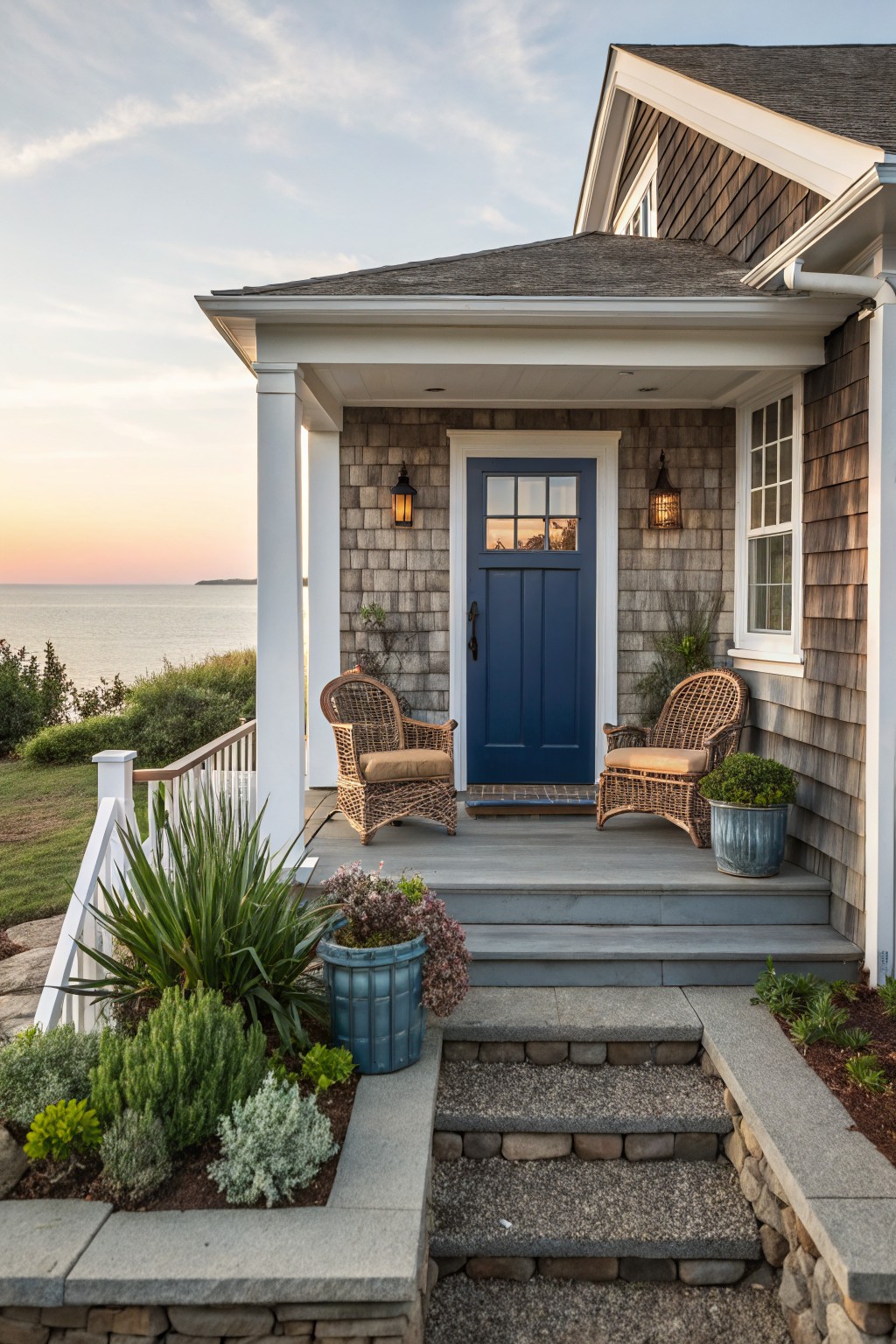
Shingle siding like this catches your eye because it has that soft, weathered brown-gray color that blends right into the landscape. It’s not stark or too polished. Paired with white trim and a navy door, it keeps the house looking classic without trying too hard. These tones work year-round and age nicely over time.
You can pull this off on coastal homes or anywhere with a bit of character. Go for cedar shakes that start medium brown and fade to gray. Add simple porch furniture and low plants at the base to tie it together. Skip anything too bright unless you want a pop like that blue door. It suits older-style houses best.
Soft Brown Siding on Traditional Homes
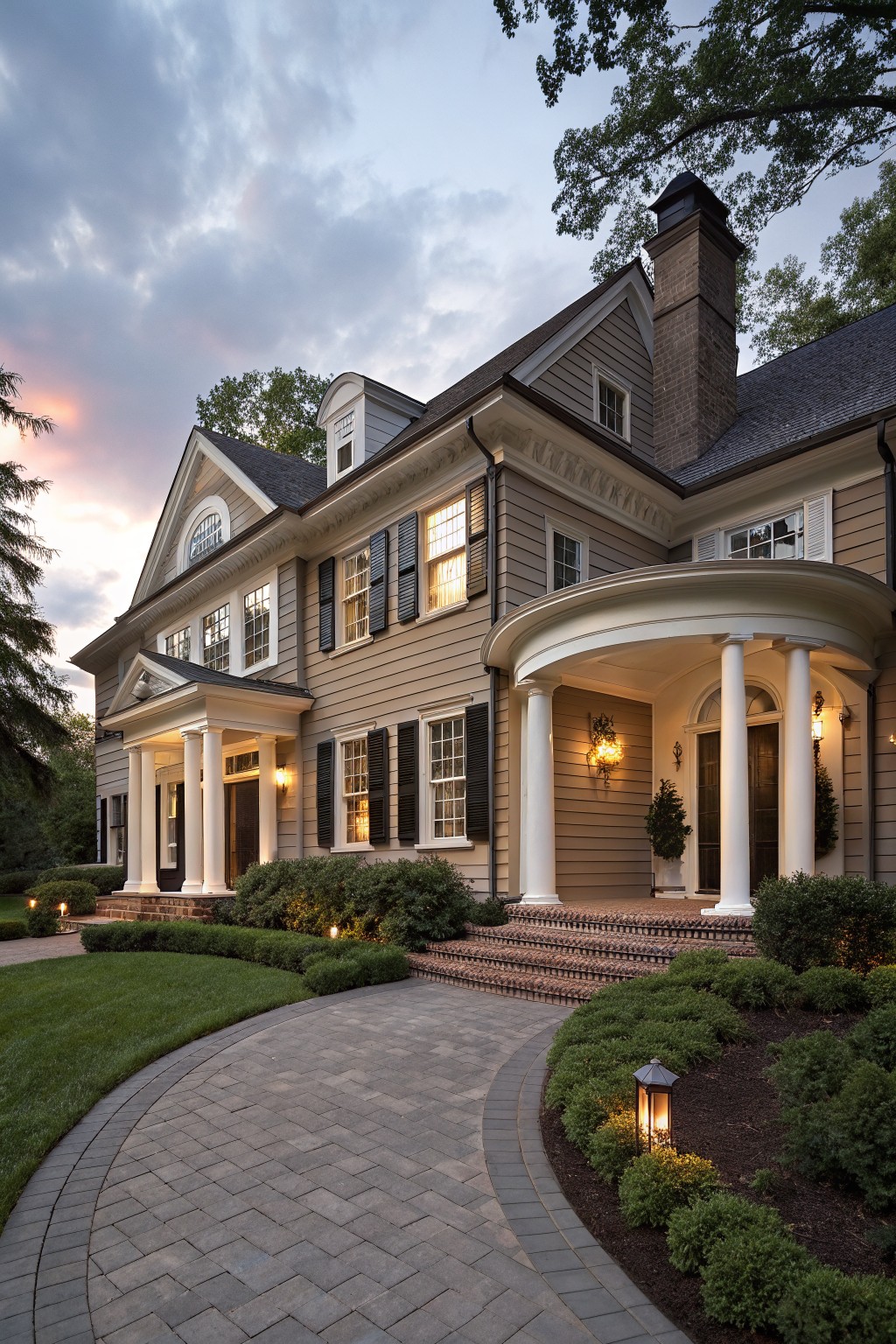
A soft brown siding like this taupe shade brings a cozy feel to classic colonial-style houses. It sits well against the white columns and trim without overpowering the architecture. Black shutters add some contrast. And those warm brick steps tie right in.
This color works great on homes in wooded or suburban spots where you want something neutral that blends with trees and lawns. Pair it with white accents for crispness. Skip it if your house has too much red brick already. It keeps things looking fresh year-round.
Warm Beige Stucco Exterior
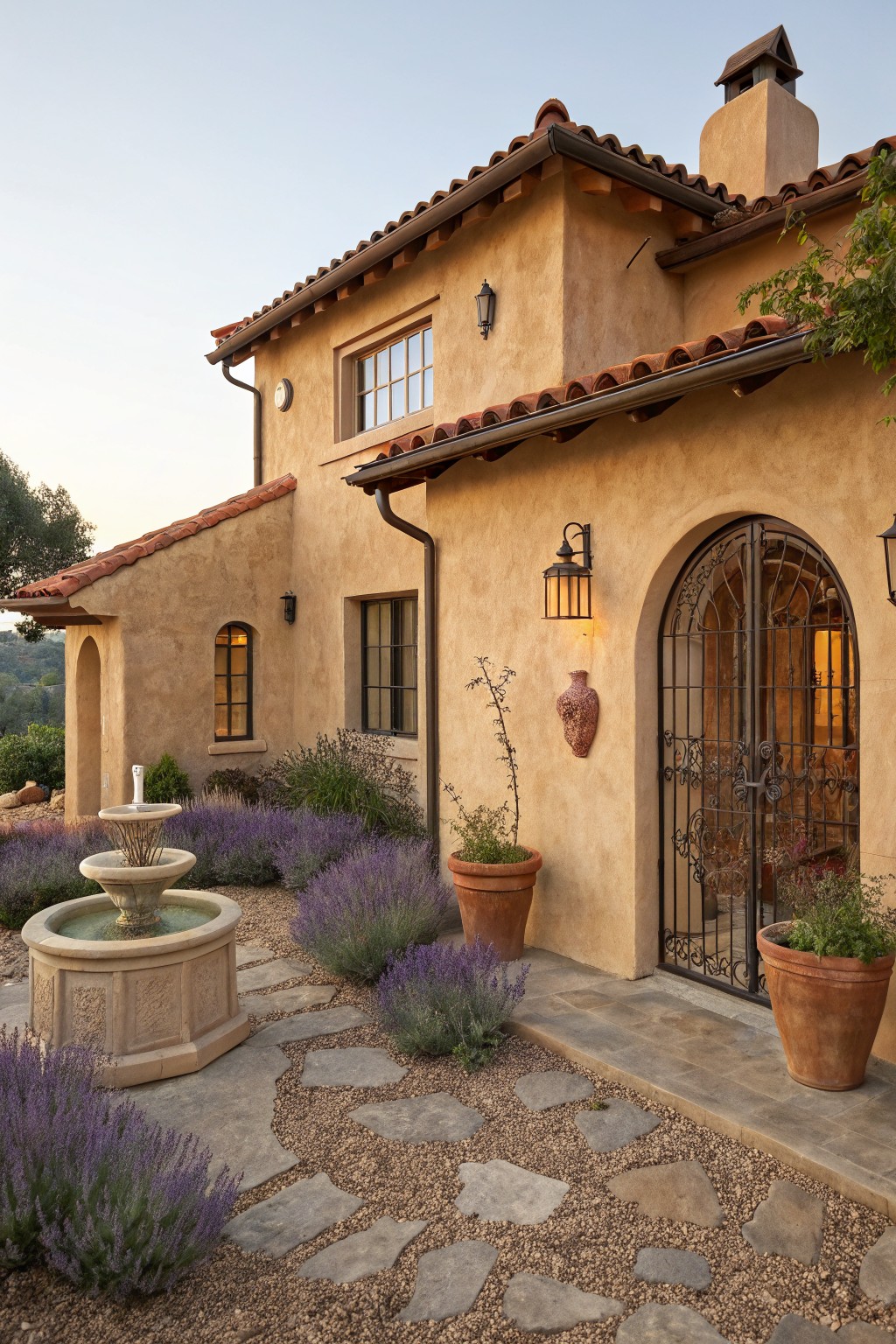
Warm beige stucco like this wraps the house in a soft, earthy tone that feels at home almost anywhere. It picks up the natural hues around it, especially with terracotta roof tiles overhead adding just a bit of warm red contrast. The texture of the stucco keeps things from looking flat, and it has that lived-in quality right from the start.
This color suits ranch-style or Mediterranean homes in dry or sunny spots, where it hides dirt well and needs little upkeep. Pair it with gravel paths and drought-tolerant plants near the entry, but skip stark whites on trim to keep the neutral flow going.
Shingled Exteriors in Warm Browns
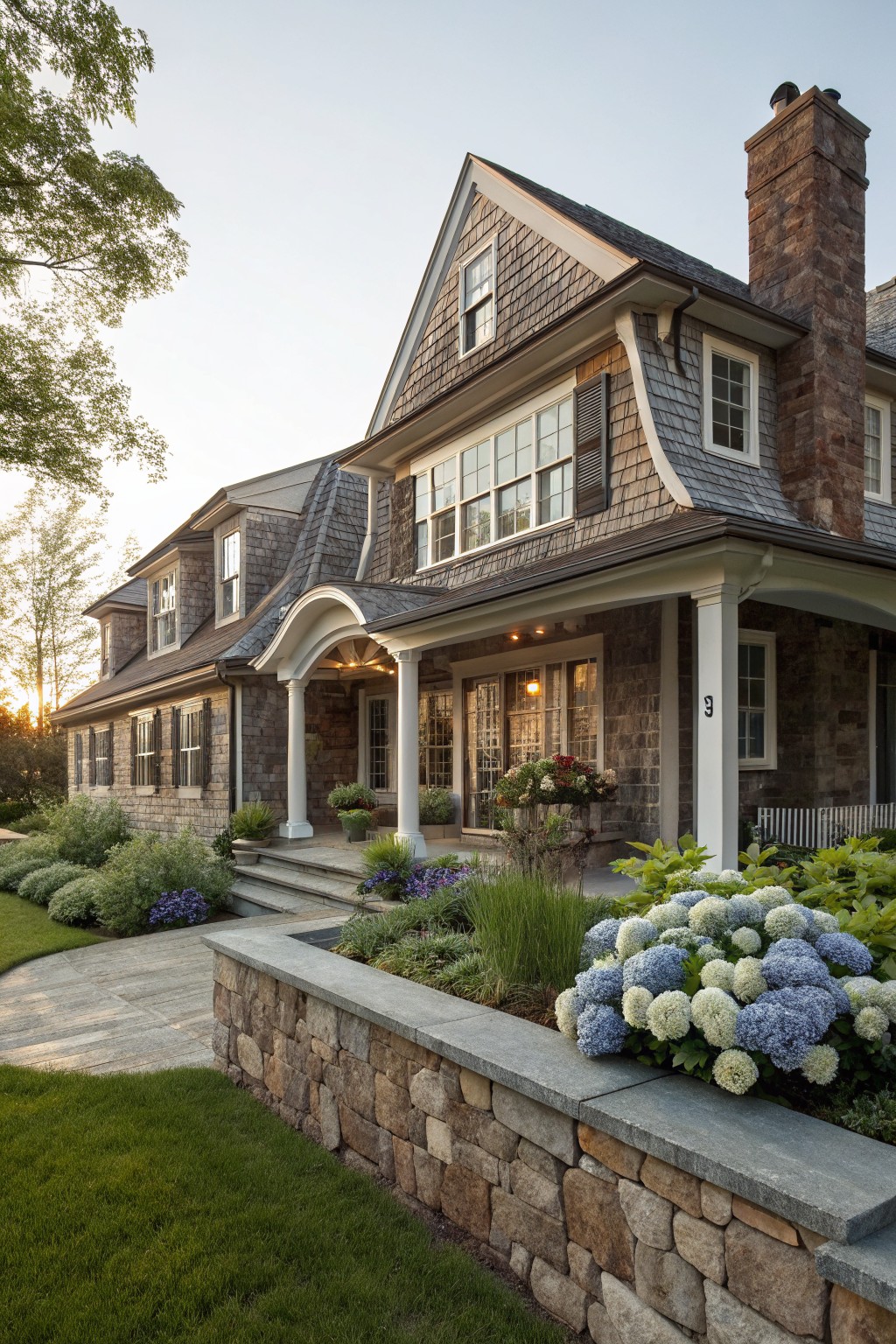
Shingle siding in a warm neutral brown covers most of this house, from the steep rooflines down to the base. Paired with stone at the chimney and foundation, it creates that familiar cozy feel, like older homes along the coast or in the woods. The color pulls from the earth tones around it, so the place doesn’t stick out but settles right in.
You can pull this off on two-story homes with gables or porches. It pairs easy with white trim around windows and doors. Works best where you want low-key charm that holds up over time. Pick quality cedar or fiber cement shingles to handle rain and sun.
Warm Wood Siding in Neutral Browns
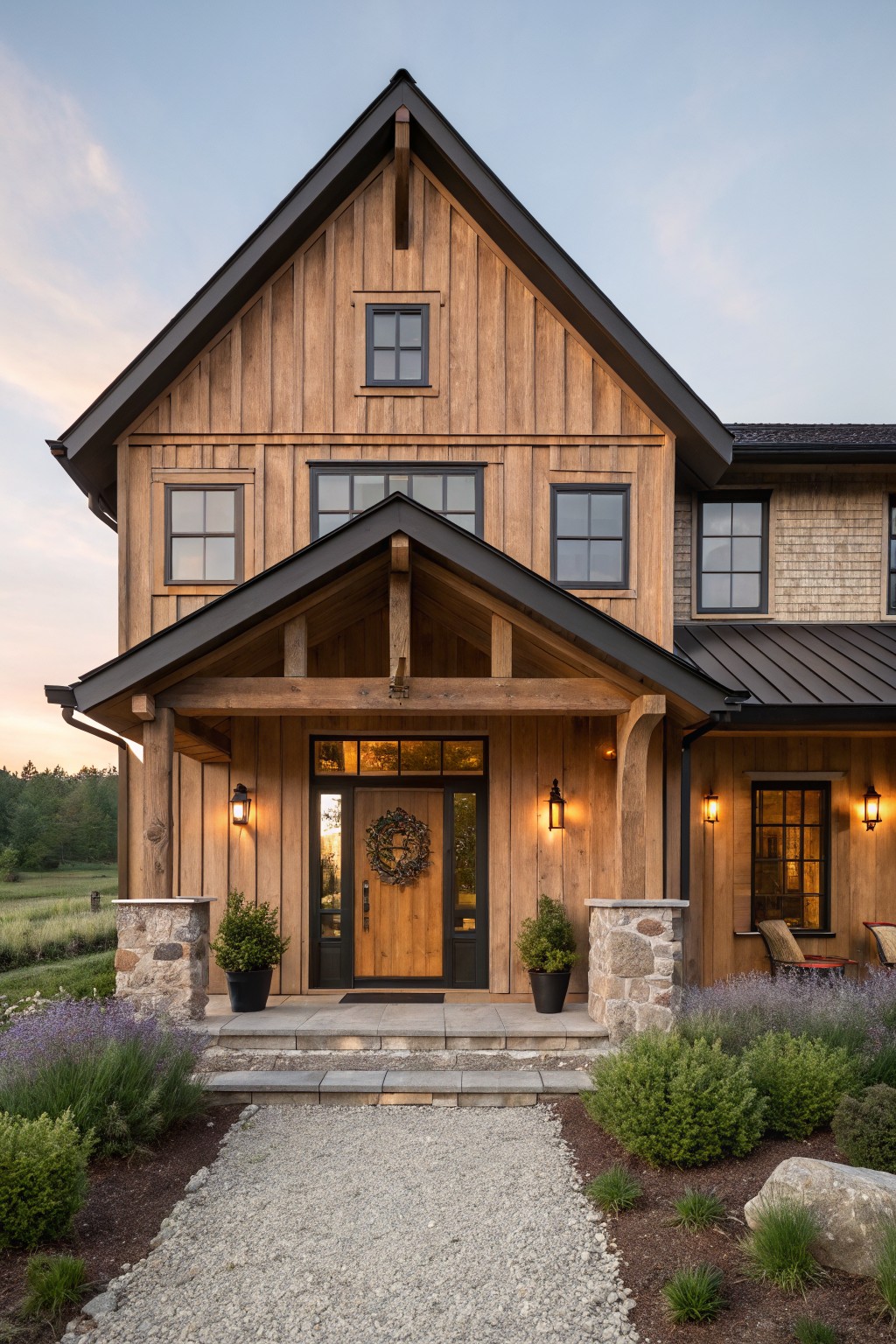
Warm wood siding like this catches your eye right away. The light brown tones feel natural and easy on the landscape, especially with a black metal roof overhead and stone pillars at the porch. It keeps the house looking grounded without being too dark or bold. Folks like how it warms up the front without much fuss.
You can pull this off on ranch styles or farmhouses in wooded areas. Seal the wood every few years to hold the color. It mixes well with gravel paths or simple plantings nearby. Just skip it if your spot gets a ton of direct sun, or the fade might happen quicker.
Warm Taupe Stucco Exterior
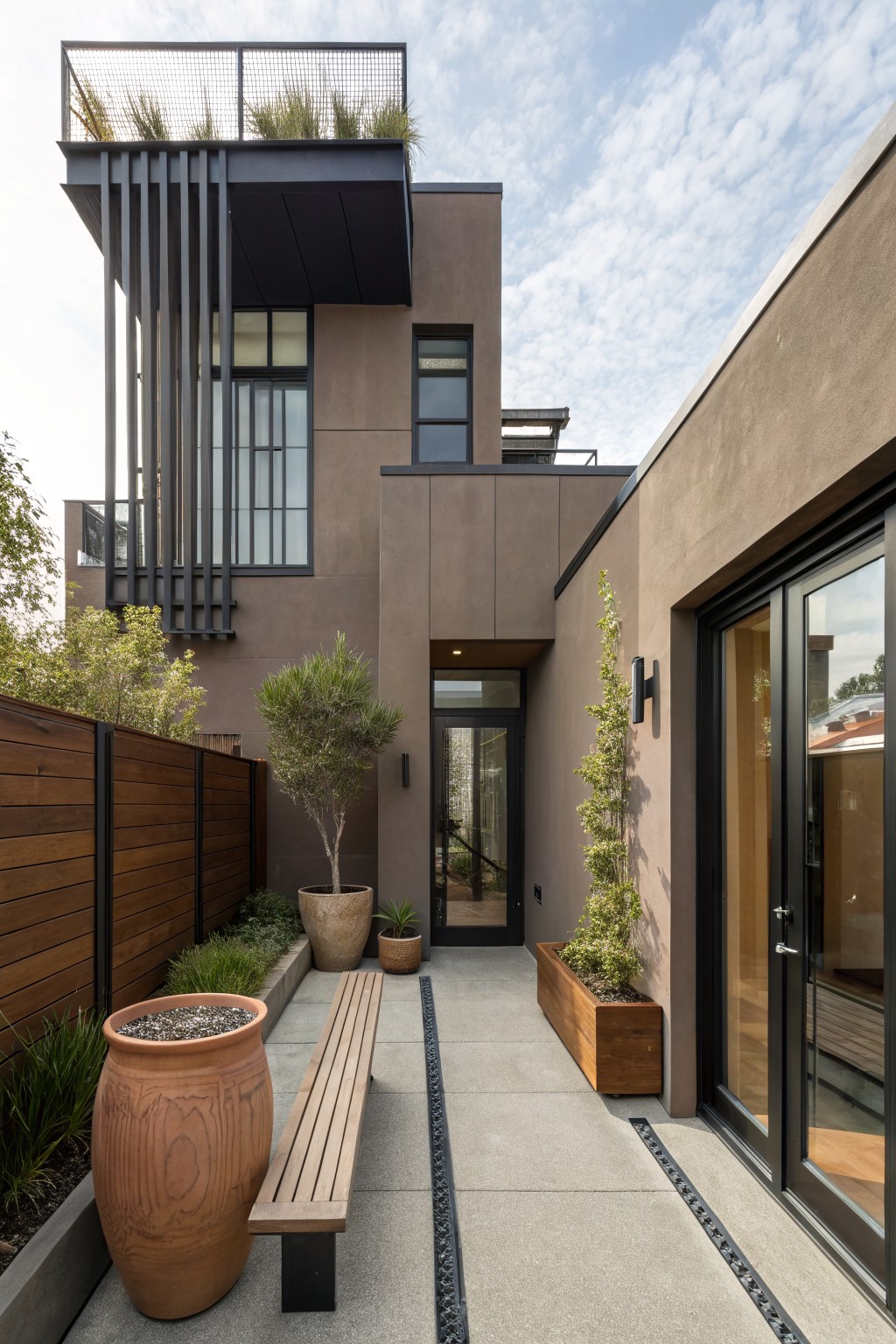
Warm taupe stucco covers the walls here. It keeps things neutral but not boring, especially with those black metal fins running up one side. The color feels right at home next to the wood fence and plants.
This shade works on most any modern or mid-century house. Use it where you want low upkeep and a bit of warmth. Just make sure the trim pops against it, like black frames or wood accents. Dirt and weathering blend right in.
Timeless Beige Stucco Tudor Exterior
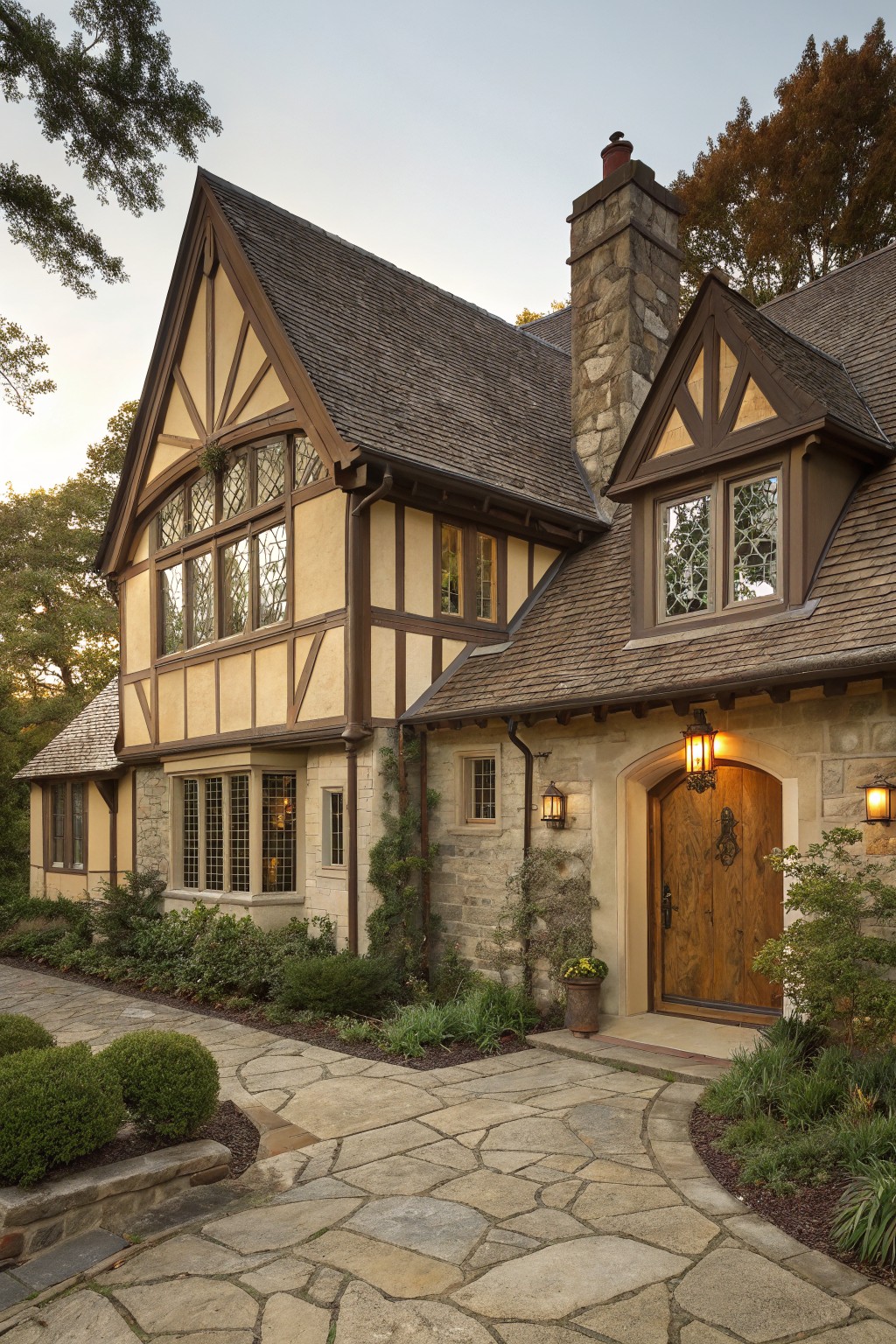
A classic Tudor house like this one uses warm beige stucco walls paired with dark brown timber framing. That neutral brown combo feels steady and welcoming without being too bold. The stone around the chimney and entry pulls it all together nicely, keeping things grounded in earth tones.
This setup works best on homes in wooded or suburban spots where you want some old-world charm. Go for it if your house has steep rooflines already, or add timber details to mimic the look. Just keep the stucco light to avoid feeling heavy.
Warm Brown Brick Facade
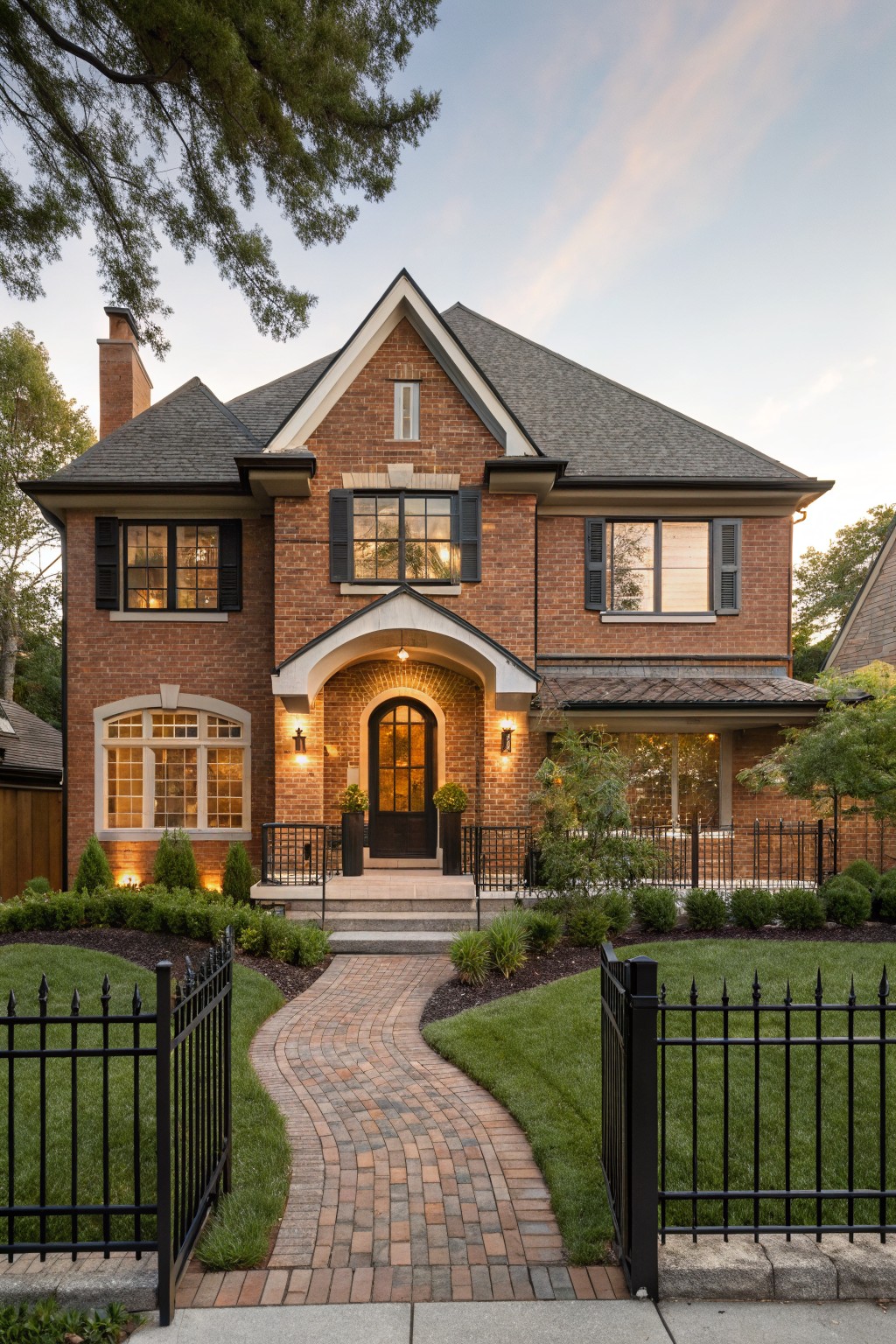
A warm brown brick like this gives your house front a solid, classic look that feels right at home in most neighborhoods. It picks up on natural tones without overwhelming the eye, and the subtle variations in the brick add a bit of interest up close. Here, black shutters and trim keep things sharp while the white accents around windows and the entry pull it all together nicely.
This setup suits traditional or craftsman-style homes best, especially where you want curb appeal that lasts through seasons. Go for a similar brick if your lot has some trees or greenery already, as it blends right in. Just make sure the mortar is a soft gray to avoid a stark line, and keep plantings low around the base so the brick stays the star.
Warm Brown Vertical Wood Cladding
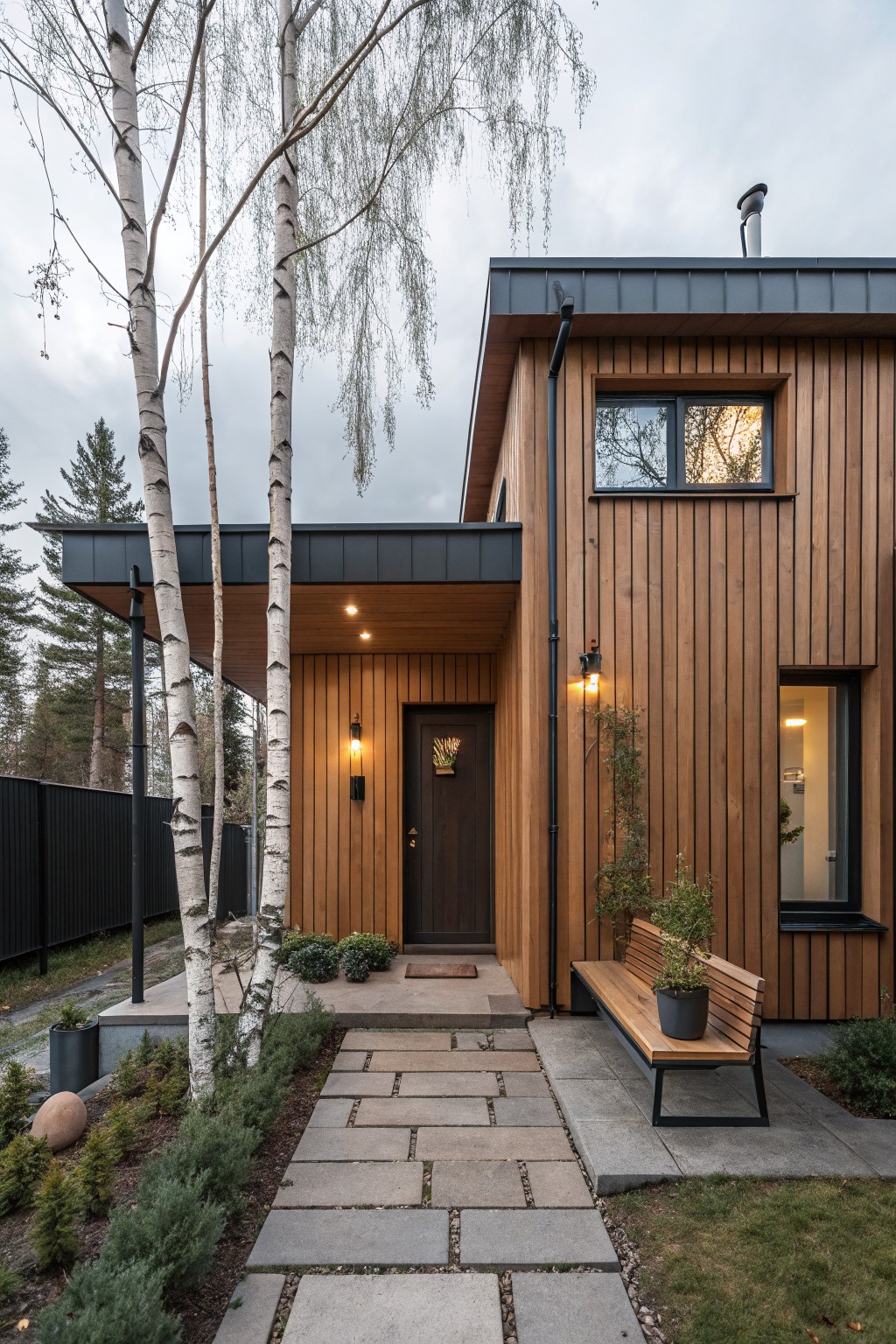
Vertical wood siding in a warm brown shade covers this house nicely. It keeps things modern without feeling cold, thanks to the natural grain and tone that picks up on the surrounding trees. Black metal accents on the roof and trim add just enough contrast to make the brown pop, but not overpower it.
This works great on homes in wooded spots or cooler climates where you want some warmth from the street. Go for cedar or similar treated wood, and keep pairings simple like a dark wood door or stone path. It suits mid-sized houses best; bigger ones might need more variety to avoid looking too uniform.
Shingle Siding in Soft Gray-Brown Tones
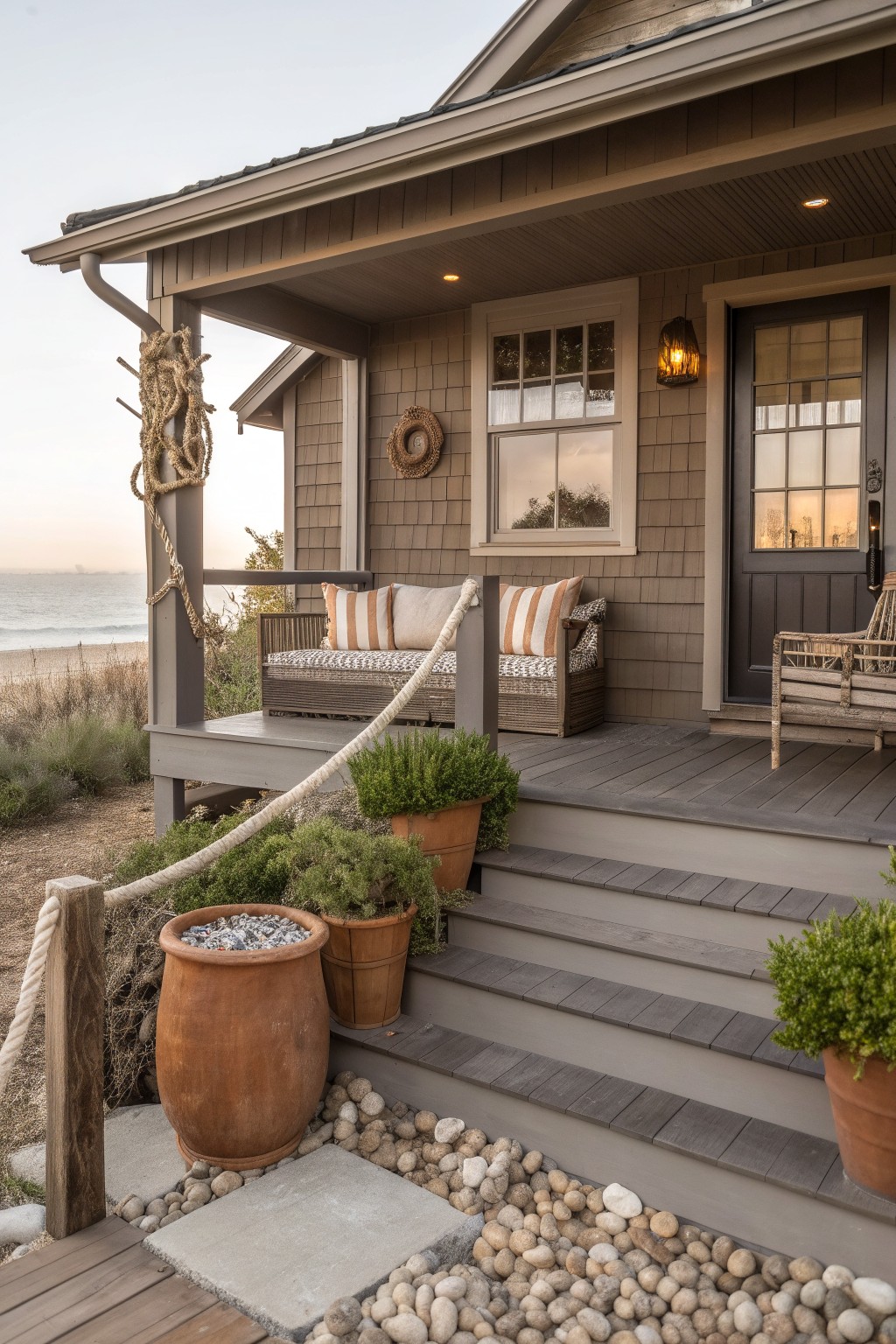
Shingle siding in a soft gray-brown hits just right for houses near the water. It picks up the natural tones from sand and driftwood without going too dark or stark. In this setup, the siding wraps the porch smoothly, and those rope-wrapped posts add a bit of beach texture that keeps things from feeling plain.
You can pull this off on older cottages or new builds in coastal spots. Pair it with simple wood furniture and terracotta pots for contrast. It works year-round since the color fades nicely over time. Just avoid painting over it, let the weathered look come through.
Warm Wood Over Light Stone
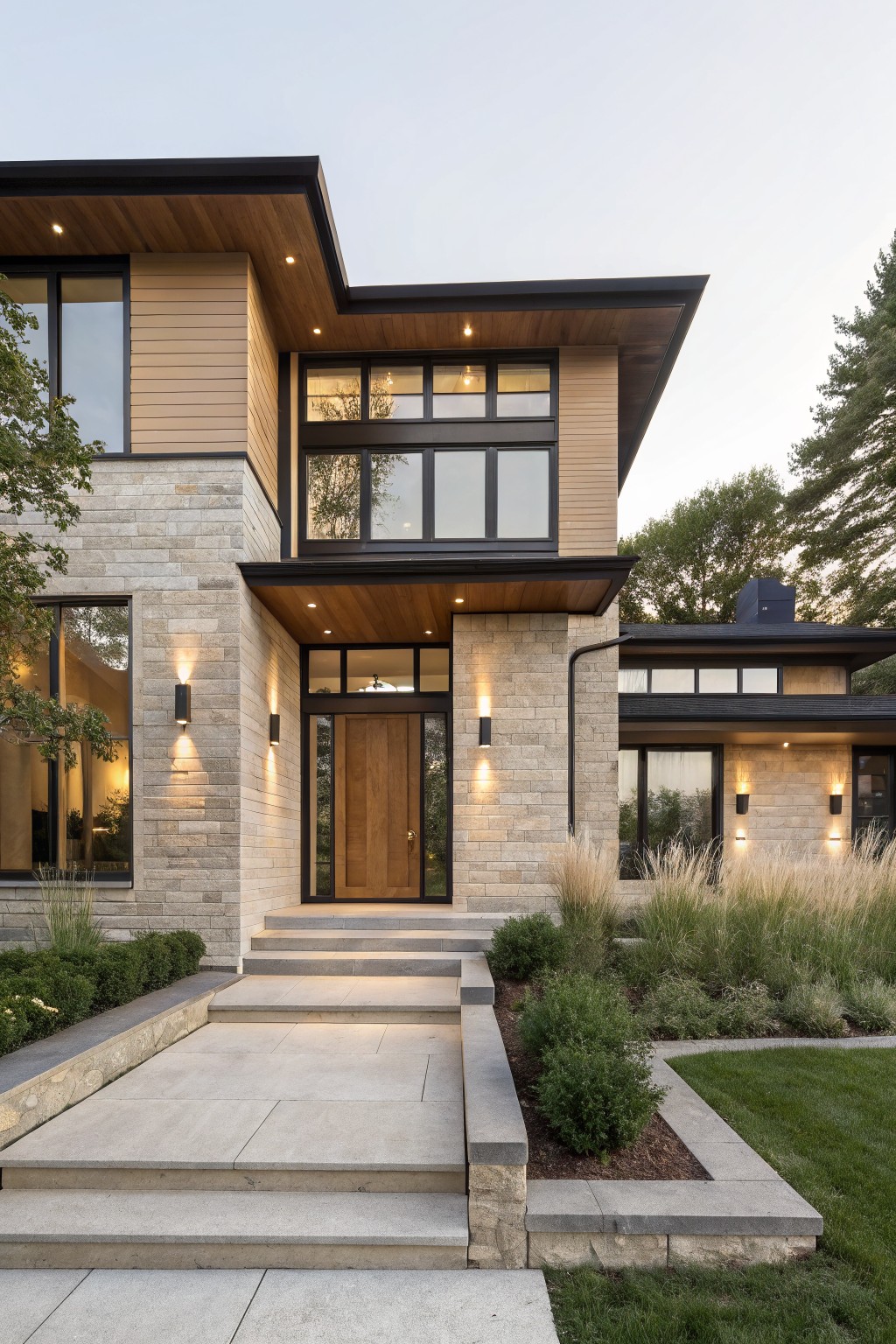
One look that keeps coming back is a light stone base topped with warm wood accents. Here the beige stone walls anchor everything, while the cedar-like cladding and overhangs add that soft brown glow. Black window frames pop just enough without stealing the show. It’s a combo that feels sturdy yet light, perfect for neutral palettes that don’t fade into boring.
Try this on ranch or modern homes where you want some texture without fuss. It suits spots with trees around, blending right in. Just keep the wood sealed against weather, and skip darker stains if you like staying versatile.
Warm Stucco in Soft Brown Tones
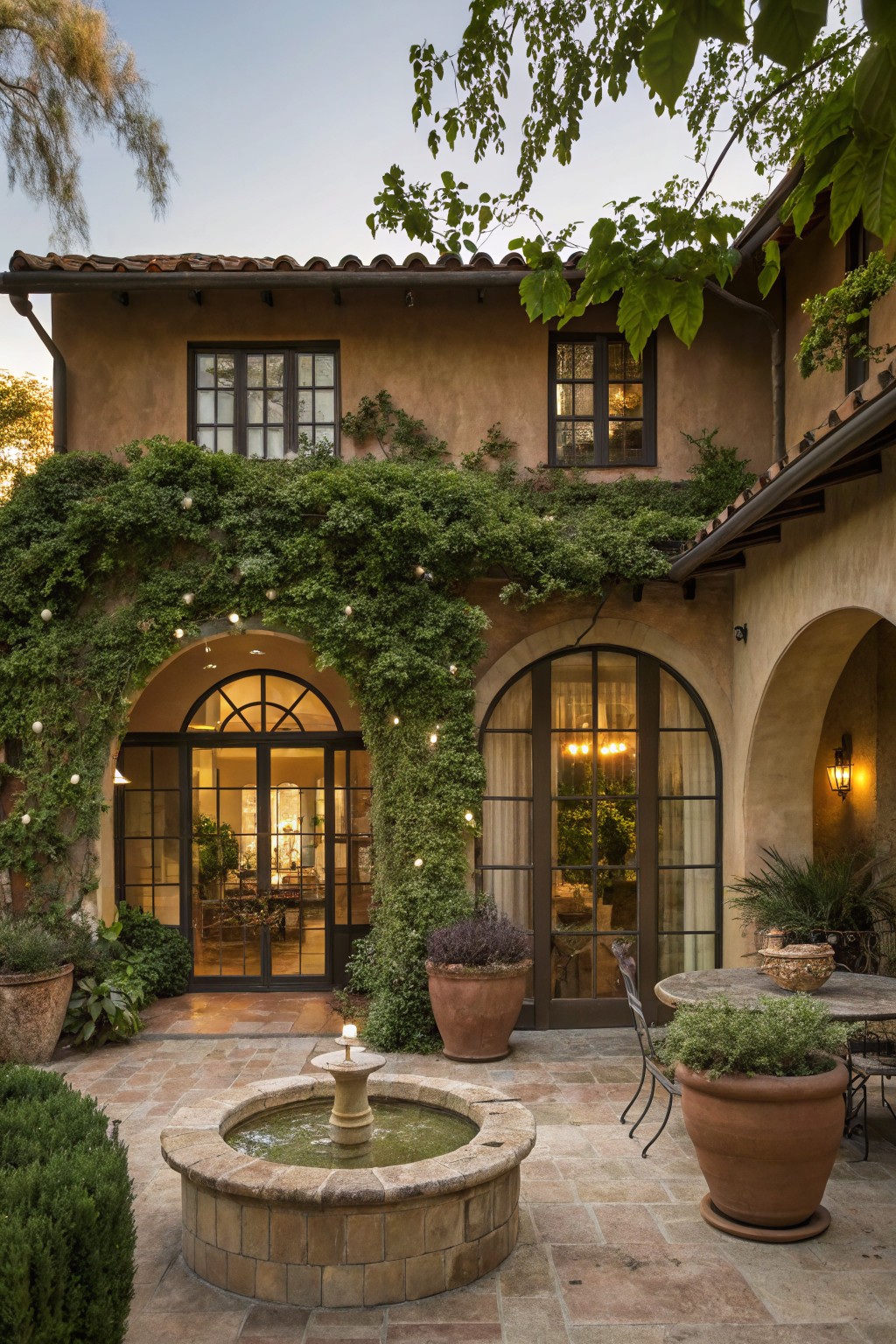
Warm stucco in a soft brown tone like this one keeps a house looking grounded and easy on the eyes. It picks up the earthiness of the terracotta roof tiles and lets climbing vines blend right in without overpowering the architecture. That’s what makes it so reliable for exteriors, especially when you want something that feels lived-in rather than stark.
You can pull this off on ranch houses or older bungalows in warmer climates. Just pair it with simple arched entries or a courtyard setup to give it shape. Skip bright accents. The vines and potted plants do enough to soften things up.
Warm Brown Wood Siding
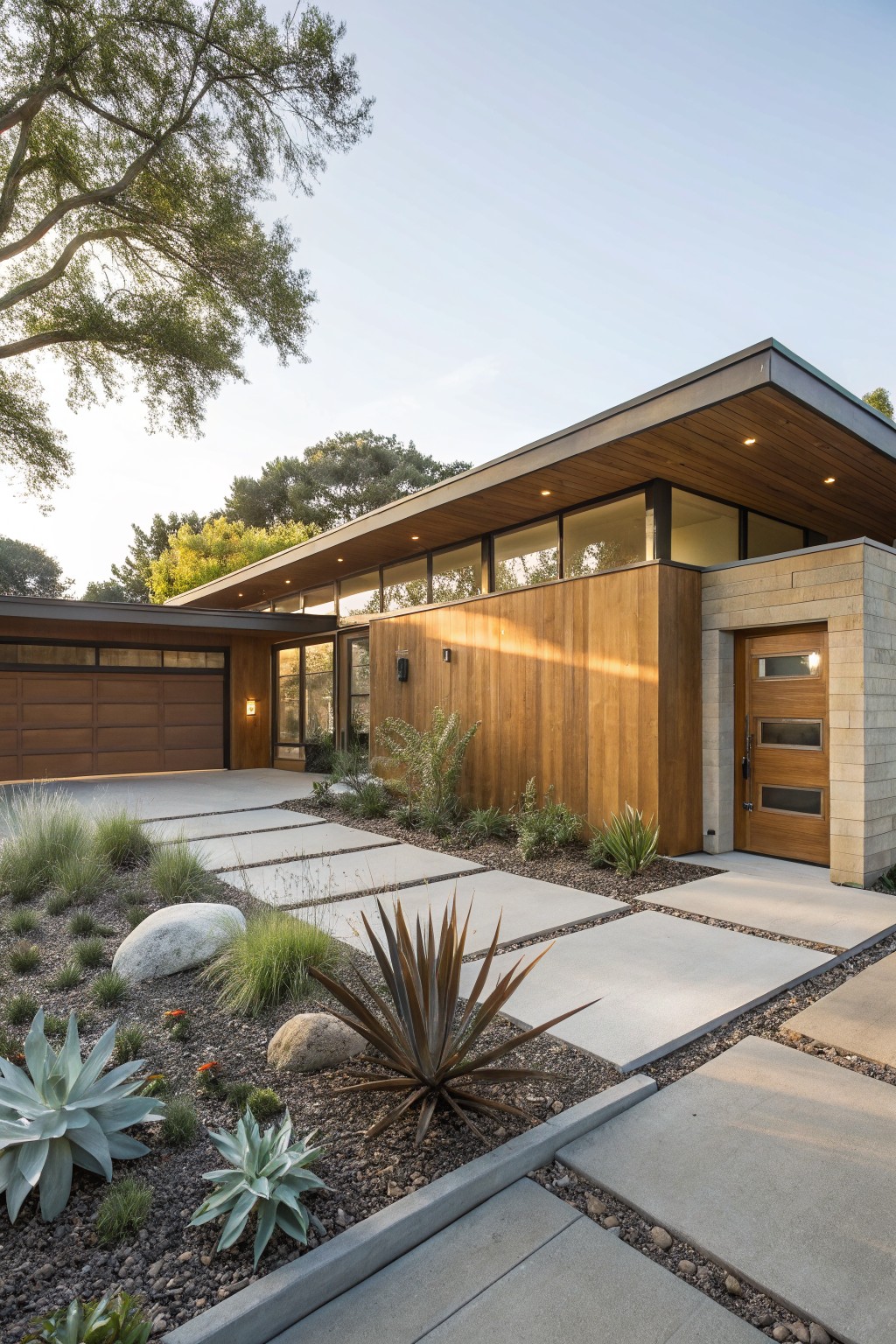
Warm brown wood siding like this covers the main walls and pulls the house together nicely. It adds a natural touch to the clean modern lines without overpowering them. The color sits right in that versatile neutral range, blending with stone accents and concrete paths for a look that’s calm and easy on the eyes.
Try this on low-slung homes or midcentury styles where you want some texture but not too much fuss. Seal the wood well to handle weather, and keep landscaping simple with grasses and rocks. It works pretty much anywhere, especially if you’re after low-key curb appeal that doesn’t date.
Warm Beige Stucco with Terracotta Steps
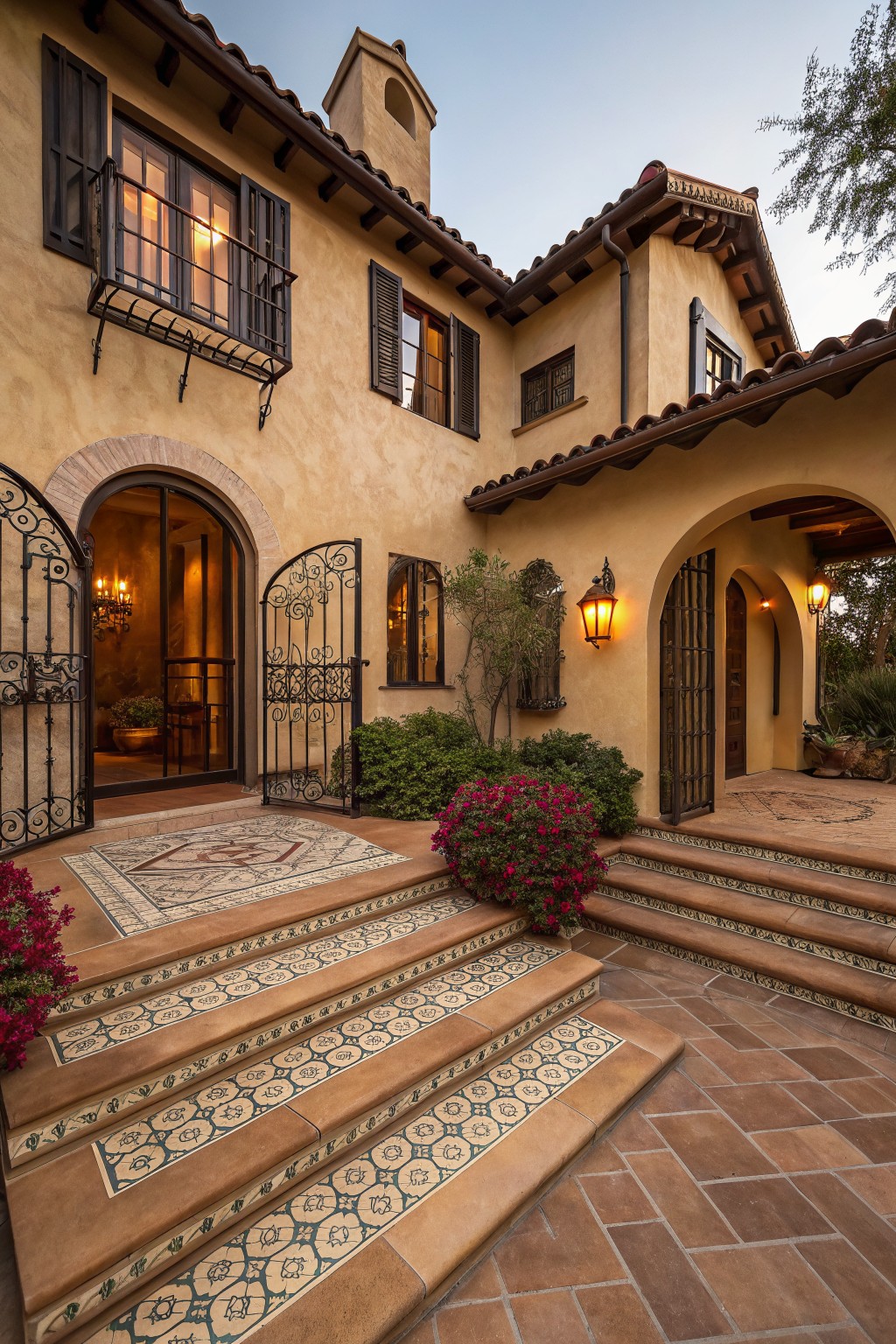
Warm beige stucco covers the walls here, working nicely with the reddish-brown terracotta on the steps and roof tiles. It’s a neutral brown setup that feels grounded and easy on the eyes. The soft color pulls everything together without overpowering the architecture.
This combo suits ranch-style or Mediterranean homes, especially where you want curb appeal that lasts year-round. Stick to simple plants around the base, and it keeps the focus on the house itself. Just avoid stark white trim, which can clash a bit.
Warm Cedar Cladding on Modern Houses
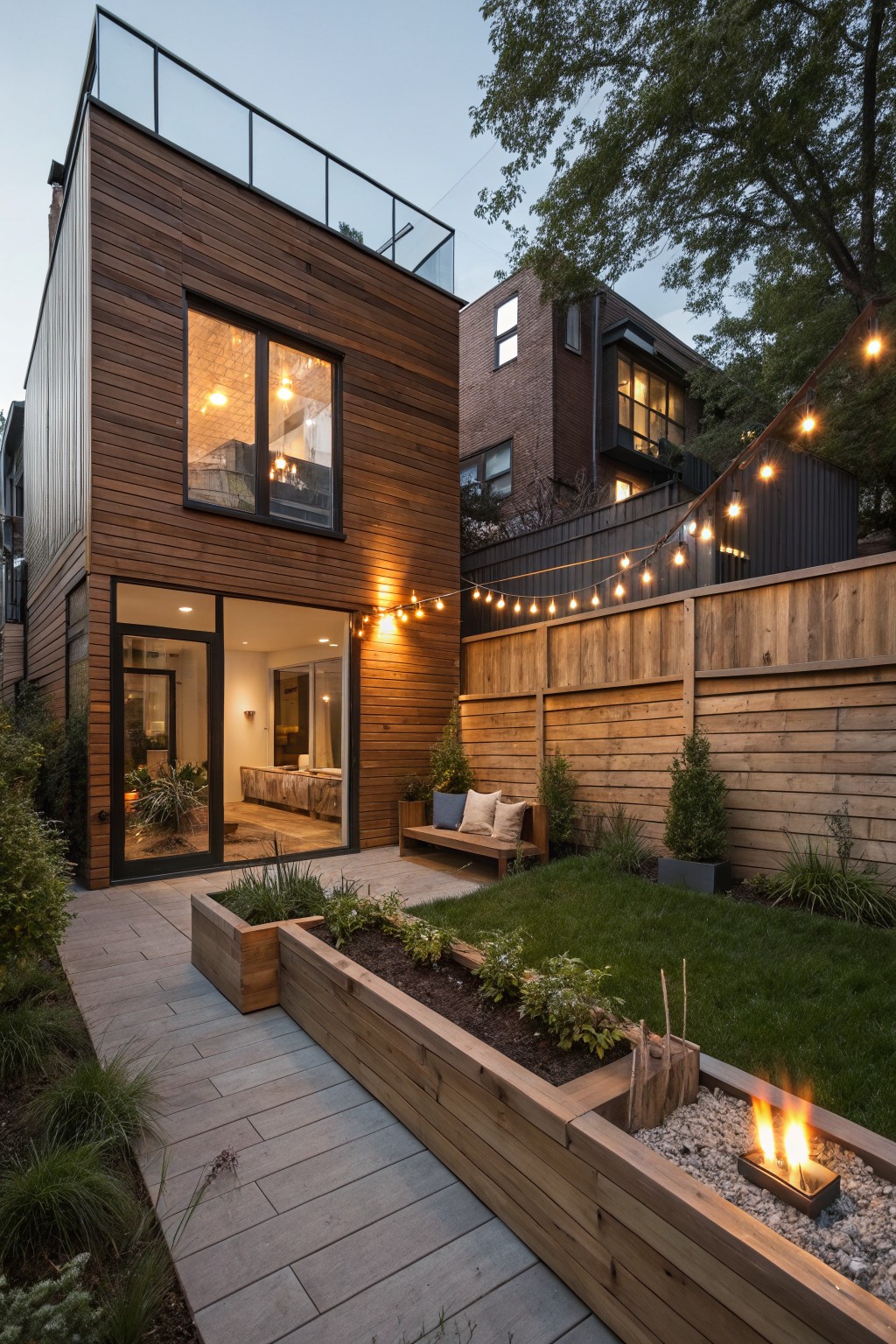
Cedar siding in a rich, neutral brown tone gives this boxy modern home a softer, more approachable feel. The vertical planks cover the whole back facade, catching the evening light just right without overpowering the clean lines. It ties right into the wood fence and planters nearby, making the house look like part of the yard.
This works great on urban rowhouses or narrow lots where you want some warmth without going traditional. Pair it with big glass doors to pull the inside out, and keep the rest simple—stone path, low plants. Just seal the wood well to hold that color over time.
Warm Brown Wood Siding
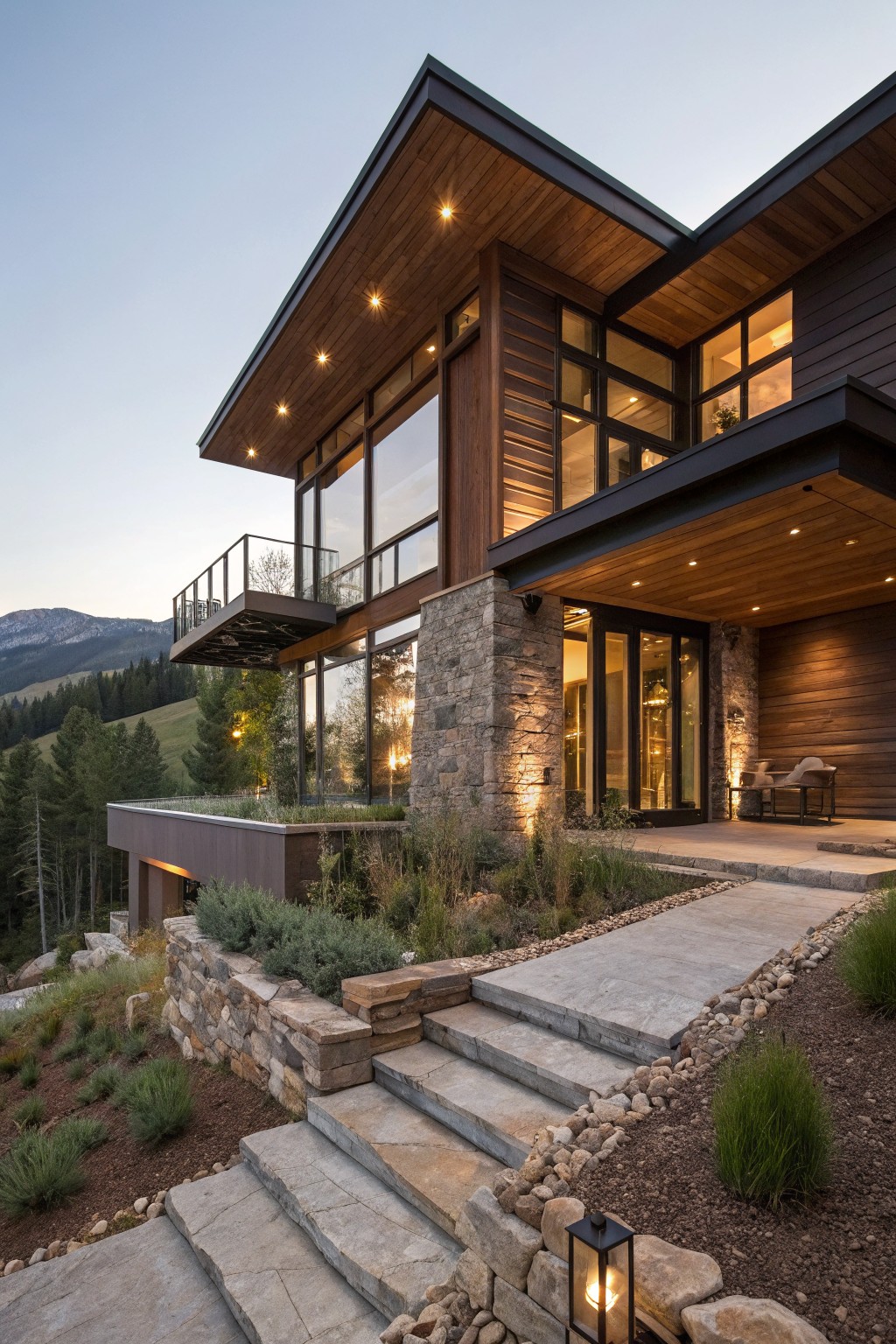
Warm brown wood siding like this covers most of the house and pulls everything together nicely. It gives the exterior a soft, natural texture that fits right into a wooded hillside setting. The color stays neutral enough to not overpower the stone base or glass windows, but still adds that lived-in warmth homes need.
You can use this siding on ranch-style or modern homes tucked into nature. Go for vertical planks if you want more shadow play, and stain them a medium brown to handle weather changes. Just make sure the wood is treated for moisture, especially near mountains.
Frequently Asked Questions
Q: These browns sound perfect, but how do I test one before painting my whole house?
A: Paint large swatches directly on a few spots of siding or a test board. Check them morning, noon, and evening as the sun shifts. You catch any surprises that way.
Q: What if my house has red brick? Will a neutral brown clash?
A: Neutral browns actually tone down bold red brick and pull everything together. Pick a warmer taupe to echo the brick’s undertones. It grounds the look without fighting it.
Q: Do these colors hide dirt and weathering well?
A: Yeah, browns camouflage pollen, dust, and grime much better than lights. Hose them down yearly, and they bounce back fresh.
Q: Which whites work best for trim on a brown house?
A: Grab a soft off-white with a hint of yellow. It keeps the cozy feel alive… And brightens doors and shutters just right.
