

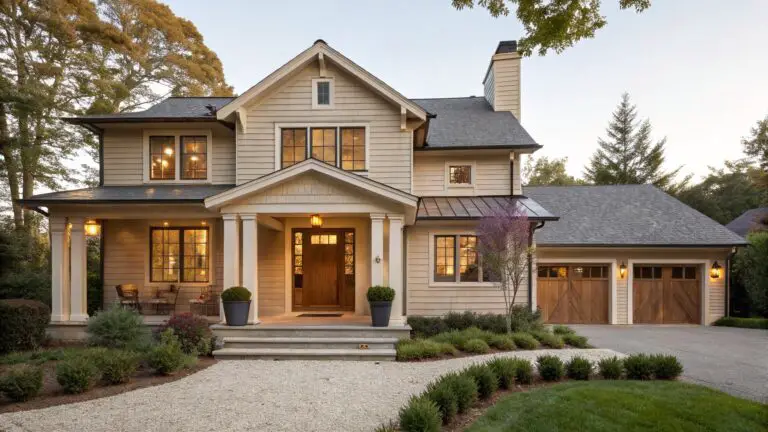
When you drive up to a house wrapped in soft light brown siding, the color settles over the facade like a quiet afternoon light, easing the whole curb appeal into something approachable.
I remember testing a similar shade on our own front a few years back, and it was the way it muted the roofline’s edges that made the entry feel truly welcoming instead of boxy.
These tones pair best with natural materials like cedar shakes or fieldstone bases, letting the architecture breathe without competing for attention.
Folks often spot the windows and front door first from the street, so subtle trim contrasts there pull everything together smoothly.
A handful in this set are practical enough to adapt to your setup, especially if you’re aiming for that lived-in calm.
Soft Beige Siding with Black Trim
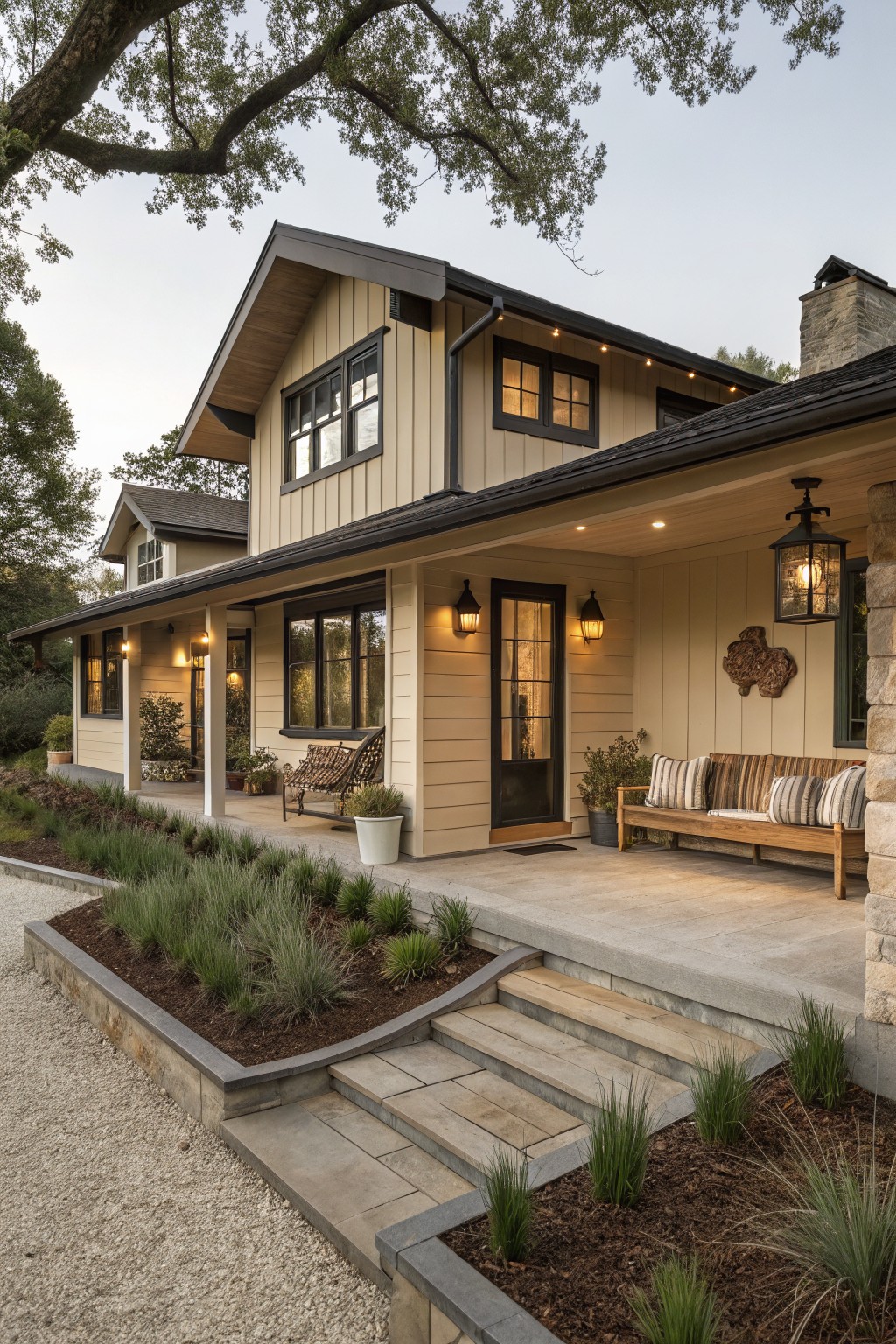
A soft beige siding like this one keeps things calm and easy on the eyes. The board-and-batten style gives the house some texture that catches light nicely during the day. Black frames around the windows and doors add just enough contrast to make the facade pop without overwhelming the gentle color. It’s a look that feels settled in right away.
Try this on a single or two-story home where you want curb appeal that doesn’t shout. It suits lots near trees or open yards best, since the beige blends with nature. Keep the trim dark and simple, and build out a porch if you can. One thing, make sure the siding material holds up to your weather.
Navy Blue Doors on Soft Brown Siding
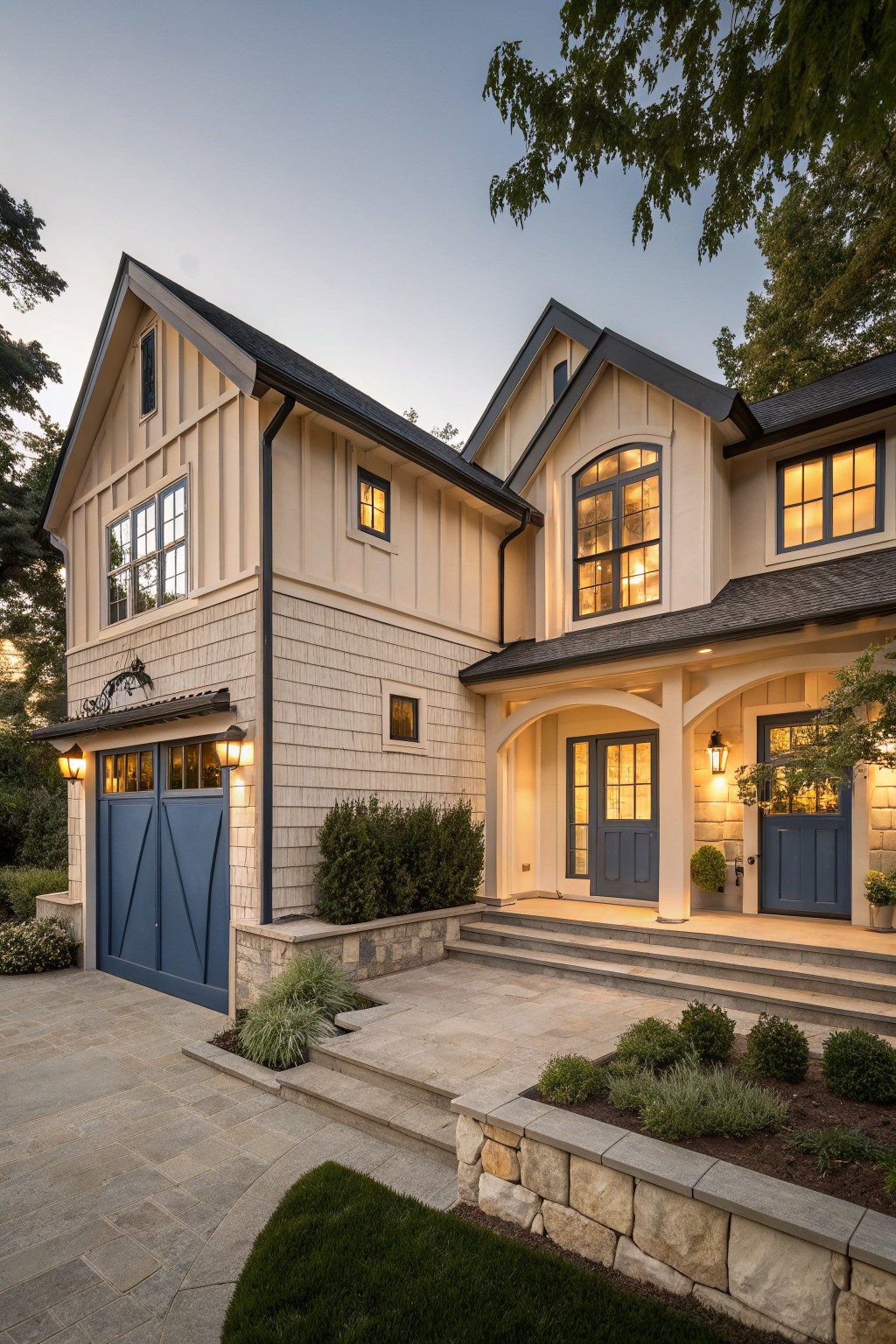
A soft light brown siding sets a calm base for this house. Then navy blue doors on the garage and entry pull everything together. The brown keeps things neutral and easy on the eyes. The blue adds a touch of color that feels fresh but not too loud. It’s a simple way to make the front yard more welcoming.
This look works best on craftsman or coastal style homes. Pair it with stone at the base like here for some grounding. It suits tree-lined neighborhoods where you want subtle appeal. Just keep the blue matte so it doesn’t glare.
Green Door and Shutters on Light Brown Stucco
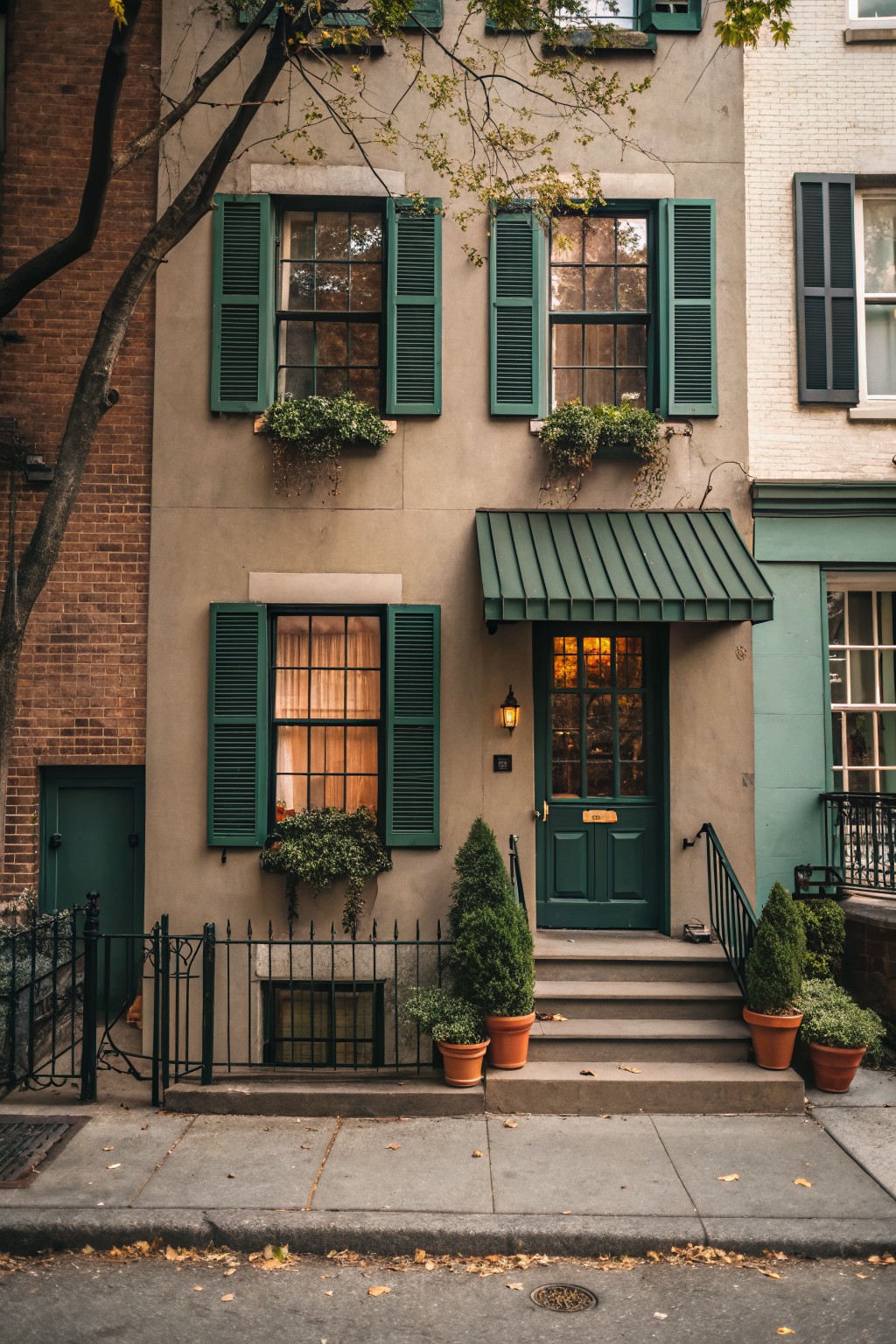
A light brown stucco wall sets a quiet base for this townhouse. Deep green shutters frame the windows nicely. The matching green door pulls it all together under that simple awning. It keeps things calm but still noticeable from the street.
This setup suits row houses or city homes with some age to them. Pick a green that’s not too bright so it stays restful. Add a few pots nearby like these. Just make sure the brown isn’t too yellow or it might fight the green a bit.
Shingle Siding in Soft Brown Tones
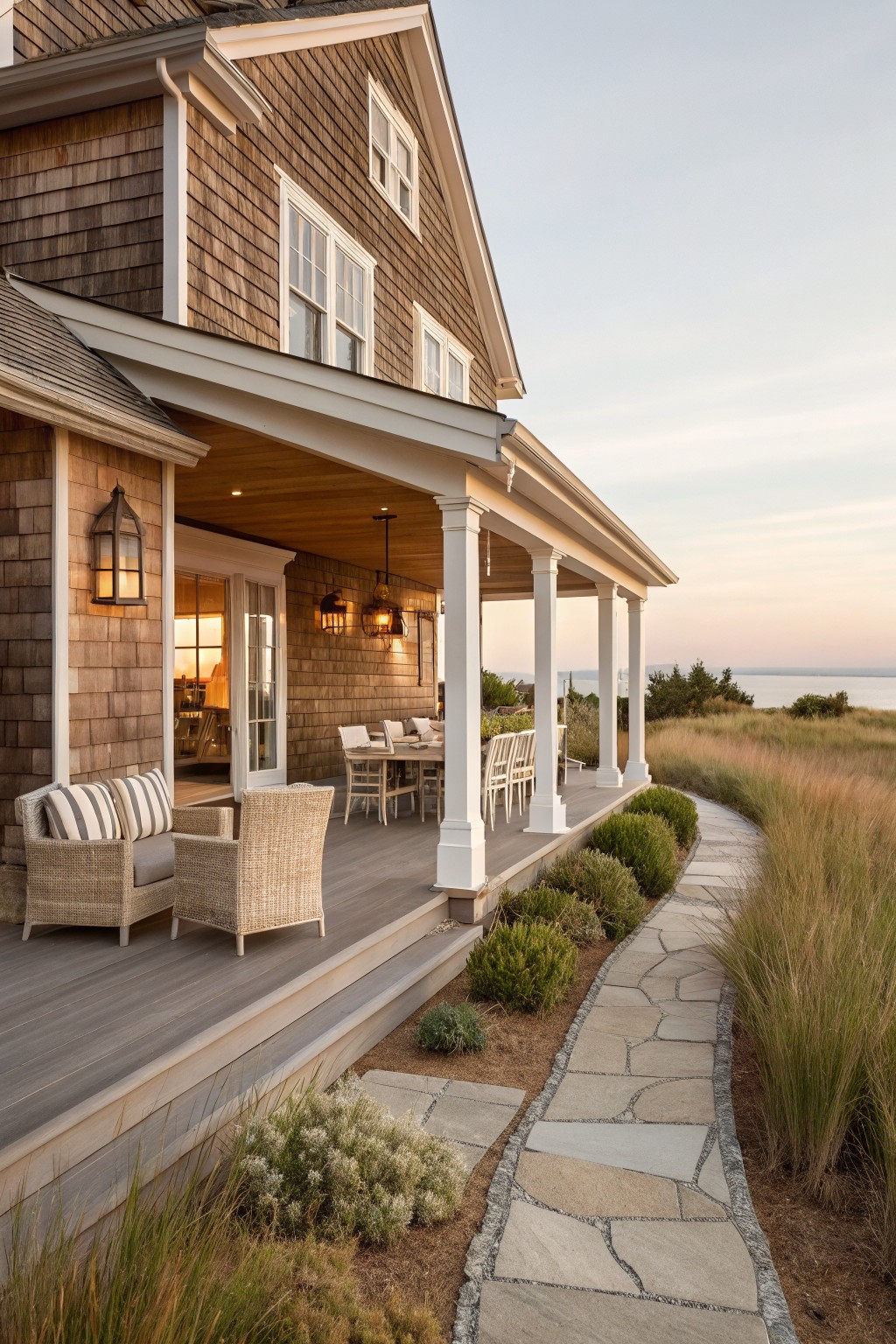
Shingle siding like this catches the eye for its natural, lived-in feel. The light brown color pulls from beach sand and driftwood, so the house sits easy against dunes and sea grass. White trim on the porch keeps things clean and open. It makes a big home look approachable, not showy.
This works best on coastal spots or wooded lots where you want low-key curb appeal. Go for cedar or synthetic shingles that weather over time. Stick to simple porch details so the siding stays the star. Avoid darker stains. They can make it feel heavy.
Arched Wooden Entry Door
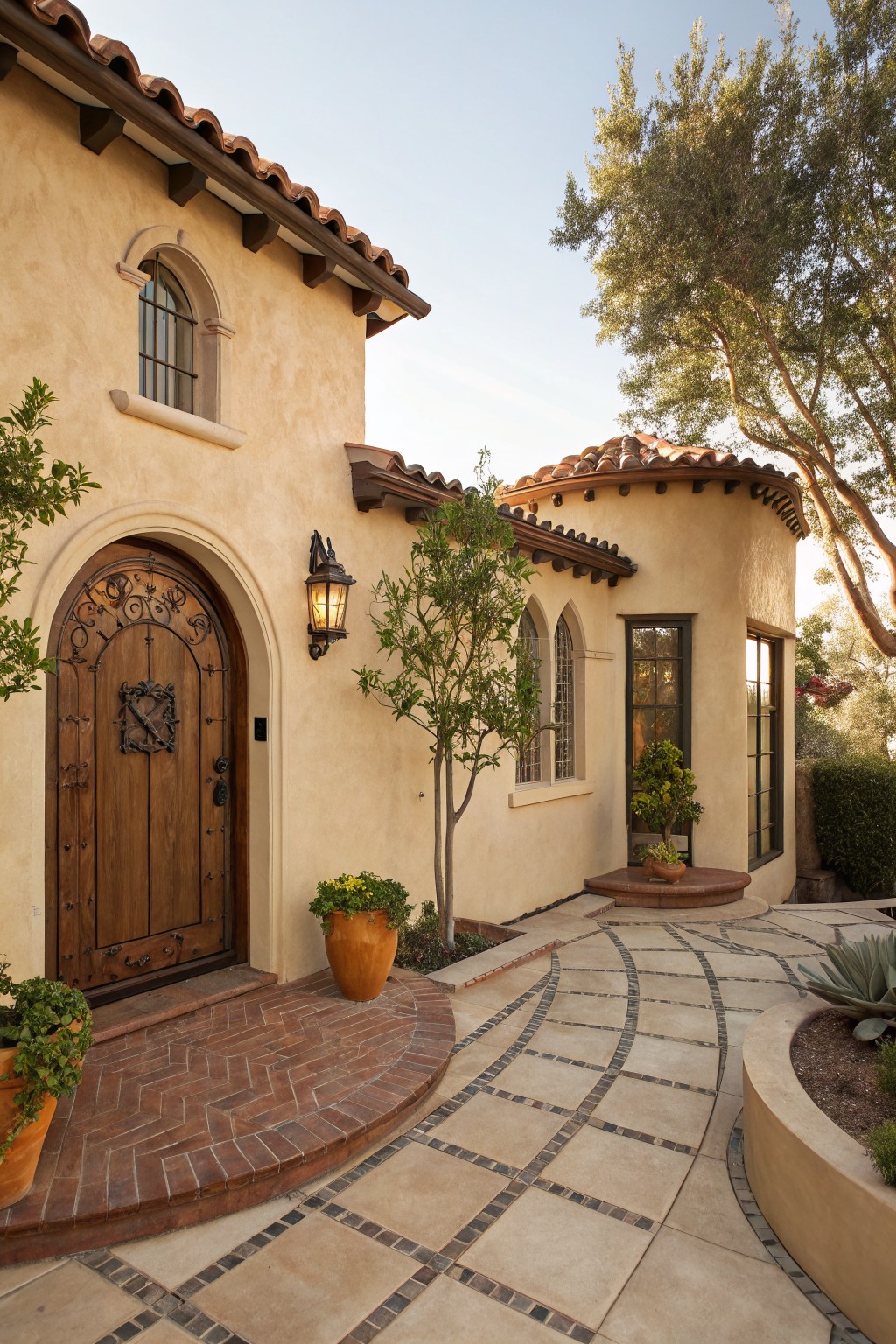
A soft light brown stucco facade gets a lot from a heavy arched wooden door like this one. The natural wood tone blends right into the earthy walls, and those scrolled iron details on the door and frame add a touch of old-world charm without going overboard. It pulls your eye to the entrance right away, making the whole front feel more personal and calm.
This works best on homes with some curve in the architecture, like rounded corners or tile roofs. Put simple potted plants on either side and a lantern light for evenings. Skip it if your house is super modern. It suits warmer spots where you want that lived-in, inviting look year round.
Cozy Timber Porch Entry
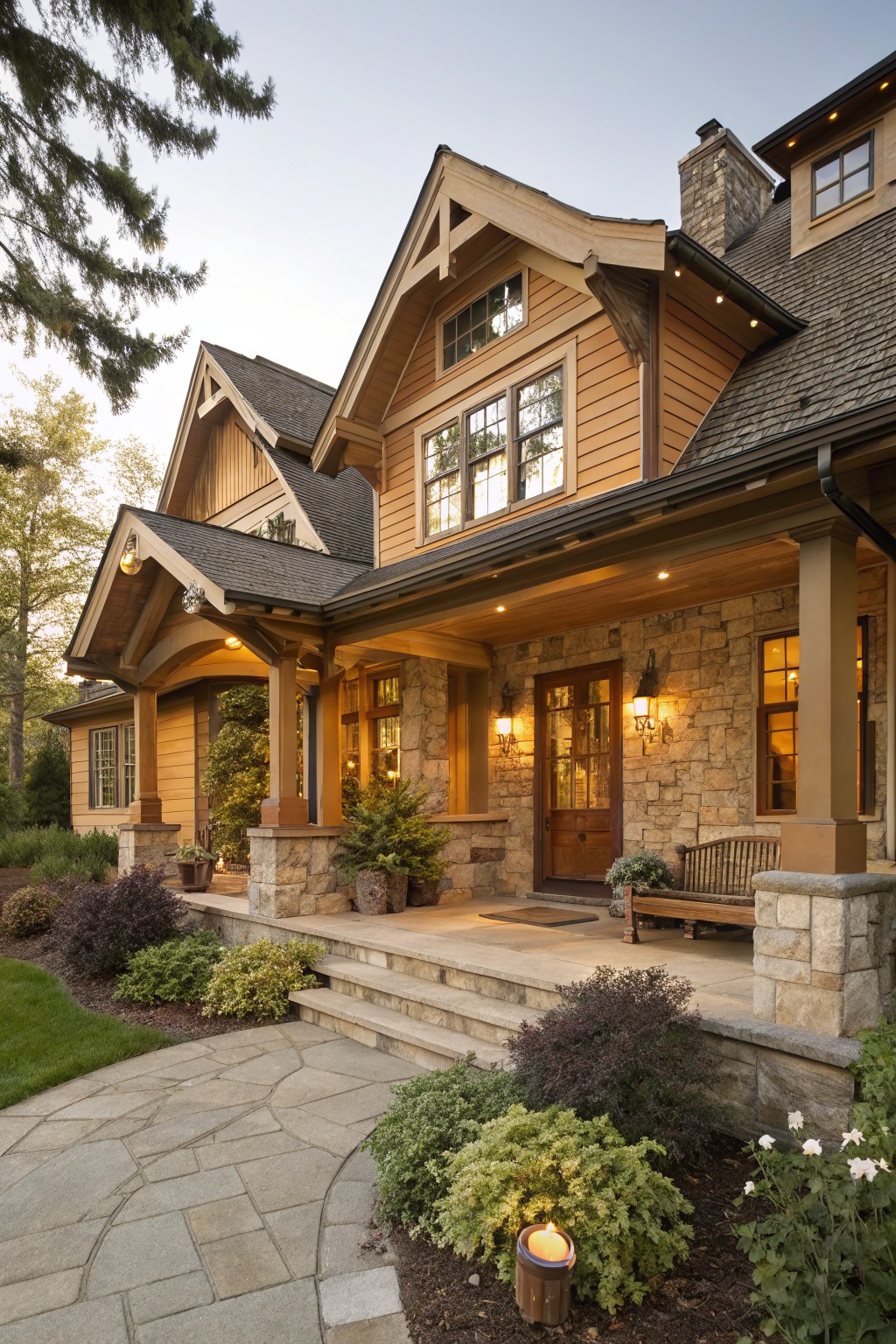
A deep covered porch like this one pulls you right in with its thick timber beams overhead and sturdy stone pillars at the sides. Paired with soft light brown siding, it gives the whole front of the house a calm, sheltered feel. No harsh lines here. Just solid wood tones that match the door and make coming home easy.
Try this on a two-story home with a gabled roof, especially if you’ve got trees nearby. It works best where you want shade on the steps and a spot for a bench. Keep the lanterns simple so the wood stays the star… and watch the scale so pillars don’t overwhelm a smaller entry.
Wood Canopy Entry Design
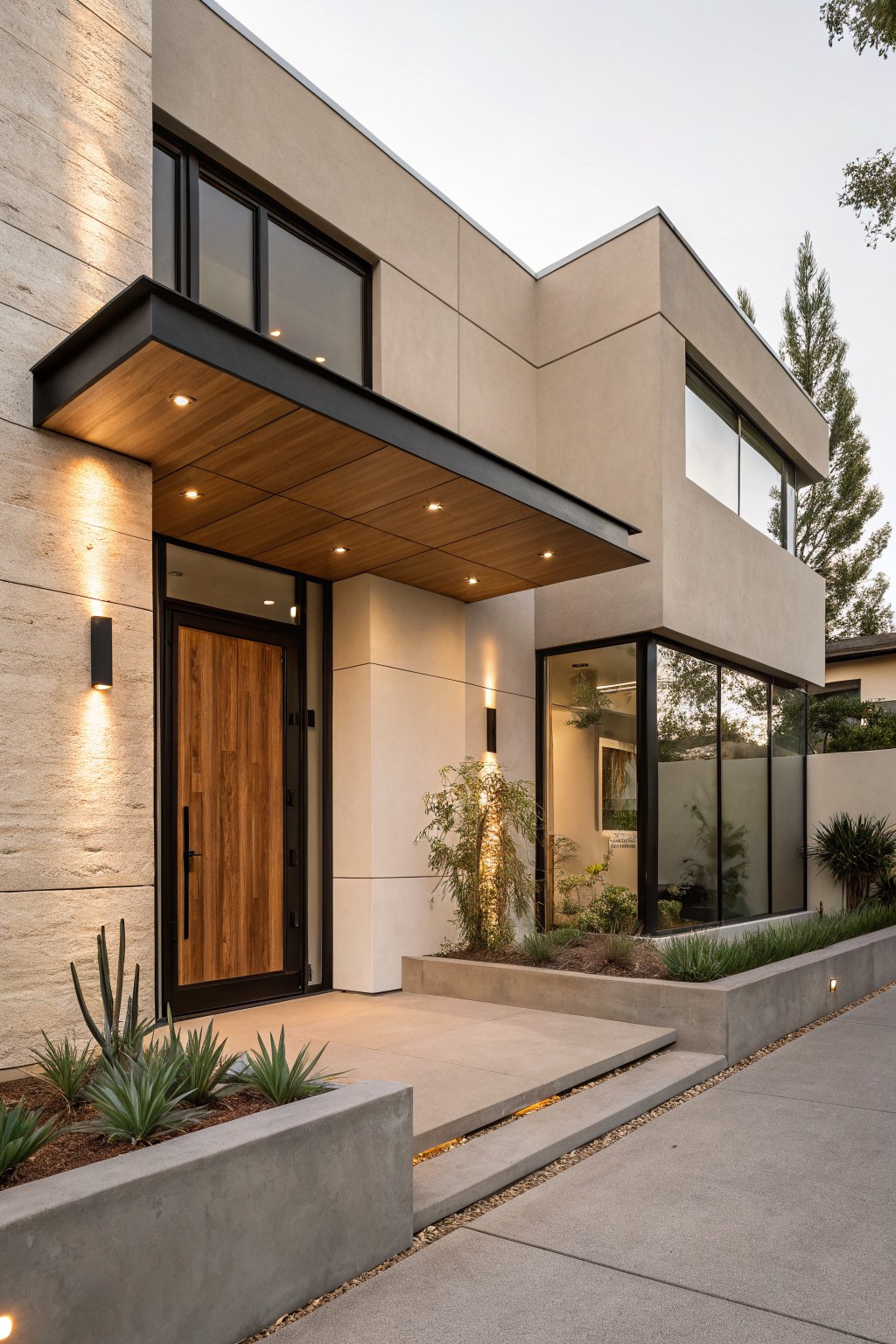
A wood canopy over the front door gives this light stucco house a friendly touch right at the entrance. The soft beige walls keep things calm and understated, while the warm wood ceiling pulls focus without busyness. Those recessed lights up top make it practical too, especially as evening comes.
Try this on a single-story modern home where you want some shelter from sun or rain. It works well with drought-tolerant plants nearby, like the agaves here. Just keep the wood sealed to handle weather, and it stays looking fresh year round.
Stone Base with Warm Wood Overhangs
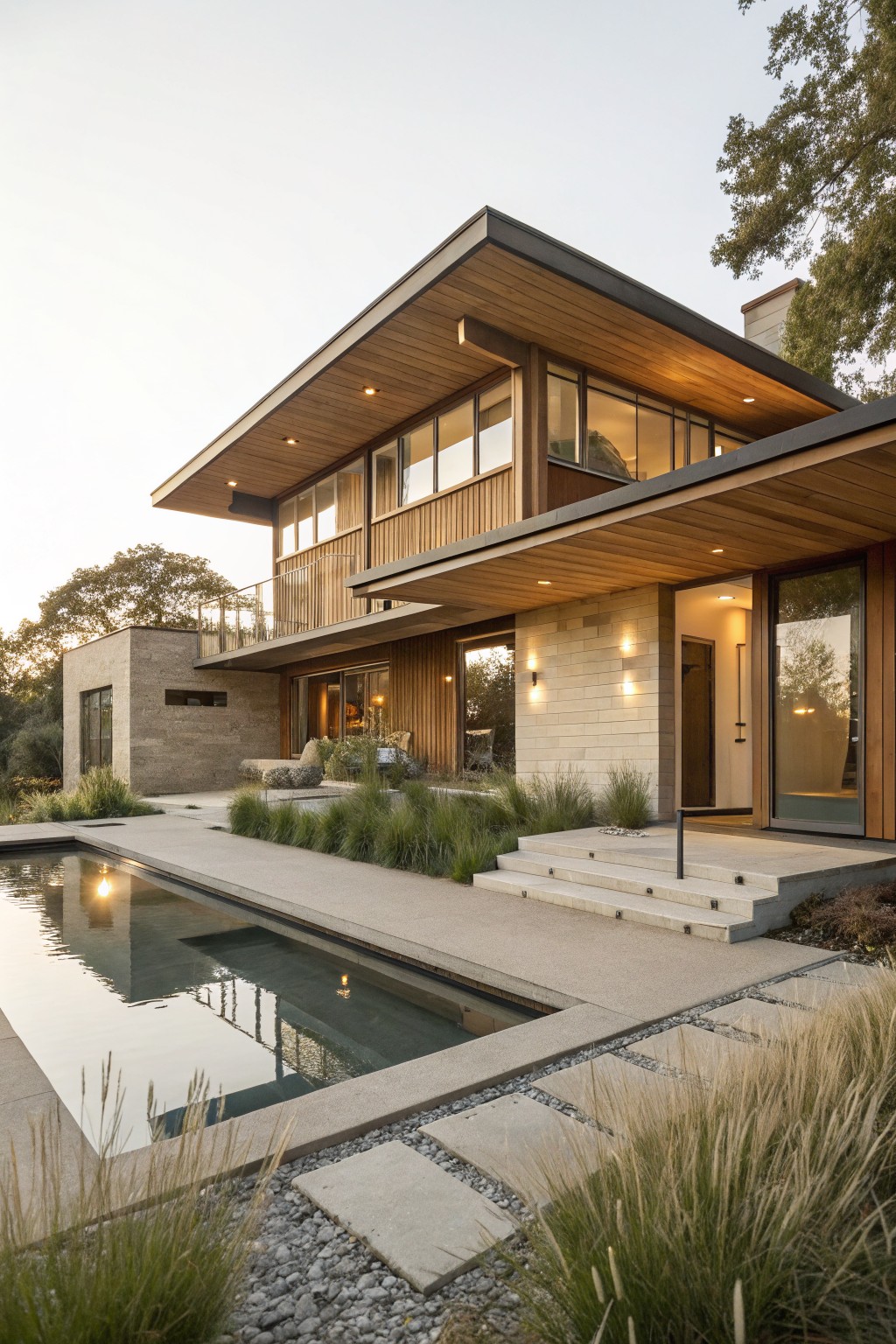
A solid stone base anchors this house, while warm light brown wood takes over above with big cantilevered roofs. That mix keeps things stable down low but open and airy up top. The wood undersides shelter the entry and pool without blocking light, and it all blends into the landscape nicely.
This setup works best on sites with some slope or where you want covered outdoor spots right off the house. Try it on modern or craftsman-style homes in wooded areas. Skip it if your lot is super flat, since the overhangs shine when they create little protected zones. Just match the wood tones to stay soft and calm.
Timber Home with Stone Chimney Accent
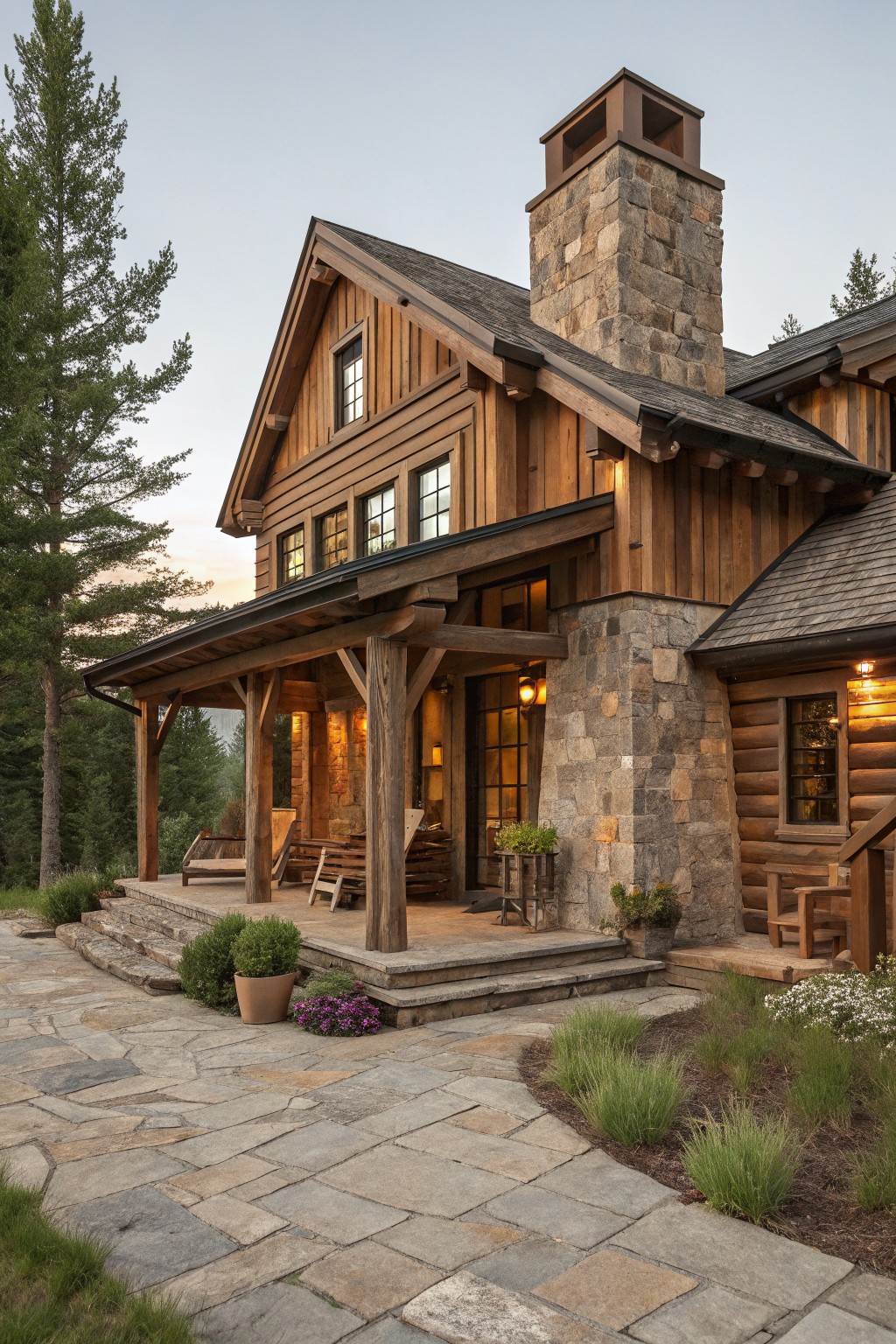
A timber home like this one uses soft light brown wood siding all over the main body, then lets a tall stone chimney take center stage on one side. That stone adds some weight and texture without overwhelming the wood’s warmth. It pulls the eye up and makes the house feel solid, like it’s been there forever in a wooded spot.
This setup works best on sloped lots or spots with big trees around, where the cabin style fits right in. Go for rough-cut local stone on the chimney to match the surroundings, and keep the wood finish natural so it stays calm year-round. Skip glossy finishes, though, or it might look too new.
Charming Arched Entry
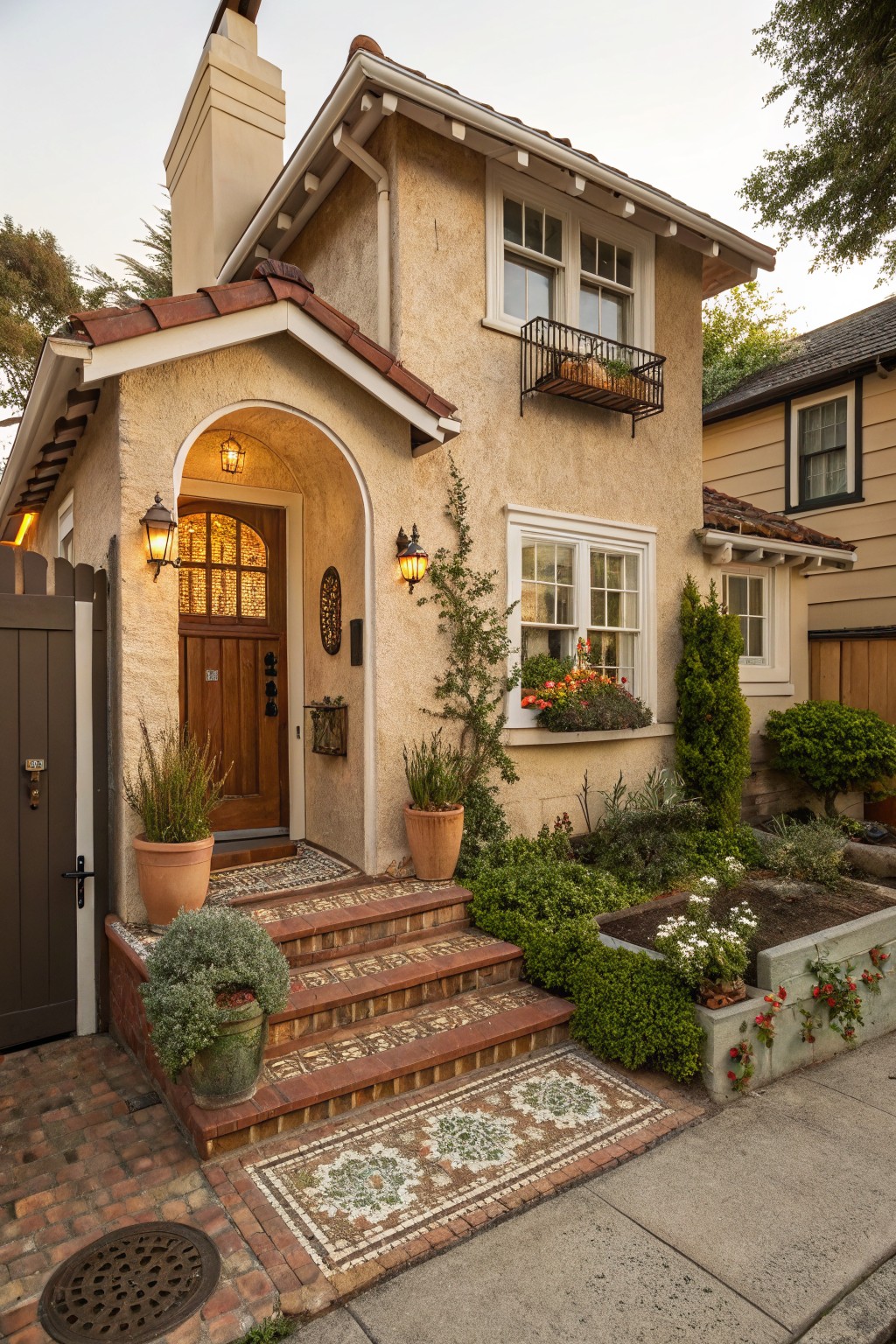
A soft light brown stucco facade really shines when you top it with a simple arched entry like this one. The curve over the wooden door draws your eye up just enough, and those lantern lights add a gentle glow that makes coming home feel nice. Paired with terracotta pots on either side, it keeps things calm and grounded.
This works best on compact homes where you want more personality without big changes. Frame a standard door with an arch using stucco or stone, then layer in tiled steps if you have room. Stick to earthy tones so it blends with the house. Smaller scale yards suit it well… just don’t crowd the plants too much.
Soft Brown Shingle House with Stone Base
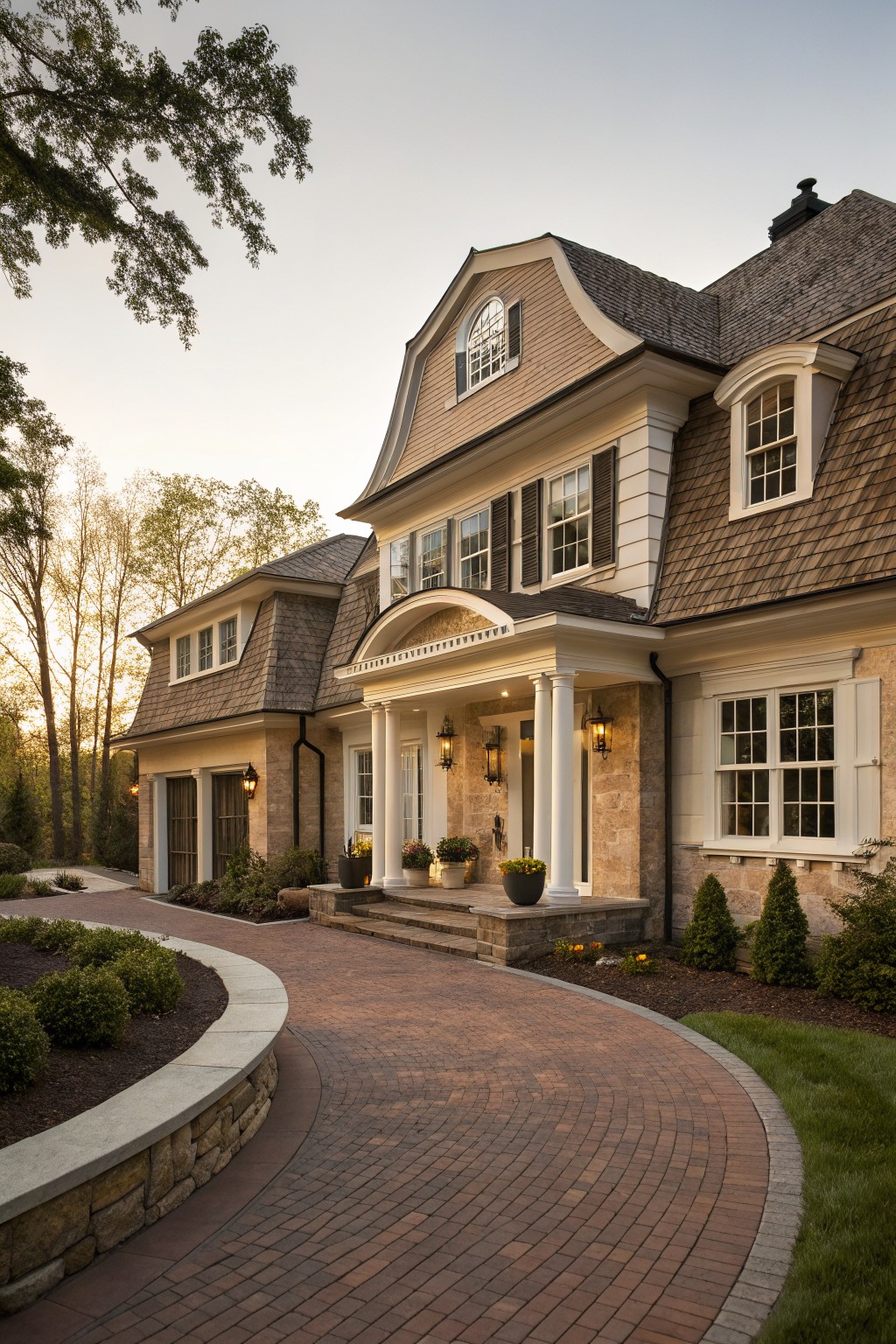
This approach takes soft light brown shingles for the roof and upper walls, then adds a matching stone base around the lower level and garage. It builds a house that looks sturdy and settled, like it’s been there a while. The neutral tones pull back any busyness, letting the architecture stand easy against trees and sky.
You can pull this off on a lot with some slope or mature plantings nearby. Keep the stone rough-cut for texture, and frame the entry with white columns to draw folks in without trying too hard. It suits family homes in wooded areas… just skip glossy finishes that might fight the calm.
Soft Beige Stucco Exterior
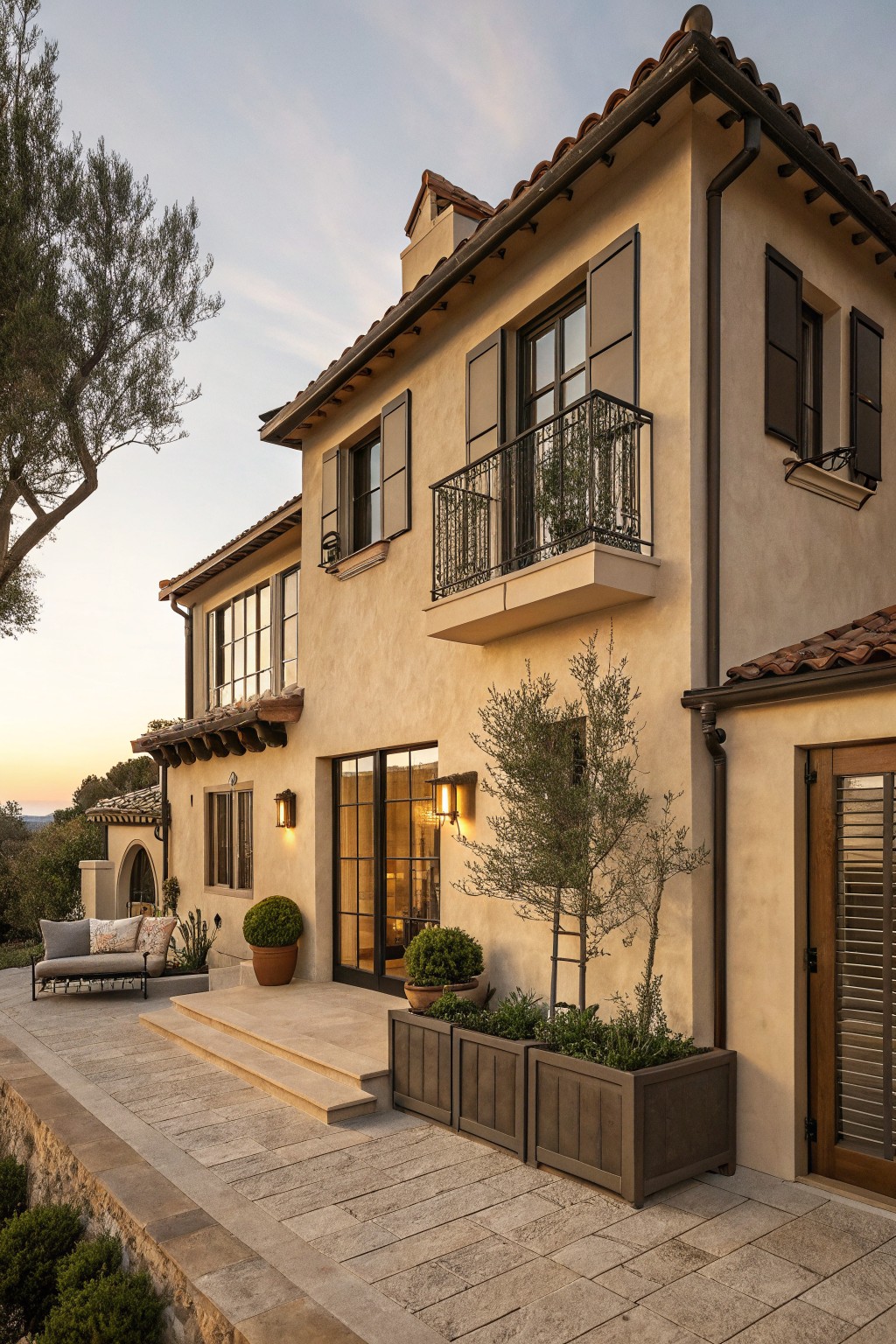
A soft beige stucco finish like this one keeps things calm and easy on the eyes. It covers the whole house in a smooth layer that picks up the light just right, especially at dusk. The terracotta roof tiles add a bit of warm red without overpowering, and that iron balcony keeps the look simple.
This style suits hillside homes or any spot with a view. Go for a matte stucco to avoid glare, and pair it with dark wood shutters if you want some contrast. It holds up well in dry areas too. Just watch the color in different lights… it can shift a little.
Classic Columned Portico Entry
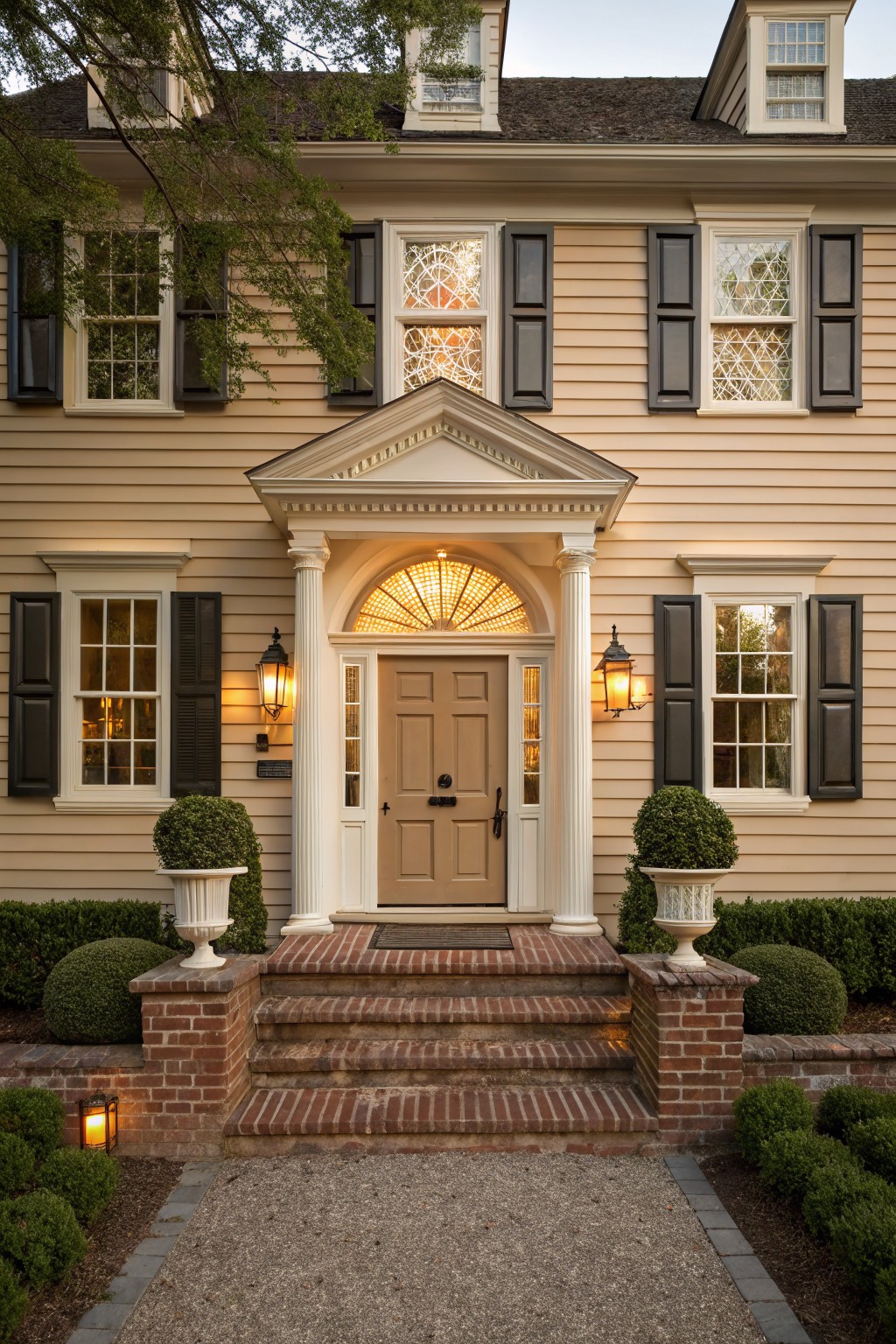
A columned portico like this one gives a soft light brown house that instant classic feel. The white columns and pediment stand out clean against the beige clapboard siding, while the fanlight window above the door lets in just enough light to make the entry feel open and bright. Black shutters on the sides add some nice contrast without overpowering the calm color. It’s a simple way to make the front door the star.
This works best on traditional or Colonial-style homes where you want curb appeal that looks put-together year-round. Pair it with lanterns for evening glow and low boxwoods at the base to frame the steps. Skip it if your house has a super modern roofline, though. Just keep the columns crisp and the siding freshly painted to avoid a dated look.
Cedar Siding for a Soft Modern Exterior
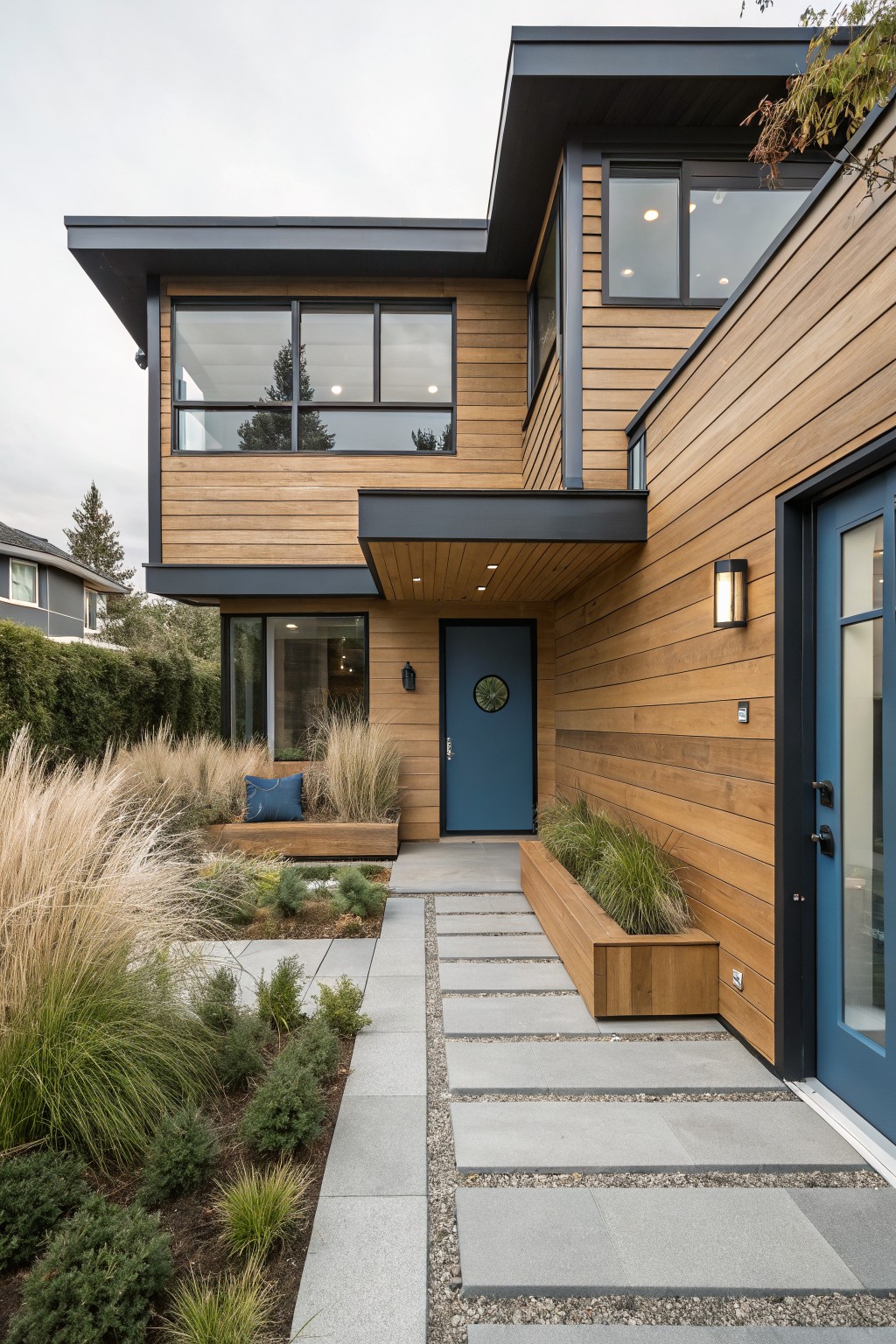
Cedar siding in a light brown tone covers this house, giving the whole facade a warm, natural feel. The vertical boards pair nicely with black metal accents around the windows and roofline. It keeps things looking clean and contemporary without feeling stark.
Try this on homes in cooler or wooded spots where you want some coziness from the street. A bench built into plantings near the entry adds a spot to sit. Just make sure to seal the wood well so it stays that pretty color over time.
Hillside Home with Warm Cedar Siding
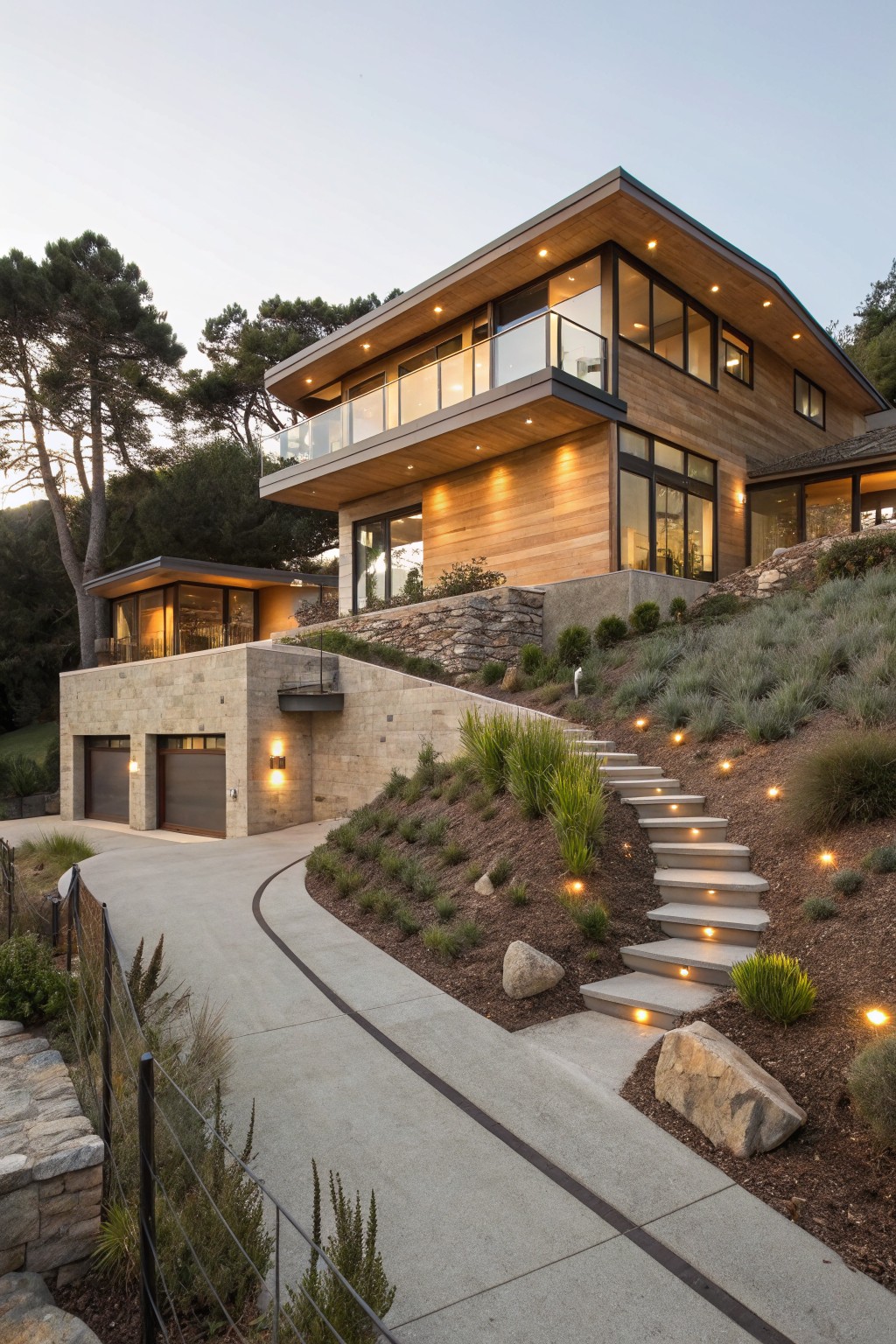
Warm cedar siding in a soft light brown tone covers this modern house built into a slope. It picks up the colors from nearby pines and dry grasses, so the place doesn’t stick out like some stark new builds do. That natural tie-in keeps things calm right from the street, especially with the stone base at garage level adding a bit of weight down low.
Try this on lots with a drop-off or trees around the property. It works best on contemporary designs where you want clean lines without going too cold or boxy. Pair the wood with simple concrete steps and low-voltage lights along the path, like here, to guide people up safely at dusk. Just make sure the siding gets a good protectant to handle weather over time.
Soft Stucco Walls with a Big Wood Door
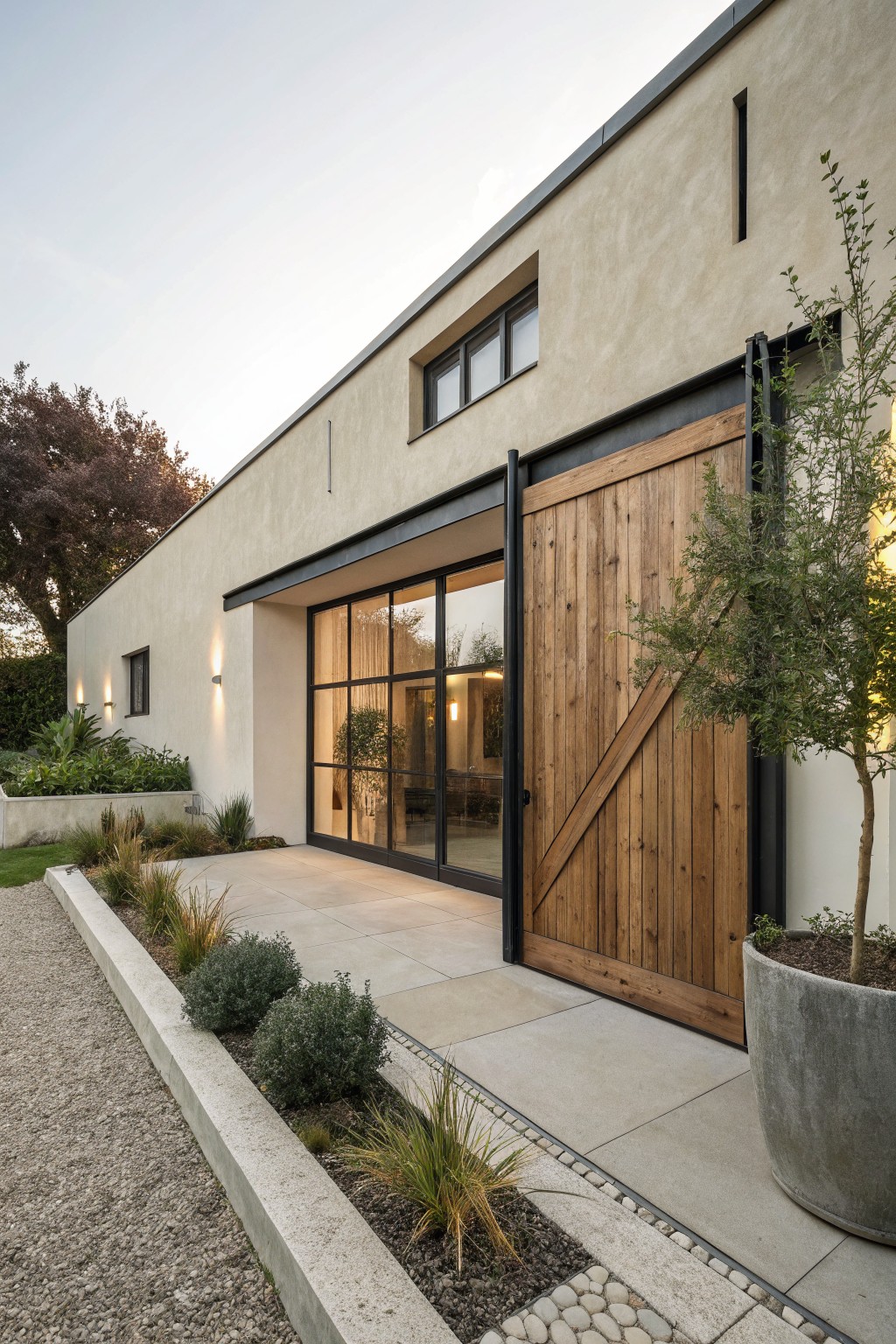
A soft beige stucco finish on the walls gives this house a calm, understated look that fits right into a quiet neighborhood. Then there’s that large wooden sliding door right at the entry. It brings in some real warmth without overpowering the simple lines. The mix feels grounded, like the house is part of the landscape.
You can pull this off on low-key modern homes or even ranch styles wanting a fresh update. Go for weathered or reclaimed wood on the door to add character, and keep the frame dark metal for contrast. It works best where you have a flat wall plane. Just make sure the plants nearby stay low so they don’t crowd the door.
Wrought Iron Porch Detailing
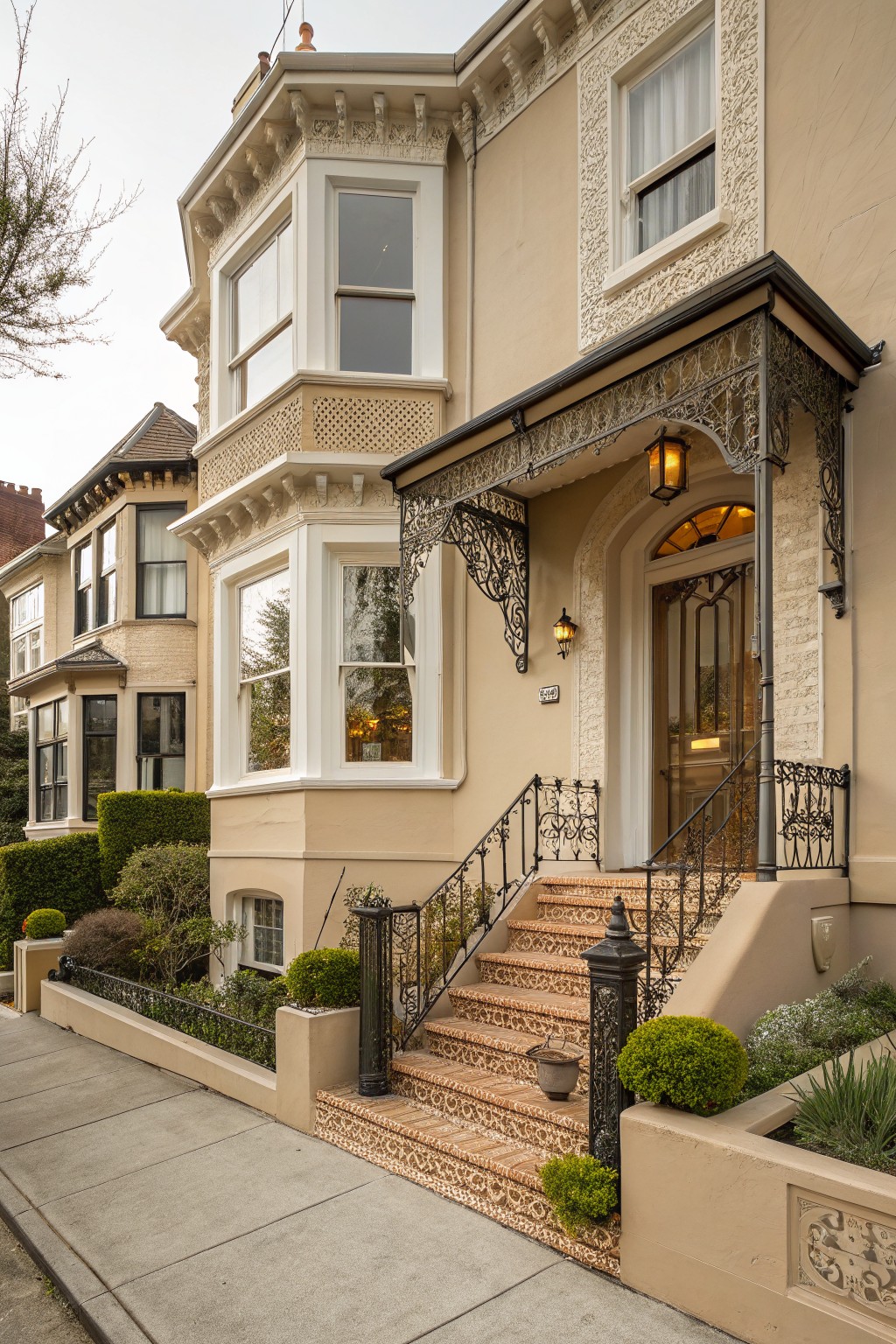
Wrought iron work like this on a soft beige house exterior brings out a quiet elegance right at the front door. The black railings and brackets curve around the porch and steps, picking up on Victorian details without overwhelming the calm tan stucco walls. Those tiled steps in warm earthy patterns add just enough color to guide you up nicely.
Try this on homes with simple light brown siding or plaster, especially in older neighborhoods. Pair the iron with low boxwood hedges along the base for a tidy look. It suits row houses or craftsman styles well, but keep the iron matte to avoid a shiny feel.
Warm Stone Walls with Wooden Roof Overhangs
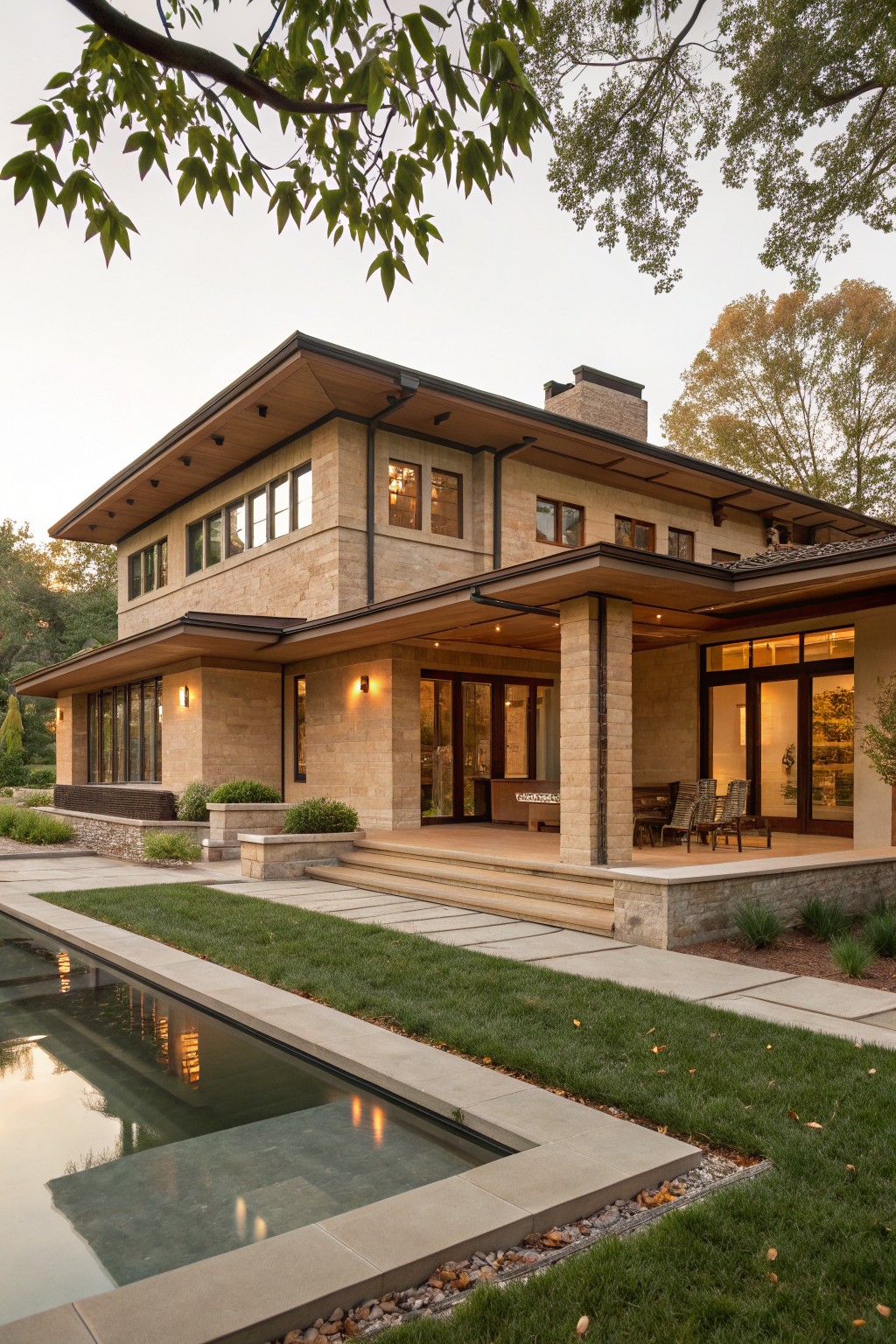
Soft beige stone covers the walls here, topped with wide wooden roof overhangs that stretch out protectively. This combo keeps things feeling solid and natural, like the house grew right out of the ground. The light brown tone stays calm in any light, and those overhangs add shade without blocking the views.
Try this on homes with a modern edge or craftsman vibe, especially where trees frame the site. Pair the stone with dark wood trim for contrast that doesn’t overwhelm. Just make sure the overhangs are sized right for your roof pitch, or they might look off balance.
Frequently Asked Questions
Q: What trim colors pair nicely with soft light brown siding?
A: Crisp white trim brightens the whole look and keeps things fresh. Soft gray works too if you lean modern. Stick to one shade for clean lines.
Q: How do I add plants without overwhelming the calm vibe?
A: Tuck boxwoods or hostas along the foundation. They frame the house softly. And drape ivy over arbors for that welcoming touch.
Q: Does light brown hide dirt better than white or gray?
A: It masks dust and pollen pretty well. Rinse it down with a hose every few months using mild soap. That keeps the cozy glow alive.
Q: Can I pull off light brown on a contemporary house?
A: Pair it with sleek metal accents and large windows. The subtle tone grounds bold lines without clashing. Test a sample board first in your light.
