

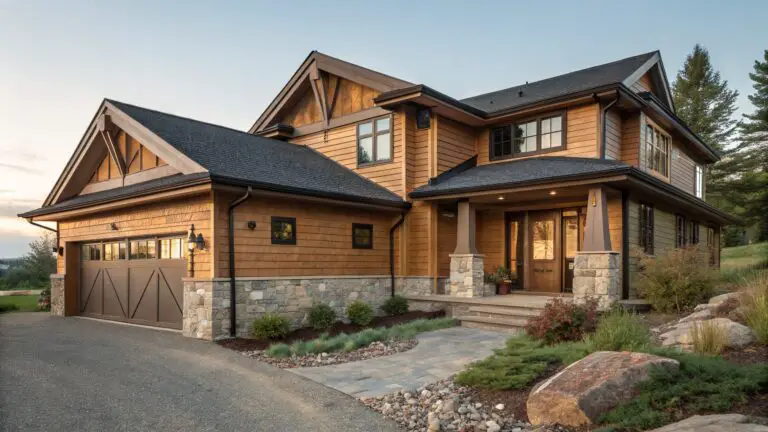
I’ve noticed that textured brown exteriors draw the eye from down the street because they create subtle shifts in light and shadow that flat siding never manages.
Stone accents add real weight to those facades, especially framing doors or corners where they ground the house against the yard.
When I looked at redoing our front last year, the combo of rough stone with varied brown panels made the most sense for blending into our wooded lot without overwhelming it.
They avoid that boxy feel so many new builds have.
A handful of these setups show smart ways to layer materials that hold up year-round and reward a closer look.
Brown Shingle Siding with Stone Porch Pillars
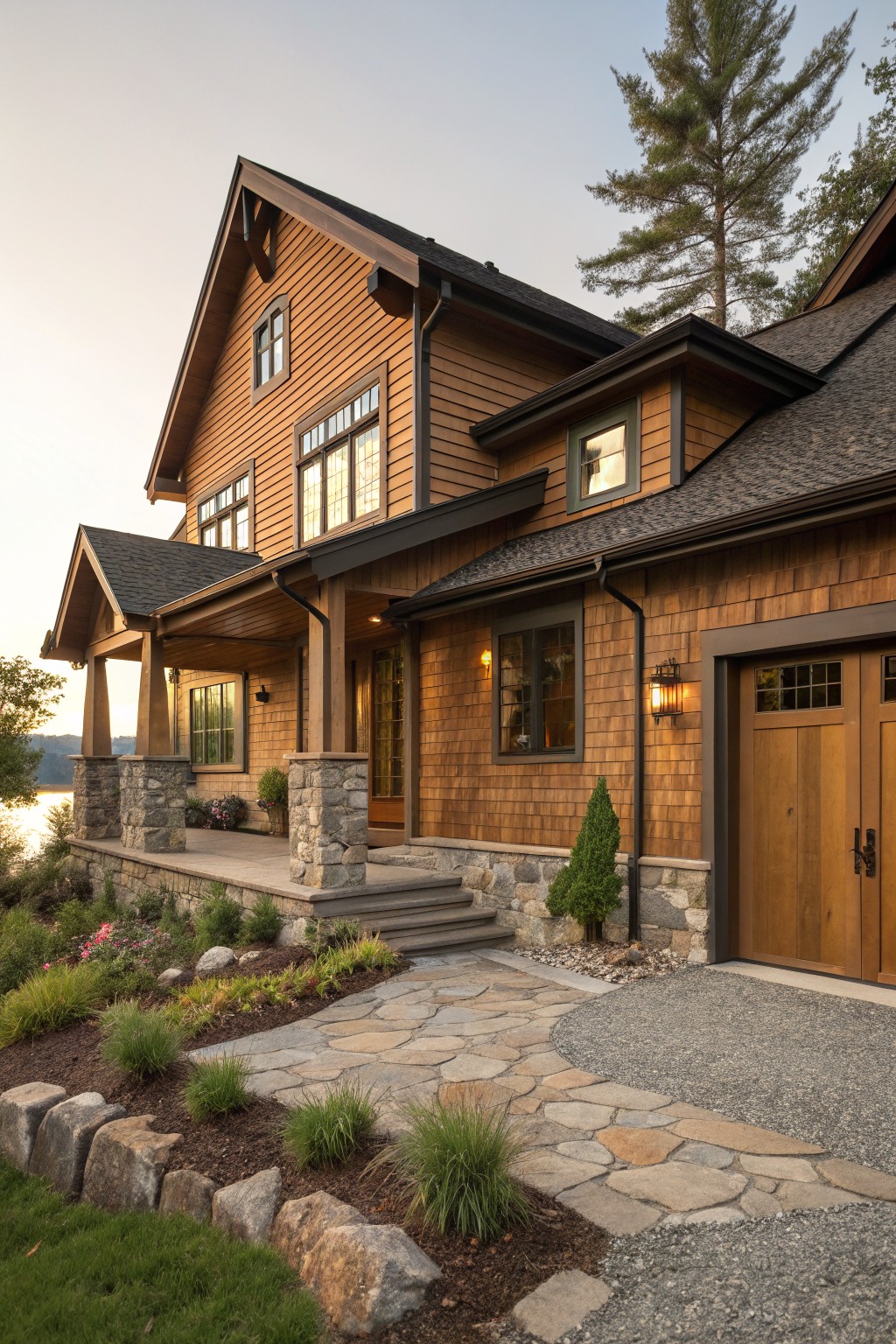
A house like this uses brown shingle siding over most of the exterior, then switches to rough stone for the porch pillars and base. That mix gives the whole front a layered look. The wood feels light and textured up top, while the stone down low adds some weight and ties into the natural ground around it. It’s a simple way to make a plain wood house stand out more.
You can pull this off on homes in wooded spots or near water, where stone blends right in. Keep the stones in earth tones to match the brown siding, and use them just for pillars or steps, not everywhere. That keeps costs down and avoids overwhelming the wood. Works best on two-story houses, too… gives balance from bottom to top.
Wood Porch with Stone Pillars
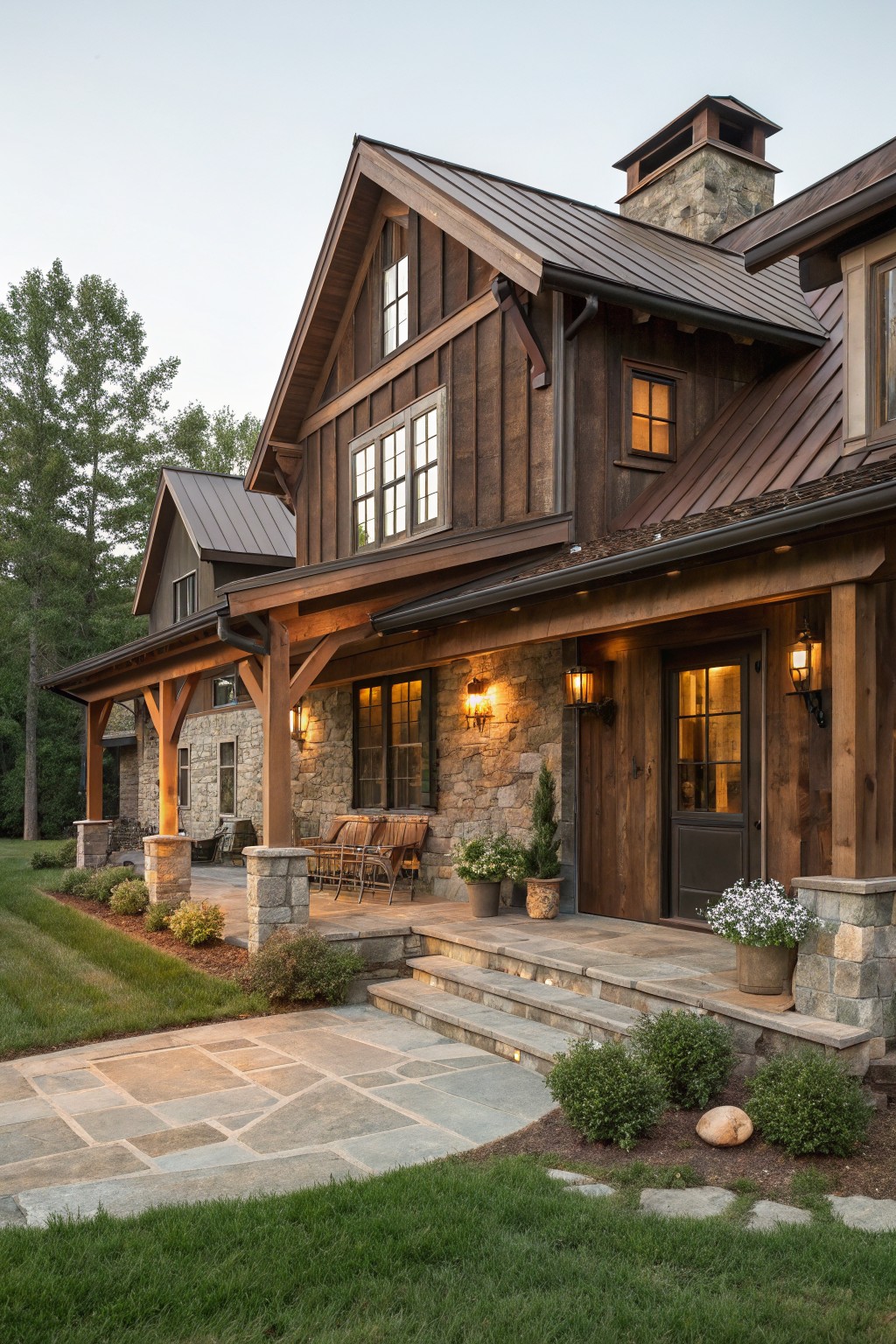
This kind of porch setup uses sturdy stone pillars to hold up big wood beams on a brown wood house. The stone gives a solid base that contrasts nicely with the warm wood siding and roof. It makes the entry feel more grounded and less like just another add-on. Those lanterns hanging off the posts add a soft glow too.
You see this a lot on homes in wooded areas or with some slope to the yard. It works best where you want a rustic look without going full log cabin. Keep the stone in natural colors to match the wood tones. Just make sure the pillars are wide enough so they don’t look skinny next to the beams.
Stone and Wood Facade Mix
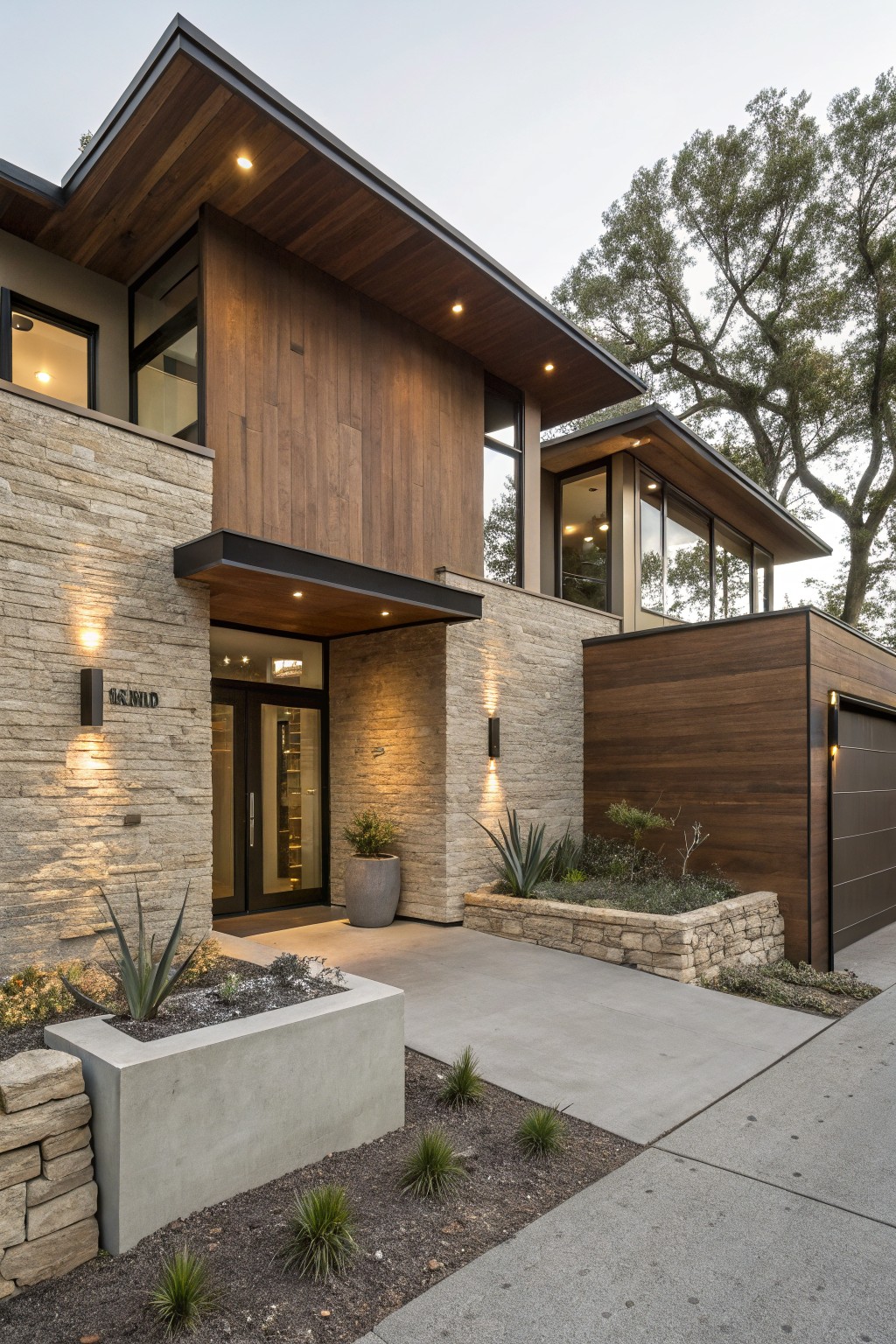
This kind of exterior pulls together light beige stone walls with darker wood panels in a way that gives the house more presence from the street. The stone handles the lower part and entry area, staying rugged and earthy. Then wood takes over higher up, with clean vertical lines that break things up nicely. It’s a simple switch that makes the whole front feel layered without much fuss.
You can pull this off on mid-sized homes, especially ones with a modern slant in places like Texas or the Southwest. Stick to native stone for that base to keep costs down, and go for cedar or similar wood that’s weather-tough. Just watch the scale… too much wood might overwhelm a smaller place. Pair it with simple plants like agave near the door, and you’ve got curb appeal that lasts.
Recommended Products

TRUE-TO-NATURE 3D REALISM: Crafted from premium high-density polyurethane (PU), our faux stone wall panels perfectly replicate the rugged texture, deep crevices, and color variations of natural stone. Unlike cheap foam or flat wallpapers, these 1.18-inch thick 3D artificial rock veneers fool the eye and touch, instantly upgrading your space with a high-end, realistic masonry aesthetic.

【Real Texture】Our faux stone wall panel are made from high-quality polyurethane (PU) material that mimics the look and texture of natural stone. Available in a variety of styles and colors, including stacked stone, castle stone, and limestone, this helps give your home a beautiful, warm, inviting, realistic look.

Real Stacked Stone Look: Hand-painted faux stone and rock texture with deep 1.38 in relief for natural shadows; lightweight PU stone veneer gives a true stone look without the weight
Shingled Exterior with Stone Base
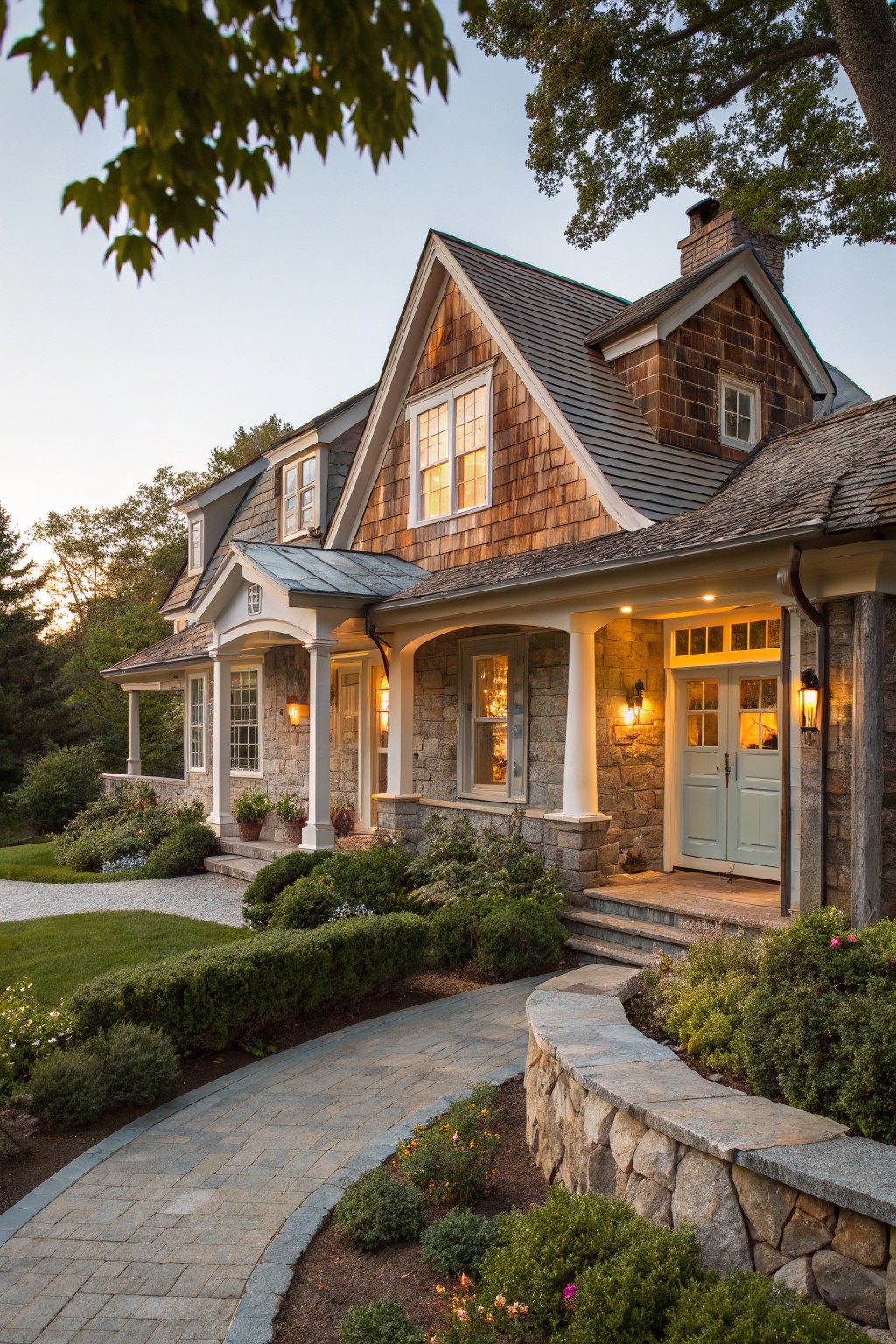
A warm brown shingle siding covers this house, but the real interest comes from the rugged stone base that wraps around the bottom and supports the porch columns. That stone adds a grounded feel to the lighter shingles up top. It makes the facade look more substantial without overwhelming the simple rooflines.
This setup suits traditional homes in rural or wooded spots. Use it where you want curb appeal that lasts through seasons. Stone at the base hides foundation lines nicely, and low plantings along the path keep the focus on the house. Skip it if your site is too flat or modern.
Recommended Products

✅ PREMIUM STONE LOOK – WITHOUT THE COST Achieve the high-end appearance of real stacked stone with natural texture and depth—perfect for upgrading exterior walls, facades, and accent areas.
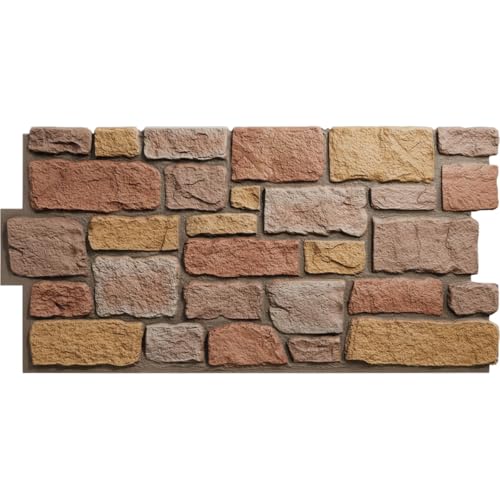
FAST DIY INSTALLATION: Our lightweight polyurethane panels are designed for quick and easy installation, saving you time and professional labor costs. Unlike heavy real stone, these panels are easy to handle and can be installed by a single person using basic tools—perfect for a weekend DIY project.

Faux Stone Wall Covering Panels: Each AZ Faux High-Density Polyurethane Faux Stacked Stone Panel is lightweight and easy to install, providing a cost-effective way to protect and decorate your home. Whether you're using them for interior decorating or exterior faux siding, our panels are up to the task!
Stone Base Under Textured Brown Walls
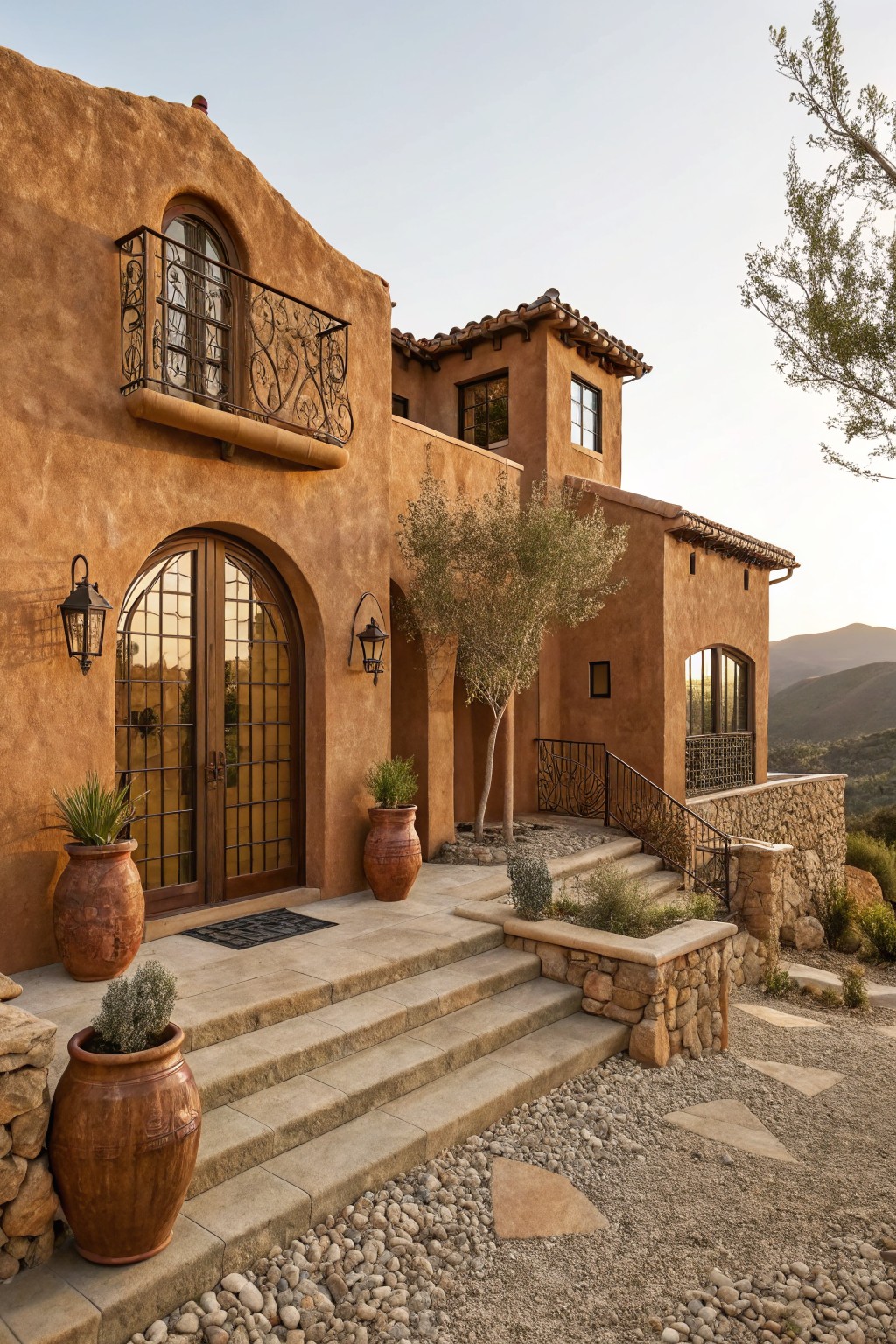
A solid stone base like this one anchors the soft curves of textured brown stucco really well. You see it here wrapping the entry steps and low walls, giving the house a grounded feel against that smooth plaster finish. The rough texture of the stone plays off the plaster’s subtle bumps without overwhelming the look.
This setup shines on sloped lots, where steps naturally tie into the base. It suits Southwestern or Mediterranean homes in rocky areas. Pick stones that echo your local landscape, and keep plantings simple around it, like those big terracotta pots nearby.
Stone Accents Add Texture to Brown Wood Siding
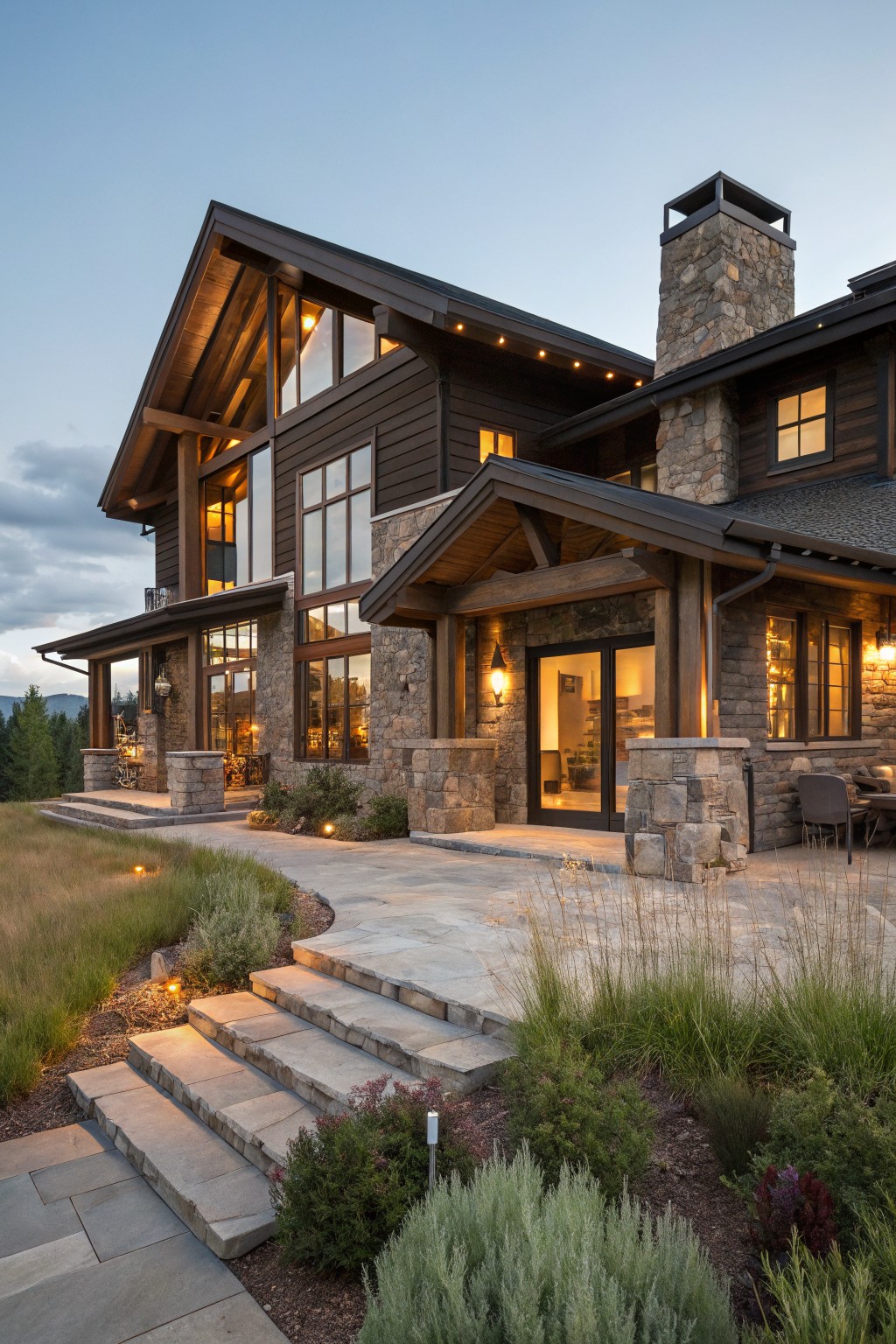
Dark brown wood siding covers most of this house, but rugged stone details on the chimney, pillars, and base make all the difference. The stone picks up the natural tones around it, like the nearby rocks and mountains, while giving the facade some real weight and variation. Those large windows let light play off both materials, helping everything feel connected.
You can pull this off on a sloped lot or wooded site where the house needs to blend in but still stand tall. Pick stones that match your local area, and place them vertically like this chimney does to guide the eye upward. Skip too much stone though, or it starts competing with the wood.
Wood Siding Exterior with Stone Entry Accents
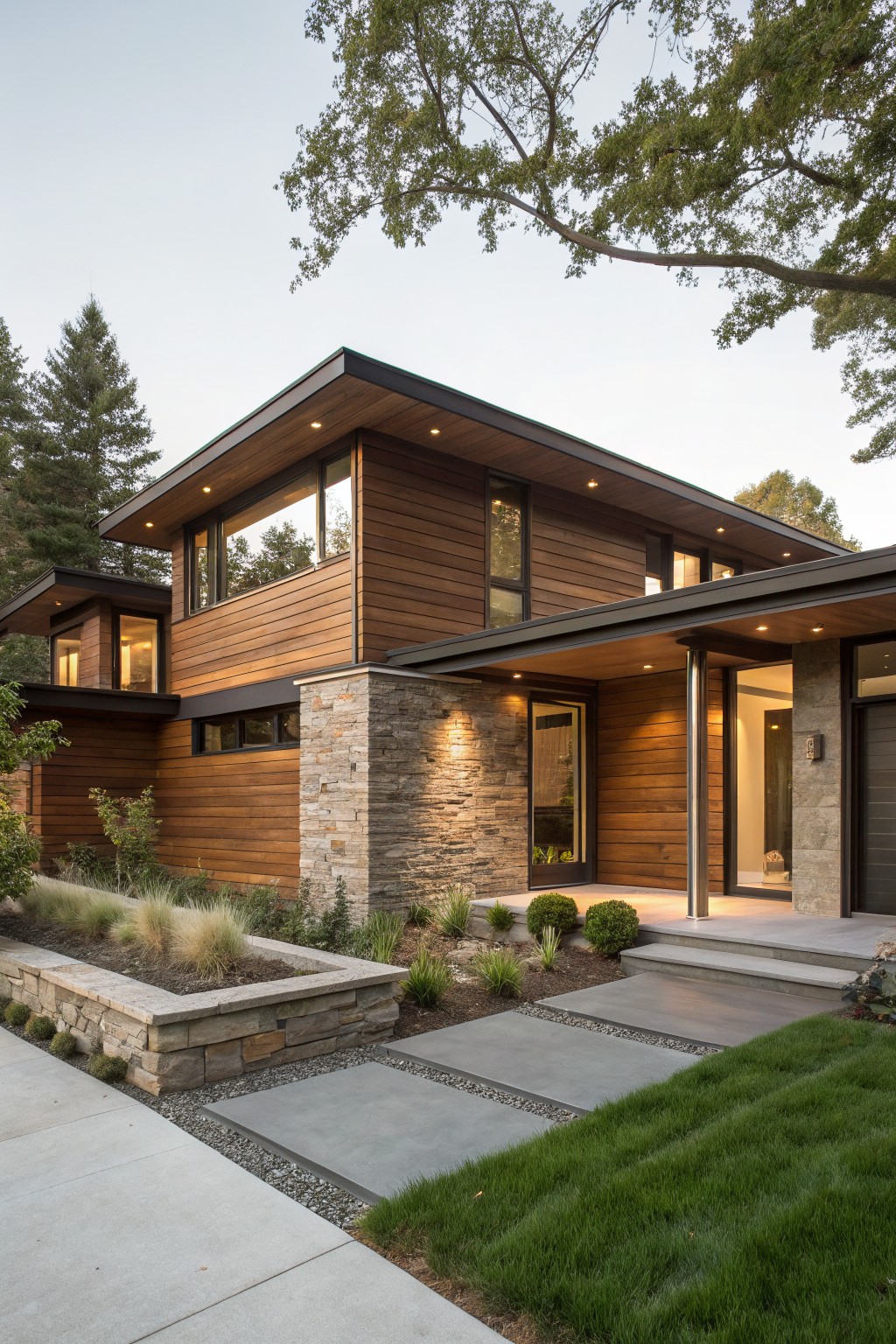
One straightforward way to add interest to a plain wood siding house is to bring in stone accents right at the entry. Here the brown horizontal cedar boards cover most of the walls, but a tall stone pillar holds up the overhang, and low stone walls frame the approach. That rough texture next to the smooth wood planks makes the front feel more layered without overdoing it.
This setup works best on modern homes in wooded spots where you want some natural tie-in. Use it on a single-story or split-level house to keep proportions simple. Just make sure the stone color stays close to the wood tone, or it might pull focus too much from the entry door.
Brick Entry with Stone Steps
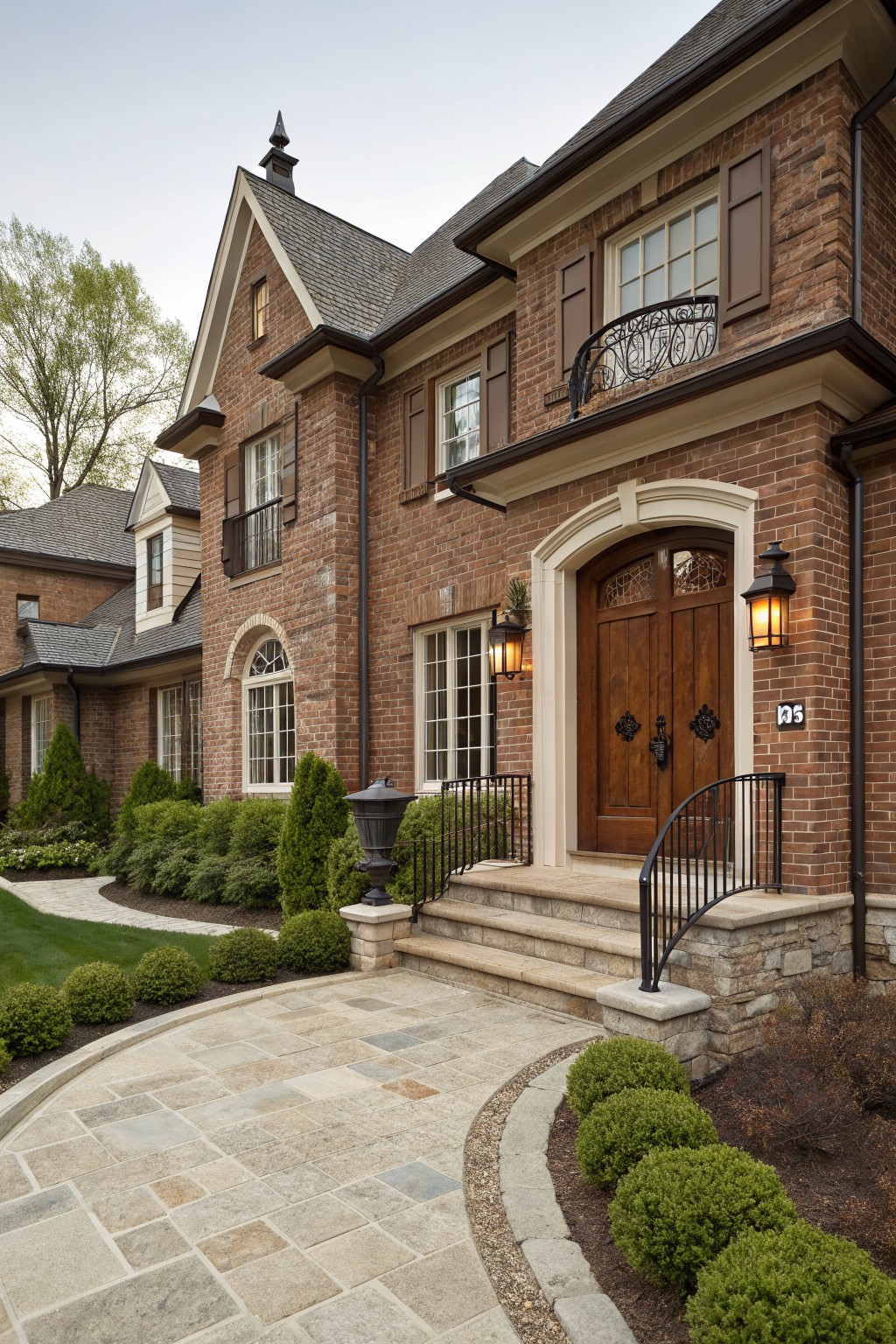
Stone steps leading up to a brick house entry give the whole front a solid, grounded look. They add a bit of contrast against the textured brown brick, making the facade feel more layered without overdoing it. Here, the wide limestone steps with a wrought iron railing frame the arched double doors nicely, and they draw your eye right to the entrance.
This works best on traditional or craftsman-style homes where you want curb appeal that feels classic but not fussy. Pair the steps with matching stone accents around the base or corners to tie it together. Just keep the steps wide enough for easy access, and avoid slick materials if your area gets rain or ice.
Shingle Siding with Stone Base
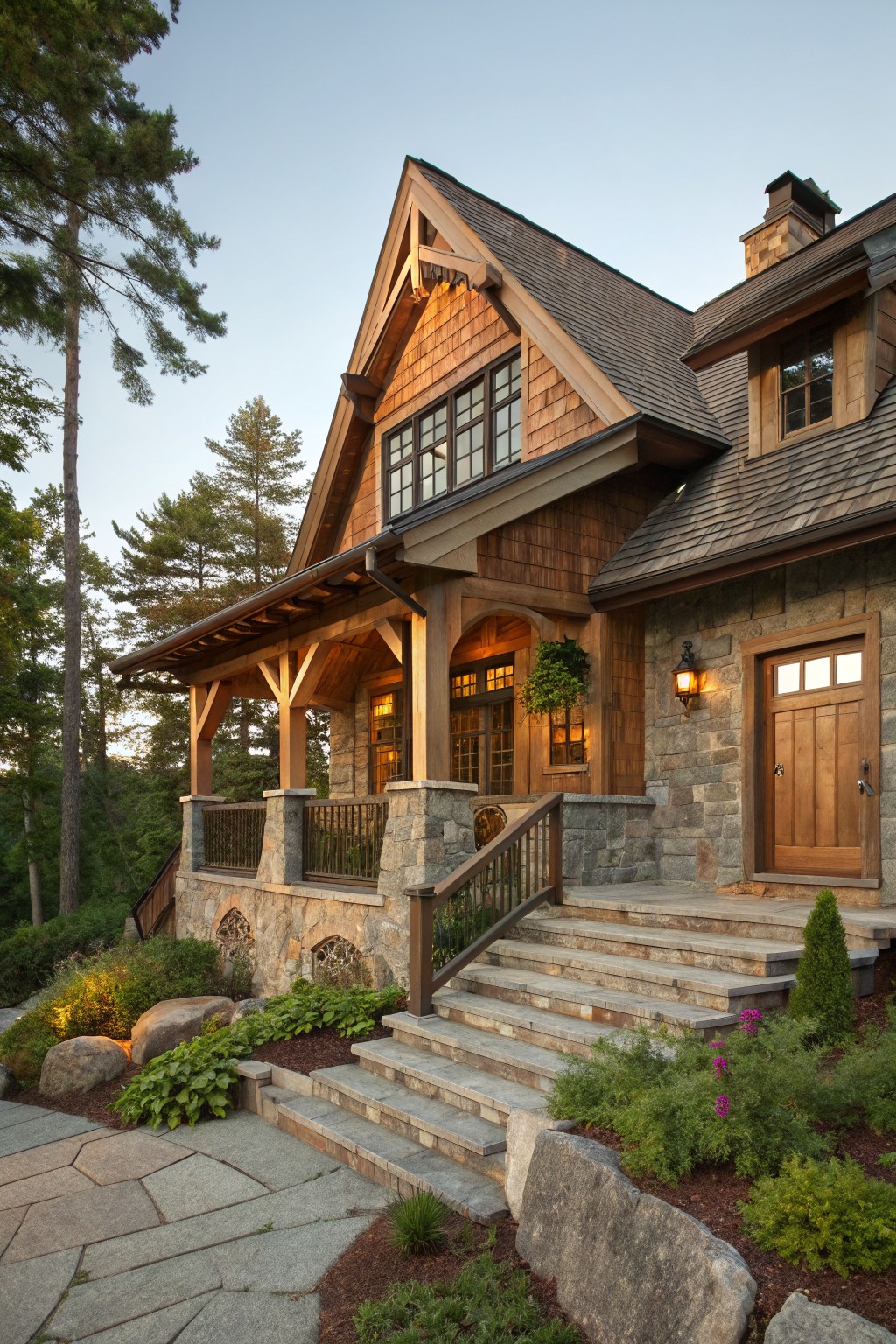
A brown shingle exterior like this one gets a lot from the stone base underneath. The textured shingles cover most of the walls, but the rugged stone at the foundation and porch adds weight and keeps things from looking too light. It pulls in the rocky landscape around it too.
This setup works well on sloped lots or wooded spots where you want the house to settle into the ground. Go for irregular stones in gray tones to match natural surroundings, and keep the stone to lower levels so the shingles can still breathe. Avoid overdoing it on flat sites, or it might feel heavy.
Stone Pillars Frame a Shingle Porch
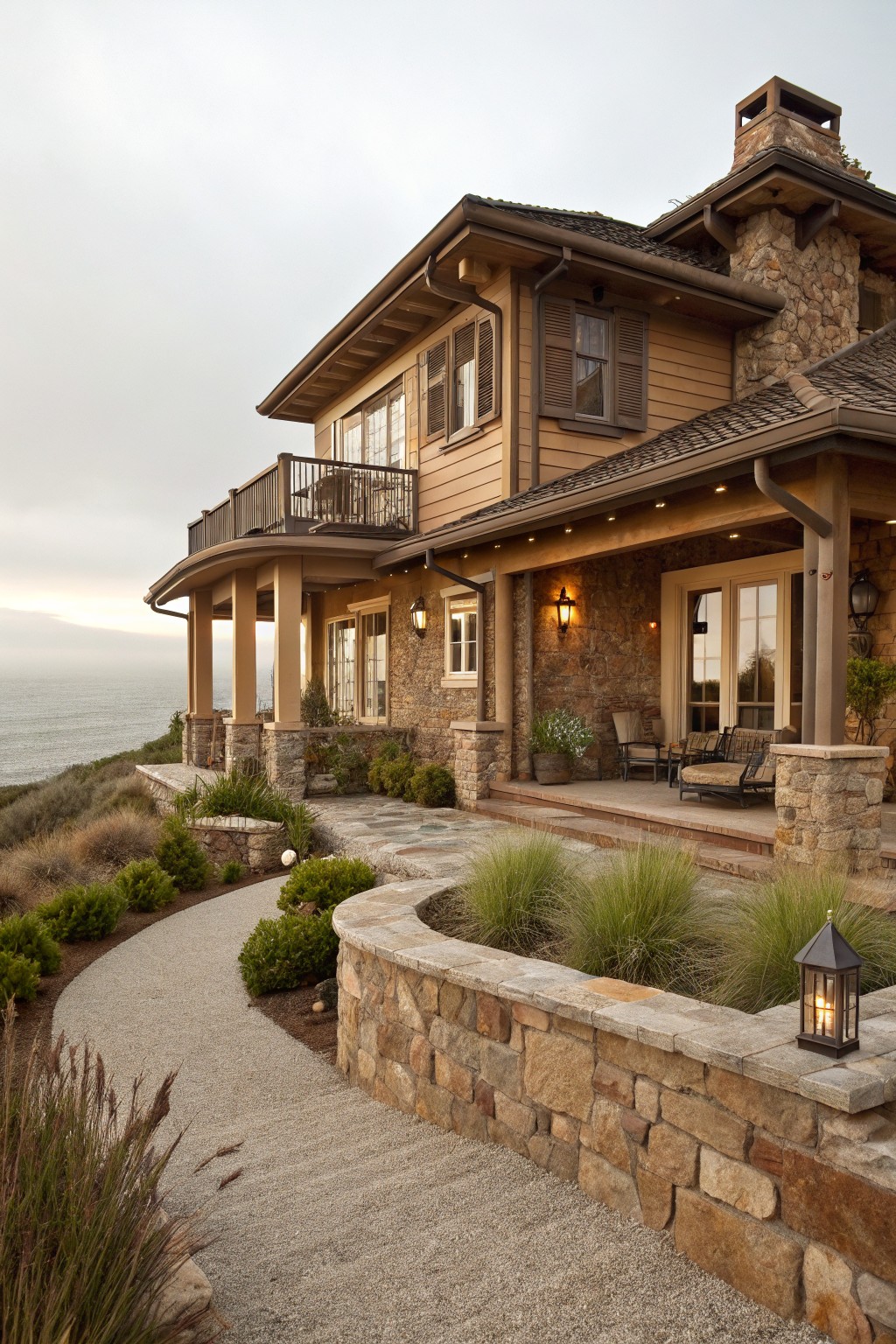
Thick stone pillars like these give a brown shingle house real structure around the porch and balcony. The rough texture of the stones plays off the smoother wood siding nicely. It keeps the look from being too plain, especially with that earthy brown tone everywhere.
Try this on ranch or craftsman style homes where you want the exterior to feel grounded. Stone pillars work best holding up wide porches or entries. Pick stones that match your area’s rocks… saves money and looks right at home.
Climbing Ivy on Brown Brick
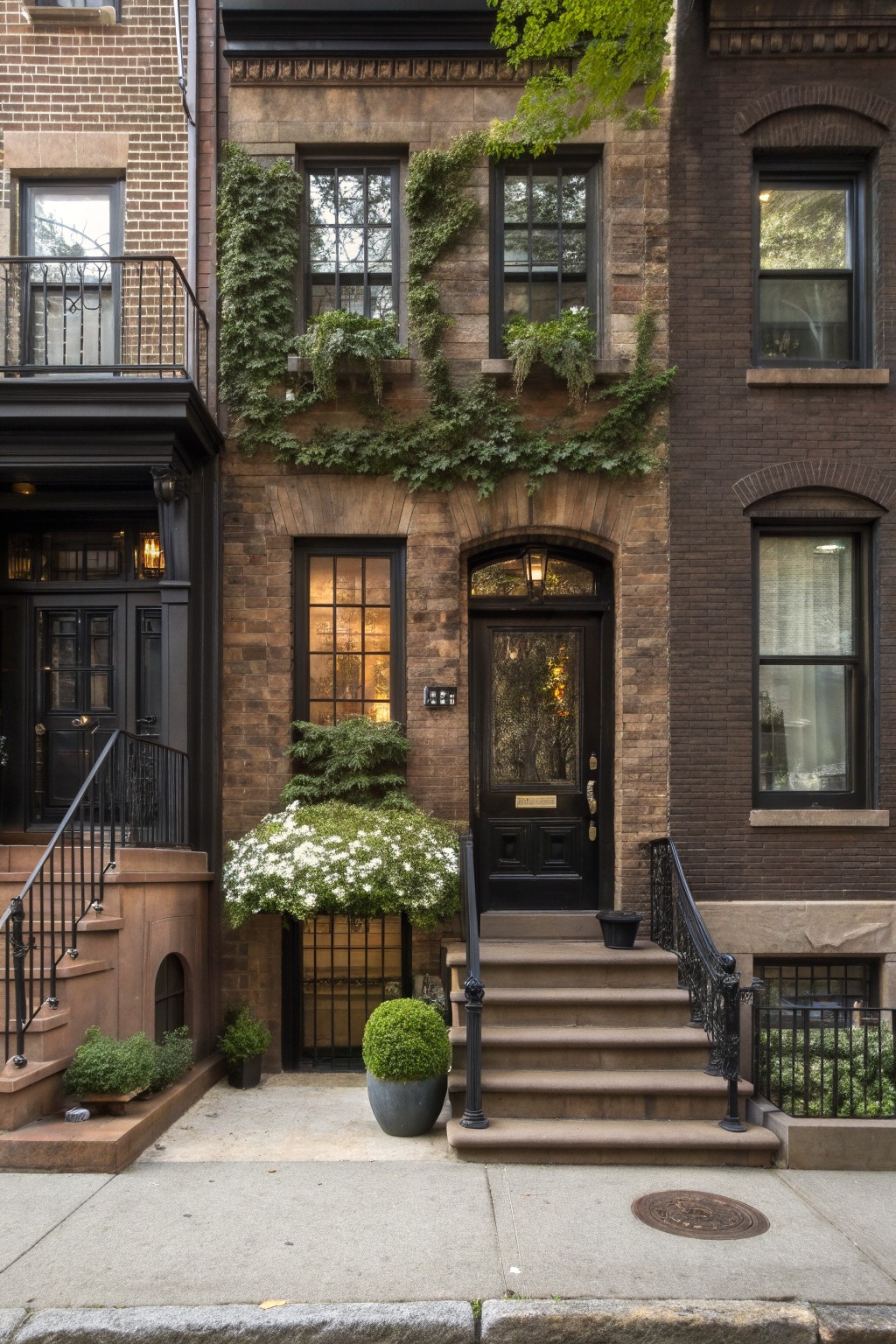
Climbing ivy works well on textured brown brick like you see here. It drapes over the walls and frames the windows without hiding the brick’s natural roughness. That green layer picks up on the stone details and makes the whole facade feel more alive, especially next to plainer brick neighbors.
Try this on rowhouses or older city homes where the brick already has some patina. Keep the ivy trimmed back from the roof and gutters to avoid problems. A black door below pulls it together and keeps things sharp.
Stone Accents on Textured Brown Stucco
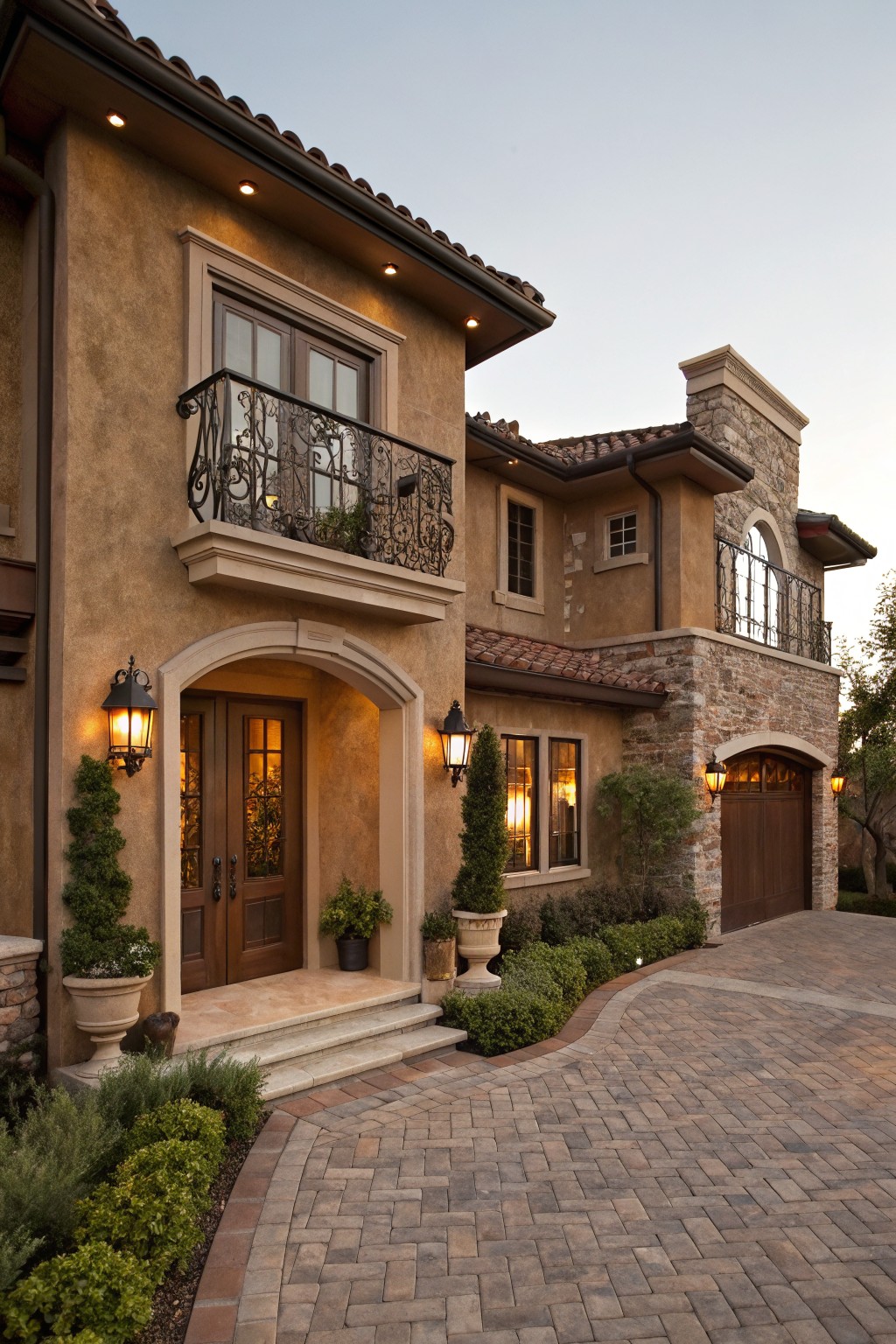
A warm brown stucco covers most of this house, but stone pieces on the garage and upper tower add real texture. Those rough stone bits break up the smooth stucco nicely. They make the whole front feel more solid and layered, like the house has been there a while.
This setup works best on homes with clean lines and tile roofs. It suits places with a bit of Spanish or Tuscan feel. Keep the stone to key spots only, so it doesn’t take over. Add some low plants along the walk to tie it all in.
Stone Accents Around the Entry Door
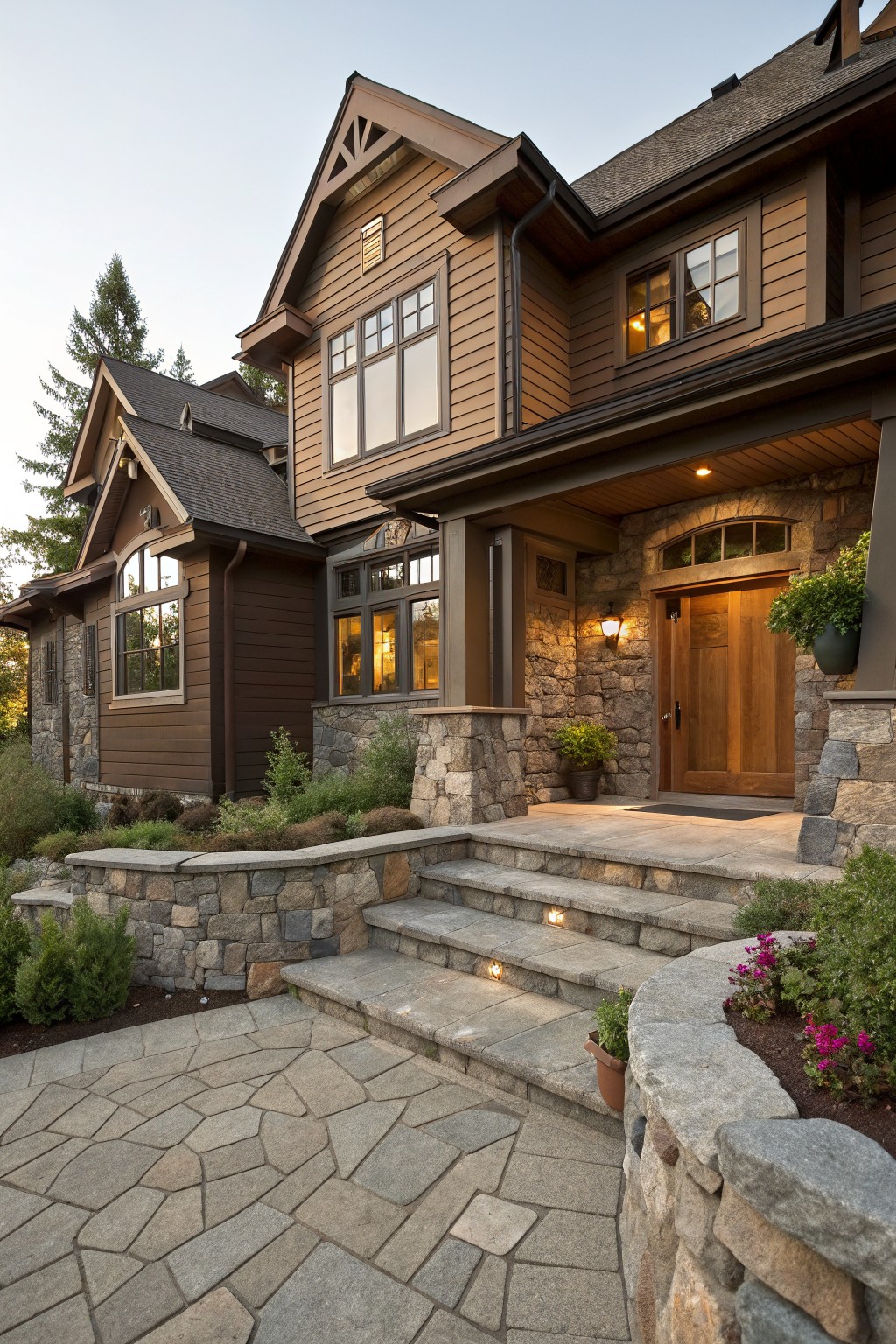
One look at this brown shingle house shows how stone accents can really lift a simple facade. The rugged stone wraps the wooden double doors and climbs the pillars, breaking up the wood texture nicely. It adds that extra layer of interest without much fuss.
Try this on a two-story home with a covered porch, especially if you’re in a hilly or wooded spot. Match the stone color to your siding tones, and keep the plantings low around the base so the entry stays the focus. Just don’t go too heavy on the stone, or it might overpower the wood.
Stone Pillars Boost Entry Appeal
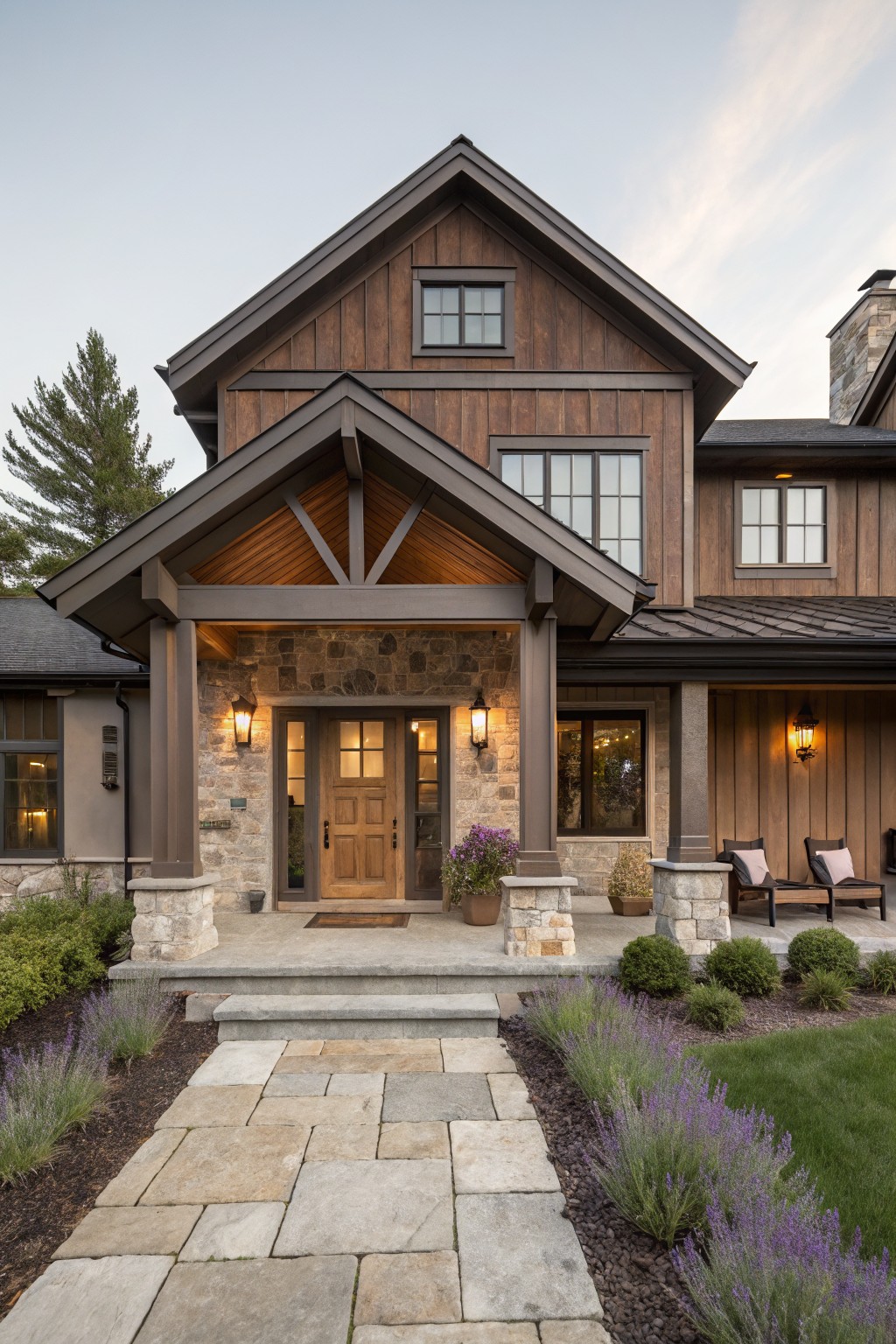
This setup takes a simple wood-sided house and adds stone pillars at the porch corners. The rough stone texture stands out against the smooth brown vertical boards. It gives the front a grounded look without overdoing it. Those lanterns on each side help too, lighting up the double doors nicely.
Try this on homes that blend into wooded spots or need more presence from the street. Stone works best when it’s local or matches the chimney, keeping things cohesive. Skip fancy trim. Just let the pillars carry the weight… they do.
Rustic Arched Entry Door
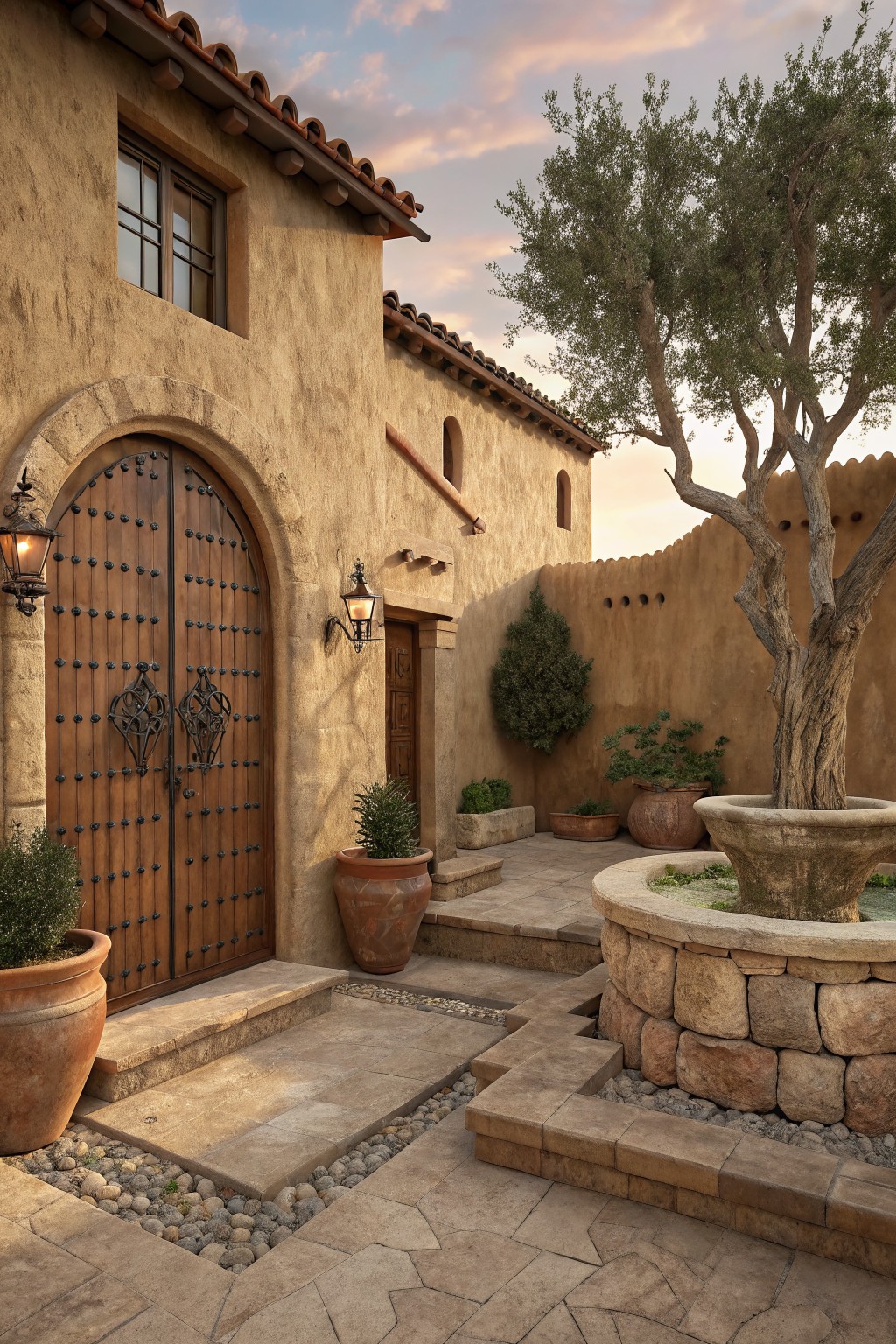
One look at this entry tells you the house means business. That big arched wooden door, studded with iron and topped by lanterns, sits right in the middle of textured brown stucco walls. It pulls your eye immediately and makes the whole facade feel solid and timeless. The rough adobe look pairs so well with the heavy timber that it turns a simple front door into the star of the show.
You can pull this off on homes with Southwestern or Mediterranean vibes, especially where you want curb appeal without too much fuss. Frame it with a few steps and some potted plants to keep things grounded. Just make sure the door is substantial enough to match the arch, or it might look off. Works best on single-story spots like this, where it doesn’t compete with upper windows.
Entry Framed by Tall Stone Walls
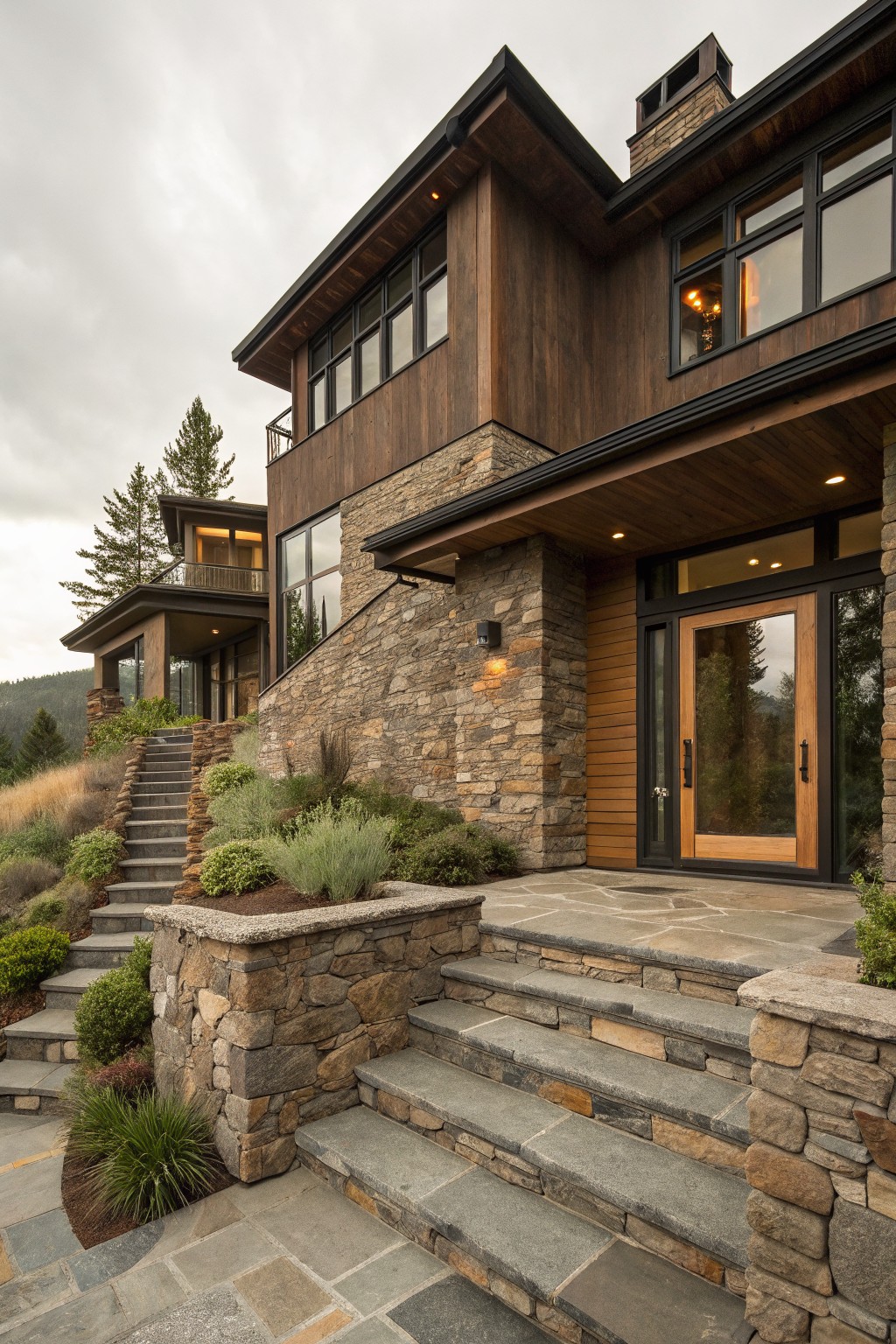
Tall stone walls rise up on either side of the entry steps here, giving the wood-clad house a sturdy base that feels right at home on the slope. The rugged stones mix natural colors and shapes that pull in the surrounding landscape, while the dark horizontal wood boards above keep things clean and modern. It’s a simple way to make the front door stand out without extra fuss.
This setup works best on uneven lots where you need retaining walls anyway. Pair rough local stone with smooth cedar or similar siding for that layered look. Just make sure the stones are solid enough for the grade, and keep plantings low around the base so they don’t hide the texture.
Brown Shingle Exterior with Stone Porch Pillars
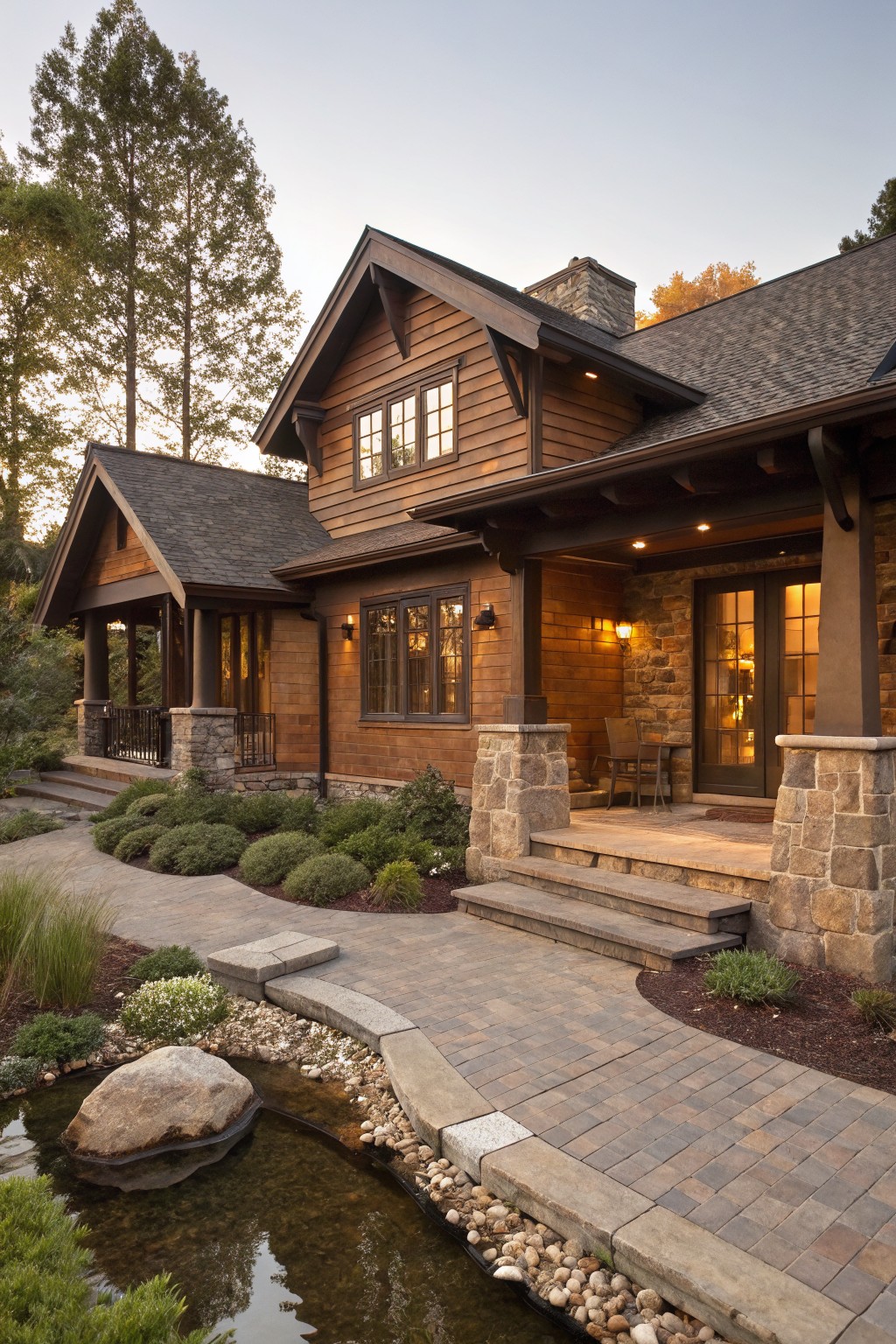
A lot of homes with brown shingle siding go plain on the front. This one adds stone pillars right at the entry porch to change that. The textured wood covers the walls and gables for a cozy cabin look. Those pillars tie into the base and steps. It makes the house feel sturdier and pulls your eye to the door.
Try this on craftsman bungalows or mountain homes where wood fits the setting. Keep the stone in earth tones to blend with the shingles. It works best when the porch isn’t too wide… otherwise the pillars might look skinny.
Brown Stucco Exterior with Stone Accents
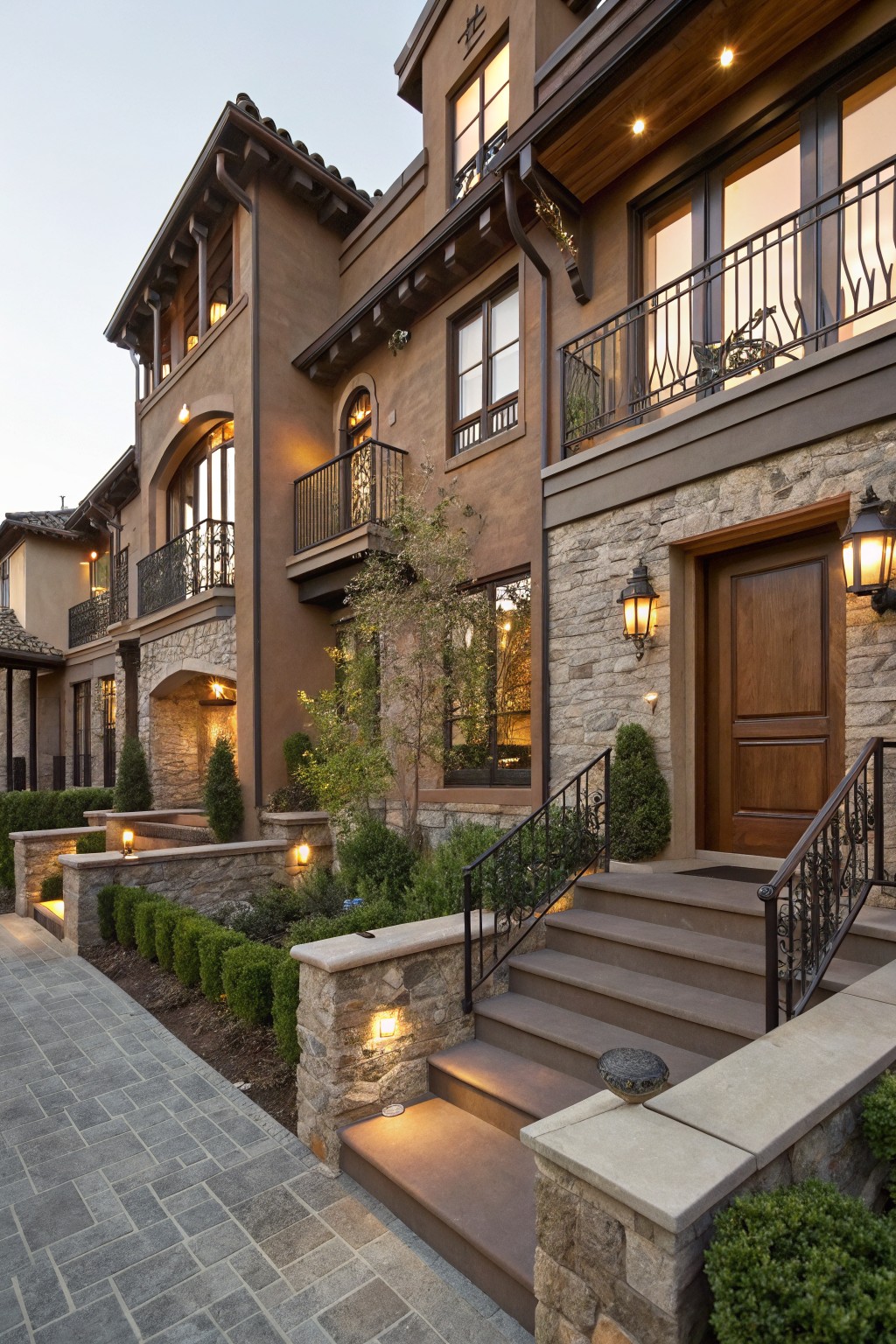
One simple way to give a brown stucco house more interest is adding stone accents around the base and entry. The rough texture of the stone against the smoother stucco walls creates natural contrast. It makes the whole facade feel deeper without much effort. Those lantern lights on the stone pillars just highlight it nicely at dusk.
This works best on homes in warmer climates or anywhere you want a rustic touch. Use it on the lower level to anchor the house visually, maybe with matching stone steps leading to a wood door. Keep the stone in earth tones to blend with the brown stucco. Skip it if your lot is super flat. It shines on a sloped site.
Stone Entryway with Arched Wooden Doors
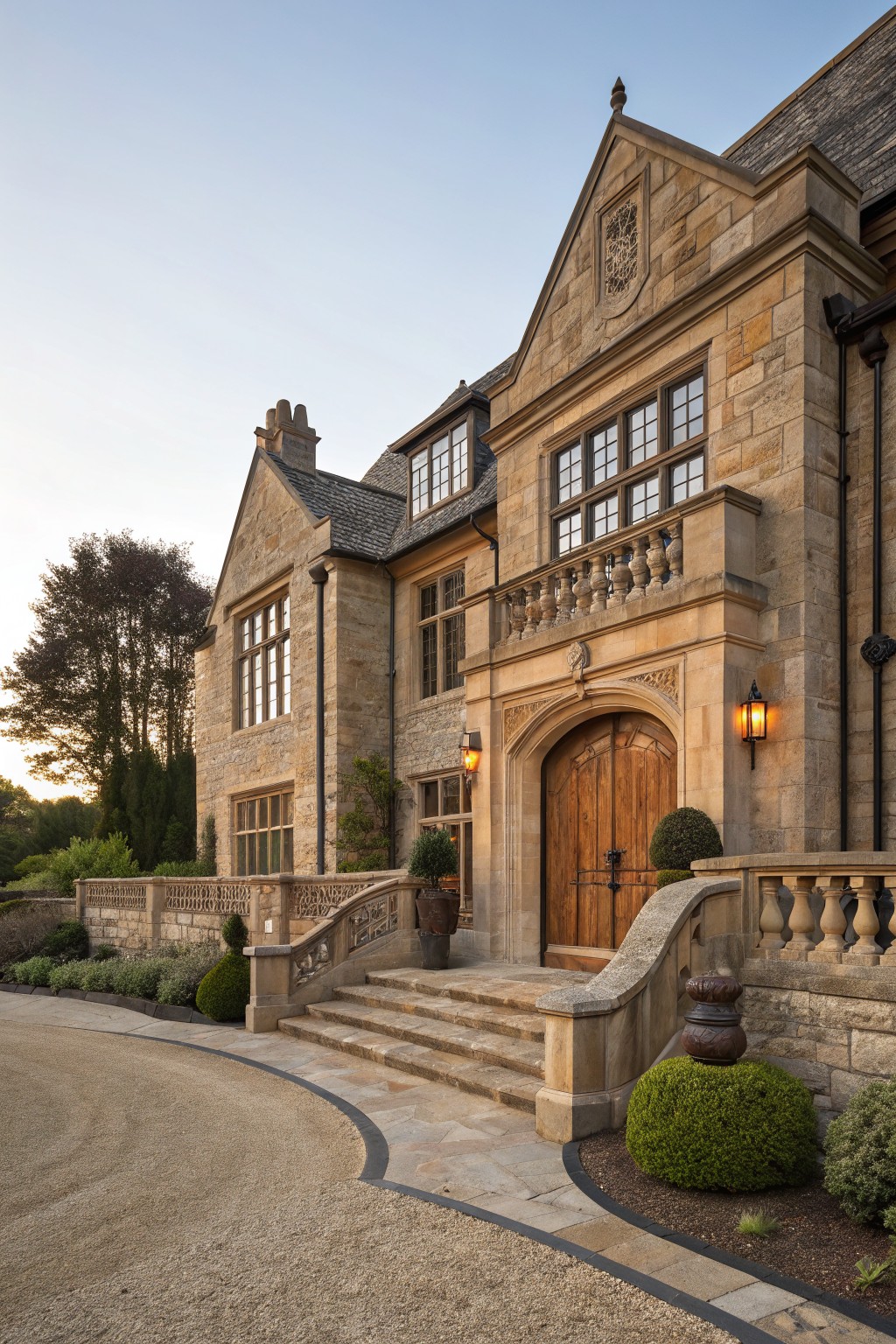
One look at this entry tells you how stone can make a front door feel important. The heavy wooden doors sit under a tall arch, framed by carved stone details and lanterns on each side. Those textures in the brown stone pull your eye right to the entrance. It gives the whole house a solid, lived-in look without trying too hard.
You can pull this off on homes with some traditional lines, like colonials or craftsman styles. Start with a stone surround around the door, add a couple of lanterns for light, and keep the steps simple. It works best where you want curb appeal that lasts through seasons. Just match the stone color to your siding so it doesn’t fight the rest of the house.
Stone Accents Frame a Shingled Entry Porch
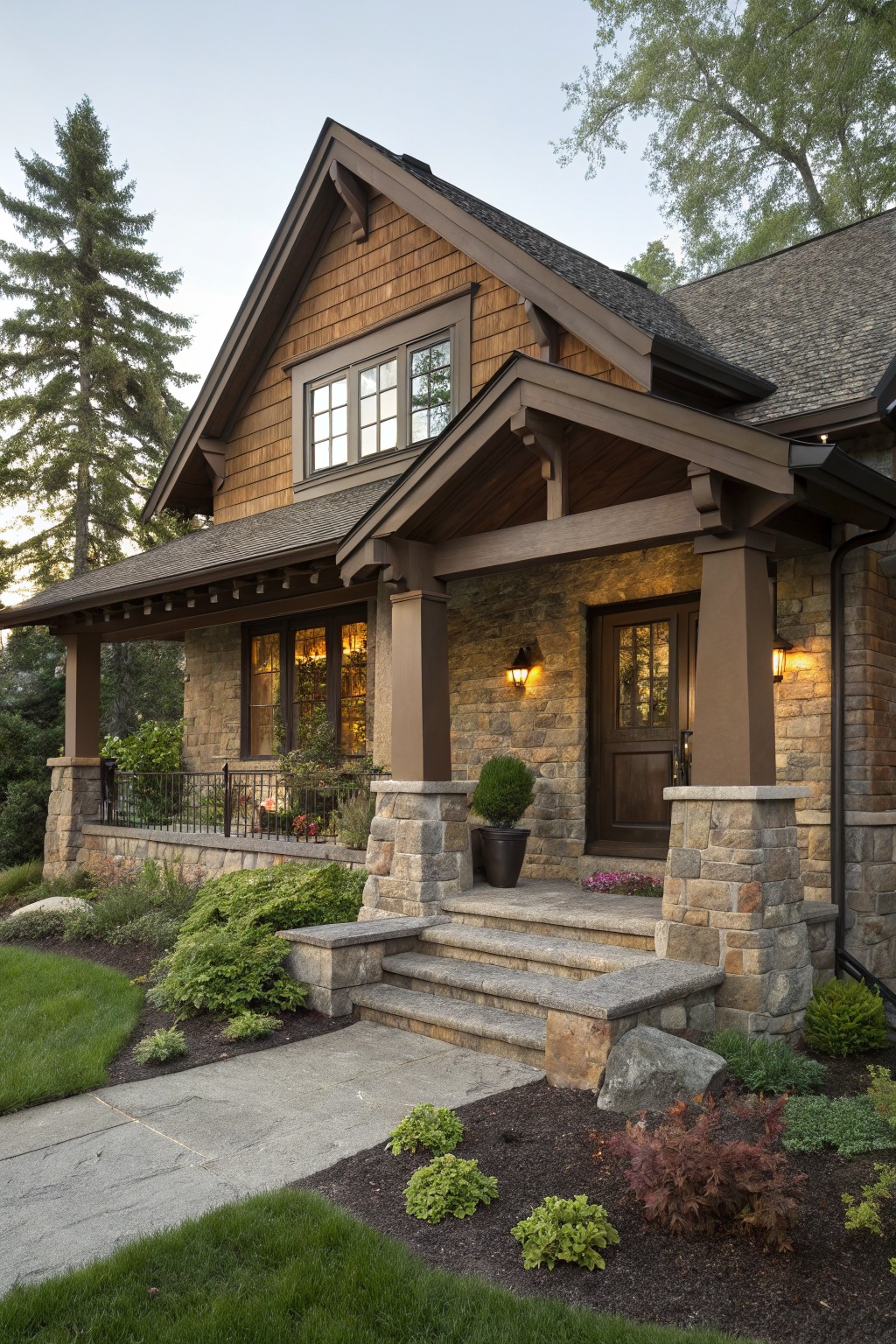
A brown shingled house like this one gets a lot from stone pillars and accents right at the front porch. The rough texture of the stone plays off the wood shakes nicely. It makes the whole facade feel more solid without overdoing it. That entry area stands out as the focal point.
You can pull this off on homes with deep porches or wide steps. Pick stones in earth tones to blend with brown siding. It suits craftsman styles or anything in a wooded spot. Just keep the stone to key spots like columns and the base. That way it adds interest but stays simple.
Rustic Stone Steps Lead the Way
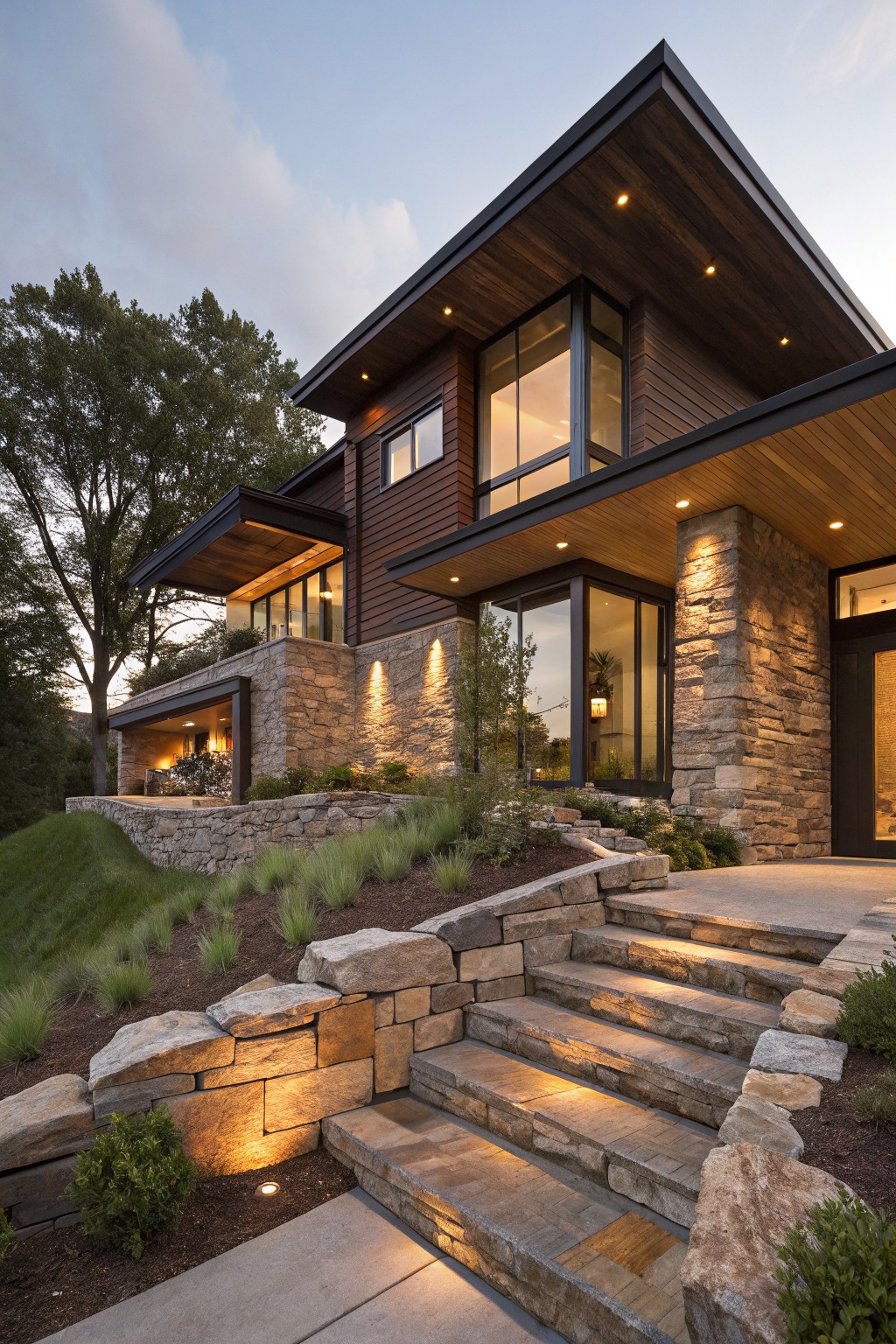
These stone steps climb up from the driveway to the front door, built right into a sloped retaining wall that matches the house’s brown wood siding. The rough texture of the fieldstone adds real weight to the entry without overpowering the clean lines of the wood panels. It’s a simple way to make the front feel sturdy and connected to the ground.
This setup shines on hilly lots, where the stone handles erosion and gives you a natural path up. Pair it with low plantings along the edges to keep things tidy. It suits homes in wooded or rural spots, but watch the scale, bigger stones work best so they don’t look fussy next to the siding.
Frequently Asked Questions
Q: Can I add stone accents to my current brown siding without tearing it all off?
A: Grab thin stone veneer panels that adhere straight to the surface. They build instant depth and texture over what you’ve got. Your house transforms in a weekend.
Q: How do I pick stone colors that play well with textured brown?
A: Hunt for subtle grays or taupes in the stone. They contrast just enough to highlight the brown’s warmth without clashing. Lay samples side by side outdoors first.
Q: Where should I put stone accents for the biggest impact?
A: Hit the entryway pillars and lower half of the facade. This grounds the house visually. And neighbors notice right away.
Q: How do I keep the stone looking fresh year-round?
A: Rinse it with a garden hose and mild soap twice a year. Skip harsh chemicals that fade the natural tones.
