

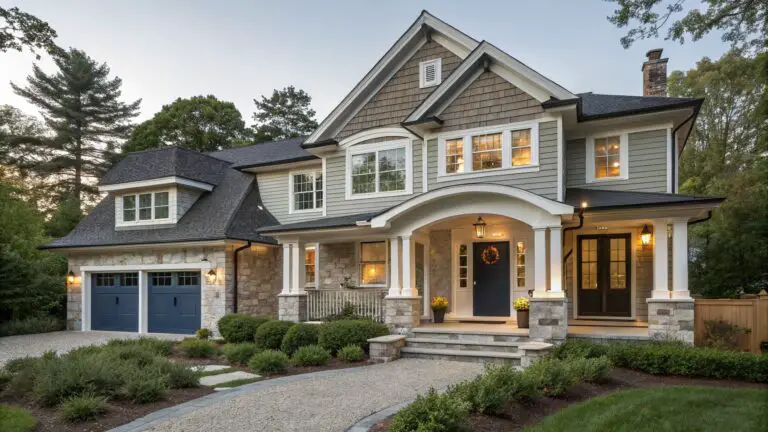
The right gray paint on a house exterior can quietly lift the whole street view without overwhelming the architecture.
I noticed this firsthand when we tested a few shades against our asphalt shingles and cedar siding—it changed how balanced the facade felt from the road.
People tend to notice curb appeal first, where color ties the roofline, windows, and entry together seamlessly.
Certain grays warm up cooler brick or make wood accents pop in ways that feel right at home.
Those that suit your materials are worth sampling on a board outside before committing.
Light Gray Shingles for a Timeless Look
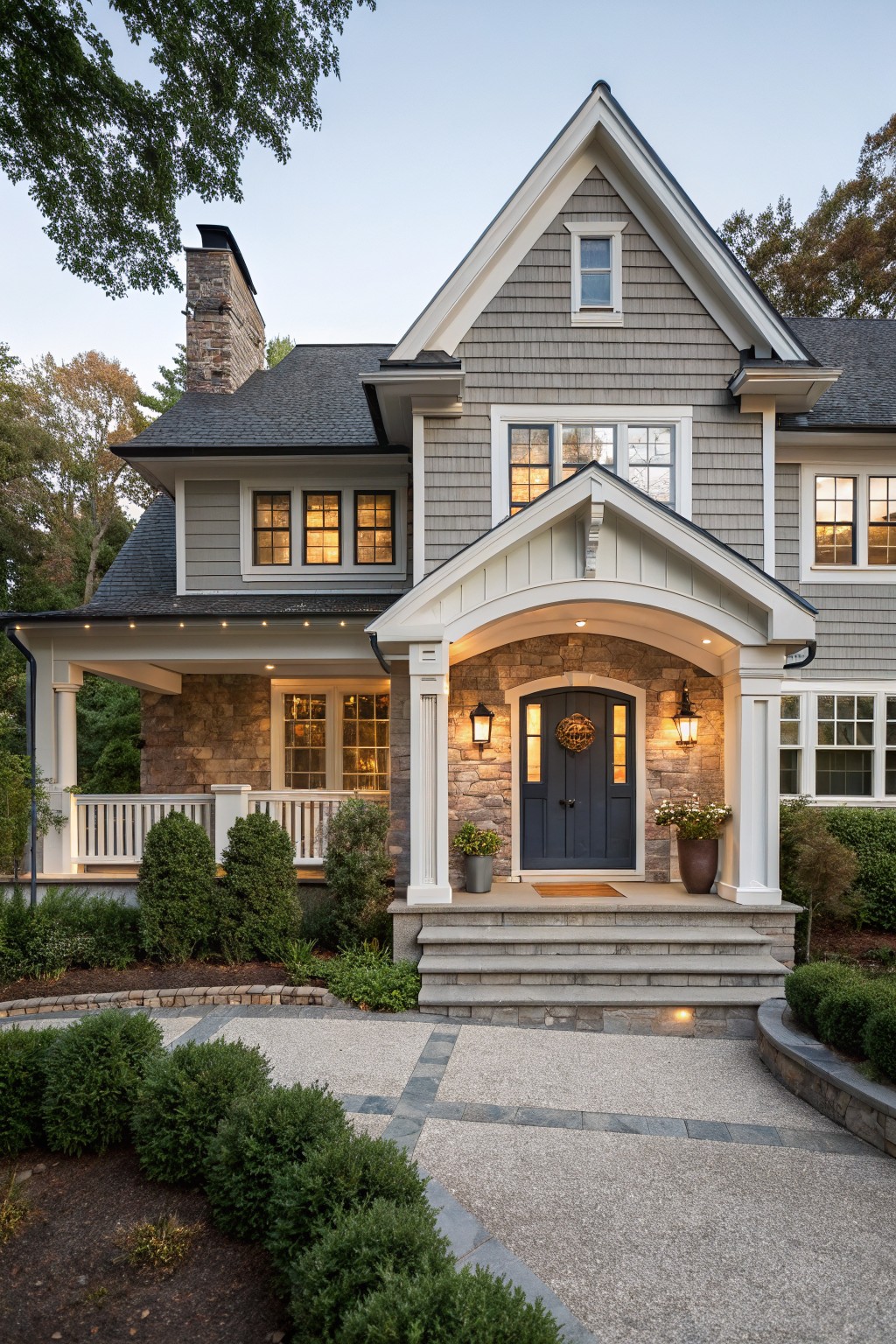
A light gray shingle siding like this one gives a house that settled-in, classic feel right away. It softens the whole facade without losing any charm, especially when you add white trim around the windows and porch. The color picks up the tree tones nearby and stays calm even as the sun shifts.
Try it on older homes or new builds aiming for New England style. Stone around the entry pulls it together nicely, and a dark door keeps things from going flat. Watch the sheen though. Flat or low-luster finish holds up best in shady spots.
Soft Gray Board-and-Batten Siding
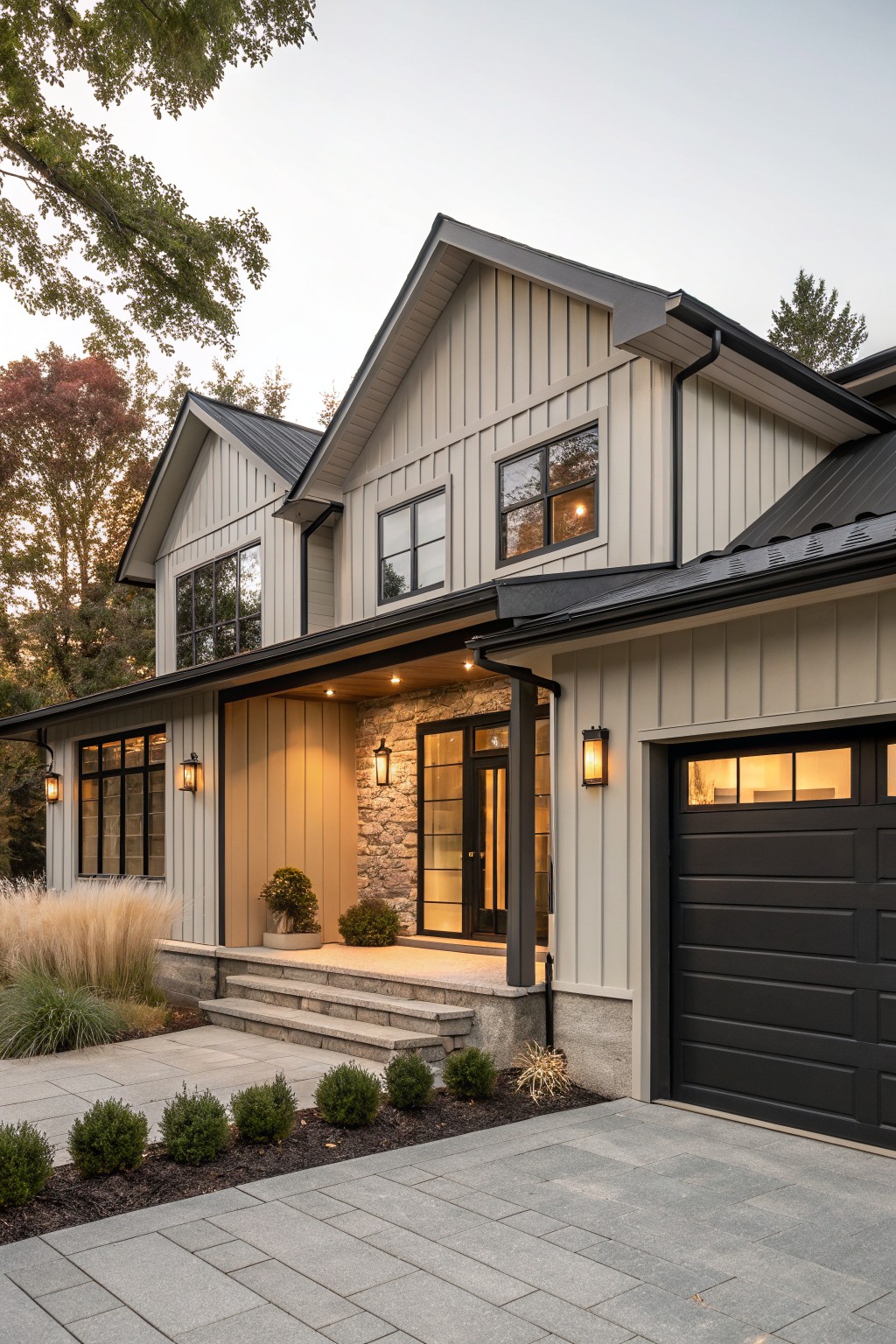
This light gray siding in a board-and-batten style gives the house a clean modern farmhouse feel. It looks fresh against the black metal roof and window frames. The vertical lines add some height without overwhelming the look. Stone around the entry keeps things grounded too.
Try this on a two-story home where you want subtle curb appeal. It works well in wooded areas or suburbs. Pair it with black accents for contrast. Just make sure the gray isn’t too cool if your climate is harsh winters… it can show dirt faster.
Gray Brick Facade with Black Trim
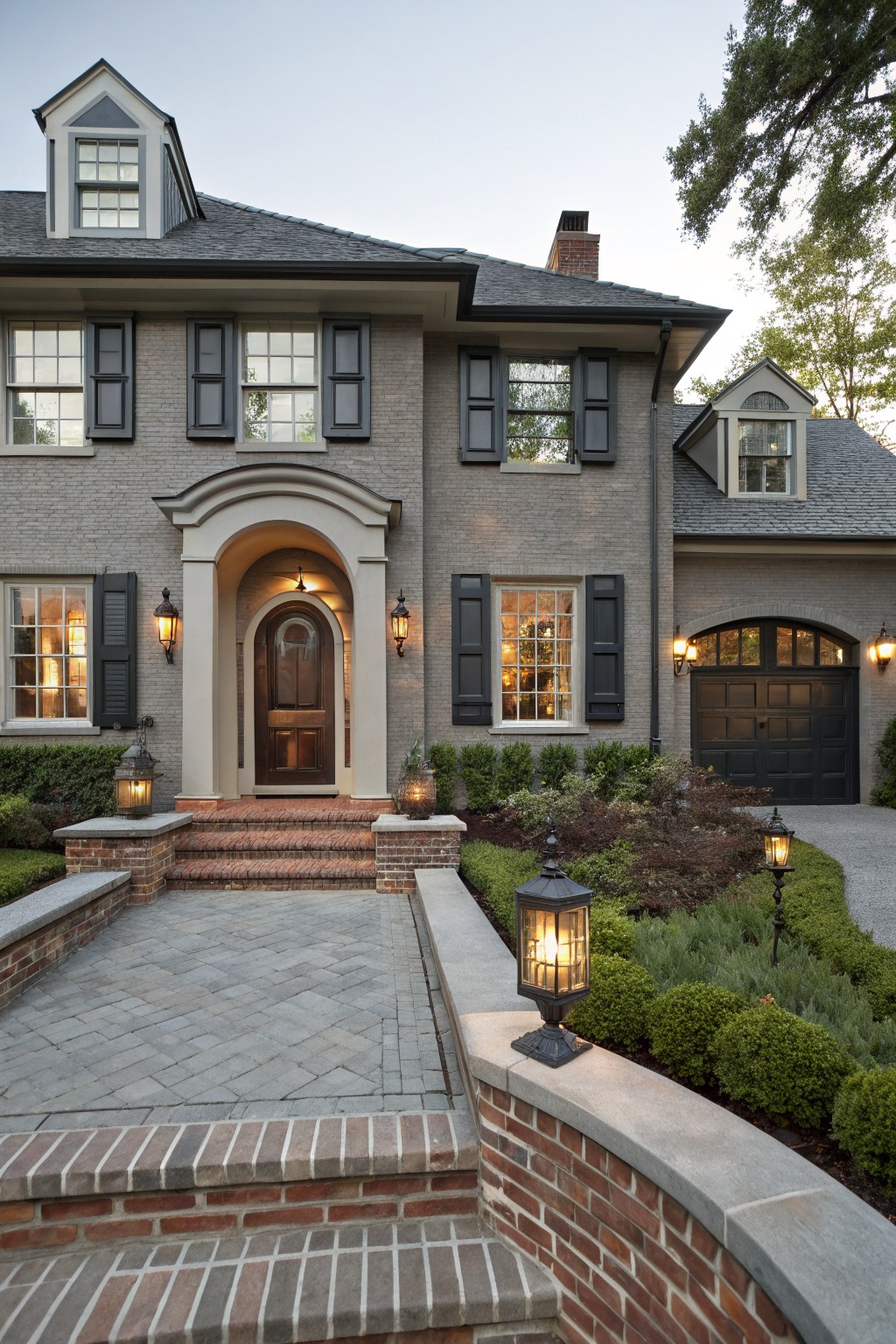
A soft gray brick like this one keeps a house looking steady and timeless. The black shutters and trim stand out just enough to frame the windows and door nicely. That simple contrast pulls your eye to the front entry without overwhelming the whole look.
Try it on a two-story home with some traditional lines. Use black for shutters, garage door, and window frames to match the gray brick. Add a few brick steps at the entry for that grounded feel. It suits neighborhoods where homes sit close together and you want easy curb appeal year-round.
Light Gray Vertical Panels
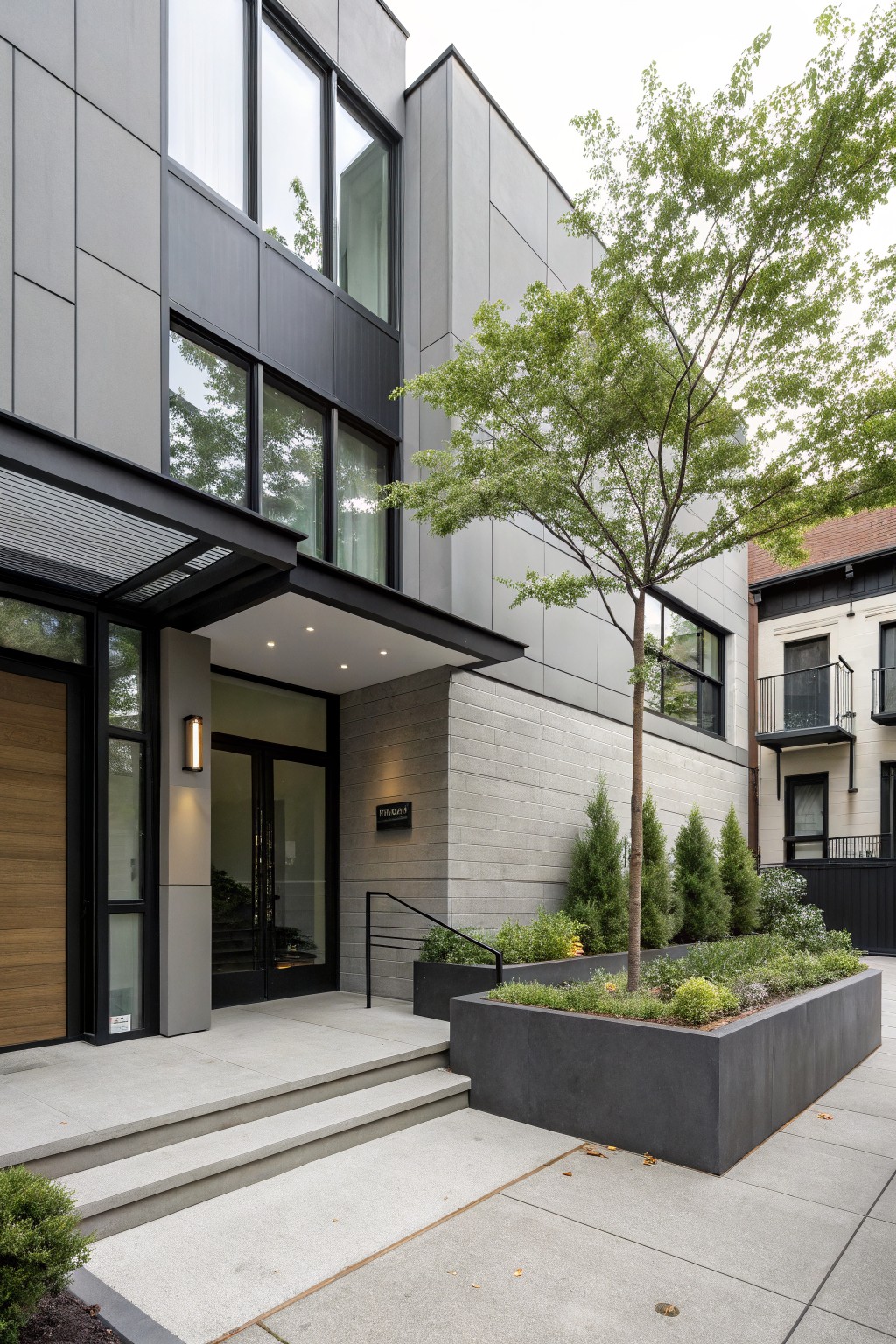
Light gray vertical panels like these give a house a fresh modern edge without trying too hard. They have a subtle texture that catches the light just right, and here they work well with black metal frames around the windows and entry. That mix keeps the look sharp but not cold, especially with the wood door warming things up a bit.
This approach fits boxy or mid-century homes looking for an update. Paint in a soft matte gray to mimic concrete siding, then add black accents on trim or an awning for contrast. It holds up in urban spots or tree-lined streets, but pair it with some plants nearby so it doesn’t feel stark.
Warm Gray Stucco on Timber-Framed Houses
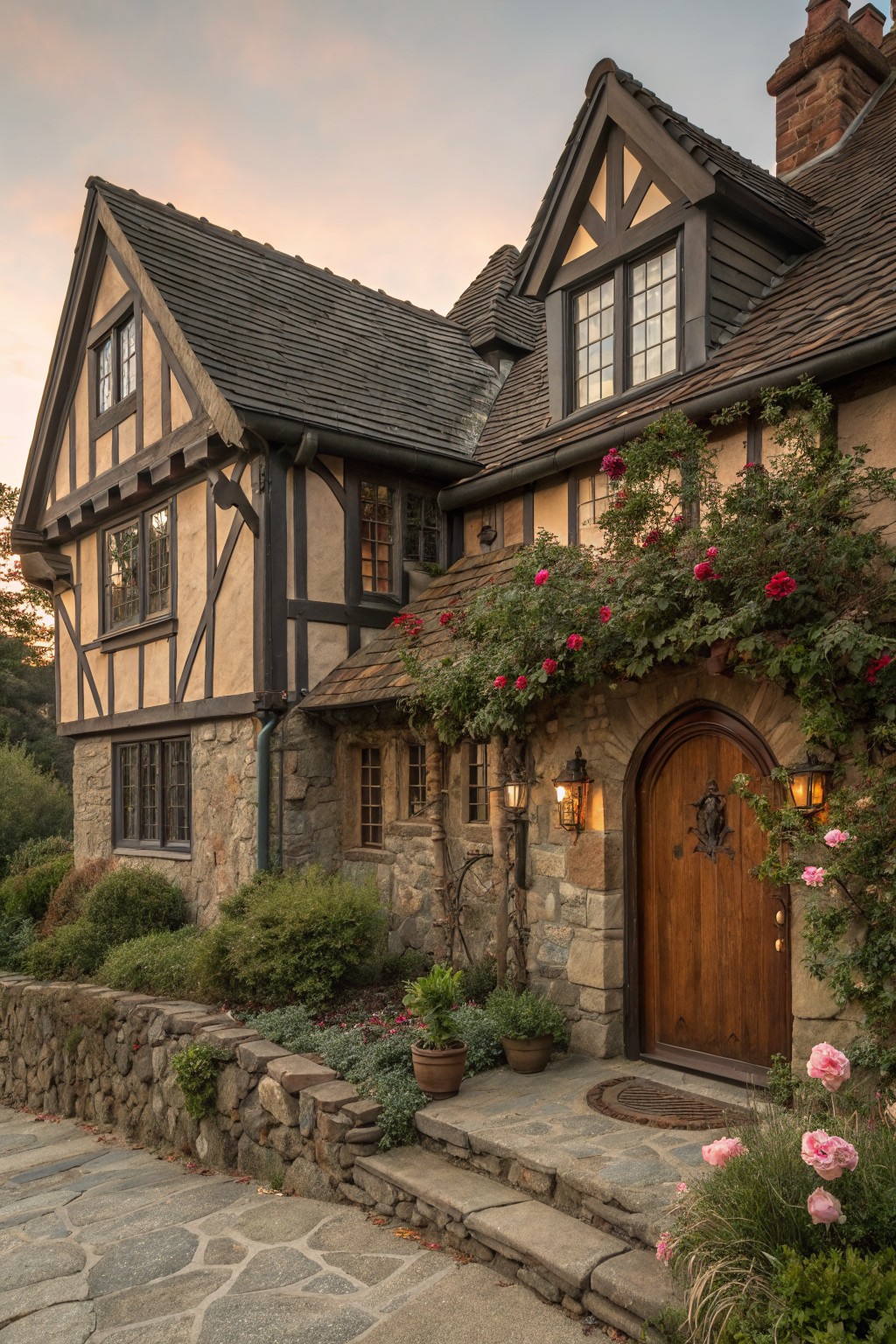
This warm gray stucco gives the house a cozy, lived-in feel without going too dark or modern. It works nicely against the dark timber beams that outline the upper stories, keeping the Tudor style front and center. The color picks up the soft tones in the stone base too, so everything ties together at sunset.
Try this shade on older homes or new builds aiming for that English cottage vibe. It suits sloped sites with some landscaping around the base, like low shrubs and climbing roses near the entry. Just make sure the trim stays dark to avoid a washed-out look, and add lanterns by the door for evenings.
Dark Gray Corrugated Siding Makes a Strong Statement
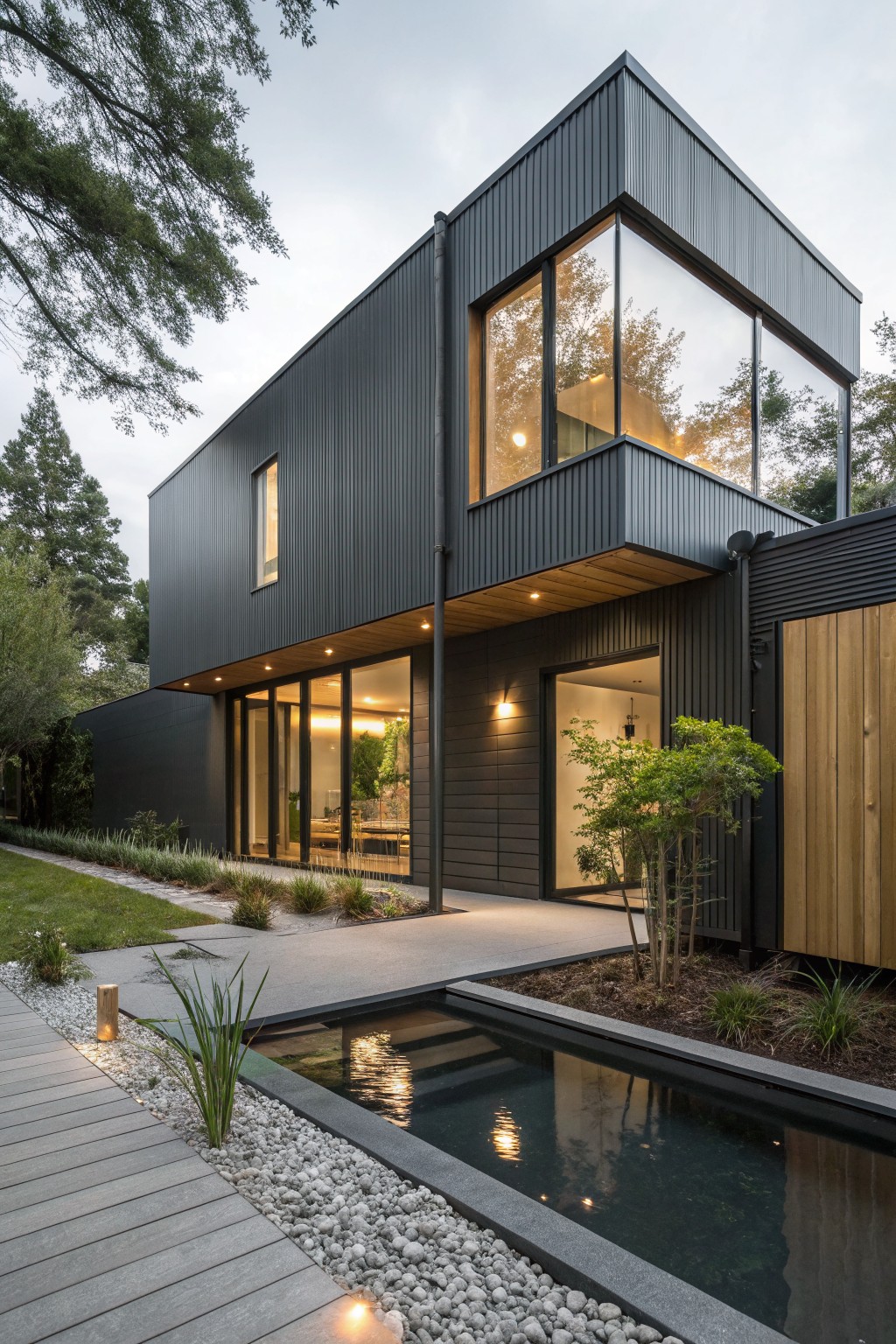
This house uses dark gray corrugated metal siding over most of its walls. It gives the place a tough, industrial feel that looks sharp against the trees and sky. The siding’s ridges catch the light just right, especially in the evening when the windows glow warm inside. Paired with a bit of wood at the entry, it keeps things from feeling too cold.
You can pull this off on a newer build or even updating an older ranch style home. Go for panels that mimic real metal if you’re painting, or actual corrugated sheets for low upkeep. It works best where you want curb appeal without fuss. Just make sure the trim pops a little, like with that warm wood here, so the gray doesn’t take over everything.
Soft Gray on Victorian Houses
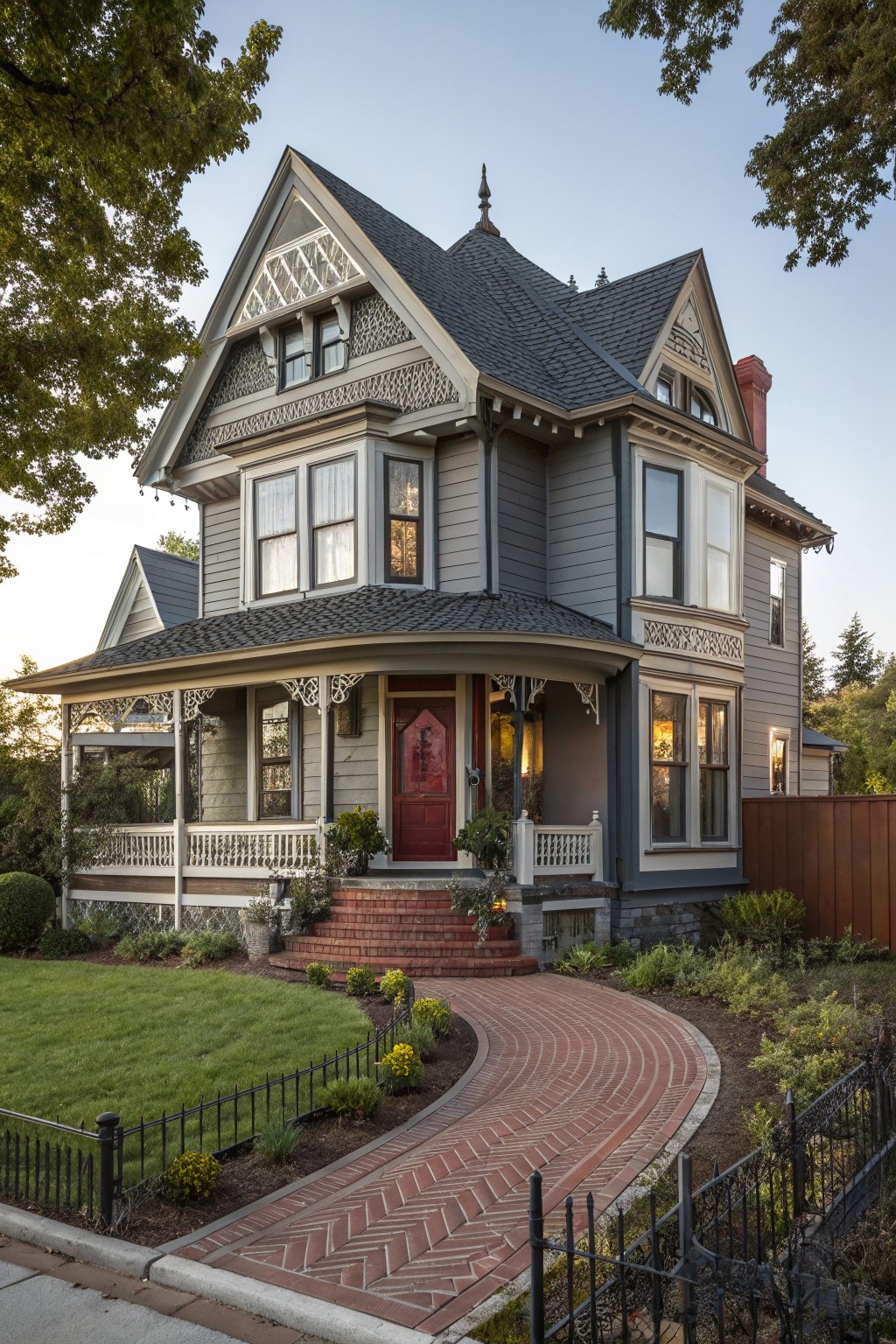
This soft gray paint covers the siding and shakes nicely on a classic Victorian home. It lets all those gables, brackets, and window details pop without overwhelming them. A bright red door pulls your eye right to the entry, making the whole front feel more inviting.
Try this shade on homes from the late 1800s or early 1900s with busy trimwork. It suits tree-lined streets where you want subtle curb appeal. Stick to lighter grays so the architecture doesn’t get lost, and add white trim for clean lines.
Gray Stone and Shingle Exterior
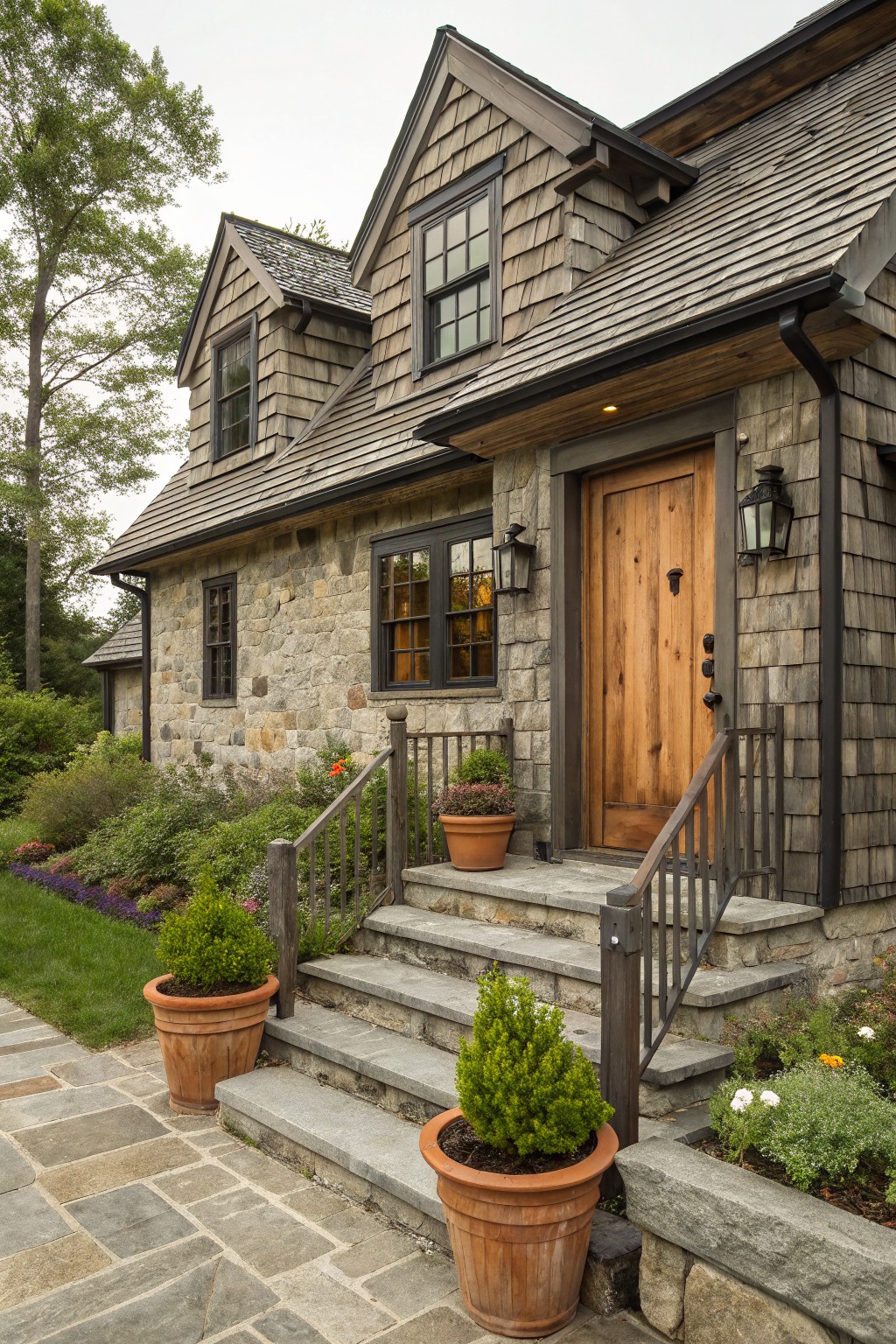
A solid gray fieldstone base paired with weathered shingle siding higher up makes for a straightforward, sturdy house look. The natural gray tones in the stone blend right into the shingles without any paint needed, and that wooden front door pulls it together. Add a couple lanterns by the entry, and it feels settled in its spot.
This setup suits older-style homes or cottages in wooded areas where you want low upkeep. Keep landscaping simple around the steps with potted topiaries, and skip bold colors. It holds up well in damp climates too, since stone sheds water easily.
Dark Gray Siding for a Modern Facade
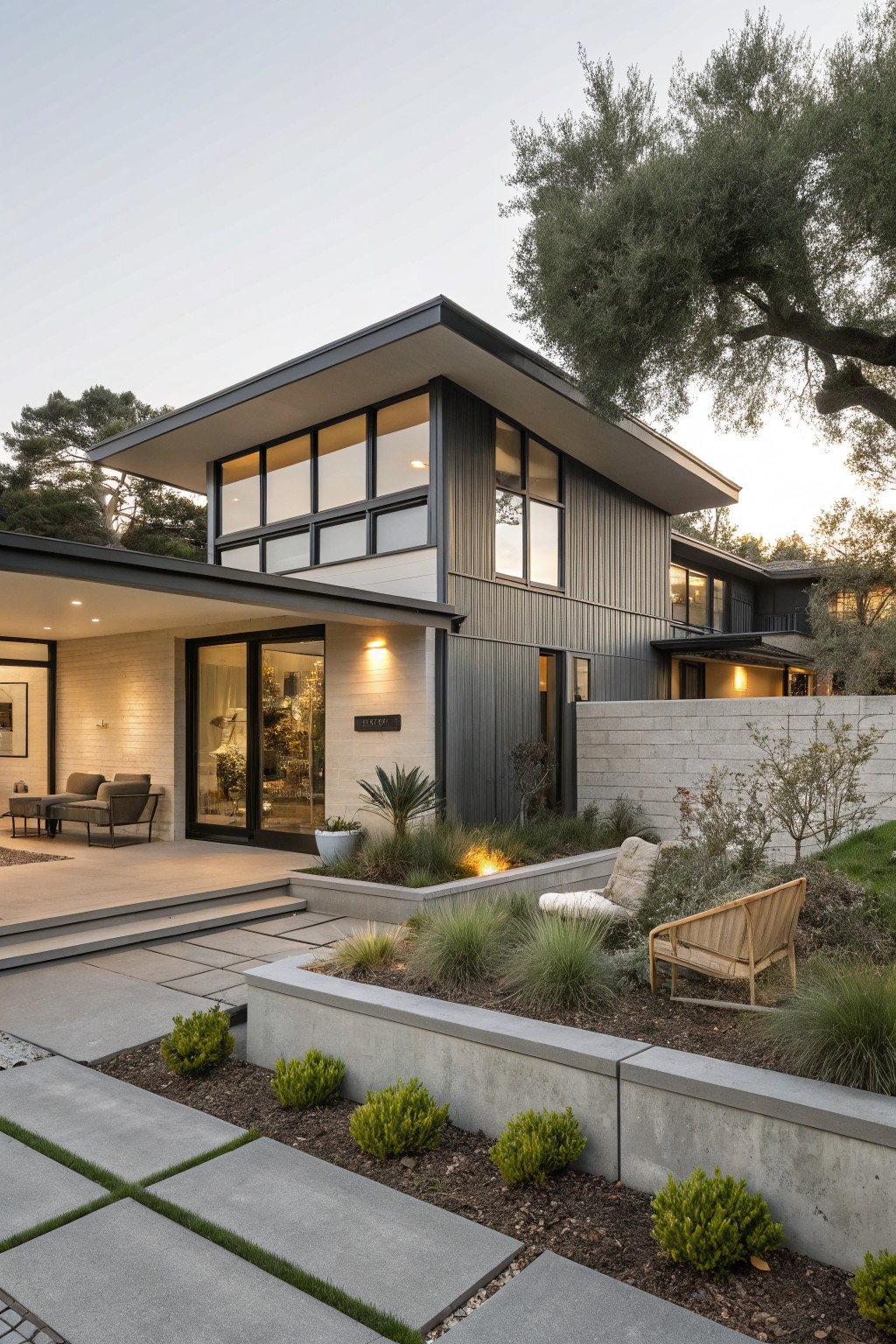
Dark gray siding like this gives a house a clean, contemporary feel without trying too hard. The vertical panels here catch the light just right, adding subtle texture to the flat roofline and big glass windows. It stands out against the warmer beige stone at the entry, making the whole front pull together nicely. Folks going for that updated midcentury vibe often pick this shade because it looks sharp year-round.
You can pull this off on ranch-style or newer builds, especially where trees frame the view. Pair it with concrete paths and simple plantings to keep things low-key. Just make sure the gray isn’t too flat, matte finishes work best to avoid a dull look in shady spots.
Light Gray Shingles with Navy Doors
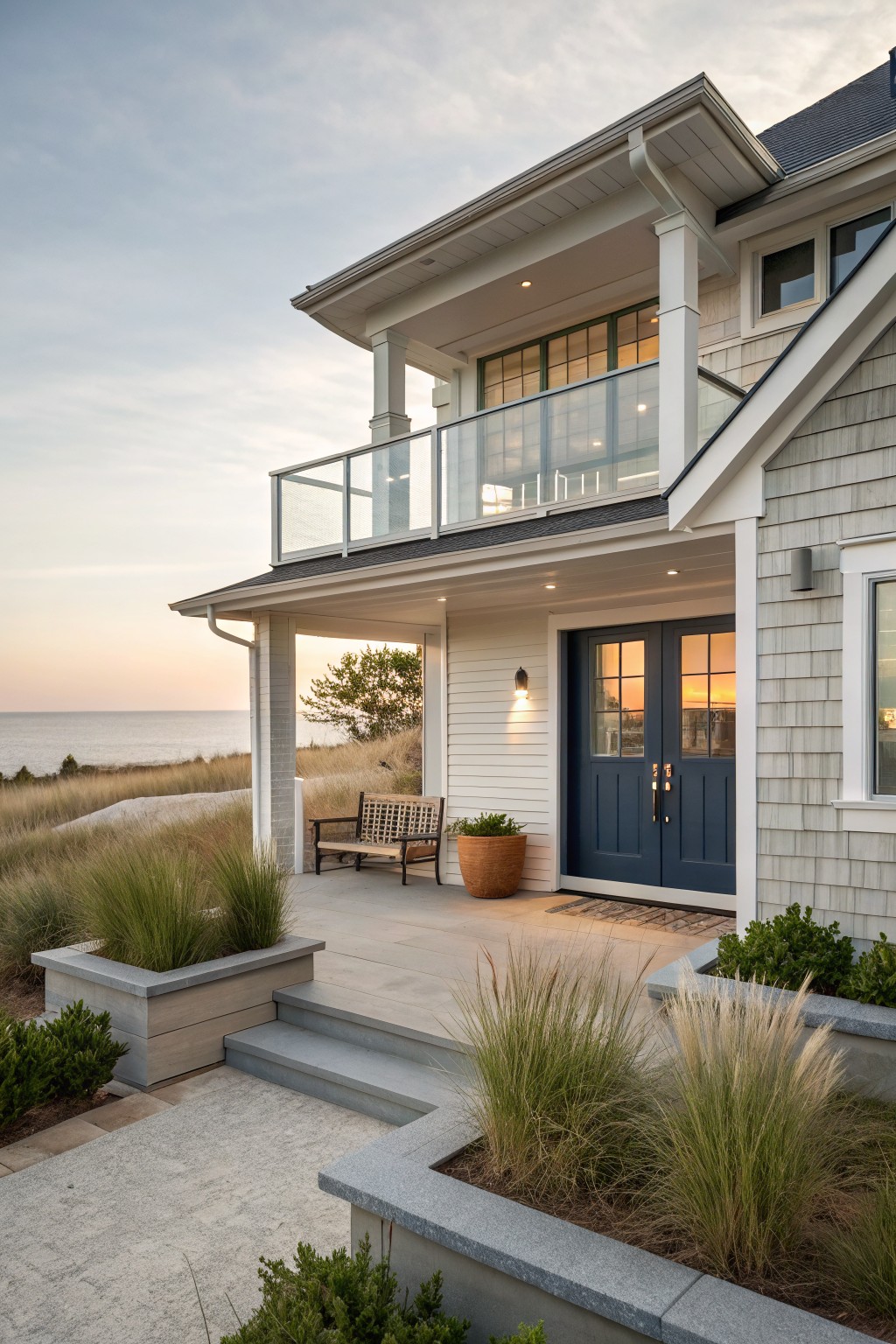
Light gray shingles like these cover the house in a soft, weathered look that fits right into coastal spots. The navy double doors at the entry pull your eye right in, giving the whole front a crisp welcome without much fuss. White trim and posts keep things clean around it.
Try this on a shingled or clapboard house facing the water or just needing some punch. It works best where you want subtle siding that blends back a bit…letting the door do the talking. Stick to one strong color hit like that door, and skip busier accents.
Dark Gray Siding on Stone Bases
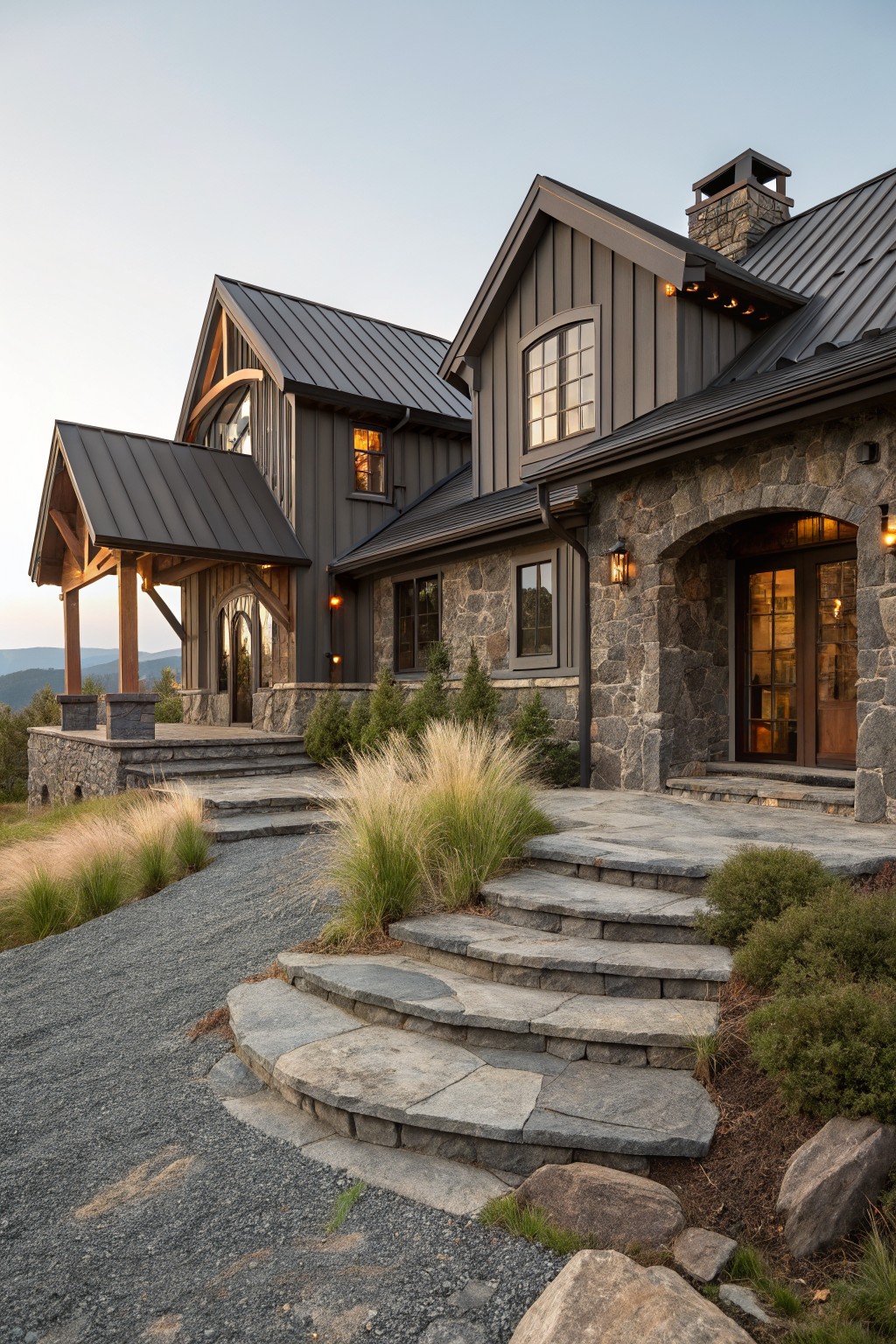
Dark gray siding like this works great on homes with a stone foundation. It picks up the gray tones in the rock without clashing, and gives the whole place a pulled-together look. The vertical boards add some texture too, keeping things from feeling too plain.
Try it on a cabin-style house or anything in a hilly spot. It holds up well in rugged areas, and a matching metal roof ties it in nicely. Just make sure the stone underneath has some gray in it, or the contrast might feel off.
Warm Gray Stucco Exteriors
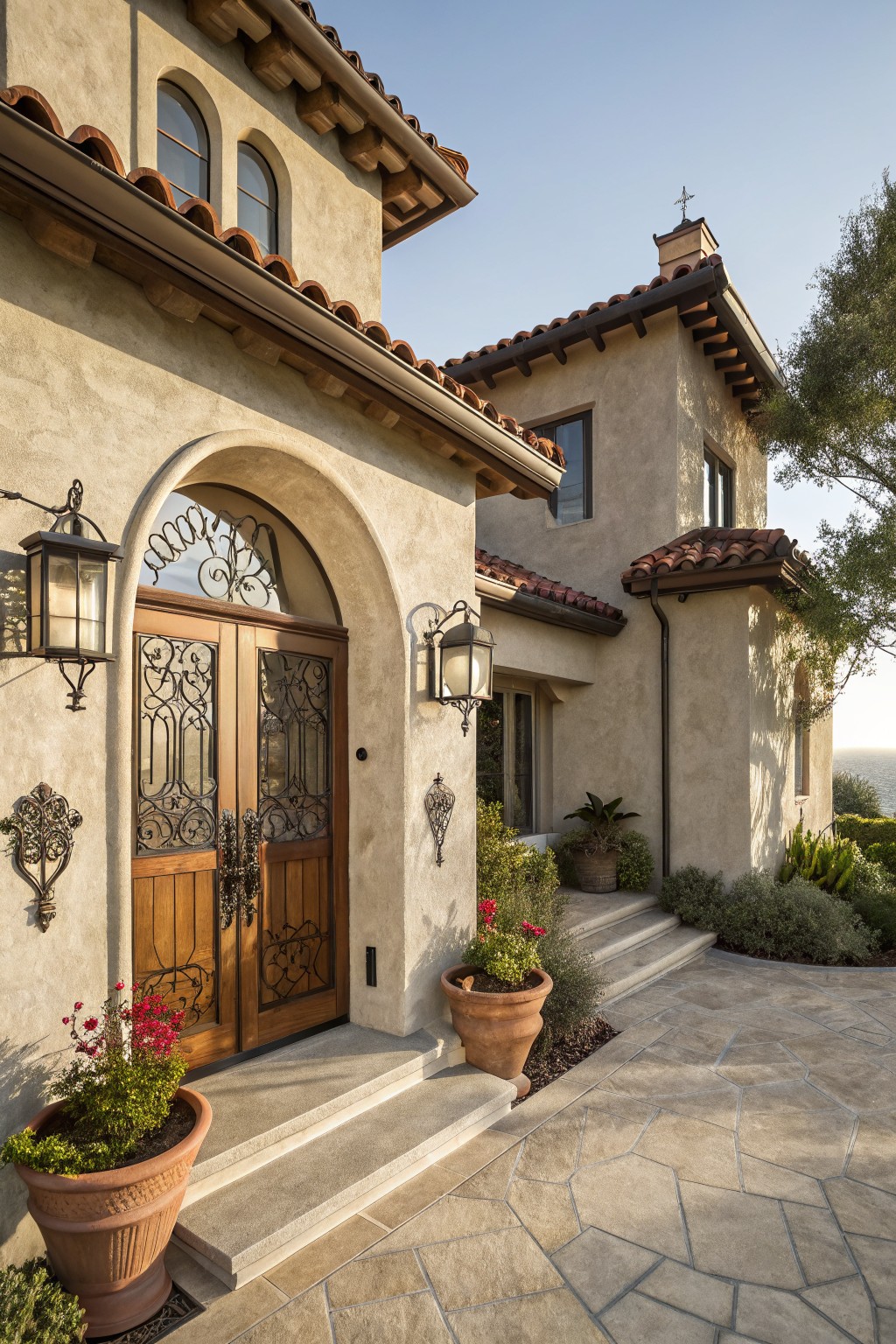
Warm gray stucco like this one keeps things neutral but with enough beige undertone to feel cozy on a house facade. It works well against a terracotta tile roof, letting the red tones pop without overwhelming the whole look. That arched entry with its wrought iron details adds some old-world charm too.
Try this color on ranch or Mediterranean-style homes, especially where you get a lot of sun. It hides dirt better than stark white and pairs nicely with stone steps or potted plants at the door. Just make sure your trim stays simple so the stucco stays the star.
Warm Gray Stucco with Black Metal Accents
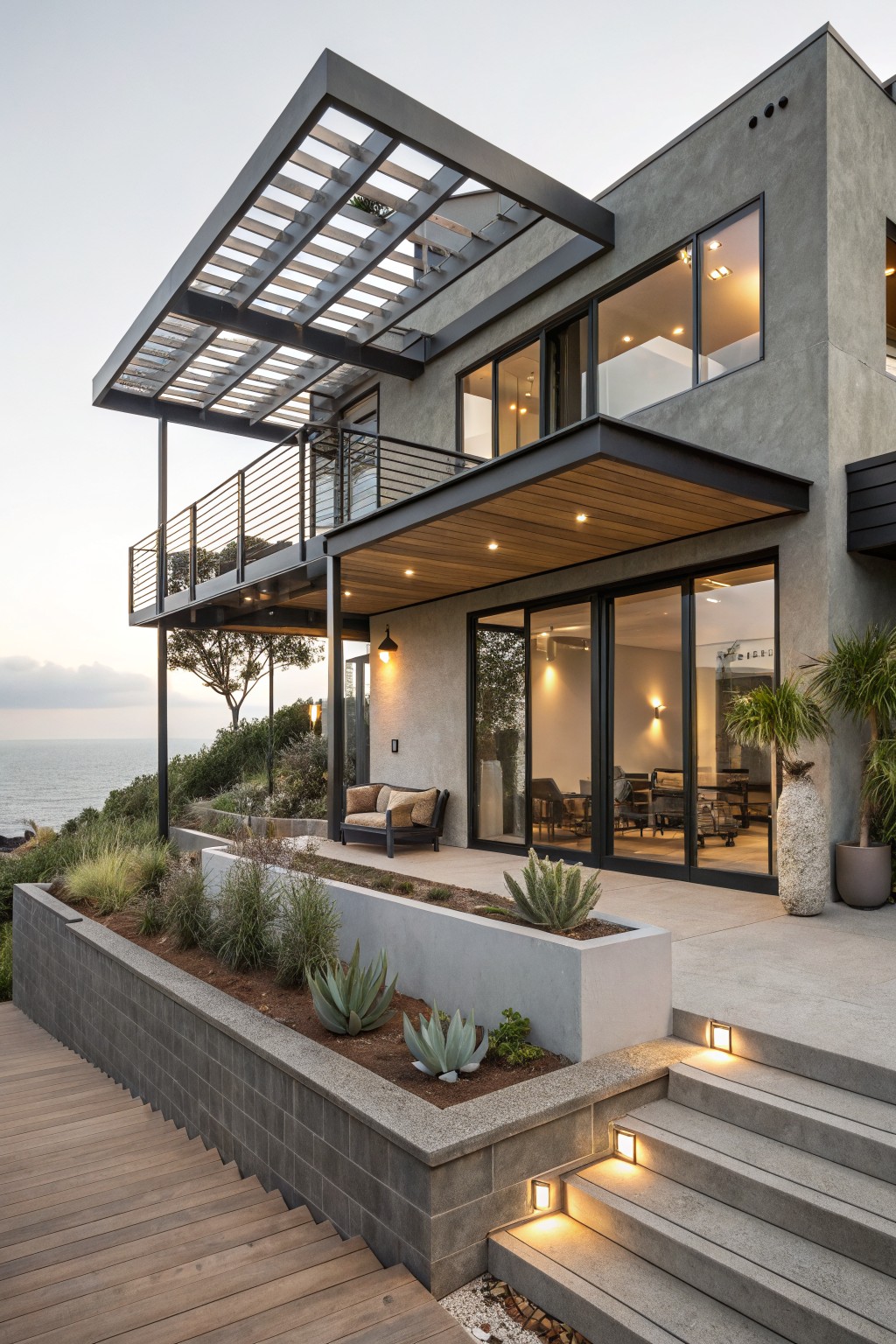
Warm gray stucco like this one softens a modern house design without losing any edge. It picks up the natural tones around it, like the ocean and hills nearby, and lets the black metal pergola and railings stand out sharp. That contrast keeps things clean and bold at the same time. Wood touches on the balcony and deck add just enough warmth to balance it.
Try this on a contemporary home in a coastal spot or anywhere with good light. Paint the stucco in a mid-tone gray with beige undertones, then frame windows and overhangs in matte black steel. Skip glossy finishes, they can feel too flashy. It works best where you want low upkeep that still looks put together year round.
Light Gray Stone Facade
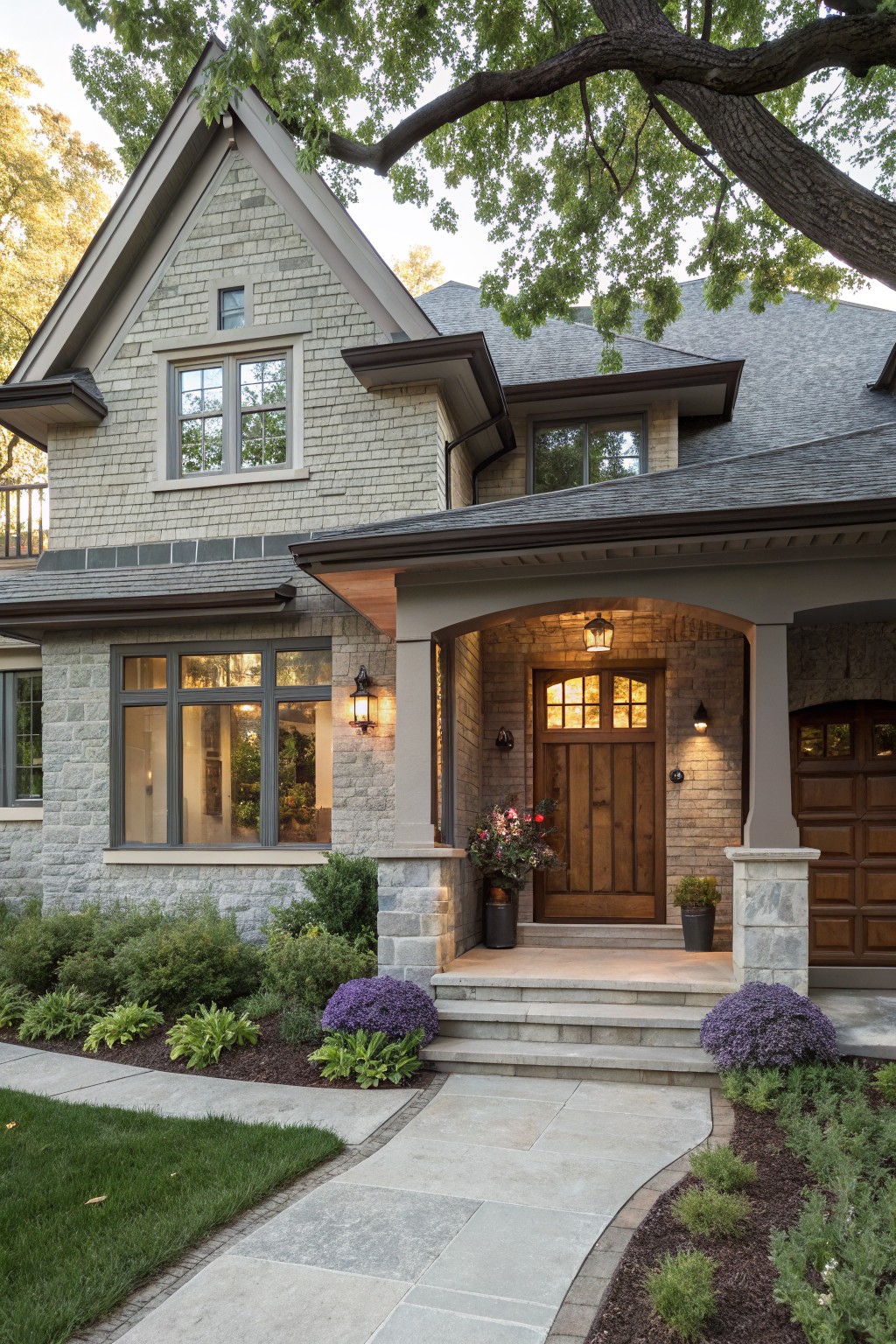
Light gray stone gives a house that solid, natural look people keep coming back to. Here it’s covering the main walls, set off by darker trim on the windows and roof edges. The warm wood door pulls it together at the front steps, and a few plants nearby keep things from feeling too stark.
This works best on homes with gabled roofs or simple shapes like this one. Go for it if you want something low upkeep that ages well outdoors. Match the stone tone to your existing roof, and add steps or a path leading right up for easy access.
Soft Gray Vertical Siding
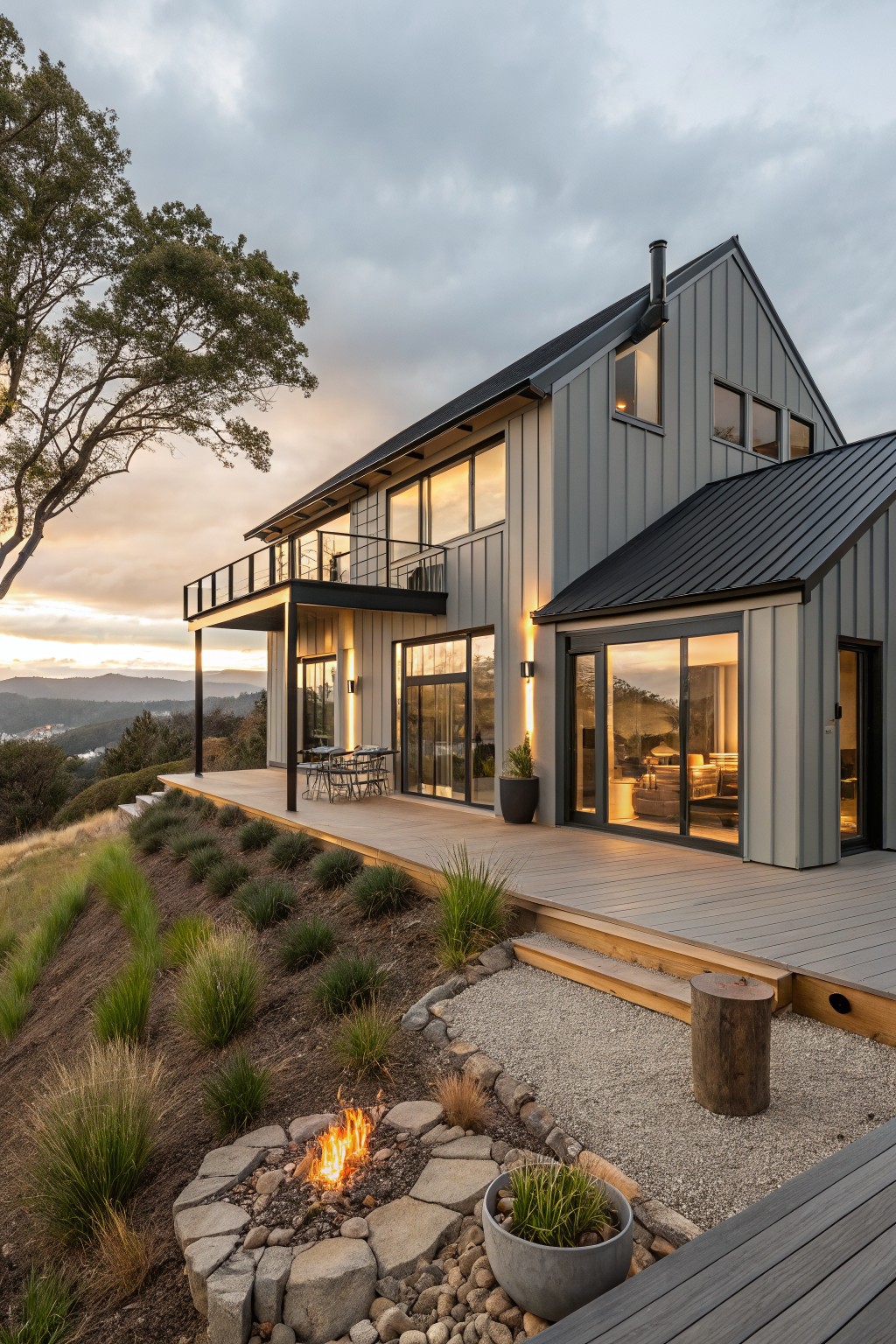
This soft gray siding covers the house in vertical boards that run tall and straight. It gives the whole exterior a clean, modern feel without trying too hard. The color picks up the tones in the surrounding hills and trees, so the home sits right into its spot. Paired with a black metal roof, it adds just enough contrast to make things pop at dusk.
You can pull this off on ranch-style or contemporary homes, especially ones with big windows and simple shapes. Go for a gray with a hint of beige or brown undertone, so it stays warm in changing light. It hides dirt better than white, too, which is handy if you’re not big on upkeep. Works best where you have some natural backdrop.
Soft Gray Stone Cottage Exterior
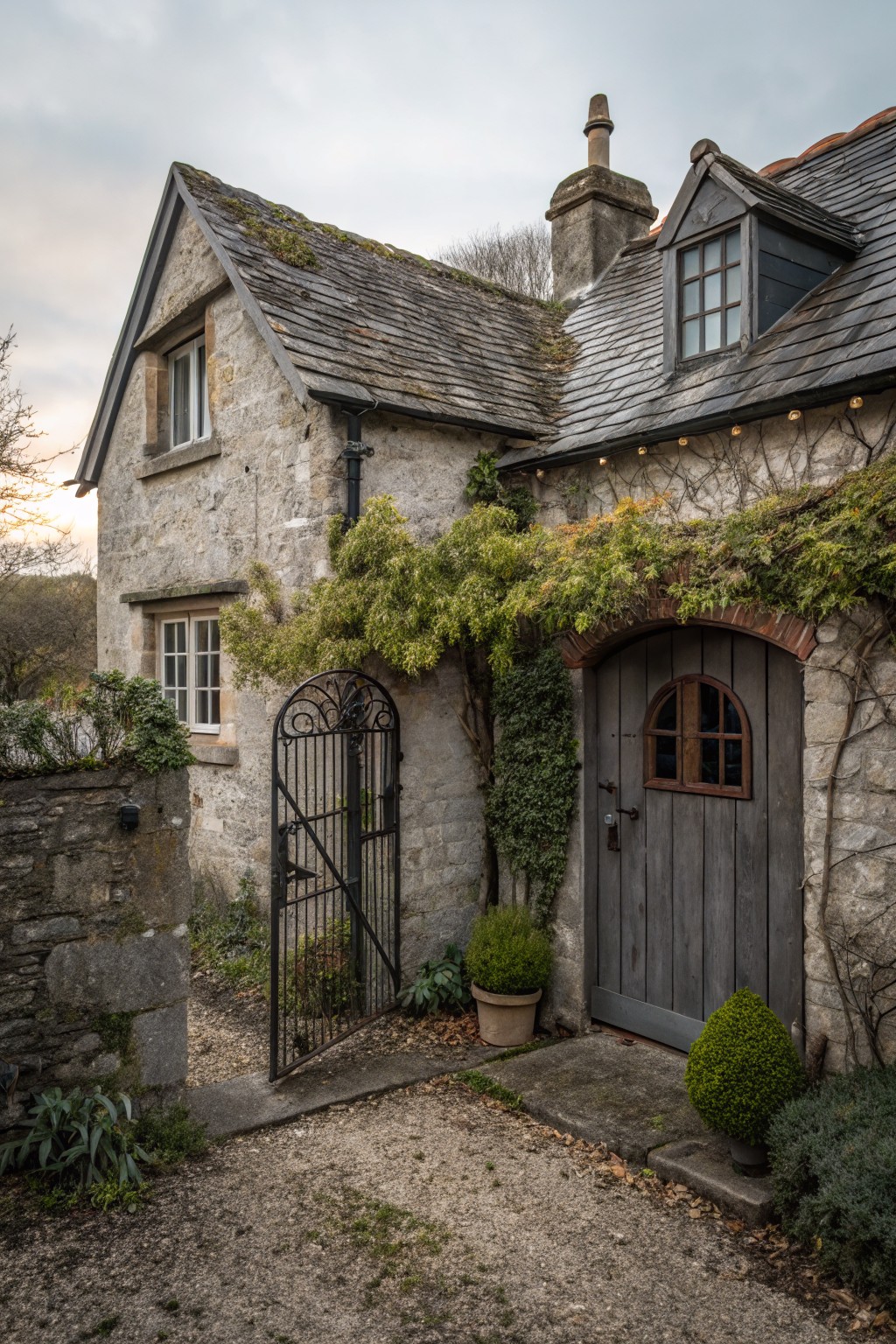
Gray stone walls like these bring a quiet charm to any home. The soft, weathered tones mix naturally with moss on the roof and climbing ivy. It feels timeless and welcoming, without trying too hard.
You can paint your facade in a similar muted gray to get this look, even on siding or stucco. It suits older homes or rural spots best. Just pair it with some green plants around the entry to keep it from feeling stark.
Charcoal Gray Corrugated Siding
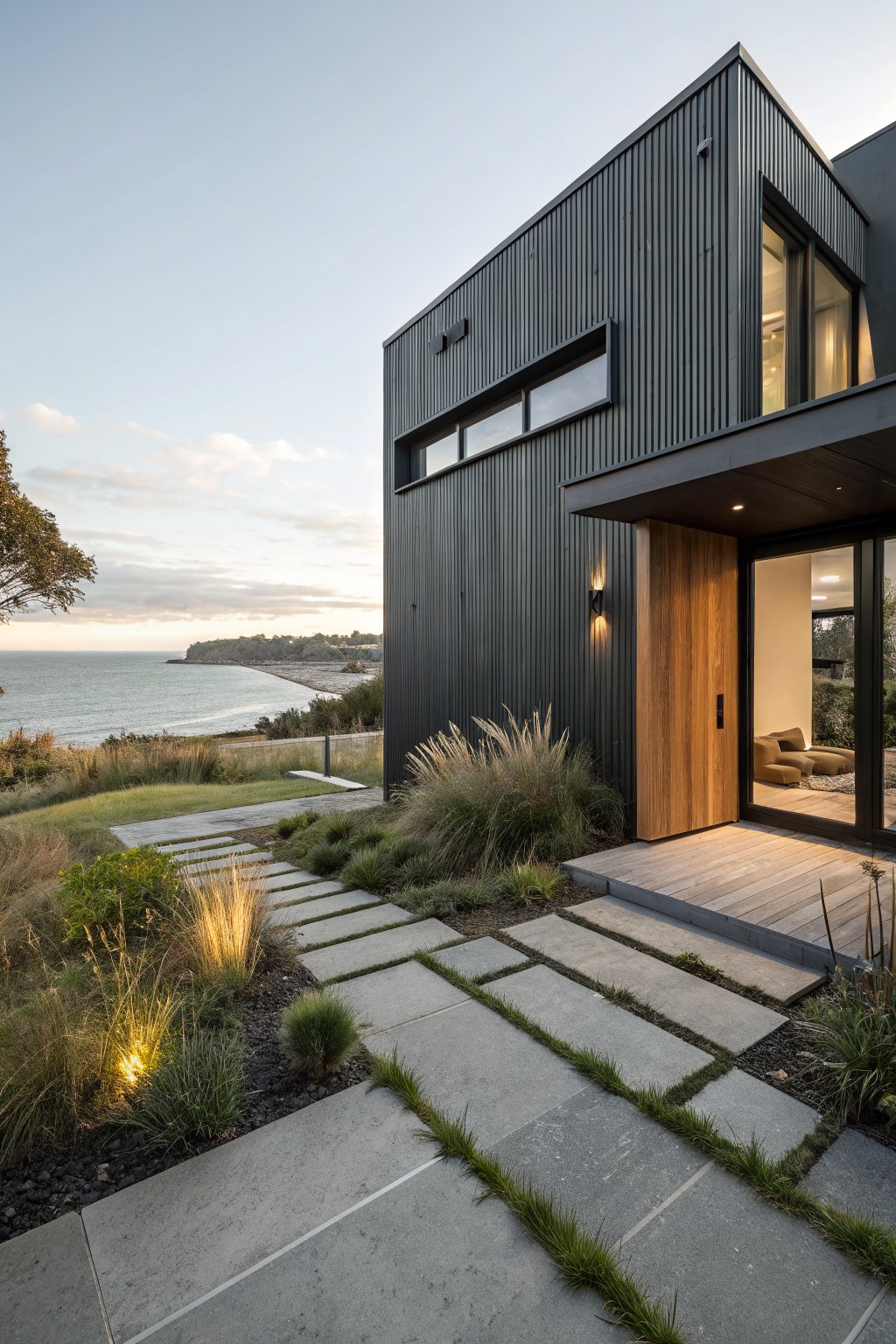
This dark gray corrugated metal siding gives the house a tough, modern edge that holds up well against coastal winds and salt air. It wraps the whole facade in tight, repeating lines that make the simple boxy shape pop without any fuss. Paired with a warm wood entry door, it keeps things from feeling too cold.
You can use this look on homes near the water or in open fields where you want low upkeep and a sharp profile. Stick to matte finishes to cut glare, and mix in wood or stone details at the entry to warm it up. It suits ranch styles or new builds best, but watch the scale on smaller houses so it doesn’t overwhelm.
Warm Gray Stone Facade
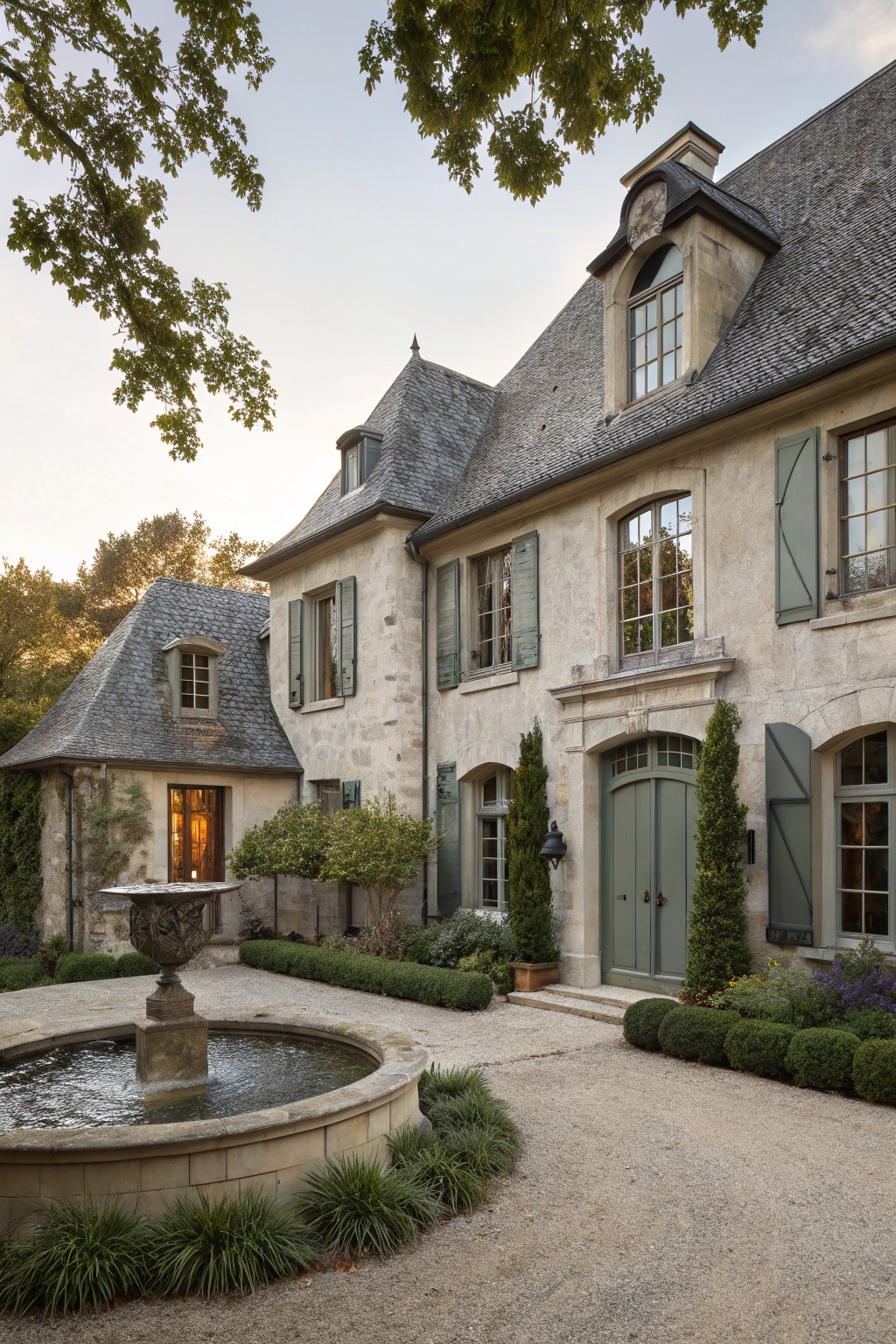
A soft warm gray stone like this gives a house that old-world feel without much fuss. The limestone walls here look settled and real, picking up golden light at dusk. Paired with a dark slate roof, it keeps things balanced and easy on the eyes.
This works best on larger homes or ones with some land around them. Think French country style, or even ranch houses wanting more presence. If stone is out of reach, try a paint match in warm gray tones, and add green shutters for that pop. Just keep the landscaping simple so the house stays the star.
Soft Gray Board-and-Batten Siding
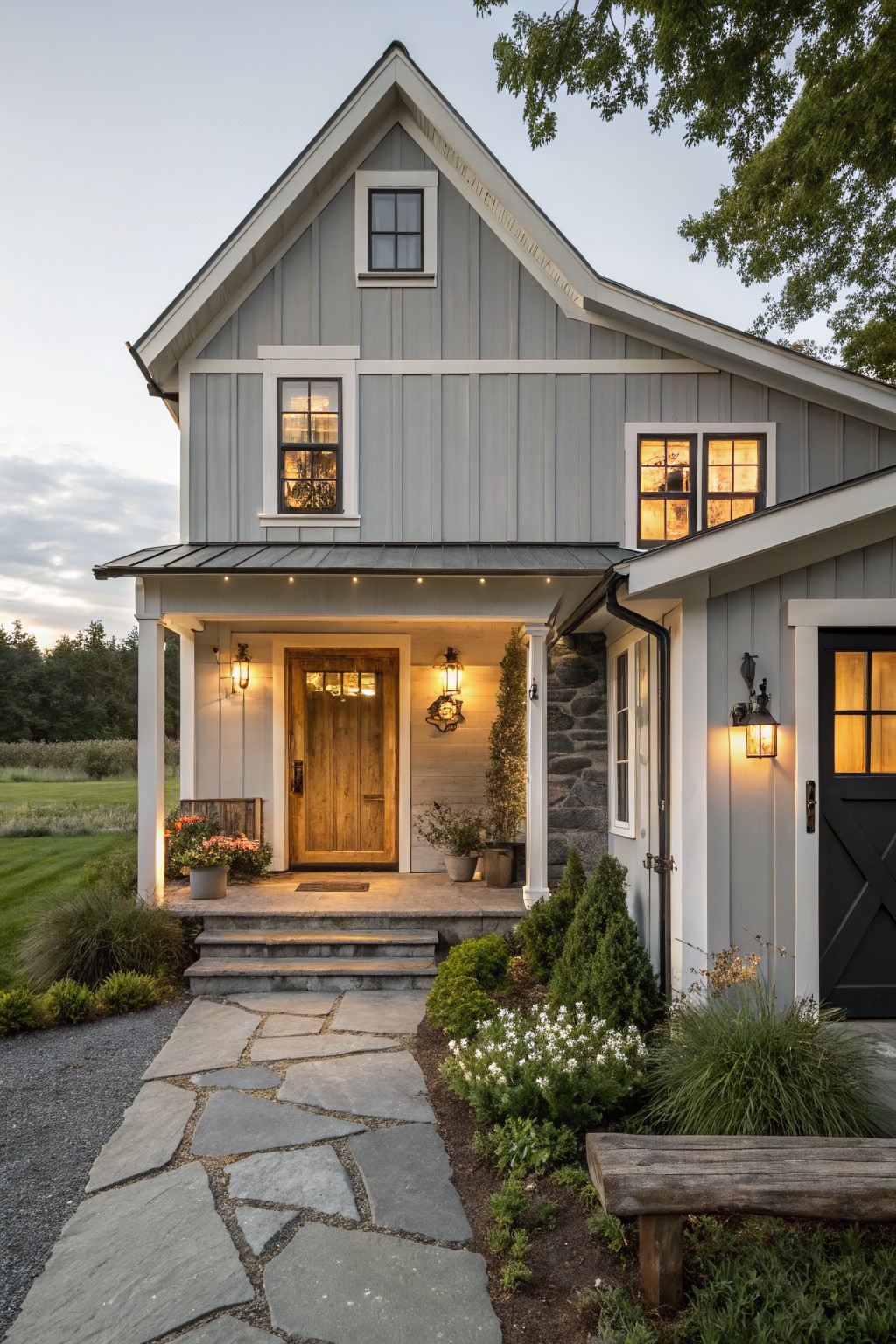
A pale gray like this on board-and-batten siding gives a house that clean, modern farmhouse feel without trying too hard. It softens the look of plain vertical planks while the white trim keeps everything sharp and defined. Those lit lanterns by the door add just enough warmth at dusk to make the entry welcoming.
This color works best on homes with straightforward shapes, like gables and simple porches. It suits rural spots or older neighborhoods where you want something fresh but not flashy. Go for a matte finish to cut glare, and test a few shades on your siding first since light hits boards differently.
Frequently Asked Questions
Q: How do I pick a gray that won’t clash with my brick foundation?
A: Look for cooler grays with blue undertones if your brick has red hues. They blend smoothly without fighting the warmth below. Test a few samples right on the brick at different times of day.
Q: Do these grays hold up well in full sun?
A: Pick paints with UV protection to keep the color vibrant year after year. Grays with slight green undertones resist fading best in bright spots. Slap on a good primer first.
Q: What’s the best way to test these colors on my actual house?
A: Grab large sample boards from the paint store and prop them against your siding. Walk around at morning, noon, and evening light. That quick check saves a ton of regret.
Q: And how do I pair gray with colorful front doors?
A: Go bold with a deep navy or sunny yellow door against a light gray body. It pops without overwhelming the clean gray vibe. Keep trim neutral to let the door shine.
