

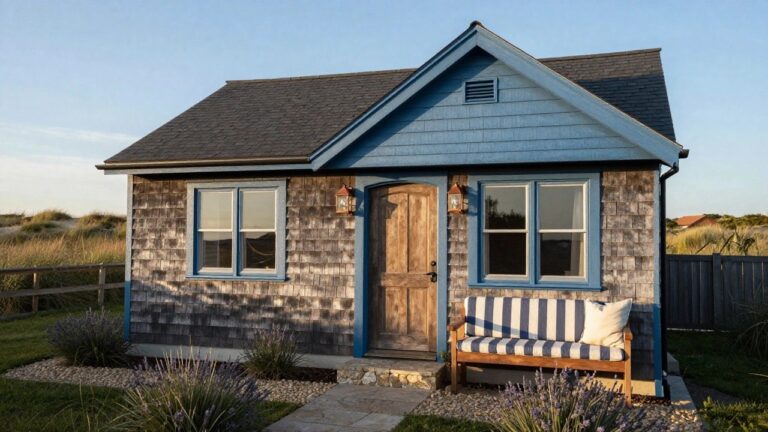
I’ve noticed that a house’s curb appeal hinges on how its facade catches the afternoon light, especially with colors that shift subtly across siding and trim.
Two-tone blue exteriors stand out to me because they add dimension without overwhelming the street view, something flat single shades rarely achieve.
One local home I pass daily pairs a muted cobalt on the body with pale azure accents around the windows and door, making the entry feel more welcoming up close.
The best ones respect the roofline and materials, turning ordinary brick or clapboard into something that reads cleanly from afar.
A couple here feel worth sketching for my own siding refresh someday.
Two-Tone Blue Shingle Siding
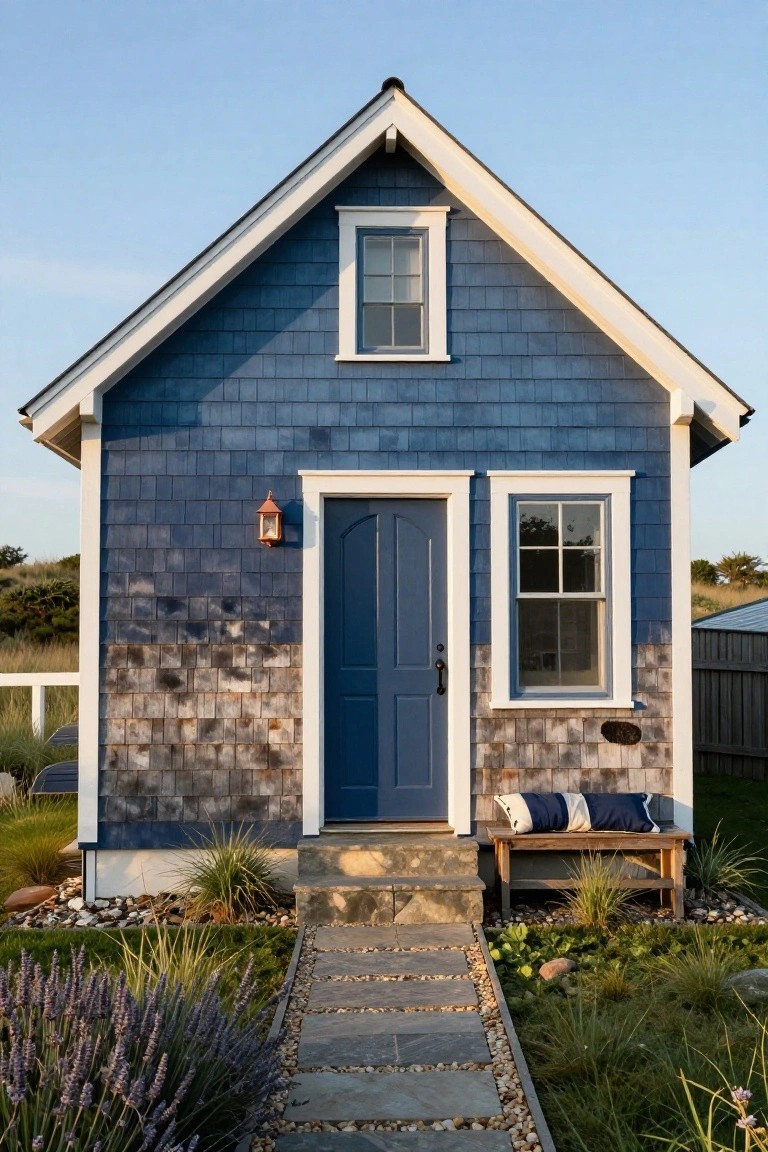
One side of this cottage shows off a deep, fresh blue on the shingles while the other fades to a softer, weathered gray-blue. White trim around the windows and that navy door pull it together nicely. It’s a simple way to add some history and depth to a plain facade without much work.
This look fits older beach houses or small homes in sandy spots. Let one side weather on purpose, or paint sections different shades of blue. Keep the entry clean with stone steps and a bench. Watch the trim so it stays bright against the blues.
Two-Tone Blue Cottage Exterior
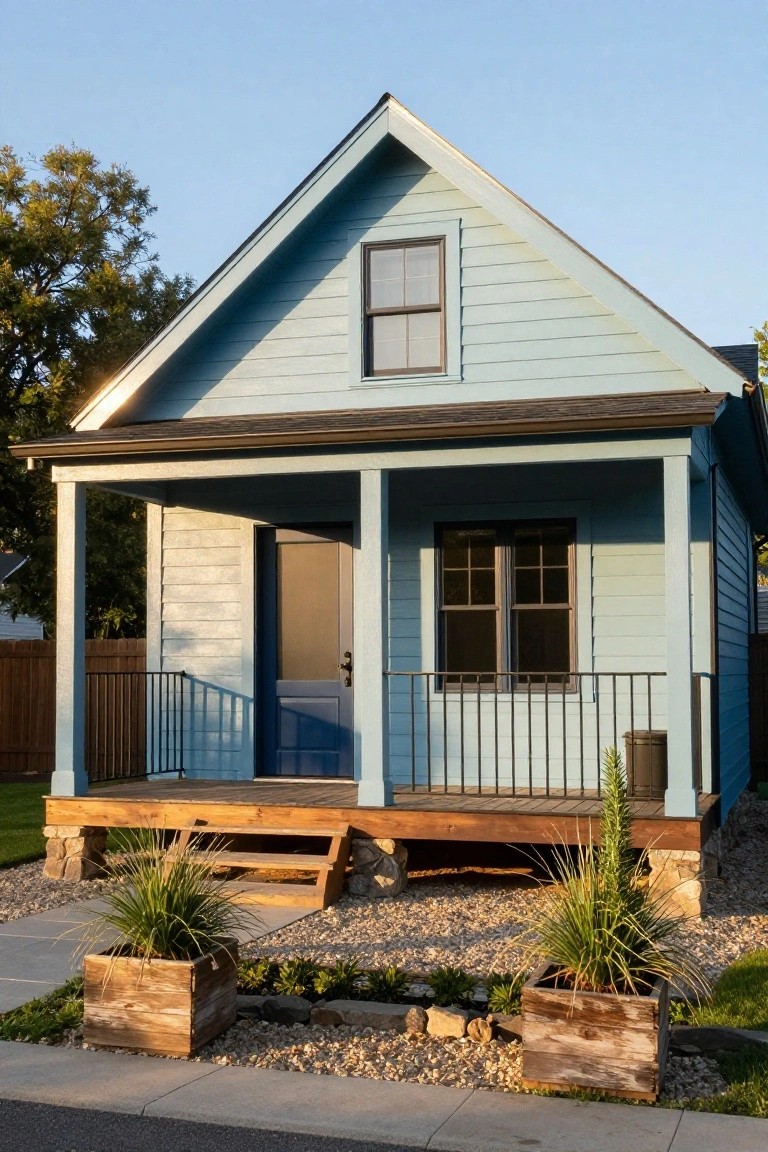
A soft light blue covers the siding on this little house, while a deeper blue on the door adds just enough contrast. That simple switch makes the front feel more interesting, especially with the porch framing things out. It’s a quiet way to give a plain cottage some personality.
This look fits older bungalows or starter homes in neighborhoods with trees. Pick shades that are a few tones apart so the difference shows up in different lights. Skip it if your area has strict color rules, but otherwise it’s easy paint work.
Craftsman House in Two Shades of Blue
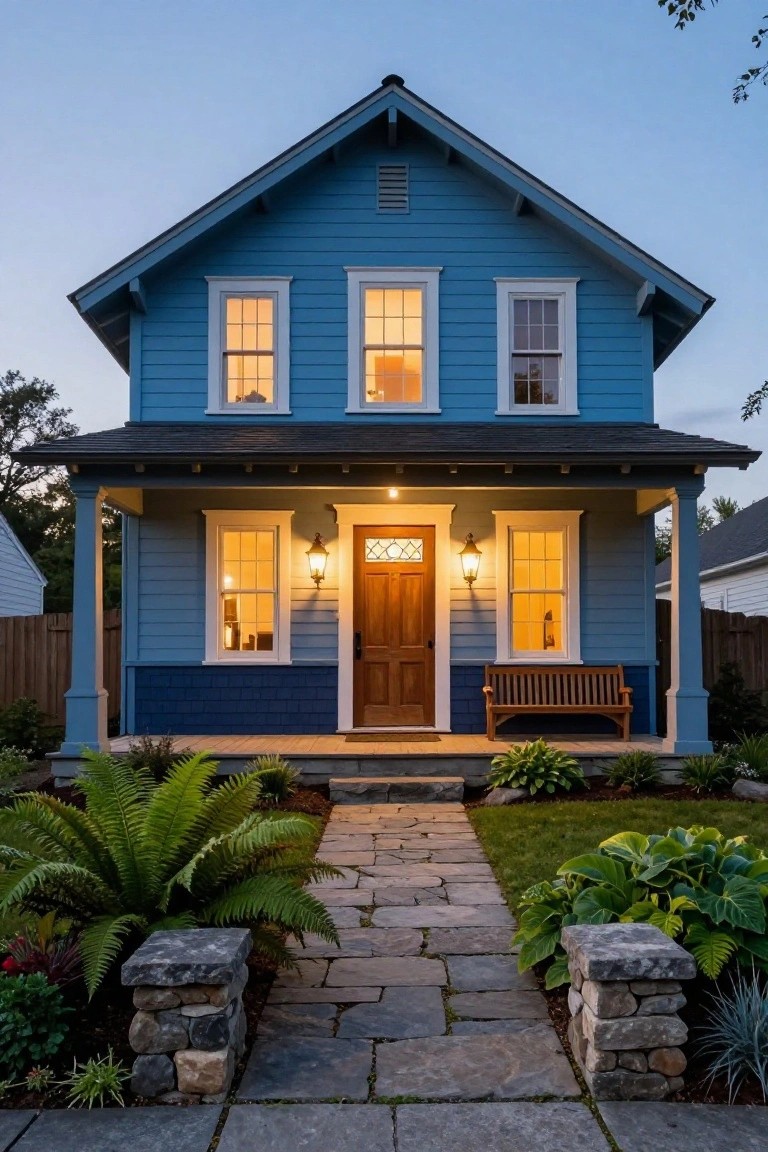
Taking a Craftsman-style home and painting it in two shades of blue keeps things simple but makes the whole front pop. The lighter blue covers most of the siding up high, while a darker blue wraps the bottom few feet. It gives the house some natural weight down low, especially with the porch sitting right on top of it. White trim around the windows and door pulls it all together without stealing the show.
This setup works best on single or two-story homes with good porch details. Think bungalows or older neighborhood houses where you want curb appeal that lasts. Stick to matte paints to avoid glare, and let the wood door and bench add that warm touch. Just make sure the darker shade isn’t too heavy, or it can weigh down a smaller facade.
Two-Tone Blue Facade with Darker Base Wall
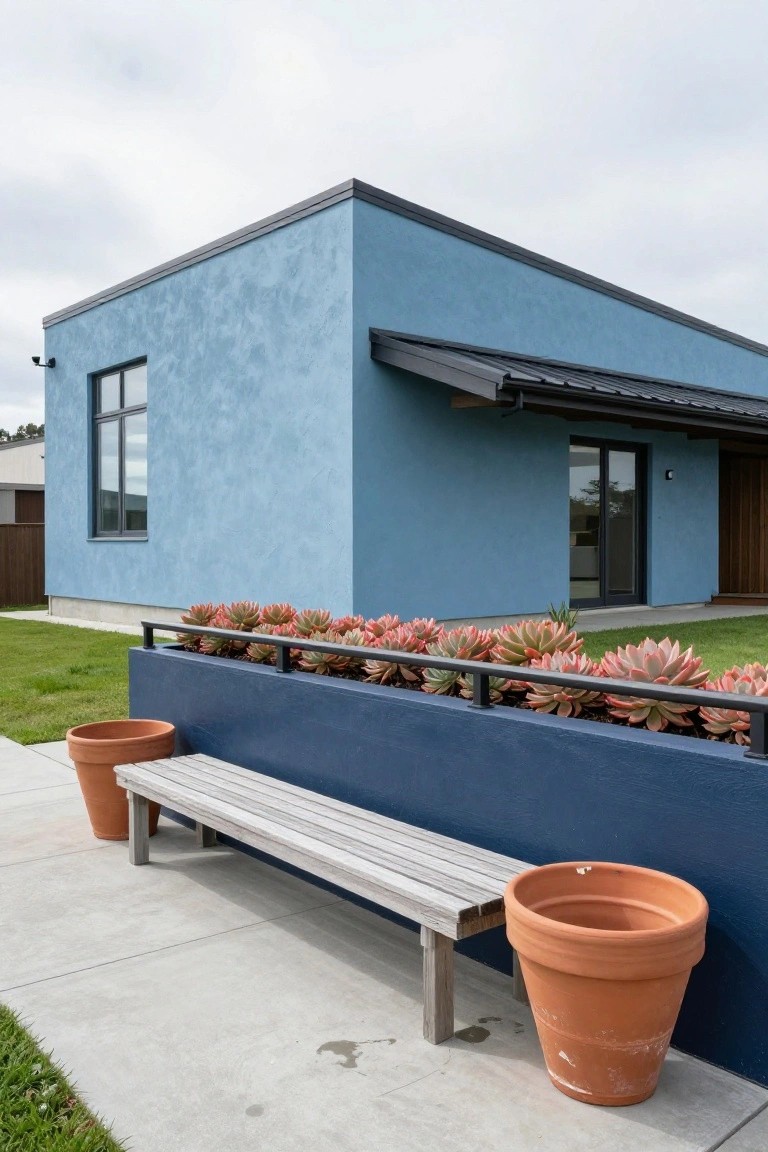
One simple way to add interest to a blue house exterior is using a two-tone look. Here the upper walls are a soft light blue stucco that feels calm and modern. Then a darker blue takes over at the base where it forms a sturdy planter wall. That shift in shade gives the house more depth without much effort. The plants in the planter pick up on it too and make the whole corner feel put together.
This works well on corner lots or along walkways where you see the height difference. It’s great for modern or mid-century homes in mild climates since the stucco holds up outside. Just match the darker shade close to the lighter one so it doesn’t look chopped up. Add a bench nearby like this one for everyday sitting and you’ve got curb appeal that lasts.
Two-Tone Blue House with Navy Details
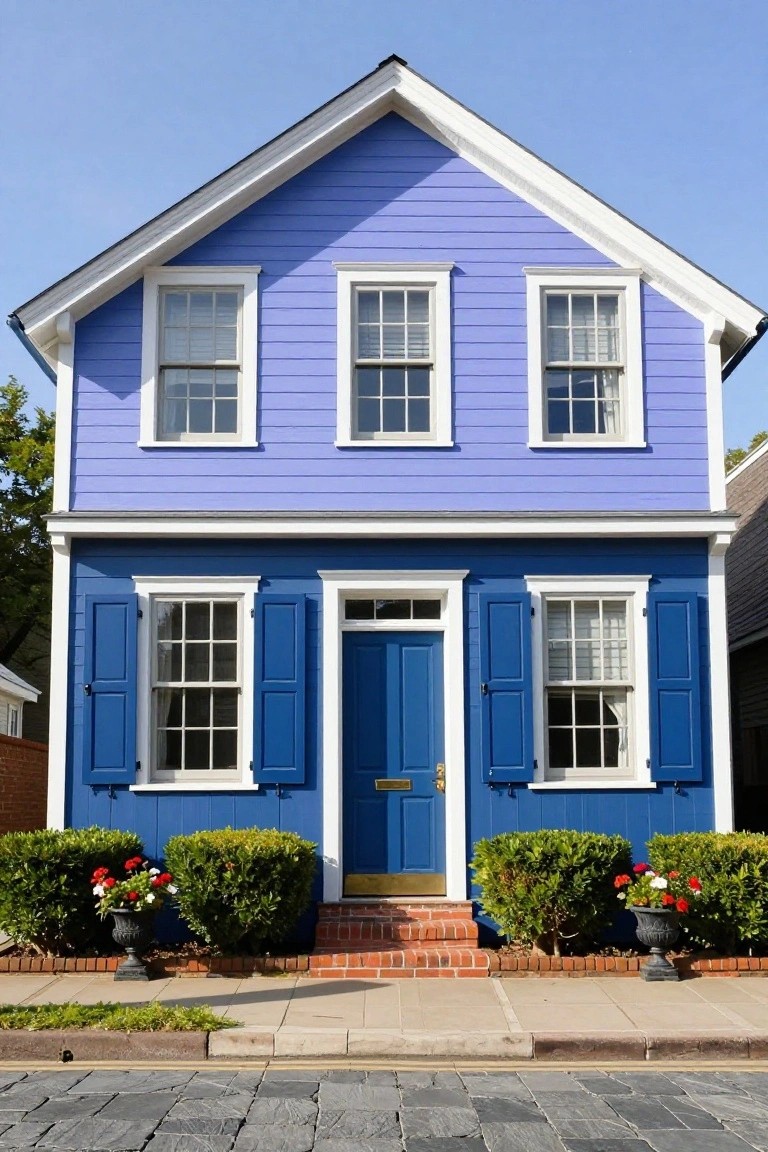
This setup takes a light purple-blue paint on the main siding and adds a deeper navy blue around the base, shutters, and front door. White trim outlines everything cleanly, and the brick steps tie it to the ground. It gives the facade more dimension, making a simple narrow house stand out on the street.
Try it on traditional clapboard homes, especially in historic areas or warm climates where the colors hold up. Boxwoods and potted flowers along the front keep the look tidy. Just check local rules first… some places stick to stricter palettes.
Teal Siding Over Navy Brick Base
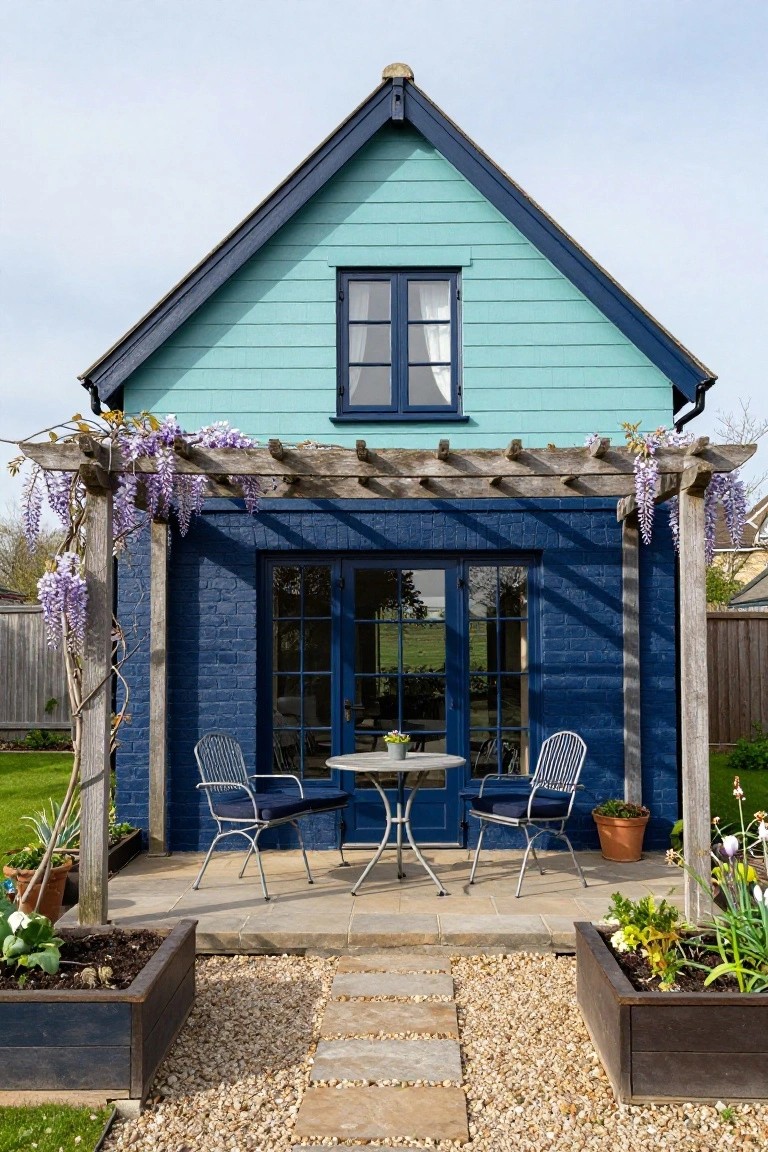
This setup takes two shades of blue and splits them right down the middle of the house. Light teal siding covers the upper walls while a deeper navy brick handles the bottom. The change in color and texture gives the facade some real lift. It makes a simple cottage shape feel more put-together without much fuss.
Try this on homes with a clear horizontal line, like where siding meets foundation or a porch base. It suits garden settings or rural spots best, especially with a wooden pergola draped in wisteria nearby. Just match the trim and doors to the darker shade to keep things from looking choppy.
Deep Blue Pool Cabana Exterior
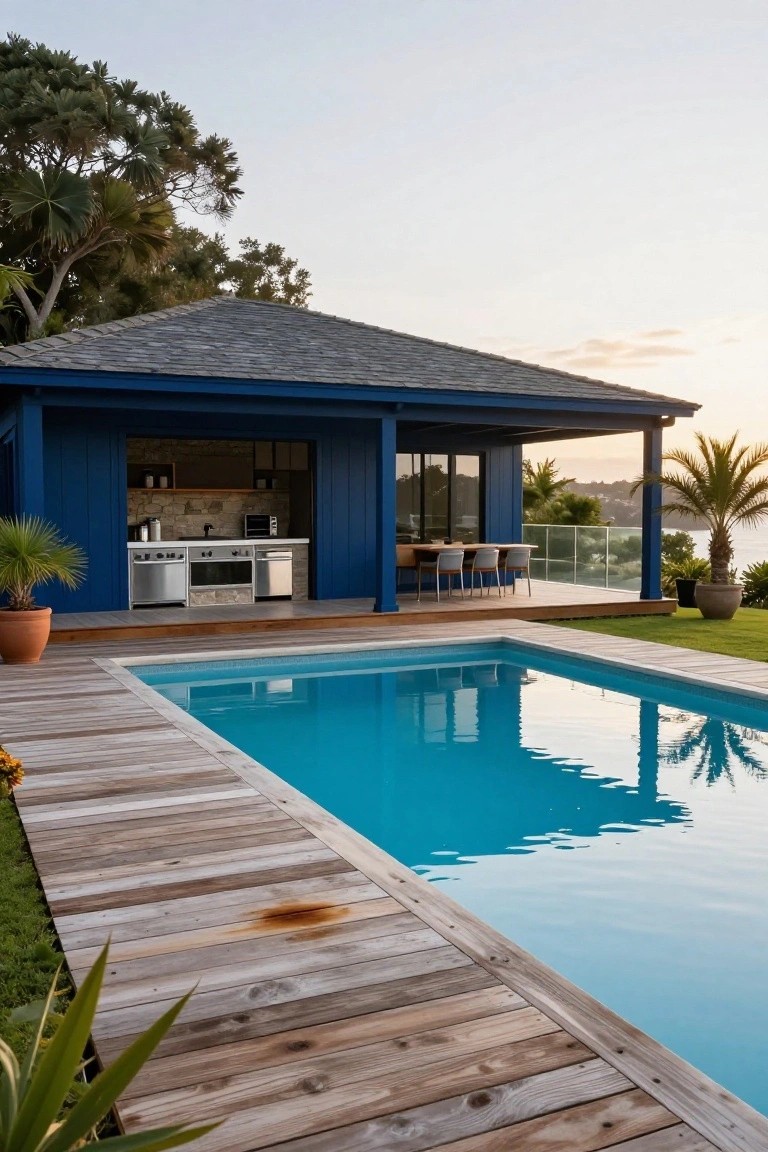
A deep navy blue paint job on this pool cabana gives the whole outdoor area a strong focal point. The color wraps the simple gabled structure nicely, working with the slate gray roof for some contrast. It pulls your eye right to the open kitchen setup inside, making the space feel put together without trying too hard.
You can pull this off on a detached pool house or even a backyard pavilion near a coastal spot. It suits homes with water views best, where the blue echoes the pool or ocean. Just stick to quality exterior paint that holds up to sun and salt air. Pair it with wood decks like this one to keep things from feeling too boxy.
Rustic Arched Wooden Door
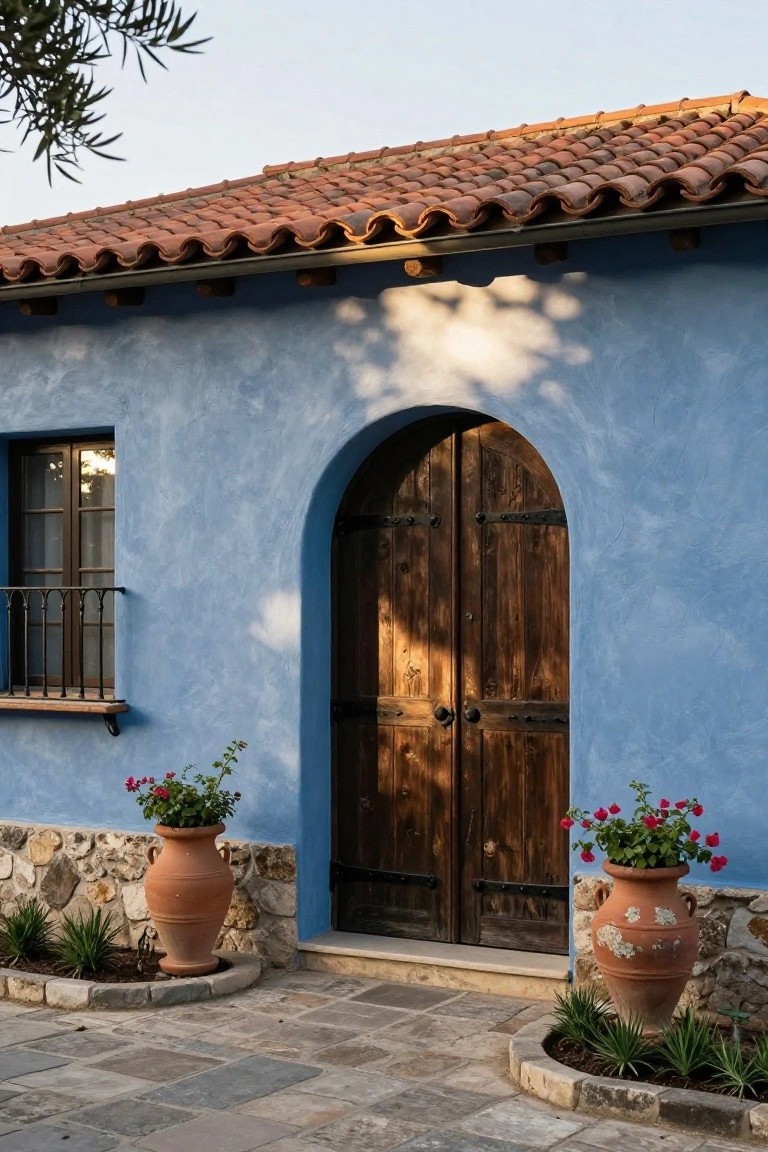
A heavy wooden door like this one sets the tone right at the front. Set into smooth blue stucco walls, it gives a solid, welcoming feel without trying too hard. The dark wood and iron hardware stand out nicely against the blue, and that arch adds a bit of old-world charm that fits homes in warmer climates.
You can pull this off on most any house with a simple entry update. It works best where you want some character but not a full remodel. Just make sure the door scale matches your wall height, and flank it with a couple big pots for balance. Skip it if your spot is super modern, though.
Navy Blue Board-and-Batten Farmhouse
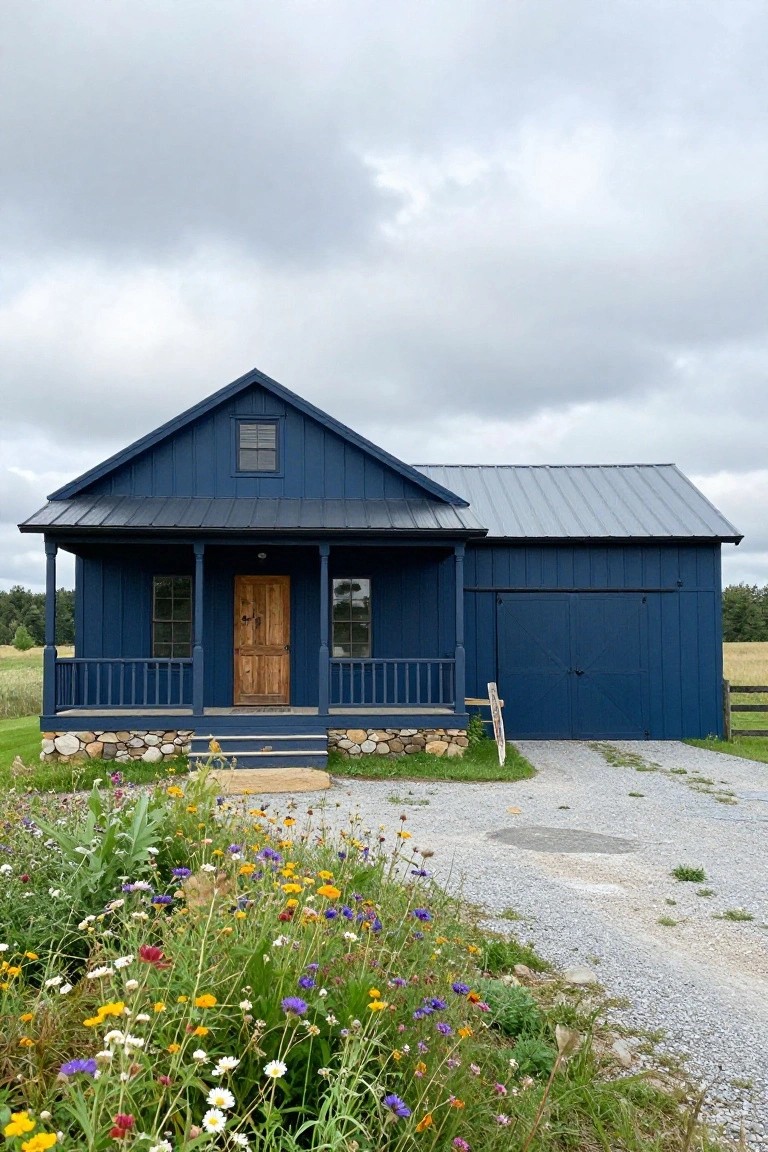
A deep navy blue paint job on board-and-batten siding turns this simple gabled house into something that feels both sturdy and fresh. The vertical planks give it height and texture, while the metal roof in a darker shade keeps things practical for rain country. That combo works well out in open fields like this, where the color pops without overwhelming the landscape.
You can pull this off on smaller homes or cabins too, especially if you want low upkeep. Pick a quality exterior paint rated for siding, and go with standing-seam metal roofing for the clean lines. Just make sure the stone base or porch railing matches the calm vibe… keeps it from getting too matchy.
Blue Brick Facade with Wood Door
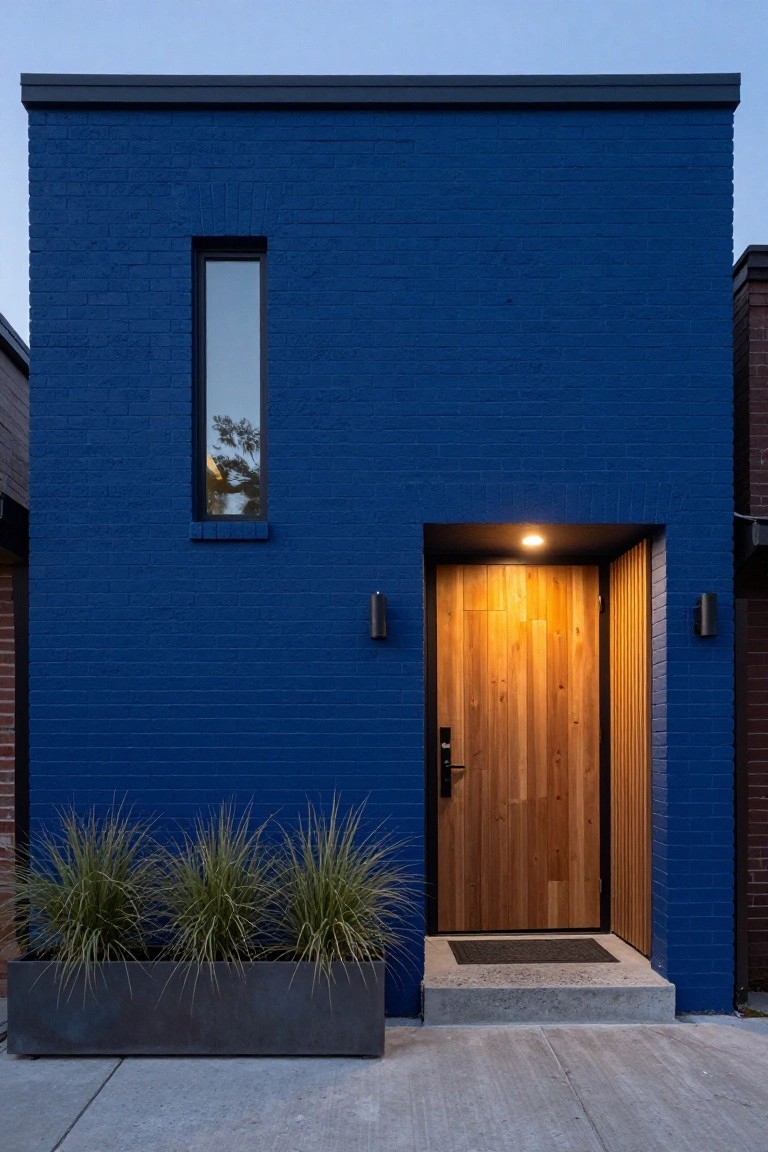
A solid blue brick wall sets a strong modern look for this house exterior. The tall wooden front door in a dark frame adds a natural contrast that pulls the eye right to the entry. It keeps things simple while making the blue feel less stark.
This setup suits compact urban homes or row houses where bold color needs some balance. Use reclaimed wood or cedar for the door to echo nearby trees or fences. Add grasses in a low planter nearby, like here, and keep the path plain concrete. Watch the scale, though, a skinny door works best on narrow facades.
Navy Blue Facade with White Trim
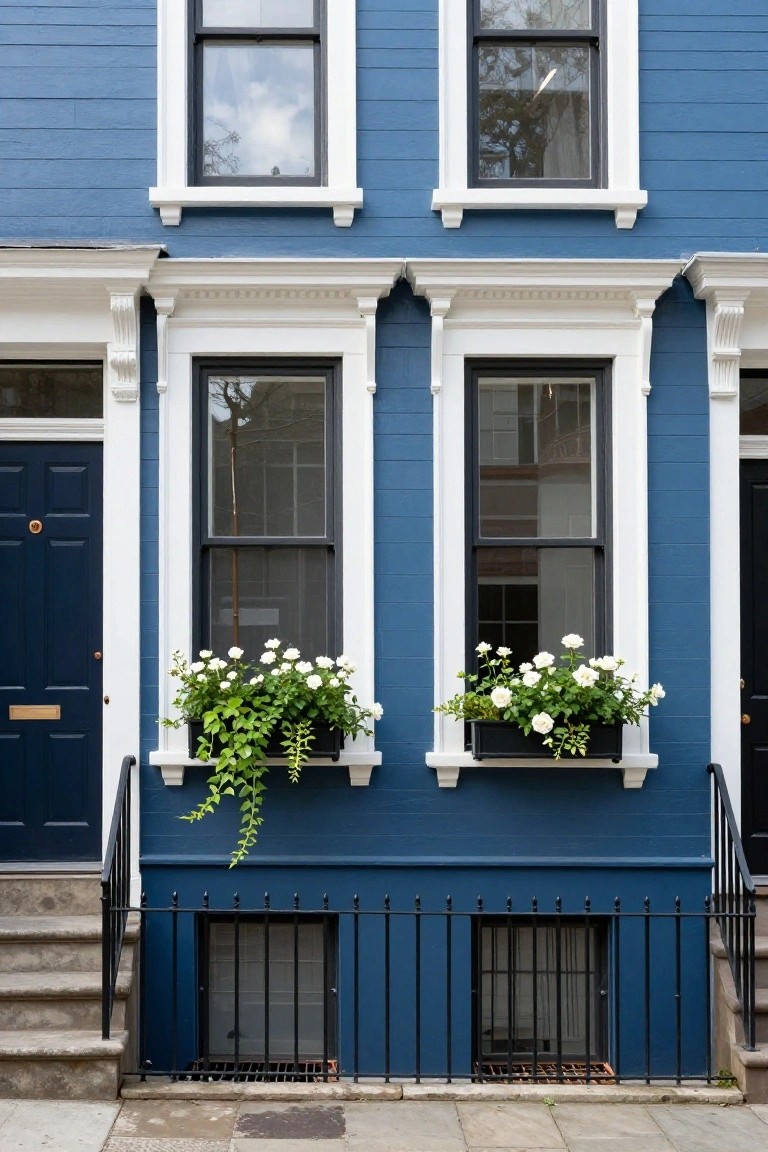
A deep navy blue paint on the siding paired with crisp white trim gives this house a clean, classic look that really stands out on the street. The color contrast makes the windows and door pop without feeling busy. Flower boxes overflowing with white blooms and trailing vines add a soft touch right at eye level, tying the whole front together nicely.
This setup works great on townhouses or row homes in older neighborhoods. Pick a true navy, not too bright, and keep the trim bright white for that sharp edge. Hang simple black boxes under the windows, fill them with easy white flowers like petunias or ivy. It suits brick sidewalks and iron railings… just avoid overcrowding the entry steps.
Blue Stucco with Vertical Wood Cladding
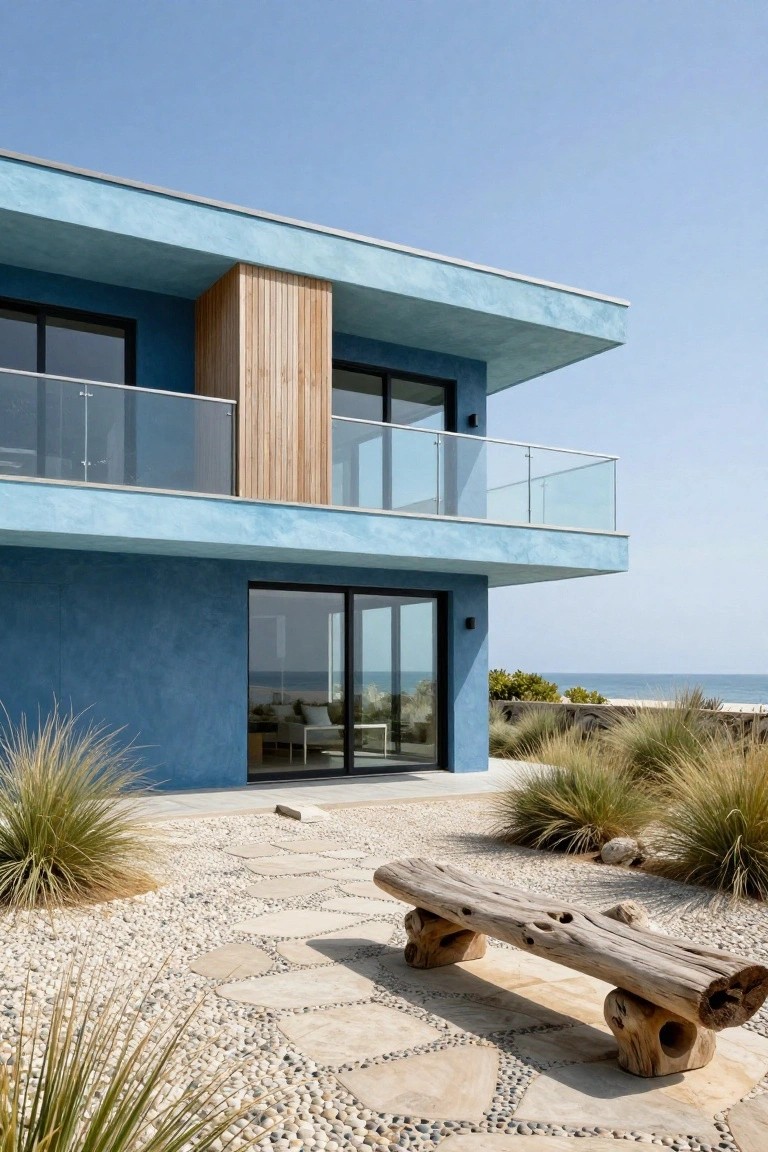
A smooth blue stucco exterior gets more interest from a tall vertical panel of wood slats. Here it’s placed right by the upper balcony, pulling the eye up while keeping things simple. The wood softens that cool blue tone and hints at the beach setting without extra fuss.
This look fits coastal or modern homes pretty well. Put the wood panel near windows or a balcony to tie indoor and outdoor spaces. Keep the slats narrow for a clean feel, and pick a light wood stain to match sandy shores. Just make sure it’s treated for weather.
Two-Tone Blue Cottage Facade
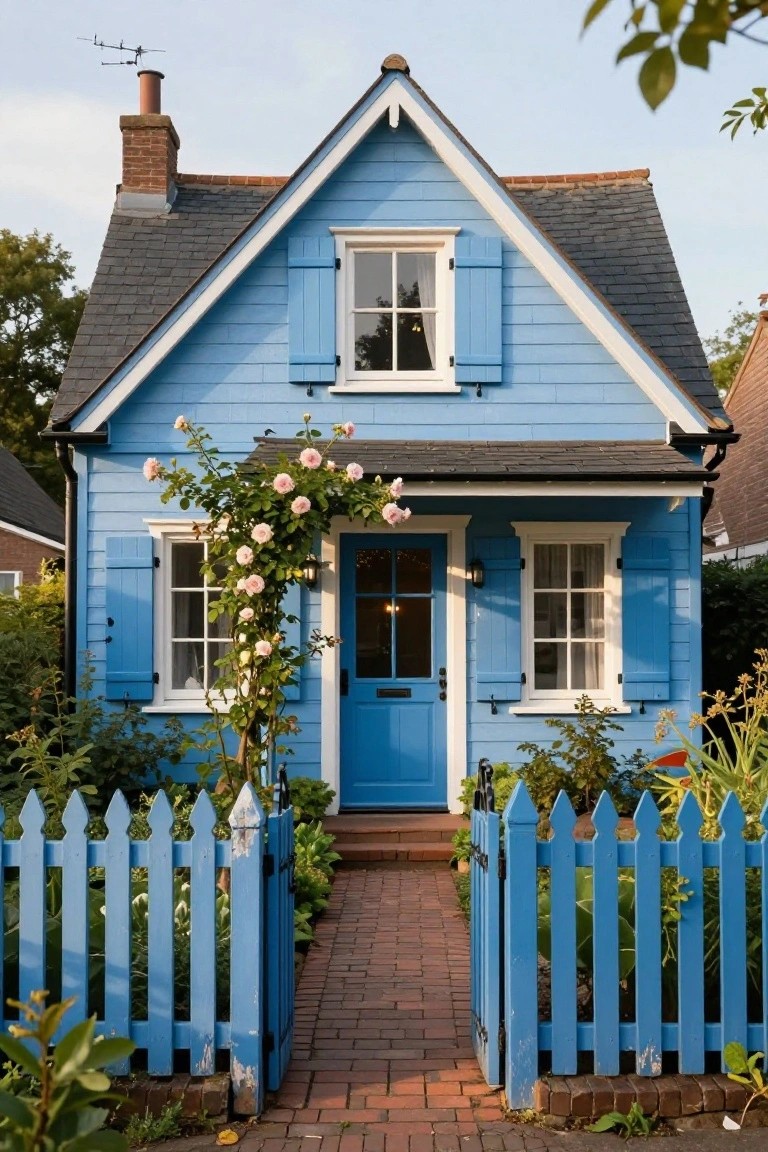
This little house pulls off a simple two-tone blue look that feels right at home in a garden setting. The siding is a soft blue with white trim framing the windows, and blue shutters add just enough repeat. That white pops against the blue without overwhelming things, keeping the whole front clean and cheerful.
It works best on compact cottages or older bungalows where you want curb appeal without big changes. Paint the picket fence to match the siding for a pulled-together yard. Climbing roses along the entry tie it in soft, and they come back each year easy enough.
Two-Tone Blue Siding
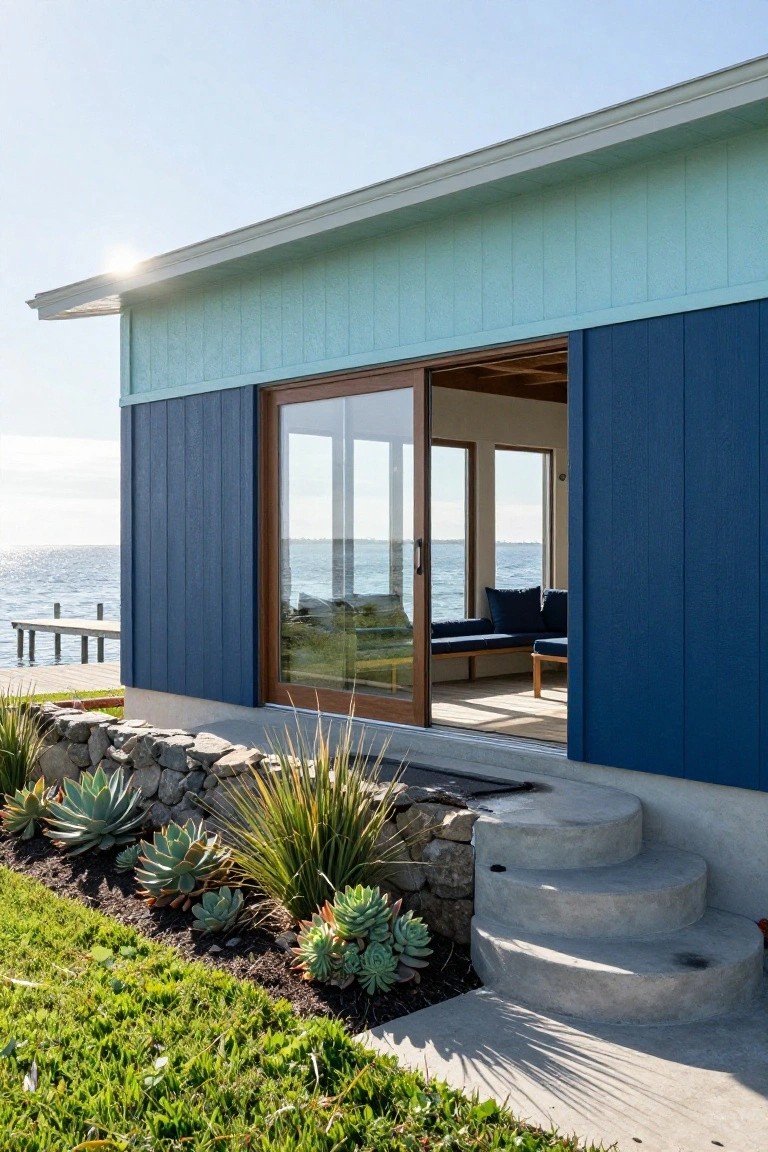
This setup takes two shades of blue siding, a soft teal across the top half and a richer navy below. The shift in tones gives the whole side of the house more dimension right away. It fits right in with waterfront spots too, without stealing focus from the views.
Try it on a simple modern build like this one. The wood doors and concrete steps keep things grounded. Stick to low plants at the base so they don’t compete, and it works best where you want subtle color play that lasts through the seasons.
Blue Cottage with White Porch Trim
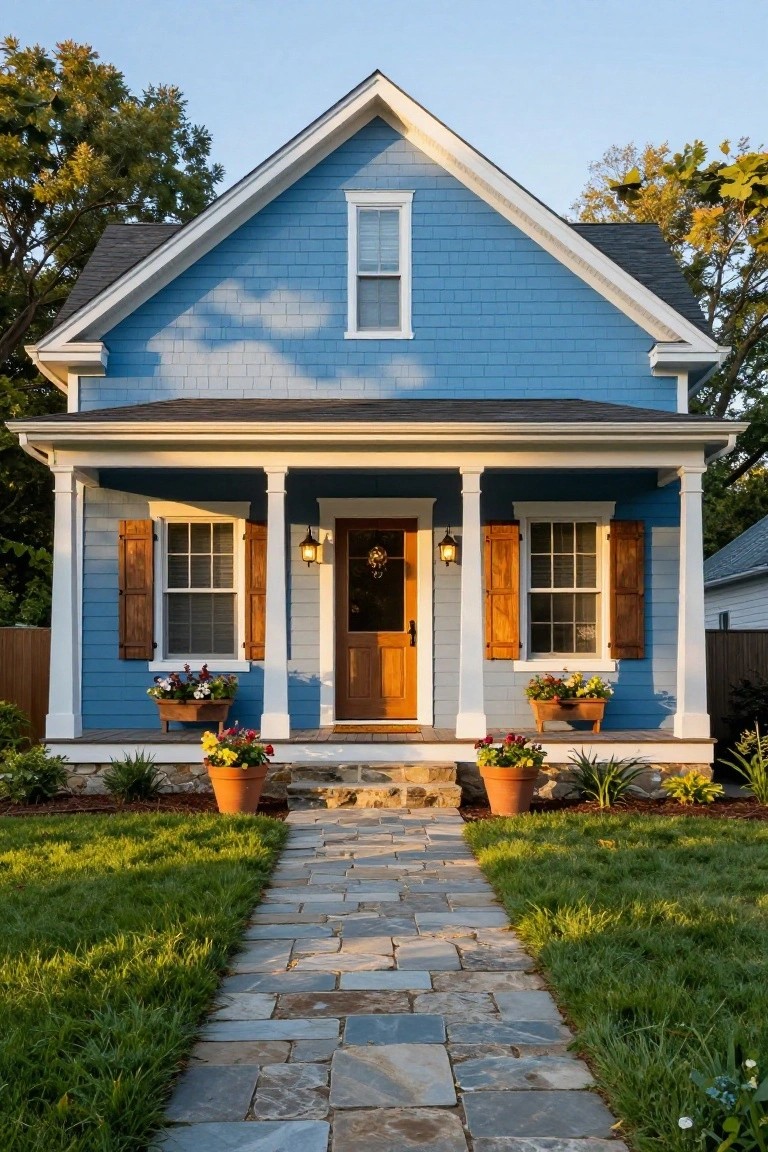
This setup uses a soft blue shingle siding on the house body, paired with bright white trim around the windows, porch columns, and roofline. It gives the whole front a clean, layered look that feels fresh without being too bold. The white pops against the blue just right, making the house stand out on a quiet street.
You can pull this off on smaller homes like bungalows or cottages, especially where you want more charm up front. Keep the trim crisp and the siding in a muted blue tone to avoid overwhelming the space. Add a few plants on the porch steps, like those terracotta pots here, and it ties everything together nicely.
Frequently Asked Questions
Q: How do I pick two blues that won’t clash?
A: Grab paint swatches and hold them up against your house at different times of day. Look for shades with the same undertone, like both cool grays or warm aquas. That keeps the depth without muddiness.
Q: Should the darker blue always go on the bottom?
A: Not always, but it grounds the house nicely most times. Flip it if your roofline needs more weight up top. Test with tape and samples first.
Q: What trim color pairs best?
A: Crisp white sharpens the blues every time. Black adds edge if you want drama… just keep accents simple.
Q: How do I keep the colors looking fresh longer?
A: Pick quality exterior paint with UV protection. Clean gently once a year with mild soap. And yeah, it beats single-color fade.
