

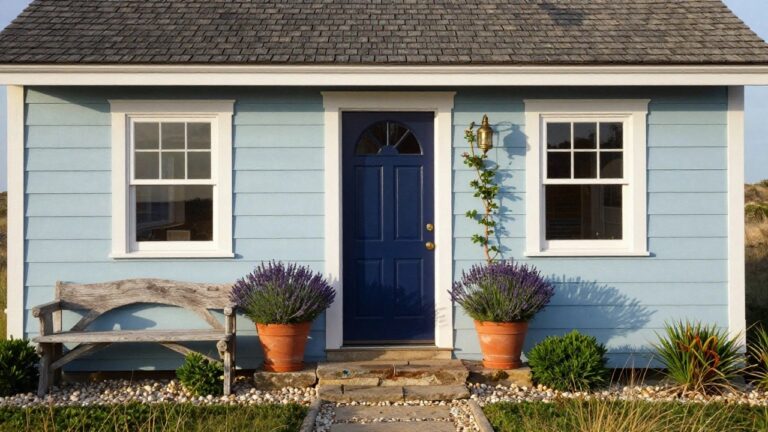
I’ve noticed that blue house exteriors really come alive when the landscaping wraps around them thoughtfully. From the street, people first take in how shrubs hug the foundation and pathways lead the eye to the entry, balancing that bold color without overwhelming it. A plain blue facade can feel stark up close if the yard stays empty. I like how some homeowners use low evergreens or stone borders to echo the house’s lines, creating a look that settles in over time and handles weather changes well. Certain setups in these examples make me want to sketch them out for my own curb view someday.
Navy Door on Light Blue Shingles
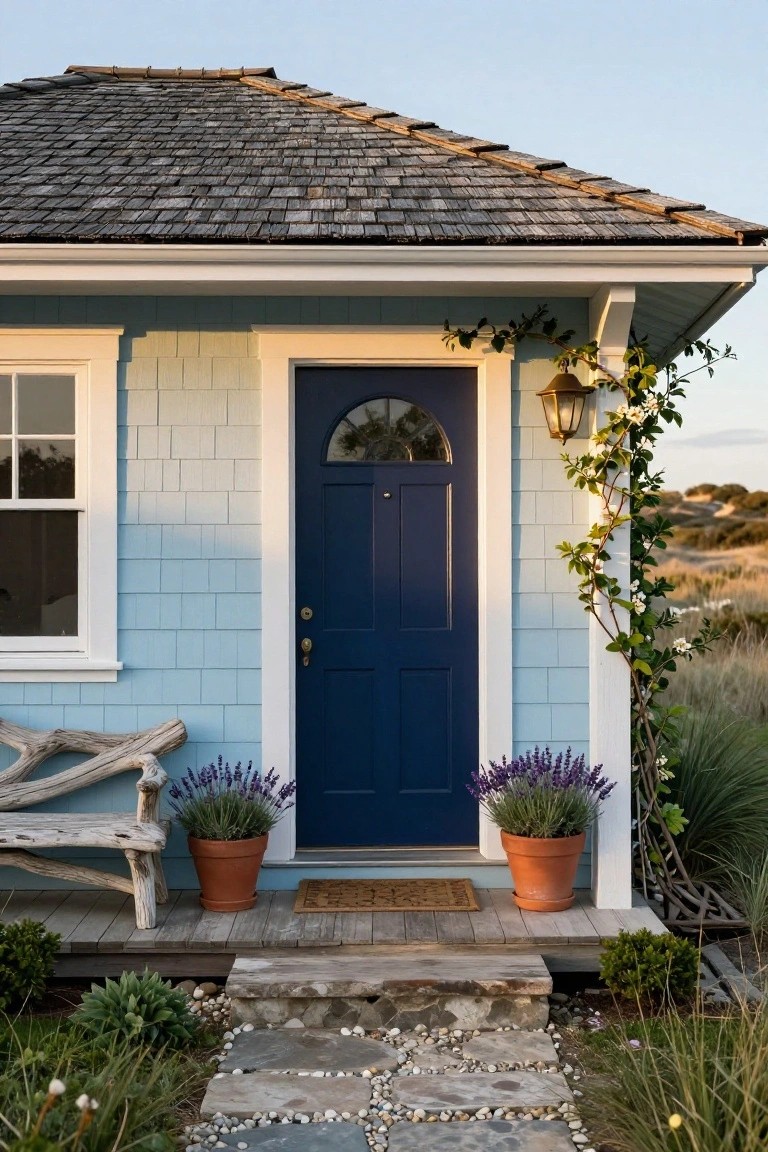
A deep navy door stands out nicely against pale blue shingle siding. That color shift pulls focus to the entry without overwhelming the house. It’s simple but effective for curb appeal, especially with the arched glass adding a bit of welcome light inside.
This works best on coastal cottages or beach houses where blues tie into the surroundings. Frame it with potted lavender and a driftwood bench like here. Skip it on busier facades, though. Keeps things calm and approachable.
Wooden Garage Doors Warm Blue Exteriors
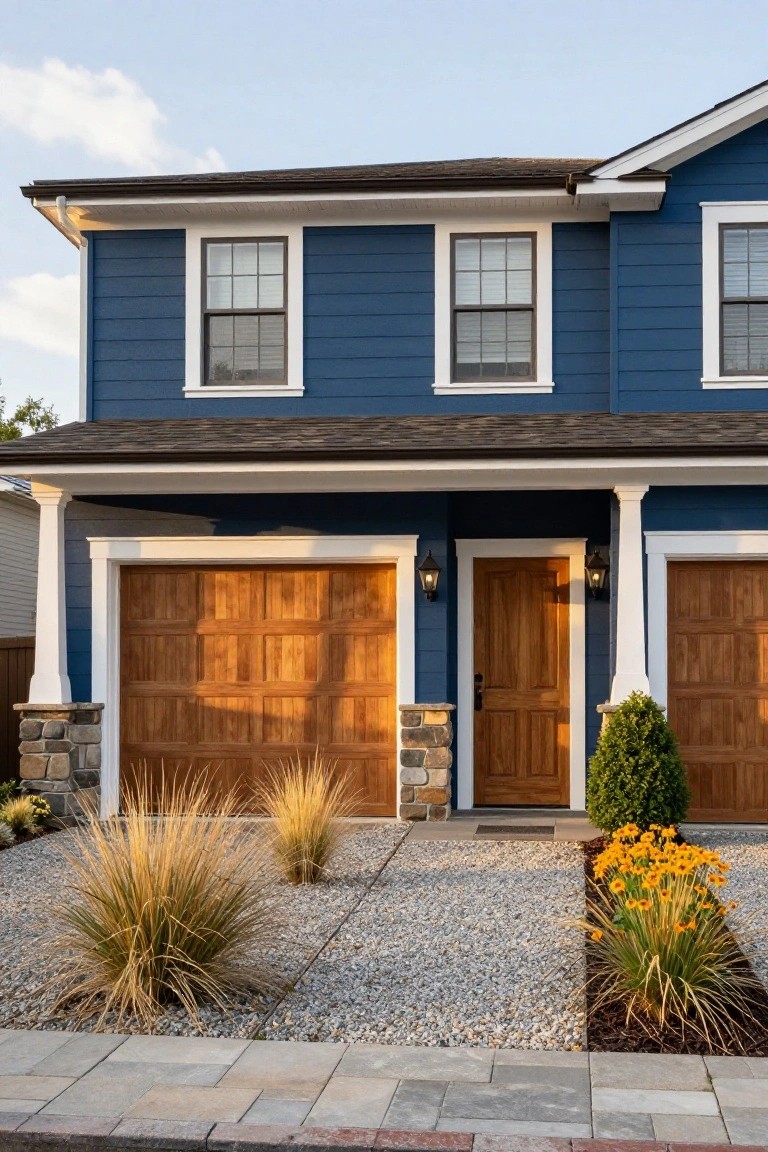
A navy blue house like this one gets a lot from its wooden garage doors. The rich wood tone pulls against the cool blue siding and makes the whole front feel more welcoming. It’s a simple switch that adds texture and keeps things from looking too stark.
This works best on homes with clean lines, like modern farmhouses or Craftsman styles. Stick to natural wood finishes and match the front door for balance. Skip heavy landscaping here. Gravel paths and tall grasses let the doors stand out.
Vibrant Blue Stucco Exterior
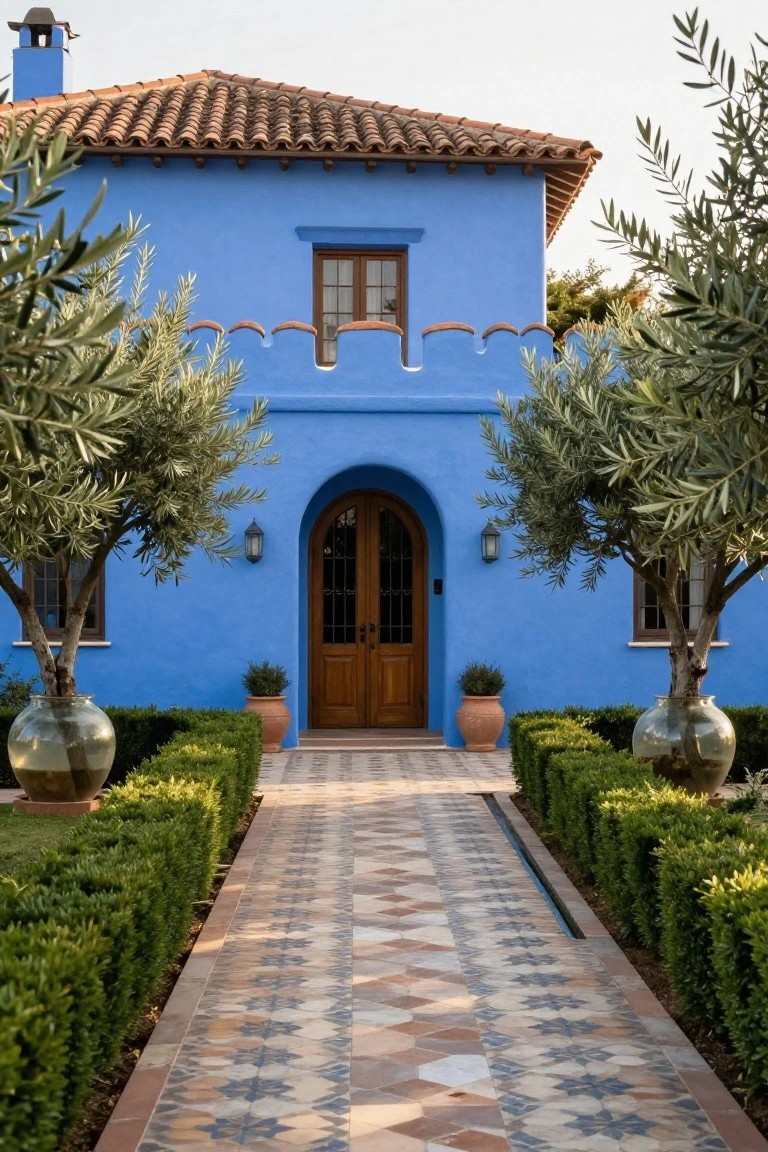
A deep blue stucco finish like this one turns a basic house into a standout Mediterranean-style home. It pairs perfectly with the warm terracotta roof tiles and that classic arched wooden door, giving the whole front a cohesive, sunny vibe. The potted olive trees framing the entry just tie it all together without much fuss.
This look works best on ranch or villa-style houses in dry, warm areas where the color won’t fade fast. Pick a durable exterior paint in cobalt or similar shade, add matching pots with olive or citrus trees, and edge the path with low boxwoods. Skip it if your spot gets heavy rain, as stucco needs good maintenance.
Blue House with Dark Wood Gable
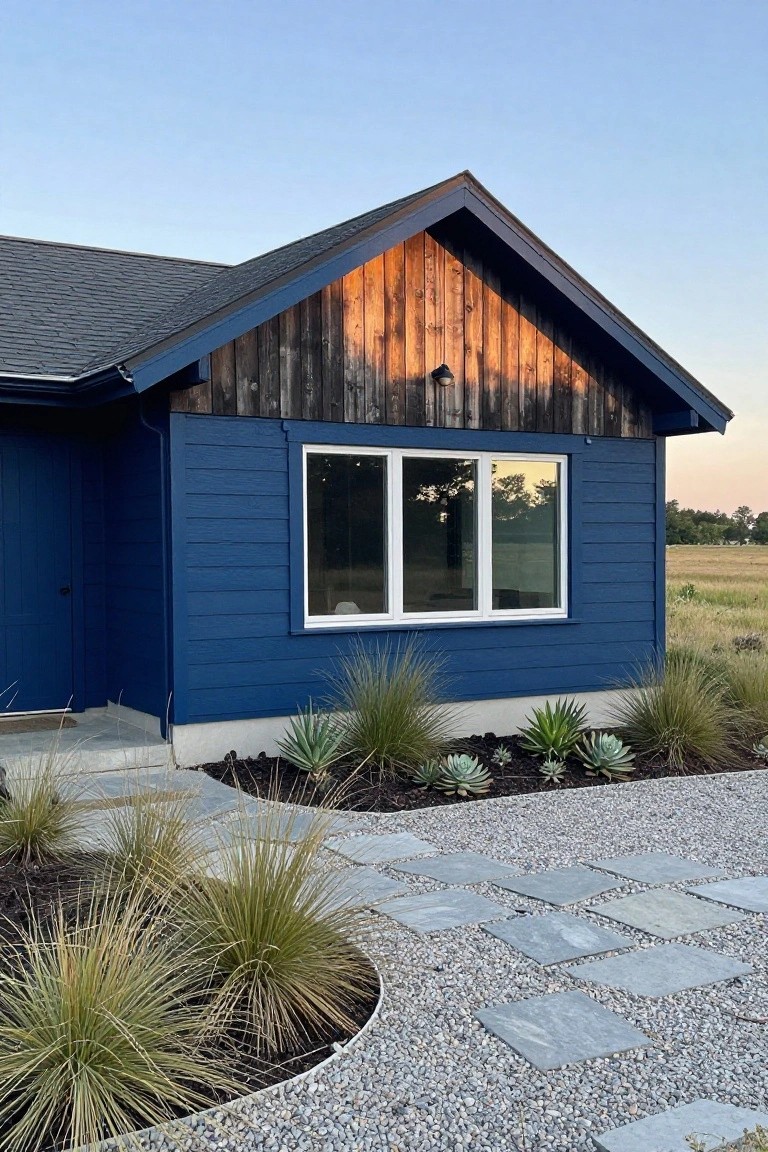
A deep blue siding like this pairs nicely with a dark wood gable up top. The wood looks charred or weathered, which adds some texture against that smooth blue paint. It keeps the house from feeling too plain, especially with the simple window and door setup. Folks notice that kind of contrast right away when driving by.
You can pull this off on a smaller home or even an addition like a garage. Stick to low-key landscaping around the base, maybe some grasses, so the house stays the focus. Works best in rural spots or coastal areas where the blue evokes water or sky. Just make sure the wood is sealed if you’re in a rainy climate.
Victorian Blue House with Porch Trim
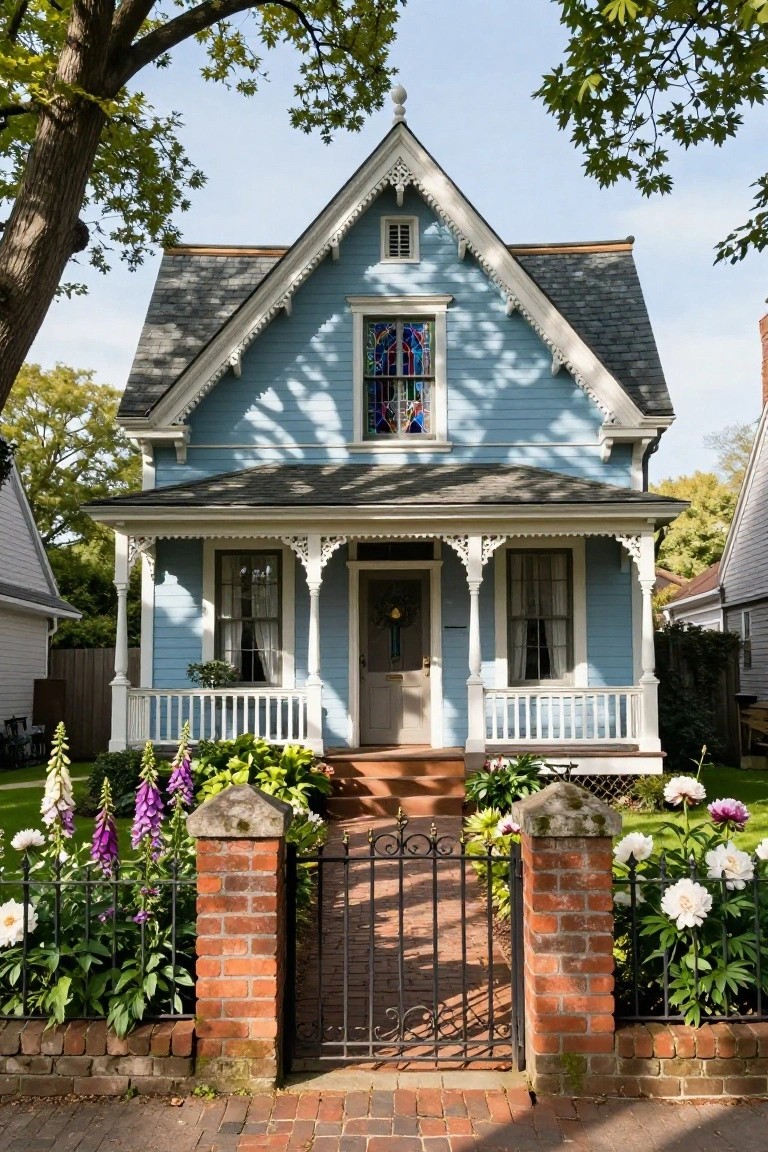
A soft blue like this on a Victorian house brings out all the fun details in the trim and porch. You see the gingerbread brackets and white posts pop right away. That stained glass window up top adds a little color without trying too hard. It’s the kind of look that feels homey from the street.
Try this on a smaller older home where you want curb appeal that lasts. The pale blue keeps it from feeling too bold, especially under trees. Add flowers along the walk, but don’t crowd the front. Works best in a neighborhood with some green around.
Blue Shingled Cottage Facade
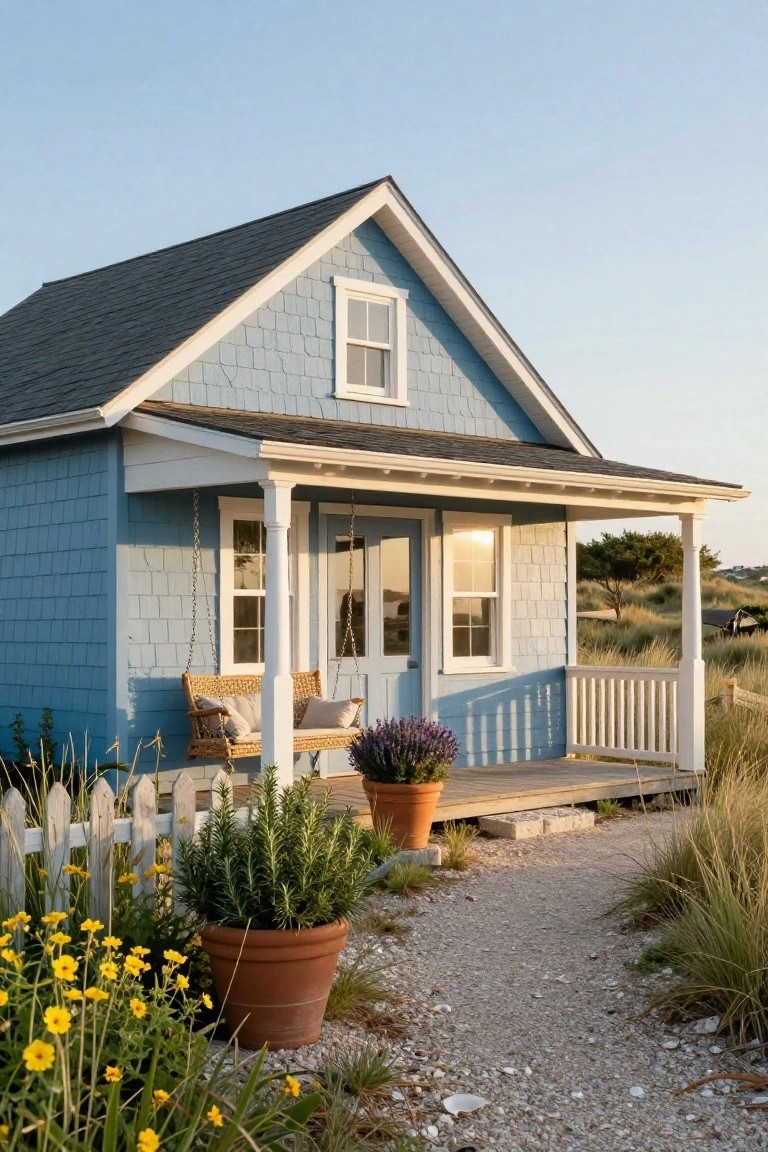
Blue shingles like these give a house that easy coastal feel, especially on a small cottage. The soft color picks up the sky and sea without being too bold, and the white trim keeps everything crisp. Add a porch swing, and it turns the front into a spot folks want to linger.
This works best on compact homes in beach areas or relaxed suburbs. Stick to simple landscaping around the base, like potted herbs and a gravel path. It keeps upkeep low and lets the house stand out on its own.
Deep Blue Brick Facade with Black Entry Door
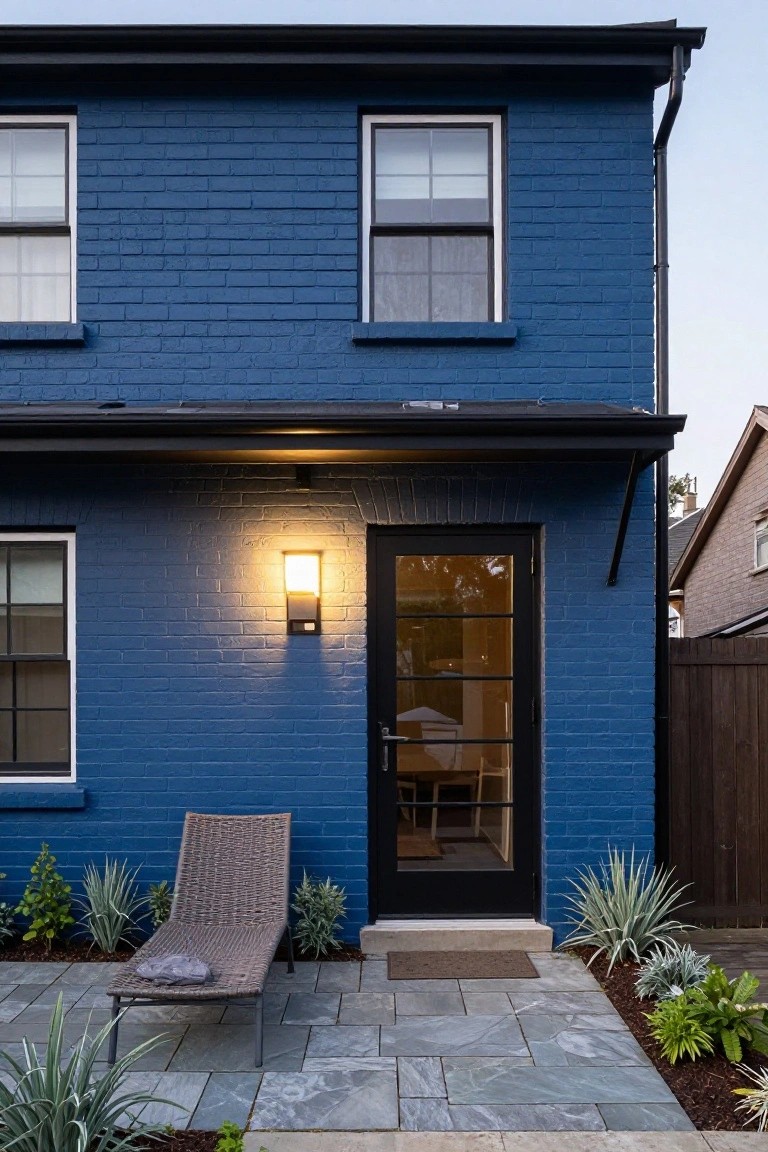
A deep navy blue brick covers the walls of this house. It stands out right away against the black trim and that solid door with glass panels. The wall light next to the door pulls it all together at night. It’s a simple way to make an older style feel fresh.
This setup works best on homes with straight lines or simple shapes. Use it for side entries or main doors where you want some drama without overdoing it. Pick a matte black door to keep things grounded, and add plants nearby for a bit of green. Steer clear of super glossy finishes if your area has a lot of rain.
Lavender Lined Entry Path
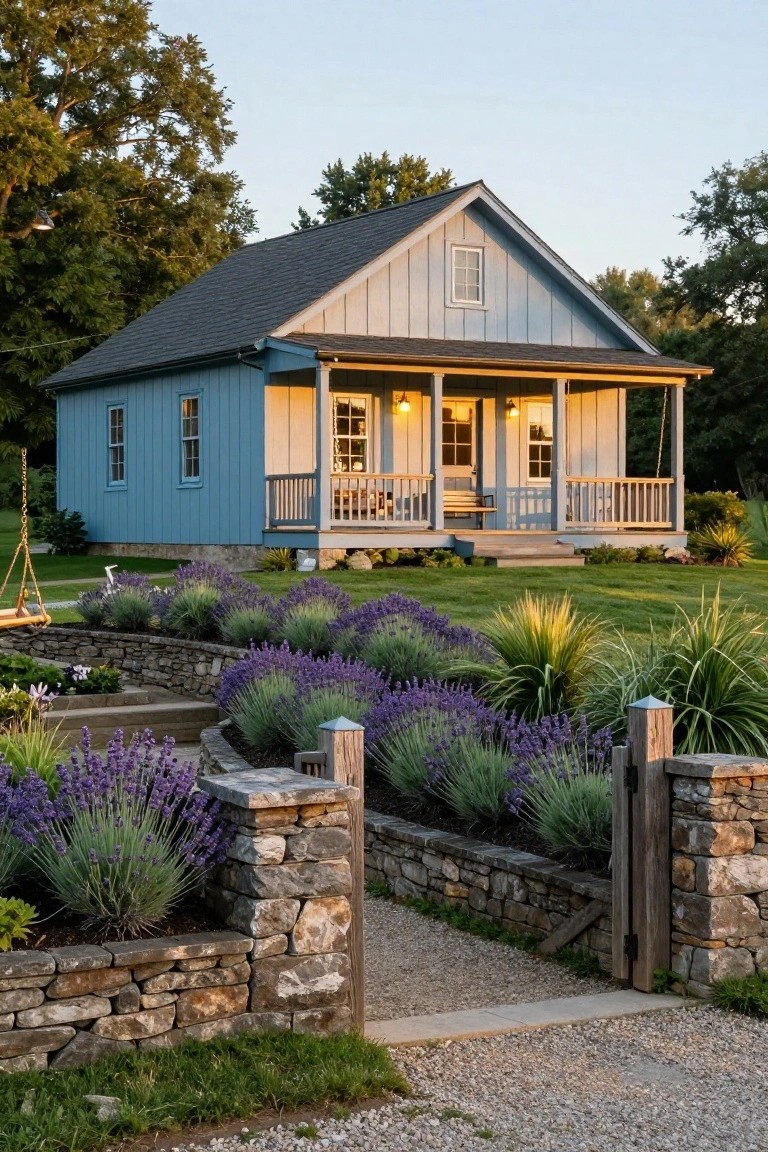
A gravel path edged by low stone walls stuffed with lavender makes a simple walk to the front door feel special. The purple blooms nod to the cool tones in the nearby blue house siding. It pulls everything together without much fuss, and that fresh scent hits you right away.
This works well on slight slopes where you need to hold back soil, or just to frame your walkway. Go for drought-tolerant lavender varieties in sunny spots. Pair it with a cottage style home like this one, but keep beds low so they don’t block the house view. One thing… trim it back once a year to stay tidy.
Blue House Paired with Wood Deck
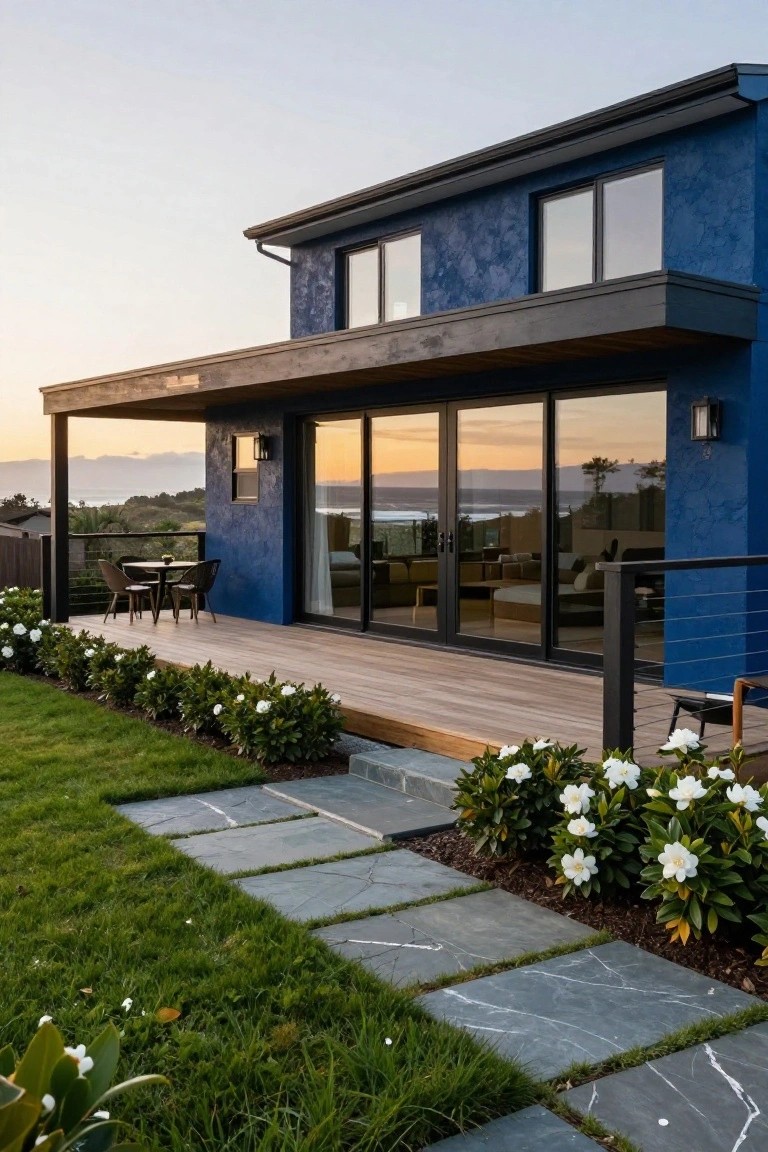
A deep blue stucco finish on the house walls gives this exterior a strong modern feel. The dark frames around the large glass doors pull it together nicely. Then the wood deck steps out under a simple overhang. It makes the shift from house to yard smooth and easy to live with.
This setup works great on lots with a view since the deck keeps things open. Use a similar wood like ipe for the decking. It holds up outdoors and warms up the cool blue color. Add some white shrubs along the edge like they did here. Fits coastal spots or sloped yards best. Just make sure the deck support blends in.
Navy Blue Timber-Framed Cottage
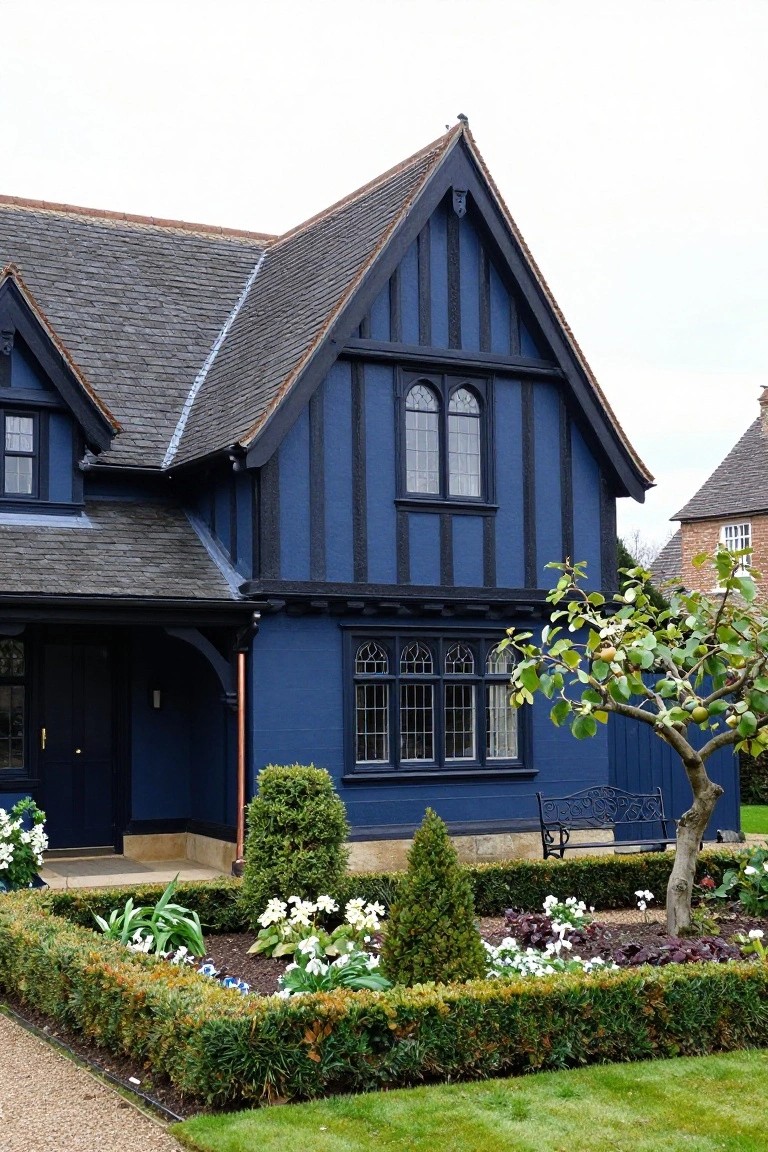
A deep navy blue paint job on the stucco sections of this timber-framed house brings out the black beams in a way that feels both bold and settled. The color picks up on the slate roof and dark wood details without clashing. It gives the whole front a cozy English cottage vibe that pulls you right up to the door.
This look suits older homes with gabled roofs and arched windows, especially if you want something richer than plain white trim. Keep the landscaping simple, like low boxwood hedges and a few flowering plants along the path. It frames the house nicely but lets the blue facade do the talking. Just make sure the trim paint is fresh, or the mood turns dull fast.
Blue Window Boxes Frame the Entry
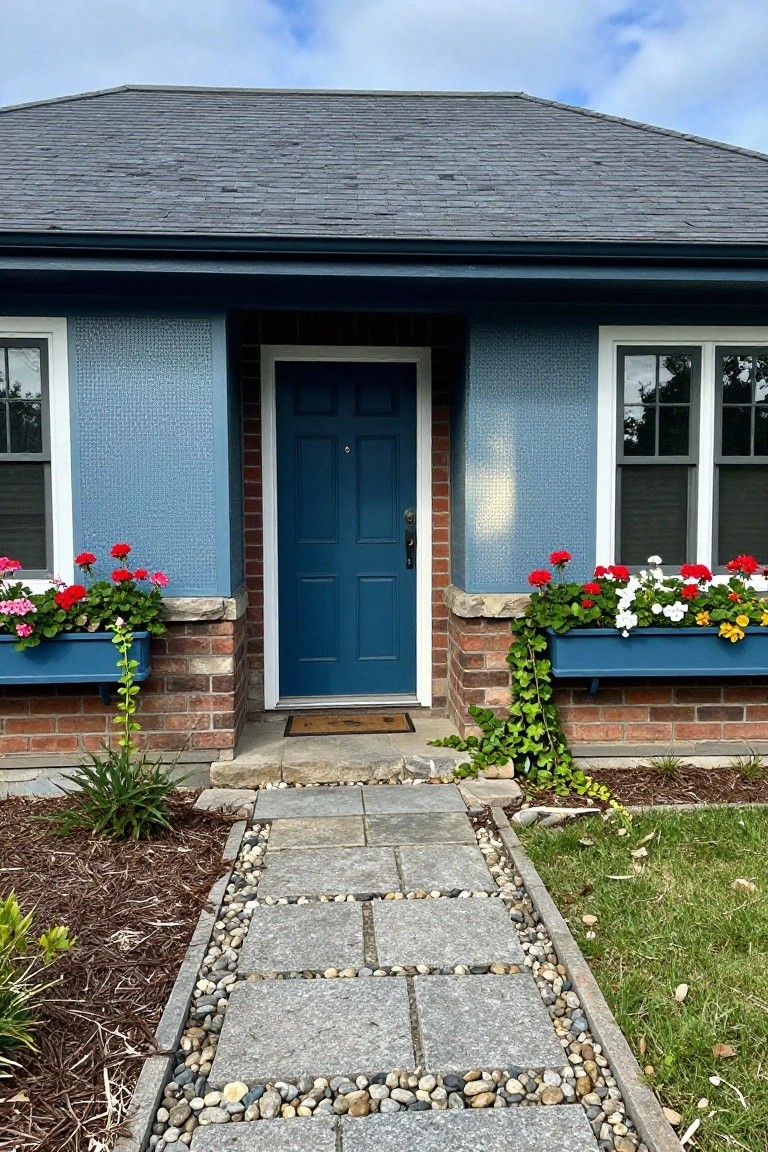
Blue houses look sharp when you add window boxes in the same shade right by the front door. Here the navy door sits between two sturdy blue boxes overflowing with red geraniums and some white blooms plus trailing ivy. It pulls the landscaping into the house design without much fuss. The colors pop against the siding, and it makes the whole front feel put together.
You can do this on most any blue exterior, from cottage styles to simpler ranch homes. Go for bold flowers like geraniums that contrast the blue, or softer whites if you want calm. Keep the boxes at eye level on either side of the door, and swap plants seasonally. Just watch that the boxes drain well so roots don’t rot.
Softening Bold Blue with Climbing Roses
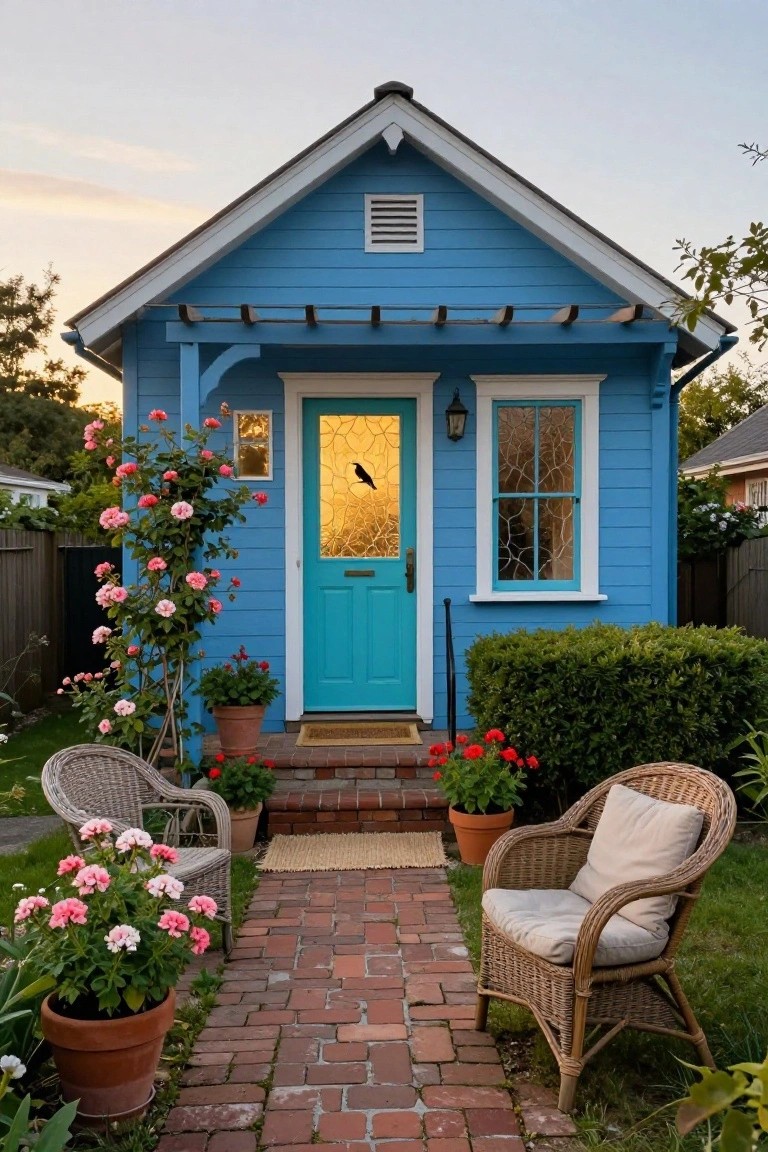
Climbing roses work great against a blue house like this one. The pink blooms climb up the porch posts and soften that strong blue siding without overpowering it. They add a romantic touch right at the entry, making the whole front feel more lived-in and welcoming. It’s a simple way to tie plants to the architecture.
Try this on a cottage-style home or any smaller facade where you want curb appeal without big changes. Plant roses that match your blue shade, like soft pinks or whites, and train them up posts or trellises near the door. Keep the base trimmed so they don’t crowd the path, and pair with pots of geraniums for color all season. Works best in mild climates where roses thrive.
Light Blue Clapboard House Front
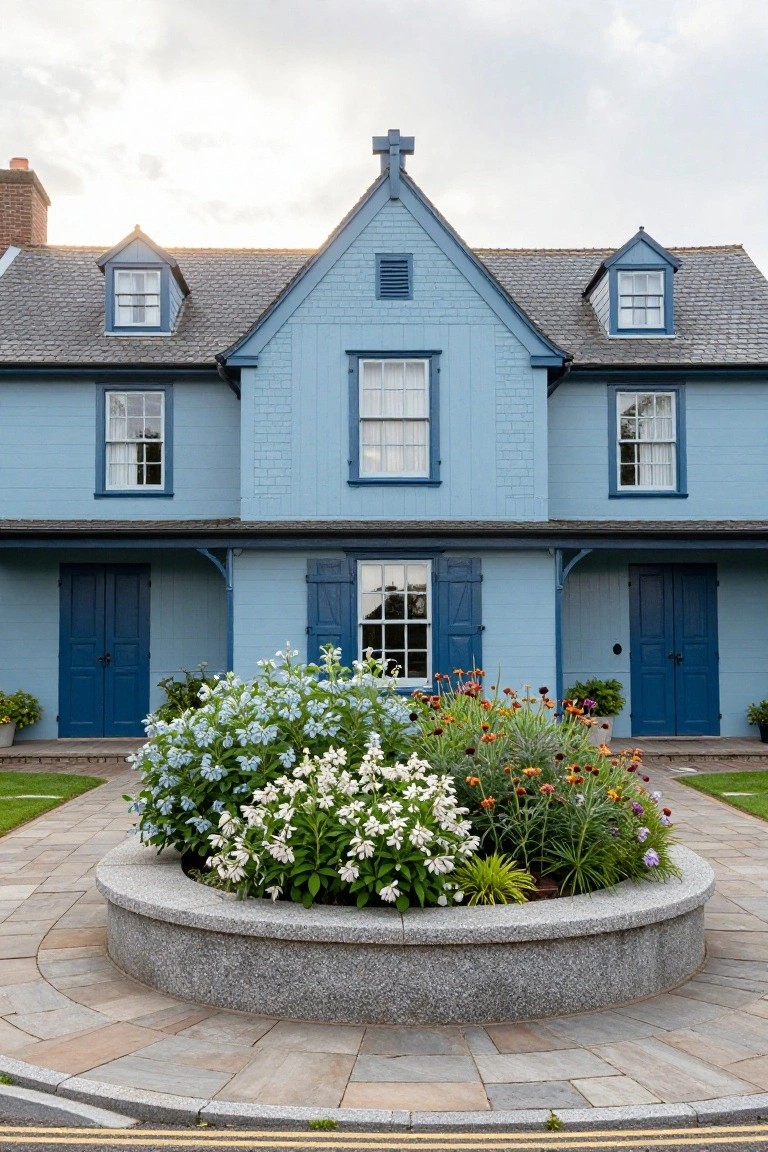
This setup takes a traditional gabled house and gives it a calm coastal feel with light blue clapboard siding. The color works quietly against the slate roof and white window trim. It keeps things fresh without shouting, and that small cross up top adds a touch of character right away.
Paint your siding in a soft blue like this for cottages or duplexes near the water. Pair it with navy doors and simple white frames for balance. Drop in a round stone planter full of hydrangeas and daisies along the entry path. It pulls focus to the front without much fuss. Watch the scale though, bigger homes might need taller plants.
Rustic Blue Stone Cabin Exterior
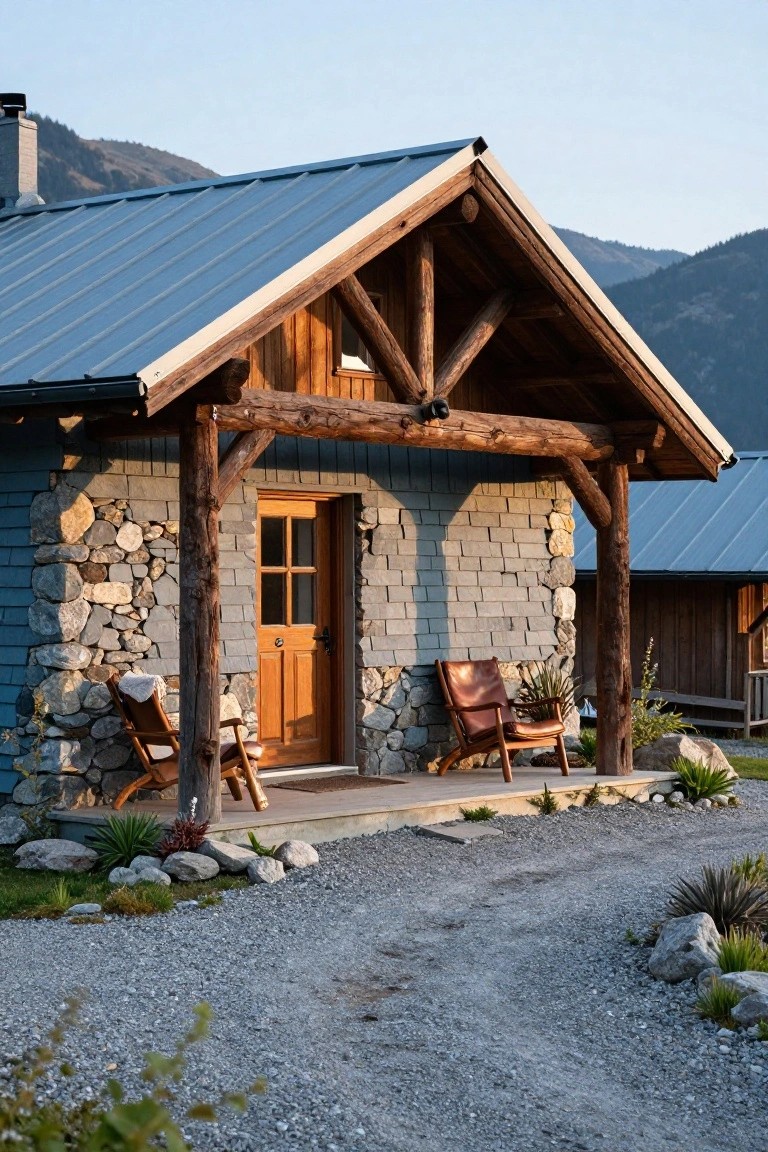
This kind of blue stone siding gives a cabin that solid, rooted look, especially against mountains. The gray-blue tone on the walls blends with the rocky ground around it, while the heavy log beams and porch keep things from feeling cold. Those wooden chairs out front make it feel lived-in right away.
Try this on a small getaway house or hillside lot where stone fits the site. Use local rock if you can for easier matching, and add a covered porch for shade and seating. Skip fussy trim. It suits cooler climates best, stays low upkeep once planted in.
Blue Exterior with Courtyard Fountain Entry
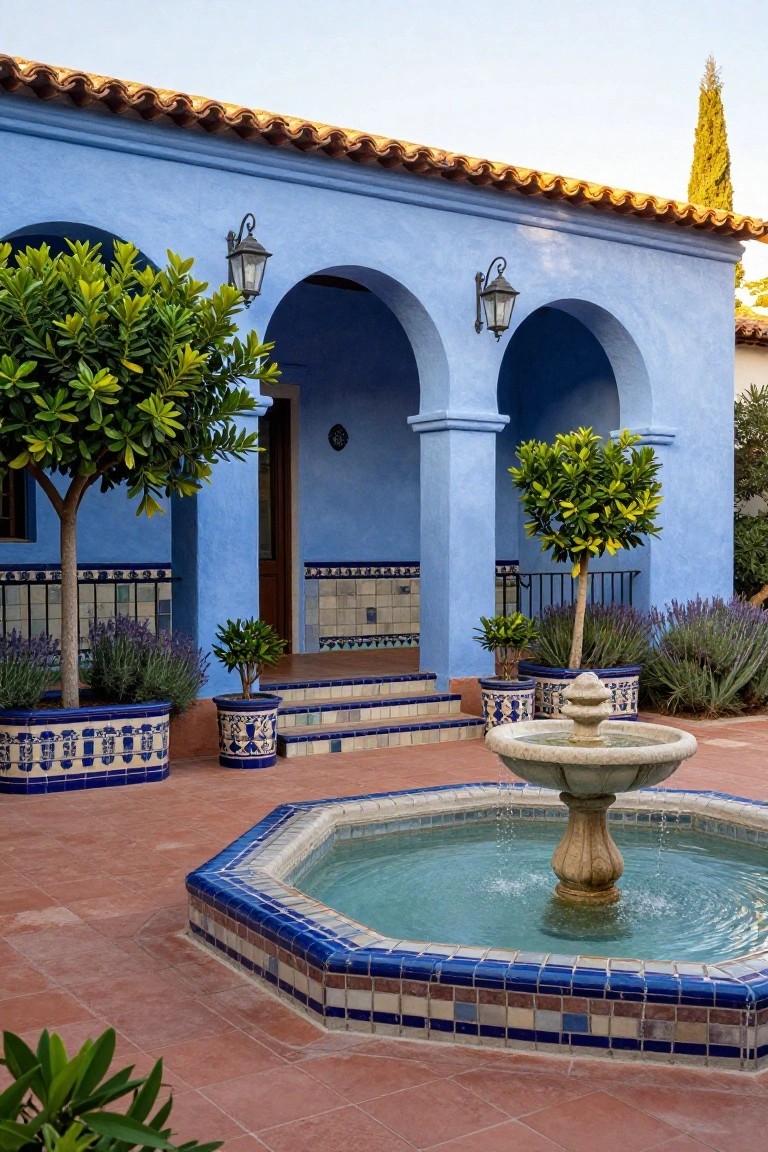
A blue stucco house like this one pulls you right into its courtyard with a simple octagonal fountain at the center. The deep blue walls and terracotta roof give it that classic Spanish feel, and the fountain adds a quiet splash that makes the entry feel alive without trying too hard. It’s a smart way to turn the front area into something special, especially when you pair it with those arched openings.
This setup works best on smaller lots or homes with a covered entry porch. Place the fountain off to one side of the steps so it doesn’t block the door, and keep plantings low around it, like lavender or clipped trees. It suits warmer climates where you want outdoor water without a full pool. Just make sure the tiles match your house color to keep everything tied together.
Stone Path Leads to the Door
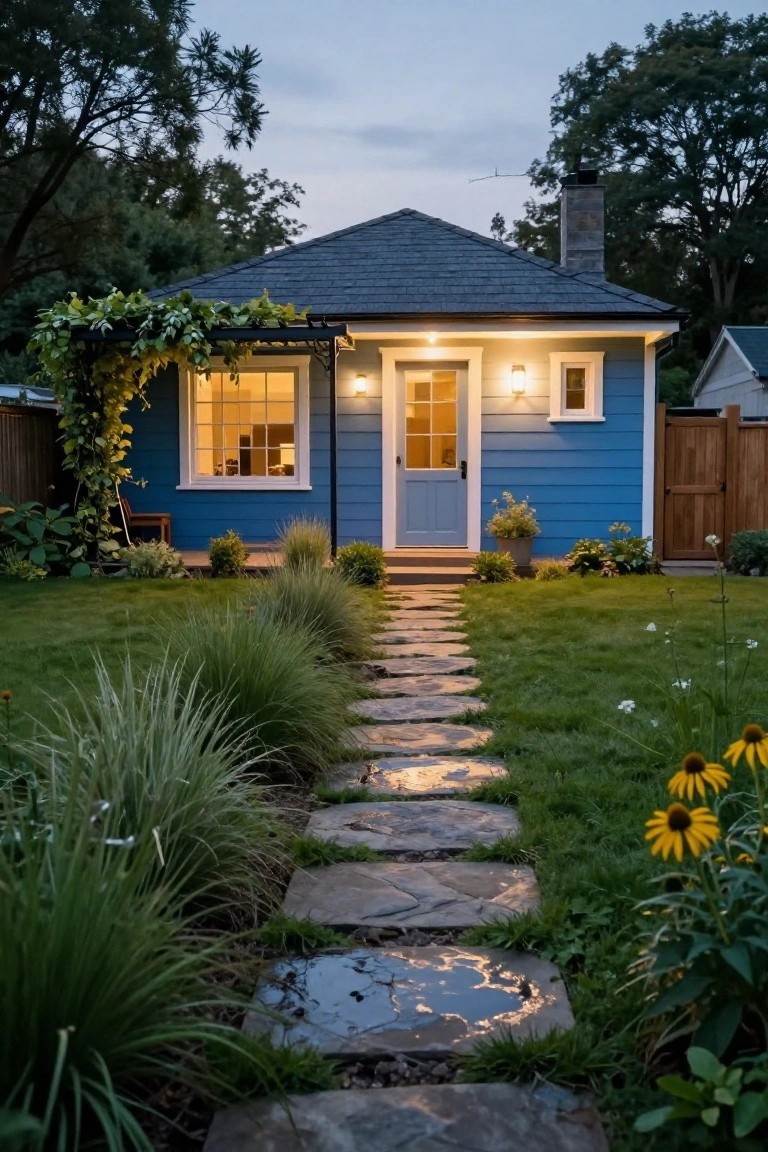
A straightforward stone path like this one makes the front of a blue house feel more approachable. The irregular slabs step across the lawn toward the entry, edged with tall grasses and a few flowers. It pulls your eye right where it should go without any fuss, and pairs nicely with the casual clapboard siding.
This setup works best on smaller lots where you want low-key curb appeal. Lay the stones loose in the grass for that easy vibe, maybe add vines climbing a simple arbor nearby. Skip gravel or pavers if you’re after something softer. Just keep the path clear so it stays practical.
Frequently Asked Questions
Q: What plants make a blue house pop without clashing?
A: Go for silvery lavender or white ice plants along the foundation. They hug the ground and reflect light to brighten that blue siding. You’ll get clean lines that draw eyes up to the house.
Q: How do I edge landscaping beds to frame a blue exterior?
A: Grab a half-moon edger and cut sharp curves right into the soil. This keeps grass out and lets mulch show off the blue backdrop. Refresh the edges twice a year.
Q: Will blue paint hold up in full sun?
A: Pick a high-quality exterior latex with UV blockers. Prep the surface well, and it stays vibrant for years. Touch up trim first if you notice fading spots.
Q: What’s a simple way to add height behind a blue house?
A: Plant columnar evergreens like arborvitae at the corners. They anchor the design and sway gently in the breeze. Space them eight feet apart for breathing room.
