

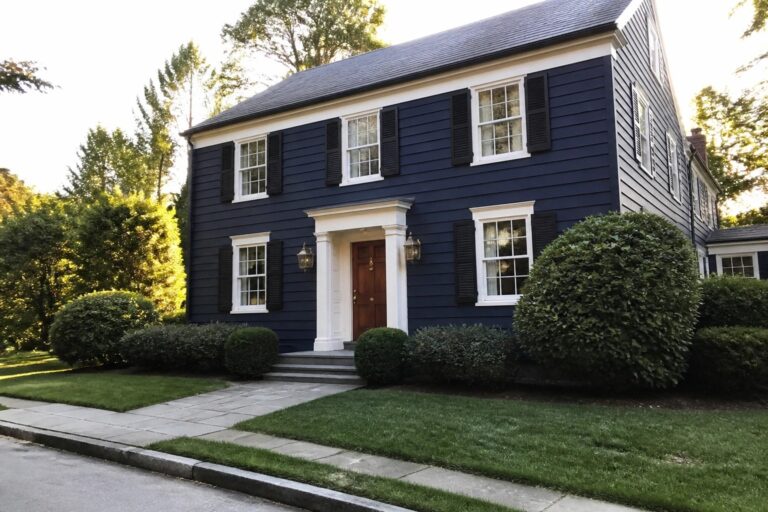
I’ve noticed that exterior colors often shift in surprising ways once they are up on the house and exposed to full sunlight or late afternoon shadows.
How a shade sits next to the roof, brick, and trim can change everything about whether it feels right or slightly off.
Samples on the actual siding reveal more than any chart ever shows.
I usually end up ruling out at least a couple of options after watching them through a full day and a bit of rain.
Stepping back to see the whole effect with the landscaping helps confirm which ones will hold up over time.
Deep Navy Blue Siding With White Trim
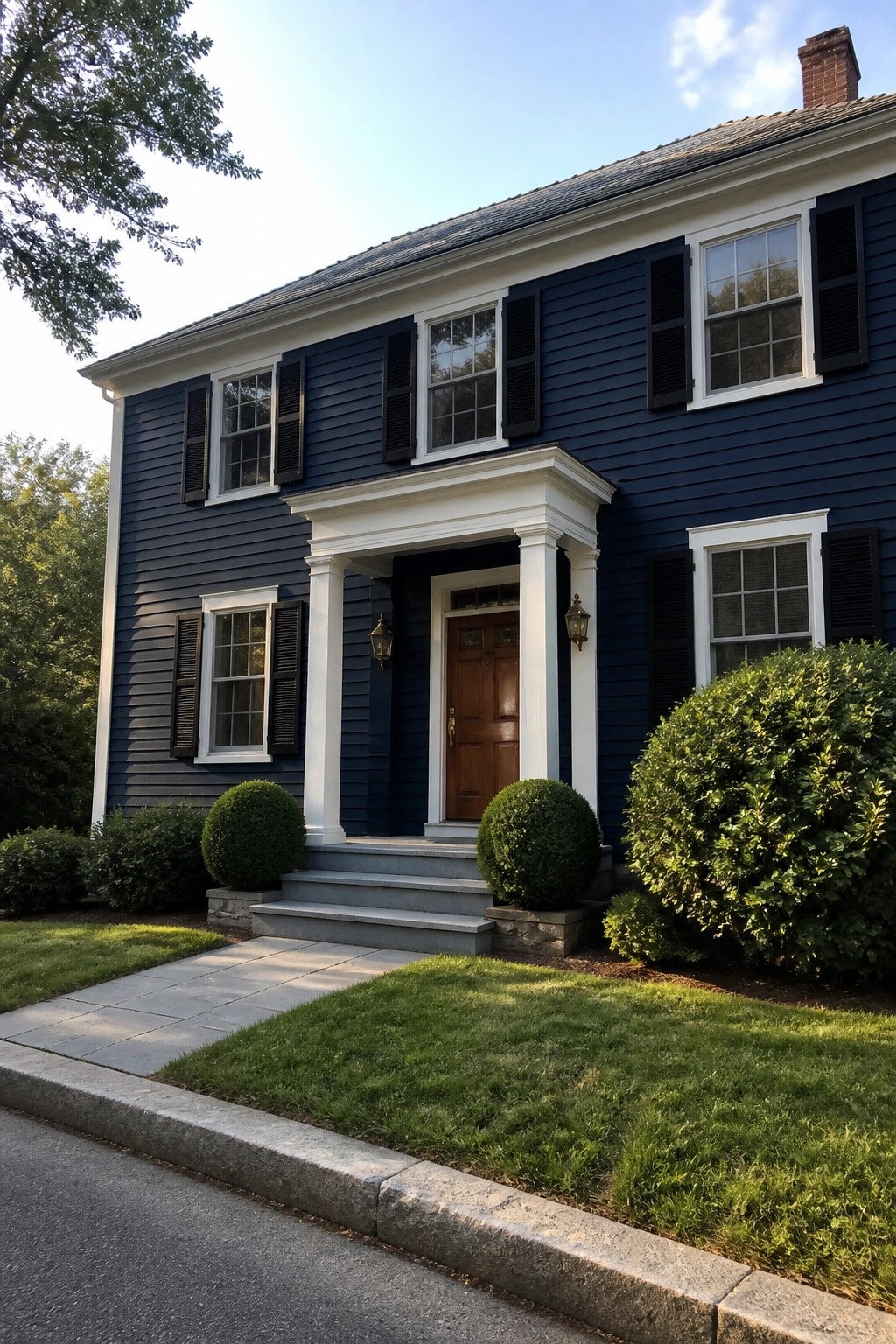
A deep navy blue works well on this house because it feels solid and traditional without being too heavy. The color sits in a cool blue family that reads dark but still shows some depth in daylight, which helps the whole front hold together nicely. It pairs cleanly with the white trim and columns, giving the entrance a bit more structure.
This shade stays fairly true outside and does not shift too much toward purple or black. It looks best on homes with similar white details or light stone accents, and it holds up against both the roof and the greenery around the base. People often reach for something close to Sherwin Williams Naval, Benjamin Moore Hale Navy, or Behr Midnight in the City when they want this same effect.
Muted Sage Green Beside Natural Stone
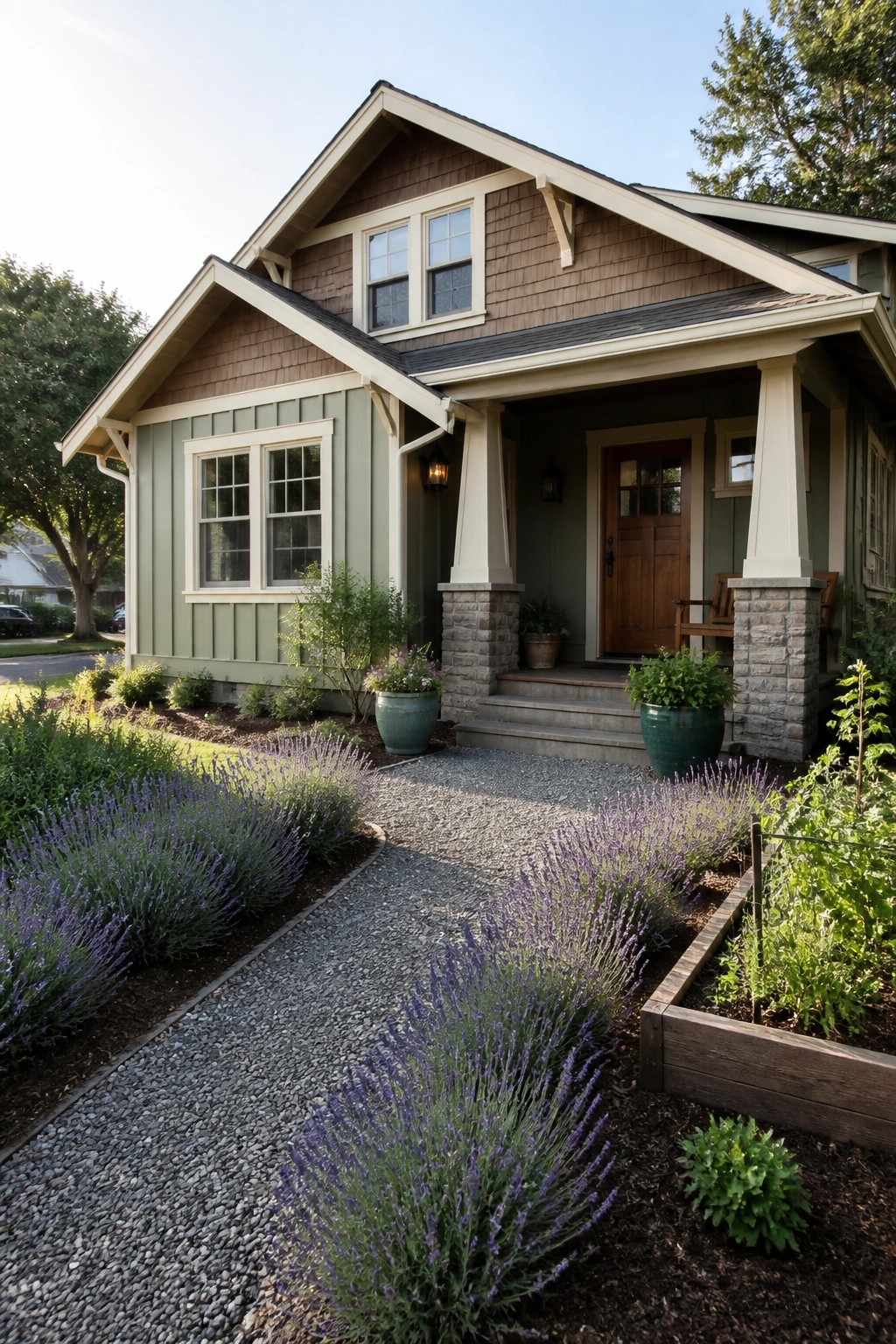
This muted sage green on the house siding gives the exterior a calm, updated feel that still reads as classic. It sits between the stone pillars and the brown shingles above, creating a balanced look that works for many homes without needing a full overhaul.
The color carries a light gray undertone, so it stays soft even in bright daylight. Pair it with natural stone bases or similar masonry if you want the same grounded effect, and keep trim in a warm off-white to avoid any cool clash.
Warm Off-White Siding With Natural Wood

This warm off-white siding gives the house a soft, clean look that still feels grounded. It reads as a pale neutral with a light beige undertone rather than a stark white.
The color sits nicely against the wood posts and stone base without competing with them. It works well on homes that already have natural materials like cedar or limestone. Sherwin Williams Alabaster, Benjamin Moore White Dove, or Behr Swiss Coffee would be close matches to try.
Soft Blue Green Siding With Stone

This light blue green siding gives a house a calm, coastal look that still feels classic. It sits in the softer range of blue greens and reads cooler rather than warm, which helps it stay fresh even in full sun.
It pairs especially well with white trim and natural stone, as seen here. Colors like Benjamin Moore Palladian Blue, Sherwin Williams Rainwashed, Behr Ocean Air, or Farrow & Ball Borrowed Light all land close to this shade.
Red Brick Against Cream Trim

Red brick brings a warm, classic look to an exterior that feels grounded without trying too hard. It has that natural terracotta tone that shows up nicely in sunlight and gives the house a solid, lived-in presence.
This shade works best when kept simple, so the cream trim around the windows and door can do the lifting. It pairs easily with dark green doors or black metal details and holds up well on older brick homes or new builds that want a traditional feel. Similar colors include Sherwin Williams Rookwood Red, Benjamin Moore Heritage Brick, Behr Terra Cotta, and Farrow & Ball Red Earth.
Warm Charcoal Siding With Stone Base
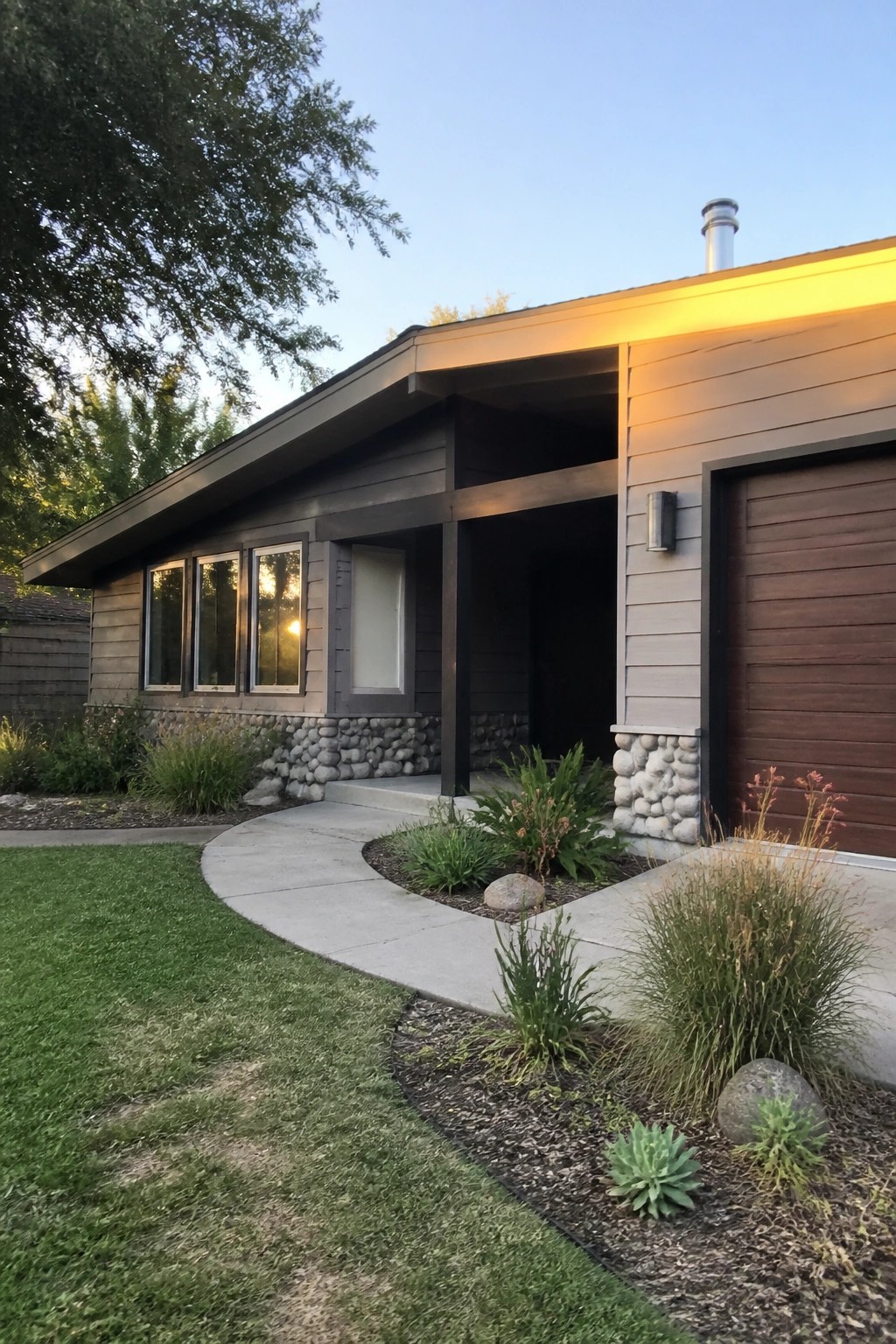
This dark warm gray siding brings a grounded, modern feel to the whole house. It sits somewhere between charcoal and a soft brown, which keeps it from looking too cold or flat next to the stone. Many people like this kind of tone because it still reads as neutral while adding a bit more depth than plain gray.
It pairs especially well with natural stone and wood details like the garage door shown here. The color holds up nicely in changing light and works best on homes that already have some texture in the materials around it. If your house has a similar mix of stone and wood, this direction is worth testing on a small section first.
Soft Gray Siding With White Trim
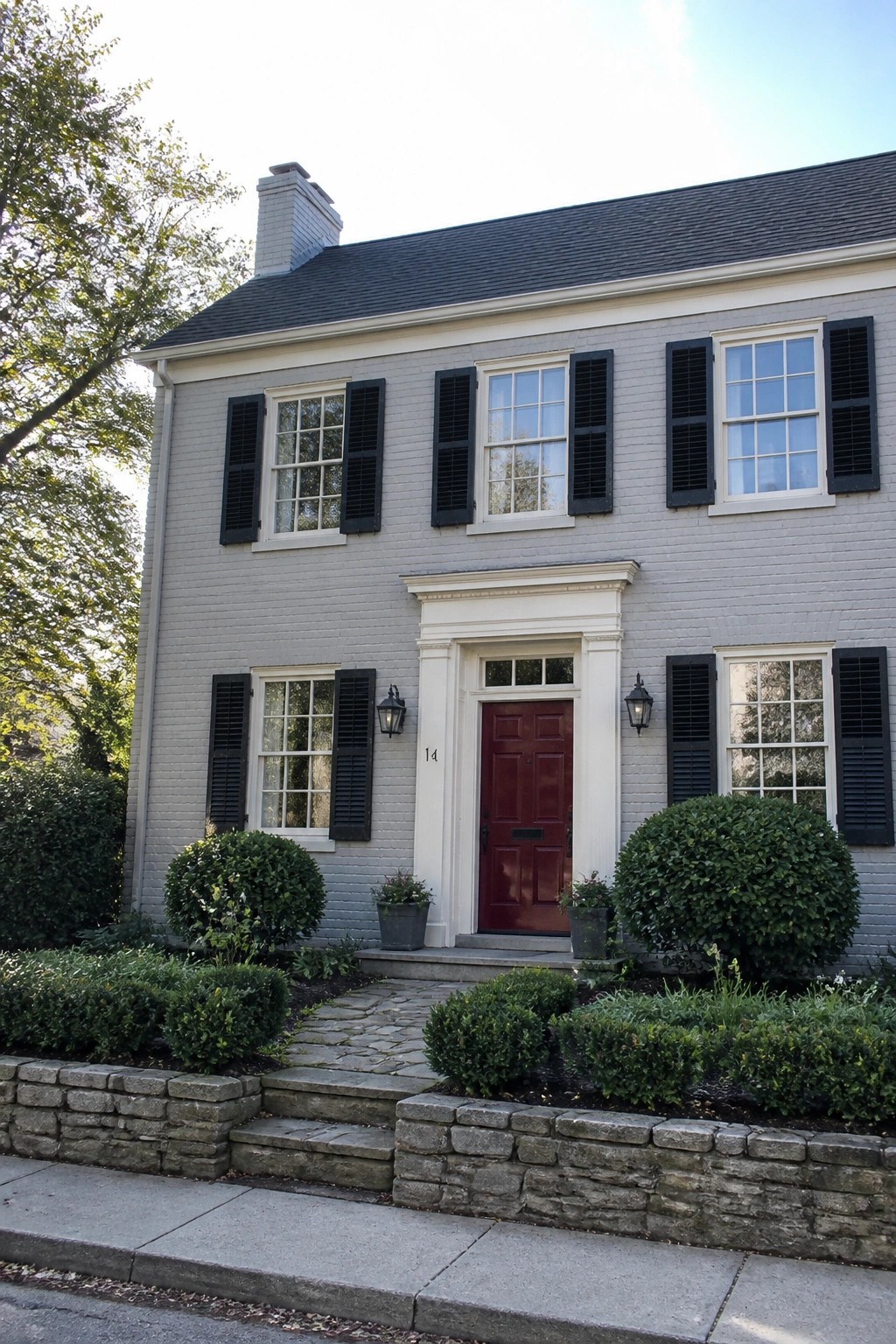
This soft gray works well on the main siding because it stays neutral without turning too cold or flat. It gives the house a clean updated look while still feeling traditional and approachable. Many people choose this kind of gray when they want something that ages nicely and does not compete with the roof or landscaping.
It reads as a light cool gray with just a touch of blue in it. The white trim helps keep it from feeling heavy, and the same color on the whole facade makes the house look taller and more put together. It pairs nicely with black shutters or a dark roof, but it can start to look washed out if the trim is not kept bright white.
Warm Off-White Siding With Black Windows

A warm off-white makes a good choice for this kind of modern exterior. It keeps the house looking bright without going stark, and it sits nicely against the black window frames and dark roofline. Colors like this tend to feel clean but still a little soft, which helps them work on larger wall areas without looking too harsh in real daylight.
It reads as a creamy neutral rather than a cool white, so it pairs well with wood accents and gravel paths like the ones here. Sherwin Williams Alabaster, Benjamin Moore Simply White, or Behr Swiss Coffee would be close matches. Just watch the undertone if your light leans cooler, since that can pull it a bit pink or gray.
Green Siding Against Red Brick
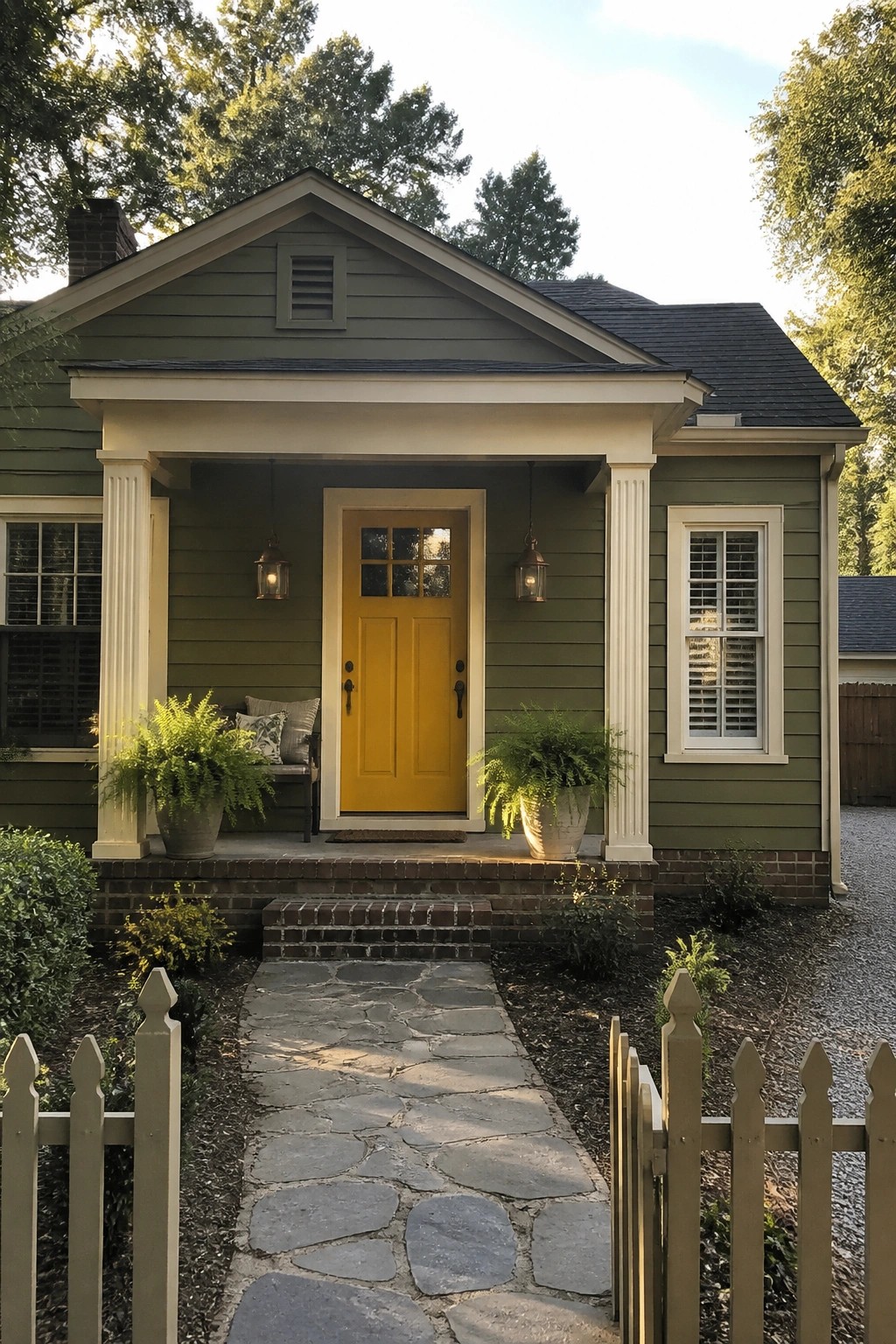
This muted sage green is the main color on the siding. It sits in a soft mid-tone range with a hint of gray that keeps it from looking too bright or too olive. Many people like this shade because it feels calm next to older brick foundations and gives a house a settled look without needing a lot of extra detail.
It pairs easily with white trim and a darker roof. The same green can look a bit cooler in full sun, so it works best on homes that get steady daylight rather than deep shade. If you try it, test a larger sample on the wall first since the brick and trim colors around it make a noticeable difference in how the green reads.
Warm Beige Siding Beside White Trim
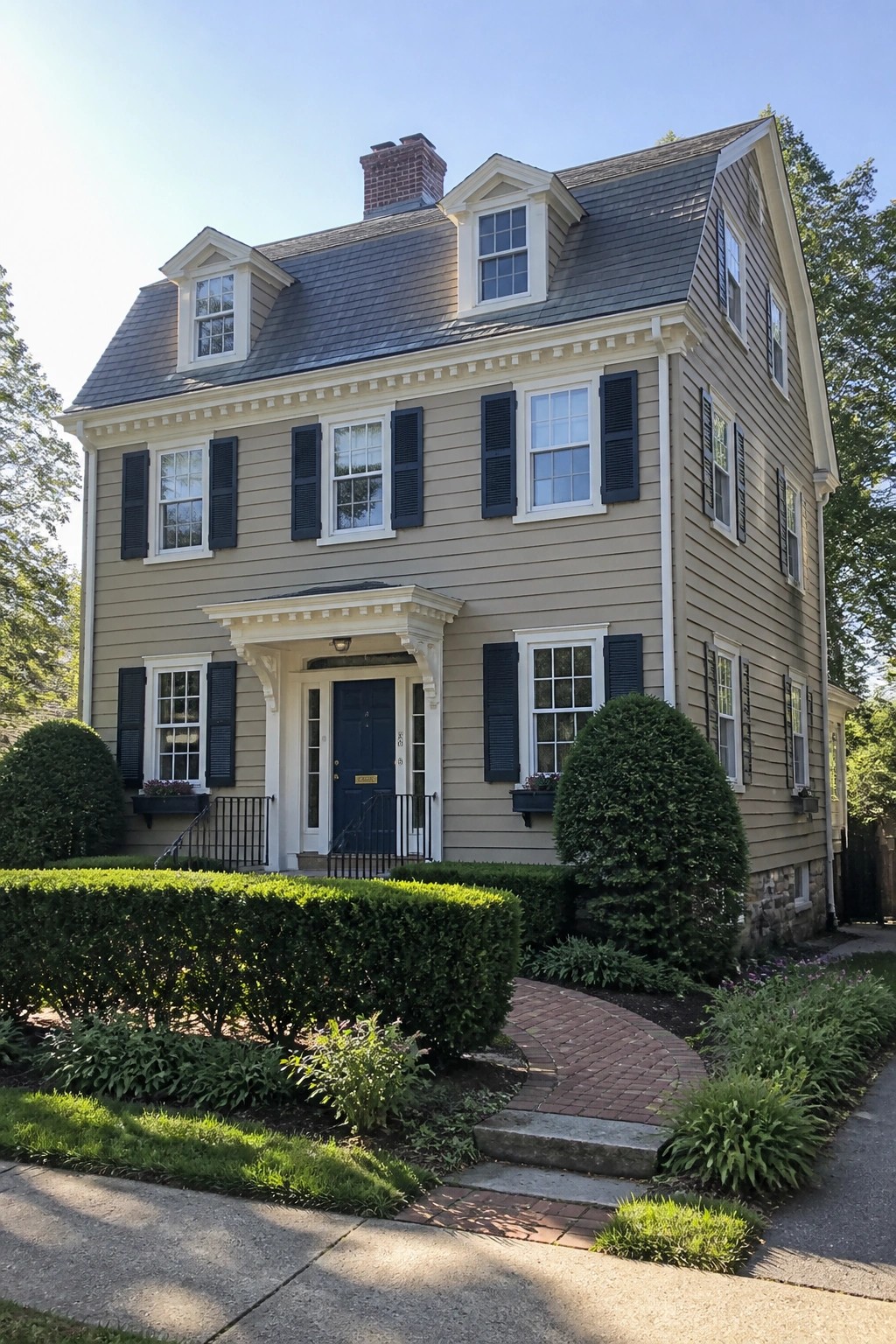
This house shows a soft warm beige on the main siding. The color sits between gray and brown, giving a gentle neutral that feels at home on traditional exteriors without looking too plain or too heavy.
It carries a light yellow undertone that stays steady in bright daylight. The shade works best with crisp white trim and can take dark shutters or a deep blue door without clashing. Try it on homes that already have white detailing and some natural stone or brick at the base.
Charcoal Gray Siding With Black Accents

A deep charcoal gray works well on this kind of modern exterior because it feels solid and simple without looking flat. The color sits in a cool, almost blue-leaning family that reads darker in shade and holds its tone even in bright daylight. It gives the house a clean, current look that stands out next to lighter driveways or greenery.
This shade pairs naturally with black windows, doors, and roofing, which keeps the whole front from feeling too heavy. It also sits comfortably against concrete planters and gravel areas. Homeowners often like it on panel siding because the color stays consistent across large surfaces and needs very little upkeep. Similar options include Sherwin Williams Iron Ore, Benjamin Moore Kendall Charcoal, or Behr Black Fox.
Blue Gray Siding With White Trim

This soft blue gray gives a house that clean, updated look without going too dark or too bright. It sits right in the middle between gray and blue, which makes it easy to live with on older homes that already have some character.
It pairs nicely with white trim and holds its tone even in strong daylight. Most people like it best with black or dark green accents on doors and ironwork. Good matches include Sherwin Williams Silver Strand, Benjamin Moore Coventry Gray, Behr Silver Bullet, and Farrow & Ball Pigeon.
Charcoal Gray Columns Beside Natural Stone

This deep charcoal gray works well on the porch columns because it gives the entry a solid, grounded look without competing with the wood siding. The color sits in a neutral family that feels crisp next to the gray stone bases and the warmer brown shakes above it. Many people choose this shade when they want the structure to stand out while still blending into a natural setting.
It reads as a cool-leaning gray with very little brown in it, so it stays clean even in bright sun. Pair it with light stone or similar wood tones and avoid anything too yellow nearby, or the gray can start to look flat. Sherwin Williams Iron Ore, Benjamin Moore Kendall Charcoal, and Behr Black Fox all land close to this tone.
Blue Gray Siding Next to Warm Wood Posts
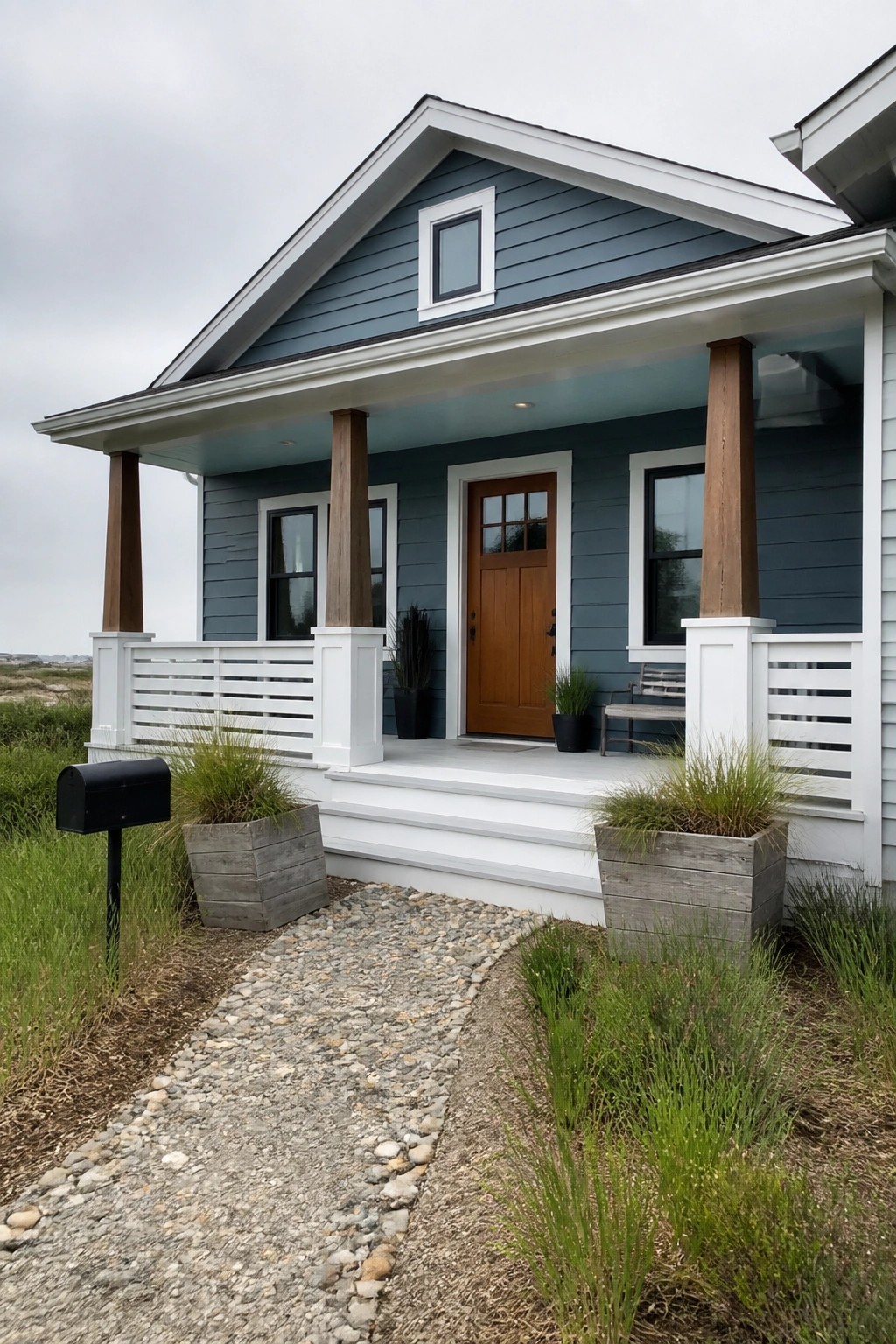
This soft blue gray siding brings a calm, slightly coastal look to the whole house without feeling too stark. It sits in that middle range between gray and blue, which makes it easy to live with on an exterior where you want something a bit different from plain gray but not as bold as navy.
It seems closest to Benjamin Moore Boothbay Gray or Sherwin Williams Rainwashed, with a touch of Behr Silver Drop as another option. The color works well against the white trim and the natural wood posts because the wood adds just enough warmth so the blue gray does not read cold. It tends to look best on homes with simple lines and plenty of greenery around the base.
Warm Cream Trim Against Red Brick
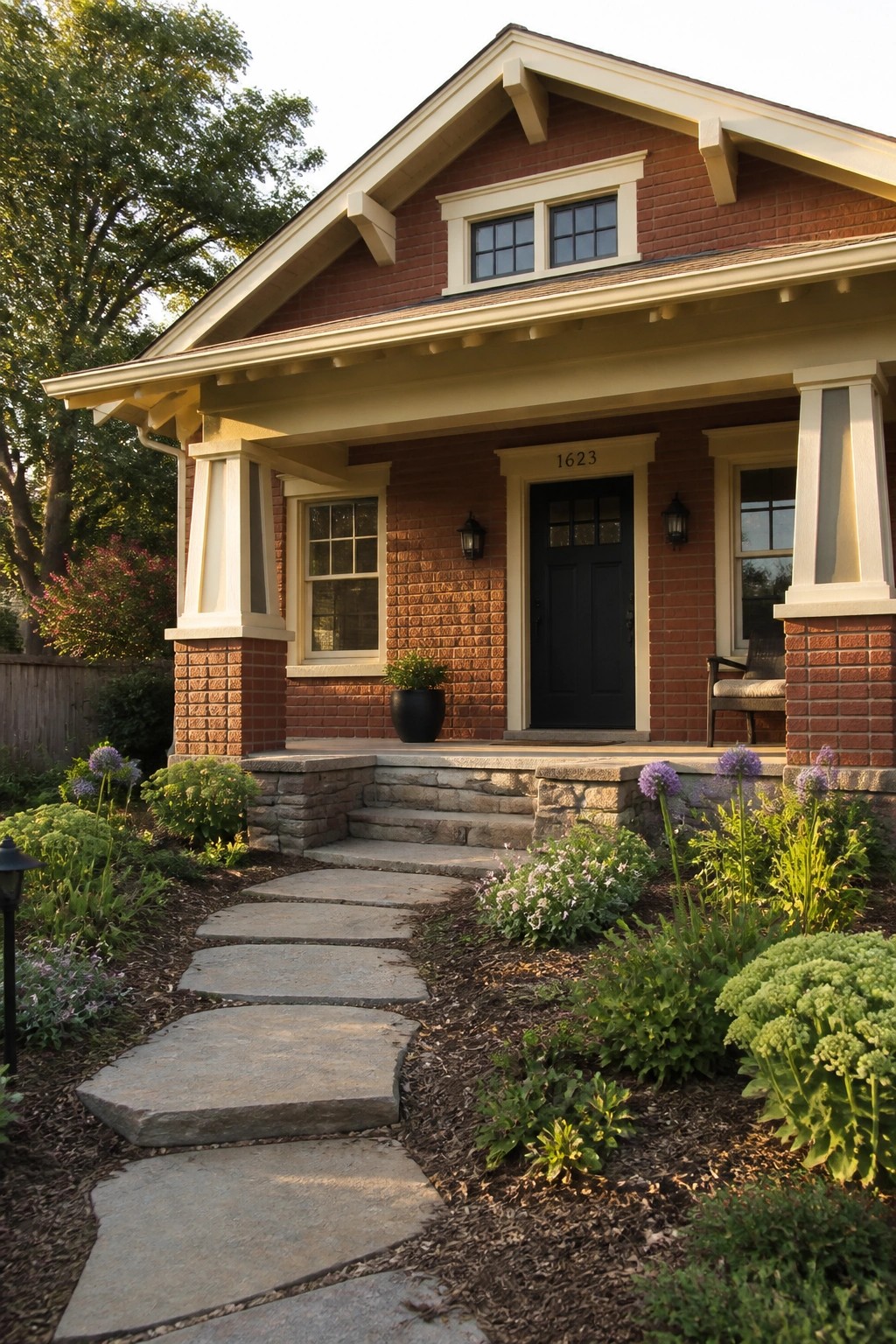
This warm cream trim color brings a soft brightness to the red brick without overpowering it. The shade sits in that easy middle ground between white and beige, which helps the brick look richer while keeping the whole front looking neat and put together.
It has a gentle yellow undertone that shows up best in natural light and works well with stone steps or dark doors. Try it on homes where you want the brick to stay the main feature instead of fighting with a cooler white.
Pale Yellow Siding With Black Shutters

This light yellow gives the house a soft, friendly look that still feels classic. It is a pale, warm shade that brightens the front without shouting for attention.
The color has a gentle creamy feel that sits well next to white trim and dark shutters. It works nicely on older homes and pairs easily with brick paths or plenty of green around the yard. Good matches include Benjamin Moore Hawthorne Yellow, Sherwin Williams Sunporch, Behr Pale Honey, and Farrow & Ball Babouche.
Muted Sage Green With Stone Foundation

This muted sage green siding gives the house a calm, updated look without feeling too bold. It sits right in the middle between gray and green, so it reads soft but still has enough color to make the curb appeal stand out. Many people like this shade because it works on both newer and older homes and pairs easily with different roof colors.
The gray undertone helps it sit nicely next to the stone base and black windows. It tends to look a little cooler in overcast light and a touch warmer in full sun. Good matches include Sherwin Williams Evergreen Fog, Benjamin Moore Saybrook Sage, Behr Aged Sage, and Farrow & Ball Pigeon.
Blue-Gray Shingles Beside White Trim

A cool blue-gray on shingle siding gives this house a clean settled look. The color feels crisp without being stark and it stands out nicely against the white trim.
It has a slight blue undertone that keeps the gray from going flat in daylight. This shade works best on traditional homes with dark roofs and simple brick or stone details. Pair it with white or cream trim and avoid anything too yellow or warm nearby.
Warm Beige Siding With Dark Metal Roof

A light warm beige works well as the main color on this house. It gives the exterior a clean, simple look that still feels current and pairs easily with the dark roof and windows. Many people choose this kind of neutral because it stays steady in bright sun and does not fight with other elements on the front of the house.
It has a soft gray undertone that keeps it from turning too yellow outside. This shade looks good on modern builds or updated townhomes and works best when the trim and roofing stay dark. Popular matches include Sherwin Williams Accessible Beige, Benjamin Moore Revere Pewter, Behr Almond Wisp, and Farrow & Ball Shaded White.
Warm Cream Against Natural Stone

A soft warm cream works really well on this kind of textured exterior. It keeps the house feeling light without going stark white, and it sits nicely next to the rough stone. Colors like Benjamin Moore White Dove, Sherwin Williams Alabaster, or Behr Creamy White give that same gentle tone.
The warmth in the paint helps it blend with natural materials instead of fighting them. It also plays nicely with the green shutters without looking too cool or flat. Just watch the undertone if your stone has any pink or gray in it, since that can shift how the cream reads outside.
Muted Teal Siding With Black Windows

This muted teal sits right between green and blue. It gives the house a calm, steady look that still stands out without trying too hard.
The color works well on vertical siding when it is paired with black trim and a warm wood door. It holds its tone in overcast light and suits modern homes that need something softer than gray but stronger than a pale neutral.
Warm Beige on Painted Brick With Green Shutters

This warm beige works well on brick exteriors because it softens the texture without hiding it. The color sits in a light neutral range that feels clean and updated while still looking at home on older masonry.
It has a gentle warmth that plays nicely against the dark green shutters and white trim. This shade works best on traditional homes where you want the brick to stay visible but need something calmer than raw red tones. Try it with similar green accents or keep the shutters in a deeper neutral if you want a quieter look.
Cool Gray Siding Beside Natural Stone

A cool gray like this makes a solid choice for siding when you want the house to look updated without going too bold. It lands in that middle range, not too pale and not too dark, so the whole front stays balanced even with the garage door painted to match.
This shade tends to pick up a slight blue cast in daylight, which is why it sits nicely next to the stone wall and warmer wood door. It works best on homes that already have natural materials around the base, and it keeps the look from feeling flat when paired with simple white trim.
Frequently Asked Questions
Q: How do I pick one of these colors without it clashing with my roof and trim? A: Match the new shade to your roof first since that covers the most surface area. Walk around your house at different times of day and hold paint samples against the existing materials. This quick check keeps everything looking balanced.
Q: Do these trending colors need extra prep to last longer on the exterior? A: Clean the surfaces well and fix any peeling spots before you start. Use a good primer on bare wood or stucco so the color grabs and stays even through rain and sun. Skip rushing this step or the finish will show it fast.
Q: What if I want a bolder color but worry it will stand out too much? A: Try the deeper tones on just the front door or shutters first. They add the curb appeal update without changing the whole house at once.
