

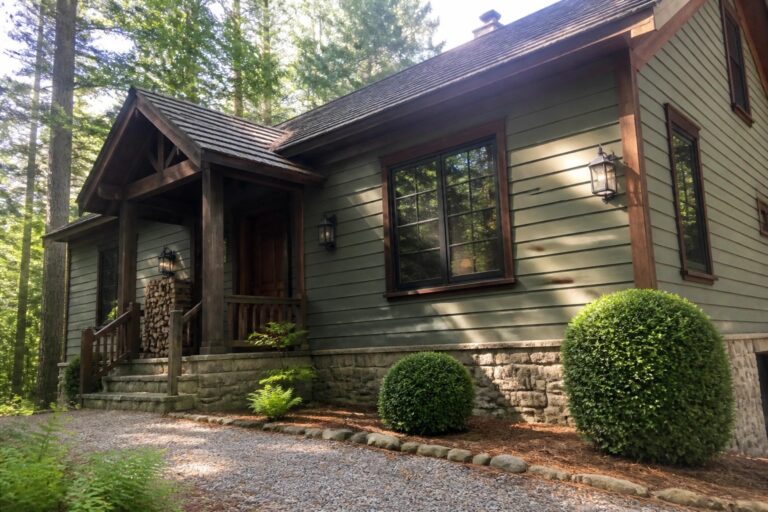
When choosing paint for a cabin tucked into the woods I pay close attention to how the color will sit next to the natural stone and wood that already surrounds the house.
The same shade can look warmer in morning light and cooler by late afternoon when shadows from the trees stretch across the siding.
Samples on site make all the difference.
I tend to favor tones that echo the bark and moss rather than trying to stand out against them.
This way the cabin feels like it belongs there even after years of changing seasons and weather.
Muted Sage Beside Natural Stone
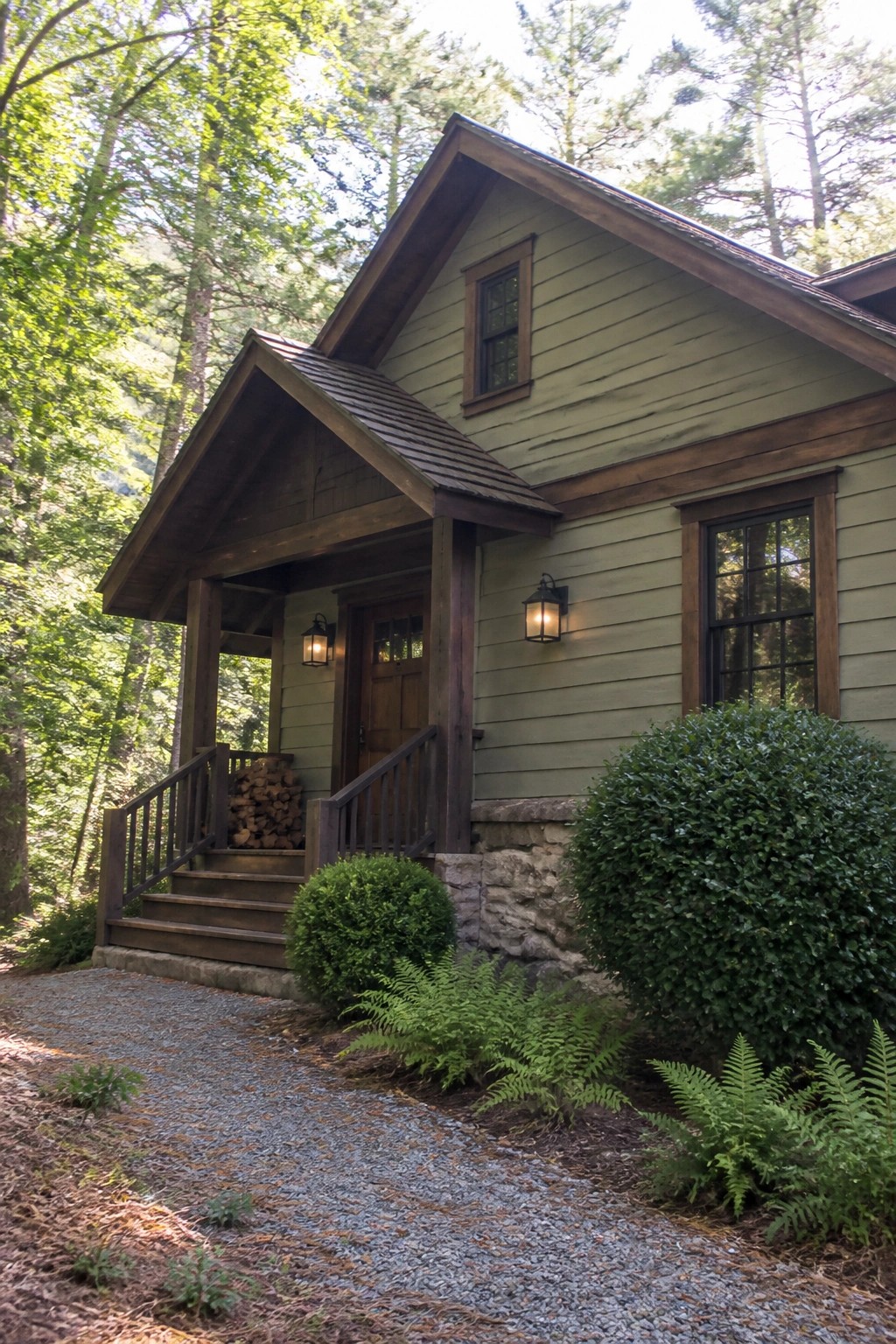
This cabin uses a soft muted sage green on the siding. The color has a grayish undertone that keeps it from looking too bright or fresh, letting the house blend into the trees without disappearing completely.
It pairs especially well with the stone foundation and dark wood trim. Try something close to Sherwin Williams Clary Sage, Benjamin Moore Saybrook Sage, or Behr Moss Covered if you want a similar low-key look for your own place.
Warm Brown Siding Next to Stone Bases
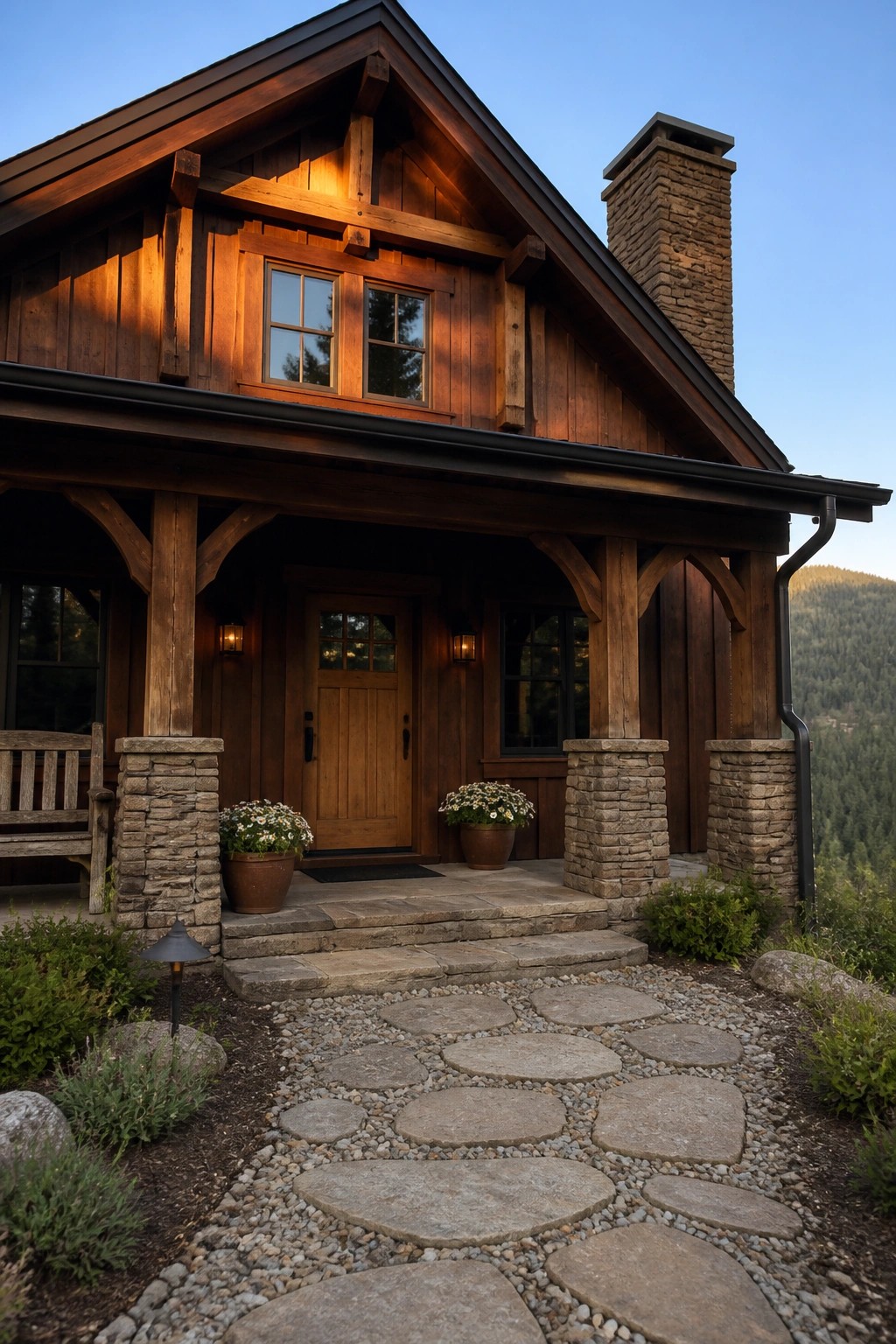
This deep warm brown on the cabin siding works well because it feels like a natural wood stain more than a solid paint. The color sits right in the middle between red and neutral, so it picks up the tones in the surrounding trees without disappearing completely.
It looks best when kept next to rough stone and simple trim rather than bright accents. Try something close to Sherwin Williams Java, Benjamin Moore Deep Bronze, or Behr Saddle Brown if you want a similar depth that still blends into a forest setting.
Muted Gray Brown Siding With Cream Trim
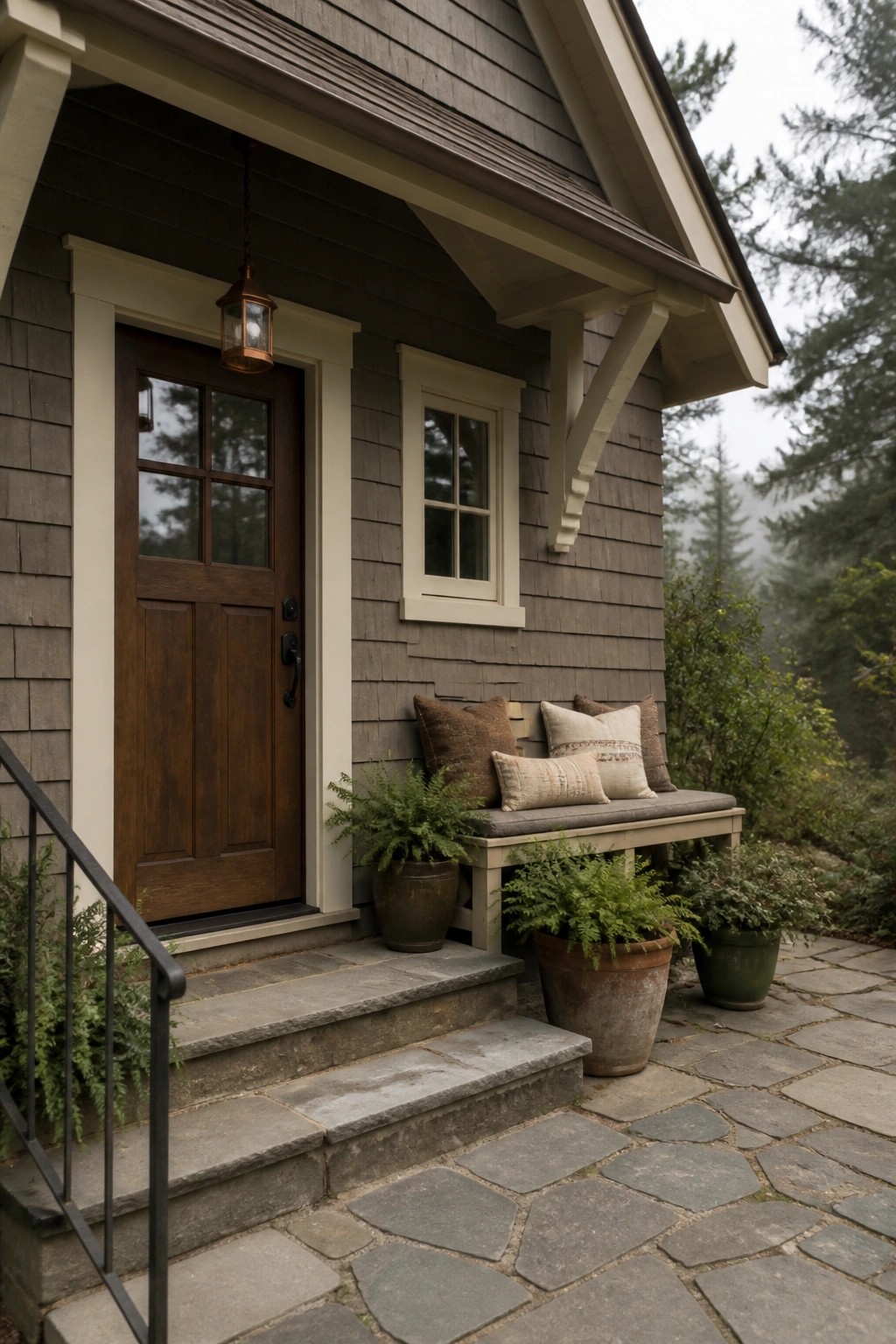
This siding color is a soft gray brown that sits right between warm and cool. It gives the cabin a quiet, settled look that feels at home in the trees without trying too hard.
The tone has a slight earthy warmth that keeps it from reading too cold or flat against the greenery. It pairs easily with the light trim and stonework, and it holds up well on shingle surfaces where the texture adds a bit more depth.
Deep Blue Gray Siding With Warm Wood Trim
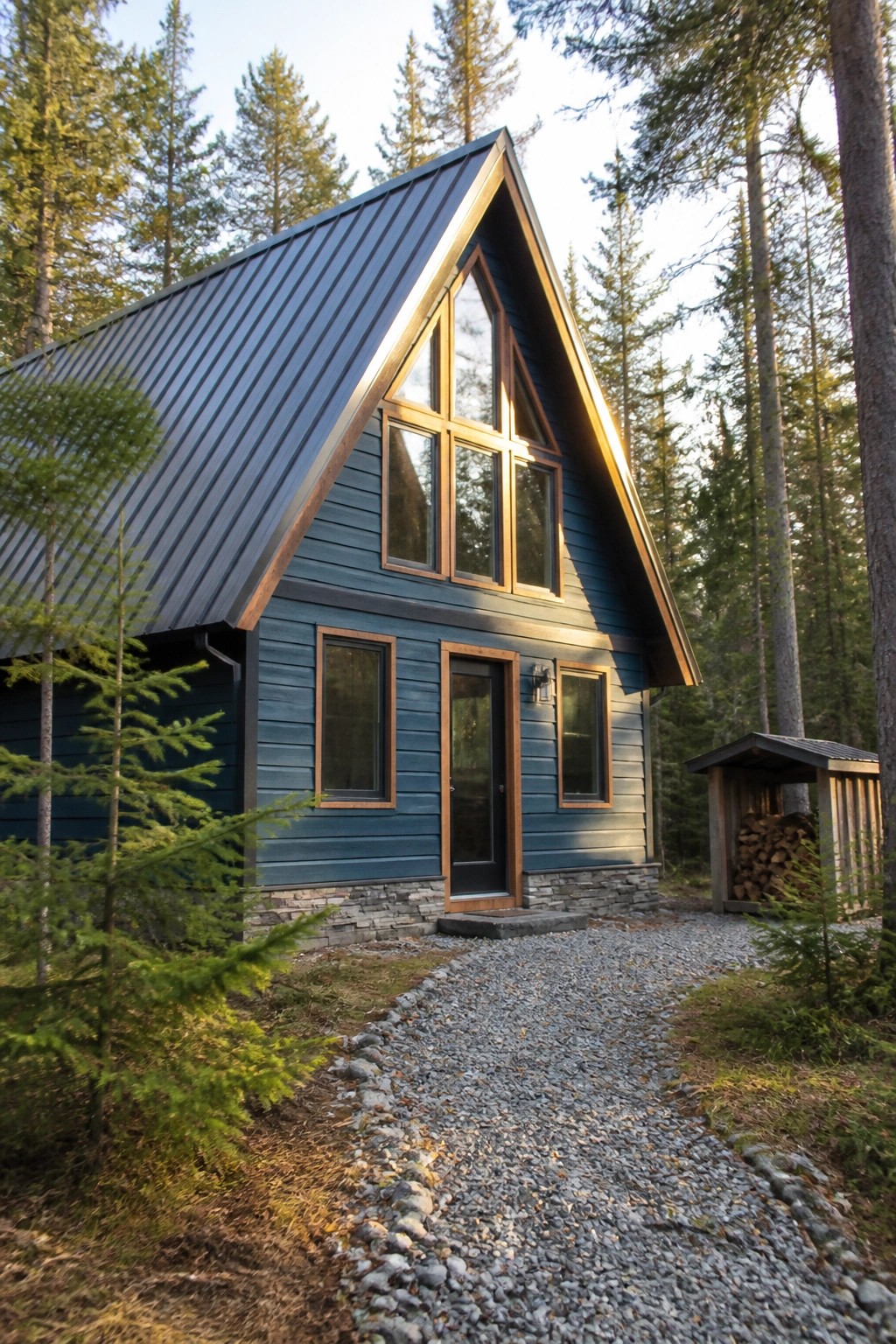
This deep slate blue reads as a cool, muted shade that still feels right at home in the woods. It sits between navy and gray without going too dark, which helps it blend into forest settings while keeping the cabin from disappearing completely. The color works because it stays calm next to natural materials instead of fighting them.
It pairs best with warm wood trim and stone foundations, which keep the blue from feeling too stark. In shaded mountain light the tone can lean a bit greener, so testing a sample on the actual wall is worth it before committing. Good matches include Sherwin Williams Naval, Benjamin Moore Hale Navy, and Behr Deep Sea Diver.
Muted Greige Siding Beside Natural Stone
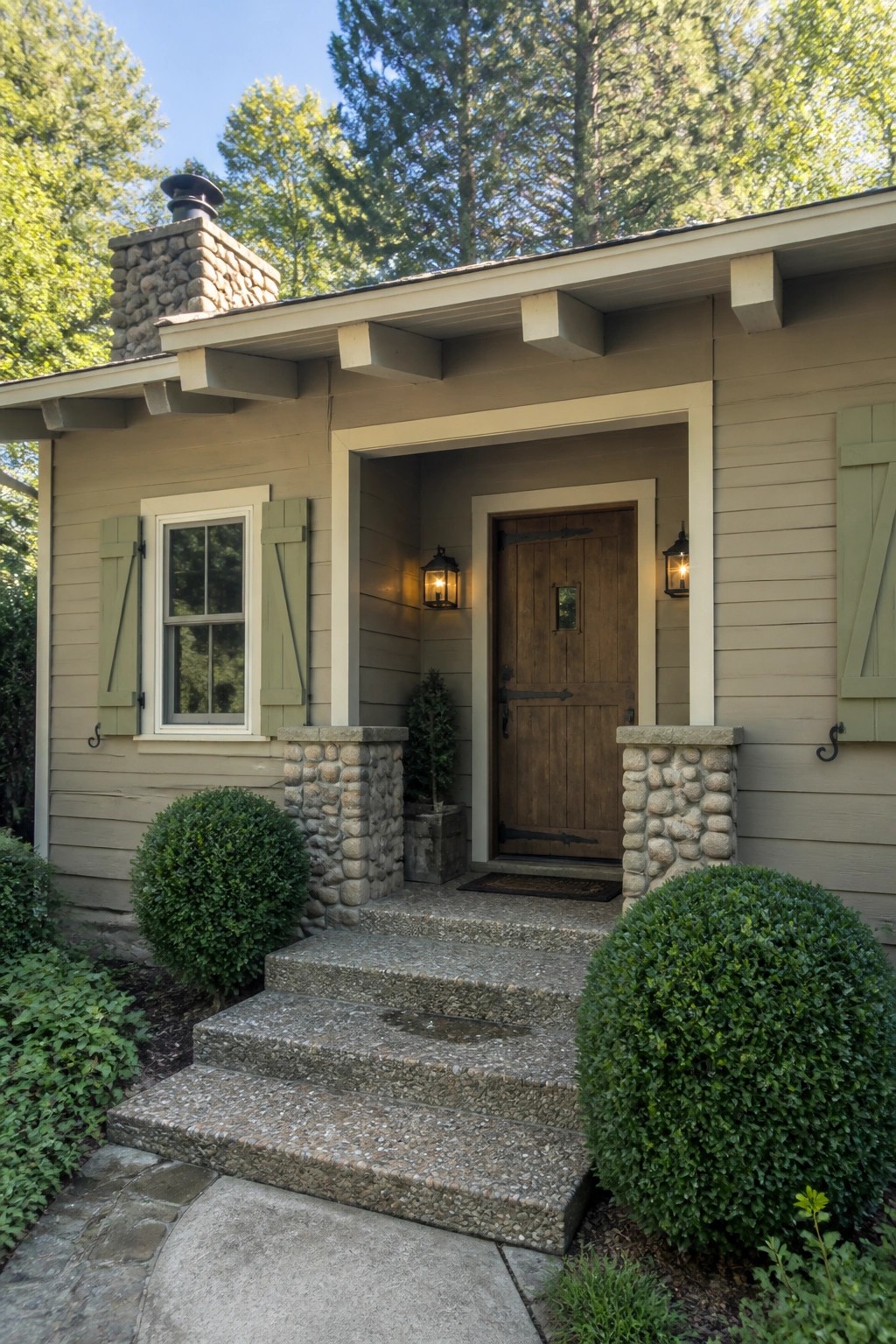
This soft greige on the siding gives a quiet, blended look that fits right into wooded settings. It sits somewhere between warm beige and light gray, with just enough warmth to feel at home next to the stone details without standing out. Many cabins use shades like this because they keep the whole exterior feeling calm and tied to the landscape.
It works best with natural materials like the stone posts and chimney shown here. Pair it with similar muted tones on trim or roofing so the house does not fight the trees around it. Watch the undertone in bright sun, since a slightly cooler version can start to look flat next to warm stone.
Deep Brown Siding Against Natural Stone
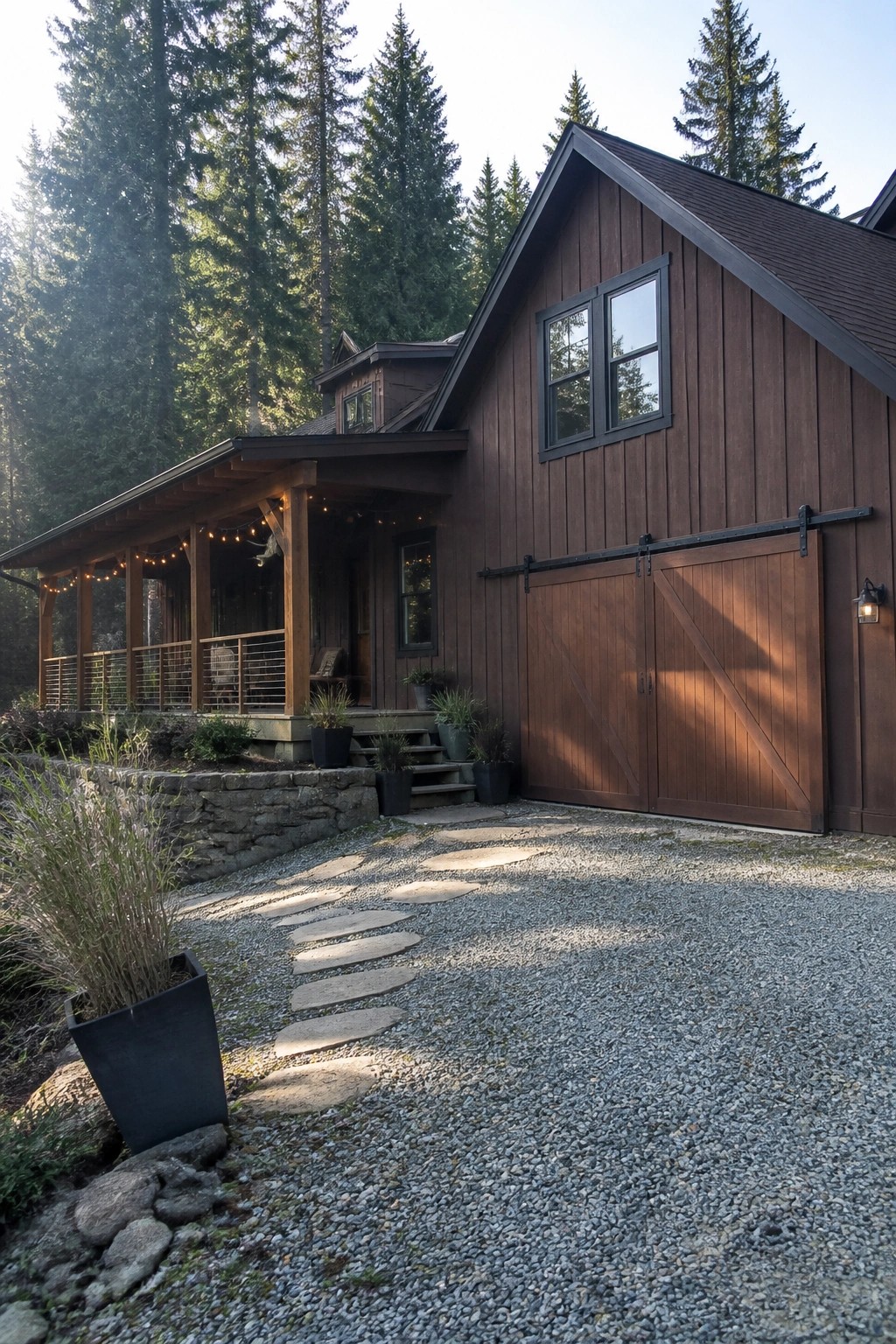
A deep warm brown works really well on cabin exteriors that need to settle into the trees. This shade reads as a rich wood tone rather than a flat paint color, and it has enough depth to keep the whole structure from feeling too light against the greenery. It sits close to Sherwin Williams Espresso, Benjamin Moore Black Bean, and Behr Coffee Bean.
The warmth in the brown helps it pick up the tones in the stone foundation without clashing. It tends to look best on larger surfaces like siding or big doors where the color can show its full depth. Pair it with natural materials and avoid bright trim if you want it to stay grounded.
Muted Sage Green Siding With Stone Bases
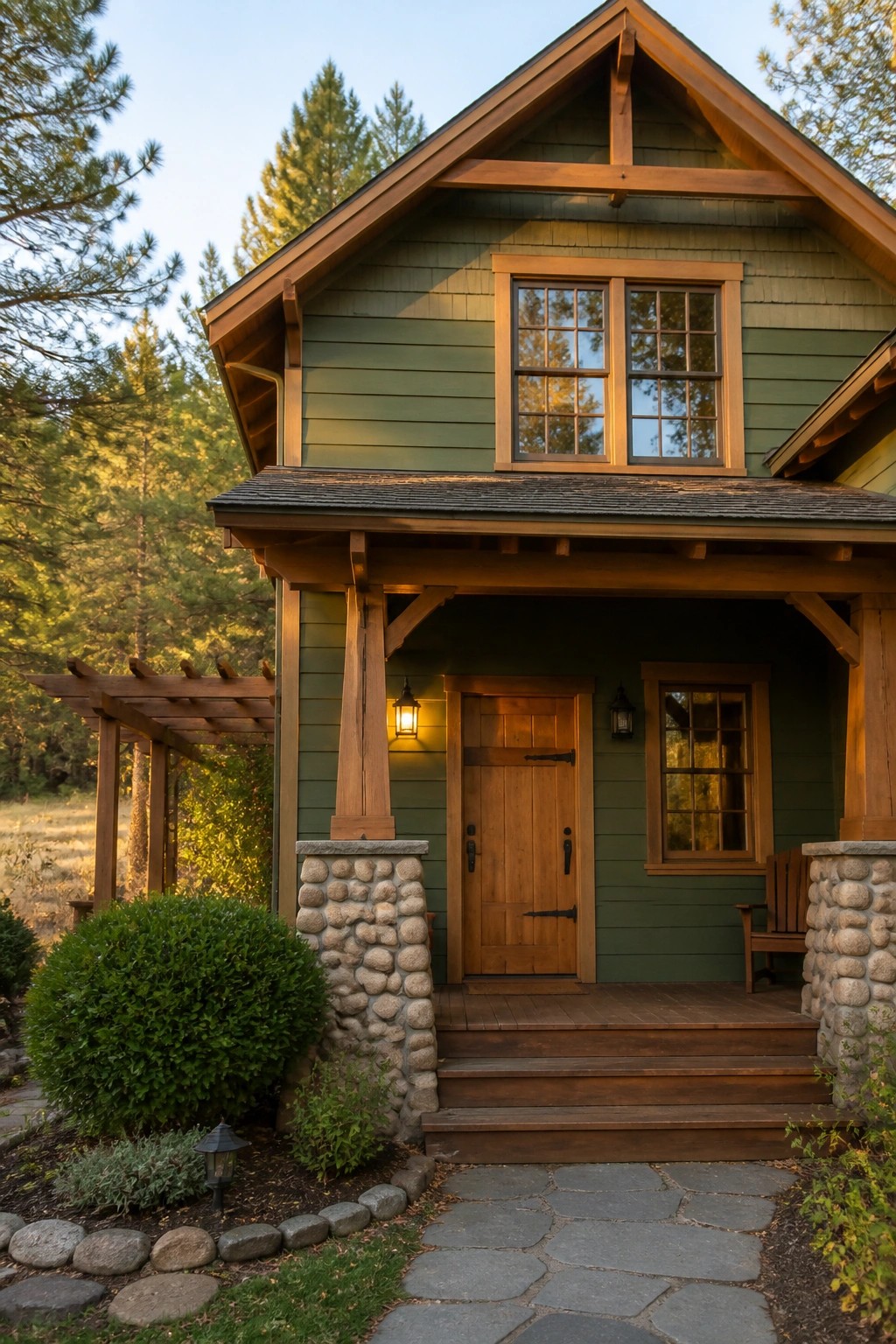
This muted sage green on the cabin siding feels like a natural fit for forest settings. It sits somewhere between gray and green without leaning too cool or too warm, which helps it blend into the surrounding trees instead of standing out.
The shade works especially well next to the rough stone pillars and warm wood trim. It stays calm in bright daylight but can look a touch deeper when the light fades, so pairing it with natural materials like these keeps the whole exterior grounded.
Blue Gray Siding Beside Natural Stone
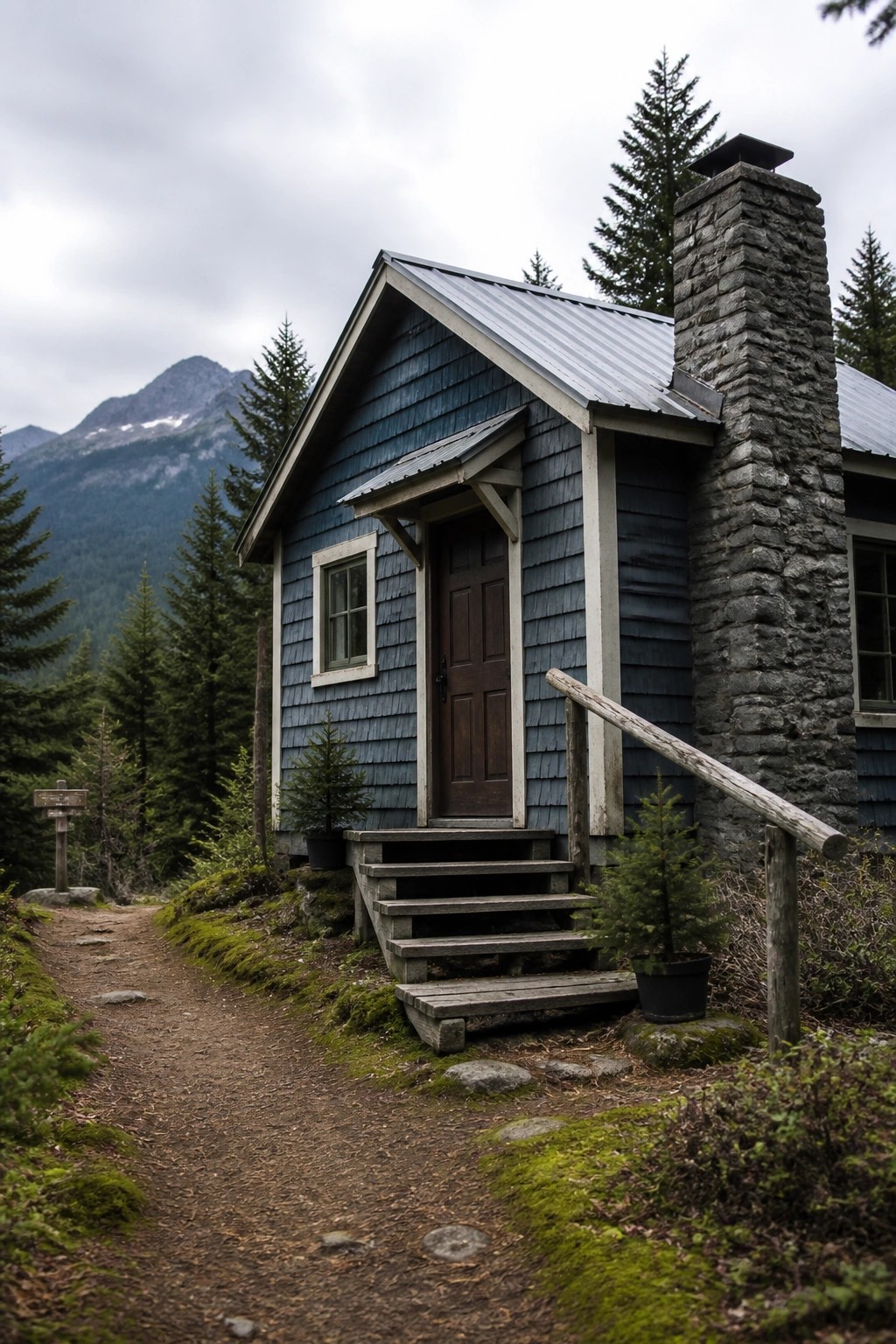
This blue gray siding gives the cabin a quiet, settled look that fits right into the trees and rock. It is a mid-tone cool gray with a soft blue cast rather than a true navy or teal. The color keeps the whole structure from feeling heavy while still reading as part of the landscape instead of something added to it.
It works best when the trim stays light and the roof stays simple, so the siding does not fight with the stone chimney or the surrounding evergreens. Pair it with natural wood doors and grayed shingles if you want the same low-key effect on your own place.
Deep Charcoal Siding Against Natural Stone
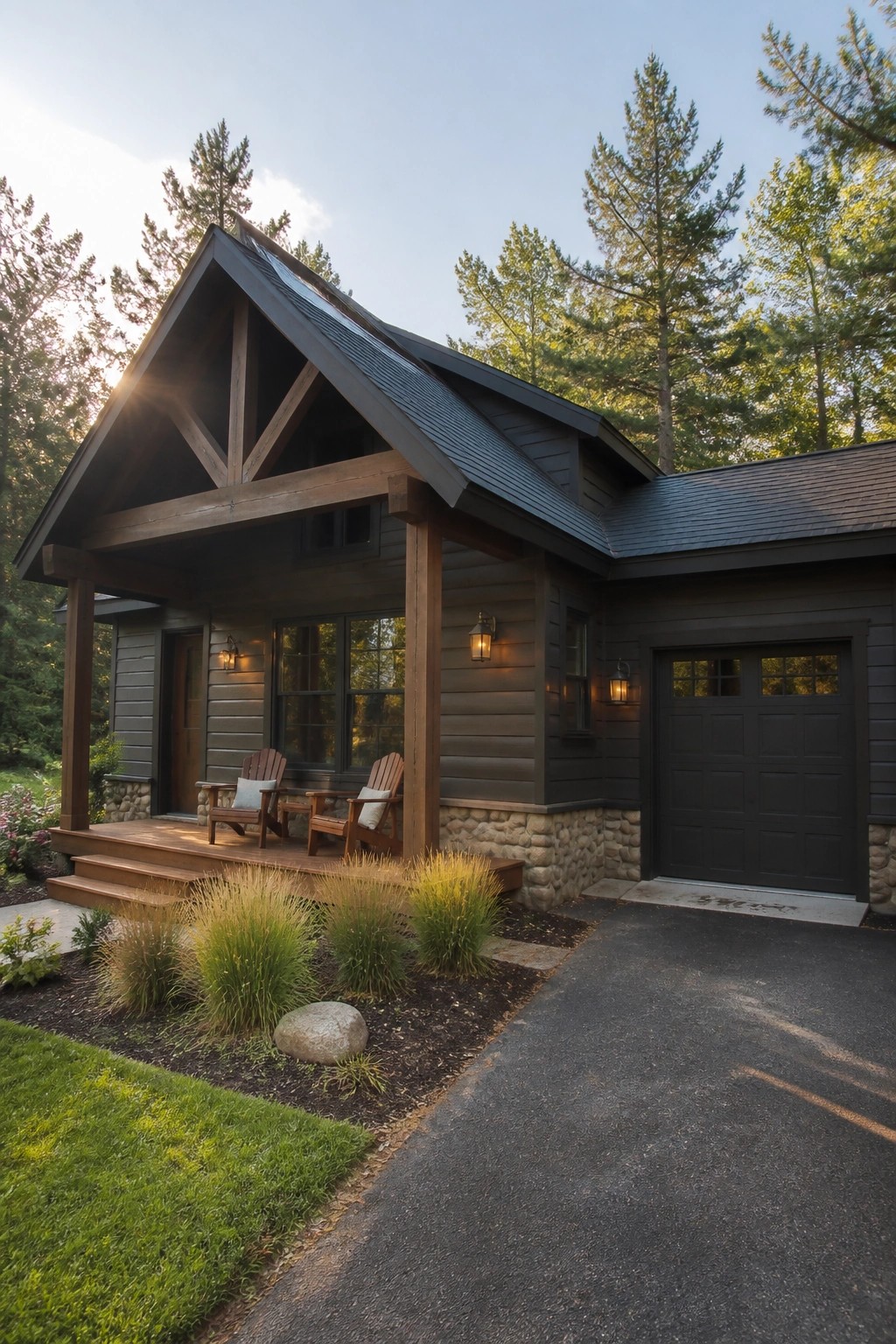
This deep charcoal gray works well on rustic cabin exteriors because it stays grounded without disappearing completely. It reads as a softened black rather than a flat gray, which helps it blend into tree lines while still showing some depth next to the wood beams and stone foundation. Many cabins use this kind of shade when the goal is to keep the house from feeling too bright against heavy forest greens.
The color sits close to Sherwin Williams Iron Ore or Benjamin Moore Kendall Charcoal. It pairs best with natural stone bases and dark wood trim, and it tends to hold its tone even in strong daylight. Just watch that it does not go too flat if the house gets very little direct sun.
Deep Charcoal Blue-Gray Beside Stone
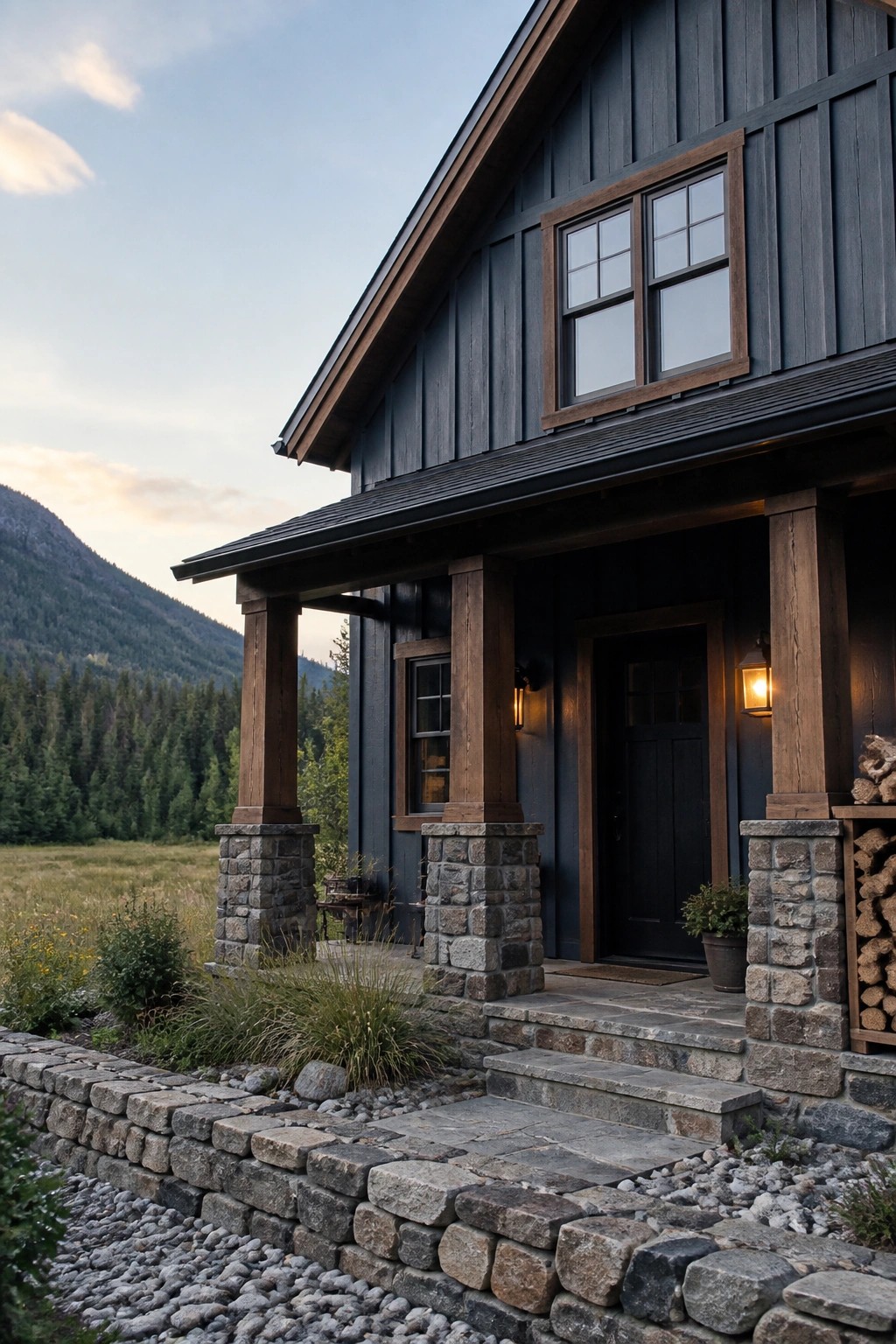
This deep charcoal blue-gray siding gives the cabin a solid, quiet presence that fits right into a wooded mountain setting. It reads as a dark, cool neutral that leans slightly blue rather than pure black, so it still feels natural instead of stark.
The color works especially well against the rough stone bases and warm wood details because it lets those materials take the lead. It holds its depth even in softer daylight and keeps the whole exterior from feeling too heavy or overly dramatic.
Warm Terracotta Siding Beside Natural Stone
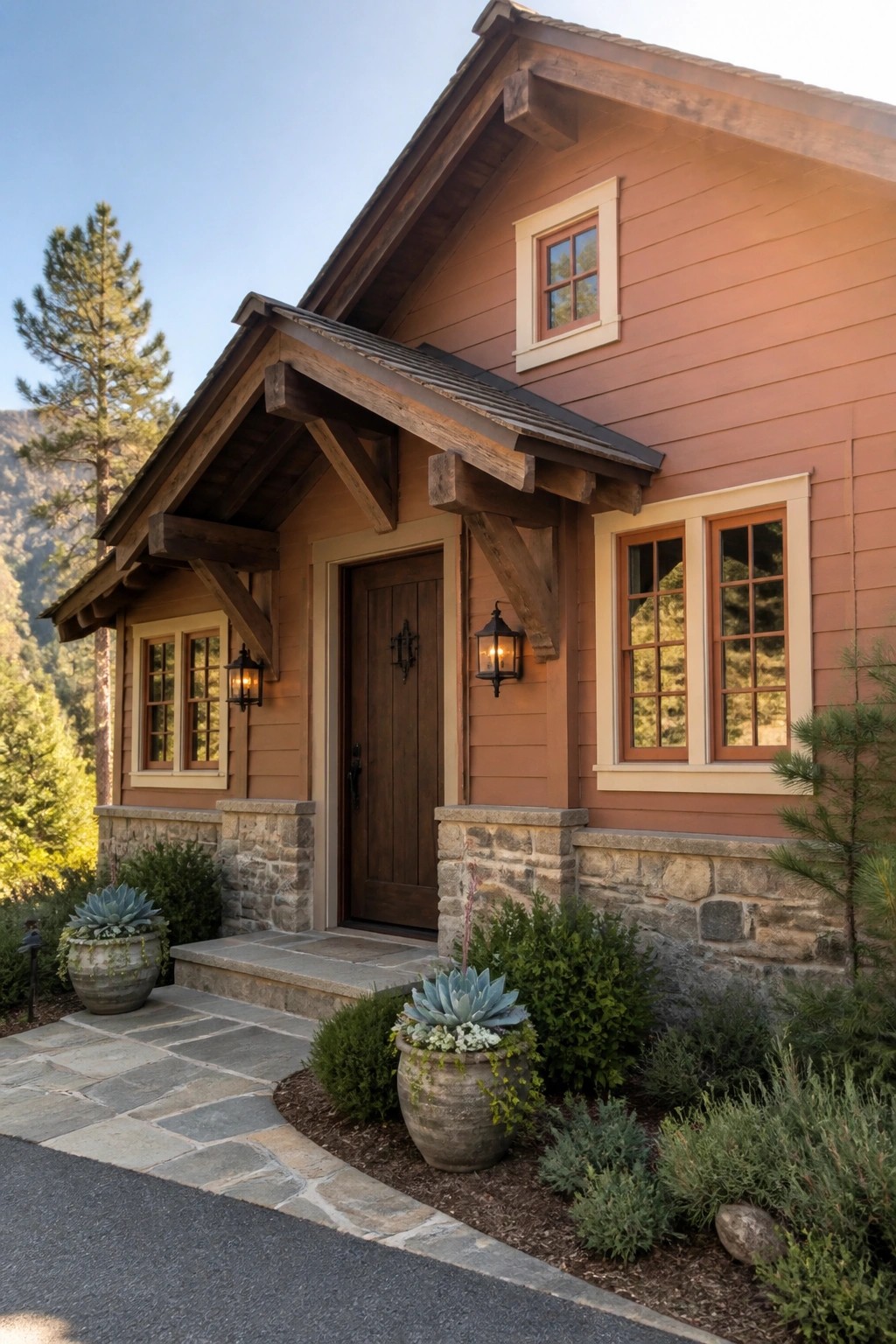
This warm terracotta shade on the siding gives the cabin an earthy tone that blends easily into mountain and forest surroundings. It sits somewhere between a muted red and a soft clay, with enough brown in it to feel grounded rather than bright.
The color pairs naturally with the dark wood trim and the stone foundation, which help it stay calm outdoors. It works best on wood siding where the texture can soften the hue, and it tends to look richer when kept away from crisp white trim. Similar shades show up in Sherwin Williams Baked Clay, Benjamin Moore Canyon Clay, and Behr Canyon Dusk.
Muted Sage Green Beside Natural Stone
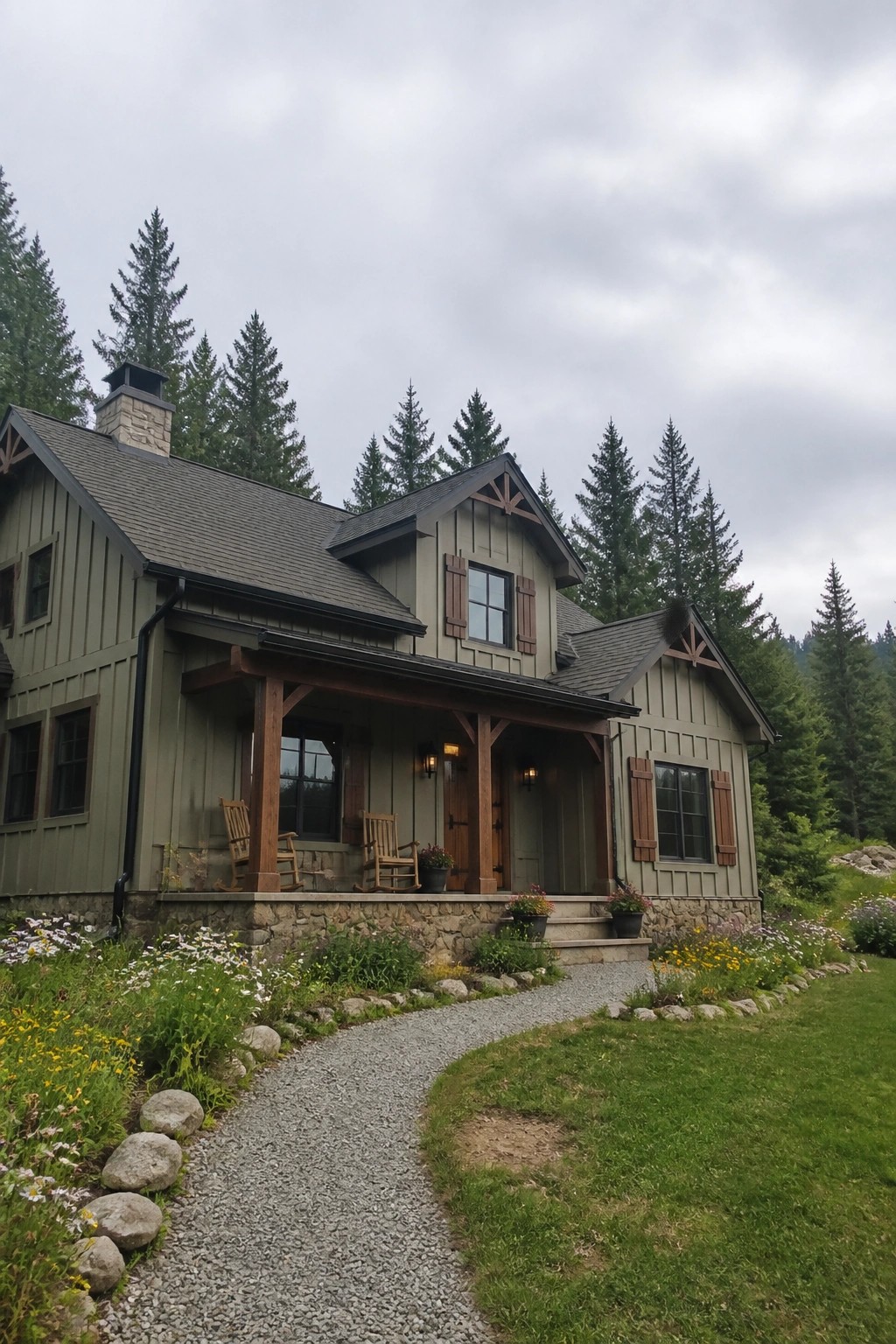
This muted sage green on the siding gives the cabin a quiet presence that fits right into the trees. It sits in the middle range between gray and green, so it does not fight the forest but still reads as a deliberate choice rather than a neutral that disappears.
The color has a soft gray undertone that keeps it from looking too bright or yellow in overcast light. It pairs naturally with the stone foundation and dark wood trim, and similar shades show up in Sherwin Williams Evergreen Fog, Benjamin Moore Soft Fern, or Behr Dried Thyme. Stick with matte or low-sheen finishes so the siding does not reflect too much and break the blended look.
Deep Brown Stain Beside Natural Stone
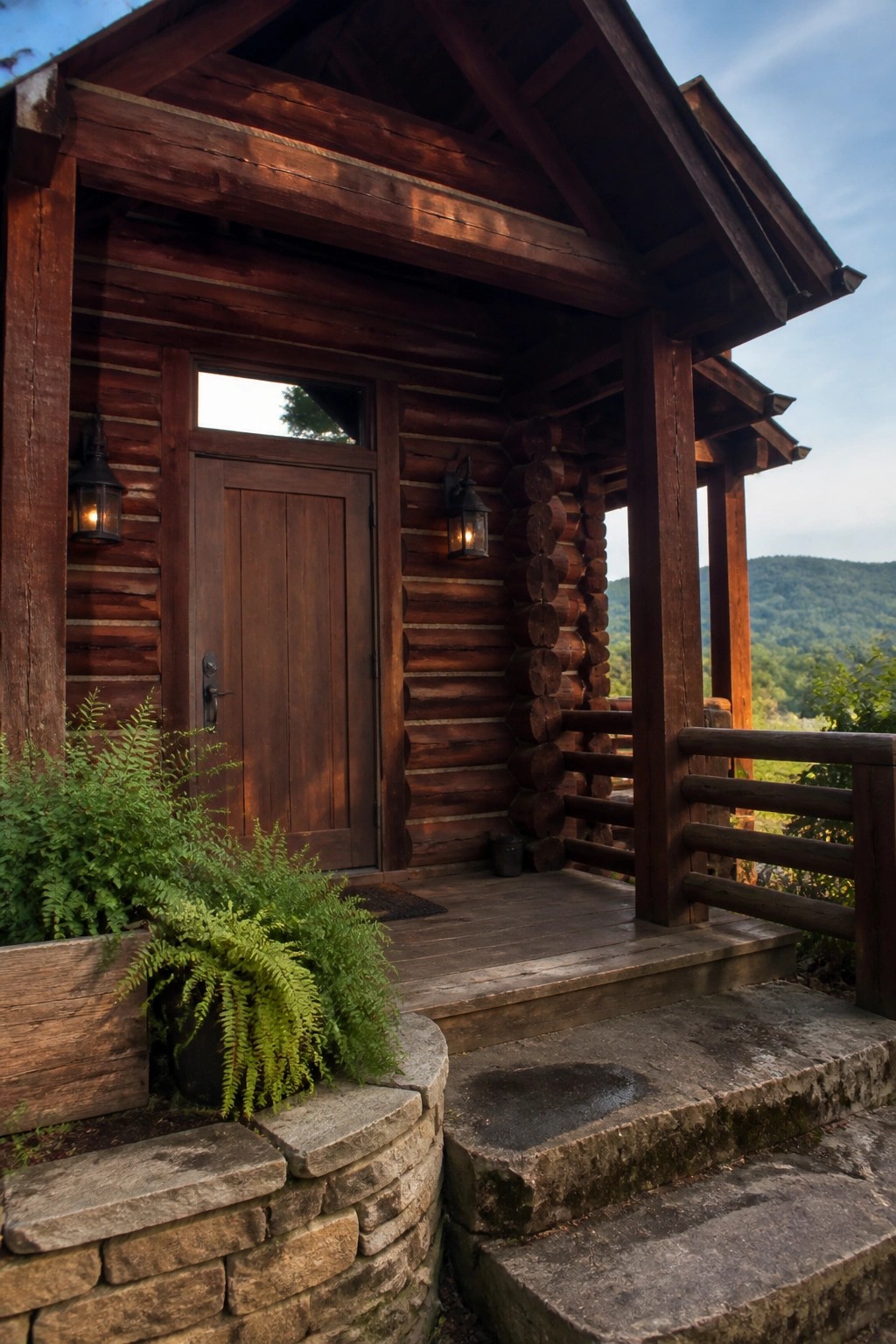
This deep brown stain on the logs gives the cabin a grounded, woodsy look that sits comfortably in a forest setting. It is a warm, reddish brown rather than a cool or grayed tone, which helps it pick up the colors of surrounding trees and earth without standing out.
The color works best when paired with natural stone or rough masonry, since the contrast keeps the brown from feeling too heavy. It pairs nicely with shades like Sherwin Williams Espresso, Benjamin Moore Black Forest Green, Behr Cedar Plank, or Farrow & Ball Tanner’s Brown. Watch how it shifts in strong sunlight, as the warmth can read a bit lighter outdoors than it does on a paint chip.
Muted Sage Green Siding Beside Natural Stone
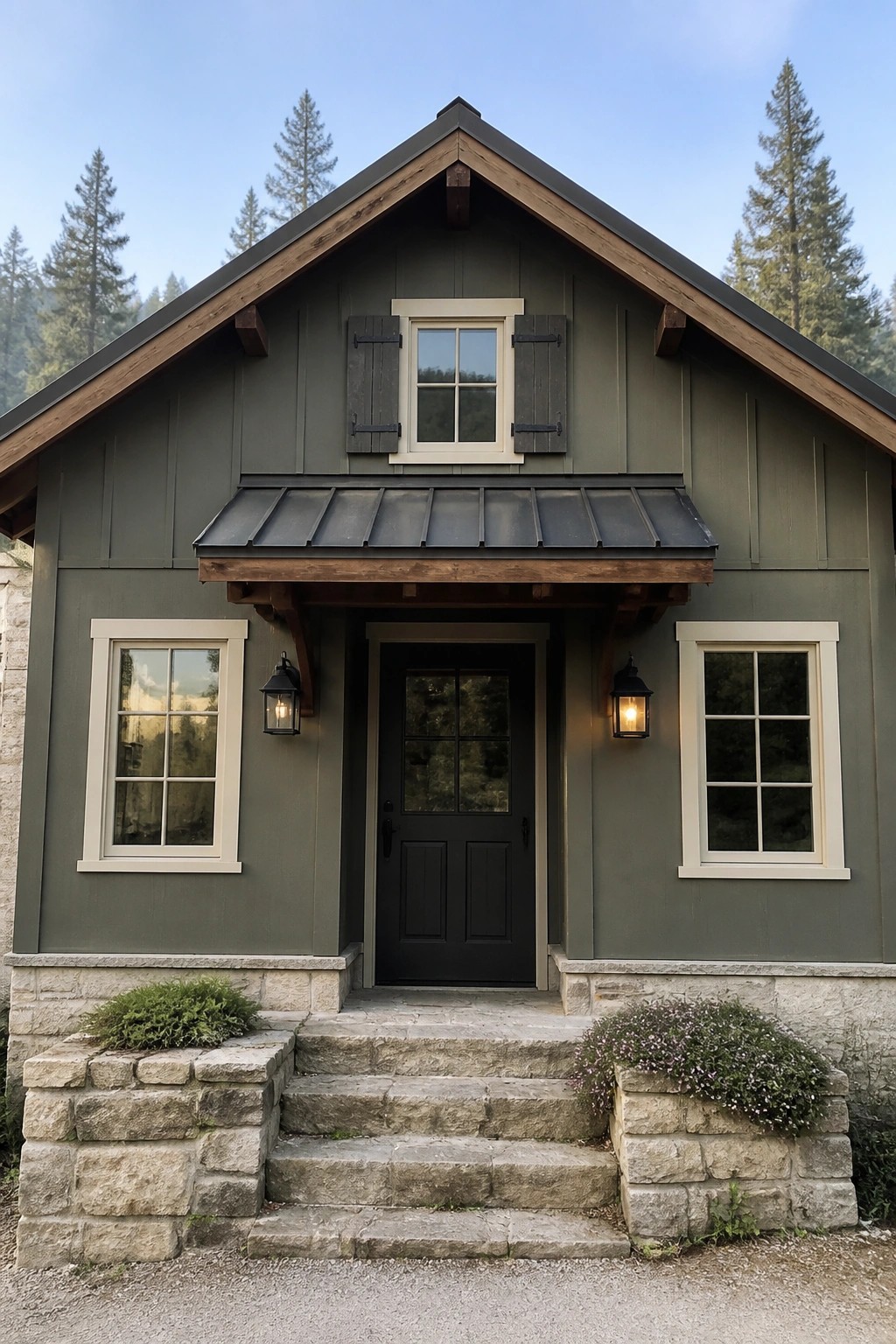
This muted sage green on the siding gives the cabin a quiet, settled look that fits right into a forest setting. It sits in the middle range between gray and green, so it does not fight with the trees or the sky. The color reads soft rather than bright, which helps the house feel like part of the landscape instead of something added on top of it.
The green has a slight gray cast that keeps it from turning too yellow in open light. It pairs easily with the rough stone base and dark wood trim already on the house. Most people would reach for something close to Sherwin Williams Evergreen Fog, Benjamin Moore Saybrook Sage, or Behr Dried Thyme when trying to match it.
Muted Sage Green Siding With Dark Wood Trim
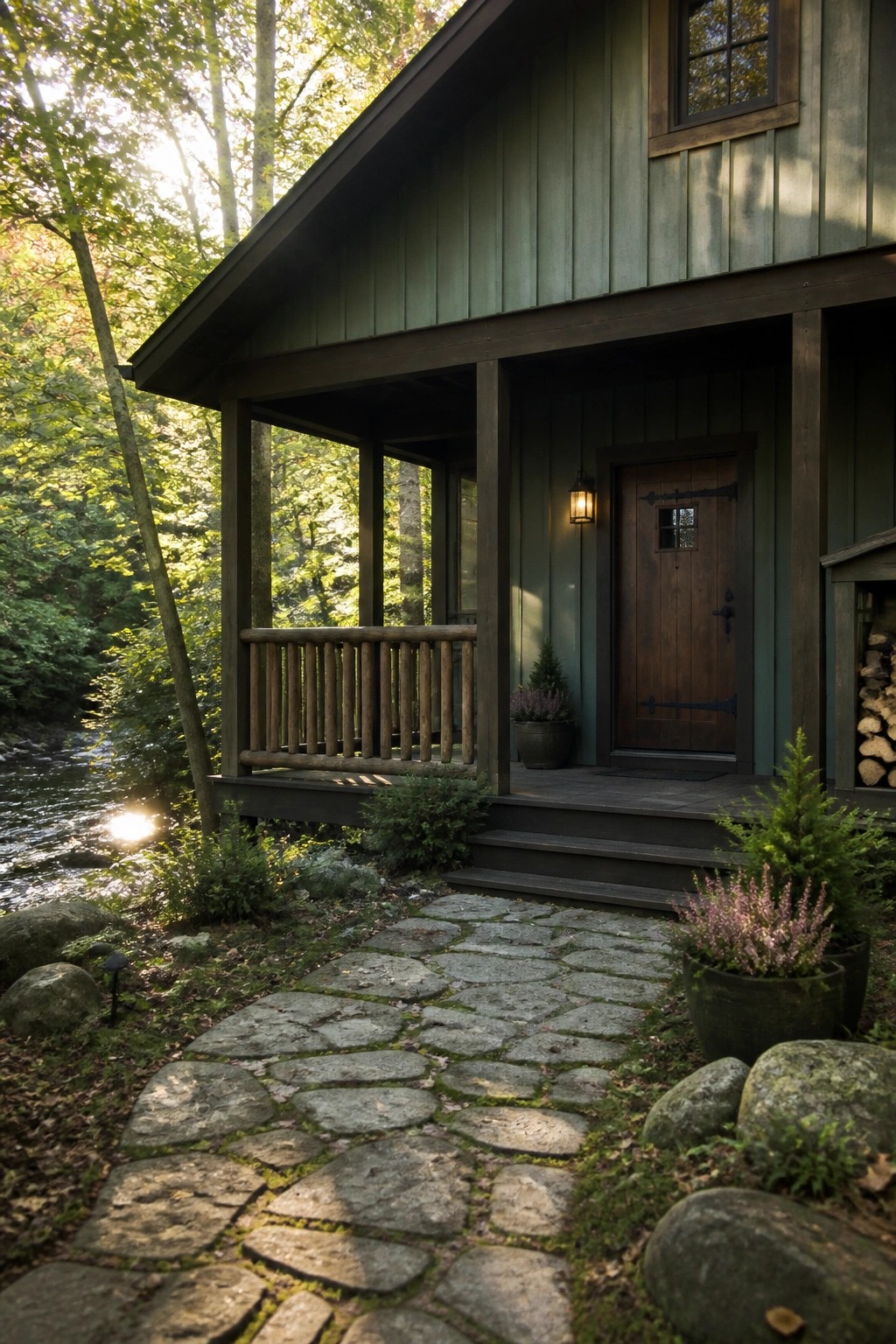
This muted sage green on the cabin siding blends easily into wooded settings. It carries a soft gray undertone that keeps the color calm and natural rather than bright or bold. Paints like Benjamin Moore Saybrook Sage, Sherwin Williams Evergreen Fog, or Behr Mountain Forest sit close to this shade.
The color sits comfortably next to the dark wood trim and stone path without fighting them. It works best on homes surrounded by trees where you want the siding to recede a bit. Watch the undertone in strong afternoon light since it can shift slightly cooler.
Muted Gray Green Siding With Stone Bases
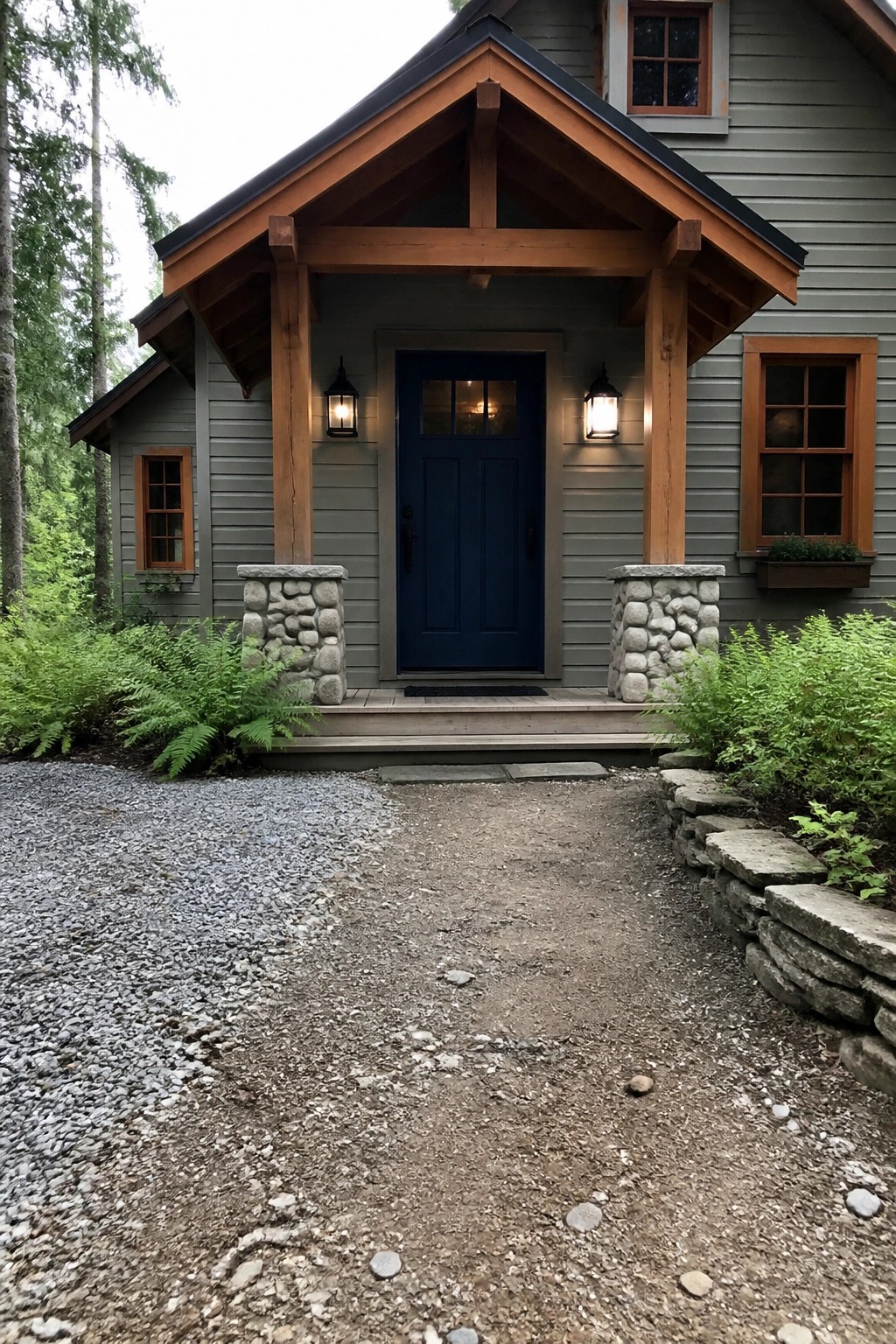
A muted gray green on the siding works well for cabins that need to settle into wooded surroundings without standing out. This shade sits in the middle range, neither too light nor too dark, and it reads as a soft sage with a hint of cool gray. It pairs easily with the natural stone piers and warm wood trim that often show up on mountain builds.
The color stays steady in filtered forest light and does not shift too much toward blue or yellow. It looks best against rough stone and cedar beams rather than crisp white trim. If your site has a lot of green foliage and gray rock, this kind of gray green keeps the whole exterior calm and connected to the setting.
Deep Brown Siding Against Natural Stone
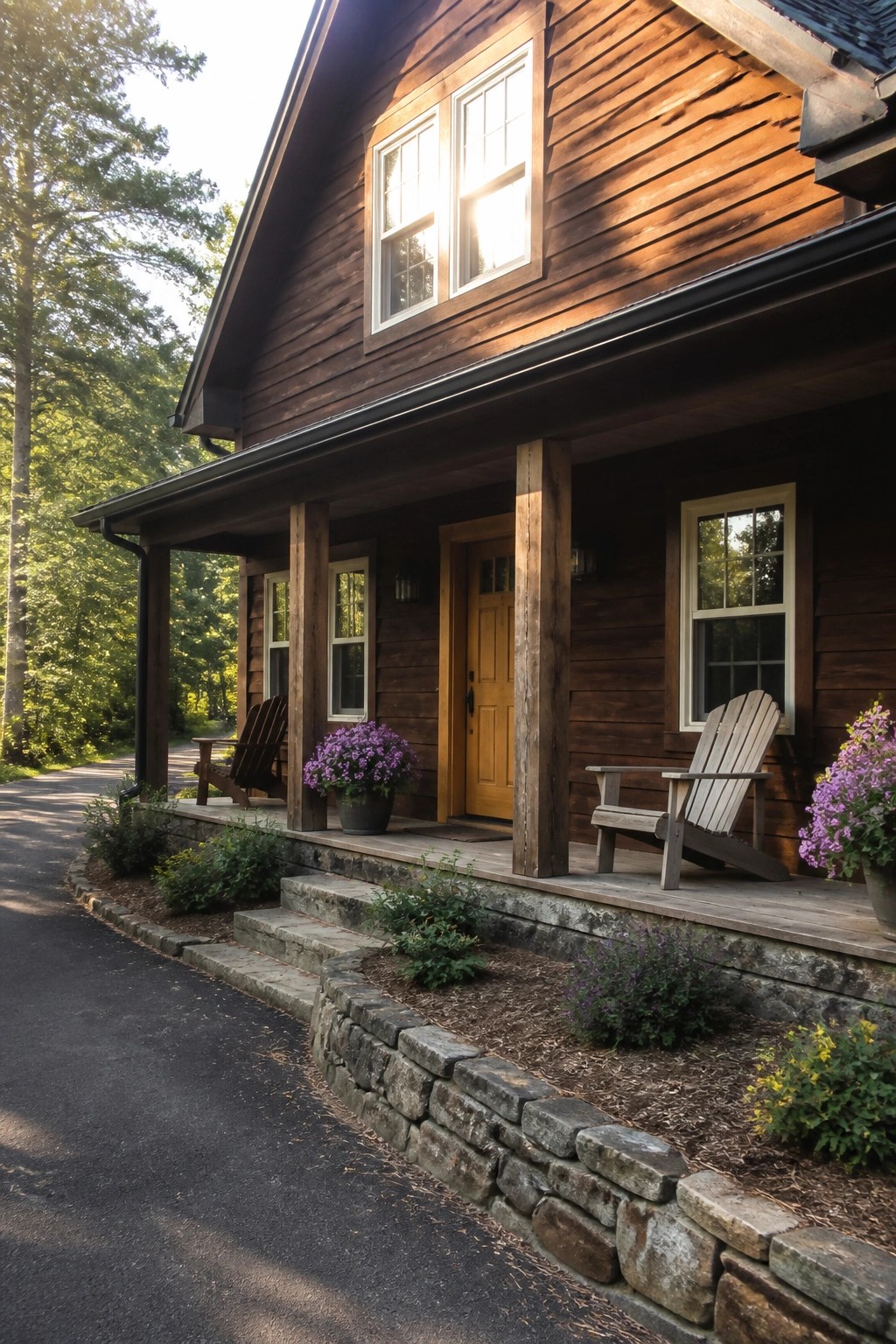
This deep warm brown reads as a natural wood tone that helps a cabin settle into a forest setting. It has enough depth to stand out against the greenery while still feeling like it belongs there. The color works because it picks up on the shadows in the trees and the earth tones in the ground cover.
It sits comfortably next to rough stone and unpainted wood without competing. Most cabins in similar spots do well with a brown in this range because it stays steady in changing light and pairs easily with dark roofs or simple trim.
Olive Green Siding Against Warm Wood Trim
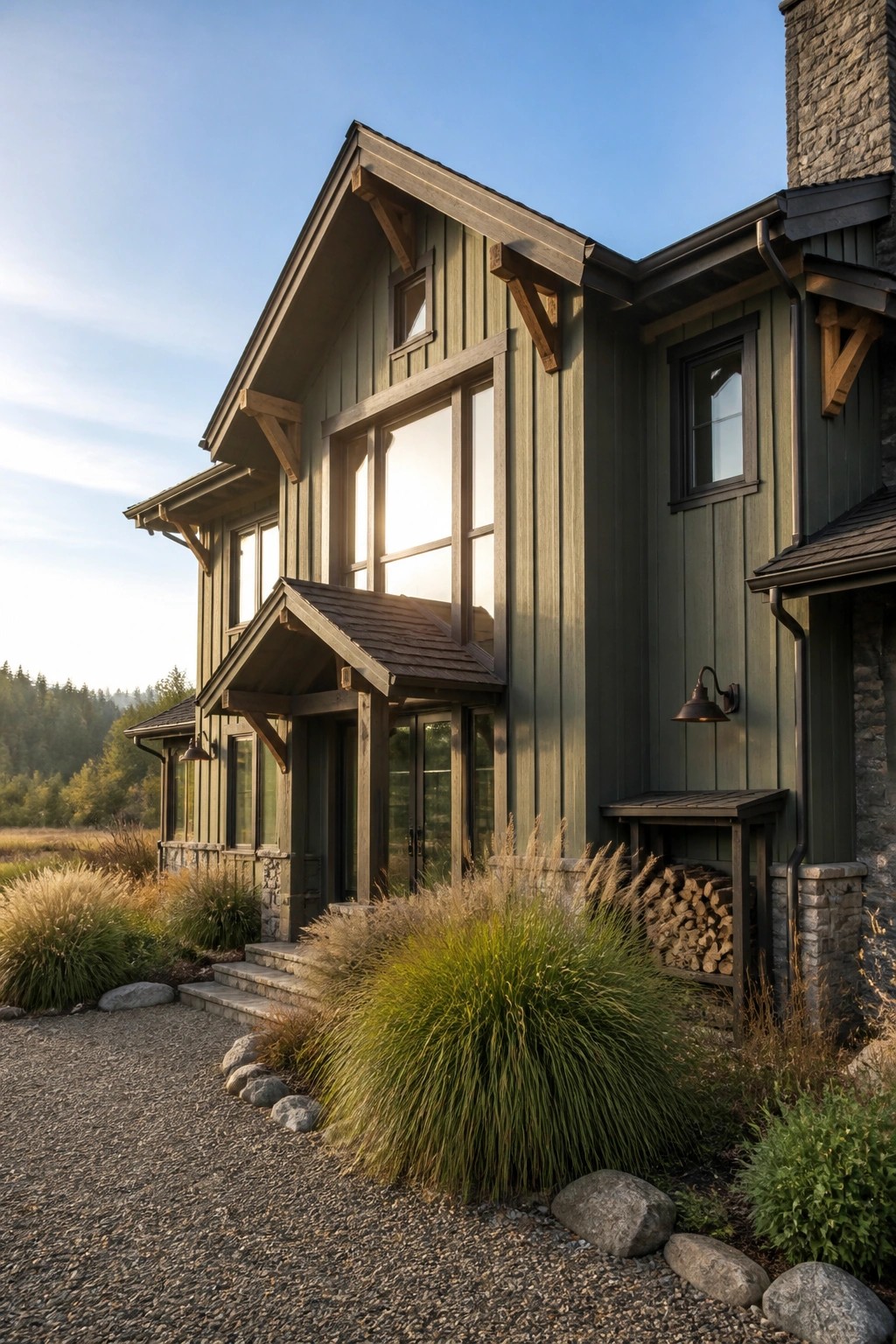
This muted olive green works well on the vertical siding of a cabin because it sits between gray and green without tipping too far in either direction. It reads as a deeper shade that still feels soft rather than heavy, which helps the house settle into a wooded setting instead of standing out.
The color pairs nicely with the dark wood trim and natural stone details already on the house. It tends to hold up better on larger surfaces than brighter greens would, though it can look a bit flat if the surrounding landscape lacks any warm wood tones to balance it.
Deep Green Siding Against Natural Stone
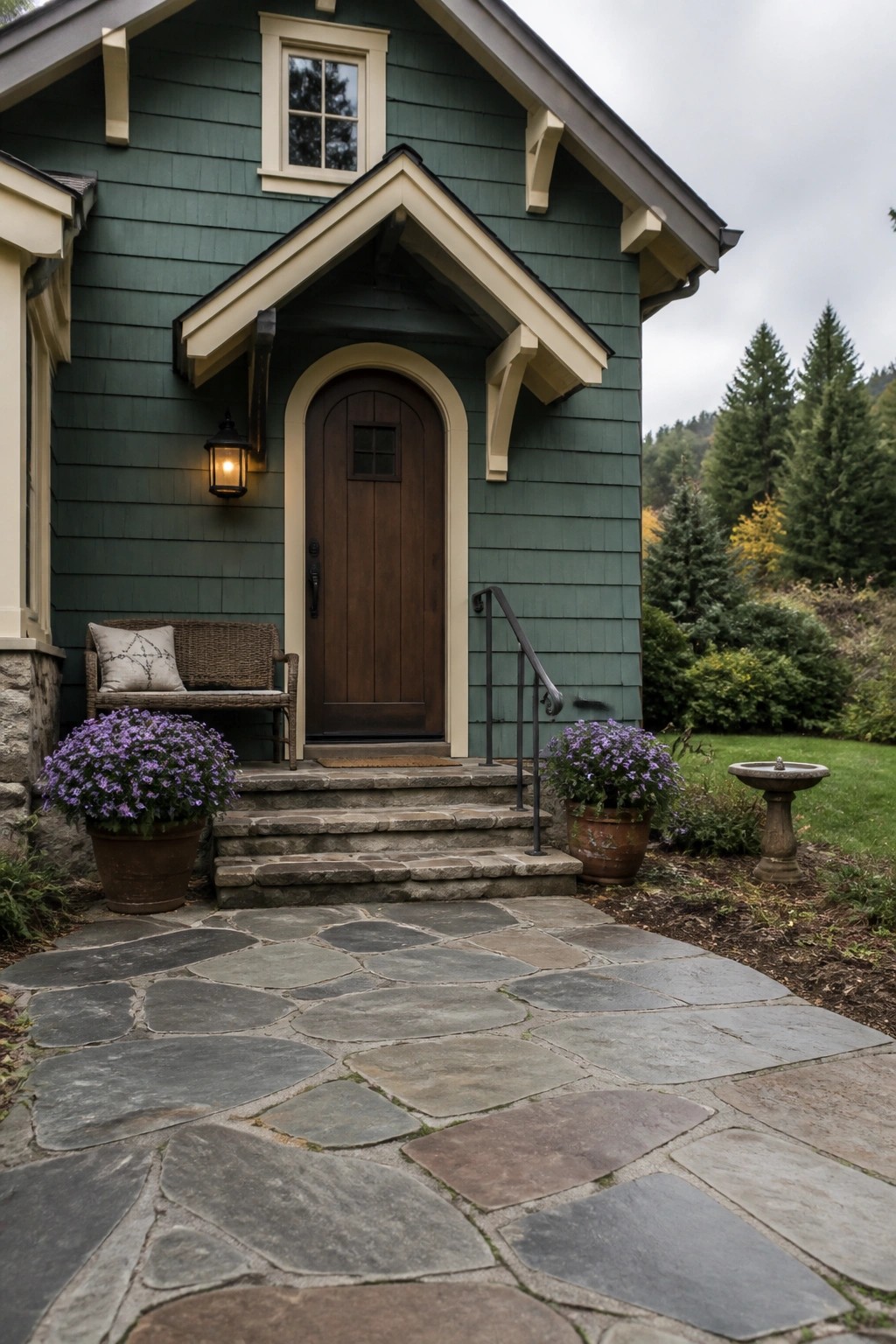
This deep forest green on the siding gives a cabin that settled-in look without trying too hard. It sits somewhere between a true green and a hint of blue, which keeps it from feeling too bright or too heavy against the trees.
The color works best with natural stone at the base and simple cream trim, since those materials keep the green from looking flat. Sherwin Williams Evergreen Fog, Benjamin Moore Forest Green, Behr Mossy Shade, or Farrow & Ball Green Smoke all land close to this shade.
Deep Green Siding With Warm Wood Trim
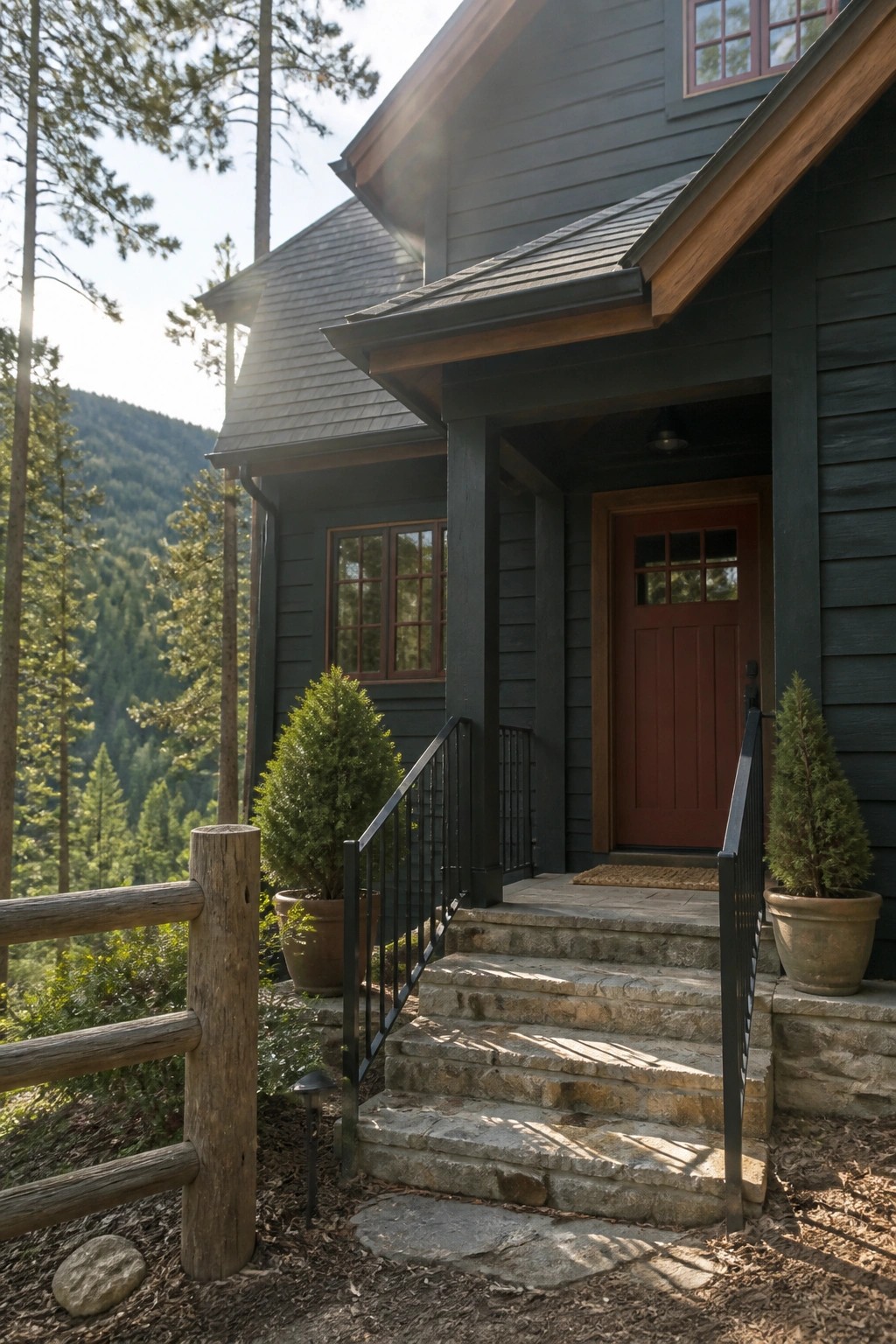
This deep forest green on the siding gives the cabin a solid, grounded look that fits right into the trees. It reads as a blackened green rather than a bright one, which helps it blend without disappearing. Colors like this often come close to Sherwin Williams Evergreen Fog, Benjamin Moore Forest Green, or Behr Black Forest.
The dark tone sits nicely next to the cedar trim and stone details without fighting them. It holds up well in bright mountain light and still feels calm in shade. Pair it with natural wood and simple stone if you want the same quiet effect on your own place.
Light Greige Siding Against Natural Stone
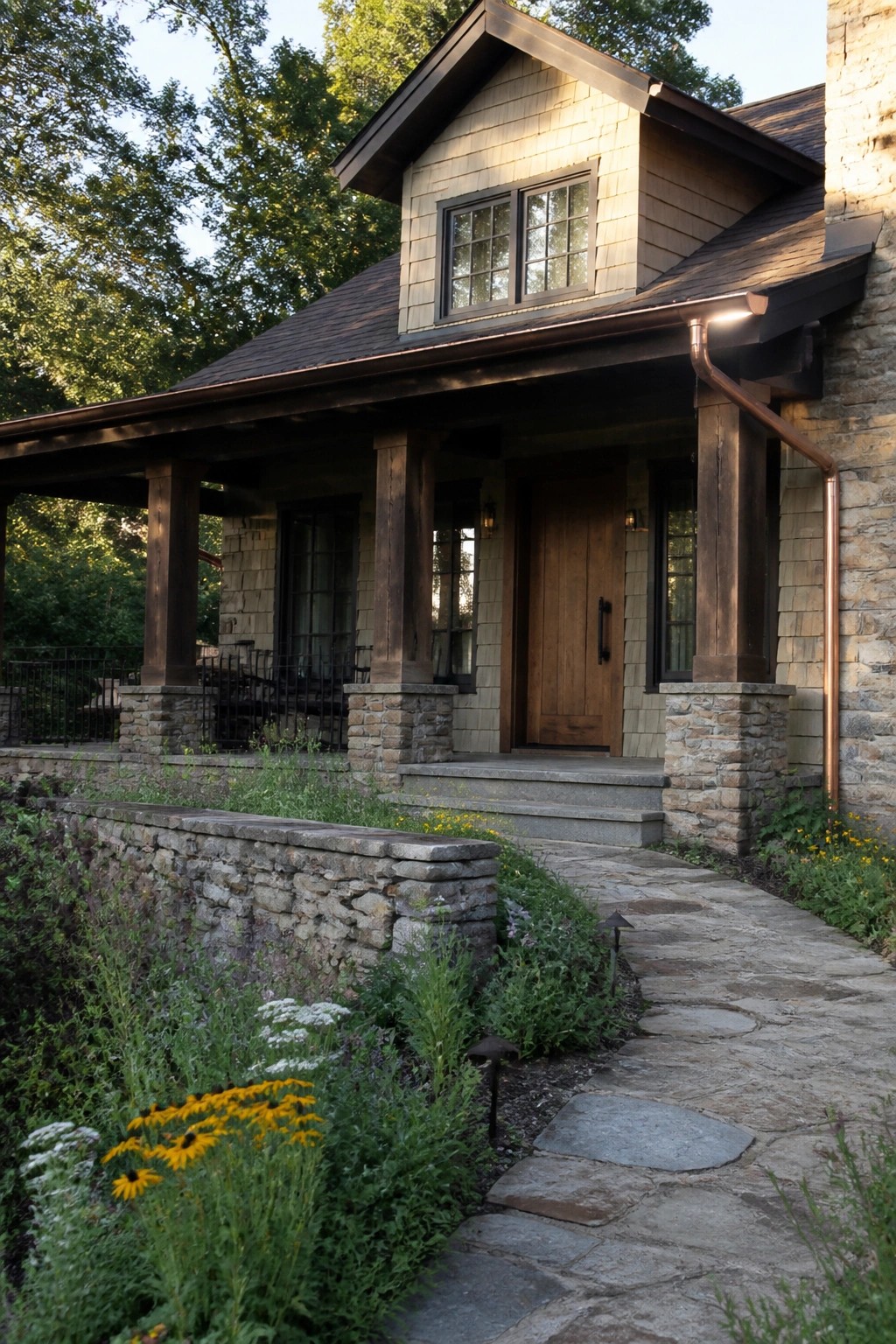
This light greige works well on cabin siding because it sits between warm and cool without pulling too far in either direction. It keeps the house from feeling heavy while still reading as part of the landscape rather than standing out against the trees and stone.
The tone has a soft gray lean that helps it blend with the surrounding rock and dark wood trim. It pairs nicely with natural stone bases and looks best on homes that get decent daylight so the color stays clear instead of drifting muddy.
Deep Brown Stain Blending Into the Trees
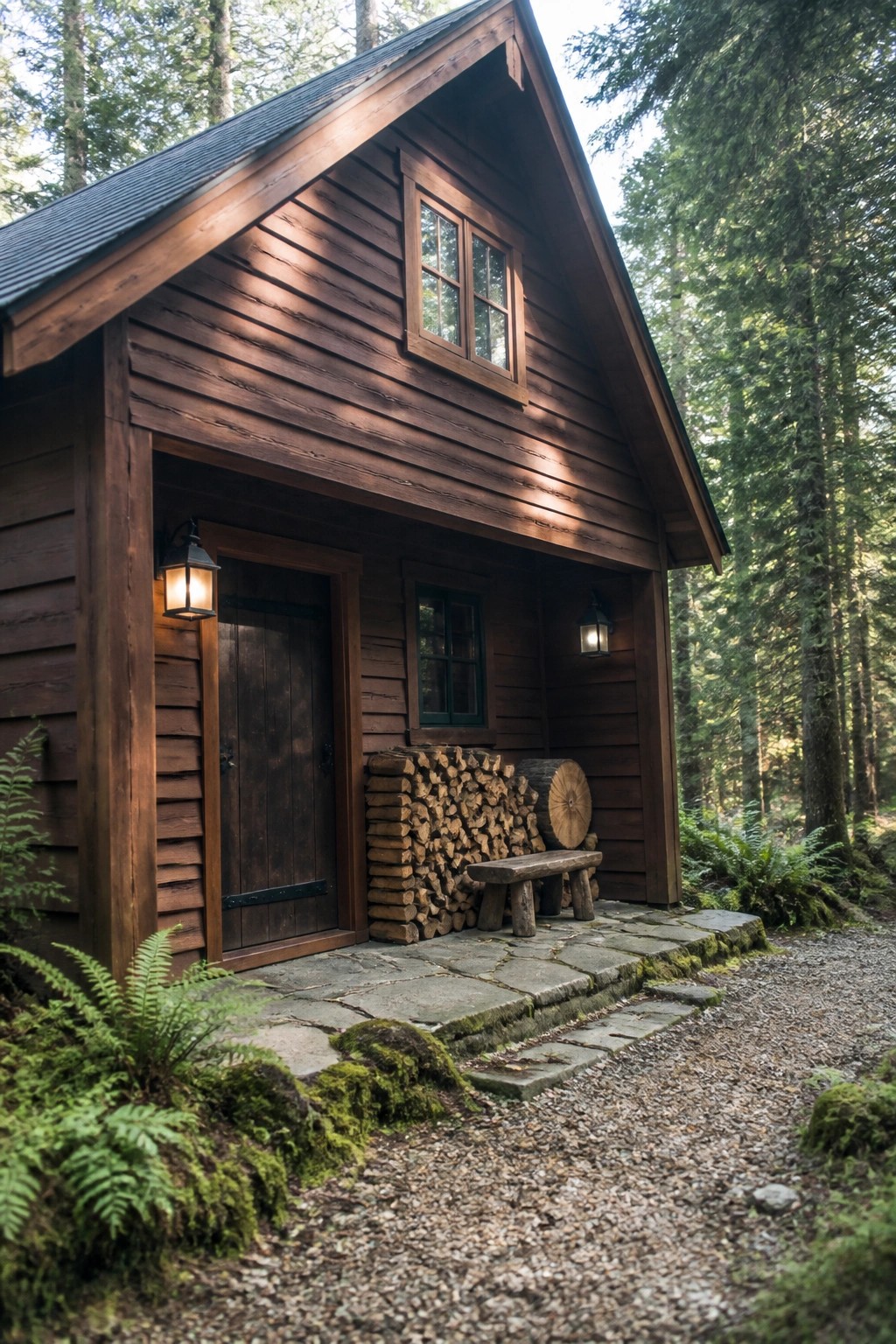
A deep warm brown stain on wood siding gives this cabin a grounded look that fits right into a forest setting. It reads as a natural extension of the trees rather than something added on later.
This shade sits near Sherwin Williams Java, Benjamin Moore Brownstone, Behr Grizzly Bear, and Farrow & Ball Tanner’s Brown. It works best with green surroundings and stone details, and it stays even in shaded light without turning flat or too dark.
Frequently Asked Questions
Q: How can I make sure the color matches the rocks and trees nearby?
A: Take photos of the area in natural light and hold paint chips up to them. This helps you spot the closest match without guessing.
Q: Will a matte finish hold up better than glossy in the mountains?
A: Matte hides dirt and blends softer into the landscape. It also avoids any glare that might catch the eye from a distance.
Q: Should I paint the whole exterior the same color?
A: Break it up with a slightly different shade on the trim. This adds interest while keeping the overall look grounded in the setting.
