


When painting the exterior of a small cottage I pay close attention to how the color will look next to the roofline and any stone or brick accents throughout the day.
Colors often pick up different tones once they are exposed to full sunlight or shaded by trees and overhangs.
Samples on the wall reveal what chips cannot.
I have seen shades that seemed warm indoors turn cool and flat against the landscaping once applied.
Taking time to observe these shifts helps narrow down options that actually suit the home’s character.
Muted Sage Siding with Warm Wood Columns

This muted sage green siding gives a small cottage a quiet, settled look without trying too hard. The color sits in a soft middle range, neither too bright nor too dark, so it feels at home next to trees and grass. It works especially well on shingle exteriors where the texture helps the paint read a little softer.
The shade has a light gray undertone that keeps it from turning yellow in direct sun. It pairs cleanly with natural wood posts and a stone base, and it stays calm next to white trim. For similar results try Sherwin Williams Rainwashed, Benjamin Moore Saybrook Sage, Behr Aged Sage, or Farrow & Ball Light Gray Green.
Warm Cream Siding With Black Windows
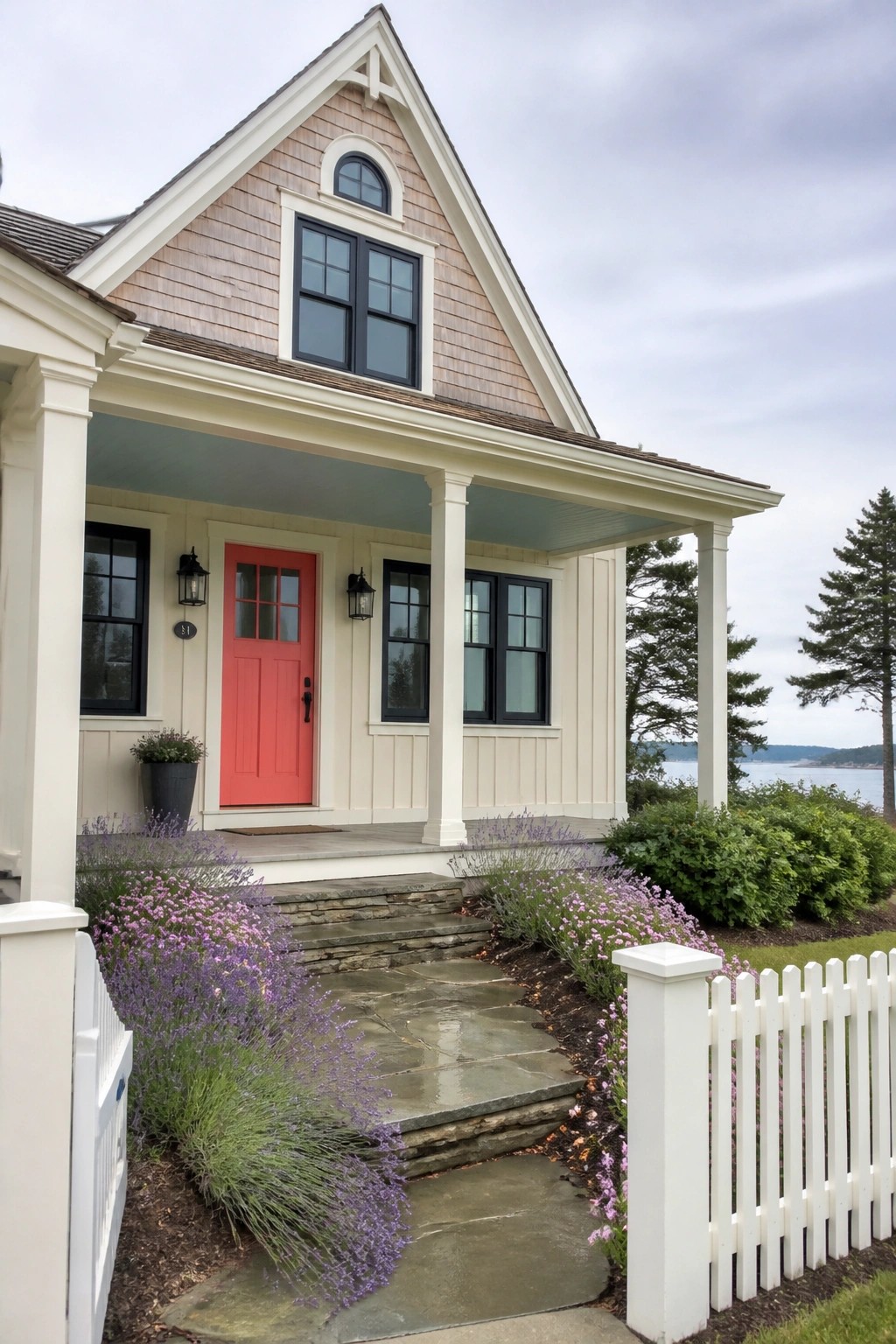
A soft warm cream on the siding gives this cottage a gentle, lived-in feel that still reads clean. It sits between true white and a light beige, so it picks up a bit of softness from the light without turning yellow.
This color works best on smaller homes when you want something brighter than beige but not as stark as pure white. It pairs easily with white trim, black window frames, or a bright door, and it stays looking fresh even when the house sits near trees or water.
Cool Blue Gray Against Crisp White Trim

This soft blue gray siding gives a cottage exterior a calm, collected look without feeling too stark. It sits in that useful middle ground between gray and blue, so it picks up cooler tones in the light while still reading as a gentle color on the whole house. The shade works especially well on smaller homes because it feels grounded rather than washed out.
Pair it with bright white trim to keep the contrast clean and simple. It also sits nicely next to natural stone at the base, which adds a bit of warmth without fighting the color. If your house gets a lot of direct sun, test a sample first since the blue side can show up more strongly outdoors than it does on a paint chip.
Warm Cream Brick With Charcoal Roofing

A warm cream reads nicely on brick exteriors for small cottages. It softens the texture without hiding it and keeps the whole front feeling light and simple.
This shade sits between white and beige with a gentle warmth that works well against dark trim and roofing. It pairs cleanly with black windows and a deeper door color, and it stays bright even when the light changes through the day.
Muted Sage Green Beside Natural Stone
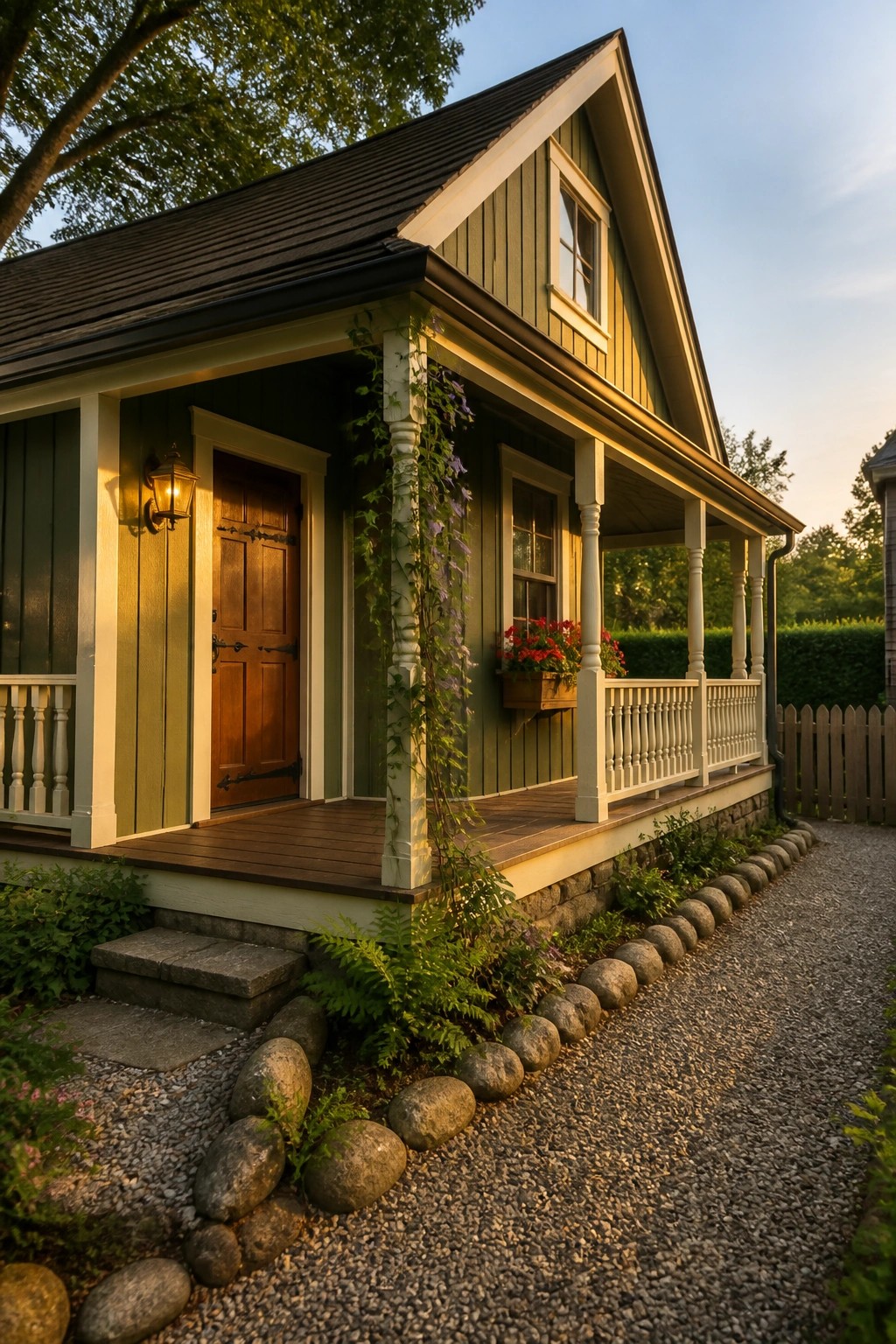
This muted sage green feels like a natural choice for small cottage siding. It has a soft, slightly grayed tone that blends easily with the surroundings without disappearing.
The color sits comfortably between green and gray with a touch of warmth. It looks good next to white trim and the stone foundation, and it works well on homes that already have natural materials at the base. Try something close to Sherwin Williams Sea Salt, Benjamin Moore Saybrook Sage, or Behr Soft Sage if you want a similar effect.
Light Blue Green Against White Trim
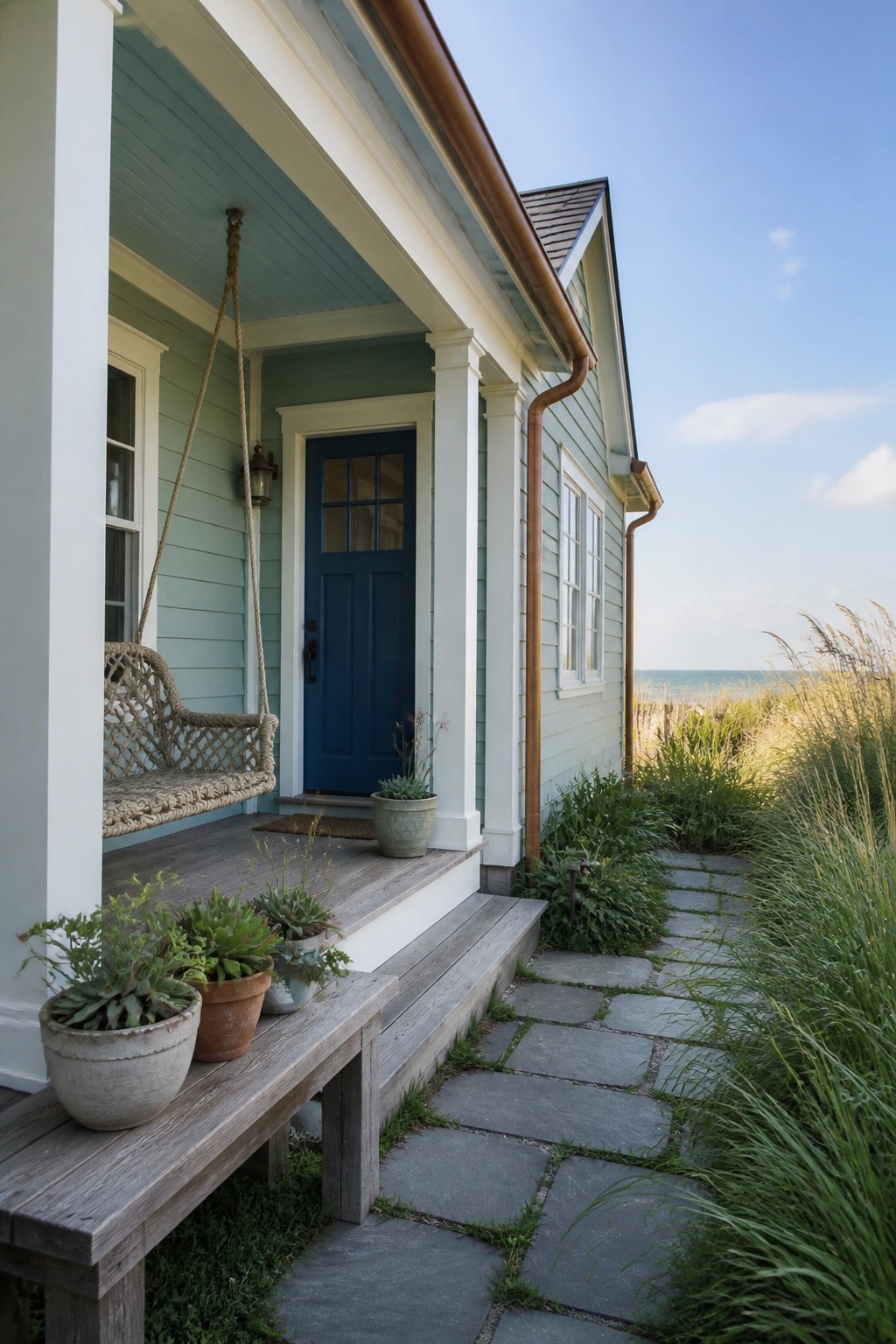
This light blue green siding gives a small cottage a calm, coastal feel without looking too bright. It is a soft blue green that sits nicely between green and blue, and it keeps the house looking fresh next to the ocean setting. The color works especially well on compact homes because it reflects light and helps the place feel a bit larger.
It has a cool undertone that pairs cleanly with white trim and weathered wood. Try it on homes with similar natural surroundings, and test a sample on the wall first since the blue can shift depending on the light. Good matches include Sherwin Williams Sea Salt, Benjamin Moore Wythe Blue, Behr Misted Green, and Farrow & Ball Green Blue.
Terracotta Stucco Beside Natural Stone
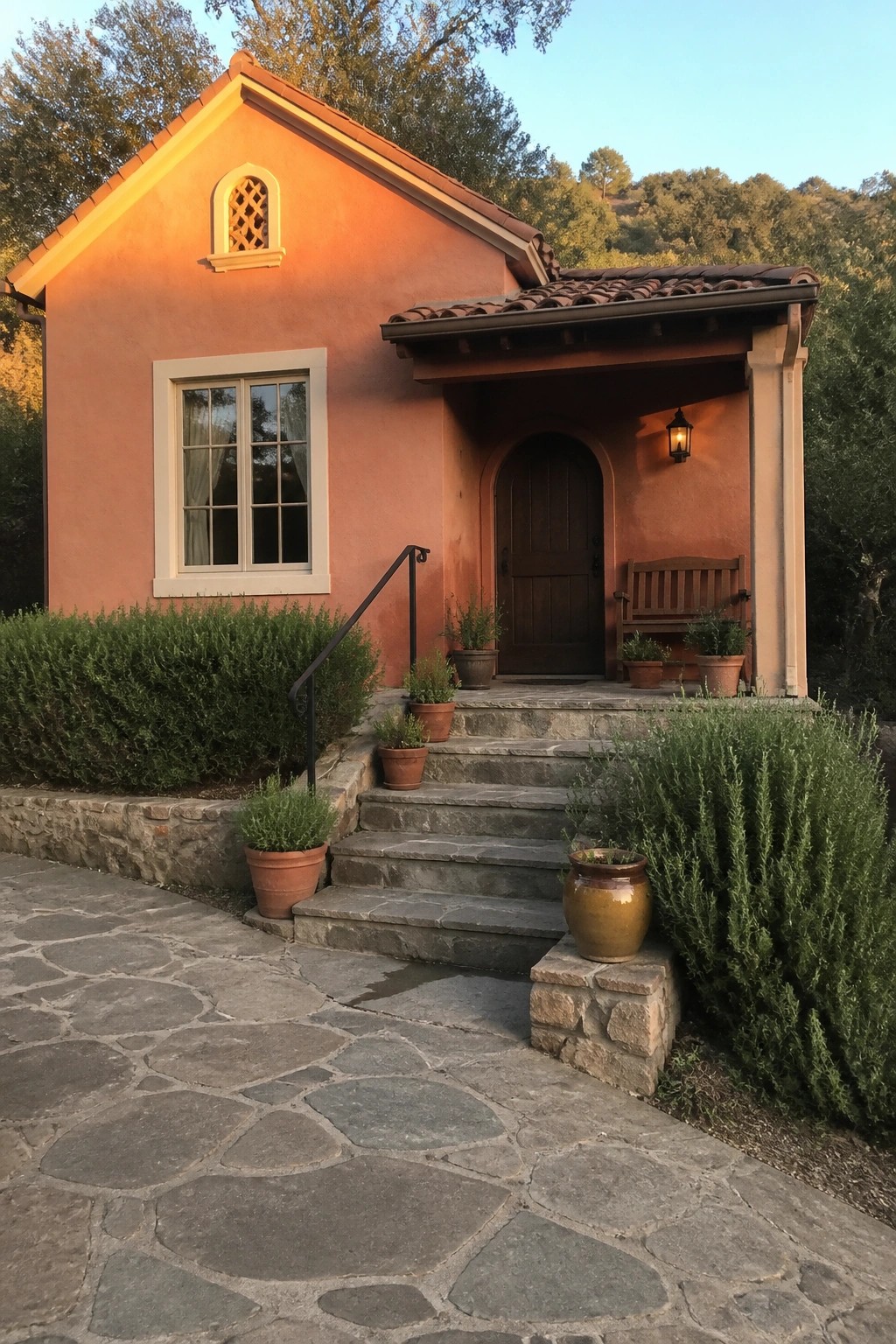
This warm terracotta shade gives a small cottage a grounded, earthy look that still feels light. It reads as a soft orange with gentle golden undertones that pick up nicely in outdoor light.
It pairs easily with stone bases and matching roof tiles. The color holds its own without clashing against wood doors or simple masonry details, which makes it a practical choice for compact homes that need some warmth.
Soft Pink Siding With White Trim
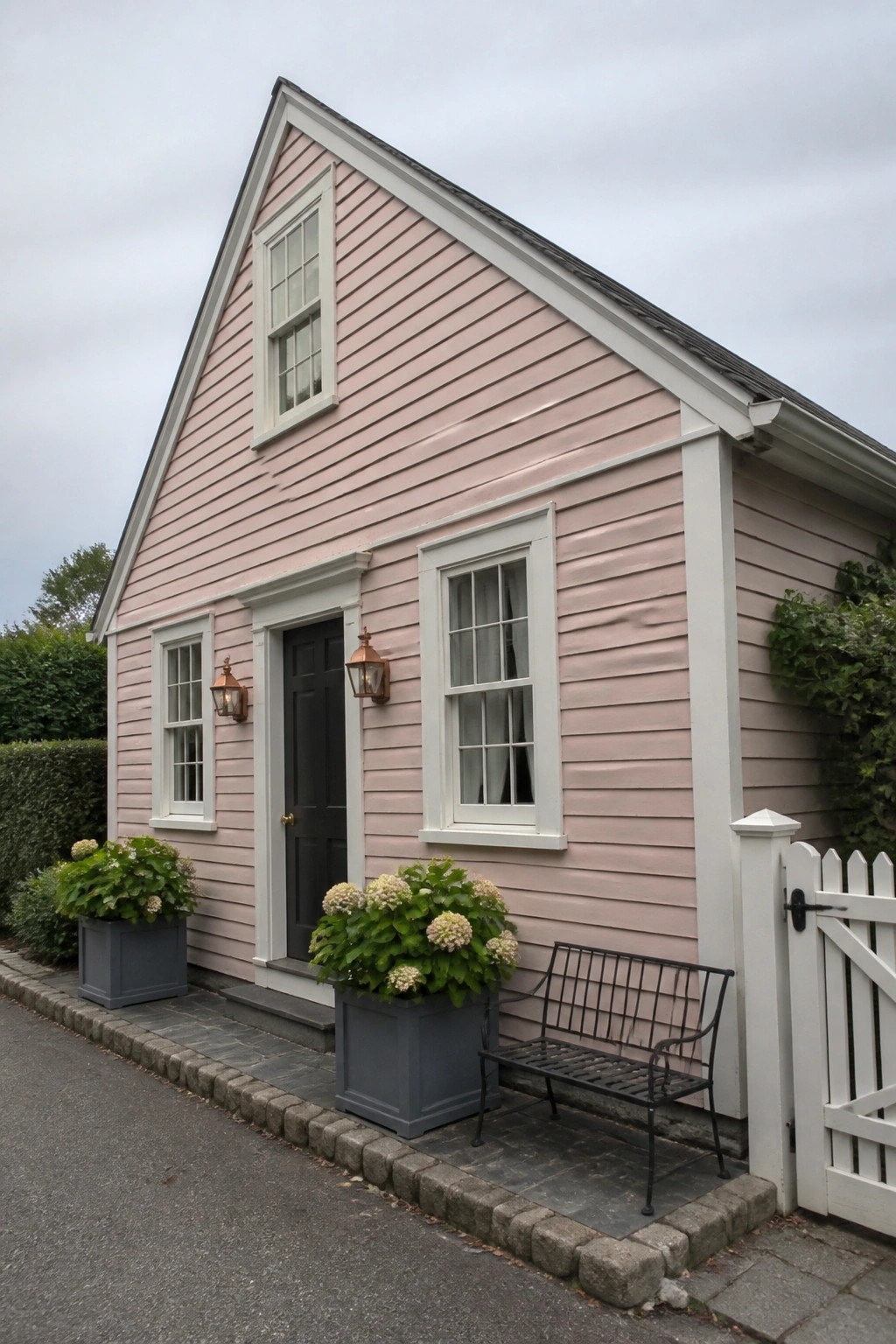
A soft blush pink works nicely on small cottage exteriors because it feels light without disappearing. This shade sits somewhere between a pale rose and a dusty neutral, so it reads gentle rather than sugary. It pairs easily with the white trim that runs around the windows and door, keeping the whole look simple and balanced.
The color has a slight gray cast that keeps it from turning too warm in overcast light. It suits compact homes where stronger colors might feel heavy. Try it with crisp white trim and dark accents like a black door or bench to hold the look together.
Blue-Gray Siding With White Trim
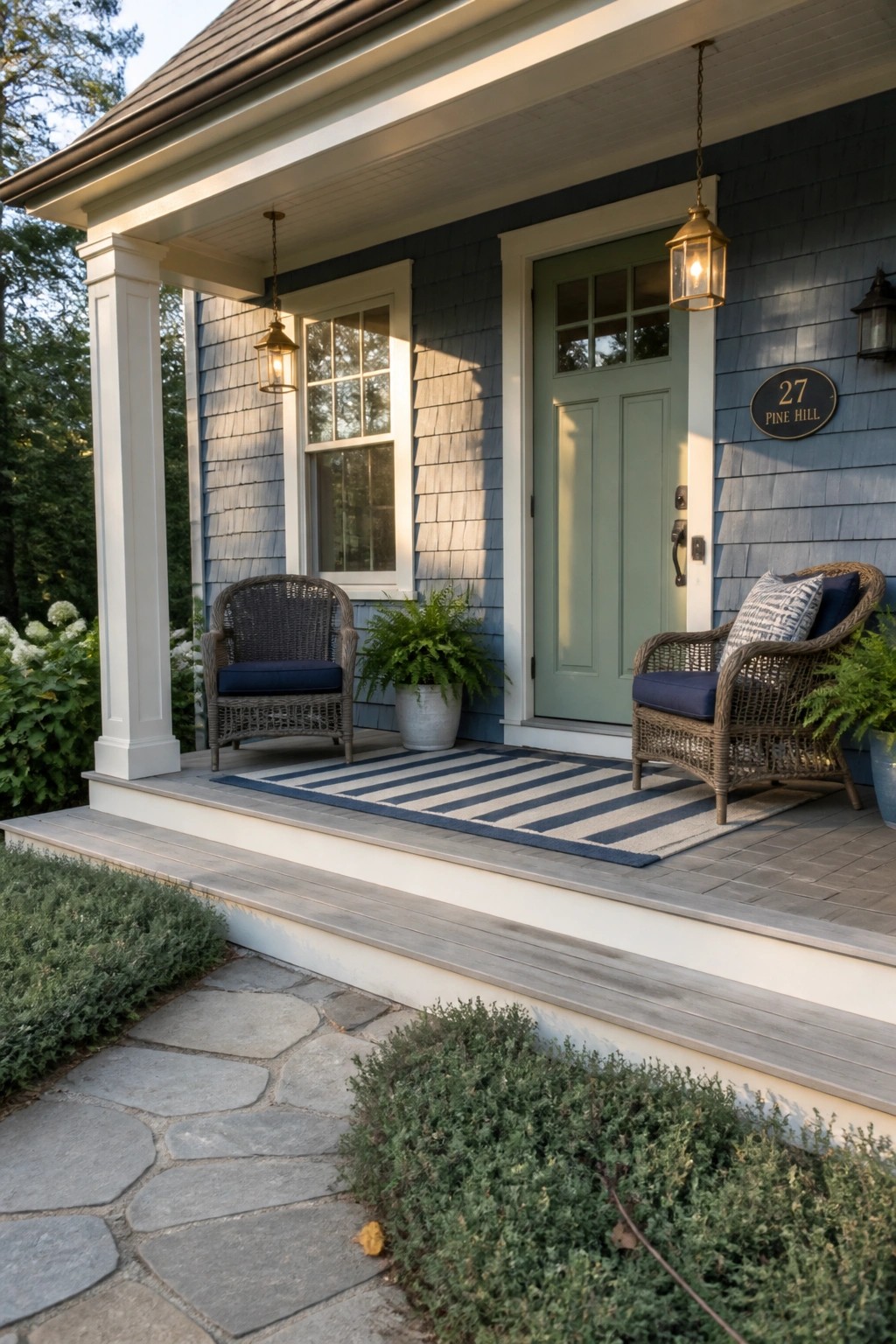
A soft blue-gray works well on cottage siding because it feels calm without going flat. This shade sits somewhere between gray and blue, giving the house a quiet, settled look that still reads as a color rather than a neutral. It pairs easily with white trim and a soft green door, which keeps the whole front from feeling too heavy.
The color has a cool undertone that shows up more in bright light but stays steady next to stone and greenery. It works best on smaller homes where you want something a little different from plain gray but not as bold as navy. Try it with crisp white trim and simple hardware so the siding stays the main thing people notice.
Soft Sage Green Beside Natural Stone

This muted sage green gives cottage siding a calm, lived-in look that feels right at home on smaller houses. It sits somewhere between gray and green, so it reads soft rather than bright, and it keeps the whole exterior from feeling too stark against the dark roof.
The color has a slight warm undertone that pairs nicely with the stone bases on the porch columns. It works best with crisp white trim and simple landscaping, though it can start to look flat if the light is very harsh or if you pair it with too many cool grays. Try Sherwin Williams Sea Salt, Benjamin Moore Revere Pewter, Behr Jojoba, or Farrow & Ball Pigeon for similar results.
Warm Yellow Siding Against Red Brick

A soft buttery yellow works well on cottage siding because it feels cheerful without being too bold. This shade sits somewhere between cream and true yellow, giving the house a friendly look that still reads classic.
It has warm undertones that pair nicely with white trim and the red brick foundation. The color holds up in bright light and looks at home on smaller homes where you want something welcoming but not overpowering. Similar shades include Benjamin Moore Hawthorn Yellow, Sherwin Williams Biltmore Gold, Behr Sunflower, and Farrow & Ball Yellow Ground.
Soft Blue-Gray Siding With Dark Trim
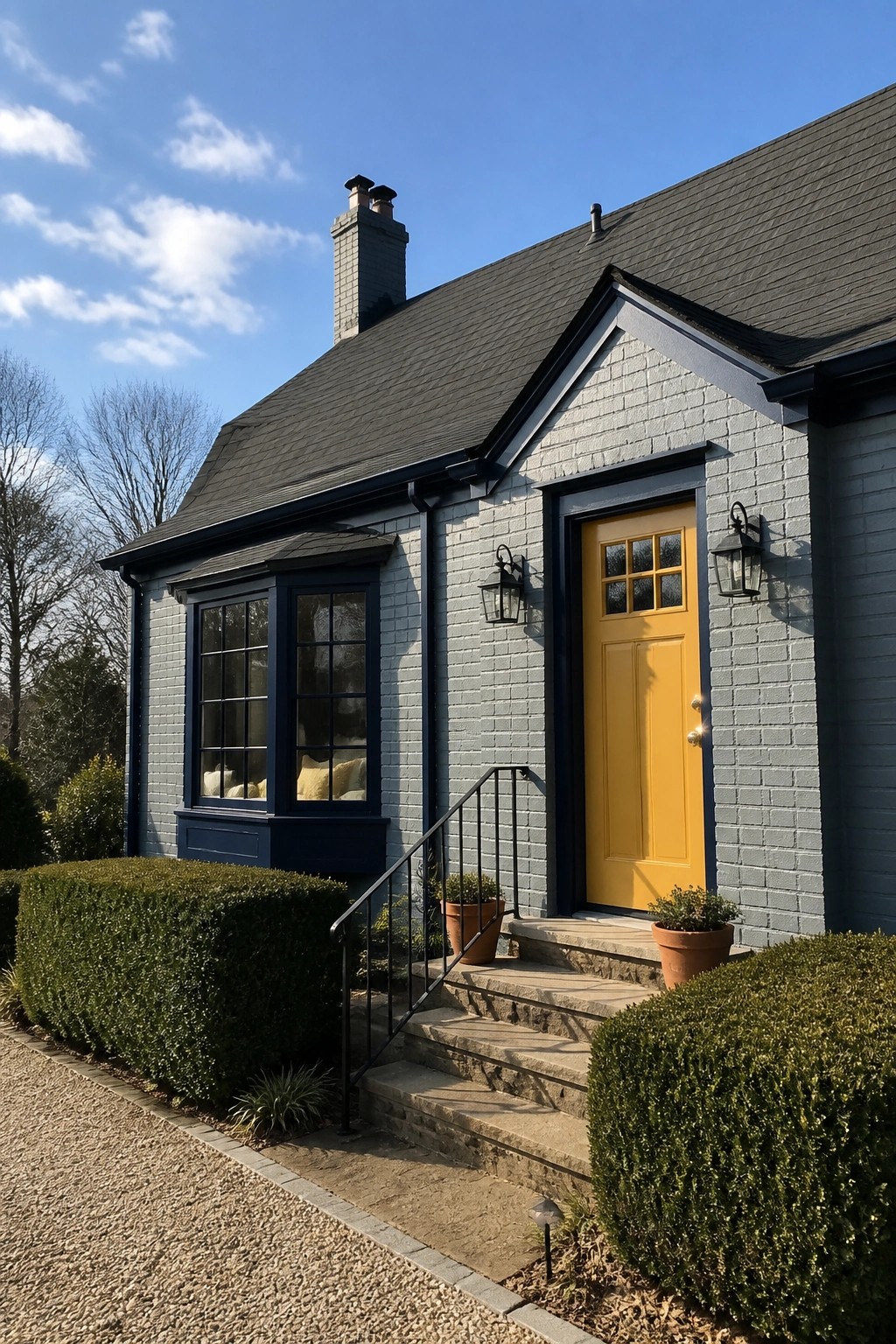
This soft blue-gray works well on small cottage exteriors because it feels calm without turning flat. It sits in a cool neutral range that reads as light blue in some lights and more gray in others. Colors like Sherwin Williams Silver Strand, Benjamin Moore Horizon Gray, or Behr Silver Bullet give a similar effect on painted brick or siding.
The cool undertone stays steady next to dark navy trim and a bright door, which keeps the whole front from feeling washed out. It suits homes with charcoal roofs or black windows and holds up nicely against simple landscaping. Watch how it shifts in full sun, since the gray side can look a little cooler than expected on north-facing walls.
Soft Gray Siding With Dark Roofing
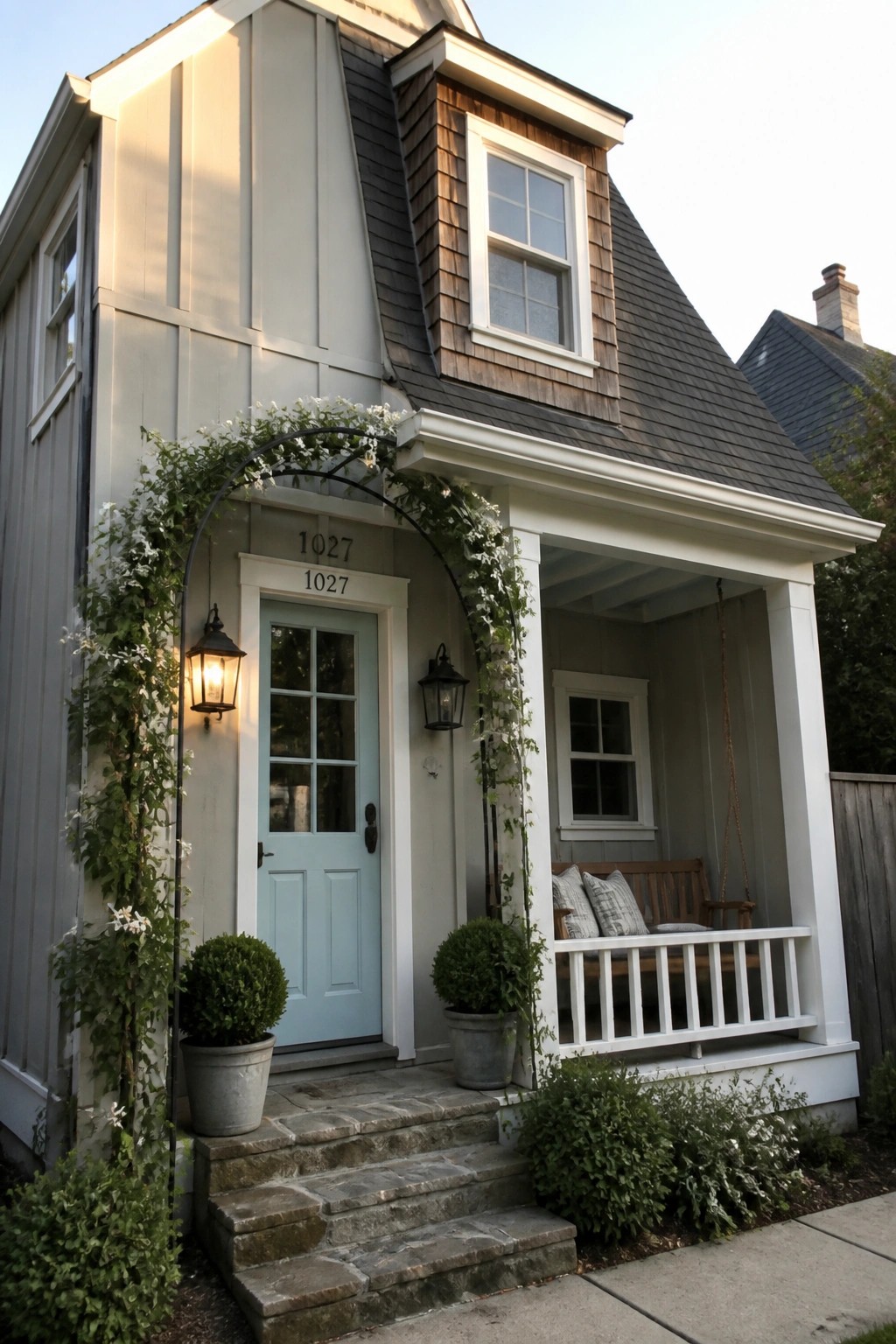
This light cool gray gives small cottages a calm, clean look that still feels welcoming. It sits in the soft gray family and reads a bit blue in most daylight, which helps the house stay bright even when the roof is dark. Good matches include Sherwin Williams Repose Gray, Benjamin Moore Stonington Gray, Behr Silver Strand, and Farrow & Ball Pavilion Gray.
The color works best on simple wood siding where you want the house to feel a little larger. Pair it with white trim and a dark roof to keep the contrast sharp without making the place look busy. It can wash out in very strong sun, so test a sample on the actual wall first.
Muted Sage Siding Against Natural Stone

A soft gray-green works well on cottage siding because it stays calm next to stone and greenery. This shade reads as a muted sage rather than a bright green, which keeps the house from looking too bold or too washed out on a small home. It pairs easily with white trim and a darker roof without needing extra contrast.
The color has a slight gray lean that helps it settle in with natural materials. It looks closest to Sherwin Williams Sea Salt or Benjamin Moore Pale Smoke, with Behr Silver Sage as another close option. Use it when you want the siding to blend rather than stand out, especially if the house already has stone or brick details.
Soft Blue Green Siding With White Trim
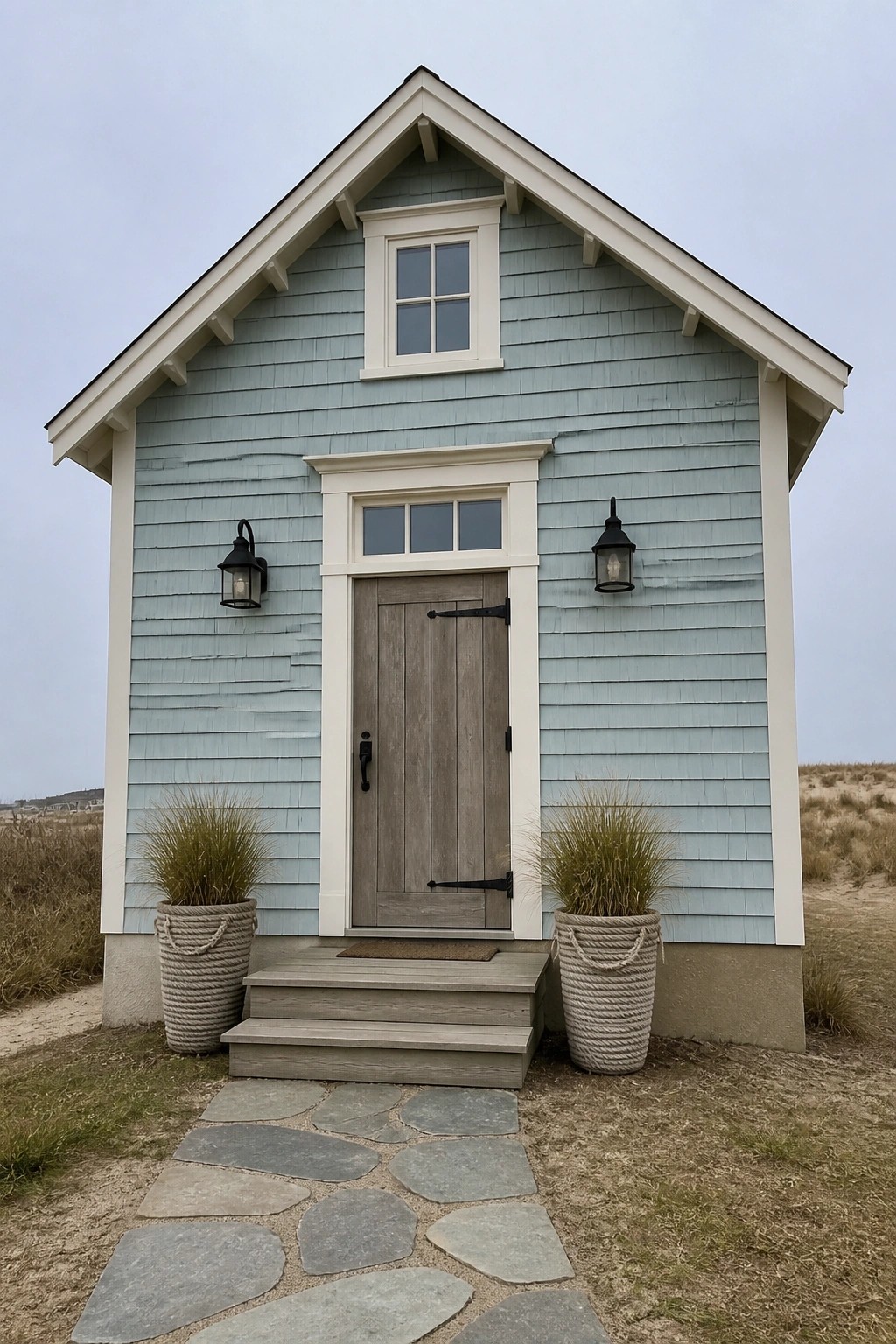
This soft blue green works well on small cottage exteriors because it feels calm without turning cold. The color sits in that middle range where it reads as a gentle sage with a hint of blue, and it stays easy on the eyes even on overcast days.
It pairs best with off white trim and simple wood doors. The shade holds up nicely against stone paths or sandy surroundings, though it can look a little flat if the trim is too stark or if there is no natural texture nearby to balance it.
Light Greige Siding With Dark Trim
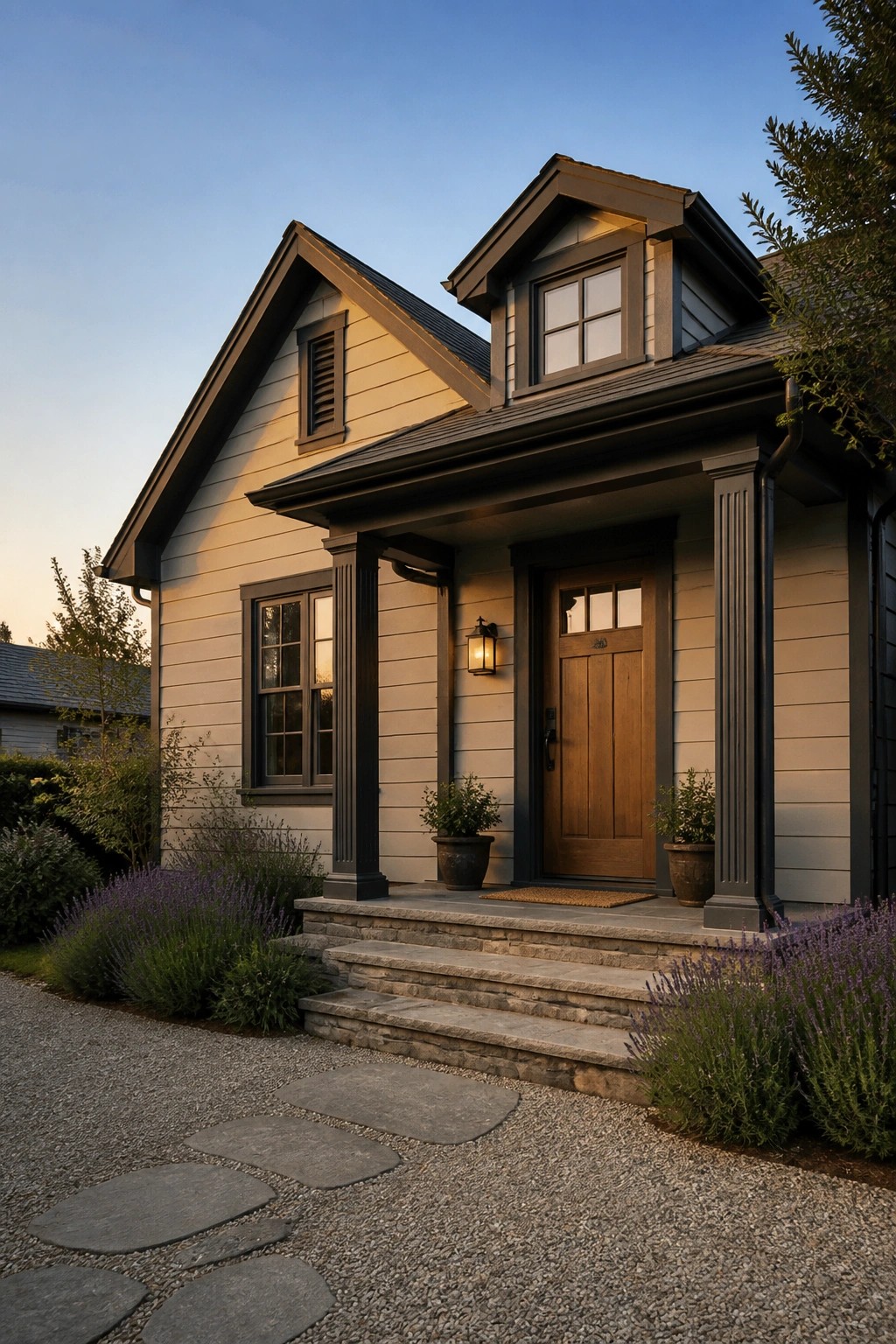
This light greige siding sits right between warm beige and soft gray. It gives small cottage exteriors a calm, clean look that still feels a little warm in the light. The shade avoids looking too stark or too yellow.
It pairs best with dark trim and roofing, which makes the color read even softer. Try it with natural wood doors and simple stone steps so the siding stays the main focus without competing. Colors like Sherwin Williams Accessible Beige, Benjamin Moore Revere Pewter, or Behr Silver Satin come close.
Deep Navy Siding With White Trim
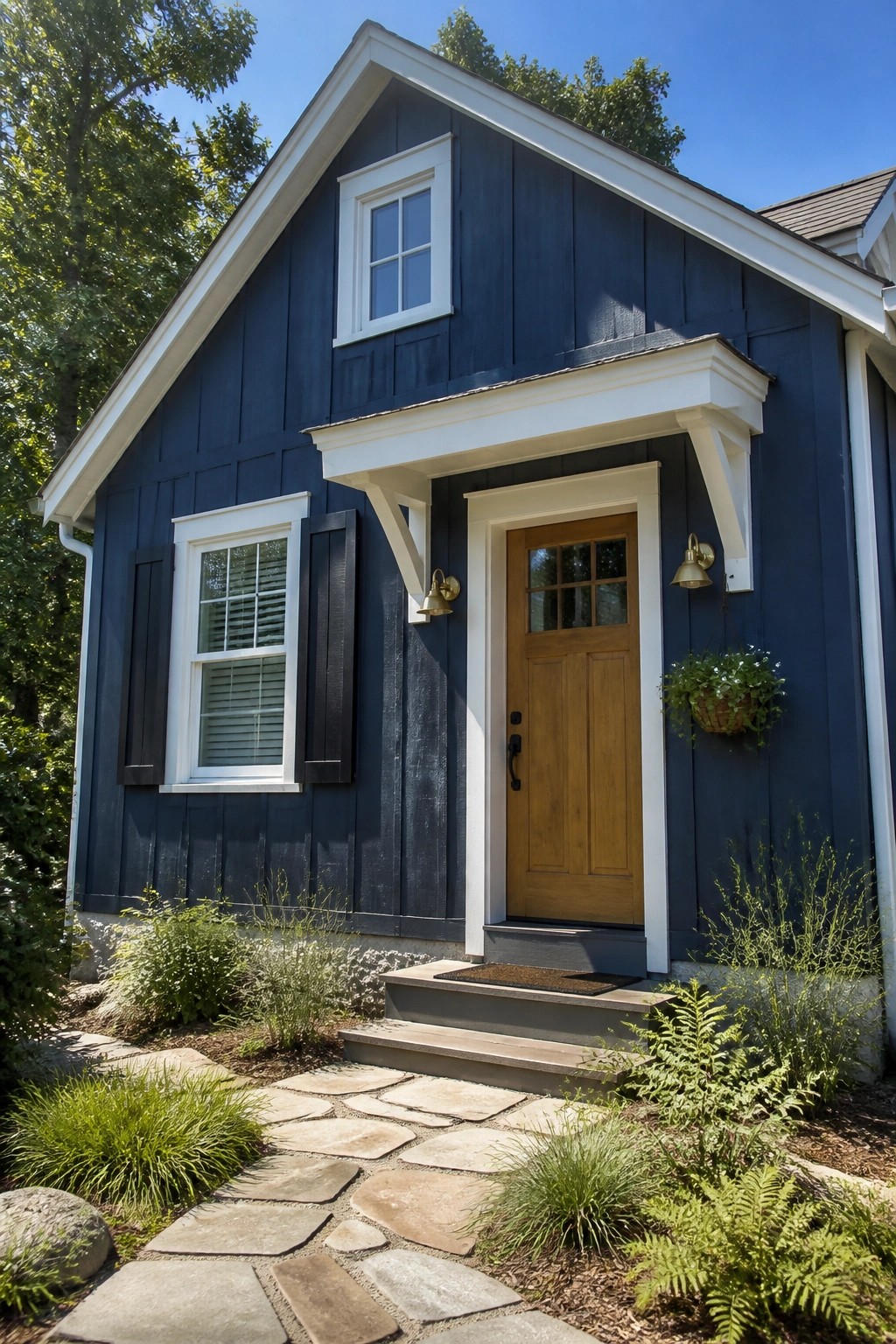
This deep navy blue gives a small cottage a solid, grounded look without feeling heavy. The color sits on the cooler side of blue and reads as a true navy rather than a faded or grayed version. It works especially well on narrow vertical siding because the lines stay visible and the whole house feels a bit taller.
Pair it with bright white trim to keep the contrast sharp. The same navy can look a little flat if the trim is off-white or cream, so stick with a clean white. On small homes it also pairs nicely with natural wood doors and simple stone paths, since those elements keep the blue from looking too stark.
Pale Green Siding With Crisp White Trim
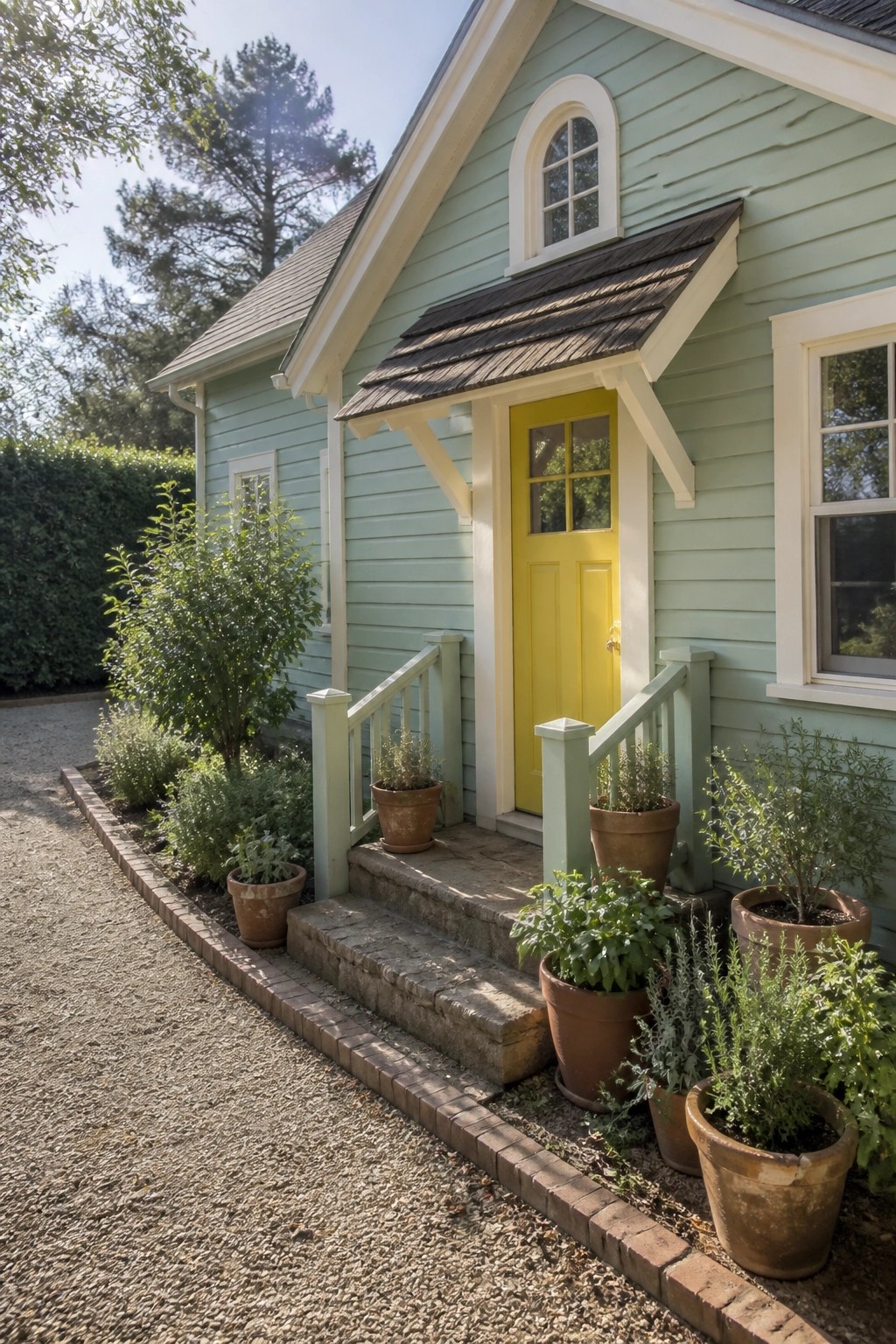
This pale sage green on the siding gives a small cottage a light, fresh look without feeling too bold. It sits in a soft, cool green family that stays gentle on modest homes and works nicely with the white trim around the windows and door.
The color has a slight blue undertone that keeps it from turning yellow in strong light. It pairs cleanly with white trim and a bright door color, and it holds up well on simple cottage shapes where you want the house to feel airy rather than heavy.
Peach Stucco With a Stone Base
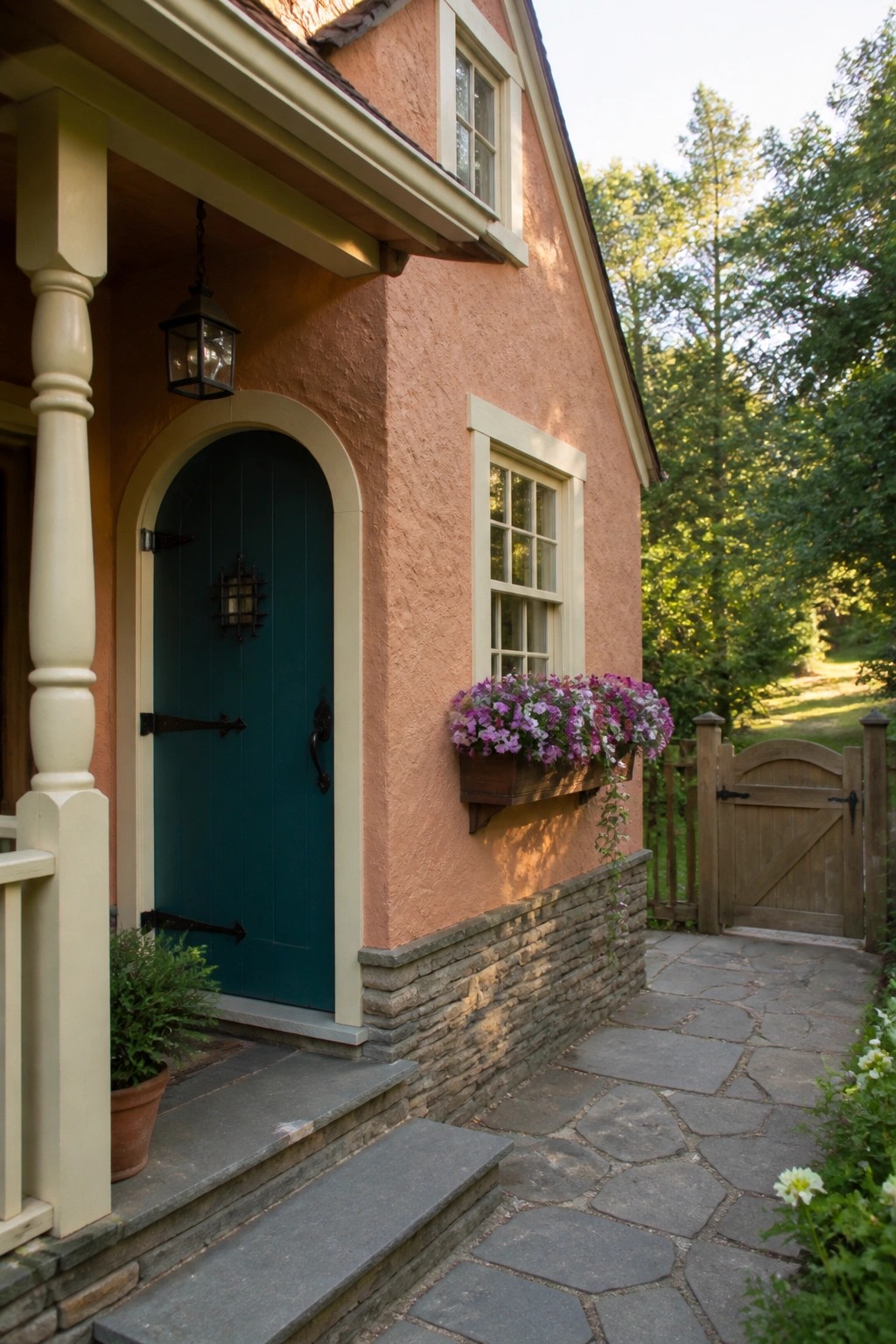
A warm peach works nicely on small cottage exteriors. It brings a soft, friendly tone that feels cheerful without looking too bright or sugary.
The color has a gentle yellow undertone that keeps it from turning too pink in sunlight. It pairs well with stone foundations and cream trim, and it suits homes that already have natural textures around the base. Similar shades include Sherwin Williams Coral Cove, Benjamin Moore Peach Melba, and Behr Peach Parfait.
Deep Red Siding With Cream Trim
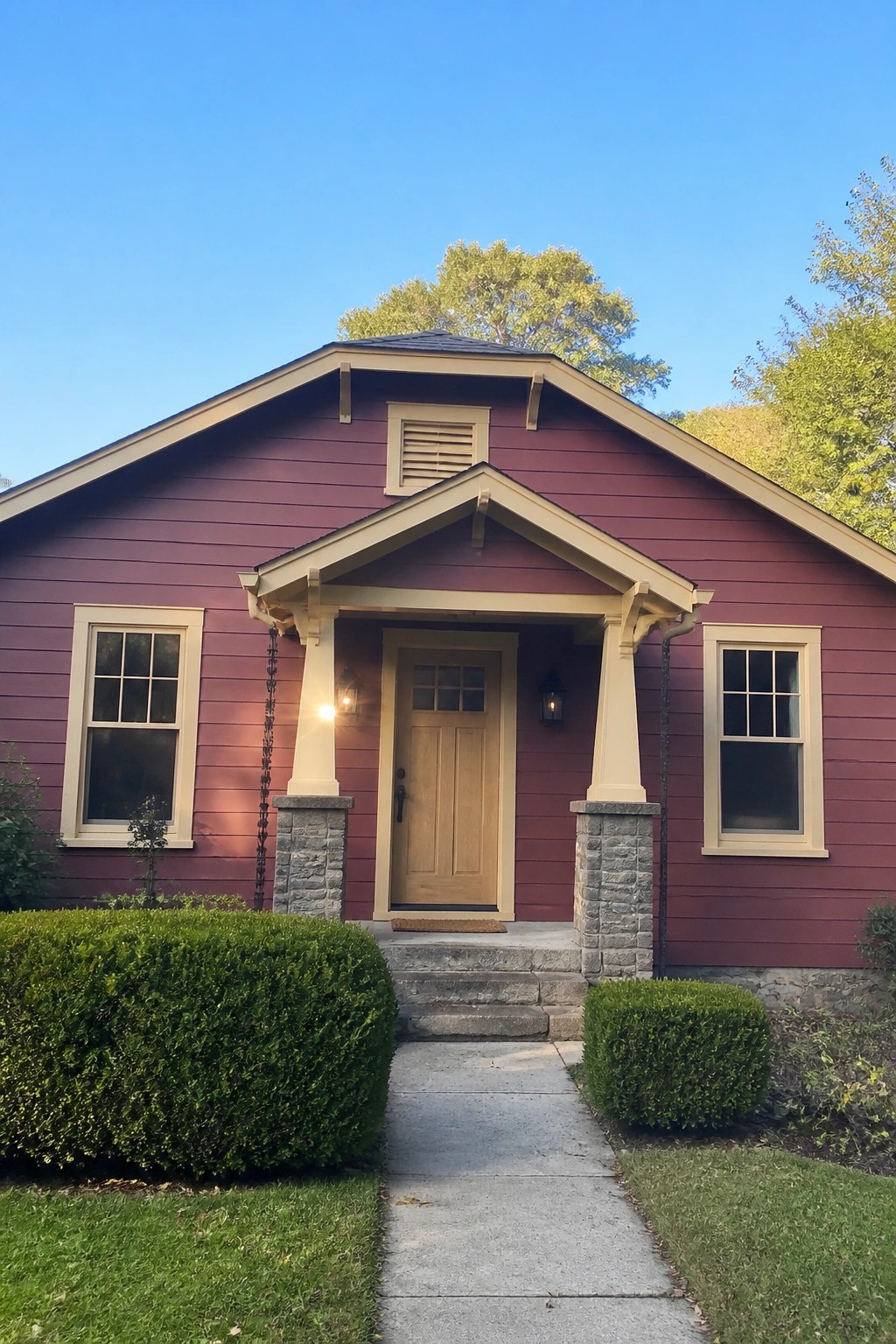
A deep red like this gives a small cottage a warm, settled look that still feels light enough for the size. The color has a slight warmth to it that keeps the house from feeling too stark against the sky or surrounding greenery.
It works especially well with cream trim and stone bases because the contrast keeps the red from looking flat. Something close to Benjamin Moore Heritage Red or Sherwin Williams Heartthrob would land in the same range, while Behr Red Barn offers a touch more brightness if the house gets strong sun.
Frequently Asked Questions
Q: Will a bright color make my small cottage stand out too much on the street? A: Pick a soft sage or dusty blue from the list instead. These tones bring warmth and charm while blending with nearby homes. Your cottage will feel inviting rather than loud.
Q: How do I choose between two similar shades that both look good? A: Check your roof and any stone details first. Match the undertones so the new color flows naturally with what is already there. A quick test patch on the siding helps confirm the right one.
Q: What if my windows have dark frames that might clash with lighter paint? A: Go for a warm off white or soft gray that echoes the frame color. This keeps the whole front balanced without extra work. The cottage will still read as cozy and pulled together.
