

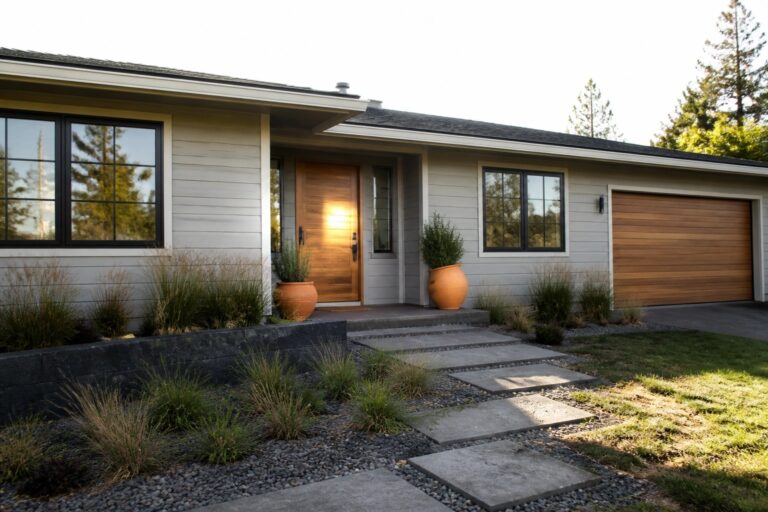
When I look at long low ranch homes the exterior color ends up shaping how the whole front reads from the street more than any other detail.
Pairing those colors with simple landscaping around the foundation can keep the profile from feeling stretched or bare.
Some shades only reveal their strengths once the house sits in real daylight.
I have found that muted tones tend to balance the wide rooflines better than brighter ones that can wash out against the flat planes.
Testing a few samples directly on the siding usually shows me which options will hold up once the yard matures.
Soft Gray Siding Suits Long Low Homes
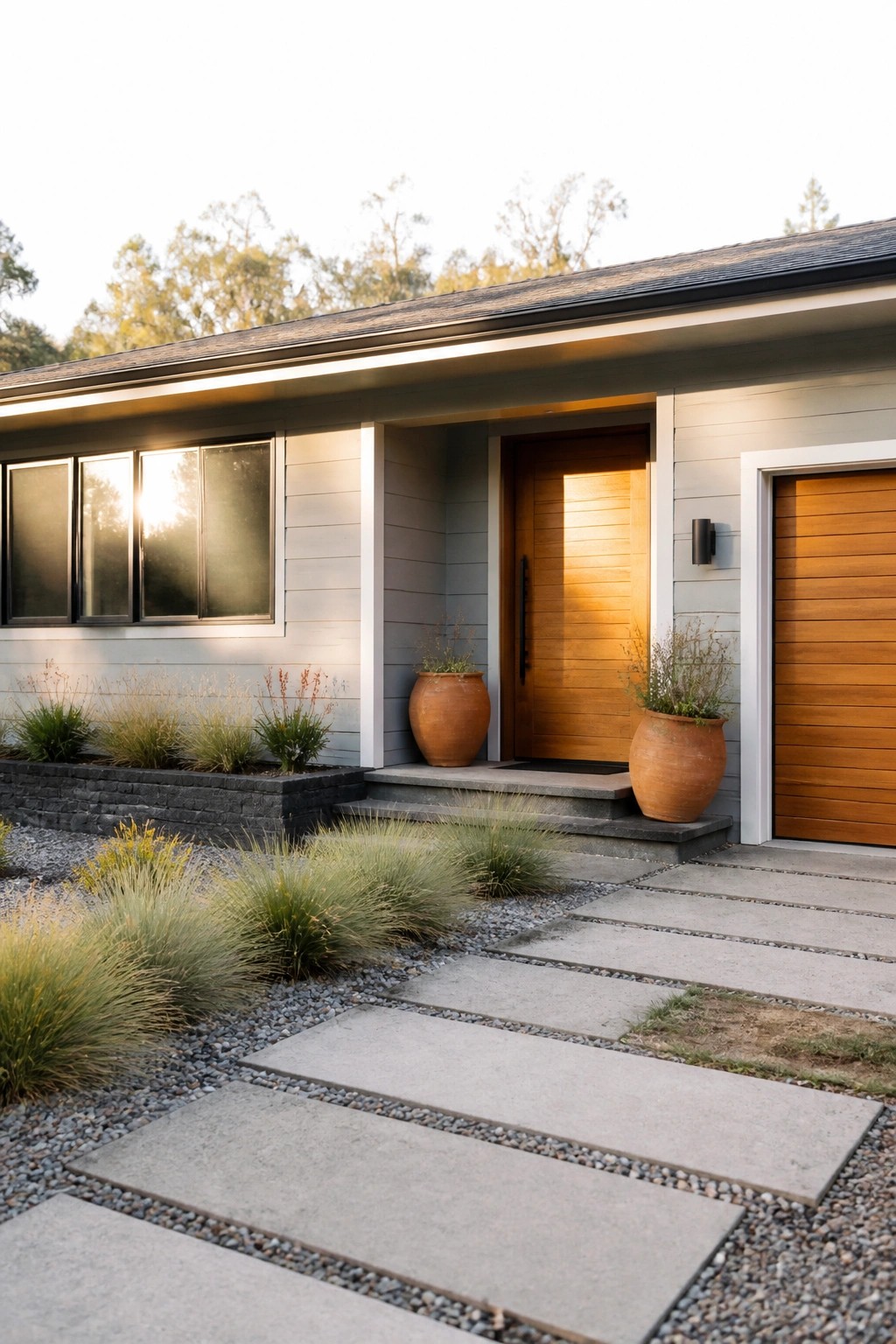
A soft gray siding color helps a long ranch house stay calm and simple. It does not fight the low roofline or make the front feel busy. The wood door and garage add just enough warmth without extra trim or contrast.
This color choice works best on homes with straightforward landscaping. Keep the beds narrow and the plants low so the siding remains the main quiet note along the length of the house.
Warm Earth Tones for Ranch Exteriors
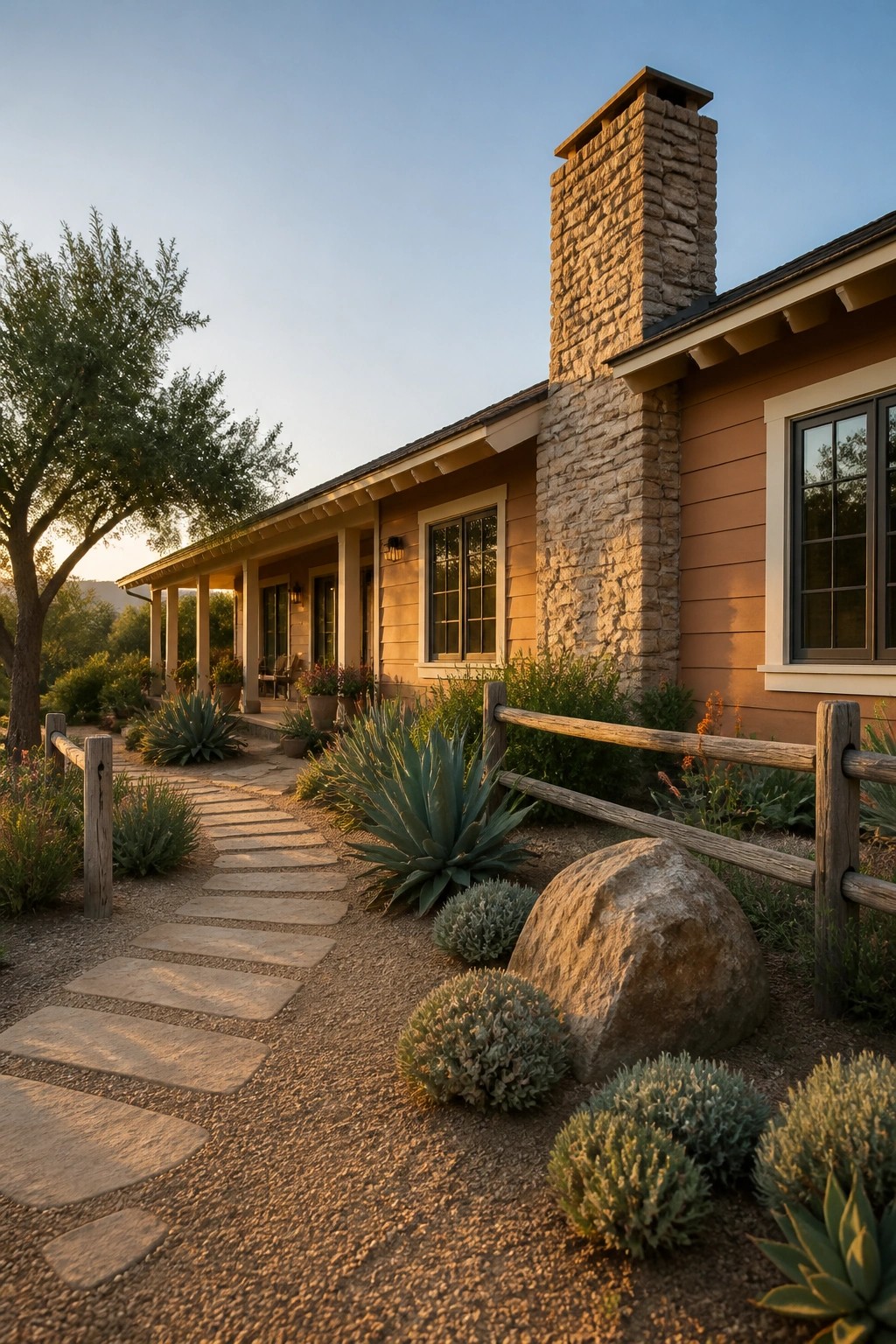
A soft terracotta or clay color on the siding gives a ranch home an easy, grounded feel. It works because the tone shifts gently with the light and pairs naturally with stone without looking forced.
This approach suits long, low homes best when the landscaping stays simple. Gravel paths, a few agaves, and low shrubs keep the focus on the house color rather than competing with it.
Muted Blue Gray Siding for Long Ranch Homes
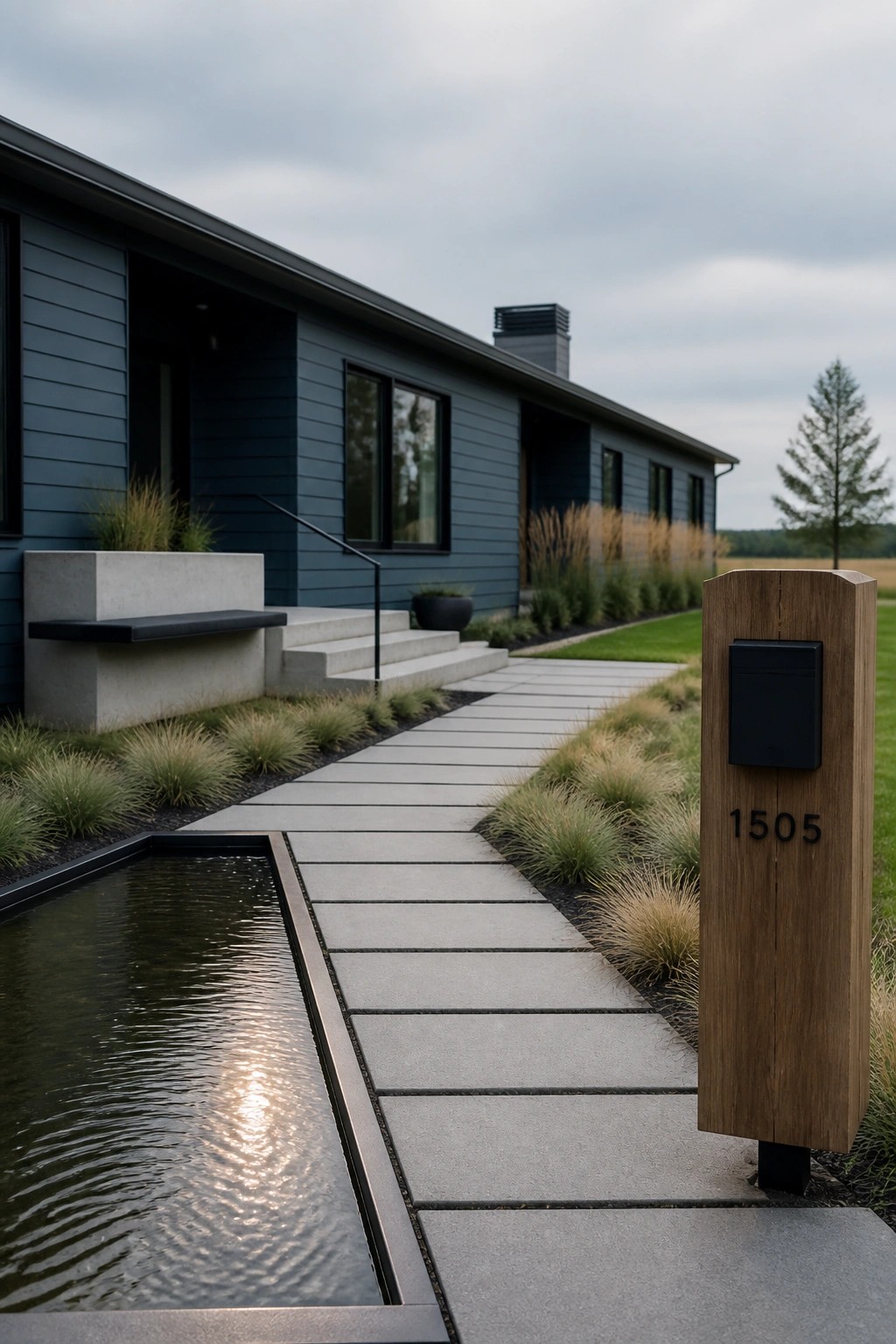
A soft blue gray keeps a long low house feeling calm instead of heavy. The color sits well against open sky and simple plantings without fighting them.
This shade works best on ranch homes with straight rooflines and few details. Keep the landscaping light with grasses and a plain path so the color stays the main feature.
Soft Green Siding for Ranch Homes
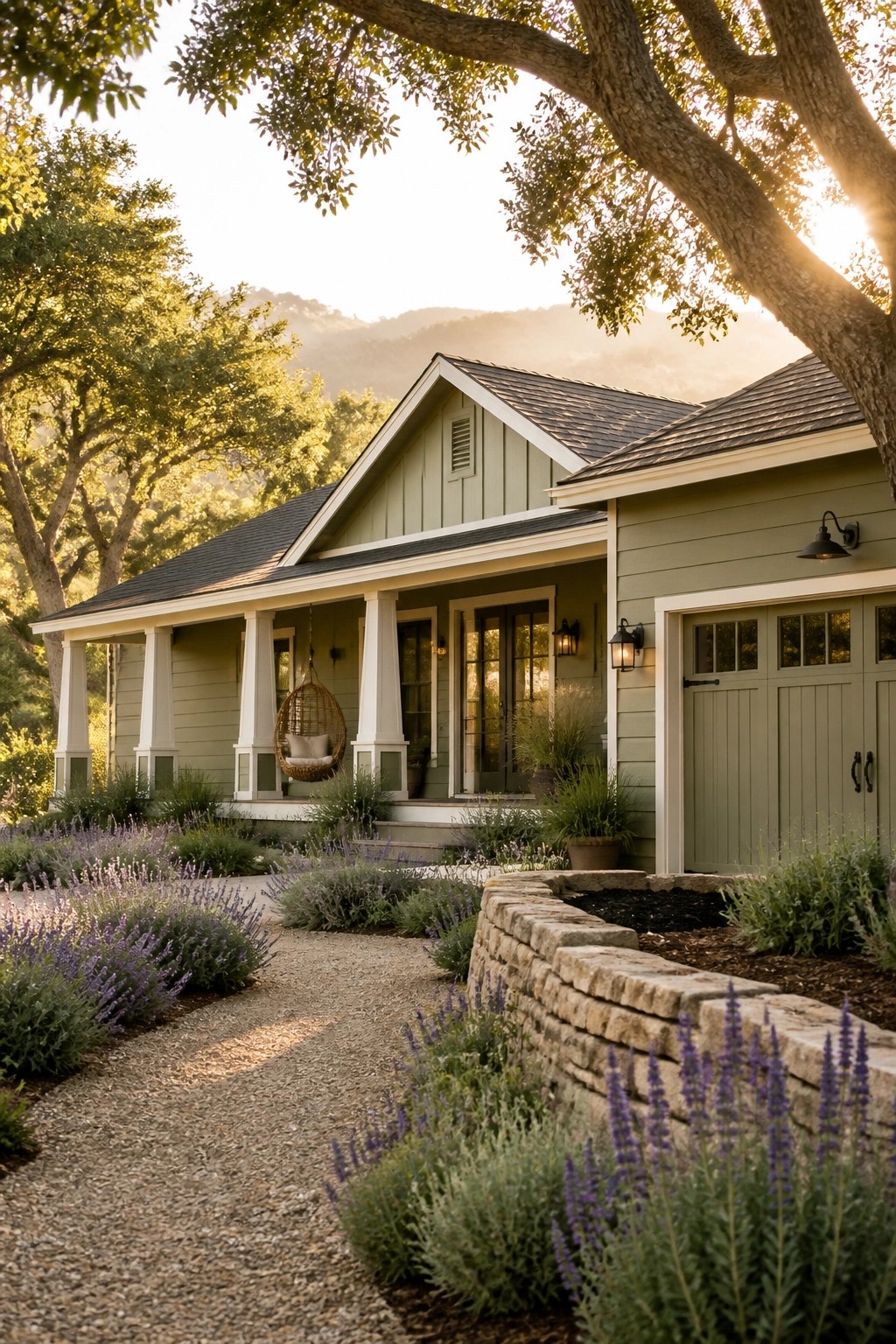
A soft green exterior color helps a long low ranch house blend into its surroundings without disappearing. It gives the house a calm presence while still letting the shape and roofline stand out. The muted tone works especially well when the landscaping stays simple and low.
This color choice suits homes with white trim and darker roofs. It pairs best with gravel paths, stone edging, and easy plantings like lavender or grasses rather than anything too formal. Keep the overall look spare so the green stays the main quiet note.
Light Walls With Wood Accents
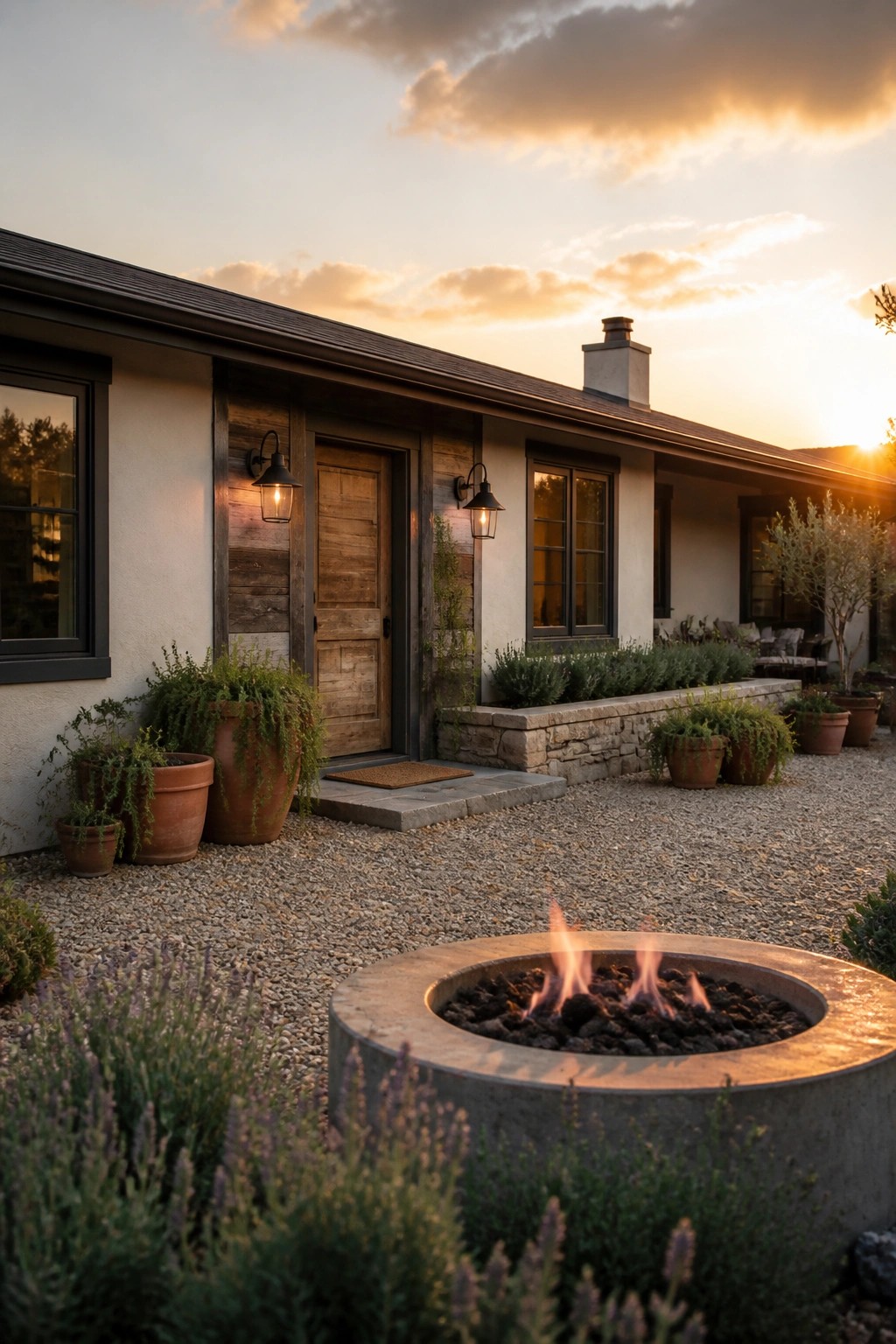
Light walls paired with wood accents give a ranch home a calm, settled look without much effort. The pale base color reflects light and helps the long, low shape feel less heavy, while the wood adds just enough warmth and texture to keep things from feeling plain.
This works best on homes with simple rooflines and few architectural details. Stick to one or two wood tones, keep the trim dark but not black, and let the landscaping stay loose with gravel and a few large pots rather than trying to fill every corner.
Gravel Beds With Stepping Stones
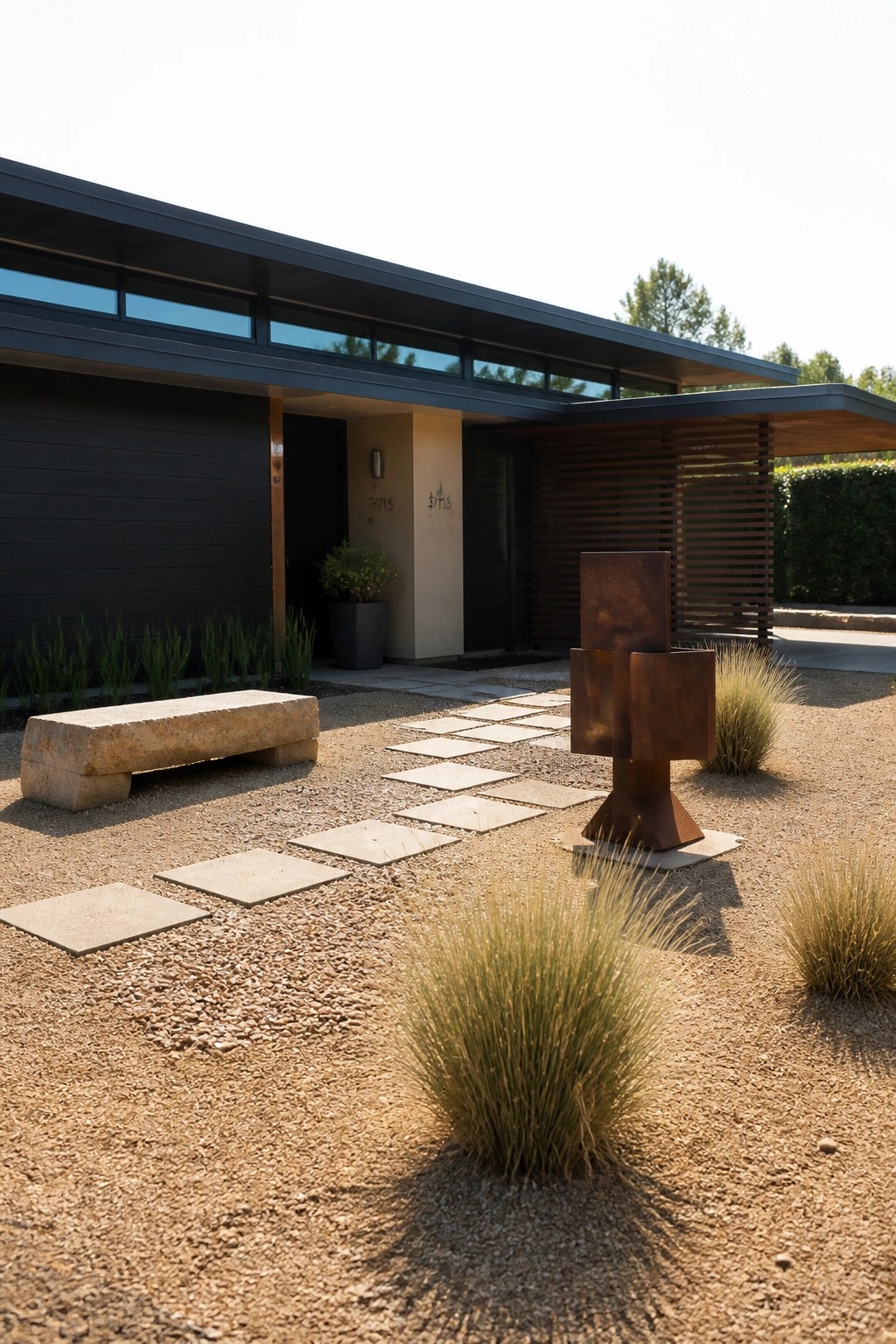
Gravel works well around long low homes because it stays flat and does not fight the simple rooflines. The square pavers keep a clear path without adding a full walkway that would feel too formal.
This setup suits homes with dry climates or anyone who wants less mowing and watering. Place the stones where feet naturally go, keep the gravel layer thin, and let clumps of grass fill in the edges so the whole front stays relaxed.
Light Blue Siding For Long Low Ranches
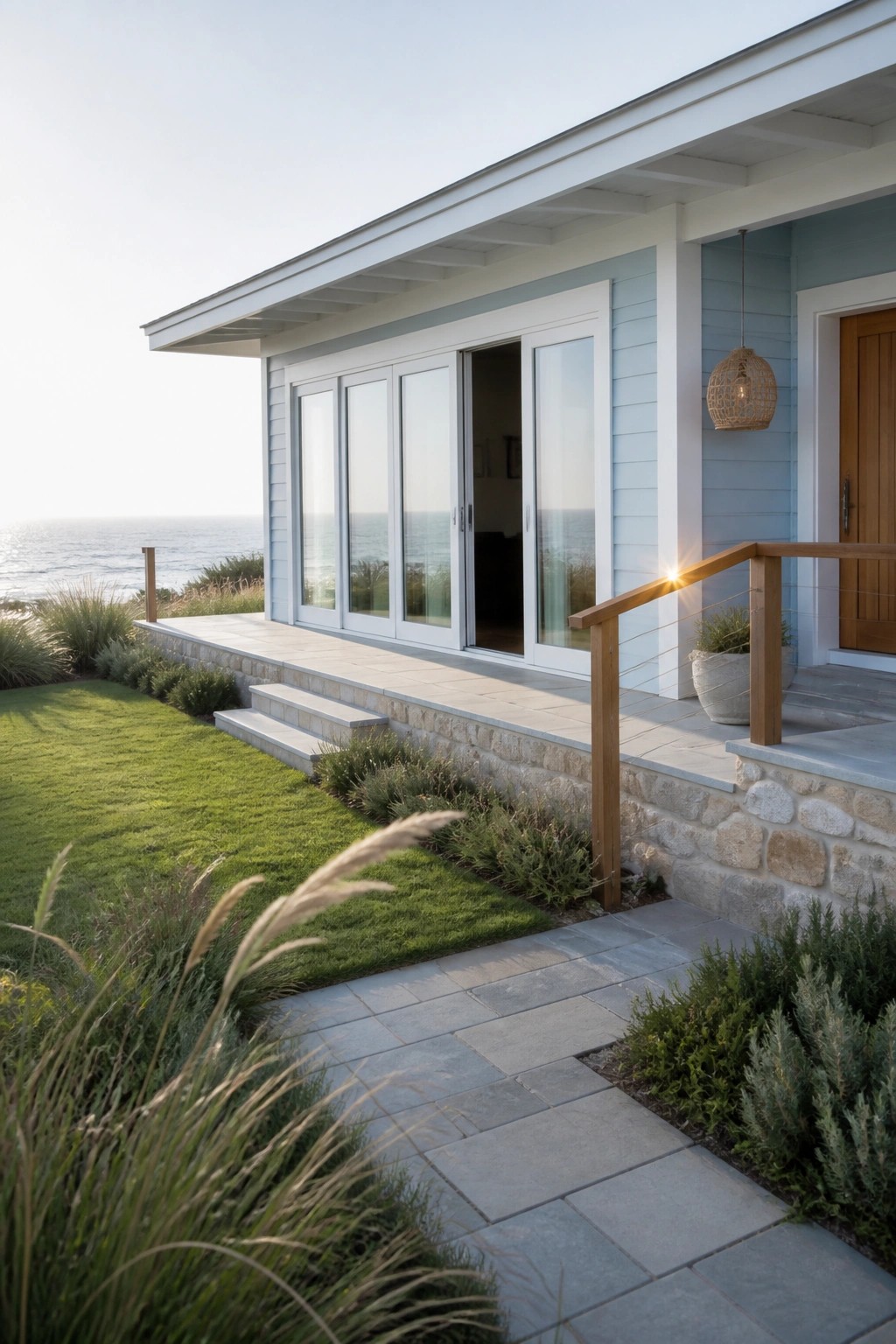
A soft blue siding color keeps a long low ranch from feeling heavy or boxy. It works especially well when the trim stays bright white and the foundation uses natural stone, which helps the house blend into a coastal or open setting without extra decoration.
This color choice suits simple landscaping and homes that sit low to the ground. Keep the finish matte and limit other accents so the horizontal lines stay the focus.
Stepping Stones In Gravel
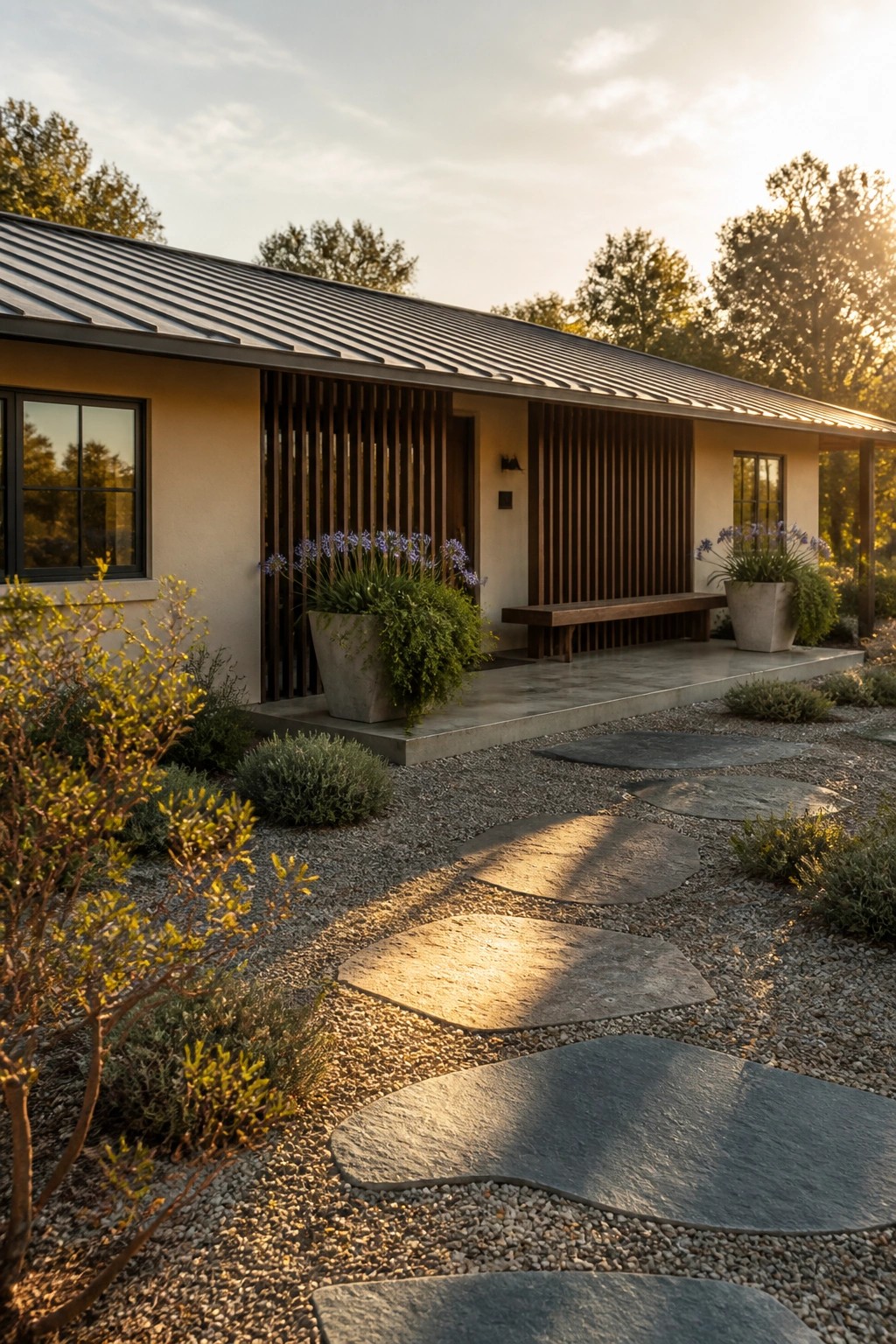
A path made of large stepping stones set into gravel gives a relaxed feel that fits long low homes well. It avoids the look of a solid walkway while still making a clear route from the yard to the entry. The stones sit low and let the gravel do most of the work, which keeps the whole front simple.
This layout works best on ranch homes where the landscaping stays low and uncluttered. Keep the stones spaced for easy steps and let low shrubs soften the edges without crowding the path. It stays practical in most climates and needs little upkeep beyond occasional weeding.
Warm Wood Siding on Ranch Homes
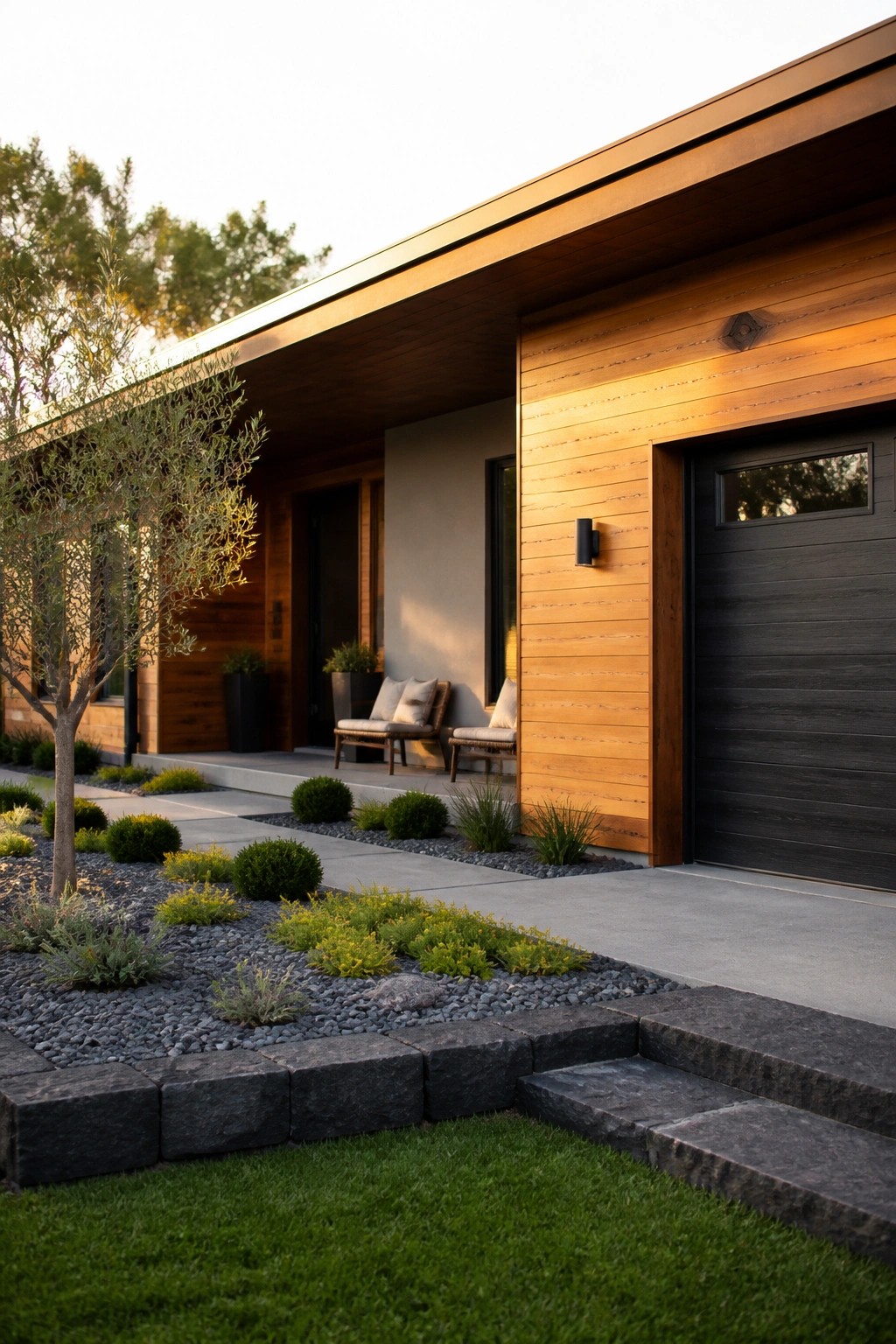
Warm wood siding works well on long low homes because it adds texture without making the house feel busy. The horizontal lines keep the eye moving along the length of the building, and the natural tone pairs easily with darker doors or trim for a simple contrast.
This approach suits ranches that already have clean rooflines and minimal ornament. Keep the landscaping low and loose around the base so the siding stays the main feature instead of competing with heavy plantings.
Gravel Paths with Stepping Stones
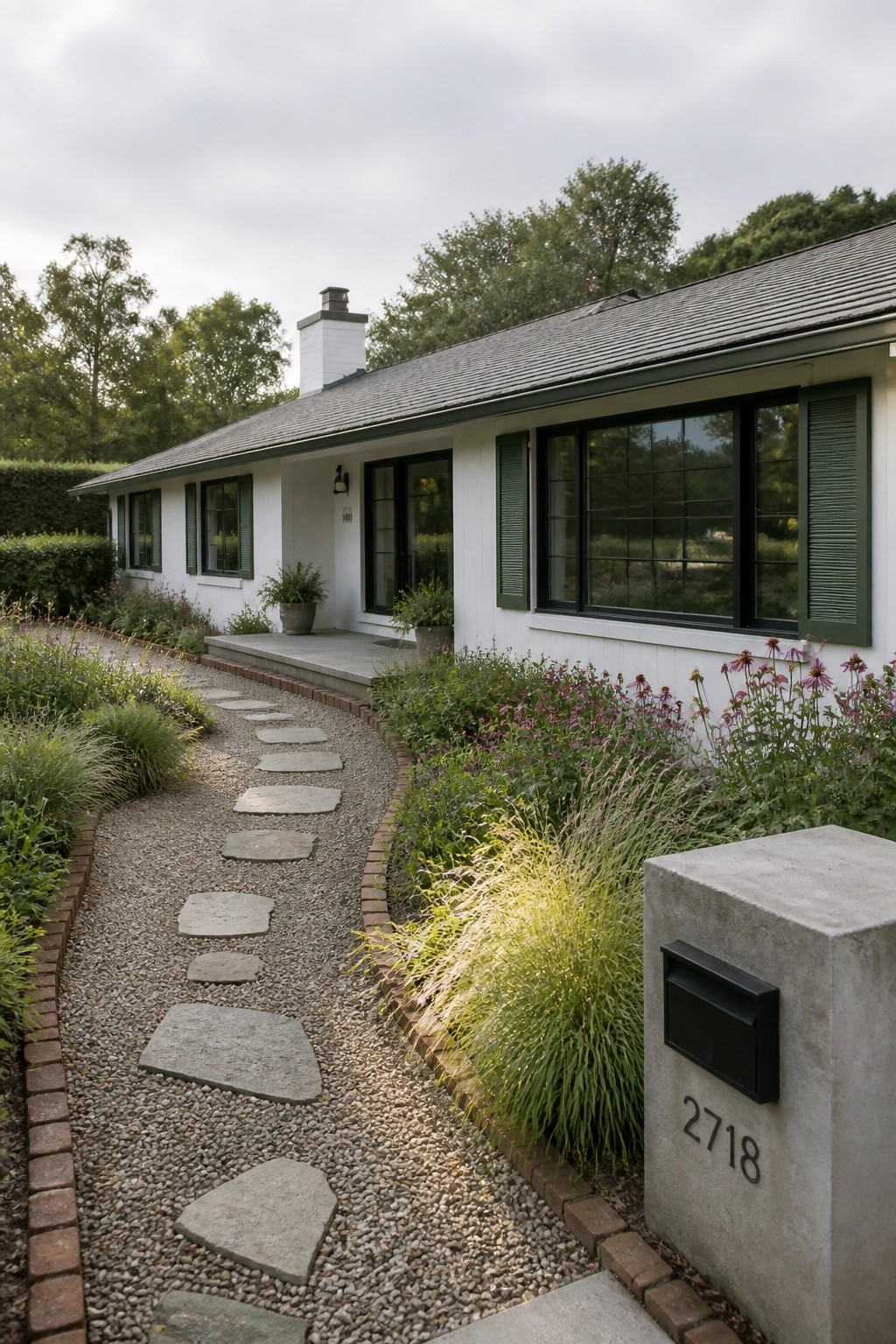
A gravel path lined with stepping stones gives a long ranch house an easy, relaxed approach. It avoids the stiffness of a solid walkway and lets the house sit lower to the ground without looking flat.
This works best on homes with simple facades and room for planting along the edges. Use brick or a similar low border to hold the gravel in place, and keep the stones irregular so the path feels natural rather than formal.
Stone Bases For Long Low Homes
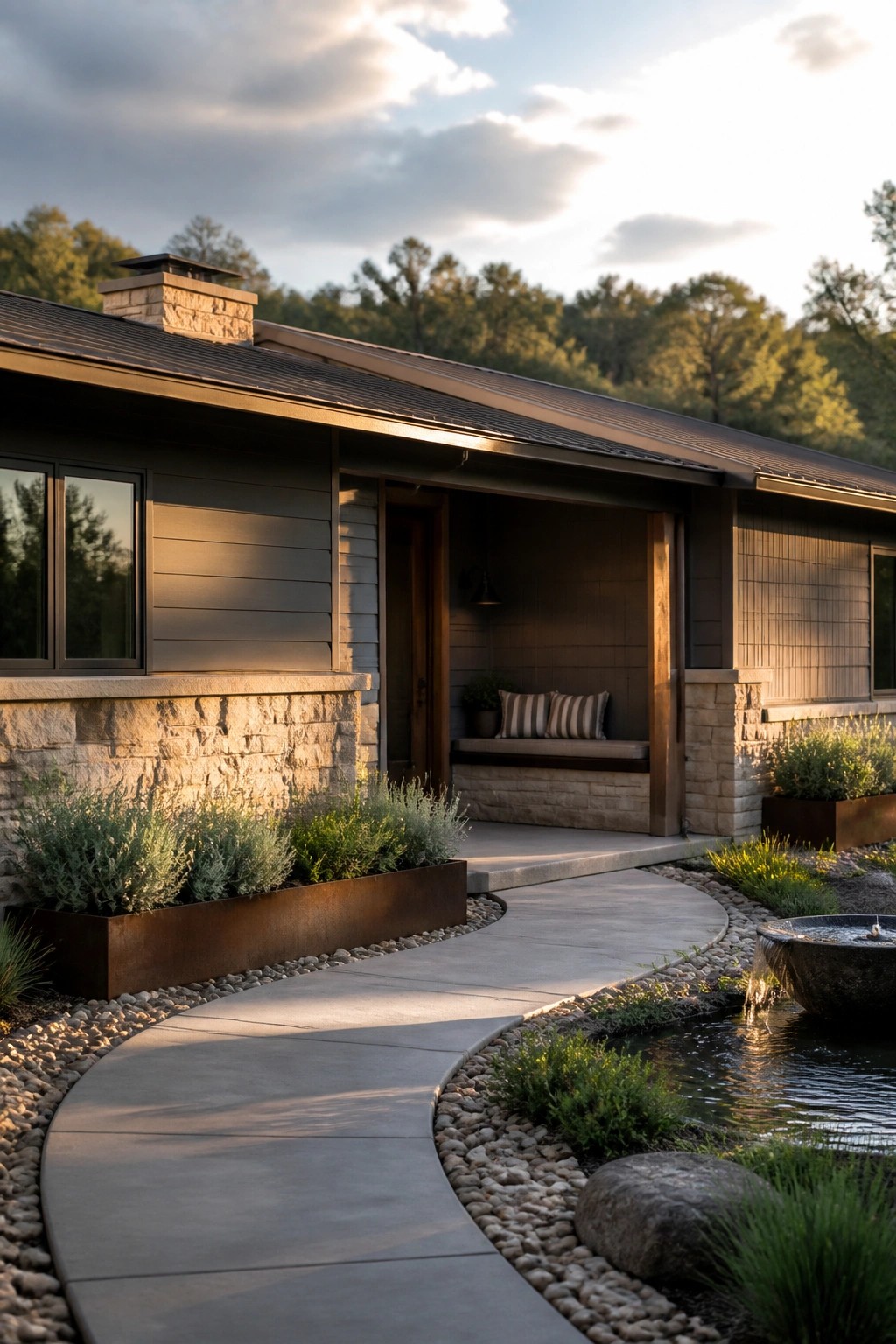
A stone base helps a long ranch home feel settled on the ground. It adds weight at the bottom without making the whole house feel heavy or busy.
This approach works best on homes with simple horizontal siding above it. Keep the landscaping low and loose so the stone shows through and the overall look stays calm.
Warm Terracotta For Ranch Exteriors
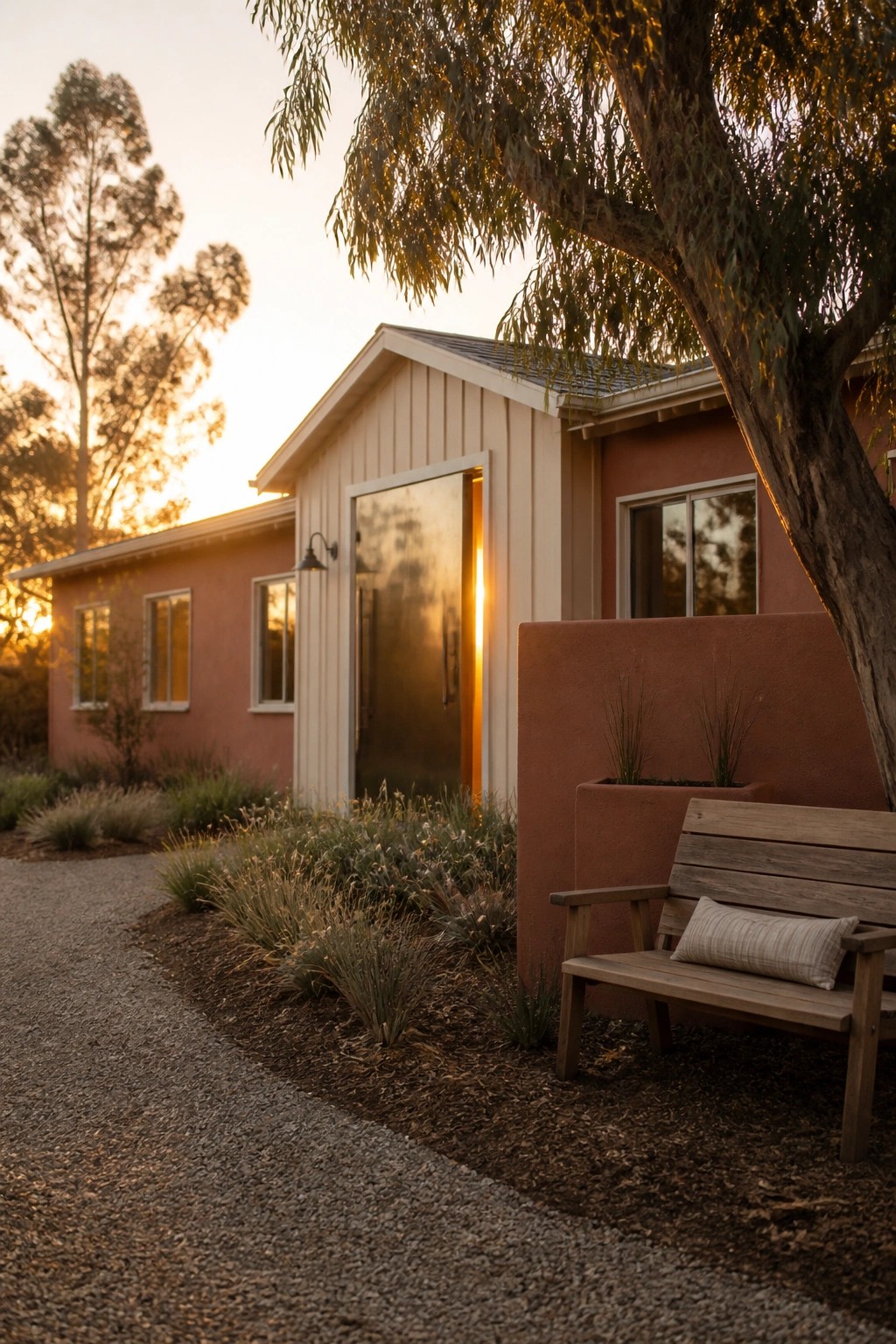
A soft terracotta color on the main walls gives a ranch house a relaxed, settled look. It feels natural with the low rooflines and keeps the whole place from looking too stark against the landscape.
This shade works best on long homes with simple plantings and gravel paths. Pair it with a lighter gable and keep the beds low and easy to maintain so the color stays the focus.
Soft Blue Siding For Long Ranch Homes
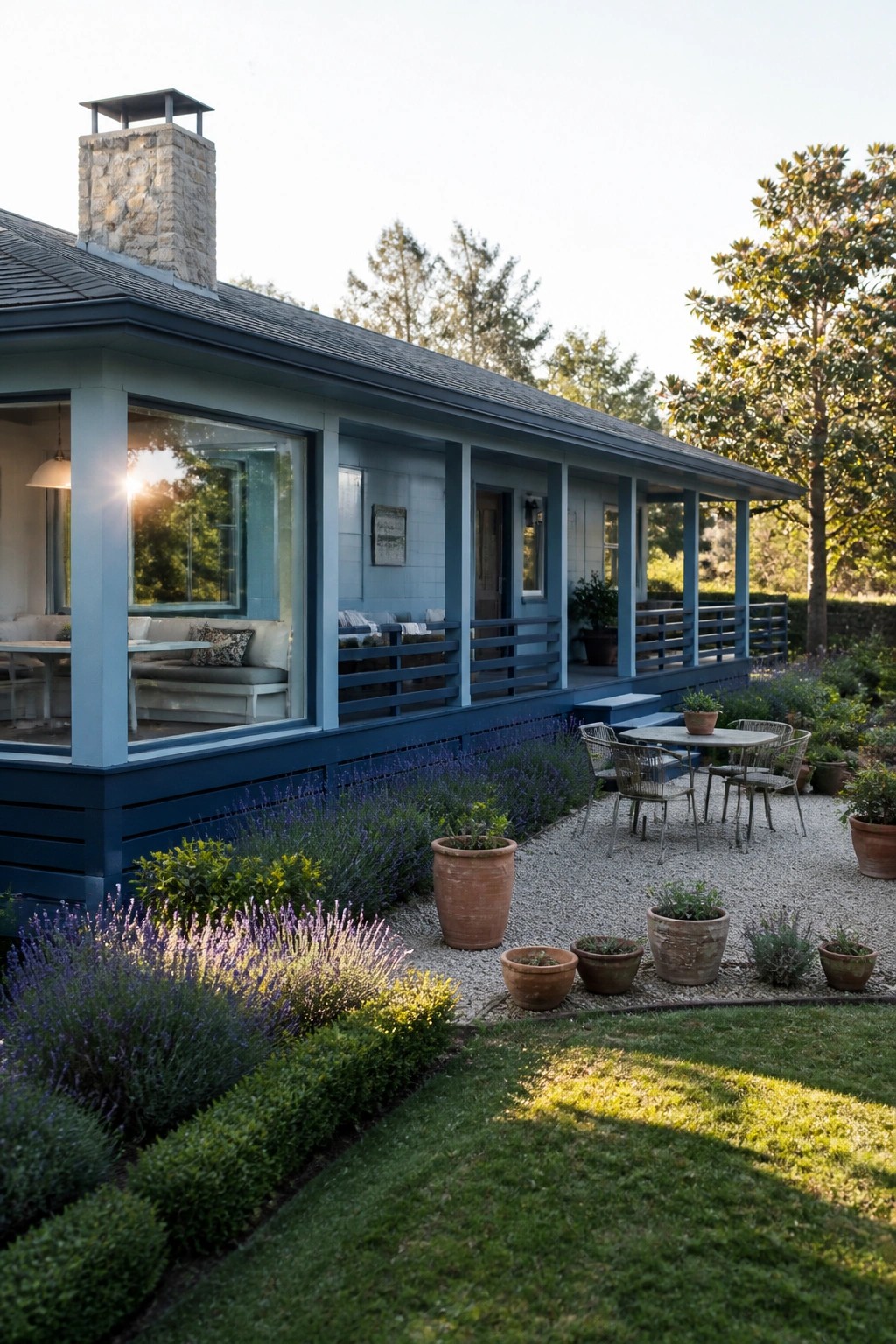
A soft blue works well on long, low homes because it keeps the whole place feeling light instead of heavy. The color sits nicely against the landscape and does not fight with the simple plantings around the base of the house.
It pairs best with low-maintenance beds and gravel rather than lots of bright flowers or formal hedges. Homes in open or semi-rural spots tend to look most at ease with this kind of blue.
Deep Green Siding on Long Ranch Homes
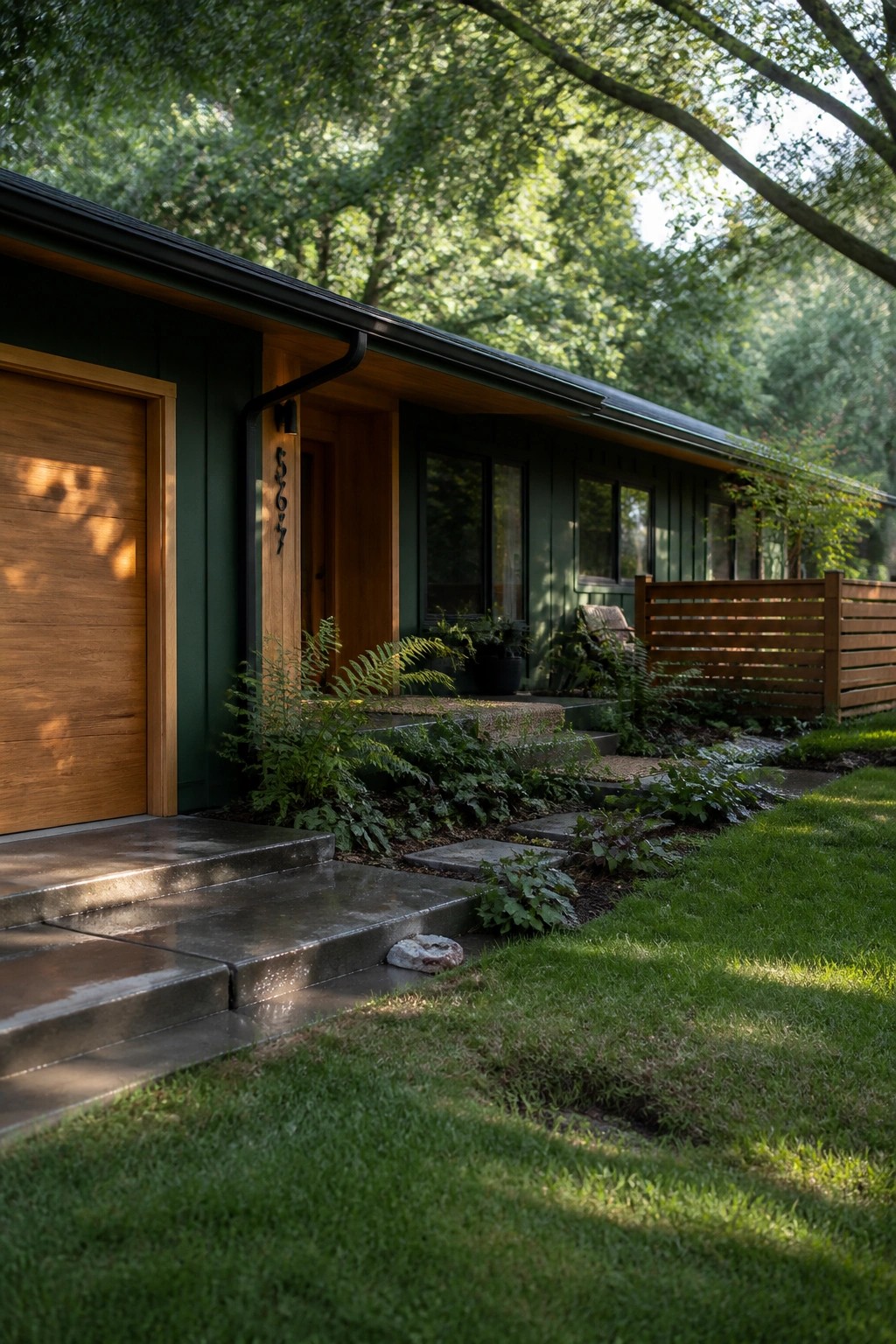
A deep green works well on long low homes because it helps the shape sit quietly against trees instead of standing out. The color keeps the facade feeling grounded without needing lots of extra trim or detail to make it interesting.
This approach suits homes with simple wood accents and basic landscaping. It tends to look best when the green is kept consistent across the main body and paired with natural materials rather than bright or contrasting elements.
Gravel Paths For Simple Ranch Landscaping
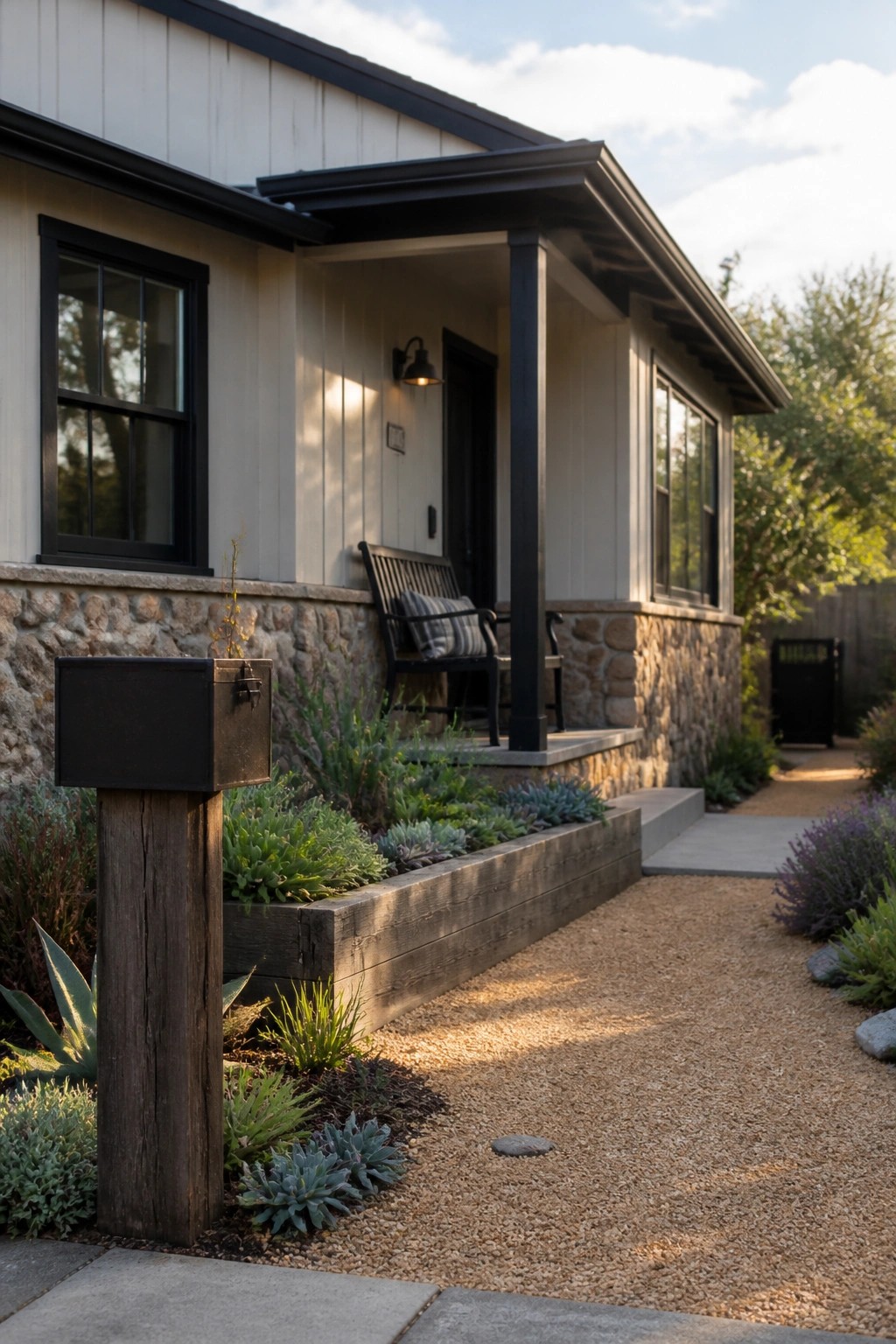
Gravel paths give a ranch home an easy, relaxed look without adding height or fuss. They sit low to the ground and let the long lines of the house stay visible. The light color also helps reflect heat in warmer months.
This approach works best on flat lots where you want low maintenance and good drainage. Keep the beds narrow, use a simple raised edge like wood or stone, and stick to a few tough plants. Skip the lawn and you will spend less time mowing and watering.
Warm Wood Entries on Neutral Ranch Homes
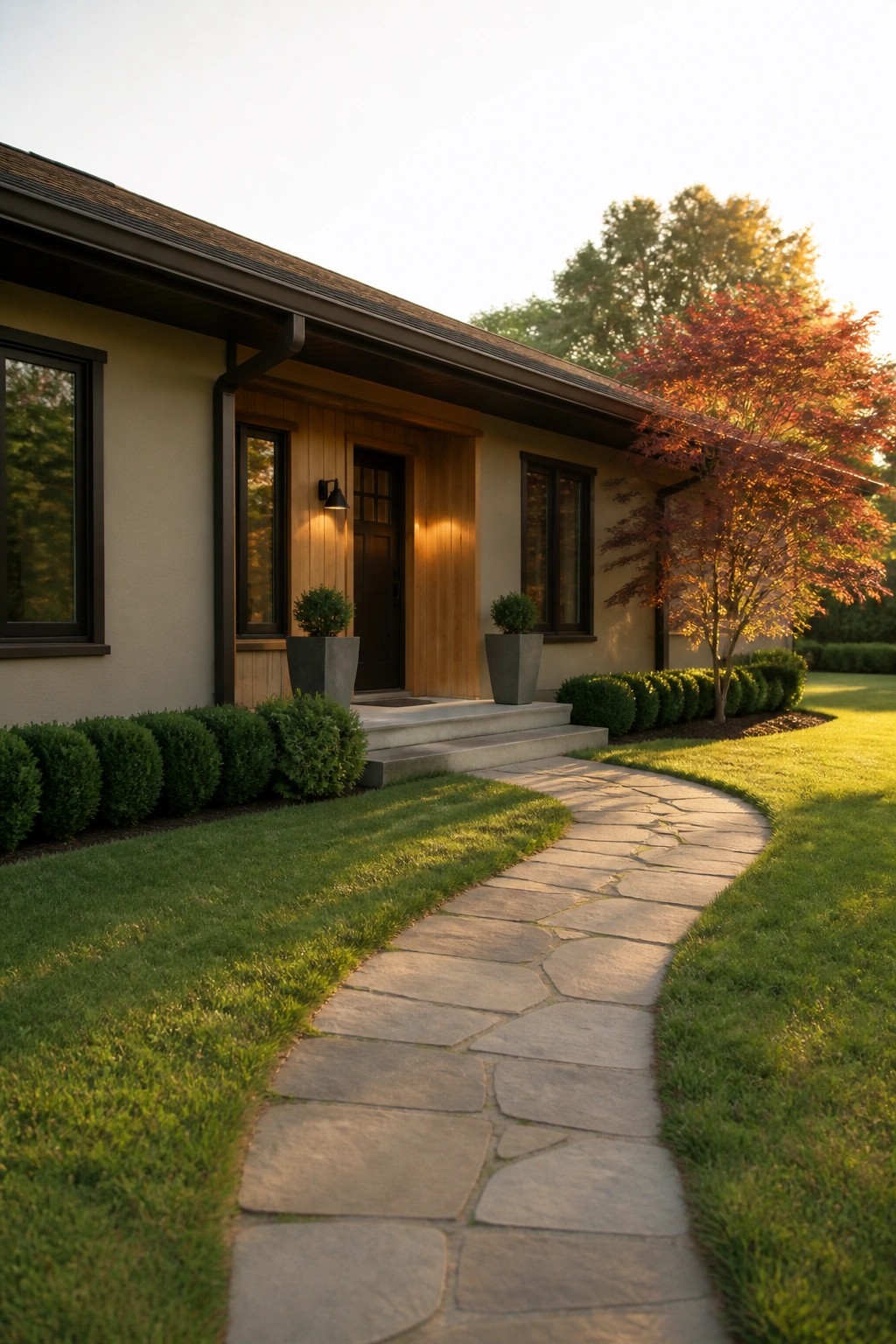
A light neutral exterior feels more welcoming when you add wood around the front door. The contrast keeps the long, low shape from looking flat while still staying simple.
This approach suits ranch homes with clean lines and works best when the rest of the facade stays quiet. Keep the landscaping low and the path straightforward so the wood detail does the main job.
Pergola Over the Outdoor Table
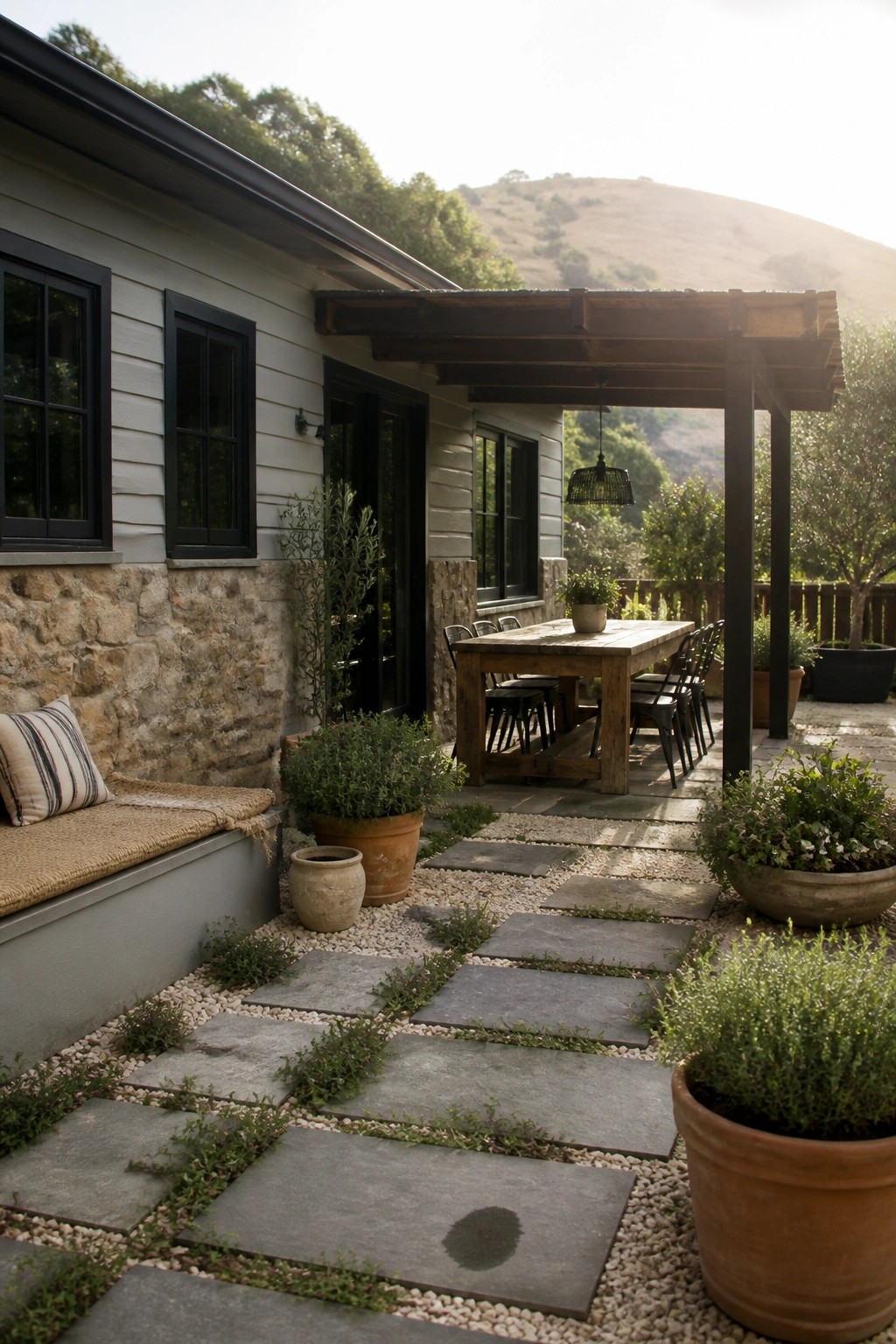
A pergola gives the dining area a clear spot without building a full room. It adds shade and structure while keeping the space open to the rest of the yard. On a long low home this kind of simple overhead frame feels right at home and helps the patio read as an extension of the house rather than an afterthought.
Use one over a table where you eat most often and keep the posts in a dark finish so they stand out against lighter siding. Stone pavers set into gravel make a low-care path that leads right to the chairs. It works well on ranch homes that already have a simple roofline and a few large pots to soften the edges.
Dark Colors for Long Low Ranch Homes
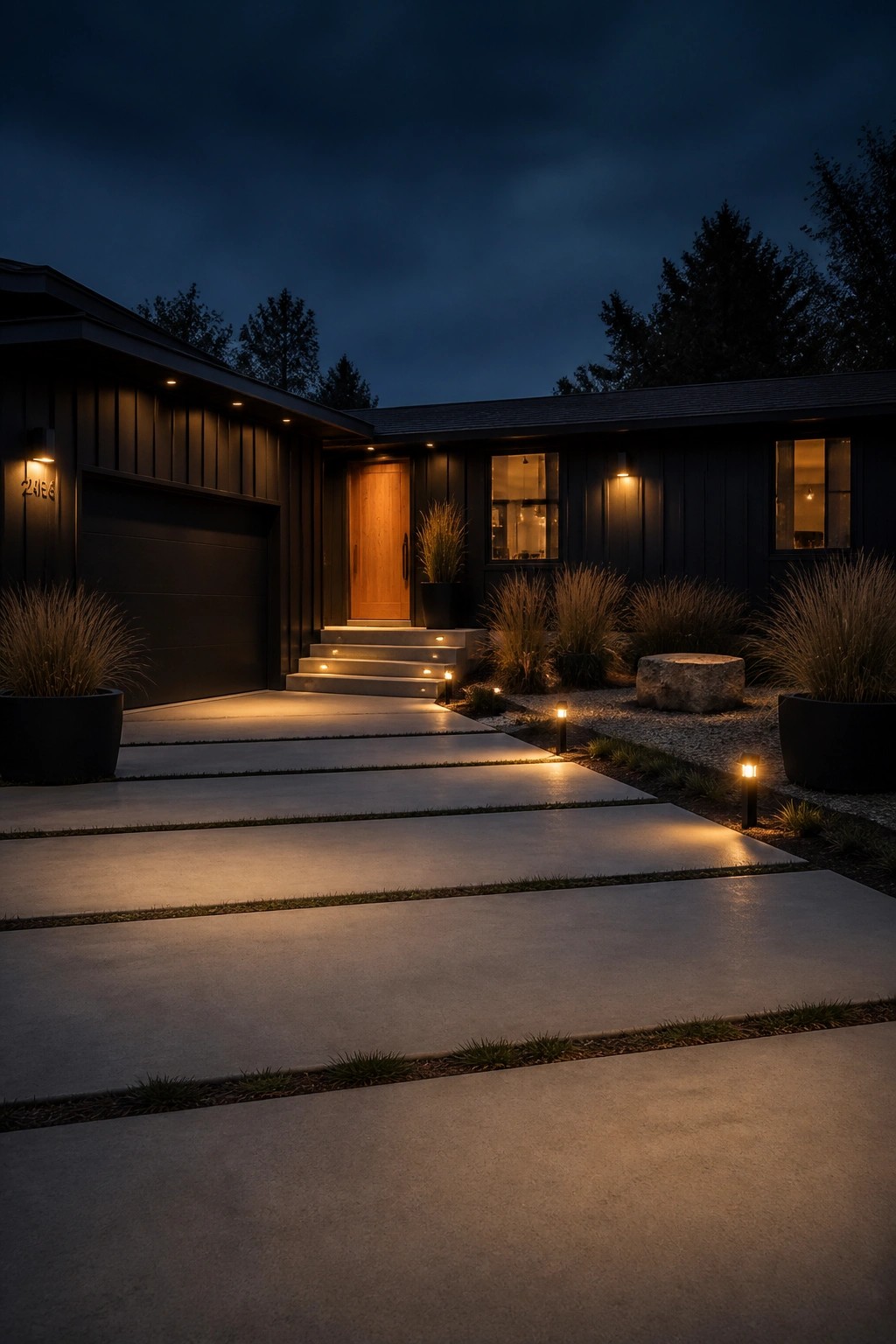
Dark siding gives a ranch house a settled, grounded feel that suits its long low shape. It works especially well when the roofline stays simple and the landscaping stays low and uncluttered, so the whole front stays calm rather than busy.
This approach fits homes that already have clean lines and not much trim. Keep the path and entry lights warm and low so the dark color does not feel heavy at night.
Layered Low Plantings Along the Base
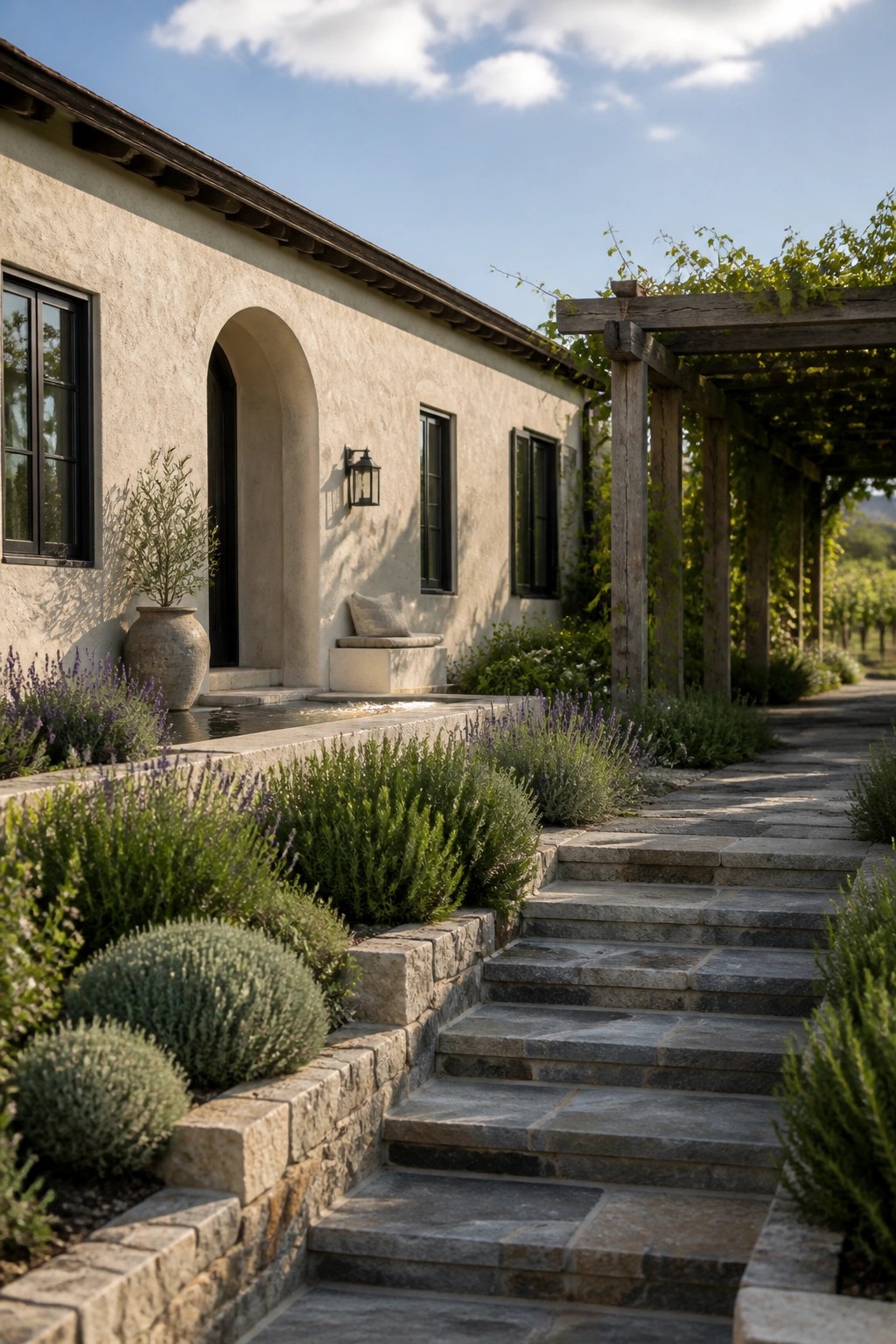
Low, mounded shrubs and lavender work well with long ranch homes because they stay in scale with the roofline and walls. The planting stays under the windows and follows the slight rise of the steps, so the house still reads as one clean shape instead of getting broken up by tall plants.
Use the same idea on your own place by keeping the first row of plants under two feet and adding one slightly taller layer behind it. Stone or concrete edging helps hold the shape and gives the beds a finished look without adding much height. This approach suits dry climates and simple ranch facades that already have enough detail on their own.
Low Concrete Planters Along The Base
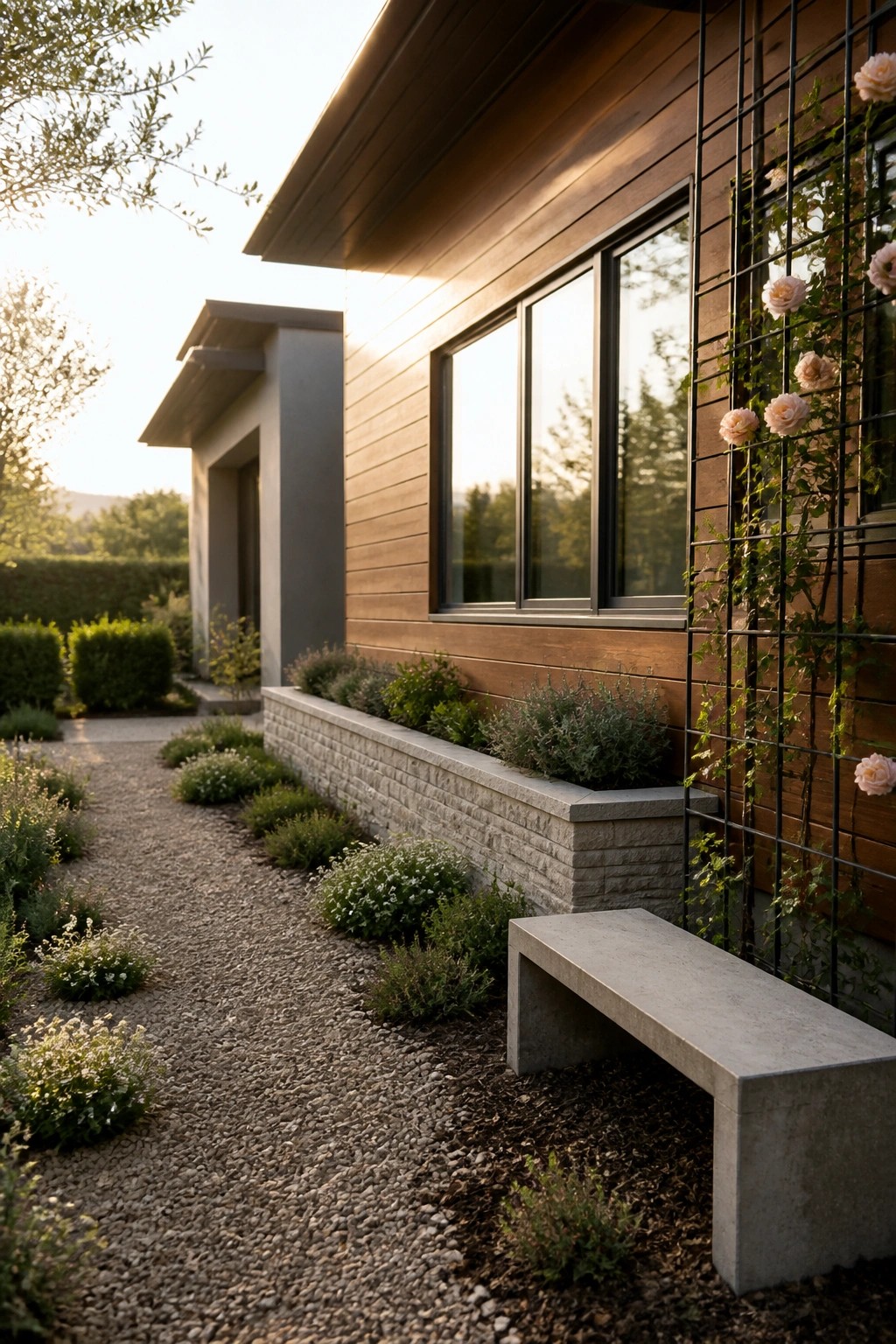
A long, low concrete planter gives the front of a ranch house a clean edge that keeps the landscaping from looking scattered. It works because it matches the horizontal lines of the home and gives the plants a place to sit without adding extra height or clutter.
This setup works best on simple, one-story homes where the goal is to keep the foundation visible and the plantings relaxed. Fill it with low shrubs and a few taller accents, then let a gravel path run right alongside. The concrete bench at one end shows how the same material can add seating without breaking the flow.
Soft Pink Siding for Ranch Homes
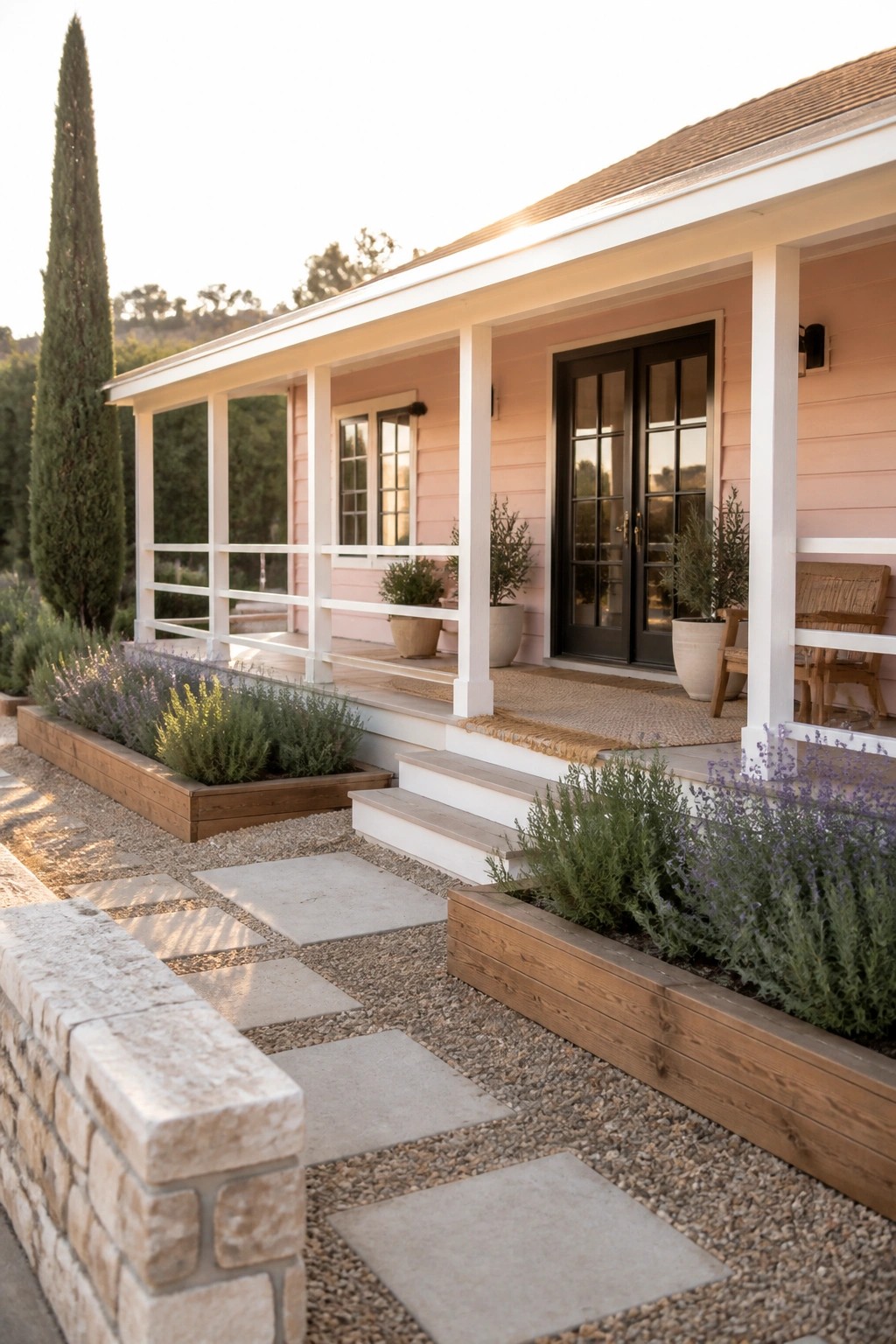
A gentle pink works well on long low homes because it stays light without turning too sweet or washed out. The color keeps the house feeling approachable even when the lines stay simple and the roof is low.
It pairs best with white trim and darker doors or windows so the look stays balanced. This choice suits homes that already have clean landscaping and gravel paths rather than heavy ornament.
Warm Neutral Stucco With Dark Trim
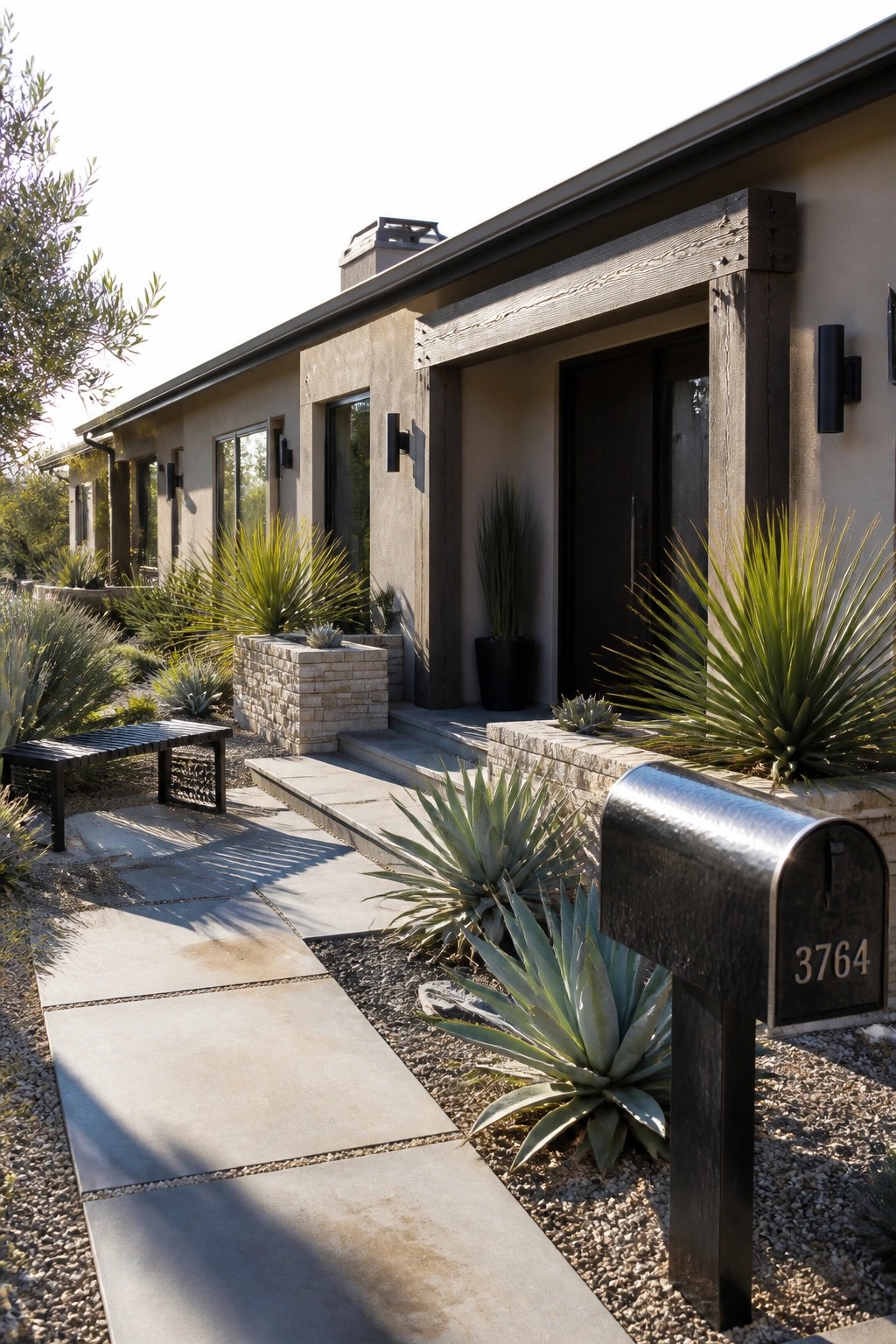
A soft neutral wall color helps a long ranch home feel grounded without looking heavy. The light stucco here works well because it lets the dark wood beams and black door stand out in a simple way.
This color choice suits homes with clean rooflines and minimal landscaping. It keeps the overall look relaxed while still giving the entry some weight. Stick with matte finishes and limit the dark accents to doors, windows, and a few structural details so the house does not feel busy.
Warm Gray Paint For Long Low Ranch Homes
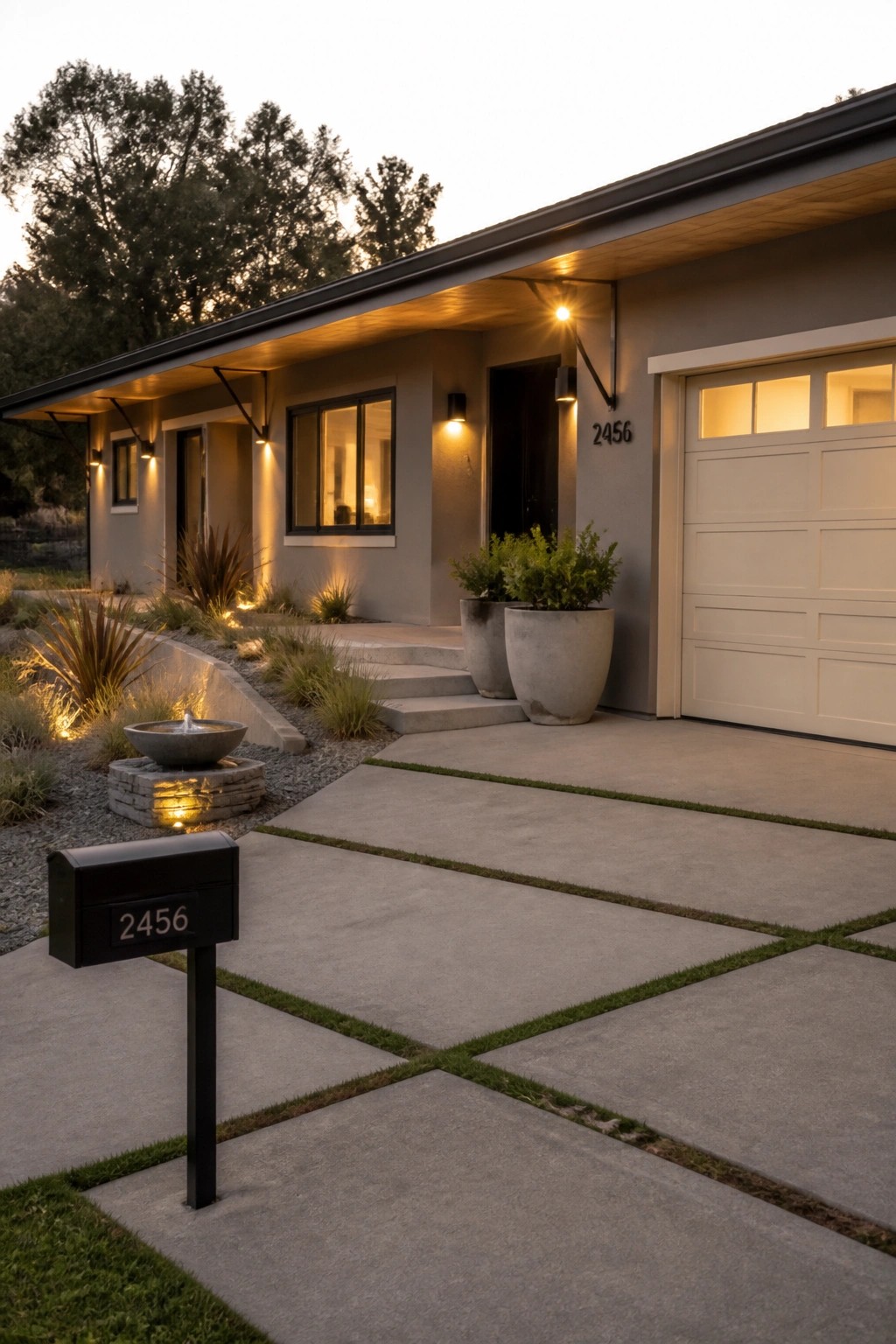
A soft gray like this works well on long ranch homes because it keeps the shape feeling calm instead of heavy. The color stays light enough to blend with concrete and gravel while still giving the house a clean modern look.
This shade suits homes with simple landscaping and few strong contrasts. It holds up best when the trim stays dark and the driveway stays plain so the gray does not get lost in too many competing tones.
Light Siding With Dark Accents
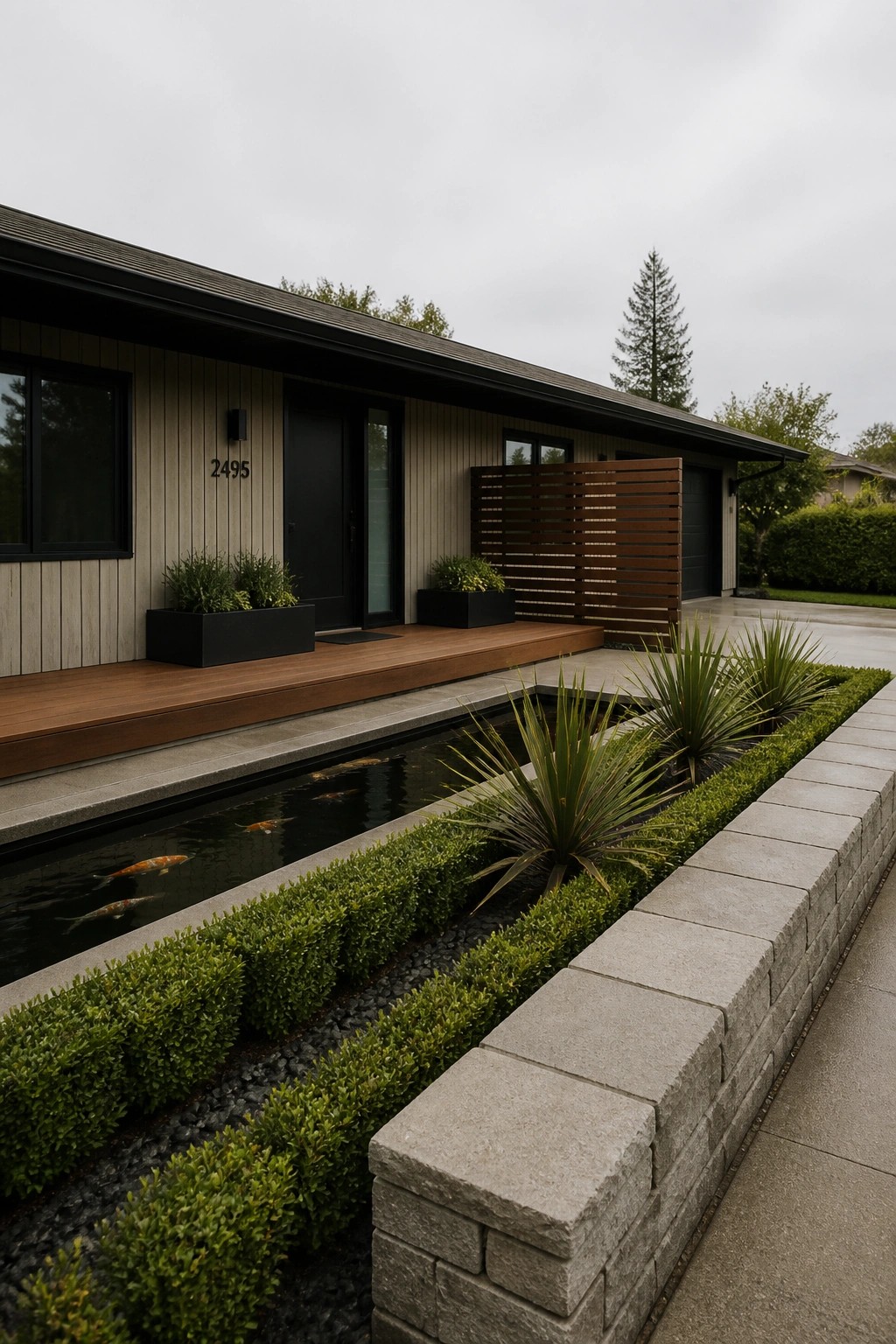
A soft vertical wood tone paired with black windows and doors gives a long ranch house a clean look without feeling stark. The contrast keeps the facade from blending into the surroundings while still reading as relaxed and low key.
This approach works well on single story homes where the roofline stays simple. Stick with matte black for the trim and doors so the siding stays the main color. Avoid too many extra tones on the garage or fencing or the whole front can start to feel busy.
Frequently Asked Questions
Q: My ranch has a dark roof already. Which colors pair well without clashing?
A: Stick with mid-tone neutrals like greige or warm taupe. They sit comfortably under the roof and keep the long lines relaxed. Test a couple on boards first so you see how they shift in afternoon light.
Q: Will these paint colors work with mostly gravel and a few shrubs out front?
A: Earthy shades such as soft sage or clay beige echo the ground and let the simple plants stay the focus. They avoid any harsh contrast that could make the landscaping feel busy. One coat on the body color usually pulls everything together.
Q: Should the garage door match the siding or stand out a bit?
A: Paint it the same color as the main walls for a clean low profile. A shade or two lighter on the trim around it adds just enough separation without extra fuss. This keeps the whole front looking simple and stretched out.
Q: How often do these exterior colors need touching up on a ranch?
A: Most hold up well for five to seven years in normal weather. Check the south side first since sun fades it faster there. A quick wash each spring helps the color stay fresh longer.
