

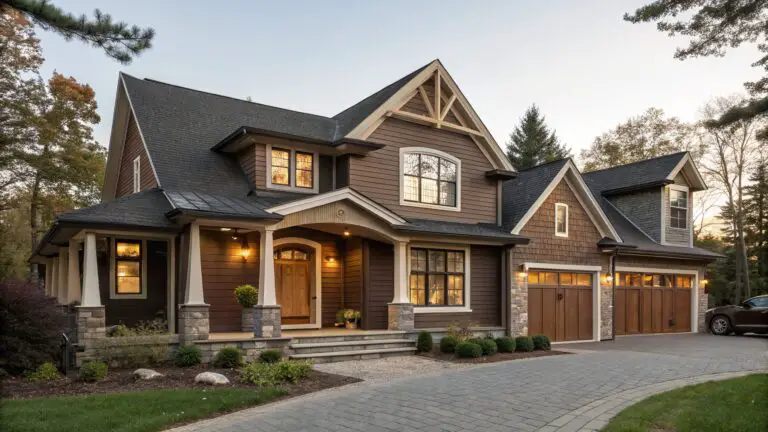
I drive by houses all the time where a well-chosen brown exterior makes the whole street feel steadier.
Brown grounds the facade so naturally, especially when it nods to the siding or brick already there.
I’ve noticed it works best on homes with varied rooflines, where deeper shades lift the entry and lighter ones ease the bulk.
Curb appeal clicks into place.
You can pull a few of these schemes for your own place and see how they shift with the light over a season.
Warm Brown Shakes with Vertical Siding
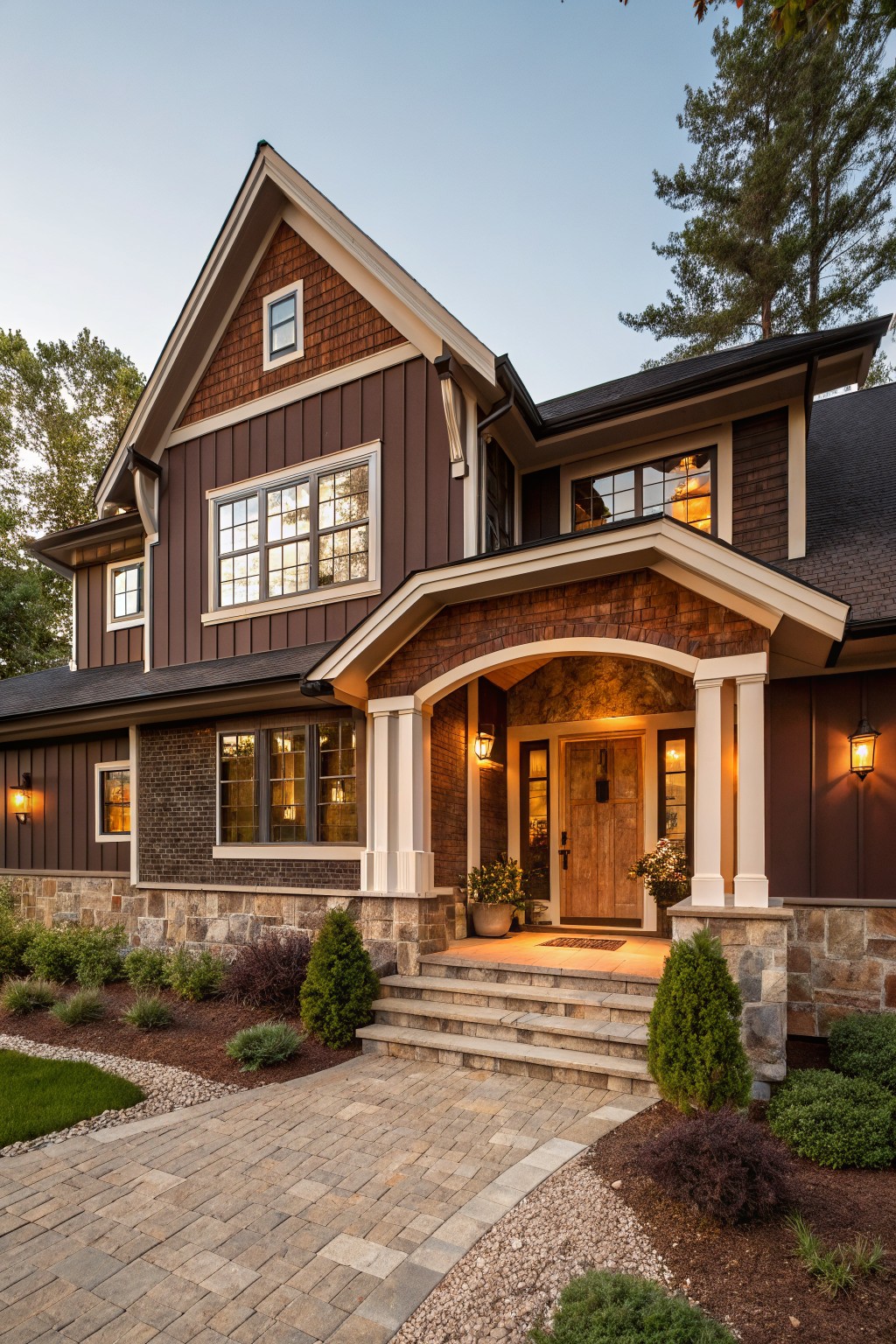
Brown shakes on the gables give this house a cozy, handcrafted feel, while the vertical siding down the sides keeps things straight and simple. Stone at the base ties it all together without overpowering. That mix of textures makes the brown colors pop more, so the whole front looks full and interesting instead of flat.
Try this on homes with some Craftsman details or even ranch styles wanting more height. Pick shakes and siding in the same warm tone, maybe with a bit of gray undertone for balance. It suits spots with trees around, where the browns blend naturally. Just keep the trim crisp white to let the browns stand out.
Modern House with Warm Cedar Cladding
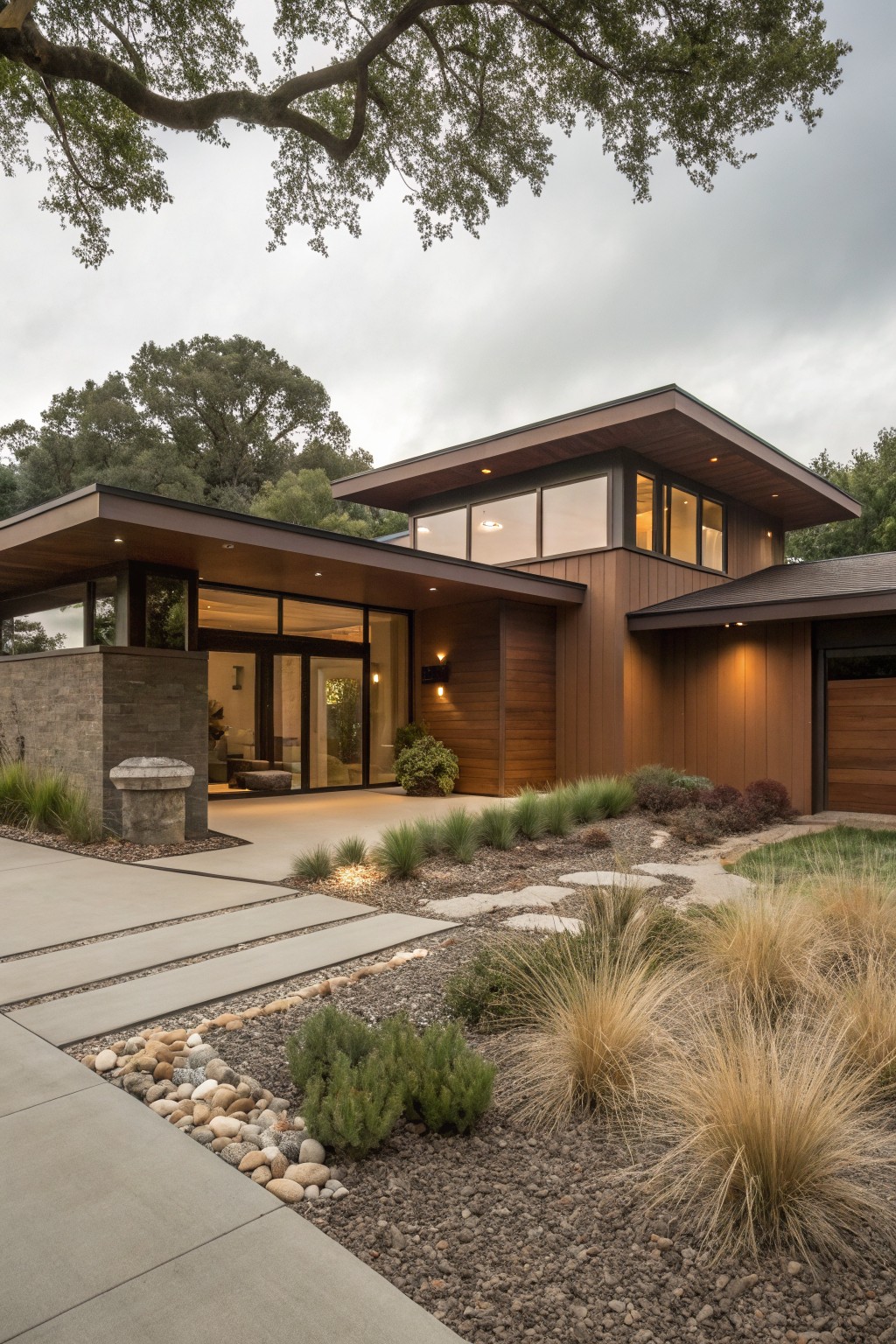
Cedar siding in rich brown tones wraps this contemporary home nicely. It covers the vertical panels and overhangs, pulling in the surrounding oaks without overpowering the clean lines. The wood adds real texture too. Paired with a stone base at the entry, it keeps things from feeling too stark.
Try this on low-slung modern houses, especially where you want to blend with nature. It suits wooded lots best. Just keep accents simple, like glass and concrete paths. Avoid busy trim that fights the wood grain.
Recommended Products

Patented PanelThermometer for precise installation True Texture finish

✅ AUTHENTIC CEDAR SHAKE LOOK – Get the beauty of freshly cut Western Red Cedar without painting, staining, oiling, or replacing damaged shakes over time

✔ THICKER 5/8" BUTT FOR ADDED DURABILITY – 18" tapersawn cedar shingles with a heavier 5/8" thickness provide improved strength, weather resistance, and longer lifespan compared to standard perfection shingles.
Warm Wood Cladding Paired with Stone Base
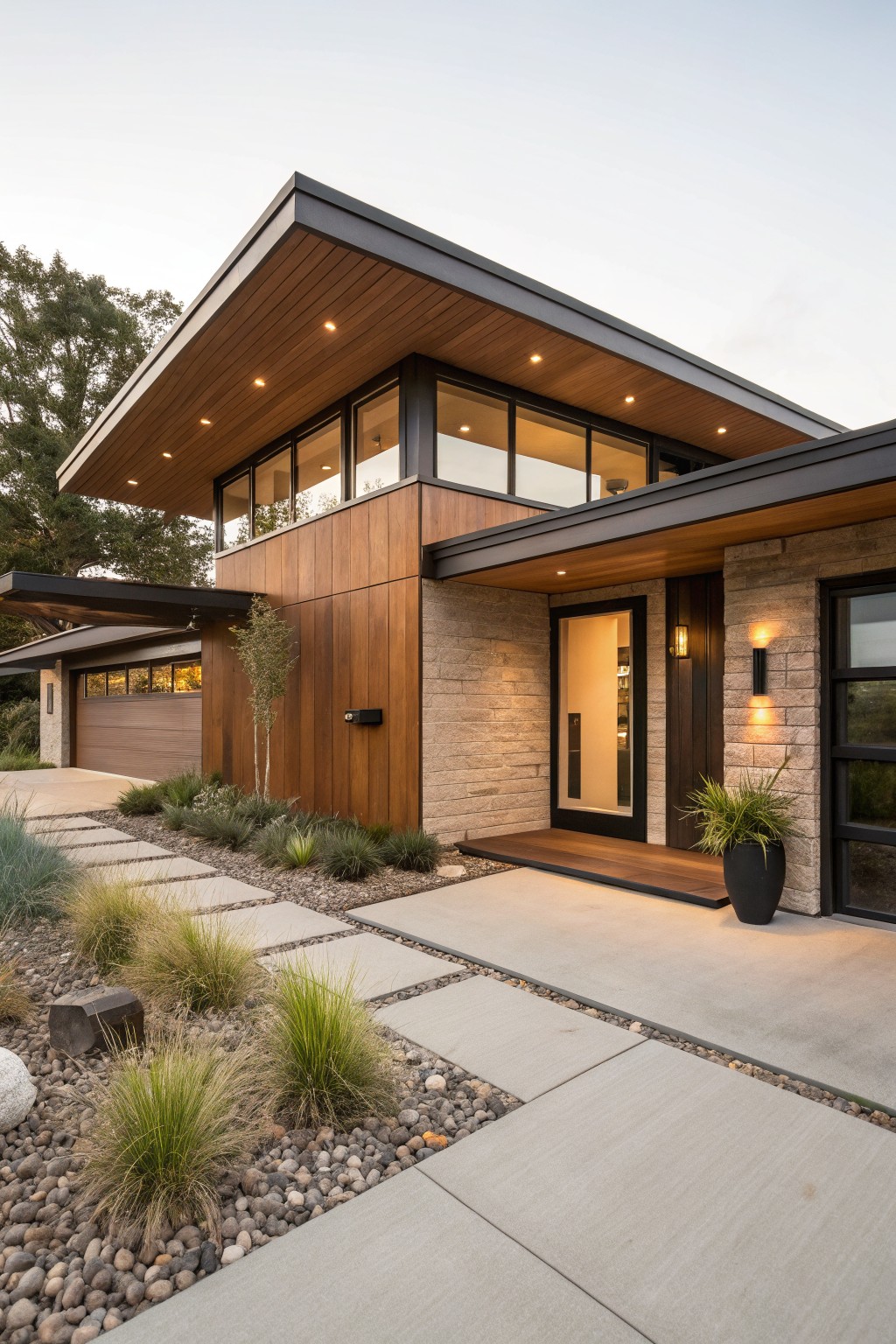
Vertical wood panels in a rich brown tone cover much of this modern house side, sitting right over a solid stone base at the entry and garage. The combo keeps things feeling balanced. Wood brings that natural warmth without going rustic. Stone anchors it all, making the place look sturdy from the street.
This setup works best on homes with clean lines, like mid-century or contemporary styles. Use it where you want curb appeal that lasts through seasons. Skip busy trim around the wood. Let simple paths and low plants lead the eye to the door. One note, wood needs regular sealing to hold color.
Recommended Products


Color matching screws

EXTREME DURABILITY & SUNPROOF – Made from top-tier vinyl, our shutter fasteners are designed to endure relentless sunlight without fading or degrading. Unlike ordinary pins that weaken over time, these fasteners preserve their strength and vibrant color even after years of outdoor use.
Wood Canopy Over Brick Entry
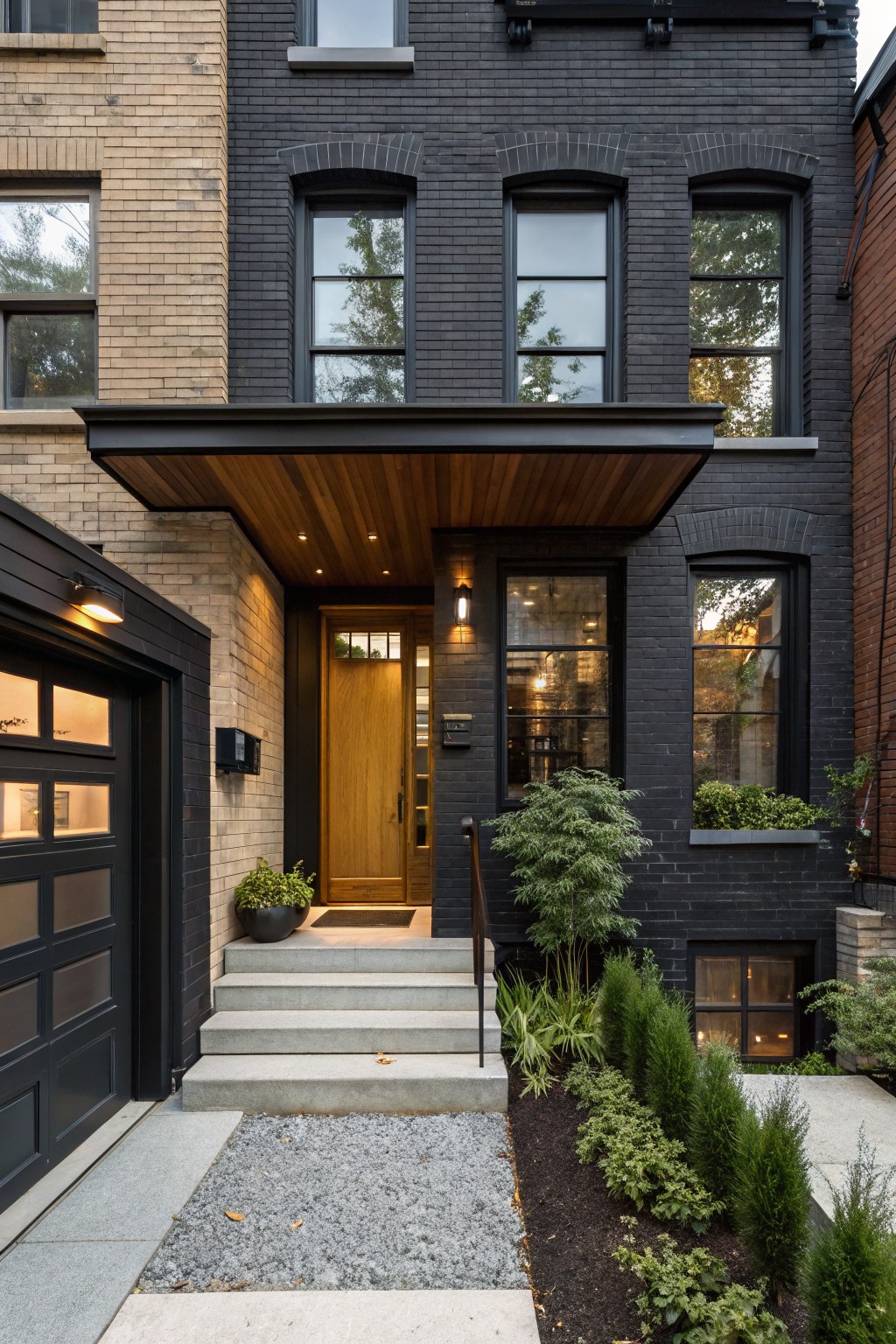
A simple wood canopy like this one adds a layer of warmth right at the front door. It sits over a sturdy wood door and pulls the eye up from the dark brick below. That mix keeps things from feeling too heavy, especially next to a lighter brick neighbor. The cedar tones bring in some natural browns that play well with brick shades.
This works best on rowhouses or urban homes where you want a modern touch without a full redo. Go for it on darker facades to soften the look. Just match the wood stain to your door for easy flow, and keep the scale right so it doesn’t overwhelm the steps.
Timber-Framed Porch in Warm Browns
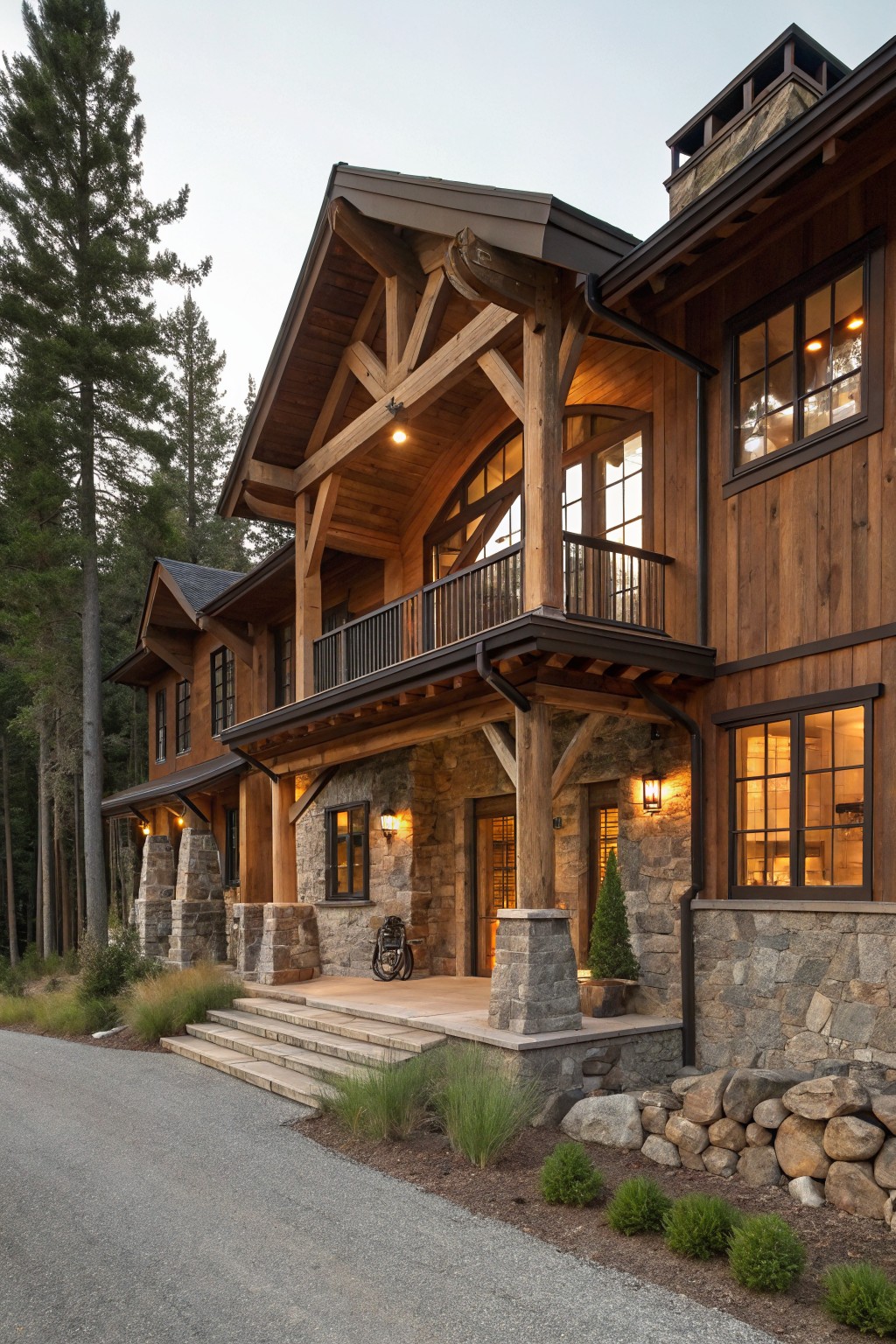
A timber-framed porch like this one takes a simple brown wood house and gives it real presence. The exposed beams catch the light just right, pairing with darker siding and those sturdy stone pillars at the base. It pulls the whole front together without much fuss, making the place look settled into its spot among the trees.
This setup works best on homes in wooded or rural areas, where the natural materials echo the surroundings. Go for rough-sawn timbers in a honeyed brown tone over the deeper siding color. Pair with local stone to avoid clashing, and keep steps wide for easy access. Skip it on flat urban lots, though. It needs some slope or trees to shine.
Warm Terracotta Stucco Exterior
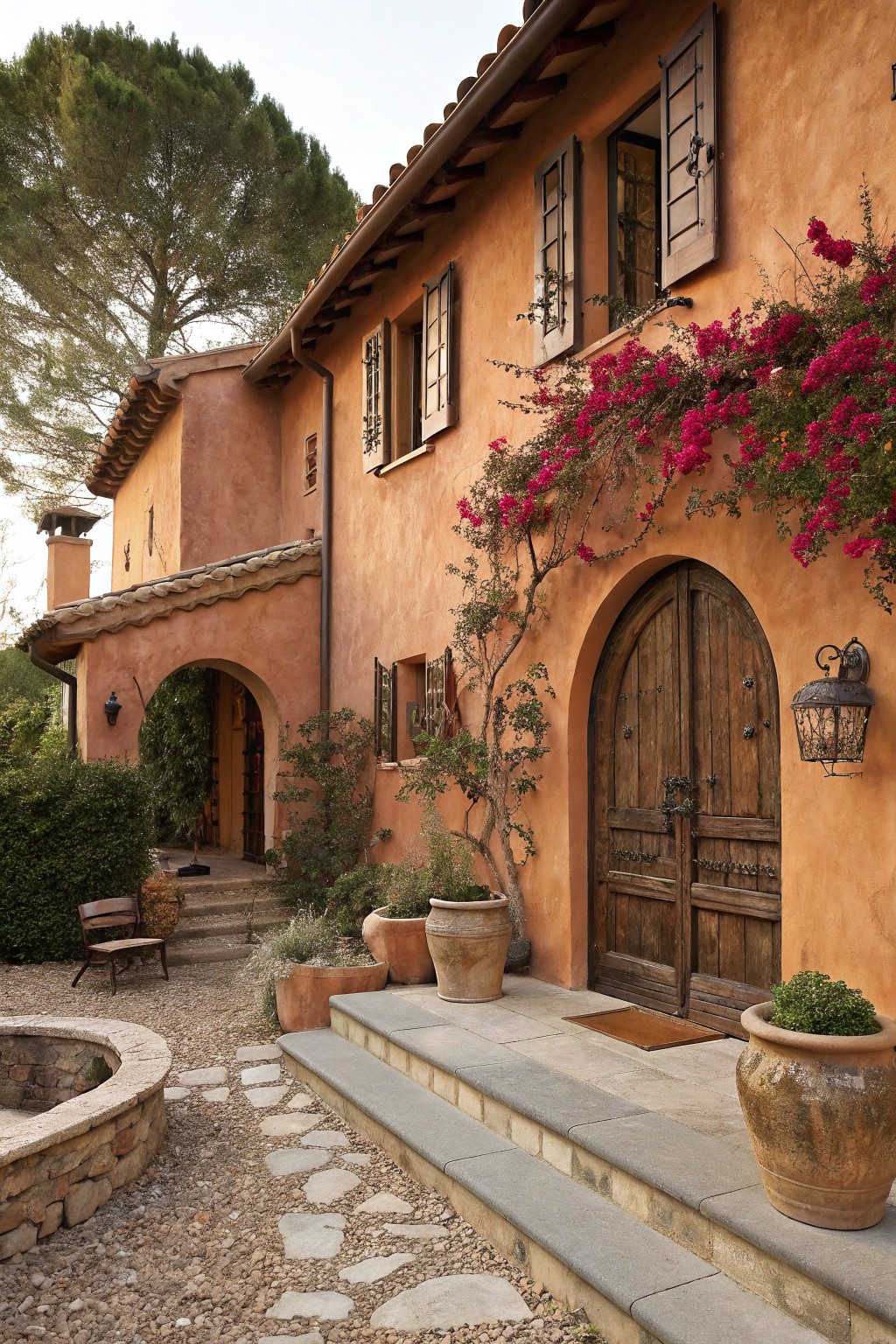
This terracotta stucco gives the house a rich, sun-baked look that’s right at home in warmer climates. The warm brown tone pulls from natural earth colors, and it pairs nicely with the heavy wooden arched door. Climbing bougainvillea adds pops of color without overdoing it… just enough to soften the walls.
Try this on a single-story home or a low-slung ranch style where you want curb appeal that feels settled in. It works best with simple wood doors and stone steps. Skip it on super modern boxes, though. Stick to clay pots and gravel paths nearby to keep things balanced.
Rustic Log Cabin Brown Exterior
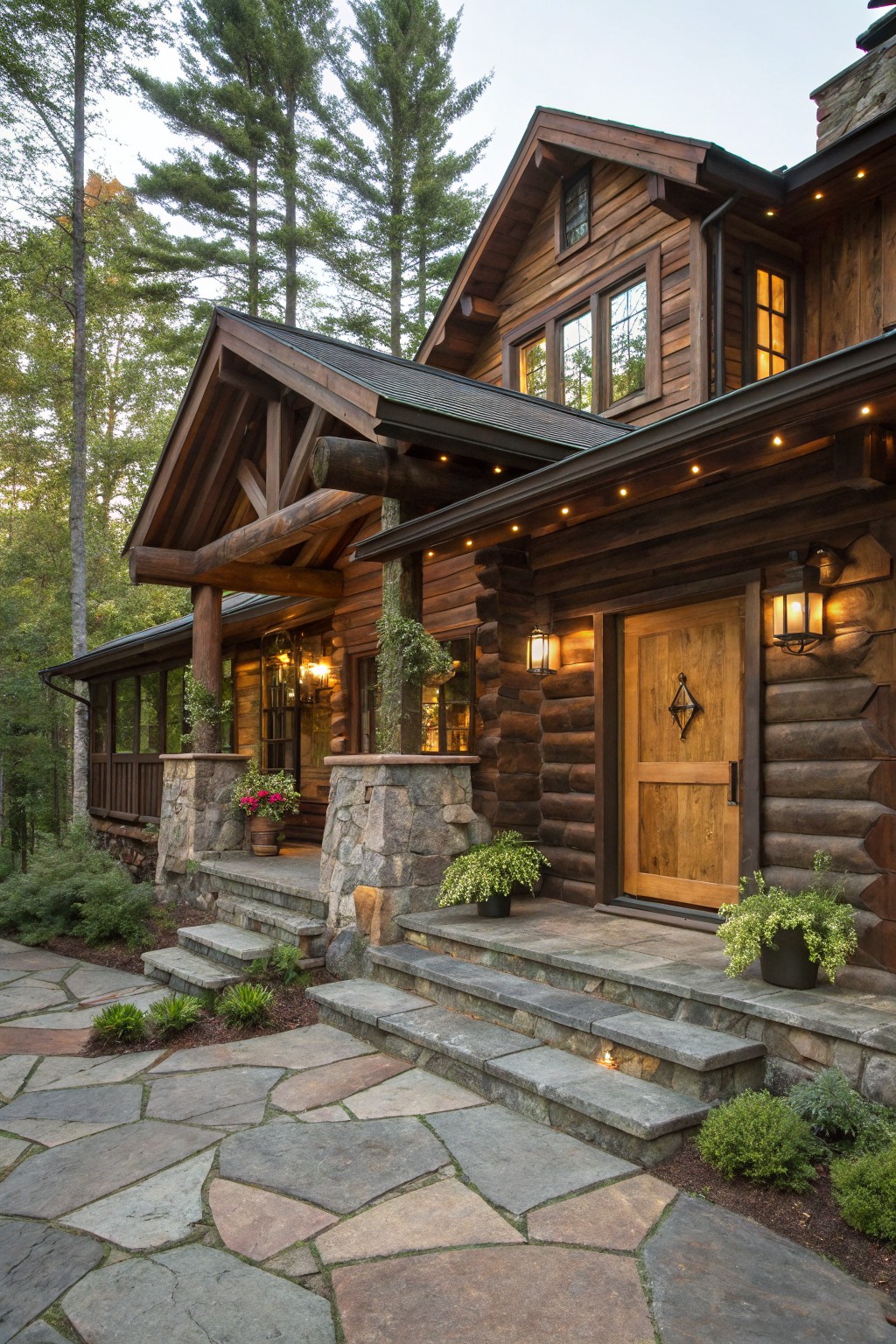
A log cabin like this one nails a rich brown exterior that feels right at home in the woods. The deep brown timber logs give the whole facade a solid, natural warmth, while the stone base keeps things from looking too heavy. Lantern lights on either side of the door pull it all together at dusk, making the entry feel welcoming without trying too hard.
This look works best on bigger homes tucked into forested spots or up on a hill. Go for hand-hewn logs in varied brown shades for that textured depth, then mix in rugged local stone around the foundation and porch. Skip glossy finishes. Add simple lanterns for light. It suits cabins or retreats where you want cozy over flashy.
Half-Timbered Brown Exterior with Beige Stucco
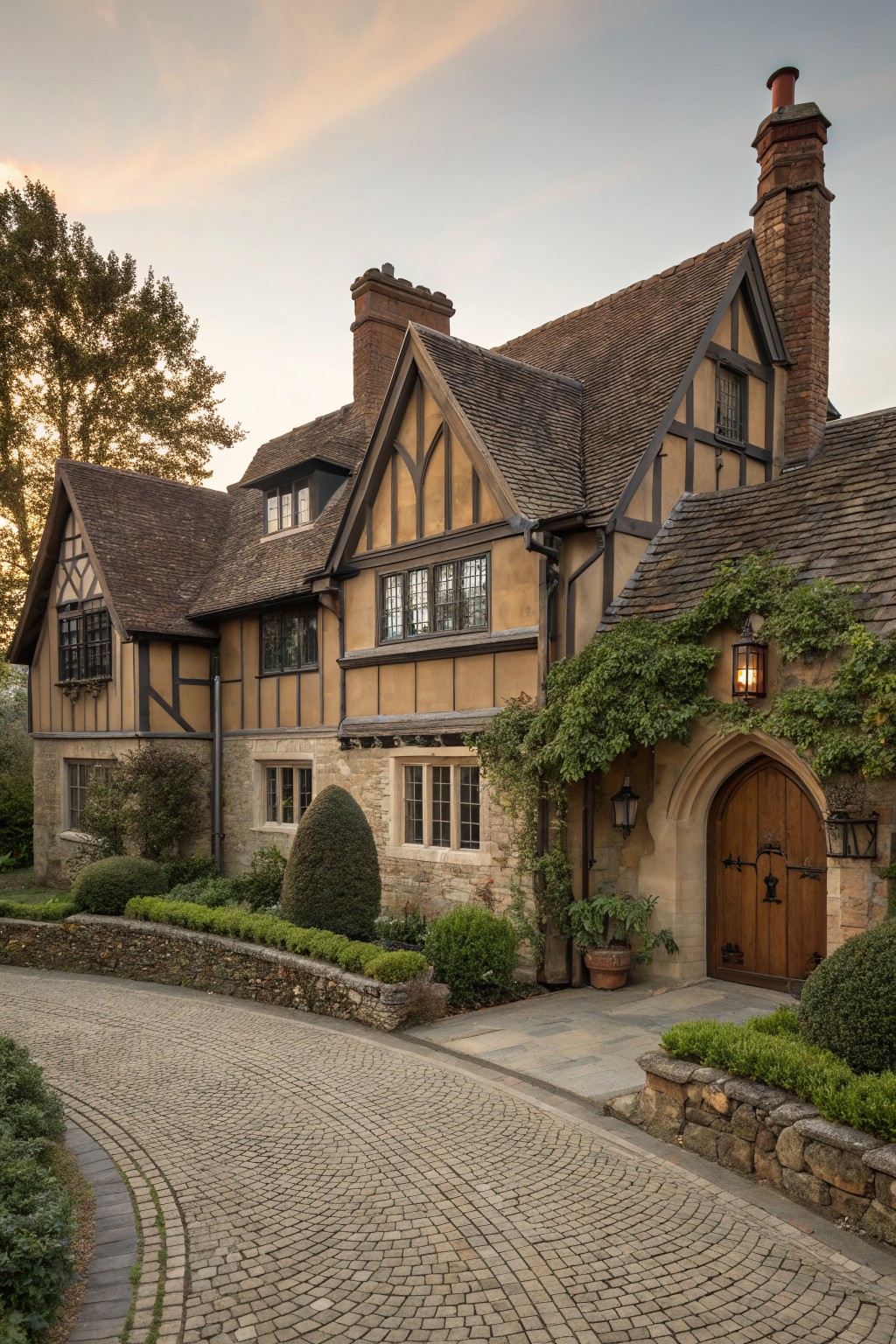
Half-timbered designs like this one use dark brown timbers over a warm beige stucco base. It gives the house a classic English cottage feel without going overboard. The timbers stand out against the softer stucco. Brick chimneys and stone accents add some red-brown depth. That mix keeps things rich but settled.
This works well on larger homes or ones with steep roofs. Try it where you want curb appeal that lasts through seasons. Pair the stucco with low boxwoods and climbing vines near the entry. Skip bright trim colors. Let the browns carry the look.
Tan Stucco Paired with Terracotta Roof
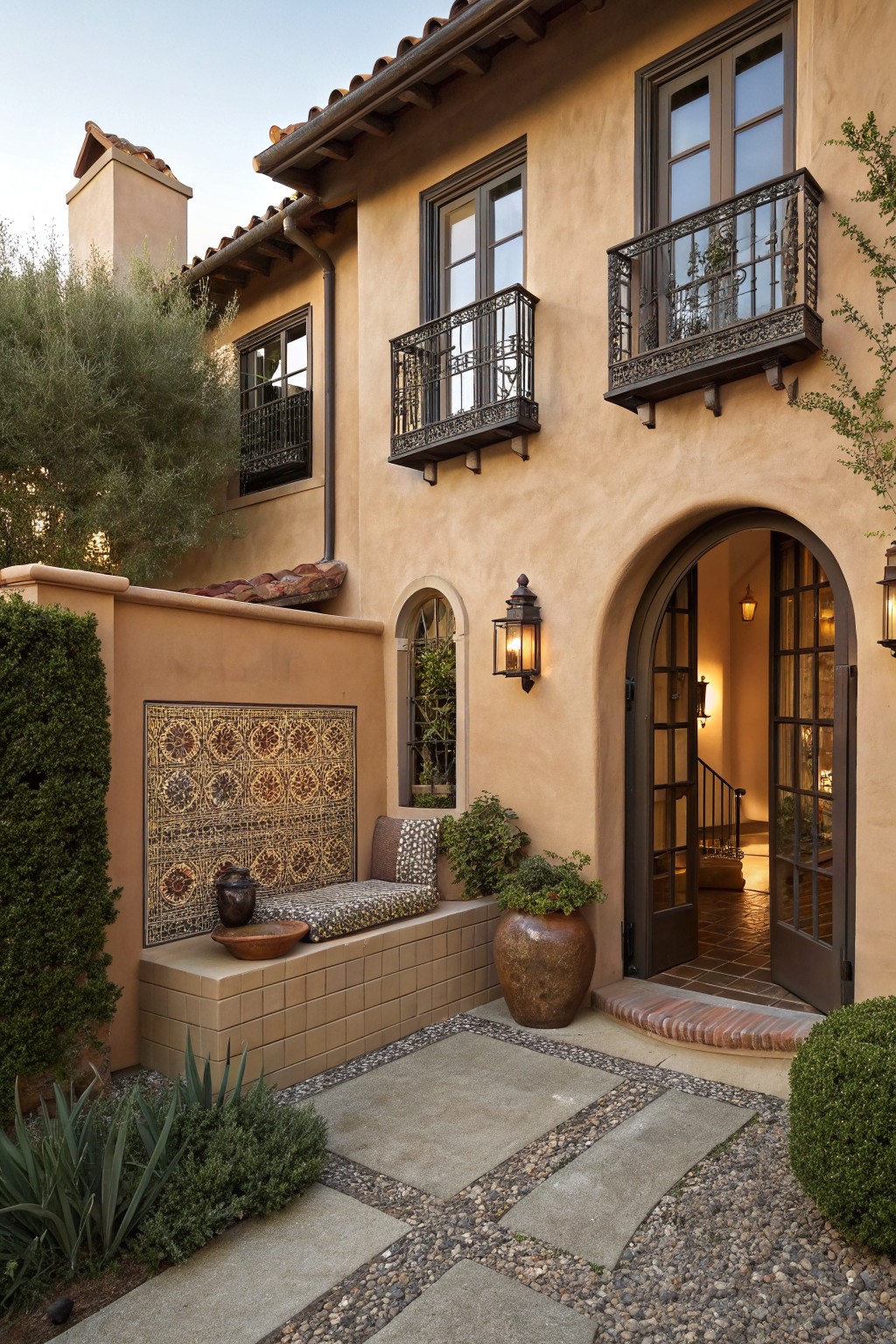
A soft tan stucco covers the walls here, working alongside those classic curved terracotta roof tiles. The brown tones stay warm and even, nothing too stark or overpowering. It pulls the house together in a way that looks settled and right at home.
This setup fits older-style homes or ones aiming for a bit of Spanish charm. Use darker wood on doors and windows to frame things up, and tuck in some plants near the entry. Keep an eye on the stucco shade, though. Too much yellow can throw off the balance.
Vertical Brown Wood Siding
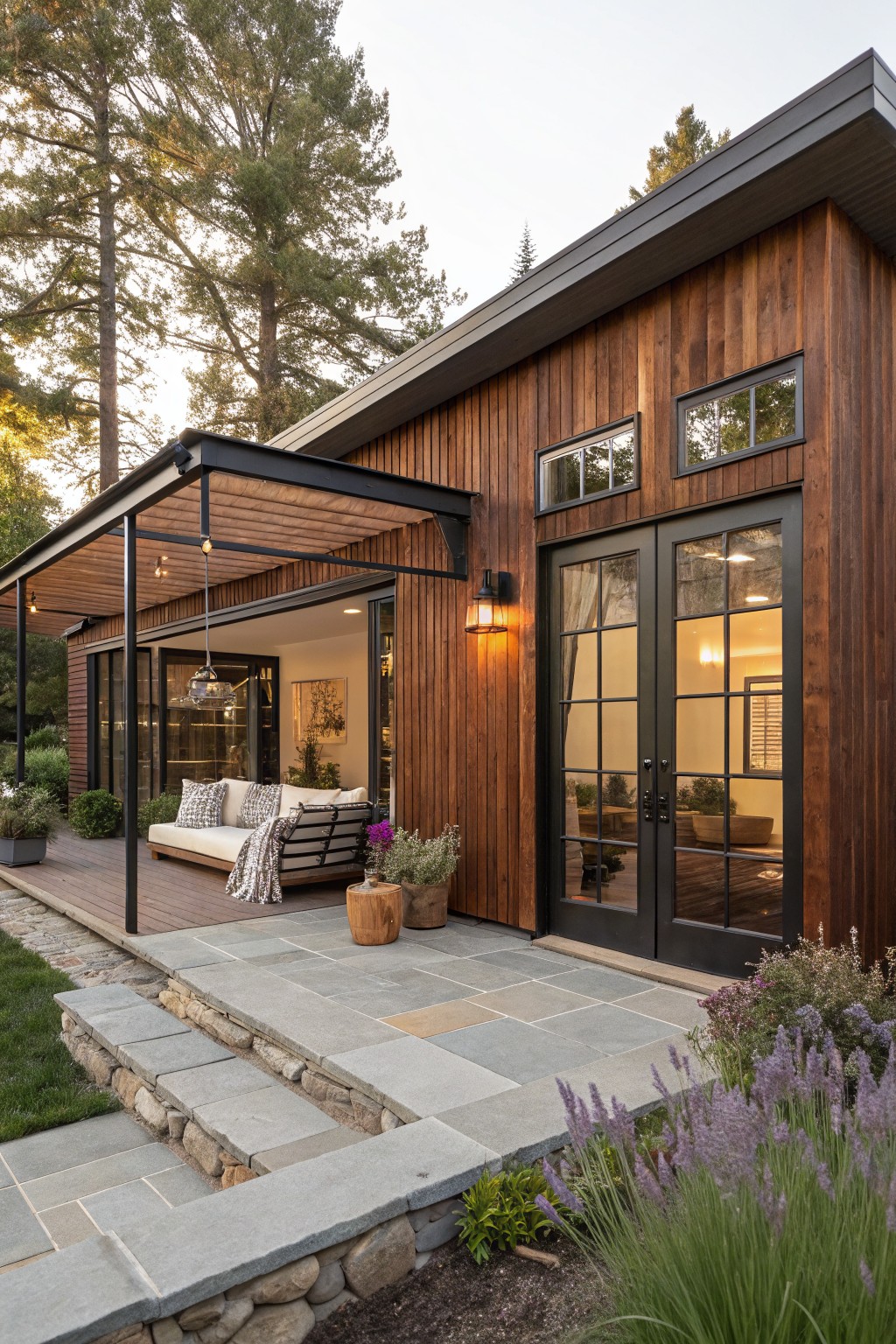
Vertical brown wood siding like this turns a simple house into something that feels at home in the woods. The planks stack up neatly along the walls, giving a tall, sturdy look that pairs well with black window frames and a steel overhang. It keeps things warm but modern, without too much fuss.
This works best on homes tucked into trees or hillsides, where the brown tones echo the surroundings. Go for cedar or similar that’s sealed against weather. Add a covered deck out front to make the siding shine even more. Skip it on super flat lots, though. It needs some slope or planting nearby to feel right.
Stone and Wood Mix in Browns
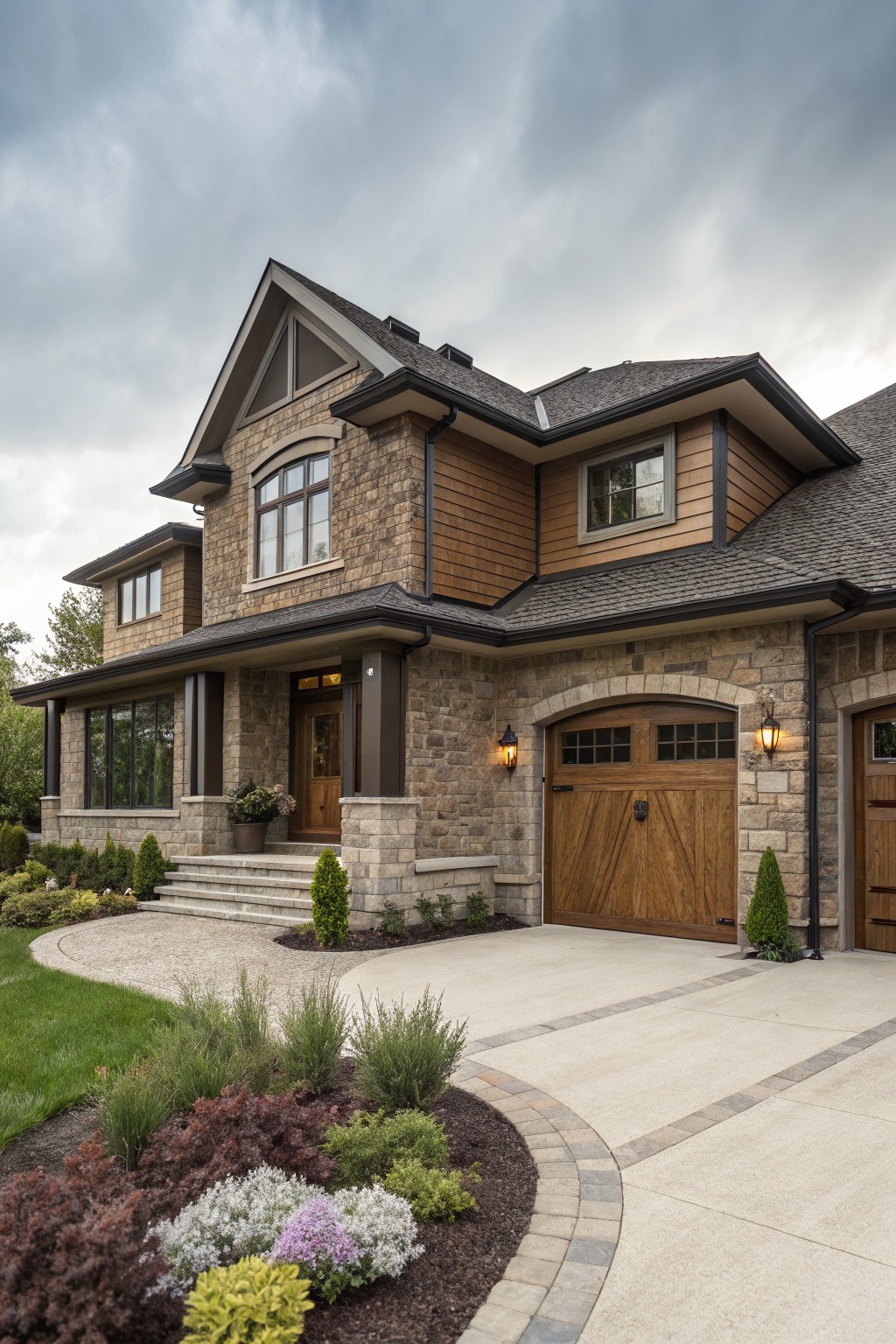
Houses like this one pull off a nice balance by using brown stone for the base and lower walls, then switching to wood siding and shakes higher up. The garage doors in matching wood tones tie everything in without overwhelming the look. It feels sturdy yet approachable, especially with the dark roof overhead.
This setup suits traditional or craftsman-style homes on suburban lots. Go for it if you want low-maintenance curb appeal that ages well outdoors. Pair with simple plantings along the front… keeps the focus on the materials.
Dark Wood Cladding on a Modern Facade
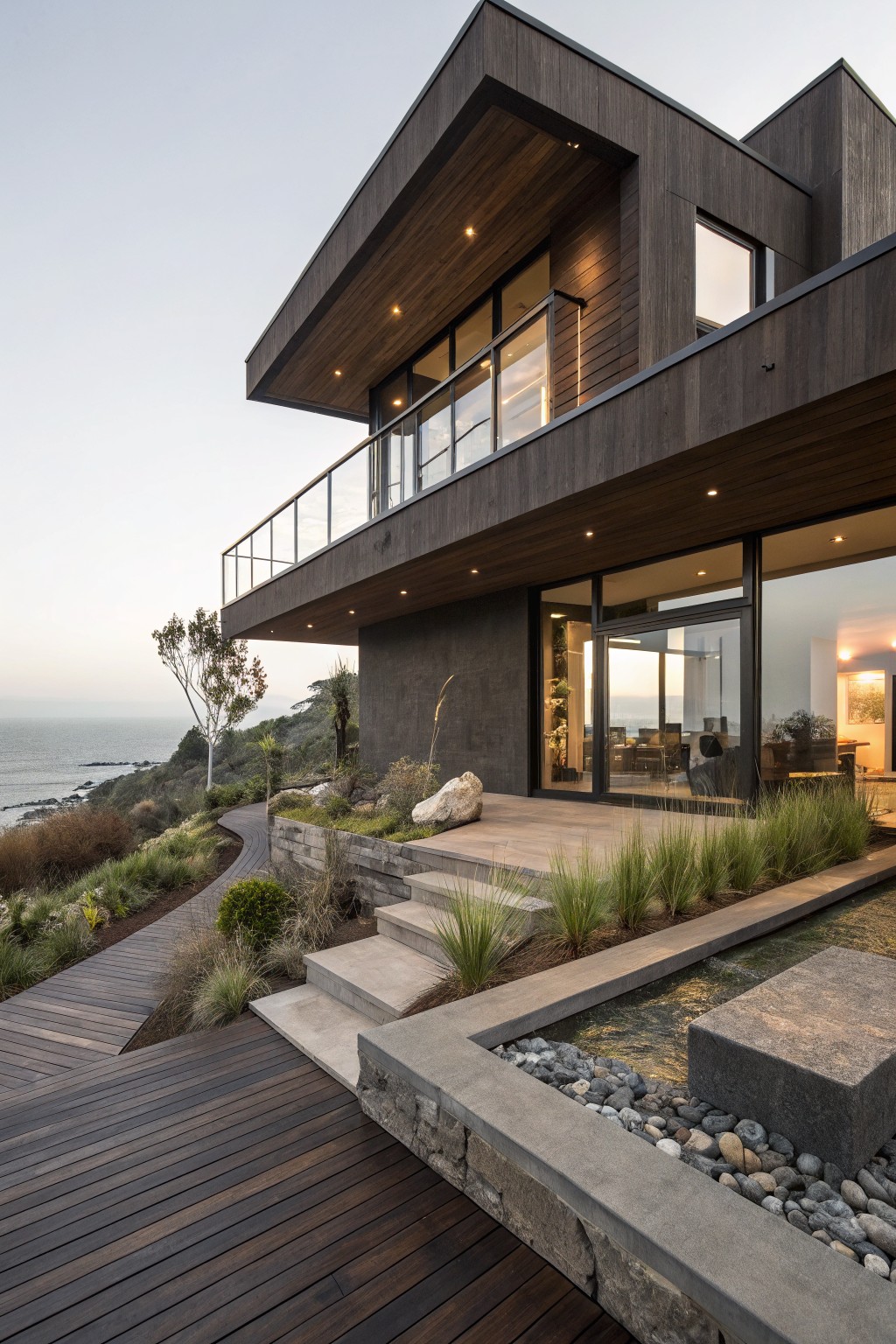
Dark wood siding like this gives a house real presence without overpowering the site. Here it’s a deep brown that echoes the nearby trees and coastal scrub, pulling the modern boxy shape right into the landscape. Those big glass walls stay crisp against it, and the wood deck below ties everything together smoothly.
This works best on homes with views, like hillsides or waterfront spots, where you want some warmth against all that glass and concrete. Go for cedar or similar that’s stained dark for fade resistance. Skip busy details around it… let the wood carry the color story.
Warm Brown Shingles with White Trim
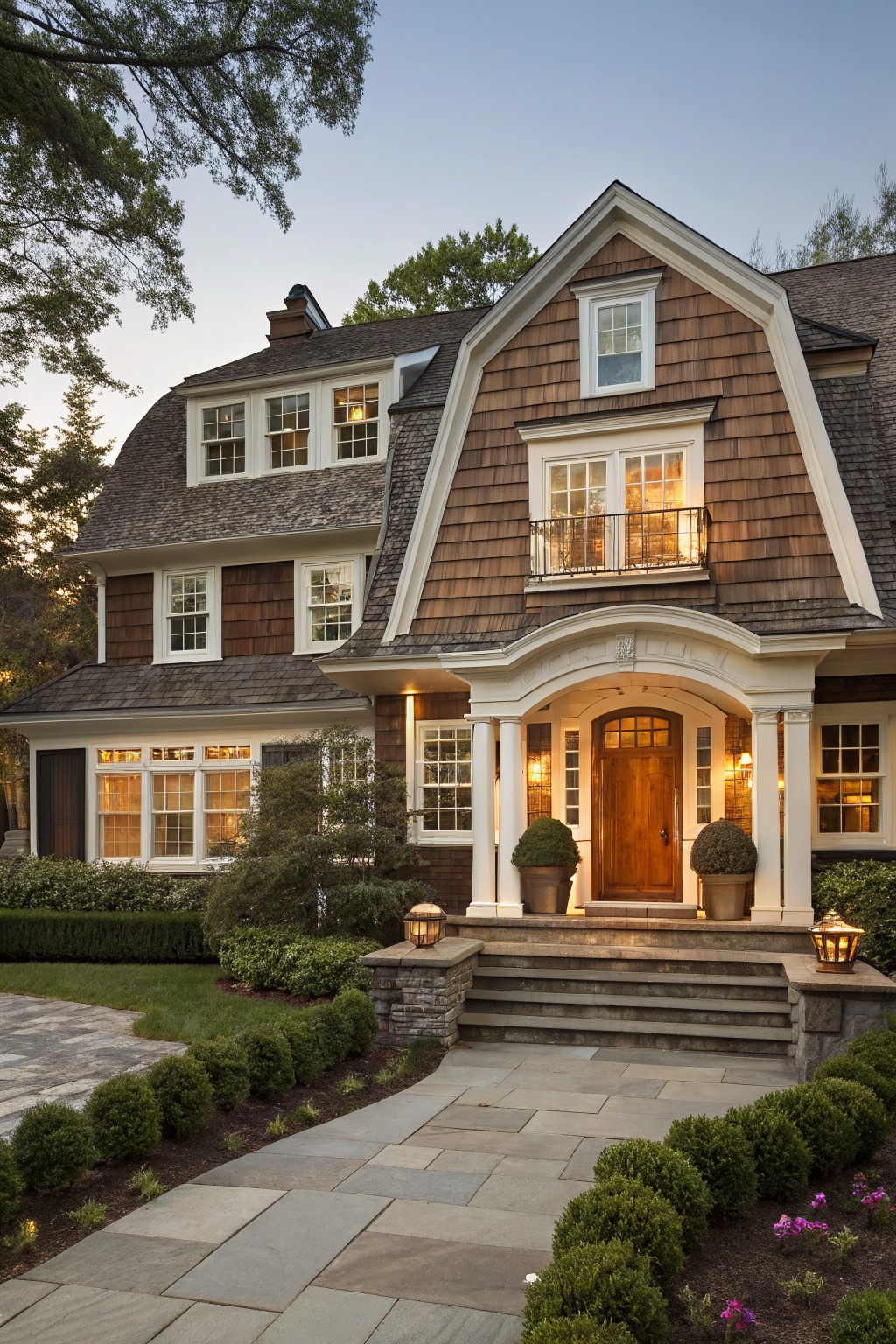
Shingle siding in a warm brown tone gives this house a cozy, timeless feel that fits right into neighborhoods with older homes. The white trim around the windows and doors keeps things crisp and clean, so the brown doesn’t overwhelm. Stone accents on the entry columns add just enough weight without pulling focus from the siding itself.
This setup works best on homes with gabled roofs or dormers, where the shingles can wrap around naturally. Pair it with lanterns like these for evenings, and keep landscaping simple with boxwoods along the walk. Steer clear of too much color elsewhere, or it muddies the balance.
Half-Timbered Cottage Facades
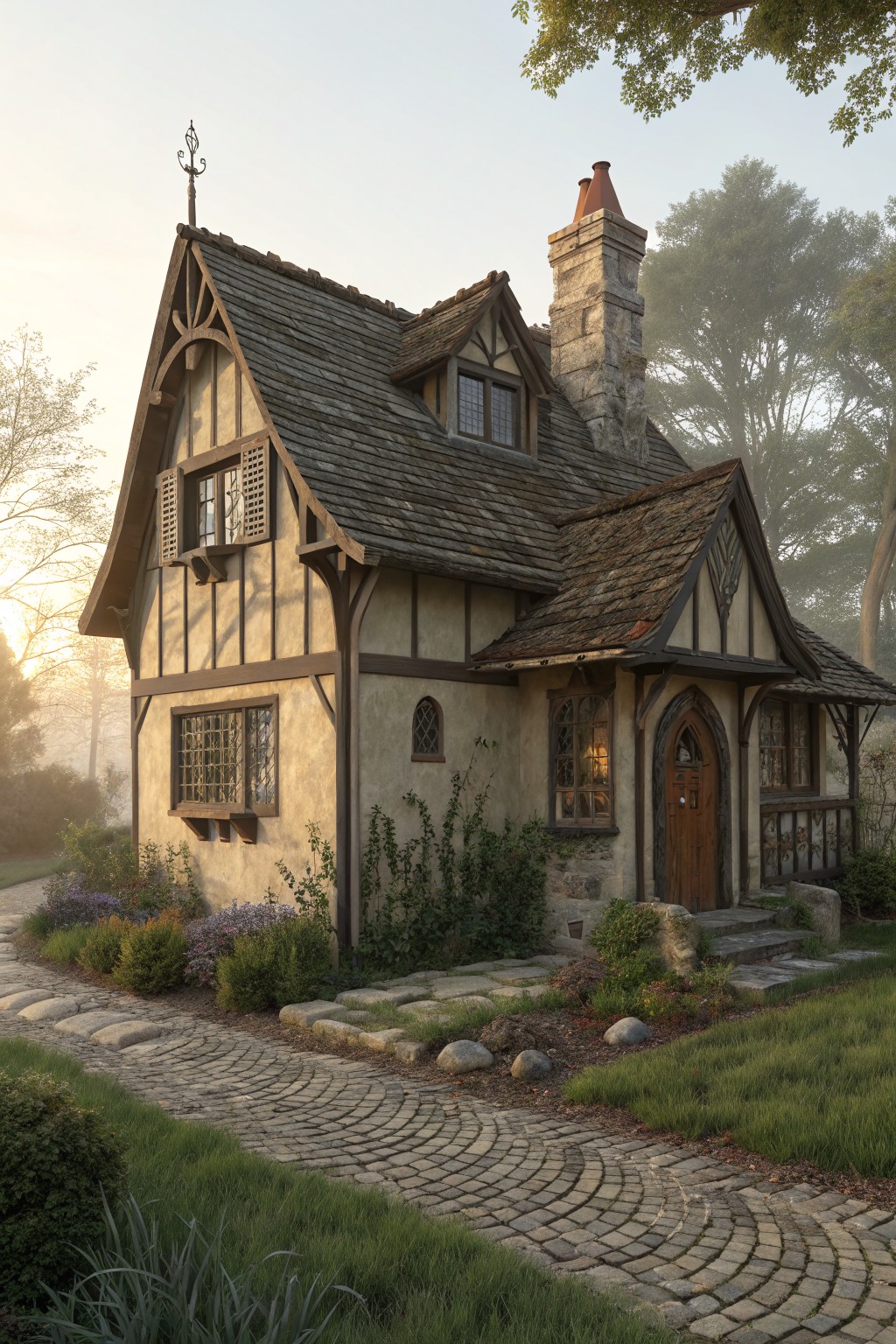
Dark timber framing over light plaster walls is a solid choice for brown exteriors. It builds that classic cottage look without much fuss. The browns stay balanced. Lighter walls keep things from feeling too dark. Dark beams add structure and warmth. Stone on the chimney ties it together nicely.
Try this on ranch homes or bungalows wanting more character. It suits rural spots or tree-lined streets best. Stone base or path stones help ground it. Skip it on flat modern designs. Might overwhelm small lots if timbers get too bold.
Cedar Siding over Stone Base
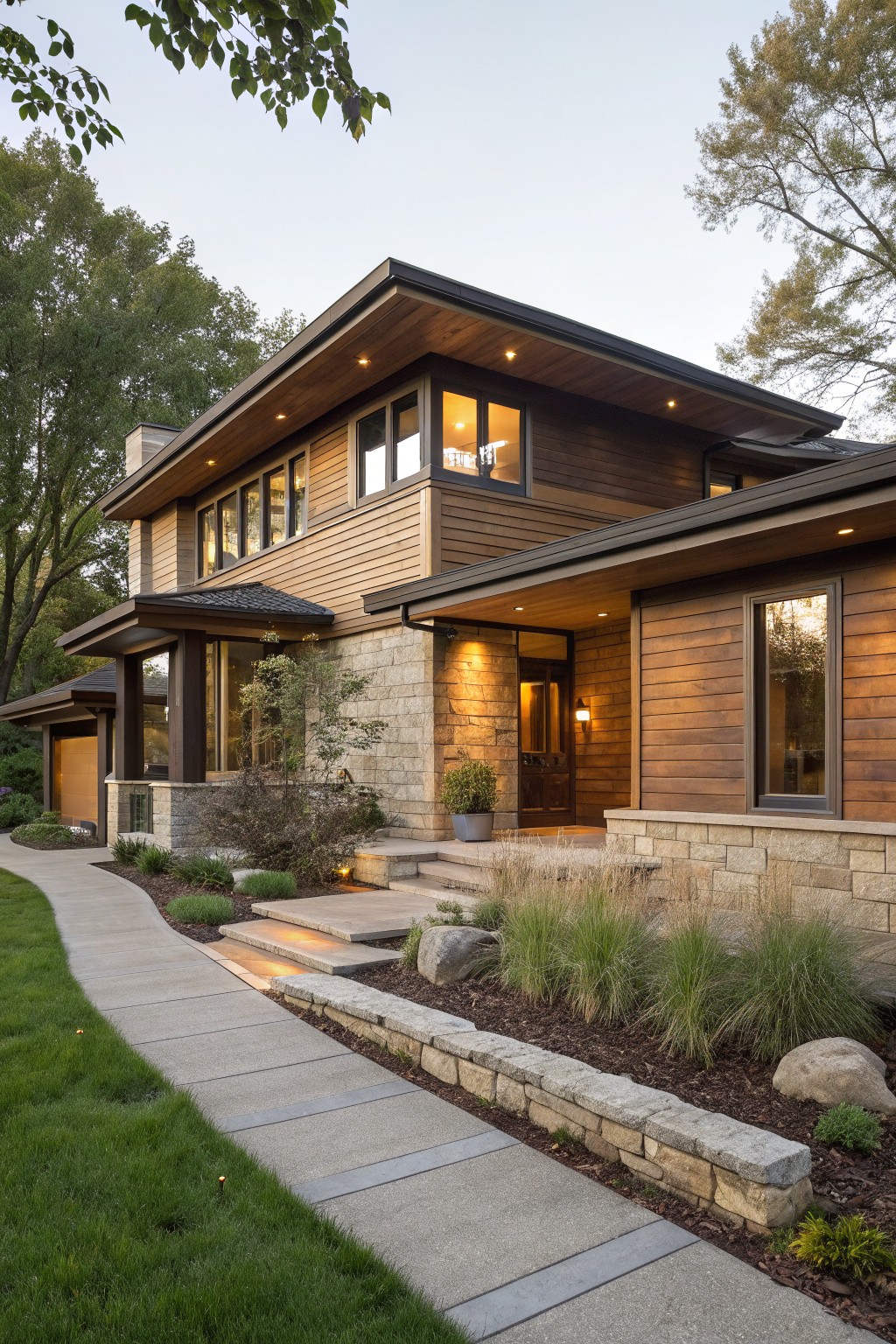
One look I keep coming back to is cedar siding laid over a solid stone base. The warm brown tones of the horizontal cedar planks sit right on top of that rugged limestone, giving the whole house a grounded feel without looking too heavy. It pulls together modern lines with a bit of natural texture, and those brown shades stay rich through different lights.
This setup works great on homes with clean rooflines and big windows, like craftsman or contemporary styles in wooded spots. Go for rough-cut stone at the base to echo the wood grain up top, but keep the cedar untreated or lightly stained for that soft brown glow. It holds up well in cooler climates too, just seal everything against moisture.
Warm Tan Stucco with Terracotta Tile Steps
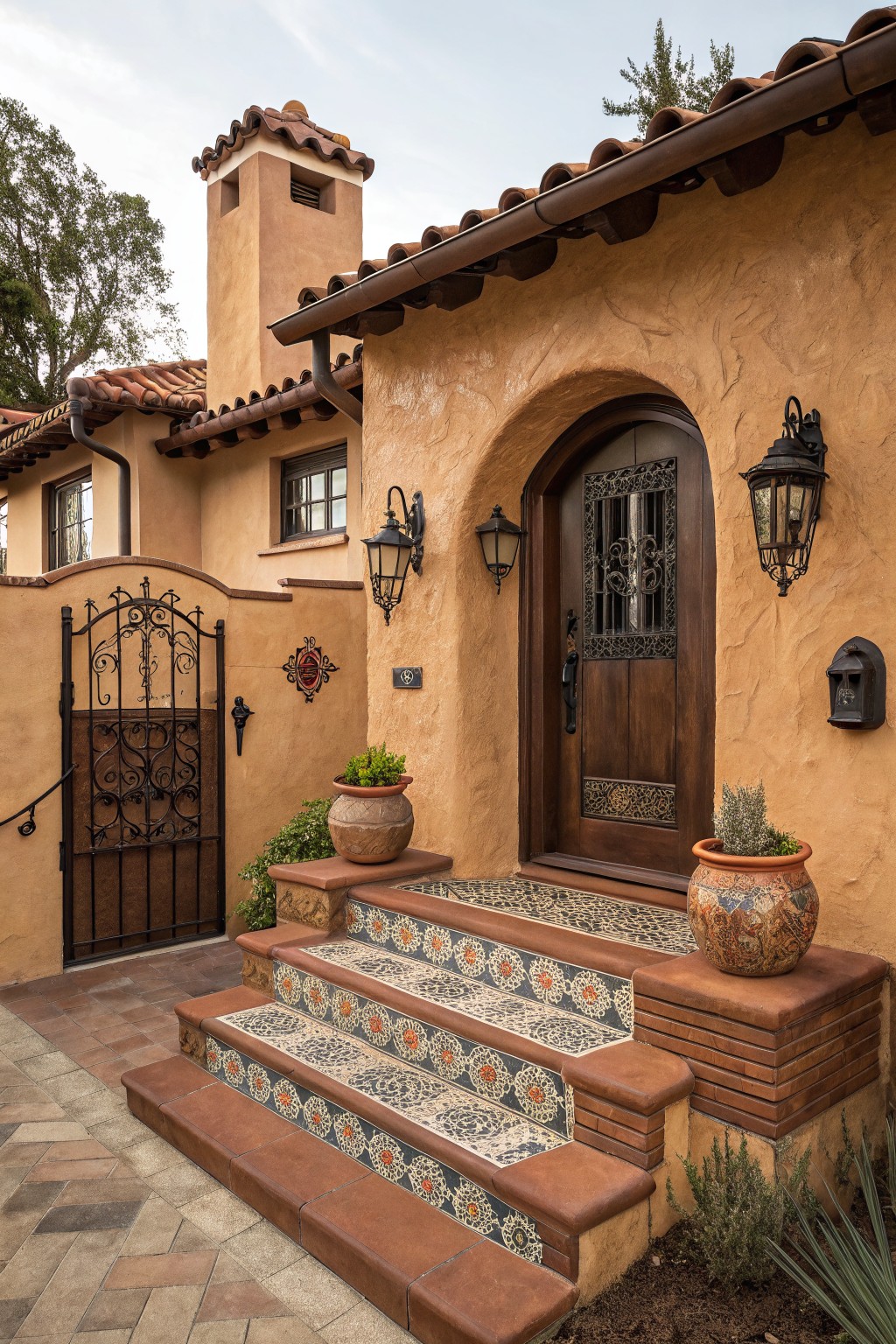
Warm tan stucco gives this house a smooth, earthy base that feels right at home in a dry climate. The terracotta roof tiles pick up that brown tone nicely, while the colorful tiles on the entry steps bring in pattern and a bit of life. Black wrought iron on the door and gate adds clean contrast without pulling focus from the overall calm brown palette.
This setup suits ranch-style or Spanish-inspired homes where you want curb appeal that looks settled in, not flashy. Use it on a front entry like this, with simple potted plants nearby. Just keep other accents minimal so the tans stay dominant and the look feels balanced.
Cedar Siding for Beachfront Homes
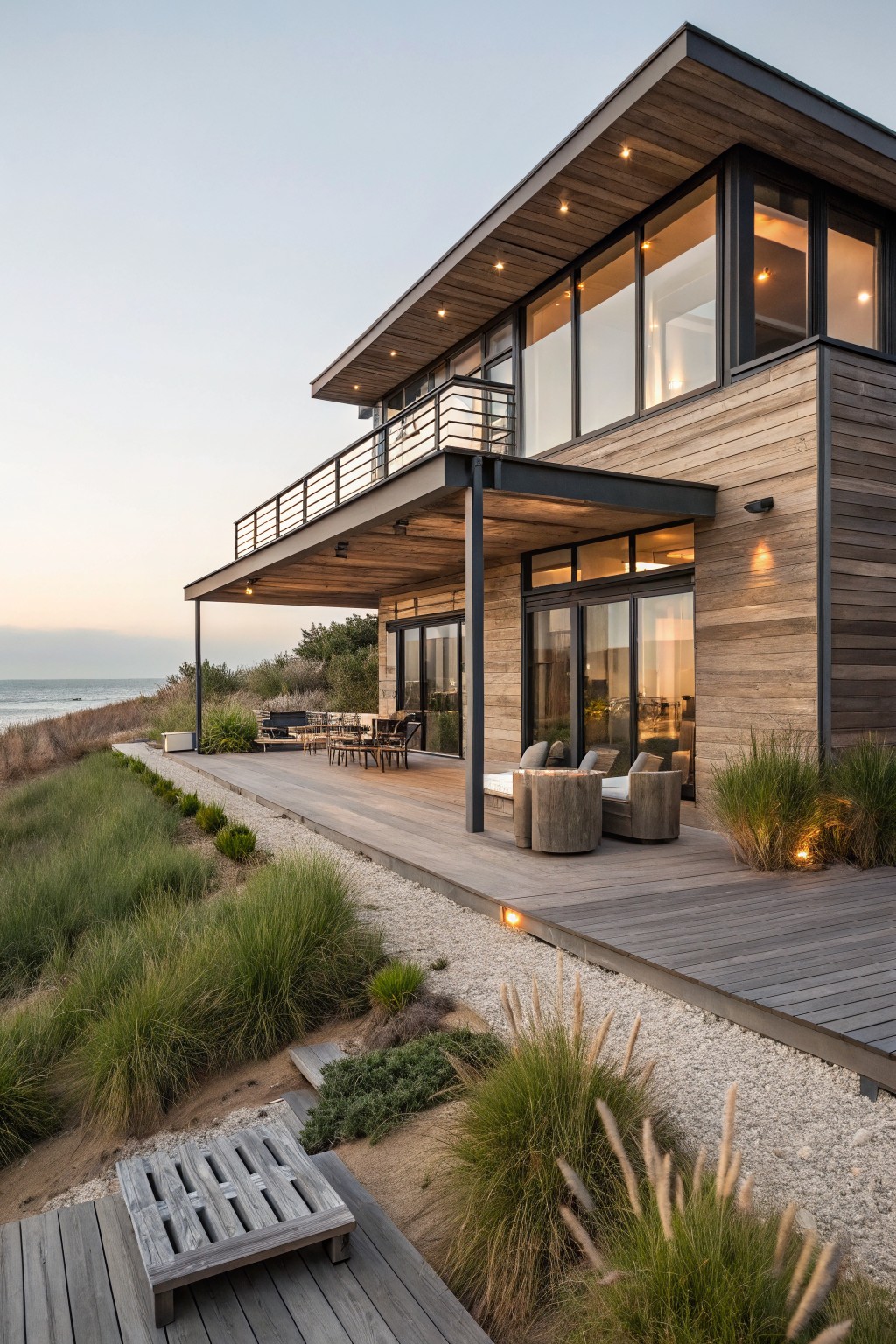
Cedar siding works well here because it picks up the soft browns in the sand and dune grasses. The wood’s natural grain adds texture without overpowering the clean lines of the house. Large glass walls let in the ocean view, and the warm planks make the whole facade feel settled into the landscape.
You can pull this off on homes near water or in wooded spots. Pair the cedar with black metal frames for contrast that keeps things sharp. Just plan for sealing the wood now and then to hold the color.
Warm Terracotta Stucco on a Courtyard Home
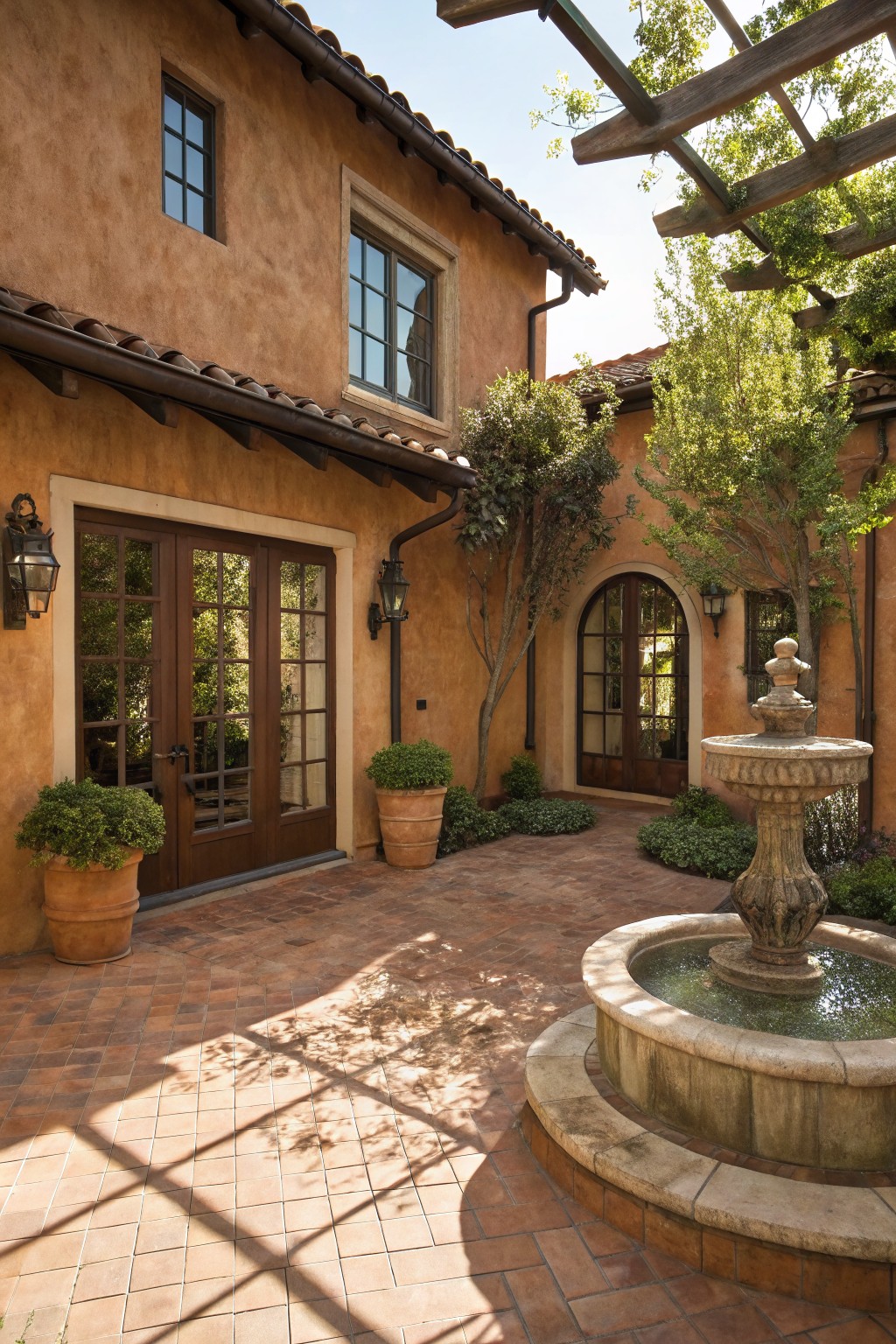
Warm terracotta stucco gives this house a cozy, lived-in feel that pulls you right into the space. Paired with the matching tile roof and brick paver patio, it creates a full earthy brown scheme without any sharp contrasts. The soft brown walls blend nicely with the trees and stone fountain in the center, making the whole courtyard look settled and natural.
This setup works best on homes in sunny spots where you want that Mediterranean vibe without too much upkeep. Stick to similar tones for pots and paths to keep it cohesive, and add an arched door or French windows for easy flow between inside and out. It suits ranch-style or Spanish Revival houses, but watch the scale, the courtyard keeps it from feeling too boxy.
Frequently Asked Questions
Q: Does a brown exterior hide dirt and weathering well?
A: Brown tones mask dust, pollen, and mildew way better than whites or pastels. You end up pressure washing just once or twice a year instead of constantly scrubbing.
Q: How do I pick trim that pops against brown siding?
A: Go for crisp white or soft cream to keep it clean and timeless. They let the brown shine without stealing the show.
Q: What if my roof is gray—can it still work with brown?
A: Gray roofs pair perfectly with earthy browns; think weathered cedar vibes. Add black shutters to tie it all together smoothly.
Q: Should I test brown samples on my actual house?
A: Paint big swatches on different sides and watch them through the day…lighting changes everything. Slap them up and live with them for a week before deciding.
