

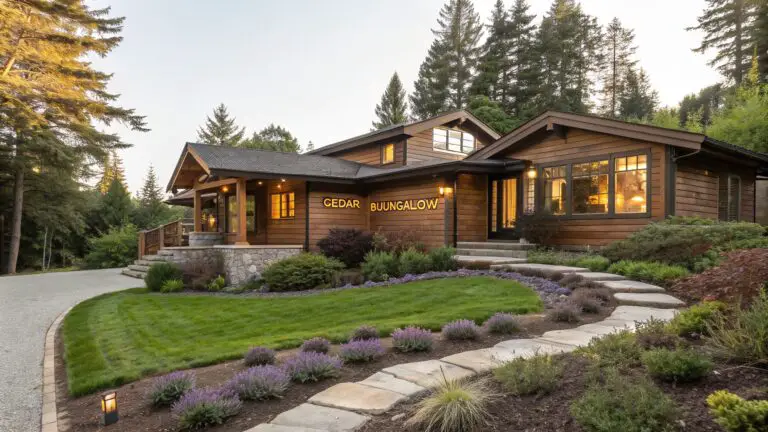
When I first started working on the yard around our brown-sided house, I realized how much the landscaping either pulls the whole exterior together or throws it off balance.
The right plantings and hardscaping frame that rich brown tone so it reads as grounded and intentional from the street.
People usually spot the pathways and edging first, since they guide you right to the front door without overwhelming the facade.
A few layered borders with evergreens and perennials can change how the house sits in its plot over the seasons.
I’ve saved a couple of these setups to adapt for spots where low upkeep meets real curb appeal.
Natural Stone Path to the Brick Entry
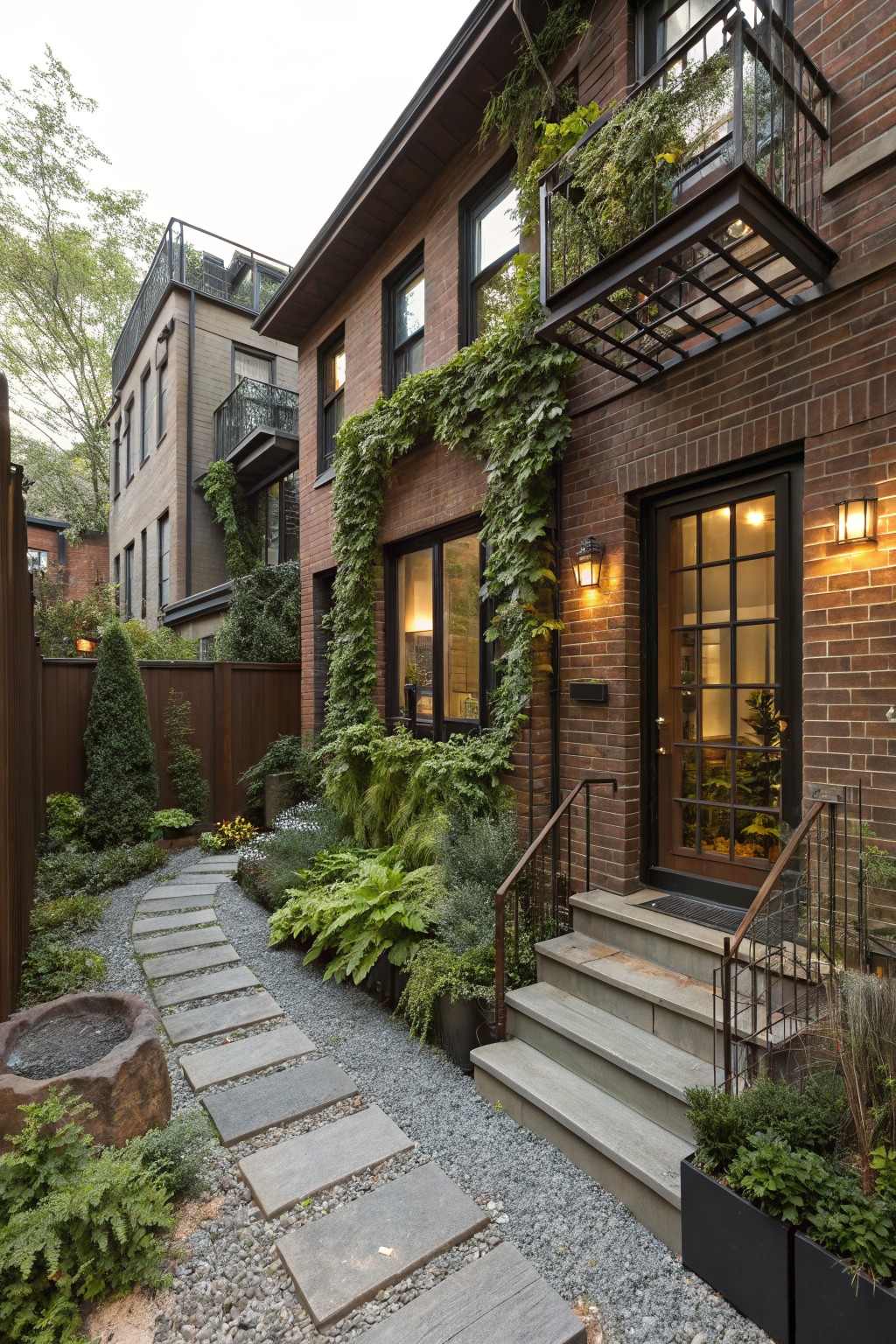
A gravel bed with wide stone slabs makes a relaxed path right up to the door. Lush ferns and ivies edge it close, pulling your eye along without feeling too fussy. On this brown brick house, it cuts the hard lines and blends the yard into the home.
Try it where space is tight, like a side approach or small front lot. Pick flat stones that fit your boot, add gravel for drainage, and plant low stuff that won’t flop over the path. Keeps mud off and guests on track.
Recommended Products

【Natural River Stone】Our stepping stones, made from river rocks, are naturally stunning. Each stone, crafted from genuine river stones, retains its natural texture to highlight its intrinsic beauty. With their unique natural colors, they can create an eye-catching garden path for your patio.

Easy DIY Landscape Upgrade: Create garden paths, backyard walkways, patio access, and outdoor play areas with lightweight Redu-material stepping stones that install quickly without digging or tools.

Winding Stone Steps for Sloped Entries
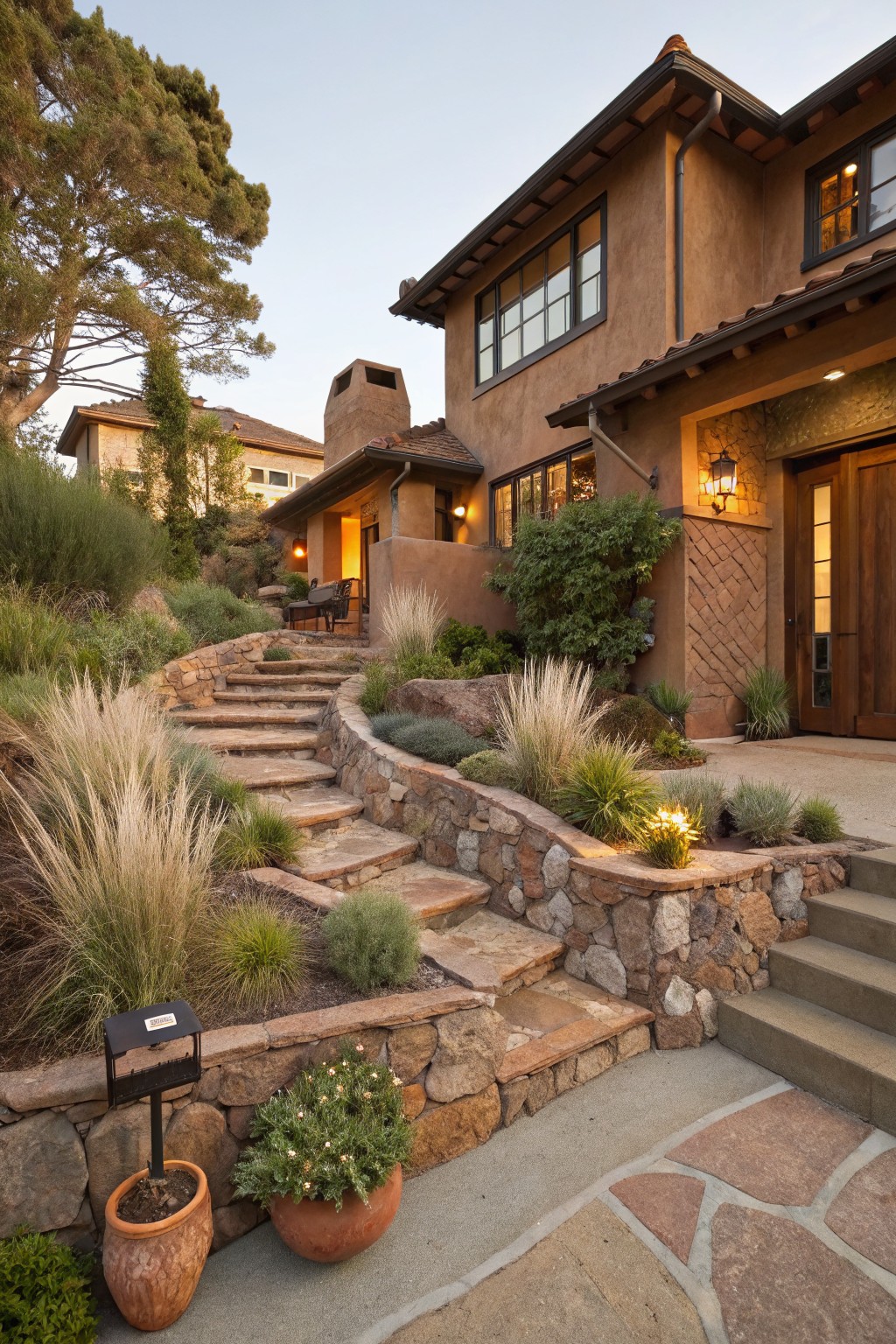
A winding stone staircase softens the climb on a hillside lot. Here, broad steps curve up toward the door, edged by low retaining walls planted with tall ornamental grasses and small shrubs. The earthy stone picks up the brown stucco house tones, making the whole approach feel connected and not so steep.
This setup suits dry or Mediterranean-style yards where you want low-water plants that sway in the breeze. Use it leading to your main entry, especially if the slope is tricky. Local flagstone and natives like feather grass keep upkeep simple. Just make sure the steps are wide enough for comfortable walking.
Stone Stepping Path Through Dune Grasses
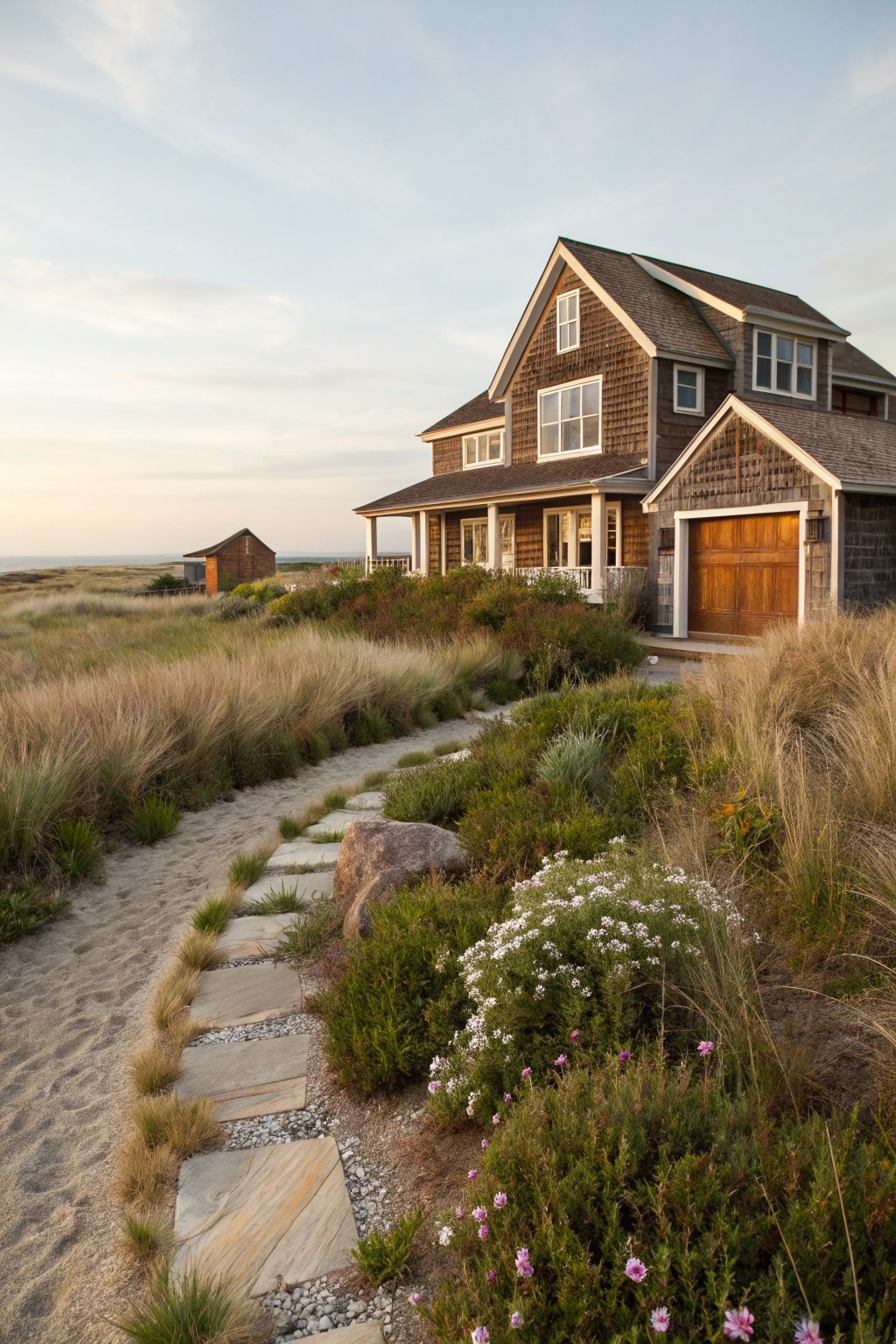
One simple way to connect a brown shingle house to its surroundings is a path made from large, irregular stone steps set right into the sand and grass. It looks natural, like it grew there with the beach dunes. The tall grasses on both sides frame the house without hiding it, and the stones give just enough structure to guide you up to the door.
This works best on coastal lots or open yards where you want low upkeep. Use native plants like sea grass or beach daisies so it stays healthy without much watering. Skip straight lines. Let the path curve a bit around rocks or plant clumps. It suits casual beach homes, keeps mud off your feet, and makes the walk to the house feel easy.
Symmetrical Boxwood Path to the Entry
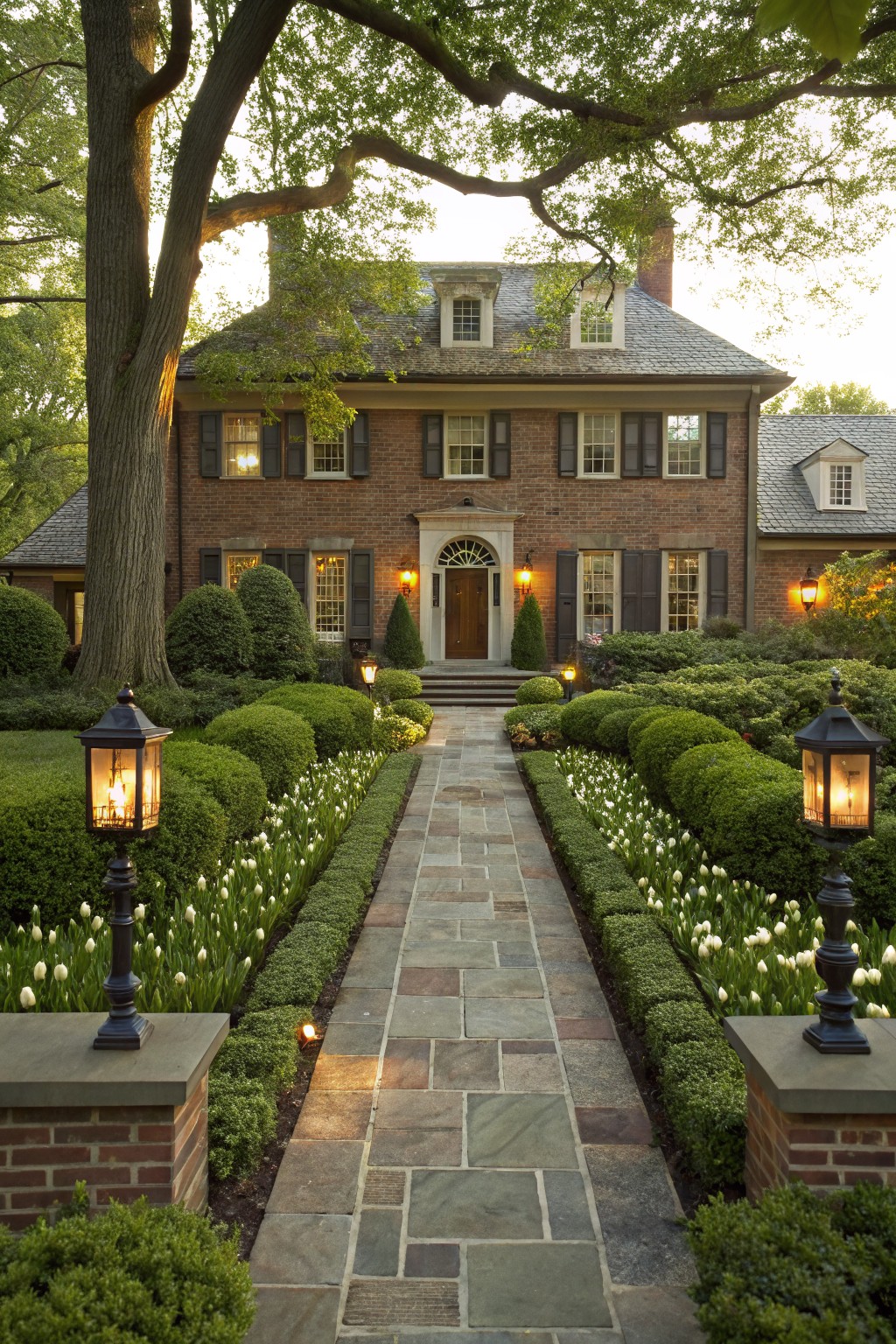
A simple stone pathway like this one runs straight from the street to the front door. It’s edged with neat rows of clipped boxwoods and beds of white tulips. This setup gives a traditional brick house real polish without much fuss. The symmetry pulls your eye right to the entry. And those lanterns on either end add a soft glow at dusk.
You can pull this off on most any front yard with decent sun. Boxwoods stay green year-round and take clipping well. Swap tulips for whatever bulbs or annuals fit your season. Keep the path wide enough for two people. It works best on colonial or craftsman homes. Just avoid overcrowding the edges… give the plants room to breathe.
Gravel Pathway with Stepping Stones
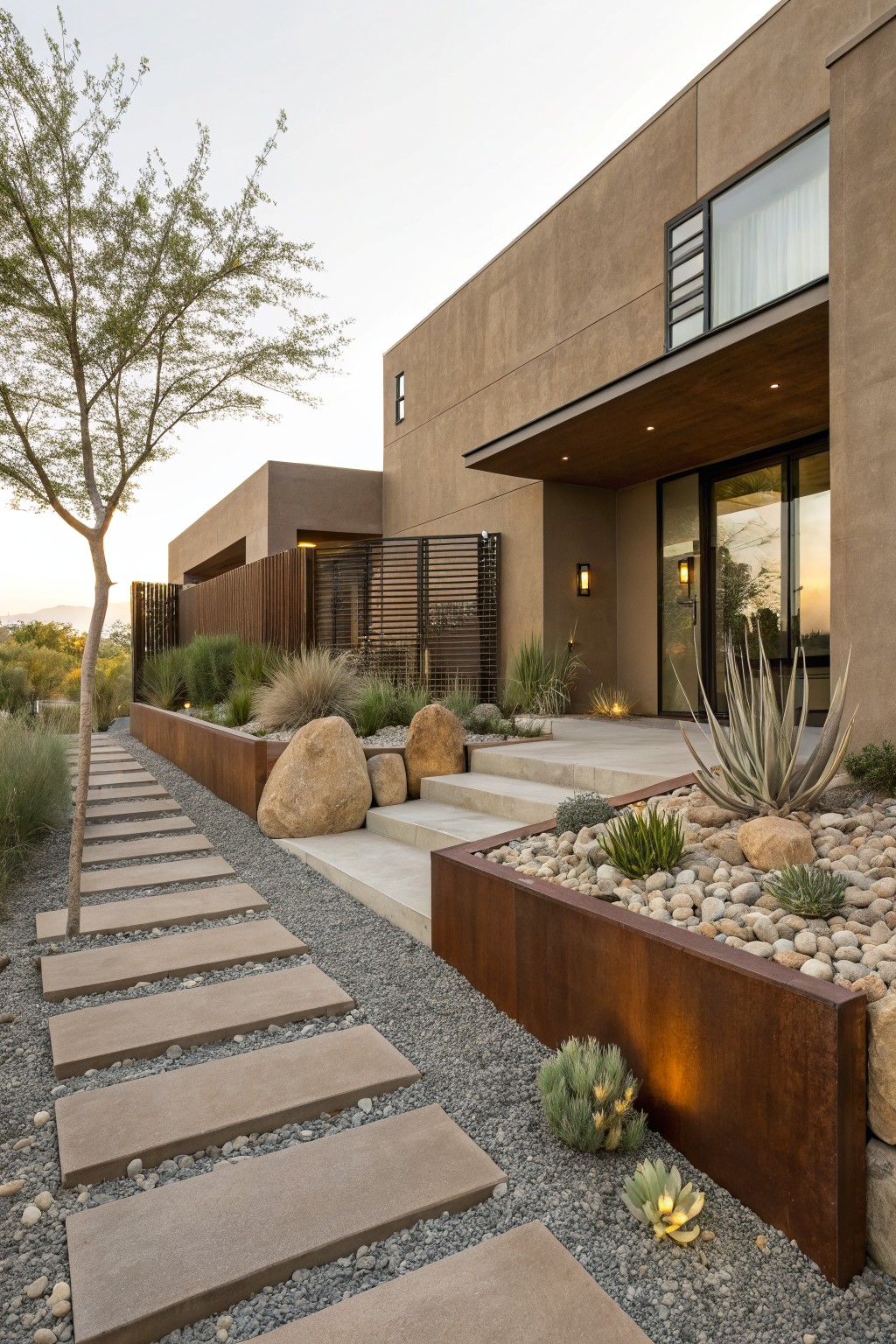
A gravel pathway lined with large rectangular stepping stones makes a clean, straight shot to the front door. It fits right in with the brown stucco house, using the same earthy tones from the gravel and nearby boulders. The path keeps things simple and low-maintenance, letting drought-tolerant plants like agaves and succulents fill in the edges without much fuss.
This setup works best for desert or dry climates where you want to cut down on watering and weeding. Line it with raised corten steel beds for the plants to keep gravel from spilling over. It suits modern homes with flat facades, giving a welcoming feel without overcrowding the entry. Just make sure the stones are wide enough to walk comfortably.
Entry Path with Water Rill
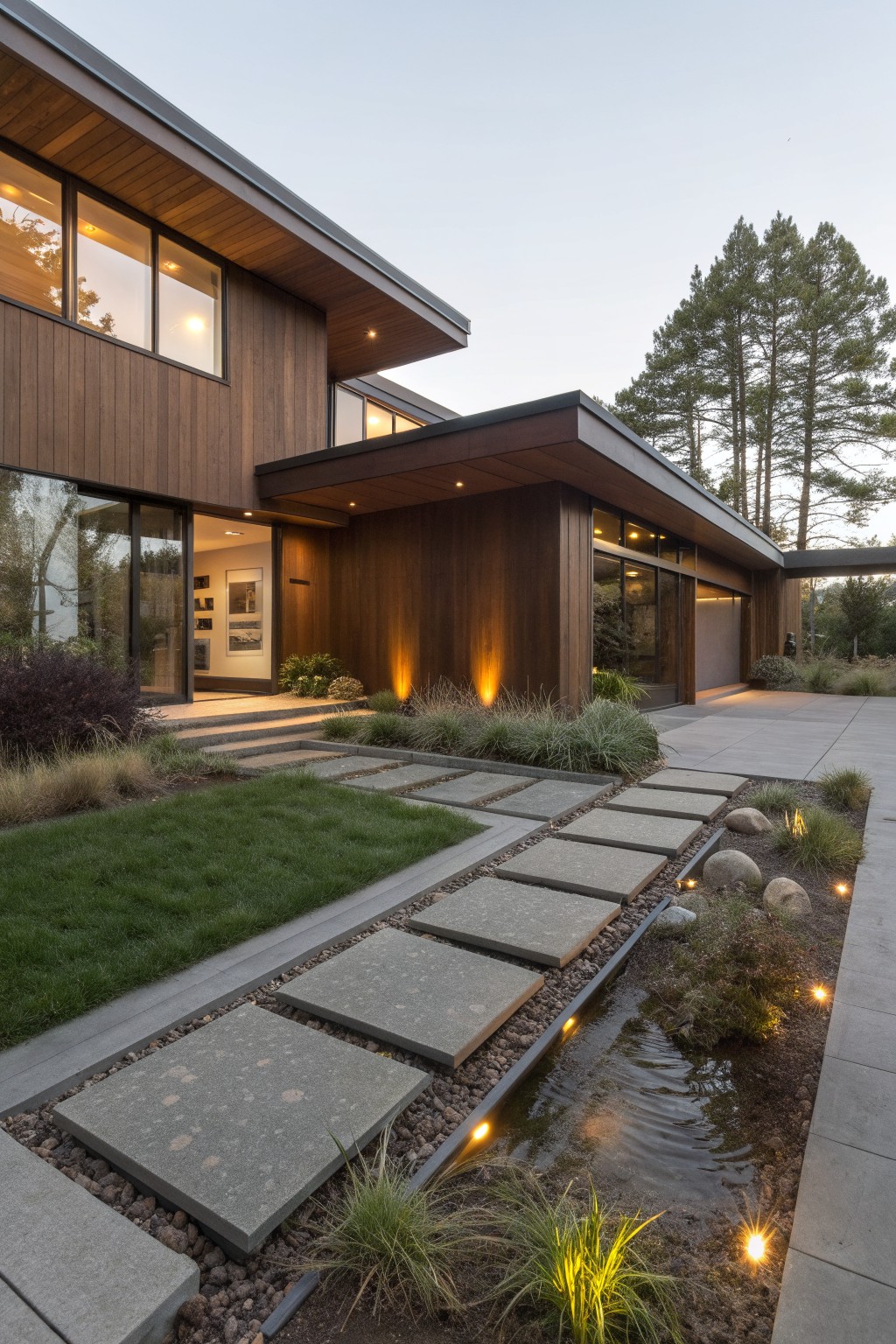
A narrow water channel runs right alongside square concrete stepping stones, guiding you straight to the front door. Low grasses and rocks fill in around it, keeping things simple against the brown wood siding. That little bit of moving water adds sound and calm without much upkeep.
This works best on a flat or gently sloped front yard where you want a modern touch. Pair it with clean lines on the house, like wood panels and big windows. Skip it if your spot floods easy, or go with dry river rock instead for less hassle.
Boxwoods Line the Stoop
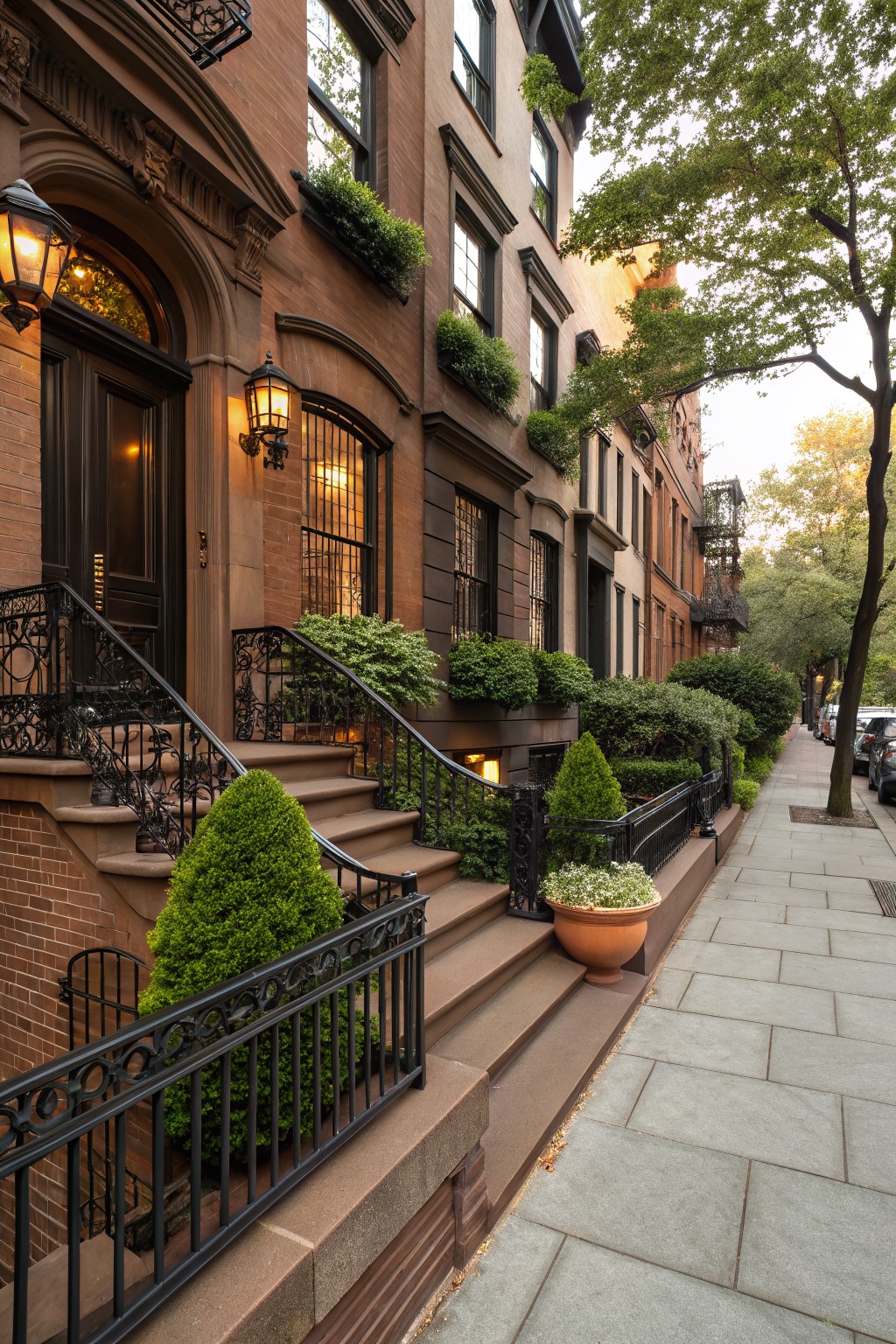
Boxwoods work great lining the steps and railings of a brownstone stoop. They give that clean, formal shape that matches the ironwork without overwhelming the architecture. The low, rounded shrubs hug the edges nicely and stay green all year, so the front stays sharp even in winter.
Plant them tight along both sides of the steps, keeping them trimmed to about knee height. This setup suits city rowhouses best, where space is tight and you want low upkeep. Just watch for full sun spots, or pick a shade-tolerant variety to avoid sparse growth.
Stone-Lined Koi Pond
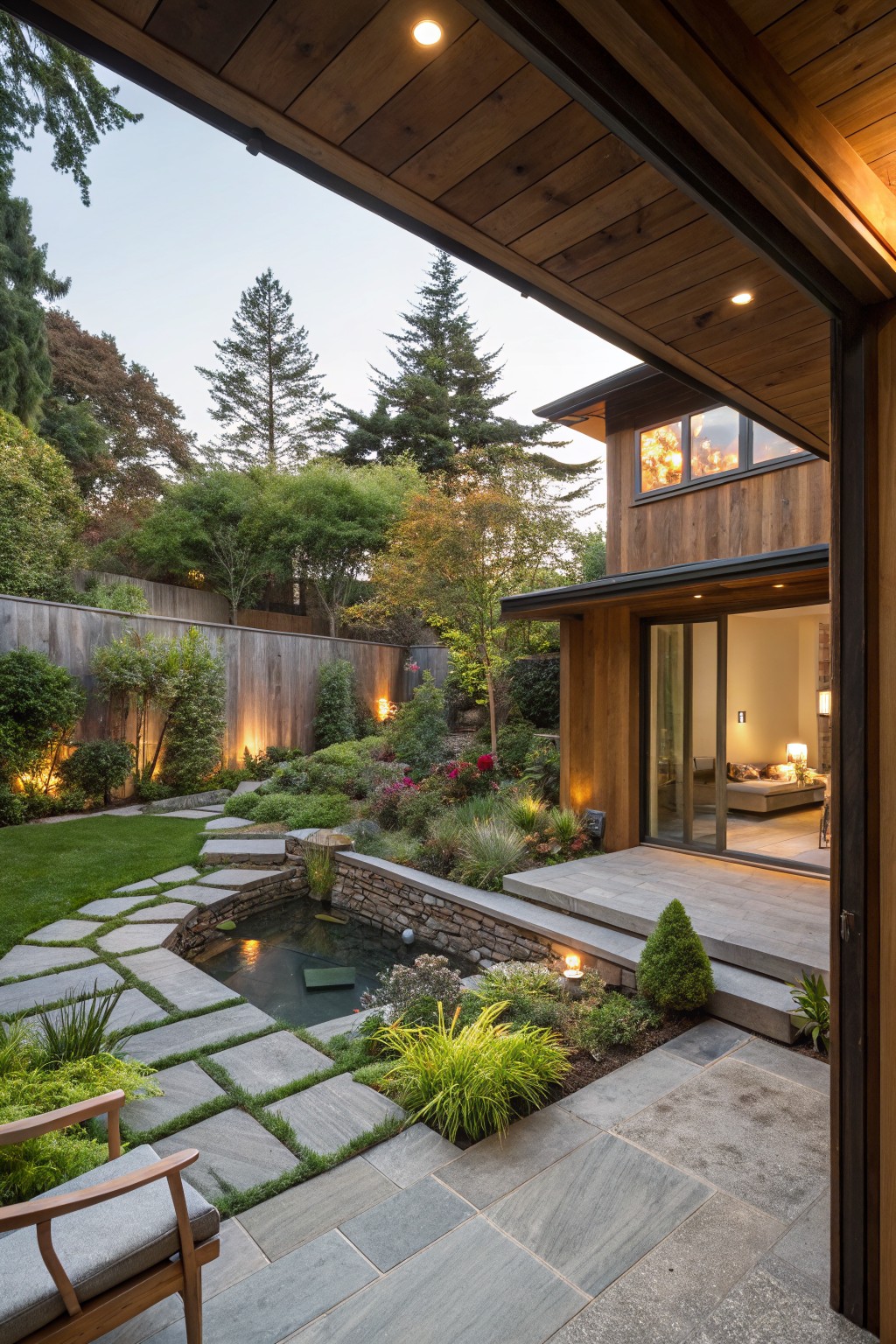
A stone-lined koi pond like this one sits right off the patio, with water gently lit from below and a few stepping stones leading up to it. The rough natural stone edge gives it a built-in look, blending into the gray pavers and grass patches around. It pulls your eye in the yard without taking over, and pairs nicely with a brown wood house exterior since the earth tones match up.
Put one in if you have a flat spot near sliding doors or a deck. Use local fieldstone or flagstone for the liner to keep costs down and tie into the siding color. Surround it with low plants and keep fish simple at first. It suits wooded lots or modern homes that want a calm water spot, but skip it if wildlife or kids make maintenance tough.
Courtyard Patio with Central Olive Tree
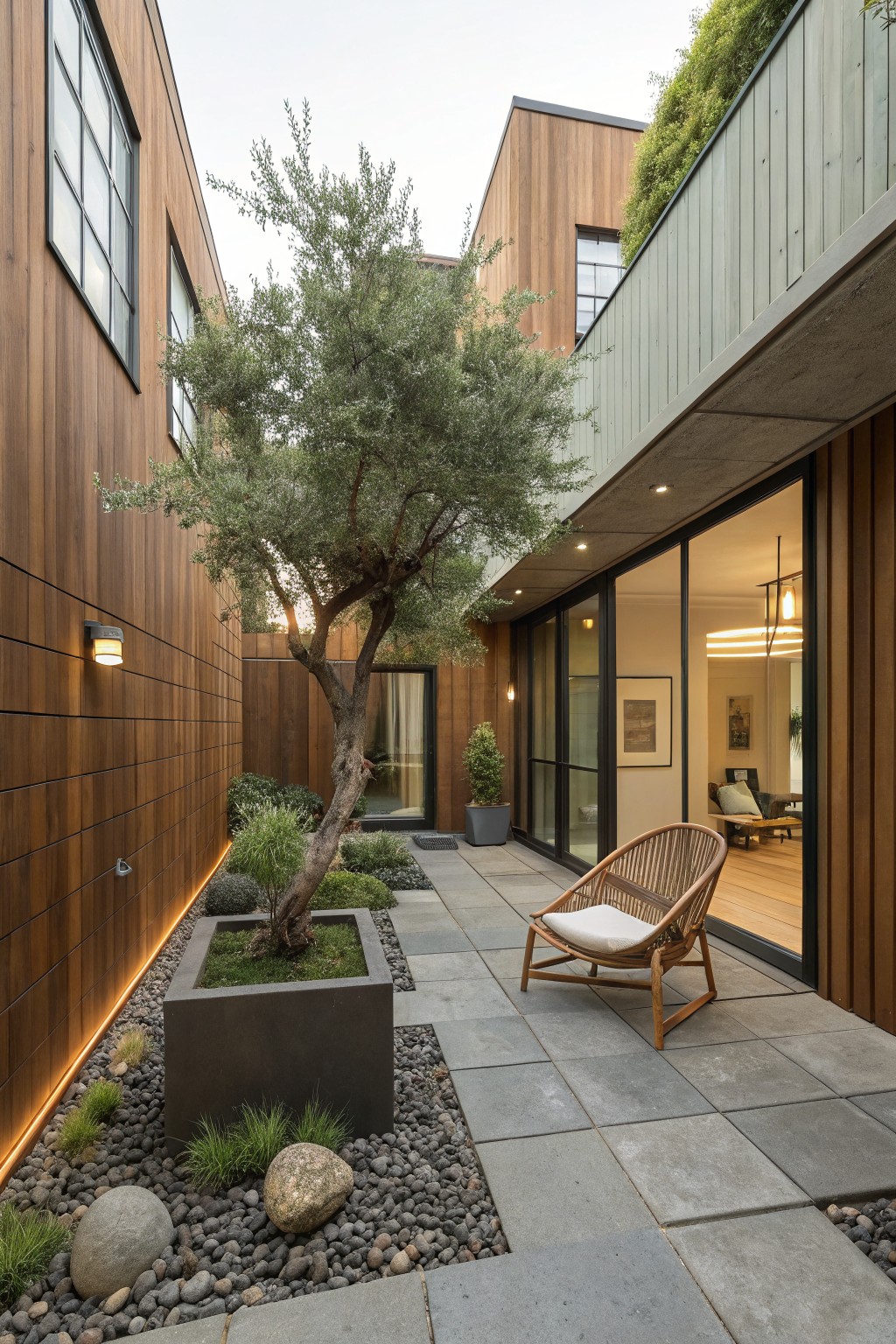
One straightforward way to make a small outdoor spot feel complete is putting a single olive tree right in the middle. Here the tree grows from a square black planter on gray pavers, with gravel and a few grasses filling in around the base. Brown wood walls on three sides close it off nicely, and that setup turns a plain patio into something with real presence. No need for a lot of plants or busy details. The tree does the main job.
You can pull this off in tight backyards or side yards next to a modern house. Go for a mature tree so it looks established from day one. Stick to simple hardscape like pavers and river rock, maybe one chair nearby for sitting. It suits wood-sided homes especially well… keeps everything tied together without much upkeep. Just watch the tree’s roots don’t crack the pavers over time.
Lavender Beds Along Curved Stone Walls
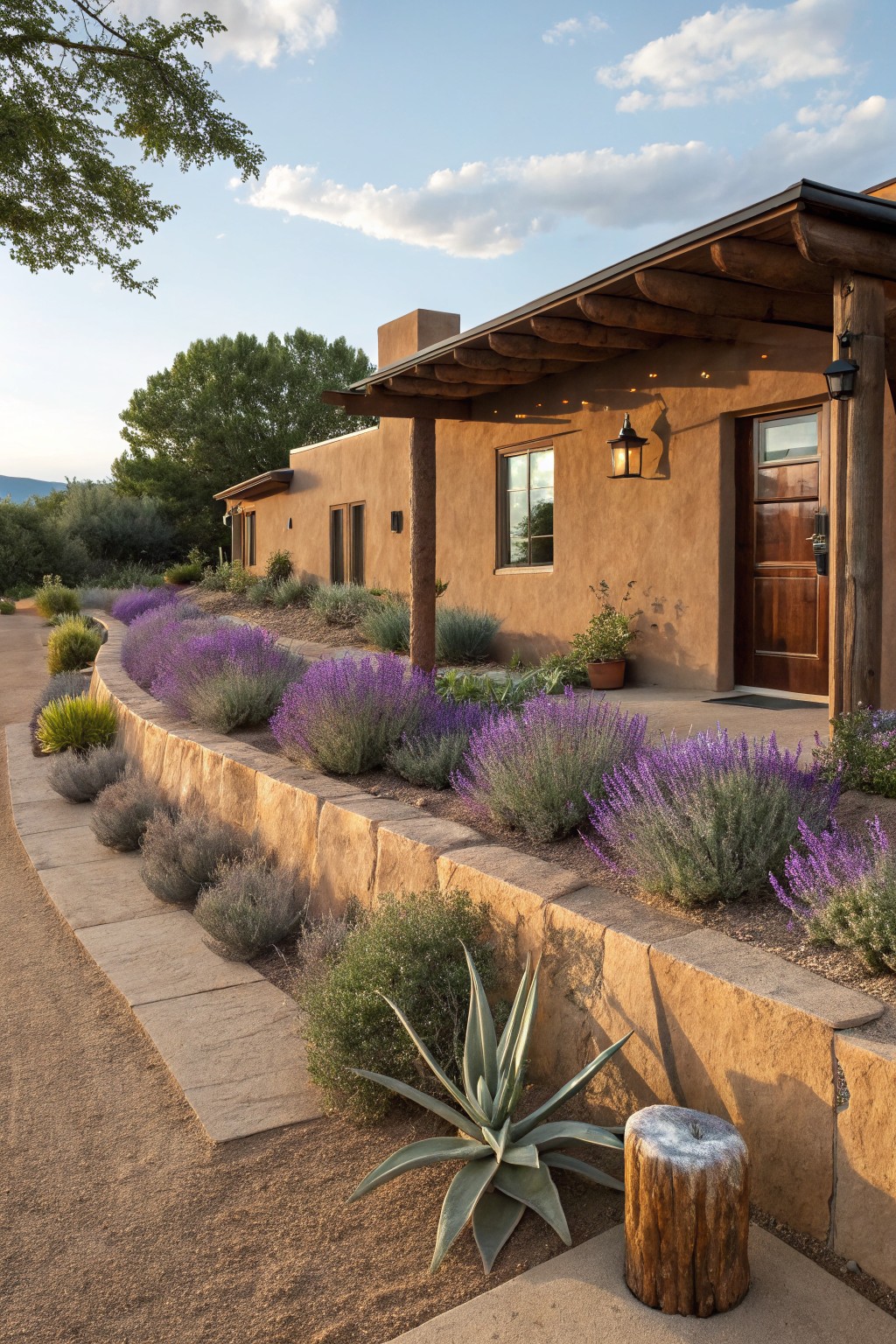
One simple way to tie landscaping right into a brown adobe house is filling low stone retaining walls with lavender. The purple blooms stand out nicely against the earthy tones of the walls and stucco, without overpowering the look. It gives that polished Southwest feel, especially with a few agave plants tucked in for contrast.
These setups work best on sloped yards leading to an entry path. Use drought-tolerant lavender varieties that come back each year, and keep the stone local if you can for a natural match. Just make sure the wall height stays low, around two feet, so it frames the house instead of blocking it.
Wooden Pergola Outdoor Dining Area
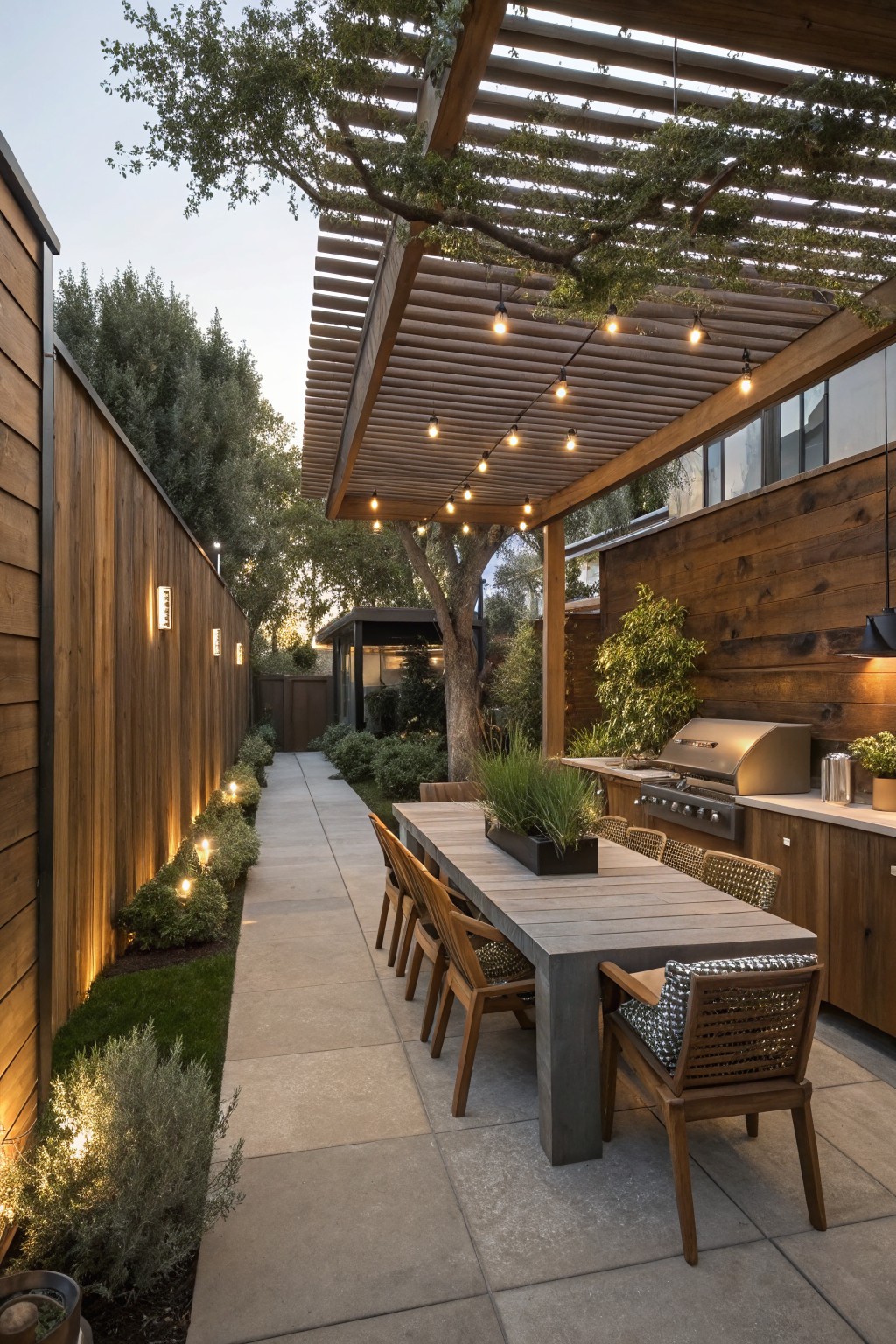
A wooden pergola like this one stretches over the dining table and grill setup, letting vines climb across the beams for some natural cover. String lights hang between the slats, turning the space into a spot for evening meals right off the house. The warm brown wood tones match the fences and walls, so it feels like part of the backyard flow.
You can pull this off in narrower side yards with a path leading to the main area. Pick sturdy cedar or redwood beams to handle the weather, and add climbers that won’t grow too wild. It suits homes with wood siding already… keeps things simple and connected without much upkeep.
Winding Stone Paths for Entry Approaches
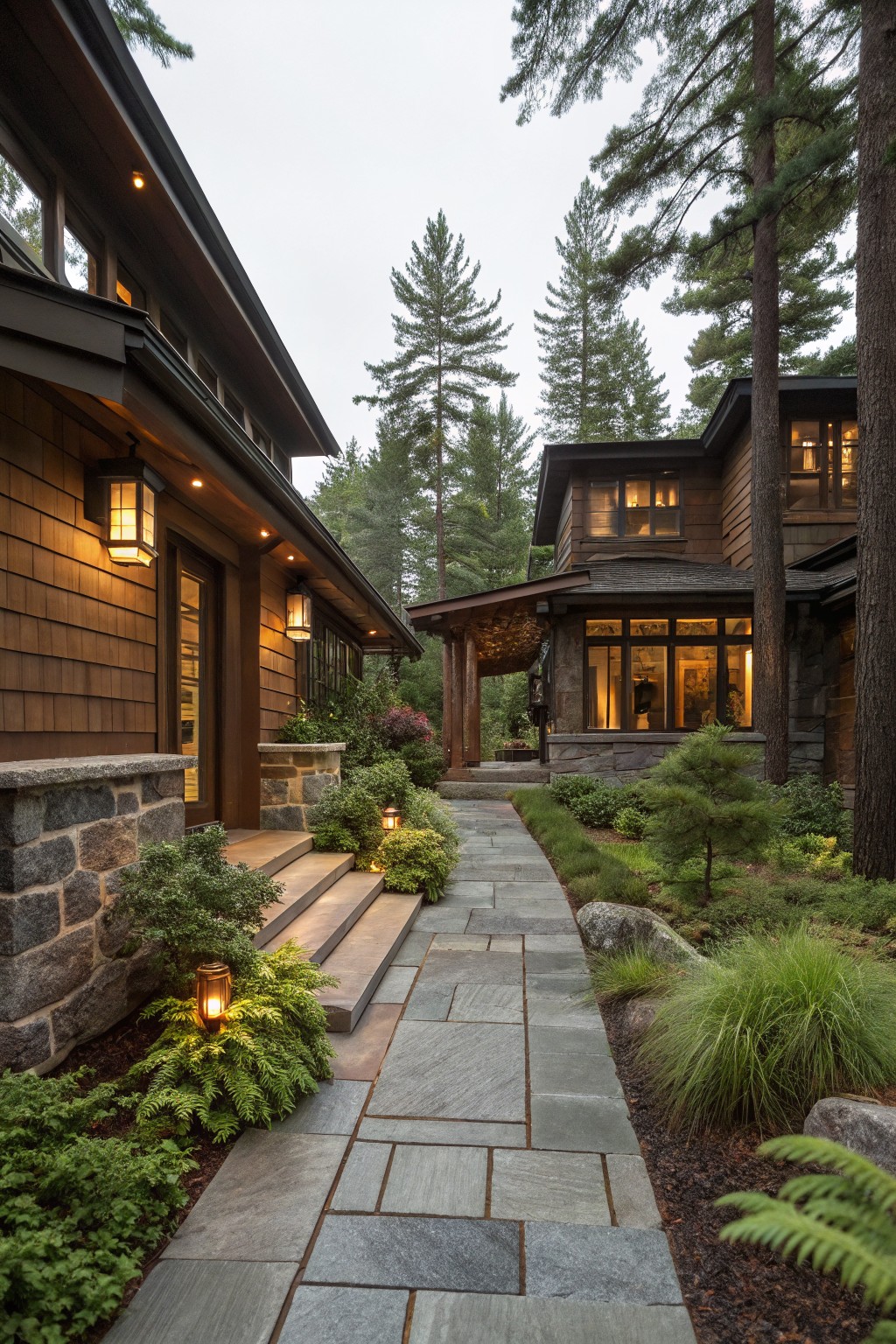
A simple flagstone path like this one makes the walk to your door feel natural and easy. The wide bluestone slabs fit right into the ground, edged with ferns, grasses, and small boulders. Paired with the brown shingle siding on the house, it pulls everything together without looking forced. Those low lanterns along the way add just enough light at dusk.
This works best on wooded lots where you want to blend the house into the trees. Lay the stones irregularly for a casual look, and stick to native plants that won’t need much fuss. Skip straight lines if your site has some slope. It suits cabin-style homes or anything with a rustic edge.
Terraced Stone Gardens That Blend with the House
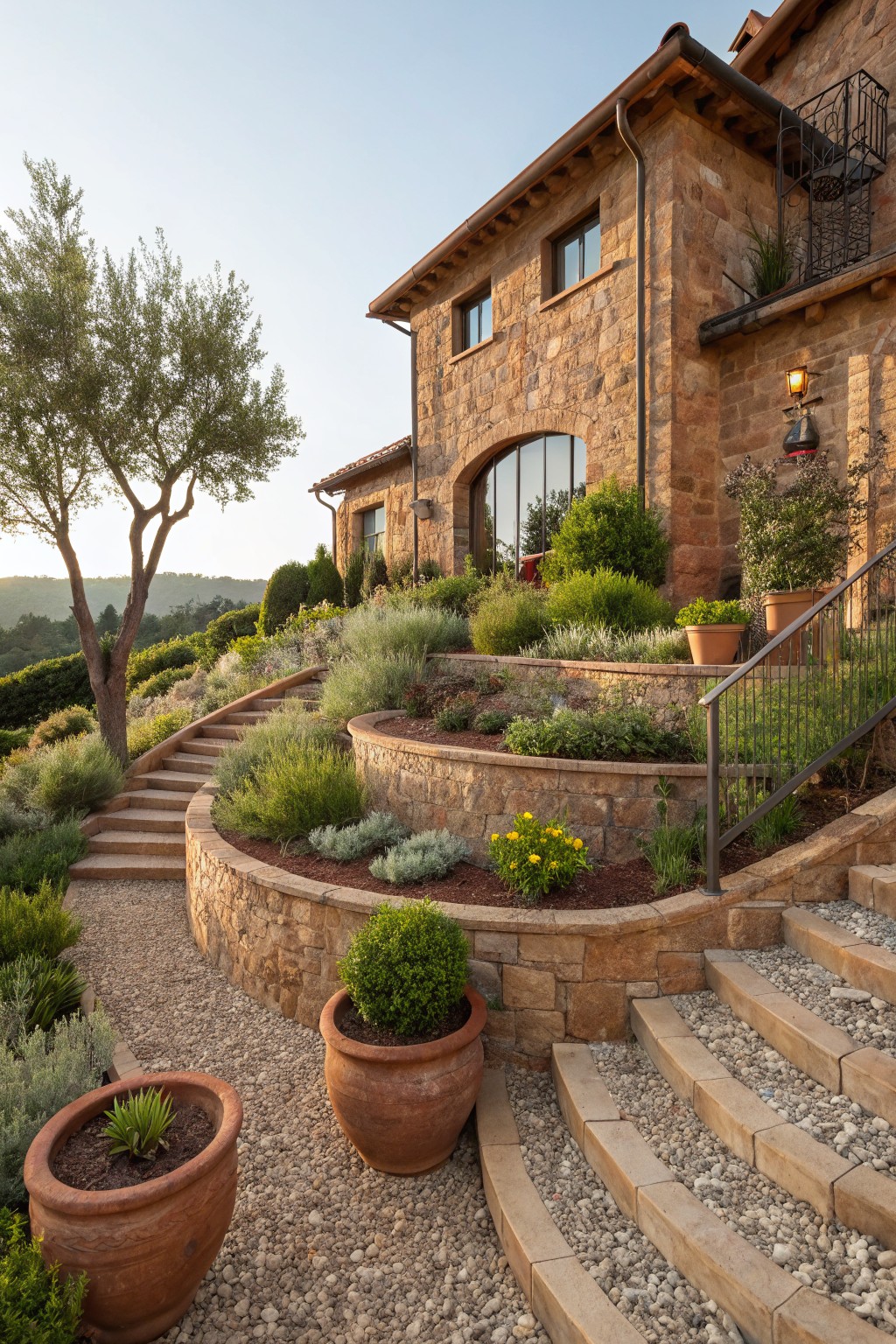
One smart way to handle a sloped yard is terraced stone gardens. Here the walls use the same rugged stone as the house facade. It pulls everything together. The tiers hold back soil for plants and create flat spots for paths and pots. No steep scramble to the door. Just easy levels that follow the land.
Try this on hillsides around earthy homes like stucco or stone ones. Match the wall stone to your house if you can. Add gravel paths and terracotta pots with tough plants like lavender or agave. They stay neat with little water. Steep spots need solid engineering though. Check that first.
Narrow Reflecting Pool with Edge Lights
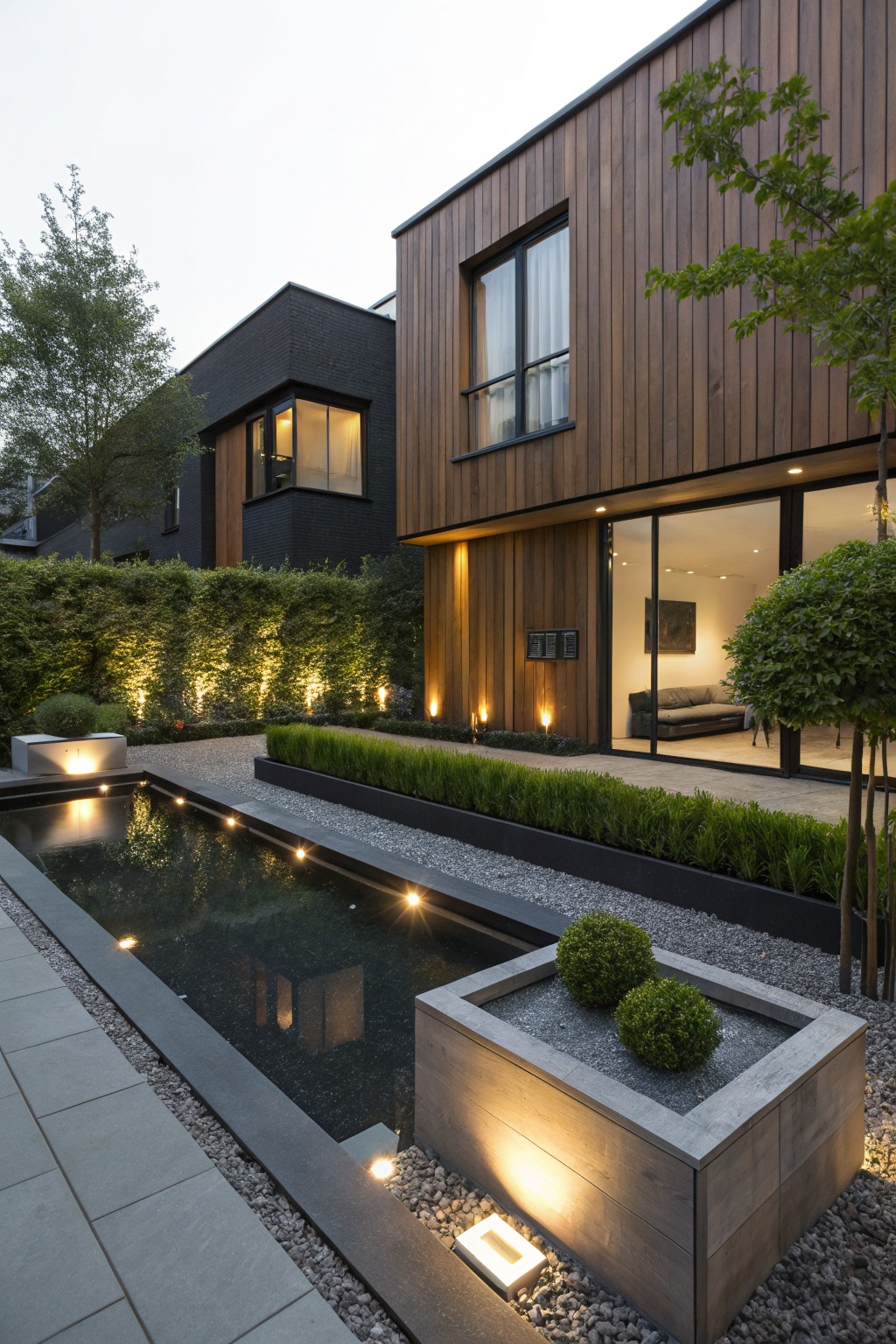
A narrow reflecting pool like this runs right along the house, picking up the glow from inside and the wood siding above. The underwater lights make it shimmer at night, turning a simple path into something special without much fuss. It pulls the eye toward the living area and keeps the whole yard feeling put together.
You can fit one in tighter spaces, like between the patio and wall, using dark stone edges to match black window frames. Add low box hedges on one side for clean lines that echo the house plants. It’s low upkeep if you skip fancy fountains, and it suits modern wood homes best. Just make sure the water stays calm for that good reflection.
Porch Steps with Potted Hydrangeas
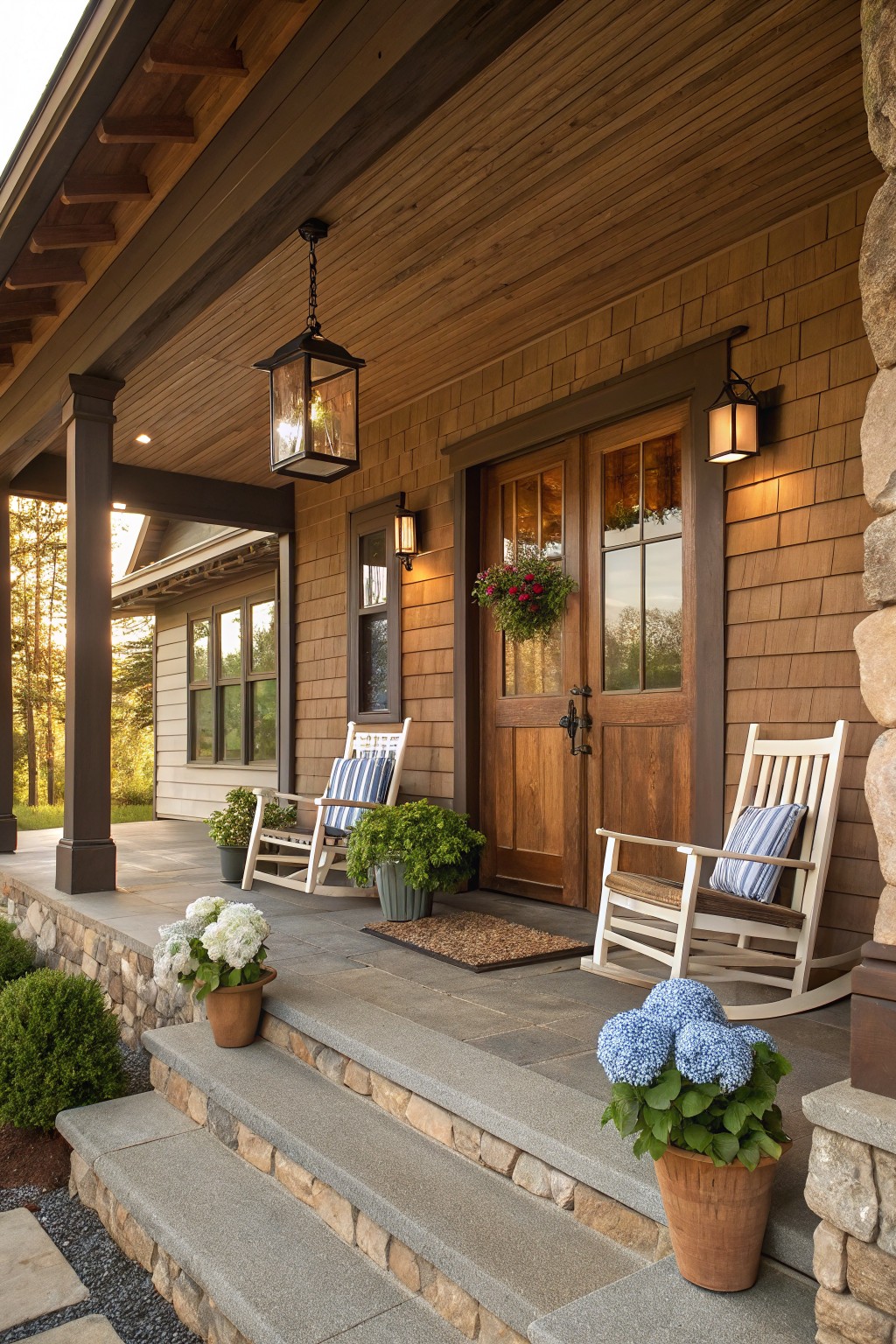
Big terracotta pots filled with blooming hydrangeas work great on porch steps like these. The white and blue flowers stand out against the brown shingle siding and gray stone. They add a fresh pop of color without much upkeep. Plus, the pots tie right into the rustic wood porch and keep things looking polished.
Place a few large pots along your steps and one or two up on the porch floor. This setup suits shingle-style homes or any brown exterior that needs softening around the entry. Go for sturdy pots that won’t tip easy, and pick blooms in a couple shades for interest. Just keep them watered through summer… they fill out nice.
Terraced Stone Steps for Sloped Yards
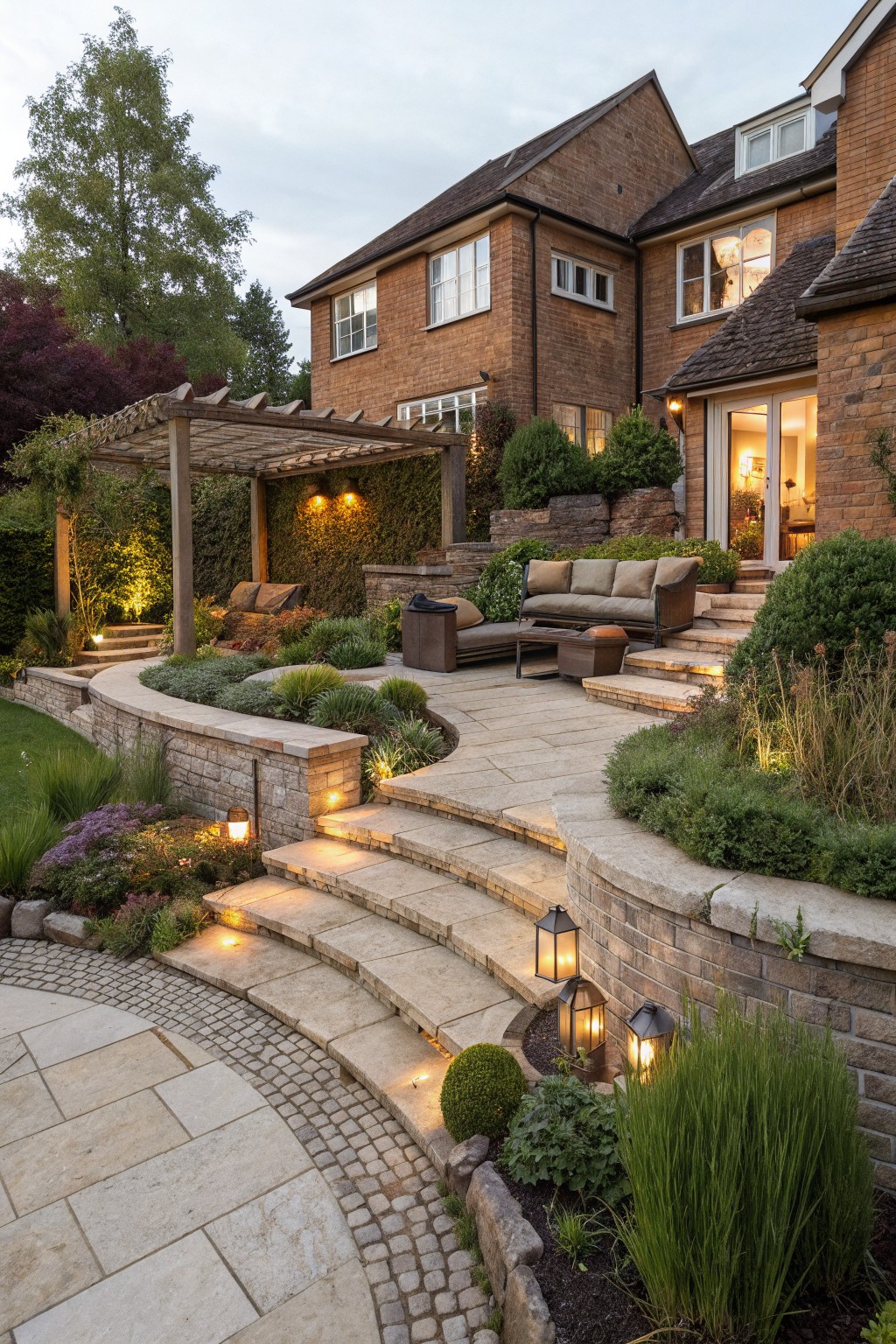
Sloped yards can be tricky. But terraced steps like these turn the challenge into something usable and nice to look at. Curved stone walls hold back the soil while steps wind up gently. Plants tuck into the beds along the edges, and low lights along the treads make it safe and pretty after dark. It all flows right into the patio seating area without feeling forced.
This works best on moderate slopes behind a house, especially where you want to connect the yard to an outdoor spot for relaxing. Pick stone that echoes your home’s brick or siding. Keep plantings simple, grasses and shrubs that won’t flop over the edges. Watch the drainage so water doesn’t pool on the steps.
Clean Stepping Stone Path to the Entry
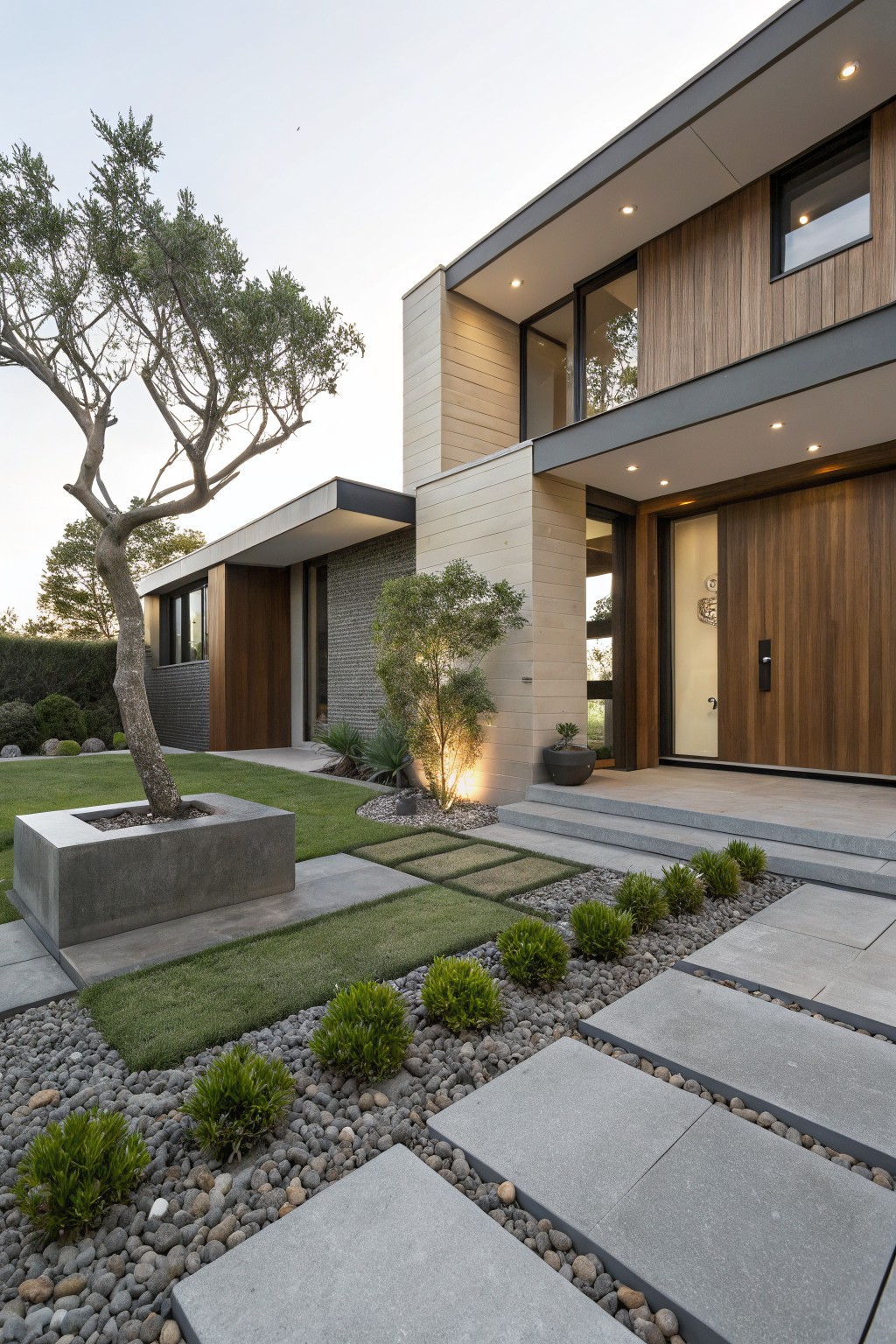
A simple stepping stone path like this one makes the front yard feel put together without much fuss. Large gray pavers set into beds of white pebbles and thin grass strips create those clean lines that match a modern house. Low boxwood shrubs along the edges keep it neat, and it all points right to the wooden door. Folks like how it stays low-maintenance once planted, no mowing right up to the steps.
You can pull this off in smaller front yards too, especially with a sleek facade. Just space the pavers for your stride, about 24 inches apart, and use gravel that drains well so it doesn’t wash out in rain. It works best on flat ground near the house… skip it if your slope is steep.
Curved Brick Paths Through Flower Beds
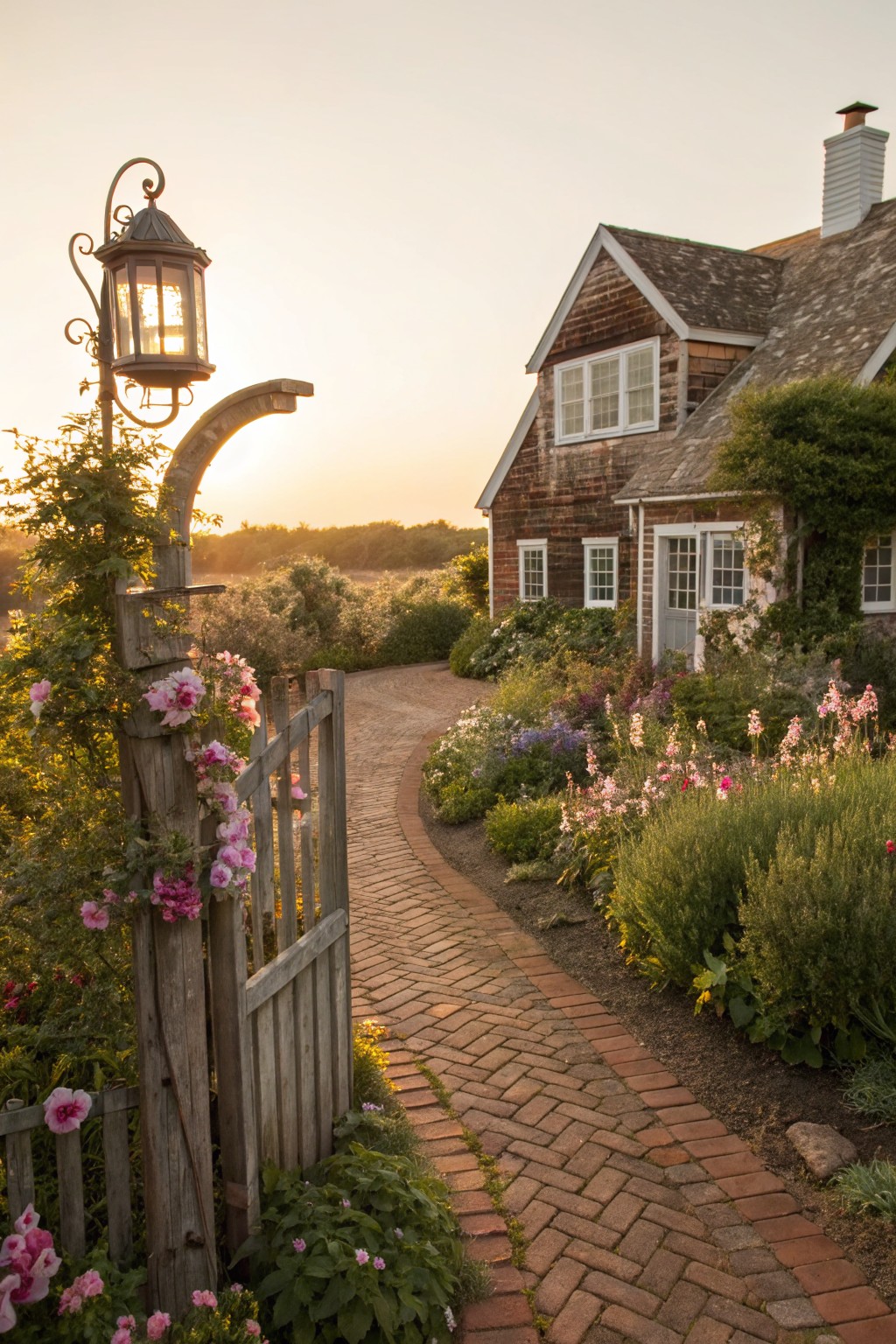
A curved brick path winding through flower beds makes a natural lead-in to your brown shingle house. It softens the straight lines of the architecture and pulls the eye along without rushing. Those pink roses climbing the old wooden arch… they just fit right in with the weathered siding.
Use this setup in your front entry garden to boost curb appeal. Brick holds up well and lets perennials spill over the edges nicely. It suits cottage-style homes or any place with a bit of slope. Keep the beds mulched to cut down on weeding.
Wooden Raised Planters for Sloped Yards
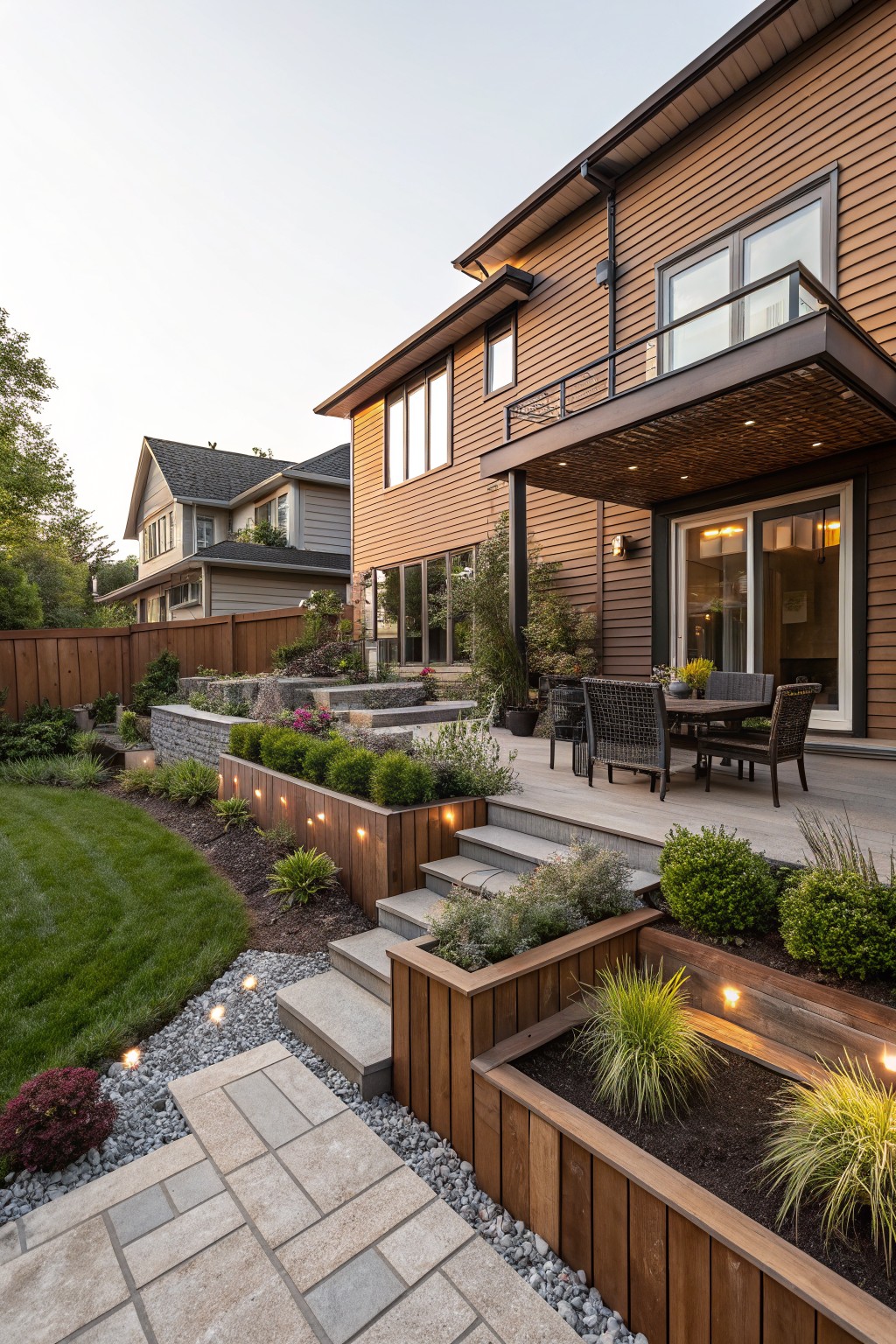
One simple way to handle a sloped backyard is with wooden raised planters like these. They match the brown siding on the house so everything flows together without looking choppy. The boxes hold grasses and shrubs that fill out nicely, and the built-in lights make them stand out at night. It’s a practical setup that keeps soil in place and adds some structure to the yard.
These work best around modern or craftsman-style homes with wood exteriors. Build them from cedar or similar to resist weather, and keep heights around two feet for easy planting. Line them along steps or paths like this to create levels on a hill. Just make sure to line the bottoms for drainage, or you might end up with soggy roots.
Frequently Asked Questions
Q: What mulch color pops with brown siding without clashing?
A: Dark chocolate or black mulch grounds everything beautifully. It lets green plants stand out sharp against the brown. Lay down three inches thick for that clean edge.
Q: How do I handle shady spots next to my brown house?
A: Plant hostas or ferns with deep green leaves. They thrive in low light and add lush texture that hugs the walls. Water them weekly until roots set.
Q: Need quick height for curb appeal?
A: Drop in a few columnar junipers at the corners. They grow fast and stay slim.
Q: Can I mix gravel paths with plants around a brown exterior?
A: Warm tan gravel sets off the siding just right. Tuck in creeping thyme between stones so it spills over softly. Sweep it clean now and then to stay sharp.
